Wedding Lehenga Fabric Guide 2026: What I Tell Families Across the Counter Before They Buy
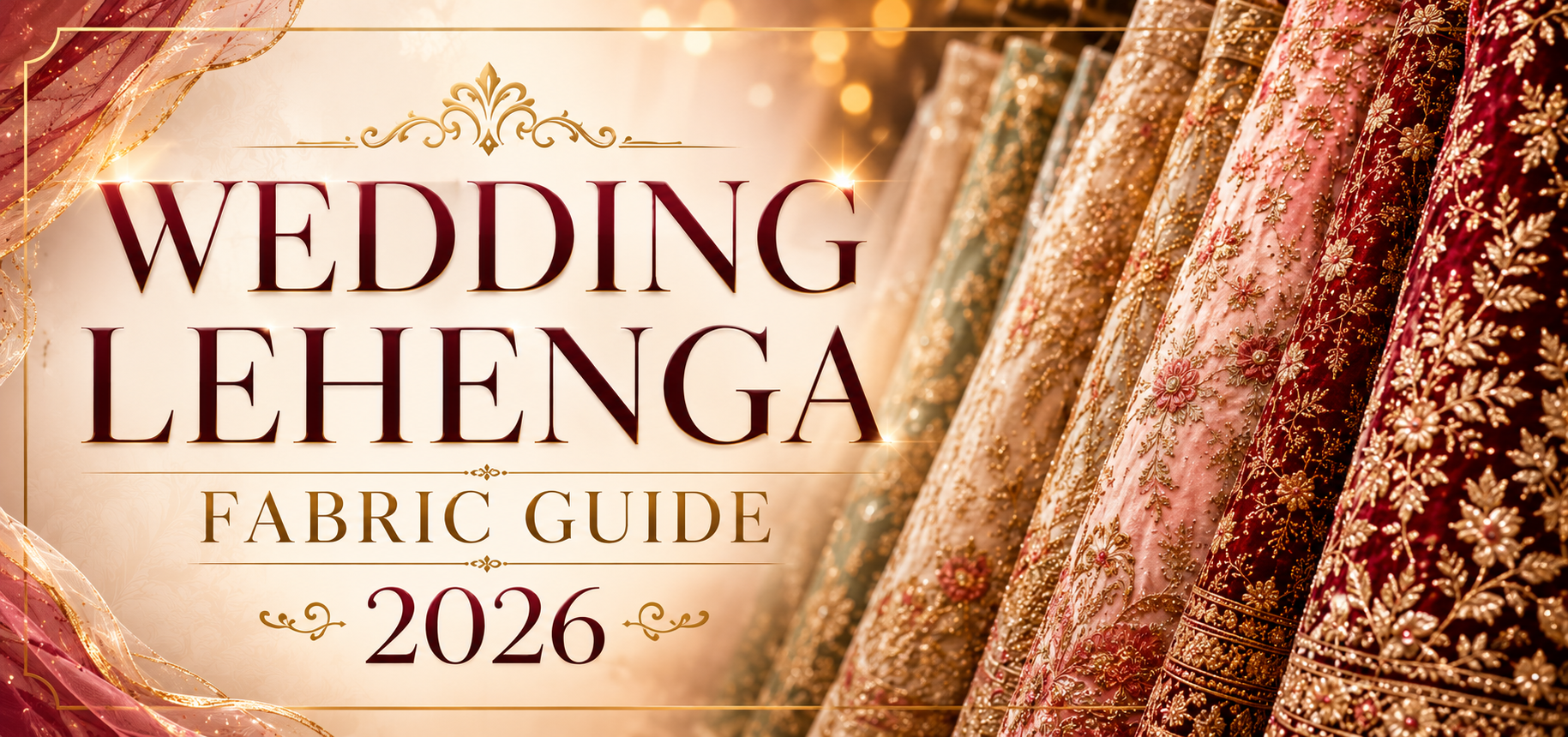
Wedding Lehenga Fabric Guide 2026: What I Tell Families Across the Counter Before They Buy
Wedding lehenga fabric is the base cloth used for the ghera. Choli. Dupatta. The four most popular bases in 2026 are raw silk, velvet, net, organza. Raw silk holds heavy zari work. Velvet suits winter weddings. Net stays light for summer functions. Organza adds airy overlays.
Twelve years now I am sitting at this counter in Lajpat Nagar. The questions never change, only the brides change. Last Tuesday one girl came with her mother and the whole WhatsApp group on speakerphone. First question? "Uncle, which fabric will not sag." Same question I have heard from at least 200 brides this June.
So okay, let me write it down once. The actual shop counter version, third chai in hand. If you are buying wedding lehenga fabric in 2026, for any function in the shaadi week, this much you need to know. Forward to your mother before she tells you again that her cousin's tailor in Karol Bagh knows better. (He doesn't. Trust me na.)

The best wedding lehenga fabrics in 2026 are raw silk for structure. Velvet for winter weddings. Net for summer functions. Organza for sheer overlays. Raw silk and velvet hold zari work without sagging. Net keeps the outfit light. A standard wedding lehenga needs six to eight metres of ghera fabric depending on the flare.
Wedding lehenga vs bridal lehenga. Same word. Different bucket
People throw around both terms like they are the same. They are not. Bridal lehenga is what the bride wears on the wedding day or main reception. Wedding lehenga is the bigger bucket. Bride yes, but also sangeet outfit, mehendi look, cousin at haldi, the aunt who decided last minute she needs something for baraat reception.
Fabric changes completely by function. Sangeet lehenga has to let you move (one girl last December nearly tripped on her own ghera, ask me how I know). Reception lehenga has to photograph under those terrible indoor banquet lights. Bridal lehenga for pheras? Holds the heaviest embroidery the family is paying for. Different jobs, different cloths. The bridal bliss collection is sorted by weight, more useful than sorting by colour.
The four wedding lehenga fabric families I stock heavy
1. Raw silk
Raw silk is my personal favourite. Slubby, uneven texture which makes heavy zari work sit properly instead of floating. 90 to 160 GSM depending on mill. Rs 650 to Rs 1,400 per metre. Most North Indian bridal lehengas in the Rs 80,000 to Rs 2 lakh range use raw silk for the ghera. The silk lehenga fabric shelf is sorted by grade.
One thing. Raw silk creases badly. Last month one client from Greater Kailash kept her lehenga packed in her car for two hours before the wedding. Disaster. Tell your tailor to underline the ghera with soft canvas.
2. Velvet
Velvet is a different story. Heavy. Dense like anything. Beautiful under warm yellow mandap lights. Usually 250 to 400 GSM. Strictly for winter weddings, November to February. A velvet bridal lehenga with proper embroidery weighs six to eight kilos. Families nod yes yes during trial, then by reception time they are messaging me about the weight. We cannot help.
Sangeet or reception in December-January, velvet works. Daytime summer, the bride will faint. Rs 450 to Rs 1,200 per metre for fashion velvets. Imported French velvet is another category, costs much more. Full velvet fabric range is on the site.
3. Net
Net is what everybody is asking for this summer. Honestly I get it. Have you tried wearing a heavy lehenga in 42 degree Delhi heat? Light, sheer, breathable. Rs 120 to Rs 350 per metre for plain, up to Rs 800 for pre-embroidered. Suits people who don't want to spend two lakhs on one outfit, na.
People forget net is also doing structural work underneath. That can-can flare, the bell shape in reels? Stiff net. Even if your top is velvet or silk, you need six to eight metres of stiff net below. The net fabric shelf has both kinds.
4. Organza and tissue overlays
Organza is interesting. Light, almost weightless, crisp instead of soft. Mostly used as a top layer over something heavier, that double-layer ghera look everywhere in 2026 lookbooks. Tissue versions have a metallic shimmer that photographs beautifully for sangeet. Rs 200 to Rs 800 per metre. The organza fabric range has been one of our top three sellers for three years. Do not use organza as a standalone base, it will not hold weight. Overlay only.
How much fabric you actually need
Most families lowball this. Tailors overestimate to cover themselves. Both wrong. Roughly what we measure out for a 2026 wedding lehenga.
|
Component |
Standard fabric requirement |
|
Ghera with 4 kali flare |
5 to 6 metres |
|
Ghera with 8 kali heavy flare |
7 to 8 metres |
|
Can-can underlayer (stiff net) |
6 to 8 metres |
|
Choli (blouse) |
0.8 to 1 metre |
|
Dupatta (single layer) |
2.5 metres |
|
Dupatta (double layer organza on net) |
5 metres total |
|
Lining (cambric or satin) |
5 to 7 metres |
If your tailor demands more, ask politely why. Sometimes the reason is genuine. Print needs matching across panels, embroidery motif must align at seams. Other times those extra two metres disappear into the tailor's own stock. Both happen.
How fabric choice swings the price
This question I get twice a week. "Uncle two lehengas look almost same, why one is 40k and other is 90k?" Ninety percent of the answer is fabric, not embroidery. Karigar charges across Delhi for similar zari work are roughly comparable.
Raw silk bridal lehenga with decent zari work lands Rs 35,000 to Rs 85,000 total. Velvet base with similar work runs Rs 45,000 to Rs 1,10,000 because velvet is denser per metre. Net base with hand embroidery comes down to Rs 22,000 to Rs 55,000. Same finished visual to the untrained eye, different cost basket. For lehenga fabric by the meter all four bases are live with per metre rates listed.
What is trending for summer 2026 weddings
Pastels are properly back. Sage green selling fastest, then dusty pink, butter yellow, oyster white. Classic maroon still moves but slower than last year. Most families pick lighter bases like raw silk or net to match the theme because heavy velvet in pastel reads washed out on camera.
Double dupattas are standard now. One short embroidered over the head, one long sheer organza or net trailing from the shoulder. Plan for both.
Embroidered net is quietly replacing fully zari raw silk for daytime functions. Looks heavier than it is, photographs well, stays light. For dyeable options the dyeable embroidery section lets you order in your wedding palette. Sangeet outfits leaning dance-friendly. Net with sequins, soft georgette with thread work, nothing above 200 GSM. Check the sangeet outfit fabric shelf.
Wedding lehenga care. Lining. Stitching tips
Three things almost every tailor in Delhi gets wrong.
Lining first. Soft cambric for raw silk or velvet, never stiff. Stiff lining makes the lehenga sit like cardboard. The bride has to walk, twirl, sit for pheras for an hour.
Hem the ghera with horsehair canvas tape, six inches at the bottom. Half the tailors skip this to save time.
Pre wash the net. Always. Net shrinks the first time. Stitch then wash, the ghera flare drops by an inch or two.
Storage. Wrap in cotton muslin. Not plastic. Plastic traps moisture, yellows the silk. You see the damage three years later.
FAQ Section
Which is the best fabric for a wedding lehenga in 2026? Depends on the season. Winter, raw silk or velvet because they hold heavy embroidery. Summer, net or organza because they stay light in Delhi heat. Pastel raw silk is the bestseller this season.
How many metres of fabric are needed for a wedding lehenga? Roughly 6 to 8 metres for the ghera. Another 6 to 8 metres of can-can net. 1 metre for the choli. Plus 2.5 to 5 metres for the dupatta depending on single or double drape. Total around 18 to 25 metres with lining.
What is the price range of wedding lehenga fabric per metre? Raw silk Rs 650 to Rs 1,400. Velvet Rs 450 to Rs 1,200 for fashion velvets. Net Rs 120 to Rs 350. Organza Rs 200 to Rs 800.
Is net lehenga good for summer weddings? Yes, one of the better options for daytime functions. Light, sheer, breathable. Needs a satin or crepe underskirt for opacity.
Can a bridal lehenga be made in raw silk for summer? Yes. Ask for 90 GSM raw silk instead of the heavier 160 GSM grade. Lighter raw silk drapes softer. Works for daytime summer functions with a sheer organza dupatta.
The honest takeaway from the counter
Wedding lehenga shopping is exhausting. Everybody has an opinion. Mother. Sister. Mother-in-law (worst usually). Tailor has the loudest opinion because he wants to push his preferred stock. Cut through with one rule. Fabric for season first. Function second. Embroidery third. Colour last.
July function means raw silk or net. December function means velvet or dupion. Heavy zari belongs on raw silk or velvet. Hand embroidery looks best on net. Sheer overlays sit on a soft base, never alone. For colour matching our fabric estimator gives per piece requirements. Custom dyeing is 7 working days.
The honest takeaway from the counter
Walk through the live wedding lehenga fabric collection sorted by weight, season, price. Pair with zari fabric or sequins for matching dupattas. WhatsApp us before bulk orders, we courier swatches. Twelve years on the counter. We are not the cheapest in Lajpat Nagar but the price tag is the price you pay.