Article: Diwali Fabrics from Delhi for New Jersey: Find Your Festive Look
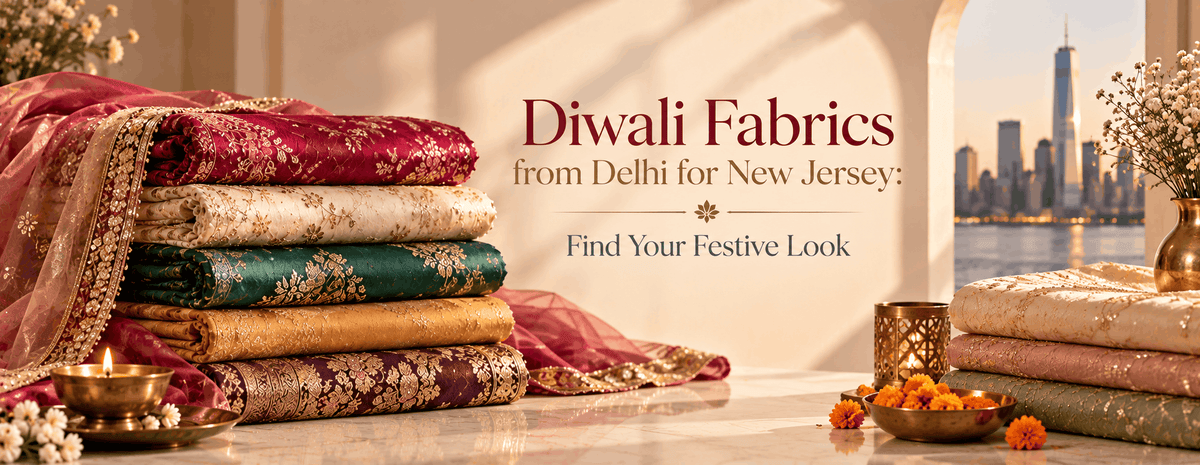
Diwali Fabrics from Delhi for New Jersey: Find Your Festive Look
DIWALI FABRICS FROM DELHI · NEW JERSEY OUTFIT IDEAS
Shopping for Diwali fabrics from Delhi while planning your outfit in New Jersey? Decide what you want to make first. A crisp dupatta can lift a plain kurta you already own; a flowing skirt needs a different kind of fabric. The prettiest close up isn't always the best guide to either.
Start with your celebration: puja at home, dinner with family or an evening party. Below, you'll find nine fabric directions with ideas for where to use each one, what to pair it with and what to check before ordering. Availability depends on the individual fabric, so use this as a shortlist rather than a stock list.
Choose Diwali fabric by the look you want
For shape, start with organza or satin organza. For a little shine, compare tissue and sequin mesh. For decorative detail, consider embellished net, Banarasi style georgette or Chantilly style lace. Chanderi is worth a look for a kurta, while velvet can work as an accent. Your garment, lining and chosen piece matter more than the label alone.
One useful distinction before you browse: silk is a fiber, satin is a weave and net is an open construction. Zardozi describes embroidery, not the fabric underneath it. Chanderi names a textile tradition. These aren't interchangeable quality grades, and a familiar name doesn't establish composition, origin or handwork.
1. Organza: for a dupatta that keeps some shape
Have a plain kurta that needs something festive? An organza dupatta can add shape without covering the whole outfit in embroidery. Its appeal is the way it holds a little space around the body rather than settling into close folds.
Organza is generally sheer and crisp. Silk and synthetic versions can feel quite different, and the finish changes the result too. If you want silk organza, check the stated fiber content instead of relying on the sheen in a photograph.
For a dupatta, look closely at the border: a dense edge can drag on a light center. For a skirt or bodice, compare the fabric over the lining you plan to use. A short hanging video helps show the body of the cloth; a flat photograph mainly shows its surface.
2. Tissue: for shimmer without covering the whole outfit
Try a tissue blouse with a plain saree, or a small tissue panel on a kurta. You get a clear point of shine while leaving room for jewelry and the rest of the outfit. It's a useful direction when you want festive detail without a fully embellished set.
Tissue is a broad shop label, often used for shimmering fabrics or those with metallic looking yarns. It doesn't tell you that the fabric is silk. For a piece sold as raw silk tissue, confirm both the fibers and what gives it that visible texture.
The cut matters here. A fitted blouse asks more of the seams than a loose panel does. Let your tailor assess firmness, fraying and seam slippage, then decide whether the seams need support. Choose the underlayer alongside the outer fabric, not after the blouse has been cut.
3. Zardozi style embellished net: let one piece carry the detail
Let an embellished net dupatta carry the detail over a plain suit or lehenga. Before falling for a wide border, think about where it will rest: across your shoulder, near your neck or against bare arms. The reverse deserves as much attention as the front.
Net is the open base; zardozi is a type of embroidery. A listing should explain the actual decoration and whether it is hand or machine made. Knots on the back aren't enough to establish handwork.
For a bodice or skirt, plan an underlayer for coverage and support. Send your tailor close views of the motifs and edges so they can work out where seams will fall. Cutting through dense decoration may need extra finishing, which is worth discussing before you buy the length.
4. Chanderi: for a puja kurta or a lighter looking set
A Chanderi kurta with simple trousers is an appealing starting point for puja followed by lunch. Keep the kurta shape straightforward and let a contrast dupatta or a favorite pair of earrings finish the look.
Chanderi pieces vary in composition and finish. Don't assume every listing means a soft silk cotton blend. Some cloth is sheer or holds a crisp shape, so compare the actual piece with a suitable lining before choosing a close fit.
The lining is part of the outfit, not just a way to make it opaque. A different underlayer can change both the visible color and how the kurta feels when you sit down. Show your tailor the two together, especially if you want a pale shade or a fitted sleeve.
5. Banarasi style georgette: for movement with woven detail
If you're picturing a saree or skirt with moving folds and woven decoration, consider Banarasi style georgette. A patterned skirt with a plainer blouse gives the motifs space to show; a heavy dupatta over both may hide the part you liked most.
Georgette often has a fine, crepe textured surface, but its name doesn't fix the fiber content or stretch. Woven motifs and borders can change the fall considerably. Compare the decorated cloth itself rather than assuming it will behave like a plain georgette you've worn before.
Banarasi style describes the design direction here, not certified origin. If Banaras production, silk content or handloom weaving matters to you, confirm it for the selected item. Also show your tailor where the border sits: a long piece can still be awkward to cut if its decoration doesn't fit the garment layout.

Browse festive fabric options: organza
Have a sheer overlay or dupatta in mind? Browse the organza options, shortlist a fabric and check its width, lining needs and availability for your US address.
Browse Organza →6. Sequin mesh: for a party layer, yoke or sleeve detail
You don't need a whole sequin outfit to get an evening look. A yoke, sleeve panel or separate layer can bring enough sparkle to a plain set. Think about the places that rub while you move, including the underarm and the spot where a bag strap rests.
Check how the decorated mesh moves, not just whether the bare base stretches. Sequins can add weight and restrict movement. Your tailor will need the base composition and a reverse side view to choose lining and support that suit the design.
Keep delicate fabrics nearby in mind, too: a rough sequin edge can catch a fine dupatta. Discuss seam finishing before cutting. If possible, compare a photograph in softer indoor light with the bright product video; sparkle changes with lighting.
7. Chantilly style lace: for sleeves and sheer overlays
For fine pattern rather than a field of sparkle, try Chantilly style lace on sleeves or over a plain bodice. A contrasting underlayer brings out the pattern; a closer color match gives a quieter effect.
The style name doesn't establish where the lace was made. Check any French origin claim separately, along with composition, stretch and whether the edge is scalloped. Those details affect both the look and how your tailor can use it.
A scalloped edge can make a beautiful sleeve finish, provided the pattern layout allows it. Ask your tailor to check elbow movement and motif placement before settling the length. Keep rough jewelry and bag hardware away from the lace when planning accessories.
8. Satin organza: for sheen and a defined silhouette
Satin organza is worth considering when you want sheen and a defined silhouette. Despite the word satin, don't expect it to fall like a soft evening slip. A lustrous face can sit on a crisp body.
Picture a shaped pallu, an overlay or a skirt with some volume. Then compare that idea with a hanging view and a loose fold of the actual fabric. Satin names a weave, not a fiber, so composition is still a separate question.
Adding a heavy trim won't necessarily soften the drape. Show your tailor the border and base together, and agree on which face to use, grain direction and seam finish. Check the recommended pressing method before anyone puts an iron to it.
9. Velvet: for a deliberate accent or a fuller evening look
Love velvet but worry about feeling overdressed or too warm? Start with a blouse or border rather than a full set. A sleeveless blouse at an indoor dinner and a fully lined lehenga are very different choices, even in the same fabric.
Pile, backing and fiber content all affect how velvet feels. Woven and knitted versions can behave differently, so check stretch before planning a fitted garment. Choose your lining with the actual piece rather than treating velvet as one fixed weight.
Allow your tailor to calculate for nap direction. Turning a panel to save cloth can make it reflect light differently from the next one. Ask about pressing and storage so the pile isn't crushed. For an outdoor part of the celebration, plan a suitable outer layer rather than relying on velvet alone.
Put your Diwali outfit together
For puja and a family meal, build around one piece you already enjoy wearing. A plain kurta could take an organza dupatta; a Chanderi kurta might need only a simple dupatta and earrings. Check the whole combination over its lining. If the border keeps pulling or slipping, adjust that detail before replacing the outfit.
For an evening party or your first Diwali after the wedding, choose one focal point: a tissue blouse, a patterned georgette skirt, a net dupatta or a sequin panel. Lay it beside the other pieces before buying more decoration. A quieter companion often makes the special fabric easier to appreciate.
Think beyond the mirror. You may be sitting through dinner, reaching to serve food or putting a coat over your sleeves. For a New Jersey celebration that moves between a heated room and time outside, leave room for a removable layer. Pick for your plans, not just the season.
Before you order fabric from Delhi for New Jersey
Start with the cutting plan. Give your tailor the garment sketch, measurements, usable fabric width, border position and motif repeat. Ask for a length that allows for the design, including any directional pile or pattern. One yard equals 0.9144 meters, but converting units won't tell you how much your garment needs.
Next, send the seller your fabric reference, required length, New Jersey ZIP code and the date your tailor needs the cloth. Request a written quote showing currency, selling unit, fabric cost, shipping and which other charges are included. Confirm destination eligibility, stock and separate dispatch and transit estimates. Leave time after arrival for sewing and fitting.
Before paying, keep the fabric reference, quantity, agreed charges and order specific terms together in writing. For a video consultation, have your outfit reference and questions ready. An AI outfit visualisation can help you explore a styling idea; it isn't proof of the actual fabric's color, drape or finished fit.
DELHI DIRECT
WHY SHOP DELHI FABRIC FROM THE US?
Compare fabric options for your outfit and request order details before payment. Send your shortlist, required length and US ZIP code to start.
Keep the agreed fabric reference, quantity and charges in writing. Photos cannot guarantee an exact colour match.
Enquiry only · Delivery estimates are not guarantees.
Diwali fabric questions before you choose
Which is better for a dupatta: organza or net?
Organza is a useful starting point for a sheer dupatta with shape. Embellished net is worth comparing when you want an open base and decorative detail. Look at the border, reverse and finished weight before deciding: neither name alone tells you how comfortably the dupatta will sit.
Does silk mean the fabric will be soft and flowing?
No. Silk is a fiber, not a promise of a particular drape. Silk organza can be crisp, while other silk fabrics fall into softer folds. Compare the structure and finish of the selected piece instead of choosing by fiber name alone.
What should I ask if I cannot feel the fabric first?
Ask for the composition, usable width, care instructions and close views of the face, reverse and hanging fabric. A video call can help you discuss those details. If you want a sample, ask whether one is available and confirm the arrangements. Screen images can't establish an exact color match.
Shop related fabric collections
Explore organza, Chikankari and Munga silk options; verify the exact item and US destination eligibility before buying.


Three ways to start your Diwali fabric order
Ready to narrow it down? Send your shortlist, garment plan, required length, US ZIP code and the date your tailor needs the fabric. Ask about a video consultation, message us to request a designer chat, or browse the organza collection. Confirm consultation availability, timing and scope with the team; the enquiry buttons don’t book an appointment.
Or chat directly: +91 96544 40254

