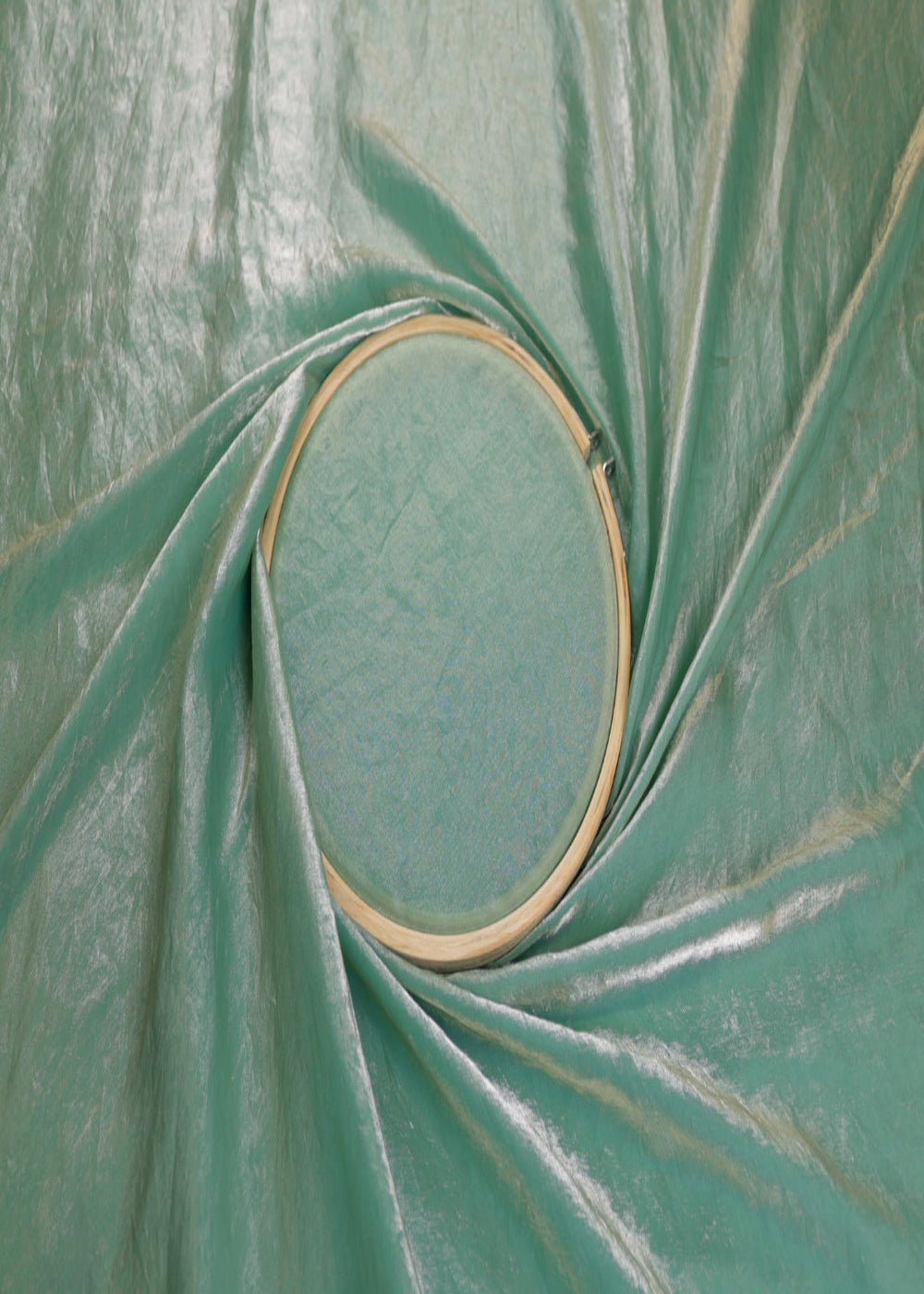
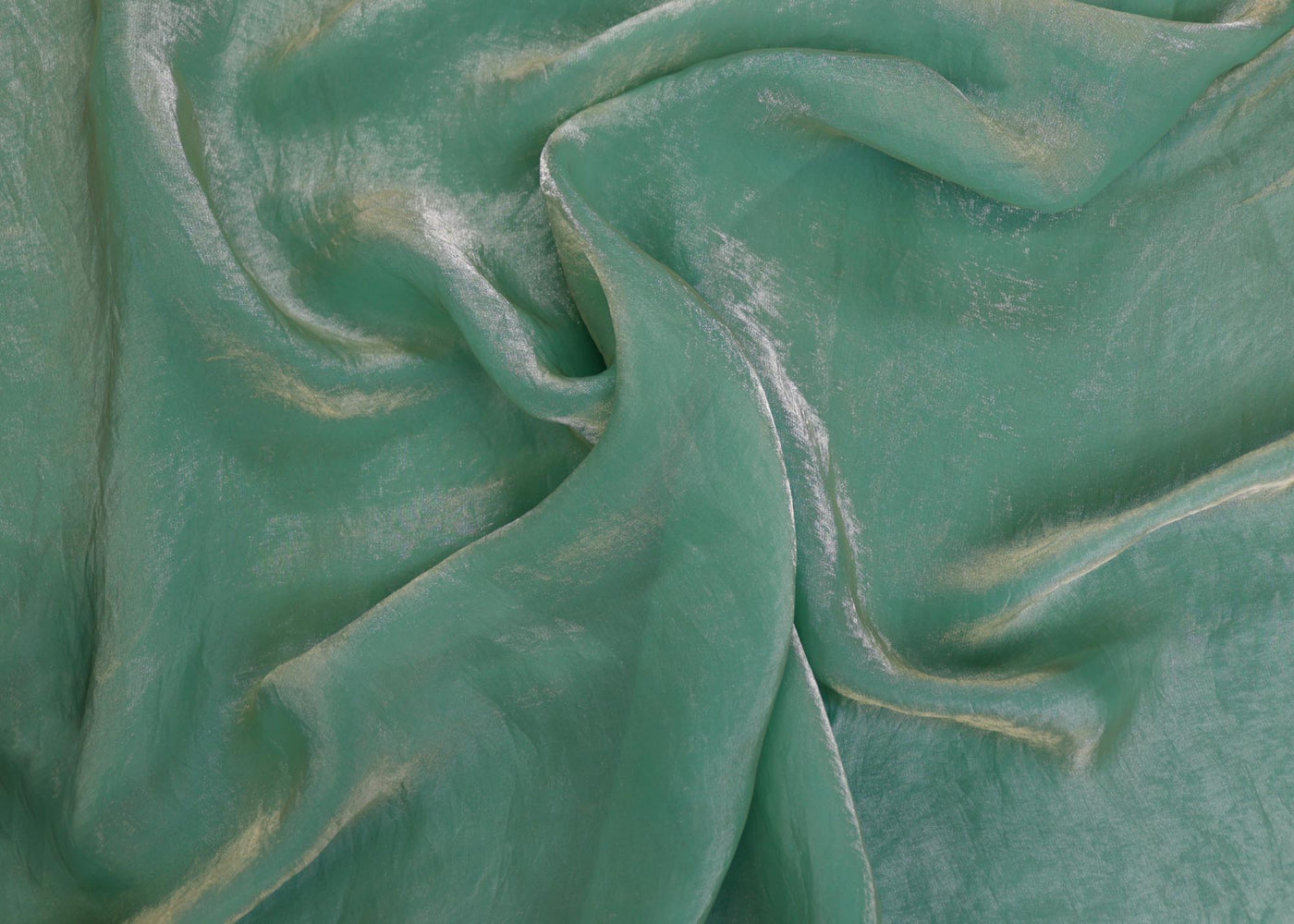
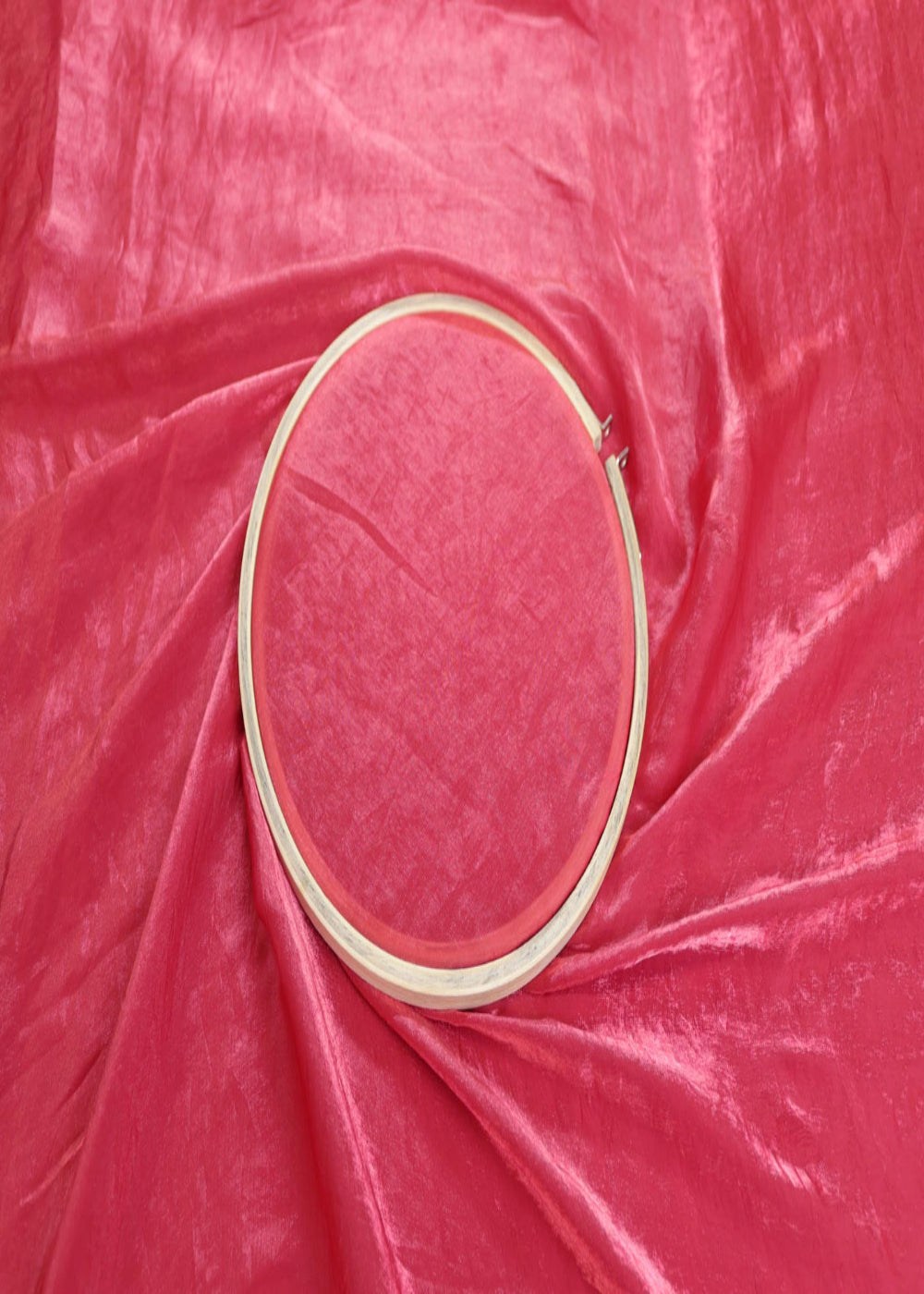
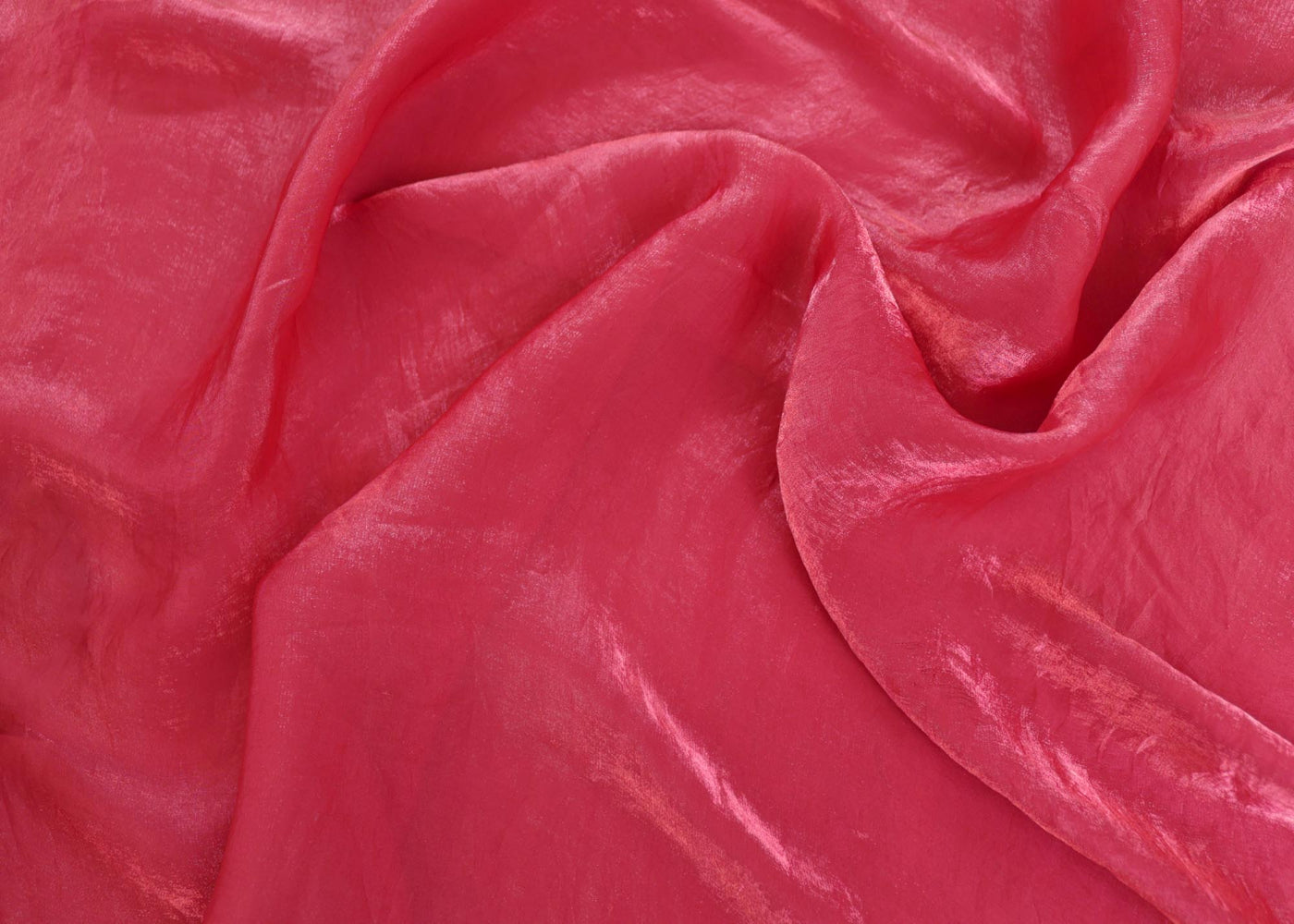

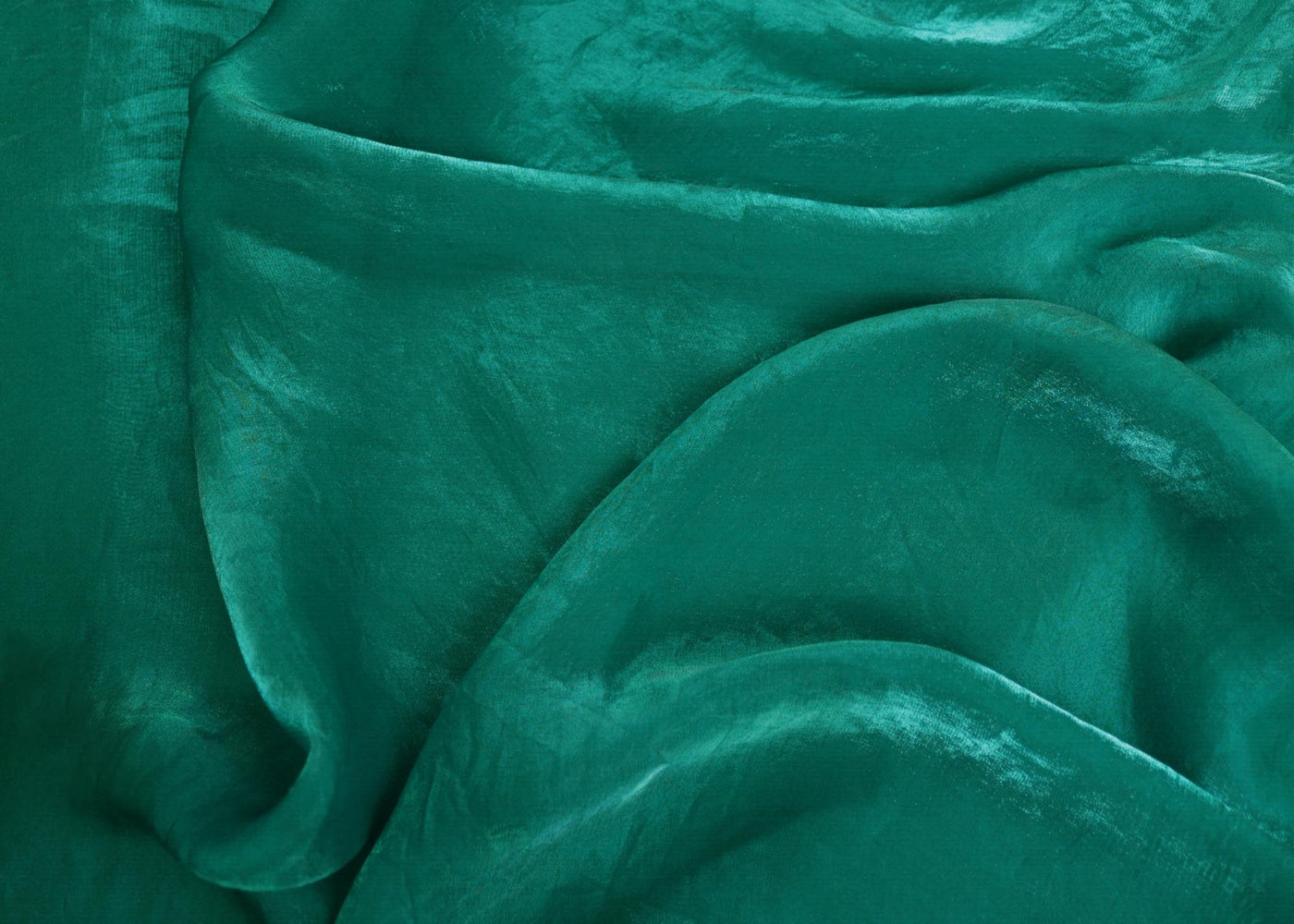
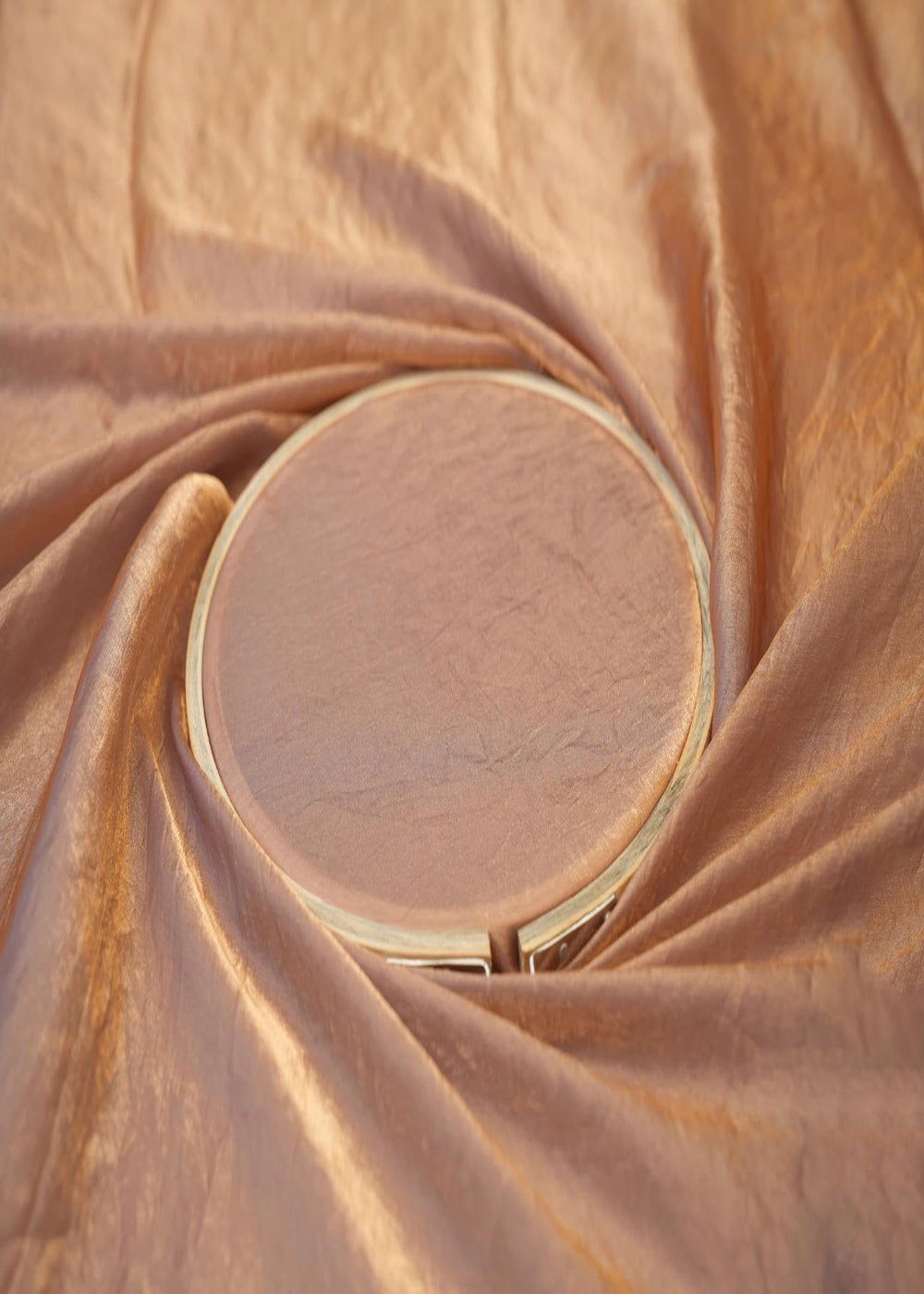
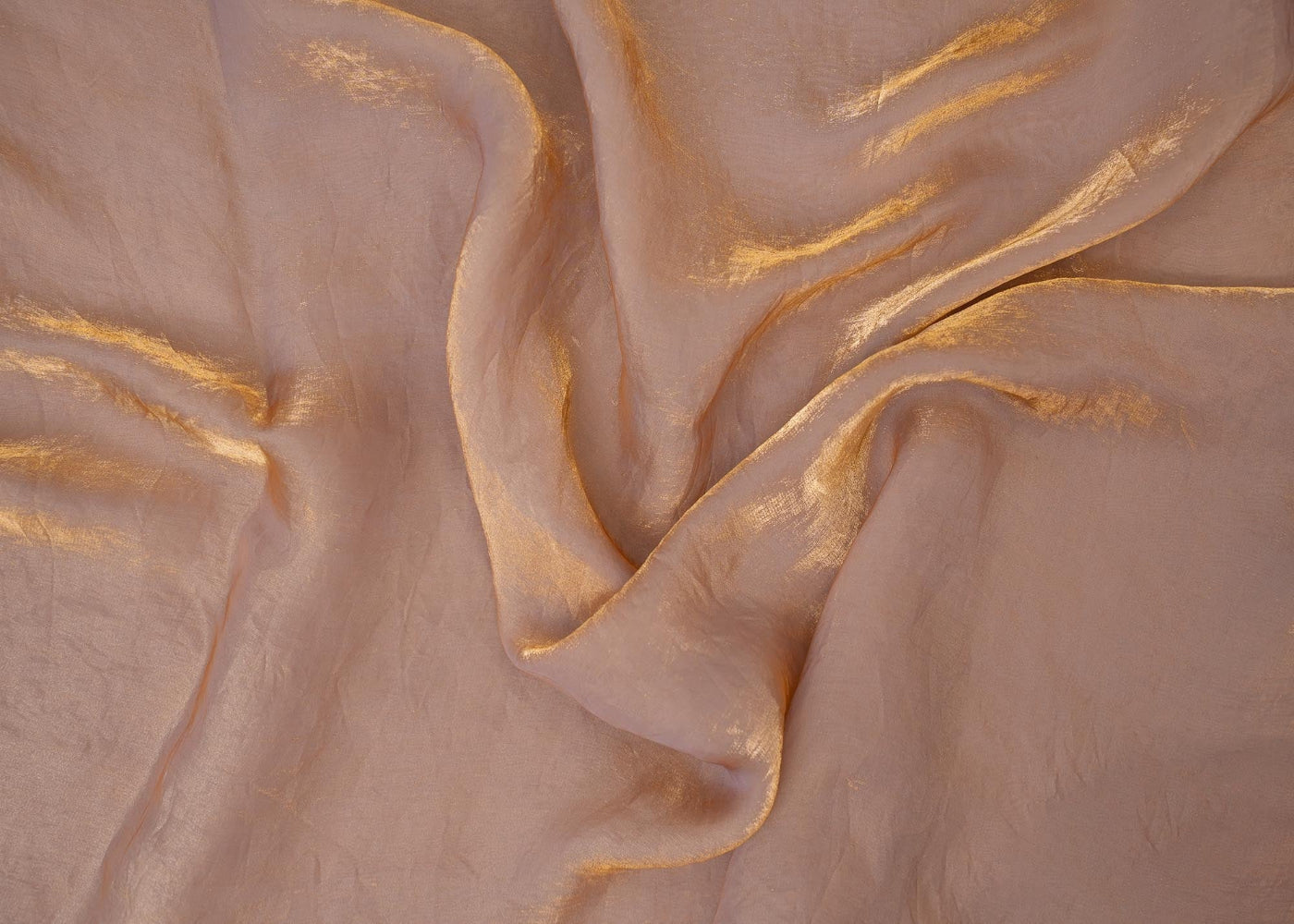
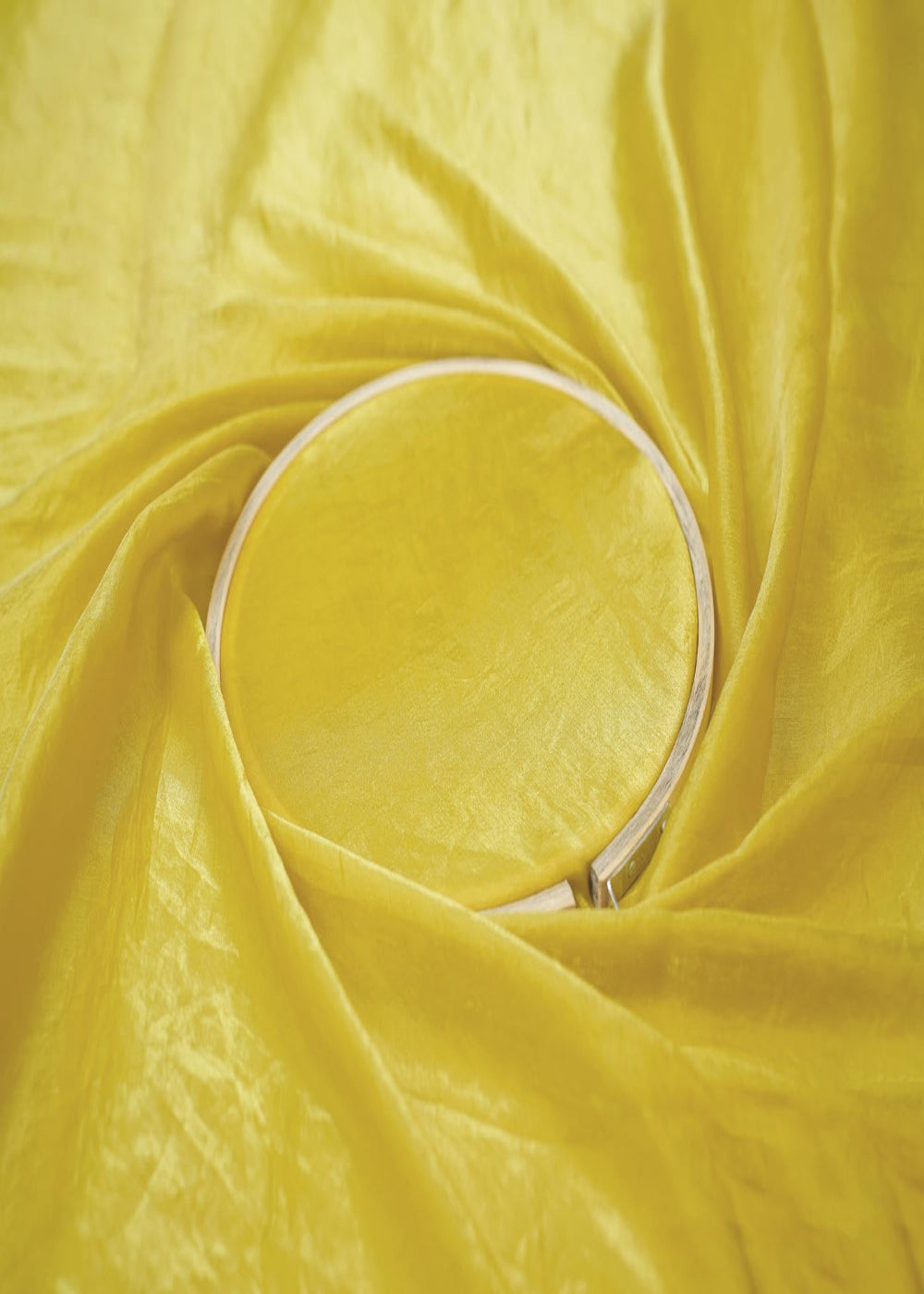
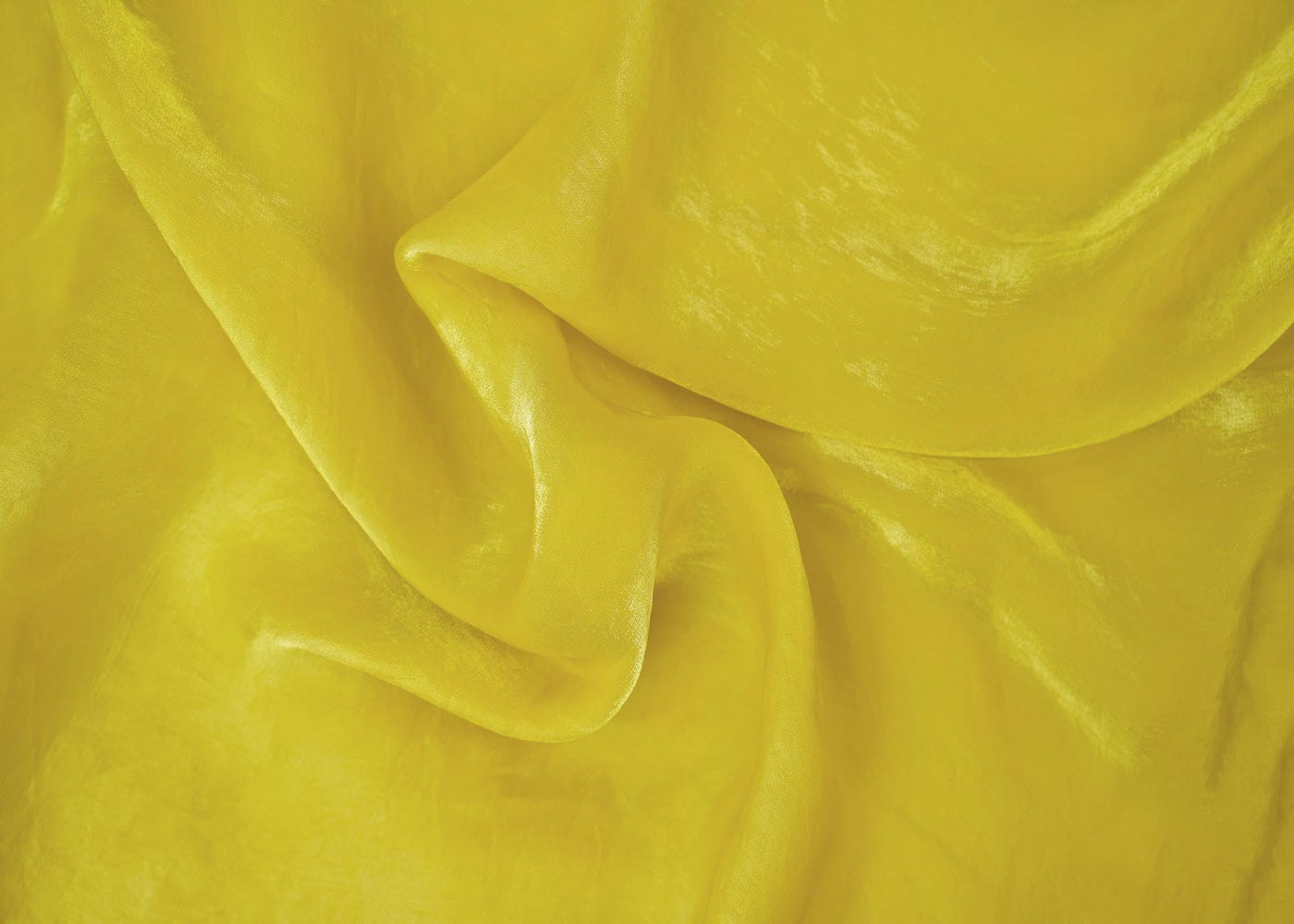
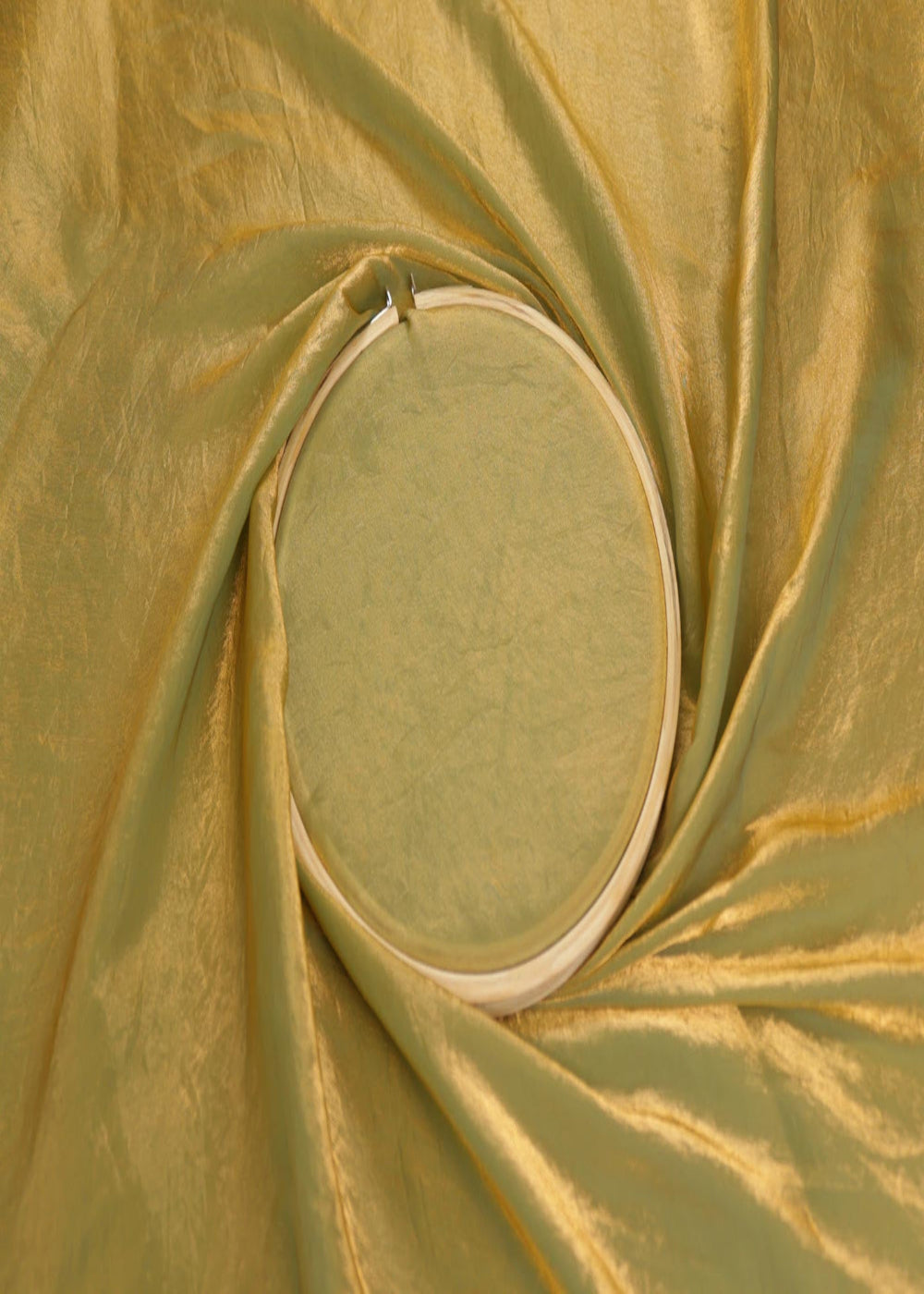
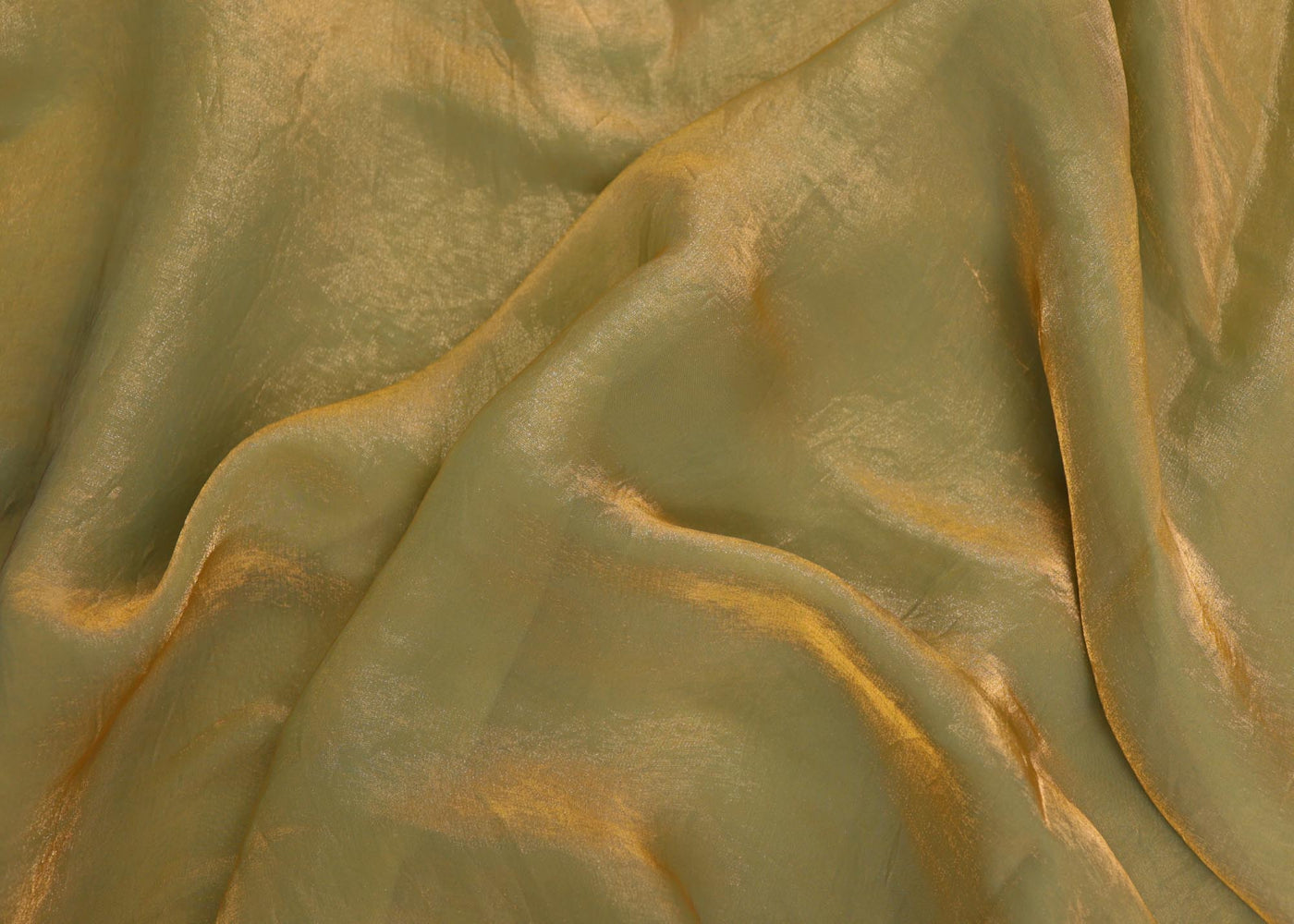
Everything You Need to Know About Diamond Tissue Fabric
Third week of last November, a wedding dupatta wholesaler from Chandni Chowk sends me a WhatsApp voice note. Aslam bhai, urgent 200 metres of diamond tissue in gold-red for wedding season bulk supply. He supplies bridal dupattas to shops across Old Delhi and Kashmiri Gate, needs stock ready before December wedding rush starts. Same seasonal pattern for the past four years.
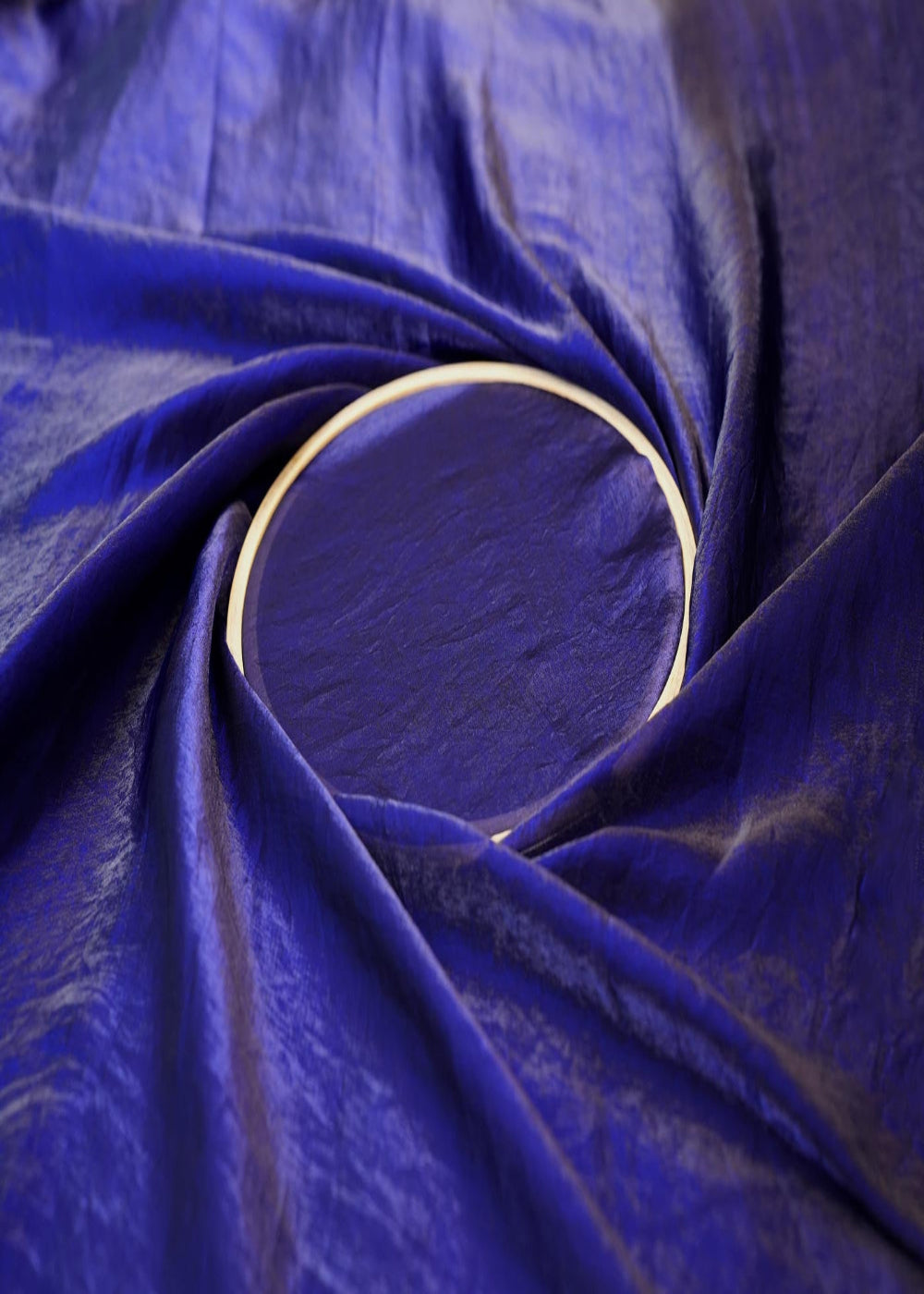
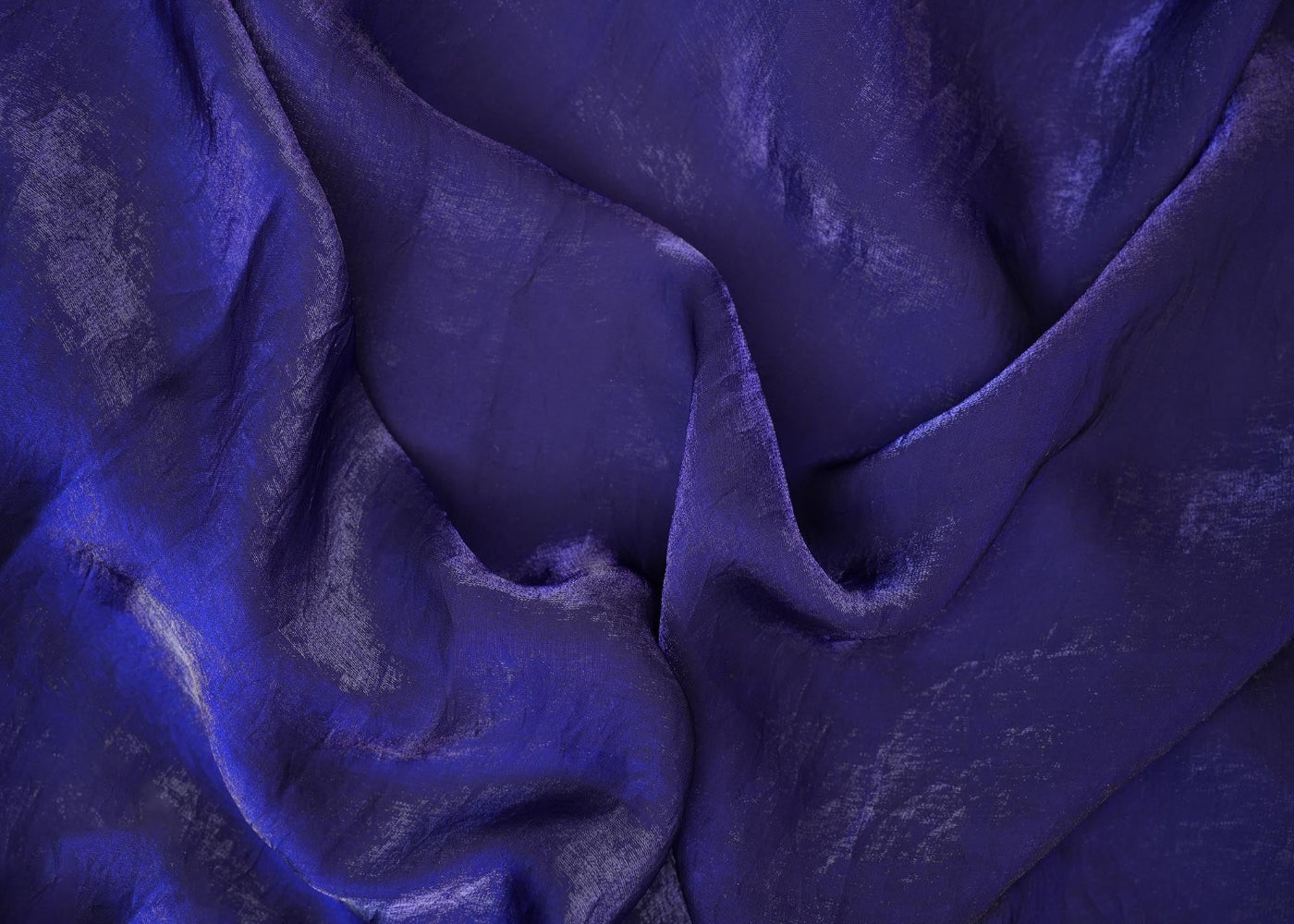
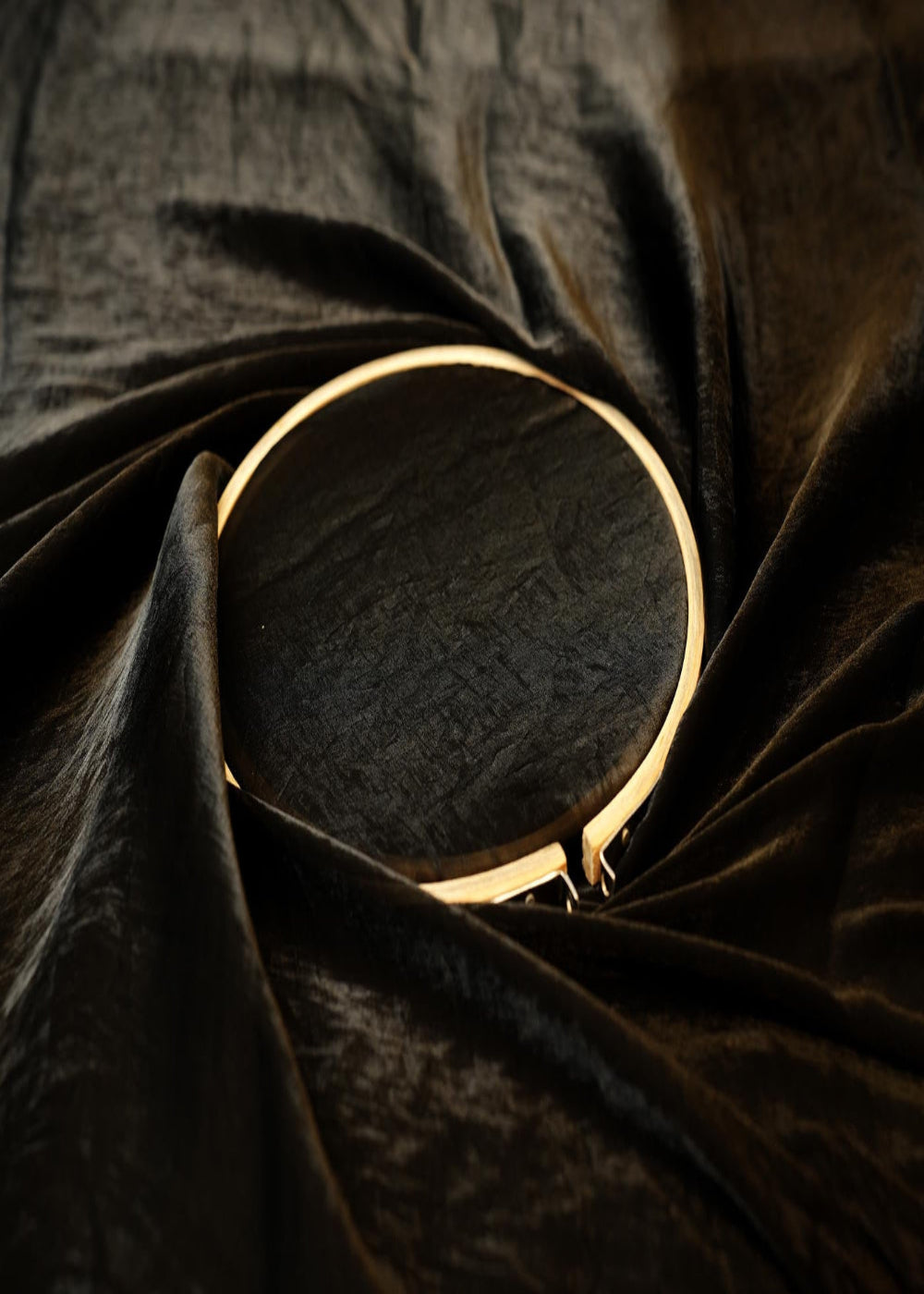
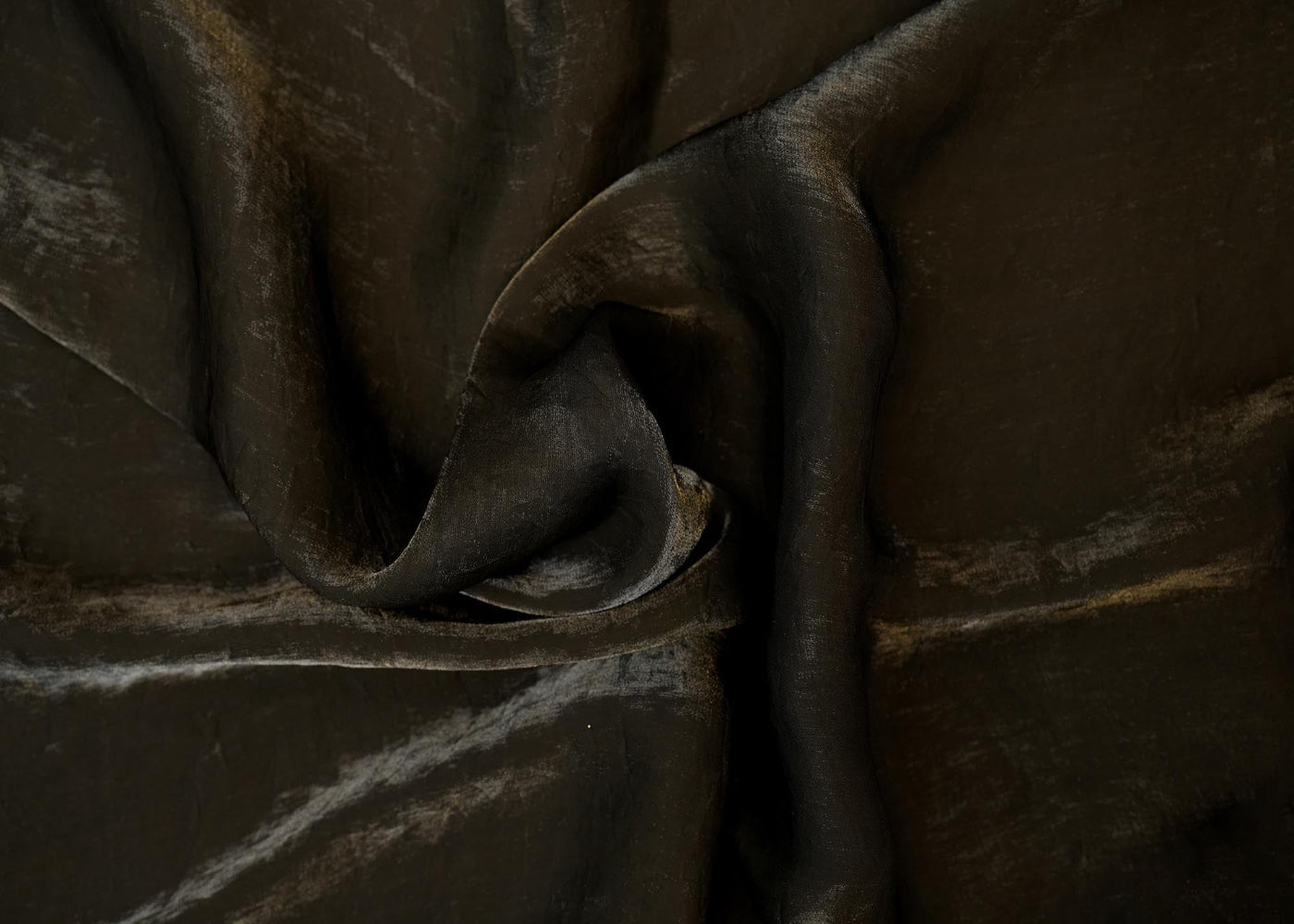
This weave holds a specific niche in Indian bridal market. The woven diamond pattern across the base gives structural depth that plain tissue and even crushed tissue cannot deliver. The shimmer catches through those geometric diamonds differently than through smooth or crushed surfaces, which is exactly why wedding dupatta buyers prefer this fabric for photographed functions like varmala and phera ceremonies.
If you are stitching bridal dupattas, wedding gharara sets, festive lehengas, or gown skirts that need structured shimmer, here is the breakdown of this fabric before committing.
What Makes Diamond Tissue Different
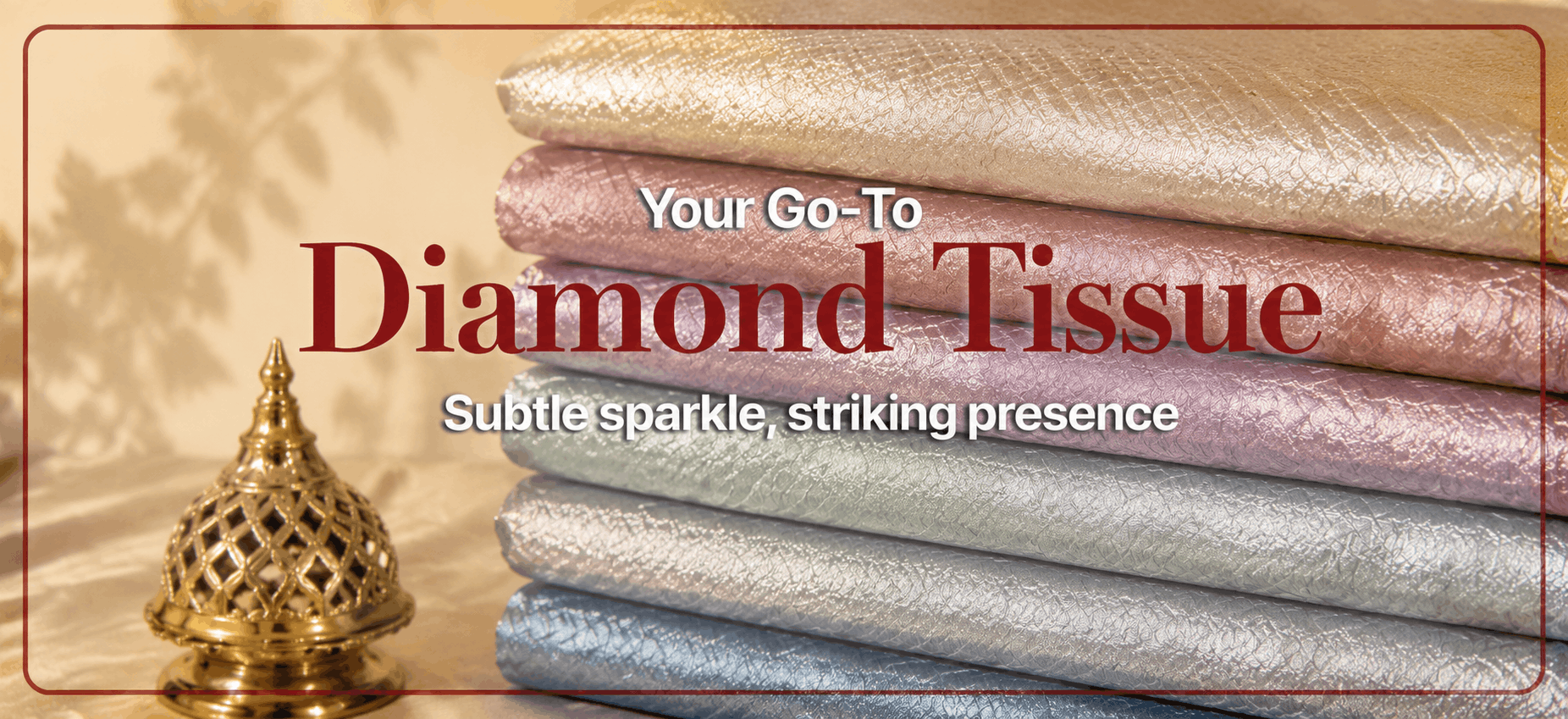
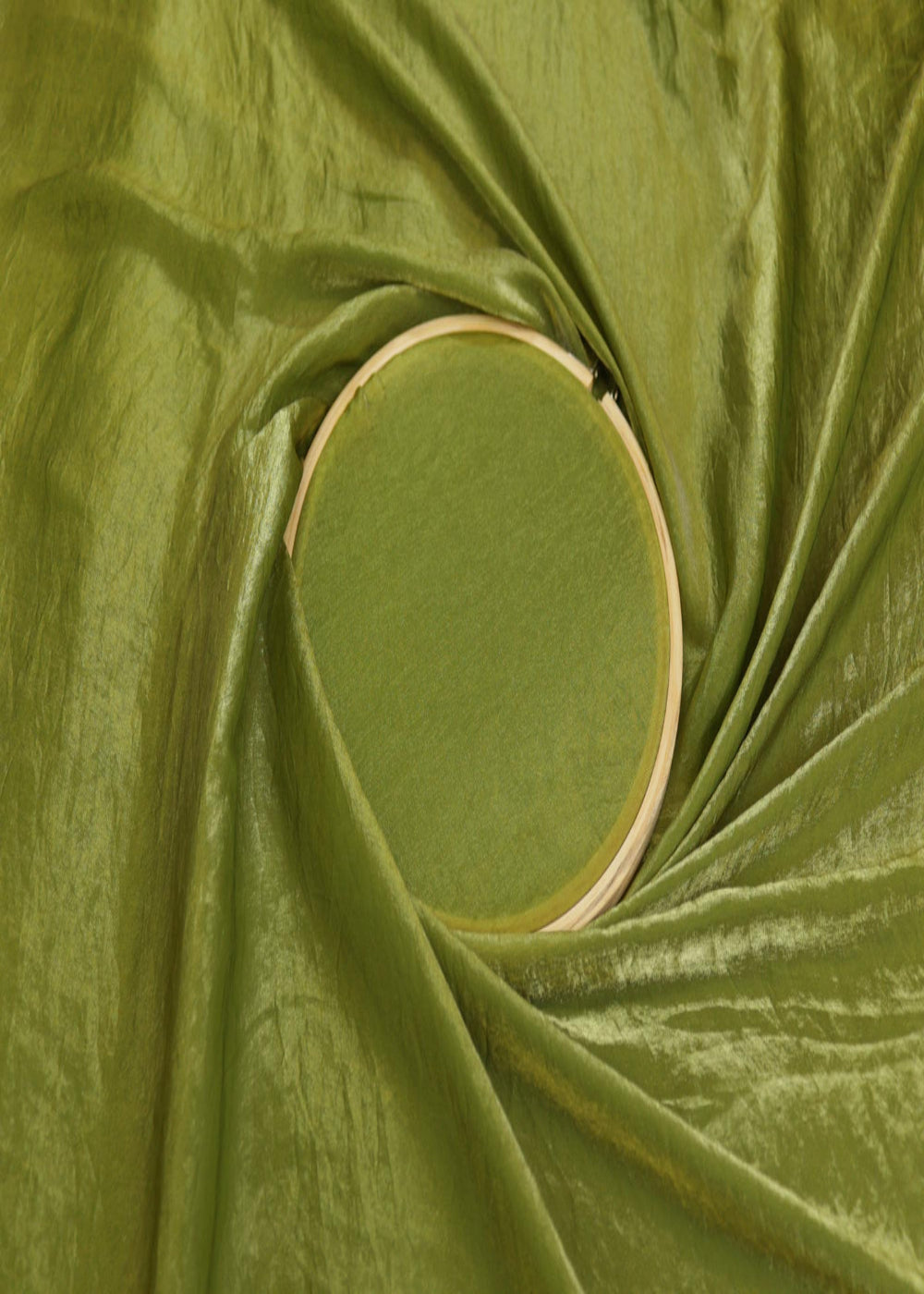
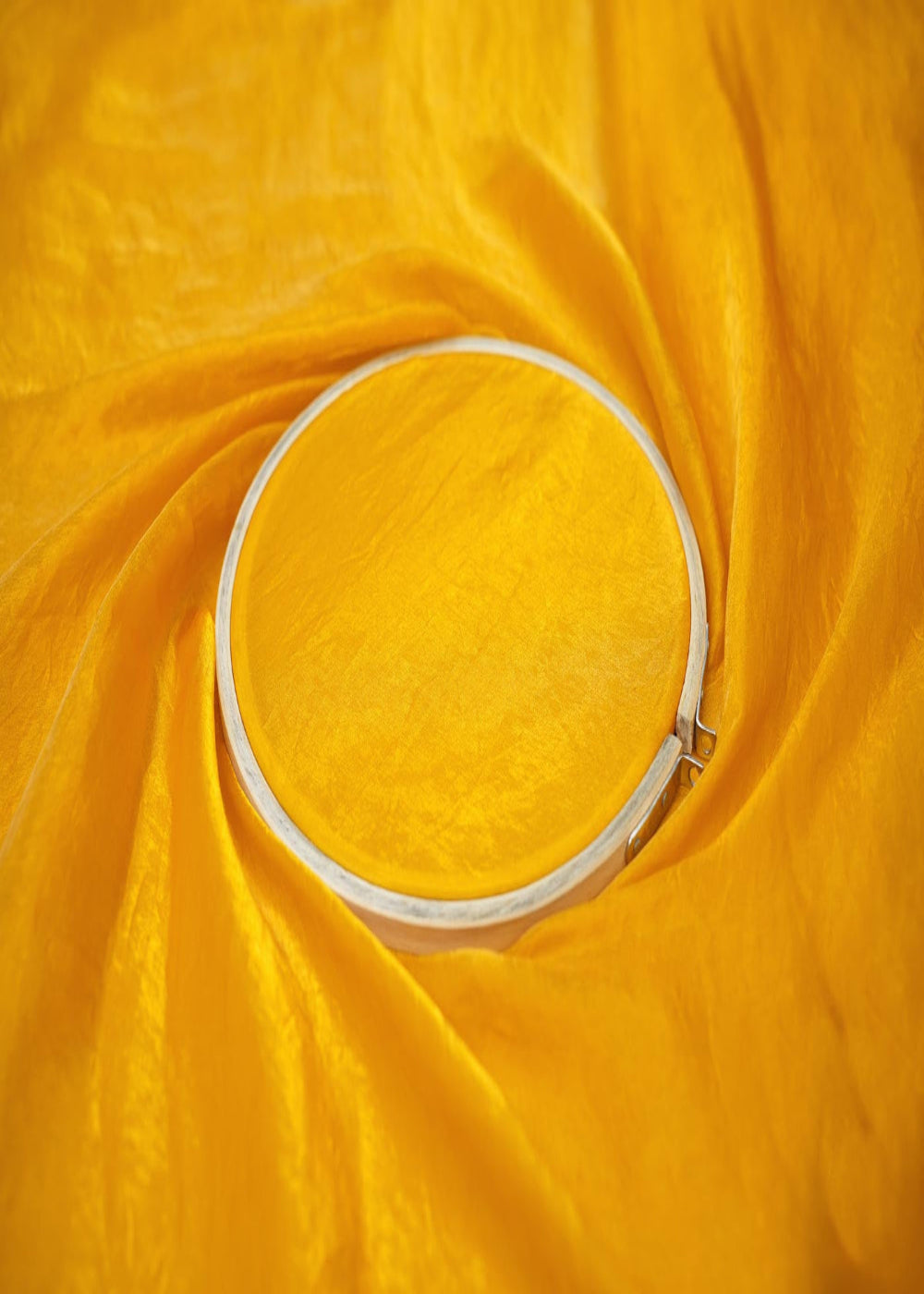
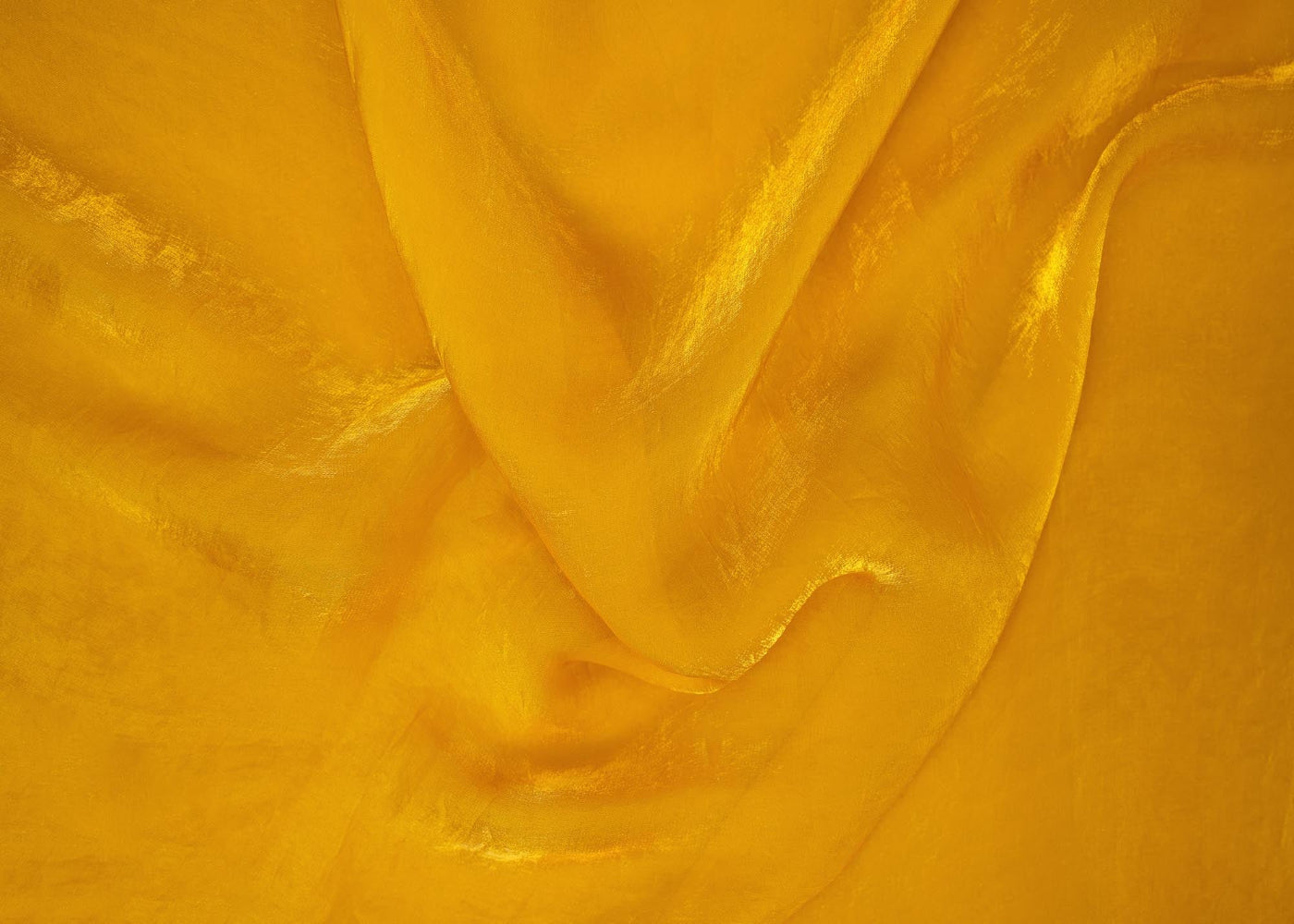
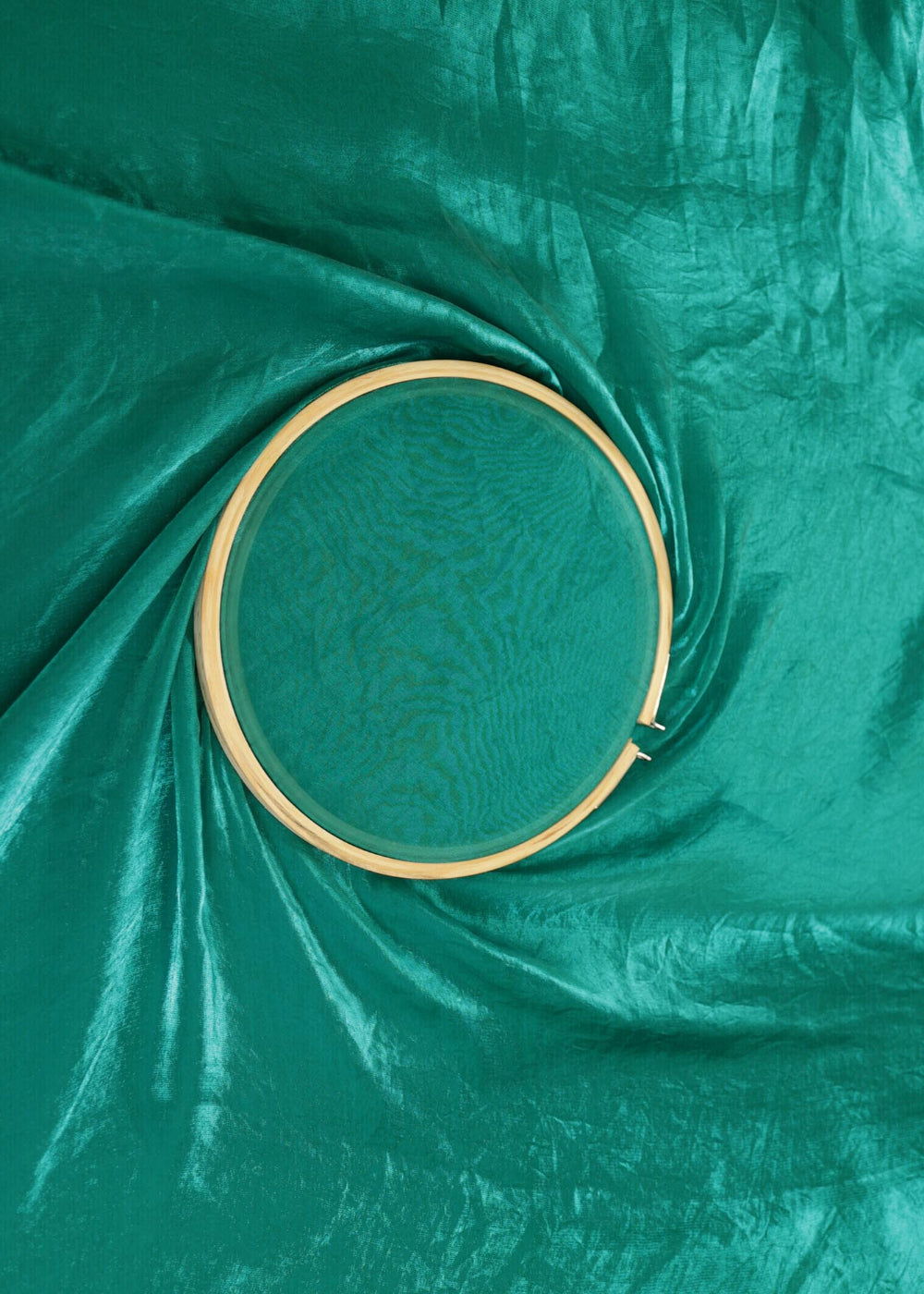
The weave carries a small diamond-shaped pattern woven into the base fabric during manufacturing. Not printed, not embroidered; the pattern comes from the weave structure itself. Metallic thread runs through both warp and weft creating the diamond formation you see across the bolt.
Plain tissue has a smooth surface with uniform shimmer distribution. This one distributes shimmer in geometric formation which creates optical depth. Move your head slightly while looking at a metre of diamond tissue and you can see the light play shift across the diamonds. This effect translates directly to camera footage during wedding videography.
The fabric sits crisper than plain tissue because the geometric weave adds structural rigidity. Drape falls in defined folds rather than soft draping across the wearer. This crispness is why the fabric holds gharara and sharara silhouettes without extra interfacing; bridal dupattas made from diamond tissue photograph with defined shape even when draped.
Boutiques in Lajpat Nagar typically paying Rs. 250 to Rs. 600 per metre depending on shade and metallic density.
Why Boutiques and Designers Continue Choosing Diamond Tissue
Bridal dupatta market is the biggest segment. Wedding dupatta wholesalers across Delhi order this fabric in bulk every wedding season because the diamond weave photographs richly during ceremonies. Videographers capturing varmala moments specifically prefer dupattas that show fabric texture on camera; the diamond weave delivers that requirement.
Wedding gharara production is the next big use. The structural crispness of the diamond weave holds gharara flare without needing extra stiffening interlining. Karigars save both time plus material cost by starting with this fabric instead of building structure through canvas interfacing on plain tissue.
Reception gown skirts is the third area. Designer boutiques stitching gowns with structured skirt volume order diamond tissue because the woven pattern eliminates the need for embroidery to fill visual space. Reduces overall production cost per garment while maintaining the wedding-ready look.
Types of Diamond Tissue in Our Collection
Five variants moving through our shelves regularly.
| Type | Best Use | Approximate Price Range |
|---|---|---|
| Plain Diamond Tissue | Bridal dupattas, gharara panels | Rs. 250 to 380 per metre |
| Gold-Zari Diamond Tissue | Wedding dupattas, festive gowns | Rs. 380 to 650 per metre |
| Silver Diamond Tissue | Reception dupattas, cocktail gowns | Rs. 320 to 550 per metre |
| Sequin Diamond Tissue | Sangeet outfits, bridal blouses | Rs. 550 to 1,100 per metre |
| Embroidered Diamond Tissue | Bridal lehengas, designer wedding dupattas | Rs. 900 to 2,400 per metre |
For first-time buyers, plain gold-zari is the most flexible pick. Works as bridal dupatta, gharara panel material, plus matches with heavier embroidered lehenga fabrics without competing visually.
Diamond Tissue GSM Guide
Weight affects crispness and diamond definition. Three ranges we stock.
| GSM Range | Fabric Feel | Best For |
|---|---|---|
| 60 to 90 GSM | Light, defined diamonds | Bridal dupattas, layered kalis |
| 90 to 130 GSM | Mid-weight, sharp weave | Gharara panels, cocktail gowns |
| 130 to 200 GSM | Heavy, prominent geometry | Reception lehengas, wedding blouses |
Most bridal boutique buyers default to the 90 to 130 range. Balances diamond pattern visibility with drape control across dupatta plus gharara plus gown constructions.
Popular Uses of Diamond Tissue
Where this fabric earns its place on our shop counter through wedding season.
Bridal dupattas for varmala and phera ceremonies. Signature use case where the diamond pattern photographs across video and stills both.
Wedding gharara panels with defined flare. The fabric holds structure without interfacing.
Reception cocktail gowns with structured skirt volume. The geometric weave adds visual texture without extra embroidery layers.
Festive kurta bottoms for grooms and wedding guests. Diamond tissue in silver or gold shades pairs with plain silk kurta tops.
Sangeet blouses with sequin work overlay. The base diamonds visible through sequin gaps add depth photographers love.
Bridal lehenga dupattas with zari borders. Diamond tissue base plus zari border delivers the traditional bridal look at modern pricing.
Diamond Tissue Trends for 2026
Three patterns running strong on our shop floor this season.
Gold-red combination is leading. Traditional bridal shade never goes out of demand; diamond weave in this combination remains the highest-volume seller across our bulk buyers. Chandni Chowk wholesalers reorder gold-red every three weeks currently.
Rose gold and silver diamond tissue is the second trend. Newer brides picking non-traditional bridal shades for reception dupattas and gharara sets. Modern wedding aesthetic driving this shift. South Delhi boutiques ordering rose gold in 50-metre lots monthly.
Sequin overlay on diamond tissue is the third pattern. Karigars stitching sparse sequin work that lets the underlying diamond weave show through. Adds embellishment without hiding the fabric character. Popular for sangeet outfit production this season.
Expert Tips for Working with Diamond Tissue
Some tips from many bridal seasons of watching this fabric perform after stitching.
Cut along the grain always. Diamond tissue has a directional pattern created by the weave, so cross-grain cuts break the visual continuity of the diamonds across the finished garment. Bridal dupattas cut wrong direction look visually broken.
Match diamond alignment across joined panels. When two pieces need to seam together, align the diamond rows before pinning. Misaligned diamonds at the seam create a jarring optical break that photographs badly on wedding videos.
Iron on low heat with press cloth. Direct high heat can melt the metallic thread creating black scorch marks that never come off. Steam ironing through a press cloth works safer.
For dupatta hemming, use rolled hem construction. Overlock and flat hem both flatten the diamond pattern near the edge. Rolled hem preserves the diamond definition right up to the fabric edge.
Line bridal dupattas with plain georgette or chiffon for extra drape control. Standalone diamond tissue dupattas can flip during ceremonies, lining adds weight without hiding the fabric character.
These small details separate a wedding-ready diamond tissue garment from one that looks amateur on the video.
What is Diamond Tissue? (Quick Definition)
A lightweight tissue fabric with a diamond-shaped geometric pattern woven directly into the base using metallic thread through warp plus weft together is what defines diamond tissue. It gets used in bridal dupattas, wedding gharara panels, reception gowns, festive kurta bottoms, sangeet blouses, plus bridal lehenga dupattas. Available across 60 to 200 GSM in gold, silver, plus rose gold combinations.
Why Designers Buy Diamond Tissue Online
This is a structured tissue popular in Indian bridal wear because the woven diamond pattern delivers geometric depth that plain and crushed tissue cannot match. Metallic thread through warp and weft creates the shimmer that catches wedding video lighting distinctly. Boutiques in Delhi NCR price plain weights between Rs. 250 to Rs. 600 per metre, while embroidered variants run up to Rs. 2,400. Best uses: bridal dupattas, wedding gharara panels, reception gowns, festive kurta bottoms, sangeet blouses, bridal lehenga dupattas.
Frequently Asked Questions
How is diamond tissue different from plain tissue?
Plain tissue has smooth surface with uniform shimmer. The diamond variant has small diamond patterns woven into the base creating geometric depth. Both use metallic thread but diamond tissue distributes it in structured pattern rather than smooth spread. Bridal buyers prefer diamond weave because it photographs with visible texture during videography.
Will the diamond pattern be consistent across the bolt?
Yes mostly. Mill-produced diamond tissue maintains consistent pattern across full bolt length. Small variations of about 2 percent happen at the selvedge edges but those get cut off during panel construction anyway. For bulk orders needing perfect uniformity across colour dye lots, order all required quantity in one purchase.
Can diamond tissue be re-dyed for custom shades?
Not recommended. The metallic thread through the base gets discoloured during home dyeing, ruins the diamond pattern effect. Order pre-coloured in your shade from our catalogue instead. For custom shade matching above 100 metres, our team handles industrial dyeing that preserves the metallic finish.
Is diamond tissue heavy enough for bridal wear?
For bridal dupatta construction the 90 GSM and above variants work without needing extra lining. For structured gharara panels the 130 GSM and above variants hold shape without interfacing. For bridal lehenga dupattas needing weight for drape control, choose the 130 to 200 GSM range or add a georgette inner layer.
Is diamond tissue available in bulk for wedding season production?
Yes definitely. Bulk pricing kicks in at 50 metres per SKU per shade; wholesale tiers begin at Rs. 200 per metre for plain weights on 100-metre-plus orders. Wedding-season bulk lots above 200 metres unlock production pricing. WhatsApp the team by August for reliable delivery ahead of the November-February wedding rush.
How much fabric does a bridal dupatta need?
Standard bridal dupatta needs 2.5 metres for a single-layer construction. Double-layer dupattas with contrast lining need 5 metres total. Long temple-style dupattas measured from head to floor and back need 3 metres minimum. Use our Fabric Estimator with the exact bridal outfit style before ordering.
Why Boutique Owners Choose Diamond Tissue from Paras Gallery
Twenty metres minimum buys sample-rate pricing per shade. Fifty metres lands wholesale tier. Two hundred metres opens wedding-season production pricing for bridal boutique manufacturers running seasonal supply cycles.
For one-off bridal purchases we ship single metres with weave swatches dispatched within 48 hours across India. Bridal dupatta buyers should use our Fabric Estimator since diamond alignment across joined panels requires careful cut planning that varies by dupatta style.
Browse the full diamond tissue range below or WhatsApp our team for shade matching before bulk order through our wholesale catalogue. Many wedding seasons of supplying diamond tissue to bridal wholesalers, we know which weights work for which ceremonies. Shortcut is asking us first, not after the karigar starts cutting.
