





How Crepe Jacquard Became the Party Kurti Standard
Crepe jacquard fills a specific gap in the party wear segment. Plain crepe reads too casual for cocktail and sangeet functions. Georgette satin reads too formal. Crepe jacquard sits between them, which is why Delhi NCR boutiques absorbed it heavily across 2023 and 2024 for the Rs 3,500 to 9,000 kurti band.
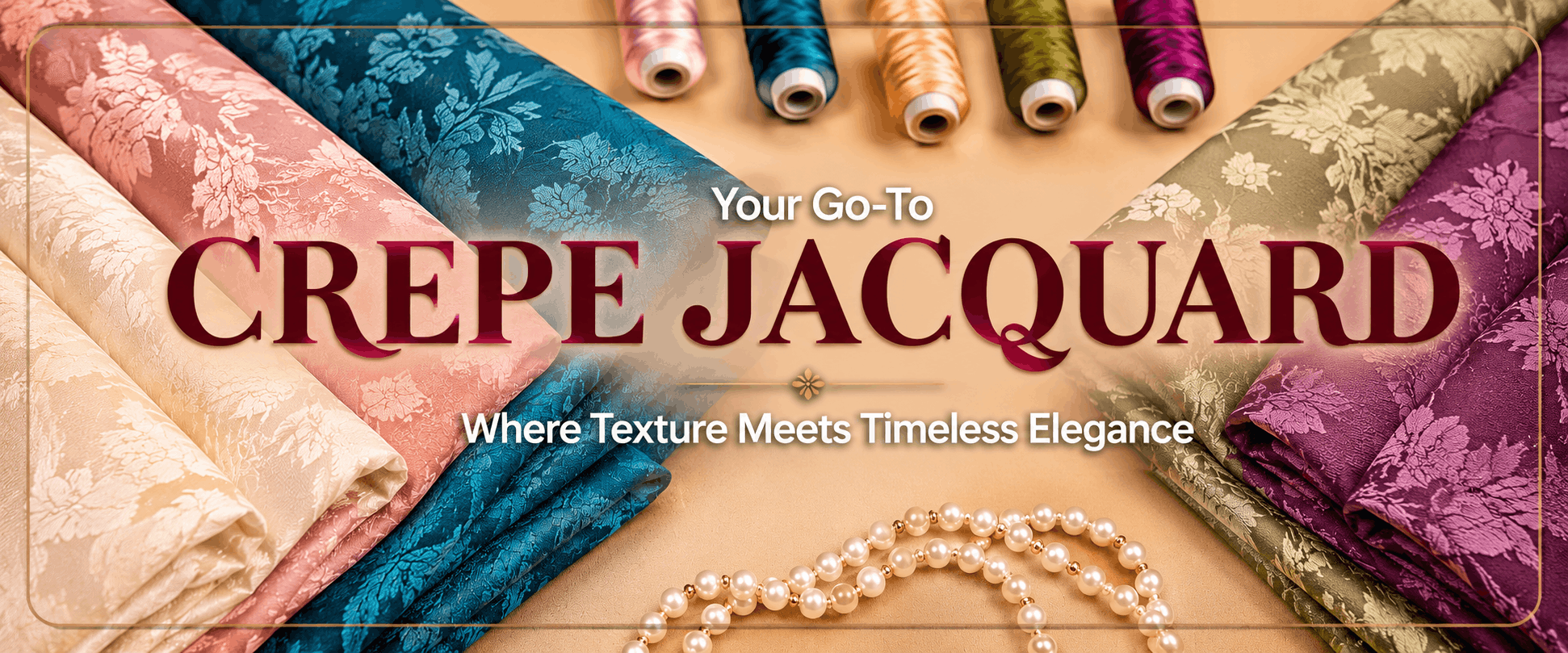
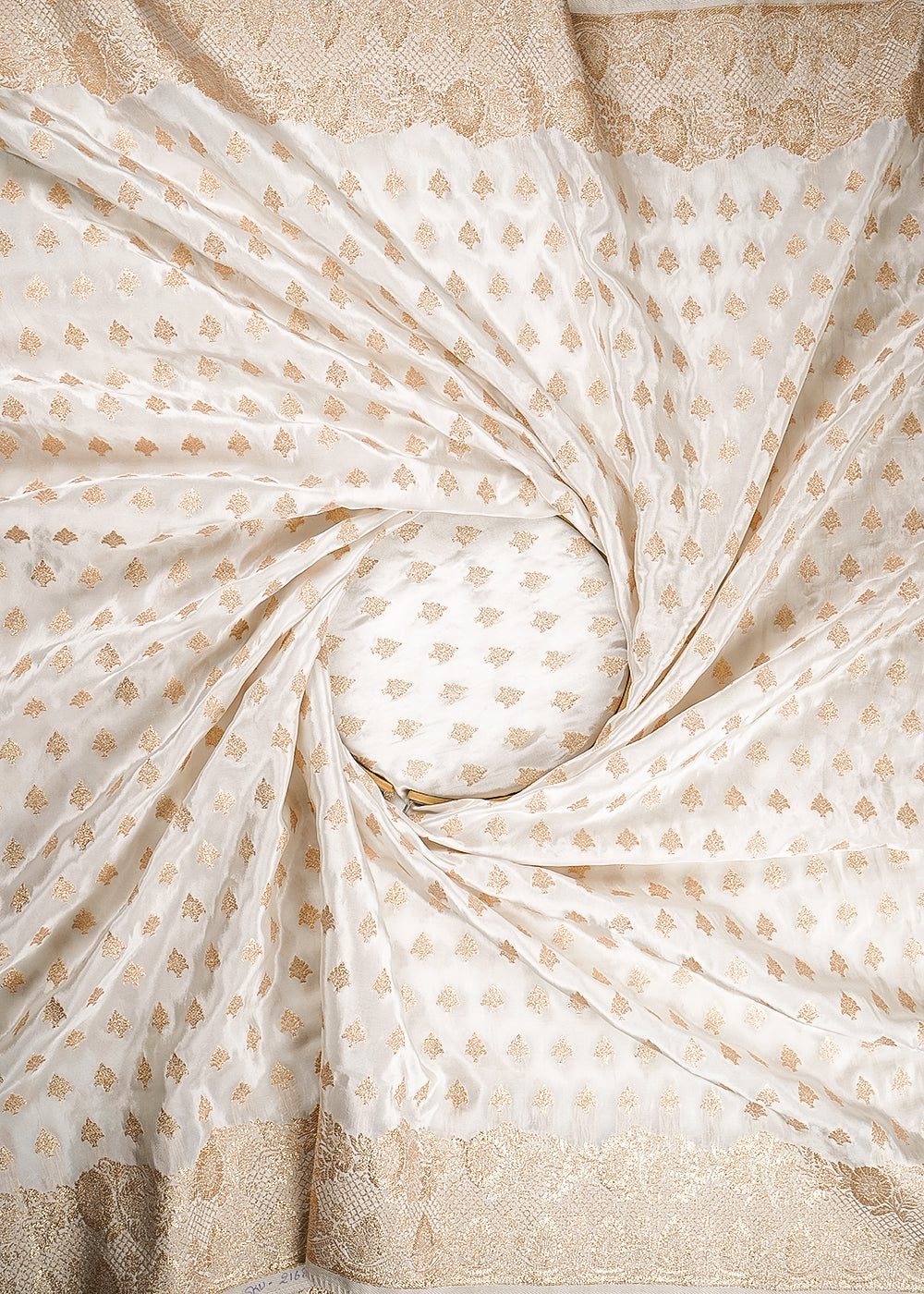
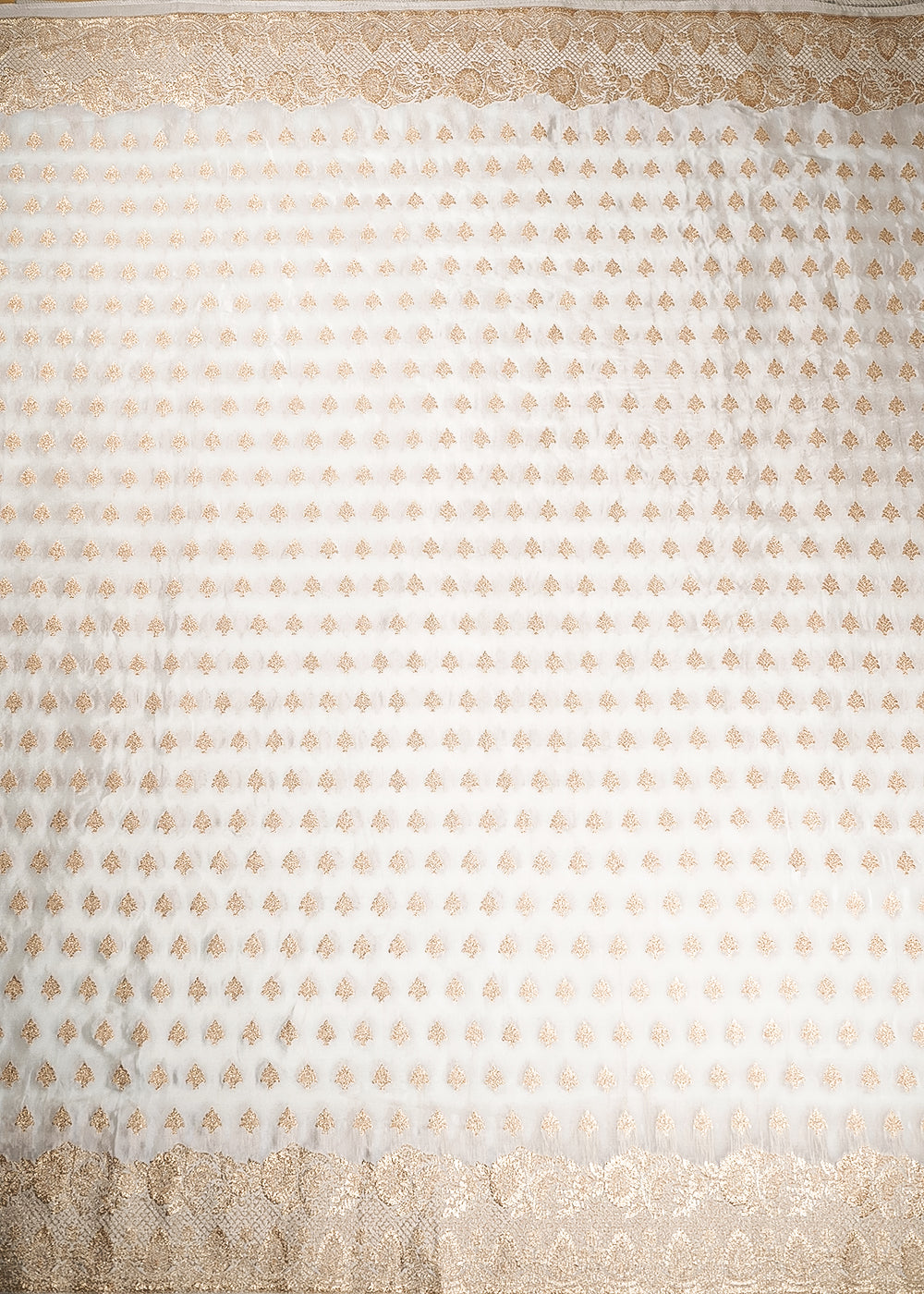
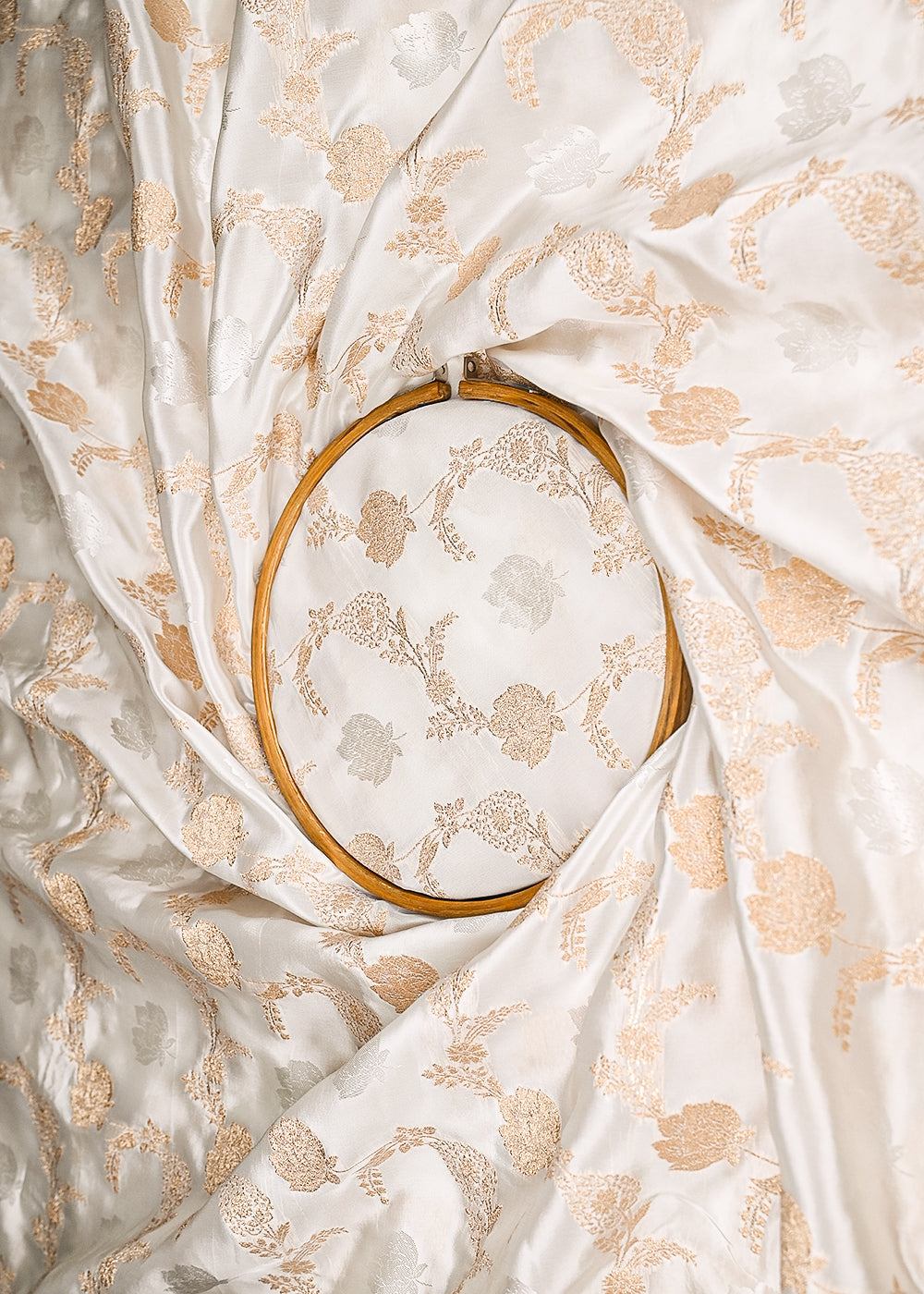
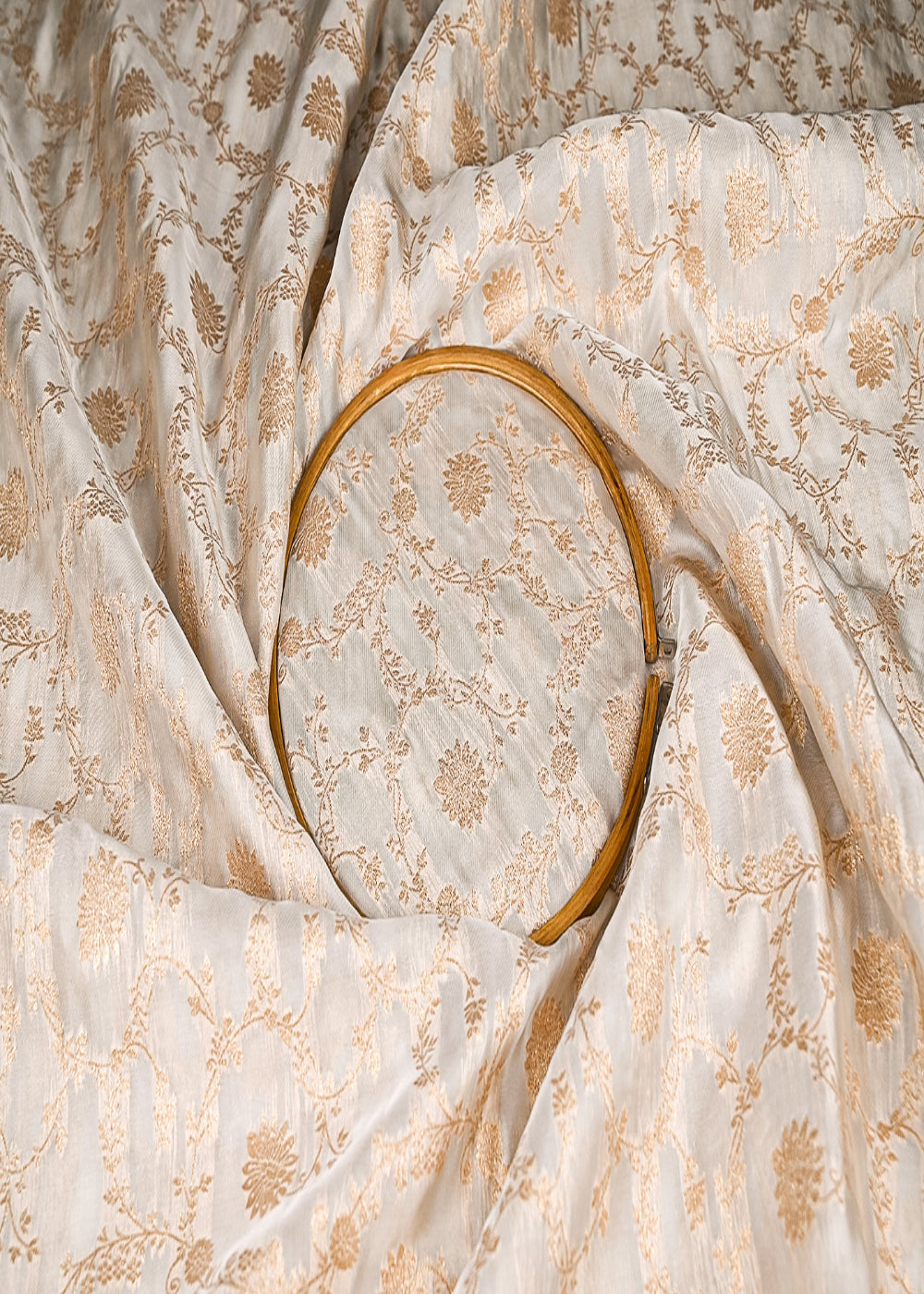
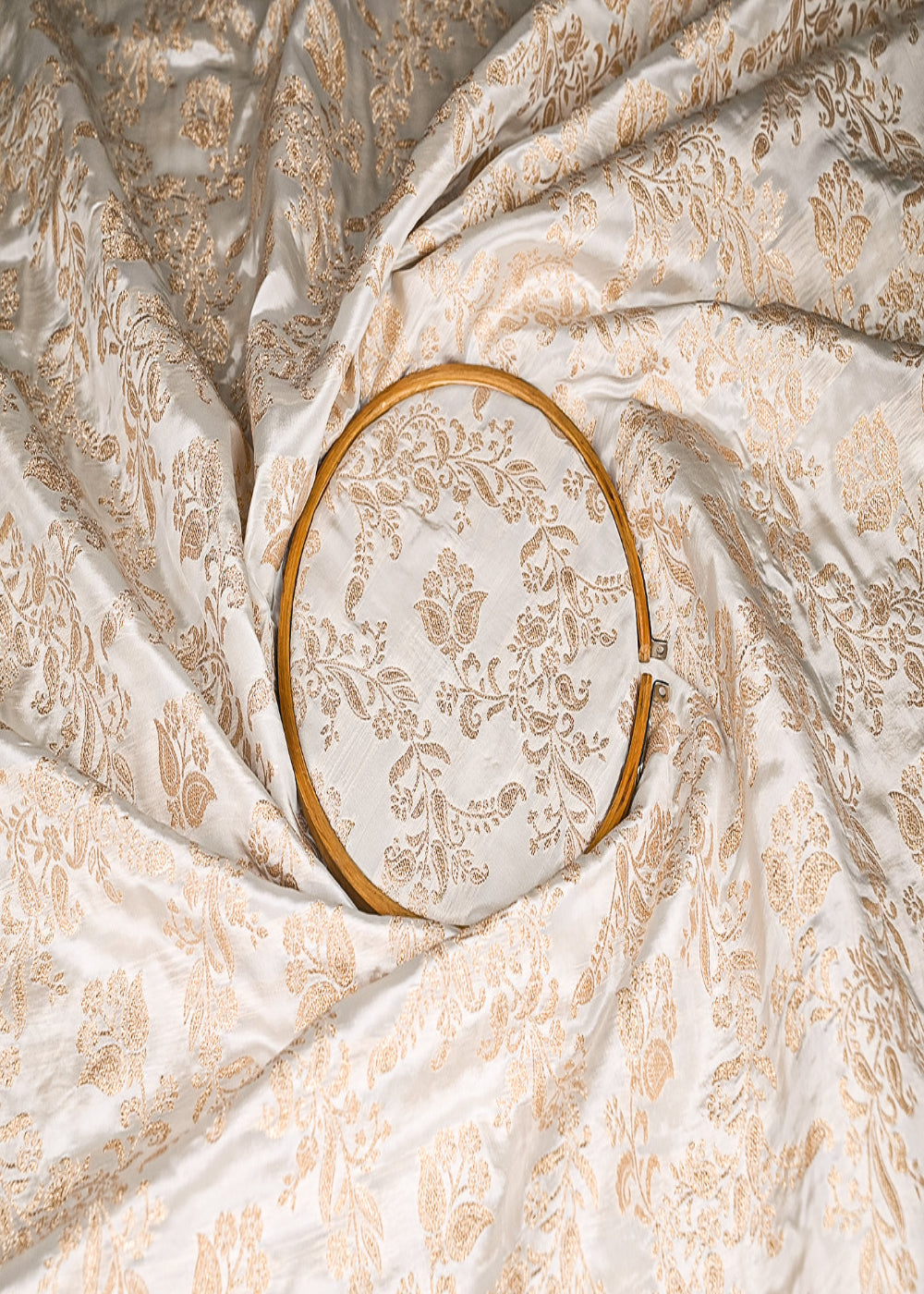
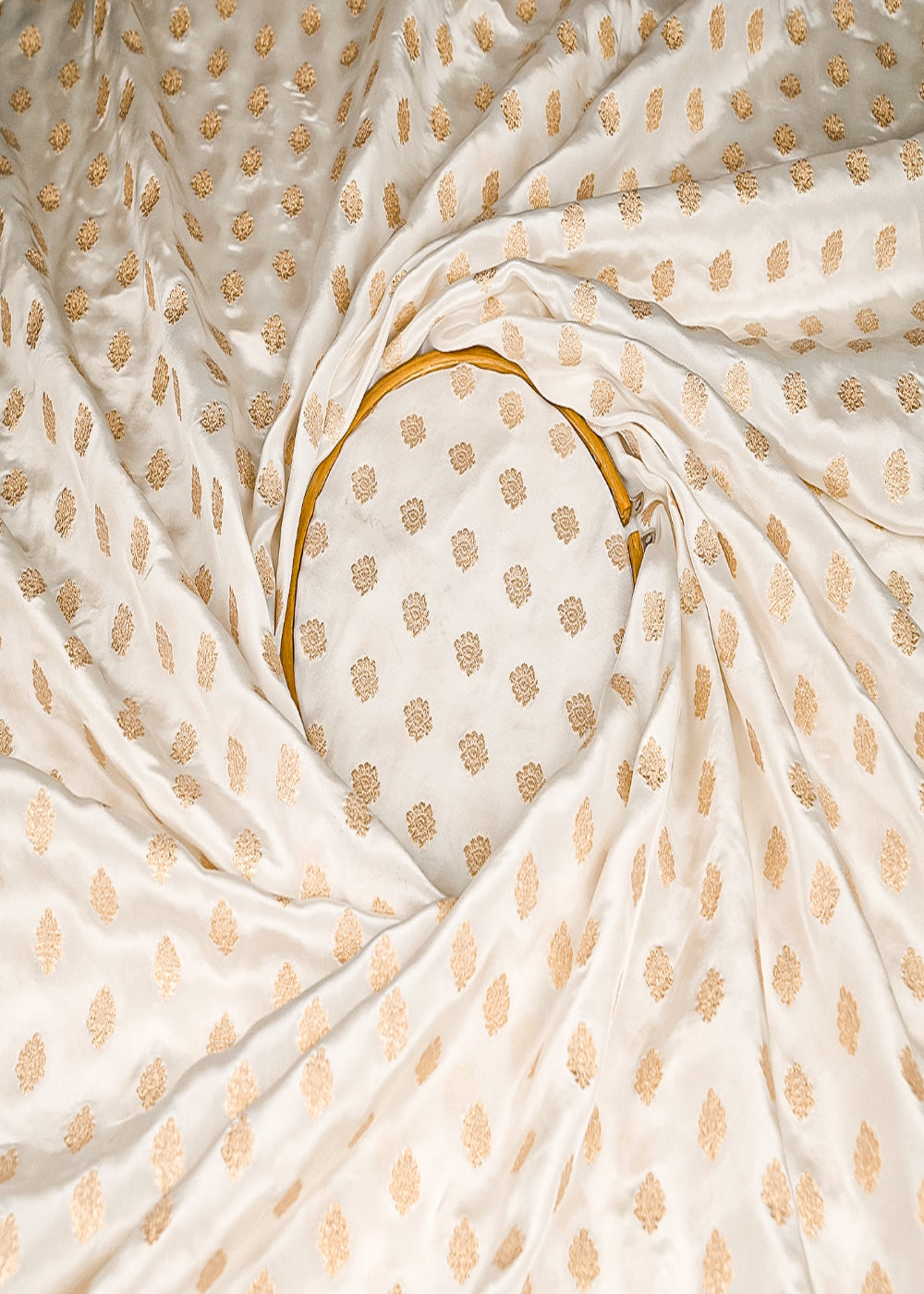
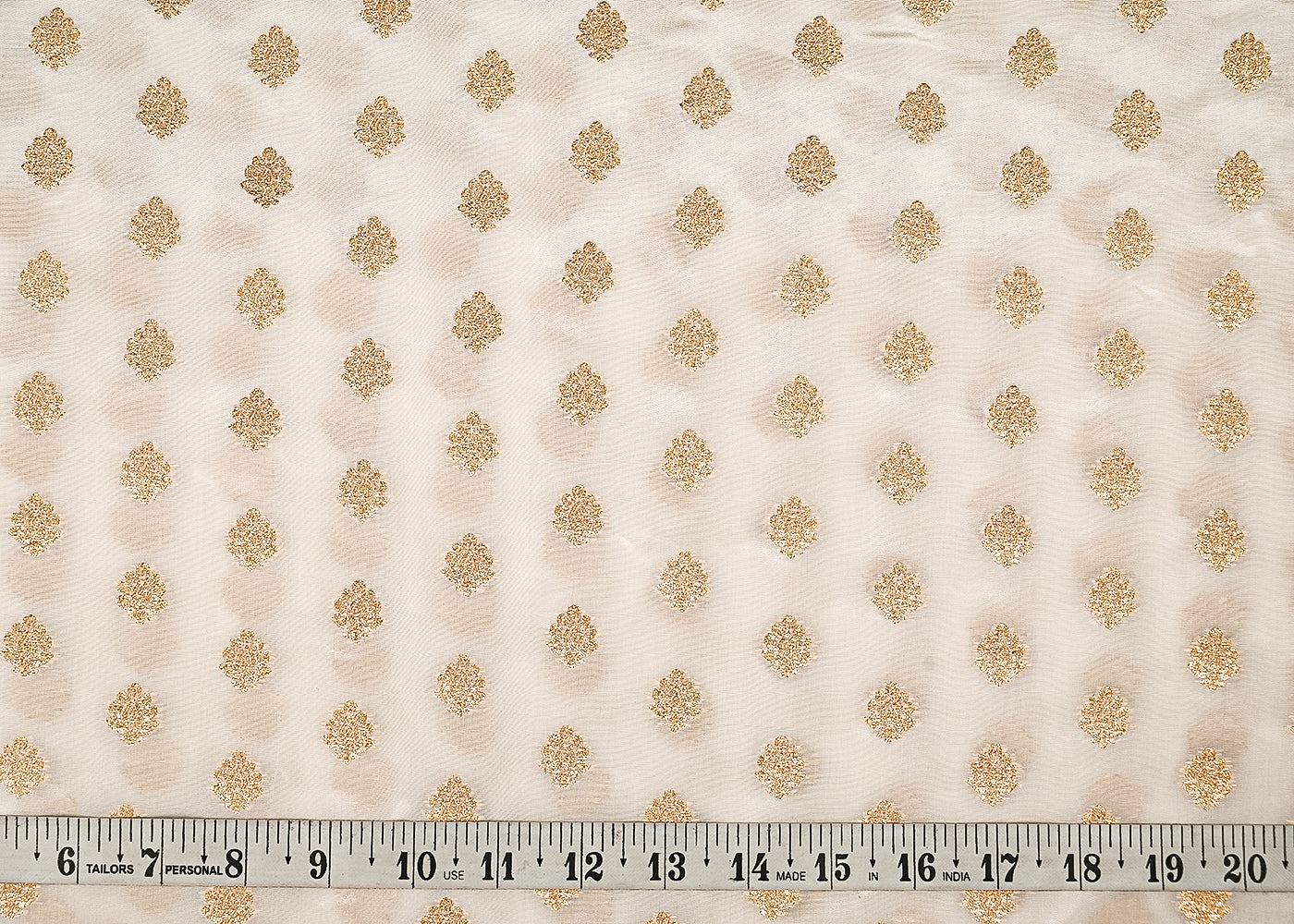
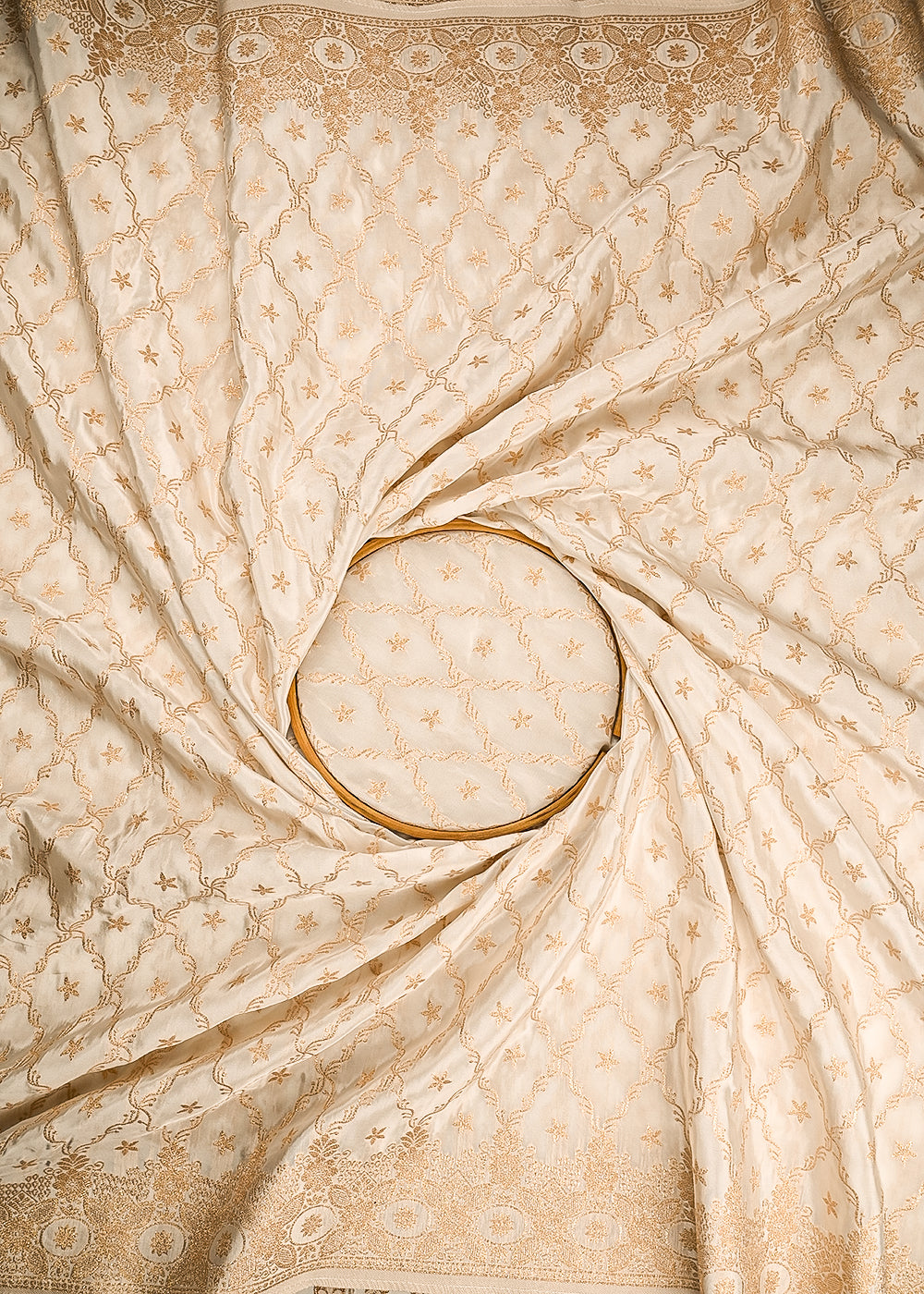
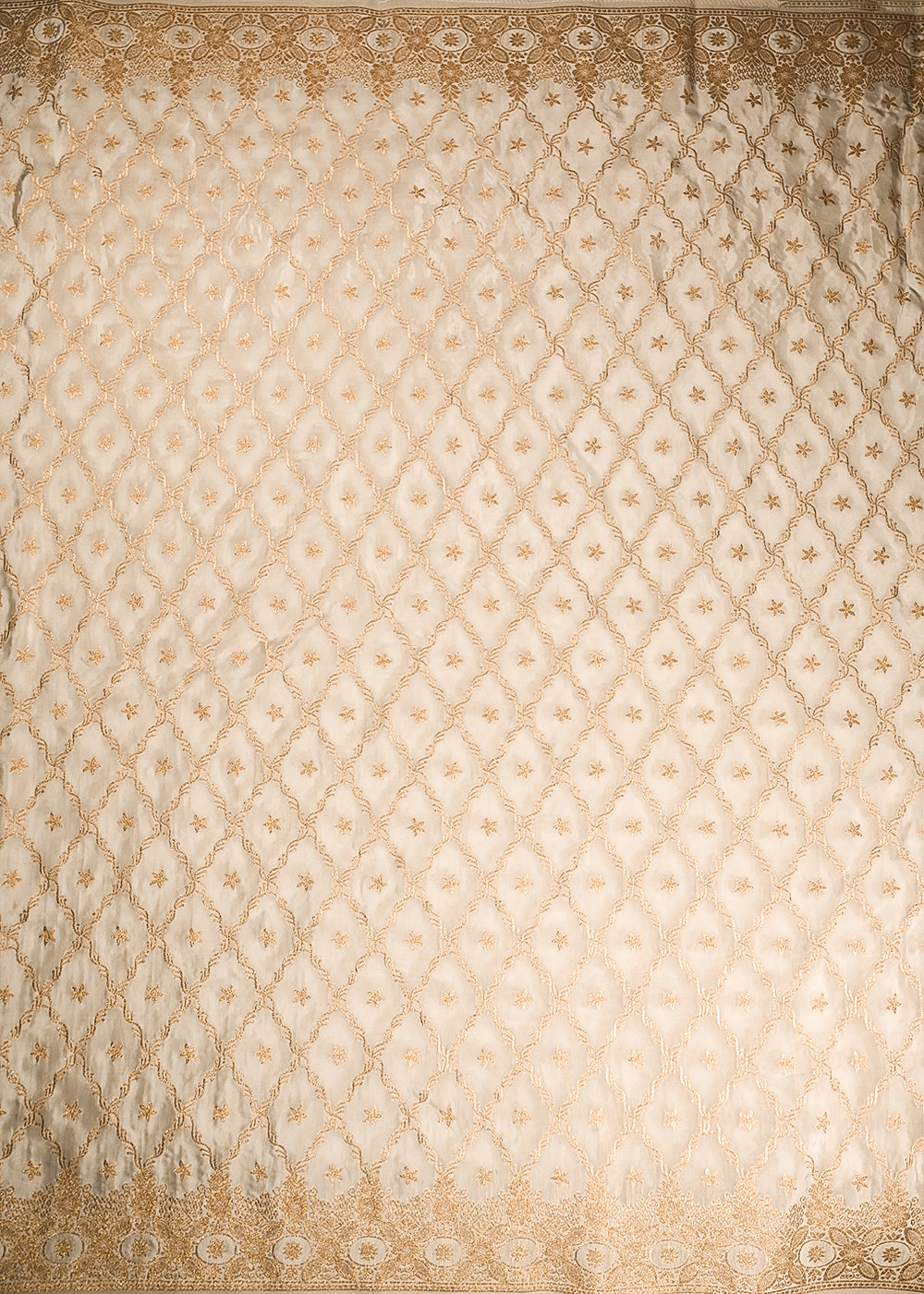
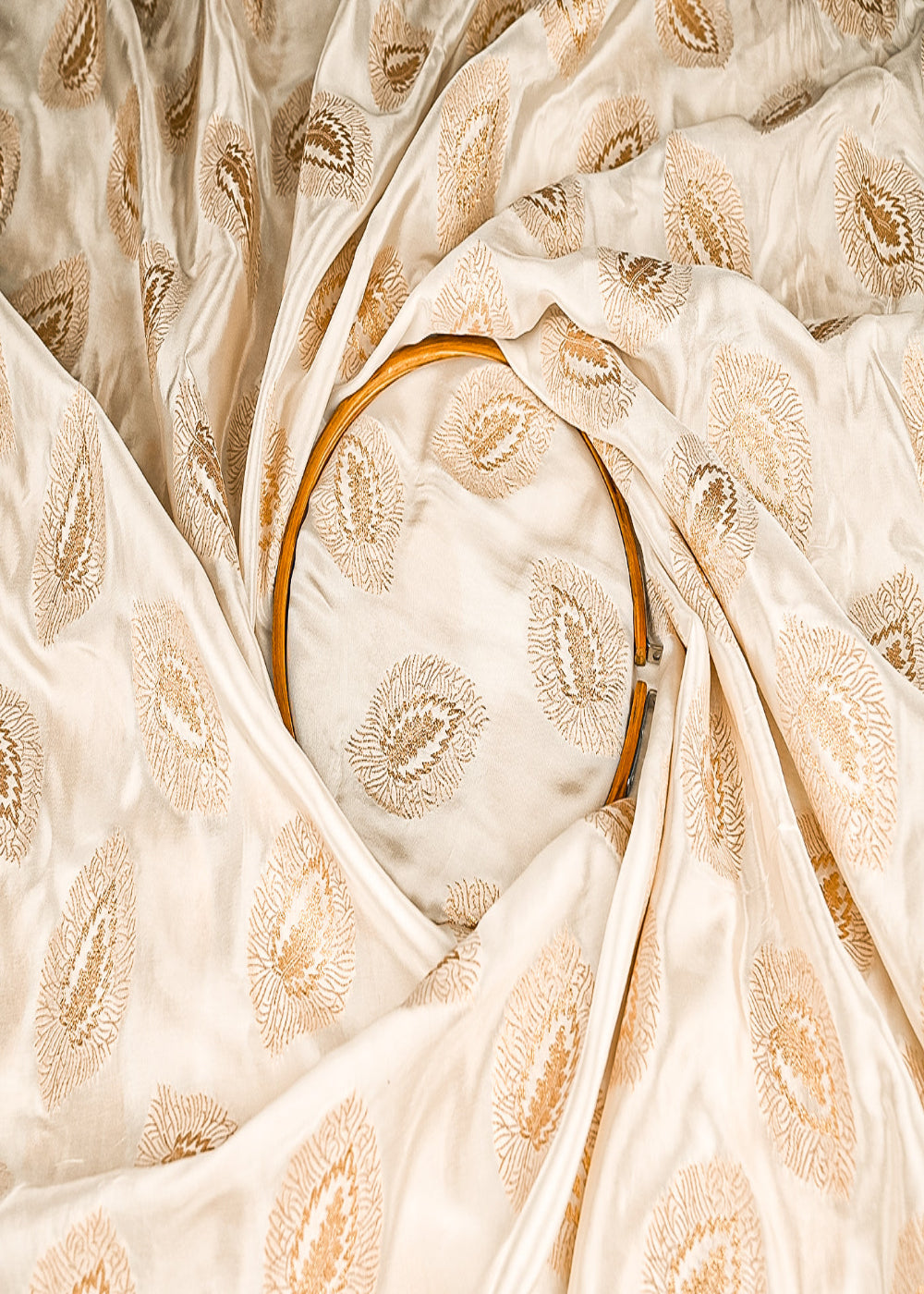
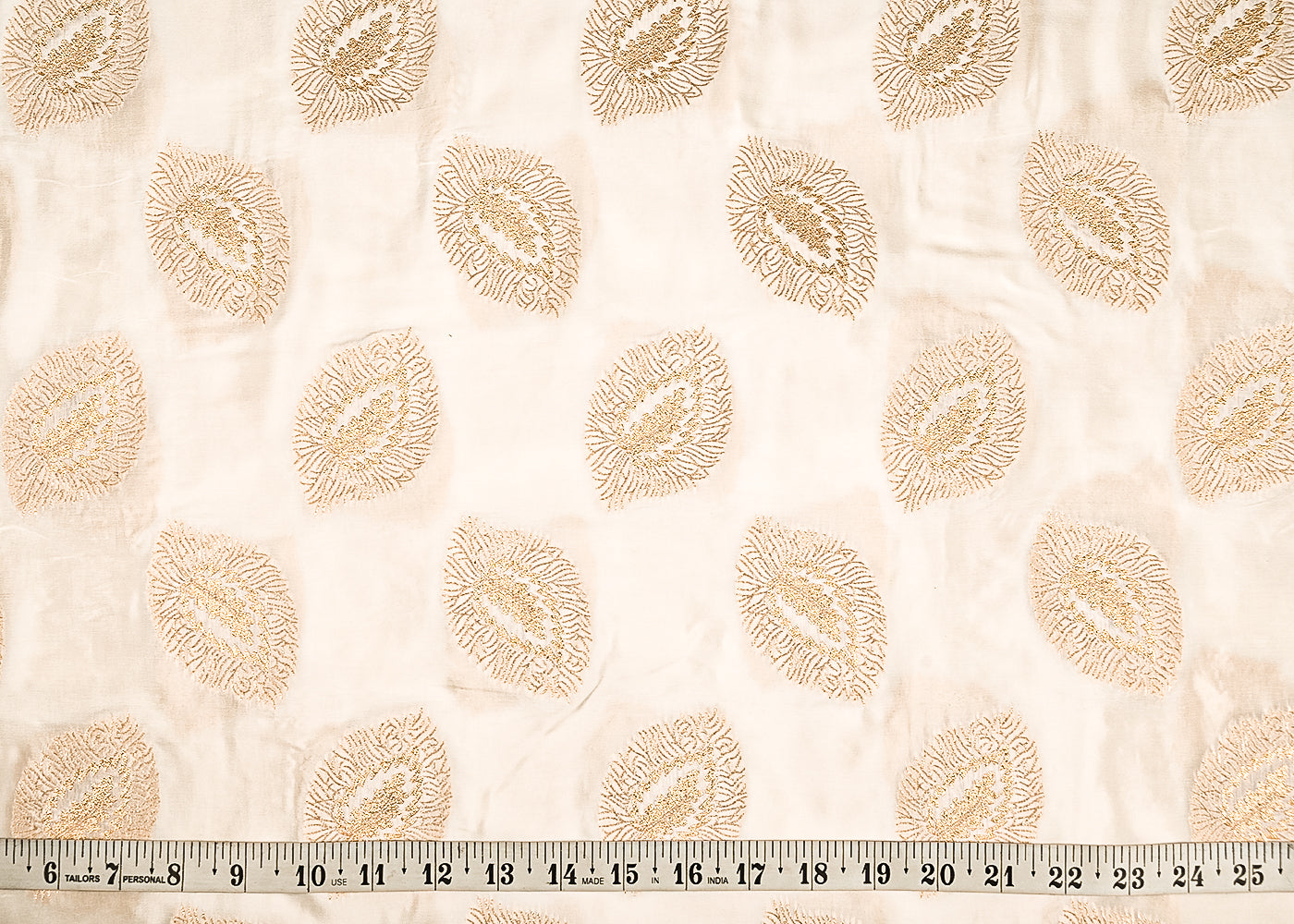
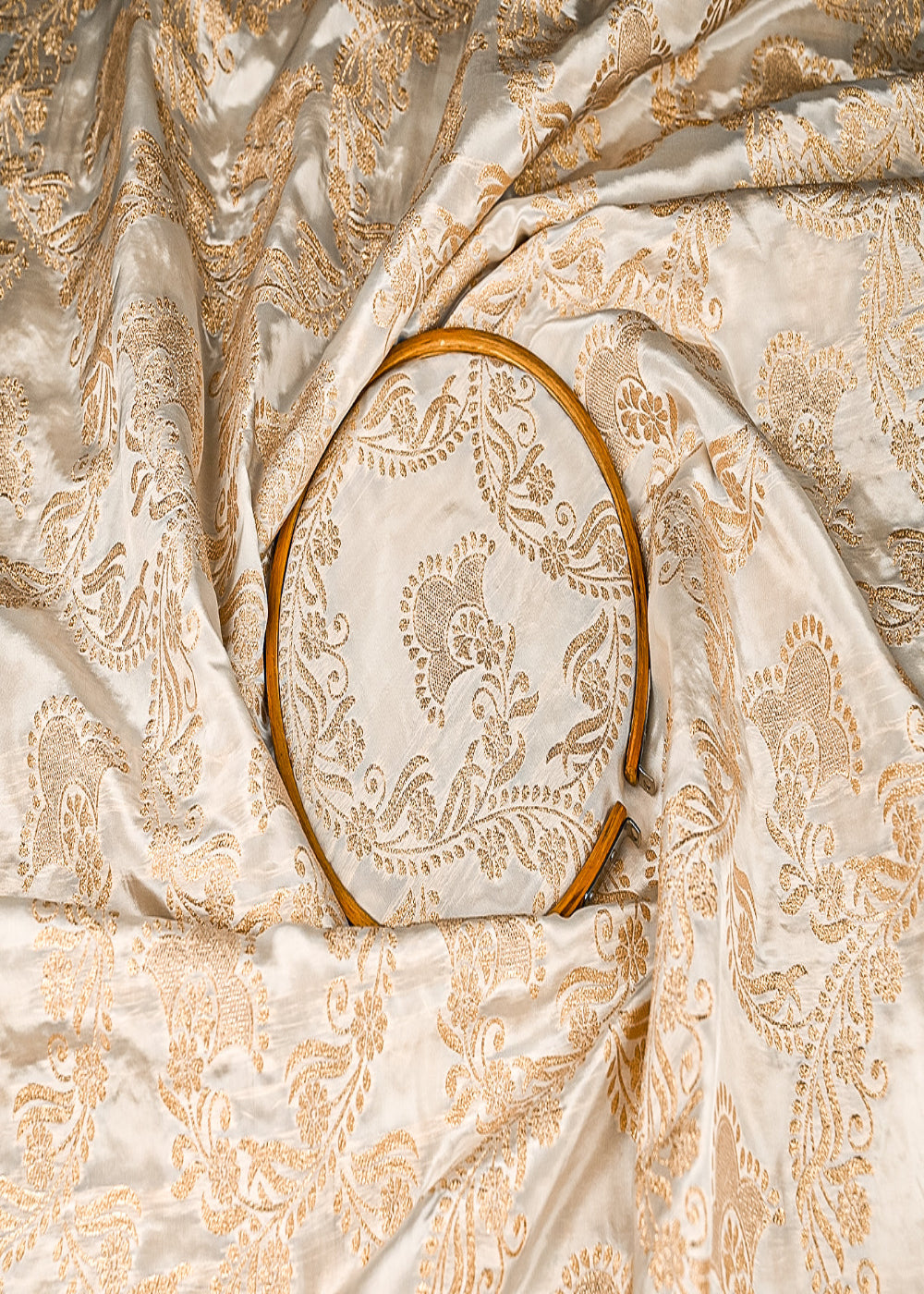
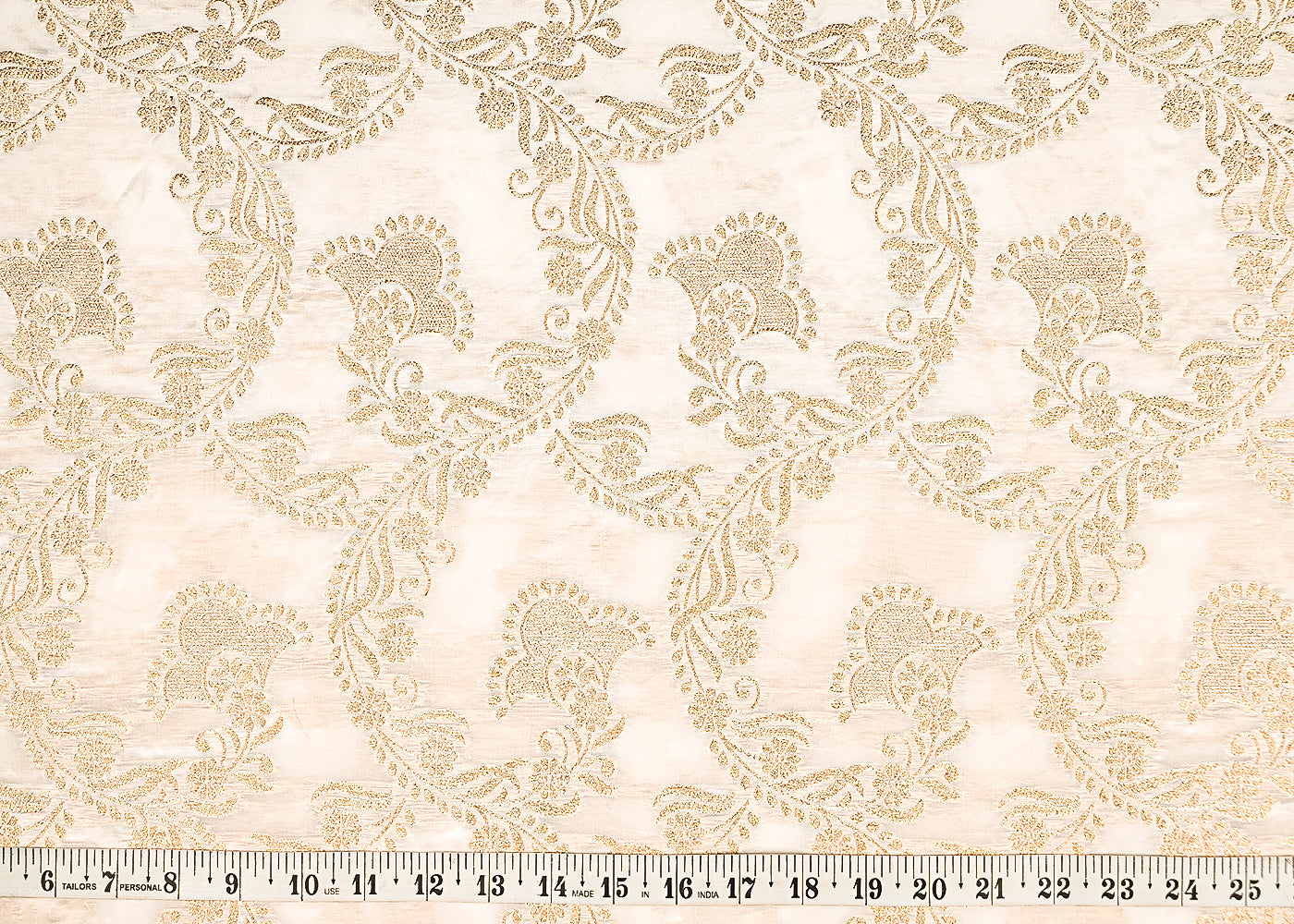
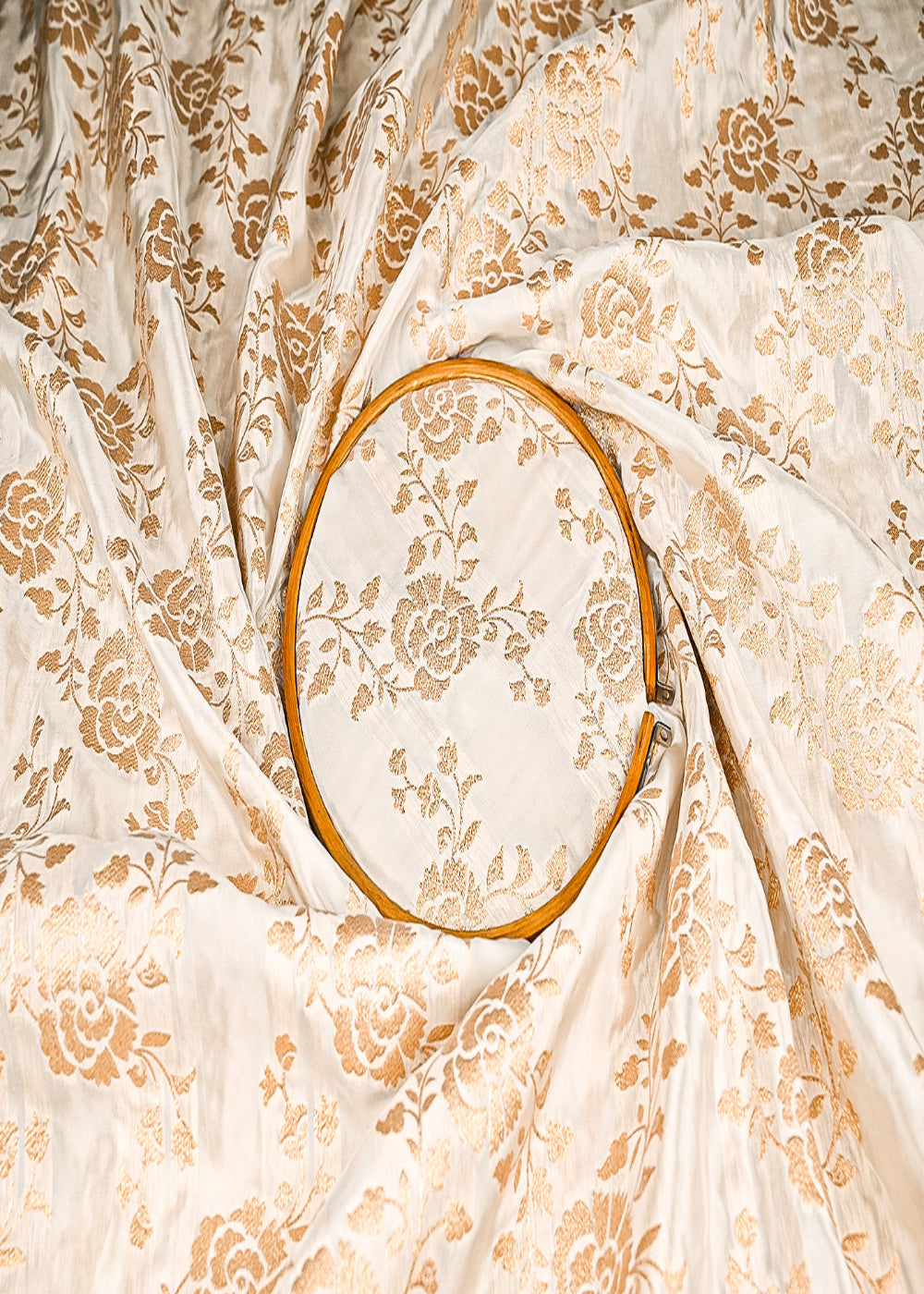
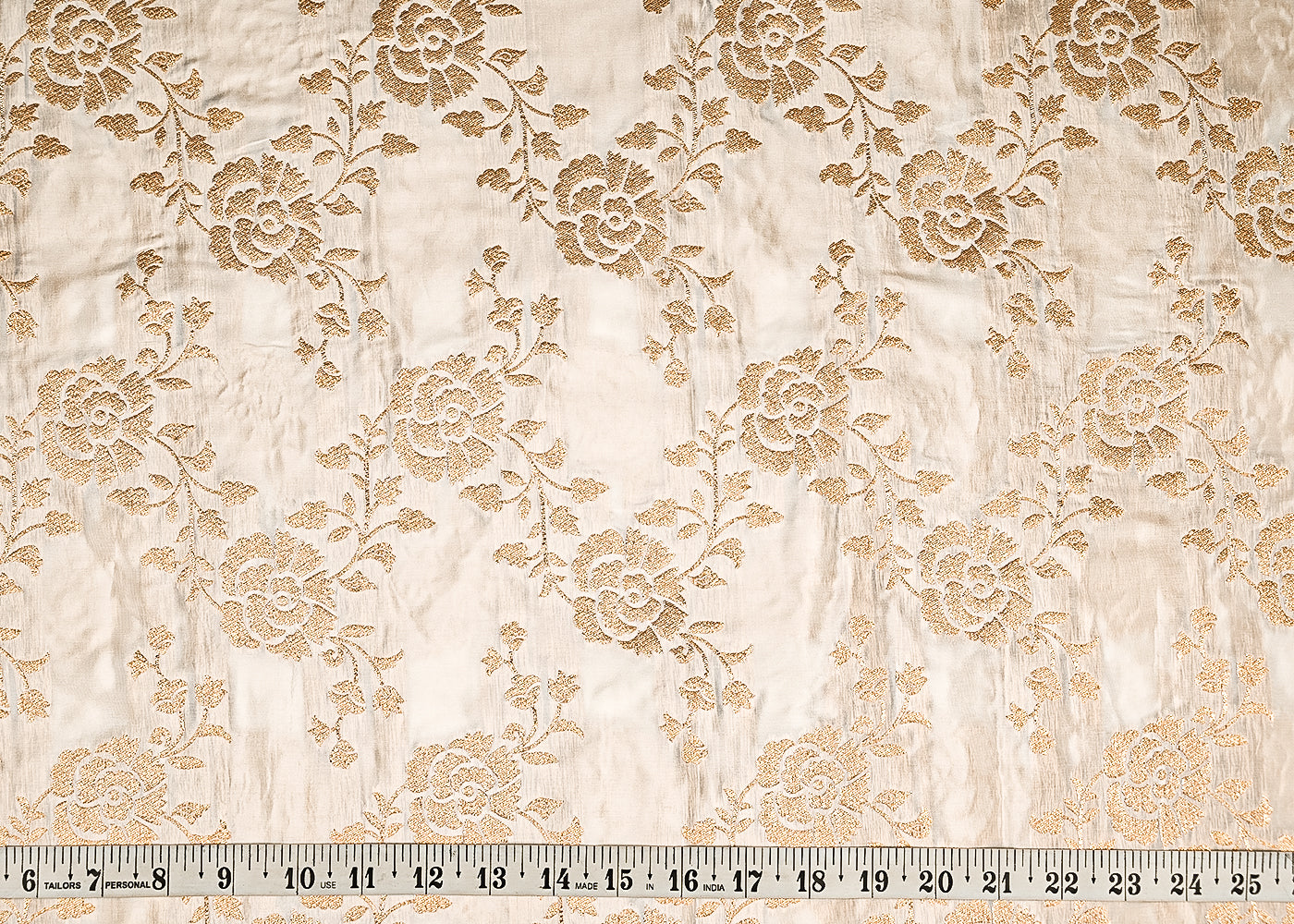
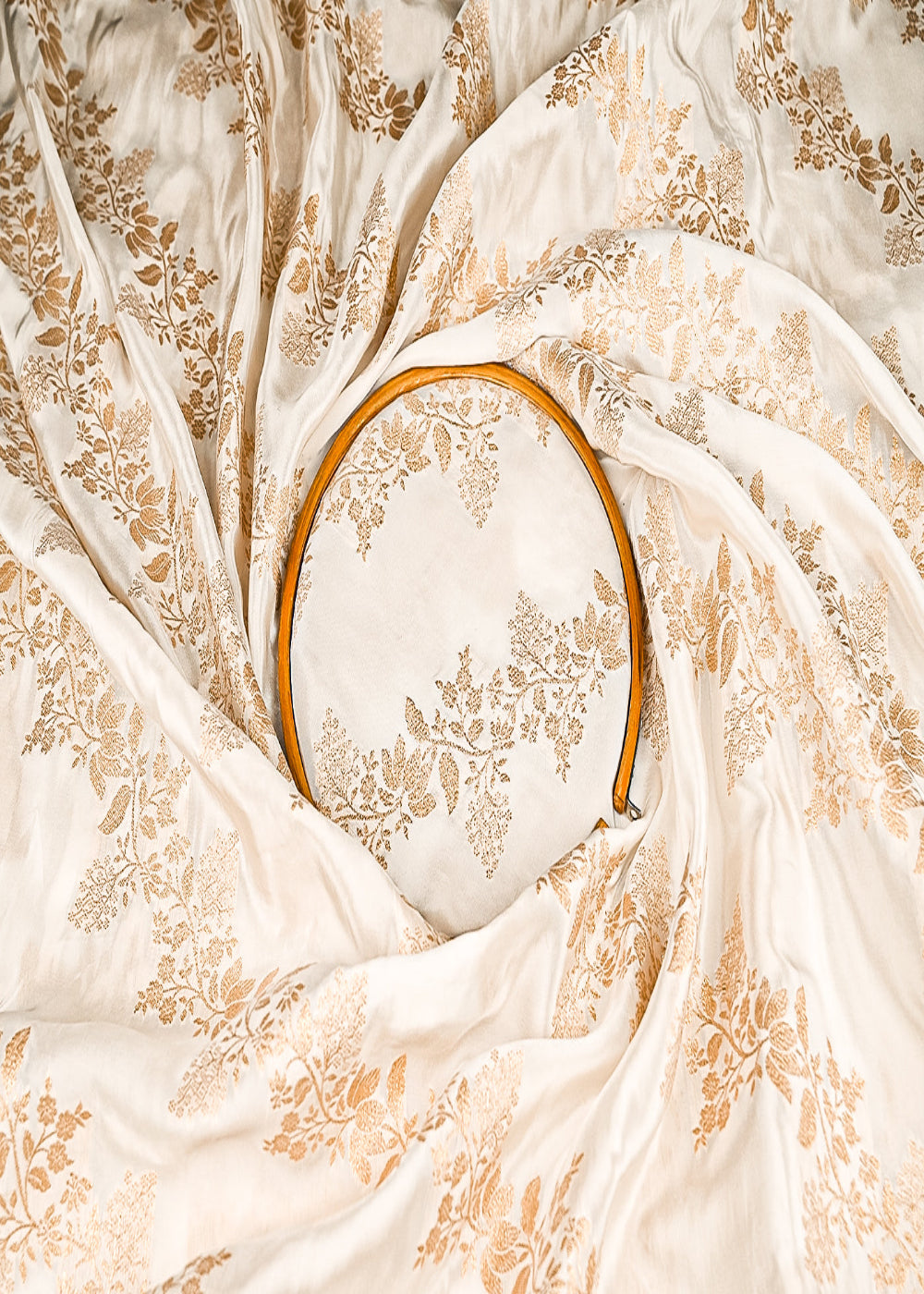
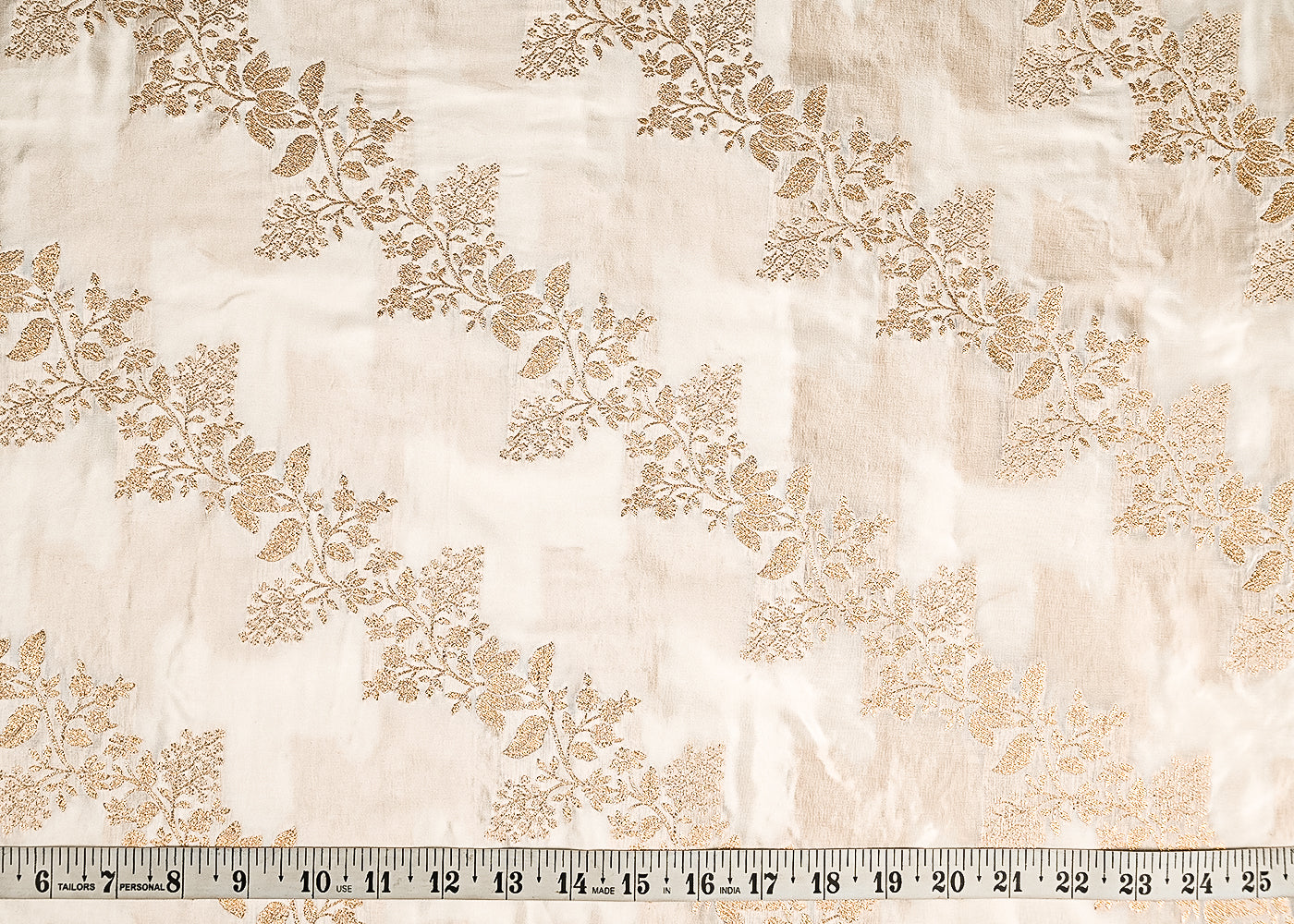
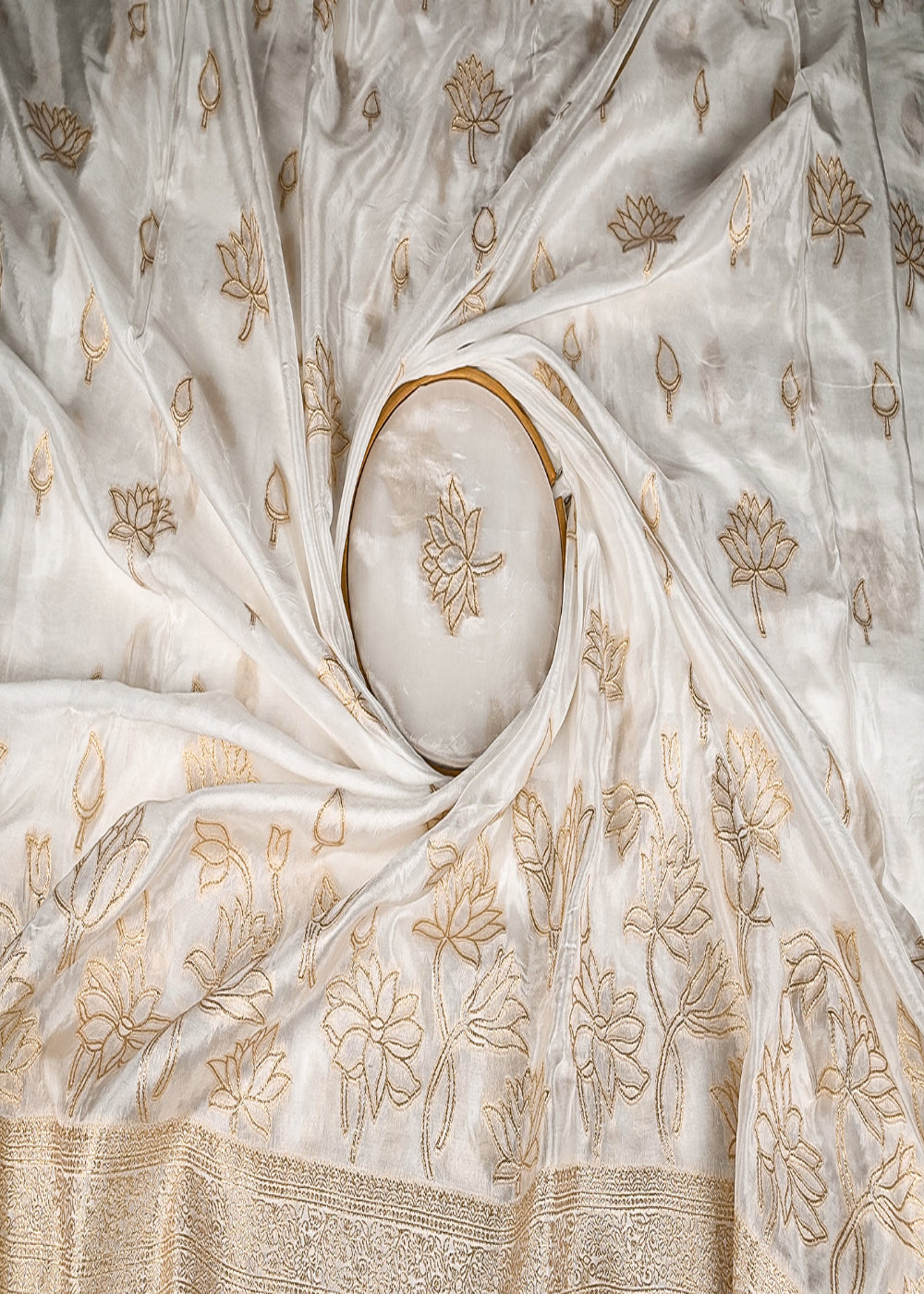
The fabric is a crepe base with jacquard motif work woven into the structure. Not printed, not embroidered later. Small buti, floral repeat, geometric grid, paisley scatter woven straight into the crepe during production. So it keeps the soft matte drape of crepe while carrying visible woven pattern that photographs richer on catalogue images.
What Separates It From Plain Crepe
Plain crepe arrives smooth-surfaced, relying on shade alone for visual character. Crepe jacquard runs through a jacquard loom where individual warp thread control weaves the motif directly into the fabric. The result is crepe drape behaviour with a woven pattern on top, which reads measurably better in photographs where the party wear customer makes the buying decision.
The hand feel stays soft and cool against skin. The woven motif adds a slight surface texture you can feel, but the crepe base keeps the fabric comfortable through a six-hour function. That comfort with visible pattern is the whole value equation at this price tier.
Types and Rates
| Type | Best Use | Approx Rate |
| Plain crepe jacquard | Party kurtis, dupattas | Rs 320 to 460 per metre |
| Floral motif crepe jacquard | Cocktail sarees, kurti sets | Rs 400 to 580 per metre |
| Geometric crepe jacquard | Designer party wear, engagement dupattas | Rs 480 to 680 per metre |
| Zari weave crepe jacquard | Sangeet sarees, statement blouses | Rs 550 to 780 per metre |
| Two-tone crepe jacquard | Coordinated sets, cocktail wear | Rs 480 to 720 per metre |
The floral motif variant is where party wear boutiques anchor their catalogue, since it reads richest in photography at the Rs 3,500 to 6,500 kurti band. Bulk thaan purchase brings rates down, with plain grades opening near Rs 260 on larger orders. It pairs well for kurti production coordinated with party styling.
Crepe Jacquard GSM Guide
| GSM Range | Feel | Best For |
| 60 to 90 GSM | Light, drape-forward | Dupattas, layered kurtas |
| 90 to 130 GSM | Medium, structured | Party kurtis, casual sarees |
| 130 to 170 GSM | Medium-heavy with body | Cocktail sarees, designer blouses |
Most party wear boutiques default to the 90 to 130 GSM band, which balances motif visibility against kurti comfort through a long function. Lighter loses motif definition. Heavier turns the kurti uncomfortable by the dinner service.
Popular Uses
- Mid-tier party kurtis at the Rs 3,500 to 9,000 band
- Coordinated kurti-dupatta sets from a single fabric lot
- Cocktail sarees at the Rs 5,500 to 12,000 retail band
- Statement dupattas and sangeet blouses for wedding party members
The coordinated set is where this fabric earns its stock value. One crepe jacquard lot delivers both the kurti body and a matching dupatta, which cuts boutique inventory complexity against buying two separate fabrics.
Trends for 2026
Dusty pastels lead everywhere. Dusty rose, sage, oxidised bronze, champagne are the four shades party wear boutiques reorder every two to three weeks through the October to February peak. The shift is data-driven, since these shades perform better in catalogue photography for the corporate working-woman customer base.
Two-tone crepe jacquard is the second growing pattern. A warp in one shade and weft in a complementary one creates a shot effect through the motif, which reads different from every camera angle. Boutiques test small lots first, then reorder the winners on catalogue engagement.
Working Tips for Crepe Jacquard
- Cut single layer with sharp shears. The motif surface shifts under double-layer cutting
- Match the motif at bust and hip seams. Misalignment shows immediately on the finished kurti
- Use silk-blend thread. Pure polyester breaks under the motif structure stress across wear cycles
- Leave 2 to 3 mm extra seam allowance. Iron reverse side on low heat. Direct heat flattens the motif permanently
Frequently Asked Questions
How is crepe jacquard different from plain crepe?
Plain crepe has a smooth surface and relies on shade alone. Crepe jacquard runs through a jacquard loom that weaves the motif directly into the crepe base, giving crepe drape with a visible woven pattern that photographs richer for the party wear customer.
How is crepe jacquard different from georgette or chiffon jacquard?
The base fabric differs. Crepe gives matte drape with body. Georgette gives slight crispness with structured drape. Chiffon gives ultra-light floaty behaviour. The same jacquard motif technique across these bases produces distinct results for different customer segments and price bands.
How much crepe jacquard does a party kurti need?
A standard party kurti needs 2.8 metres including body and sleeves. An anarkali with kali flare needs 4 to 4.5 metres. A coordinated kurti and dupatta set needs 4 metres total. A sangeet blouse needs 1.5 metres for standard fitted construction.
Is crepe jacquard available in bulk?
Yes. Sample-rate pricing opens at 15 metres per shade. Wholesale tiers begin at 30 metres per SKU, with plain grades from Rs 260 on 80-metre orders. Production lots above 200 metres unlock peak-season boutique pricing.
Order Crepe Jacquard at Paras Gallery Fabrics
Our crepe jacquard range covers plain, floral motif, geometric, zari weave, two-tone grades across the 60 to 170 GSM spread, cut by the metre or supplied by thaan for production runs. It sits within the wider jacquard range for cross-substrate planning. Boutiques can check bulk rates on our wholesale page.
