





Organza Satin Fabric Guide: GSM, Prices, Uses
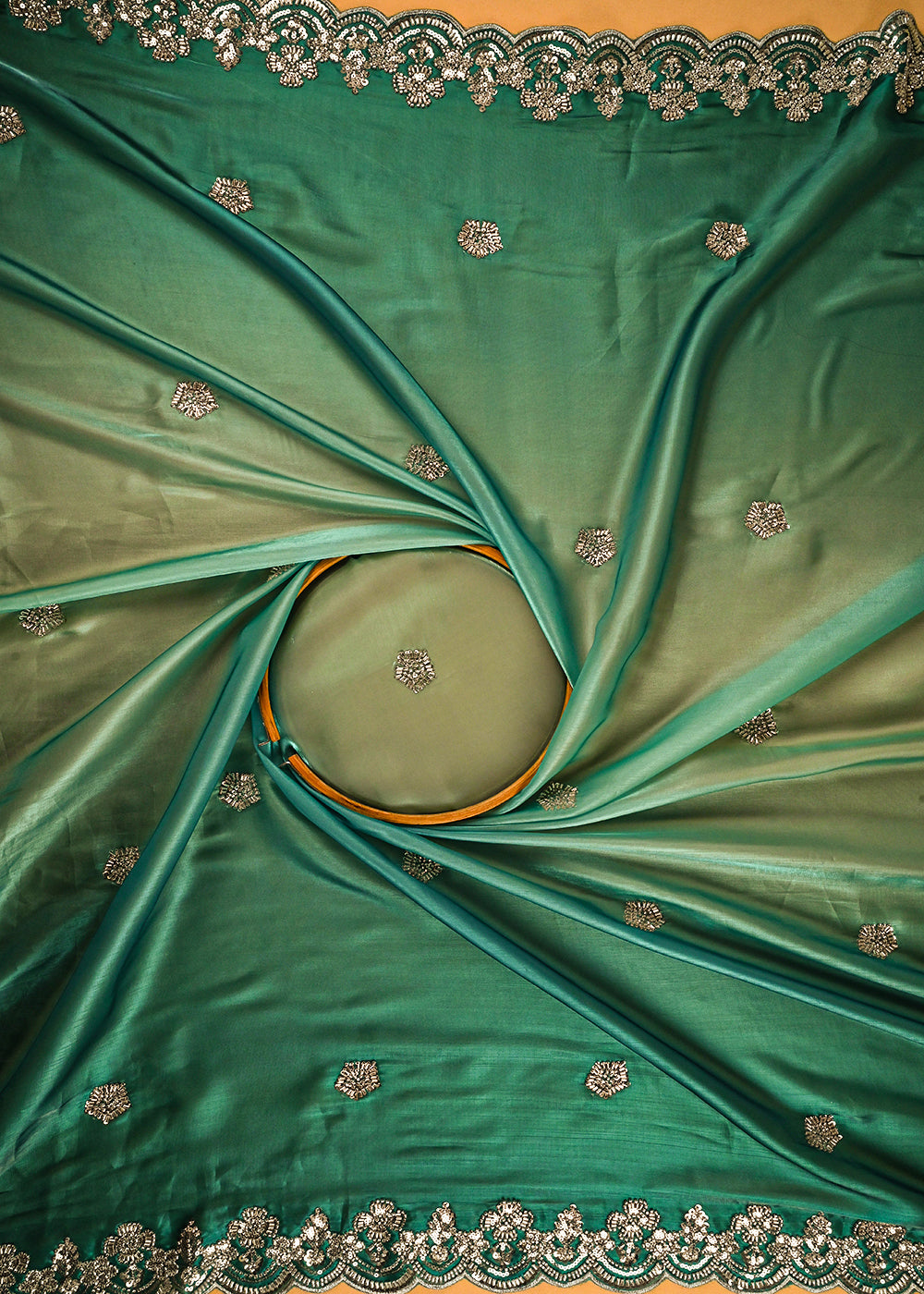
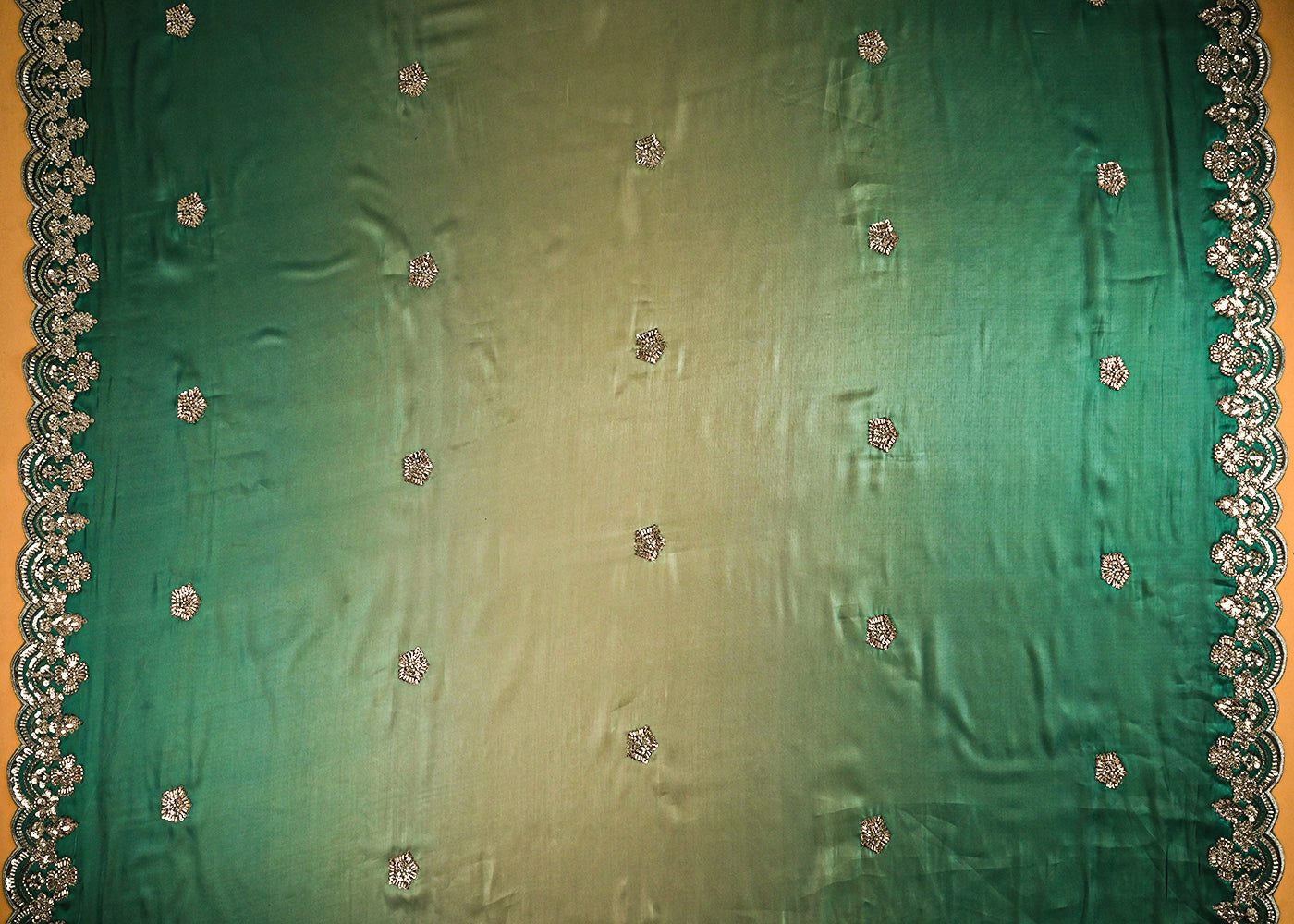
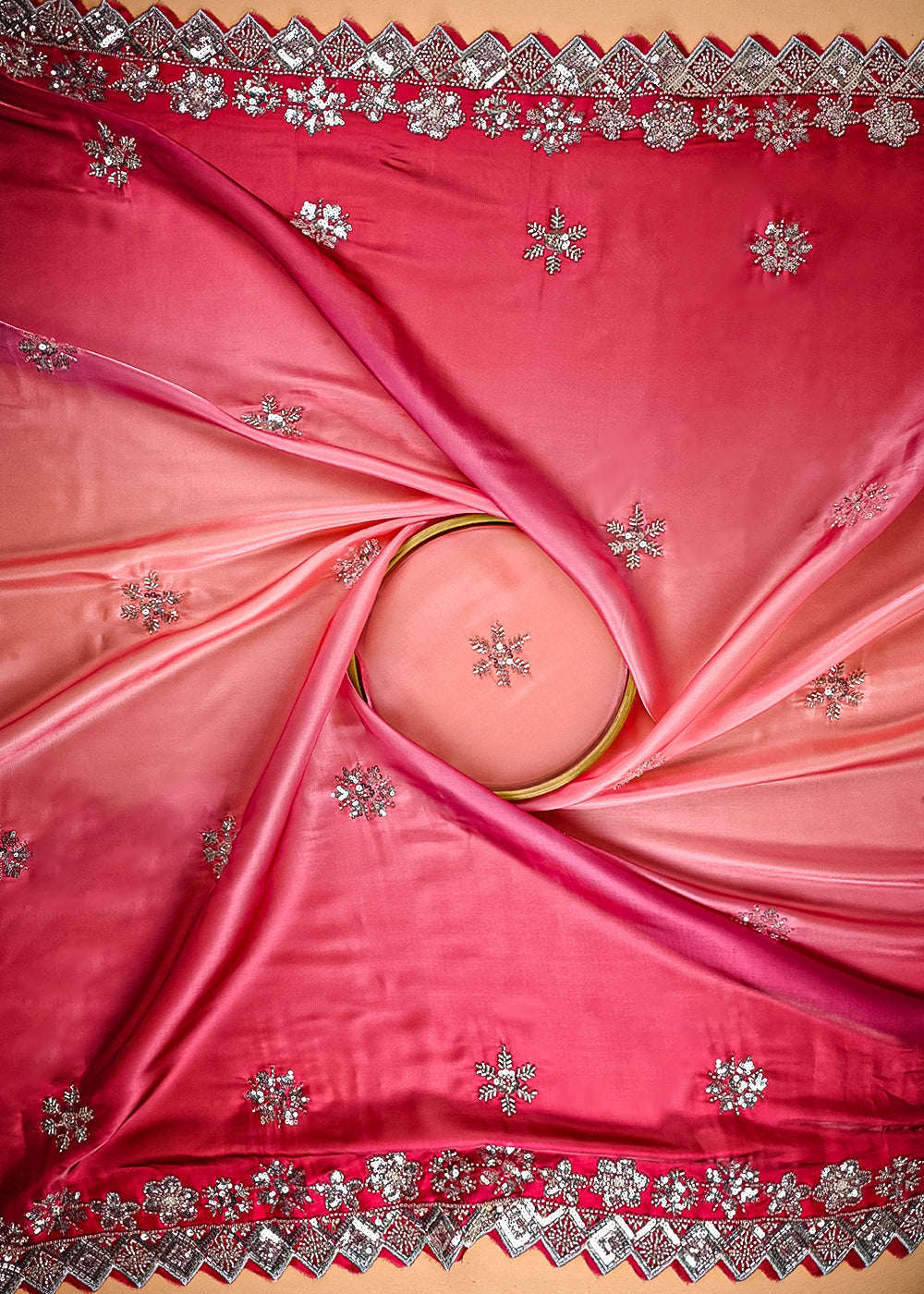
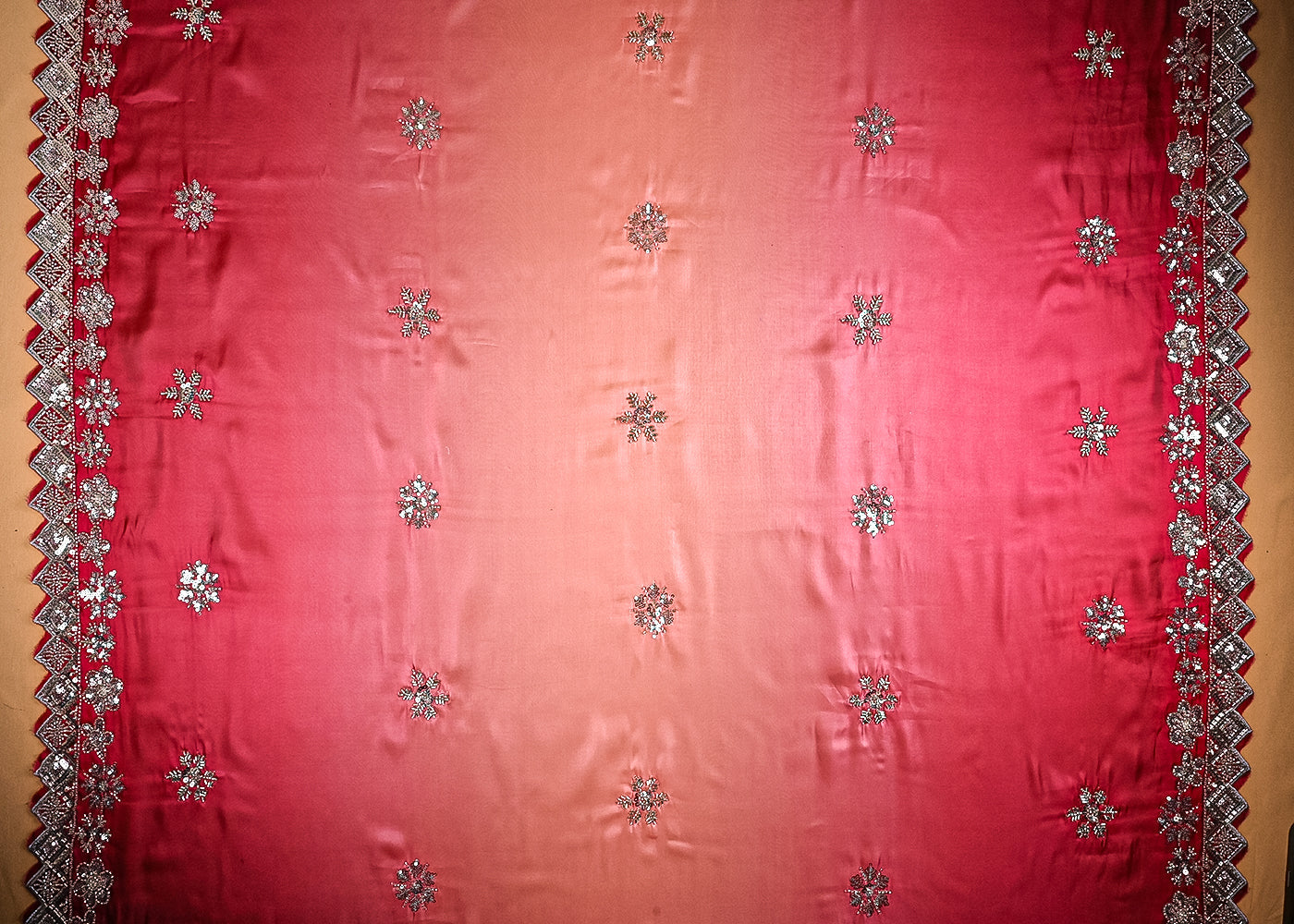
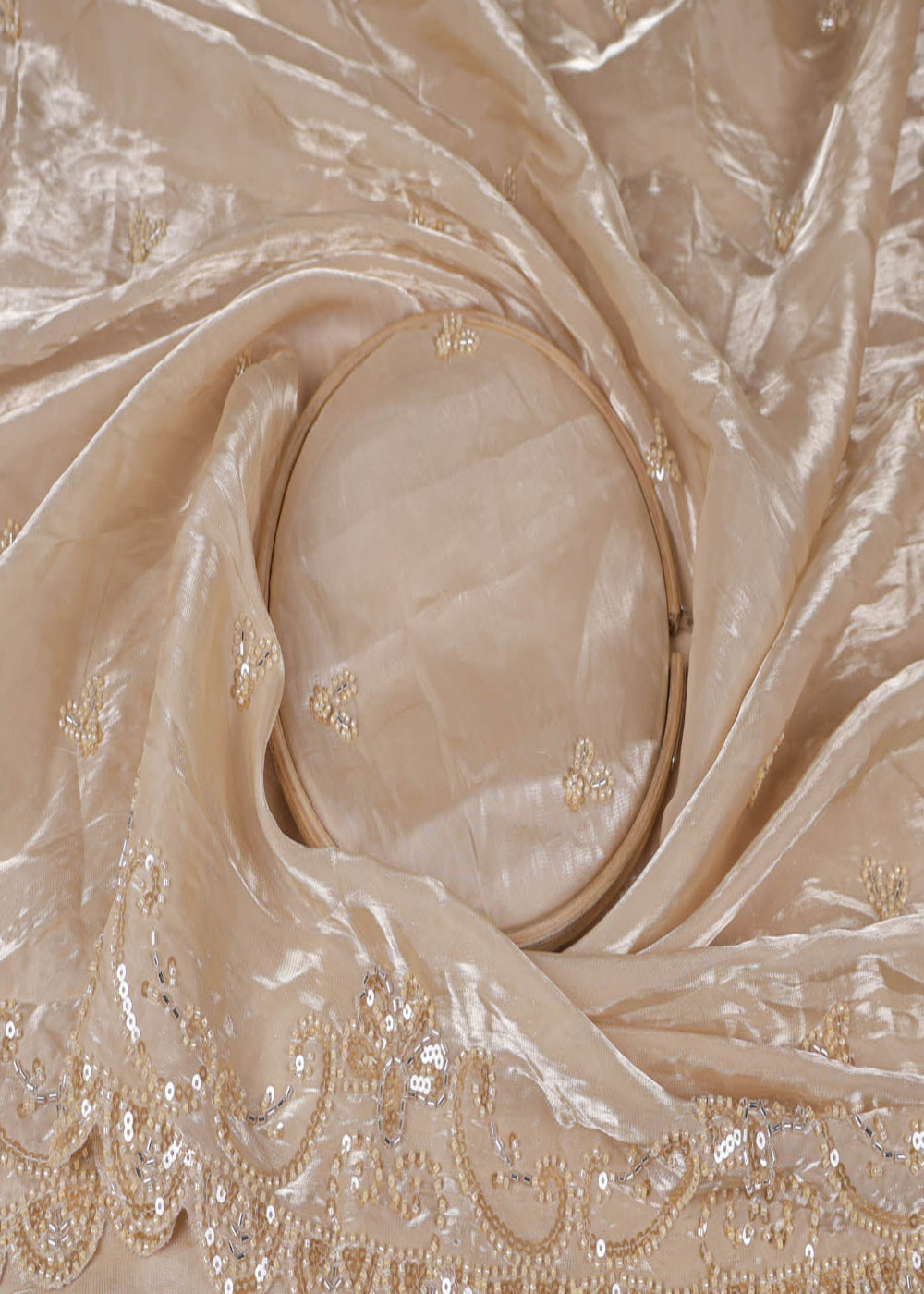
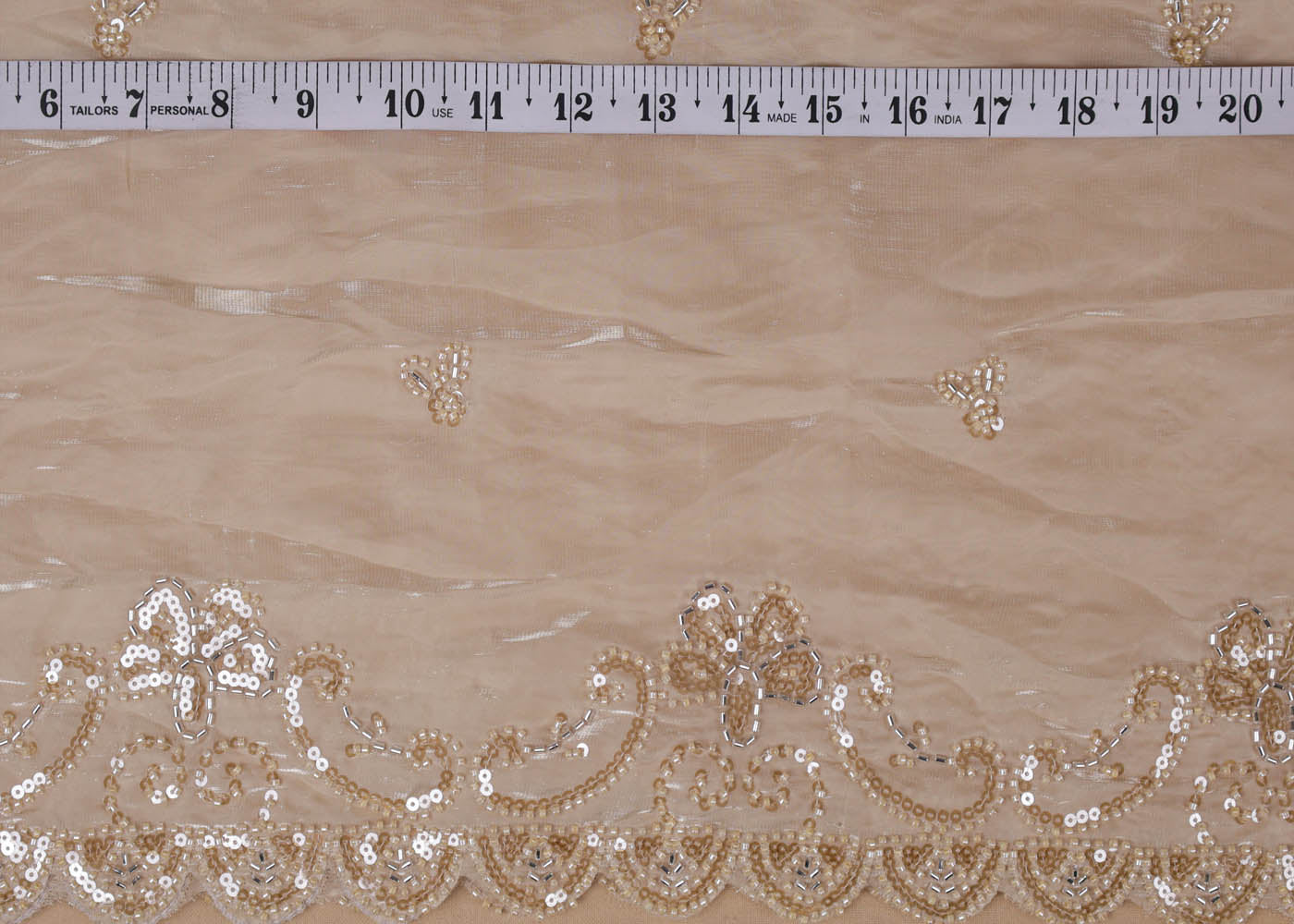
Organza satin is the fabric people reach for when they want shine and body in one piece. It sits between two families. The crisp structure of organza on one side, the smooth reflective face of satin on the other. The result holds shape like organza but catches light like satin, which is why it moves so well for party gowns and reception wear.
In the trade this fabric goes by a few names. Some counters call it by borrowed designer labels. What is actually on the roll is a satin-finish organza. That is the honest description that tells a buyer how it will behave once stitched.
Where the Shine Comes From
The face carries a satin weave, so light bounces off a smooth surface rather than scattering across a matte one. Underneath, the organza base keeps the crispness that lets a gown hold its silhouette instead of collapsing against the body.
That combination is the whole selling point. A designer gets the drama of a shiny fabric without needing heavy embellishment to carry the look. The finish itself does the work, which keeps the garment lighter and the cost lower than a fully worked piece.
Types of Organza Satin
| Type | Best For | Approx Rate |
| Plain organza satin | Gowns, skirt layers, capes | Rs 180 to 350 per metre |
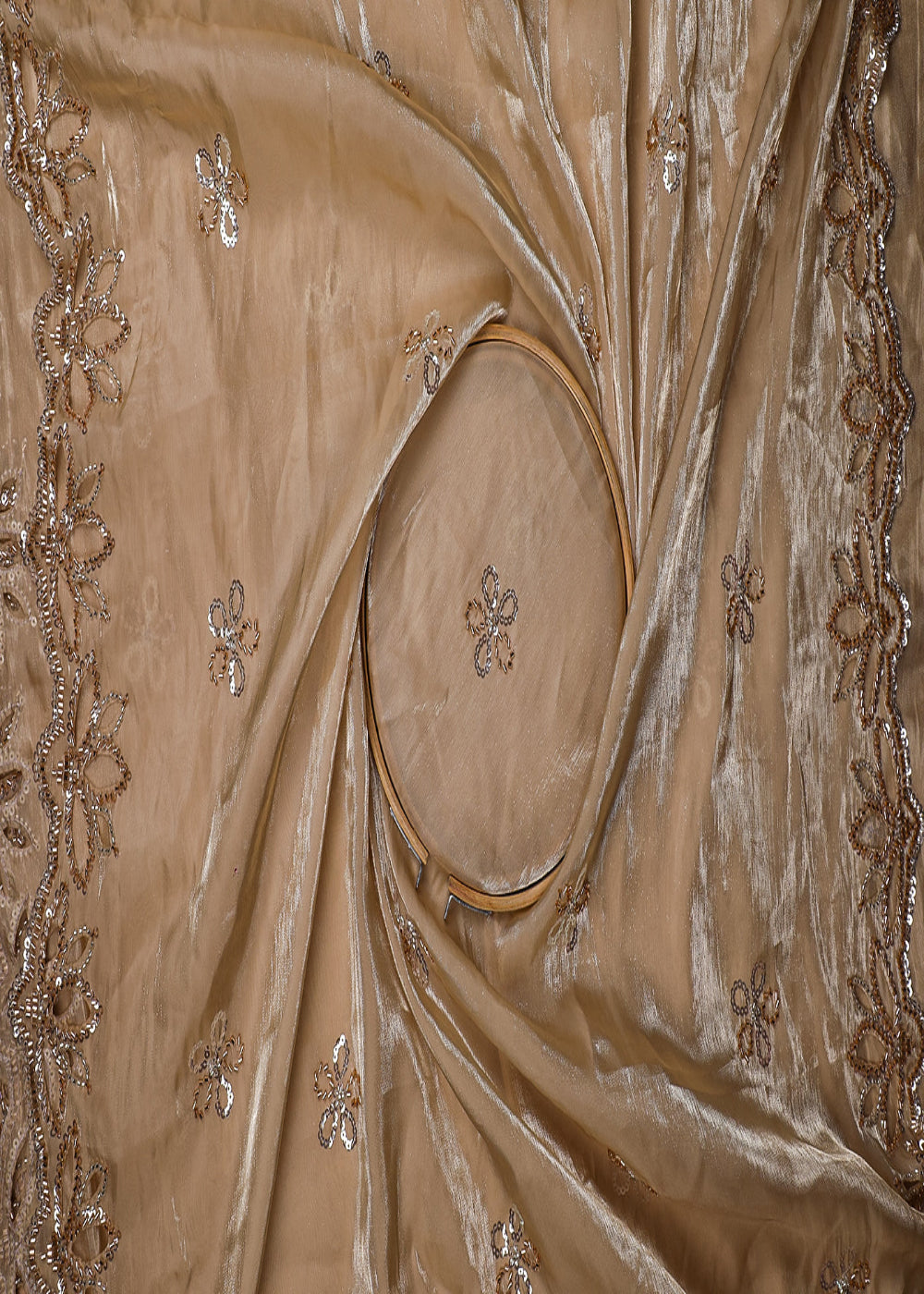
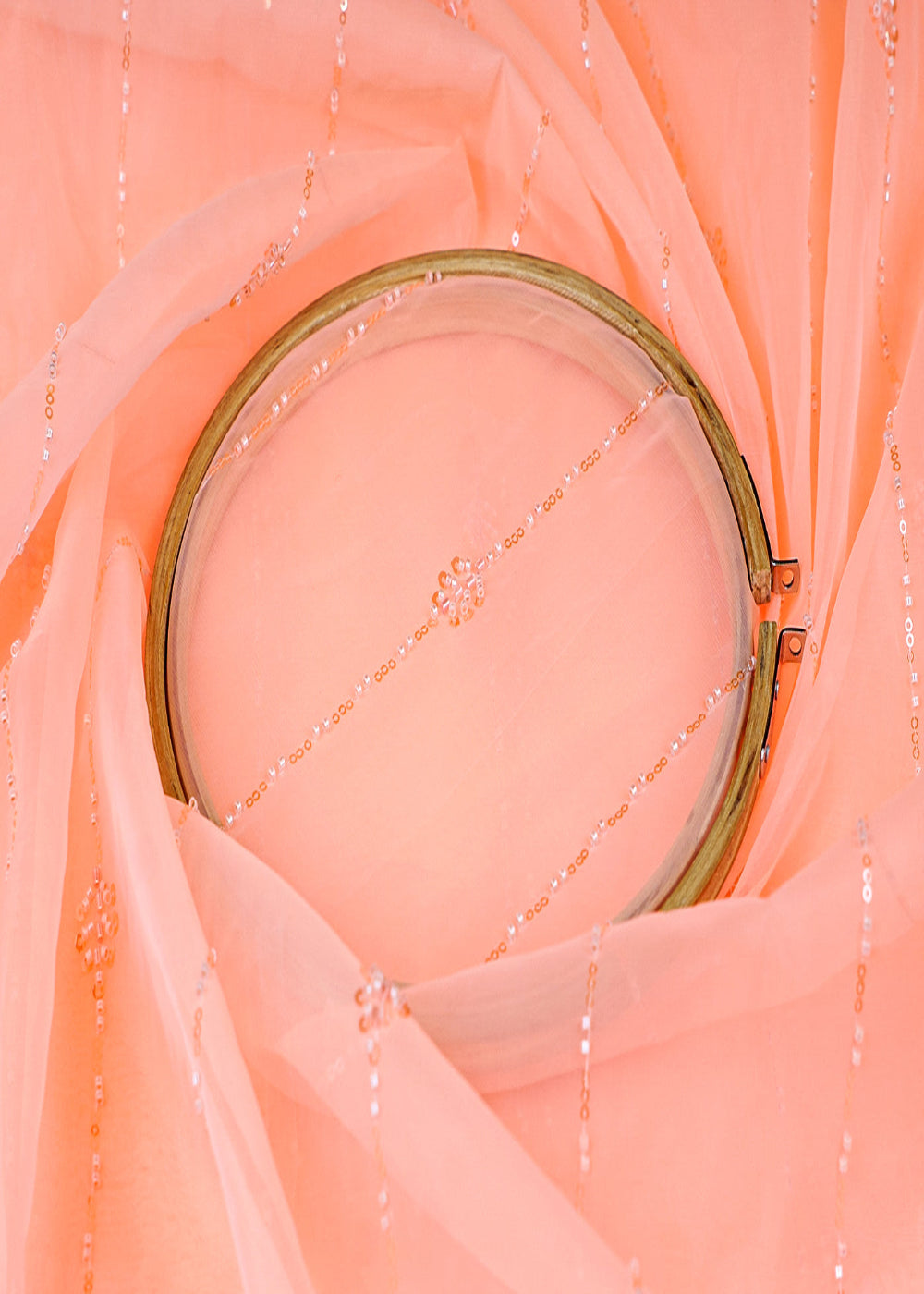
| Shimmer organza satin | Party gowns, cocktail dresses | Rs 250 to 450 per metre |
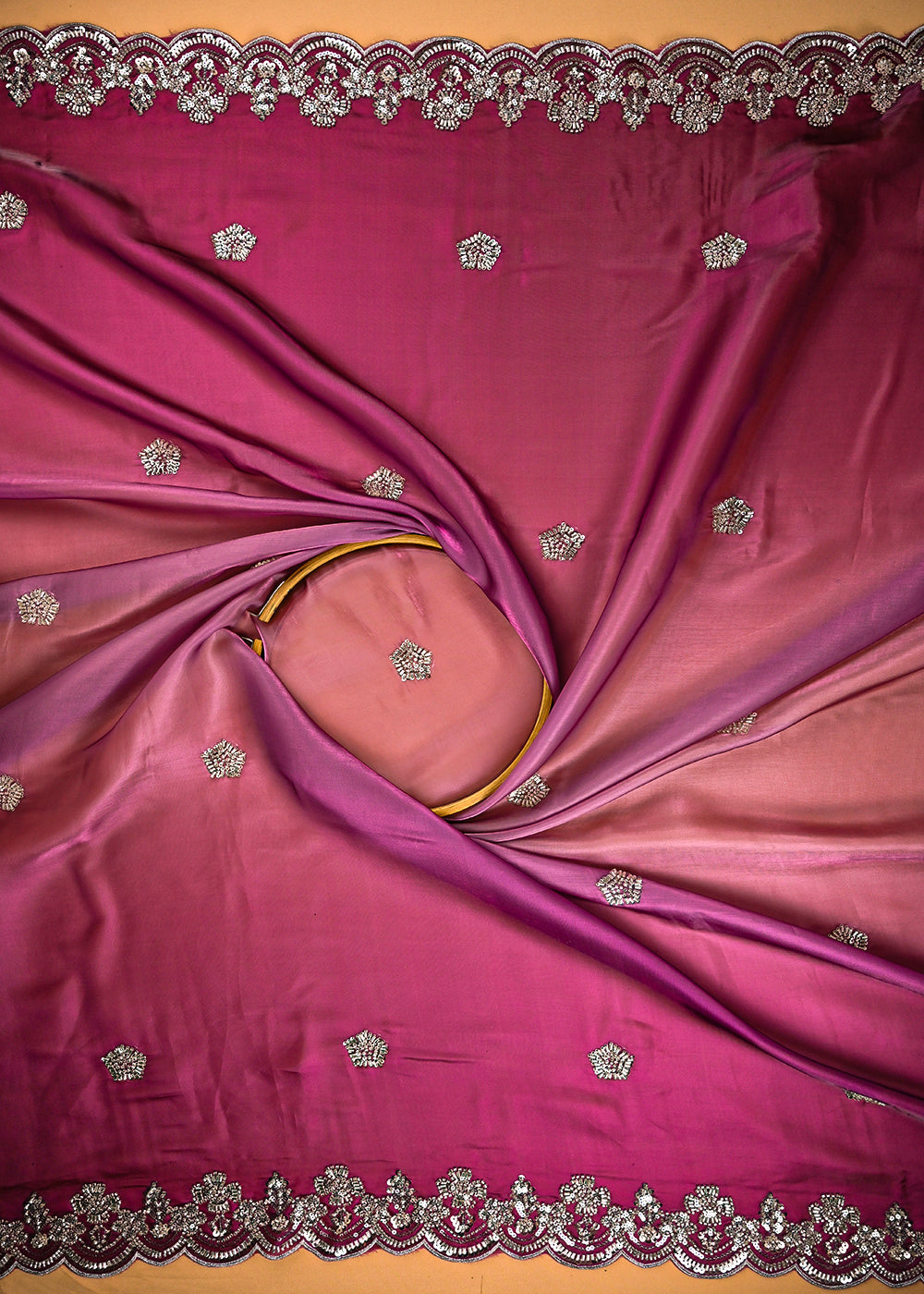
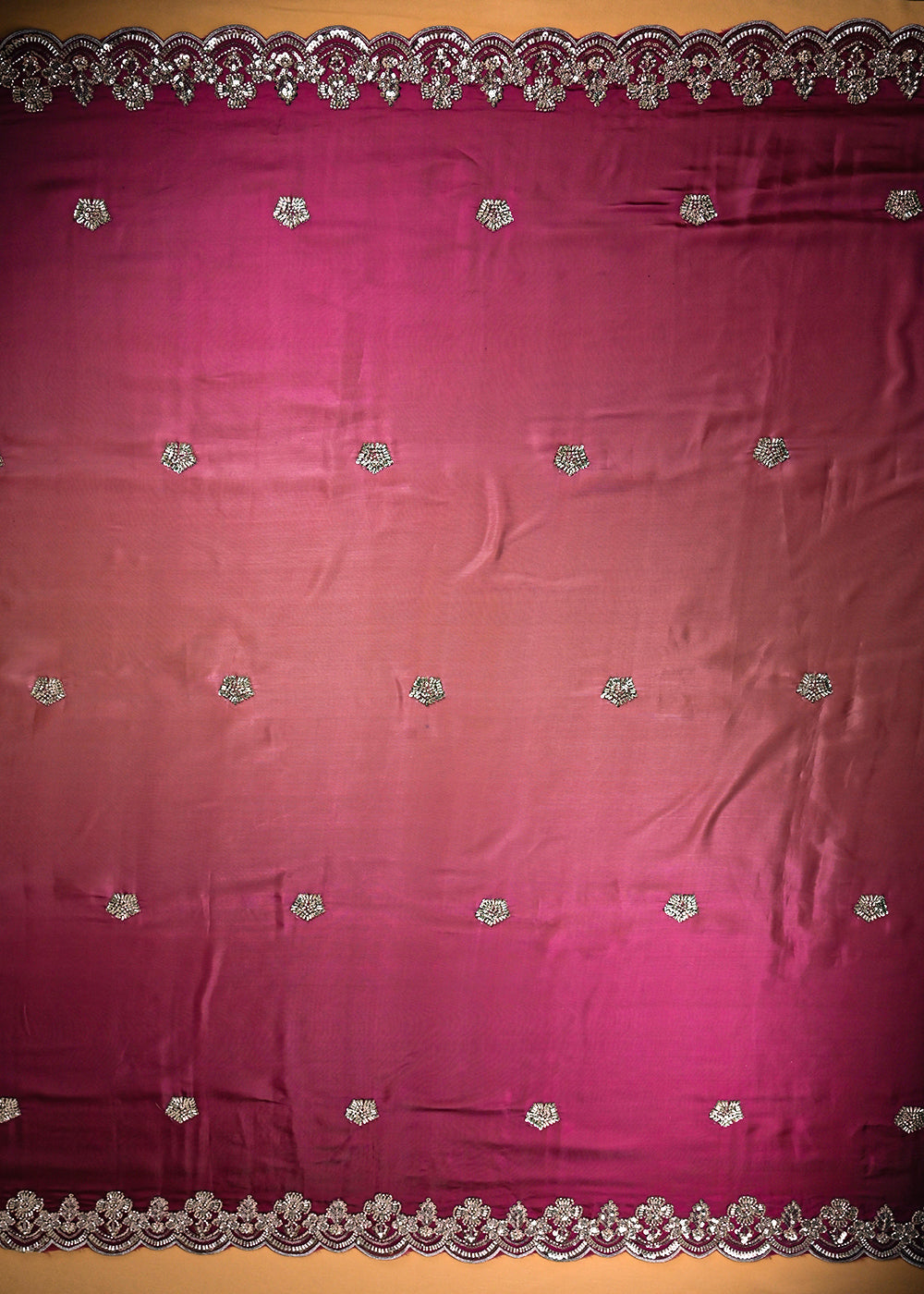
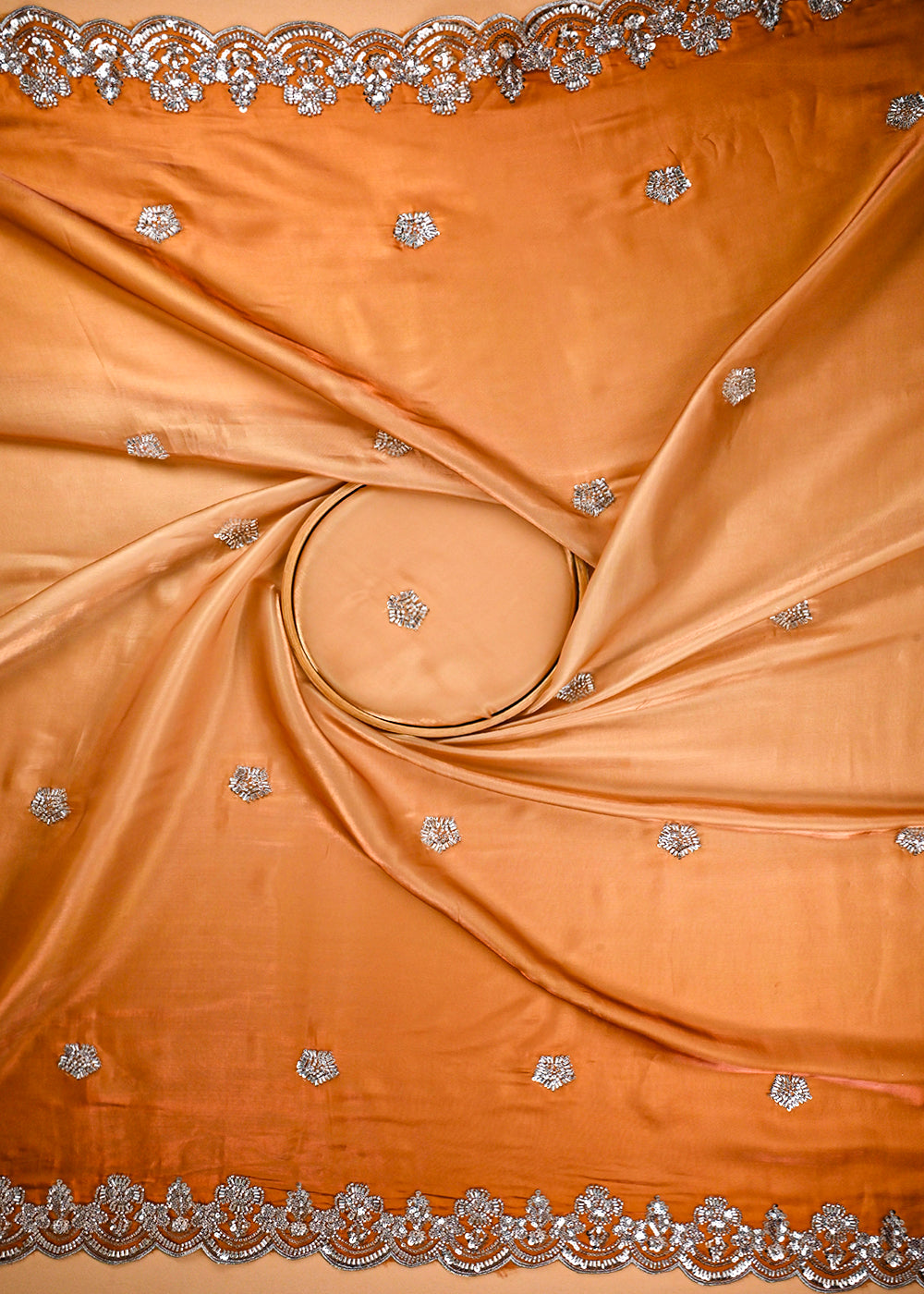
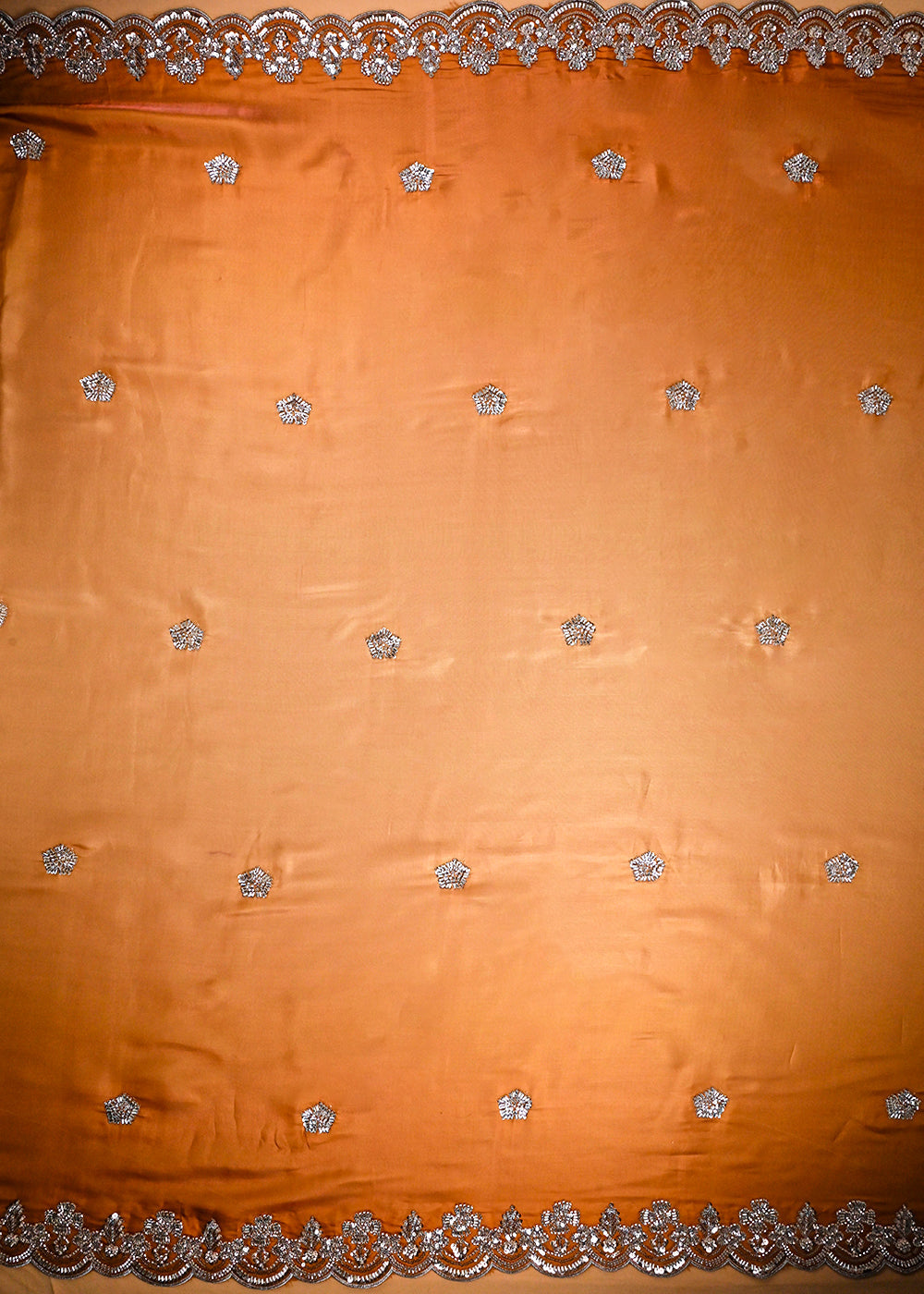
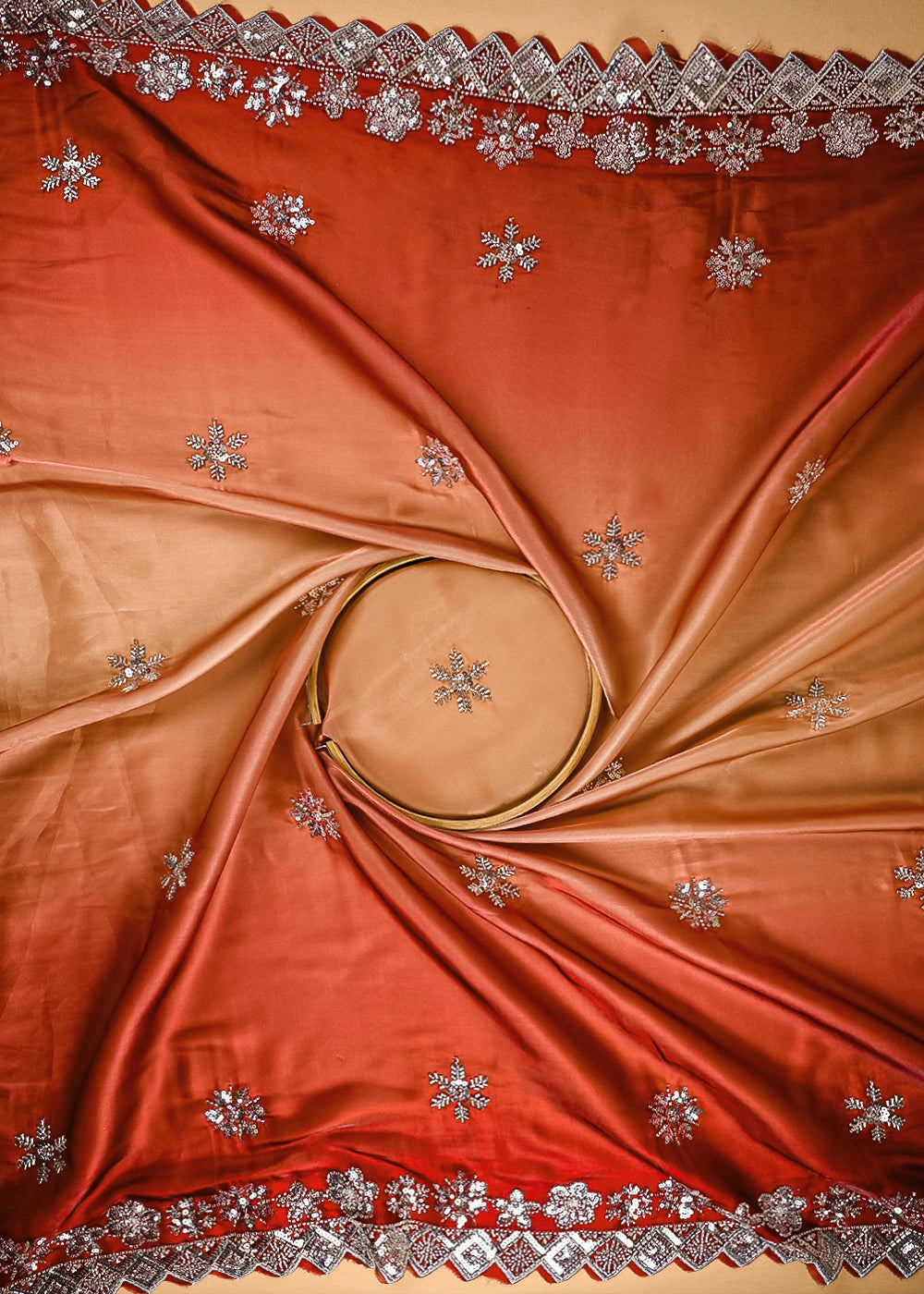
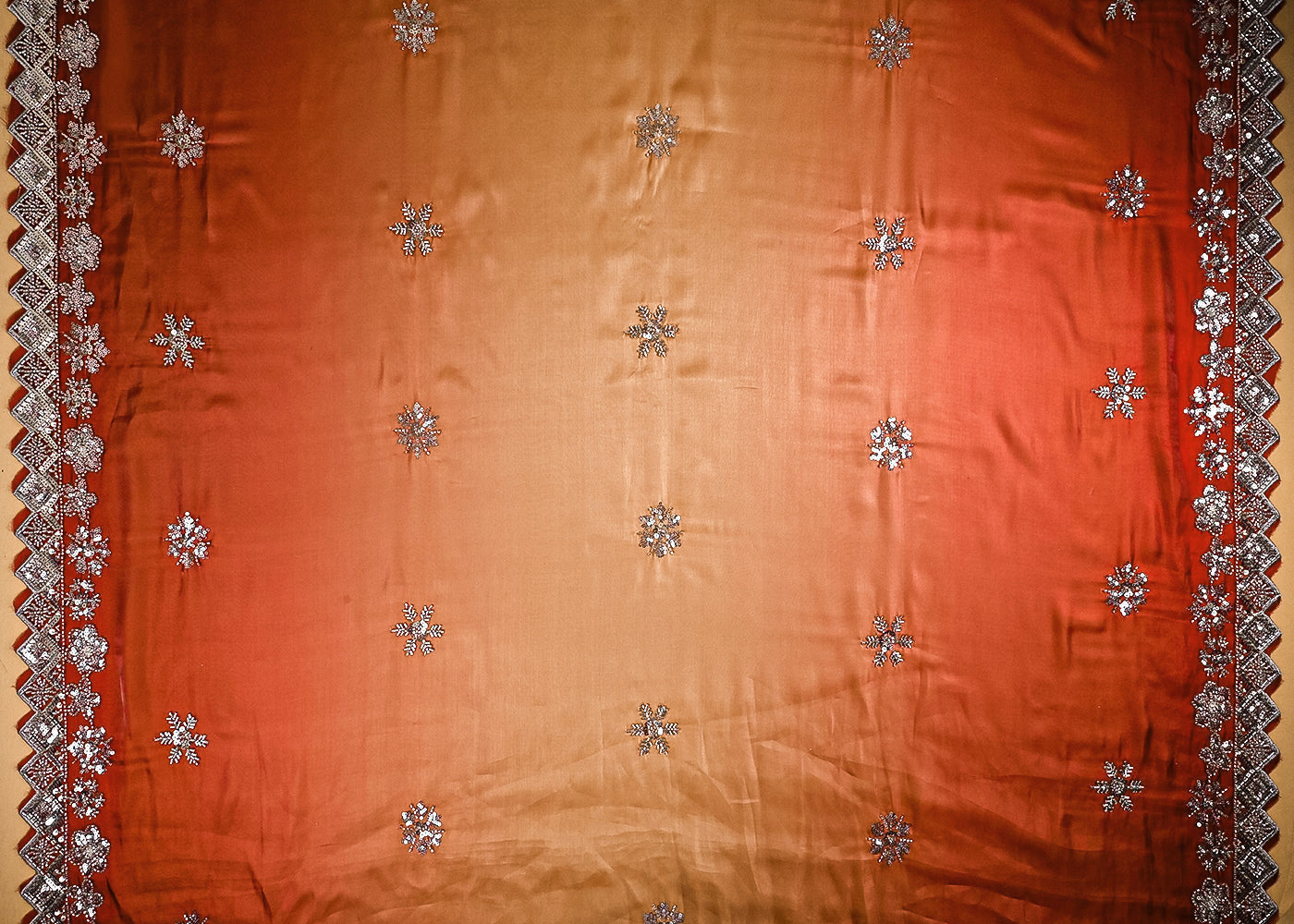
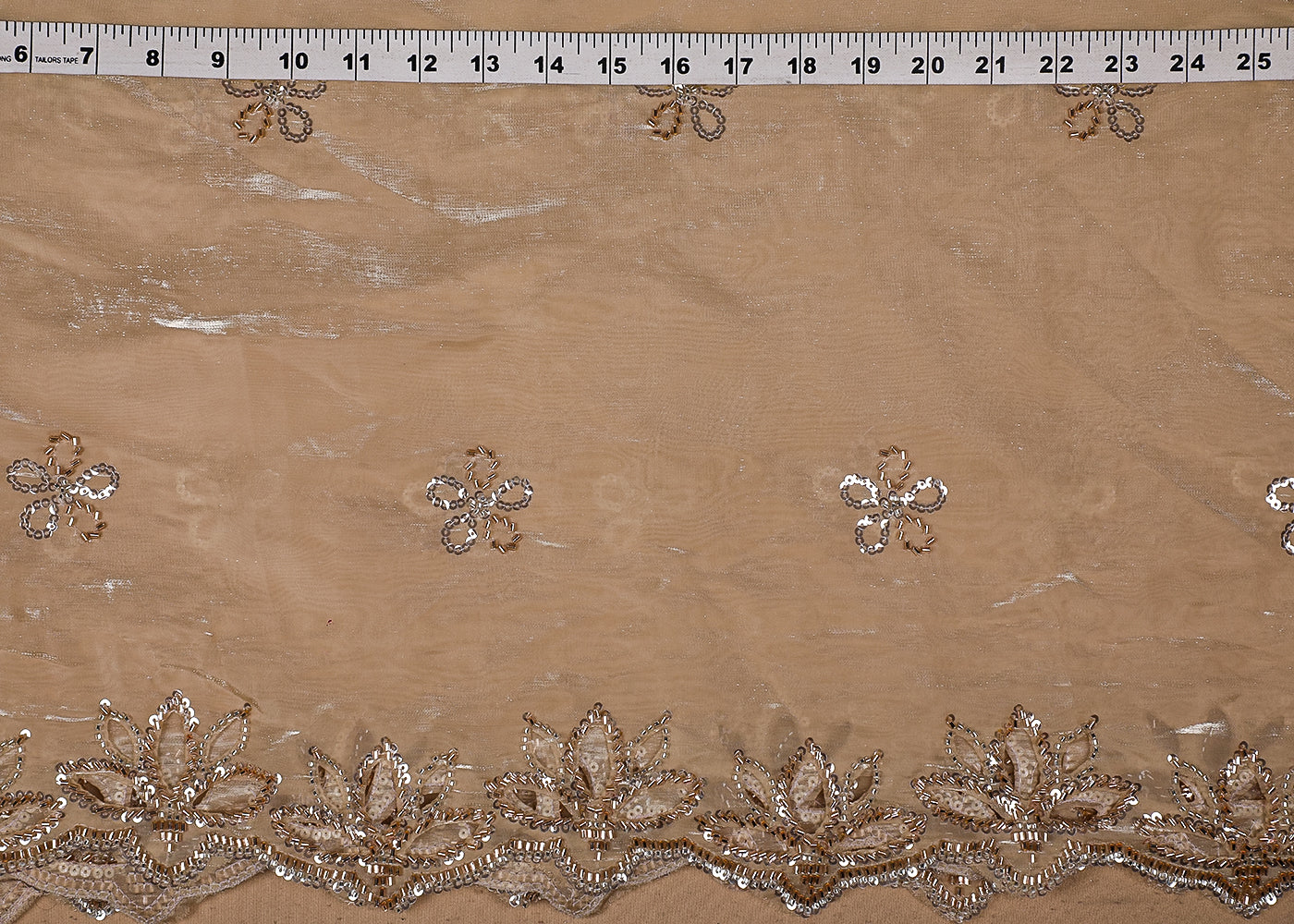
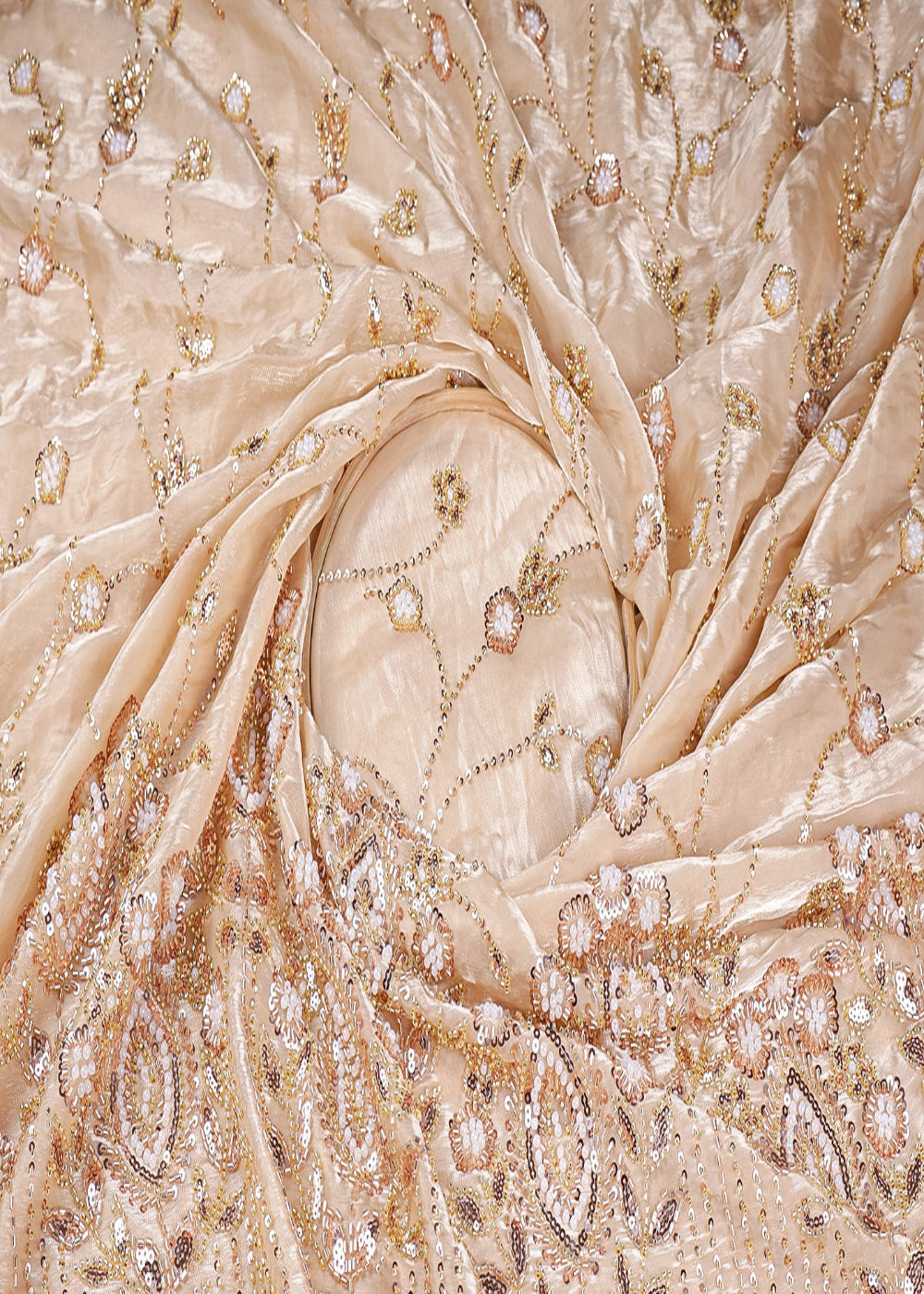
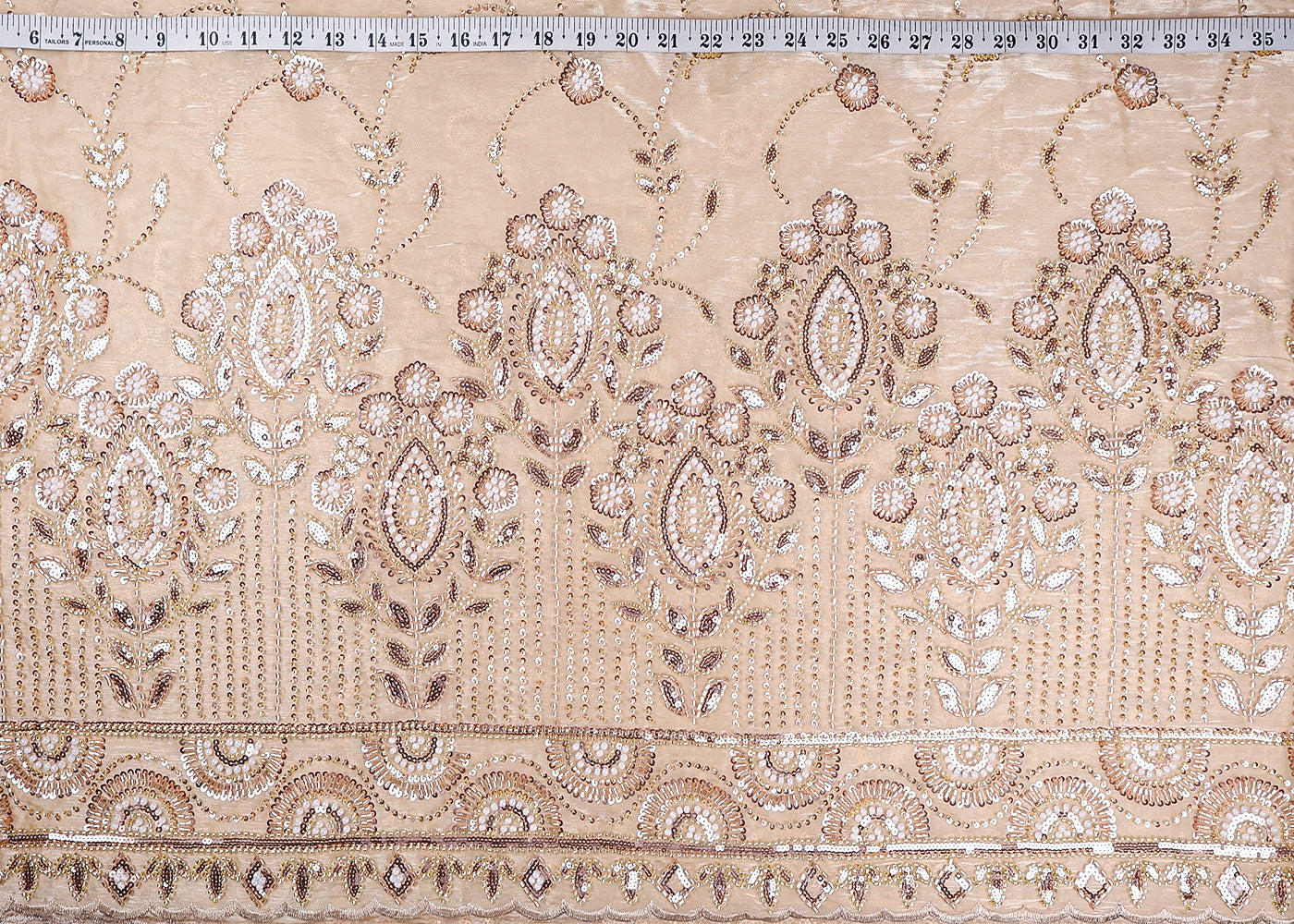
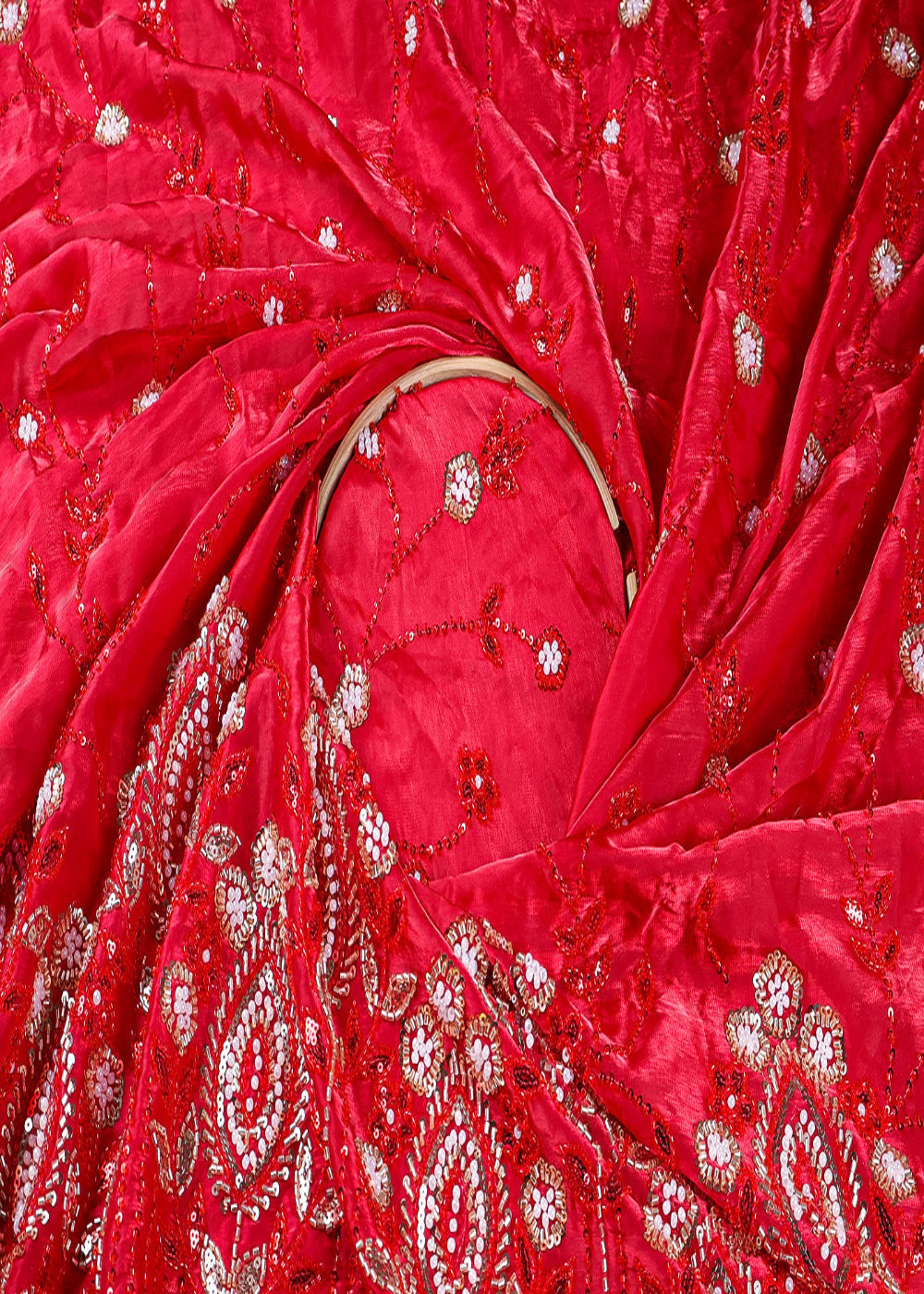
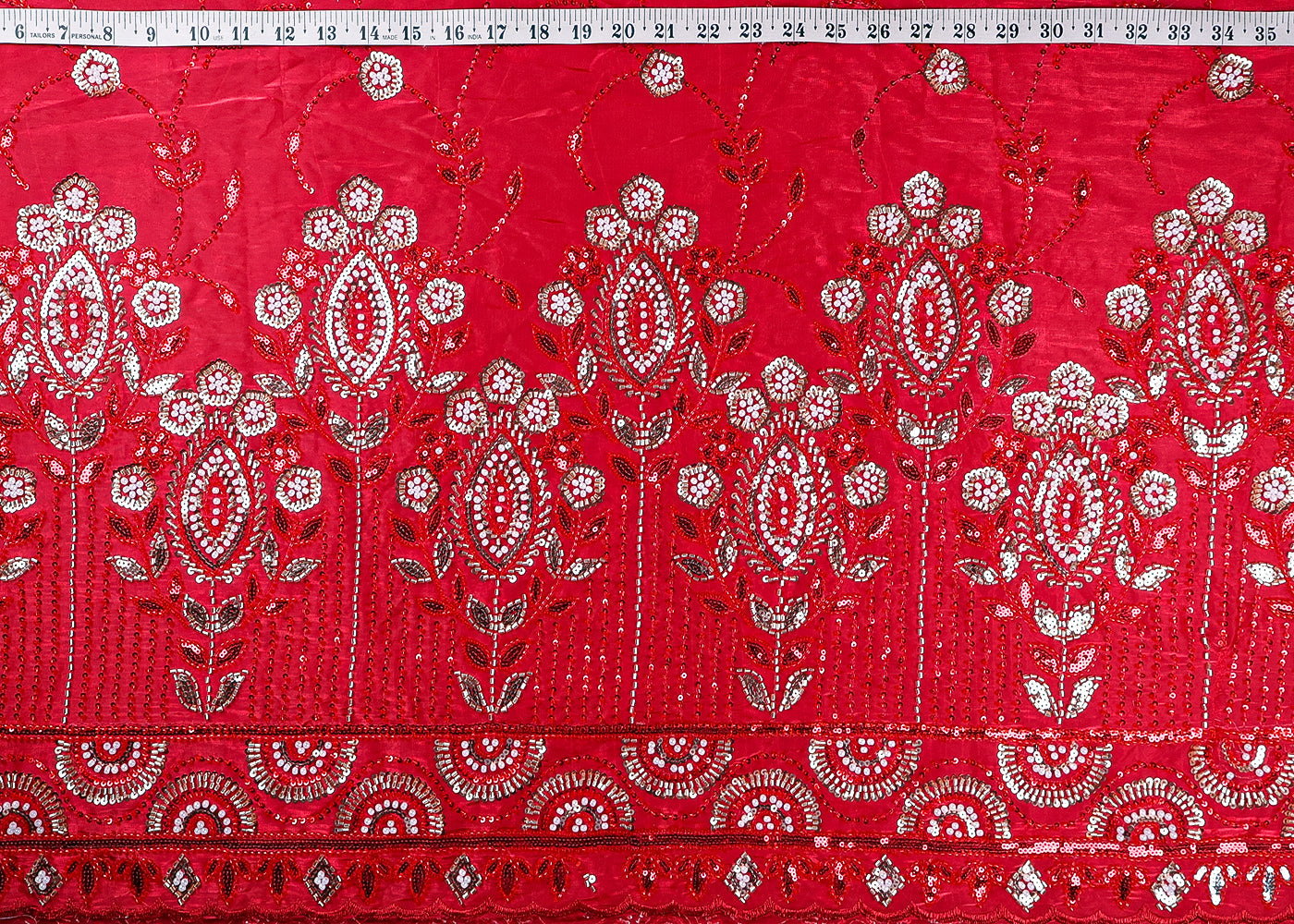
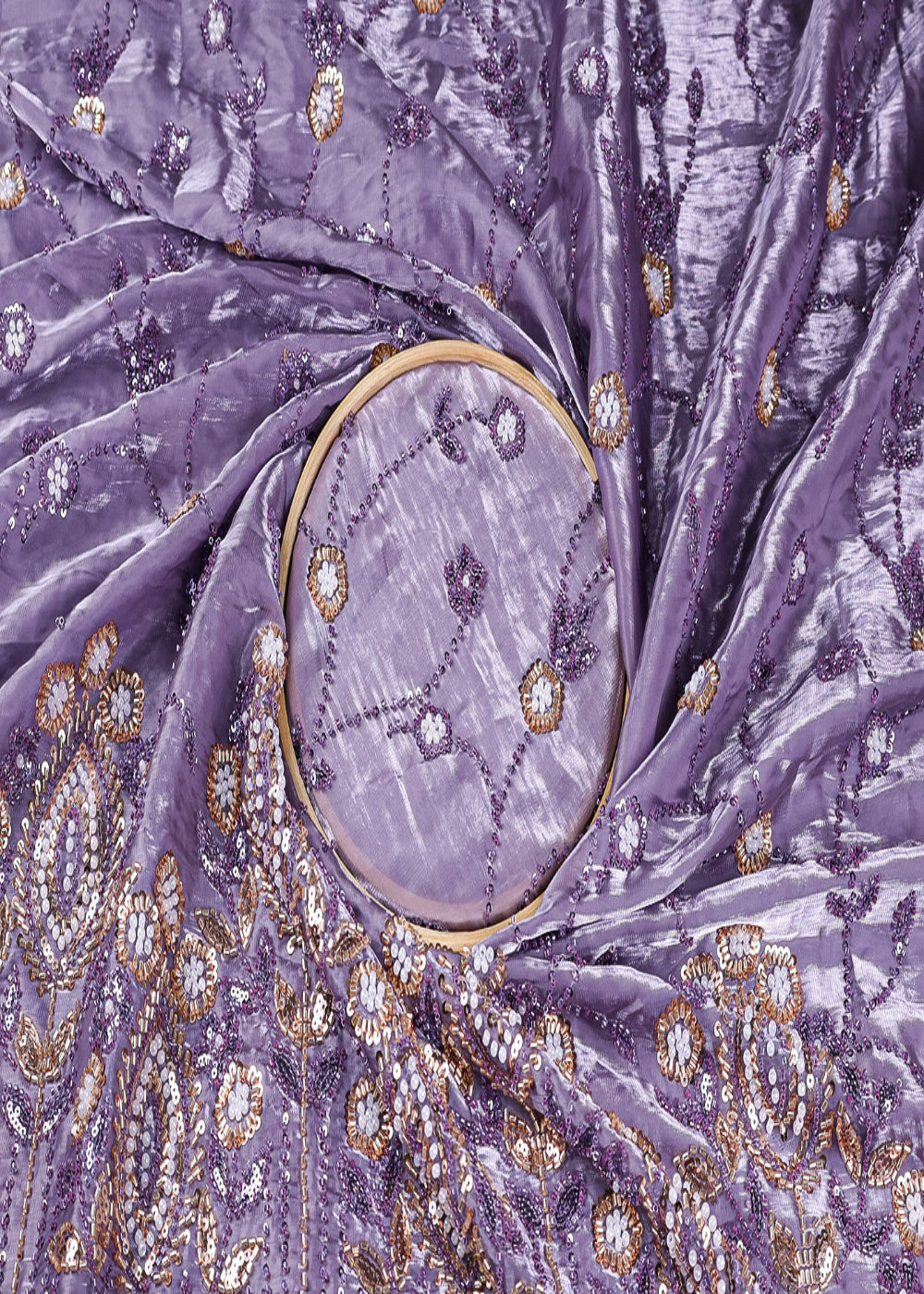
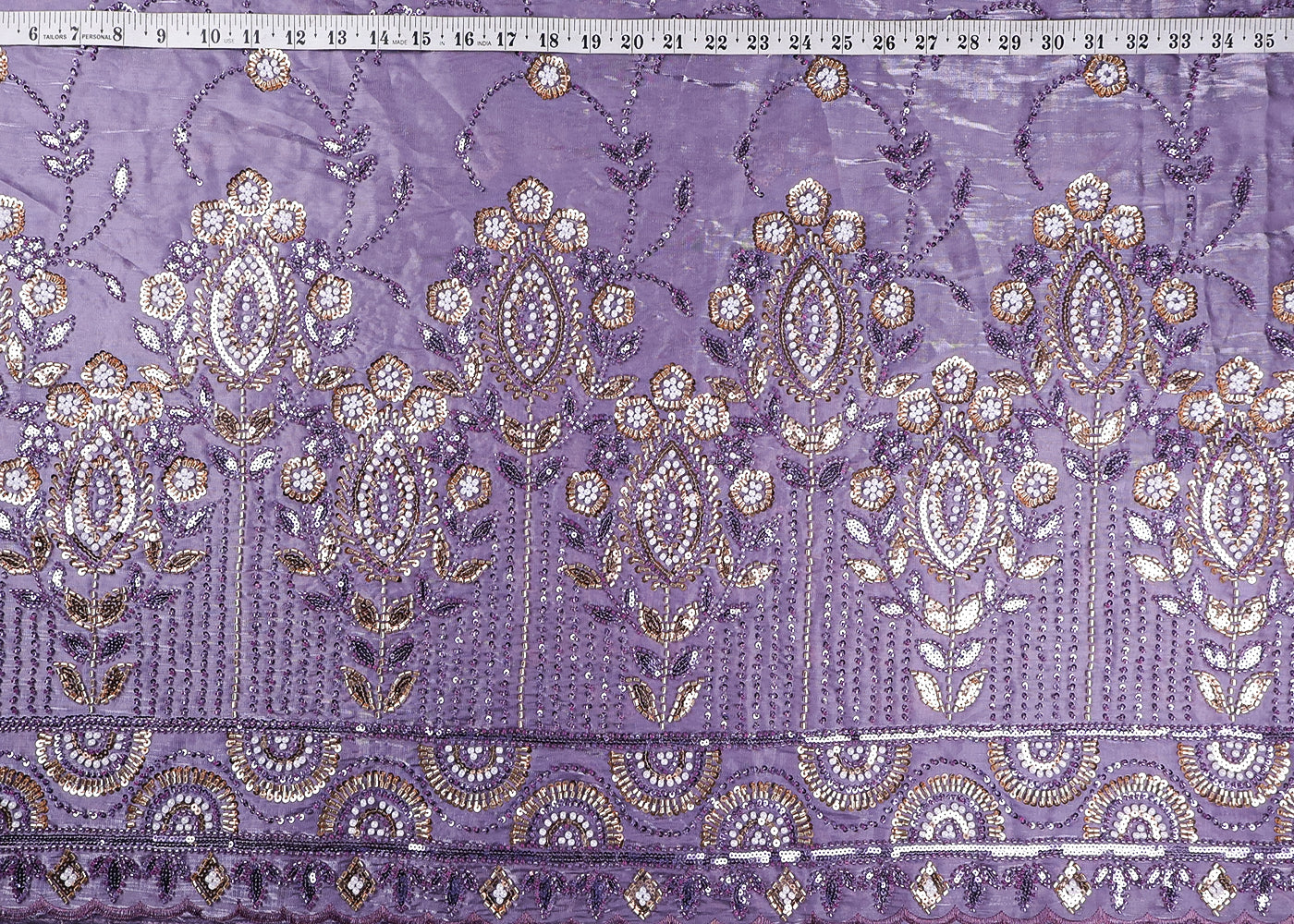
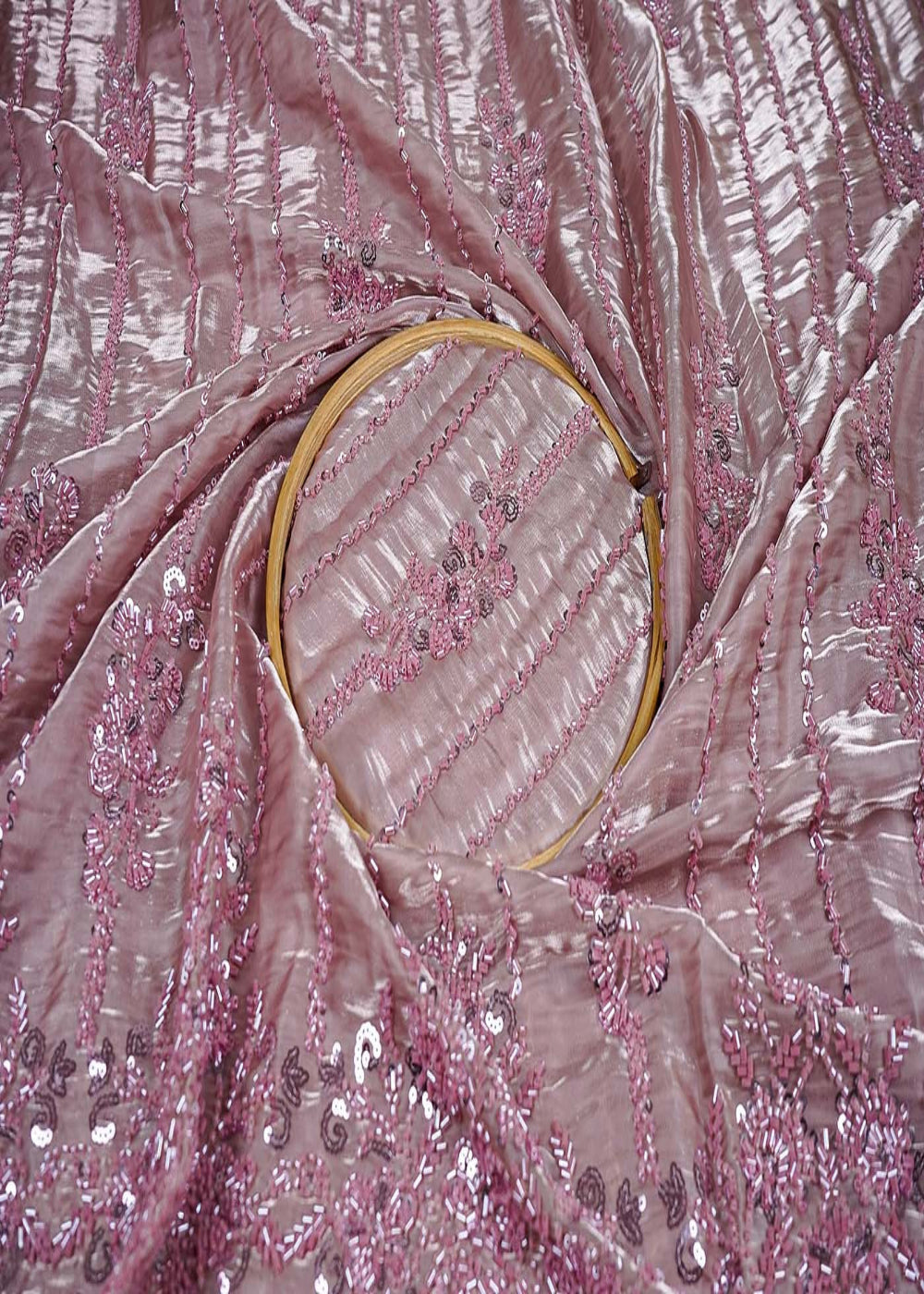
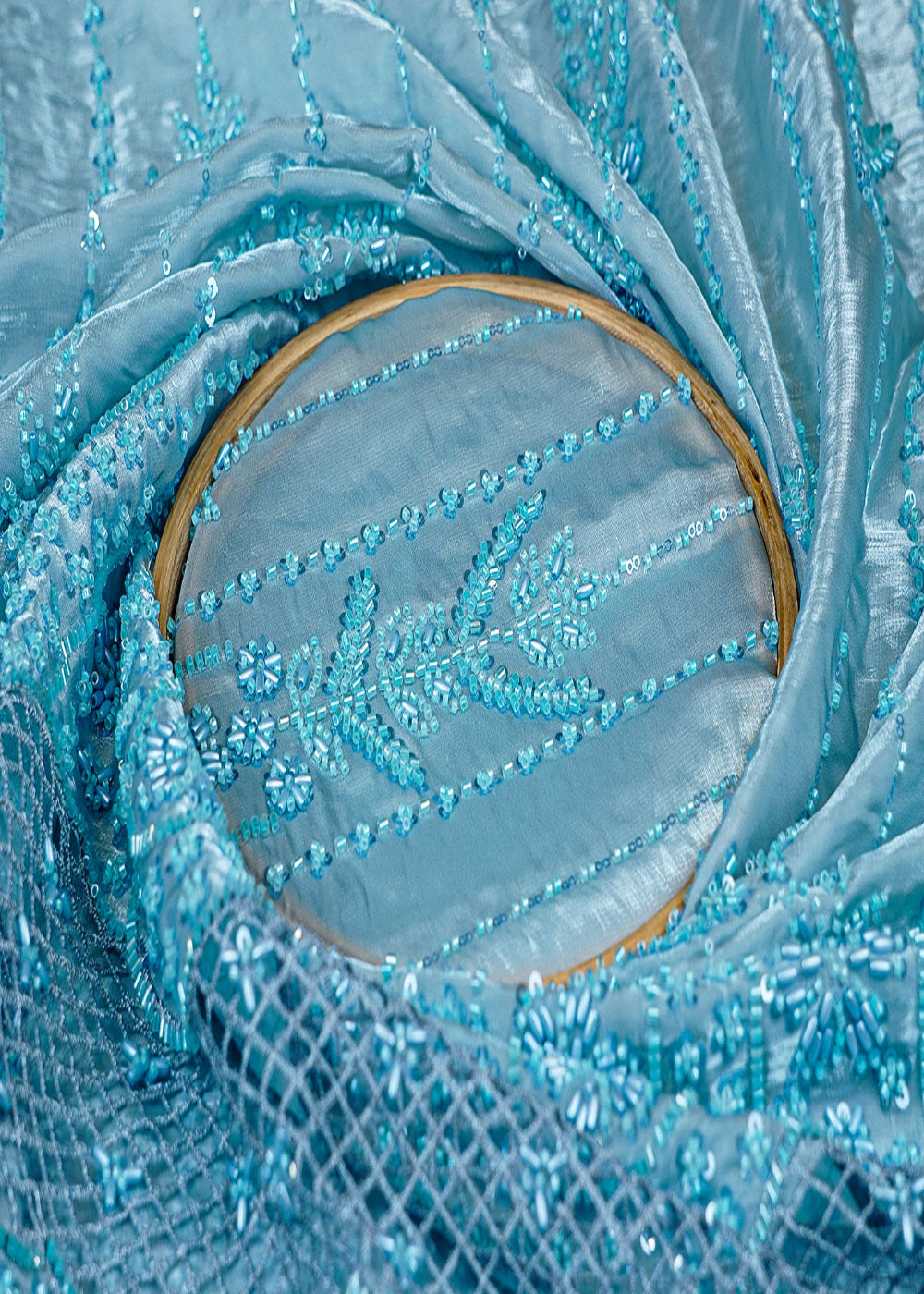
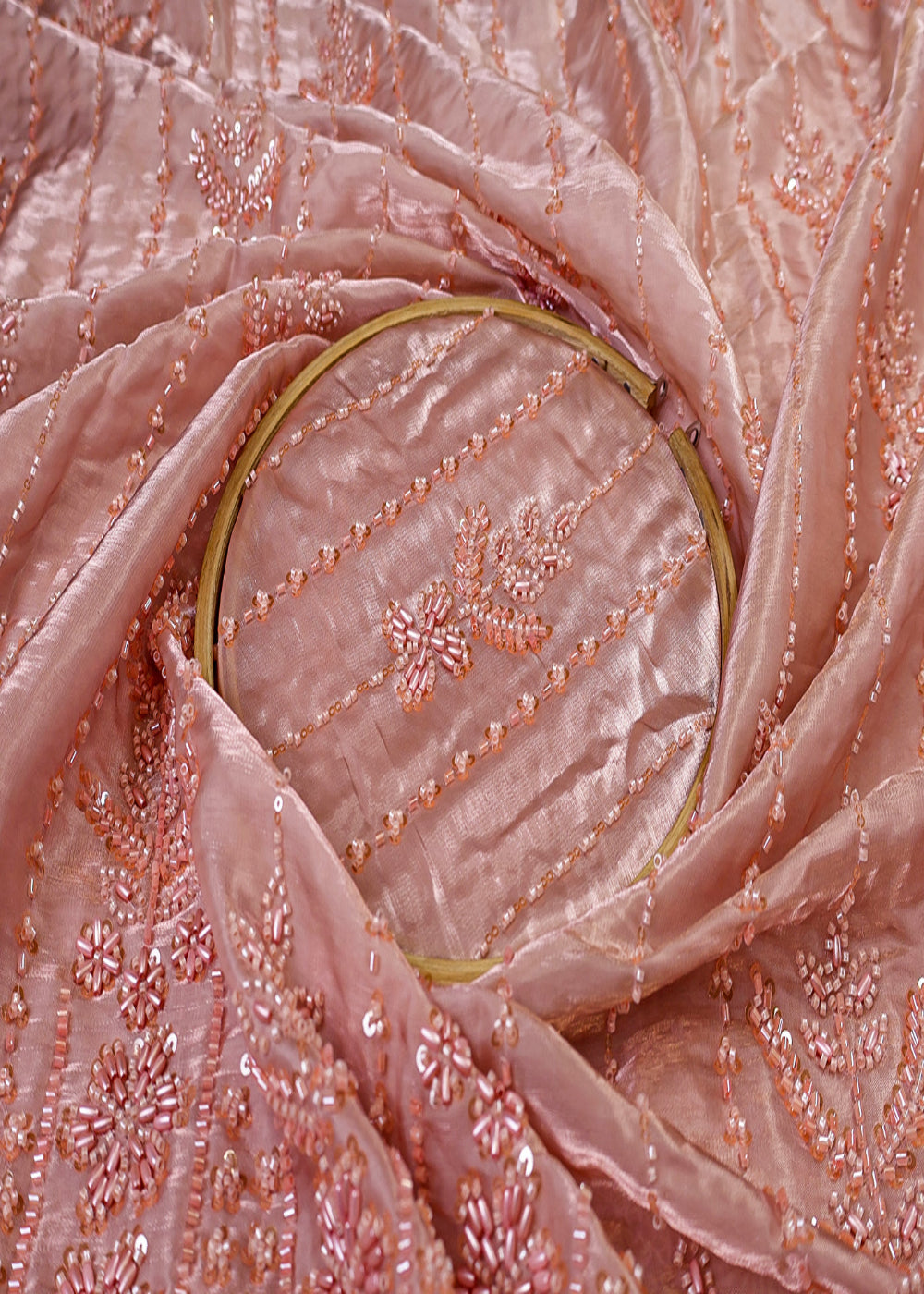
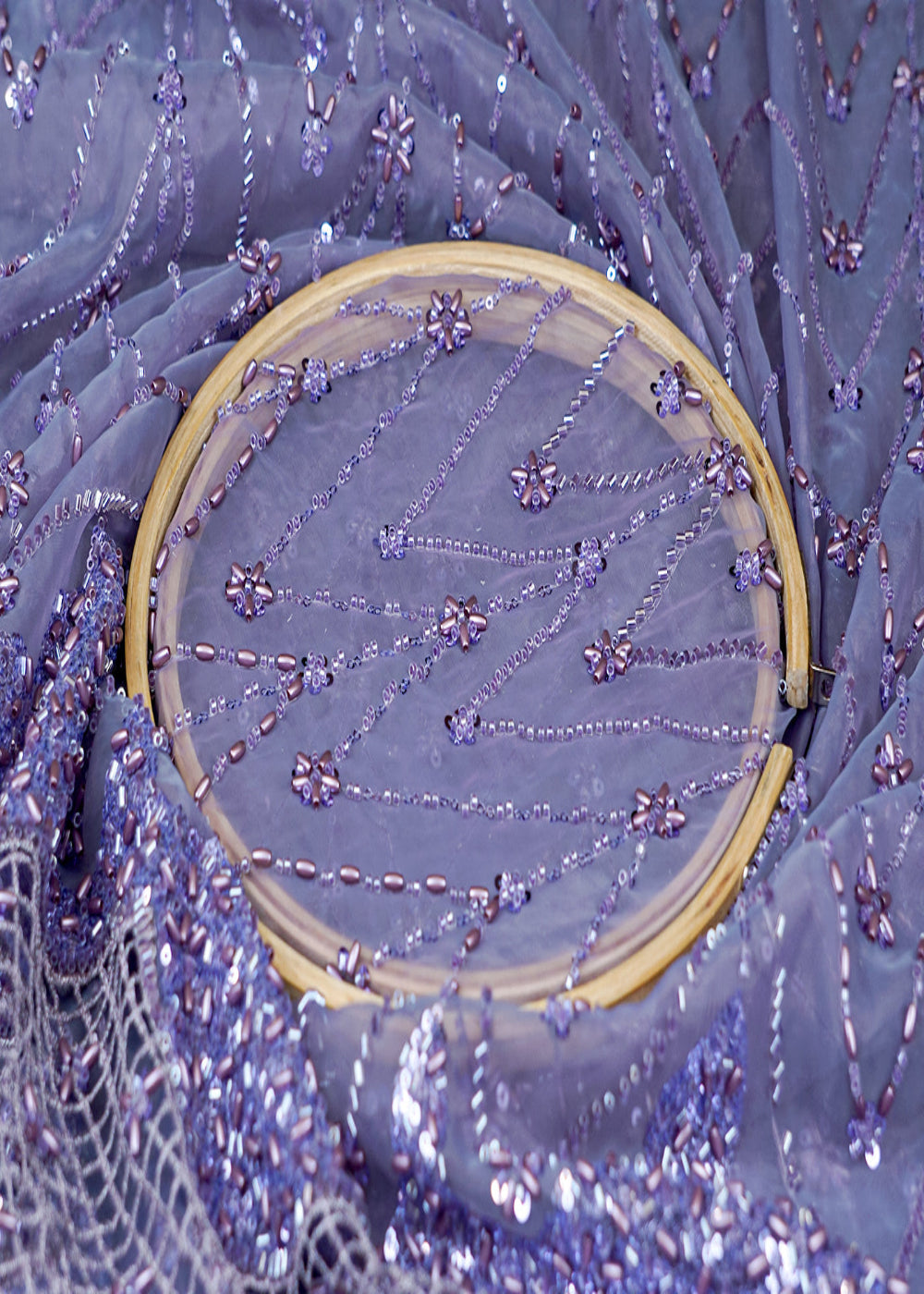
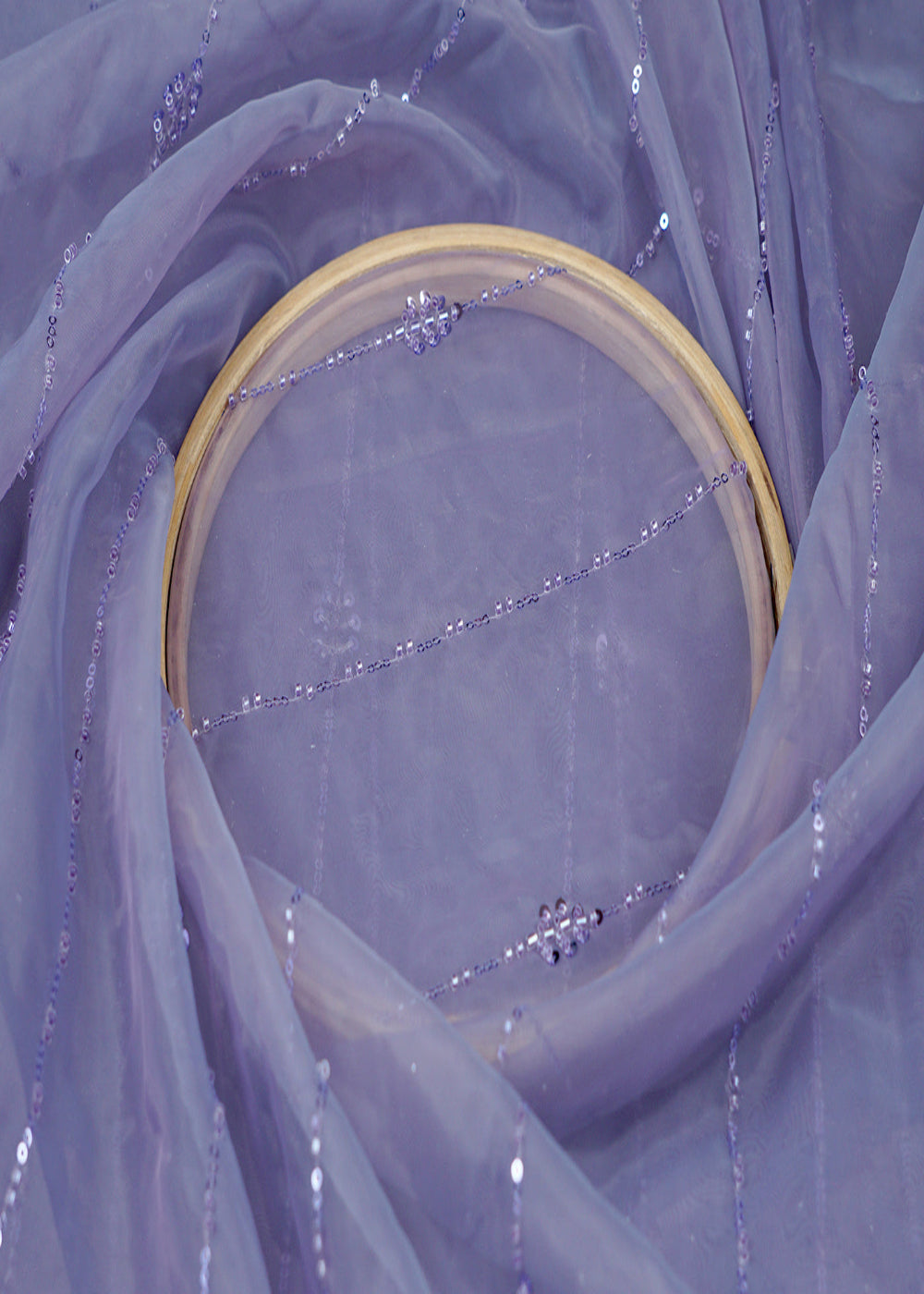
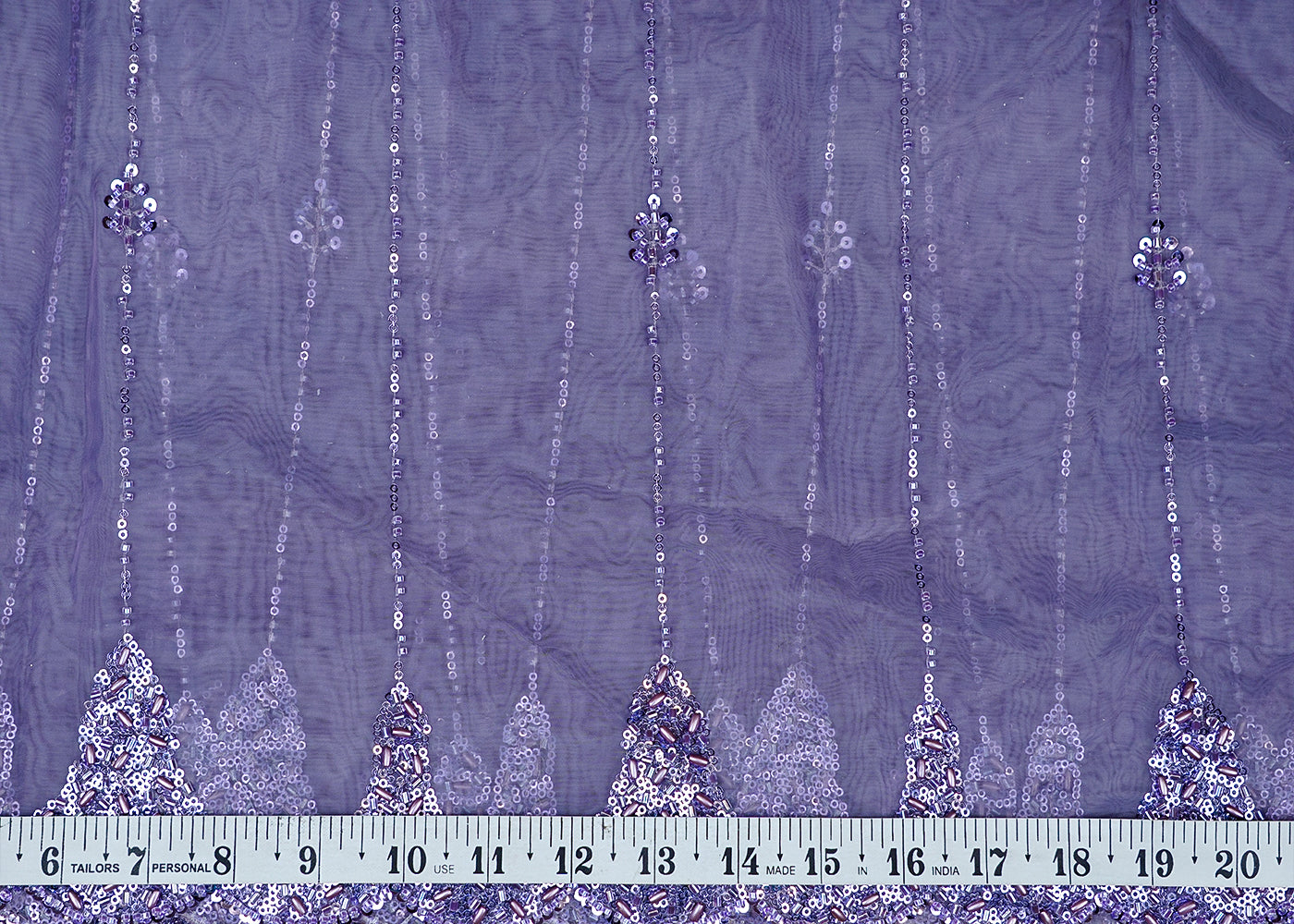
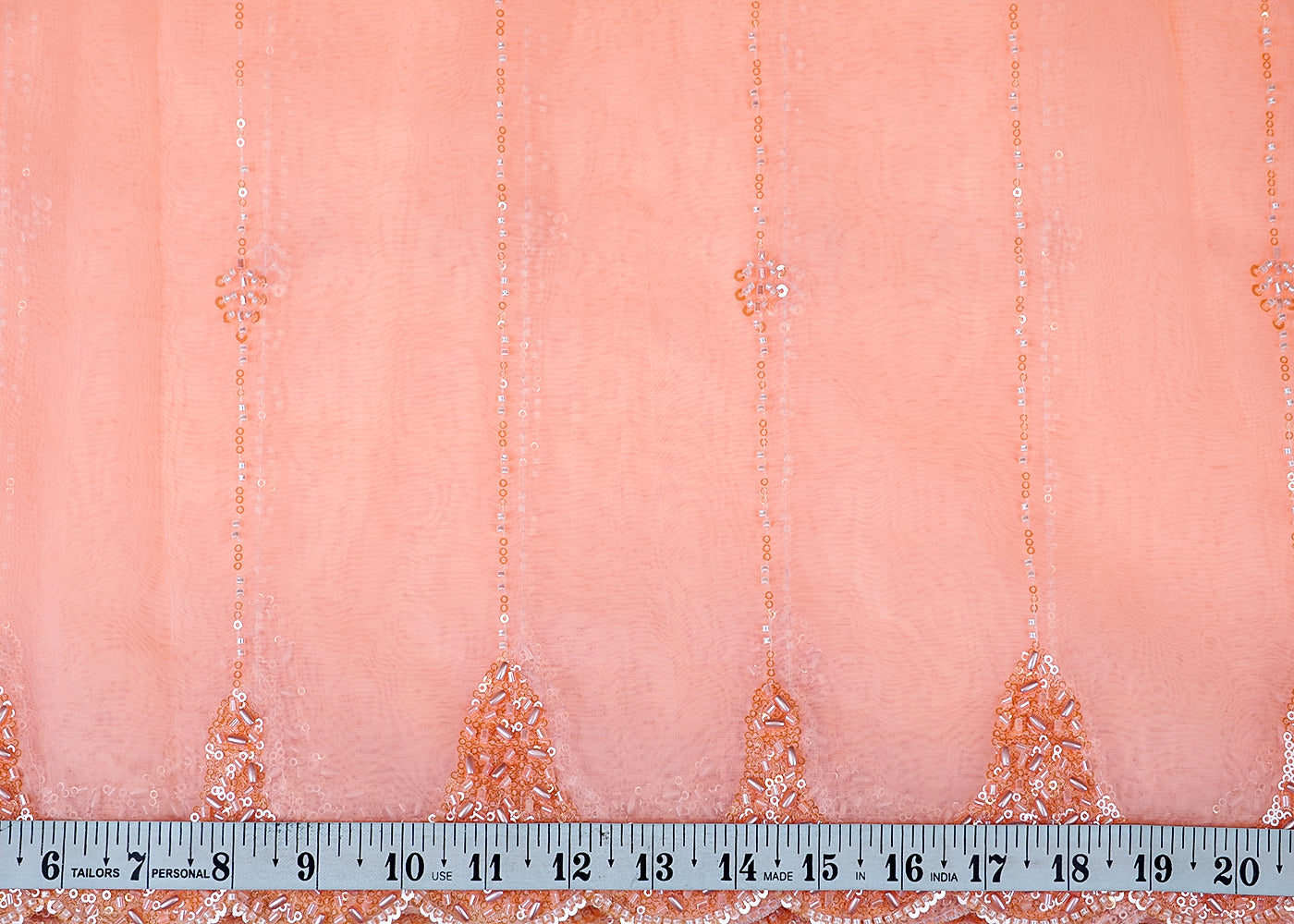
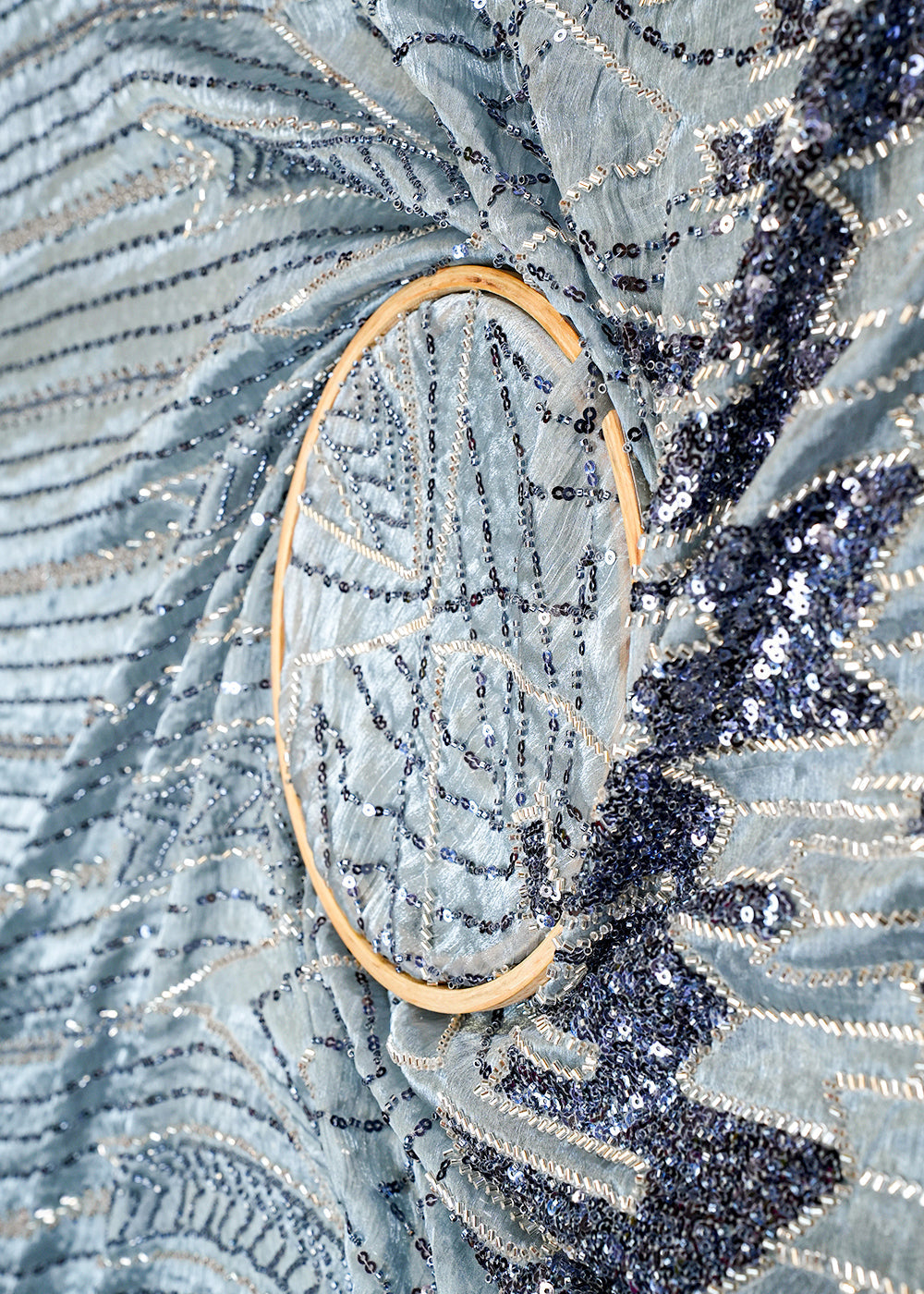
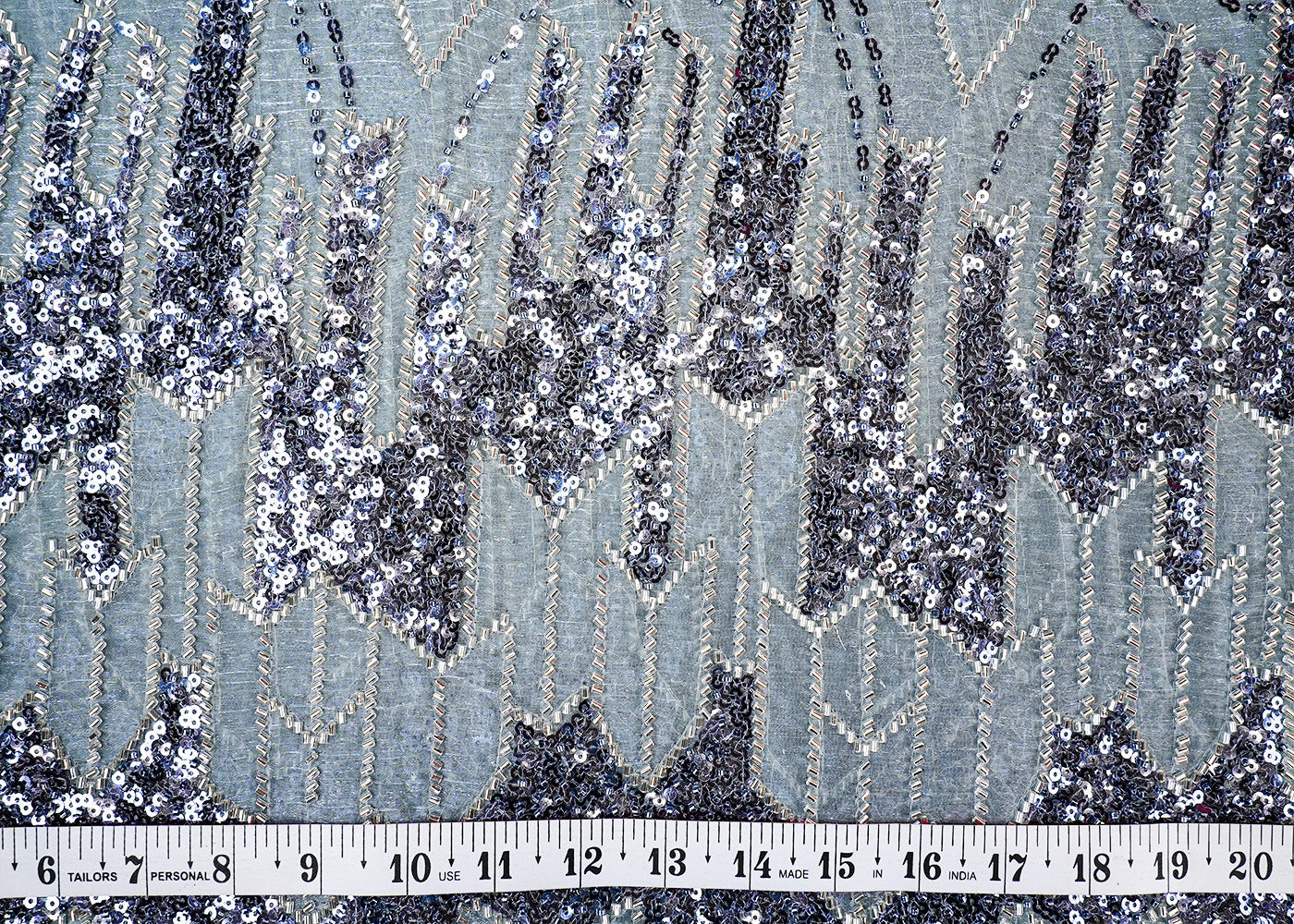
| Sequin organza satin | Indo-western jackets, skirts | Rs 400 to 850 per metre |
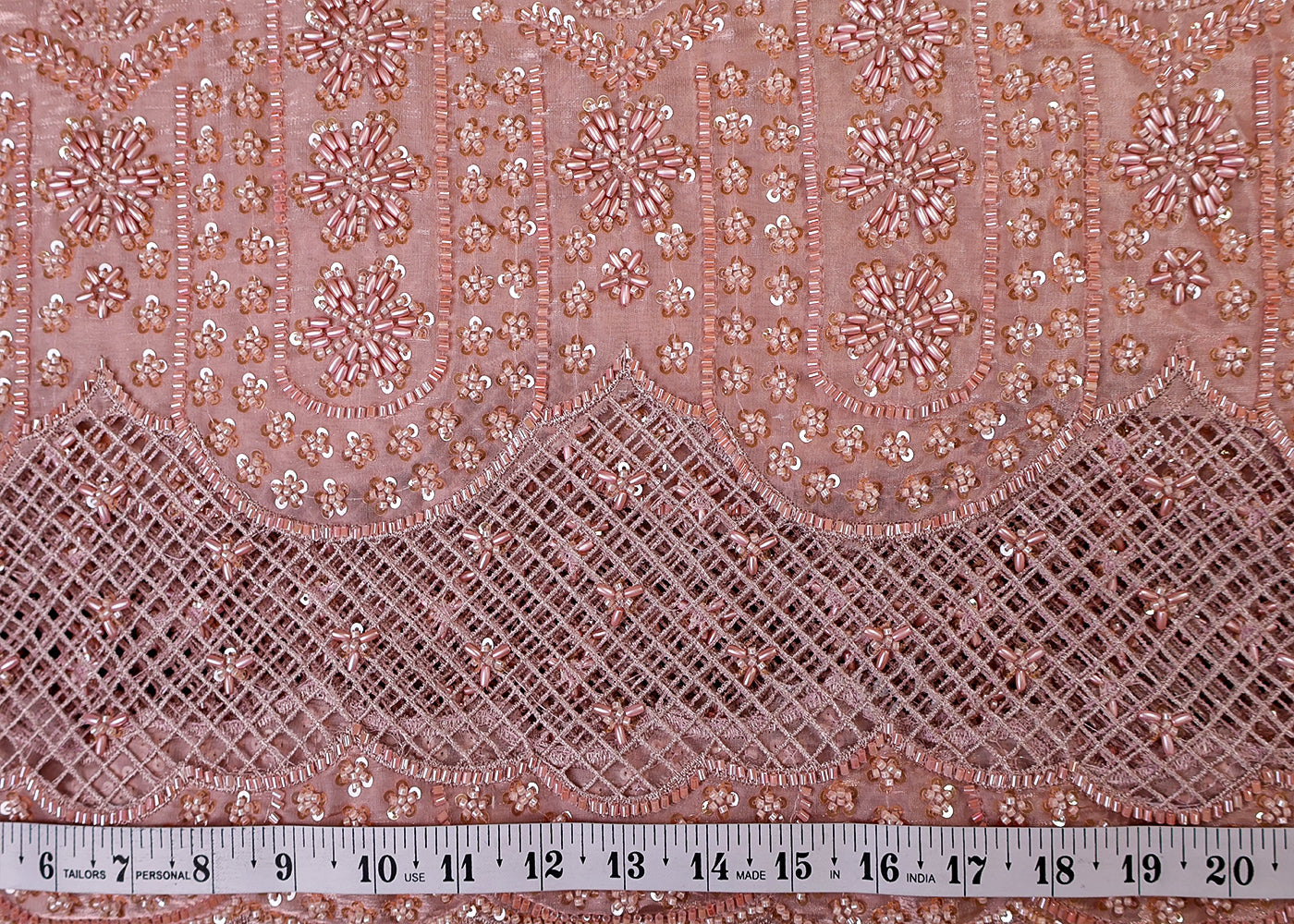
| Crystal work organza satin | Bridal gowns, statement blouses | Rs 500 to 1,100 per metre |
| Printed organza satin | Suit sets, saree layers, daywear | Rs 220 to 400 per metre |
Rate follows the surface work. Plain and shimmer grades stay affordable while crystal and sequin coverage pushes the price up. Bulk thaan purchase brings the plain and printed grades down noticeably.
Organza Satin GSM Guide
GSM decides whether a gown falls soft or holds structure. On a shiny fabric this matters more, since a wrong weight either sags or looks stiff and boxy.
| Type | GSM Range | Feel | Best For |
| Light organza satin | 90 to 130 GSM | Soft fall, light shine | Skirt layers, dupattas, drapes |
| Standard organza satin | 130 to 170 GSM | Balanced body | Gowns, suit sets, capes |
| Sequin or crystal grade | 170 to 220 GSM | Heavier, structured | Cocktail dresses, jackets |
| Heavy worked grade | 220 GSM upward | Firm, sculptural | Bridal gowns, statement panels |
Popular Uses
- Party gowns, cocktail dresses, reception wear
- Indo-western jackets, capes, skirt layers
- Statement saree blouses and designer suit sets
- Bridal gowns where shine matters more than heavy work
For an evening reception this fabric earns its place because it photographs bright under artificial light where a matte piece falls flat. Pair a plain organza satin gown with a worked sequins panel and the outfit reads high fashion without a full crystal build.
Trends Driving Demand in 2026
Reception wear has moved toward liquid-shine fabrics over heavy embroidery, which puts organza satin at the front. Buyers want the drama of a reflective gown that still lets them move through a long evening. A lightly worked satin face delivers that better than a fully embellished net.
On colour, deep jewel tones lead for evening. Emerald, wine, sapphire, midnight blue. The satin face reads richest on these grounds, where a pale shade can look washed out under camera flash.
Working Tips for Organza Satin
- Line gowns and structured pieces. The base has partial sheerness on light grades
- Use a fine needle and press on low heat. The satin face glazes under a hot iron
- Cut in a single layer. The slick surface shifts when doubled under the scissor
- Keep it for panels, capes, or full drapes rather than fitted sections that crease at the seam
Frequently Asked Questions
What is organza satin fabric?
It is an organza base finished with a satin weave face, so it holds shape like organza while carrying the smooth shine of satin. Some counters sell it under borrowed designer names, but the fabric itself is a satin-finish organza.
How much fabric is needed for a gown?
A floor-length gown takes 3 to 4 metres depending on flare and length, plus lining. A layered or trailing gown needs 5 to 6 metres. Confirm the flare with the tailor before cutting.
Which GSM suits a reception gown?
The 130 to 170 GSM band. Enough body to hold the silhouette while keeping the fluid fall that a shiny gown needs. Above 220 GSM the fabric turns stiff and reads boxy.
Can organza satin be washed at home?
Plain grades take a gentle cold hand wash. Sequin and crystal work grades should be dry cleaned only, since the embellishment loosens in water and the satin face dulls with agitation.
Order Organza Satin at Paras Gallery Fabrics
Our organza satin range covers plain, shimmer, sequin, crystal work, printed grades across the full GSM spread, cut by the metre or supplied by thaan for production runs. Designers building party wear ranges can check bulk rates on our wholesale page.
