




Inside the Crochet Fabric Trade: Weaves, Uses, Wholesale
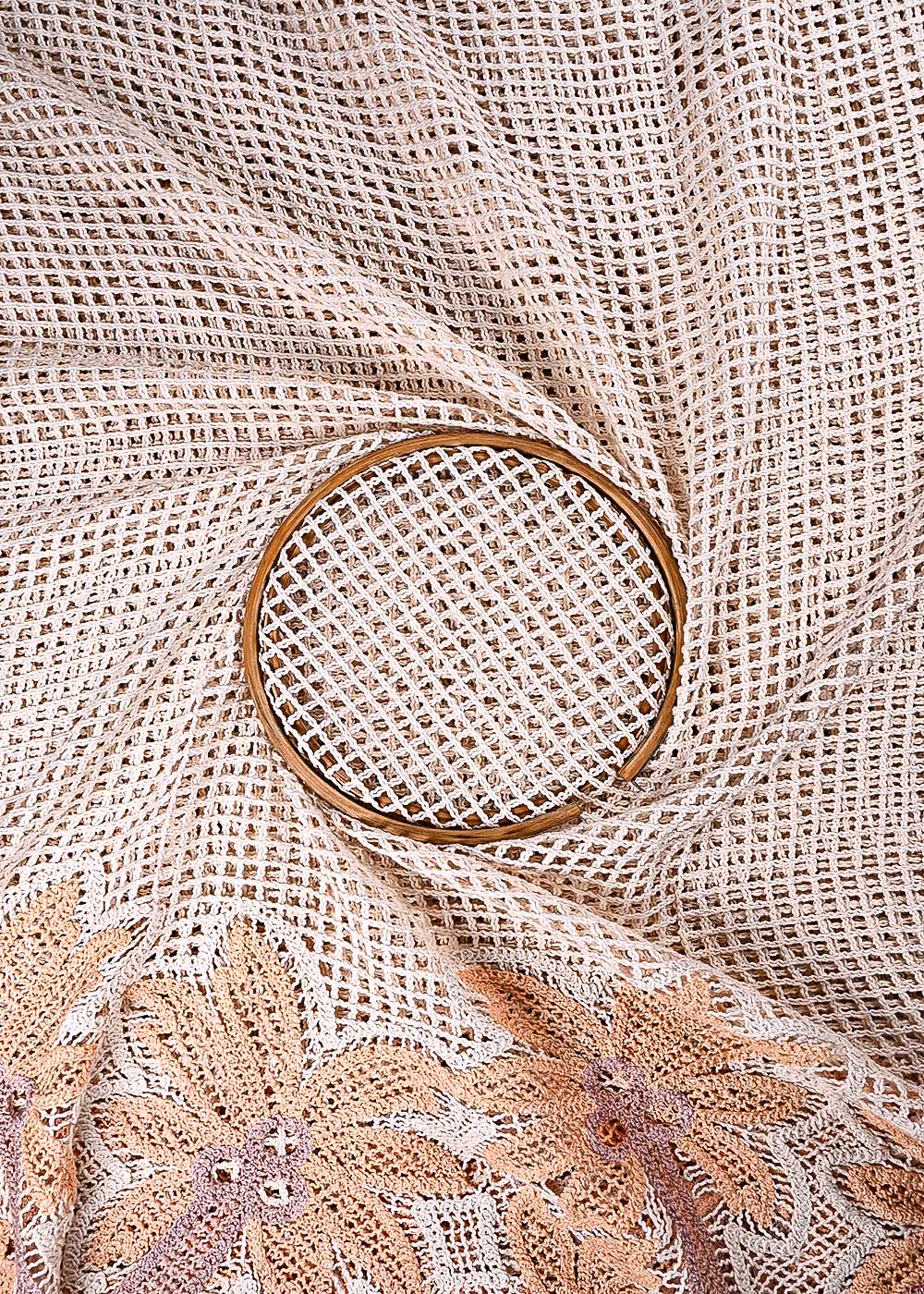
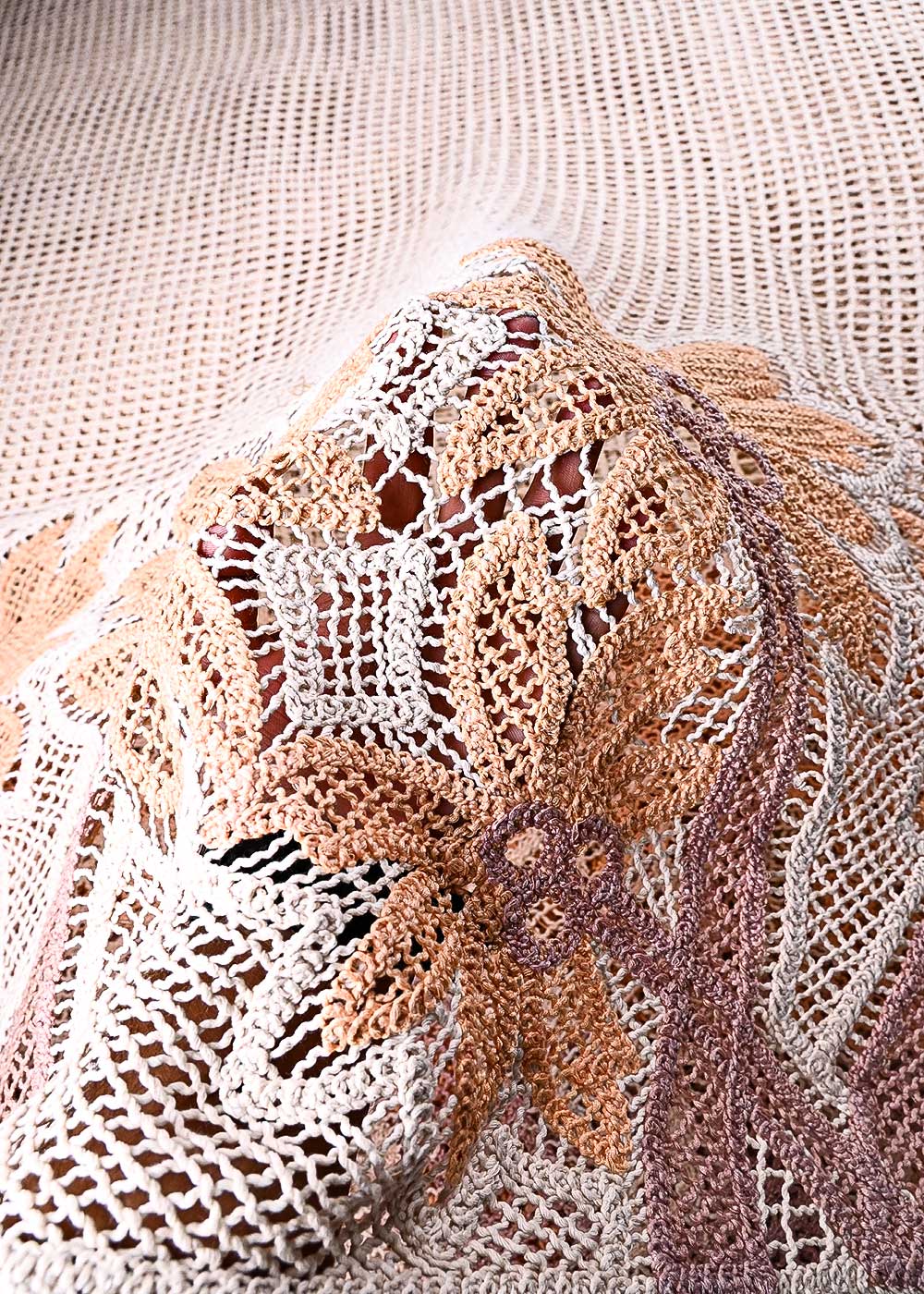
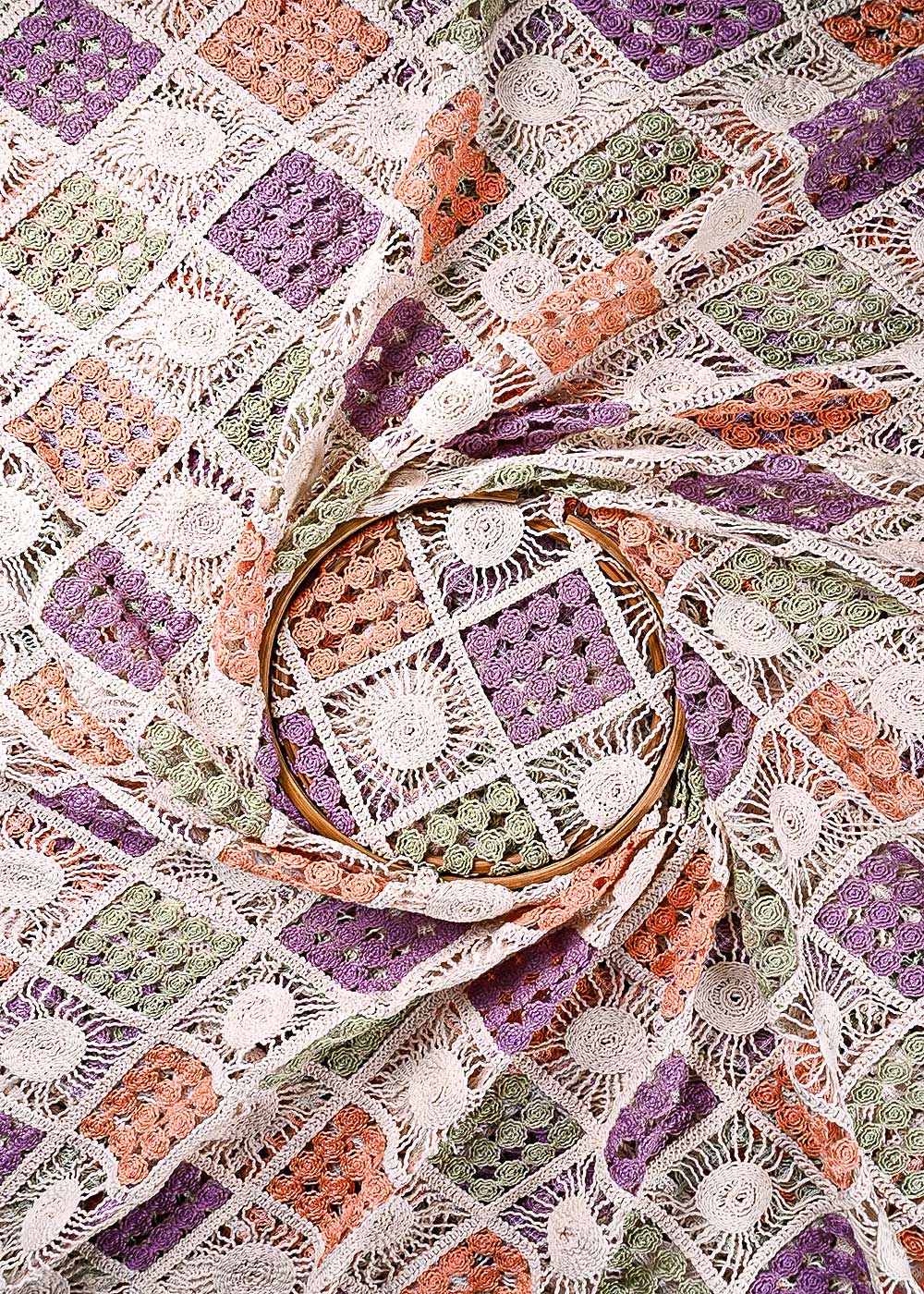
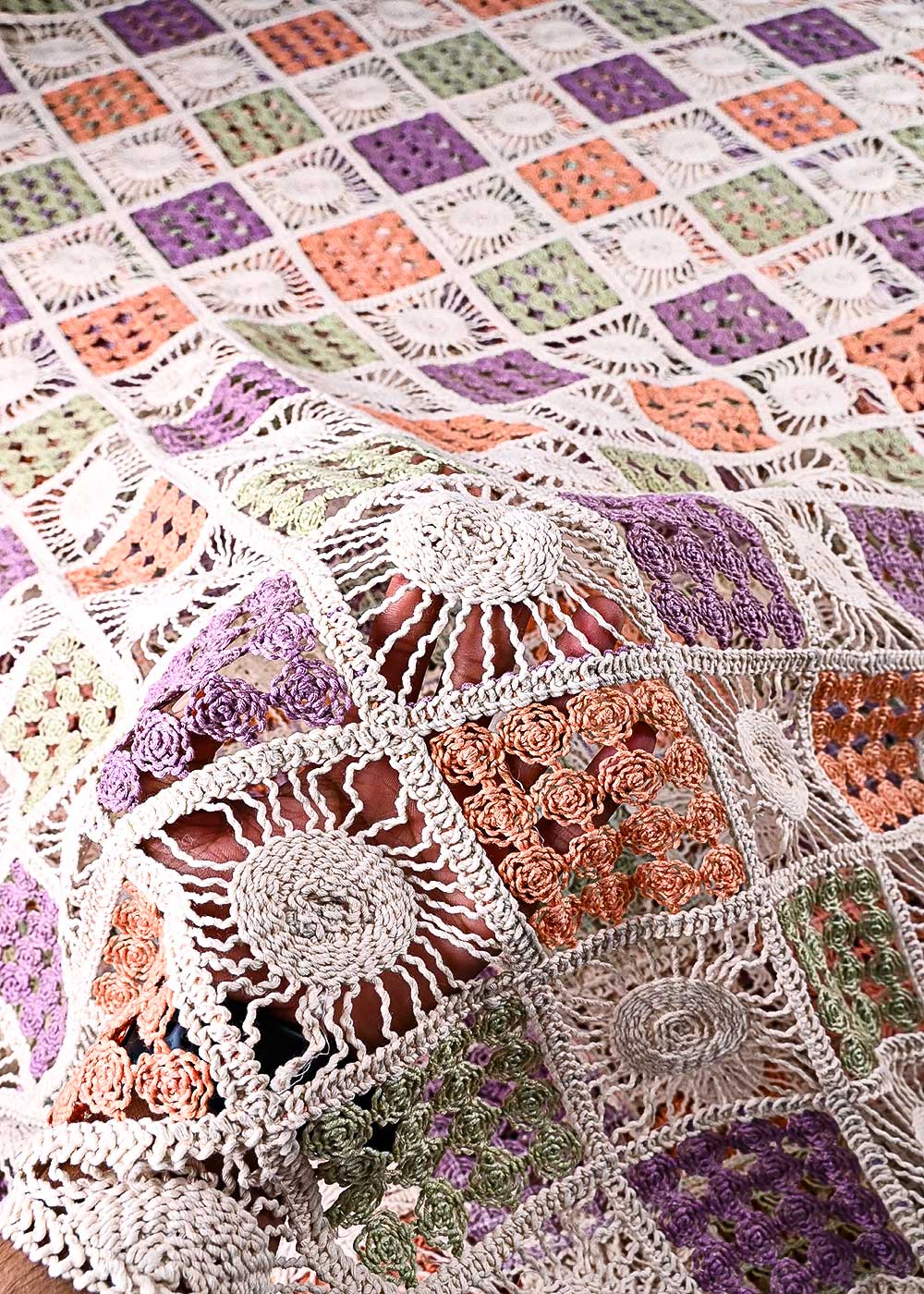
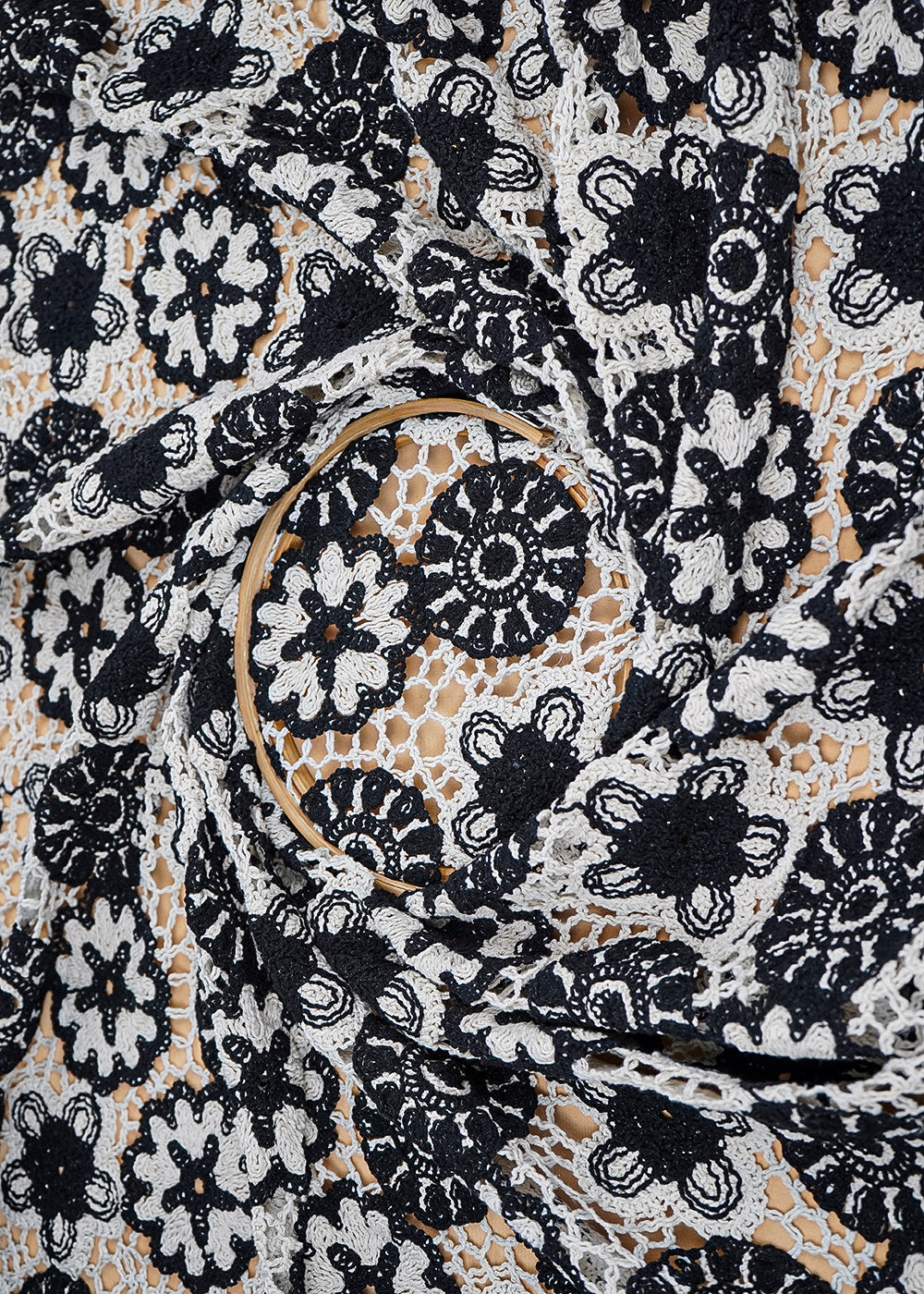
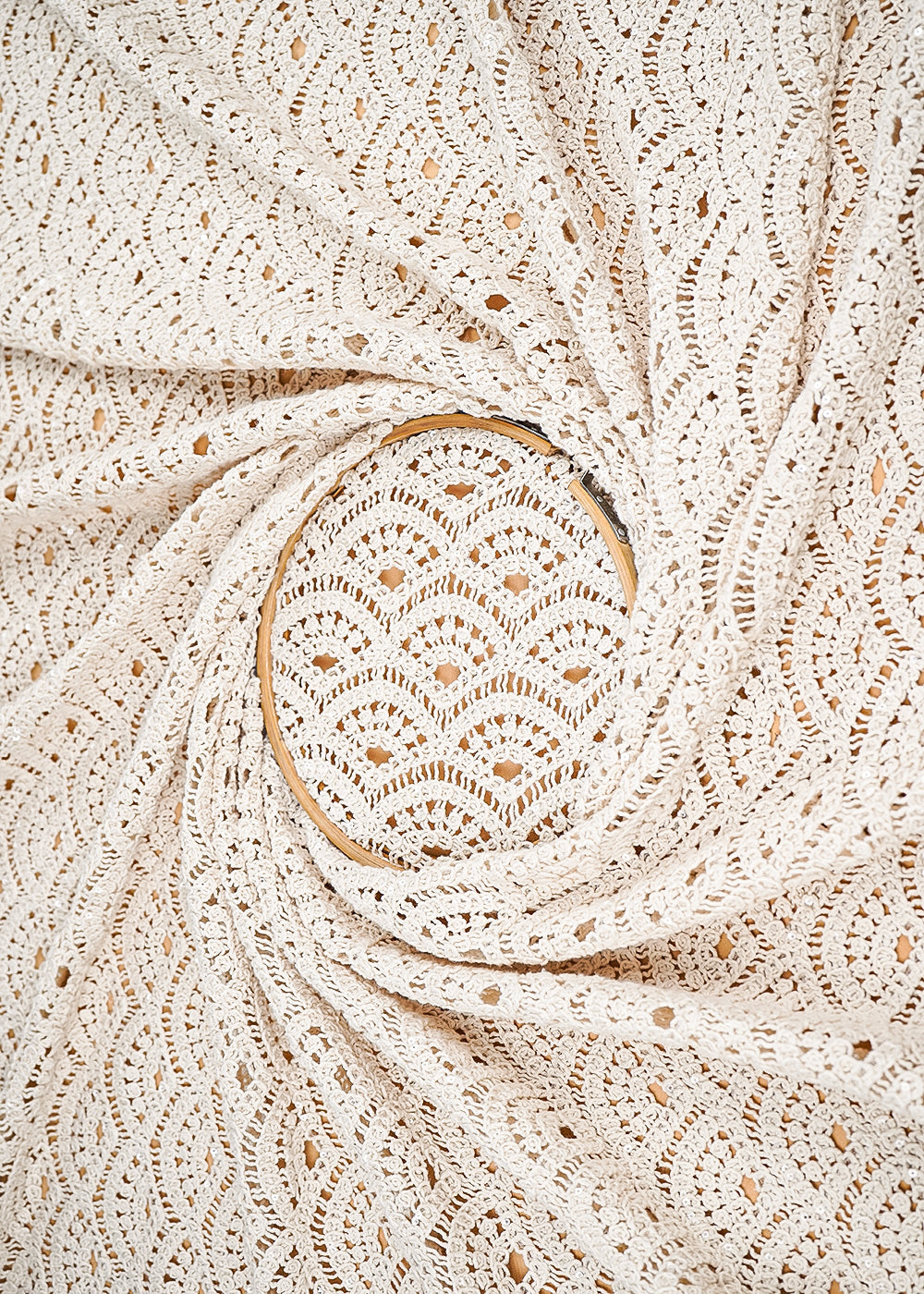
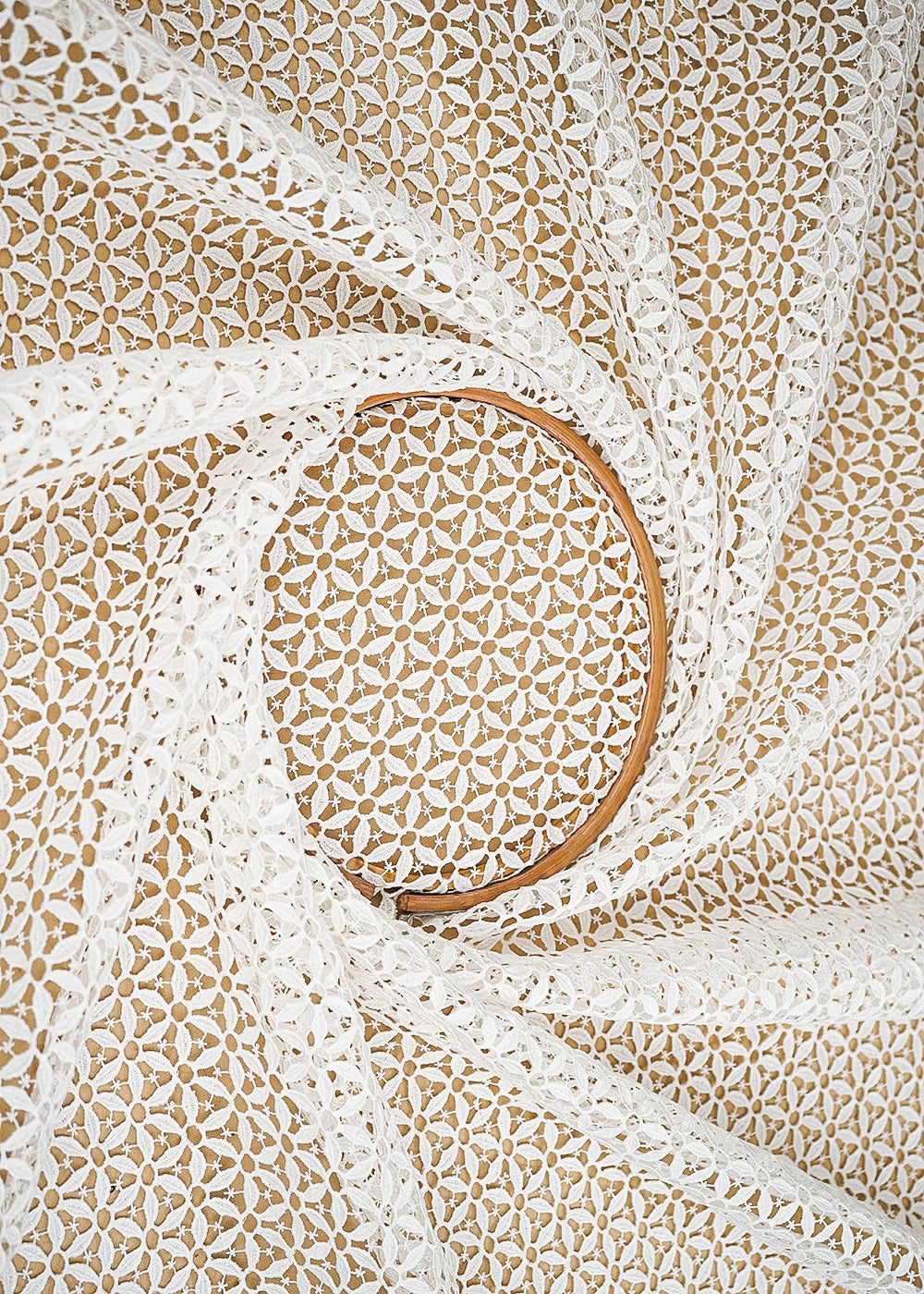
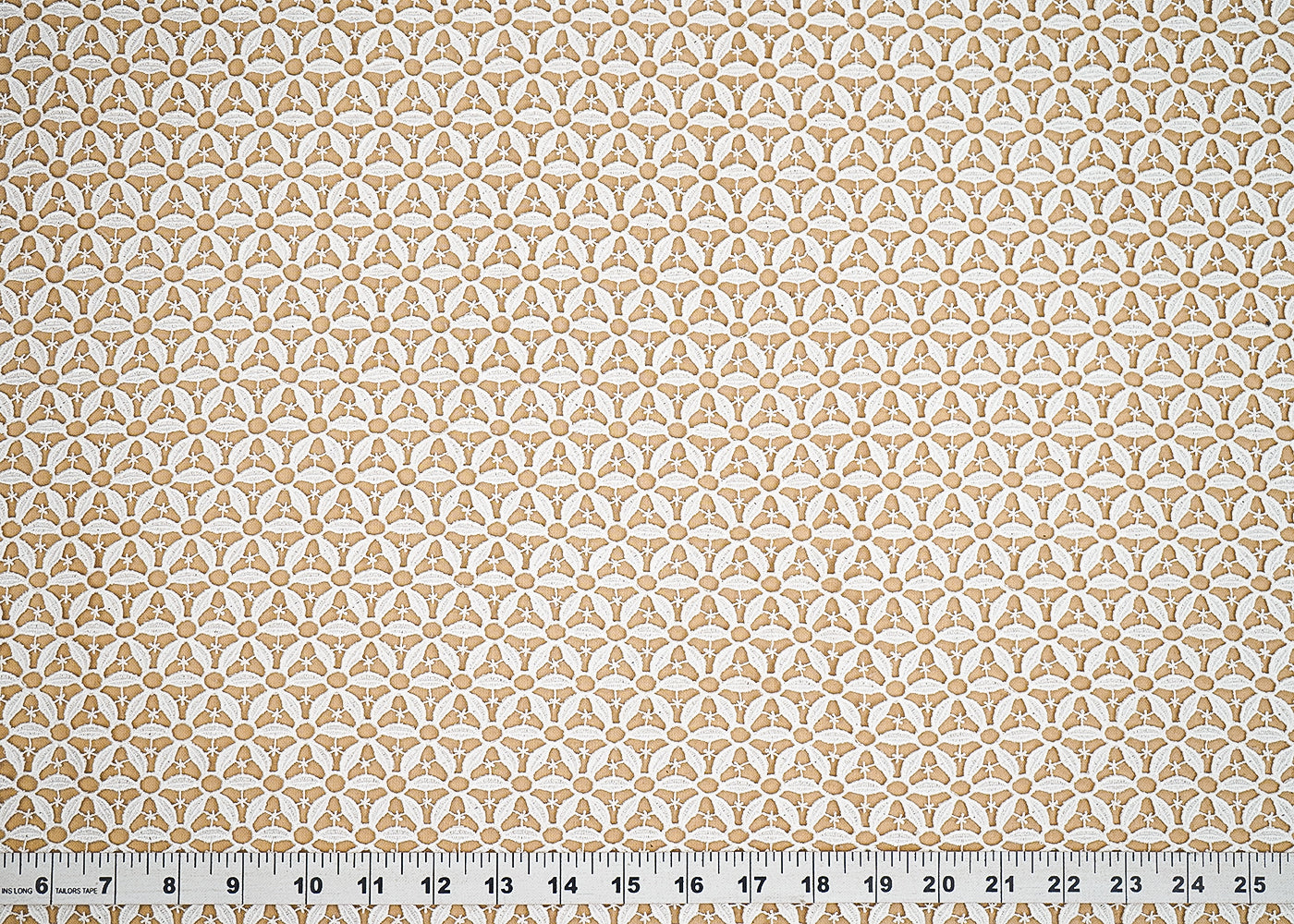
Crochet fabric is an open-weave textile produced through interlocking yarn loops rather than the warp-weft interlacing that defines conventional woven fabrics. The construction traces back centuries across multiple regions (Ireland, France, China claim origins), with modern industrial production using specialized machines that replicate hand-worked patterns at commercial scale. The finished fabric carries characteristic openwork patterns with visible negative space between yarn loops. This distinguishes the category from all conventional woven or knit fabrics in both visual appearance plus construction technique.
What Makes Crochet Fabric Different
The open-loop structure carries the whole story. Look inside conventional weaving. Warp threads run lengthwise. Weft threads run crosswise. Interlacing creates solid fabric surface. Regular knit fabrics use single-thread looping in horizontal courses to build stretchy fabric body. Crochet uses single-thread interlocking with intentional negative space between loops, creating the openwork character that defines the category.
Base fibres span cotton, polyester, viscose, plus blend variants. Cotton delivers breathability plus soft hand feel for summer wear. Polyester holds structure better across long wear cycles. Viscose blends deliver drape-forward character at lower cost. Boutiques stock all three depending on target garment plus season.
Hand feel? Light, breathable, structural body from interlocking loop construction. Drape depends on stitch density plus yarn thickness. Fine-gauge drapes softly. Chunky-gauge stays structured. Both find distinct use cases across boutique production.
Lajpat Nagar wholesale rates range Rs 320 to Rs 850 per metre depending on gauge plus fibre content.
Types of Crochet in Our Collection
| Type | Best Use | Approximate Price Range |
|---|---|---|
| Fine-Gauge Cotton Crochet | Summer kurtis, layered tops | Rs 320 to 460 per metre |
| Chunky-Gauge Cotton Crochet | Statement jackets, cardigans | Rs 480 to 680 per metre |
| Polyester Crochet | Party wear kurtis, structured tops | Rs 380 to 520 per metre |
| Viscose Blend Crochet | Drape-forward kurtis, tunics | Rs 340 to 480 per metre |
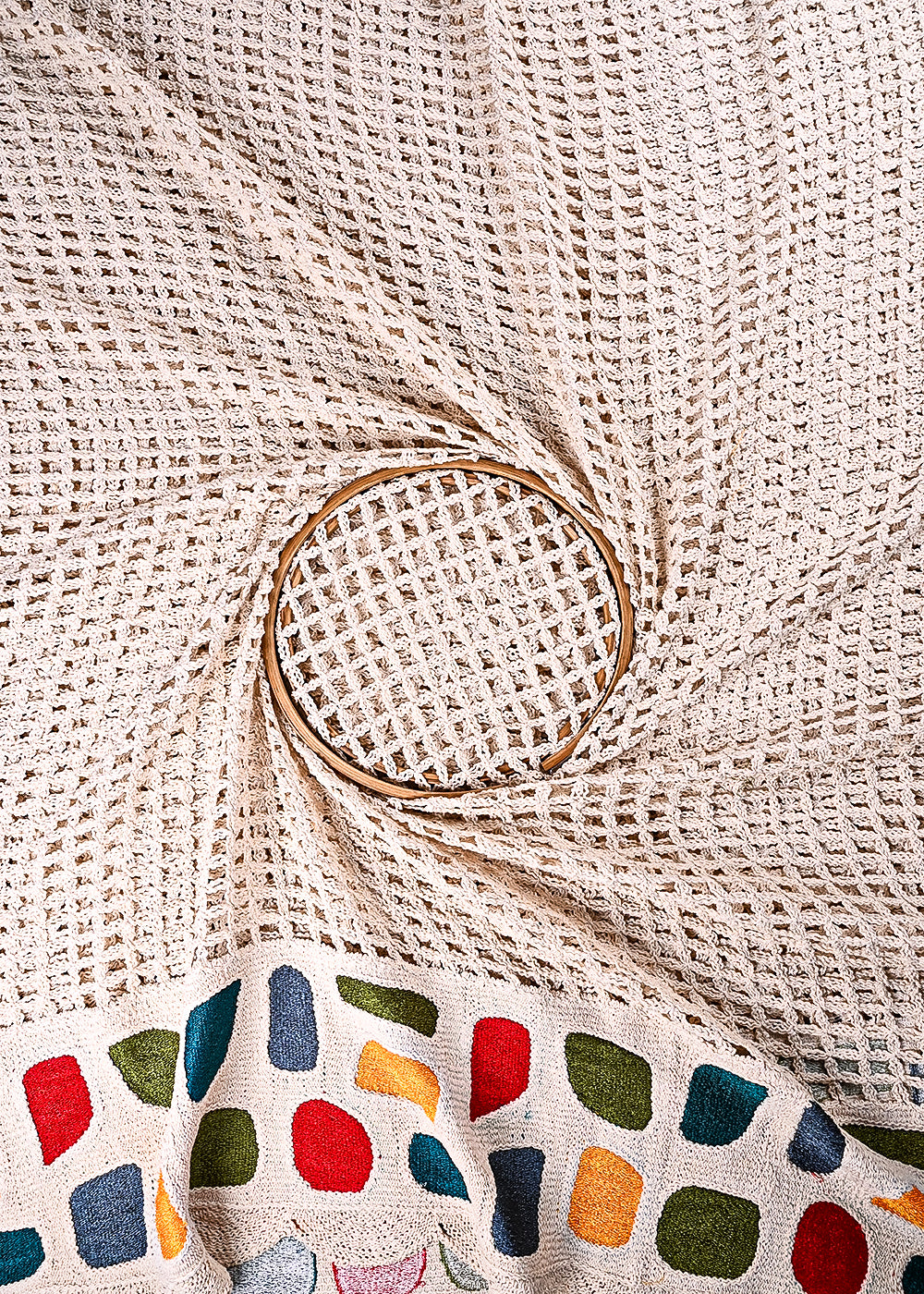
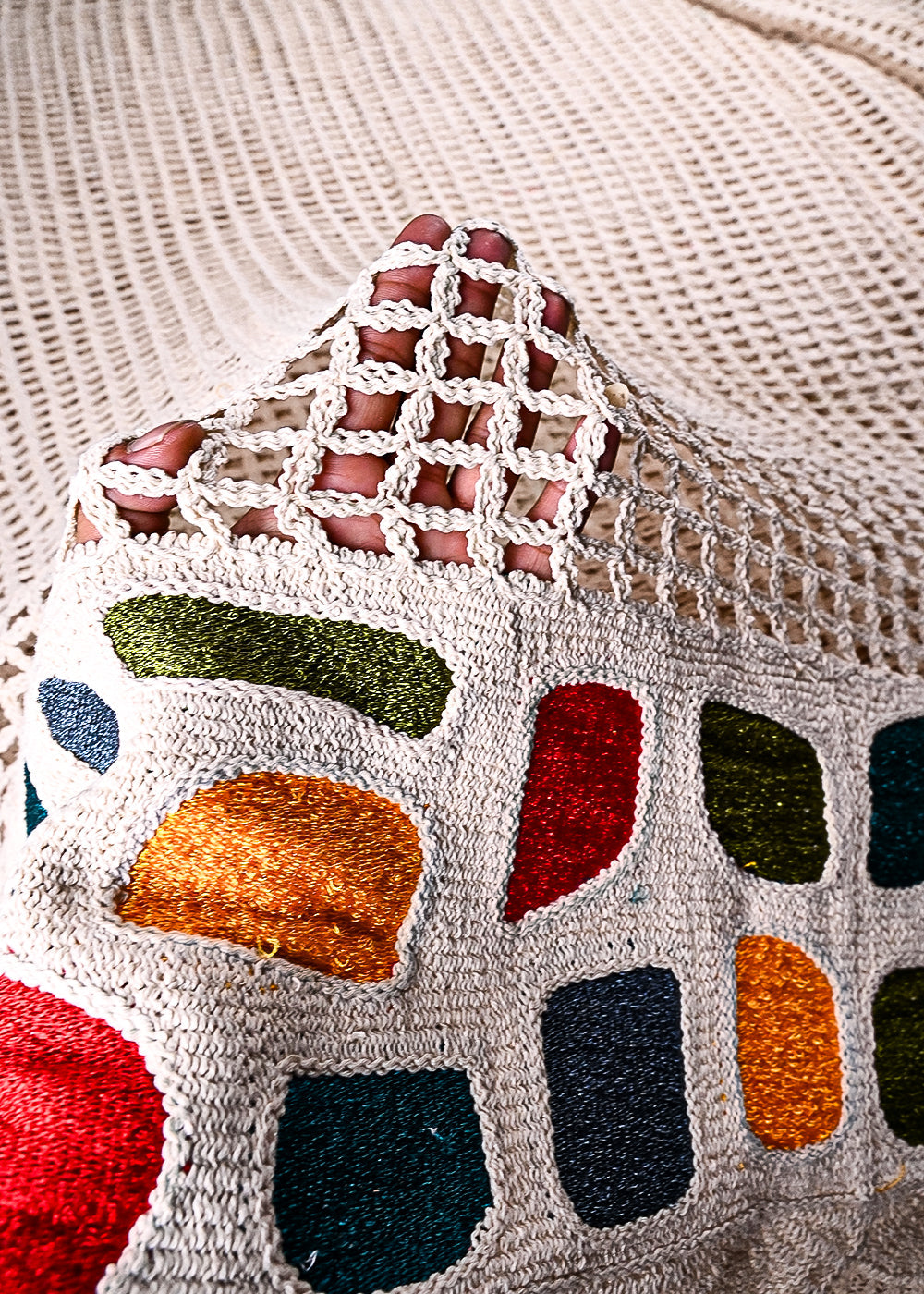
| Metallic-Yarn Crochet | Party wear, festive dupattas | Rs 580 to 850 per metre |
Fine-gauge cotton variant sits as the volume seller for summer kurti production across boutique units serving Rs 1,500 to 4,500 retail band. Also works well as kurti fabric across boutique units producing coordinated crochet-plus-lining kurti sets for the corporate working-woman customer segment.
Crochet Fabric GSM Guide
| GSM Range | Fabric Feel | Best For |
|---|---|---|
| 100 to 160 GSM | Light, drape-forward | Summer kurtis, layered tops |
| 160 to 220 GSM | Medium, structured | Party wear kurtis, statement tops |
| 220 to 300 GSM | Medium-heavy, opulent | Jackets, structured pieces |
Summer wear boutiques default to 100-160 GSM range for kurti production. Balances open-weave breathability with garment structural integrity across long wear cycles. Above 220 GSM moves into jacket-plus-cardigan territory where different silhouette preferences apply for the fusion-wear customer segment.
Popular Uses
Summer kurtis dominate use cases across urban working-woman segments at Rs 1,500 to 4,500 retail band. Party wear tops rank second for party glamour styling where the openwork character reads distinctly on cocktail function photography. Layered dupattas over plain saree bases rank third because crochet dupatta carries visual interest without heavier weight. Statement jackets across fusion-wear market round out popular uses for buyers wanting western-adjacent silhouettes distinct from denim or tweed alternatives.
Crochet Fabric Trends for 2026
Fine-gauge cotton leads the summer segment currently. Volume driver? Corporate working-woman customer base through the Rs 2,000 to 4,500 retail kurti band. Delhi NCR boutiques observe fine-gauge cotton reordering every three-four weeks through April-August summer peak. Metallic-yarn variants represent the second growing pattern across the party wear segment. Elastane-plus-metallic blend yarn creates subtle shimmer through the openwork structure, which reads distinctly on Instagram catalogue photography compared to plain cotton variants.
Care and Working Tips for Crochet Fabric
Pre-wash test piece before bulk cutting. Crochet fabrics shrink 4 to 8 percent on first wash depending on fibre content. Cotton variants shrink more than polyester or viscose blends. Skip pre-wash and finished kurtis end up tight across bust plus hip within one customer wash cycle.
Fine sewing needle for construction because standard needles catch the open-loop structure plus create visible damage. Silk-blend thread works best. Polyester thread may snag against the loop structure during machine stitching. Also stitch slower than normal because the open weave shifts under machine pressure more than solid fabrics do.
Ironing works at low heat with press cloth. Direct heat handling may distort loop structure permanently. Storage folds in tissue paper rather than hanging because hanging crochet garments stretches the open structure over long inventory holds.
What is Crochet Fabric? (Quick Definition)
An open-weave textile produced through interlocking yarn loops rather than warp-weft interlacing, creating characteristic openwork patterns with visible negative space between loops. Crochet fabric gets used across summer kurtis, party wear tops, layered dupattas, statement jackets, plus fusion-wear pieces at the Rs 1,500 to 8,000 retail band. Available across 100 to 300 GSM in fine-gauge cotton, chunky-gauge cotton, polyester, viscose blend, plus metallic-yarn variants at wholesale rates Rs 320 to Rs 850 per metre.
Why Designers Buy Crochet Fabric Online
Summer wear plus fusion-wear boutique segment across Delhi NCR needs fabric with distinct visual character apart from smooth-finish cotton alternatives. The openwork structure delivers exactly that positioning at Rs 1,500 to 8,000 retail band. Wholesale rates run Rs 320 to Rs 850 per metre depending on gauge plus fibre content.
Frequently Asked Questions
How is crochet fabric different from lace?
Both carry openwork patterns but production methods differ significantly. Lace uses complex threadwork through bobbin techniques or needle-based construction with fine detail patterns. Crochet uses single-thread interlocking loops through hook-based technique (hand production) or specialized machines (industrial production). Crochet reads chunkier with visible loop structure while lace reads finer with intricate pattern detail.
Is crochet fabric machine-made or hand-crocheted?
Both production methods exist across the Indian market. Hand-crocheted variants come from cottage industries in North India, Gujarat, plus West Bengal at higher price tiers. Machine-produced variants come from industrial mills using specialized crochet knitting equipment at accessible commercial pricing. Both types serve different market segments across boutique production.
Is crochet fabric available in bulk?
Yes. Bulk pricing kicks in at 30 metres per SKU per shade for machine-produced variants. Wholesale tiers begin at Rs 260 per metre for fine-gauge cotton on 80-metre-plus orders. Summer-season boutique lots above 200 metres unlock production pricing tier for April-August peak cycles.
How much crochet fabric does a kurti need?
Standard straight-cut kurti needs 2.5 metres. Anarkali kurtis with kali flare need 4 metres. Coordinated kurti-plus-lining sets need 5 metres total (2.5 outer plus 2.5 solid lining fabric). Layered dupatta construction needs 2.2 metres depending on preferred drape style.
Why Boutique Owners Choose Crochet from Paras Gallery
Fifteen metres minimum buys sample-rate per shade. Thirty metres unlocks wholesale tier per SKU. Two hundred metres opens summer-season boutique production pricing for casual-designer wear cycles. Place order through our wholesale catalogue.
