





Chikankari Fabric: Cotton, Georgette, Chiffon, Organza Guide
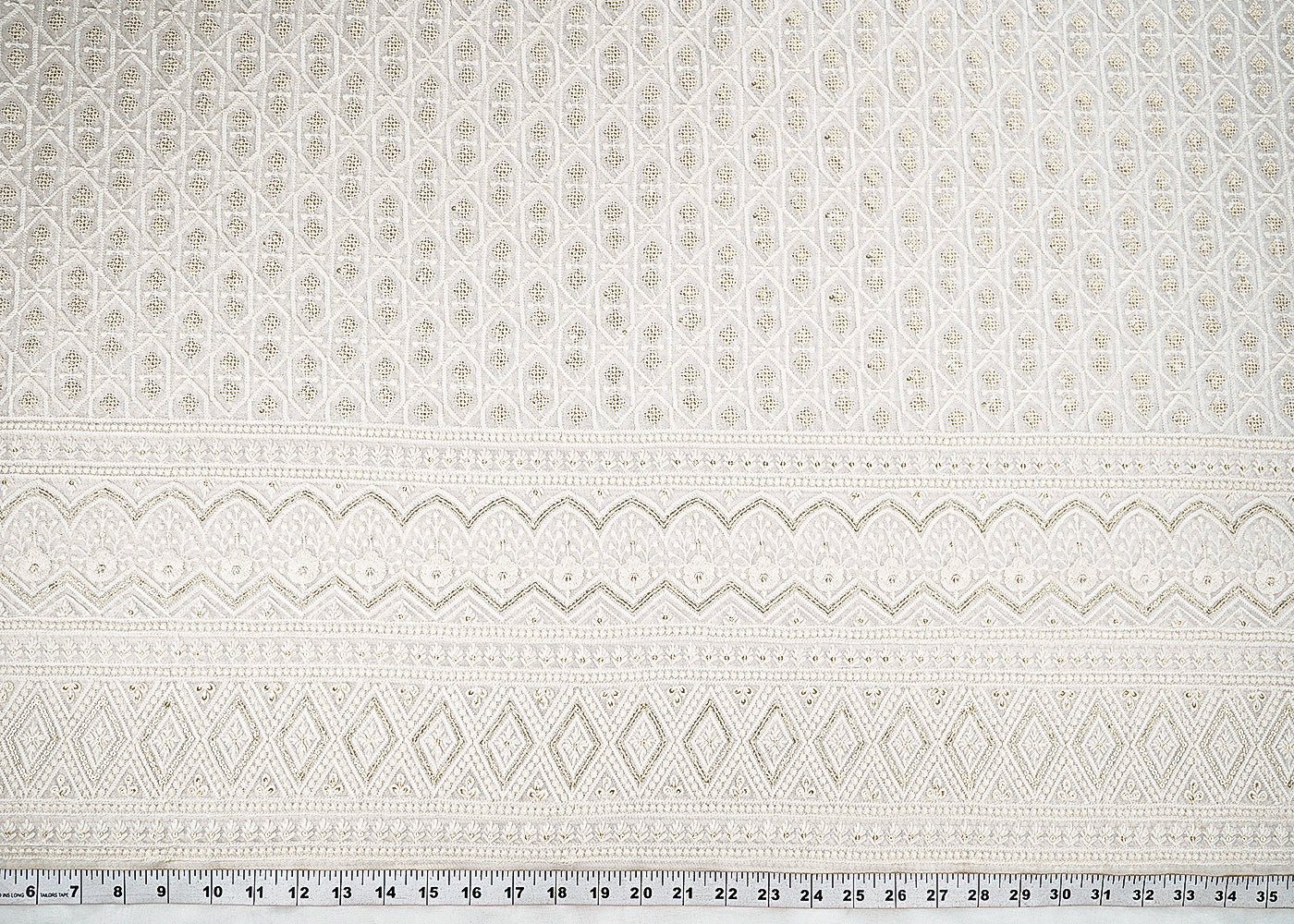
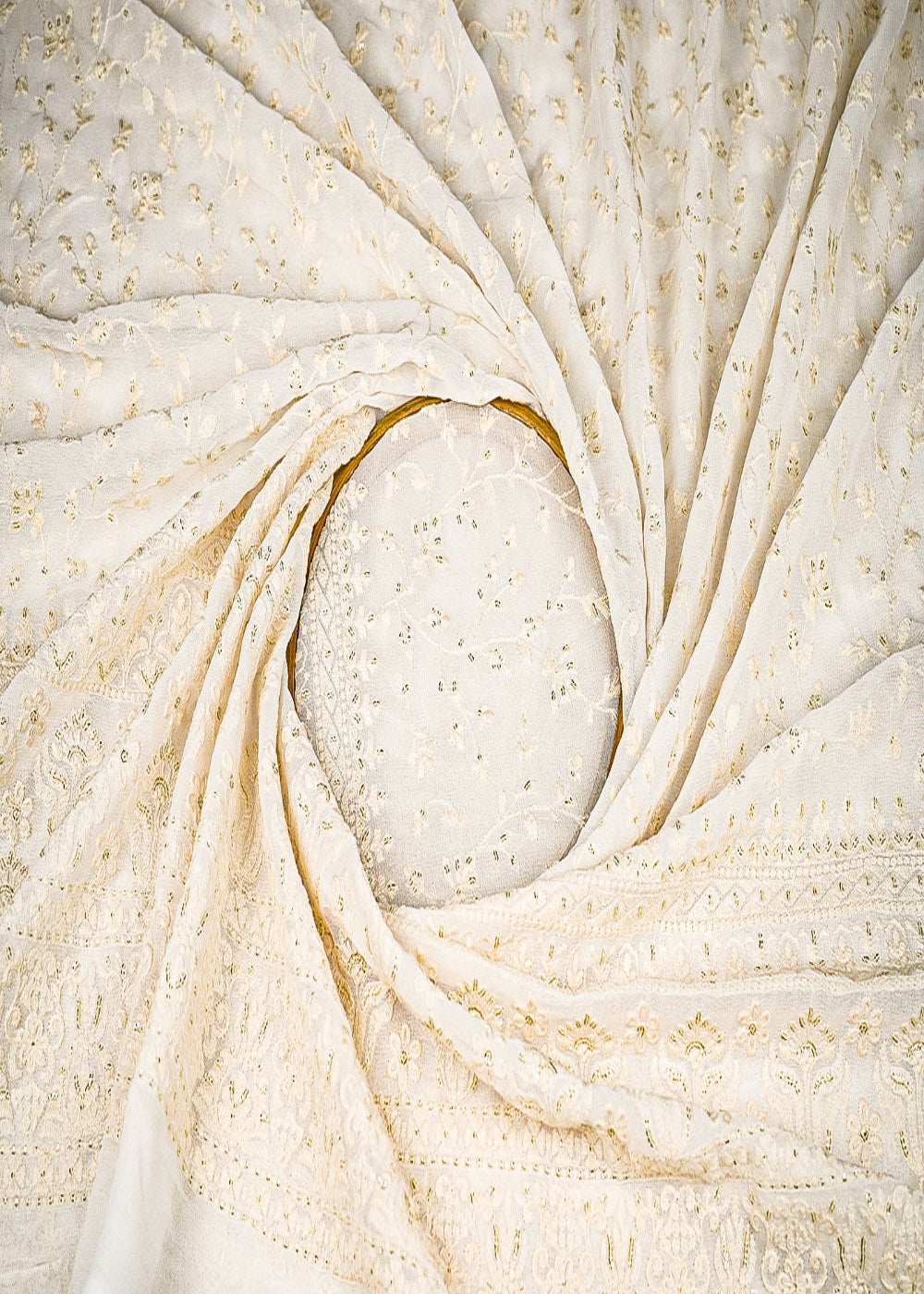
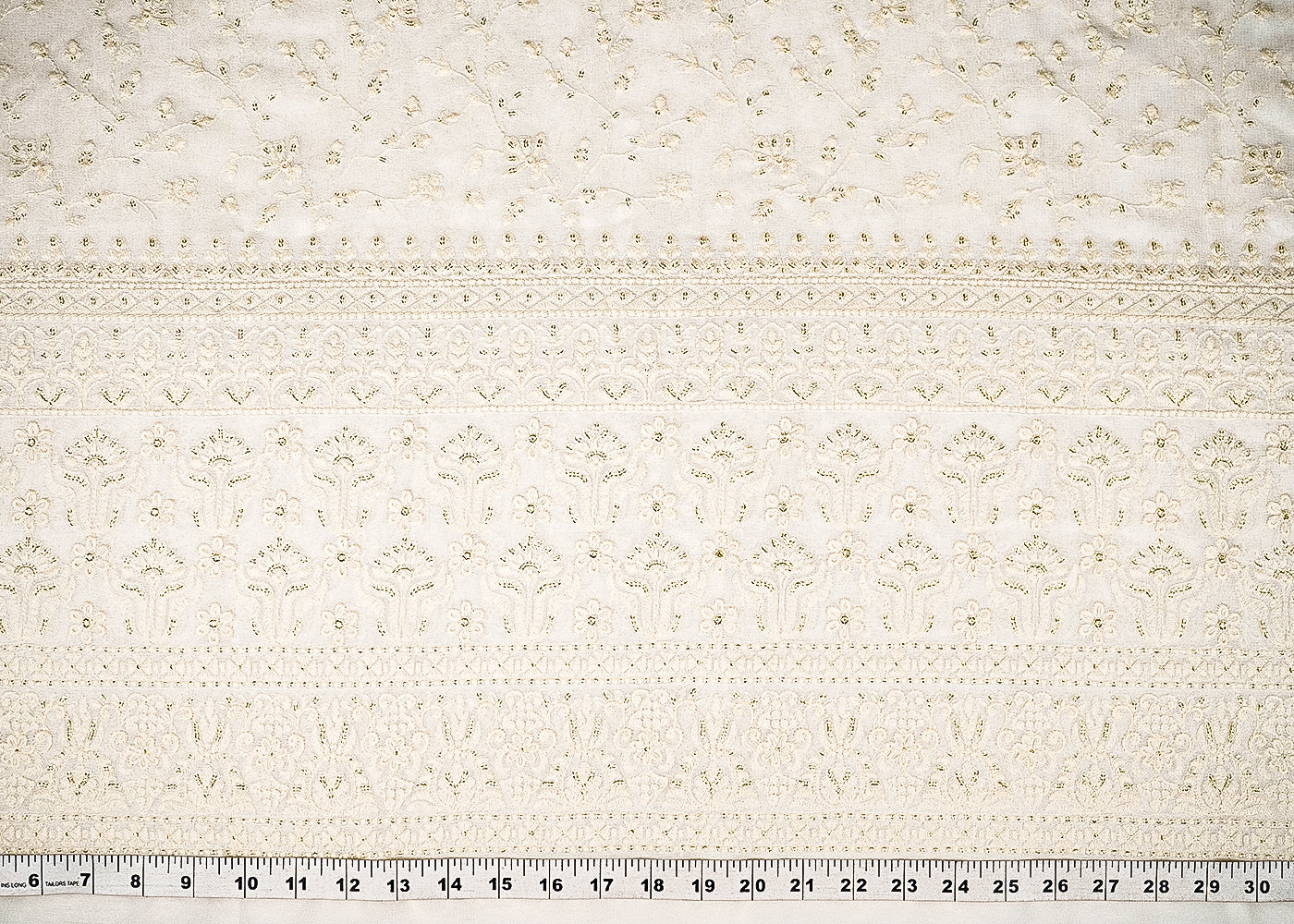
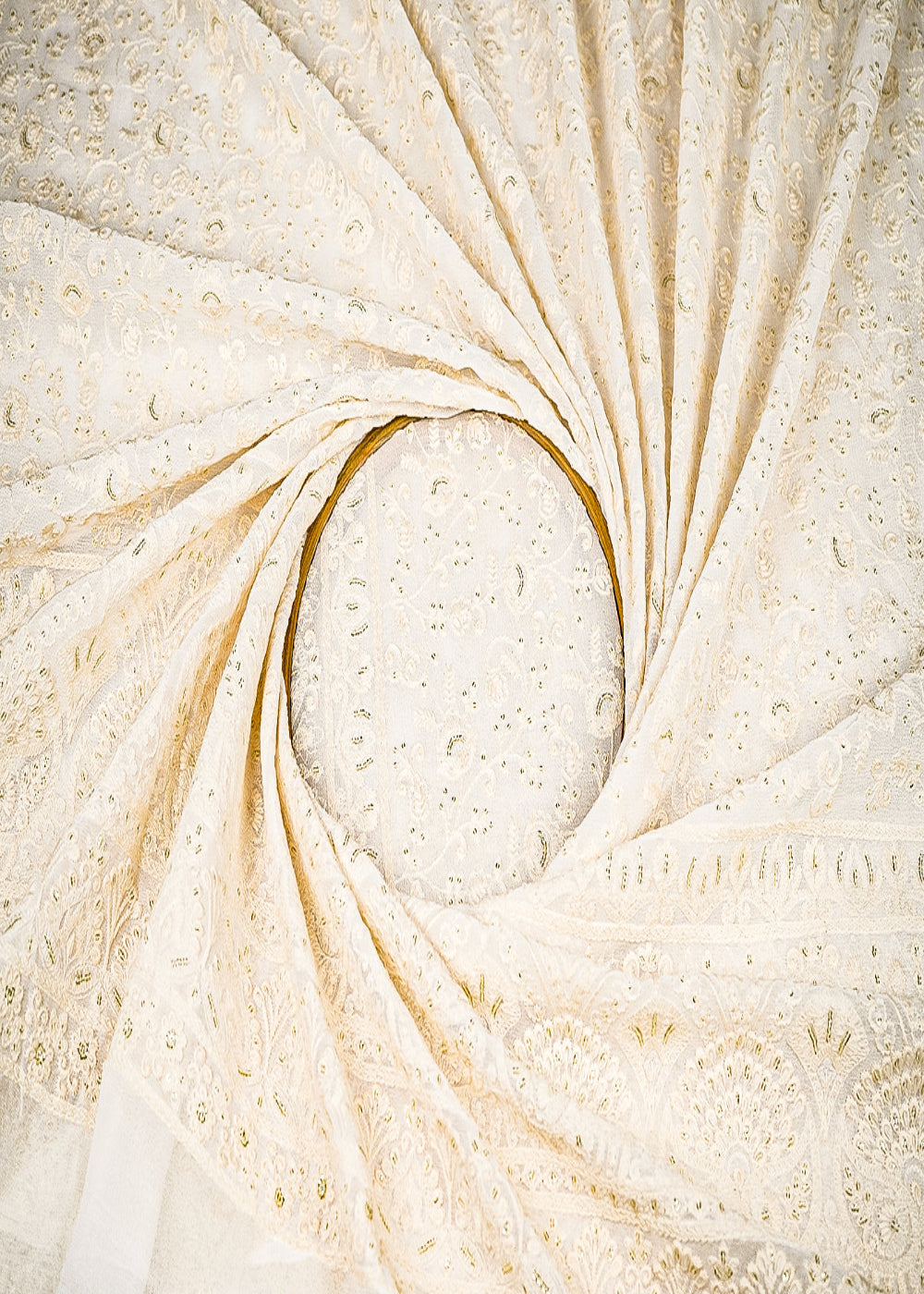
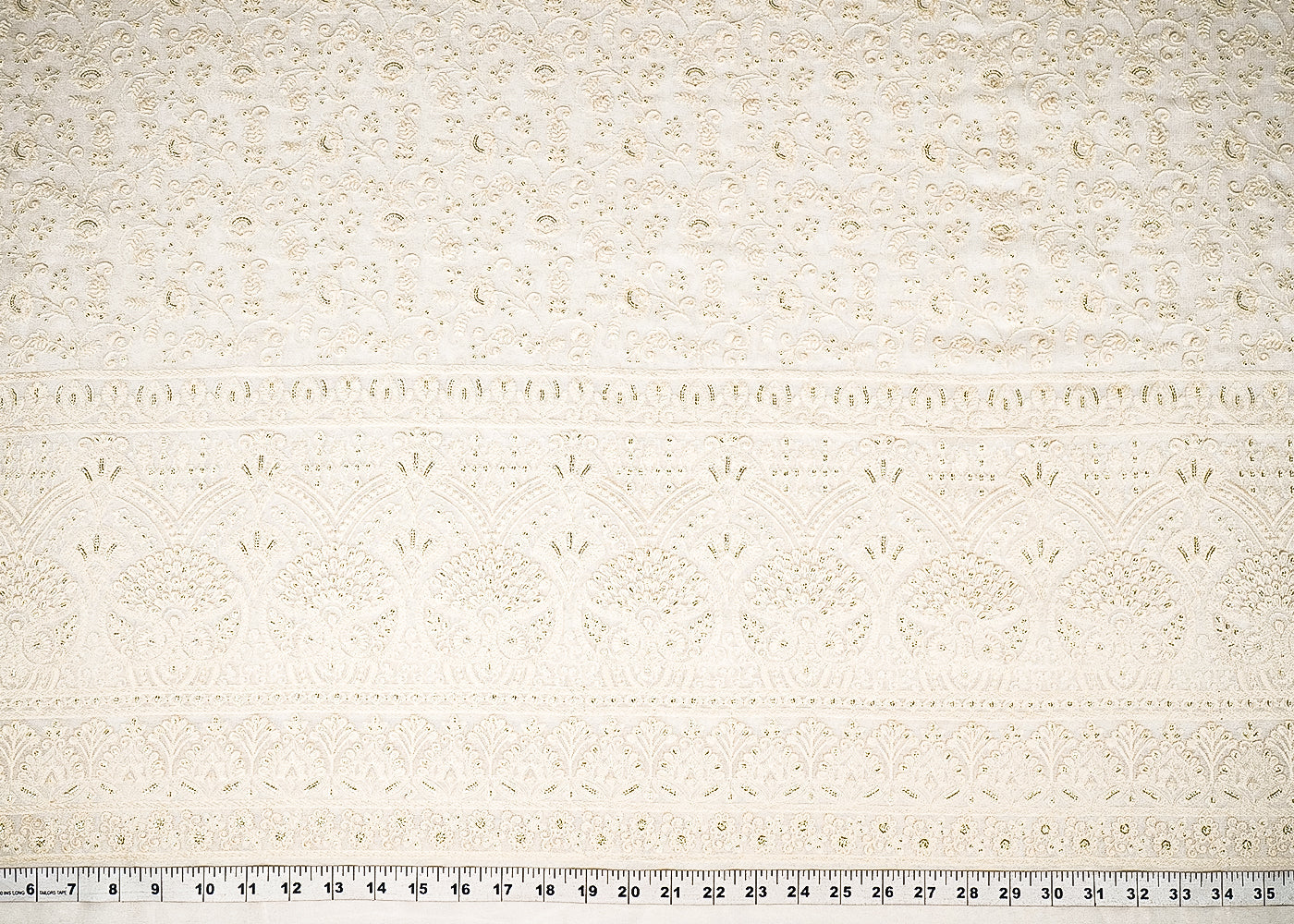
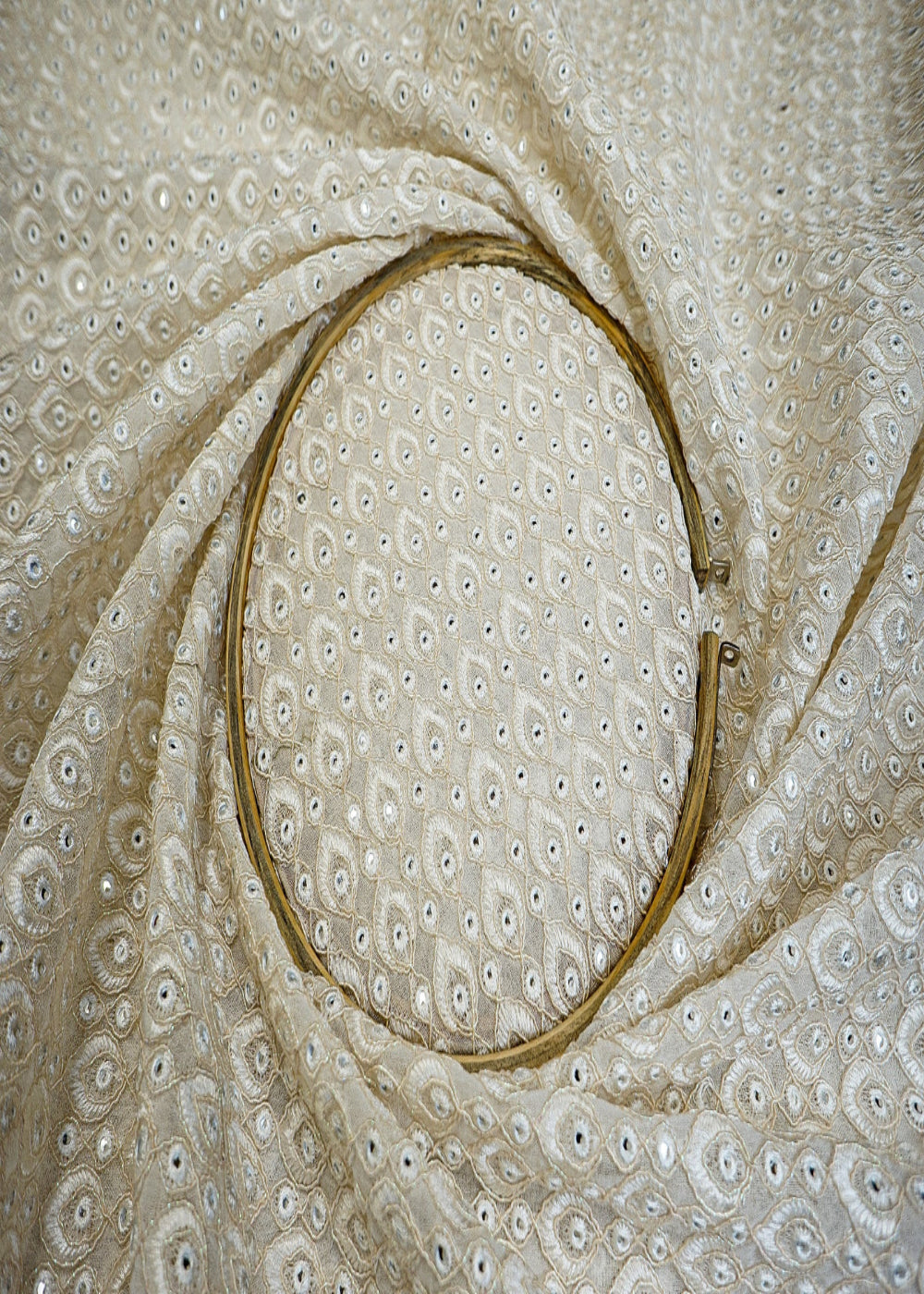
Chikankari is not a fabric. It is a hand embroidery style from Lucknow, worked onto a base like cotton, georgette, chiffon, or organza. That distinction matters when buying, because the base decides the drape and the price as much as the embroidery does.
The appeal is simple. The white or tonal thread work becomes the whole highlight, so even a plain outfit reads rich without heavy embellishment. That is why it sits so well for pastel wedding wear and summer festive ranges where lightness matters more than weight.
Why the Base Fabric Decides Everything
The same chikankari work looks and behaves completely differently depending on what it sits on. Cotton reads casual and breathes for daywear. Georgette drapes for sarees and anarkalis. Chiffon floats for dupattas. Organza holds structure for jackets and gowns.
So the buying decision is really two decisions. Pick the embroidery density for the look, then pick the base for how the garment needs to move and what season it is for. Get the base wrong and the finest thread work sits on a fabric that does not suit the garment.
Bases, GSM and Rates
| Base Fabric | GSM Range | Feel | Best For |
| Cotton chikankari | 100 to 140 GSM | Soft, breathable | Casuals, kurtis, sarees |
| Georgette chikankari | 120 to 160 GSM | Light with drape | Sarees, anarkalis, dupattas |
| Chiffon chikankari | 80 to 120 GSM | Airy, flowing | Festive dupattas, shrugs |
| Organza chikankari | 120 to 150 GSM | Structured, light sheen | Jackets, lehengas, gowns |
| Grade | Best For | Approx Rate |
| Light thread chikankari | Daily kurtis, dupattas | Rs 250 to 500 per metre |
| Dense hand chikankari | Sarees, anarkalis, festive suits | Rs 600 to 1,400 per metre |
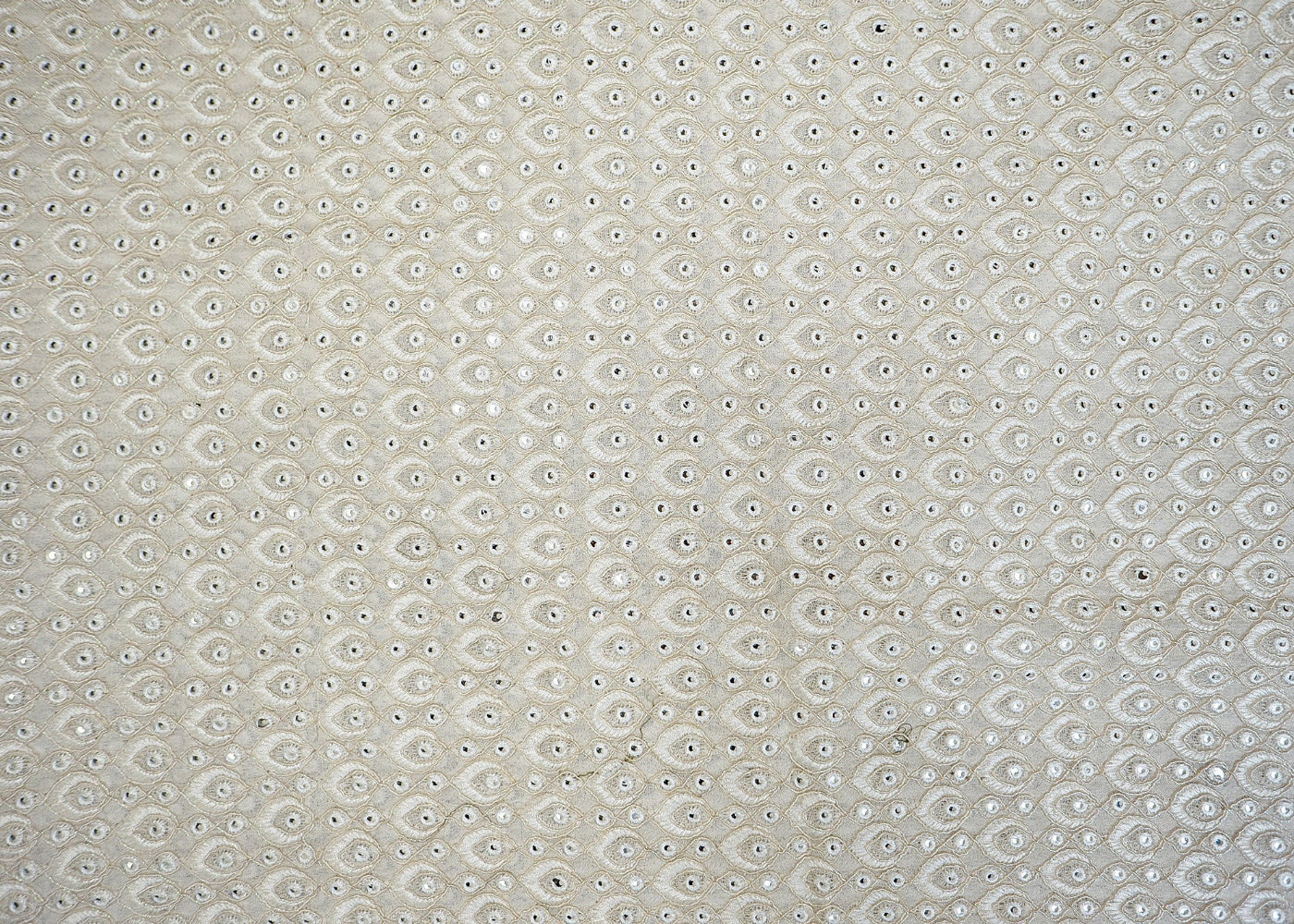
| Chikankari with mukaish or sequin | Bridal and reception wear | Rs 900 to 2,000 per metre |
Genuine hand chikankari carries the higher rates because it is slow karigar work. Machine chikankari costs far less but reads flatter, so a trained eye can tell them apart. Bulk thaan purchase helps most on the lighter machine grades.
Hand Chikankari Against Machine Work
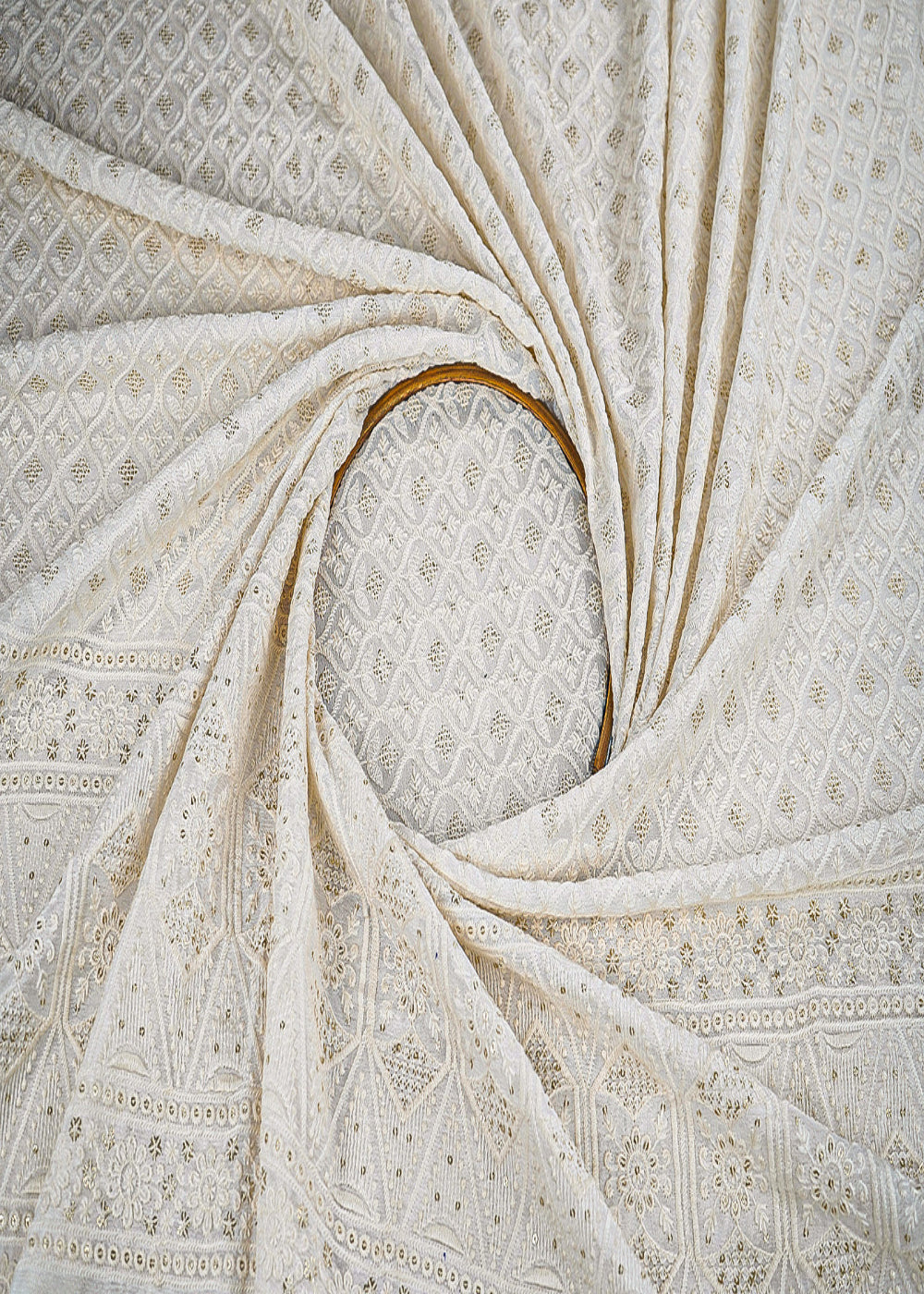
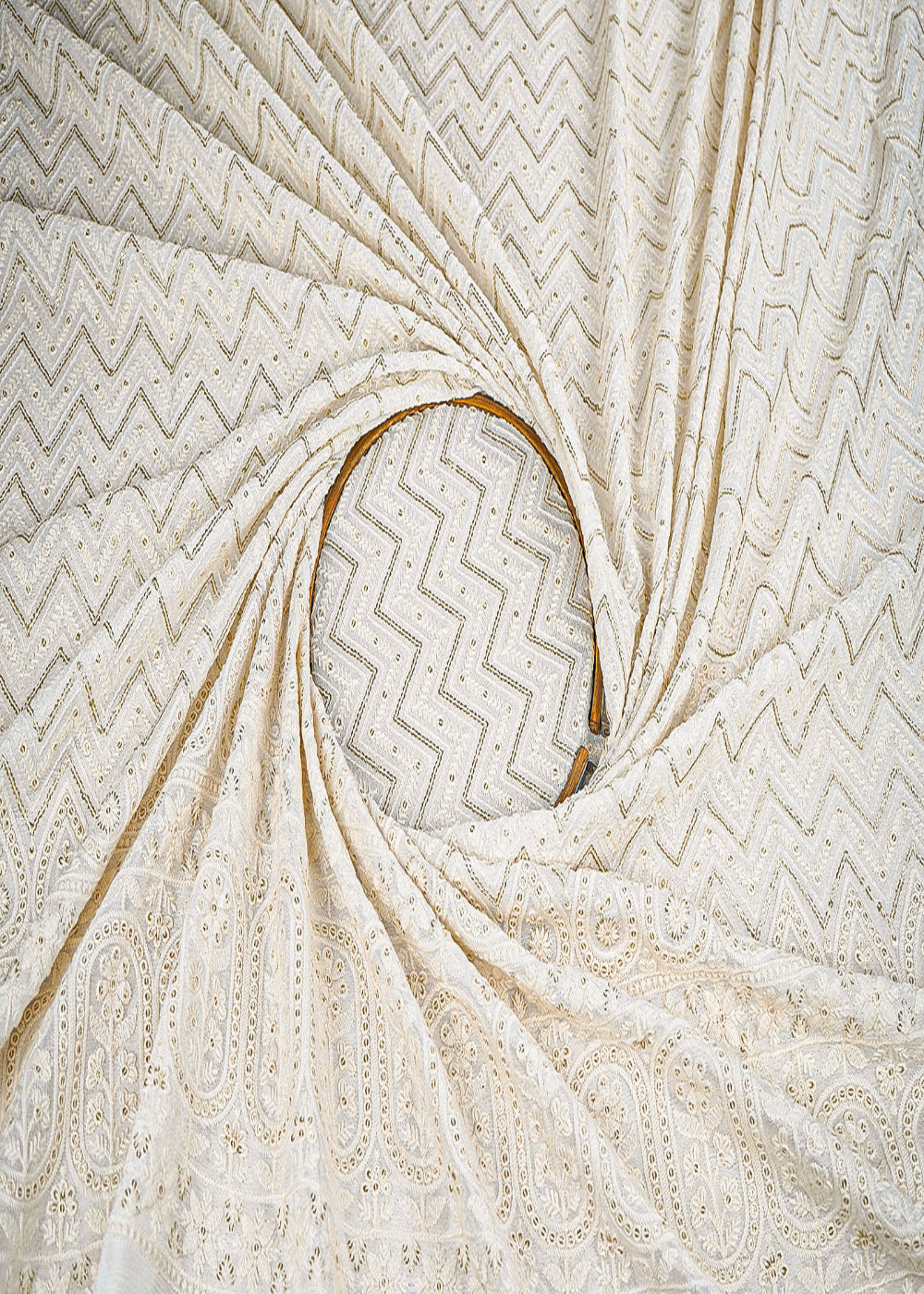
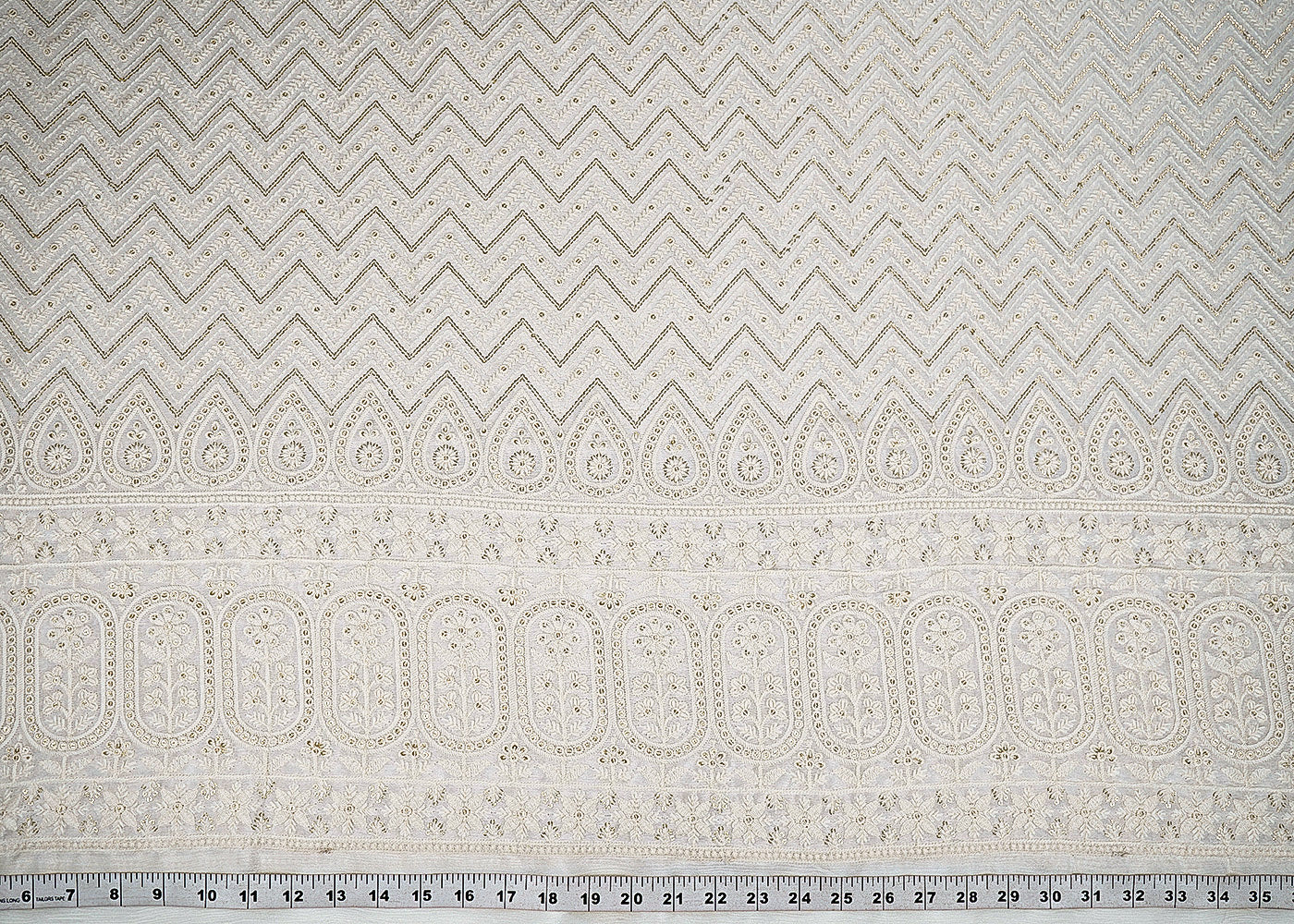
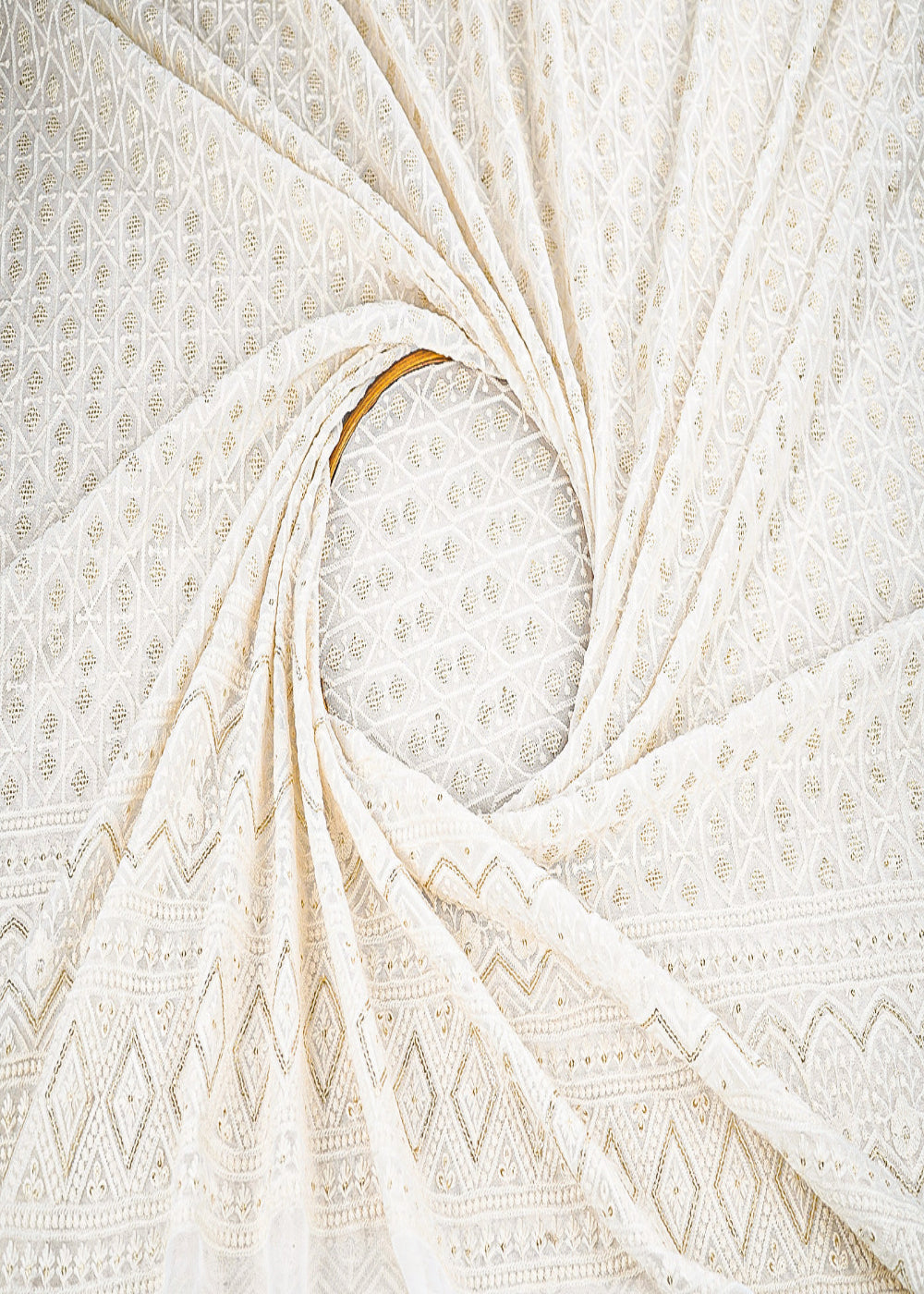
This is the check that saves money. Hand chikankari has slight irregularity in the stitches and a soft raised texture you can feel from the reverse. The motif shows clean but not perfectly identical across repeats.
Machine work is flat, uniform, identical on every repeat, with a denser thread trail on the back. It is not fake, it is just a different product at a different price. The problem is only when machine work gets sold at hand rates, so knowing the difference protects the buyer.
Popular Uses
- Everyday kurtis, palazzo sets, casual sarees
- Festive dupattas, anarkalis, occasion suits
- Pastel wedding wear and bridesmaid outfits
- Jackets, lehengas, designer gowns on organza base
For a family shopping across wedding functions, chikankari covers the daytime and pastel side well while heavier work handles the evening. Pair a chikankari kurti with a plain kurti base for palazzo sets that carry from destination wedding to everyday.
Trends Driving Demand in 2026
Pastel and tonal chikankari has overtaken the classic white-on-white for urban buyers. Thread that matches or sits close to the base gives a softer, contemporary look that photographs well without the stark contrast of white work.
The second shift is chikankari paired with light mukaish or sequin accents. A touch of shine over the thread work lifts it into occasion territory while keeping the fabric light enough for summer functions.
Working Tips for Chikankari
- Line chiffon and organza bases. The sheer grounds need backing for coverage
- Use chikankari on sleeves, yokes, dupattas to lift a plain outfit at low metre cost
- Hand wash cotton chikankari gently. Never wring, since the thread work distorts
- Dry clean georgette, chiffon, worked grades to protect the embroidery
Frequently Asked Questions
Is chikankari a fabric or an embroidery style?
It is an embroidery style from Lucknow, worked onto a base fabric such as cotton, georgette, chiffon, or organza. The base decides the drape and much of the price, while the chikankari provides the surface detail.
How do I tell hand chikankari from machine work?
Hand work has slight stitch irregularity and a soft raised texture felt from the reverse, with motifs that are clean but not identical across repeats. Machine work is flat, uniform, identical on every repeat with a denser thread trail behind.
Which base suits a summer kurti?
Cotton chikankari at 100 to 140 GSM. It breathes in heat and reads casual enough for daily wear while still carrying the thread work well.
Can chikankari be washed at home?
Cotton chikankari takes a gentle cold hand wash without wringing. Georgette, chiffon, organza, or any mukaish or sequin grades should be dry cleaned only to protect the thread and the base.
Order Chikankari Fabric at Paras Gallery Fabrics
Our chikankari range covers cotton, georgette, chiffon, organza bases in light thread to dense hand work grades, cut by the metre or supplied by thaan for production runs. Boutiques building festive festive ranges can check bulk rates on our wholesale page.
