Organza Jacquard














How Organza Jacquard Became the Reception Cape Weave
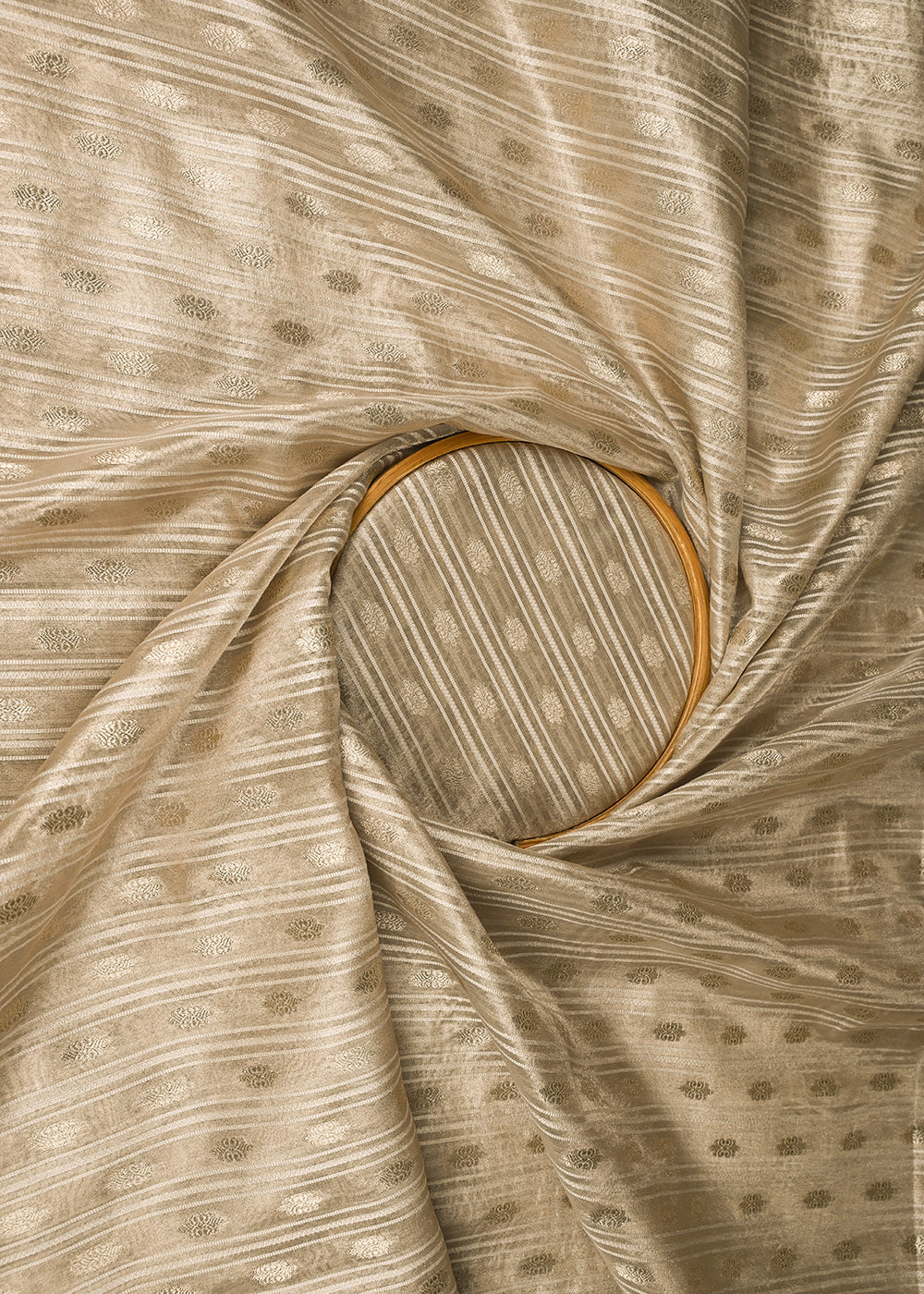
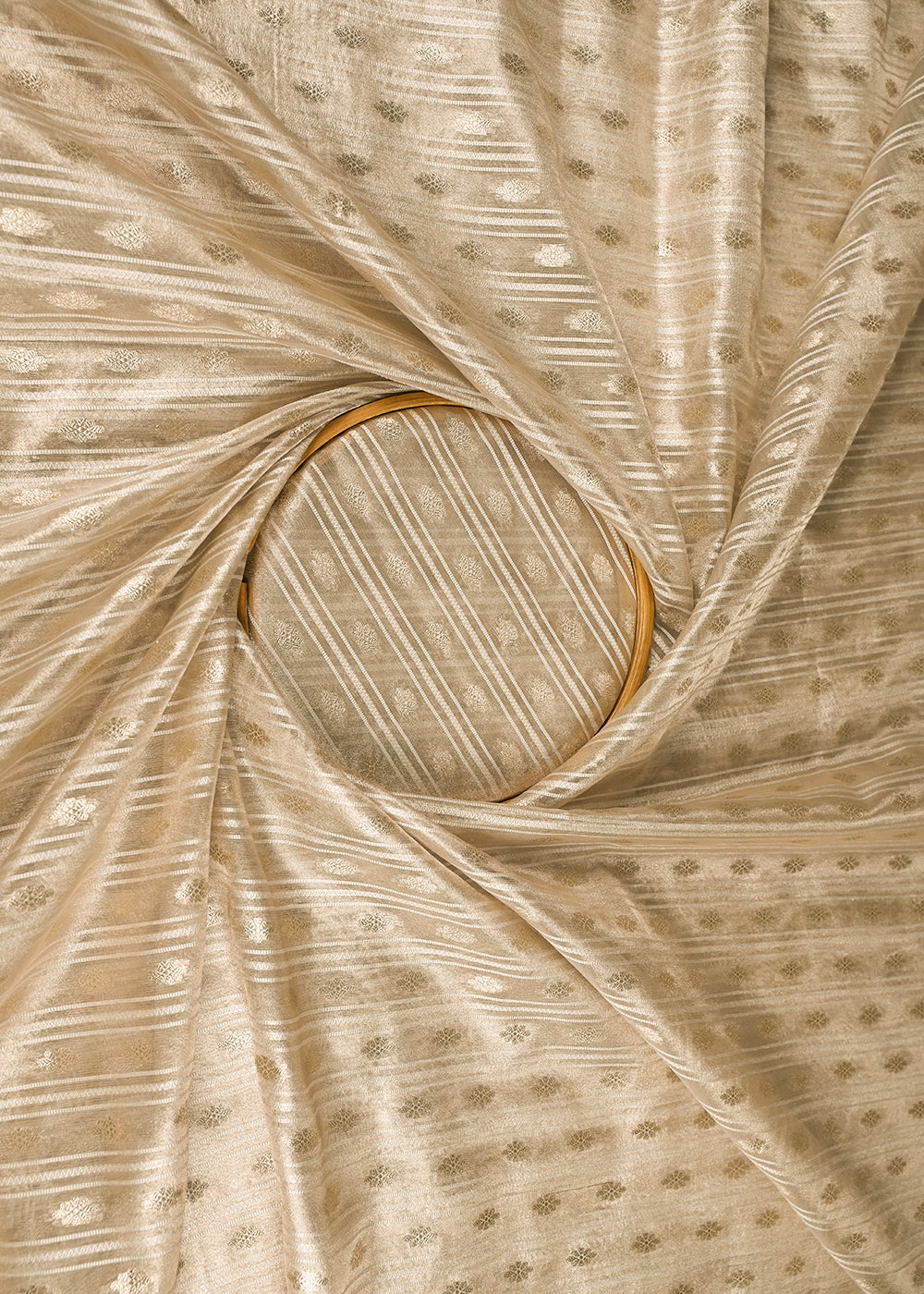
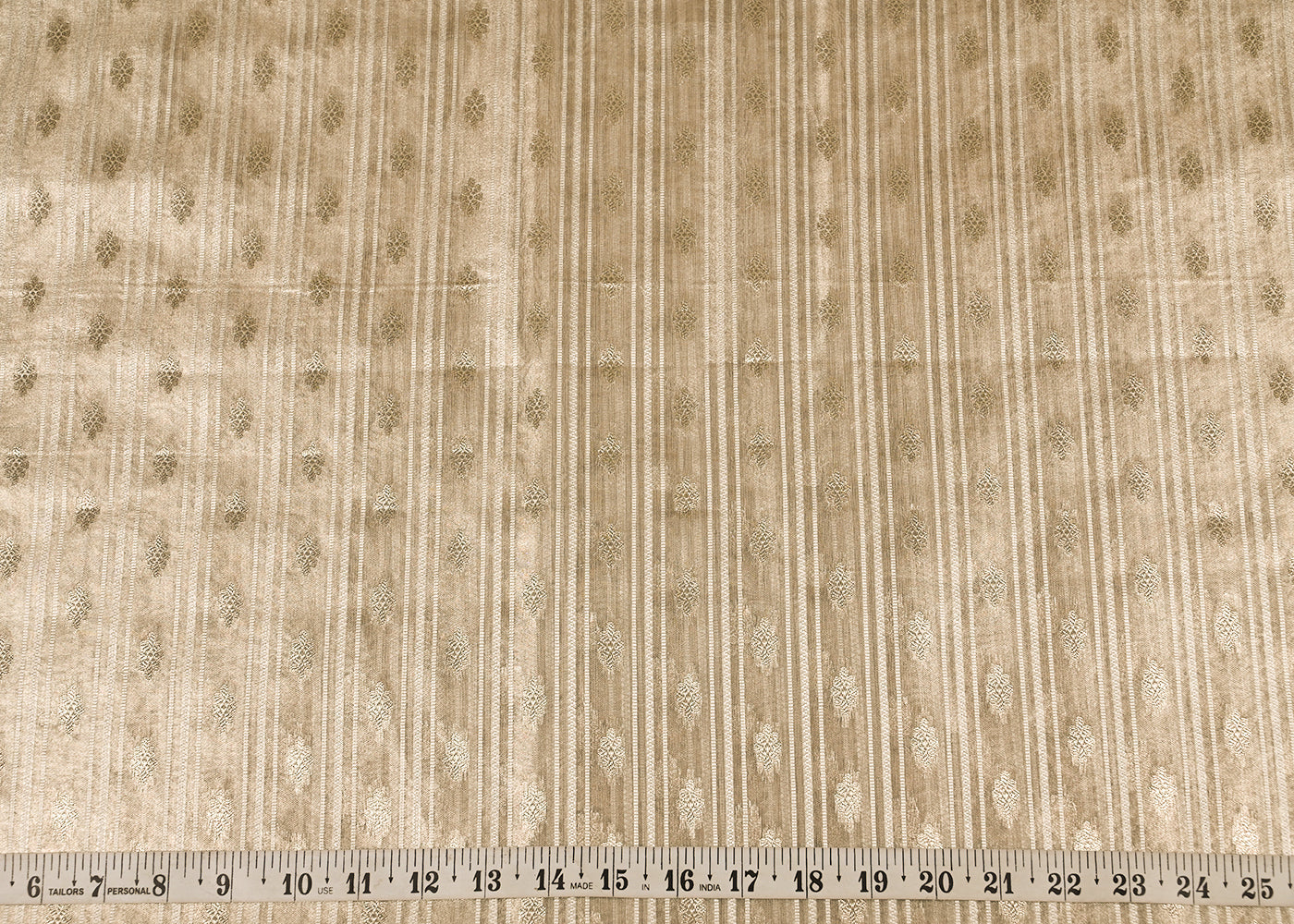
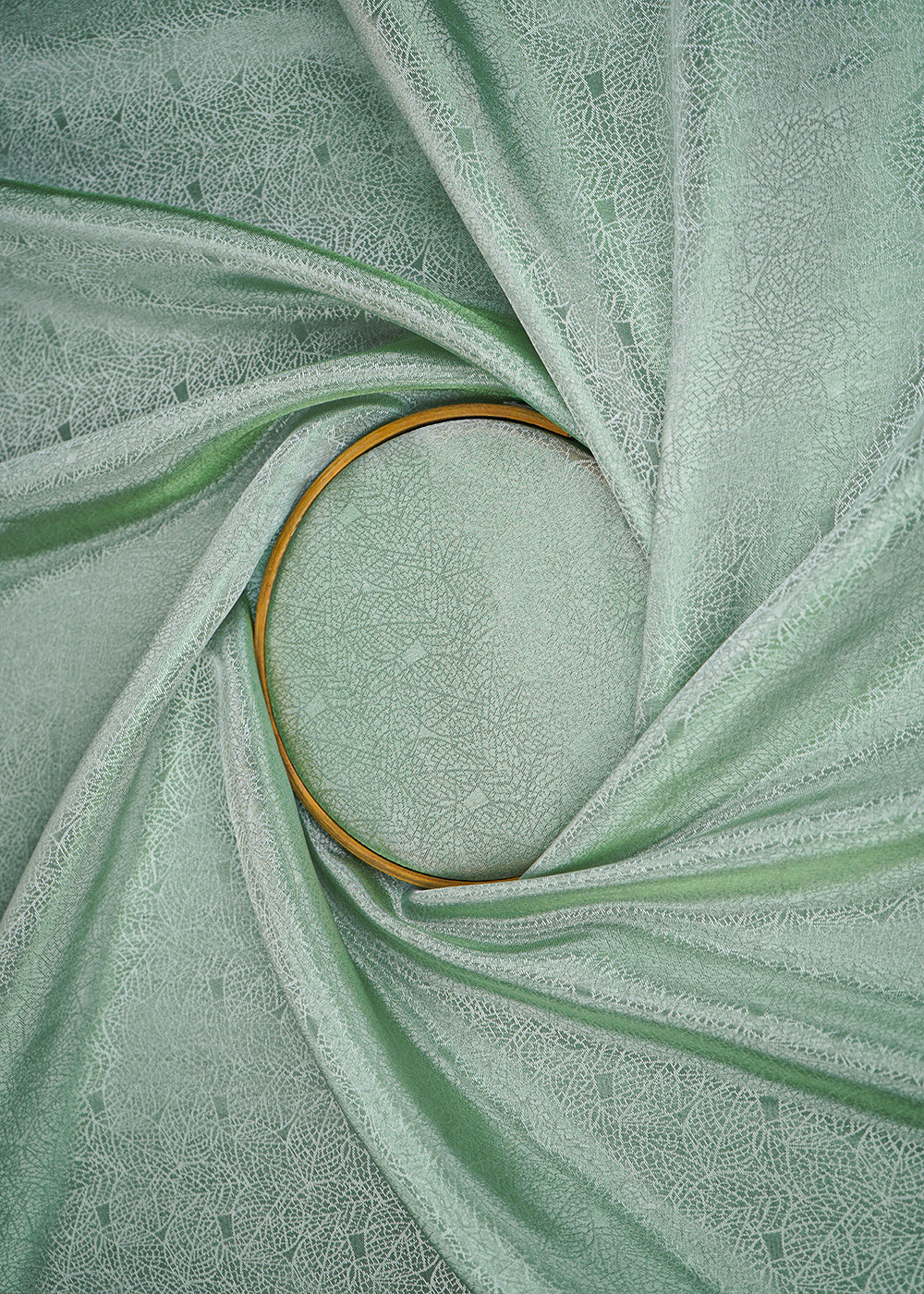
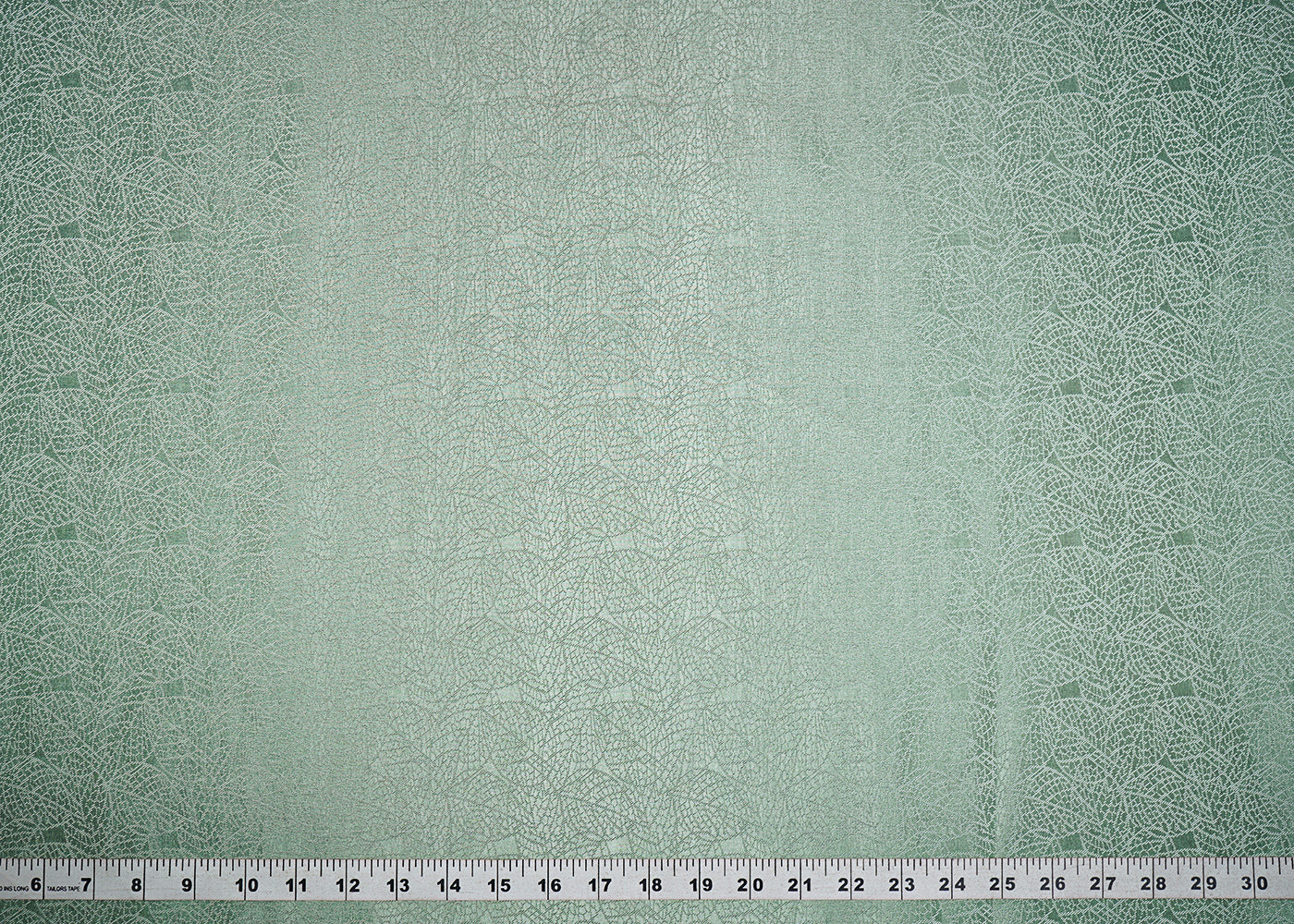
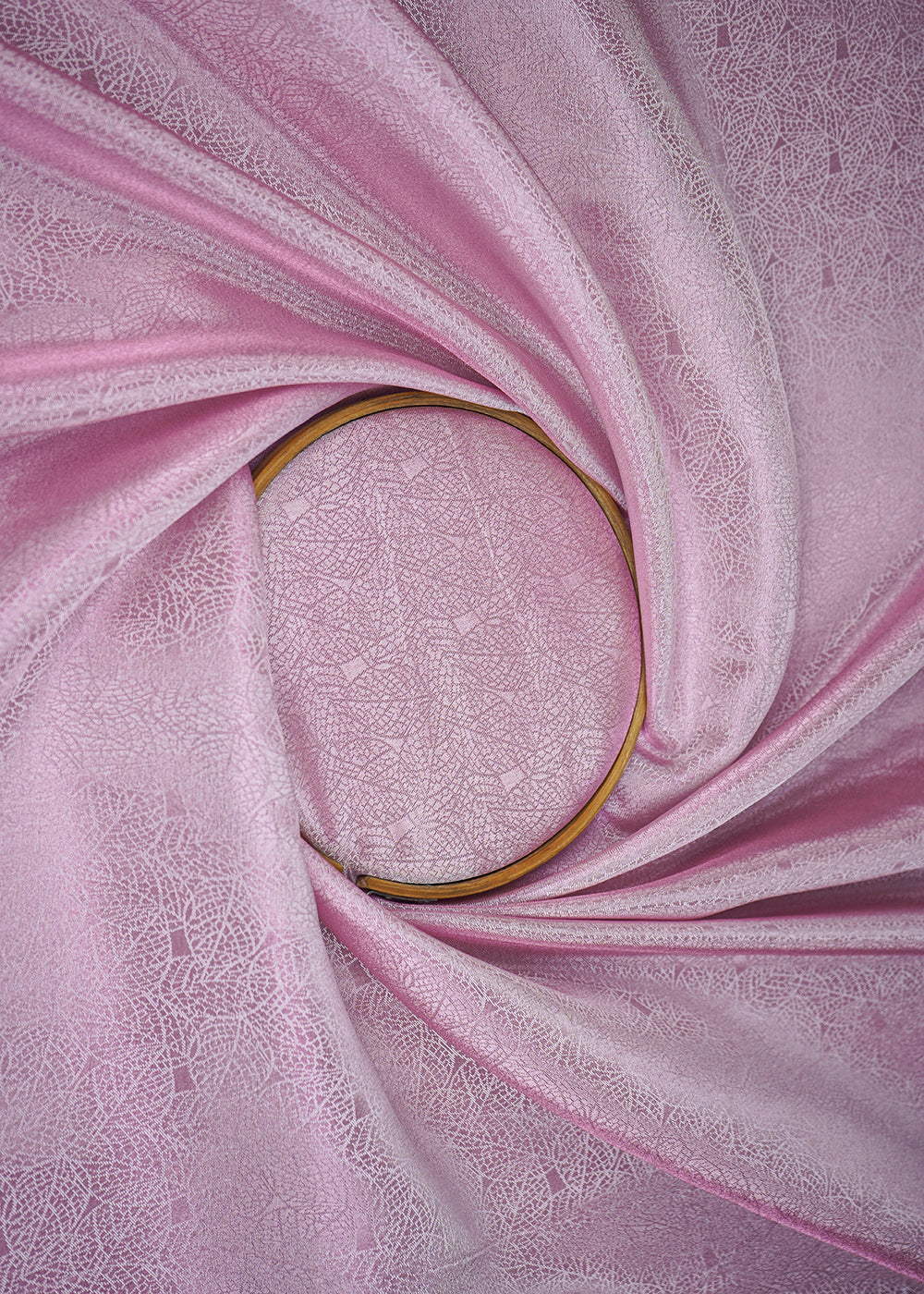
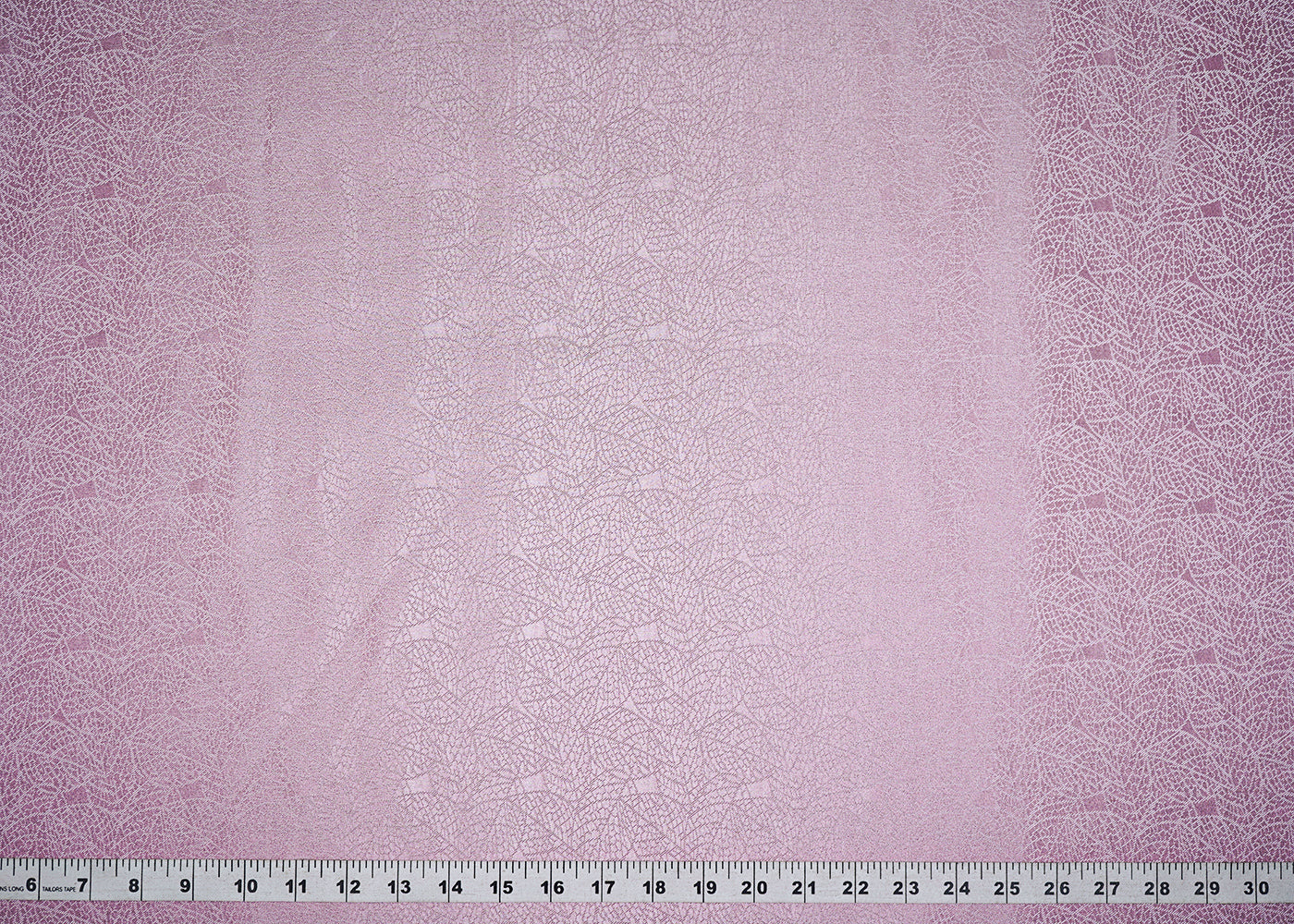
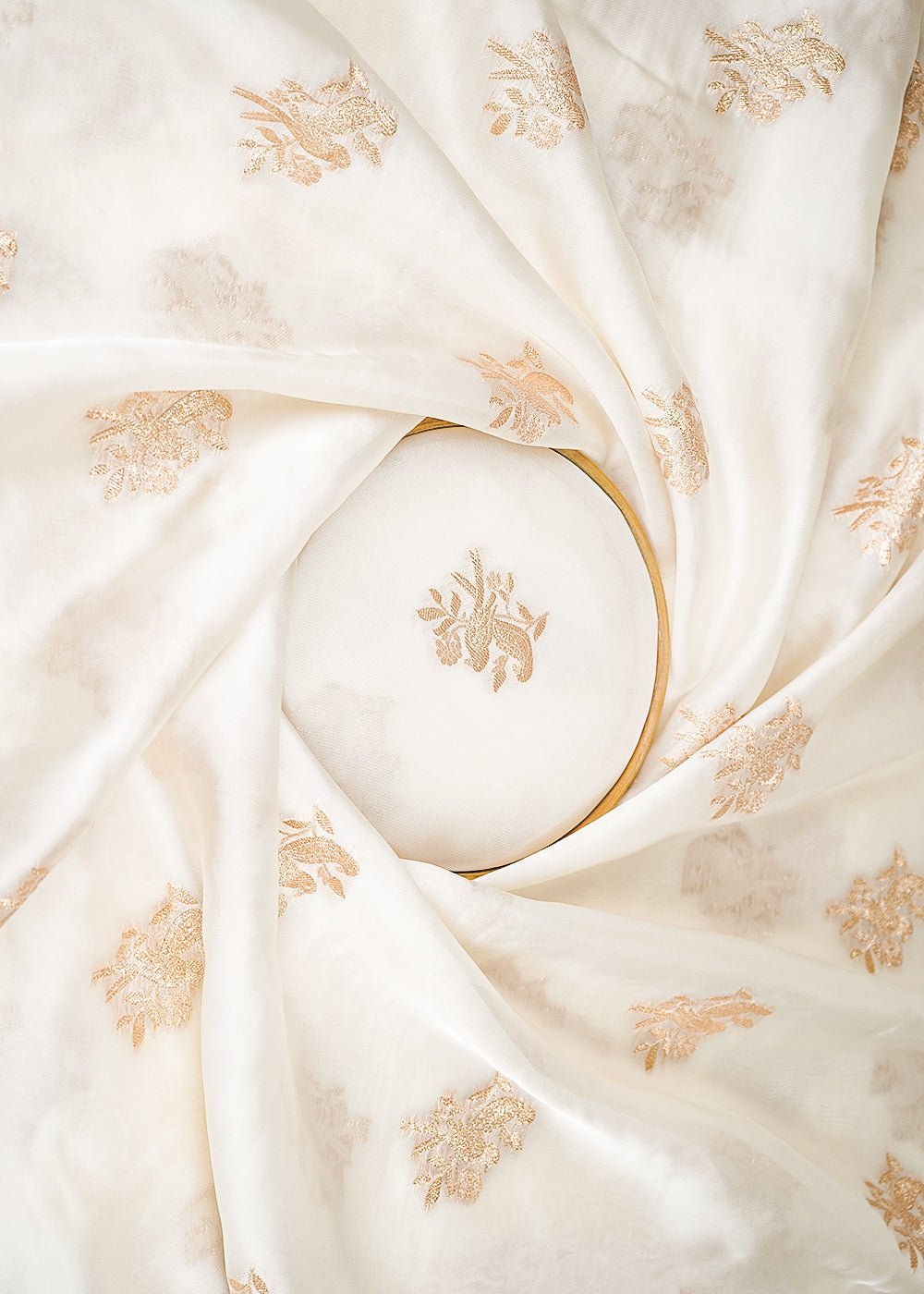
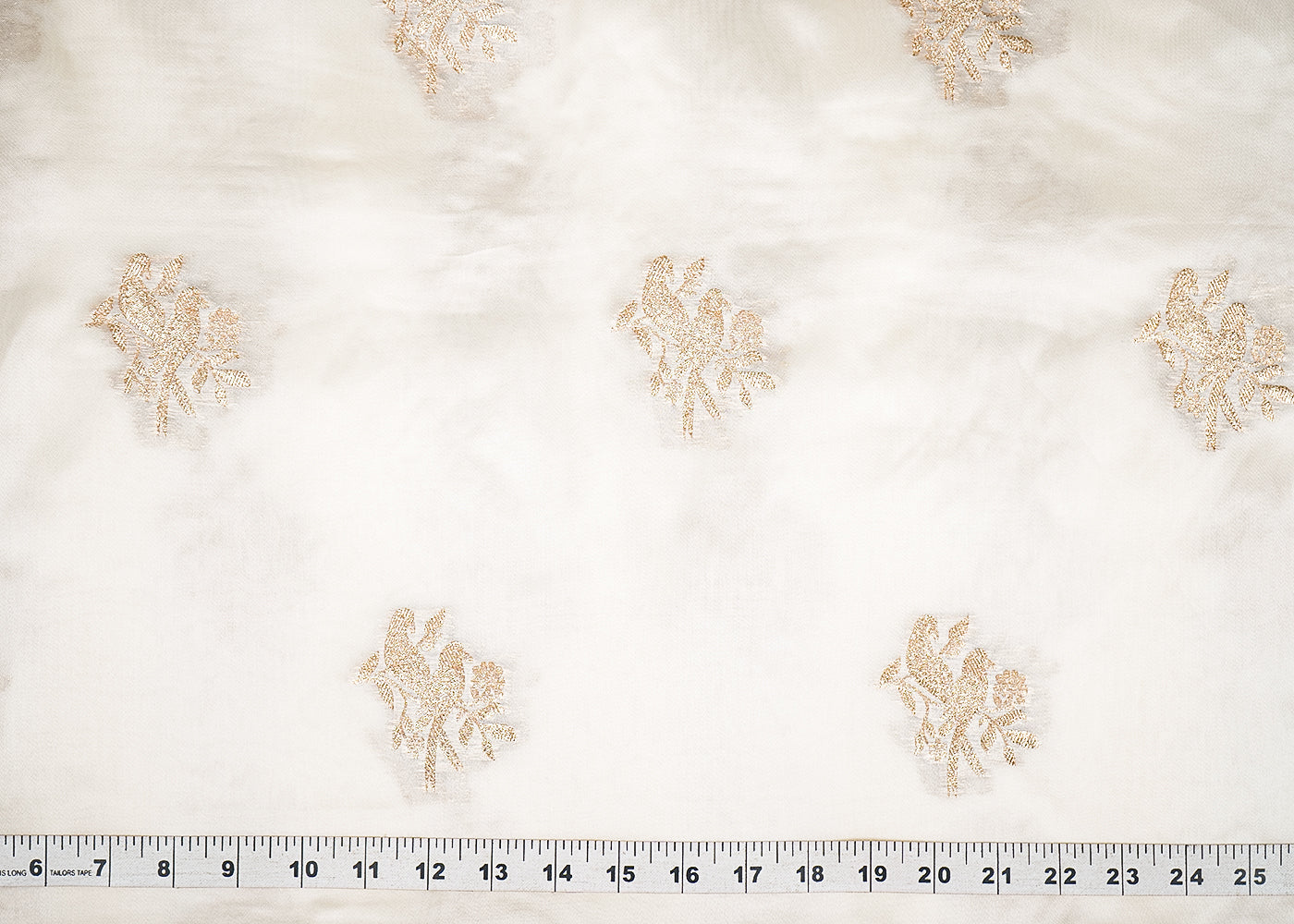
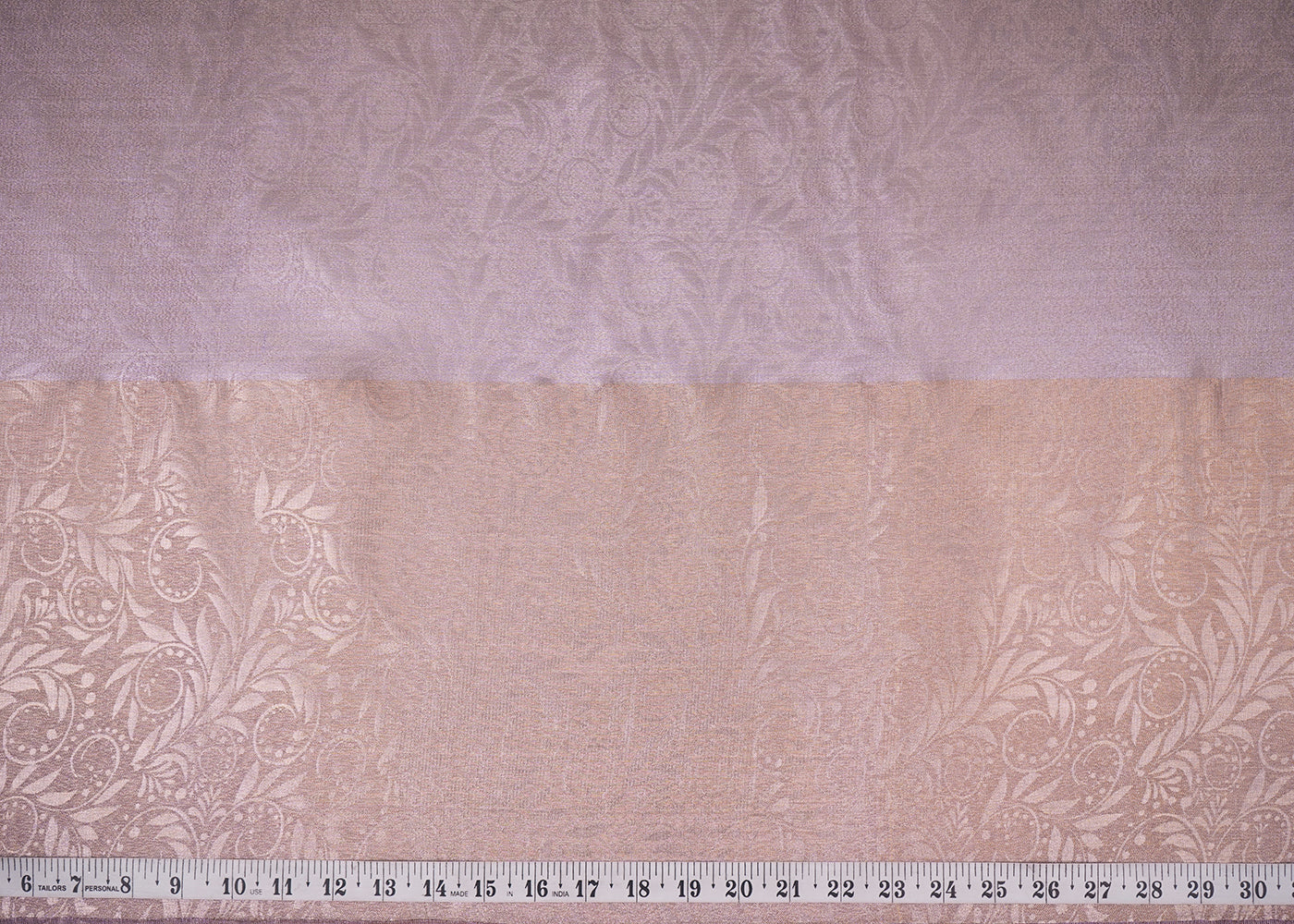
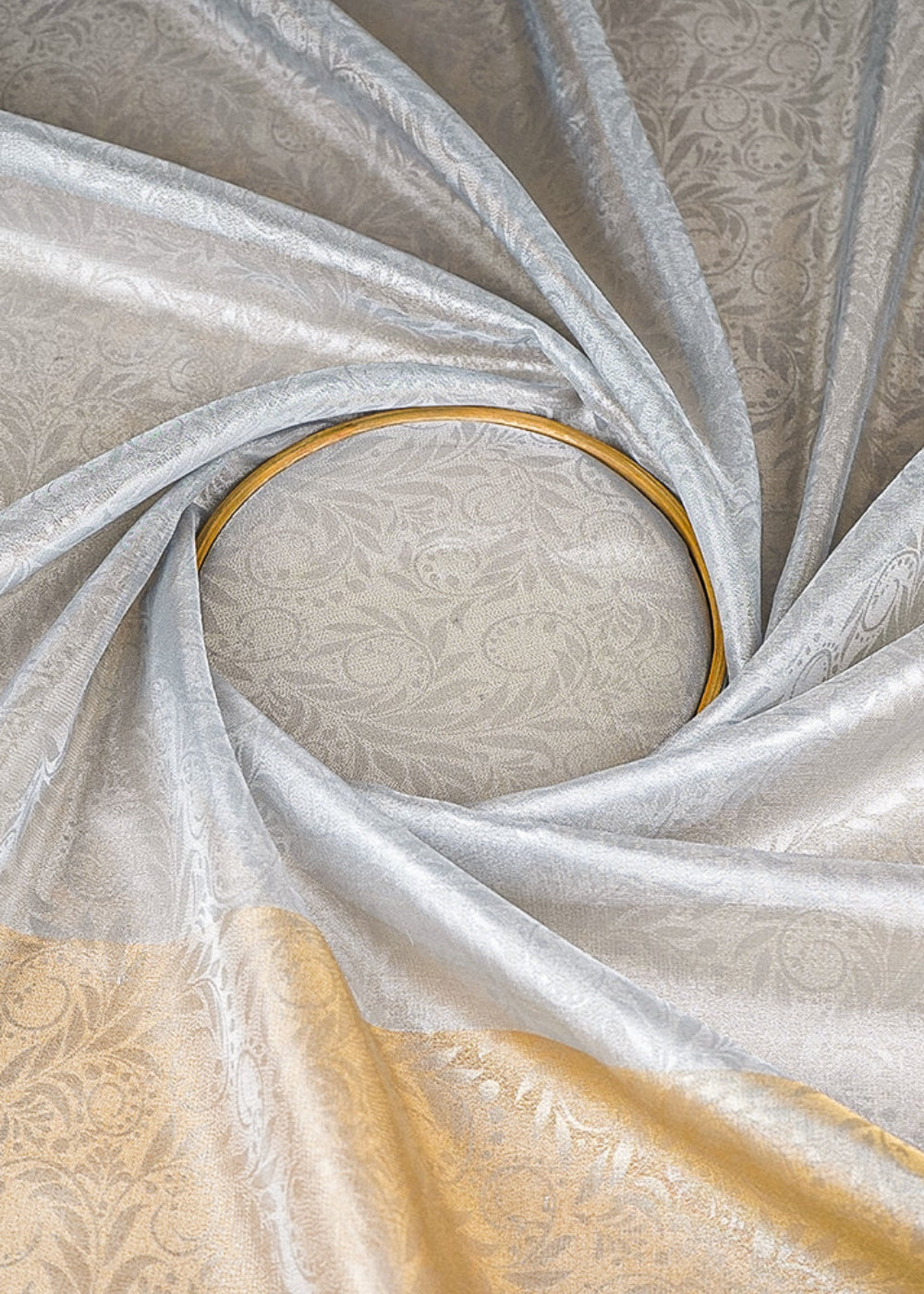
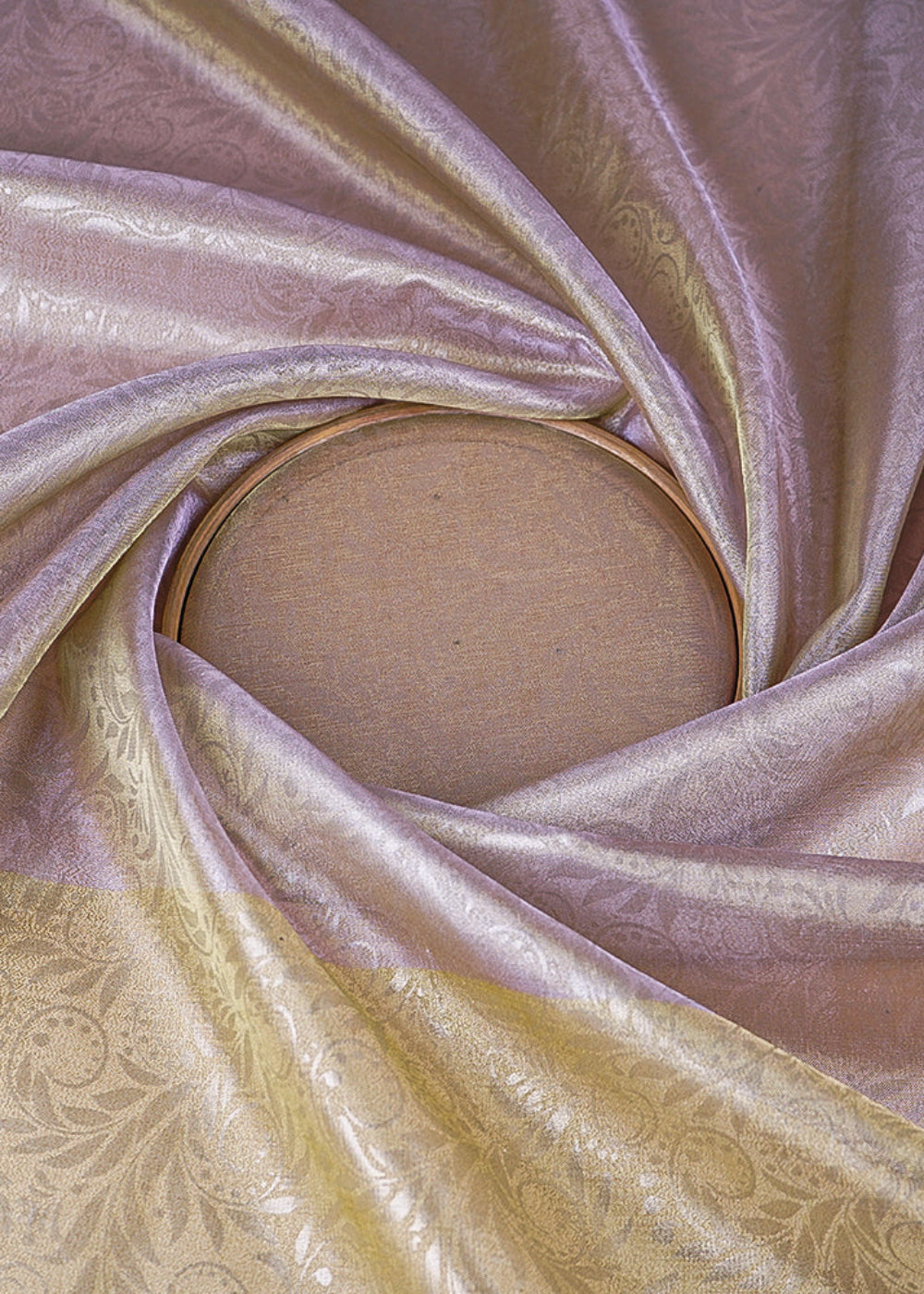
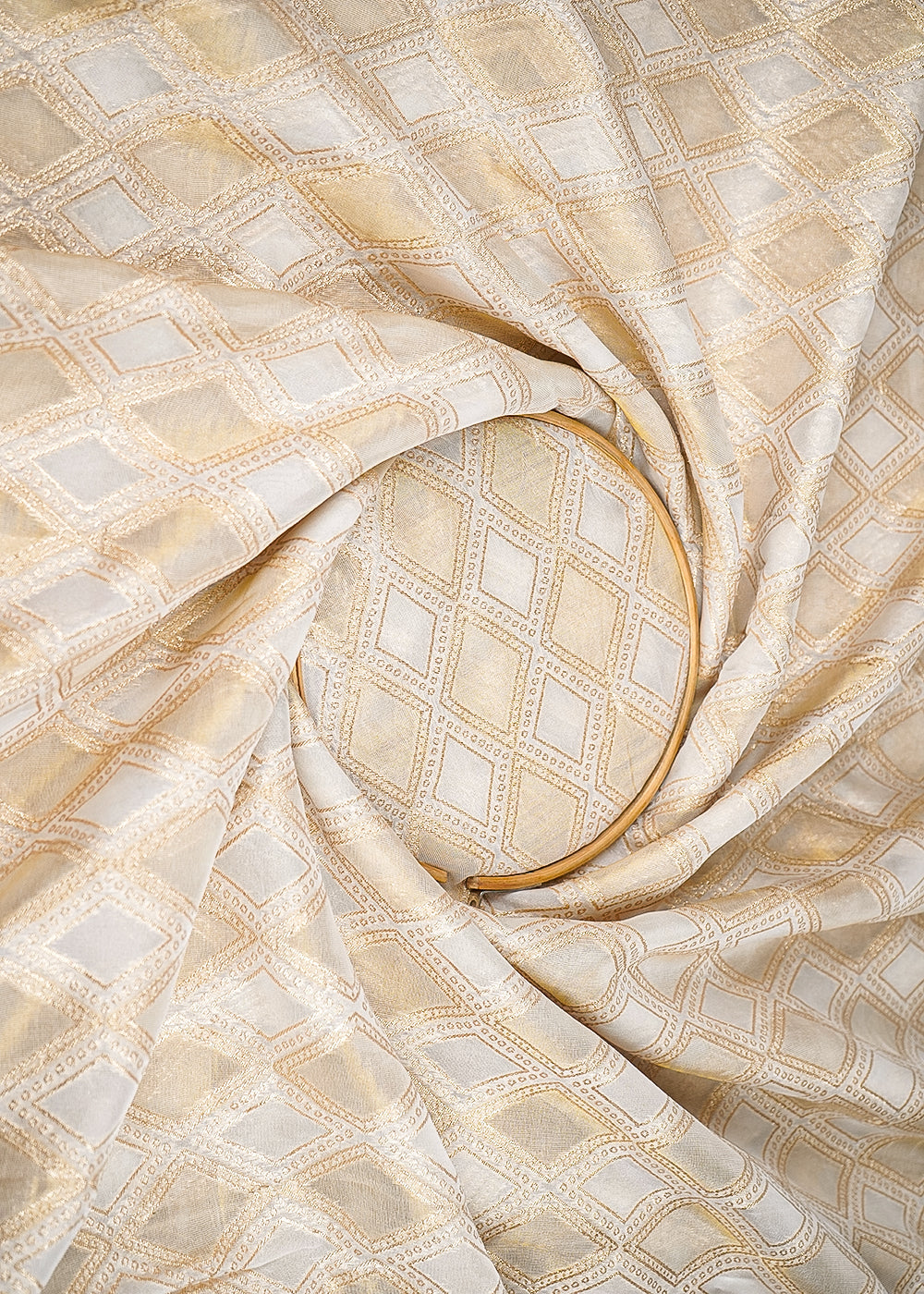
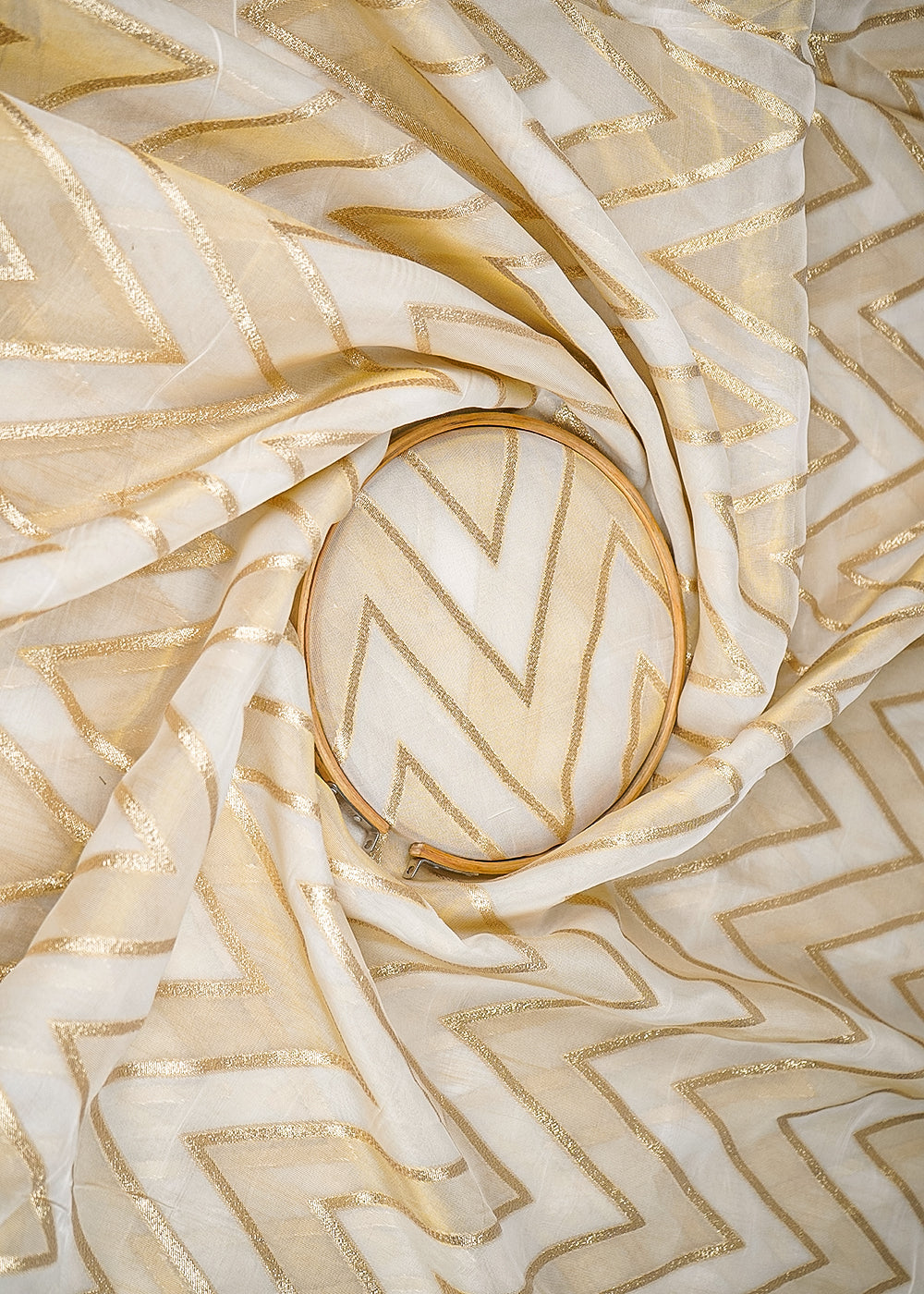
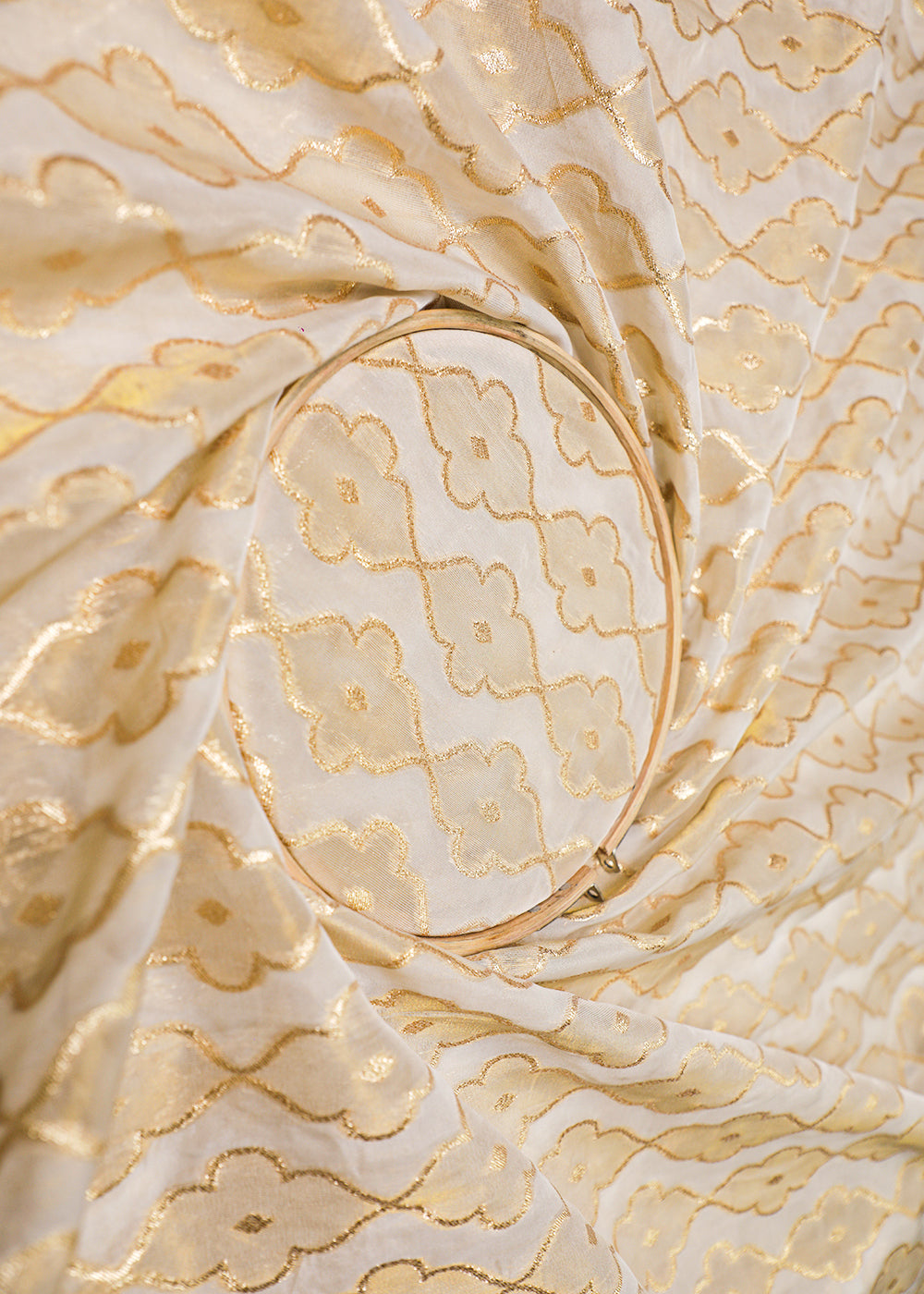
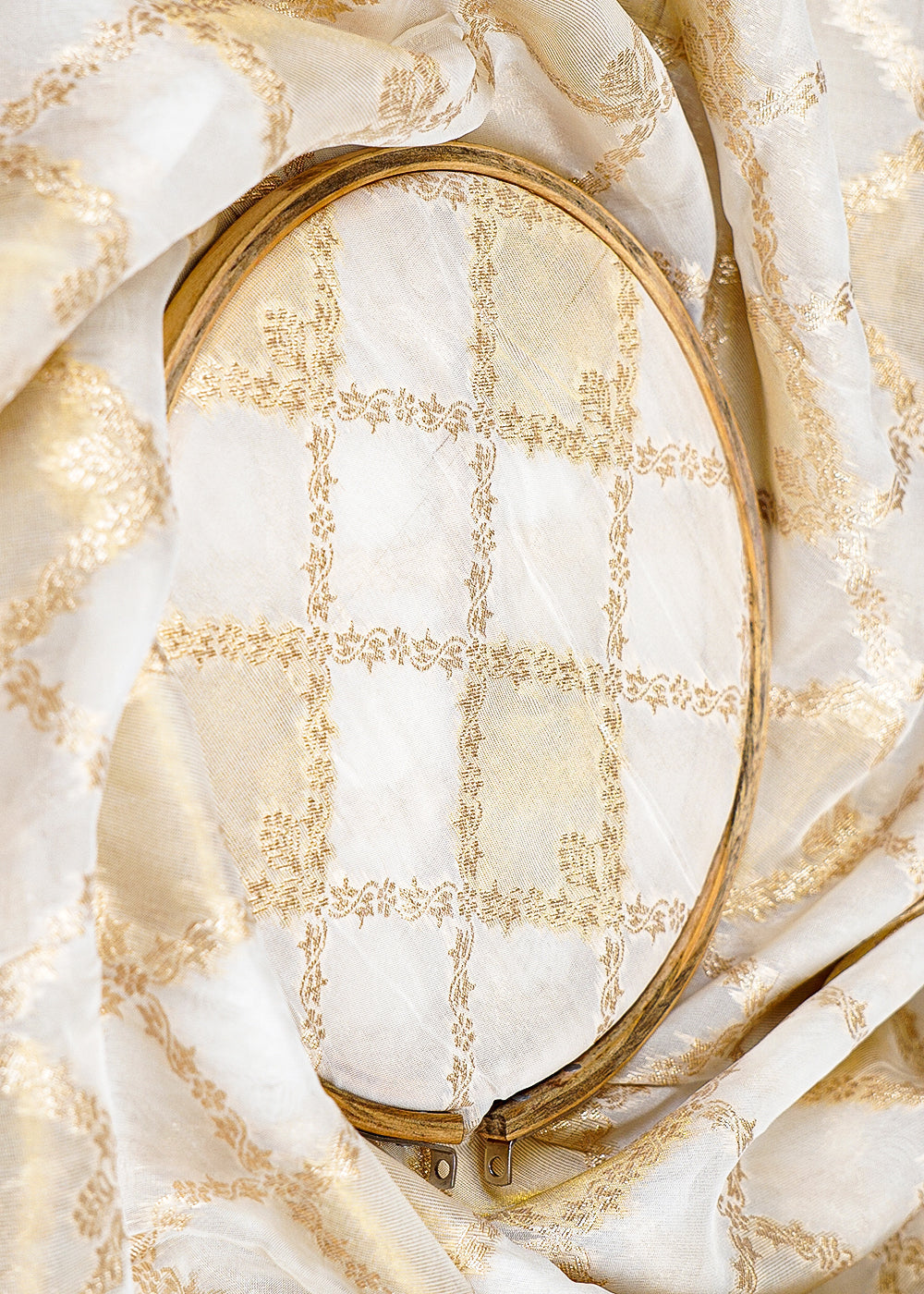
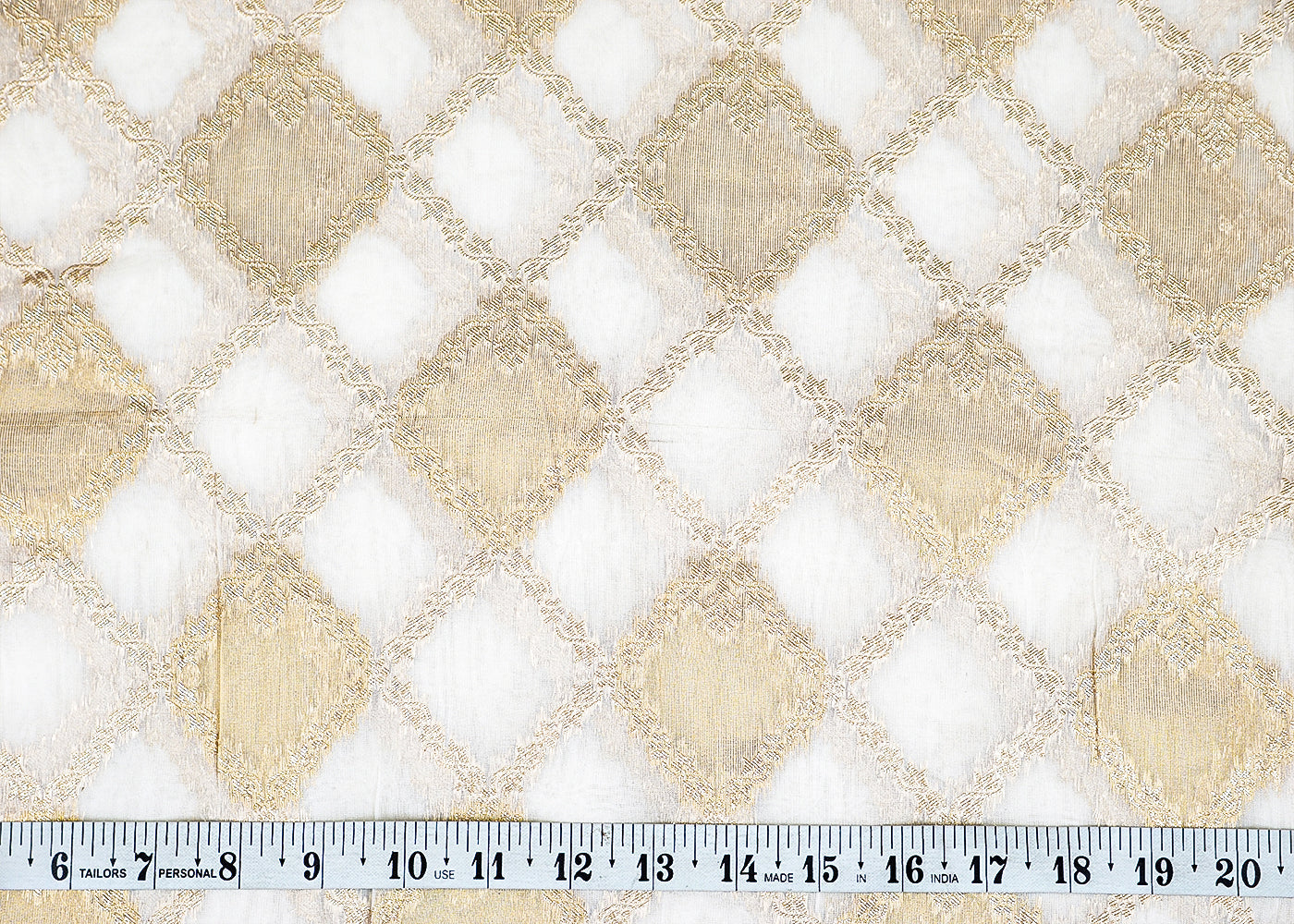
Organza jacquard is the sheer, sculptural end of the jacquard family. An organza base gives the crisp translucent body while the jacquard loom weaves a motif straight into that sheer ground. So you get see-through lightness with a woven pattern holding shape, which is what capes, gharara flares, reception overlays need.
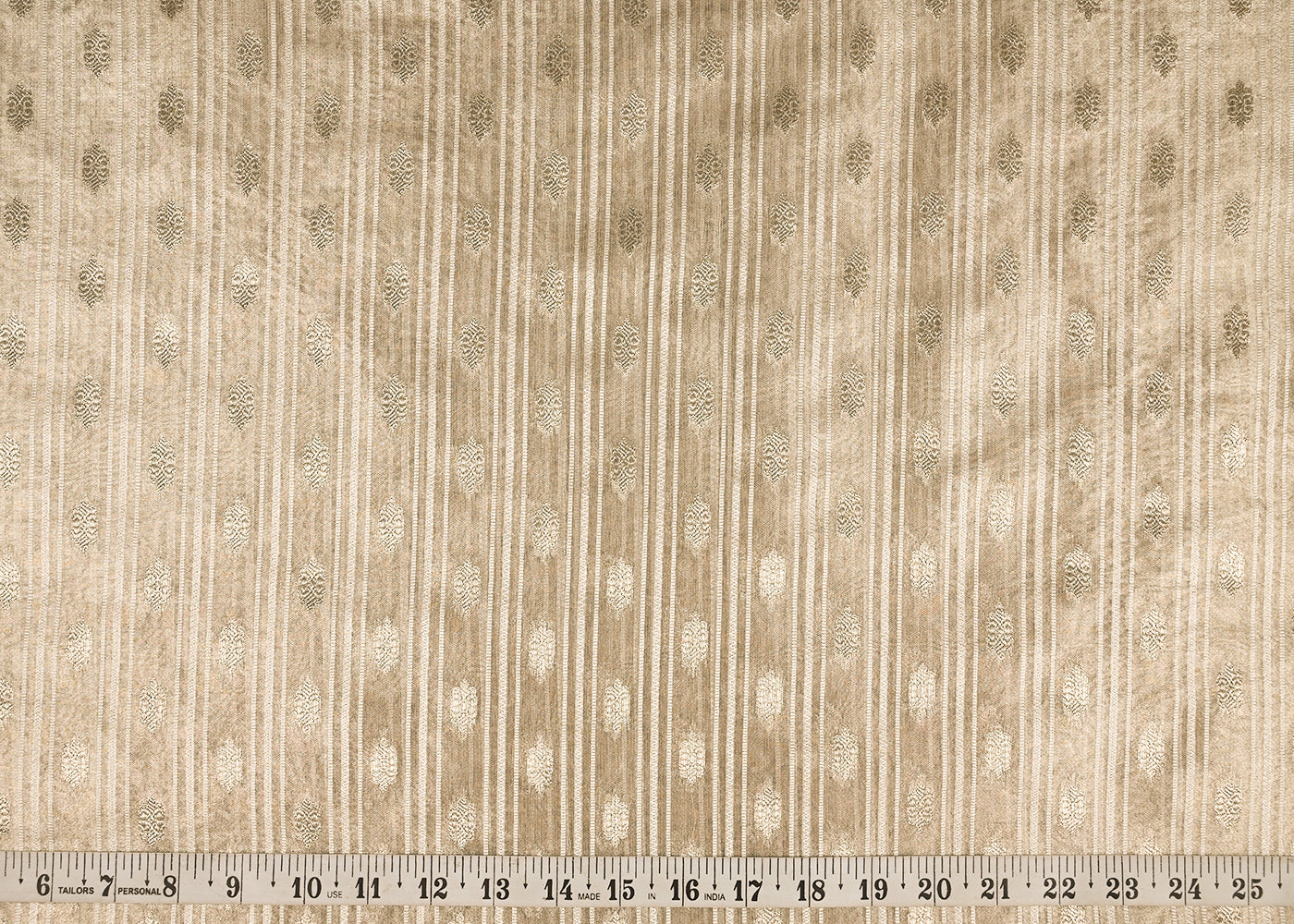
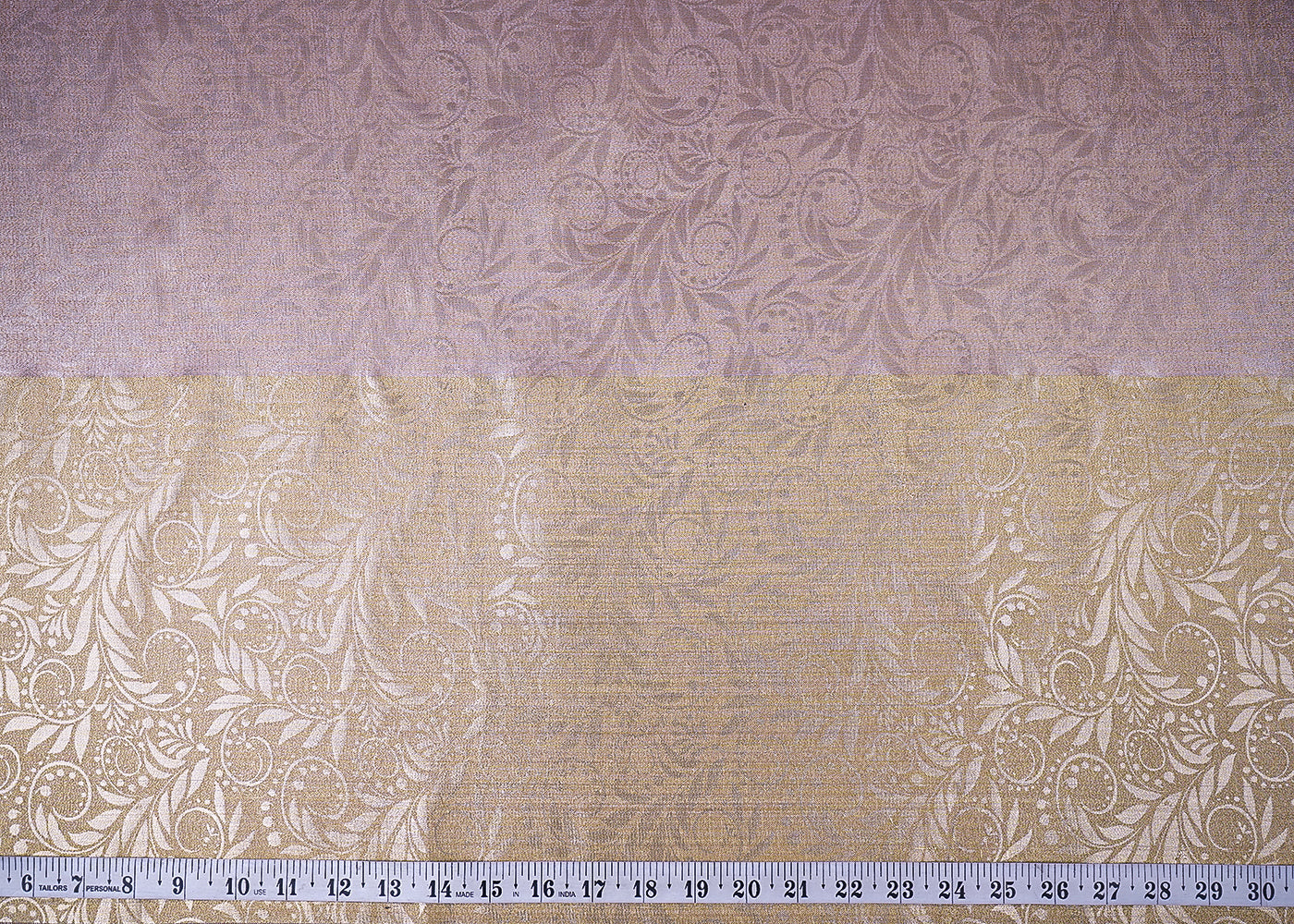
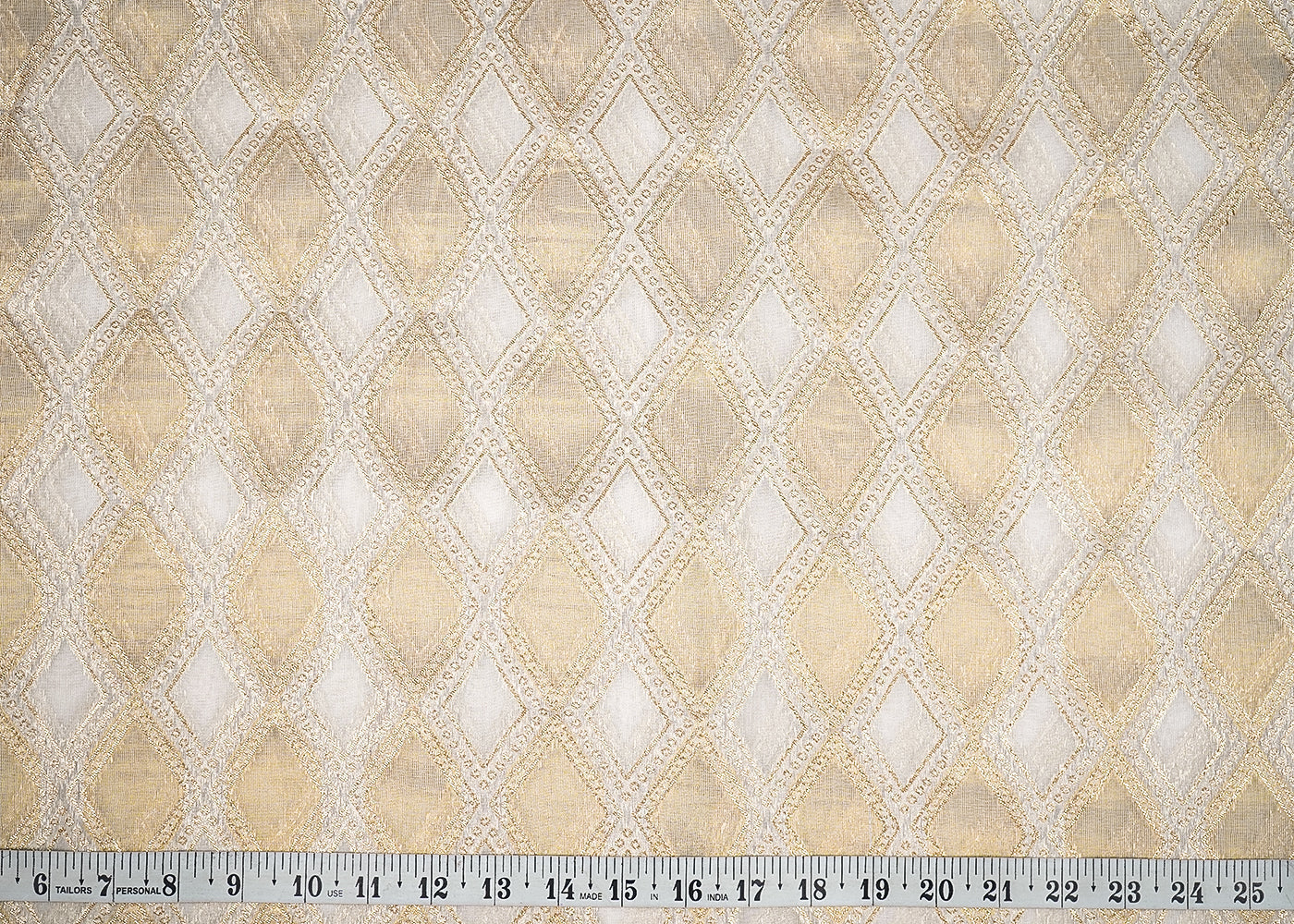
The motif is structural, not printed or embroidered on afterward. Light passes through the sheer areas and catches on the denser woven motif, giving a play of transparency and pattern that a flat organza cannot deliver. Delhi NCR boutiques stock it for the cocktail and reception segment where a piece has to read designer without weight.
Why the Sheer Base Changes the Use
Silk or crepe jacquard uses an opaque base for sarees and blouses worn as main garments. Organza jacquard uses a translucent base, so it works as a layer, an overlay, or a structured accent rather than a solid garment. That single difference decides where it goes on a build.
The crispness is the other half. Organza holds shape where a soft fabric drapes, so the woven motif stands in a cape collar or a gharara flare instead of falling flat. That sculptural quality is exactly why designers reach for it on statement reception pieces rather than everyday wear.
Types and Rates
| Type | Best Use | Approx Rate |
| Floral organza jacquard | Cocktail sarees, dupattas, overlays | Rs 420 to 720 per metre |
| Buti organza jacquard | Kurtas, blouse sleeves, layered tops | Rs 400 to 680 per metre |
| Zari accent organza jacquard | Reception capes, gharara flares, jackets | Rs 620 to 1,050 per metre |
| Two-tone organza jacquard | Statement sarees, indo-western wear | Rs 550 to 950 per metre |
| Heavy motif organza jacquard | Reception centrepiece, structured capes | Rs 720 to 1,250 per metre |
Zari and heavy motif grades carry the top band because the woven coverage is denser. Bulk thaan purchase brings the floral and buti grades down noticeably. These rates are estimates for the range, so confirm against current stock before publishing.
Organza Jacquard GSM Guide
Organza jacquard runs light and crisp. The narrow band decides how much the motif stands and how well a flare or cape collar holds its shape.
| GSM Range | Feel | Best For |
| 40 to 70 GSM | Very sheer, soft crisp | Dupattas, layered overlays, sleeves |
| 70 to 100 GSM | Crisp, holds structure | Cocktail sarees, kurtas, capes |
| 100 to 140 GSM | Firm, sculptural | Gharara flares, structured capes, panels |
Popular Uses
- Cocktail and reception sarees with woven motif overlay
- Capes, gharara flares, indo-western jackets
- Blouse sleeves, layered kurtas, dupatta overlays
- Statement reception pieces where shape matters more than weight
The sheer-plus-structure character makes it a layering and accent fabric rather than a main-garment one. Used as a cape or overlay over a plain base, a small quantity lifts a reception outfit at controlled cost. Pair it with a plain organza base for the supporting layers.
Colour Directions for 2026
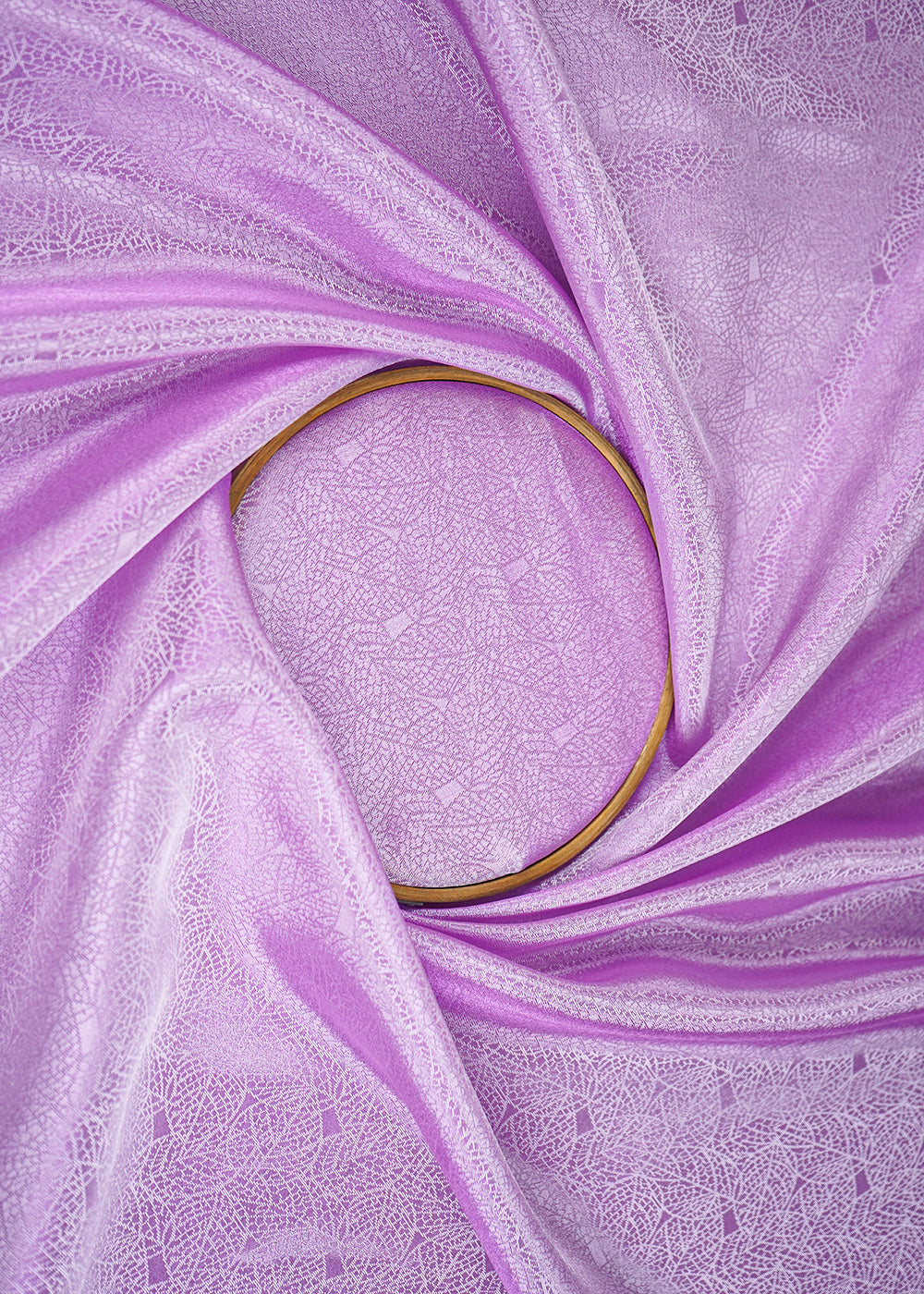
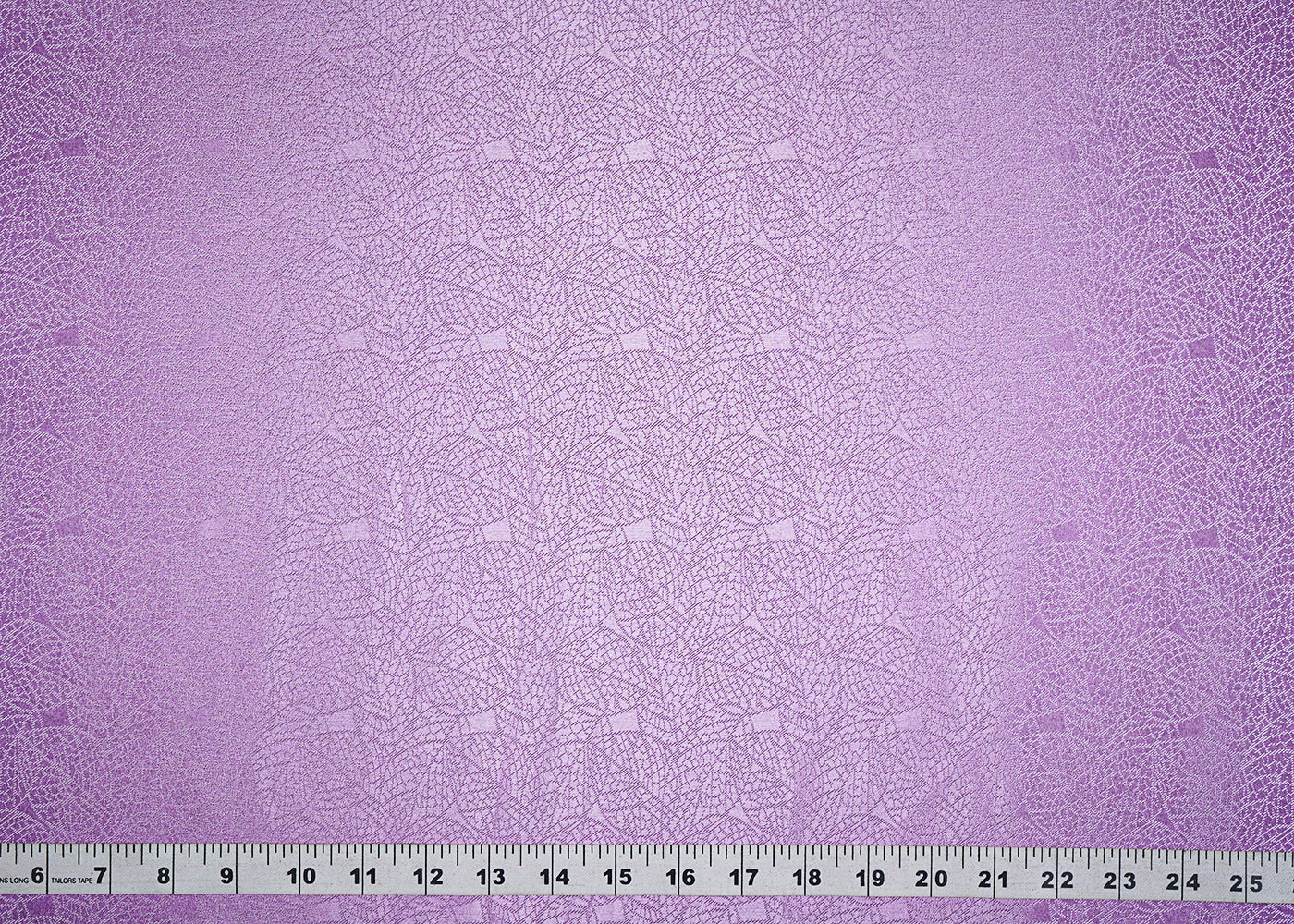
Muted pastels lead the daytime and cocktail segment. Mint, blush, ivory, champagne read cleanest through the sheer weave and photograph well under natural light. The reception segment leans toward wine, navy, deep jewel tones, where the woven motif reads as contrast against the darker translucent ground.
Two-tone weaves have grown fast, running a warp in one shade and weft in another for a shot effect that shifts through the motif from every camera angle.
Working Tips for Organza Jacquard
- Use French seams or bind the edges. Raw seams show straight through the sheer weave
- Fine needle at 60 or 70 gauge with a short stitch length prevents puckering on the crisp ground
- Cut single layer and match the motif at seams, since the sheer fabric shifts under double-layer cutting
- Press on low heat with a cloth between. Direct heat glazes the surface permanently
Frequently Asked Questions
How does organza jacquard differ from other jacquard variants?
The sheer base sets it apart. Silk and crepe jacquard use opaque bases for main garments. Organza jacquard uses a translucent crisp base, so it works as a cape, overlay, or structured accent where the play of transparency and woven motif is the point.
How much organza jacquard does a cape need?
A reception cape needs around 2 to 2.5 metres depending on length and flare. A cocktail saree needs 5.5 metres including the pallu. A gharara flare needs 4 to 5 metres. A dupatta overlay takes 2.5 metres.
Does organza jacquard need lining?
For any garment worn as a main piece, yes, since the base is sheer. Capes, overlays, dupattas stay unlined because they layer over other pieces. That layering use is where the fabric works best.
Is organza jacquard available in bulk?
Yes across all variants, cut by the metre or supplied by thaan for production runs. Bulk thaan purchase brings the floral and buti grades down. Confirm current wholesale tiers against live stock before large orders.
Order Organza Jacquard at Paras Gallery Fabrics
Our organza jacquard range covers floral, buti, zari accent, two-tone, heavy motif grades across the full GSM spread, cut by the metre or supplied by thaan for production runs. Designers building reception reception ranges can check bulk rates on our wholesale page.
