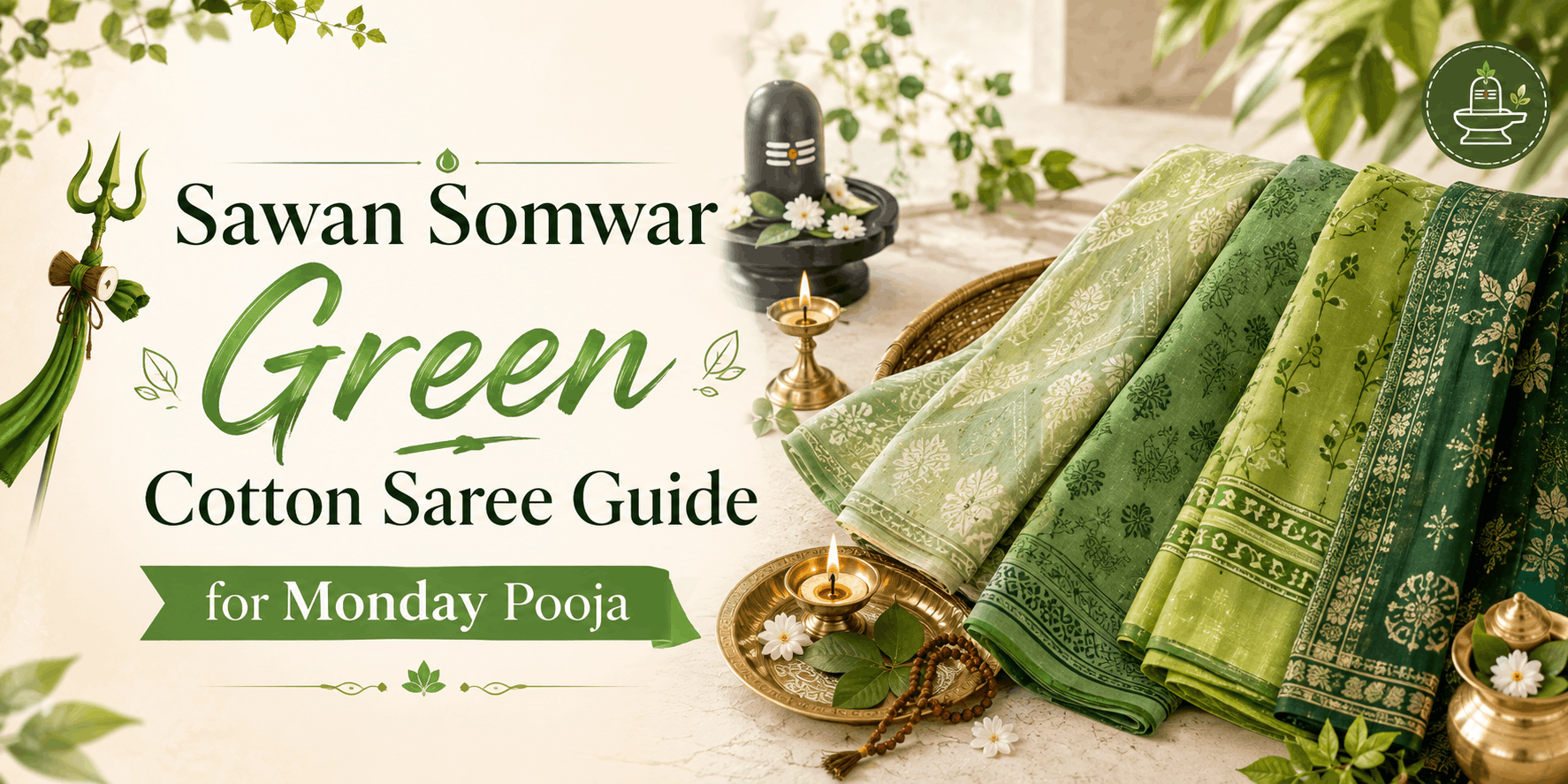
Sawan Somwar Green Cotton Saree Guide for Monday Pooja
Sawan is running, Mondays are heavier than usual at the mandir, and green sarees are back at every temple queue from Chattarpur to Jhandewalan. If you have been meaning to add one clean, breathable green saree to your Monday pooja rotation, this is the week to sort it.
Fabric that behaves in humid August heat.
Colour green, in a shade that actually looks green (not olive, not fluorescent).
Something that survives temple sitting, aarti, and a long queue.
Under 2500 rupees on average, per piece.
Sawan Somwar saree searches spike every July and August, and most of the online listings are just tagged green. That is not enough. The fabric type, the drape weight, the border, and the blouse piece decide whether the saree is a mandir go-to or a one-time wear.
Here is the actual buying guide, from someone who has been dressing Delhi's Somwar pooja crowd for over a decade.
Quick Answer. For a Sawan Somwar pooja saree, choose soft cotton, cotton silk, or handloom cotton in a mid-tone green (bottle green, mehendi green, or leaf green). These fabrics breathe in humidity, do not stick to skin during long temple sits, and hold pallu drape through aarti and pradakshina.
When a green cotton saree works for Sawan, plus when to skip a heavier option
A soft cotton or cotton silk works when you are doing a Monday pooja at home, a Shiv mandir visit, or a Kanwar season family gathering. It works for morning aartis, evening bhajans, and long temple queues. It survives sitting cross-legged on the mandir floor for a full path.
Skip the heavier options. Skip crepe green, skip georgette in dark forest green, skip organza in mint. These fabrics either cling, itch, or crumple within thirty minutes of temple sitting. Also skip synthetic silk green sarees, they trap sweat and get uncomfortable by the second aarti.
The other skip case is neon green or lime green. Both look great on Reels, but neither reads as pooja-appropriate in Delhi temples where most women stick to muted greens, soft yellows, and off-white.
The five Sawan Somwar green saree picks I recommend for a Monday pooja regular
1. Soft cotton saree with contrast red border (Rs 1550 to Rs 2050)
Bottle green cotton with a maroon or brick red temple border. Classic. Reads as pooja-first, festive-second. Great for women in their thirties and forties who are Monday pooja regulars. Pairs beautifully with jhumkas and a rudraksha mala.
2. Cotton silk saree in mehendi green (Rs 1750 to Rs 2250)
Cotton silk gives you a slight sheen without the heat trap of pure silk. Mehendi green is the most requested Sawan colour at our counter this week. Pair with a mustard blouse for a Monday morning aarti, or an off-white blouse for a subtler look.
3. Handloom cotton saree with woven temple border (Rs 1850 to Rs 2450)
If you sit through long Rudrabhishek paths, this is your fabric. Handloom cotton stays cool, does not wrinkle in seated posture, and the temple border adds the "aaj mandir jaana hai" seriousness that a plain border cannot.
4. Cotton mulmul saree in leaf green (Rs 1350 to Rs 1750)
Mulmul is the featherlight option for older women, or for anyone attending multiple Somwar poojas in one Sawan month. Very breathable, very easy to drape solo without help. Add a printed blouse piece for a soft festive touch.
5. Chanderi cotton saree in pista green (Rs 1950 to Rs 2500)
For a slightly dressed up Somwar, particularly if the pooja is at a relative's home or you are hosting a Sawan kitty. Chanderi cotton has the subtle silver zari that reads as festive without shouting.
Four mistakes women make while shopping for a Sawan Somwar saree
Mistake 1: Buying too dark a green. Forest green and bottle green photograph fine, but under mandir tubelight they can read almost black. Mid-tones photograph and appear correctly under mixed lighting.
Mistake 2: Skipping the blouse question. A green saree with a badly matched blouse ruins the pooja fit. Ask specifically for a contrast blouse piece (mustard, brick red, off-white). Skip matching green-on-green, it flattens the look.
Mistake 3: Ordering polyester "cotton feel" sarees online. These are soft to touch on video, but wear like plastic in Delhi August humidity. Ask for the actual fabric composition, not the marketing label.
Mistake 4: Ignoring the fall and pico. A Sawan saree gets sat in, walked in, and knelt in. Fall and pico stitching keeps the pallu from tearing at the temple. Get it done before the first wear, not after.
Delhi wholesale prices this Sawan for green cotton sarees
These are Lajpat Nagar counter rates. Online listings on parasgalleryfabrics.com are the same, courier extra.
| Fabric | Retail per saree | Wholesale (min 10 pcs) | Best for |
|---|---|---|---|
| Soft cotton with contrast border | Rs 1550 to Rs 2050 | Rs 1250 to Rs 1550 | Regular Monday pooja |
| Cotton silk mehendi green | Rs 1750 to Rs 2250 | Rs 1450 to Rs 1750 | Aarti heavy pooja |
| Handloom cotton temple border | Rs 1850 to Rs 2450 | Rs 1500 to Rs 1850 | Rudrabhishek path |
| Mulmul leaf green | Rs 1350 to Rs 1750 | Rs 1100 to Rs 1450 | Older women, long sits |
| Chanderi cotton pista green | Rs 1950 to Rs 2500 | Rs 1600 to Rs 2000 | Home pooja, Sawan kitty |
If you are picking up five or more sarees for a family Sawan pooja gift, ping us on WhatsApp for wholesale rates. We have a wholesale page with full details on the process.
Sawan colour cheat sheet beyond green
Monday is green, agreed. But Sawan month also gives space for:
Off-white with green border (Tuesday and Wednesday).
Soft yellow (particularly for Nag Panchami week).
Ivory with silver zari (for evening bhajan sittings).
Peach with green border (for Hariyali Teej overlap).
Skip red for Sawan. Red is a Karwa Chauth reservation, and it feels out of context in a Sawan mandir queue.
Skip black. Sawan and black together rarely land right, particularly for older women in the family.
Questions Sawan pooja regulars ask me at the counter
Which fabric is best for a full day Shiv mandir visit in August?
Handloom cotton. It breathes, it does not wrinkle when you sit cross-legged, and it does not cling to skin in a humid queue. Mulmul is the second best, particularly for women above fifty who want the lightest possible drape.
Is green the only Sawan Somwar saree colour?
Green is the priority colour for Monday, but off-white, soft yellow, and ivory with silver work equally well for the rest of the Sawan week. Nag Panchami specifically calls for white or silver combinations.
What is a good under 2000 green saree fabric for pooja?
Soft cotton with contrast red border sits right in the under 2000 bracket, and it is the safest all-rounder for Monday pooja. Cotton mulmul in leaf green is another good option under 2000 if you want featherlight drape.
Should I match jewellery to a green Sawan saree?
Silver jewellery is the safer match than gold for Sawan sarees, particularly a rudraksha silver mala or oxidised jhumkas. Gold works too, but silver reads as more Sawan appropriate to most Delhi families.
Can I wear the same green cotton saree for both Monday pooja and Hariyali Teej?
Yes, a mid-tone mehendi green cotton silk works for both. Change the blouse piece and jewellery between the two occasions. Off-white blouse for Monday pooja, gota patti blouse for Hariyali Teej.
Ready to buy?
We stock a fresh Sawan-ready cotton and cotton silk saree pile at our Lajpat Nagar counter every Friday through the Sawan month. Browse the festive collection for the shortlisted greens, or WhatsApp us with your pincode and we will confirm Monday delivery for Delhi NCR orders placed by Saturday afternoon.
For a dressed-up Sawan bhajan at home, look at our organza saree collection with soft green tissue borders. Slightly festive, still Sawan appropriate.