Sangeet Seranade Fabric Wholesale: Buy for the Dance Floor, Not the Camera
Wholesale Reference Guides · 5 minute read · Updated 28 September 2026
A sangeet outfit is going to be danced in for four or five hours straight. Buy it like a wedding-day showpiece and it stops moving before the night is half over.
A boutique owner once restocked her whole sangeet shelf in heavy silk brocade lehengas, the same weight she sold for the wedding day itself. The pieces looked stunning on the mannequin. Within a week three customers were back, saying the zari work had gone stiff at the waist and would not let them turn during a dance number. She had bought reception fabric and called it sangeet fabric.
That is the trap in this category. A sangeet piece has to look rich under coloured stage light and still let the person inside it move for hours. Most counters get the first half right and forget the second.
Reception fabric is bought to be seen. Sangeet fabric is bought to be danced in.
Four things a sangeet piece has to do for you:
- Catch coloured stage light, not just daylight, since most sangeet functions run indoors after dark
- Bend and lift through hours of dancing without the embellishment cracking or the seams pulling
- Sit right at three budgets, since one dance floor holds three very different buyers
- Move fast, because sangeet season runs long and a shelf that turns slowly costs you the whole run
Stock for the dance first. Let the shine follow.
Quick answer: Sangeet Seranade fabric is bought in shimmer-heavy, movement-friendly cloth for the dance-night function before an Indian wedding. Buyers span three budgets in one night: choreographed lead dancers in light, flexible base cloth with embellishment kept off the movement zones. Social dancers get a mid-weight shimmer georgette or sequinned net. Guests who want one glamorous look get ready sequin work at a lower price. Stock net, georgette and lightweight satin ahead of anything stiff or heavily worked, since the heaviest pieces are the ones that stop moving first.
Why a dance floor buys differently to a stage
Every other function on the wedding calendar is bought to be looked at. Sangeet is the one function where the fabric is also working, for hours, under light that is nothing like daylight. A deep colour picks up gold and copper stage light in a way a pale one does not, so the same georgette that looked quiet at the counter can look completely different once the lights actually come on.
This changes what a good sangeet piece actually is. A counter that stocks sangeet the same way it stocks reception, heavy on embellishment and light on how the cloth actually moves, ends up with unsold weight on the shelf by the end of the season.
If your sangeet shelf needs a lighter, daytime neighbour, many sangeet counters keep mehendi green close by, since the two functions often fall across the same weekend.
Three dancers, one night, three budgets
A single sangeet guest list buys across three very different budgets before the same evening ends. Stock for only one of them and the other two walk out to buy somewhere else.
Buy the shimmer spread, not one shimmer
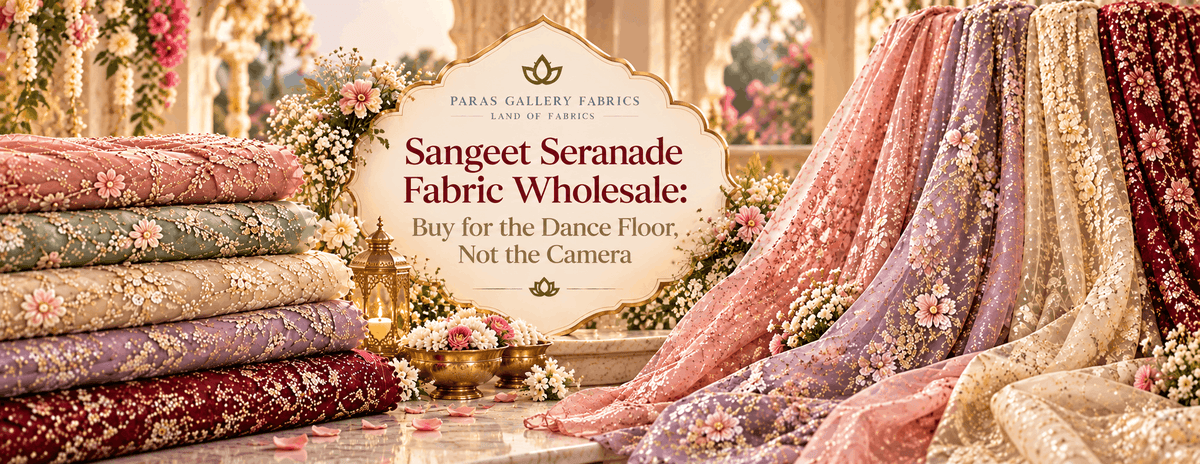
Shimmer is not one finish on a sangeet shelf. Sequinned net, shimmer georgette, foil-print chiffon and stone-work satin all read as glamorous under stage light without competing with each other the way two identical pieces would. A shop with only one shimmer finish sends its second and third sangeet customer next door.
Stock the spread across weights too, not just finishes. The same sequin work that suits a seated guest also needs to exist in a lighter net for someone who will be on her feet for half the night.
Base cloth first, embellishment second
Movement is hardest on exactly the places embellishment loves to sit: the waistline, the underarm, the hem that catches a heel mid-turn. A light net or georgette flexes with the body. Heavy stone, mirror or metal thread work resists that flex and is usually the first thing to crack or pull loose.
So keep your most flexible base cloth for buyers who will actually be dancing. Save the richest embellishment for guests who plan to sit through most of the evening. This is a stocking call, not a design rule. It is the single biggest reason a sangeet lot comes back with complaints.
What to do at the counter
- Before you go: decide roughly how much of your sangeet shelf is performer-budget versus guest-budget versus one-night glamour
- Step 1: sort the shimmer spread by base cloth weight, not by finish alone
- Step 2: check where the embellishment sits on each richer piece
- Step 3: keep a light, flexible option in every price tier, not just the lowest one
- Then fix quantity: heavier on light, flexible cloth, lighter on the stiffest embellished pieces
Questions buyers ask at the counter
What is Sangeet Seranade fabric?
Sangeet Seranade fabric is cloth bought for the dance-night function before an Indian wedding, chosen for how well it moves and how it catches stage light rather than daylight. It ranges from a light sequinned net for a choreographed number to a richer shimmer georgette for a guest who is dancing less and posing more.
Which fabric holds up best through hours of dancing?
Light net and georgette with embellishment kept off the movement zones hold up longest. Heavy stone, mirror or metal thread work at the waist or underarm is usually the first to crack or pull loose during a dance number.
Should a boutique stock one shimmer finish or several?
Several. Sequinned net, shimmer georgette, foil-print chiffon and stone-work satin all read as glamorous under stage light without clashing. A shelf with only one finish loses customers who wanted a different one.
Is heavy embellishment wrong for a sangeet outfit?
Not wrong, but riskier for anyone actually dancing. Save the heaviest work for guests who plan to sit through most of the evening and steer performers towards lighter, more flexible cloth instead.
How is sangeet fabric different from reception fabric?
Sangeet fabric is bought to move through hours of dancing under stage light. Reception fabric is bought to be seen at a seated, formal function, so it can carry far more weight and embellishment without the same practical trade-off.