







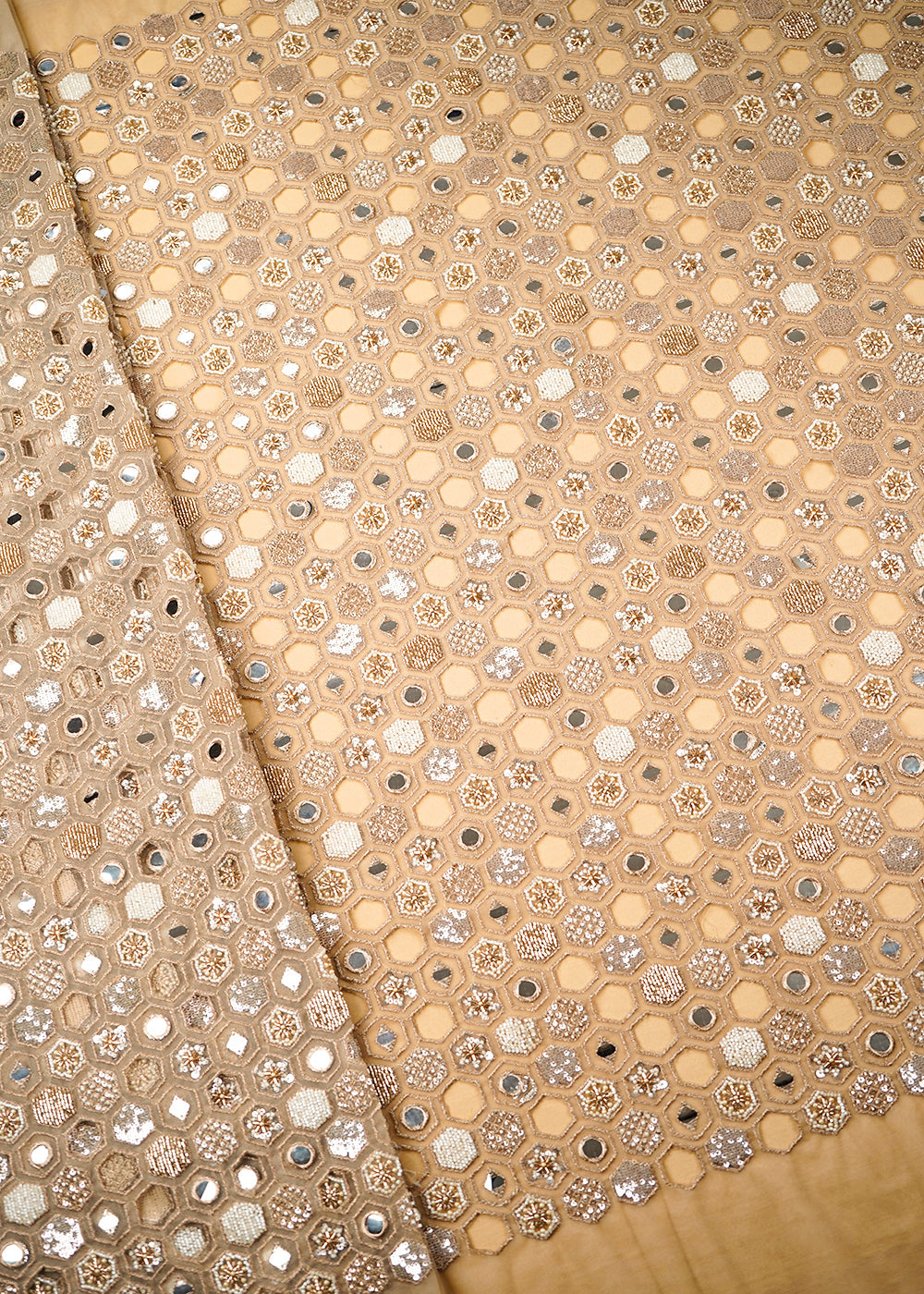
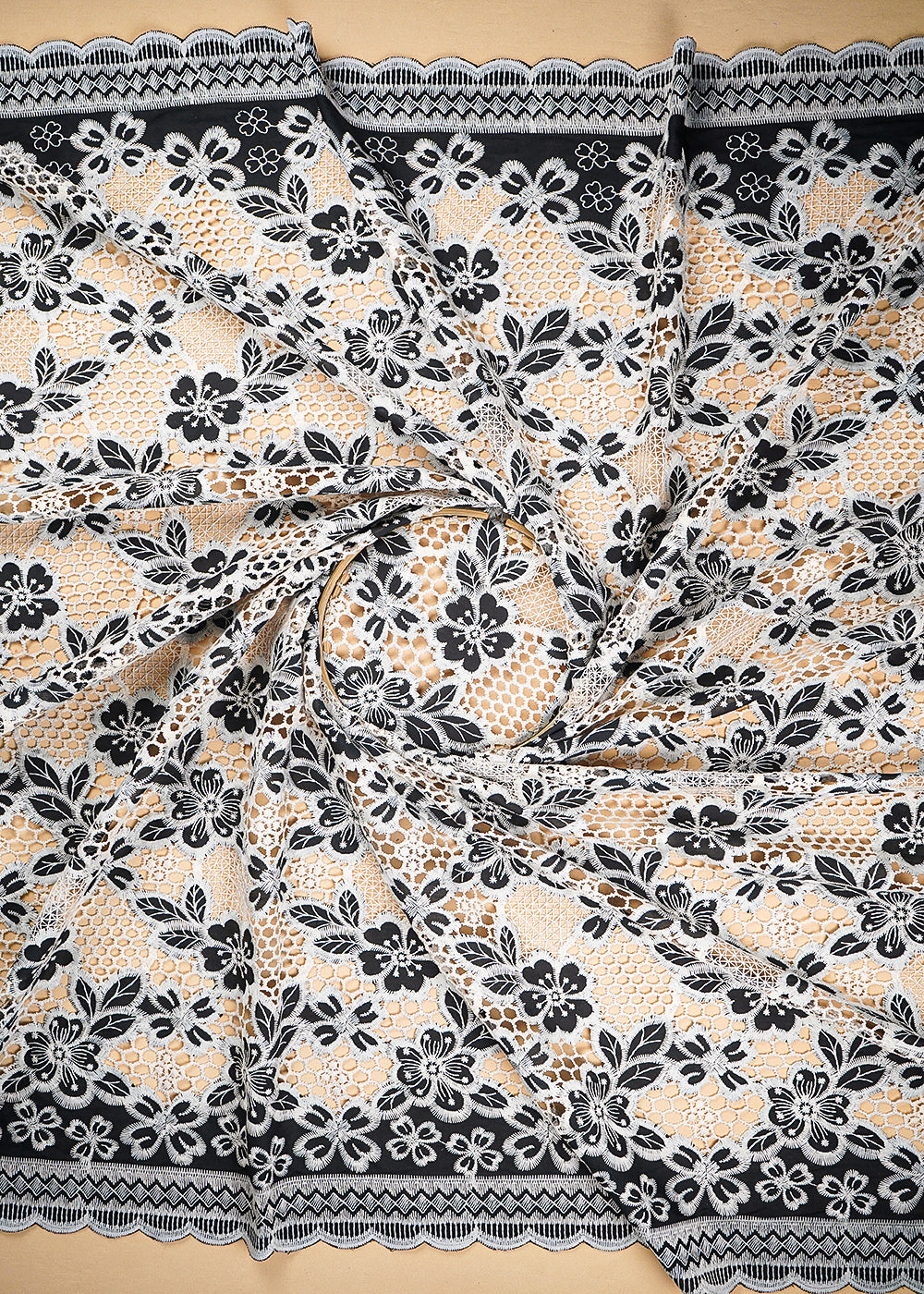
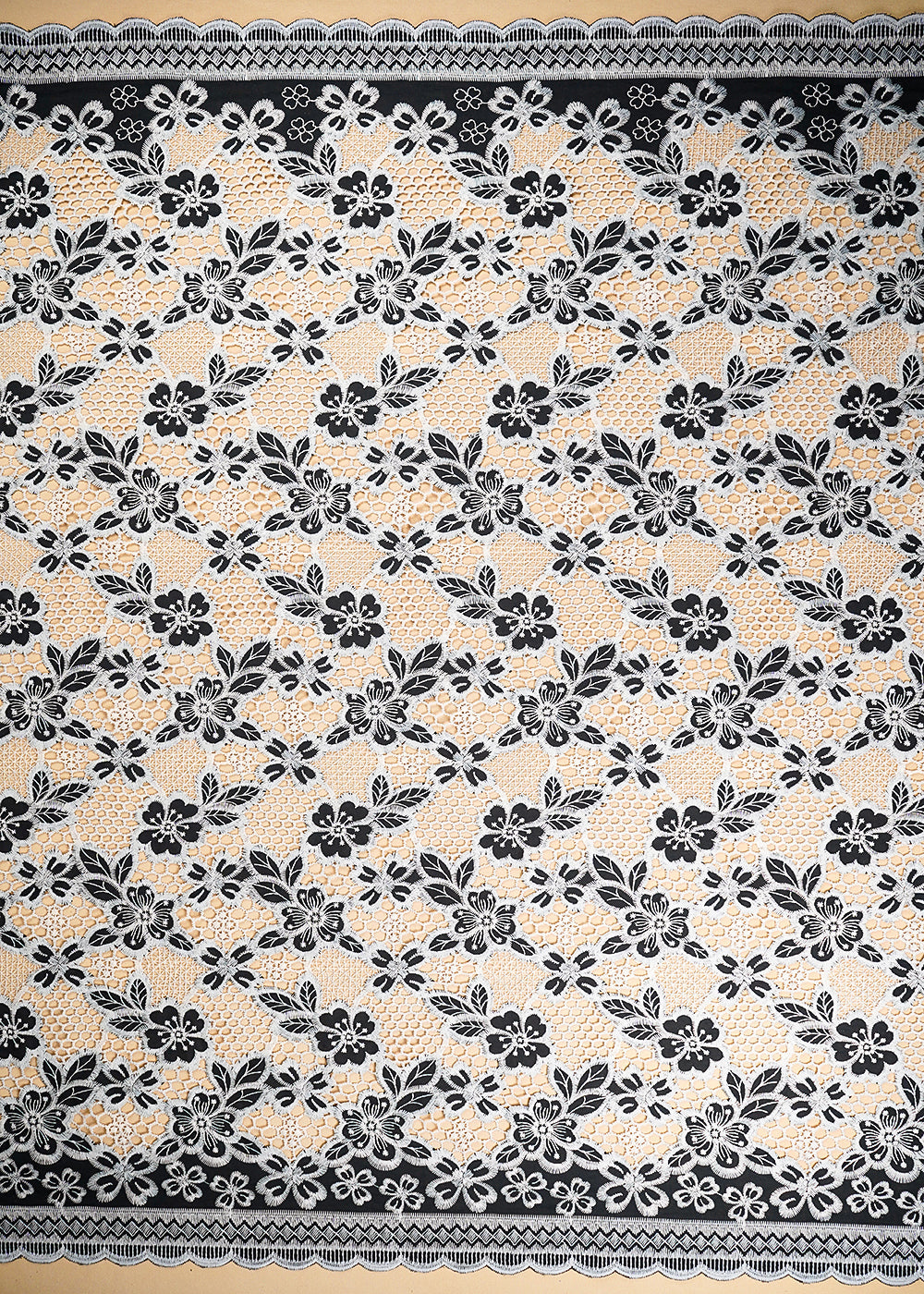

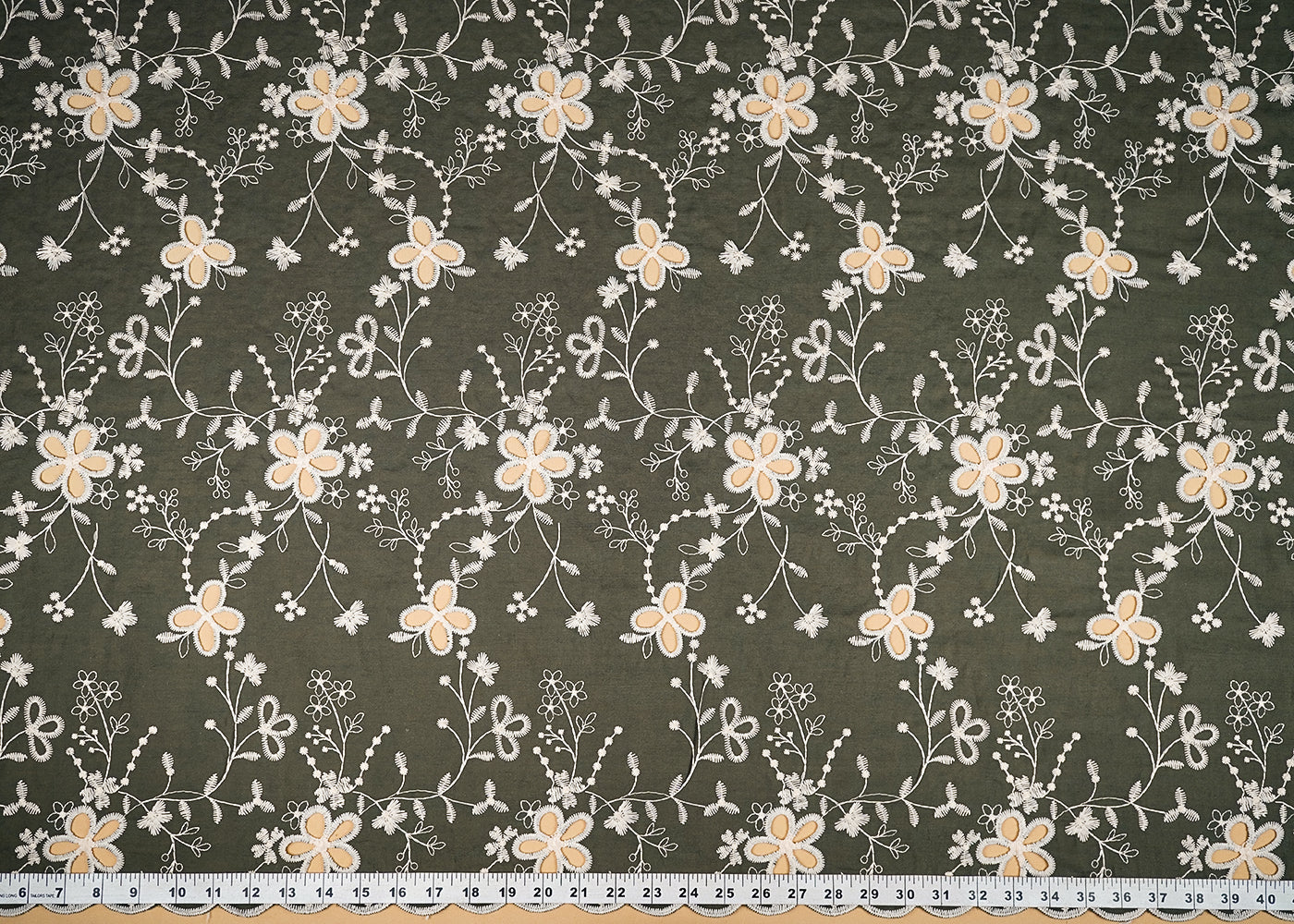







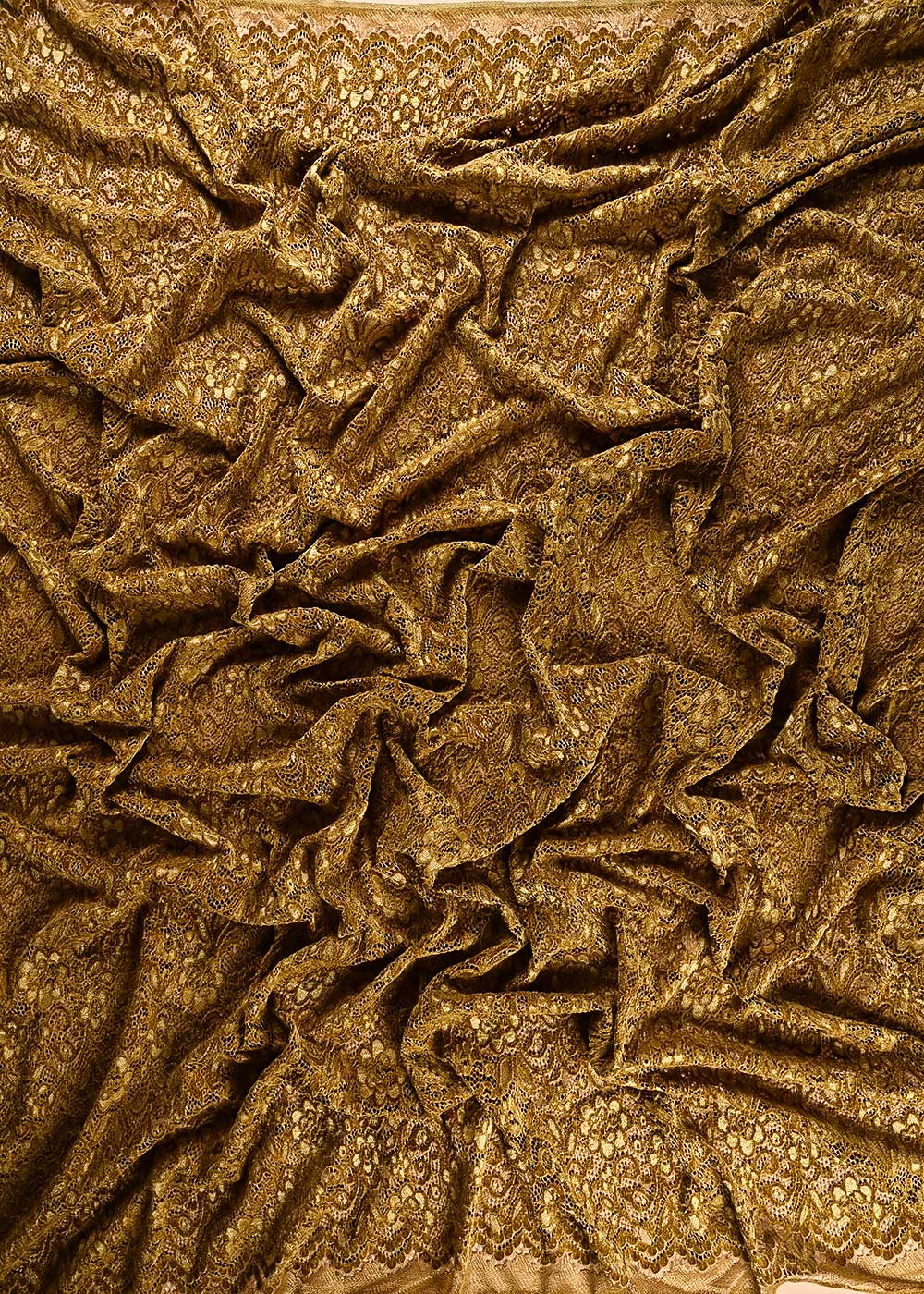
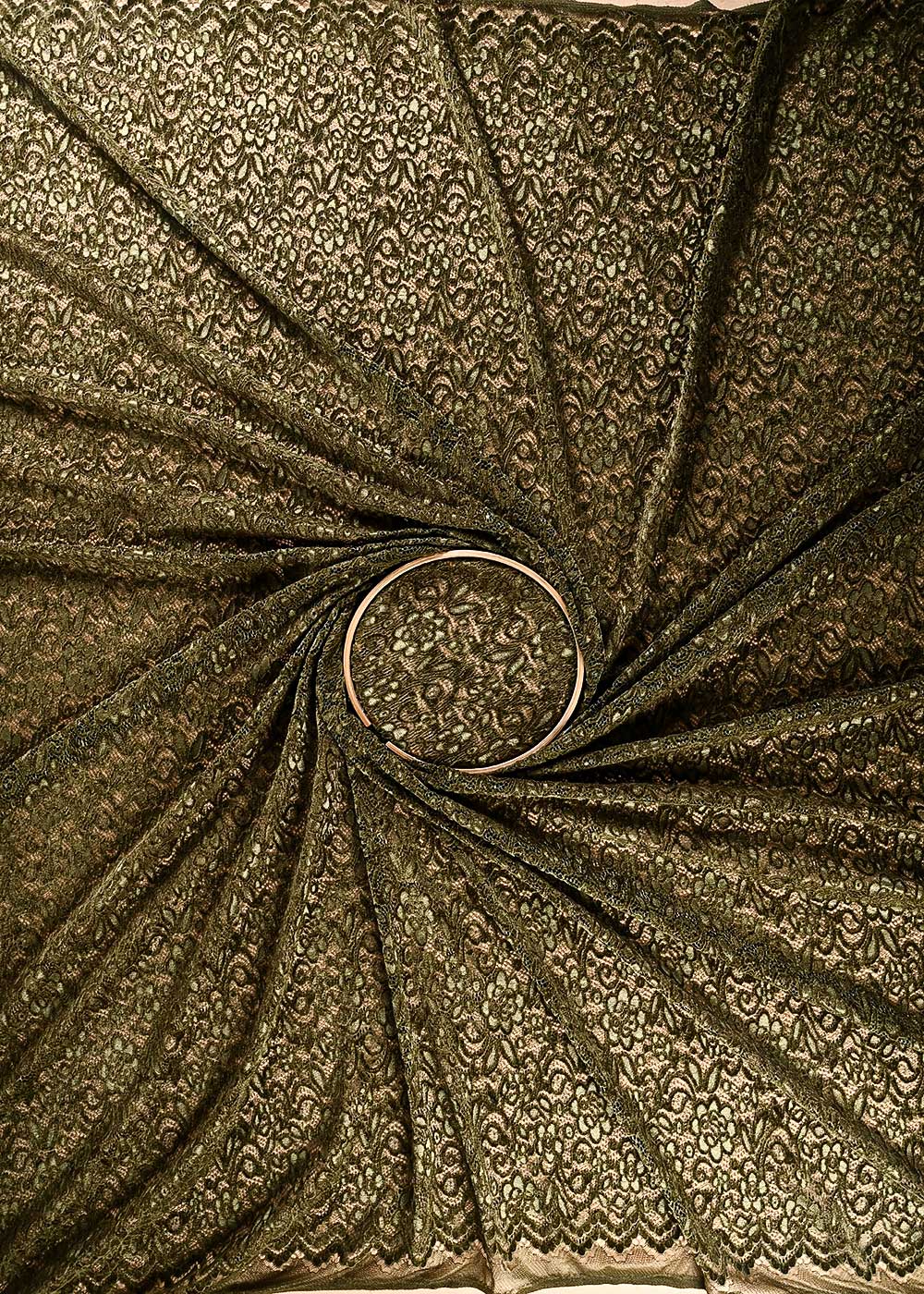
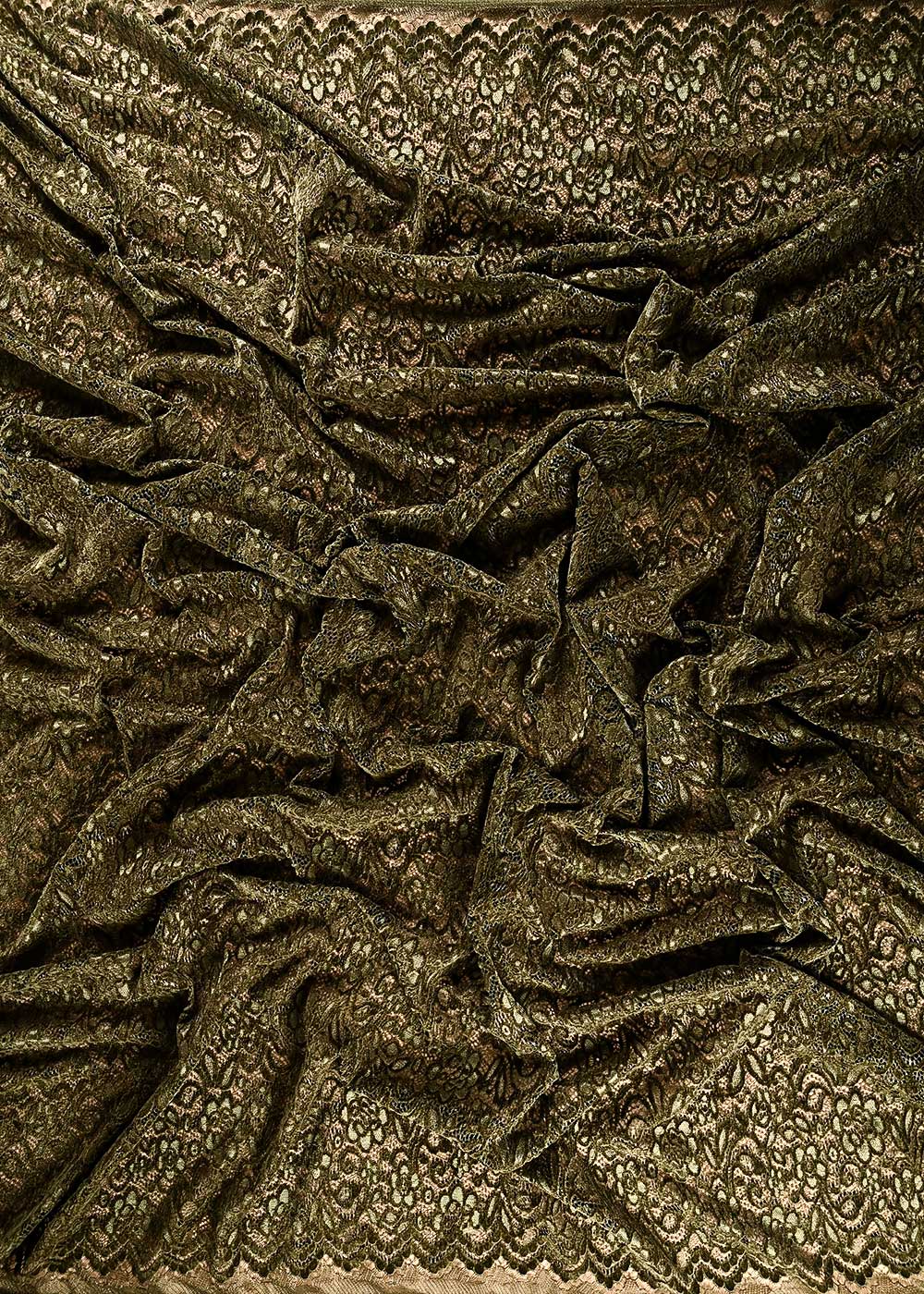
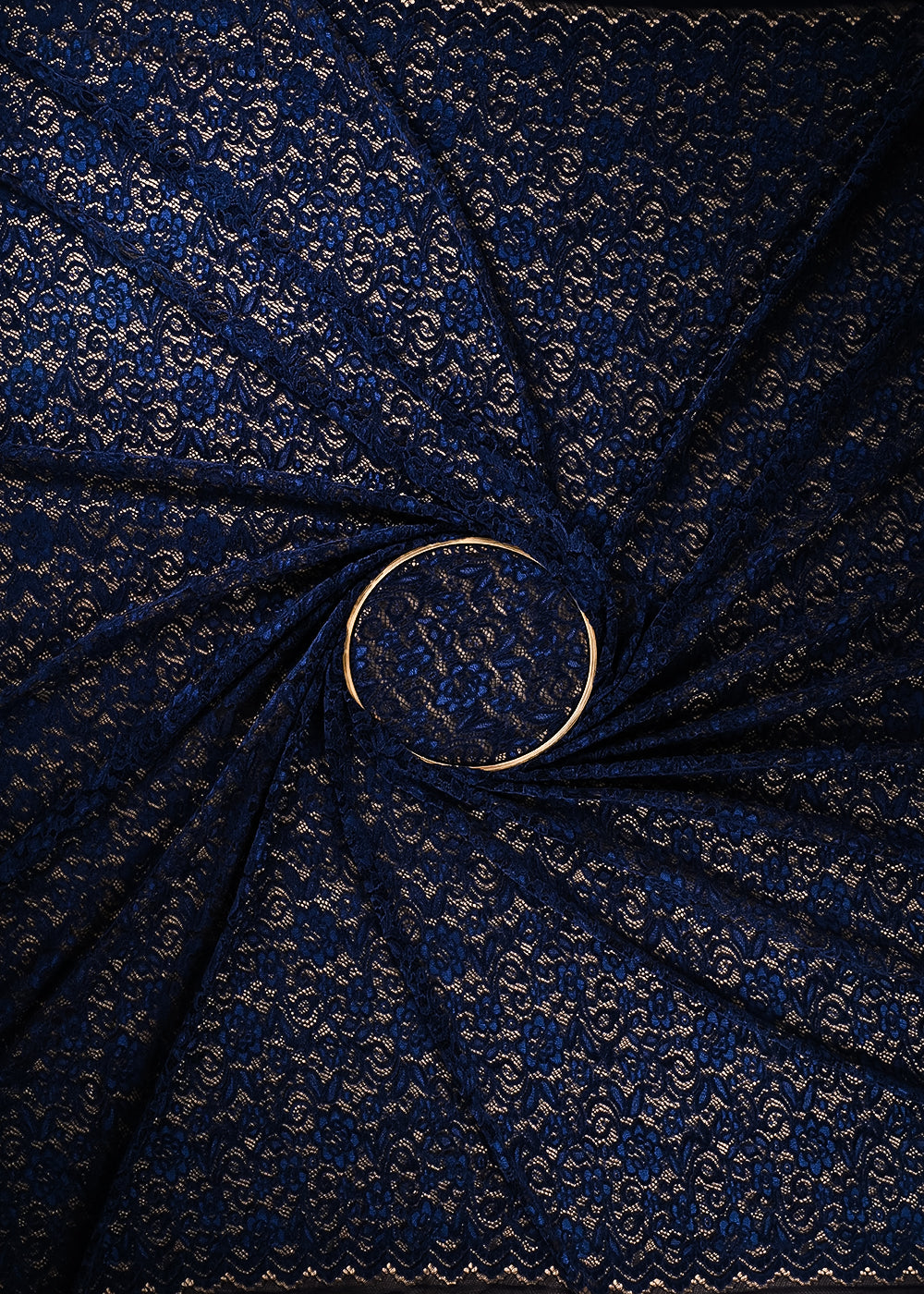
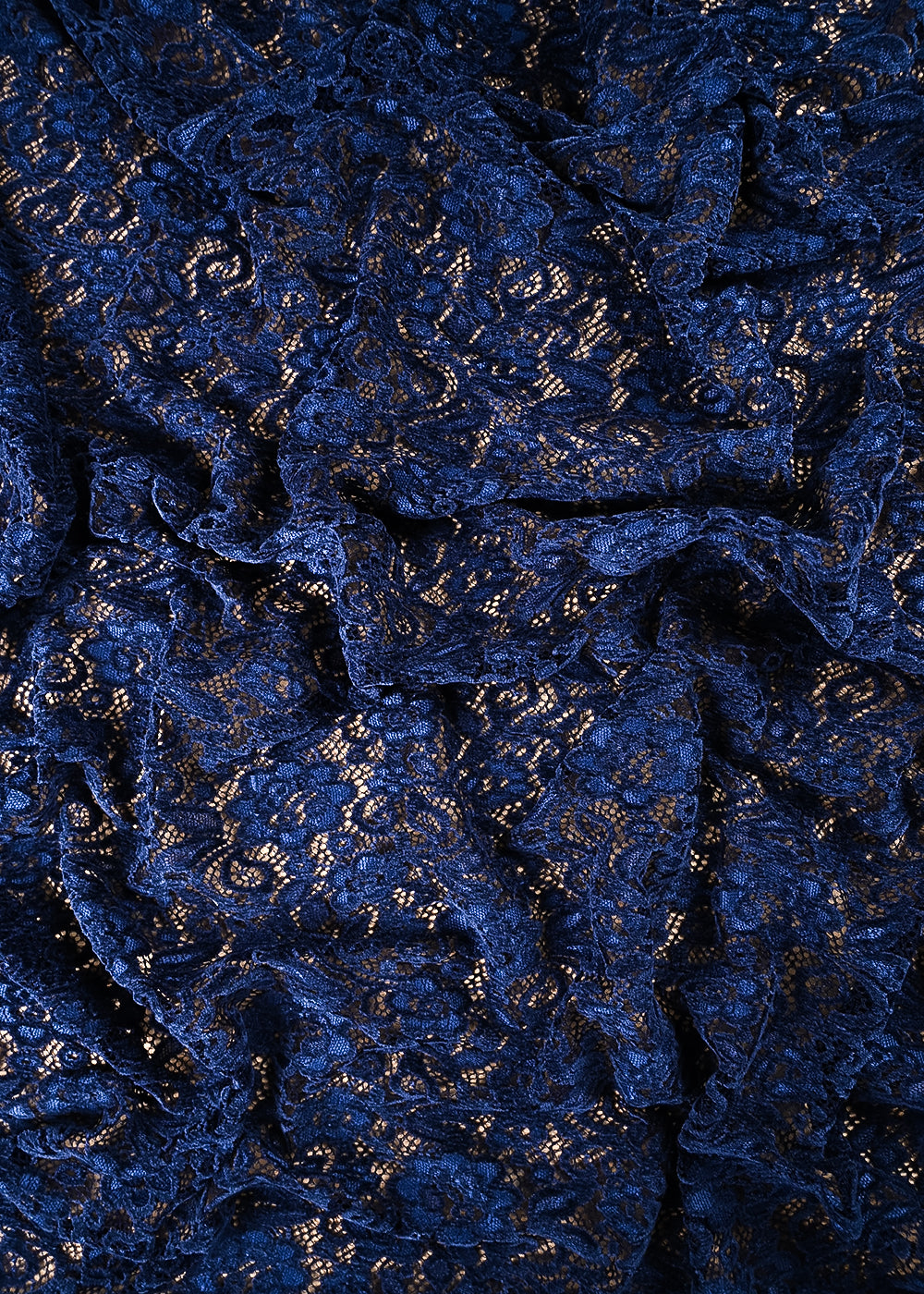
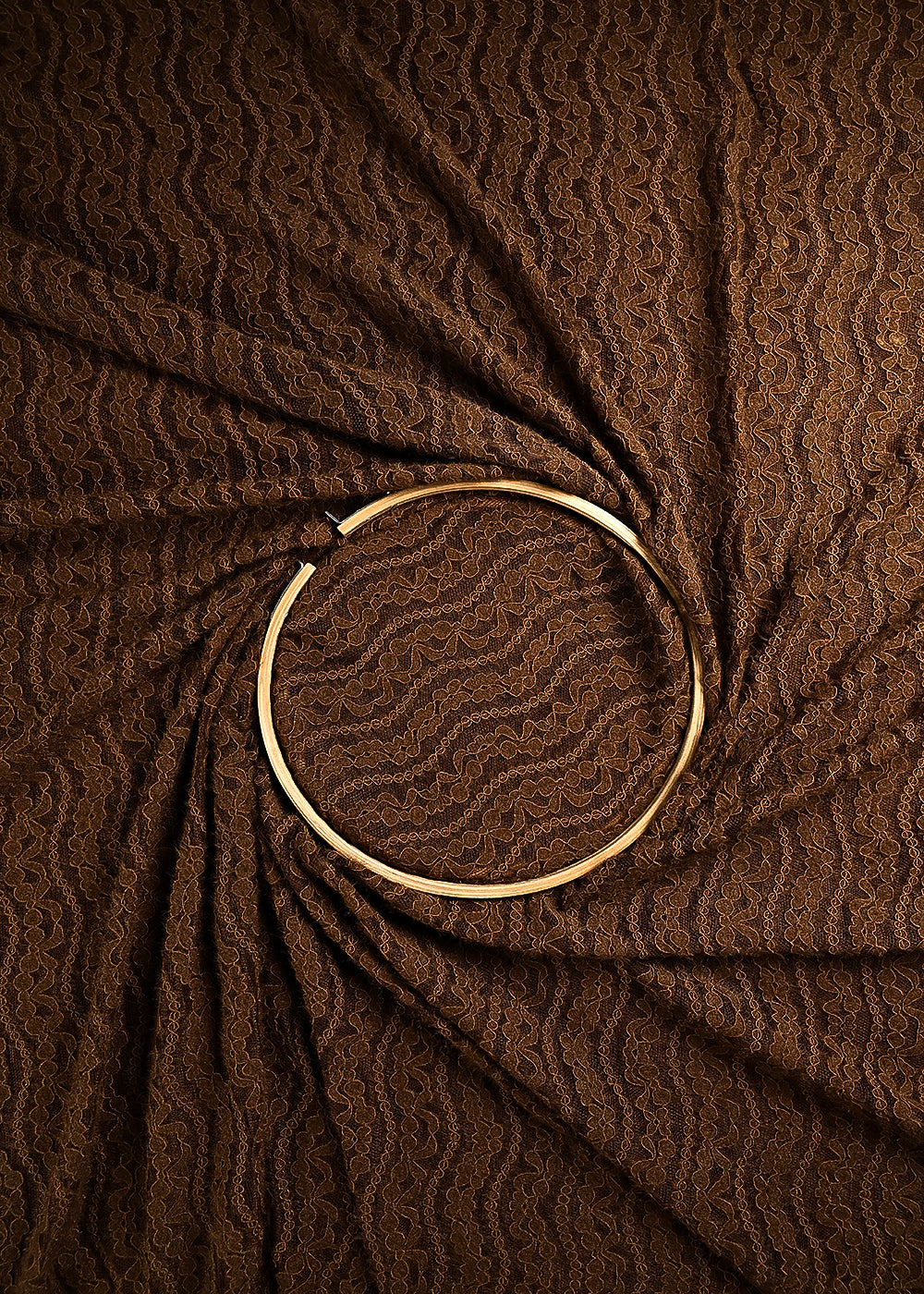
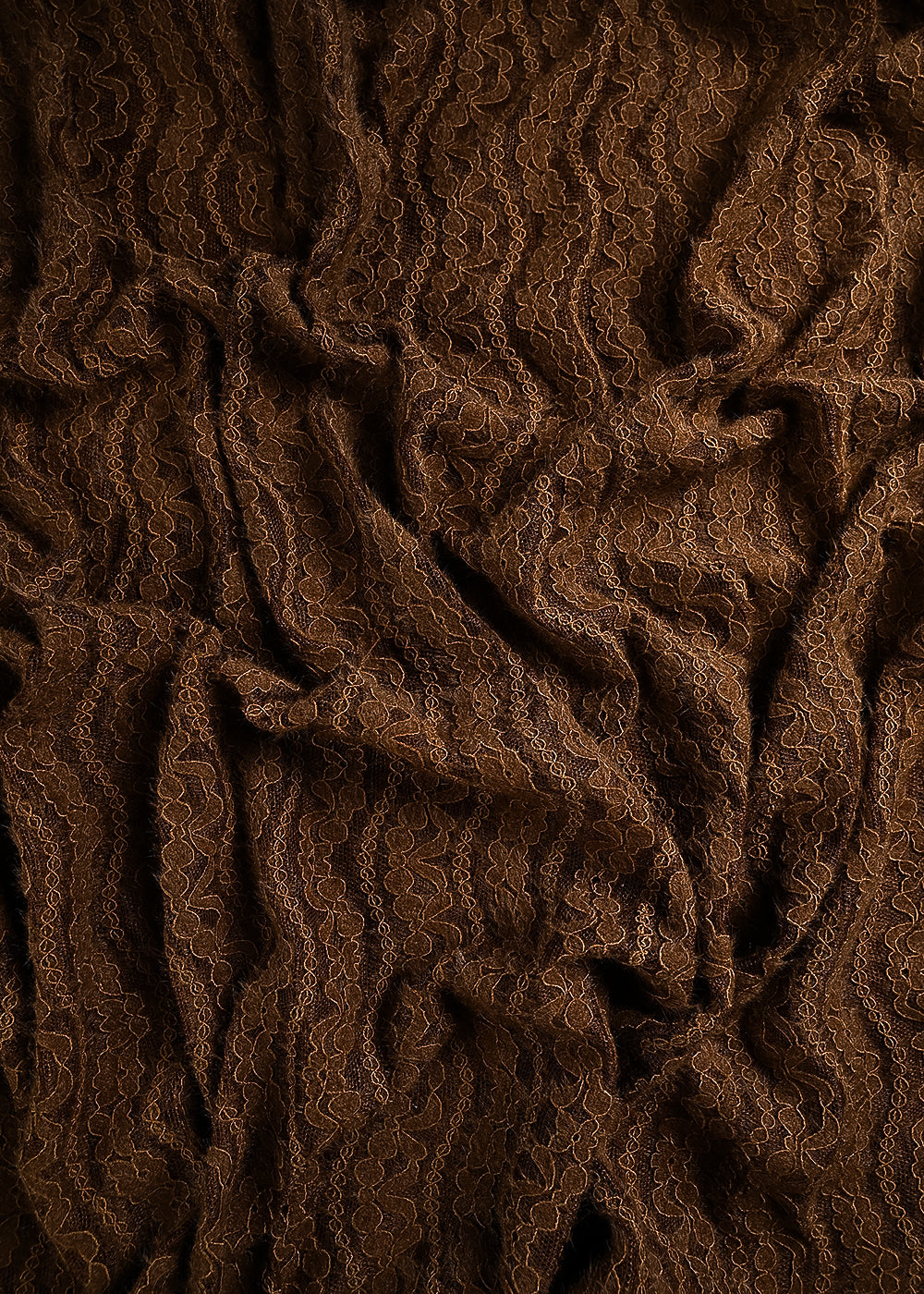
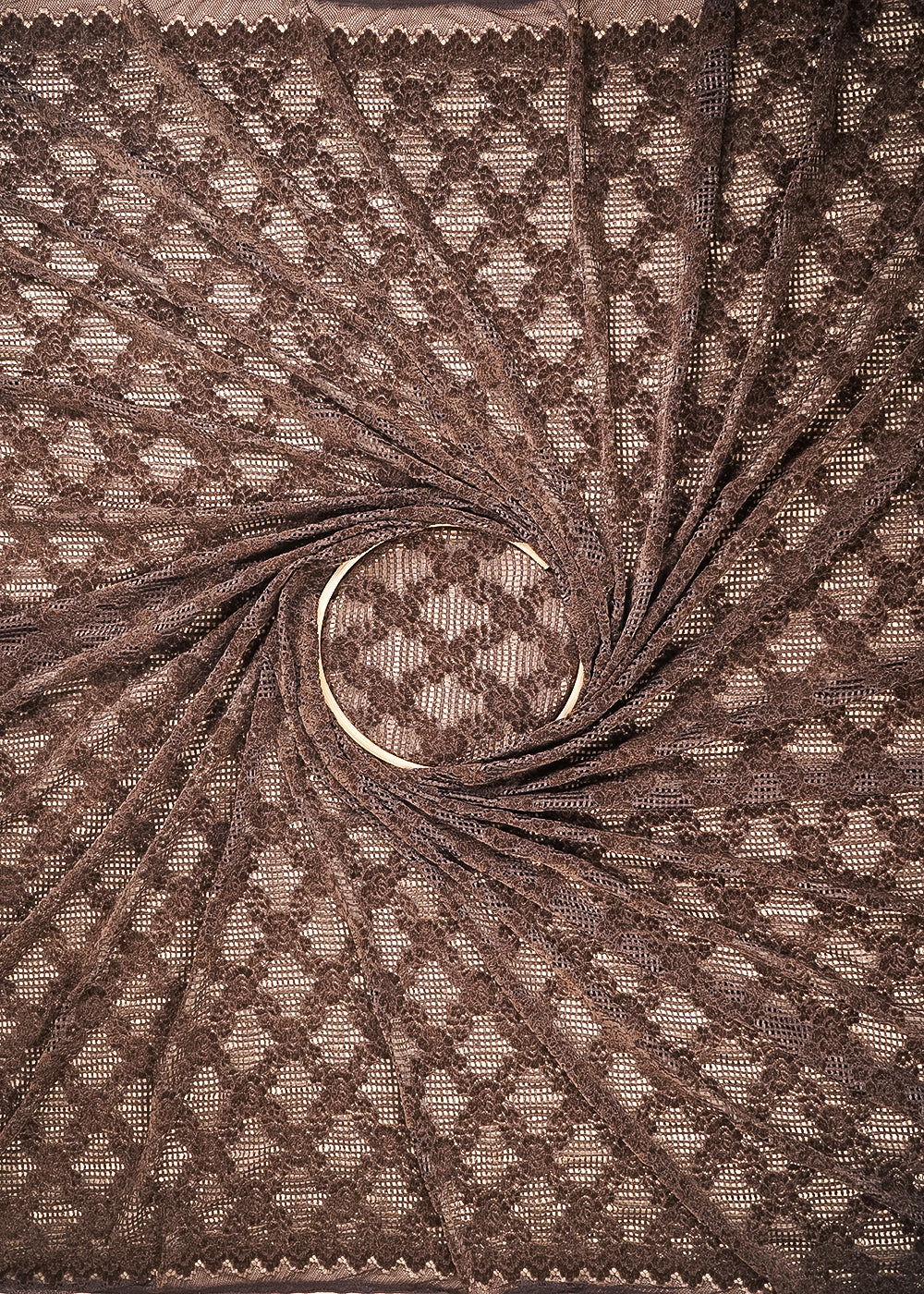


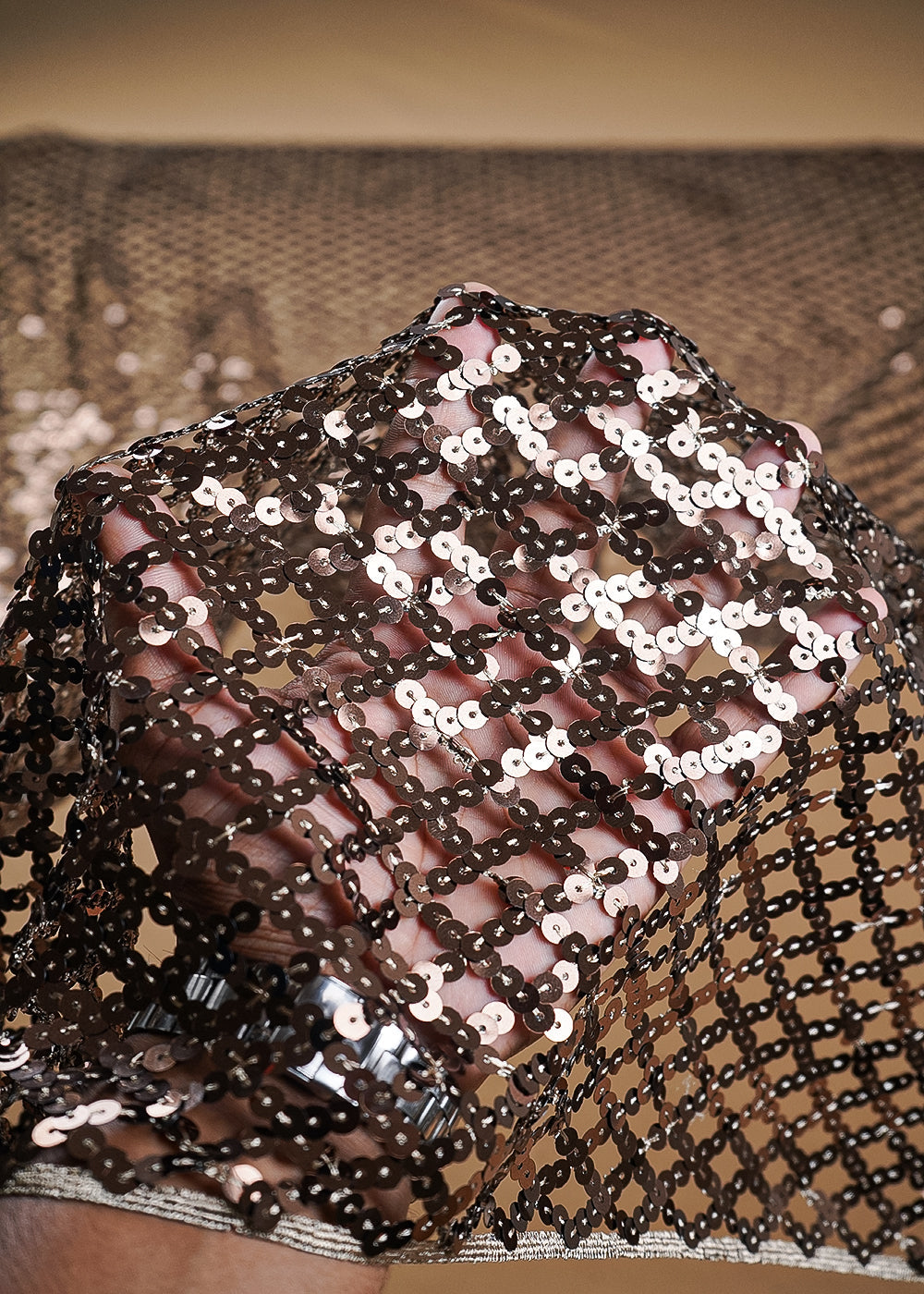
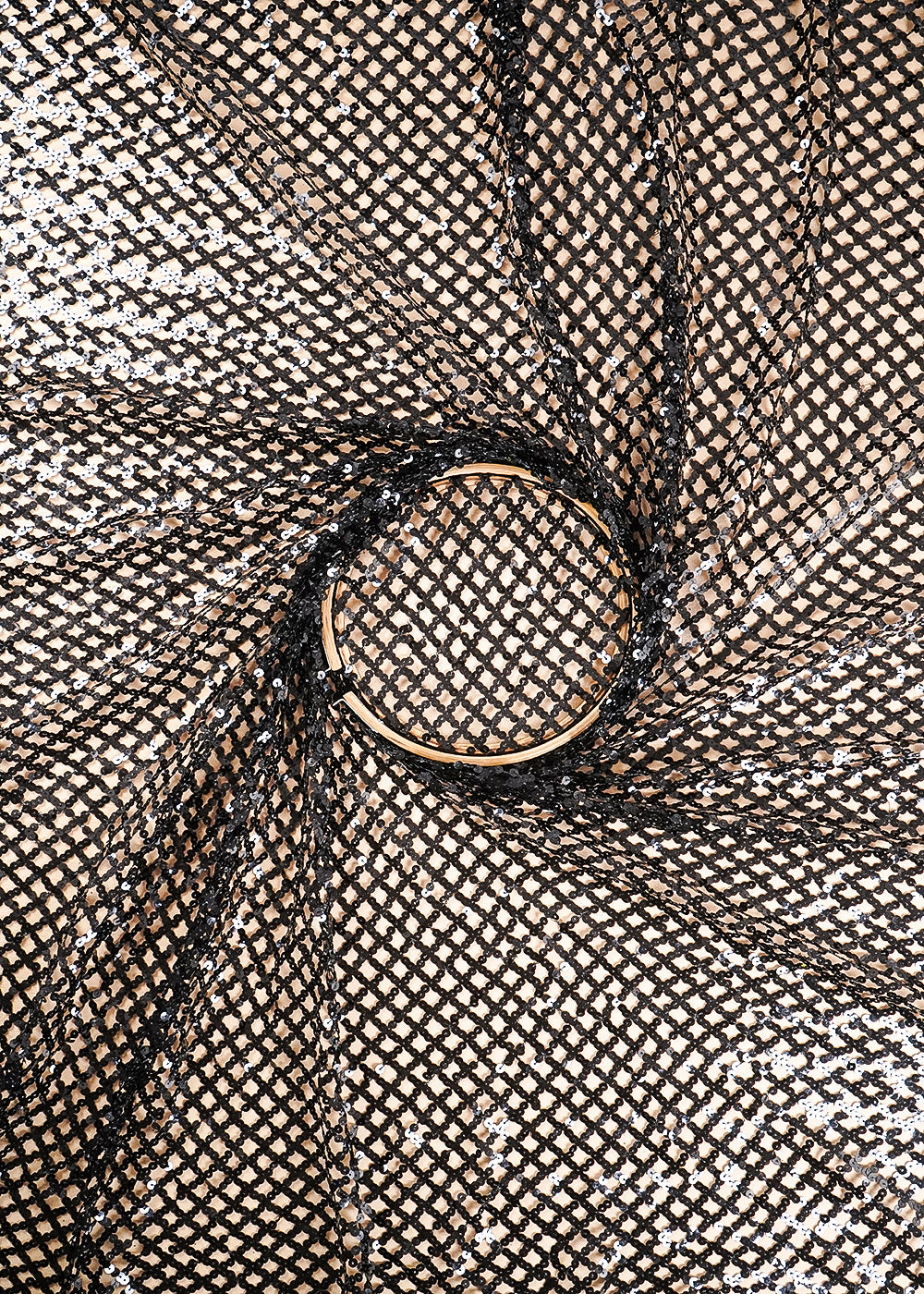
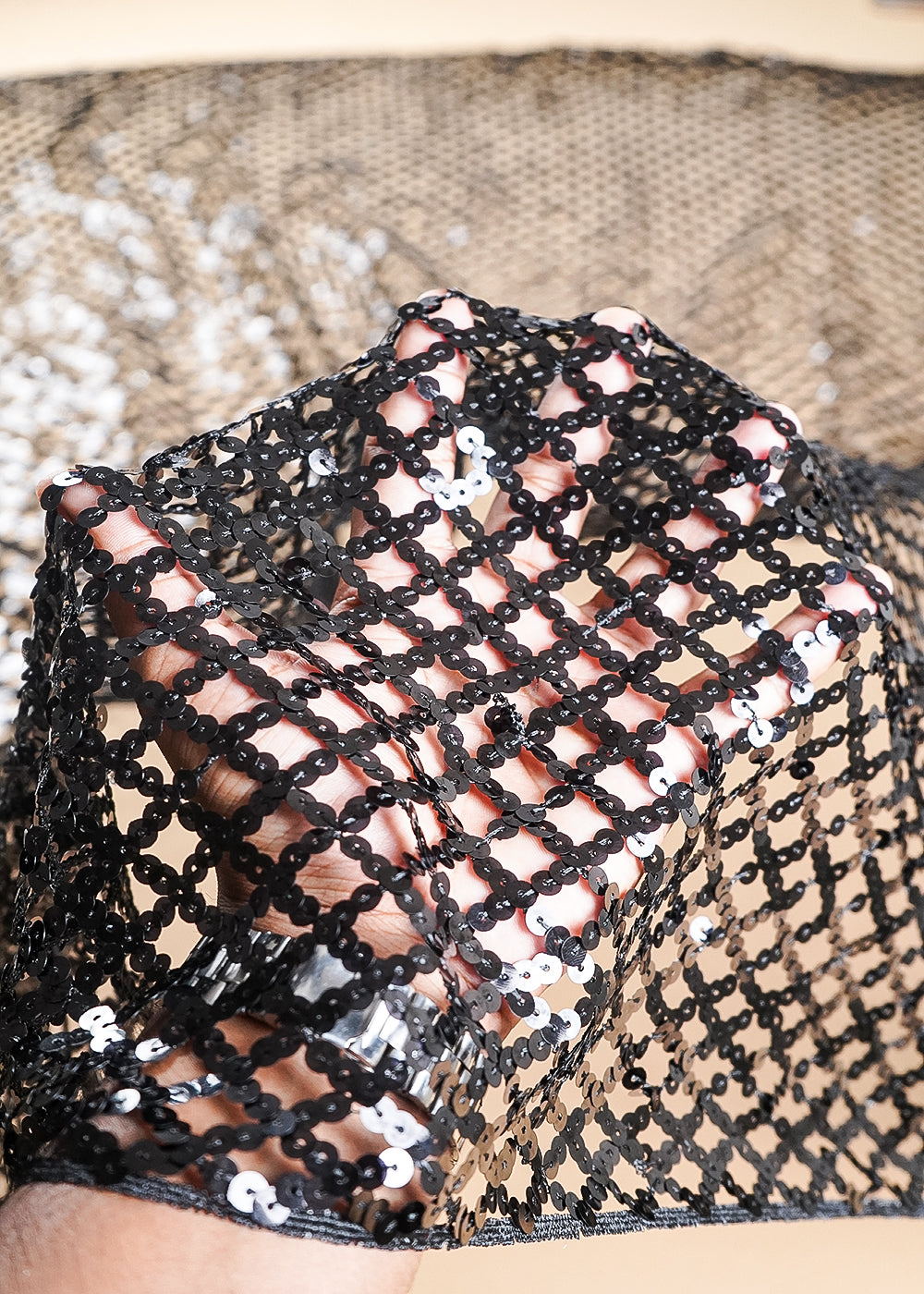
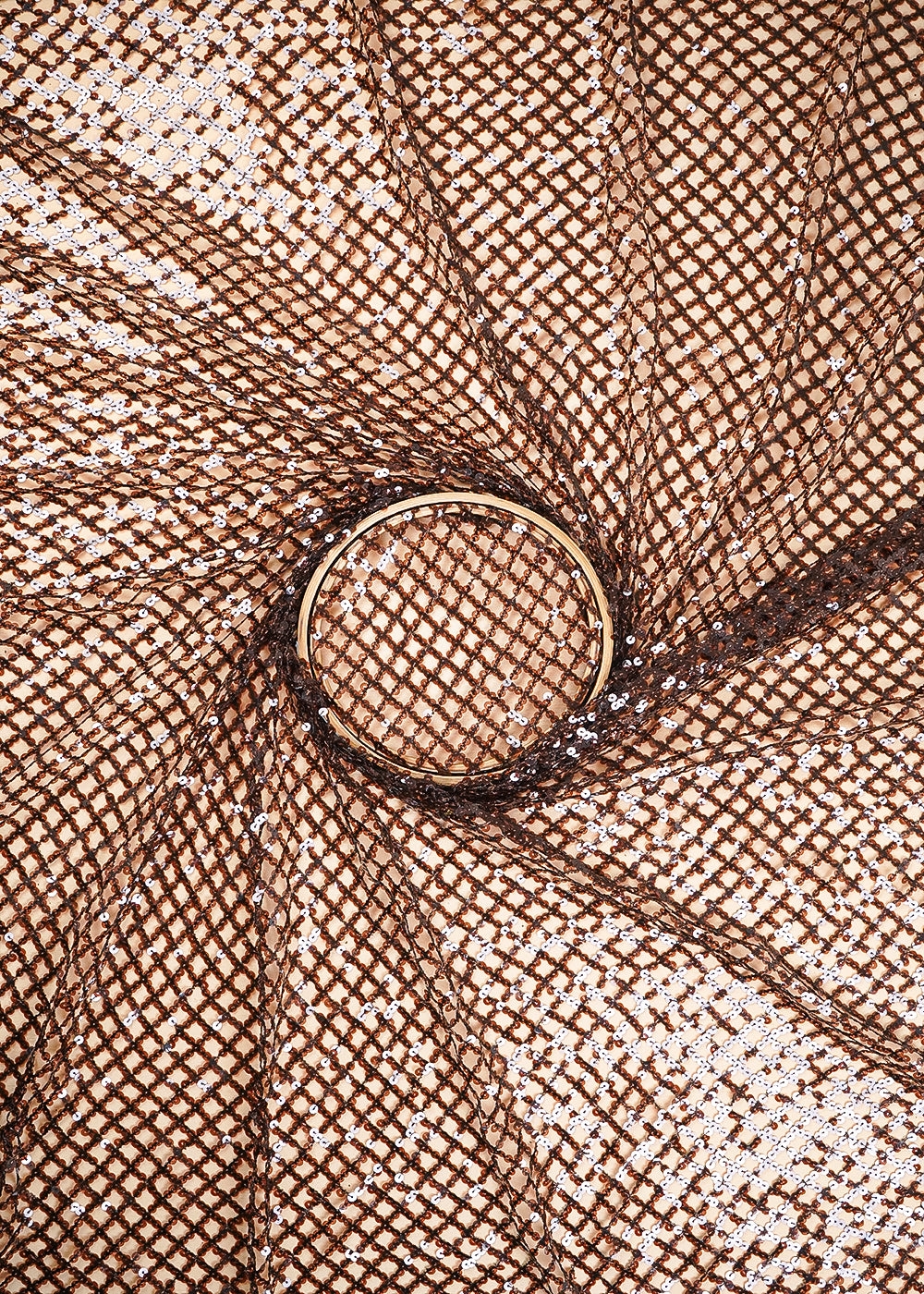
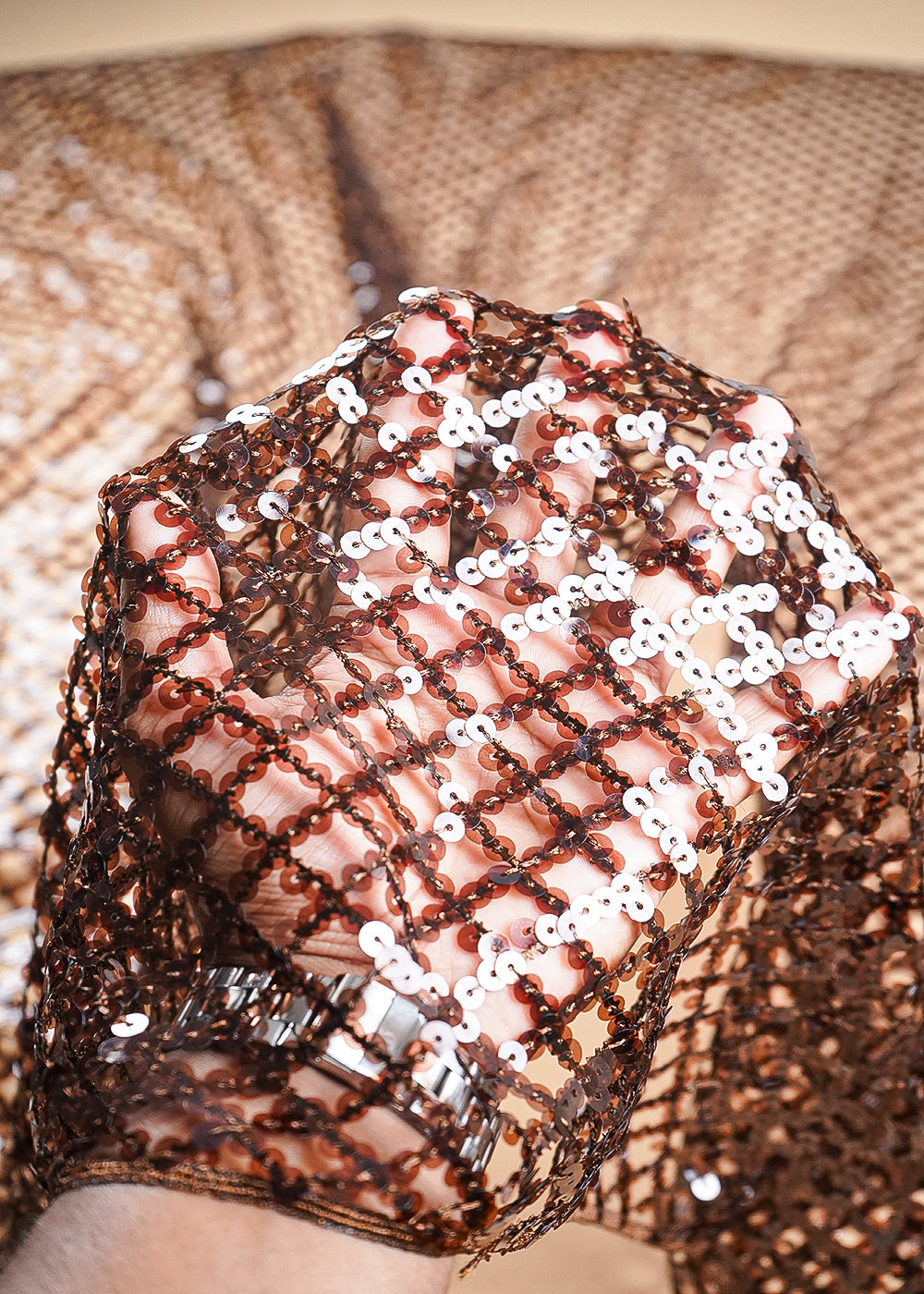
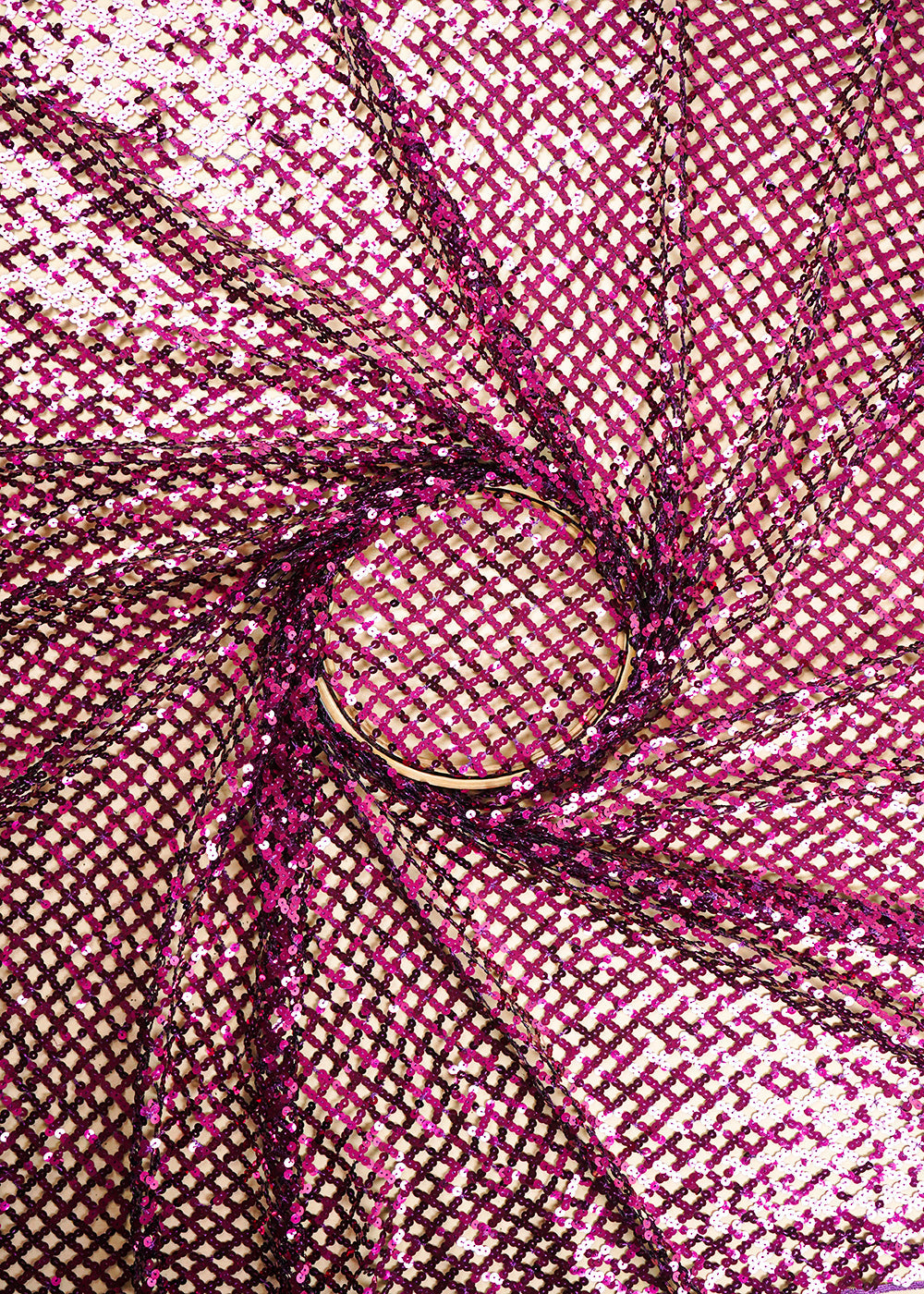
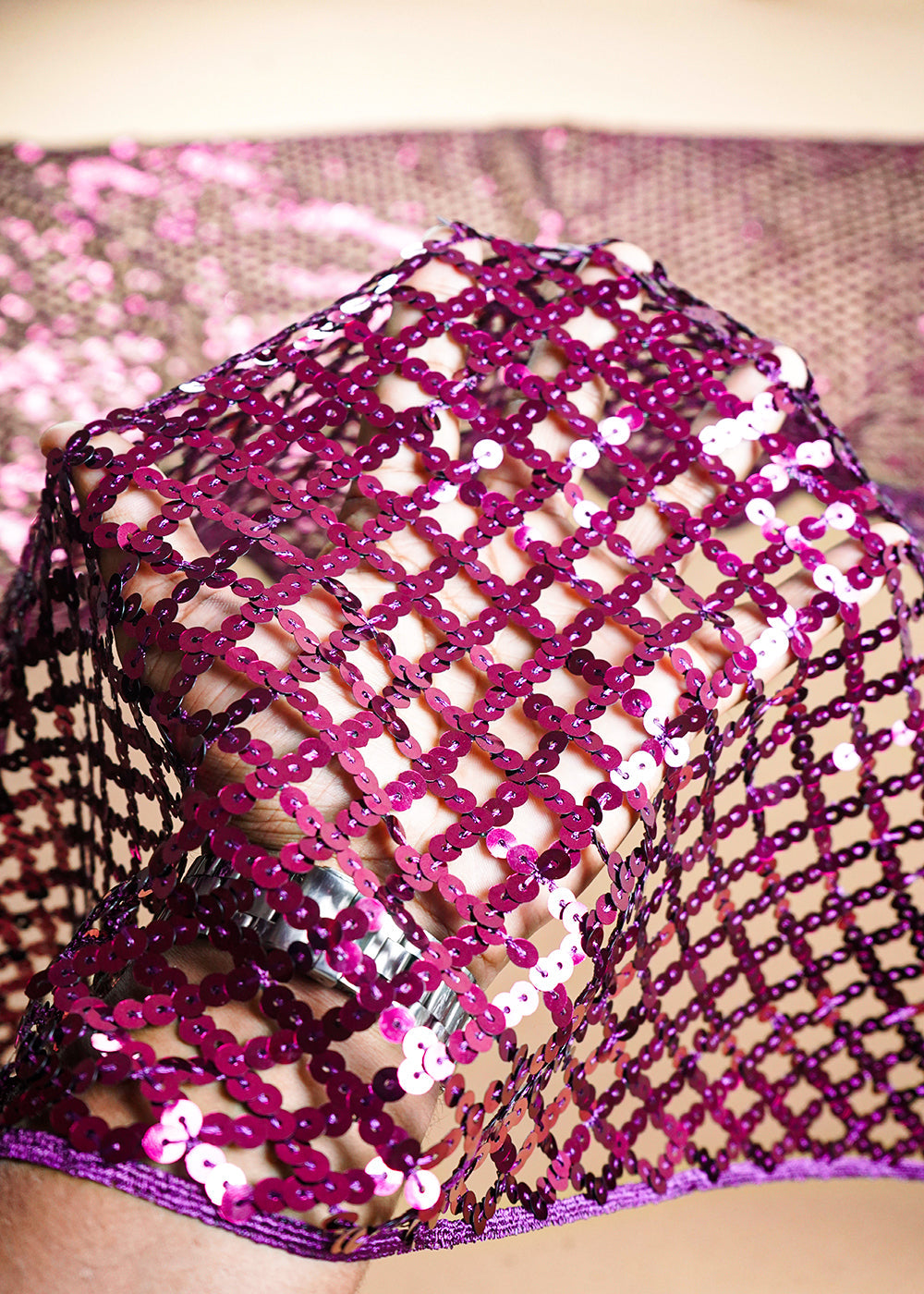
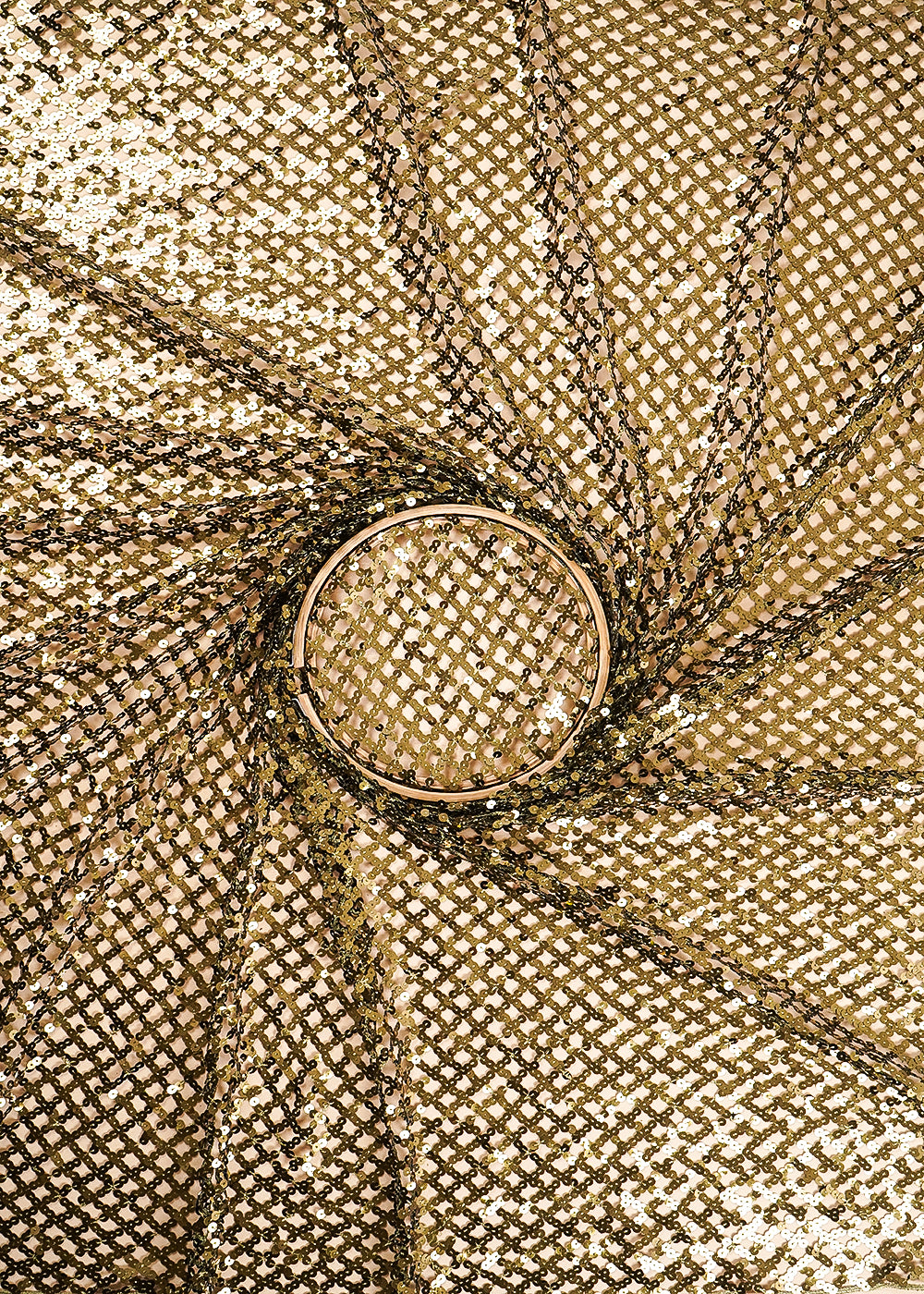
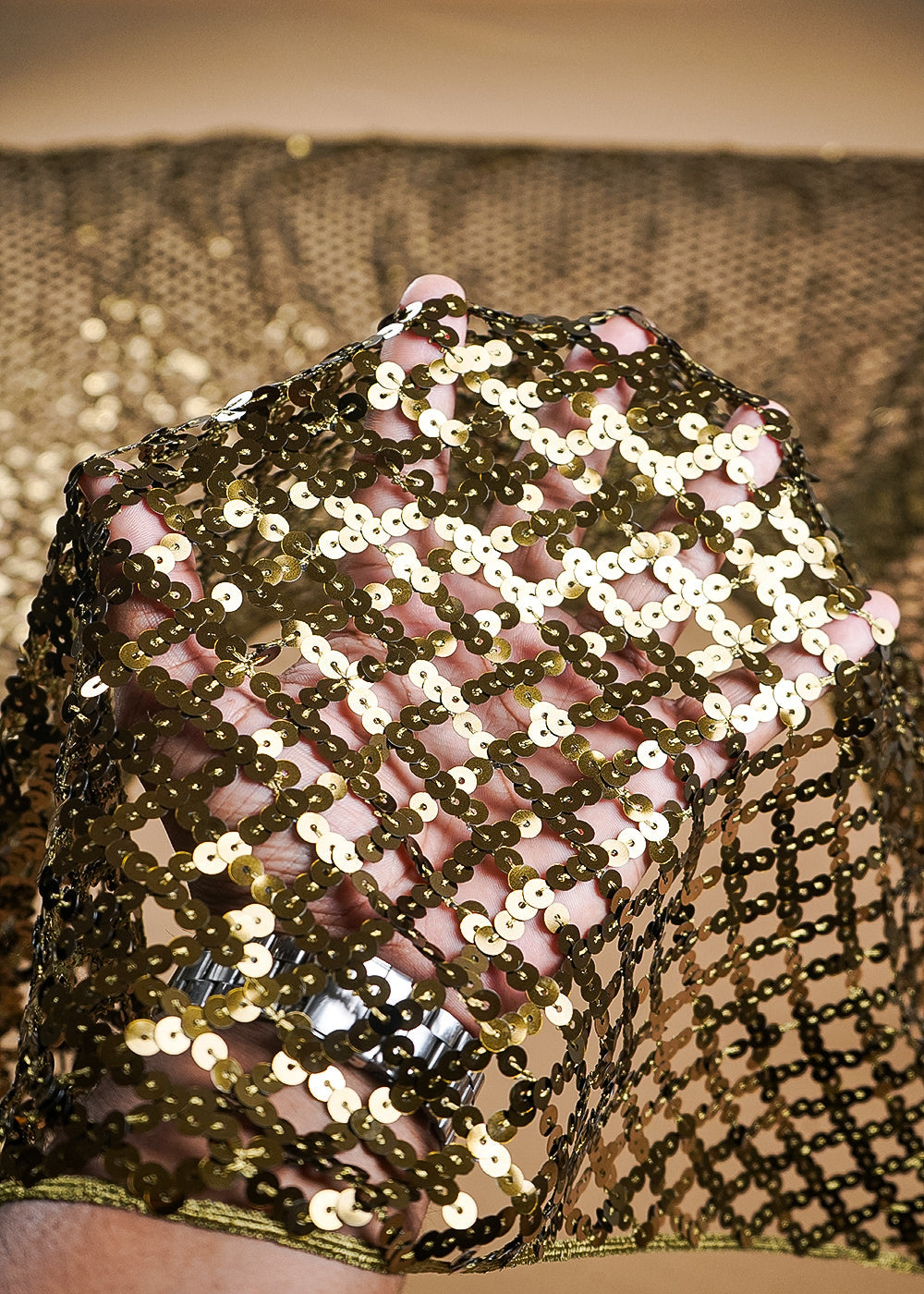
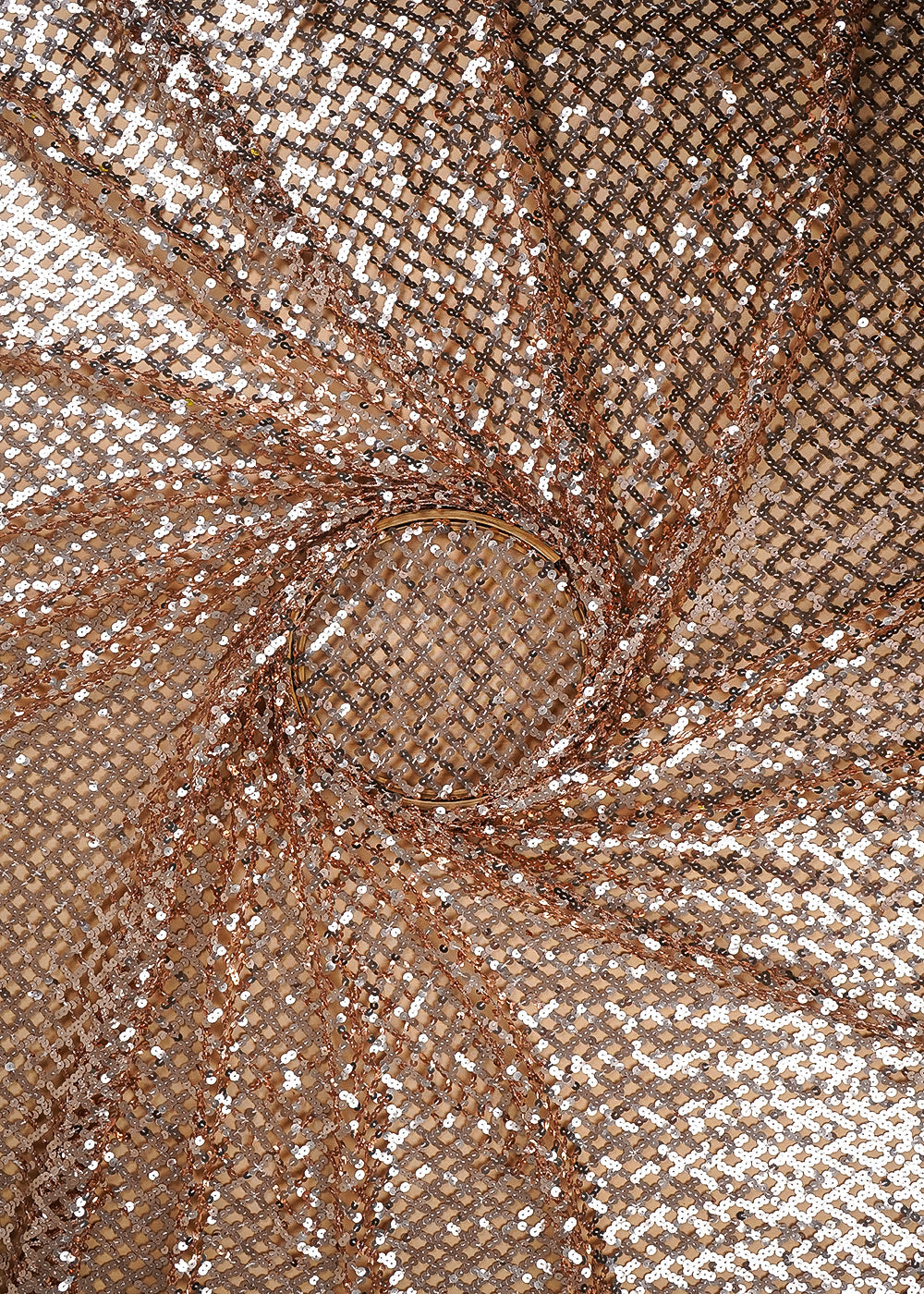
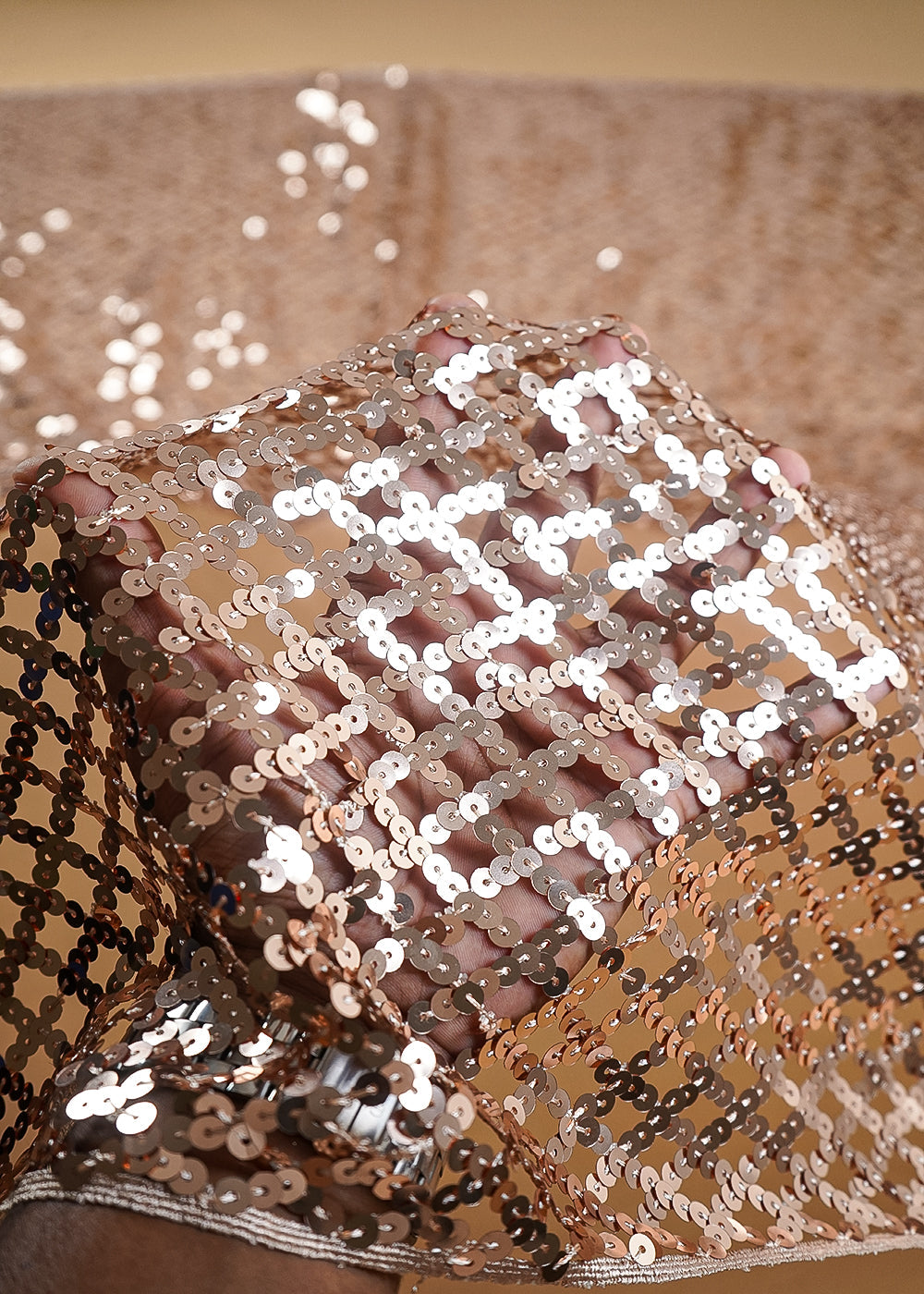
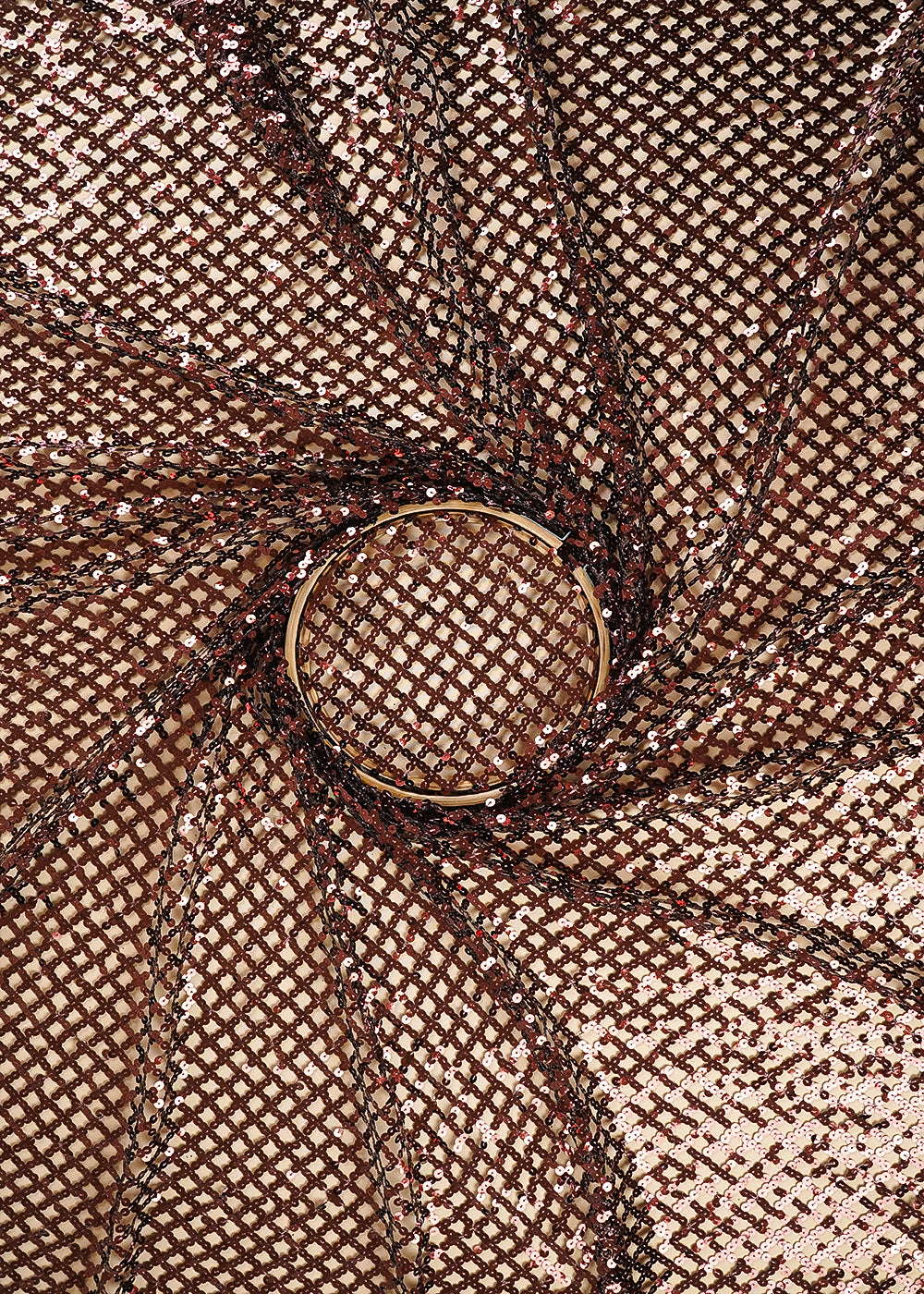
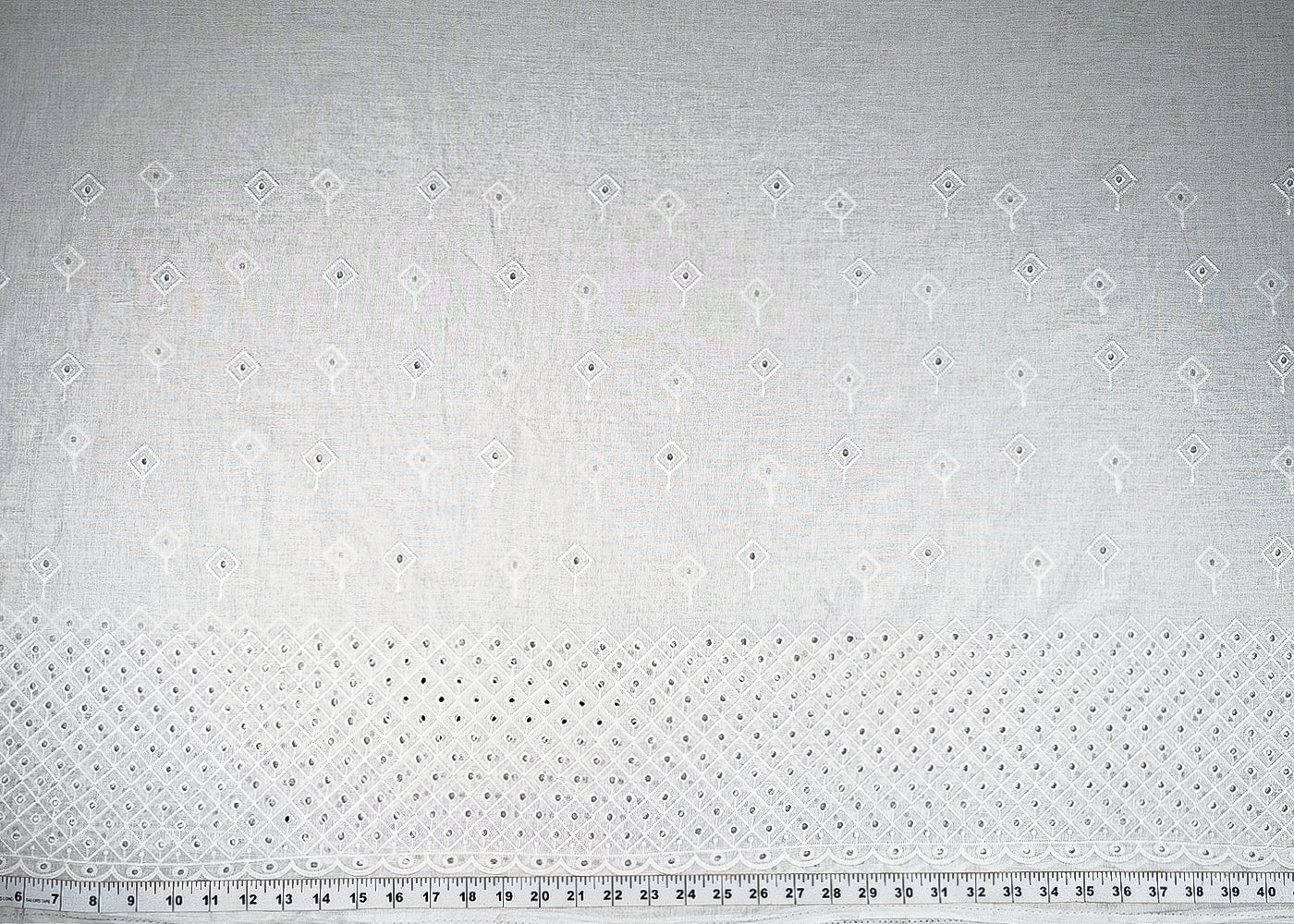
Cutwork Fabric: The Summer Festive Buyer's Guide
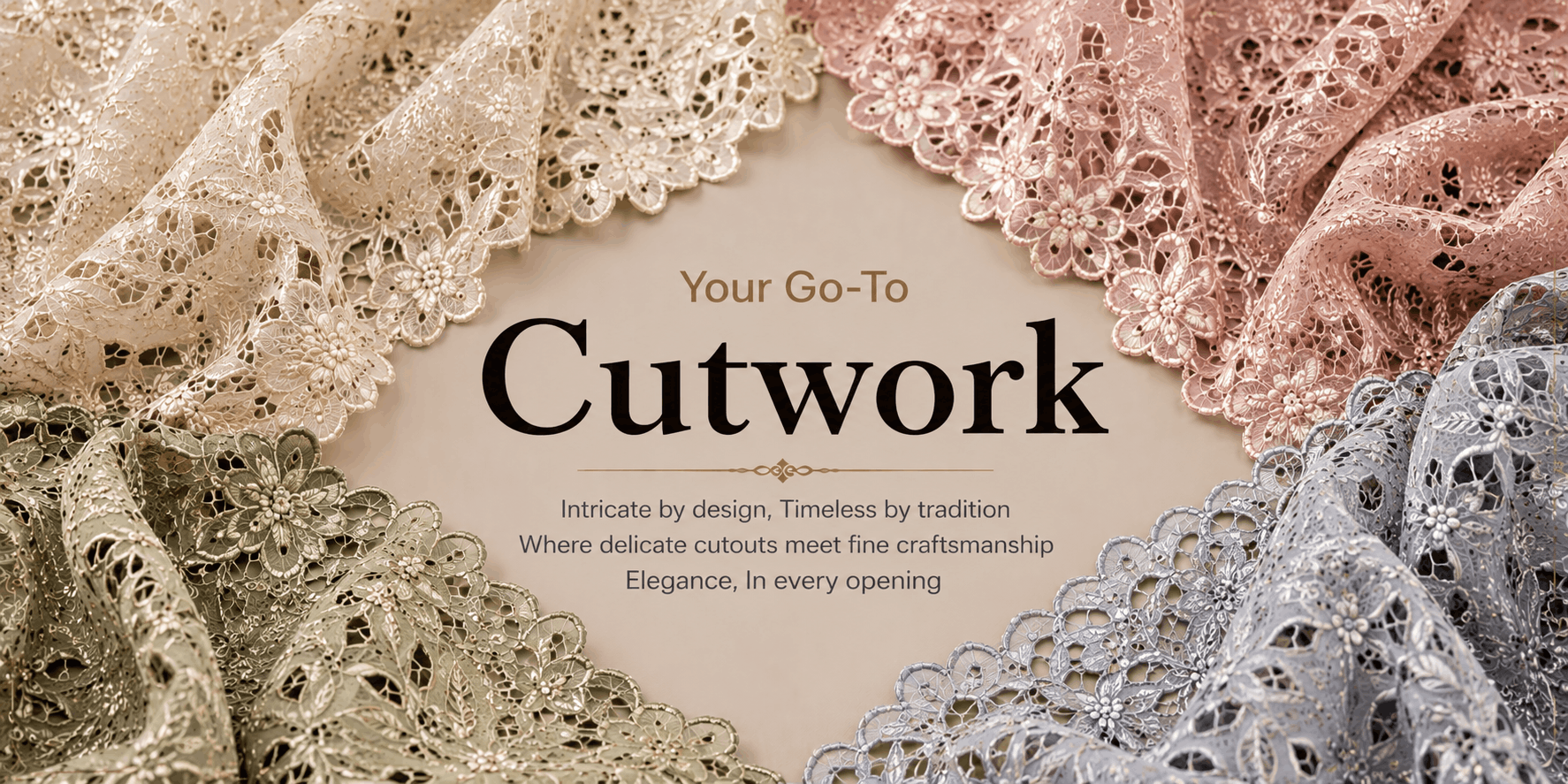
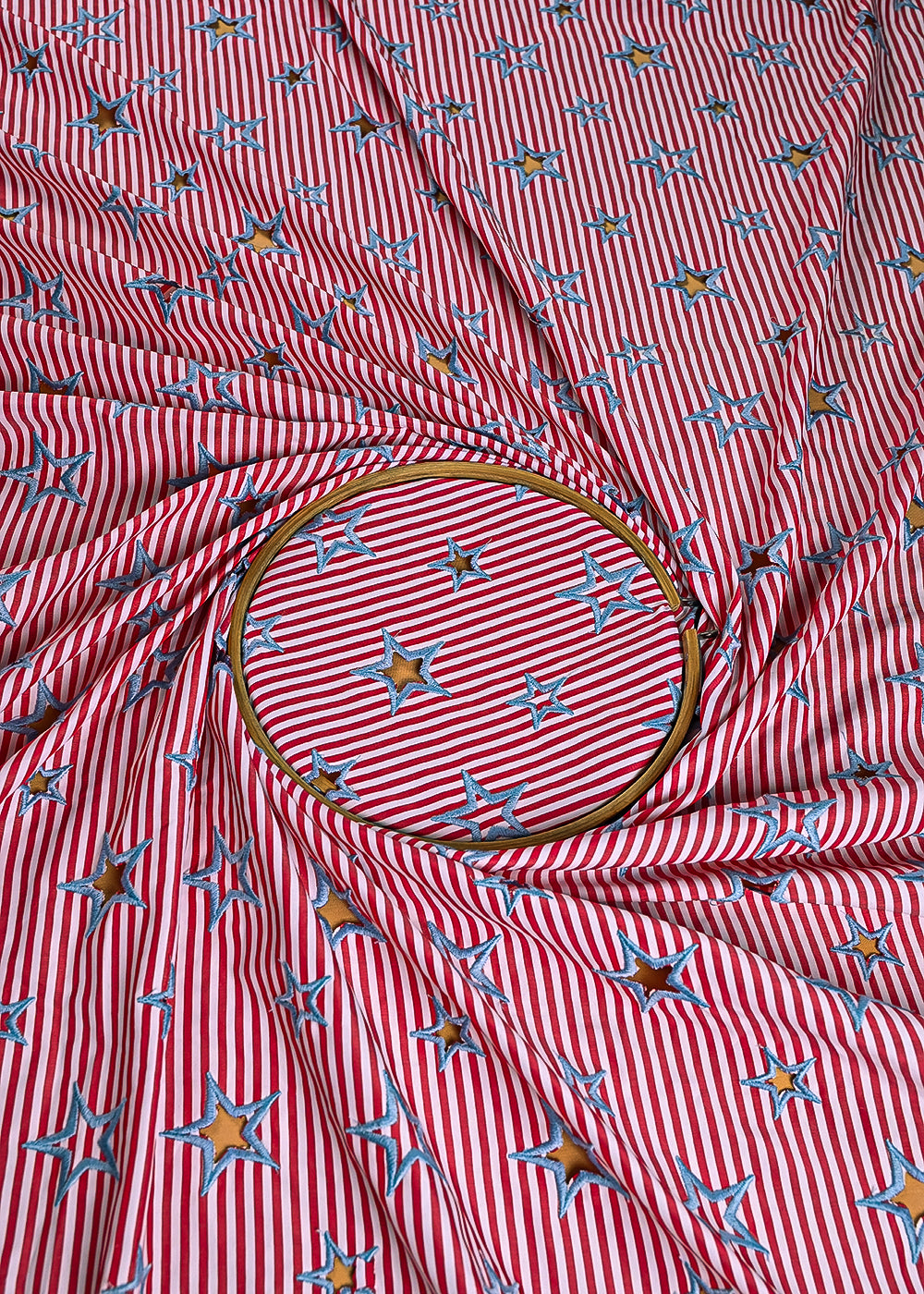
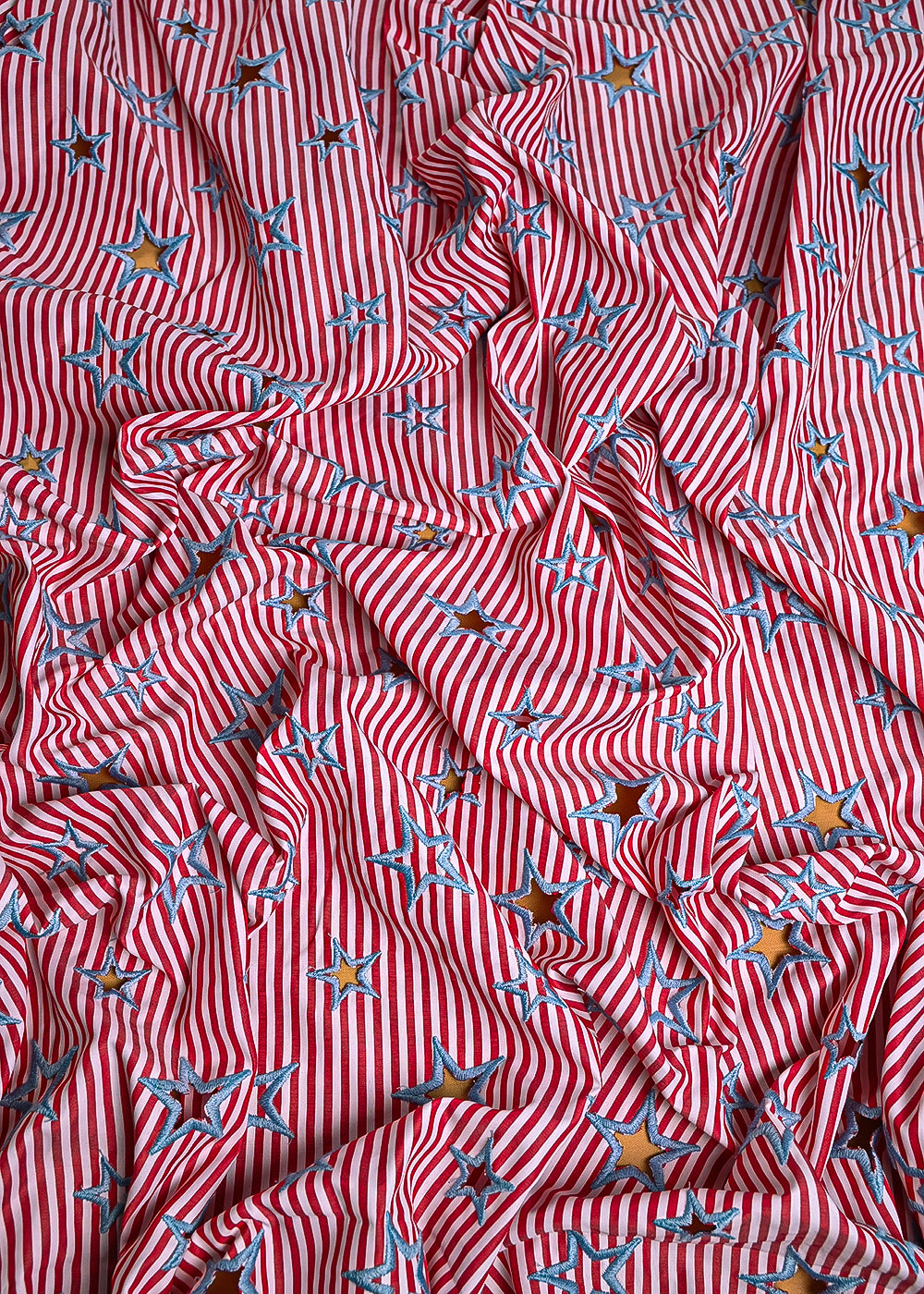
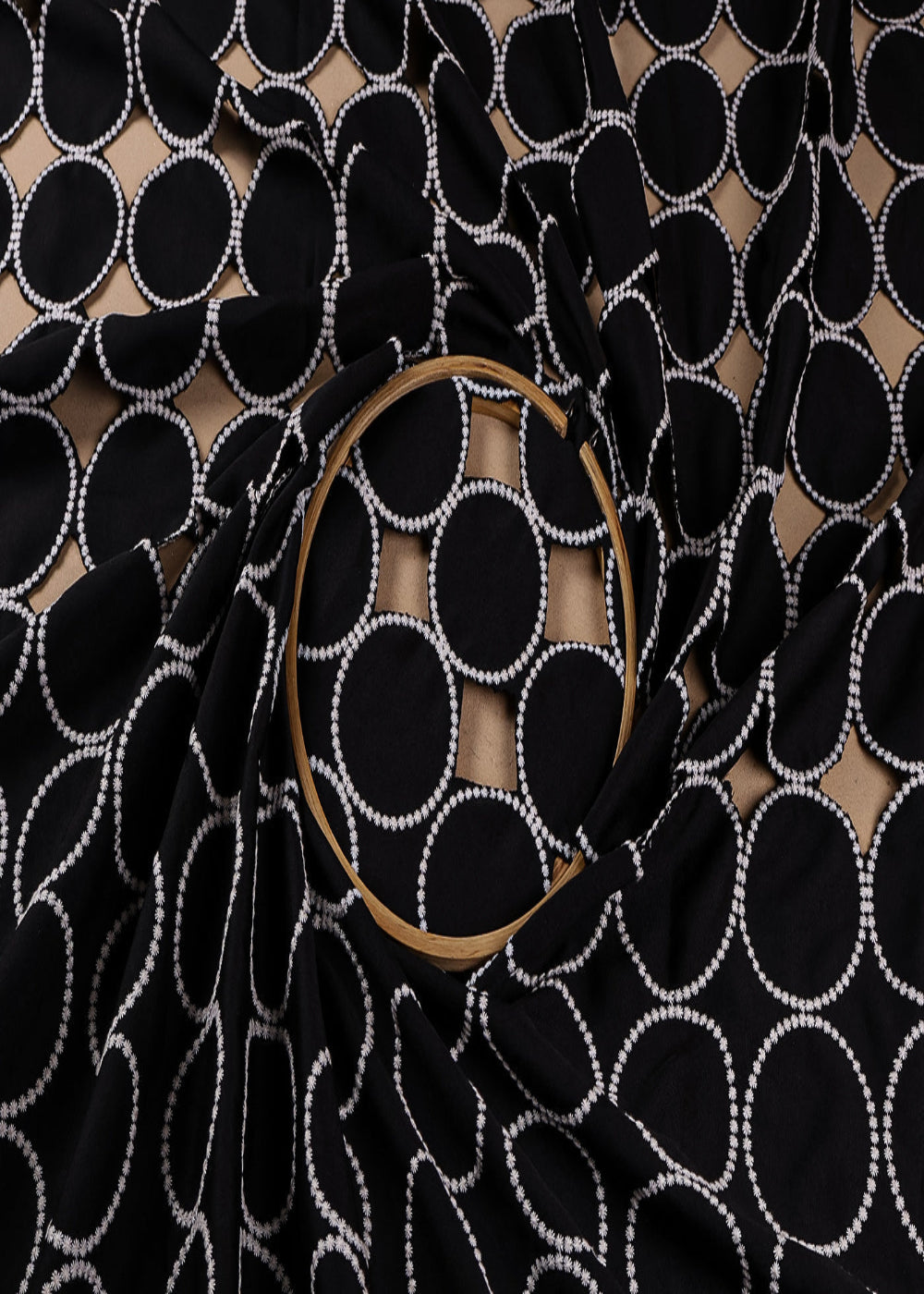
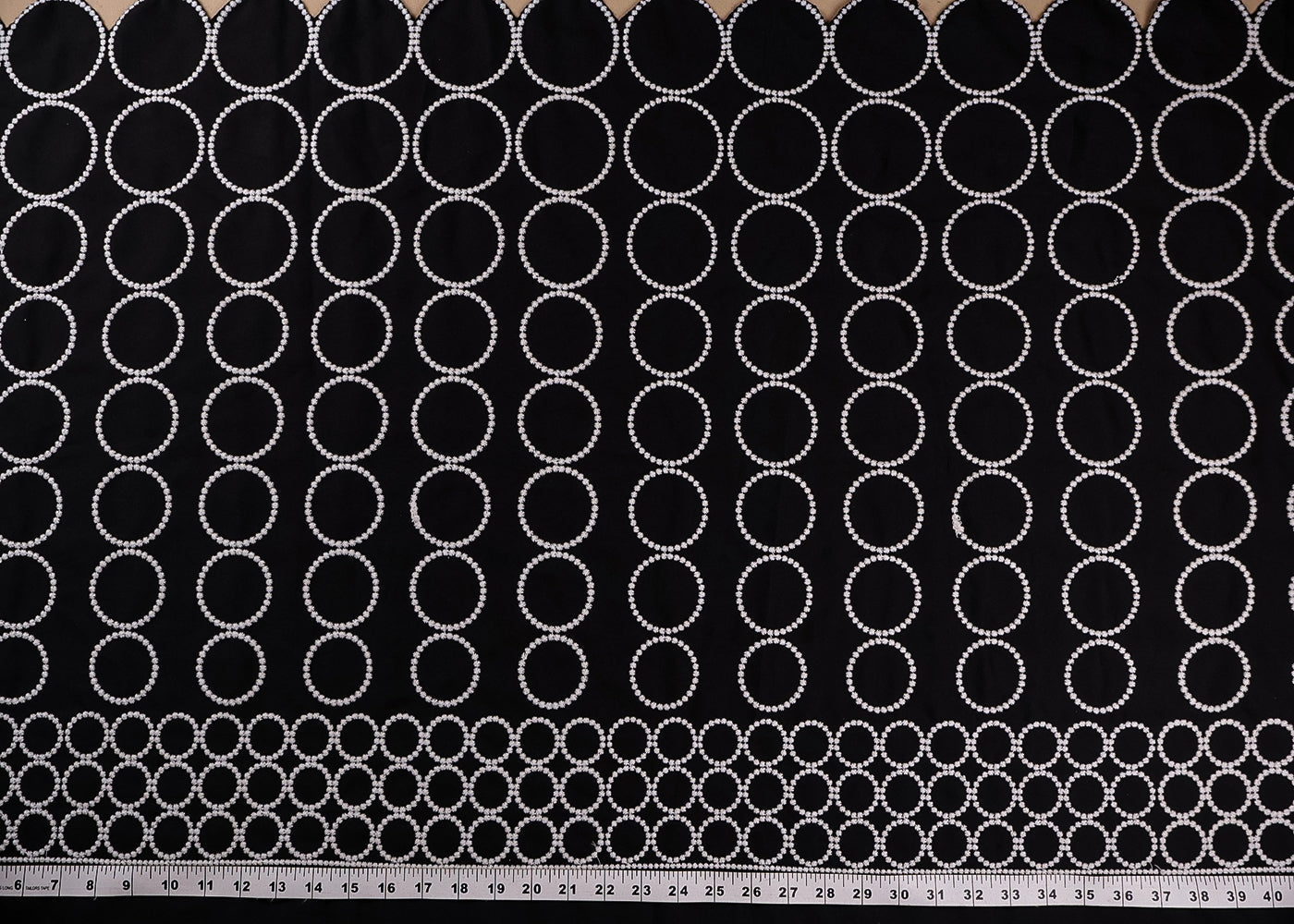
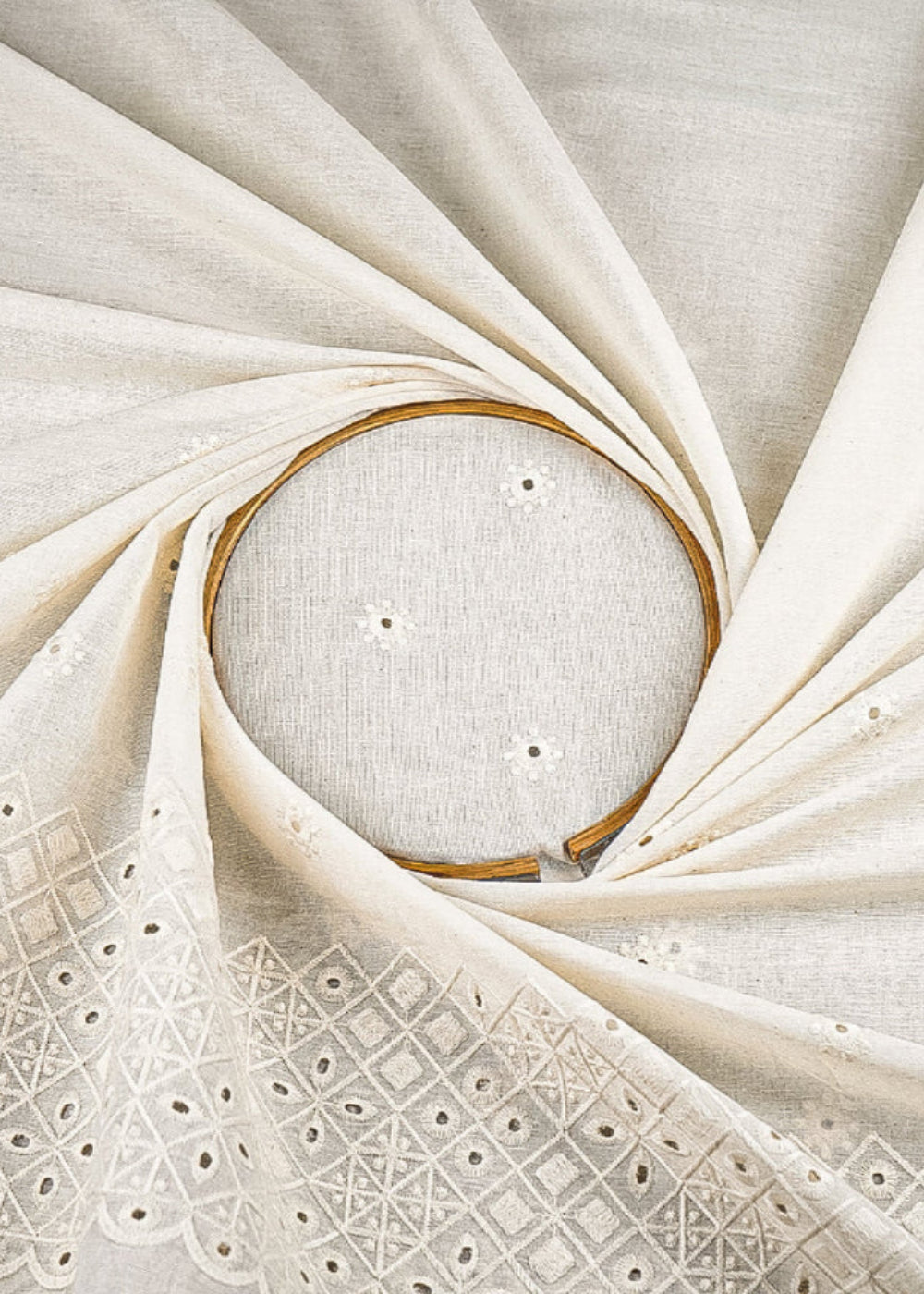
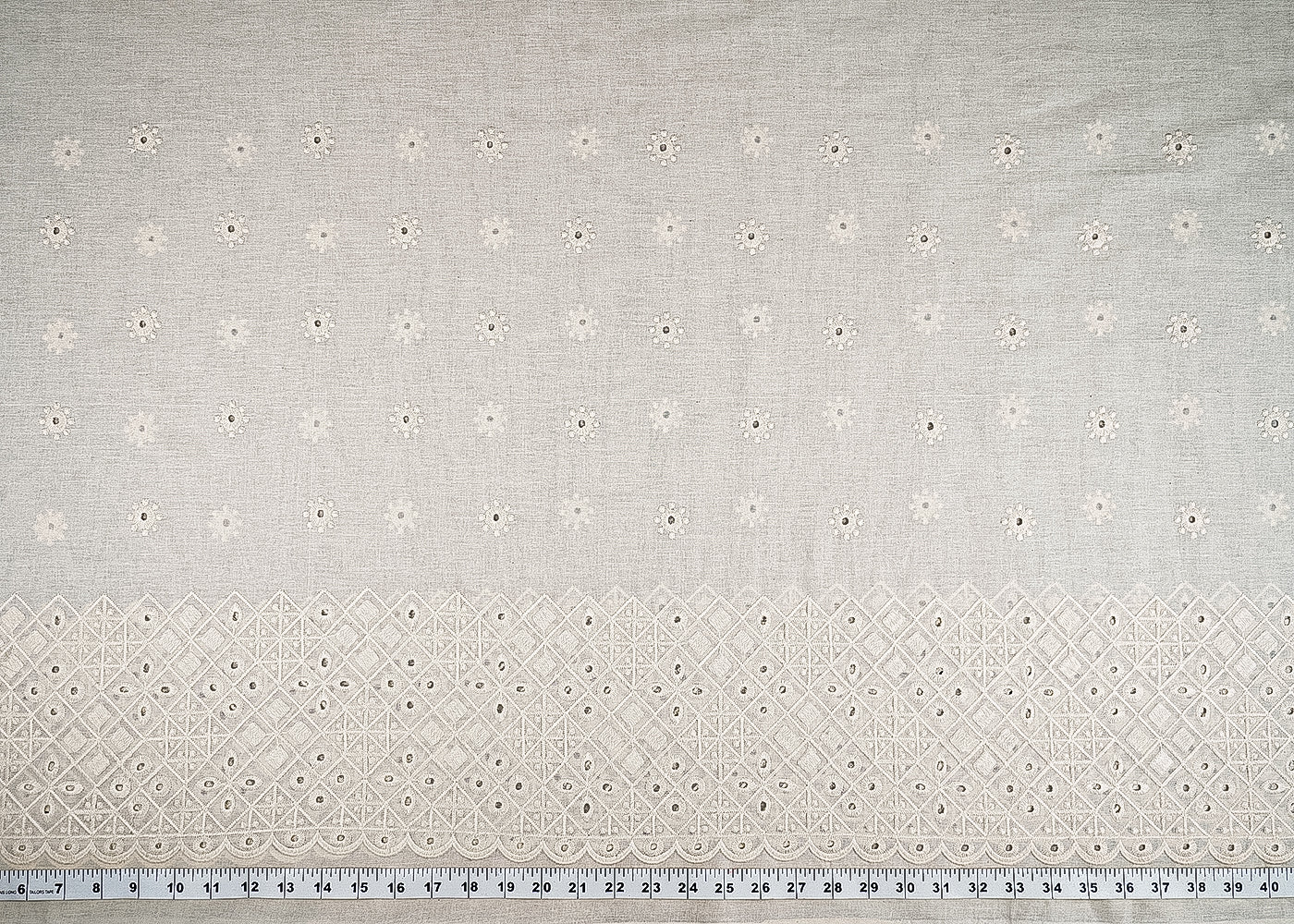
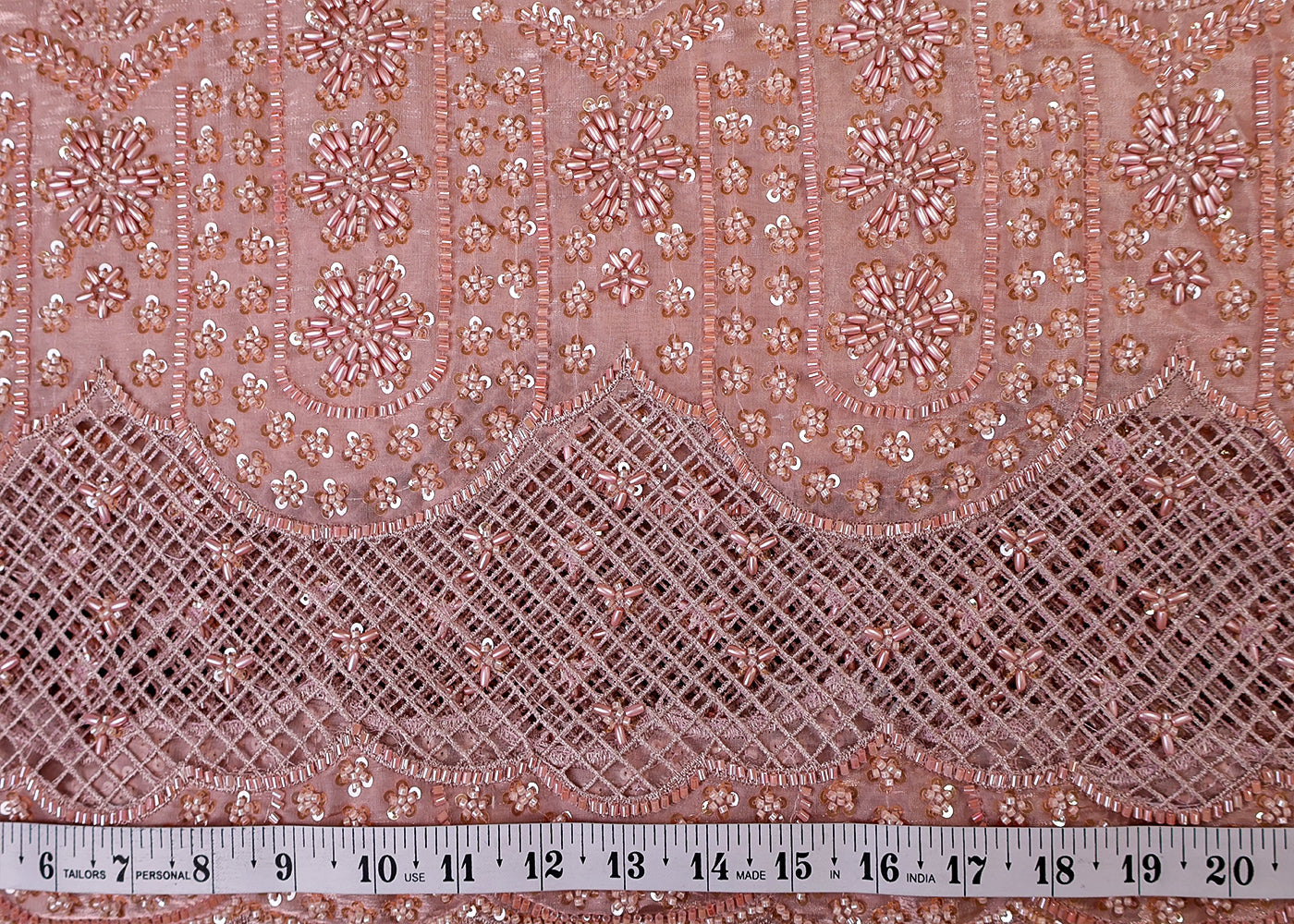
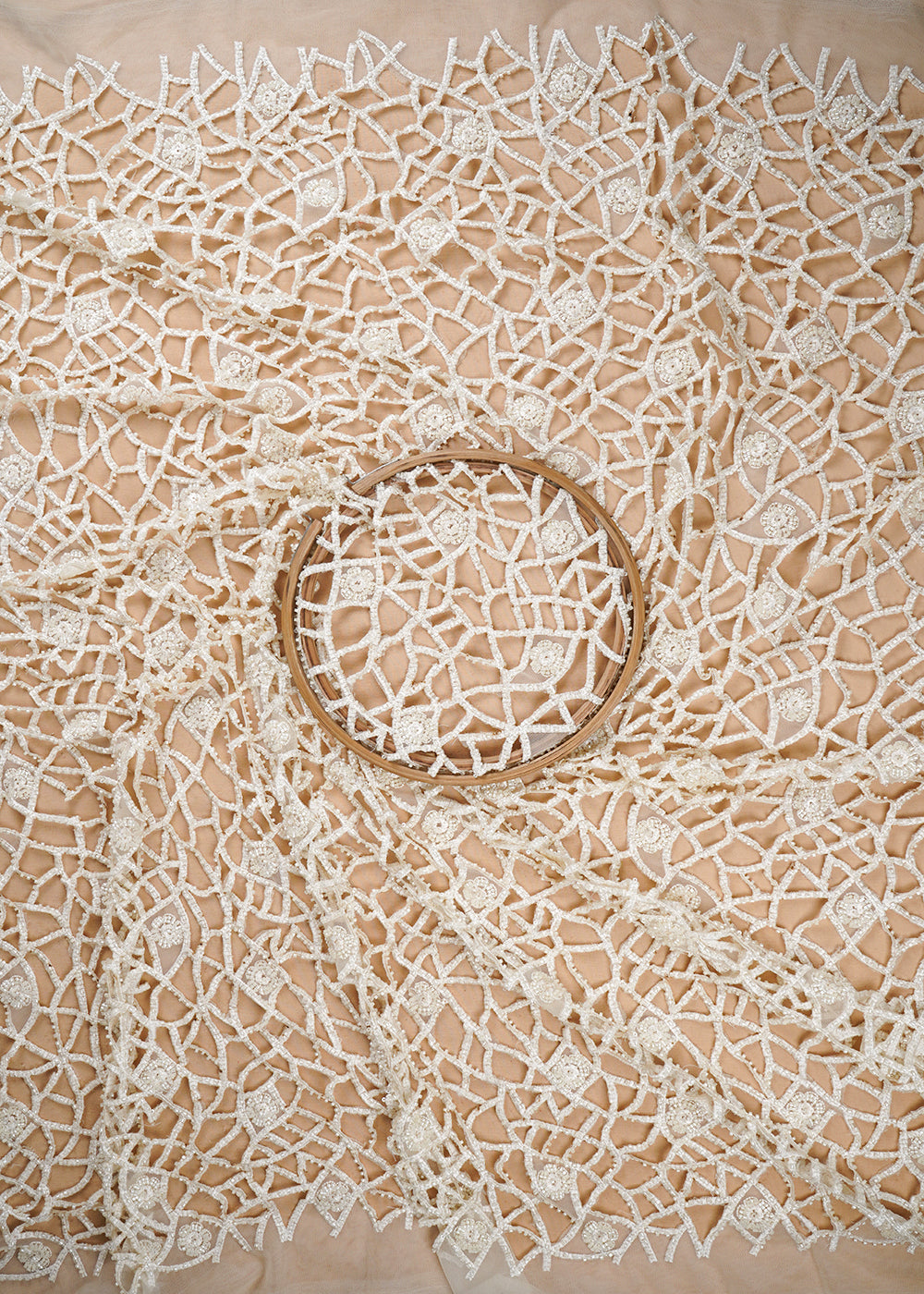
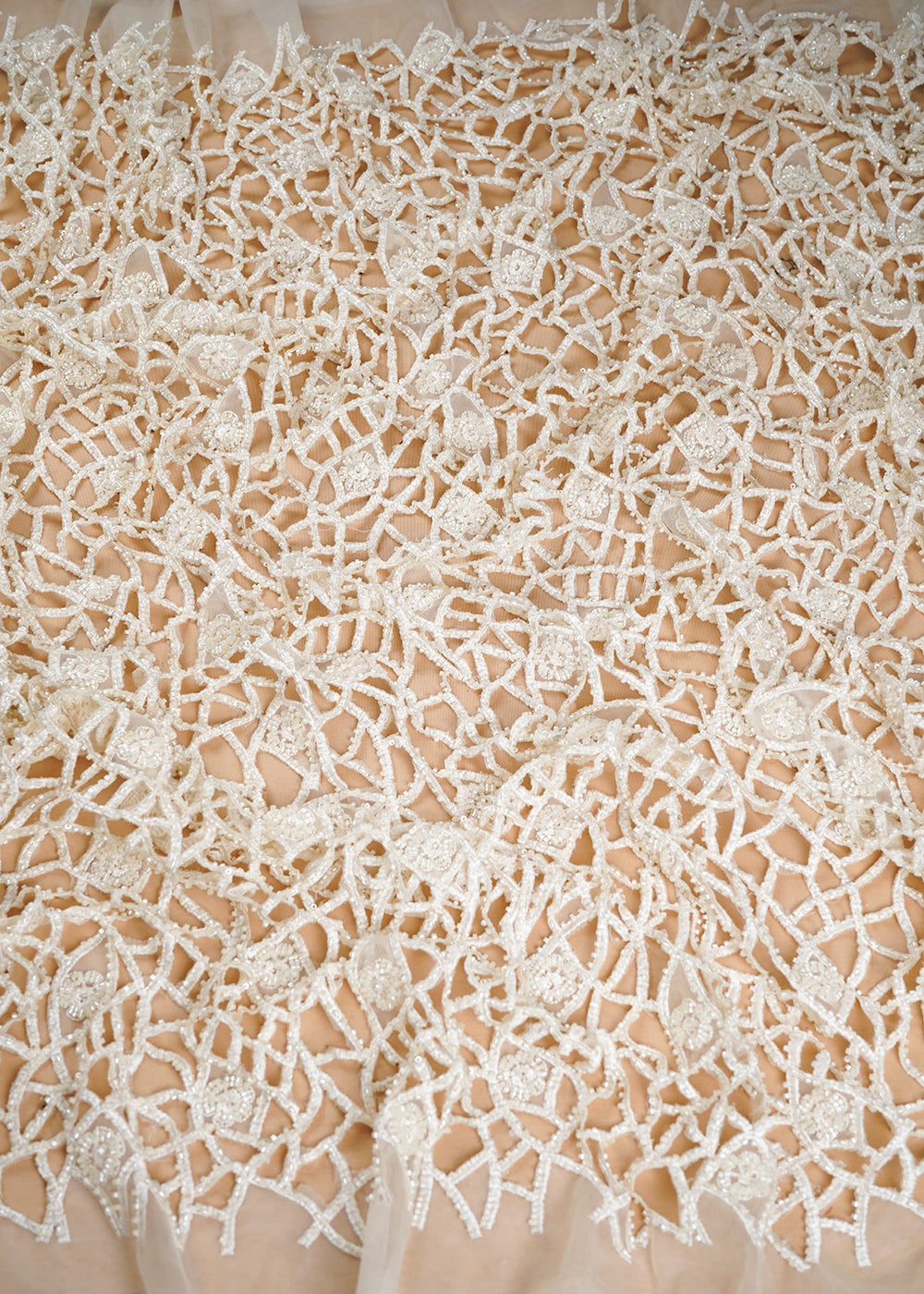
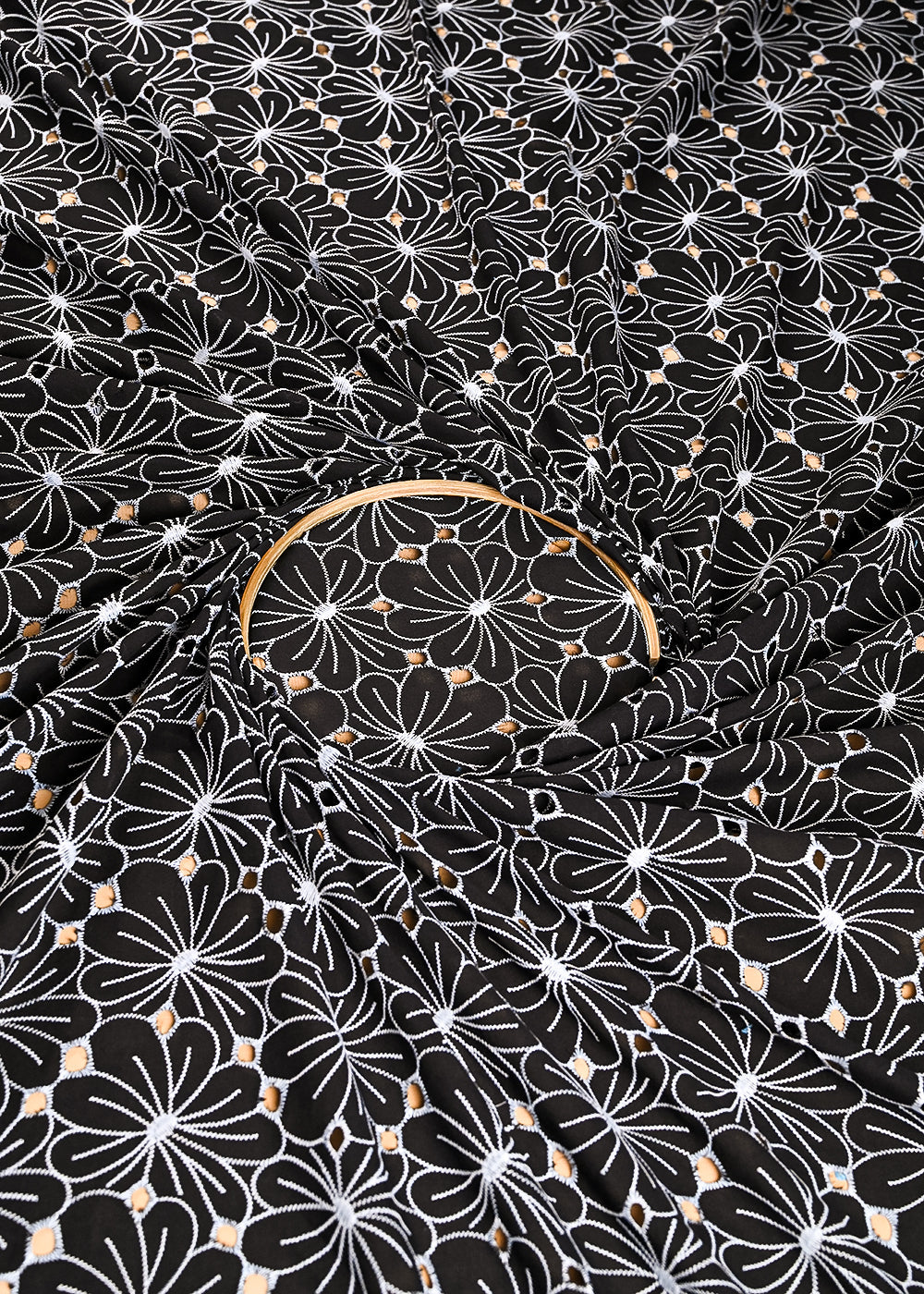
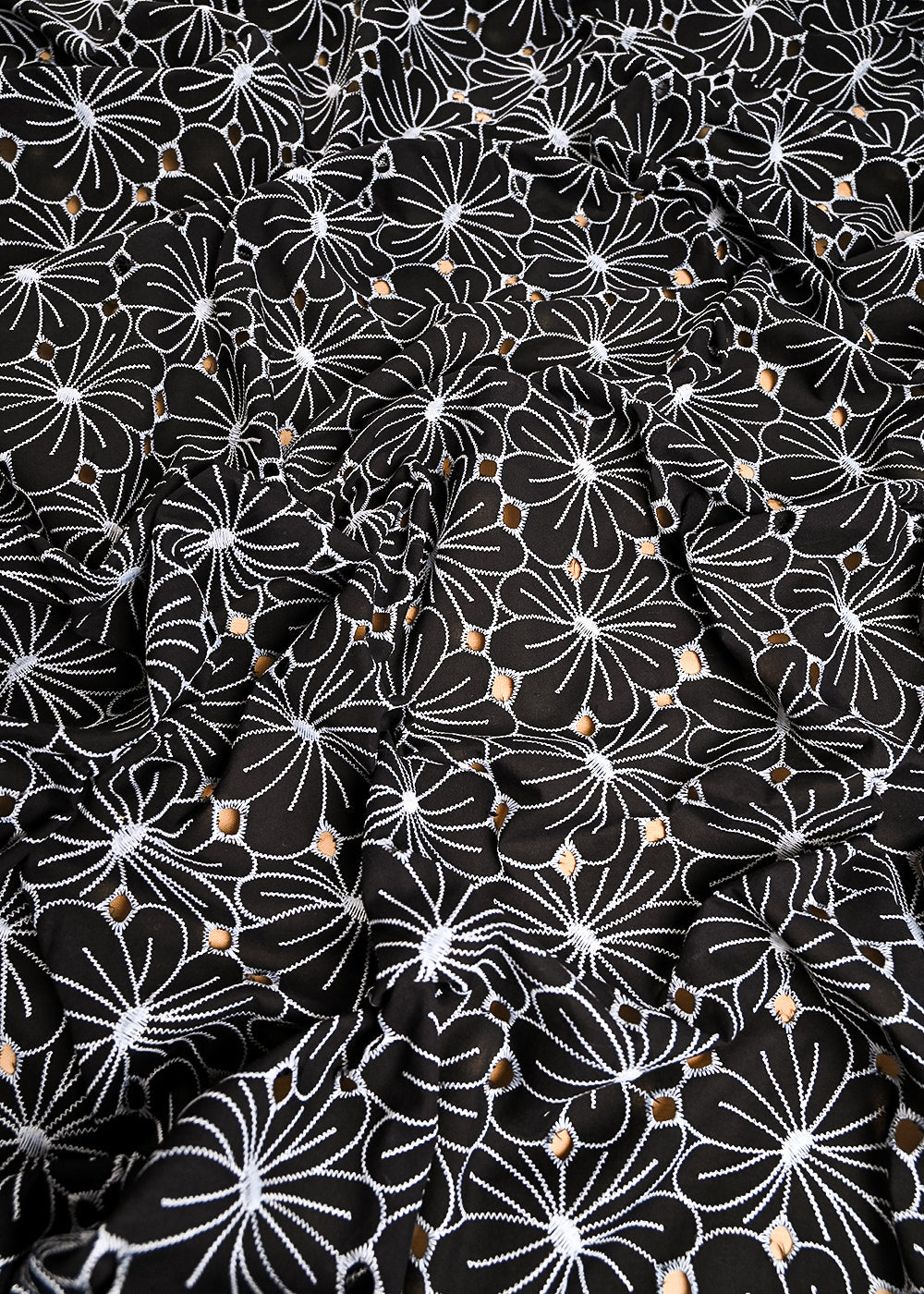
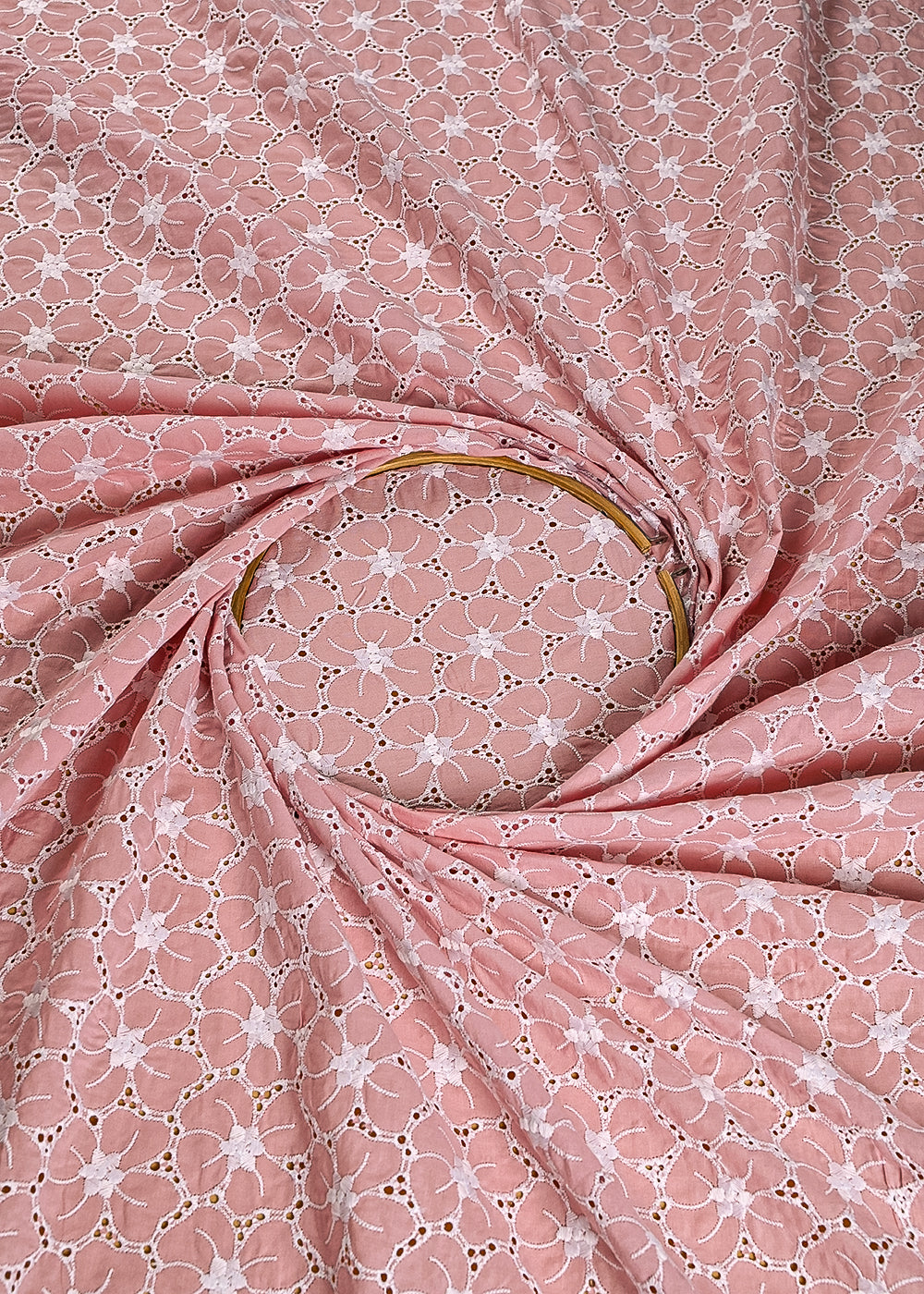
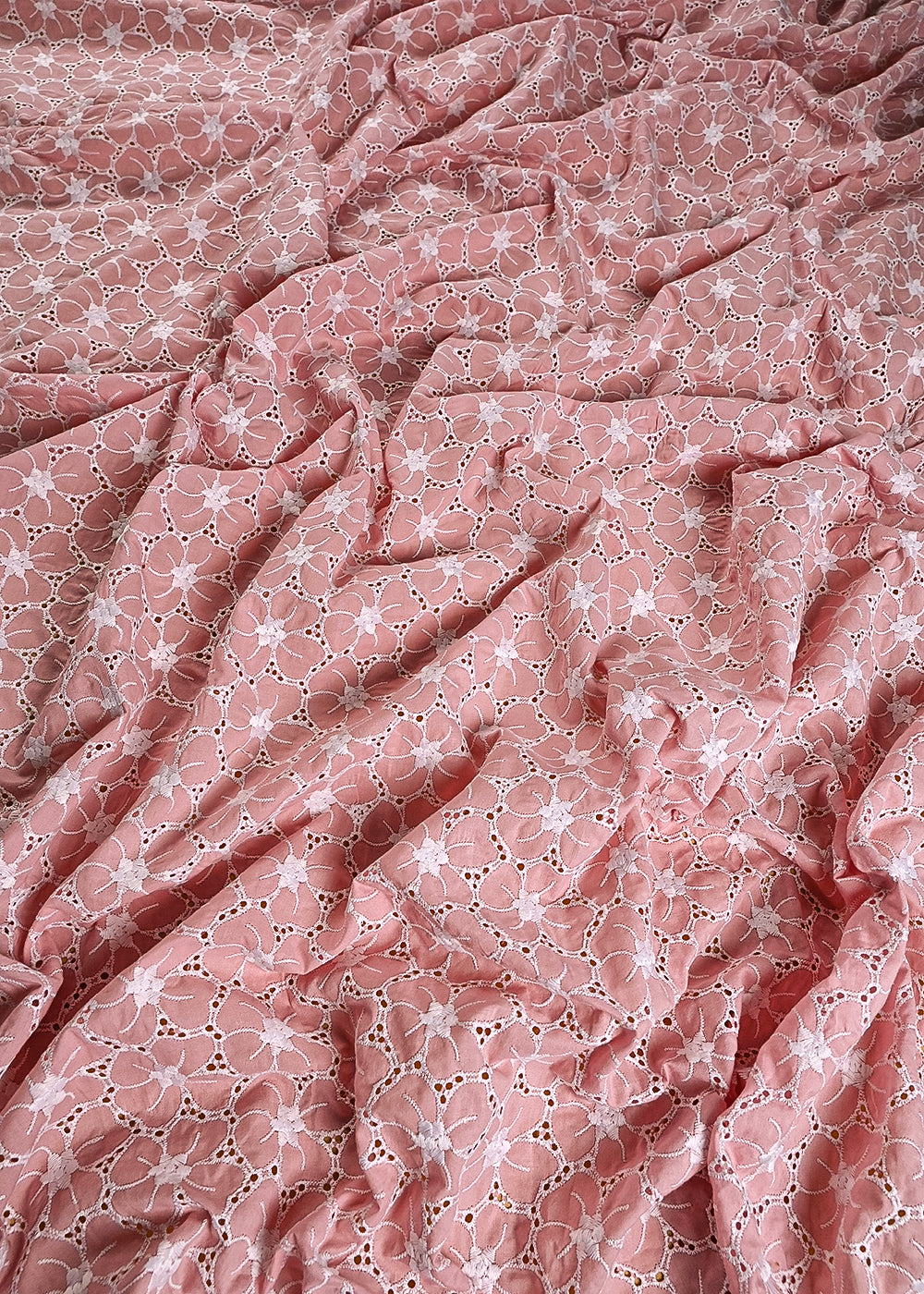
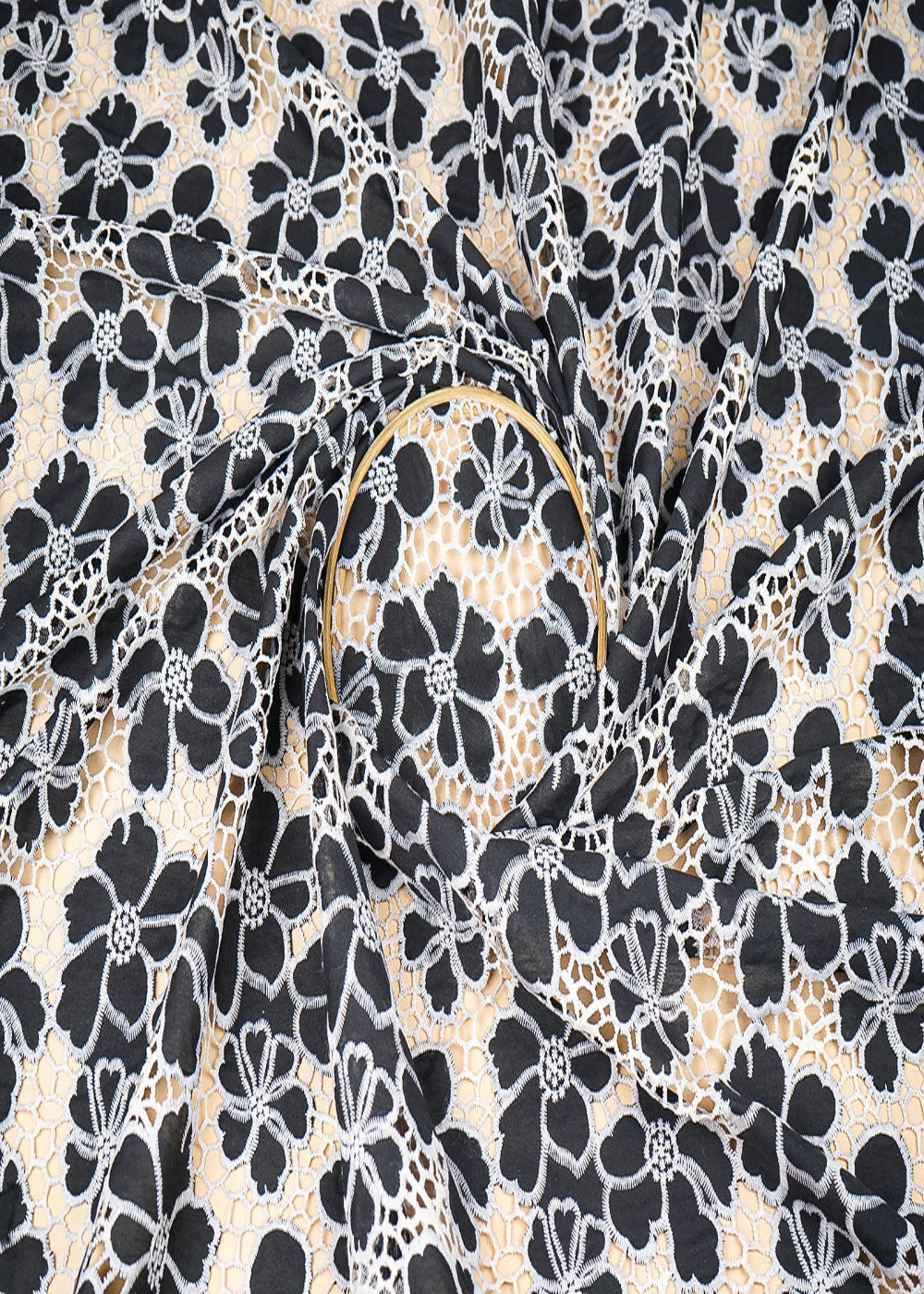
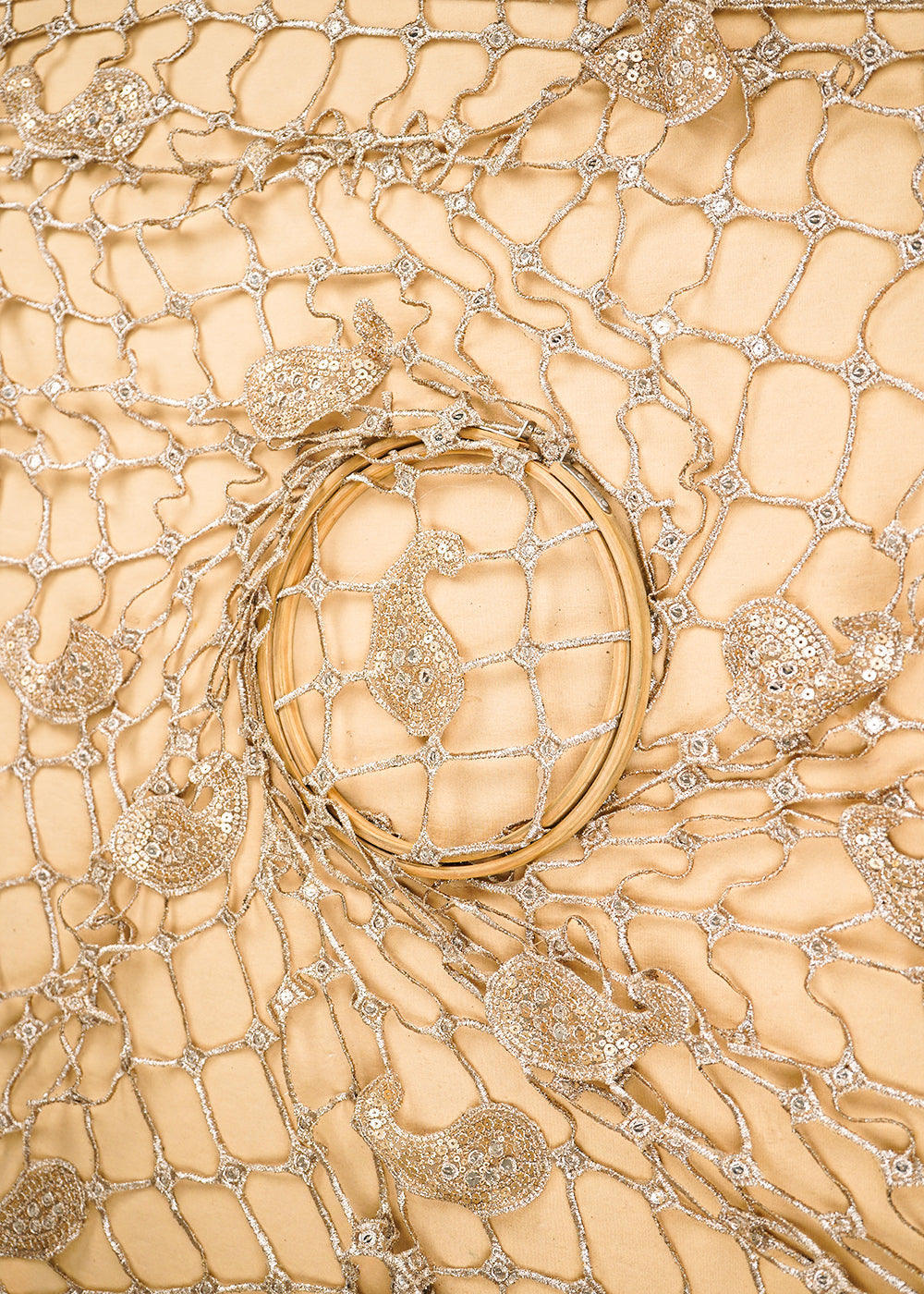
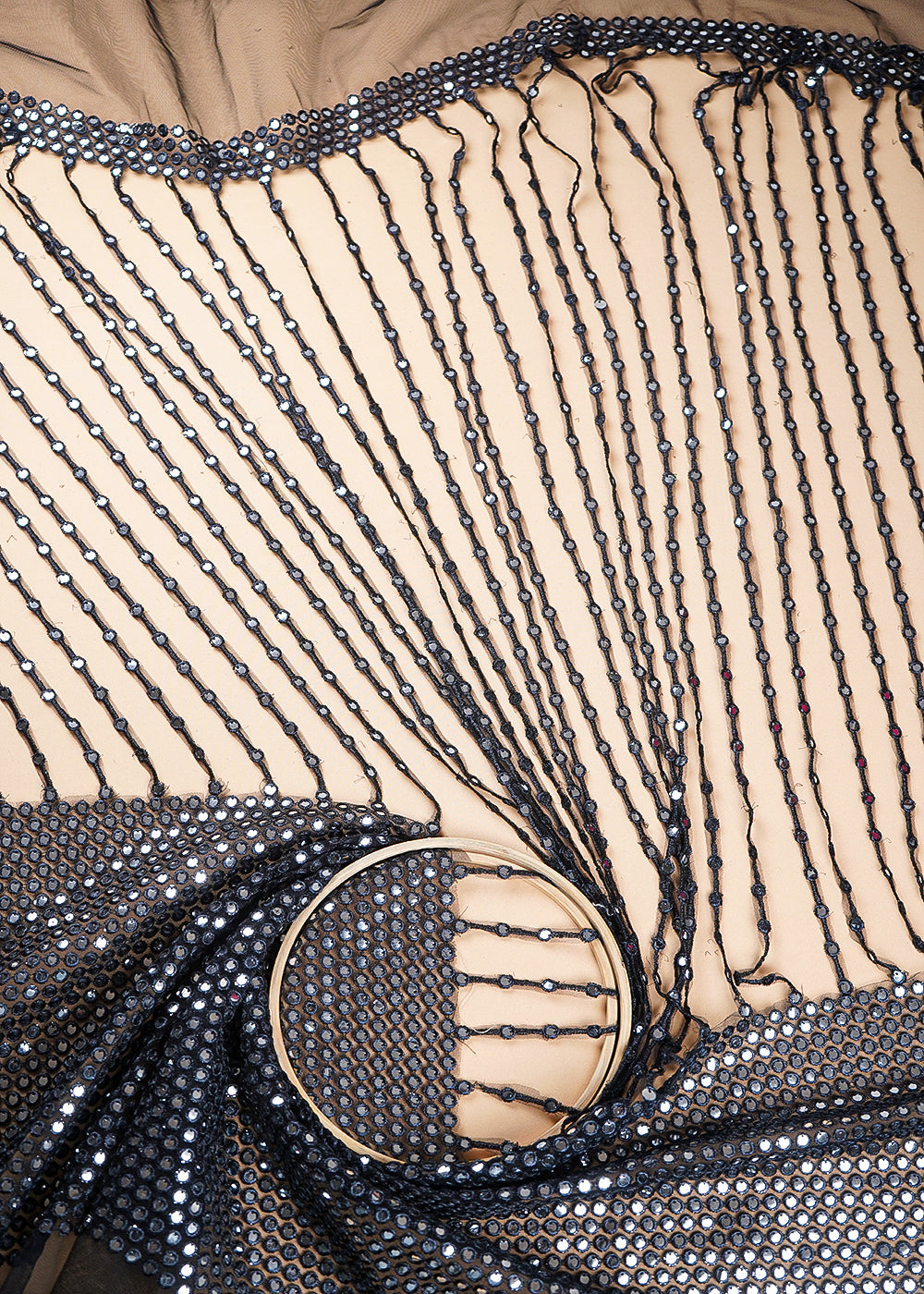
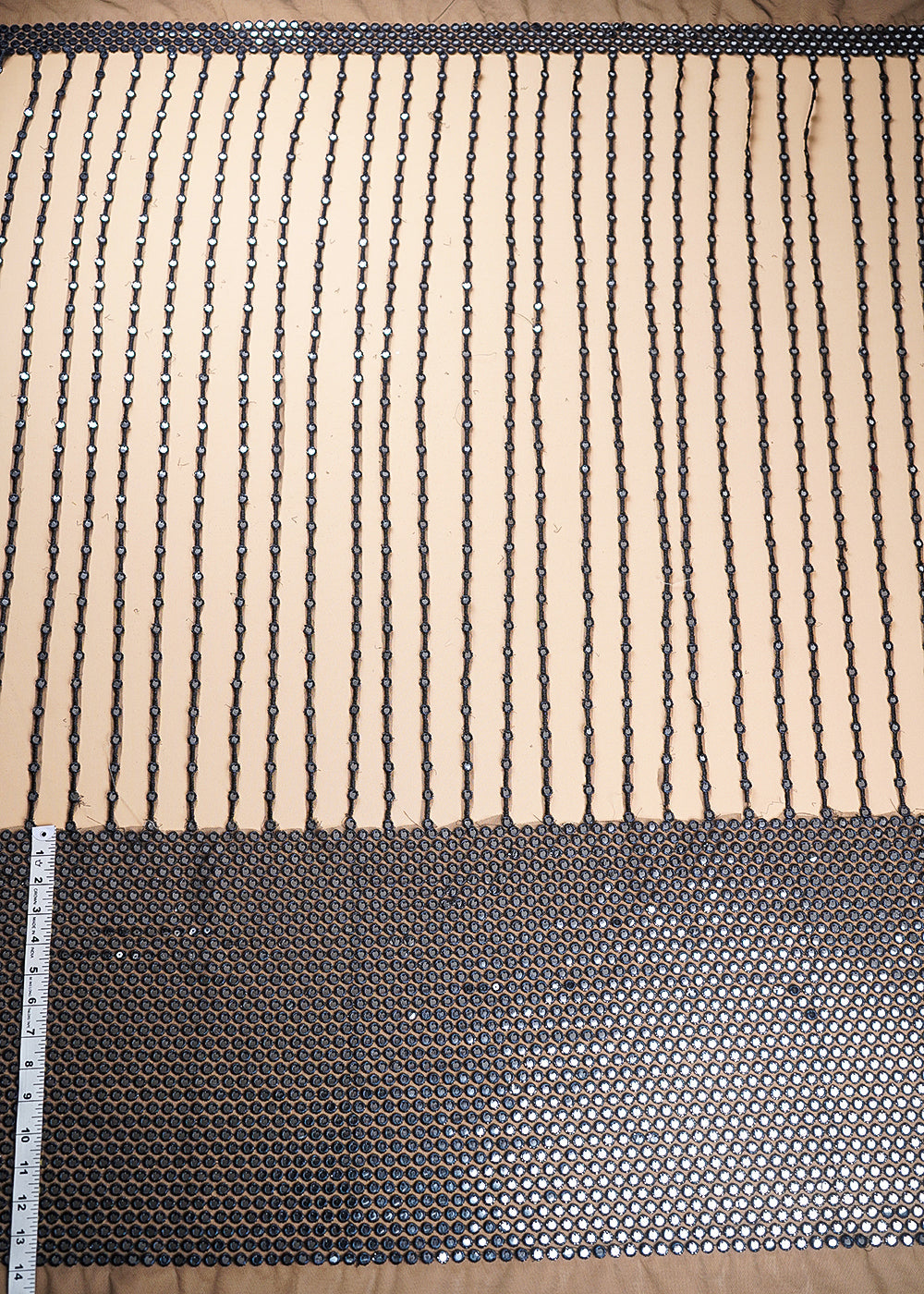
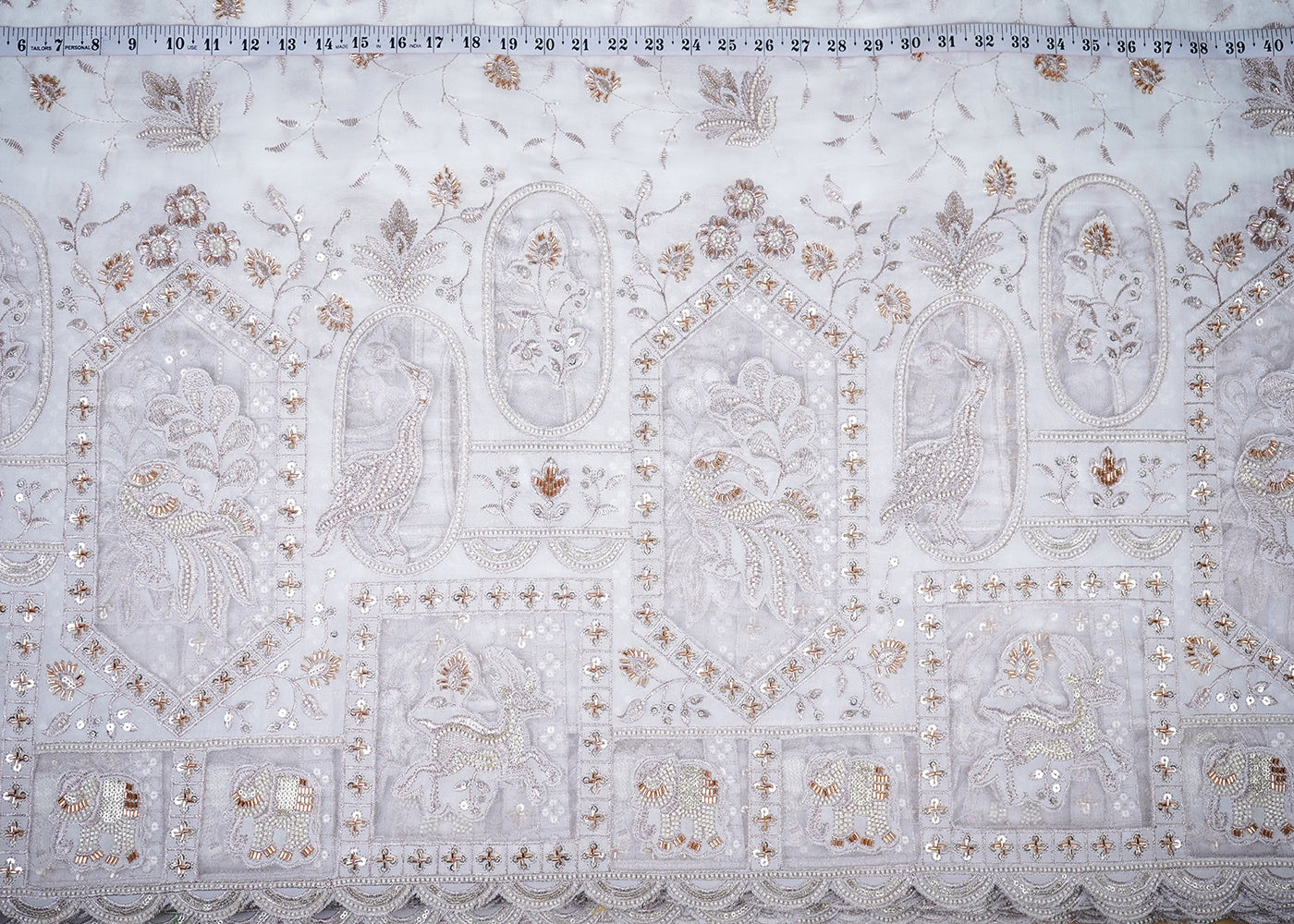
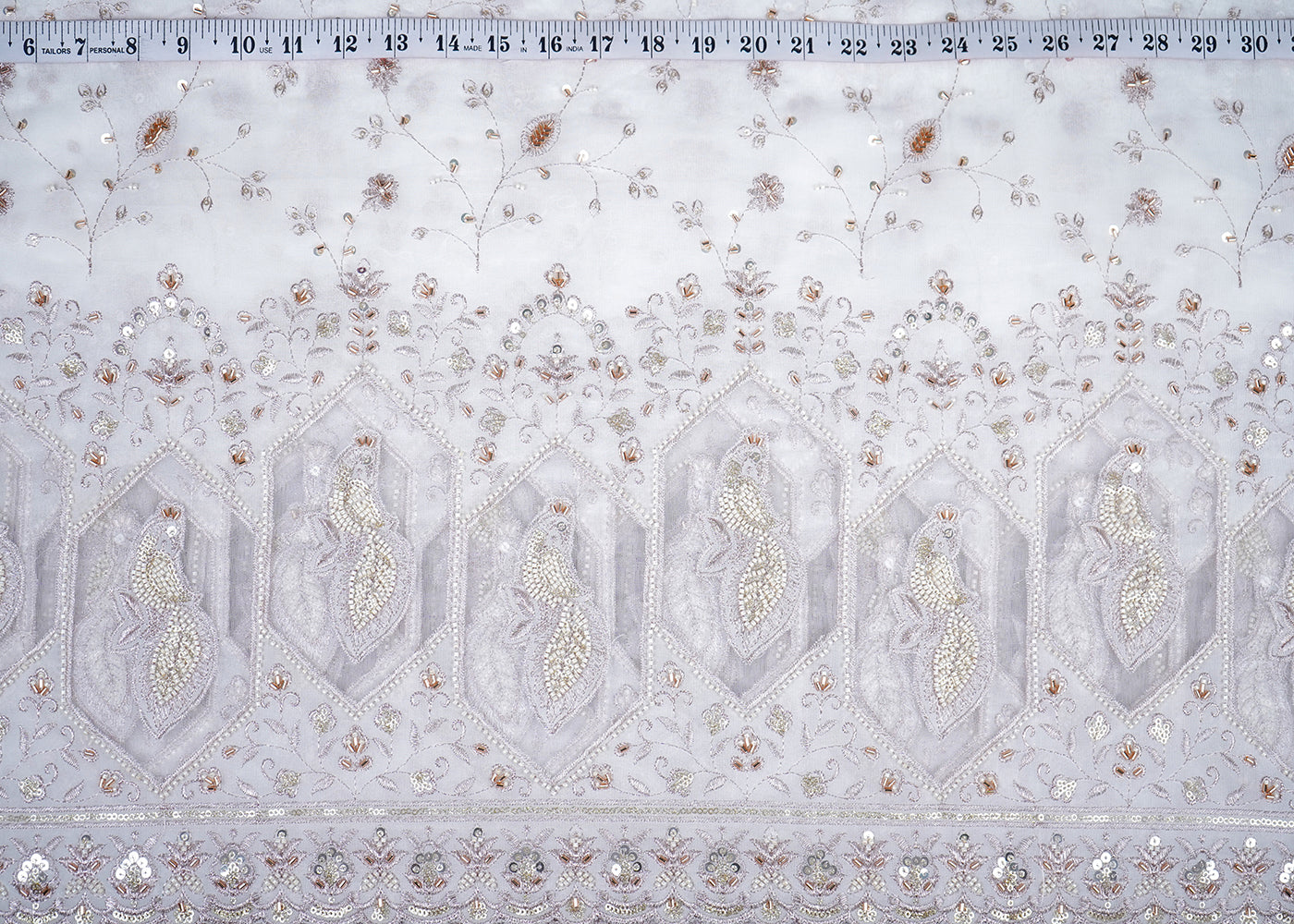
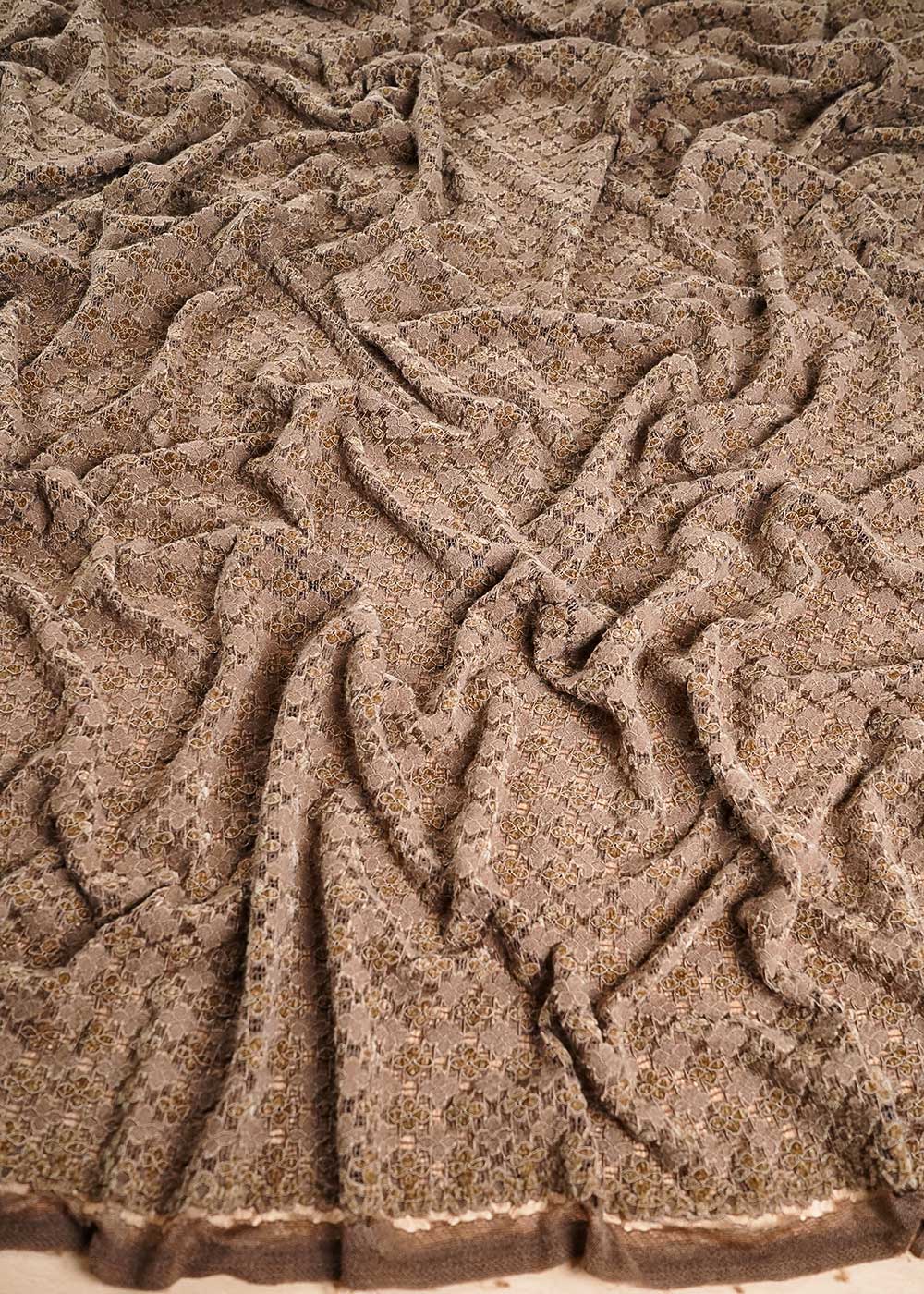
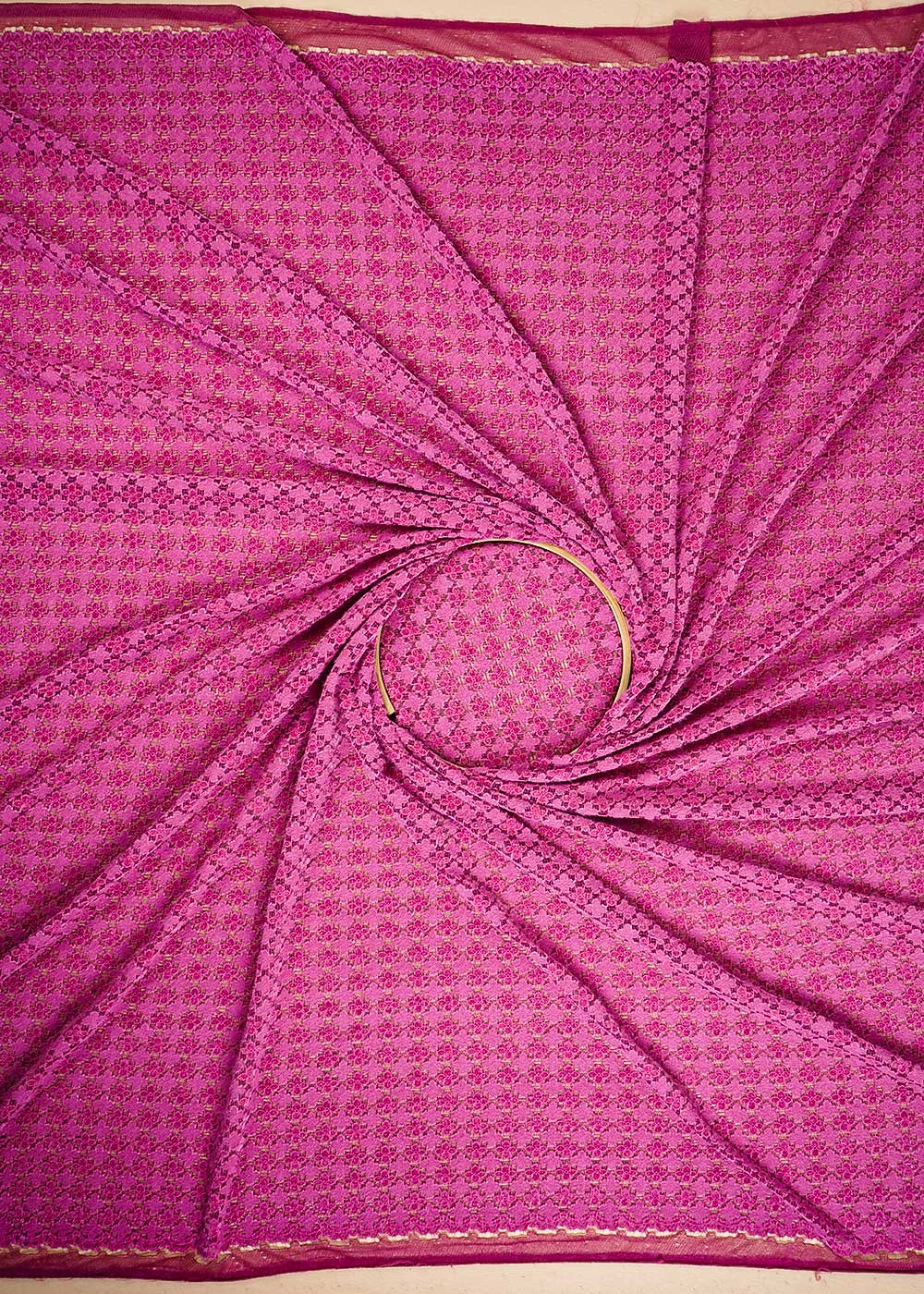
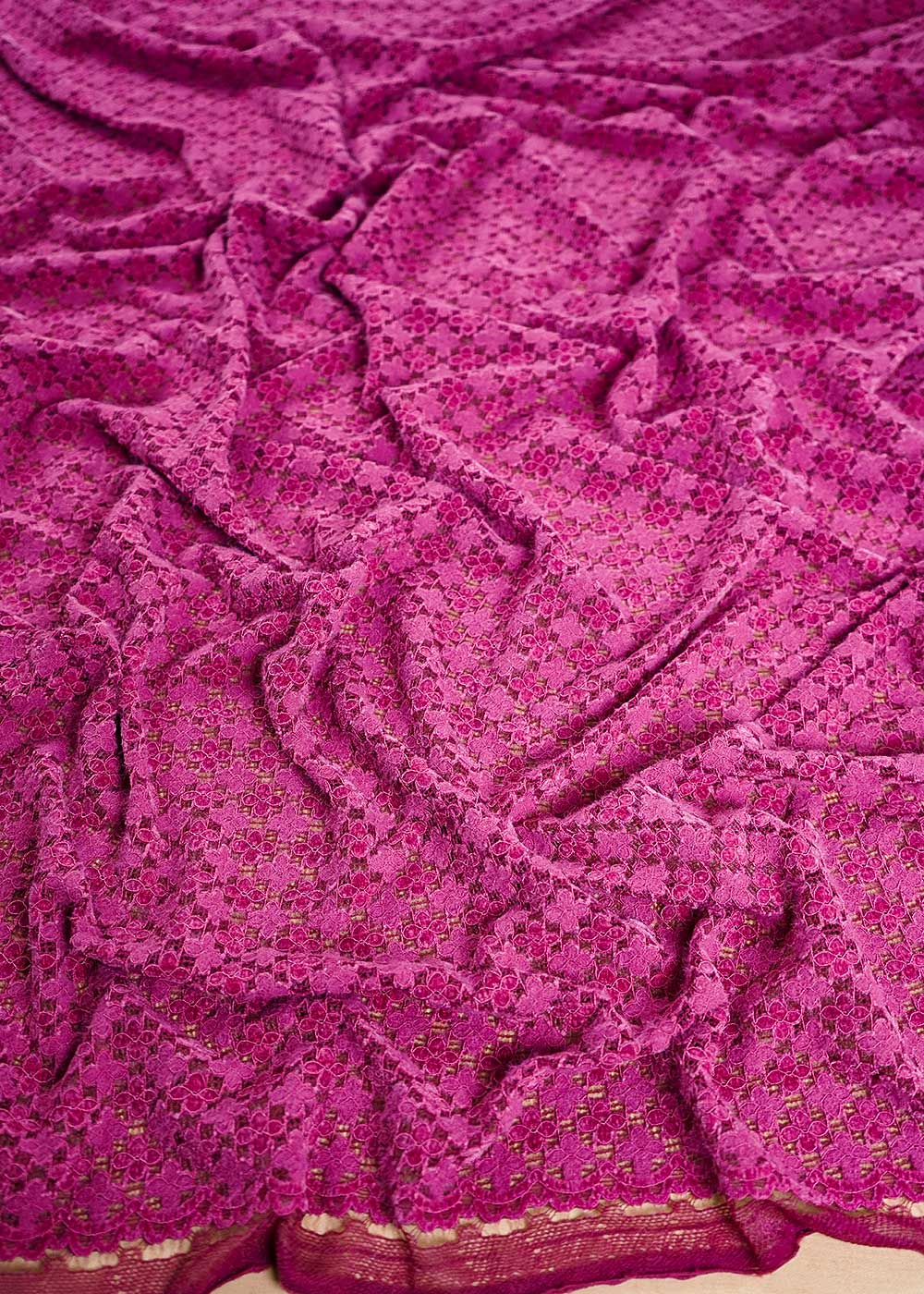
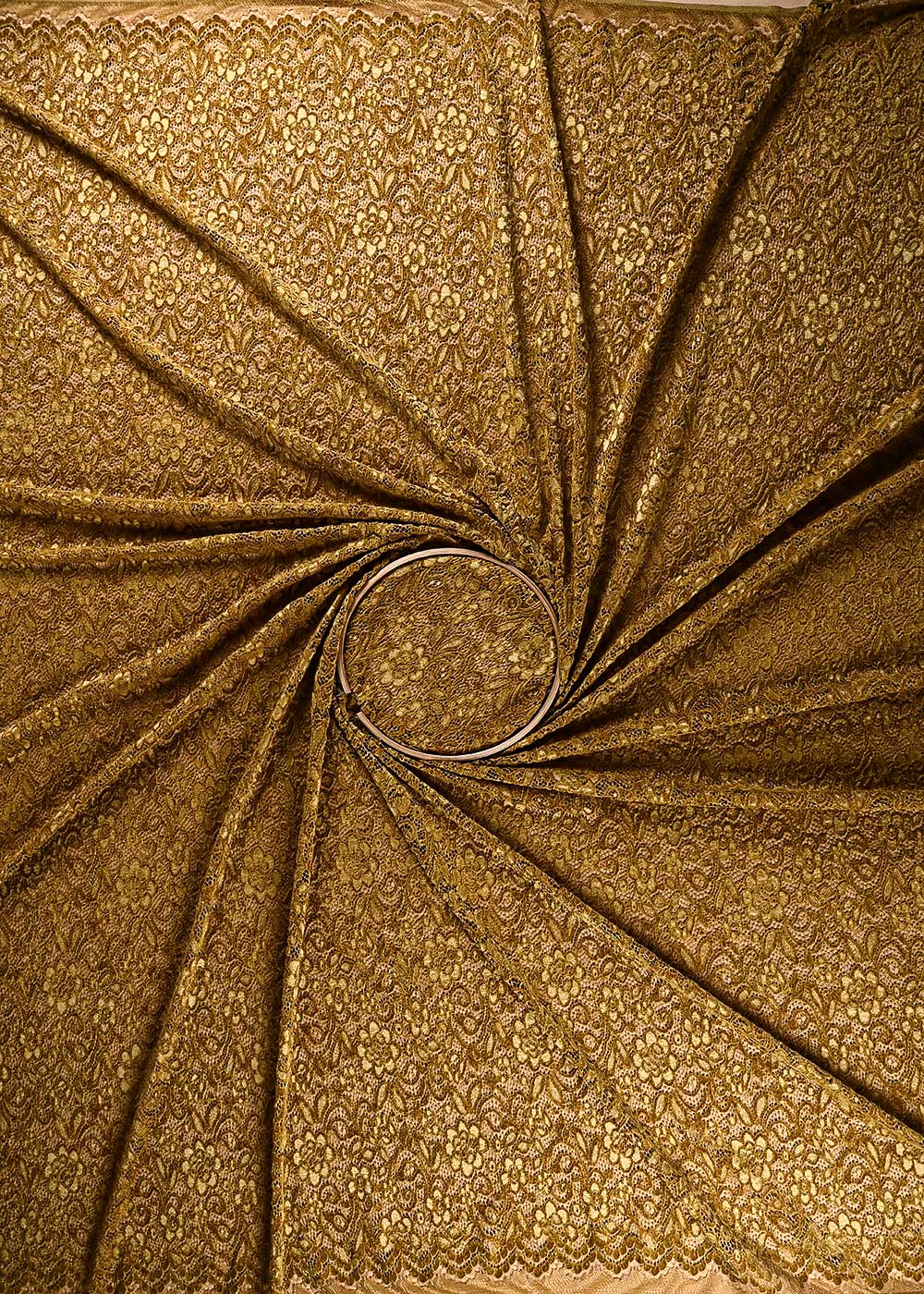
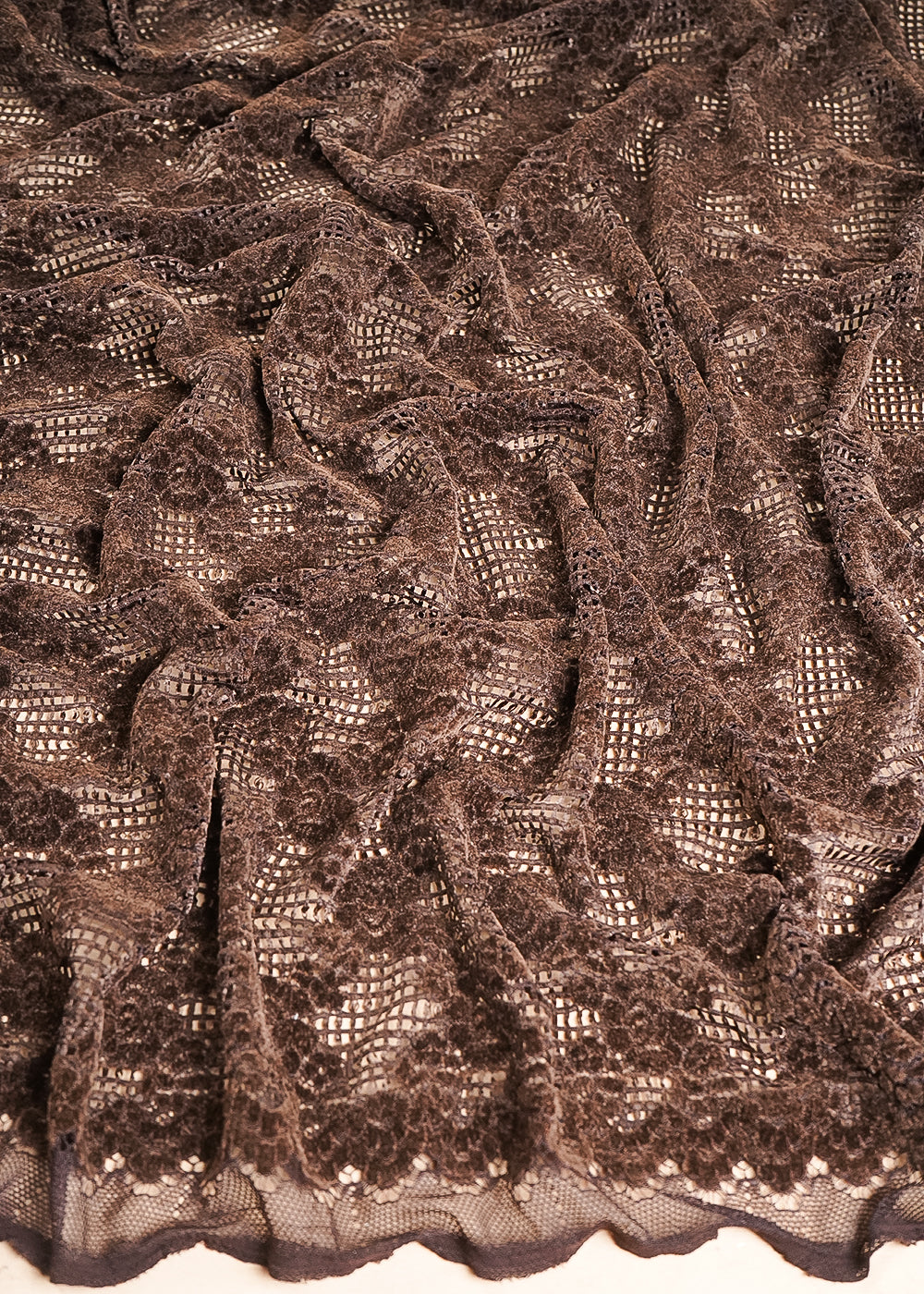
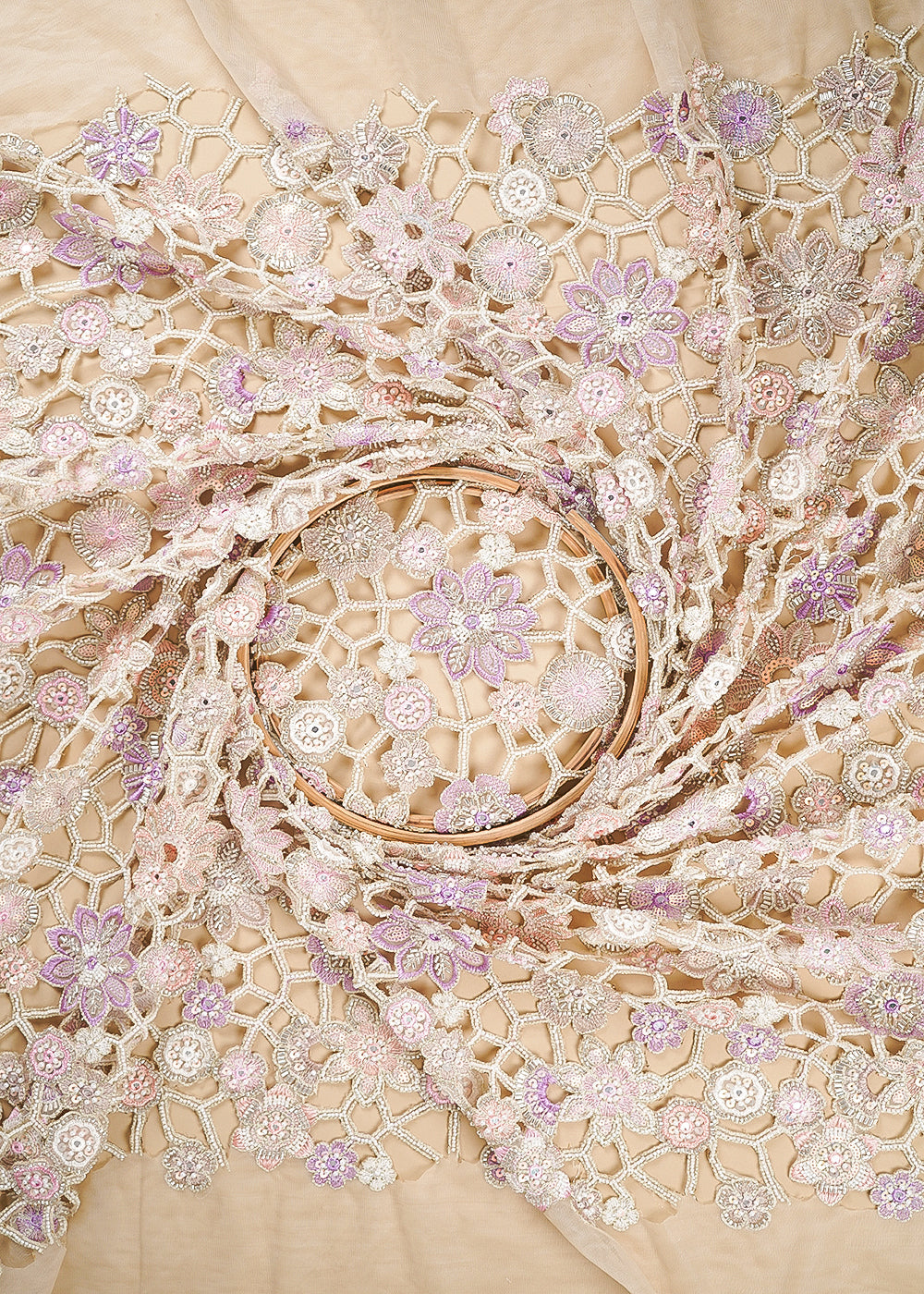
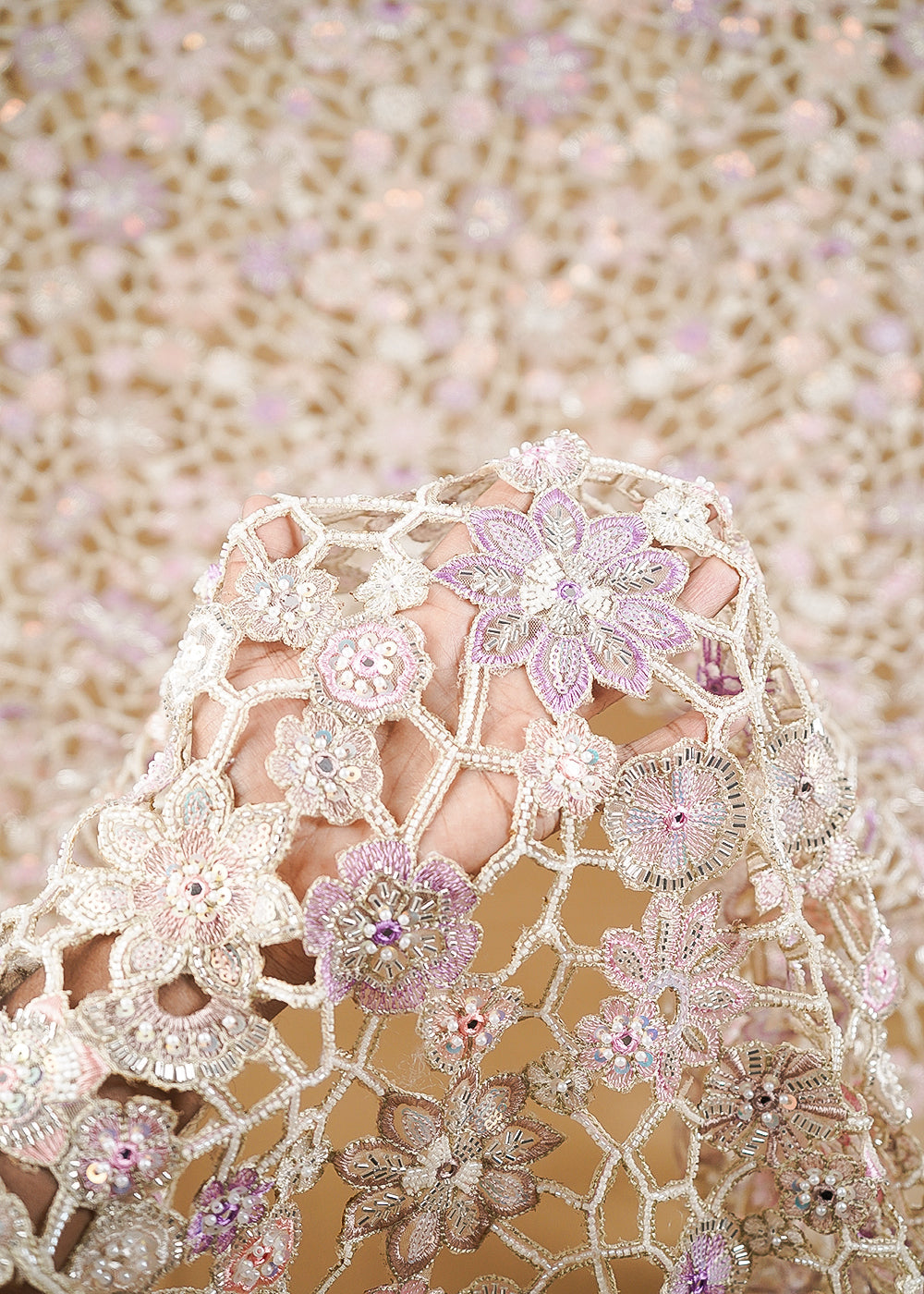
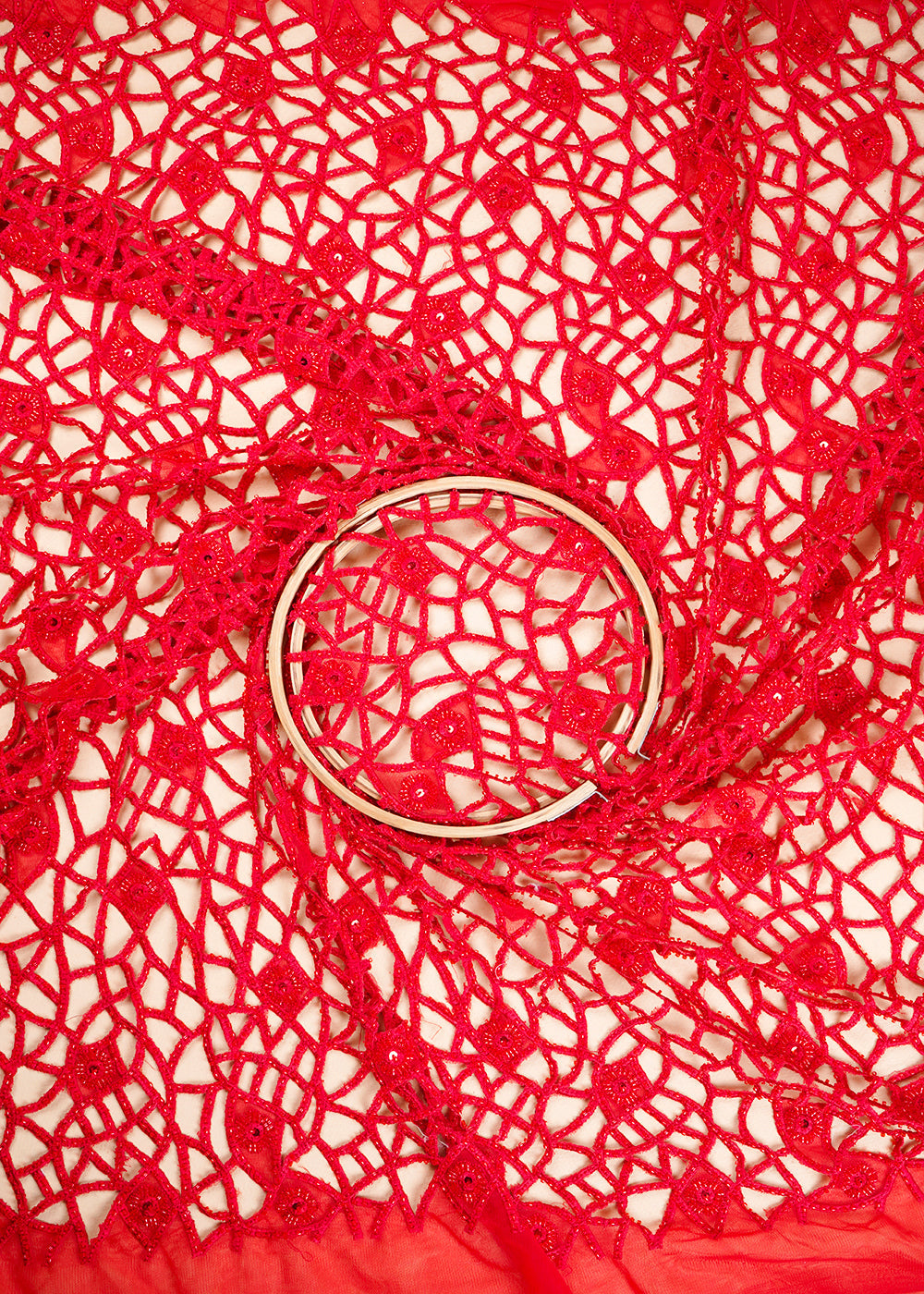
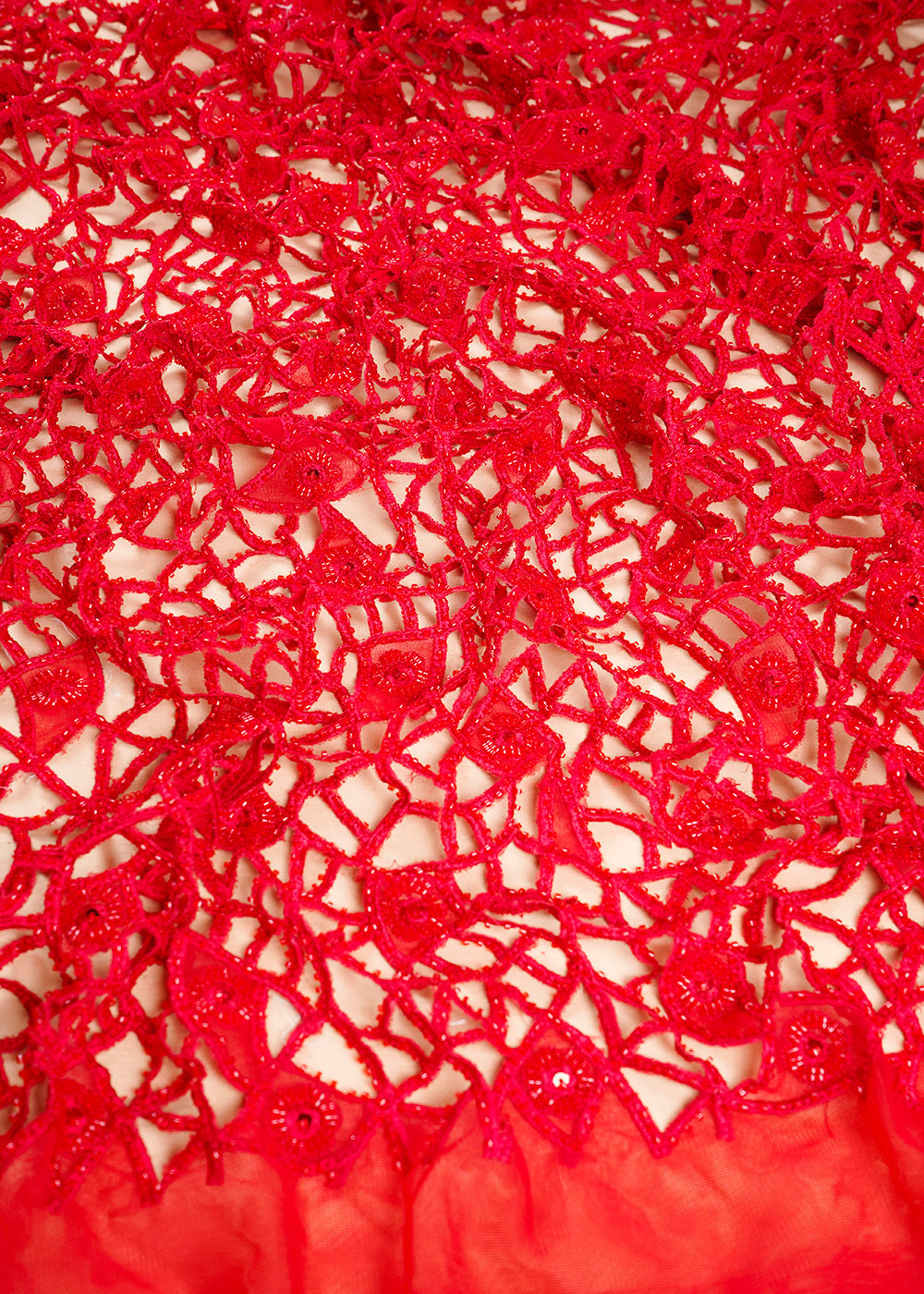
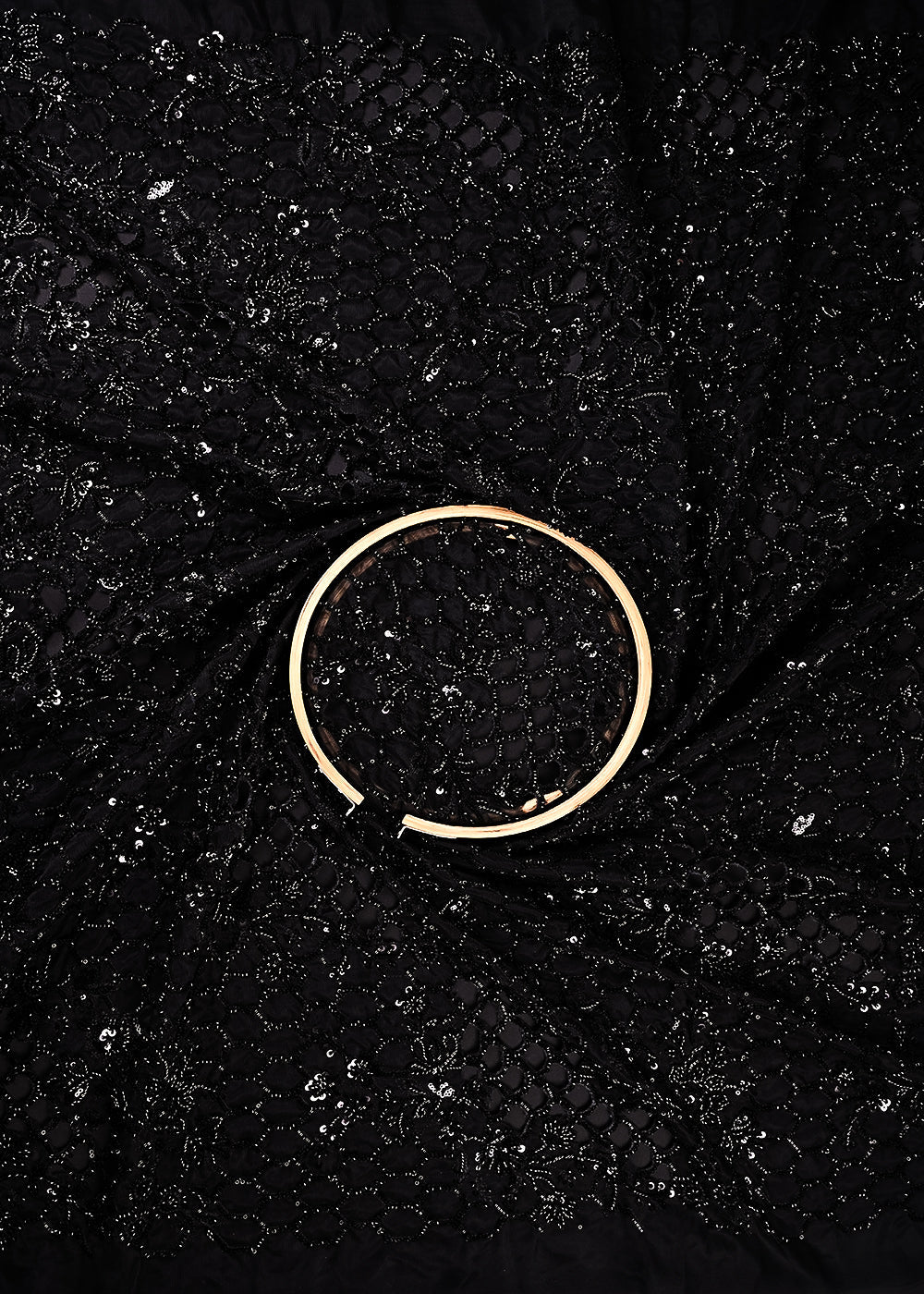
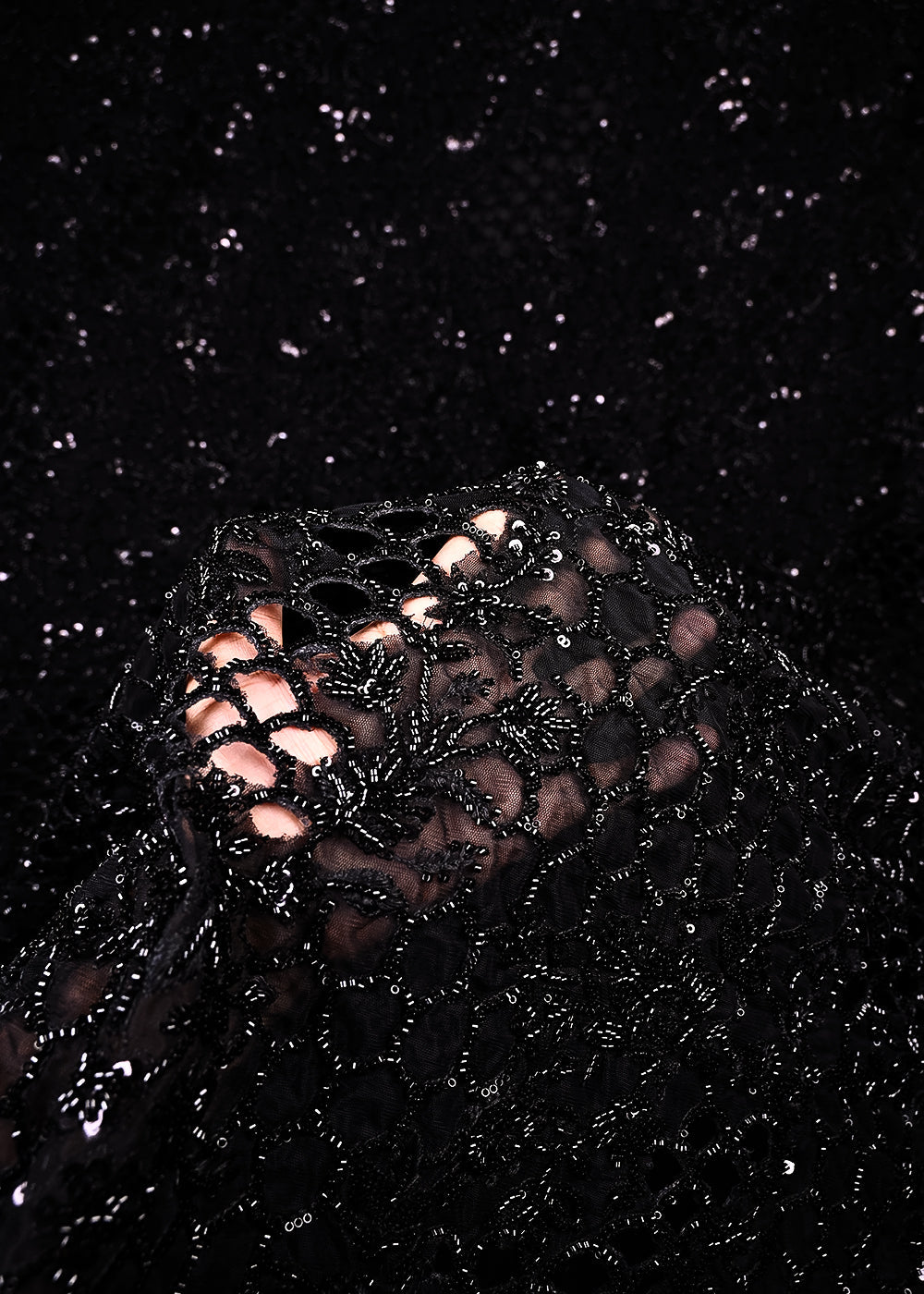
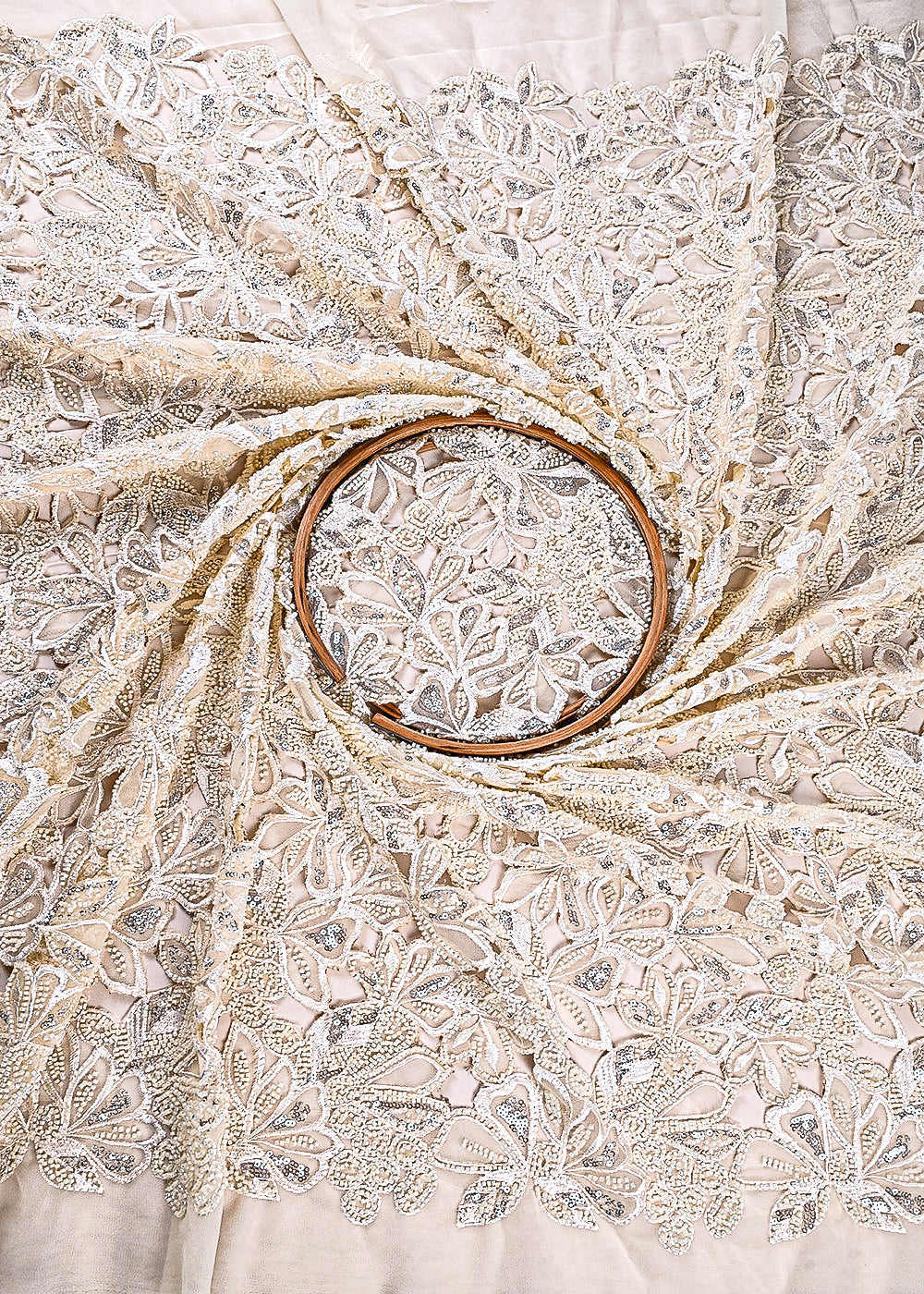
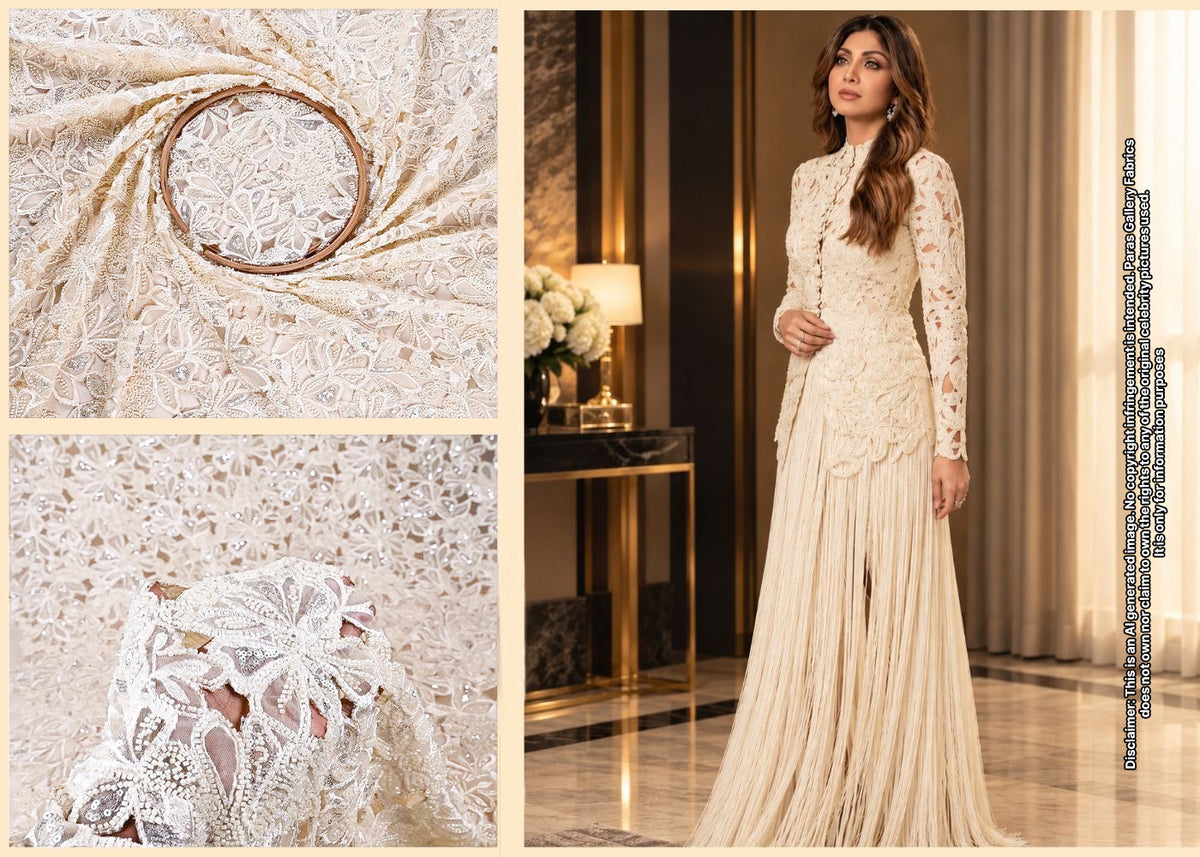
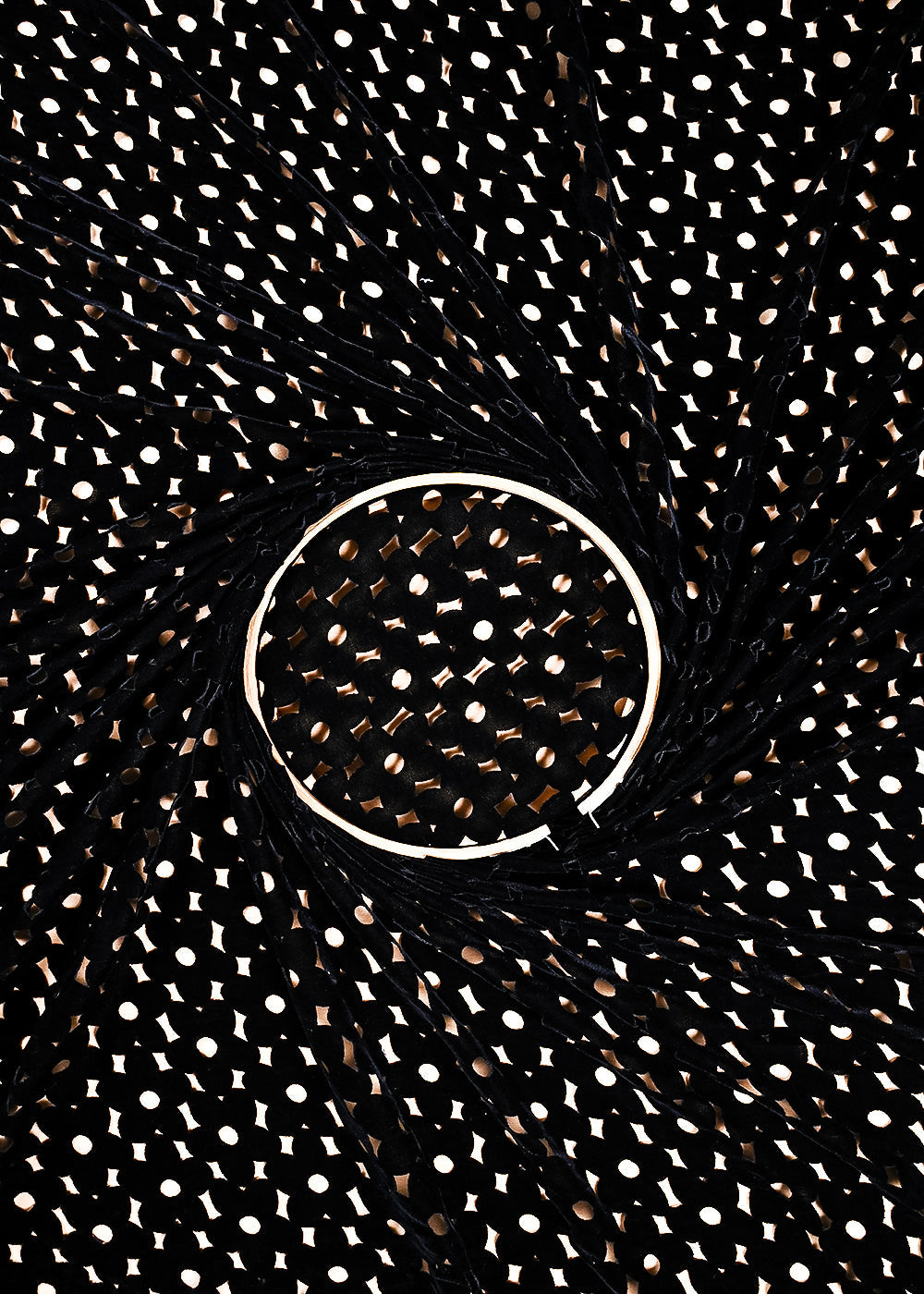
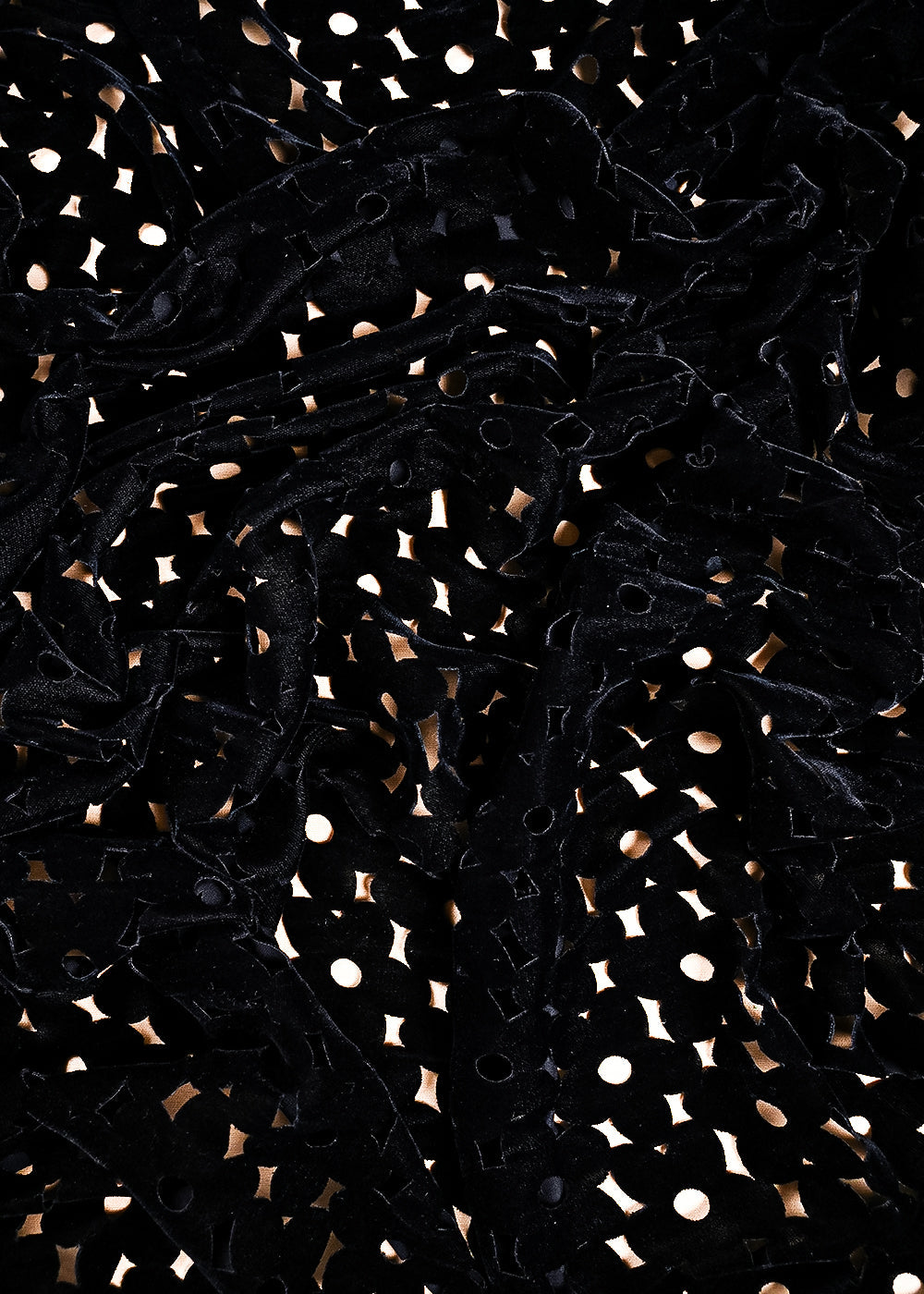
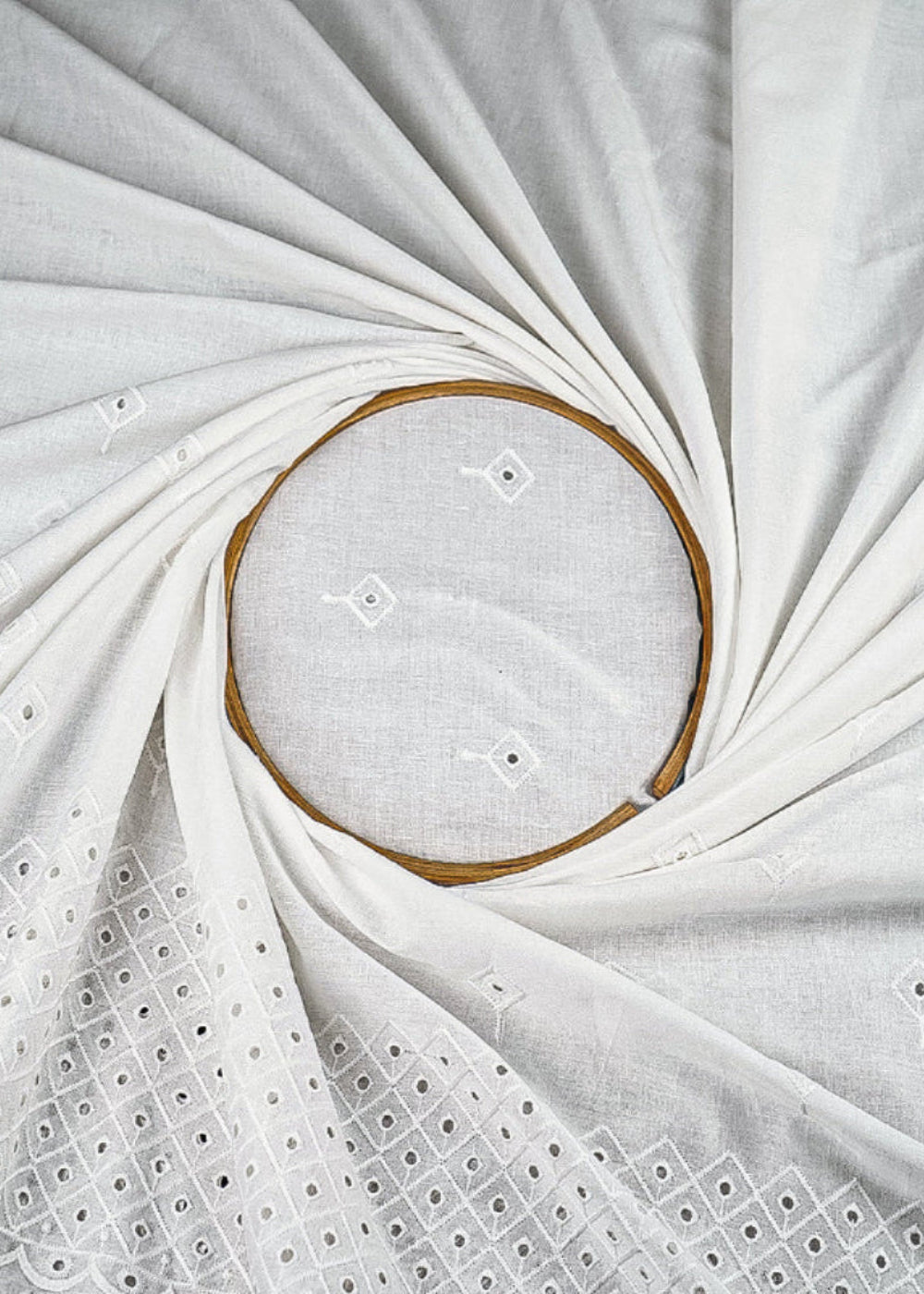
Cutwork is fabric where sections are cut away and the open edges finished with embroidery stitching, so the pattern lives in the negative space rather than on top of the cloth. It reads airy and open, breathes in the heat and carries a worked-by-hand look without much weight. Across the Delhi NCR boutique trade it moves for the summer and festive designer segment, feeding the Rs 4,000 to 11,000 retail garment band.
Quick answer. Cutwork is fabric where areas are cut out and the raw edges finished with buttonhole or satin stitch, forming open, lace-like motifs. It is light and breathable, so it suits summer kurtis, sheer dupattas and festive wear at Rs 620 to 1,480 per metre wholesale, depending on the base and the density of the work.
What Makes Cutwork Different
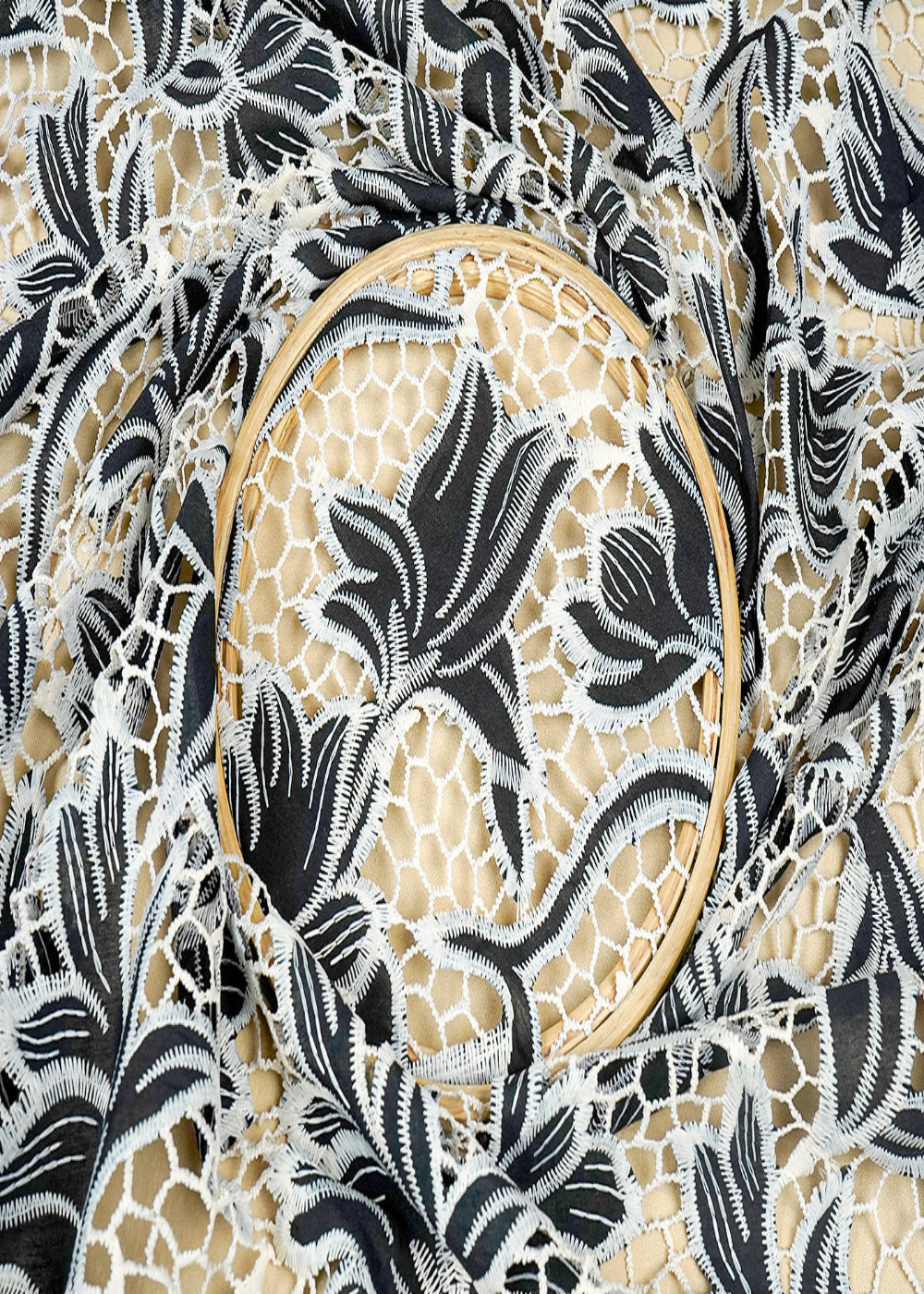
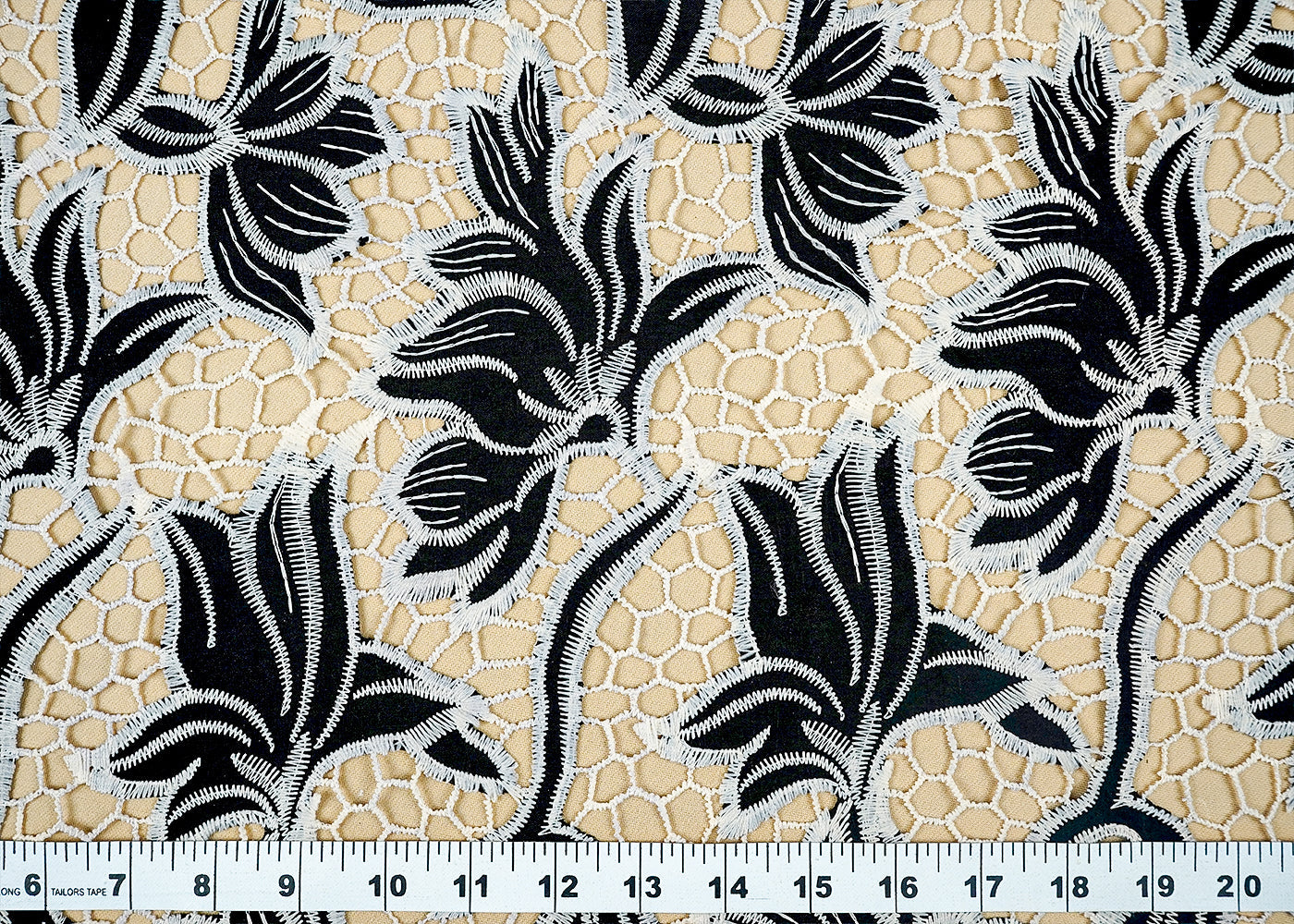
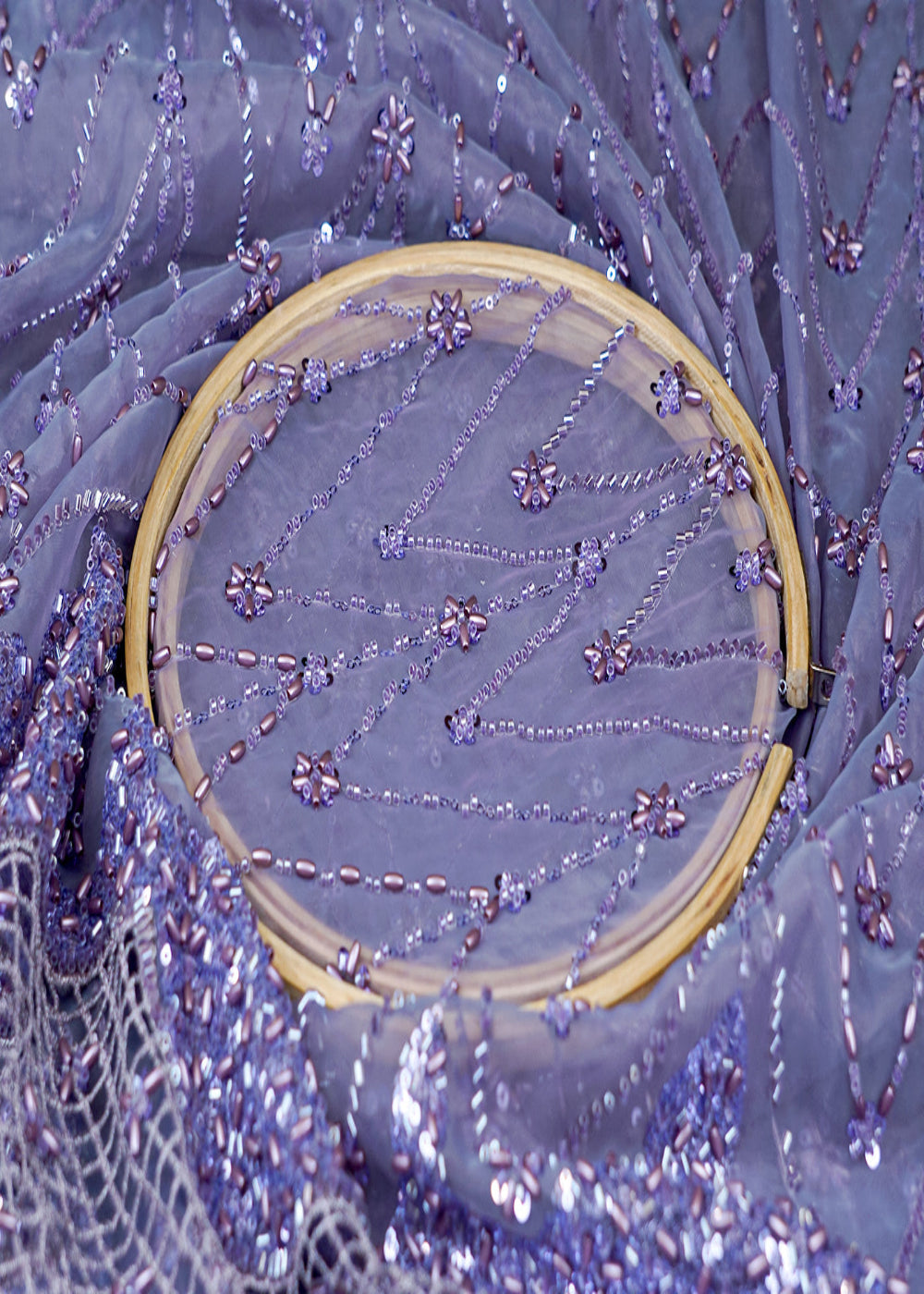
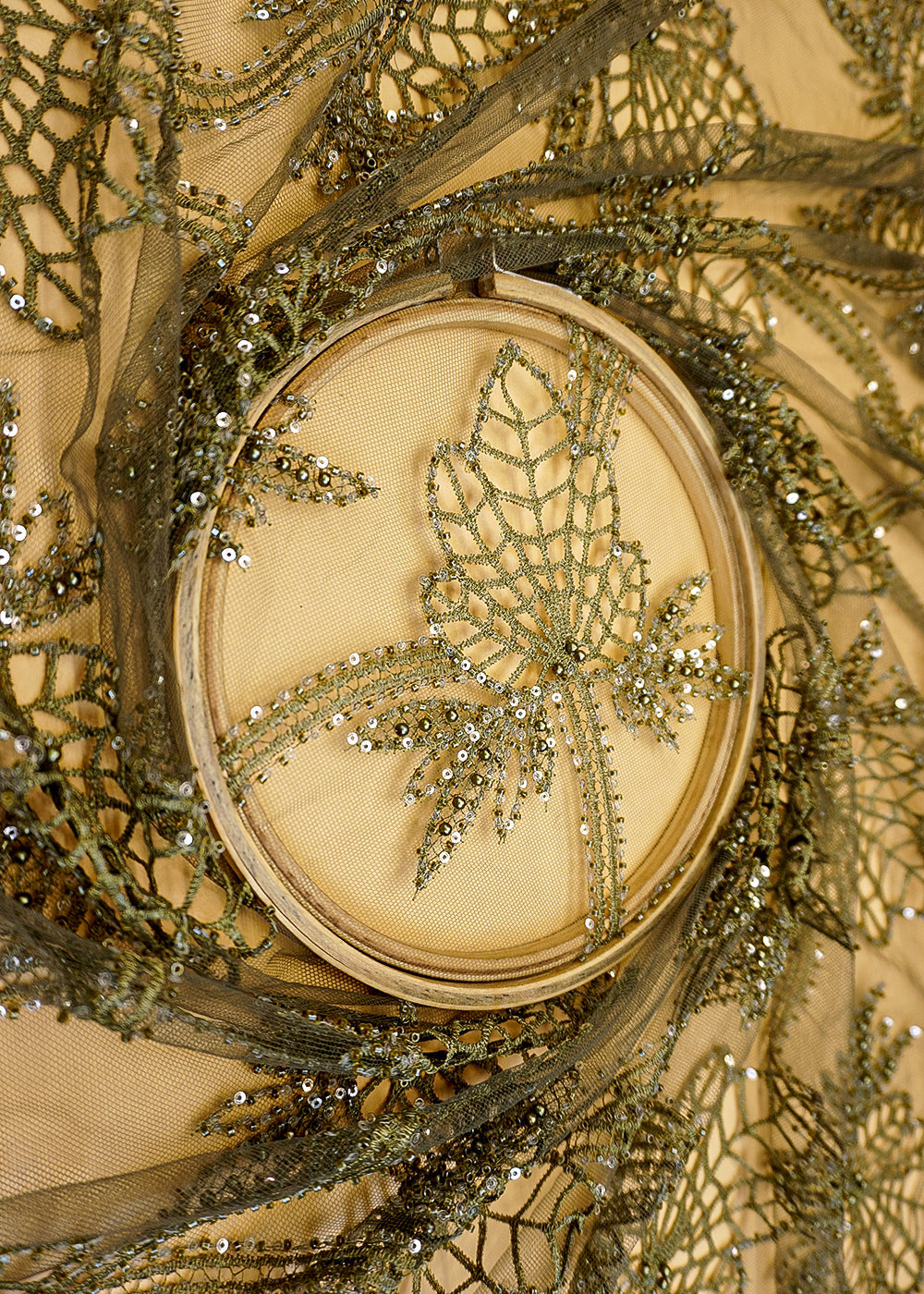
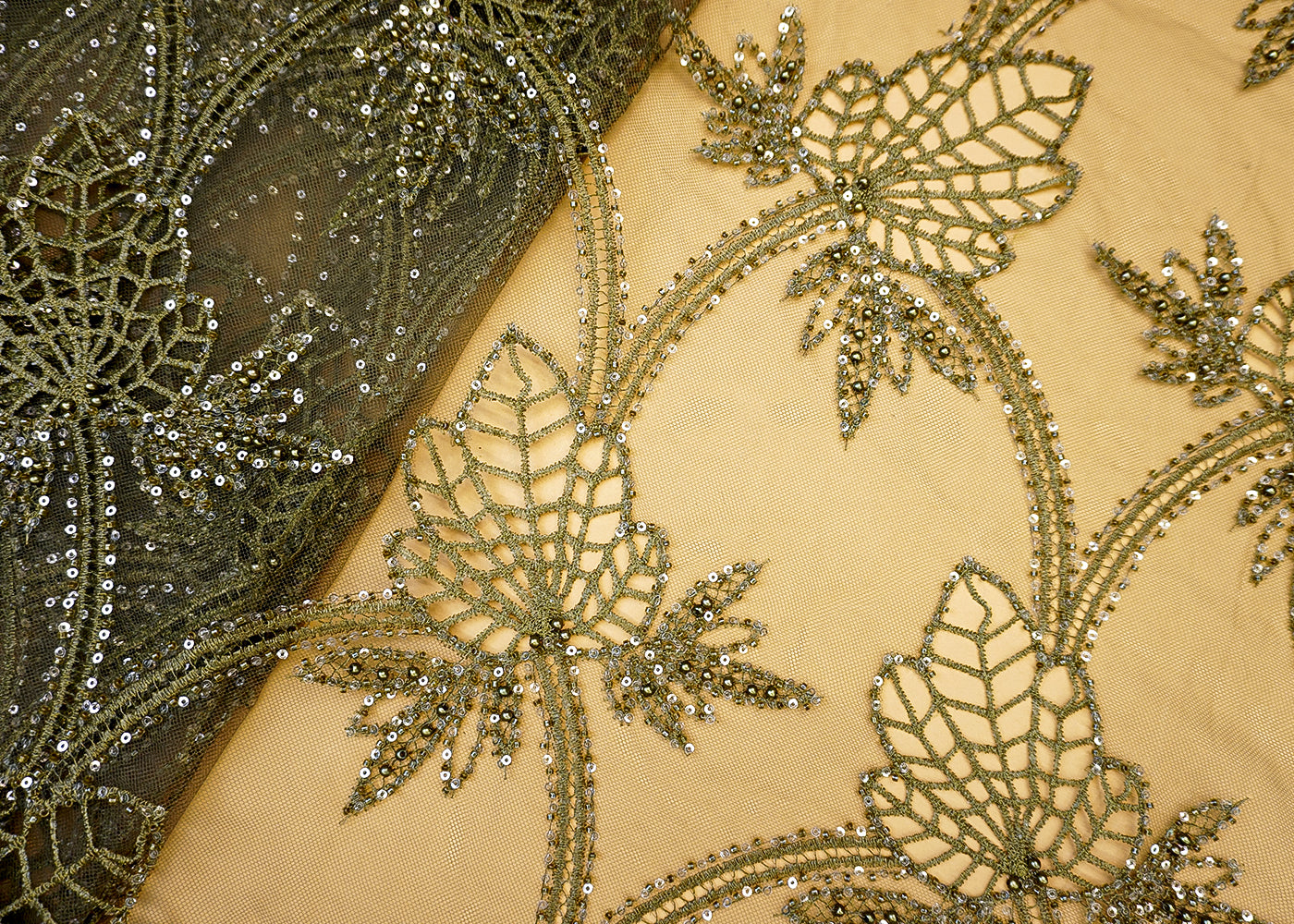
The open negative space is the whole point. Surface embroidery adds thread or beads on top of the base. Cutwork does the reverse. It removes fabric and finishes the cut edges, so the motif is the opening itself, which gives an airy, see-through effect that added-on work cannot.
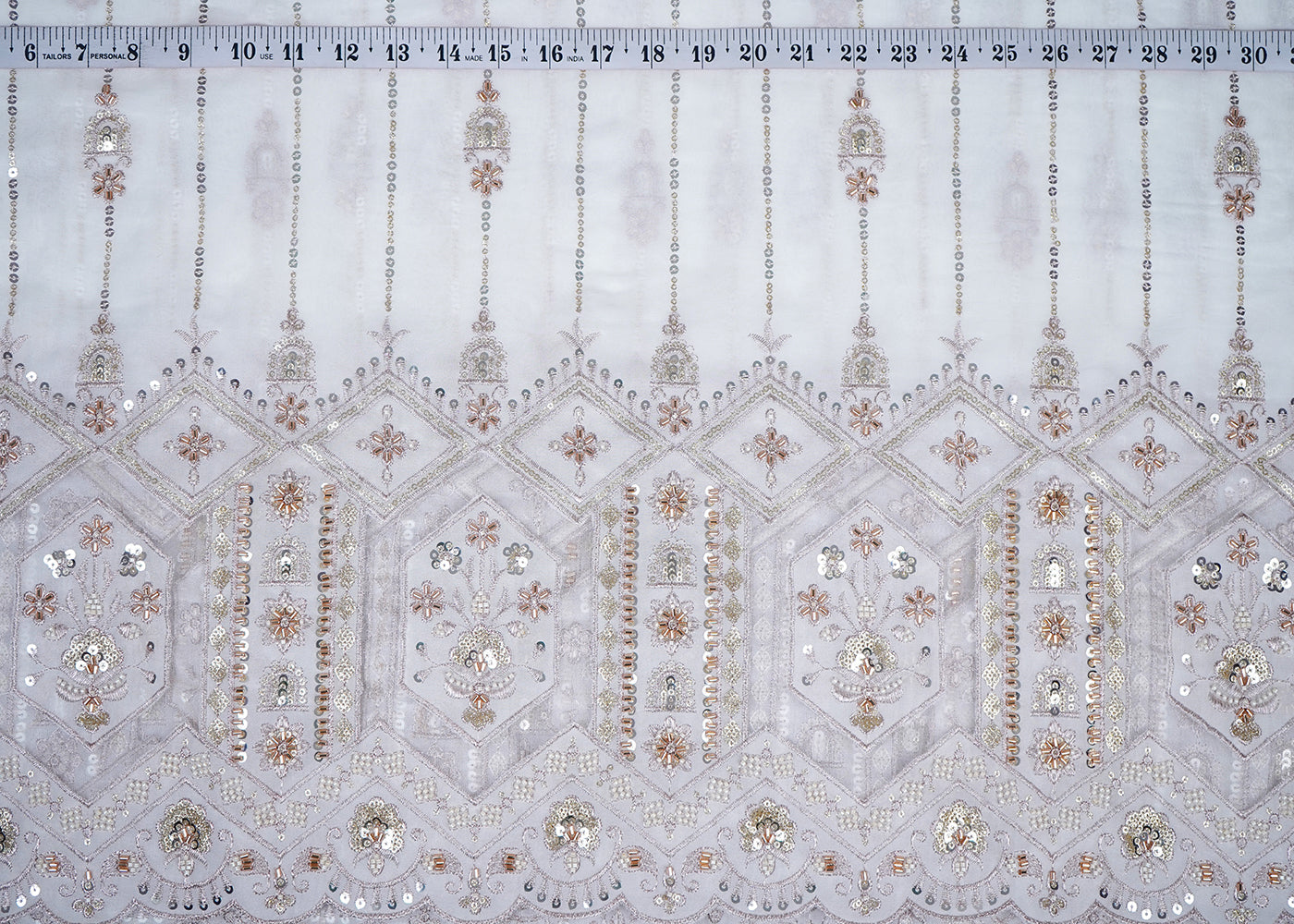
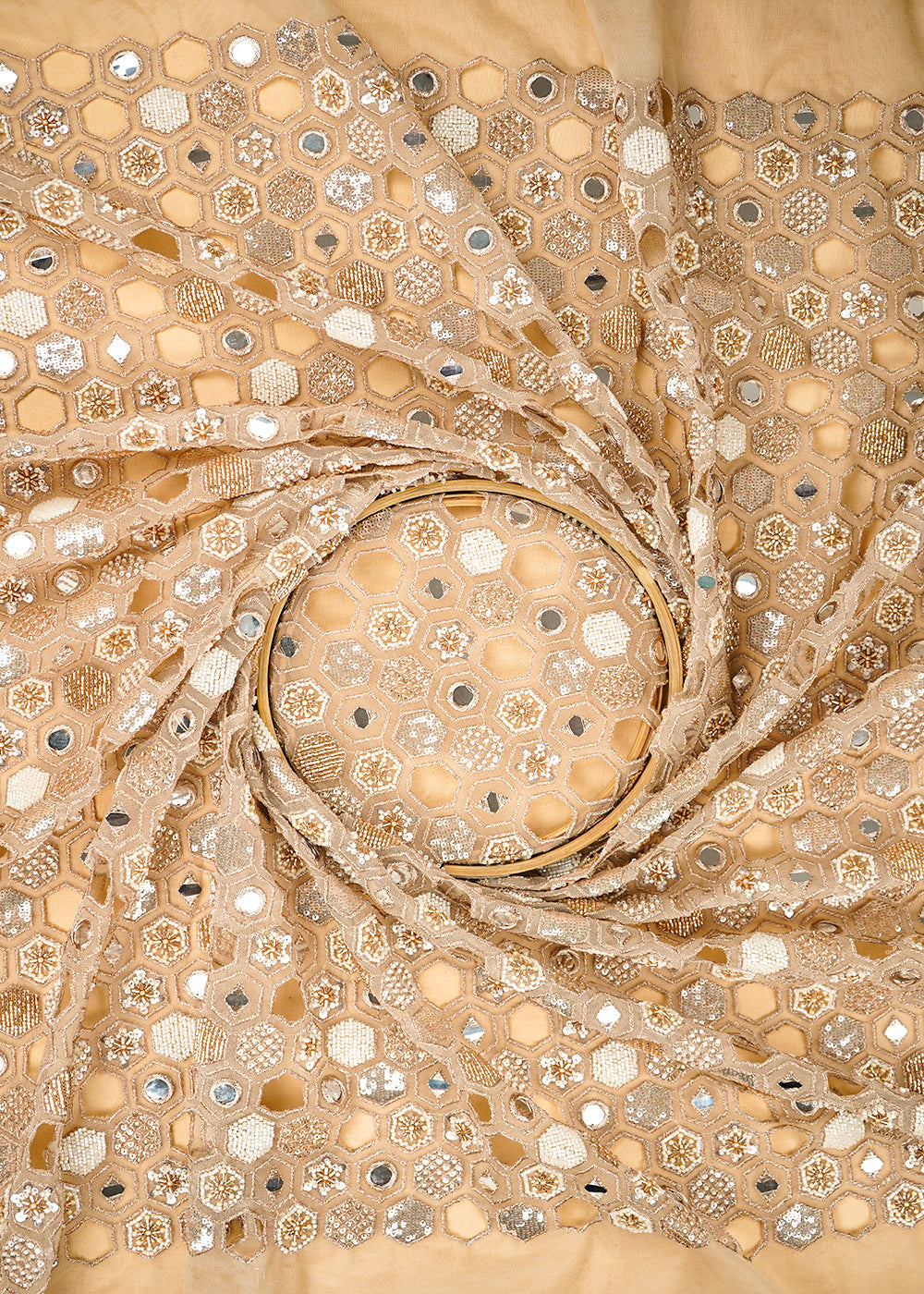
The variants split by base. Cotton goes to volume summer kurti production. Organza and net carry the sheer dupatta and layering pieces. Schiffli machine work handles volume designer runs. Buyers pick by the target garment and the retail band they are working.
It works for kurti construction across designer segments and for festive celebration function outfits. Lajpat Nagar wholesale runs Rs 620 to Rs 1,480 per metre, moving with the base and the density of the work.
Types of Cutwork Fabric in Our Collection
| Type | Best use | Approx price |
| Cotton | Summer kurtis, casual festive | Rs 620 to 820 per metre |
| Organza | Sheer dupattas, party overlays | Rs 820 to 1,040 per metre |
| Net | Layering pieces, festive dupattas | Rs 1,040 to 1,220 per metre |
| Schiffli Machine | Volume designer kurtis, boutique runs | Rs 1,220 to 1,360 per metre |
| Heavy Statement | Statement kurtis, designer festive | Rs 1,360 to 1,480 per metre |
The cotton variant is the volume seller across mid-market boutique production, since it gives the open look at a summer-friendly price. Upper-tier boutiques reach for organza and net, where the sheer base and finer edge work earn the rate.
Cutwork GSM Guide
| GSM range | Fabric feel | Best for |
| 60 to 110 GSM | Light, sheer | Dupattas, summer kurtis |
| 110 to 160 GSM | Light-medium, drape-forward | Kurtis, festive outfits |
| 160 to 220 GSM | Medium, structured | Statement kurtis, layered pieces |
Most buyers default to the 110 to 160 GSM band for standard production. It keeps the open work airy while holding enough body for a clean kurti line. Lighter grades suit sheer dupattas. The heaviest go to structured statement pieces.
In short. Cutwork builds its pattern from cut-out, edge-finished openings, so it reads open and airy where surface embroidery sits on top. Buy in the 110 to 160 GSM band for standard kurti production. Budget 2.5 metres for a straight kurti, 4 for an anarkali. Check the cut edges are finished tight so they do not fray. Wholesale runs Rs 620 to 1,480 per metre.
Popular Uses
Summer and festive kurtis lead, mostly in the Rs 4,000 to 6,500 band, where the open work keeps the garment cool and still reads worked. Sheer dupattas in organza and net come second, as the light layer over a plain outfit. Indo-western and party pieces are third, for buyers who want texture without weight. Layered festive dupattas round out the list, in the boutiques working the upper bands.
Cutwork Trends for 2026
Organza is leading the summer designer segment right now. Buyers are choosing the sheer, airy open work over dense coverage, which drives steady reorders through the warm months. Delhi NCR boutiques reorder organza every three to four weeks across the summer and early festive stretch. Net is the second pattern gaining ground, mostly for the layered dupatta looks across the festive segment.
Care and Working Tips
Check the edge finishing before anything else. Cutwork lives or dies on how tightly the cut edges are stitched, so a loose or cheap finish frays open with wear. Buy from a source that finishes the edges properly. Reinforce any weak point before it runs.
The open areas snag easily on nails, jewellery and rough surfaces. Wash gentle by hand or dry-clean, turned inside out. Skip the machine, since agitation pulls the openwork out of shape. A light starch helps the motif hold its form.
Iron flat on a low to medium heat through a cloth, easing the open areas back into shape rather than dragging the iron across them. Store flat or on a hanger so the openwork does not stretch or crease into a hard line over long holds.
Frequently Asked Questions
How is cutwork different from surface embroidery?
Surface embroidery adds thread or beads on top of the fabric. Cutwork does the opposite. Areas of fabric are cut away and the edges finished with stitch, so the pattern is the open space itself. That gives a light, see-through effect that added-on work cannot, which is why it reads as summer and festive wear.
Which variant works best for boutique production?
It depends on the garment. Cotton handles volume summer kurti production at accessible rates. Organza and net serve sheer dupattas and party overlays. Schiffli machine work covers designer volume runs. The heavy variant goes to statement pieces where the density of the openwork earns the higher rate.
Is cutwork available in bulk for boutique operations?
Yes, across all variants. Bulk pricing starts at 15 metres per SKU, with wholesale tiers from Rs 528 per metre on orders above 40 metres. Peak-season lots above 100 metres unlock production pricing across the summer and festive stretch.
How much fabric does a garment need?
It varies by garment. A kurti takes 2.5 metres for a straight cut, 4 metres for a kali-flare anarkali. A dupatta takes about 2.5 metres. A blouse takes 1 to 1.5 metres. A saree takes 5.5 to 6 metres.
Why Boutique Owners Buy Cutwork from Paras Gallery
Ten metres minimum gets you sample-rate per shade. Fifteen metres opens the wholesale tier per SKU. One hundred metres unlocks peak-season production pricing across the summer boutique cycle. The reason boutiques keep it on the shelf is the season, it moves through the warm months when heavier work sits still on the rack. Browse the range and shade-match first, then order through our wholesale catalogue.
