
























Dyeable Embroidery Fabric Guide: Bases, GSM, Uses
Some designs start with a colour. Others start with a possibility.
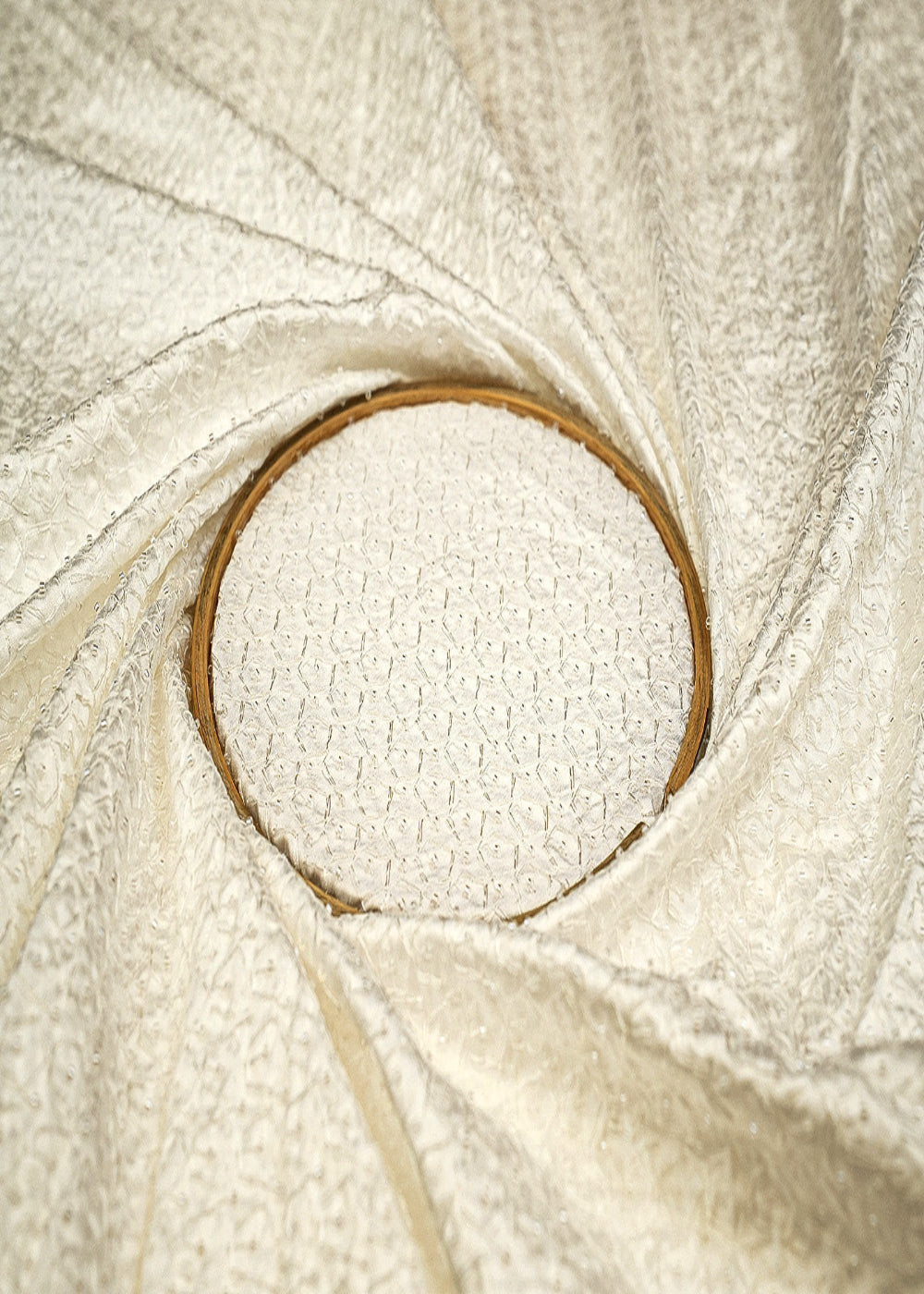
That is what dyeable embroidery fabric offers. Instead of picking a pre-dyed piece, the buyer starts with an embroidered base and dyes it to the shade required. Bridal wear, festive collections, designer lehengas, custom boutique orders. All of it becomes possible without waiting for a mill to release the right colour.
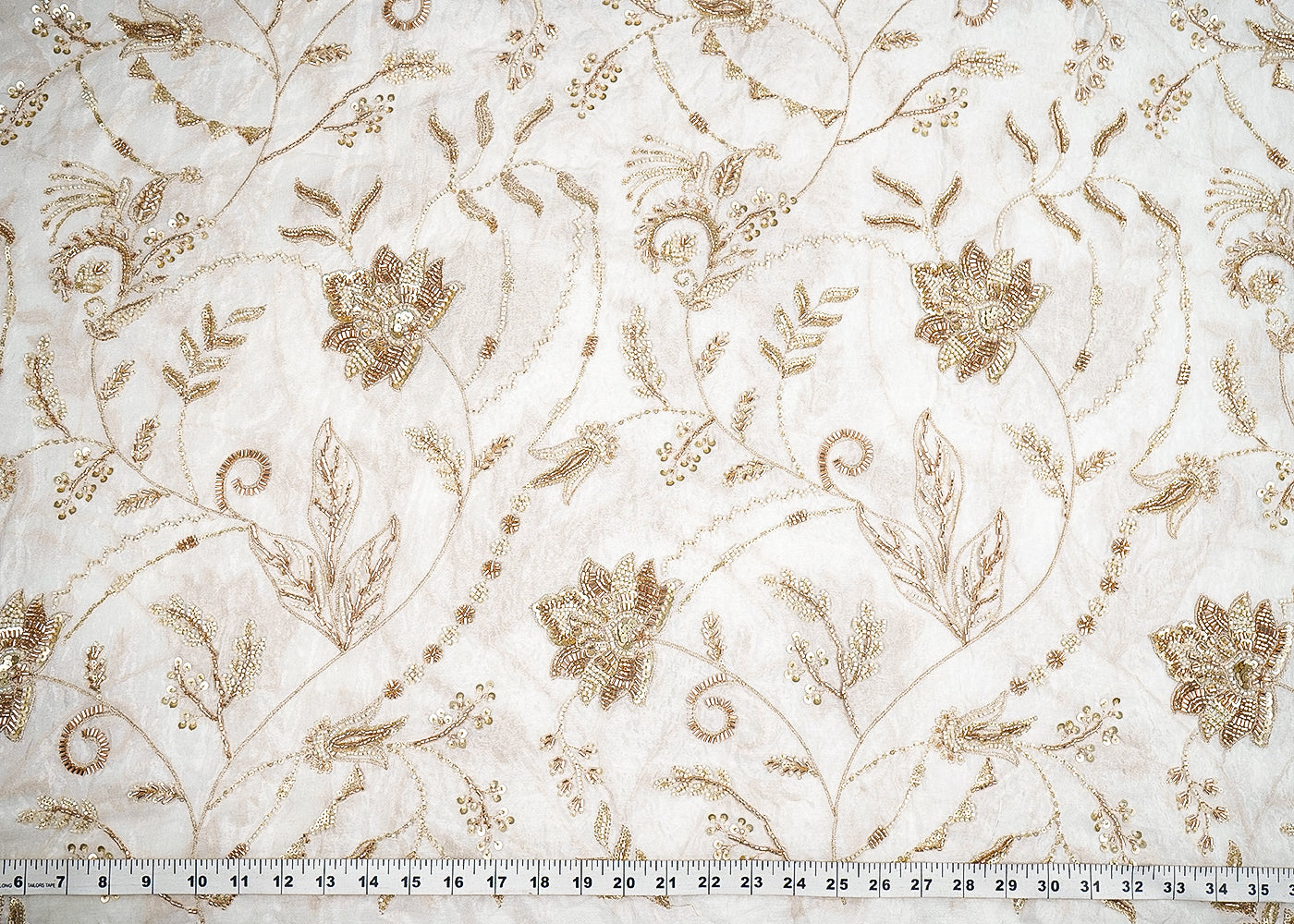
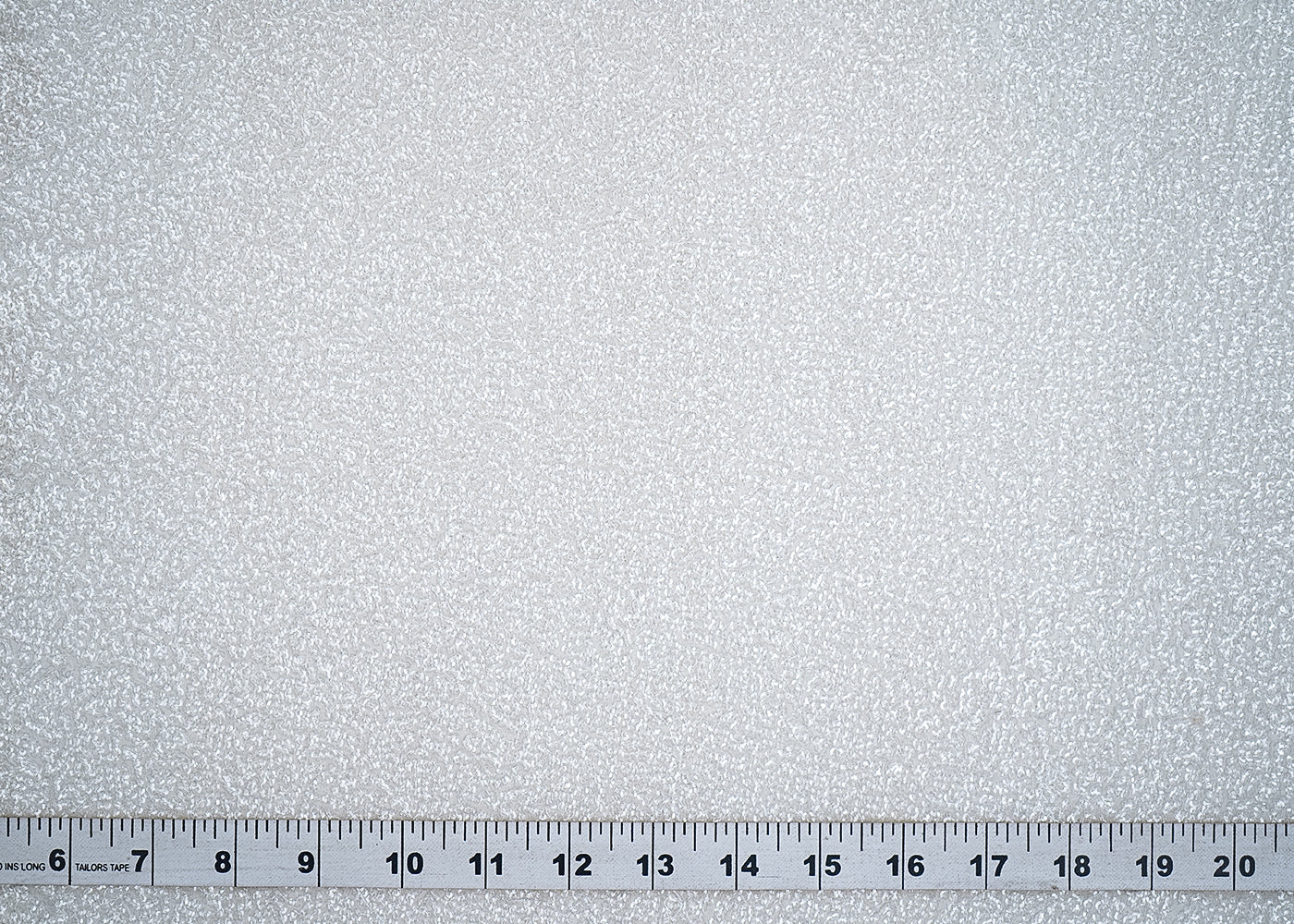
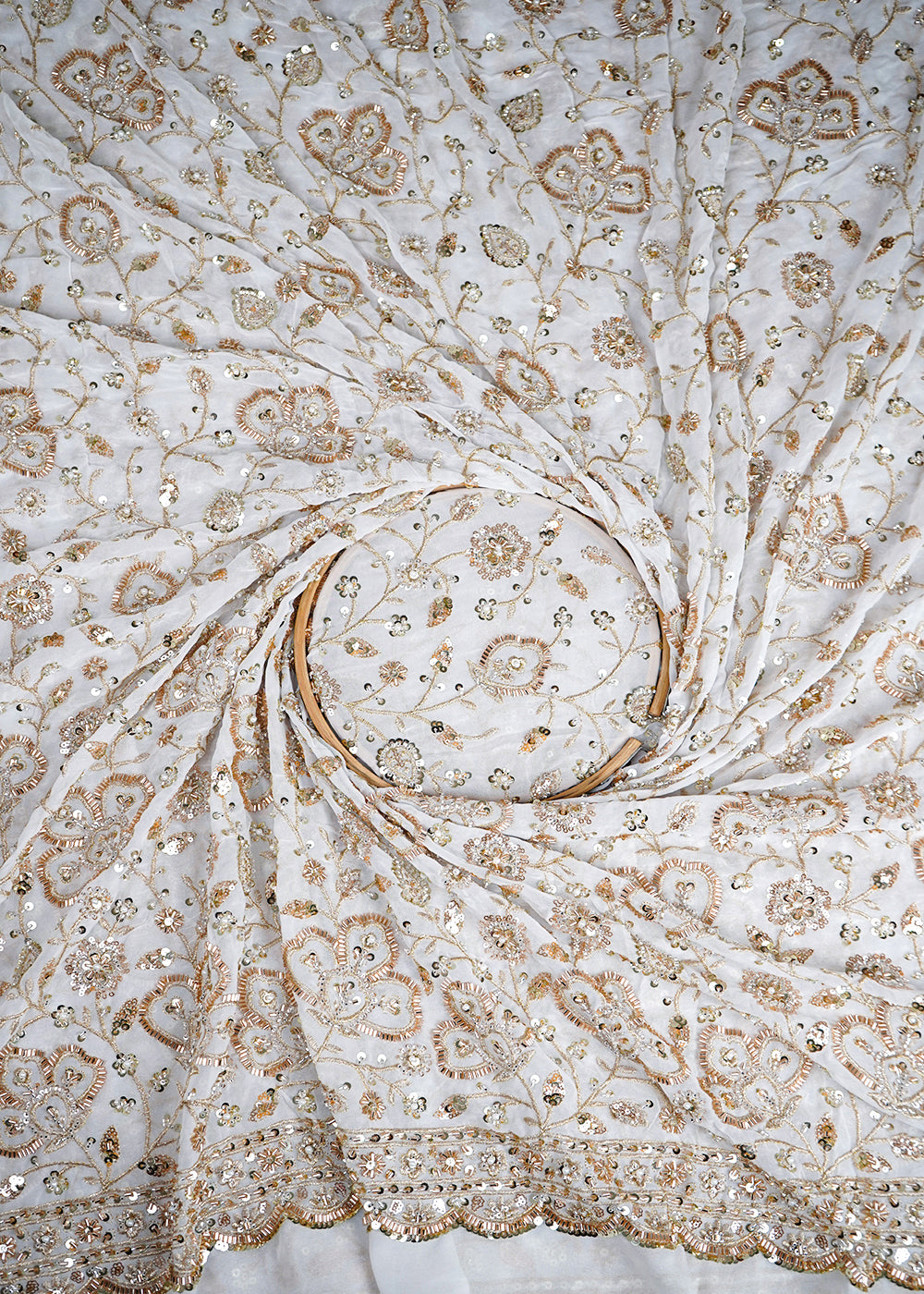
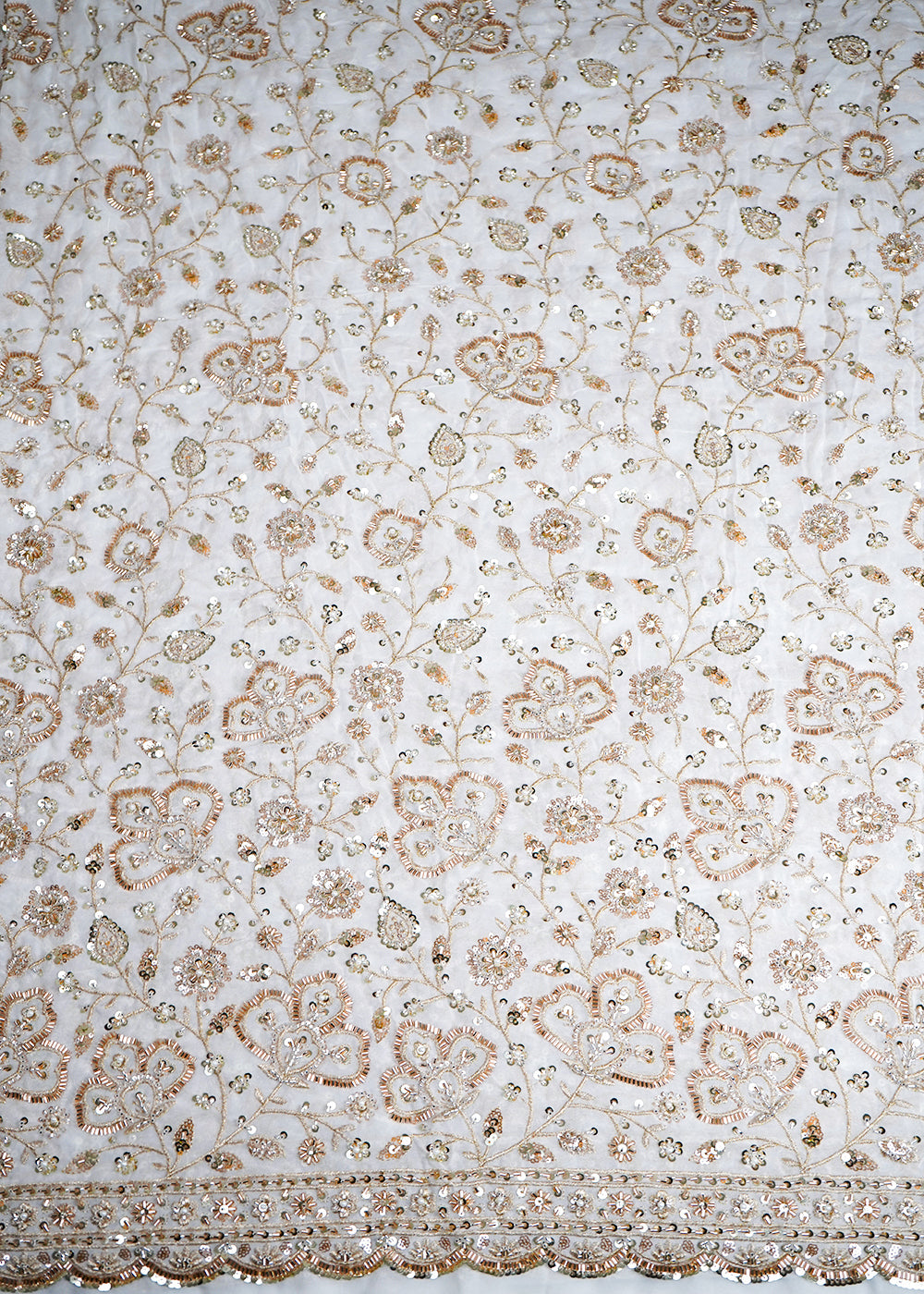
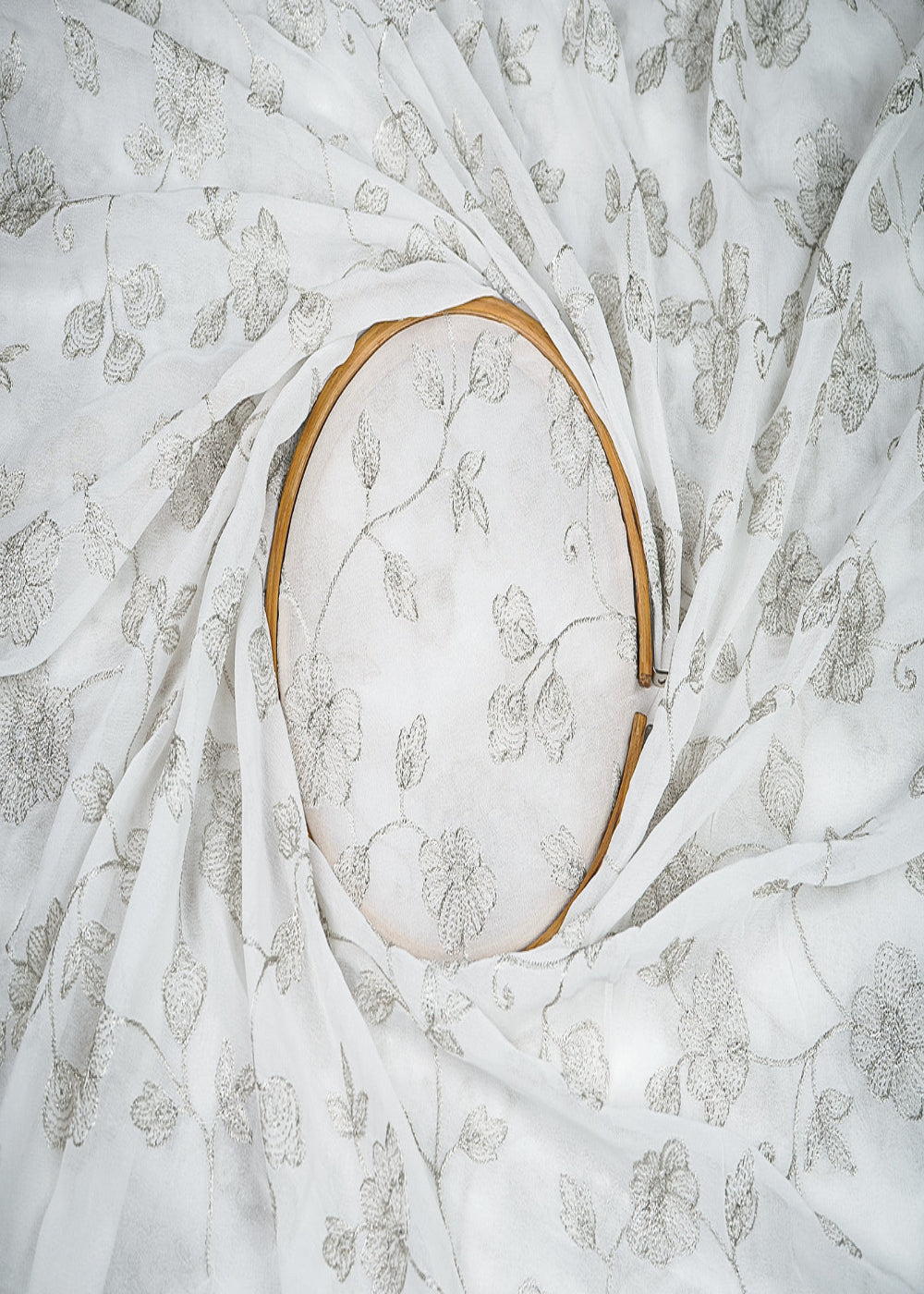
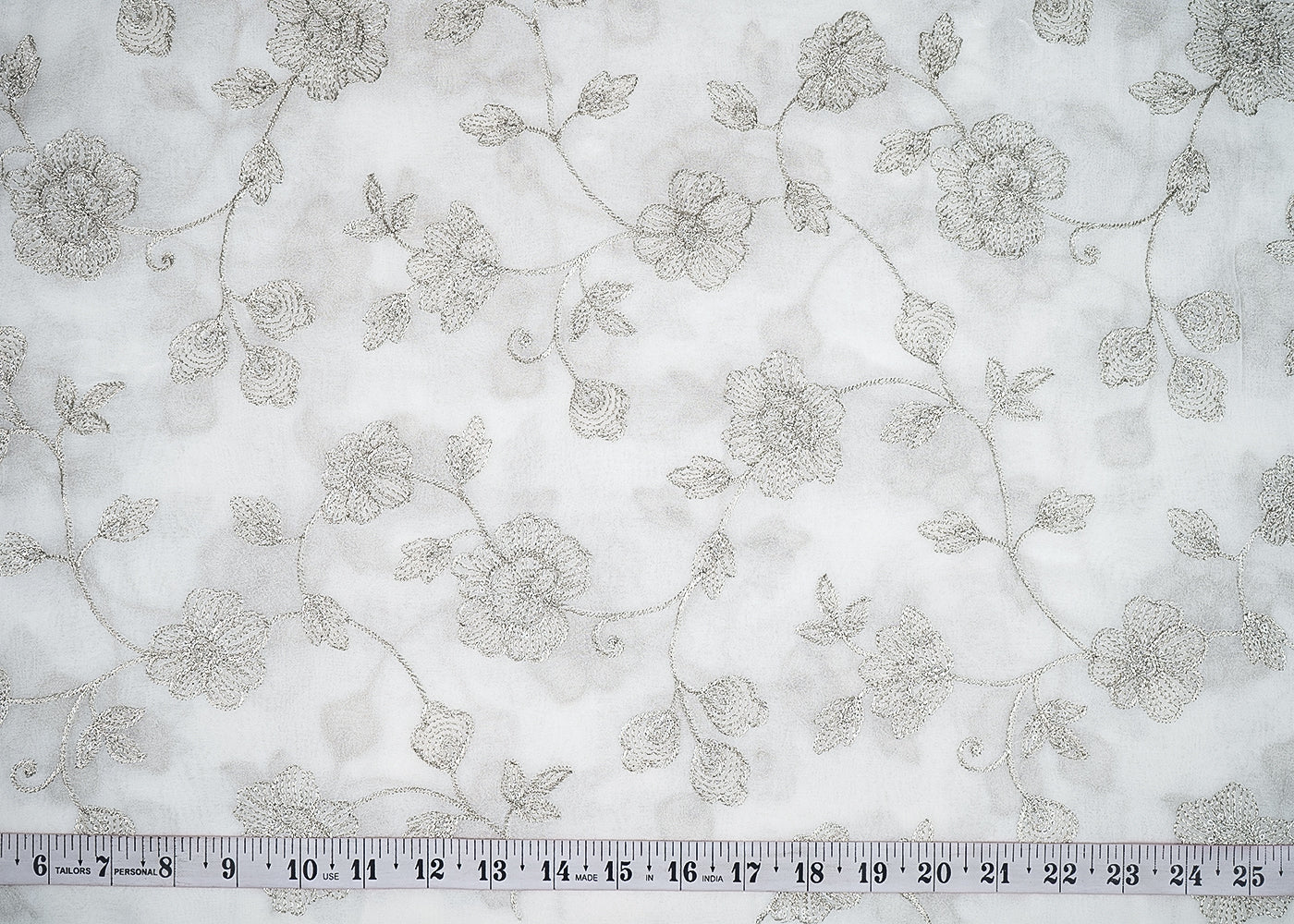
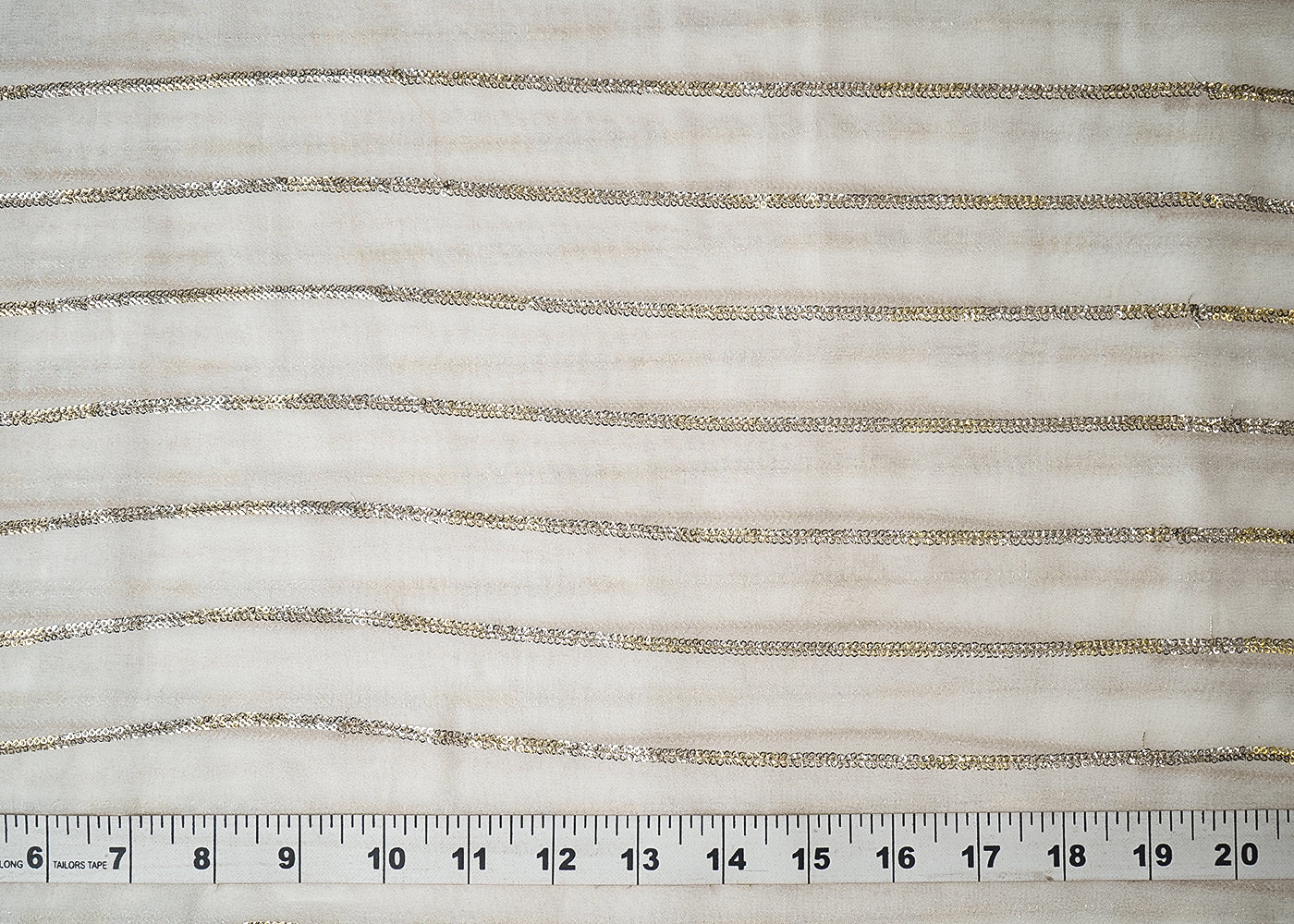
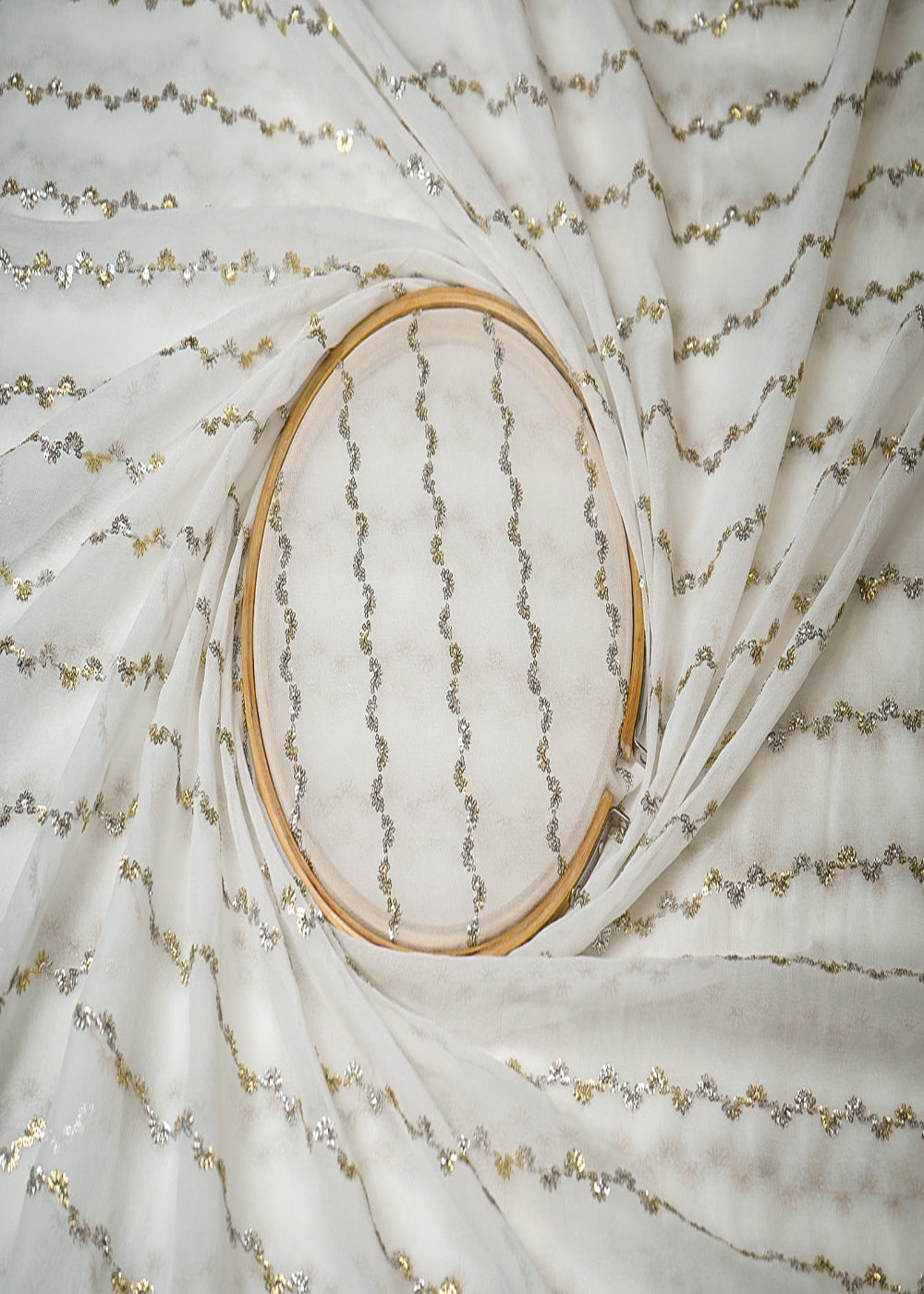
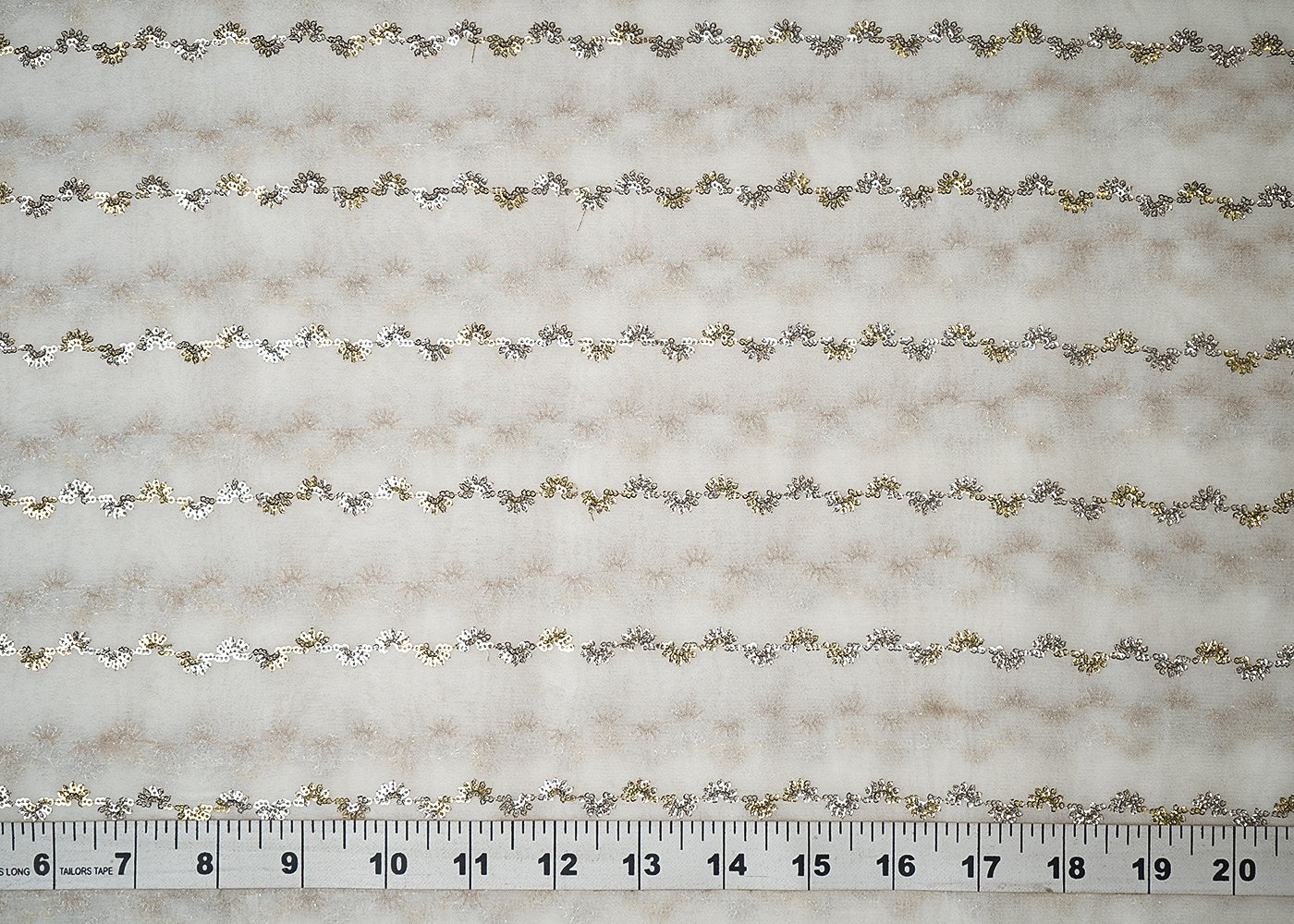
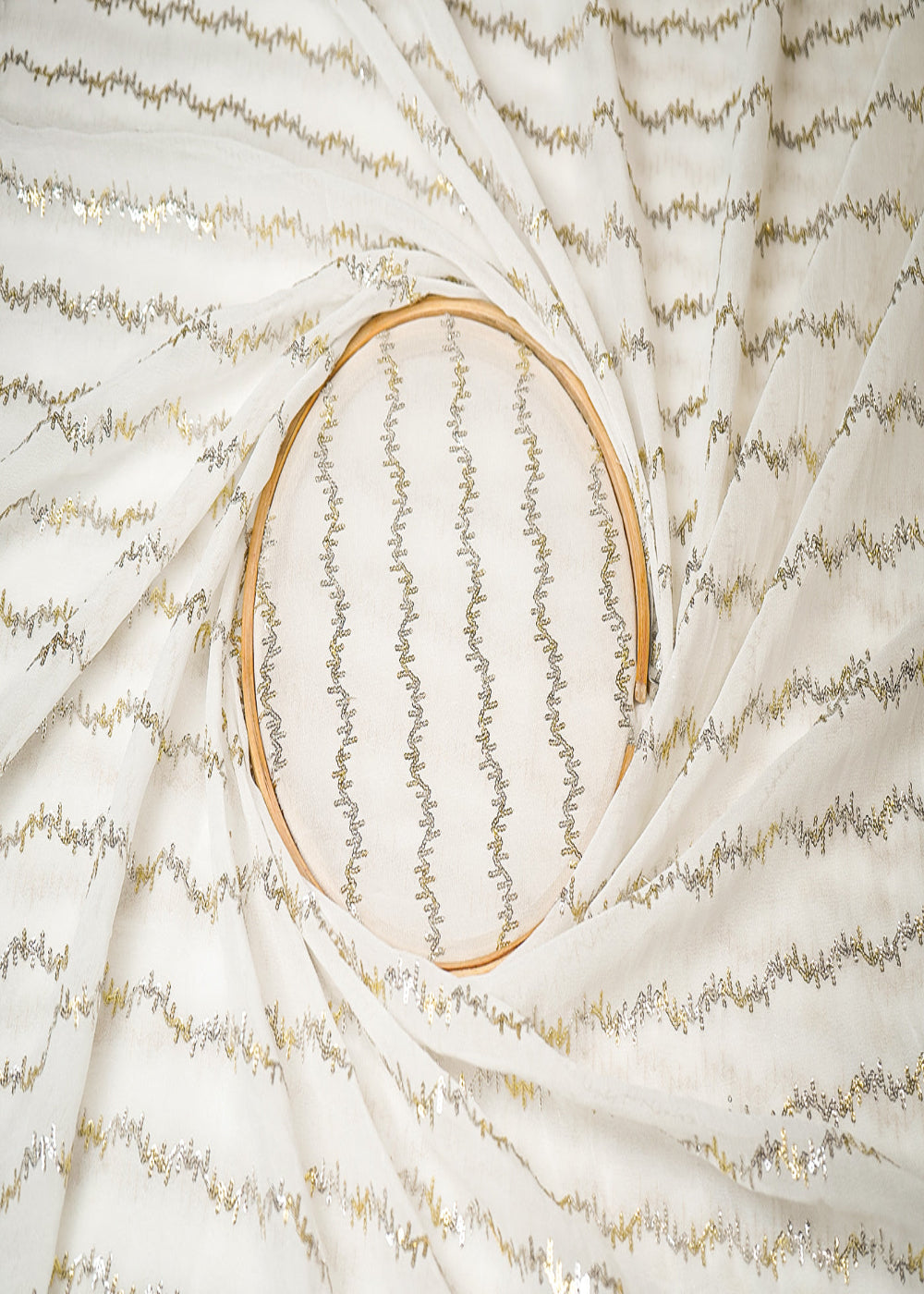
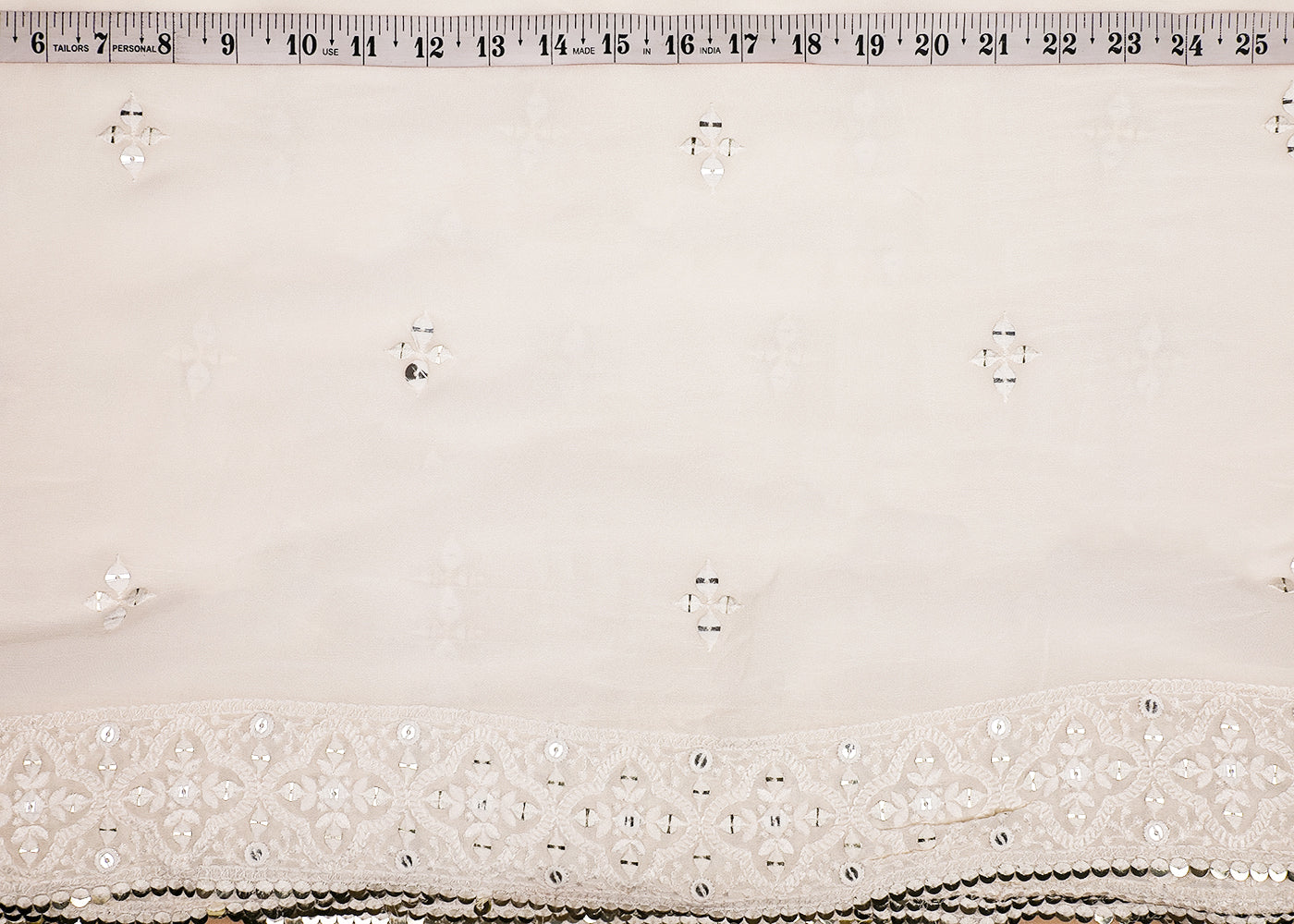
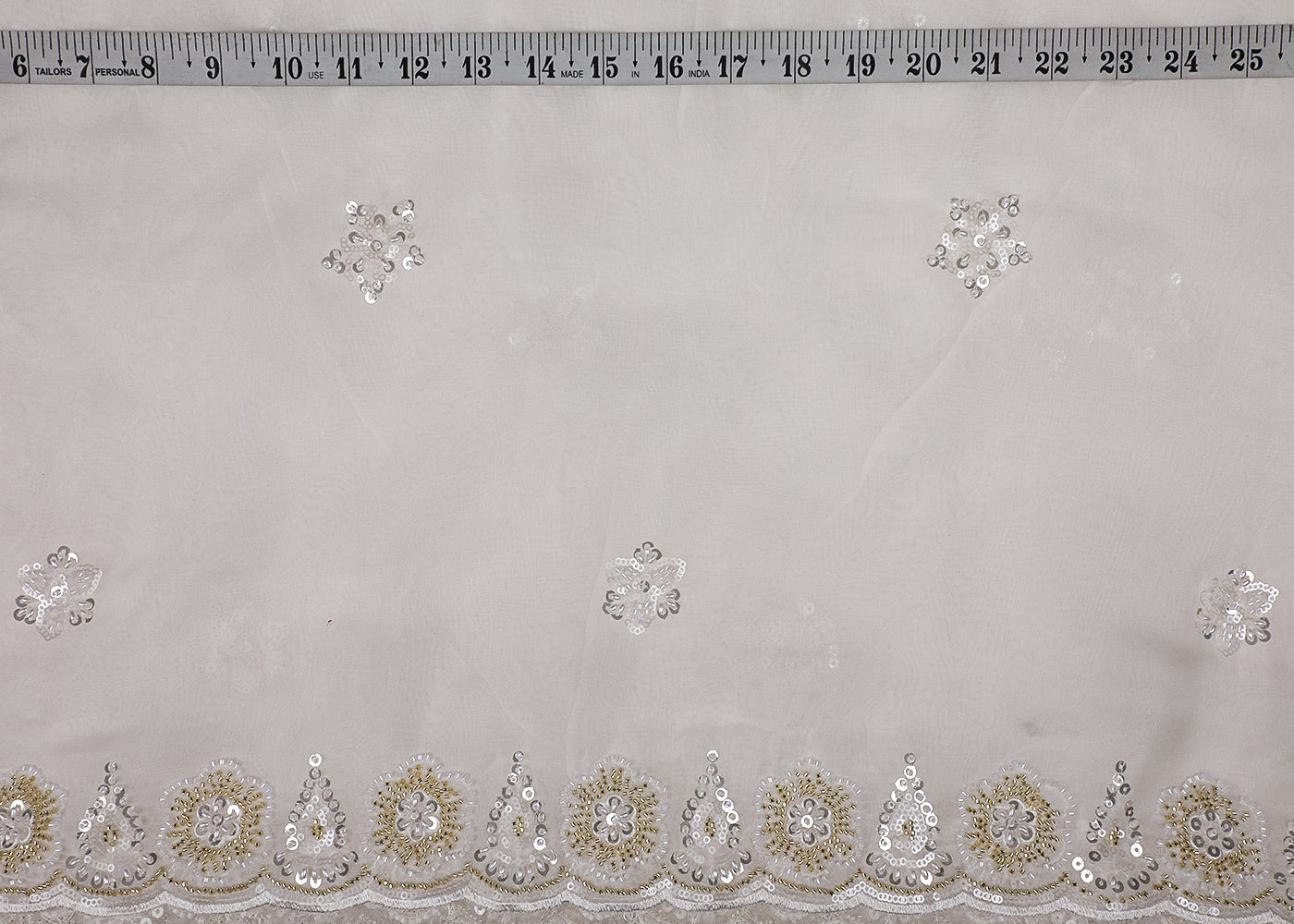
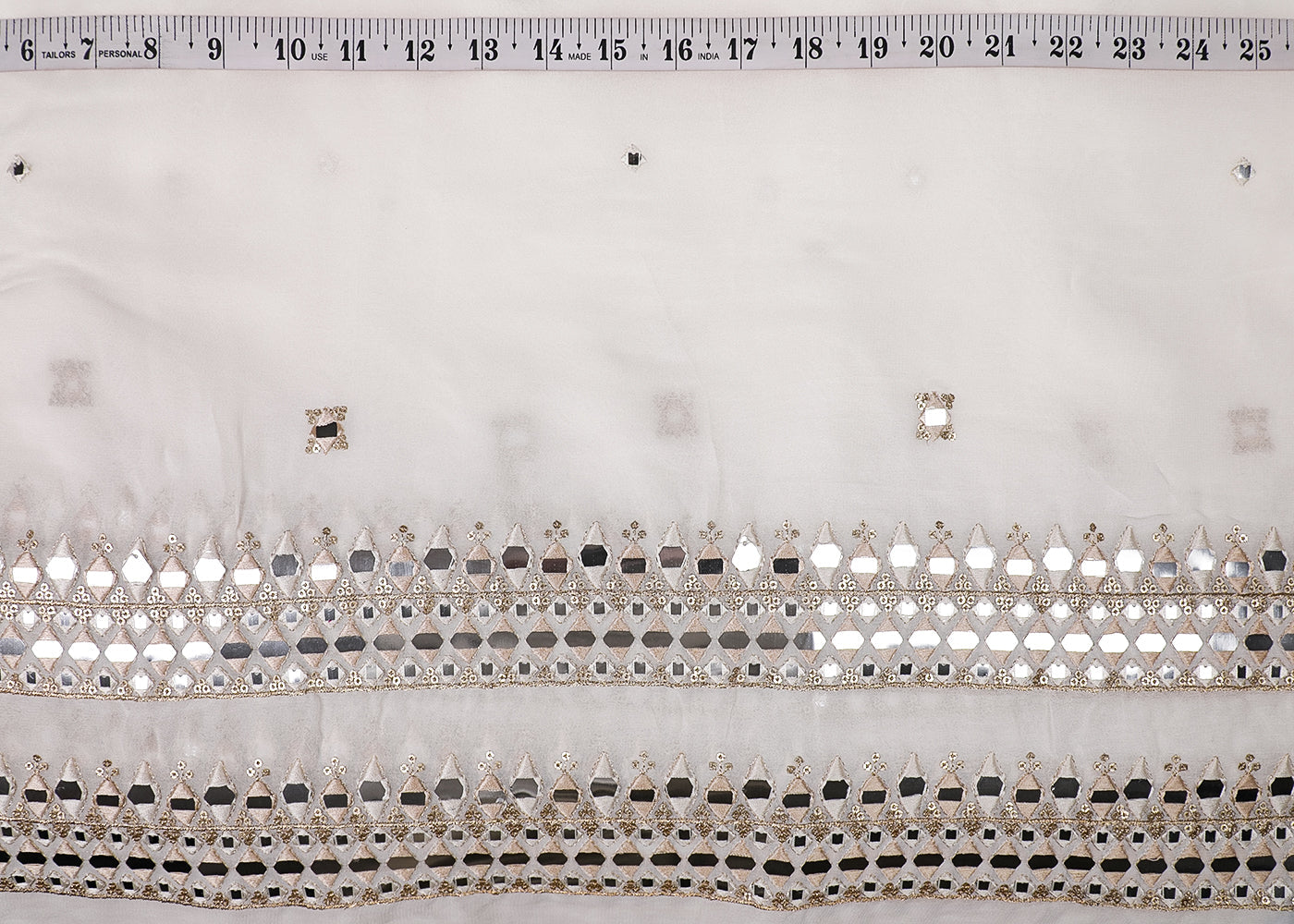
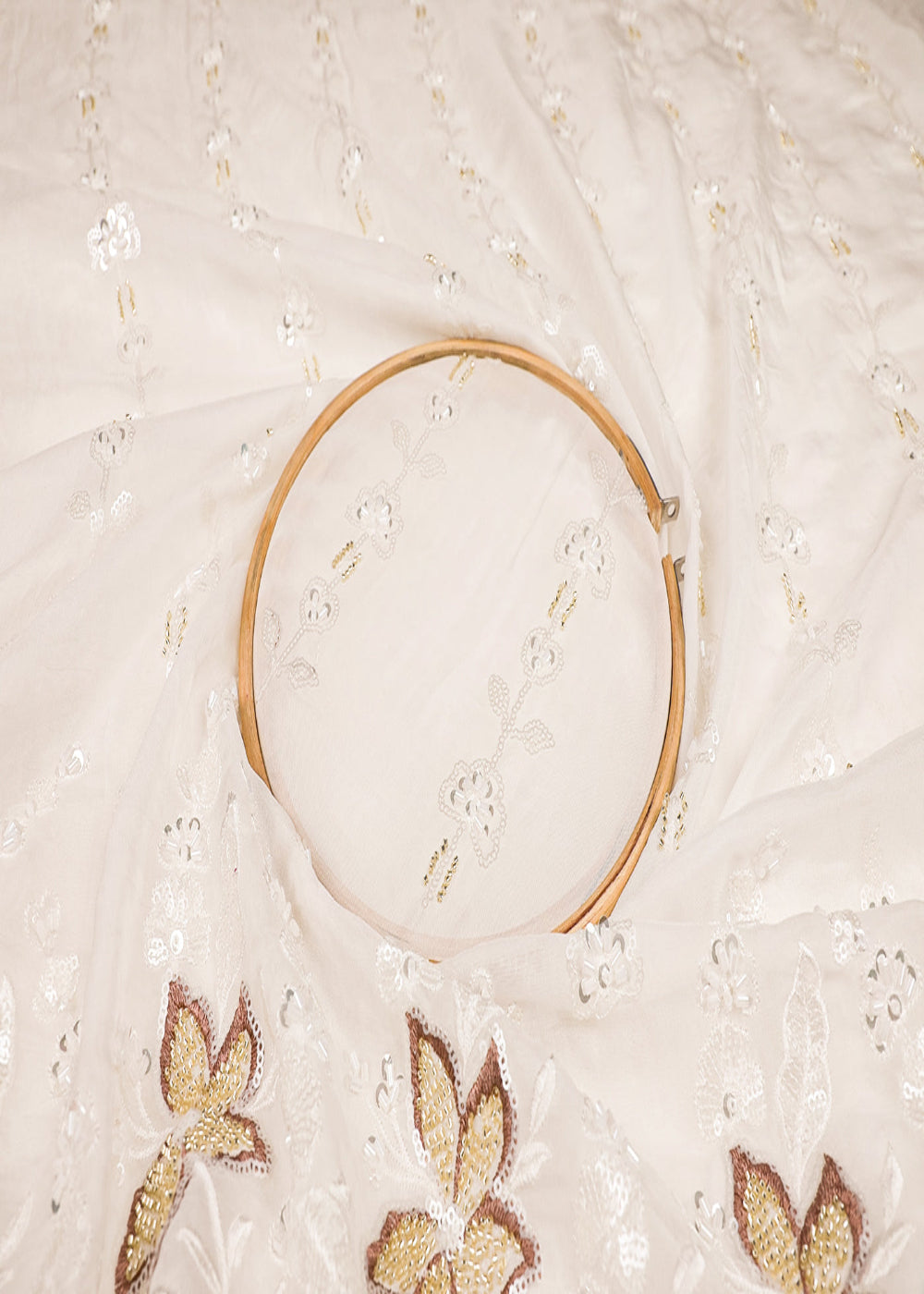
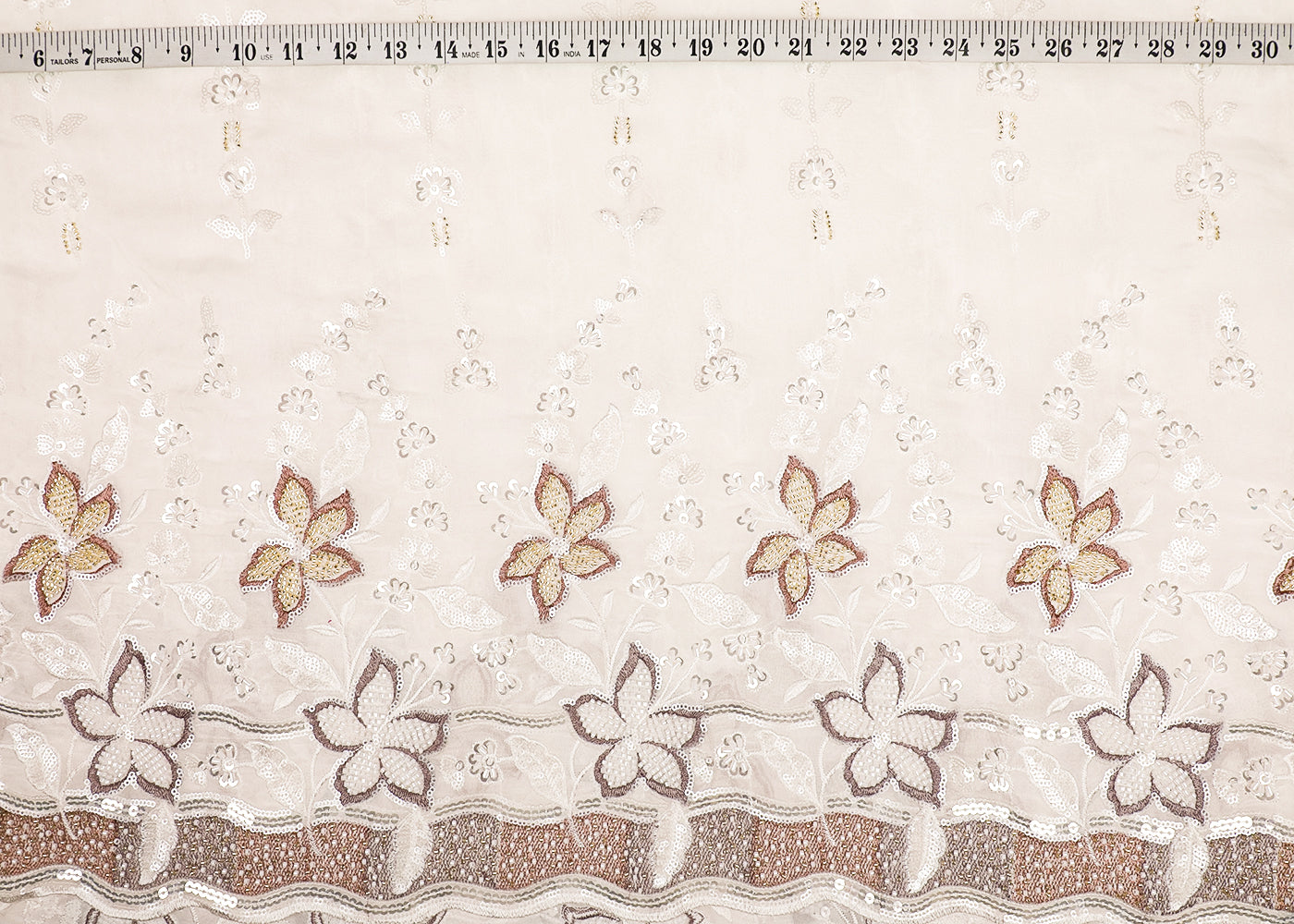
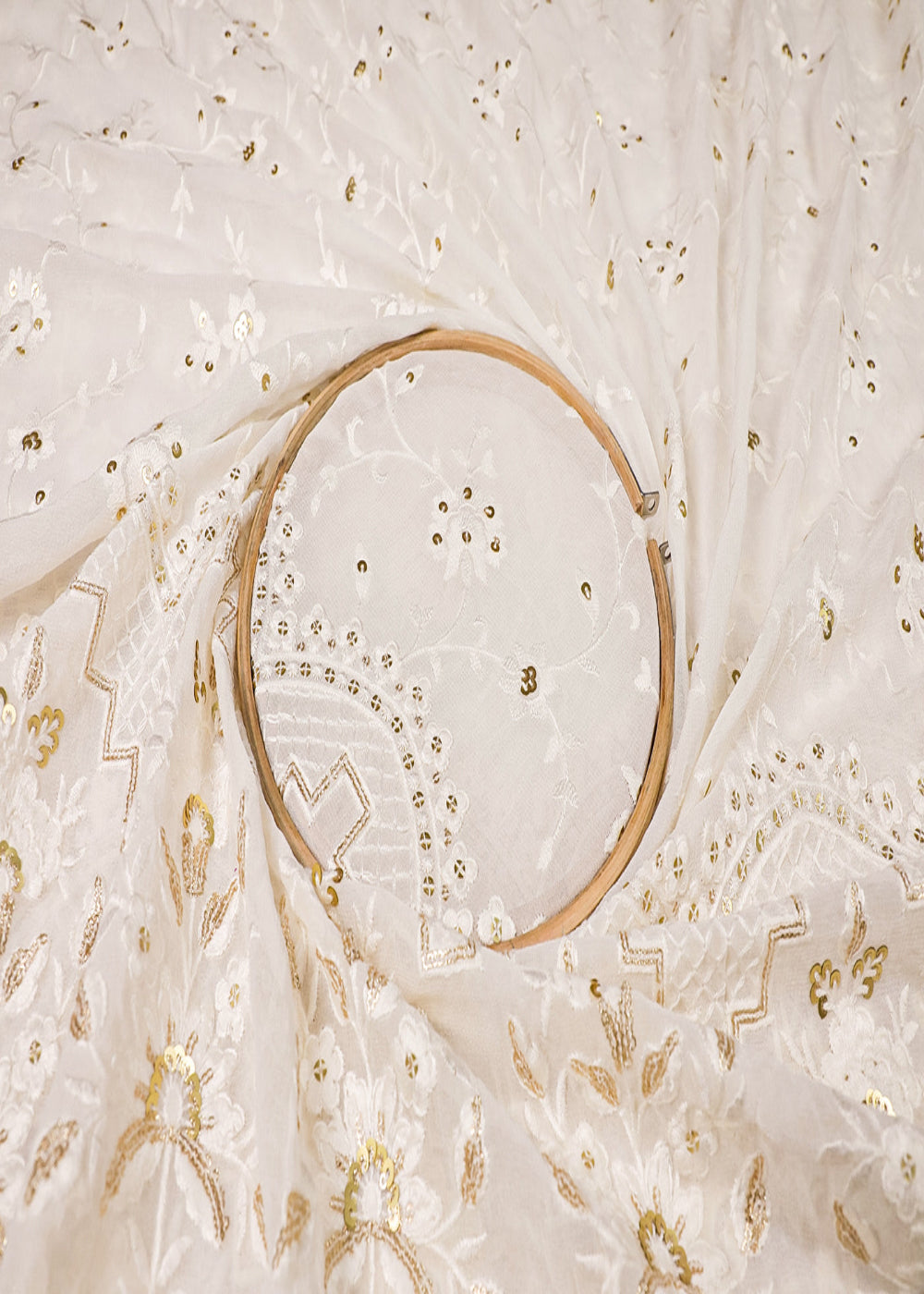
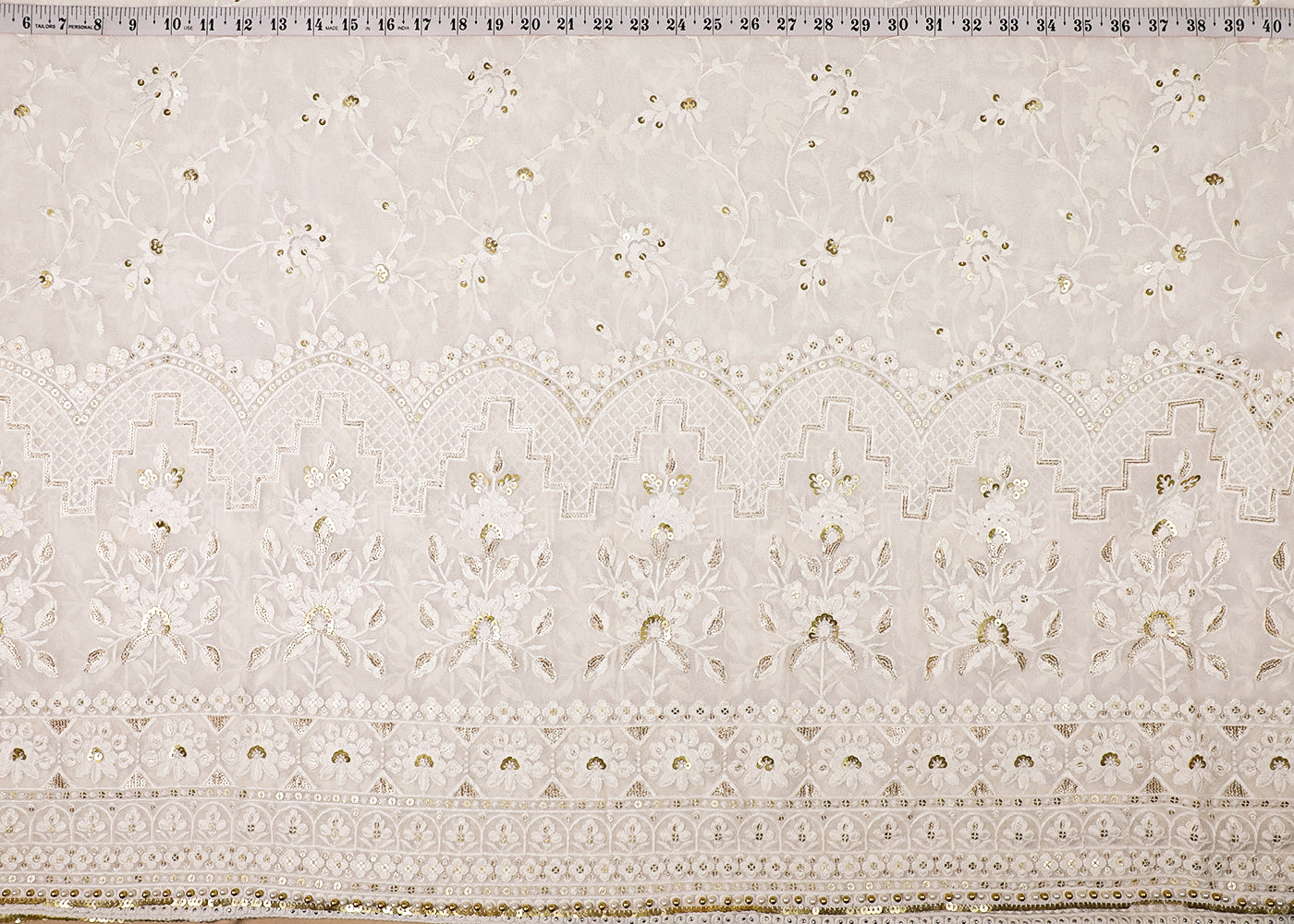
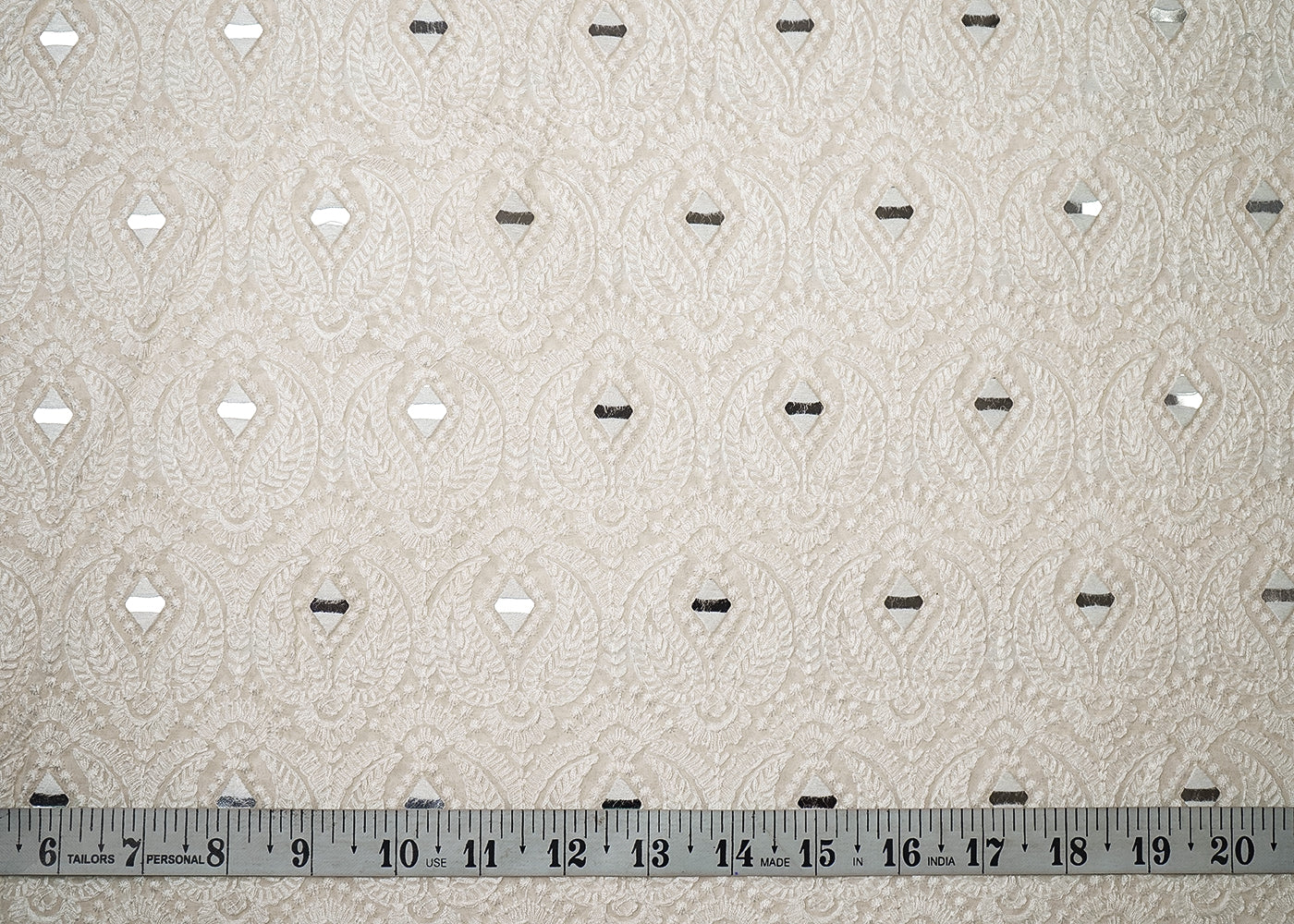
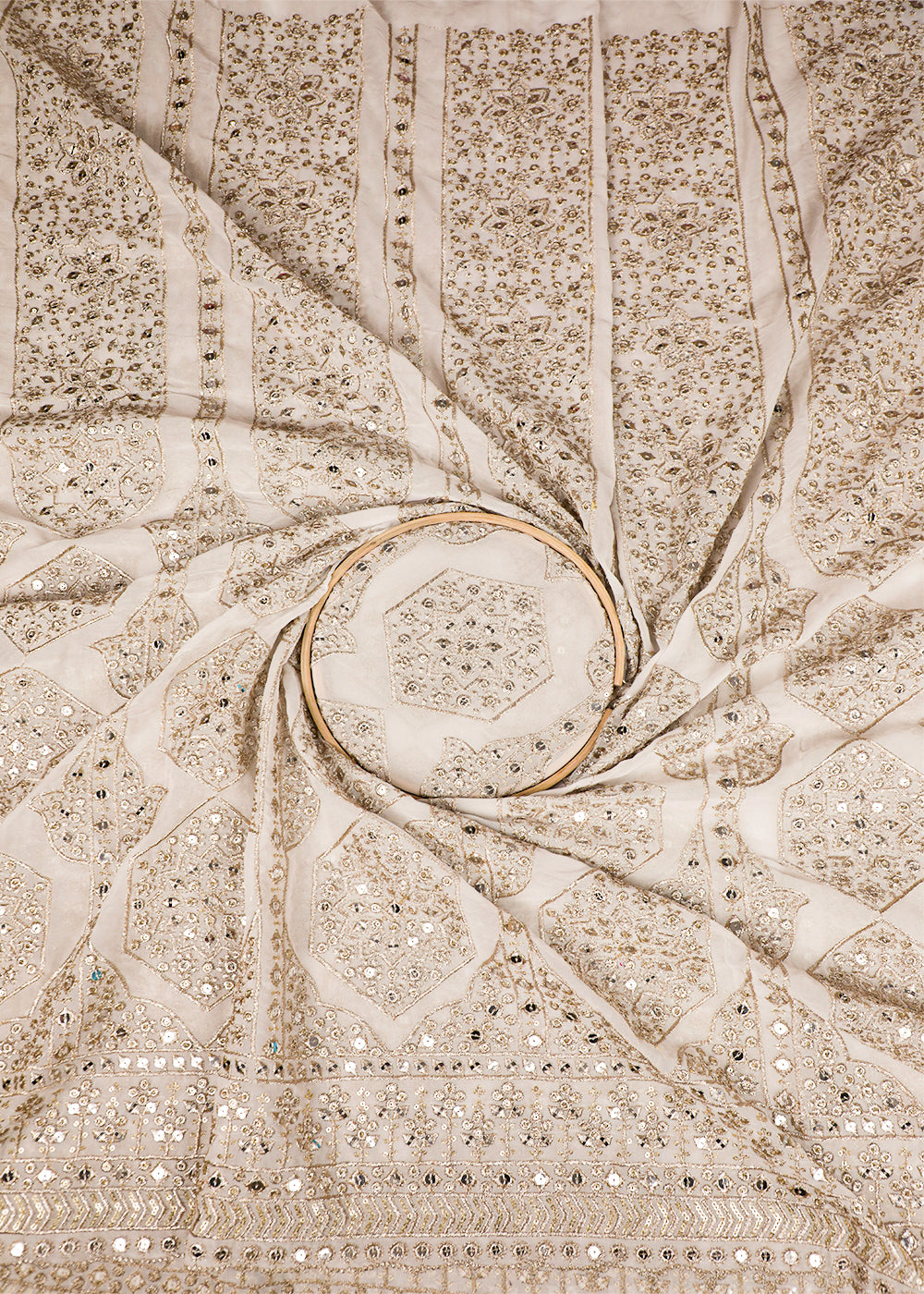
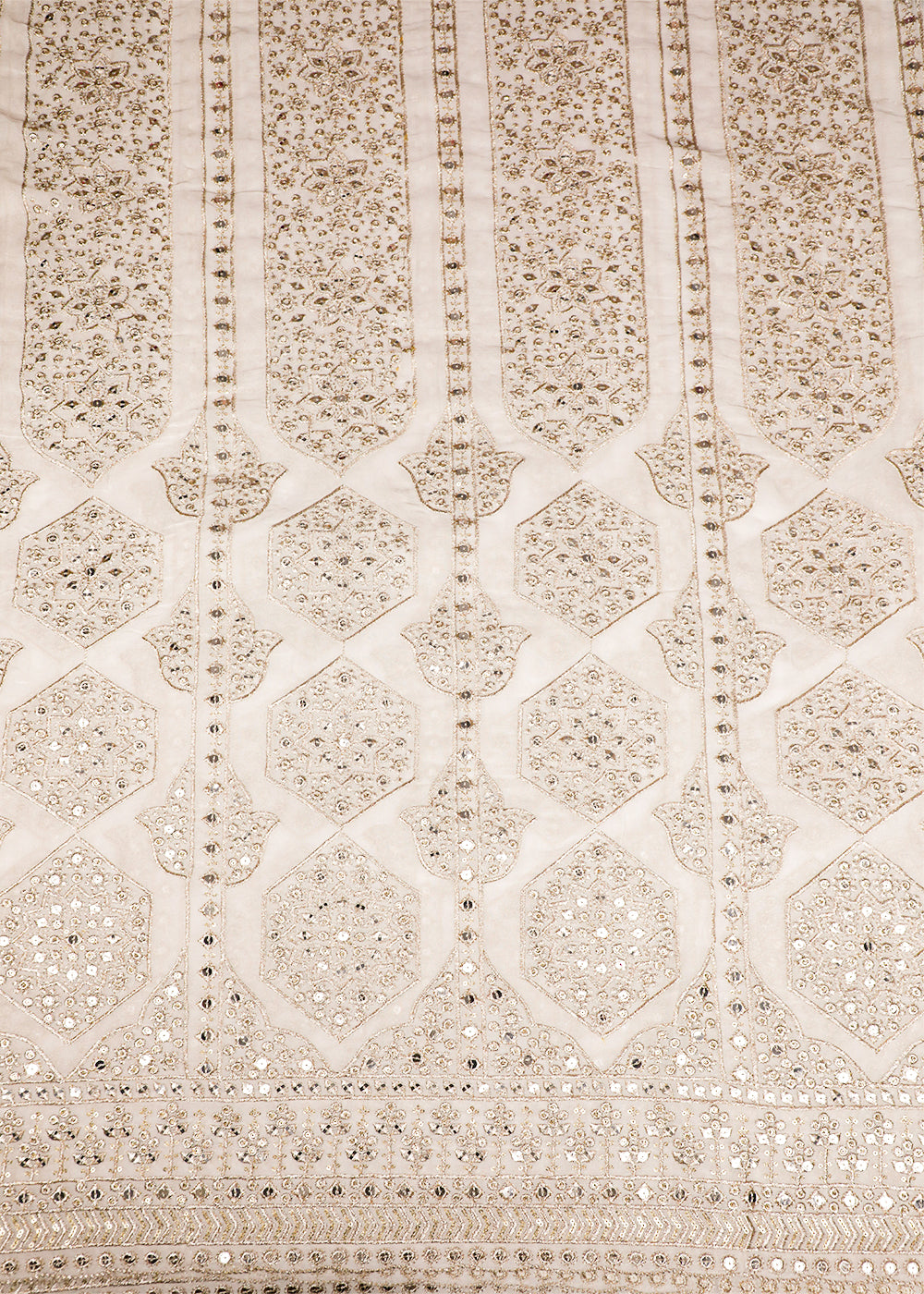
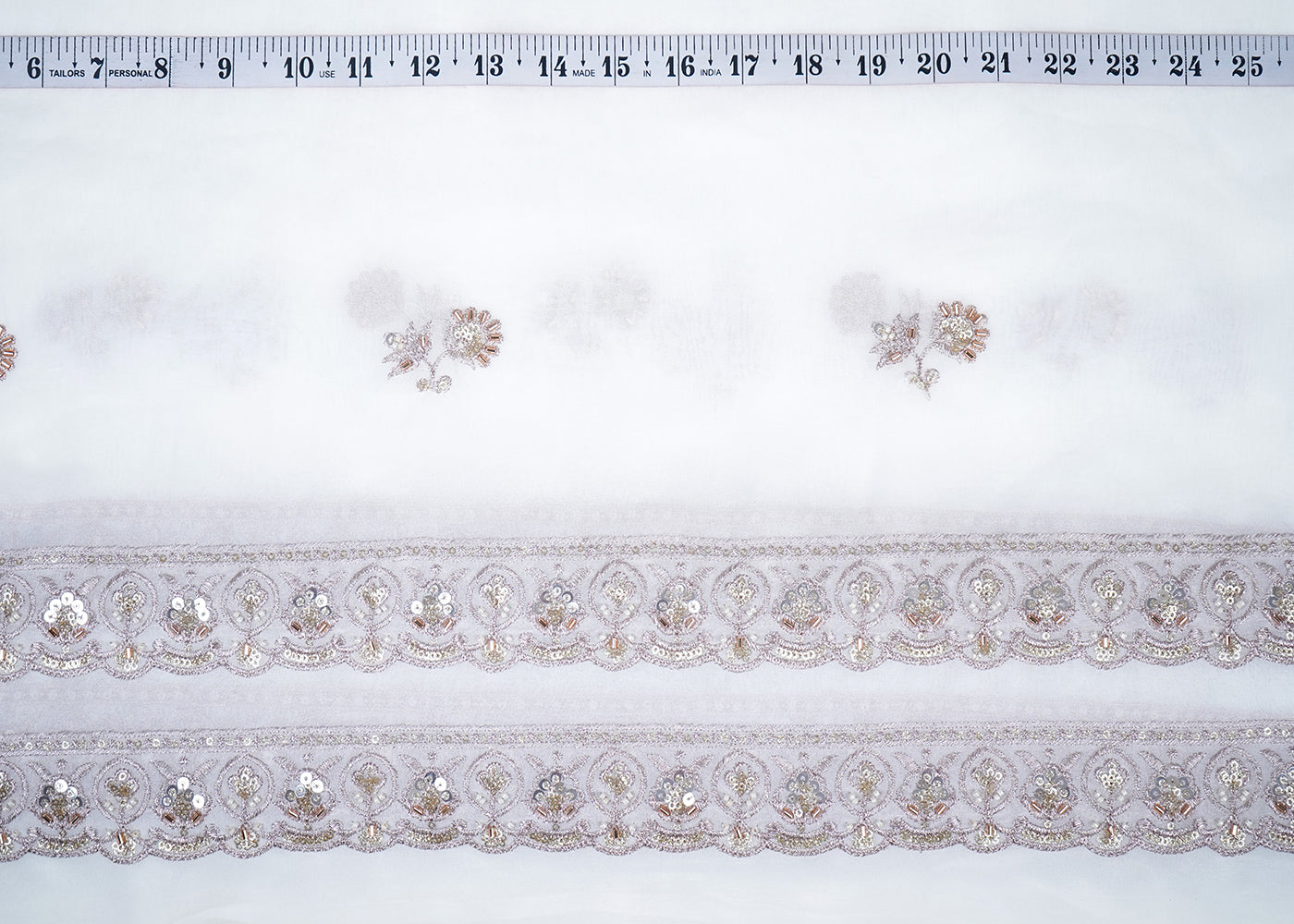
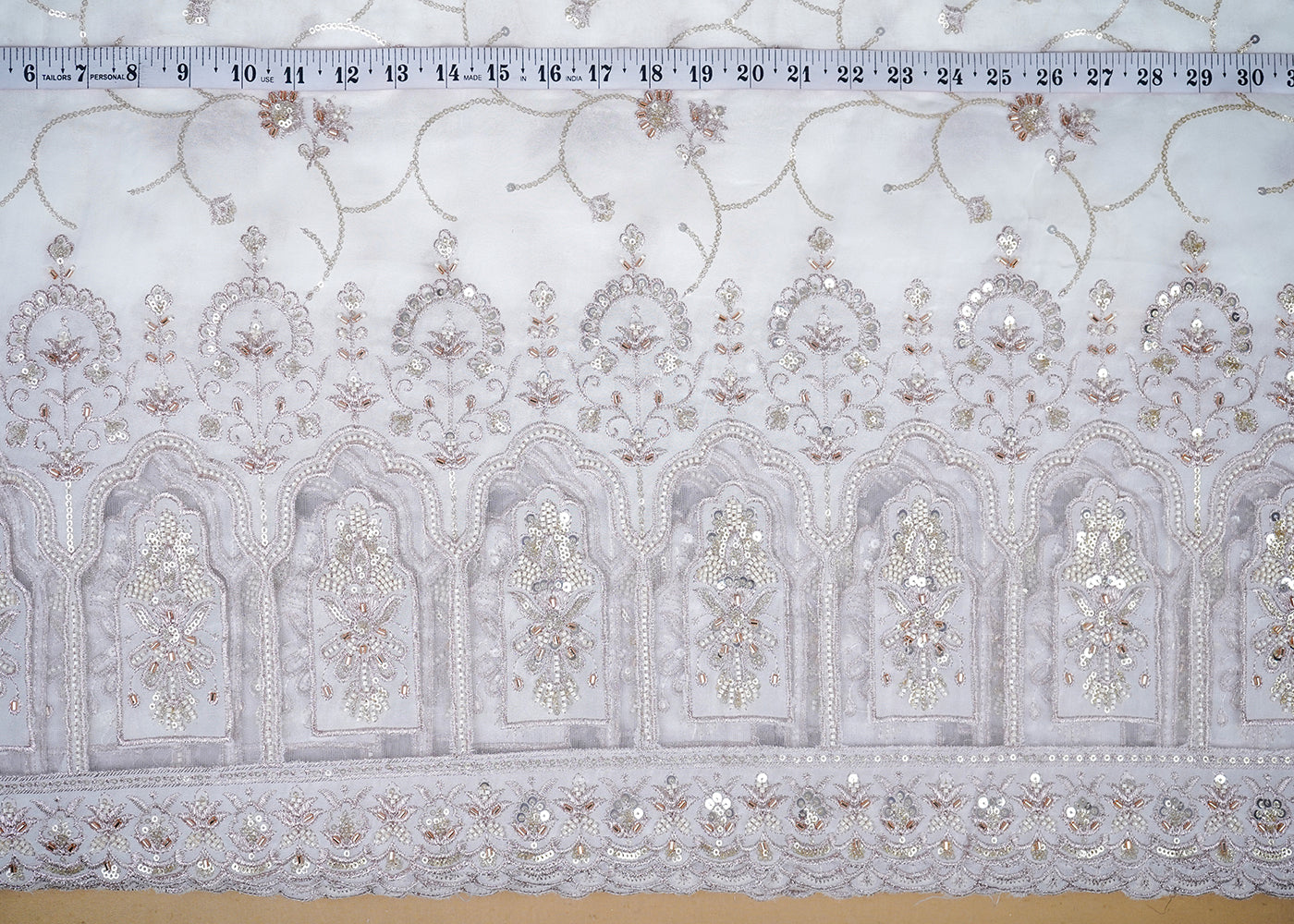
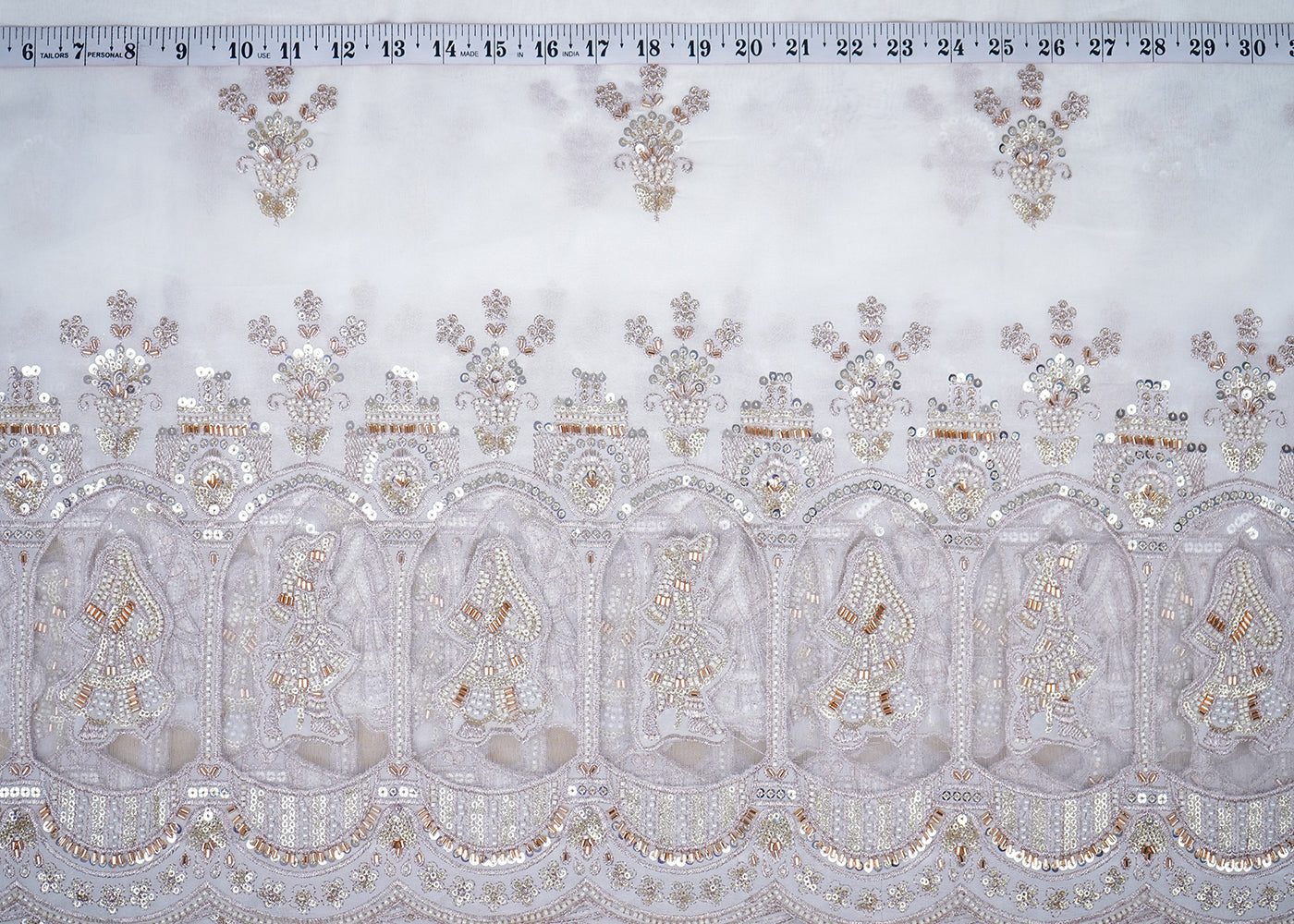
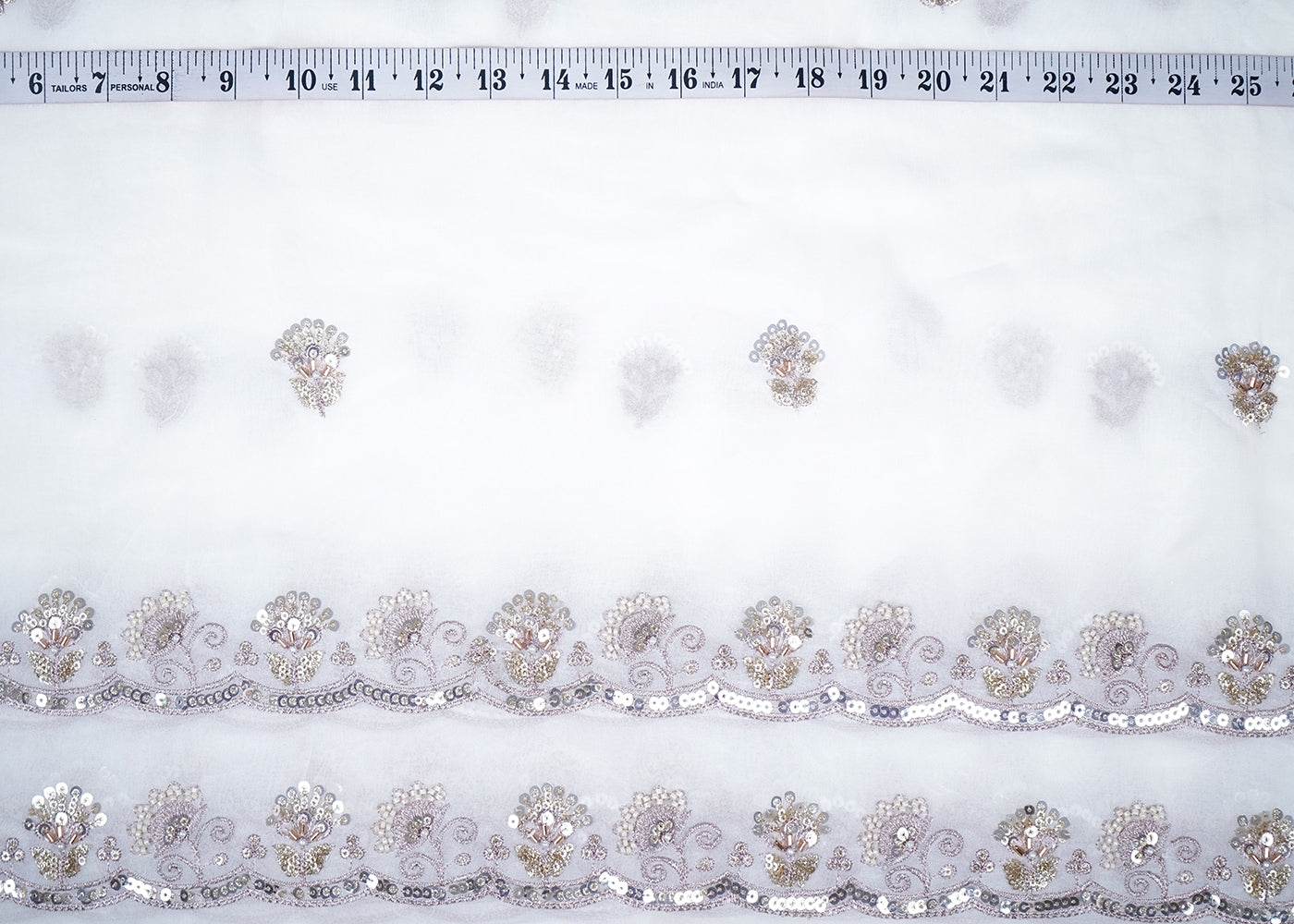
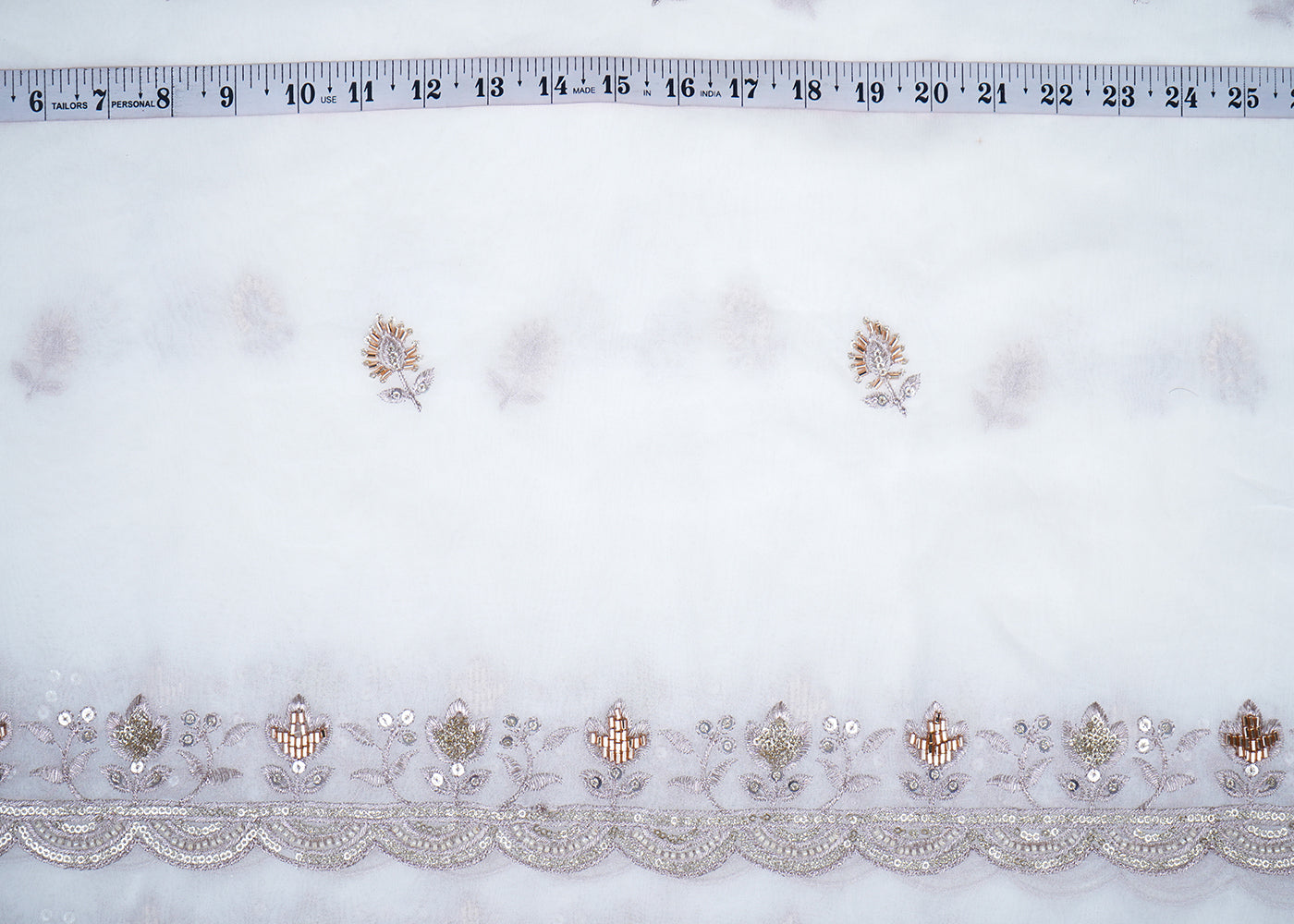
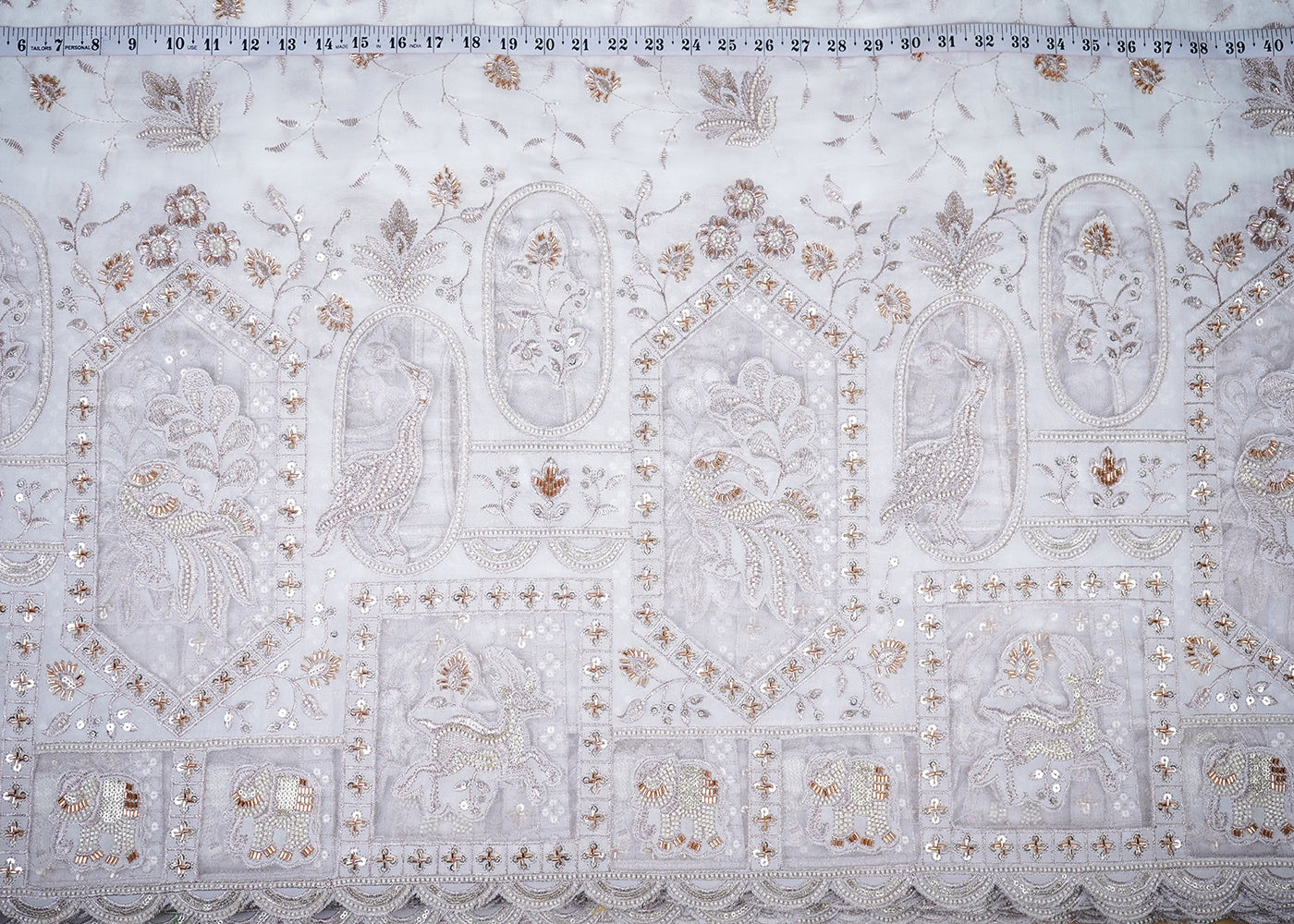
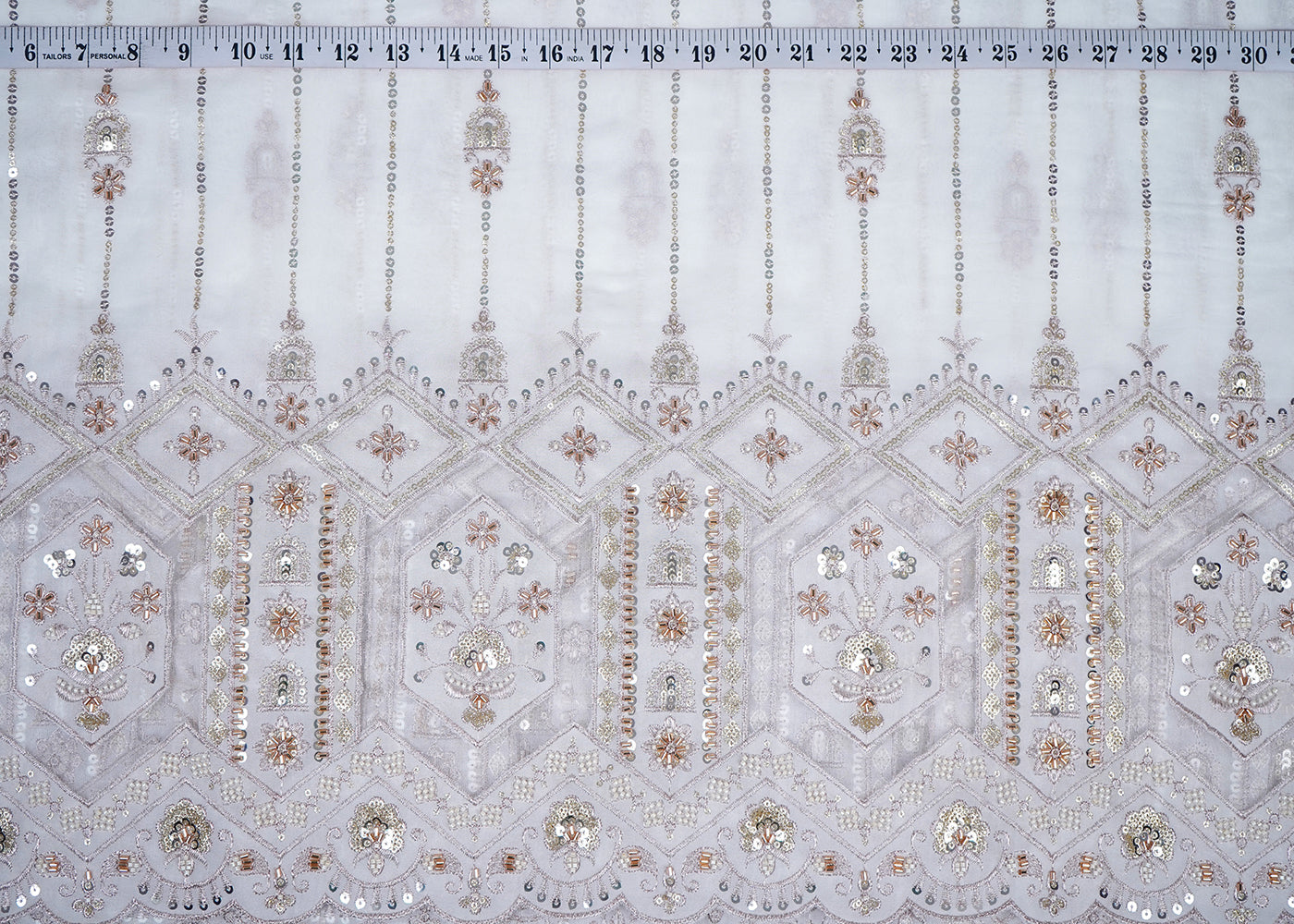
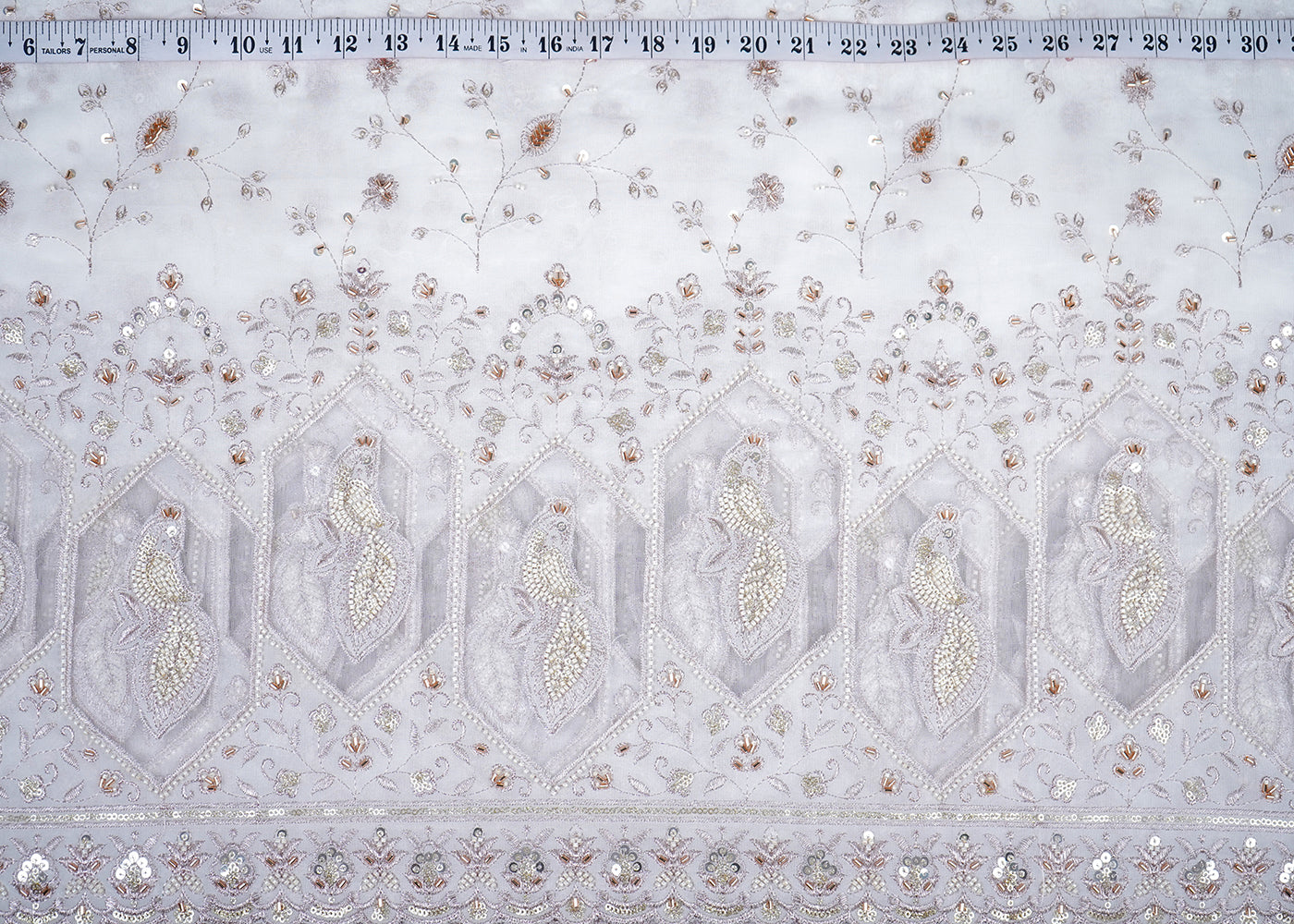
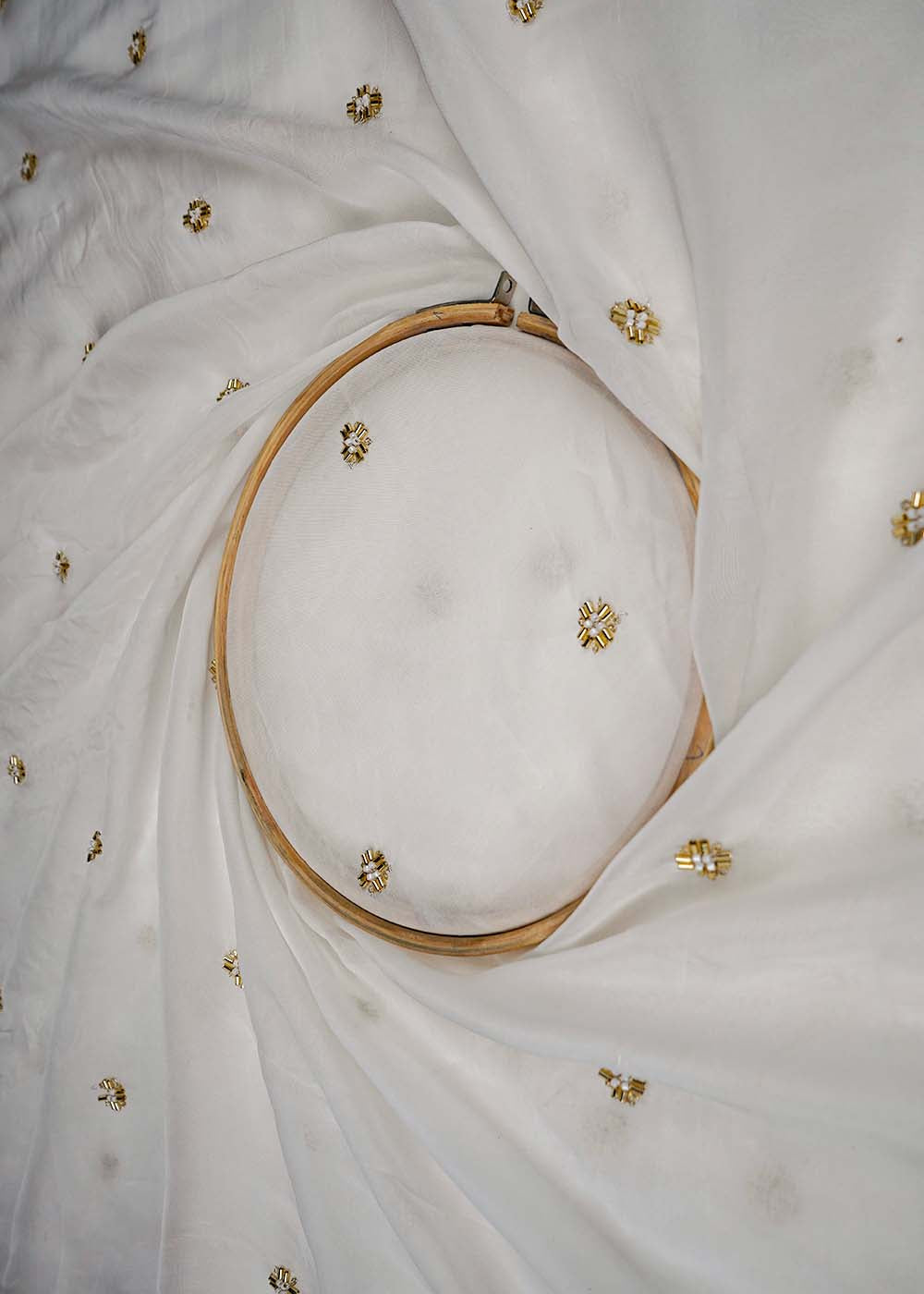
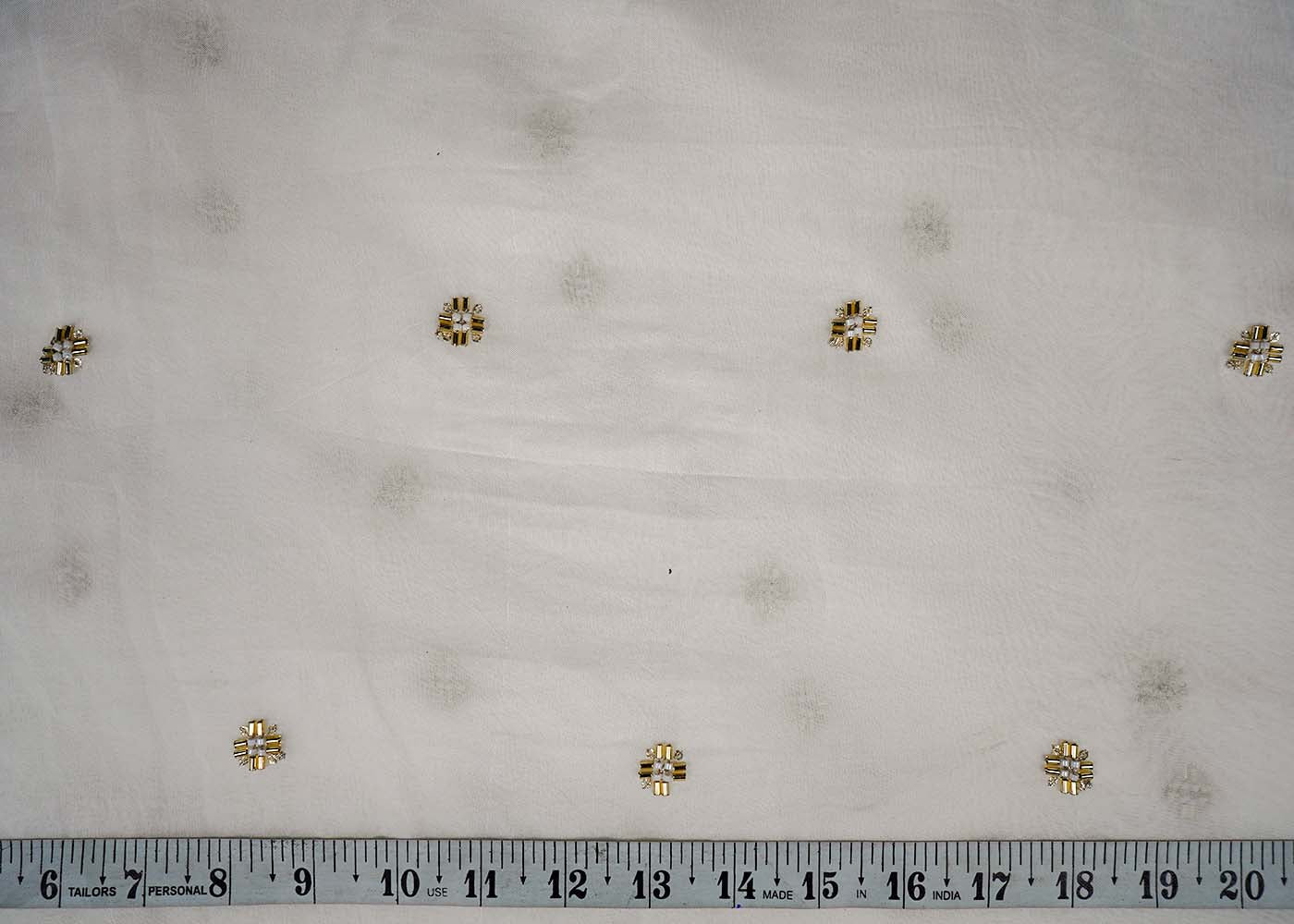
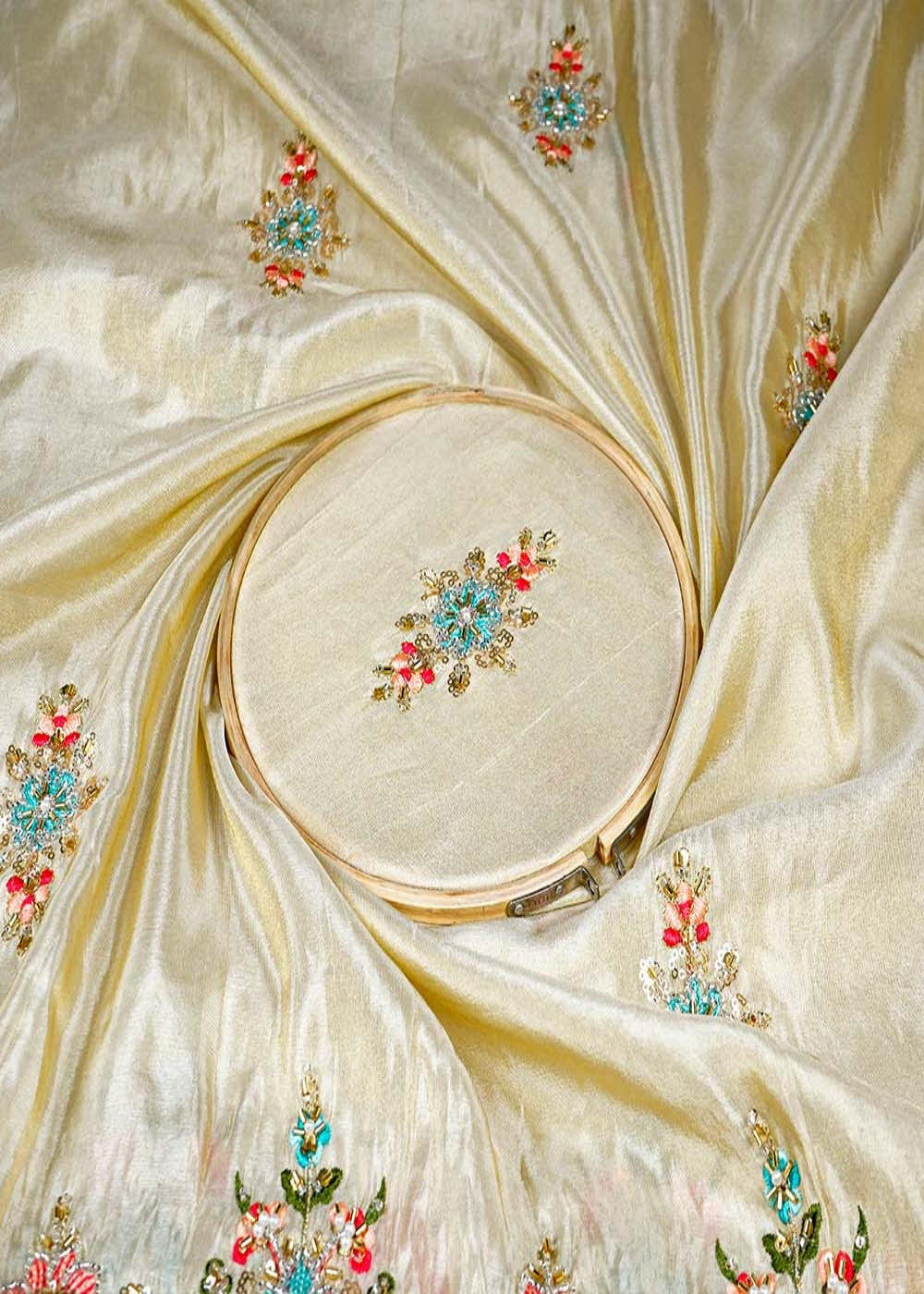
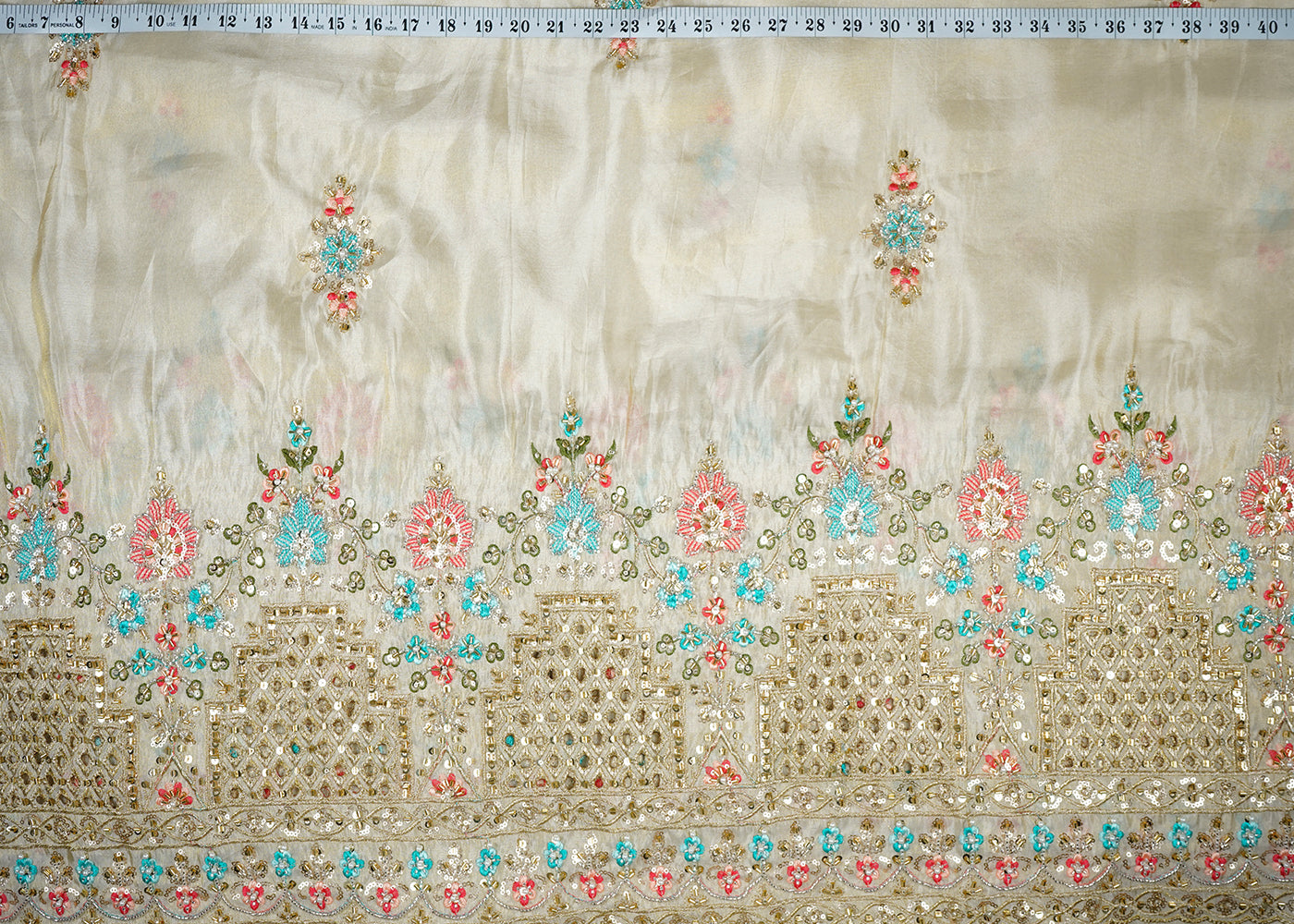
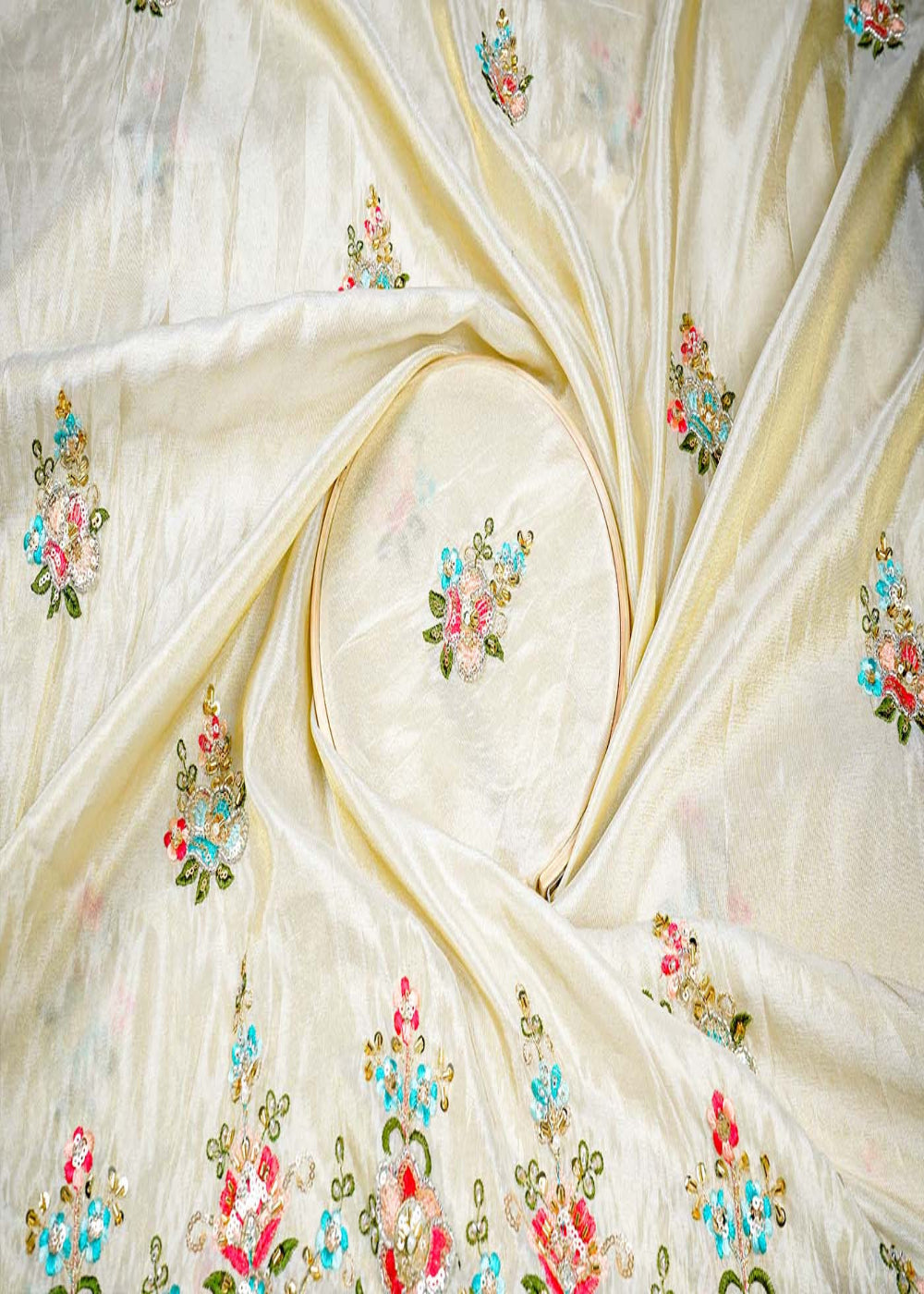
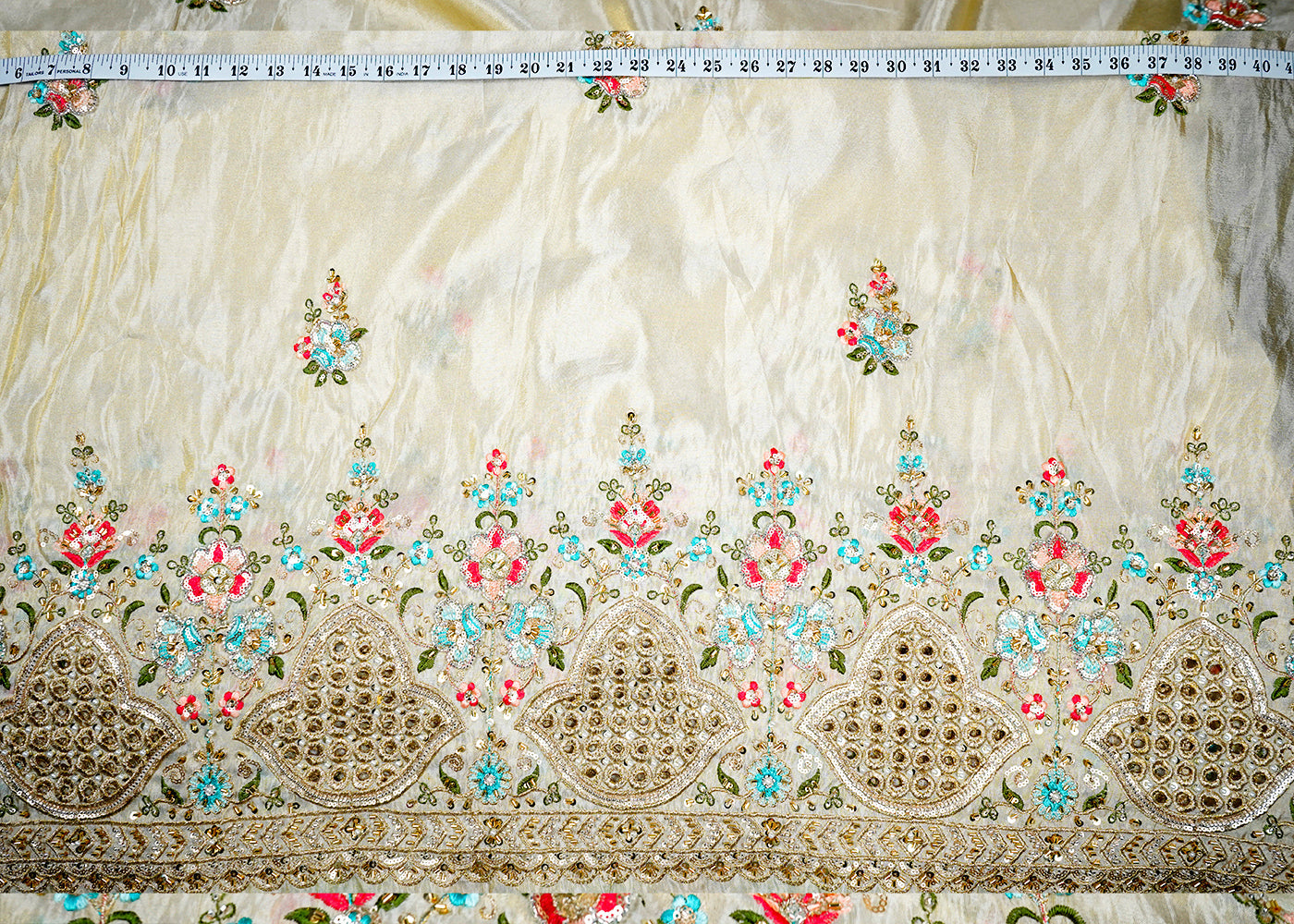
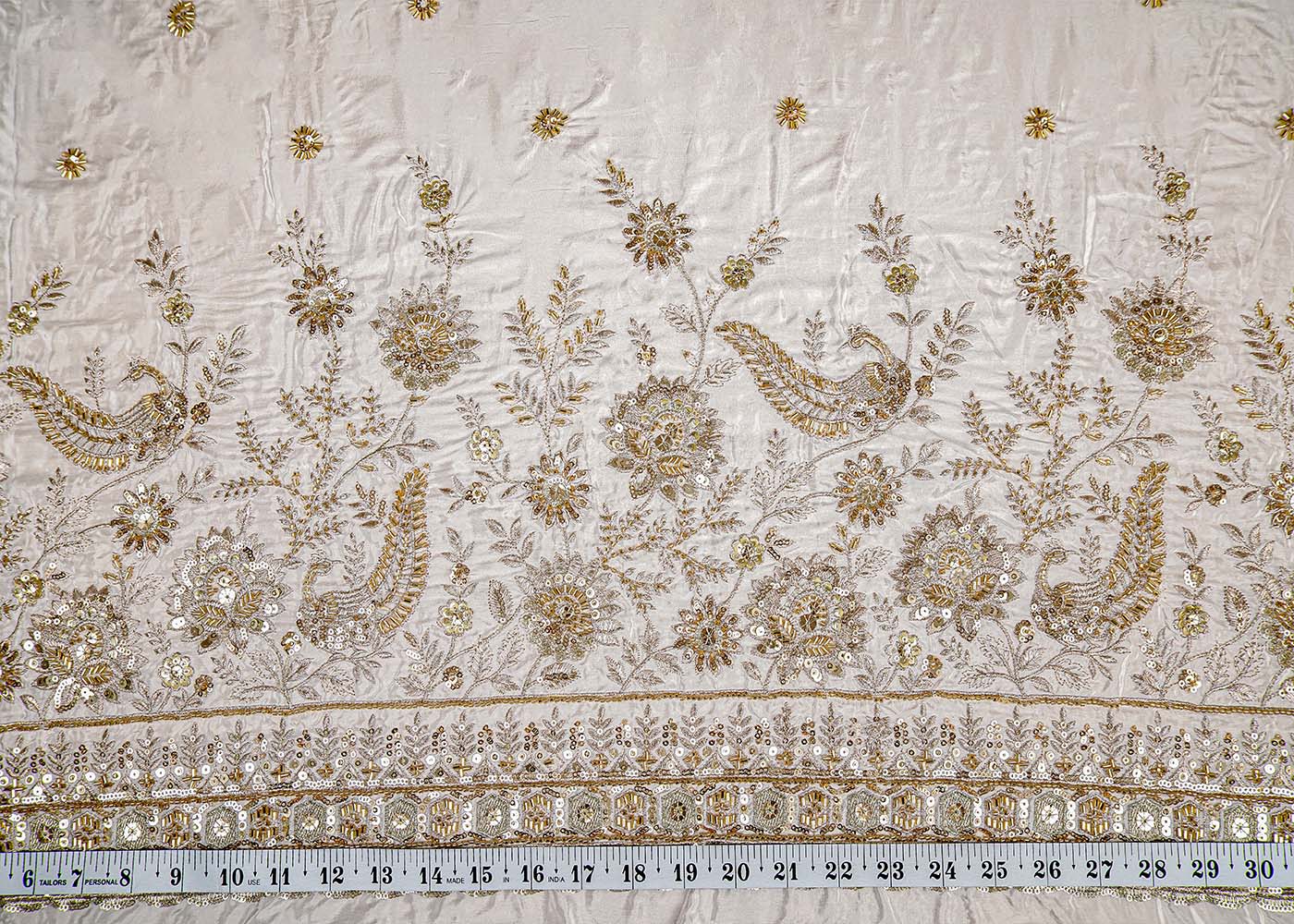
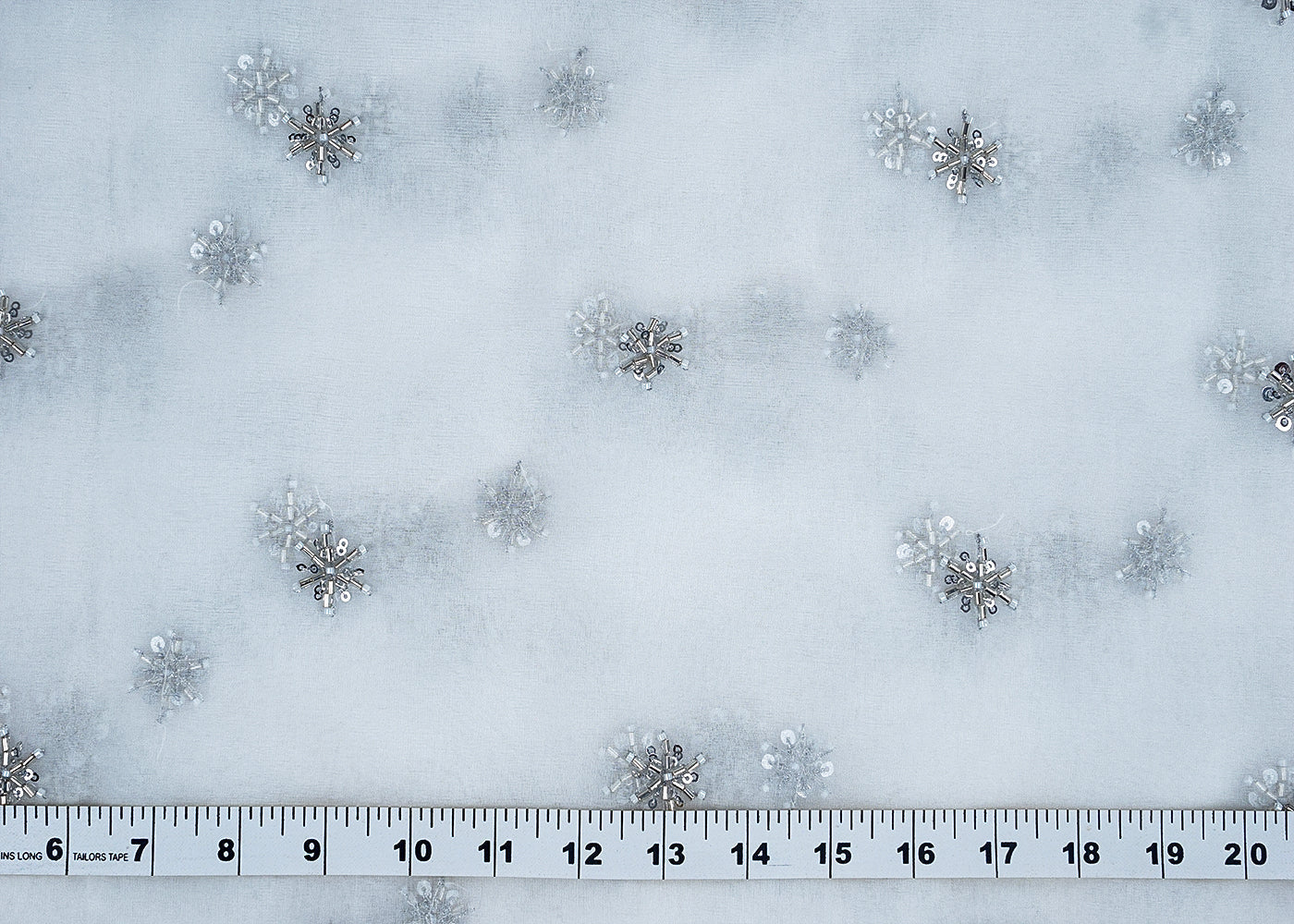
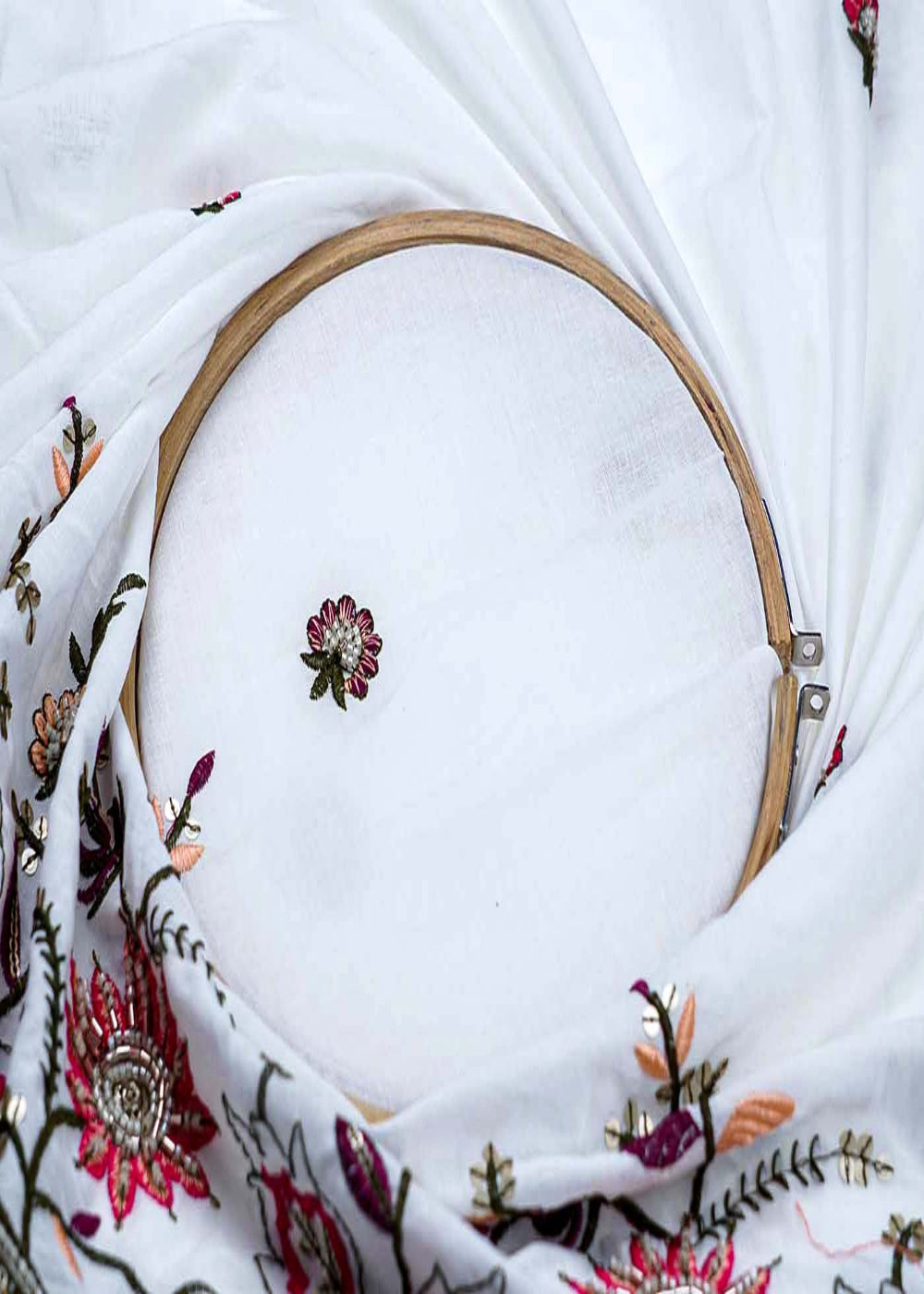
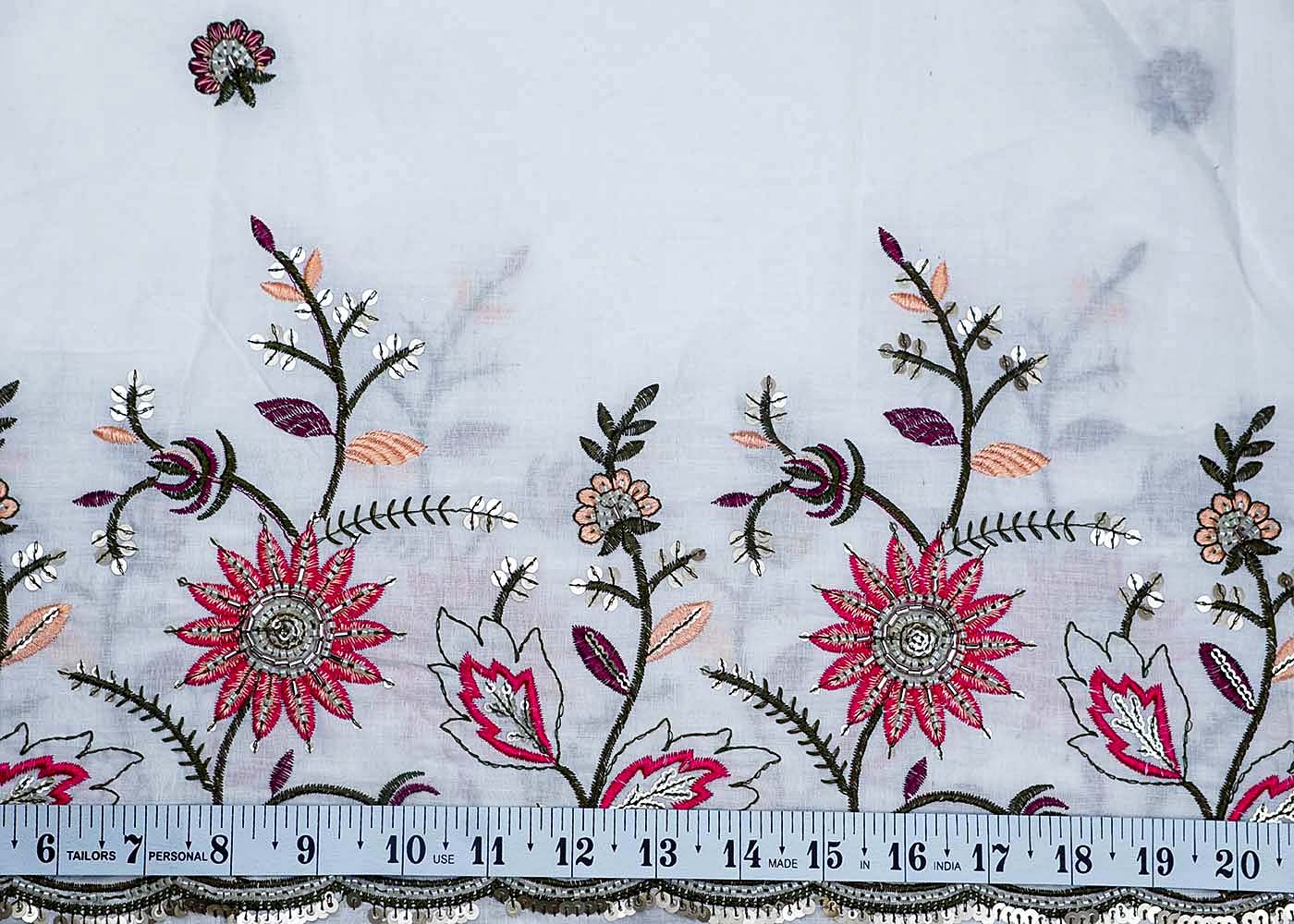
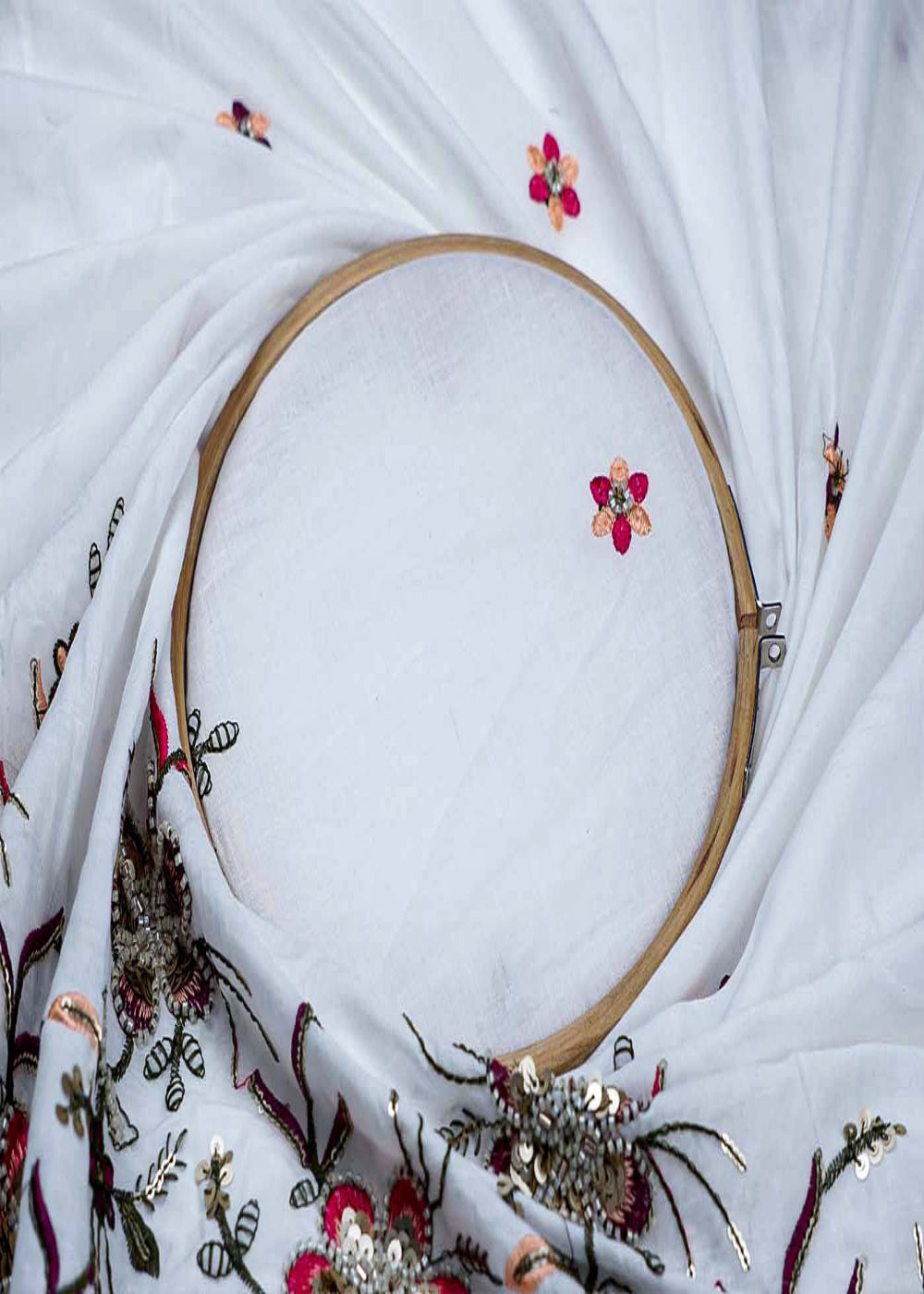
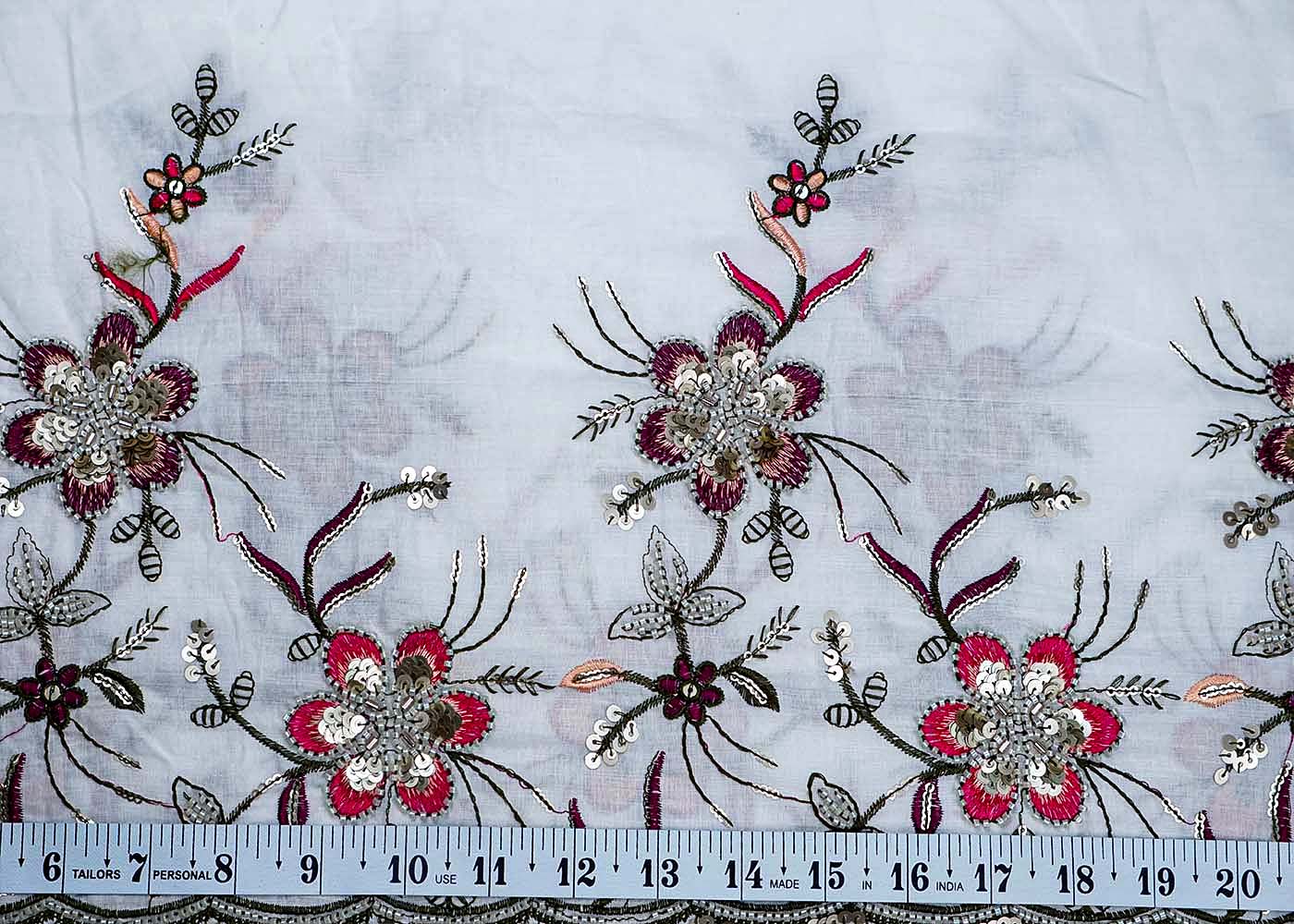
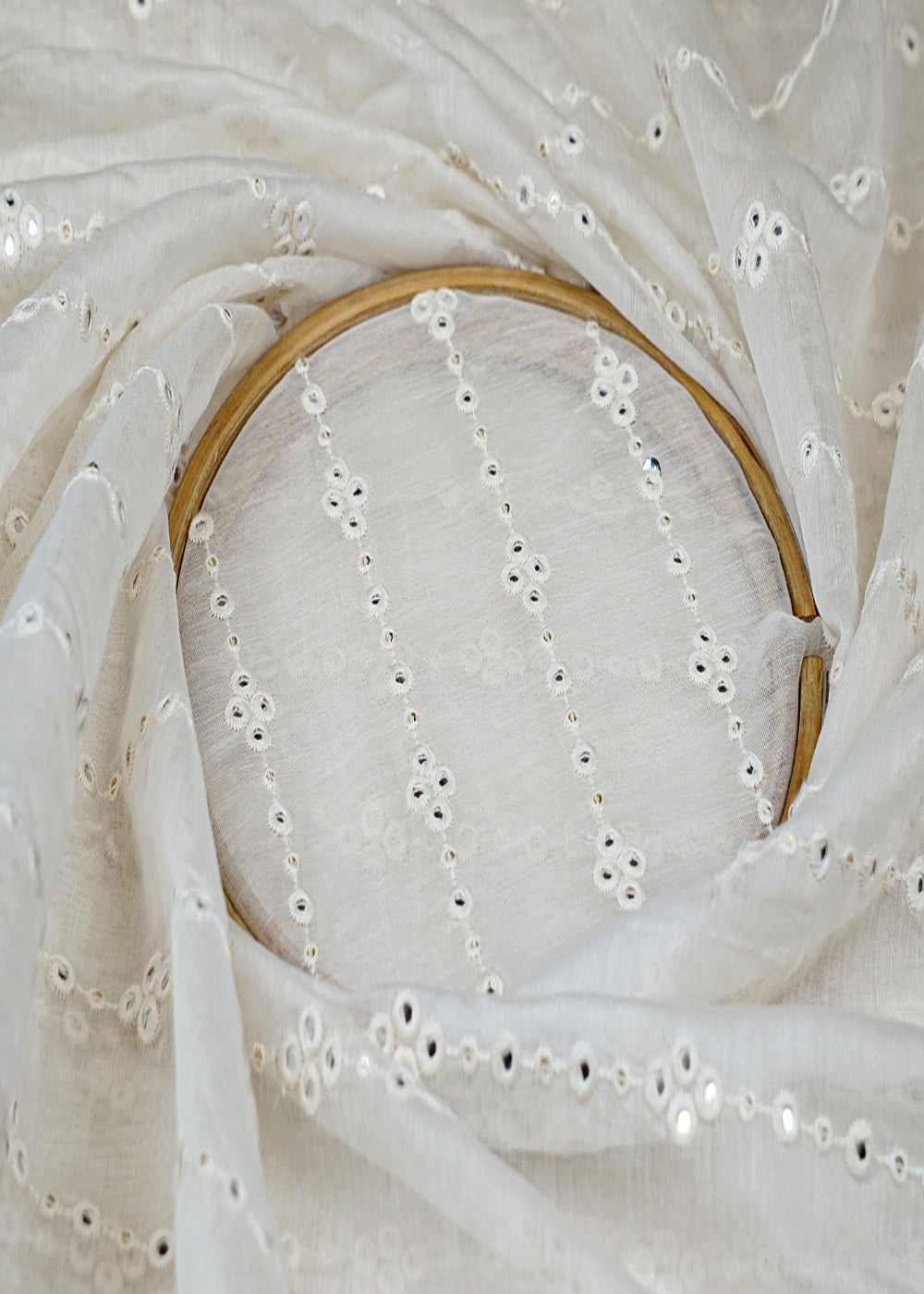
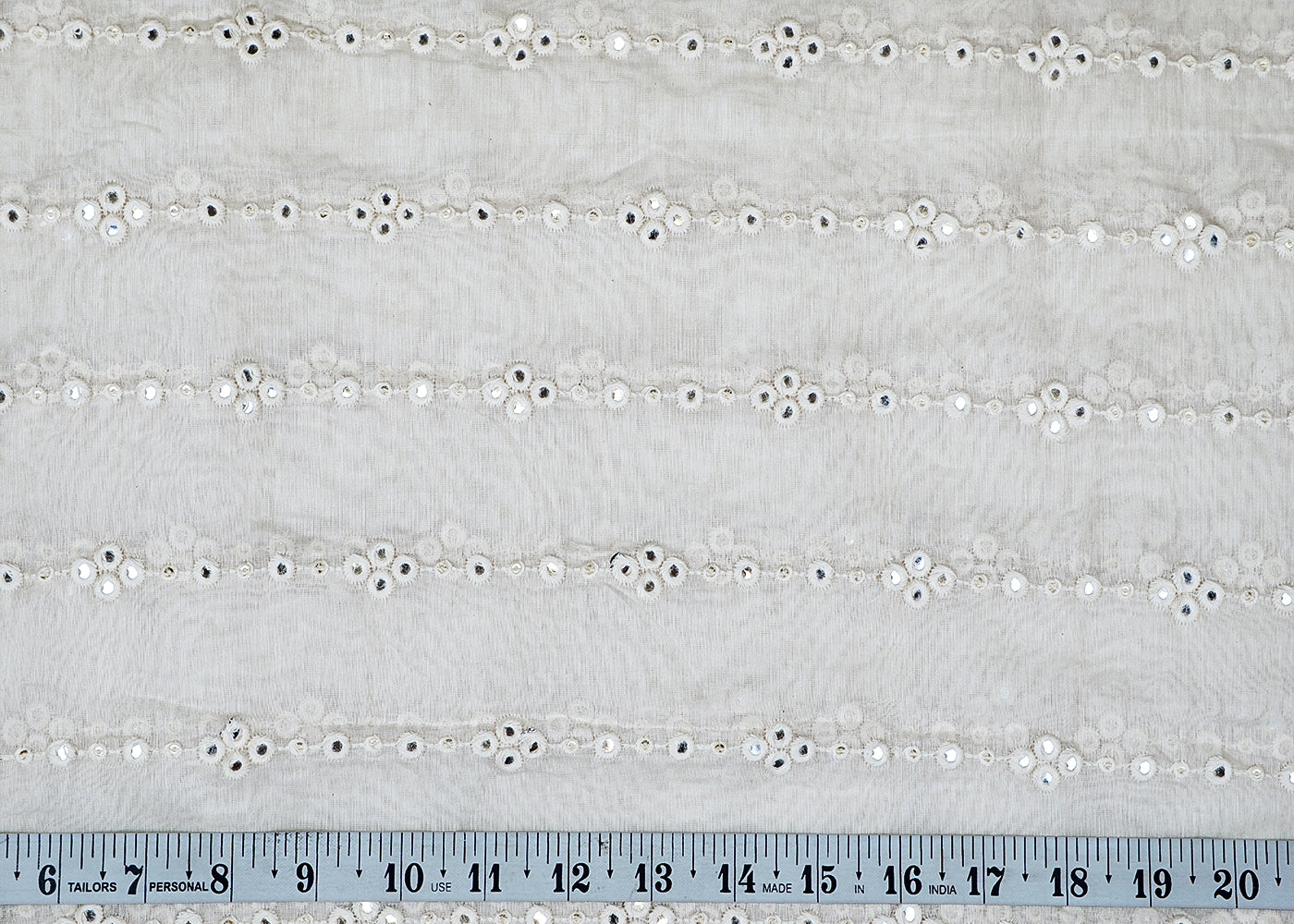
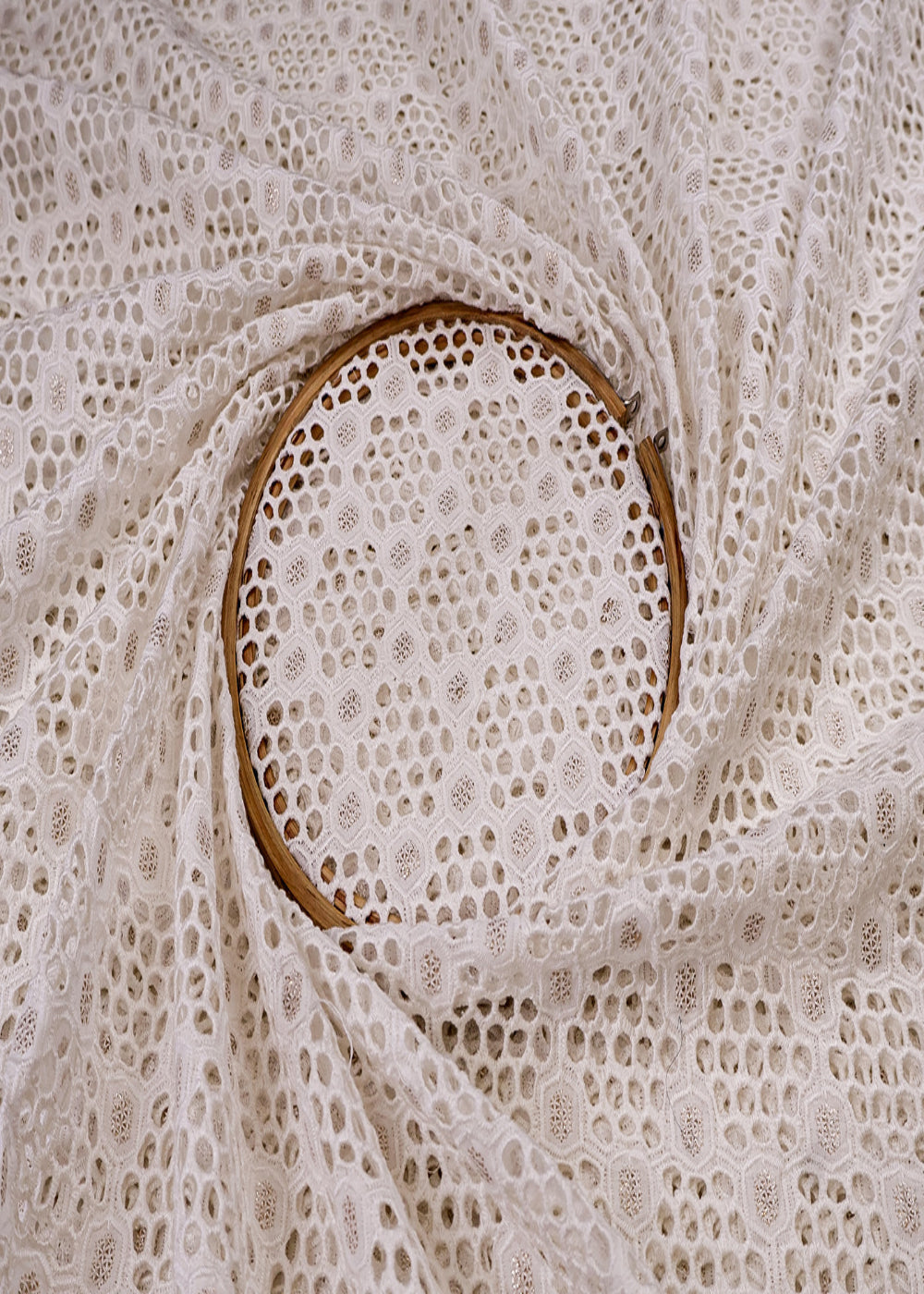
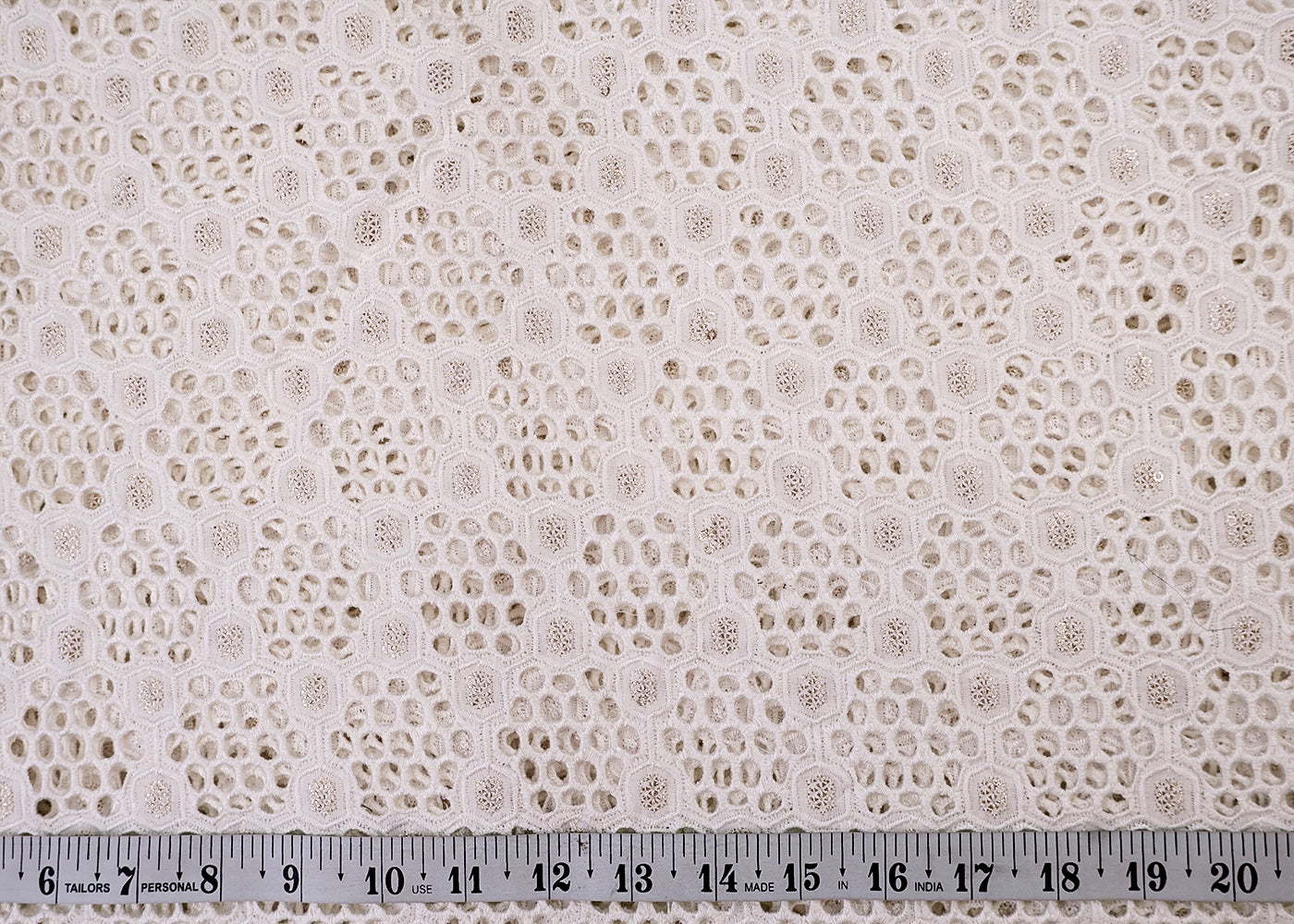
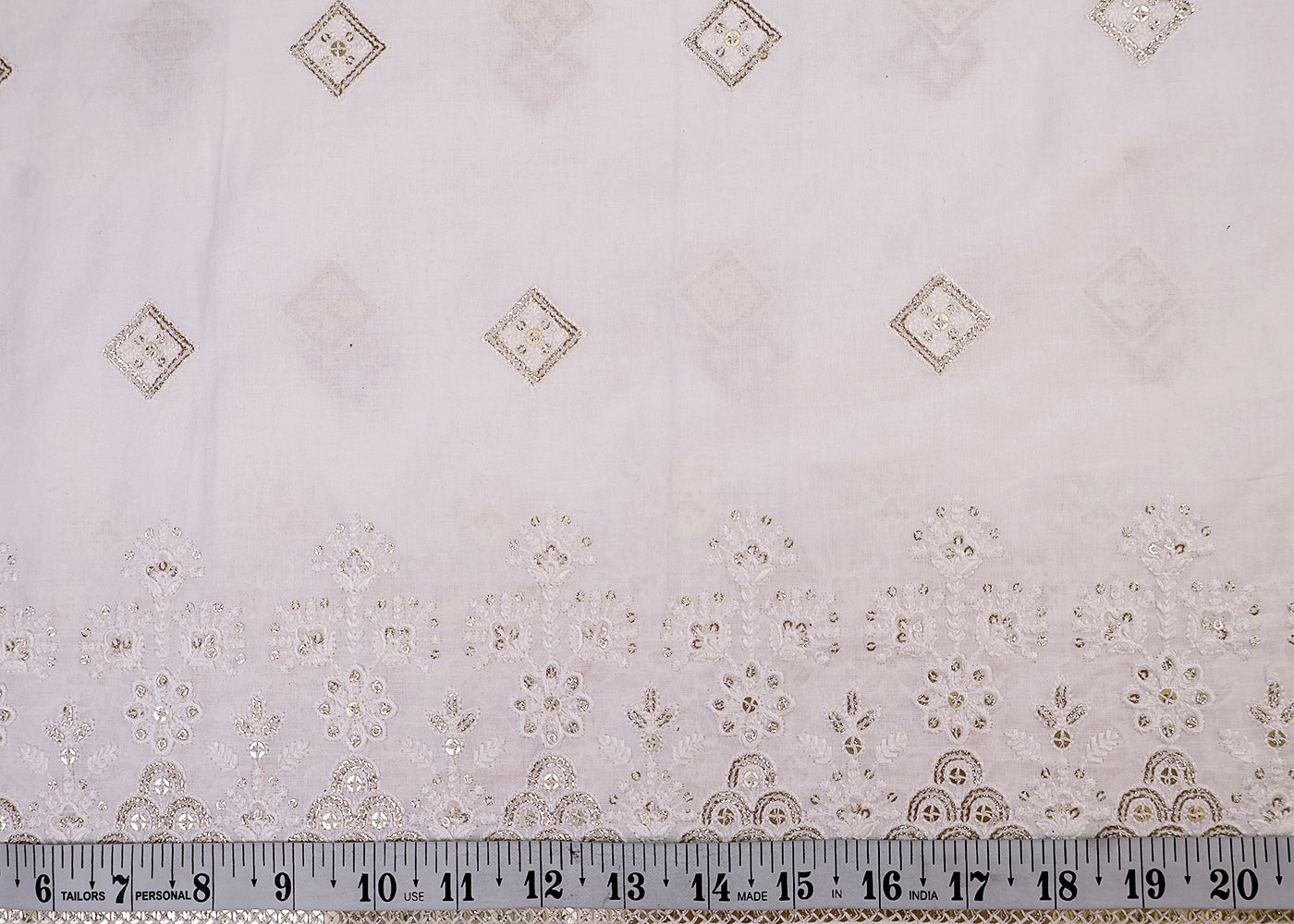
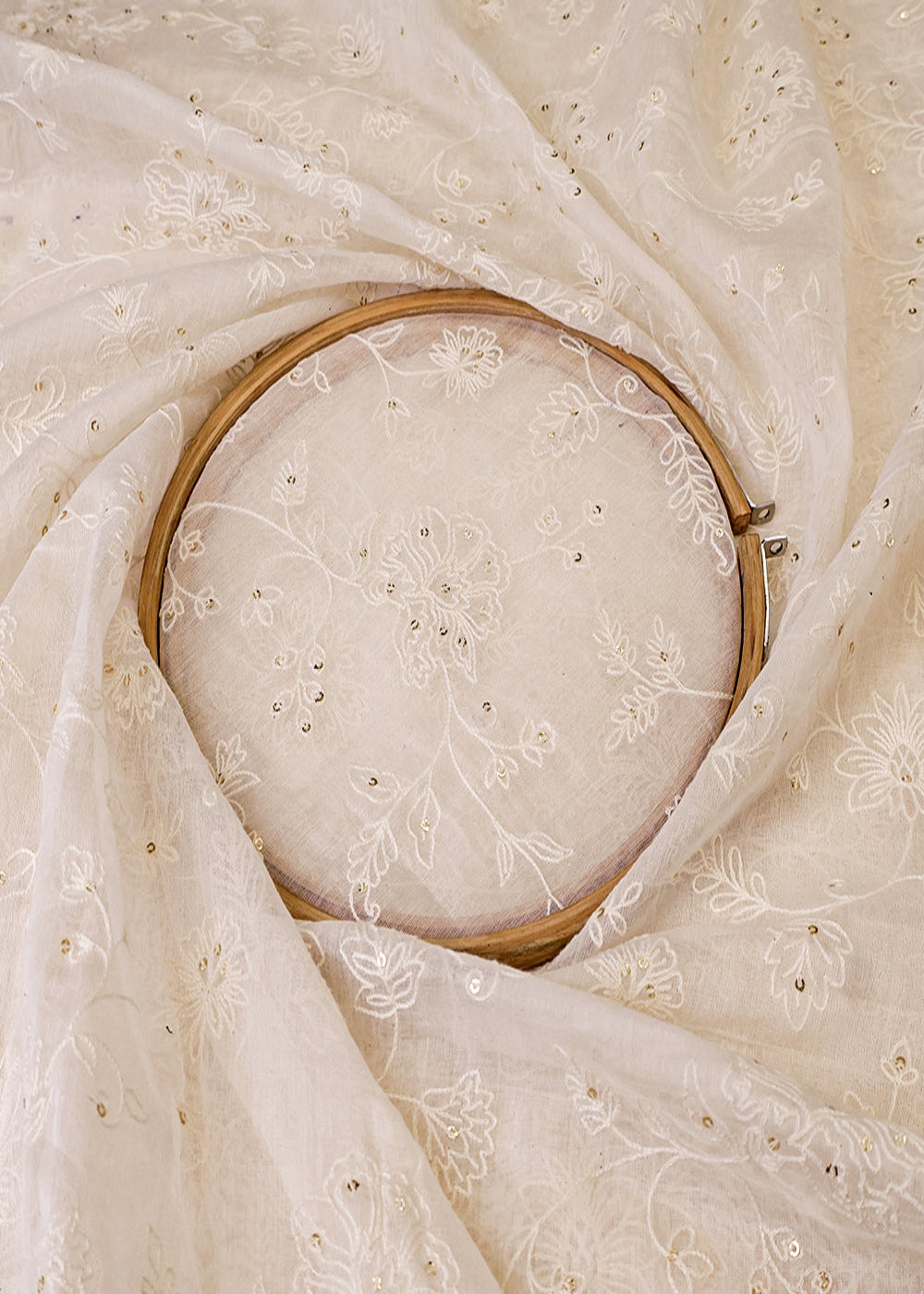
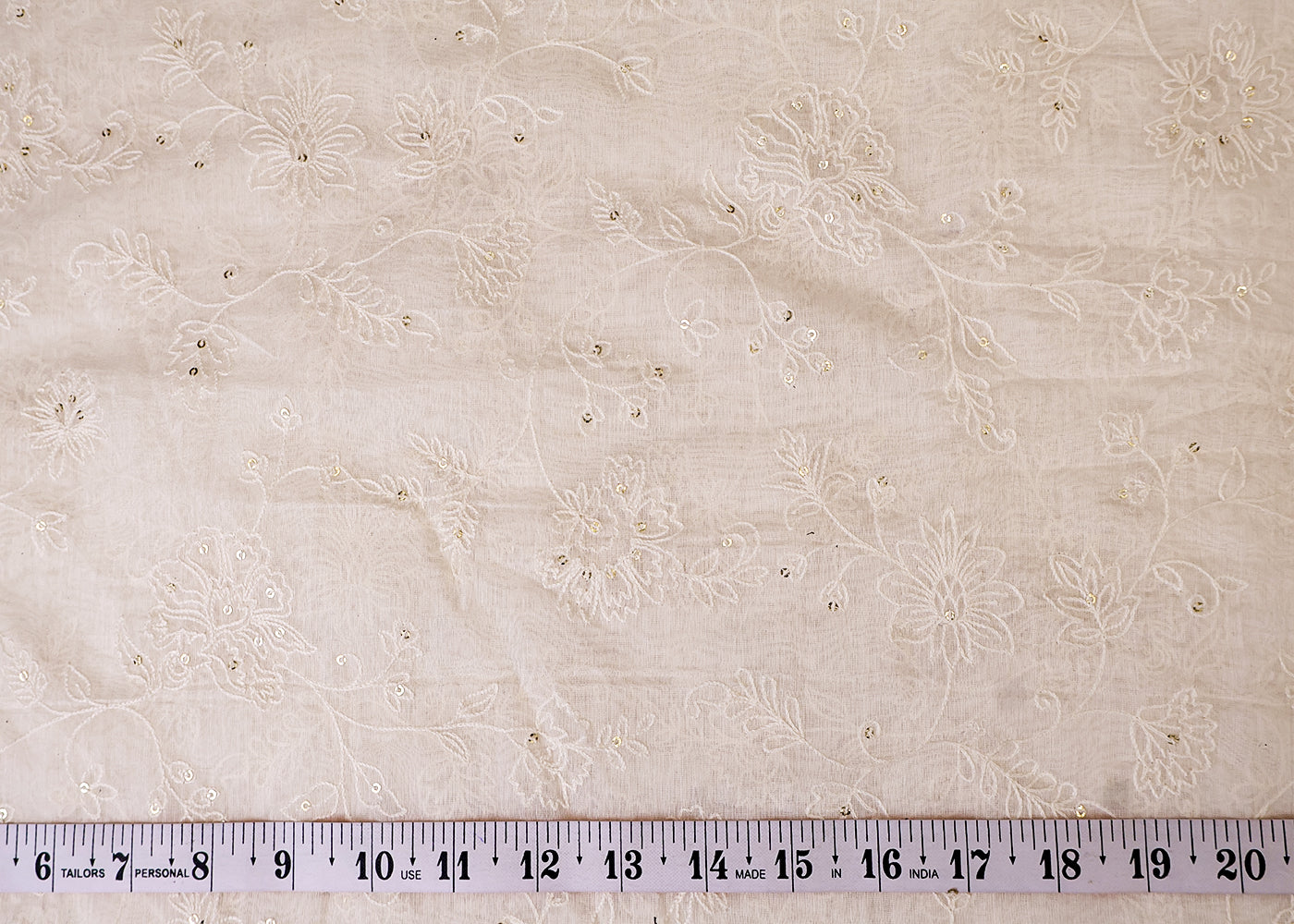
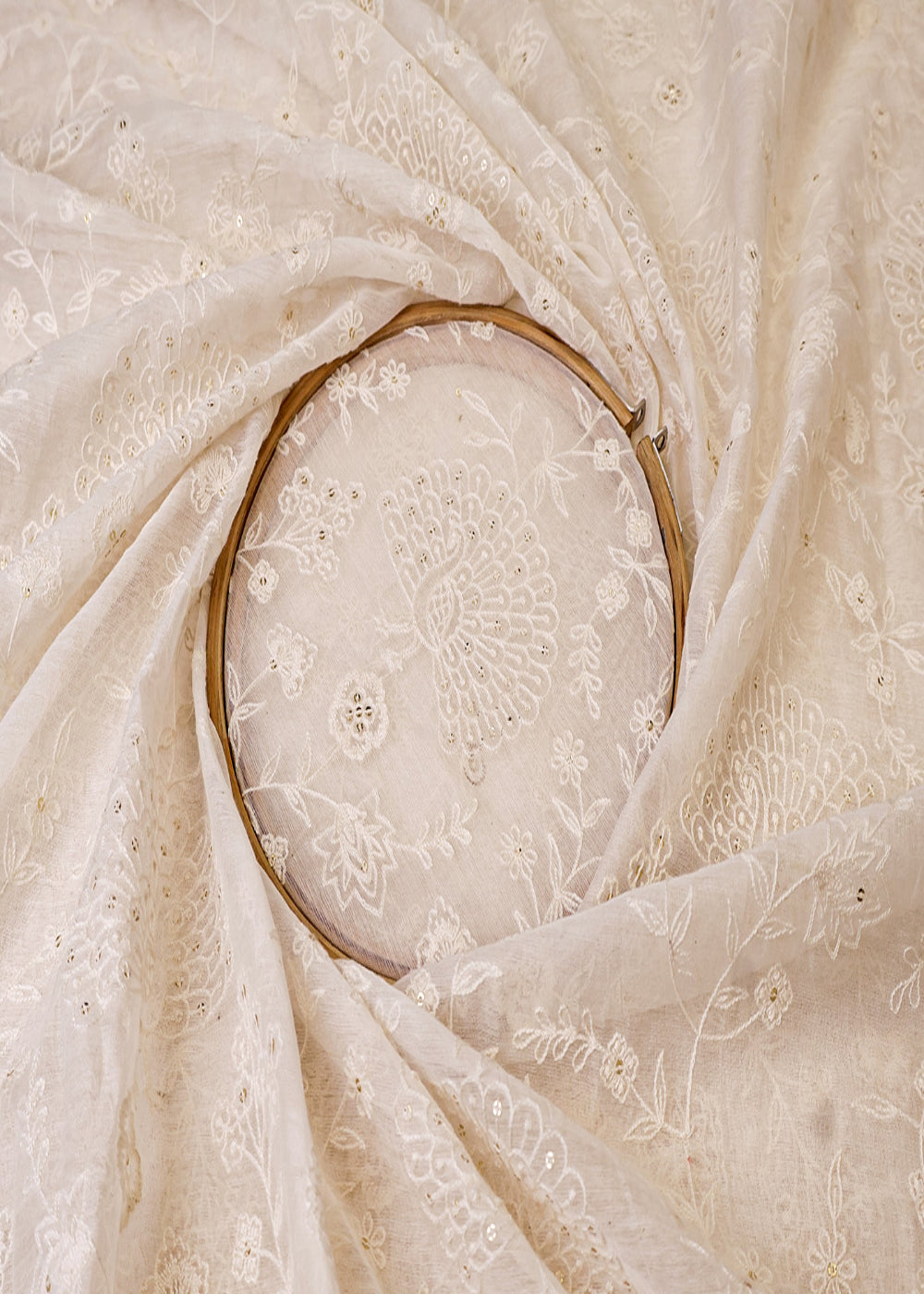
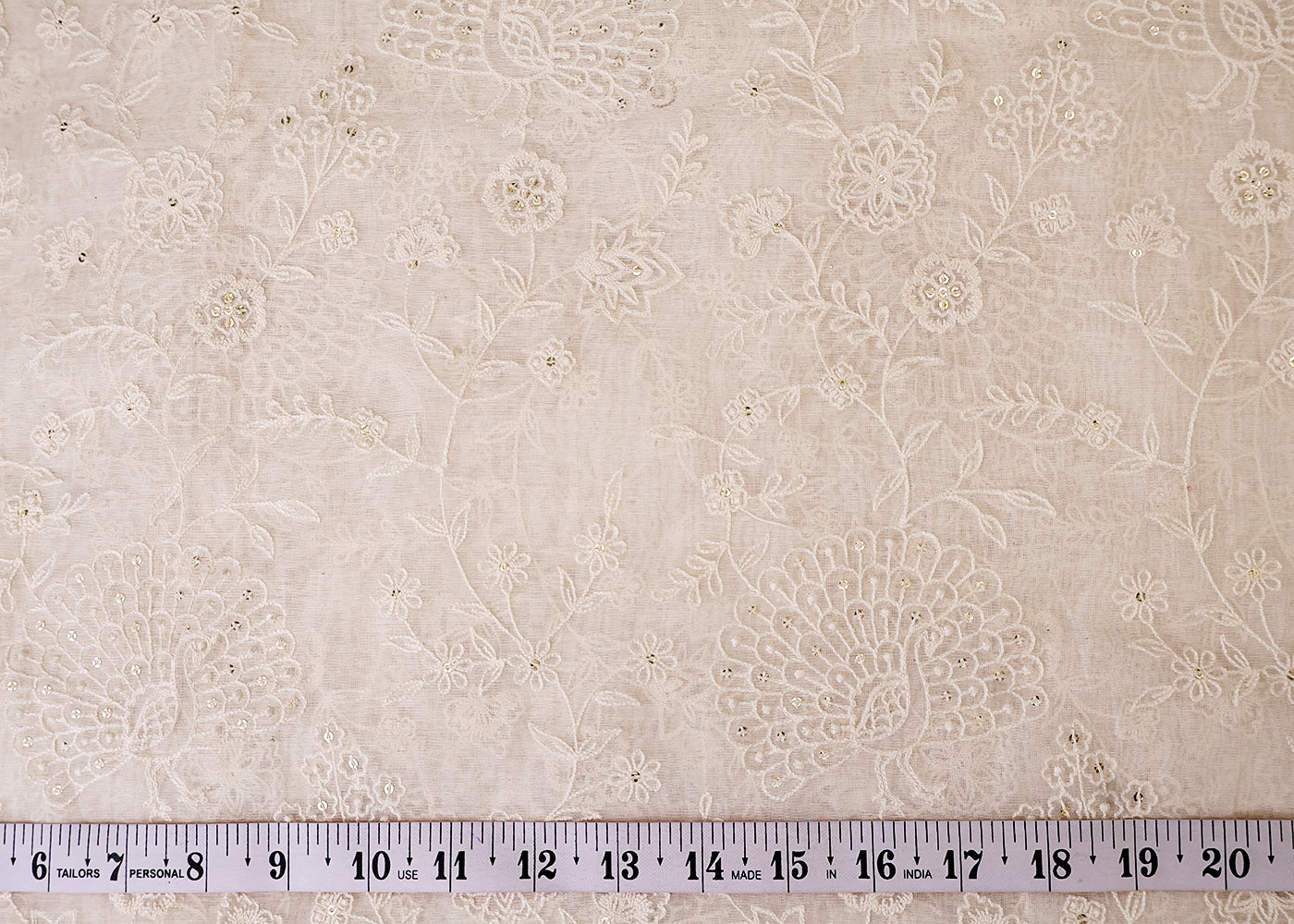
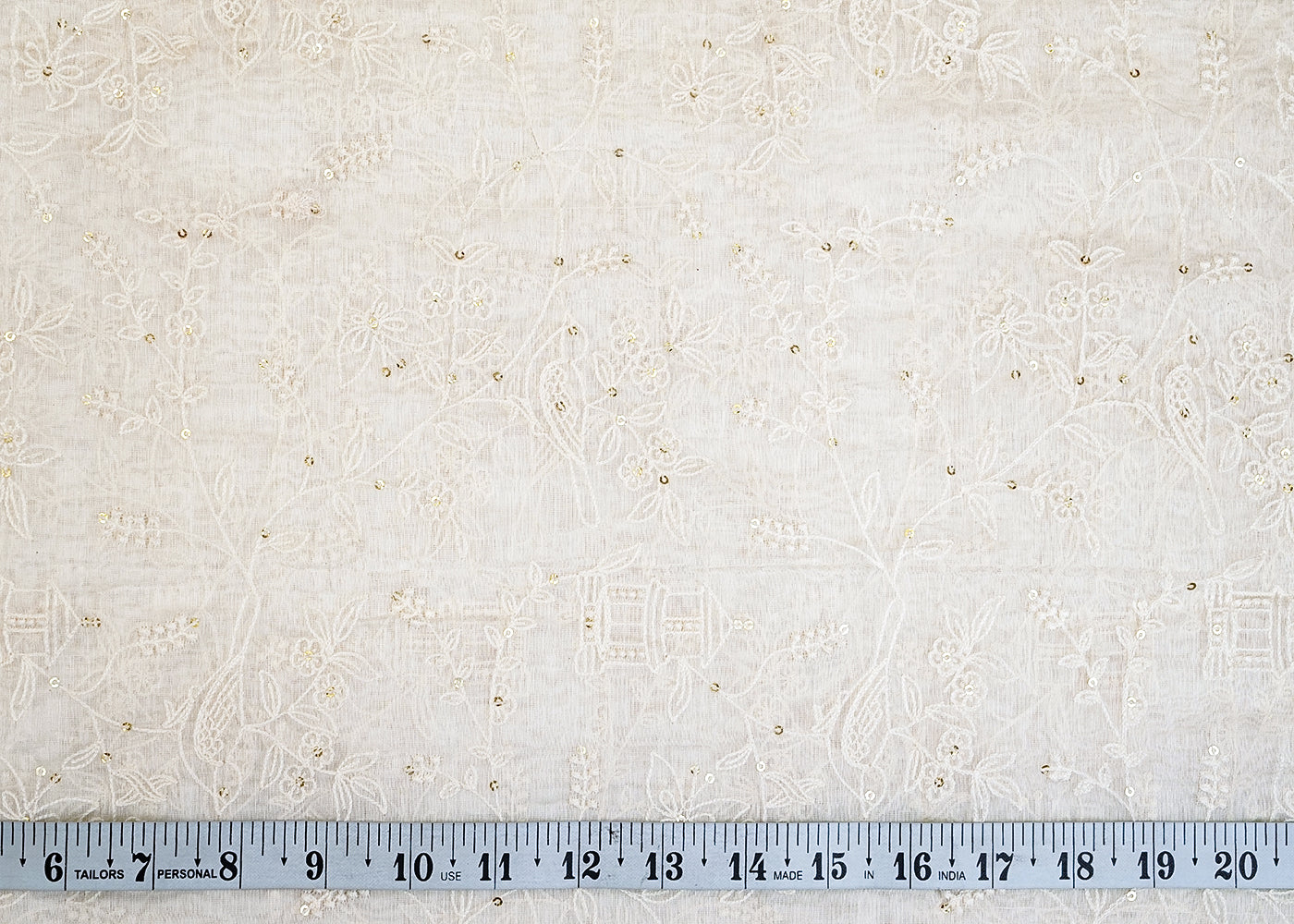
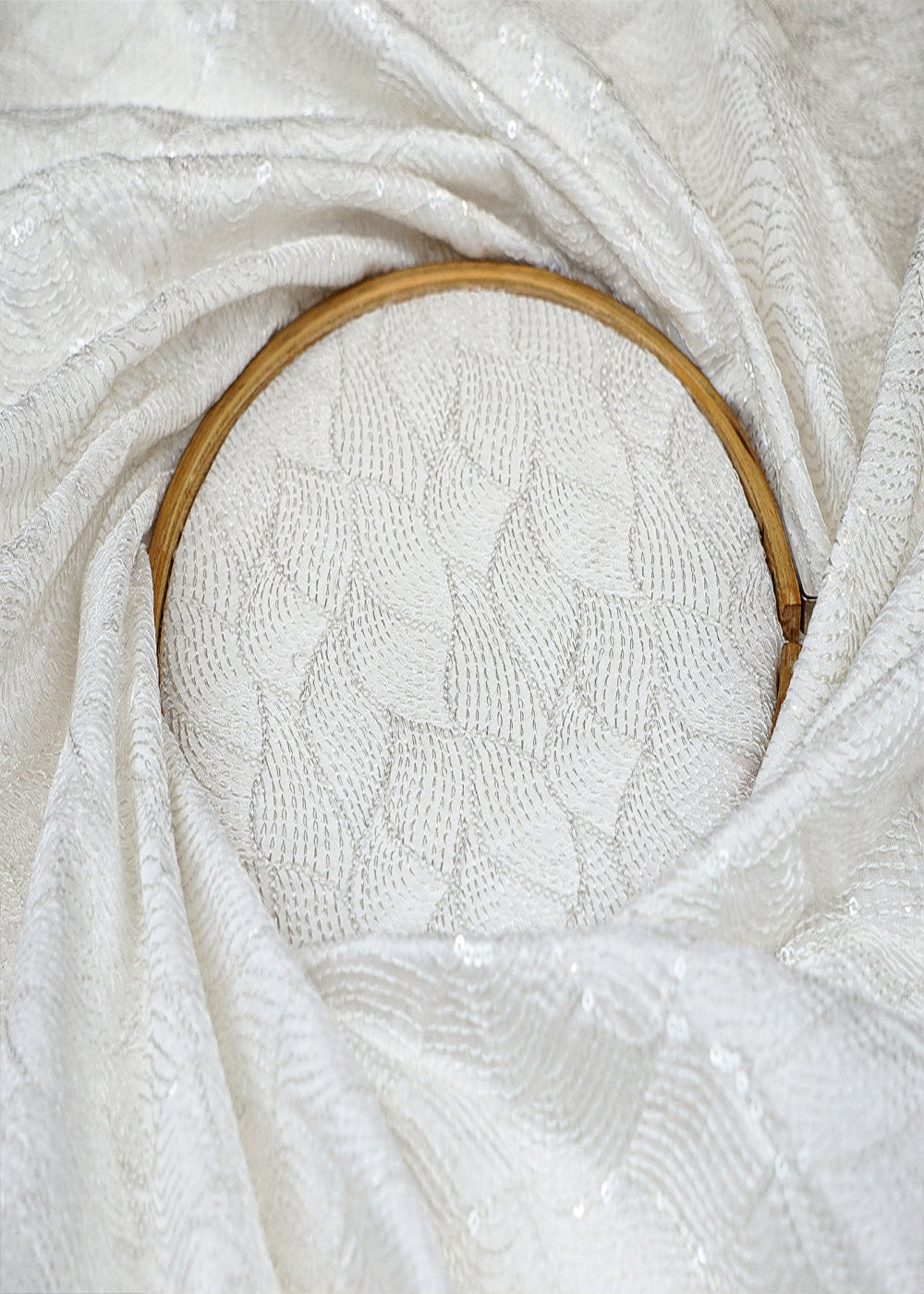
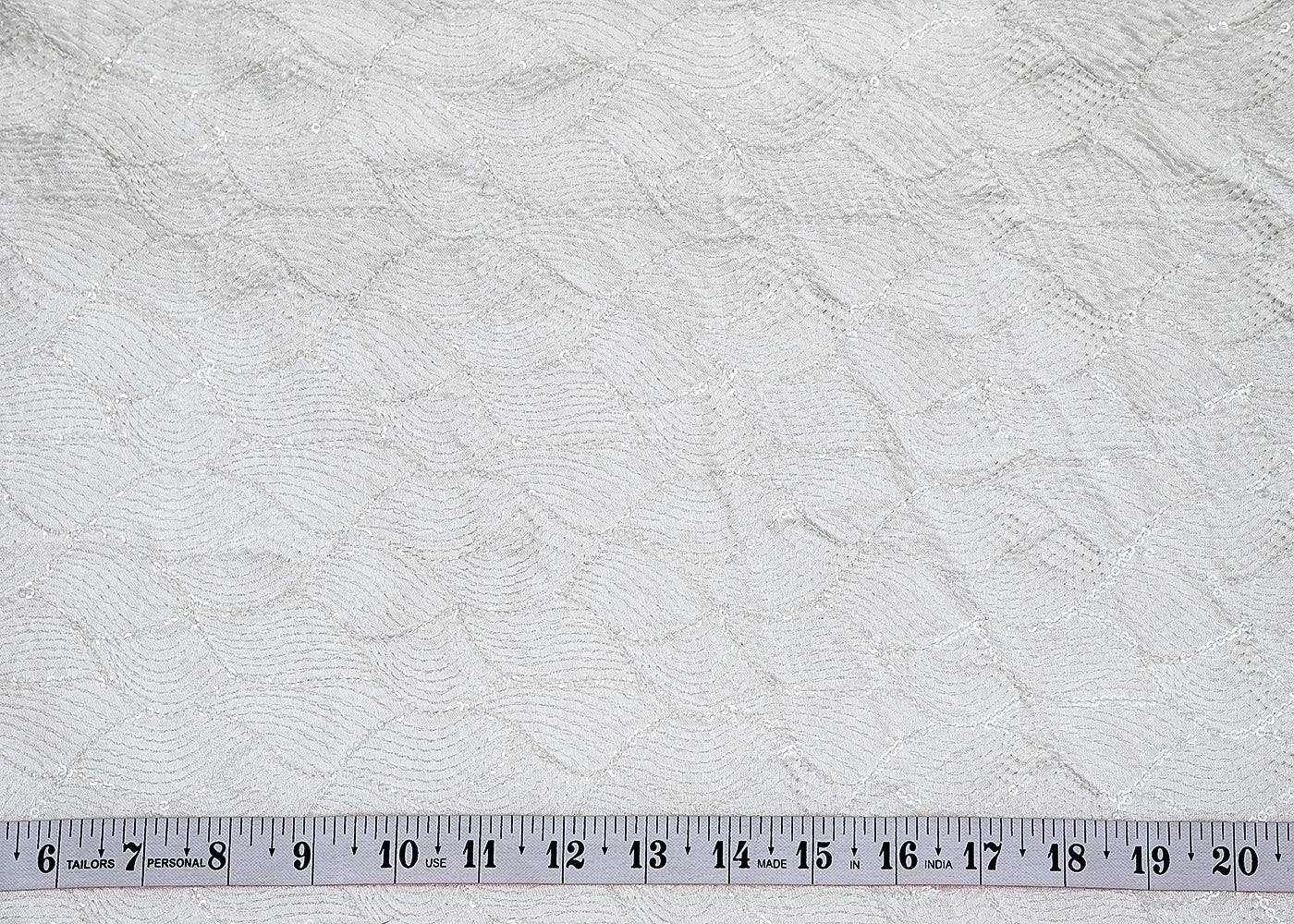
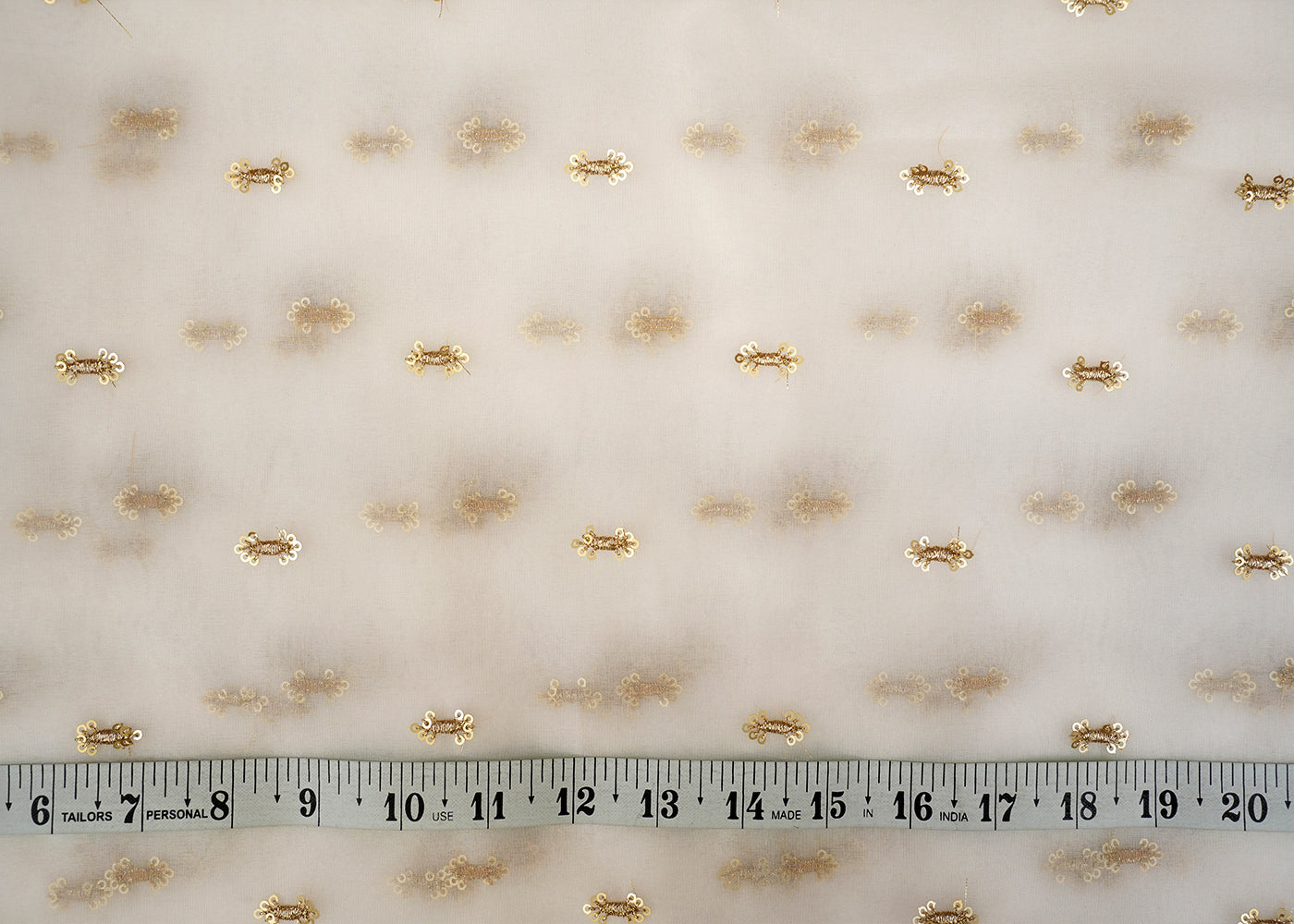
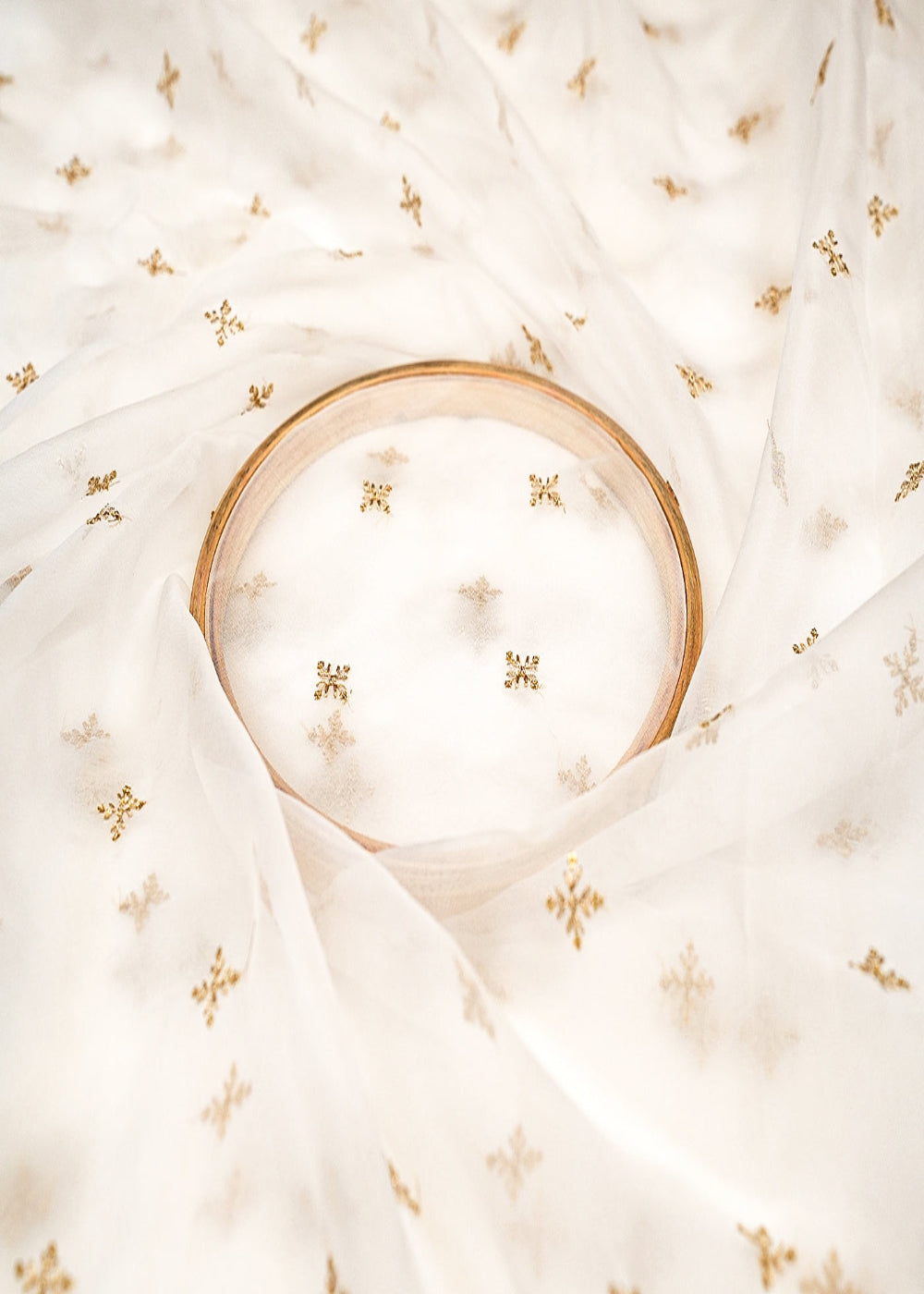
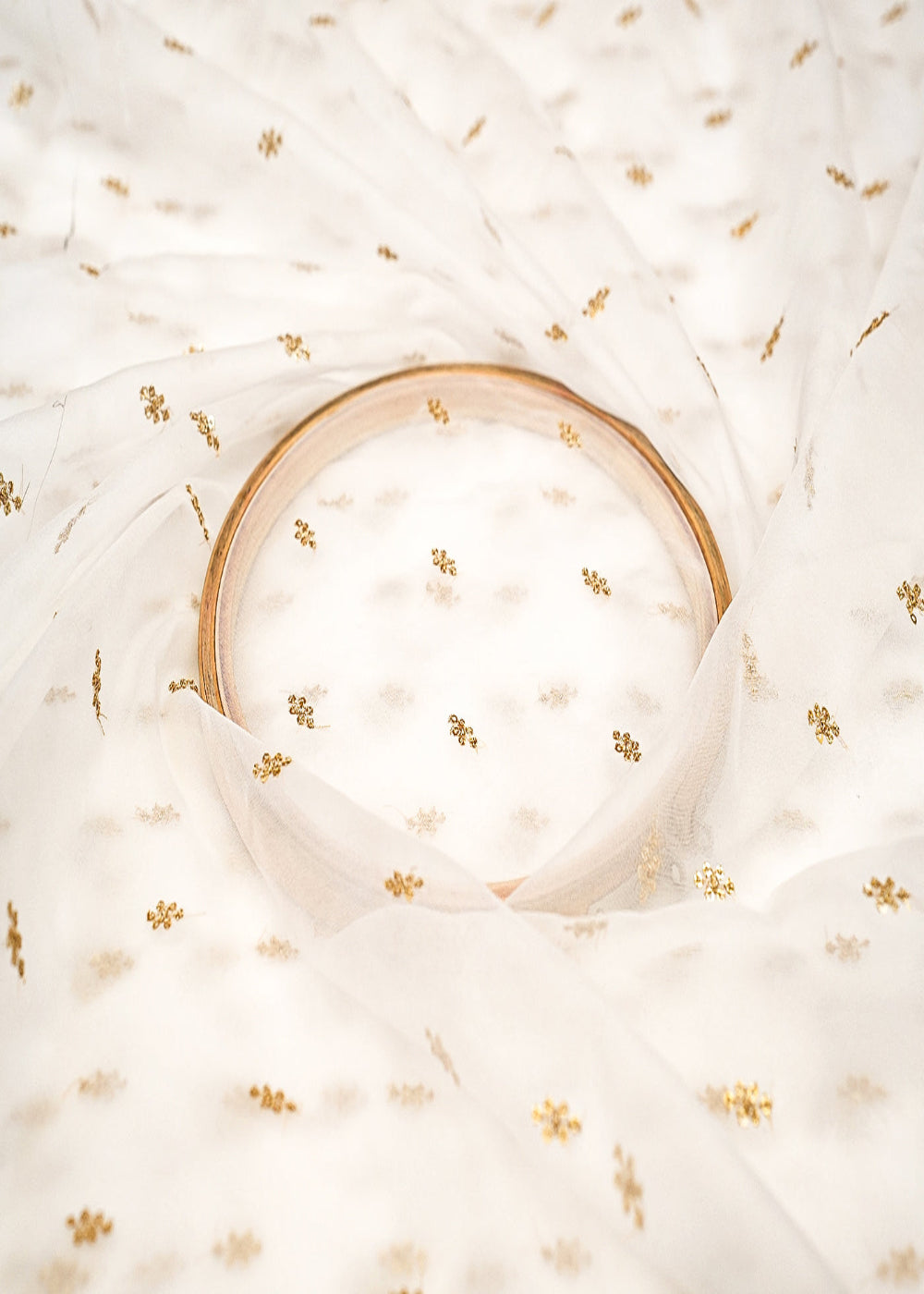
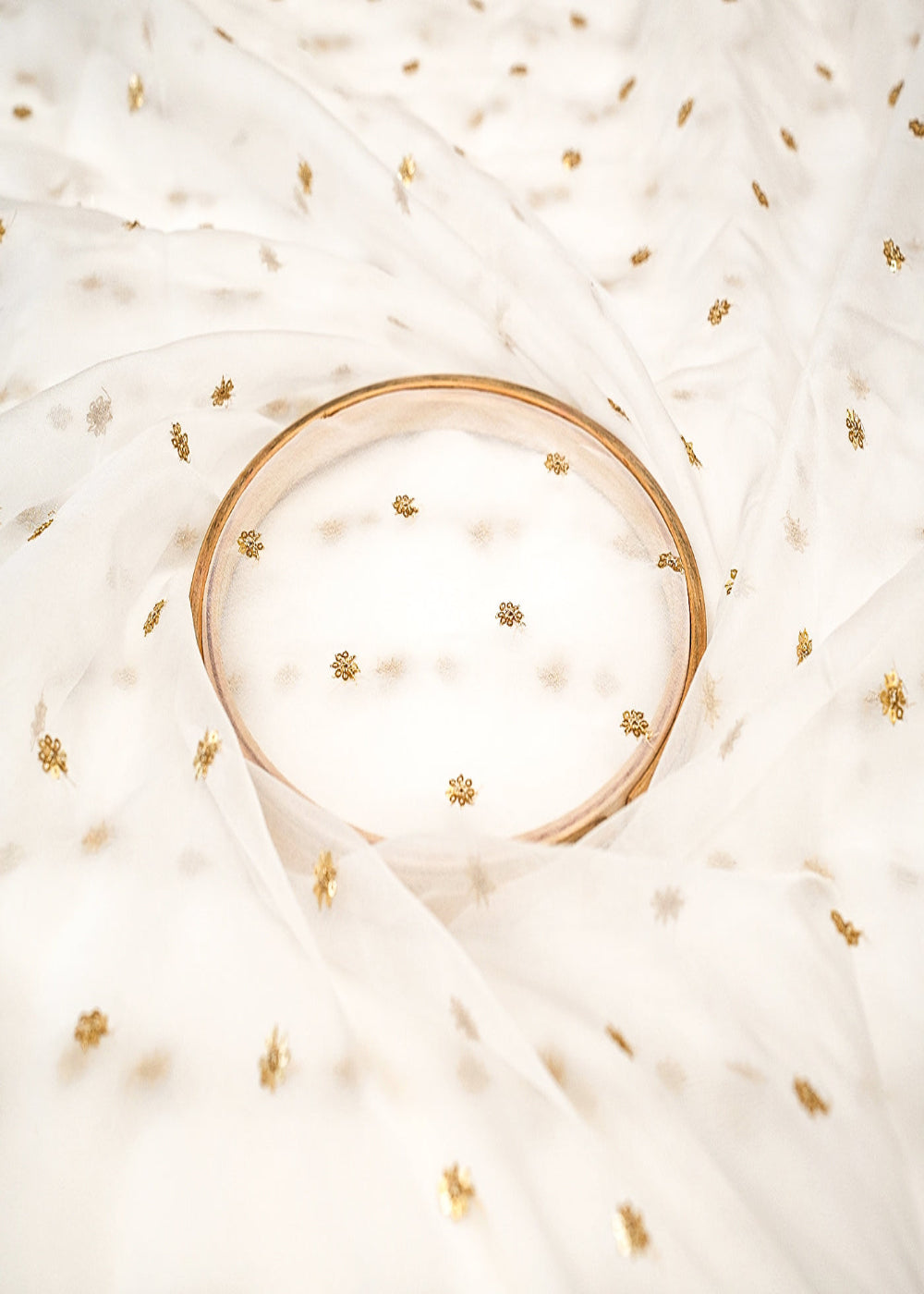
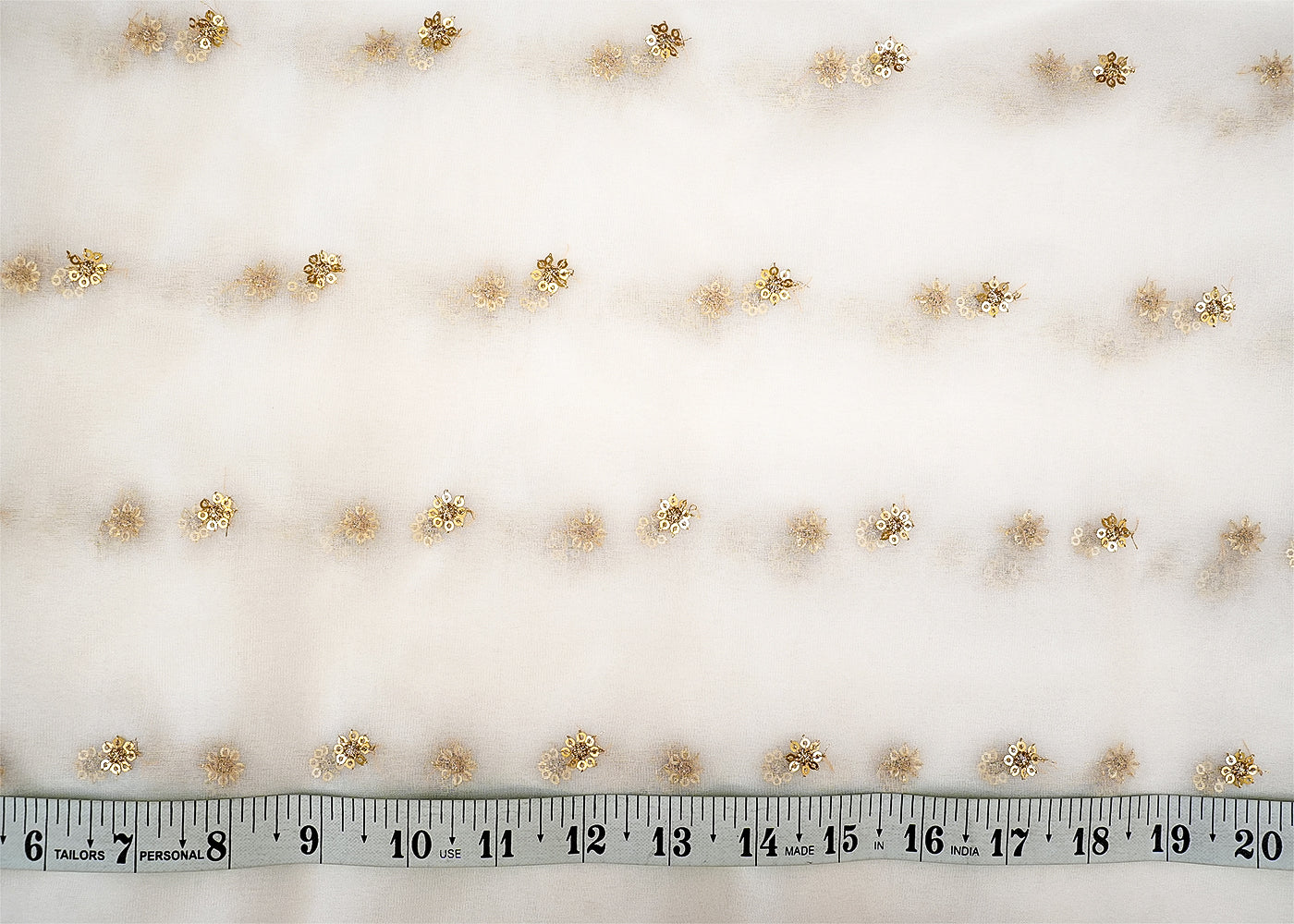
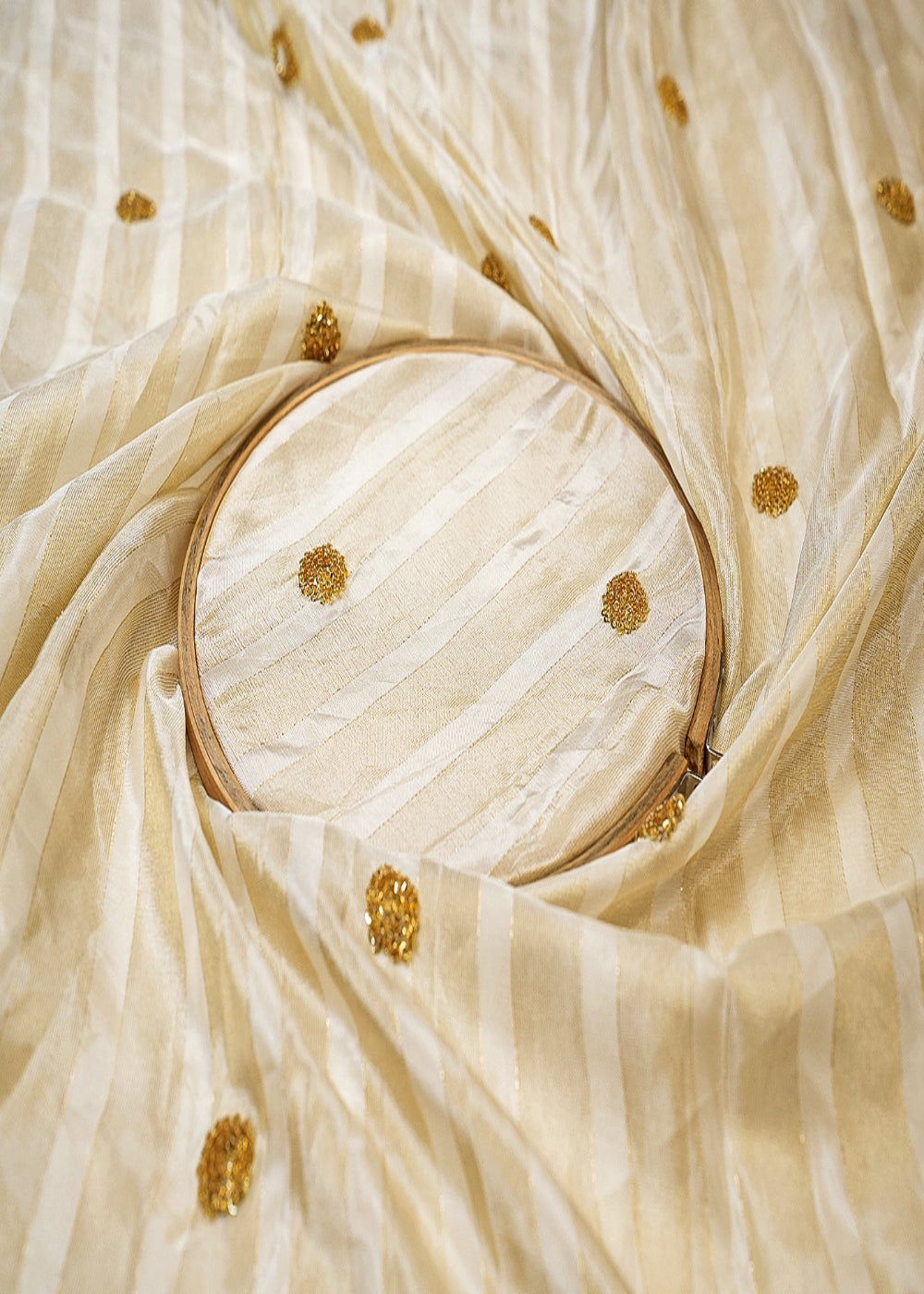
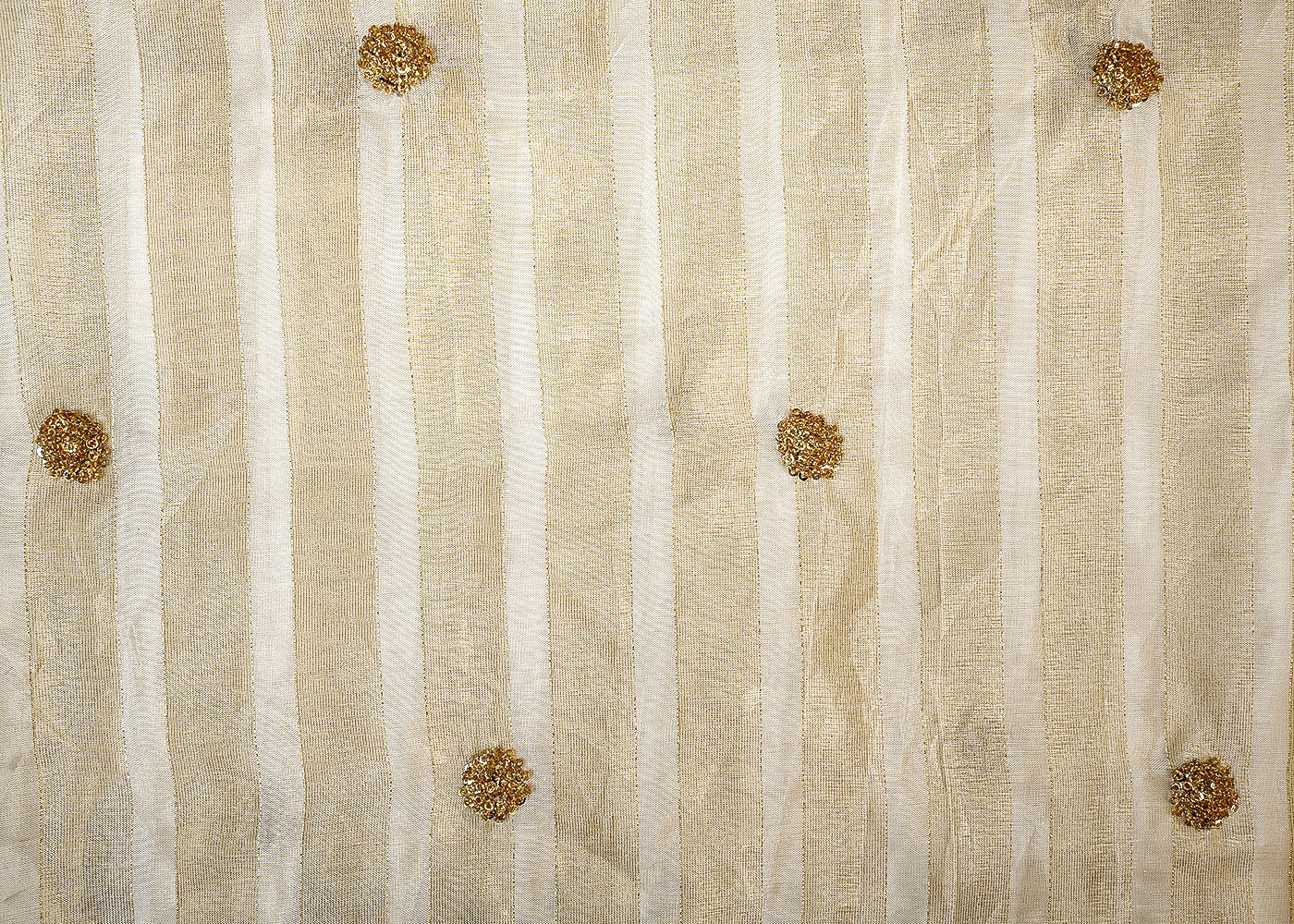
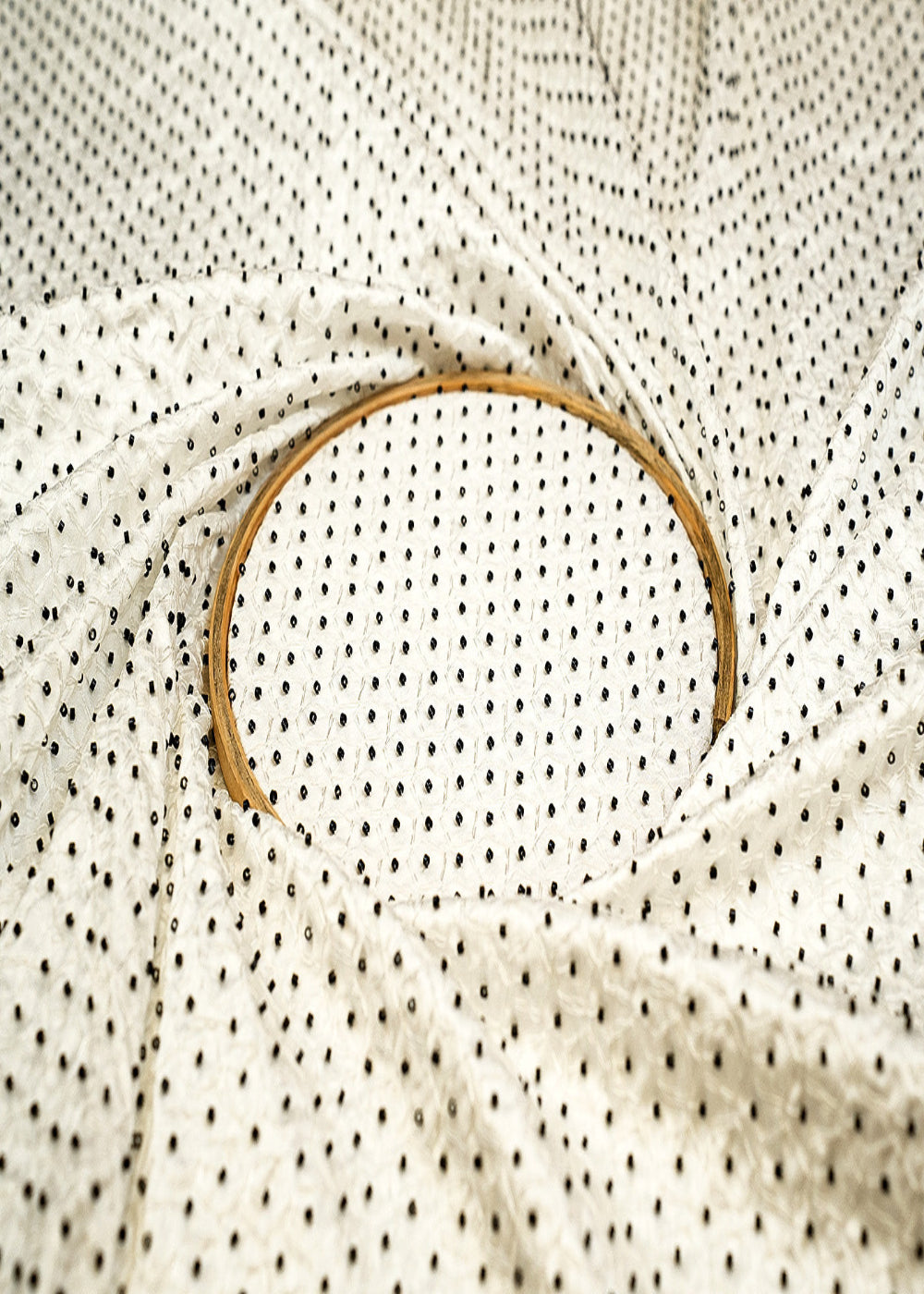
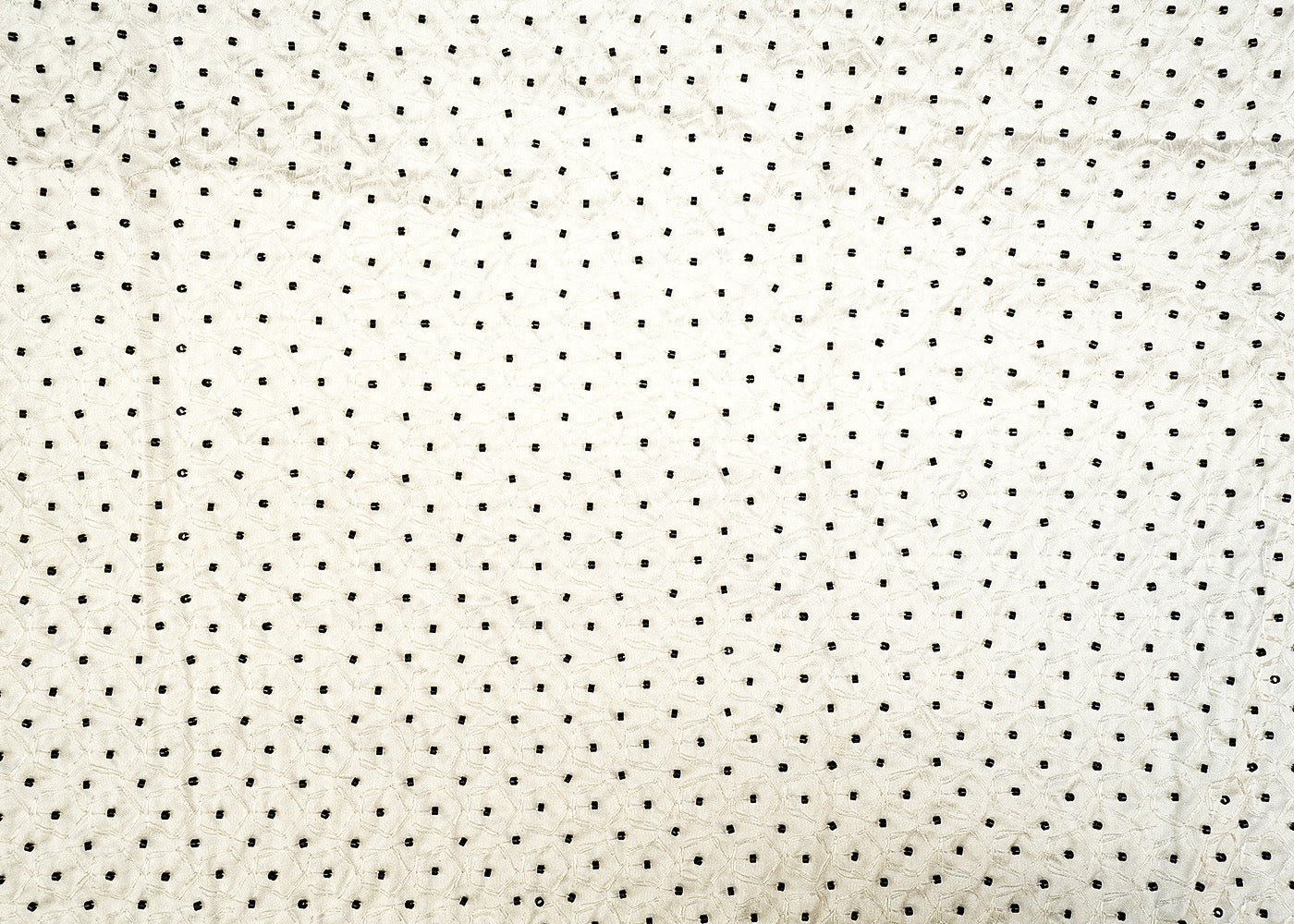
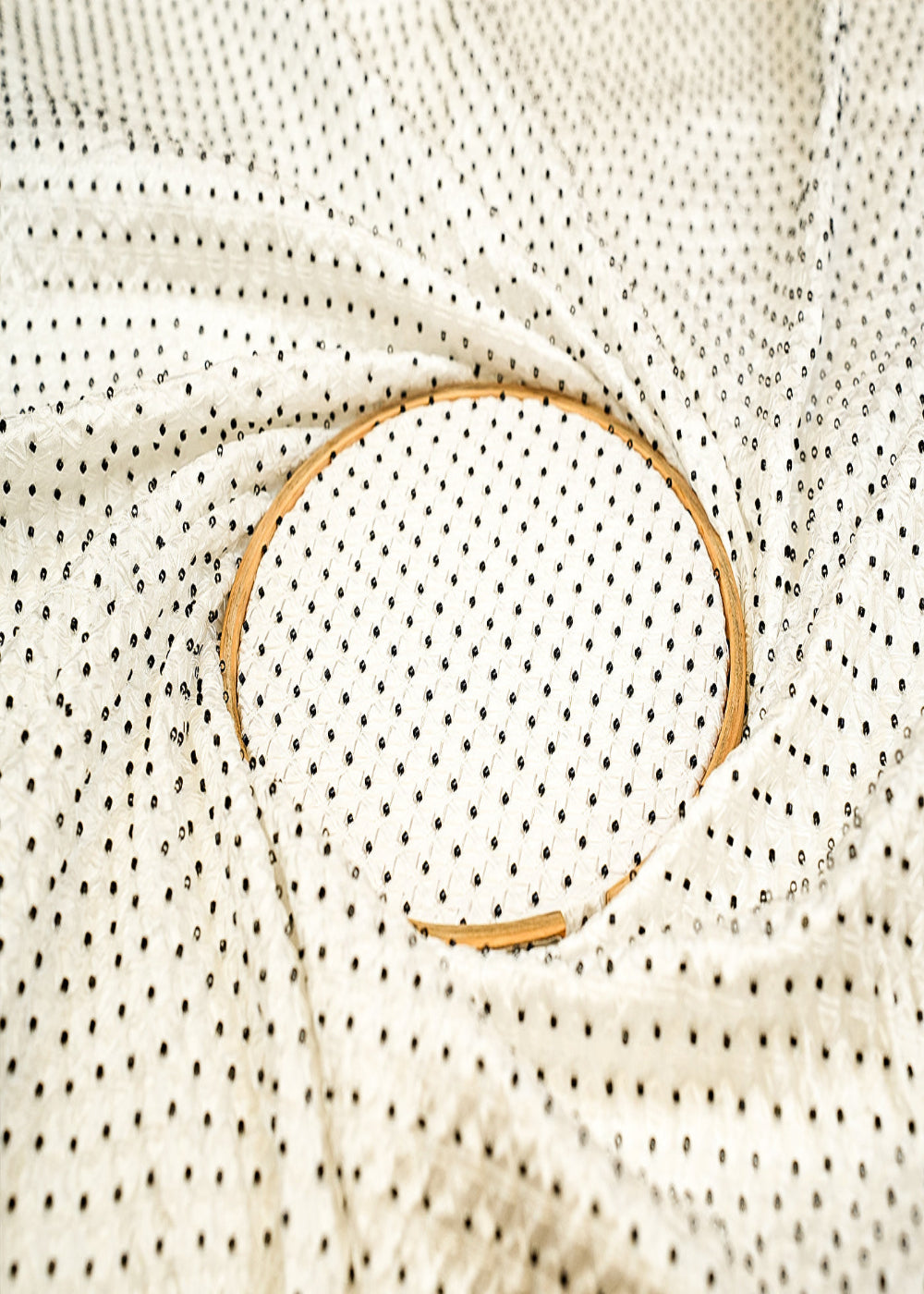
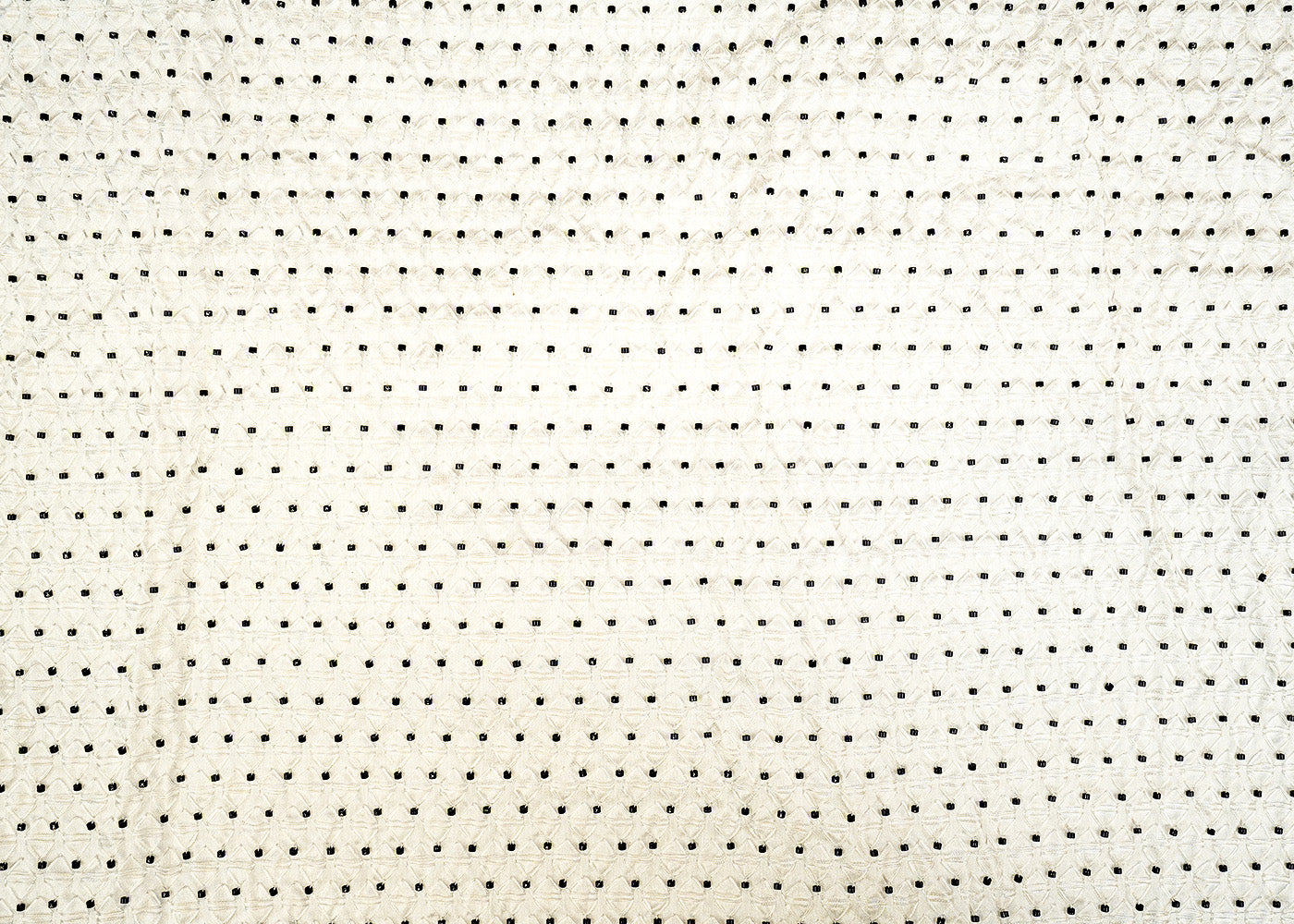
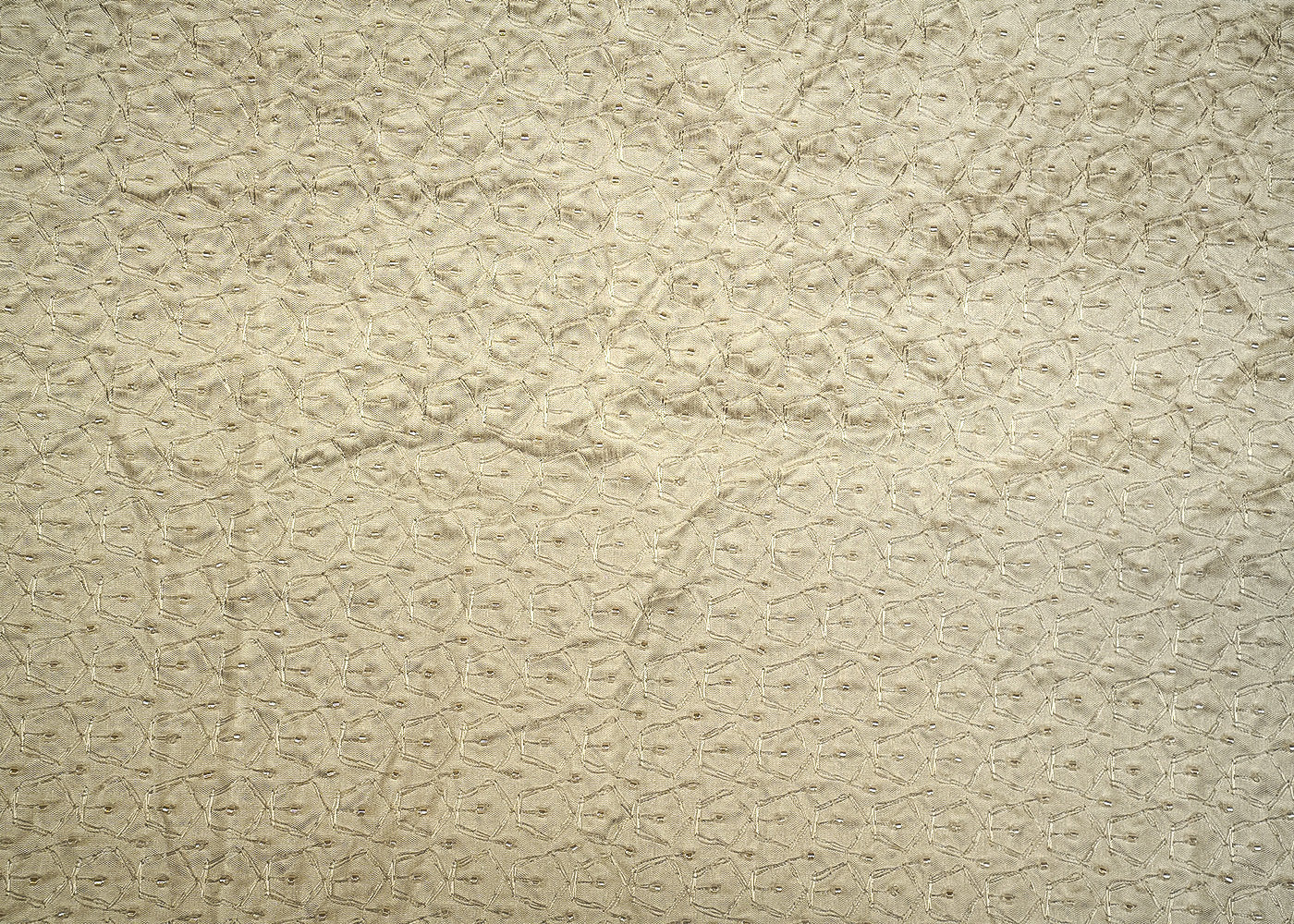
The embroidery sits worked into the base itself, so texture and detail are already there. Dyeing only adds the colour story on top.
Why Dyeable Embroidery Demand Is Rising
Personalisation is driving most of this. Brides want wedding palettes nobody else has used. Boutiques want exclusivity on their own shelves. Designers want the colour decision to stay open until the last stage of production.
A dyeable base keeps that decision open. One thaan can serve four different clients in four different shades, which is why boutique buyers stock it over ready-shade goods.
What Makes a Base Dyeable
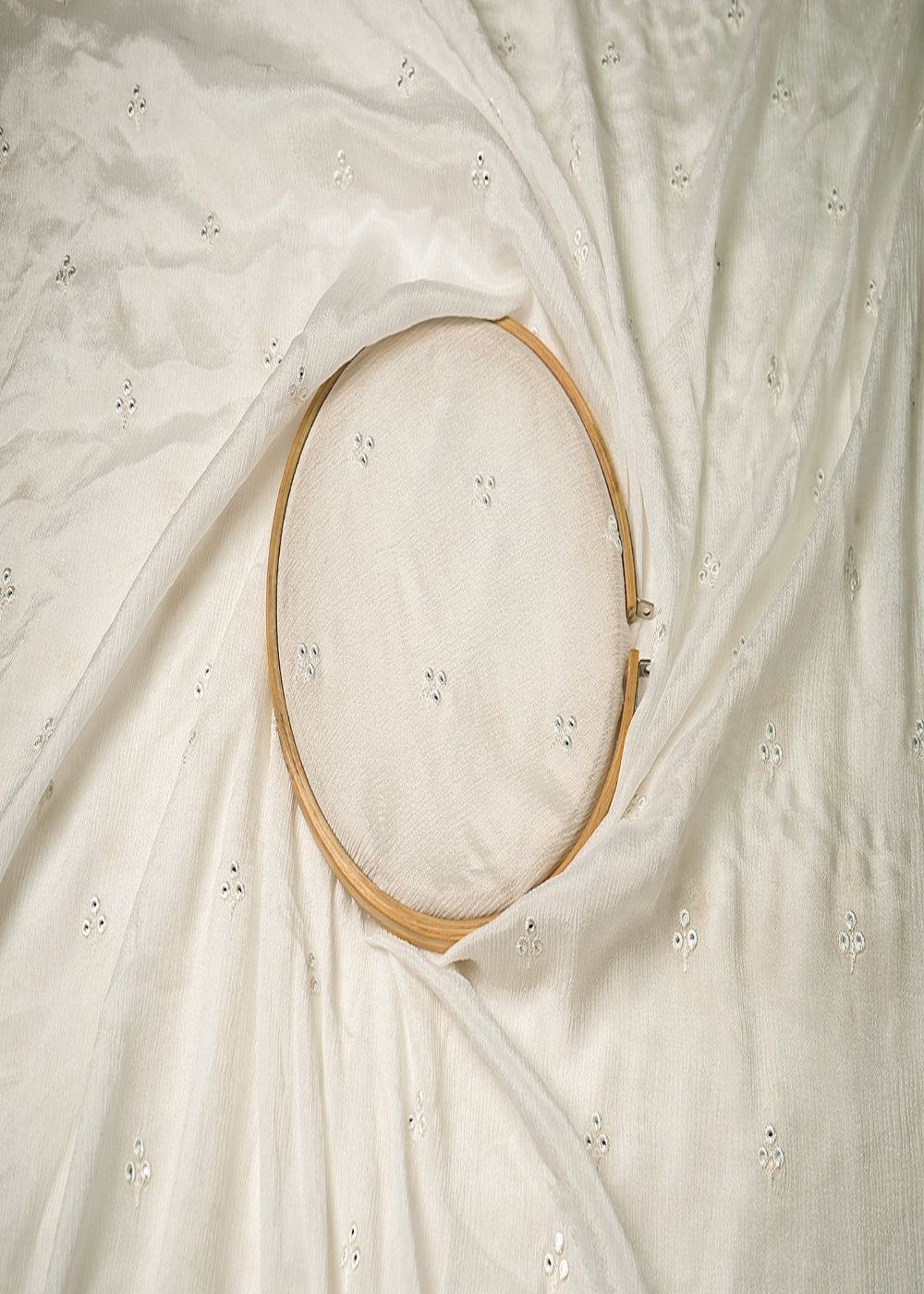
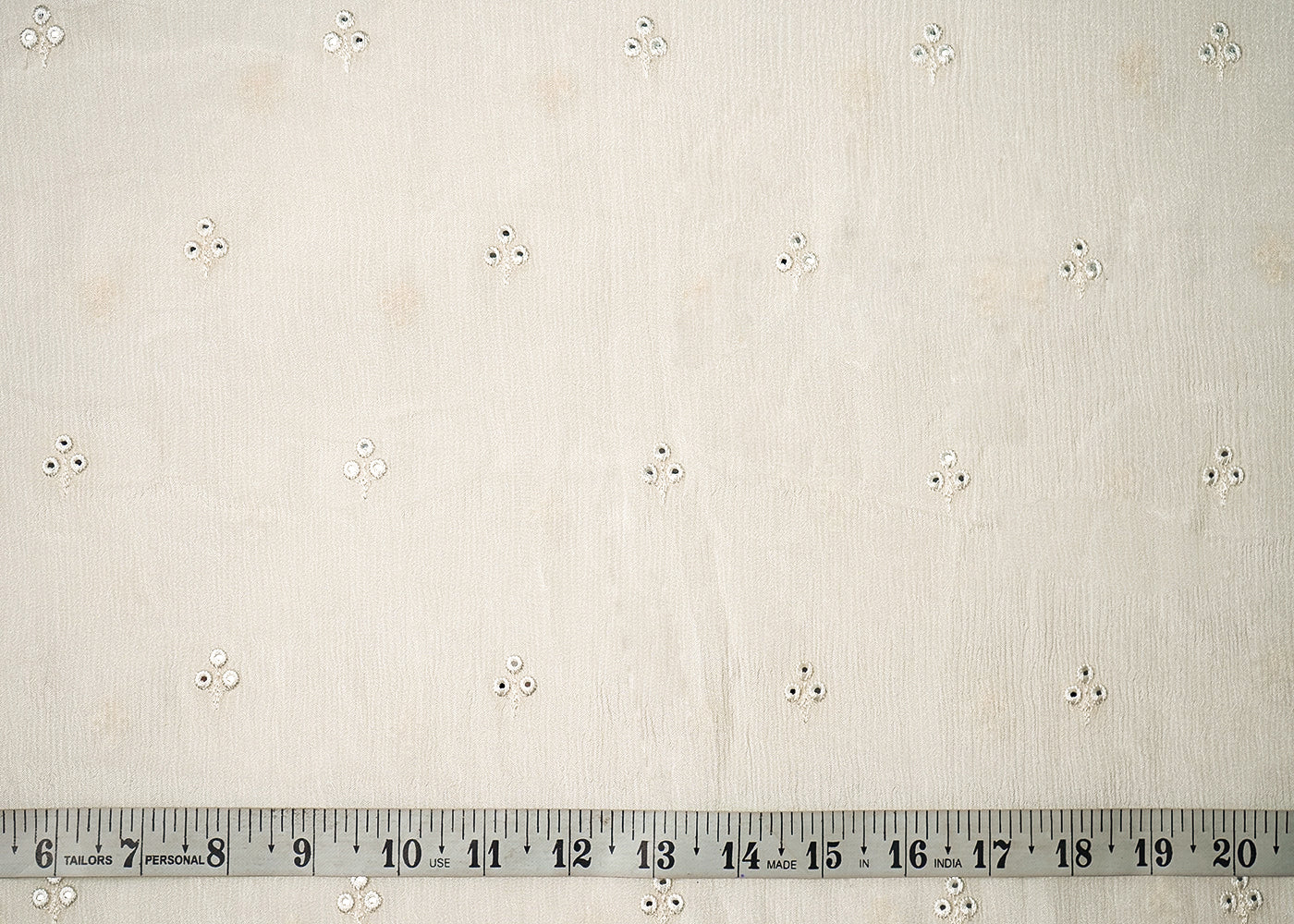
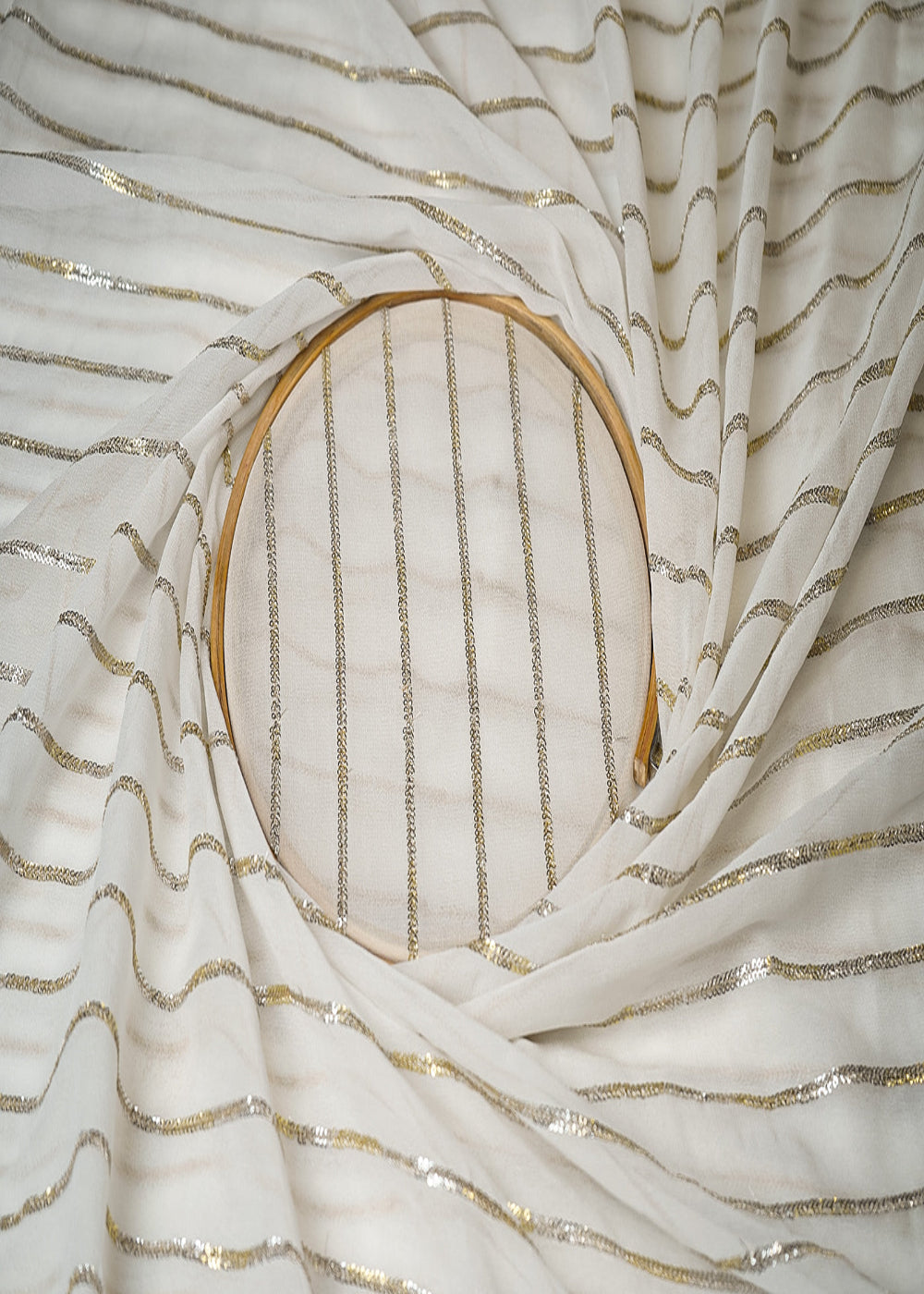
The embroidery is worked with thread that holds structure through the dye bath. The base stays neutral, usually off-white or ecru. After dyeing, the pattern survives intact while the ground takes the colour.
| Feature | Why It Matters |
| Neutral dyeable base | Allows custom colour creation |
| Worked embroidery | Adds richness without extra embellishment |
| Thread stability | Holds pattern structure after dyeing |
| Versatile styling | Works for traditional as well as contemporary cuts |
| Custom colour freedom | Suits weddings, designer collections, boutique exclusives |
Types of Dyeable Embroidery Fabrics
Each base gives a different result once dyed. The ground fabric decides drape, sheen, and how deep the shade sits.
| Fabric Type | Best Uses |
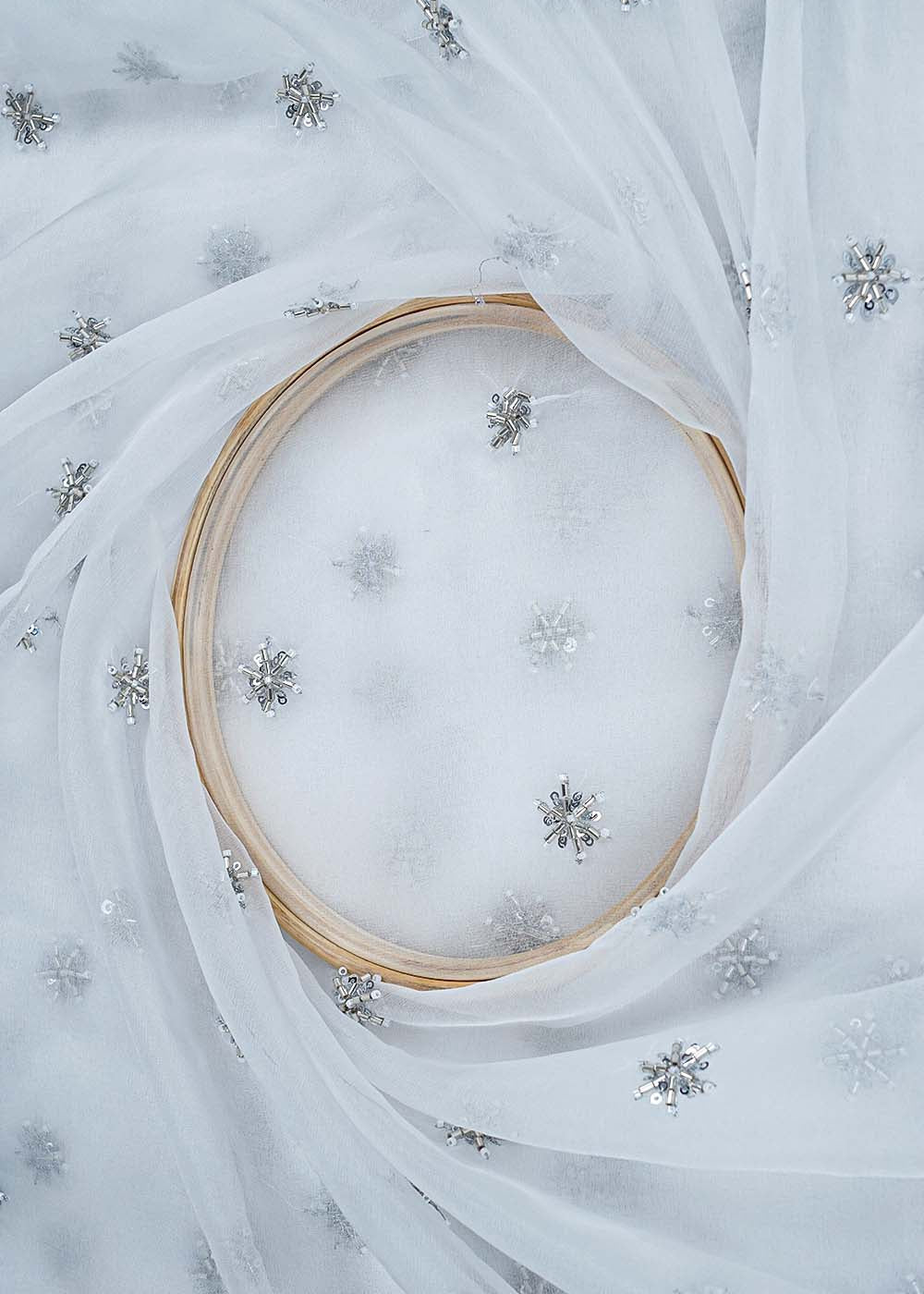
| Dyeable embroidered net | Bridal dupattas, lehengas, overlays |
| Dyeable organza embroidery | Occasion sarees, festive gowns |
| Dyeable georgette embroidery | Anarkalis, suits, ethnic sets |
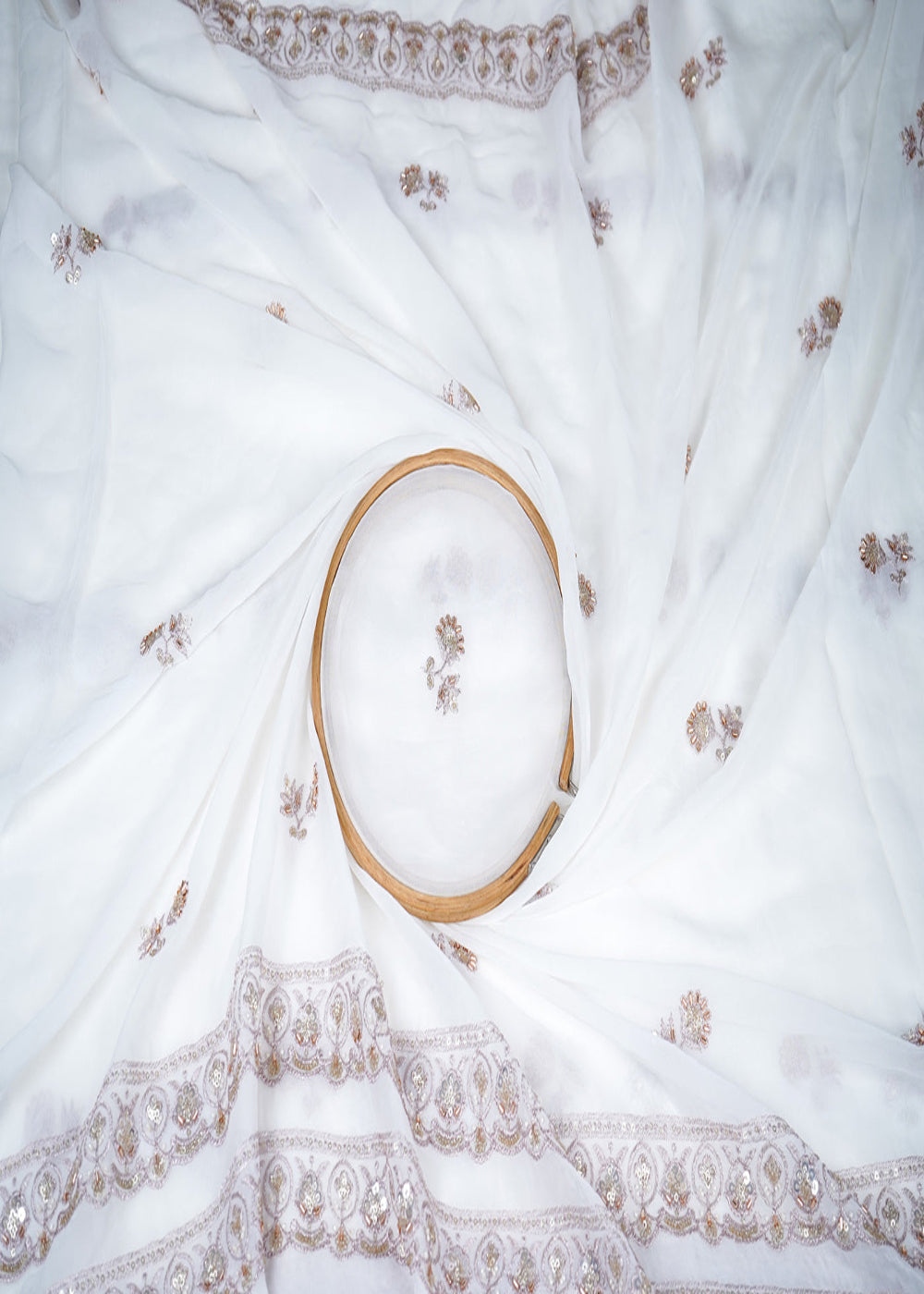
| Dyeable chiffon embroidery | Lightweight occasion wear |
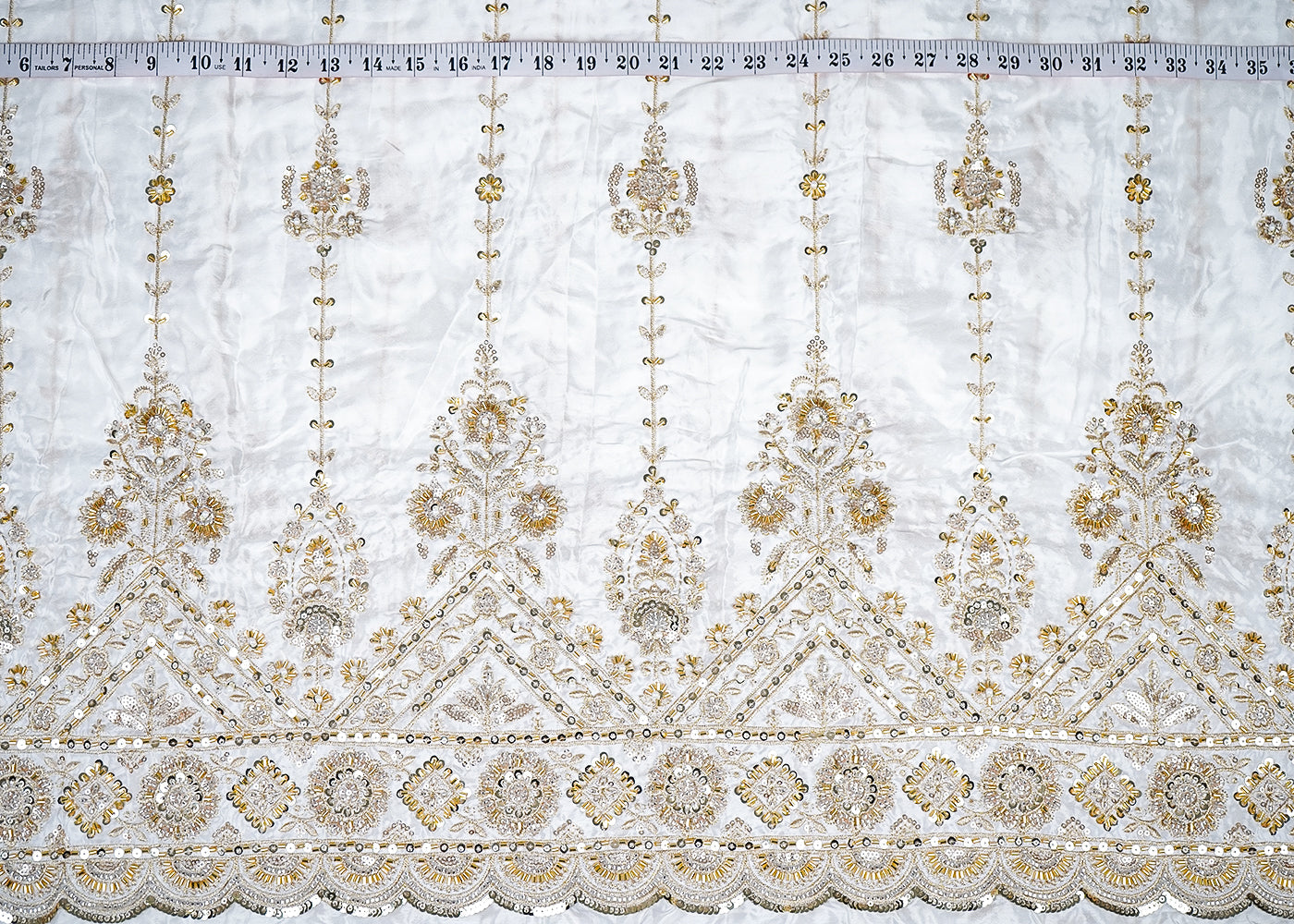
| Dyeable satin embroidery | Evening wear, statement outfits |
Why Brides and Boutiques Choose Dyeable Bases
Finding the right colour is usually the sticking point. The design is right but the shade is off. Or the shade works but the ground has no detail in it. A dyeable base removes that trade-off.
- Custom bridal shades matched to the function
- Coordinated family outfits across sisters, mothers, cousins
- Festive looks that stay off the common colour card
- Designer palettes built shade by shade
- Boutique collections nobody else is stocking
Families ordering four or five outfits for one wedding find this particularly useful, because everything can be pulled from a single base into related tones.
GSM Guide for Dyeable Embroidery Fabrics
GSM decides drape, comfort, and how much structure the garment holds after stitching.
| Fabric Type | GSM Range | Feel | Best For |
| Embroidered net | 80–150 GSM | Light, sheer | Dupattas, overlays |
| Embroidered organza | 100–180 GSM | Crisp, structured | Sarees, gowns |
| Embroidered georgette | 120–200 GSM | Soft, flowing | Ethnic suits, dresses |
| Embroidered satin | 150–250 GSM | Smooth, weighted | Evening and occasion wear |
Popular Uses
- Bridal lehengas and wedding dupattas
- Reception gowns and sharara sets
- Festive suits and designer sarees
- Boutique collections and custom occasion wear
Anything that needs exact colour matching across multiple garments is where these fabrics earn their price. Pair a dyeable ground with a net fabric overlay and the same shade carries across dupatta and kali without a visible break.
Trends Driving Demand in 2026
Two patterns are holding steady. First, wedding parties are moving away from the standard red and maroon card toward muted and unexpected tones, which only a dyeable base can deliver on short notice. Second, boutiques are stocking fewer SKUs in more flexible bases, because dead stock in a fixed shade is the fastest way to lose working capital.
Tips Before Dyeing
- Test a small sample before committing the full thaan
- Match the dye chemistry to the base fibre, not just the colour target
- Use a professional dyer for bridal and high-value garments
- Keep heat controlled during processing to protect the thread work
- Rinse gently, dry flat, avoid wringing the embroidered sections
Frequently Asked Questions
Can every embroidered fabric be dyed?
No. Only fabrics sold specifically as dyeable have a neutral ground and thread that survives the bath. Dyeing a pre-finished embroidered piece usually damages the thread work or leaves patchy colour.
Does the embroidery take the same shade as the base?
Usually yes, but the thread often absorbs slightly differently, giving a tonal effect rather than a flat single colour. Many designers use this deliberately.
What GSM should be picked for a bridal lehenga?
For kalis with volume, 150 GSM upward holds the ghera. Lighter net at 80 to 120 GSM works better for dupattas and overlays.
How much fabric is needed for a full bridal set?
A standard lehenga with dupatta and blouse runs between 8 and 10 metres depending on ghera and panel count. Confirm with the karigar before dyeing, since redyeing a short order rarely matches.
Order Dyeable Embroidery at Paras Gallery Fabrics
Our dyeable embroidery collection covers net, georgette, organza, chiffon, and satin grounds, all held in neutral shades ready for the dye house. Boutique owners, designers, and resellers buying in quantity can check bulk rates on our wholesale page.
