














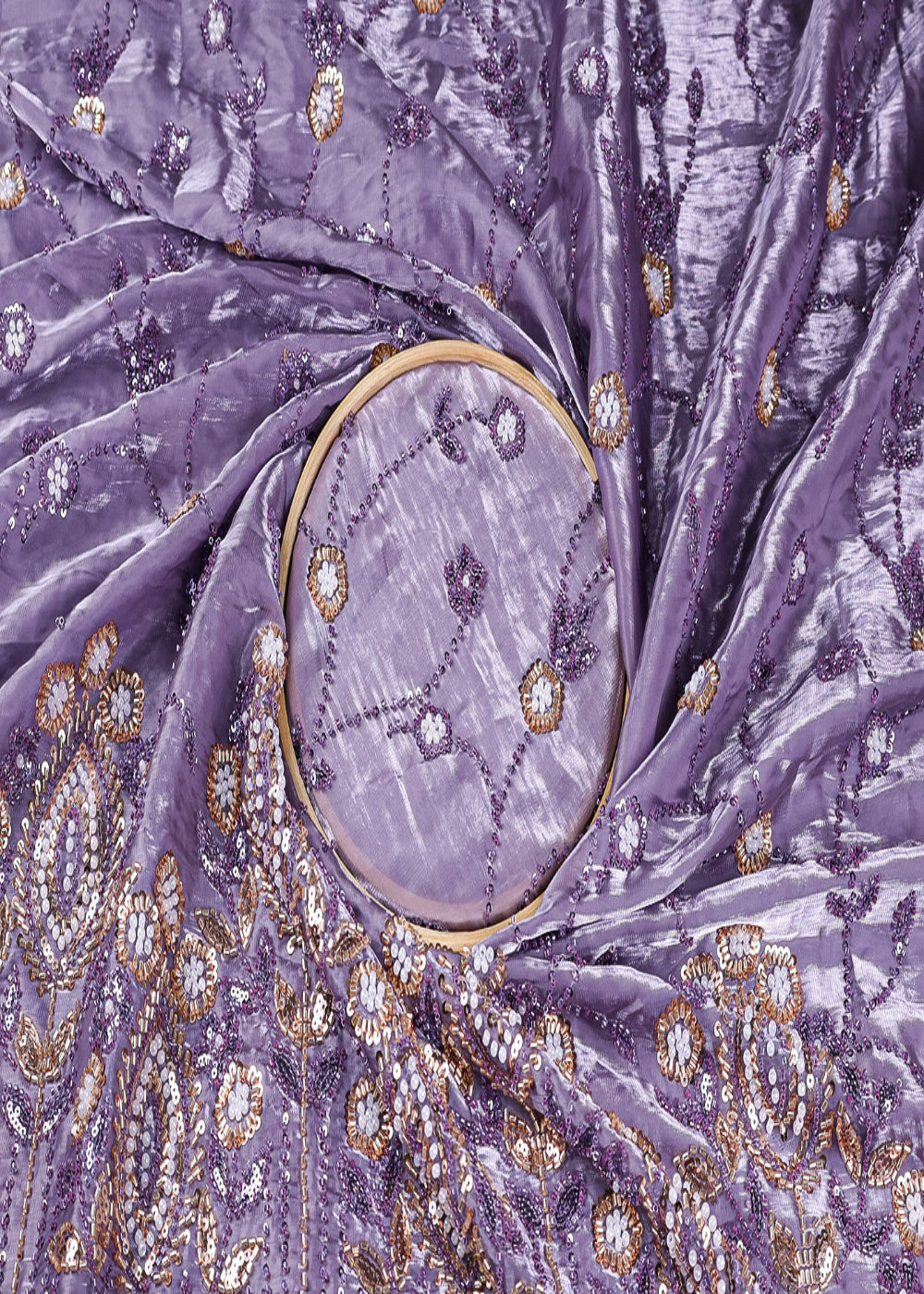
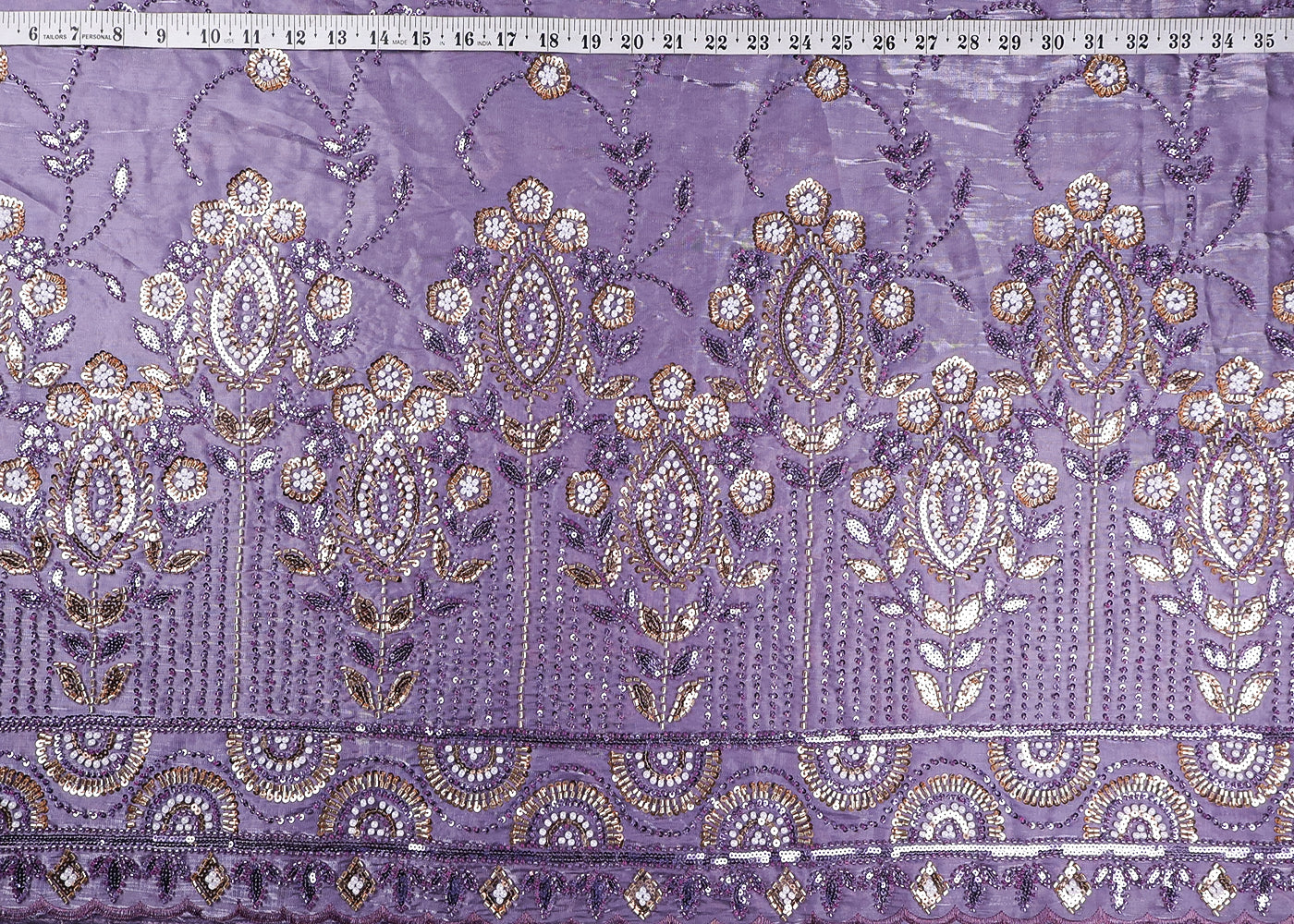
How to Buy Genuine Imported Fabric Without Getting Scammed
Imported fabric earns its price on two things the local mills struggle to match. The weave is finer and more consistent, the fall is better, so a gown or dupatta drapes cleaner and holds structure longer. That is the honest case for paying more, not the prestige tag most sellers lead with.
The problem is that the same prestige tag gets slapped on local stock at imported rates every single day. Most of this page is about telling the two apart, because a buyer paying imported money deserves imported fabric.
The Main Imported Fabrics and Where They Come From
| Fabric | Main Sources | Where It Is Used |
| Net | Korea, China, France, Taiwan | Bridal lehengas, gowns, veils |
| Organza | Italy, China, Korea | Designer sarees, blouses, overlays |
| Satin | Italy, China, Korea, Japan | Evening dresses, gowns, linings |
| Taffeta | France, Korea, Japan | Lehengas, voluminous skirts, suits |
| Cutwork lace | Italy, Switzerland | Dresses, midis, skirts, overlays |
| Japanese organza | Japan | Layered skirts, ruffles, fine trims |
What Sets Each One Apart
Imported net
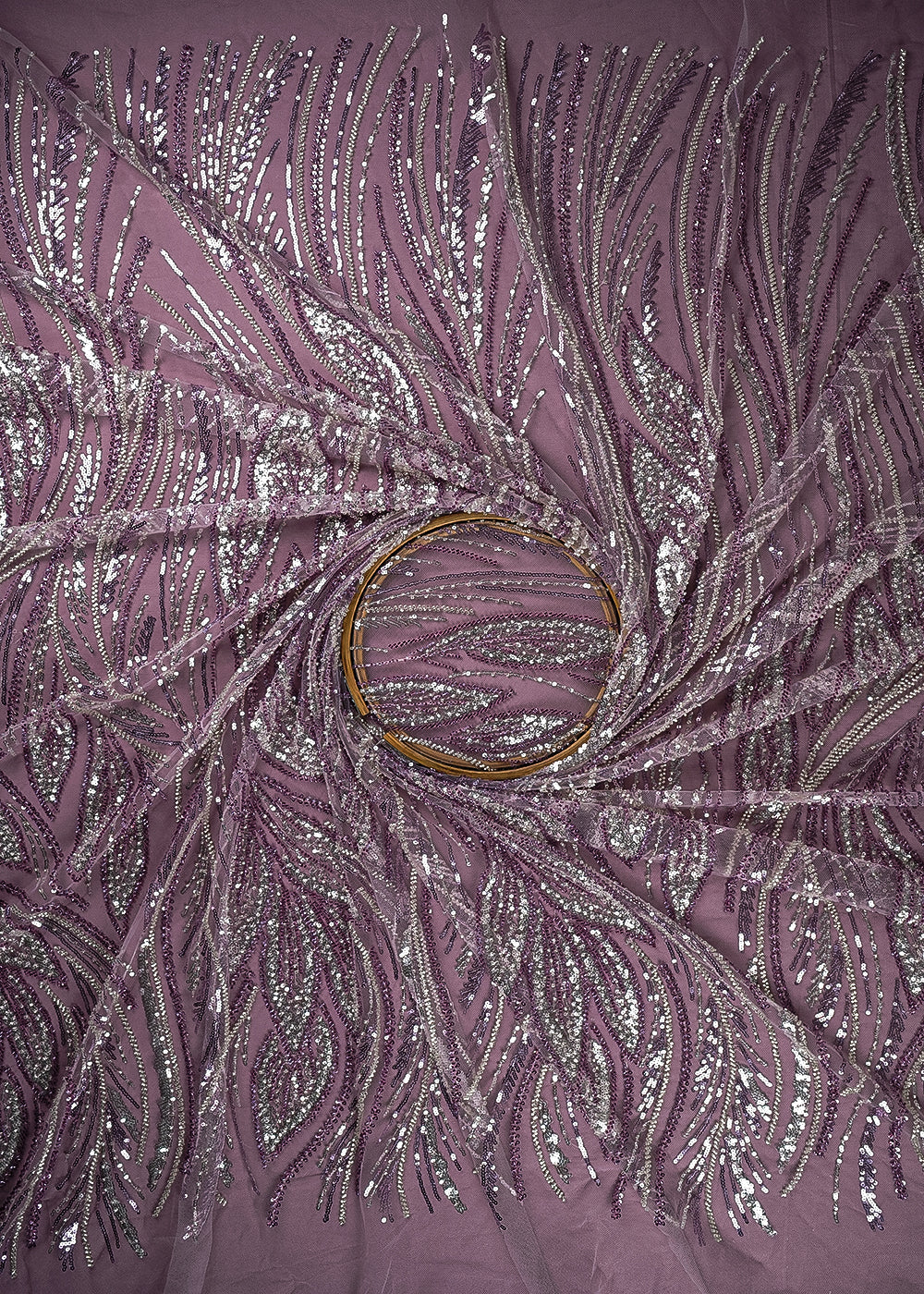
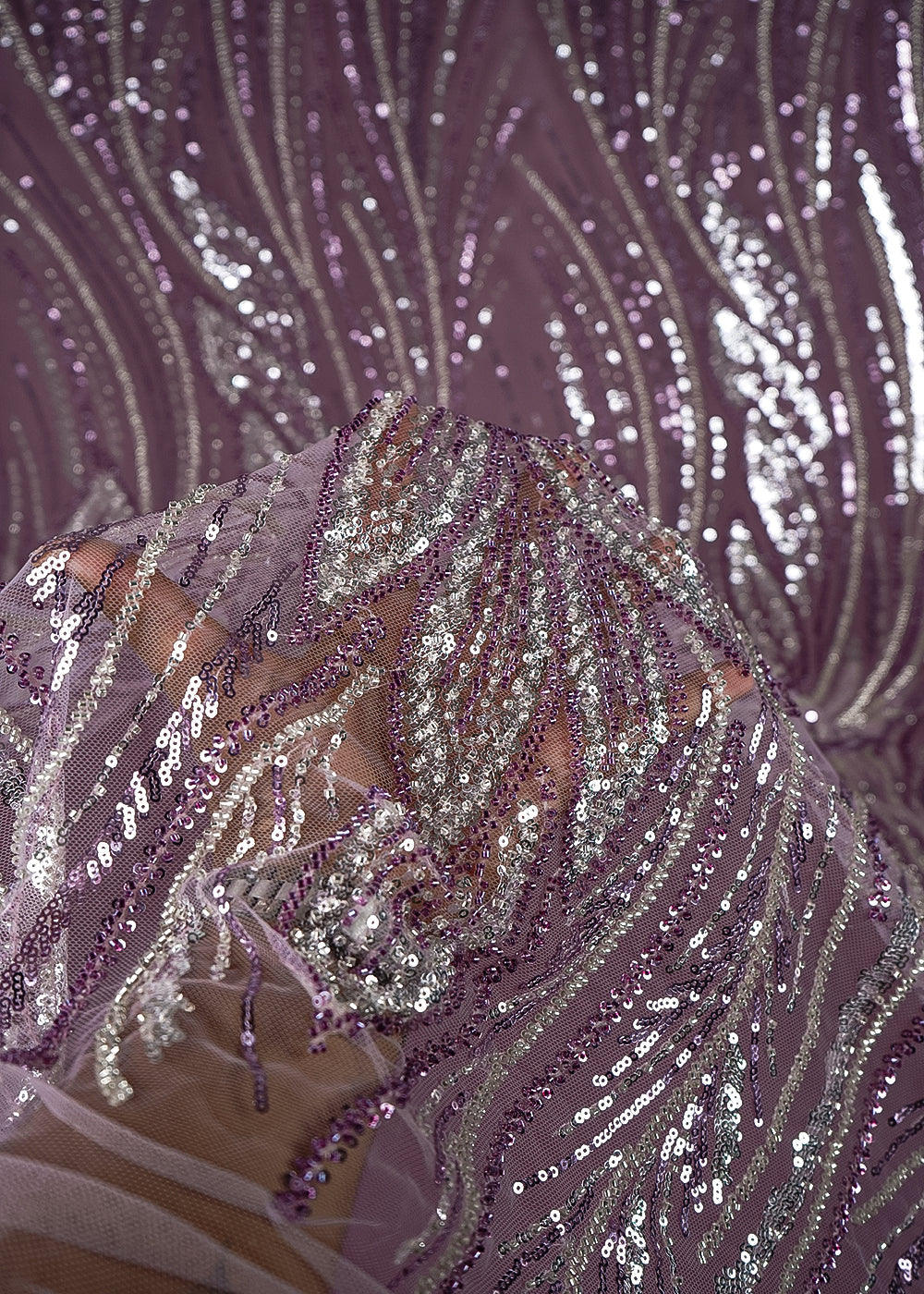
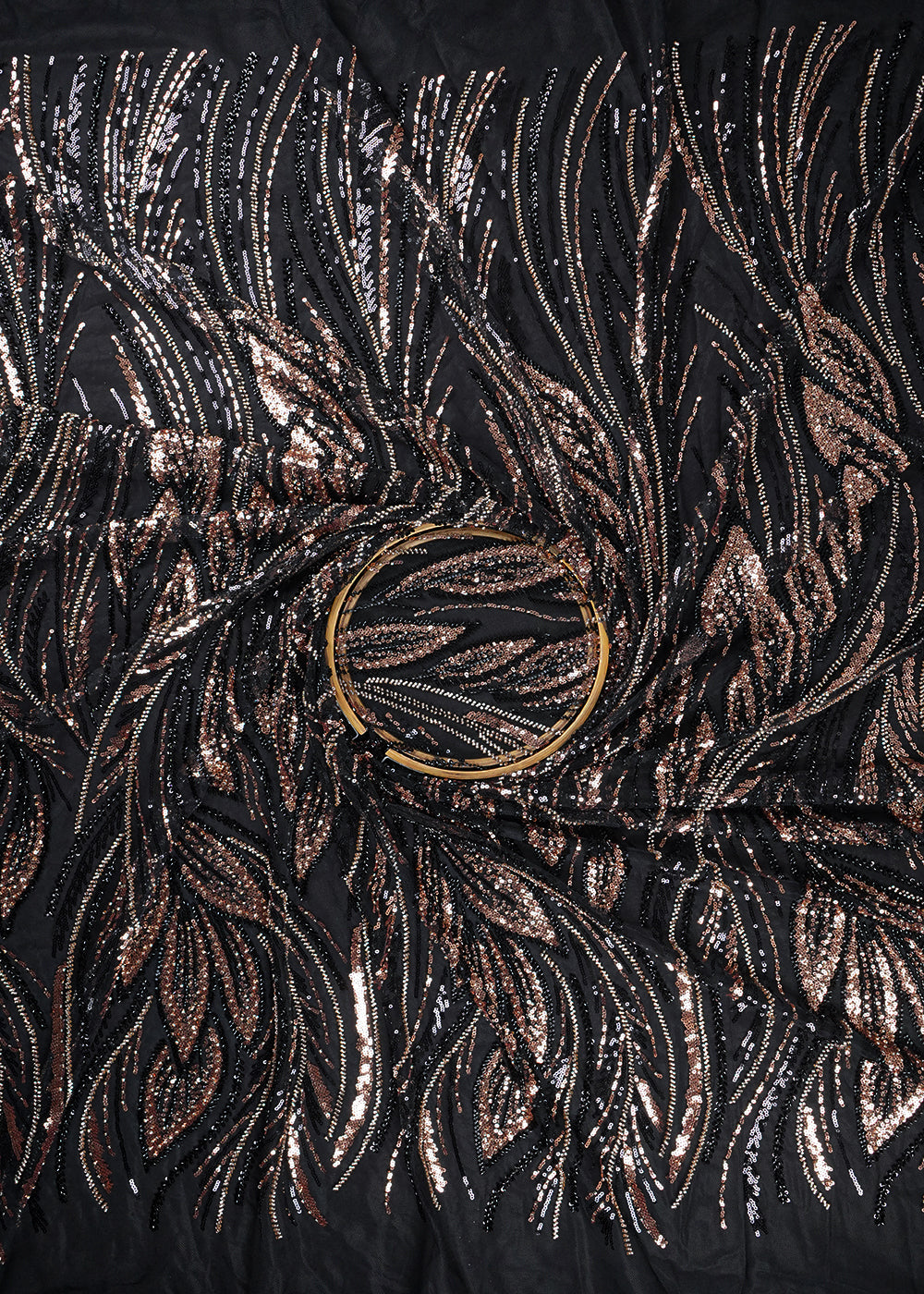
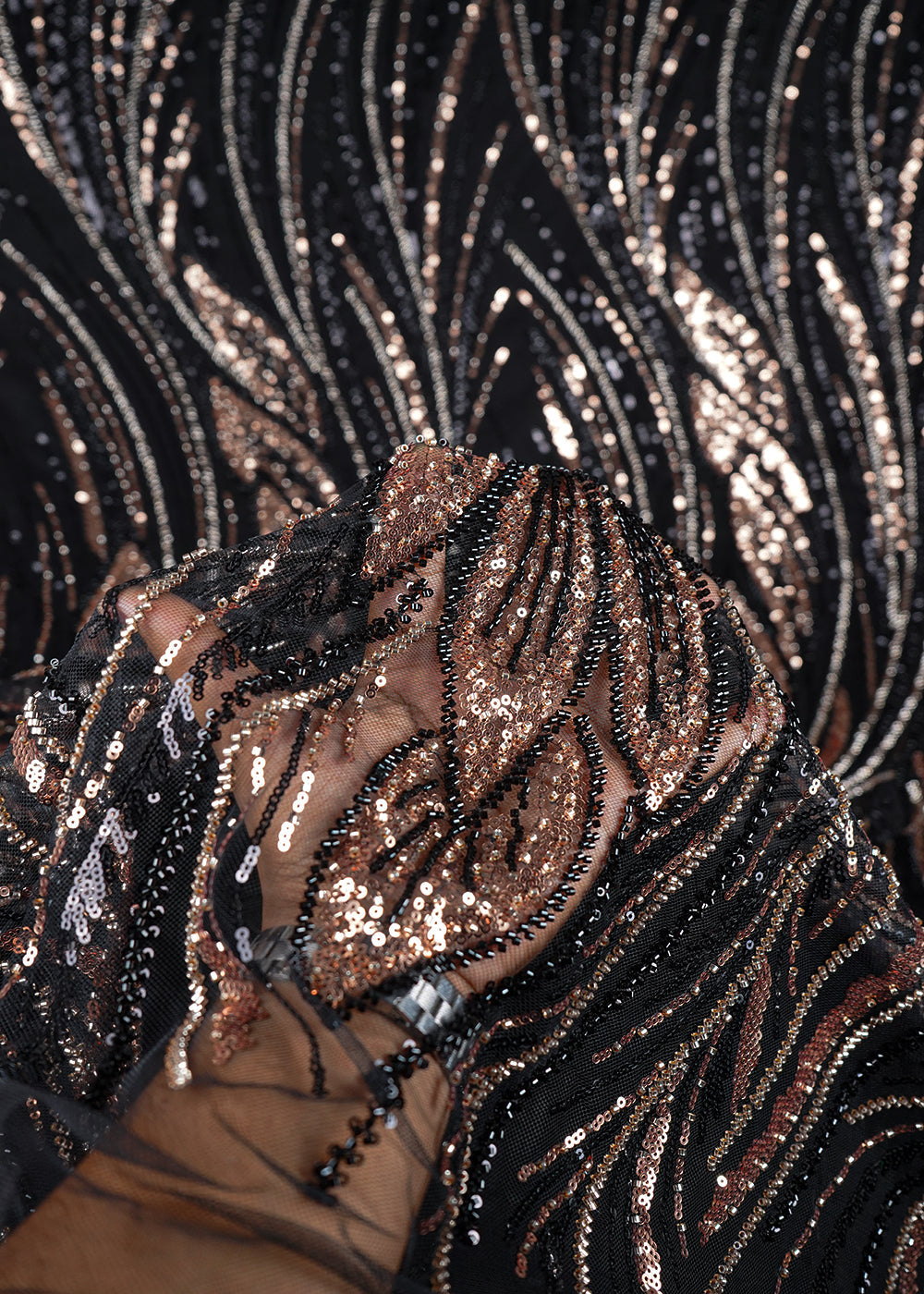
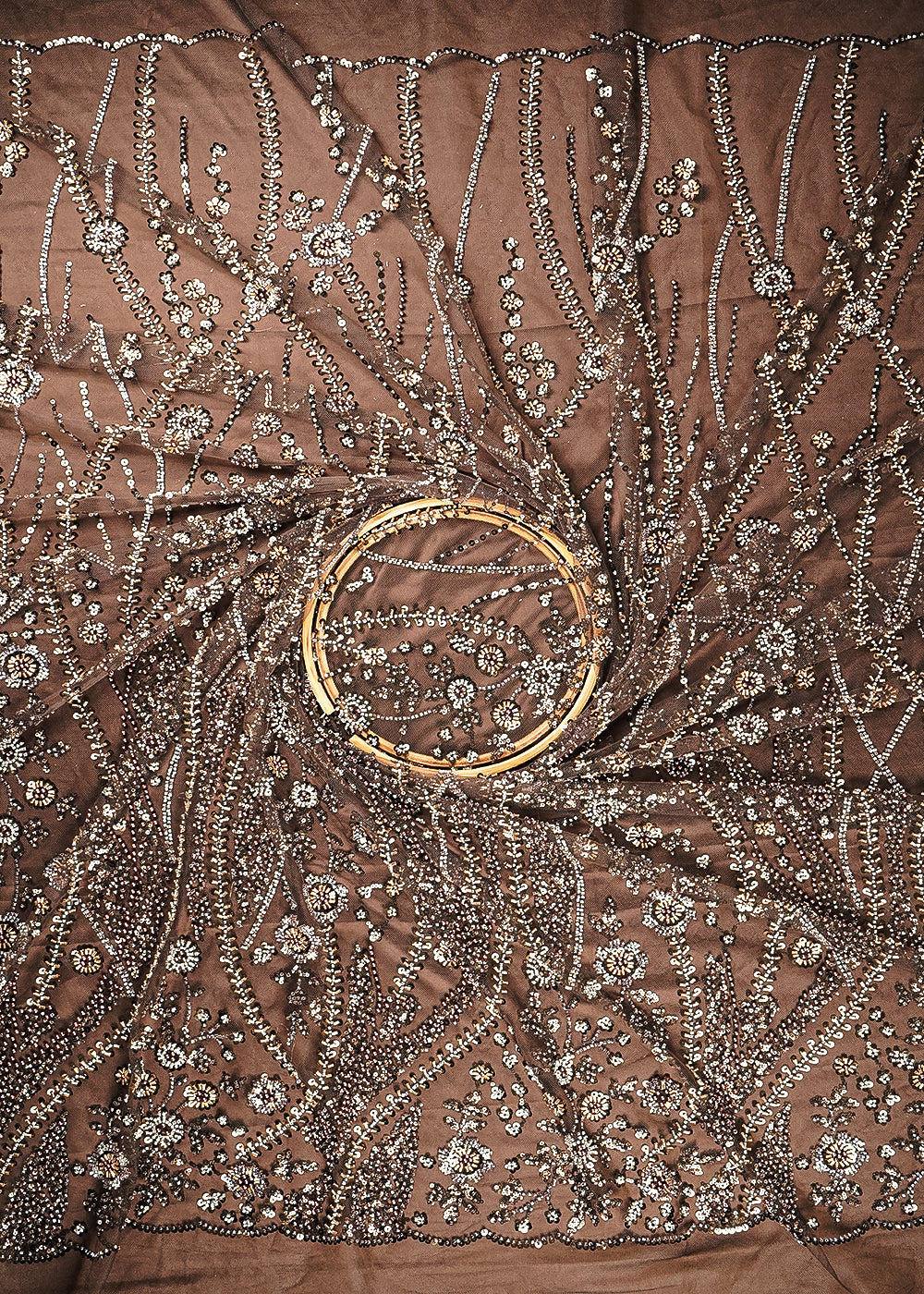
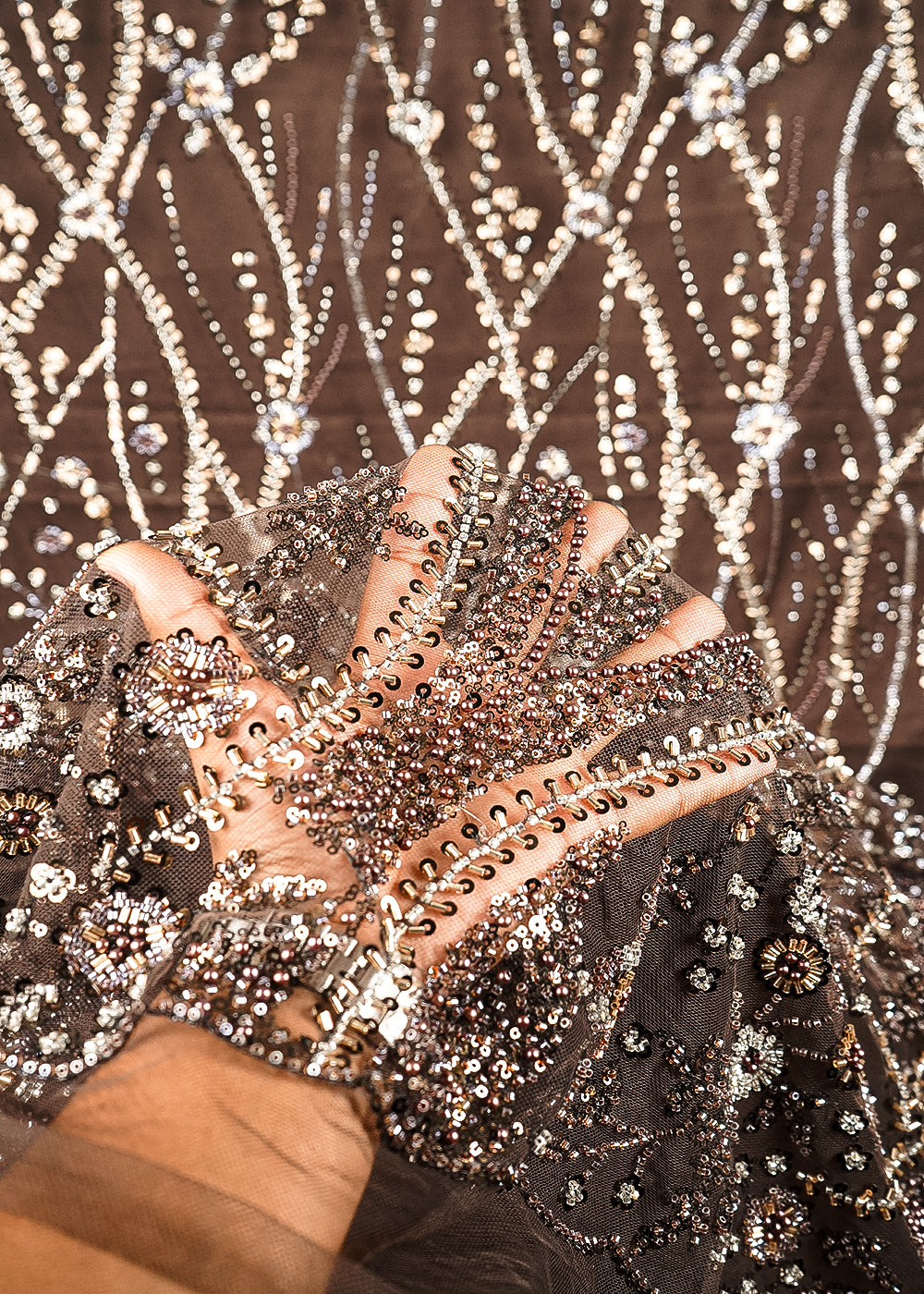
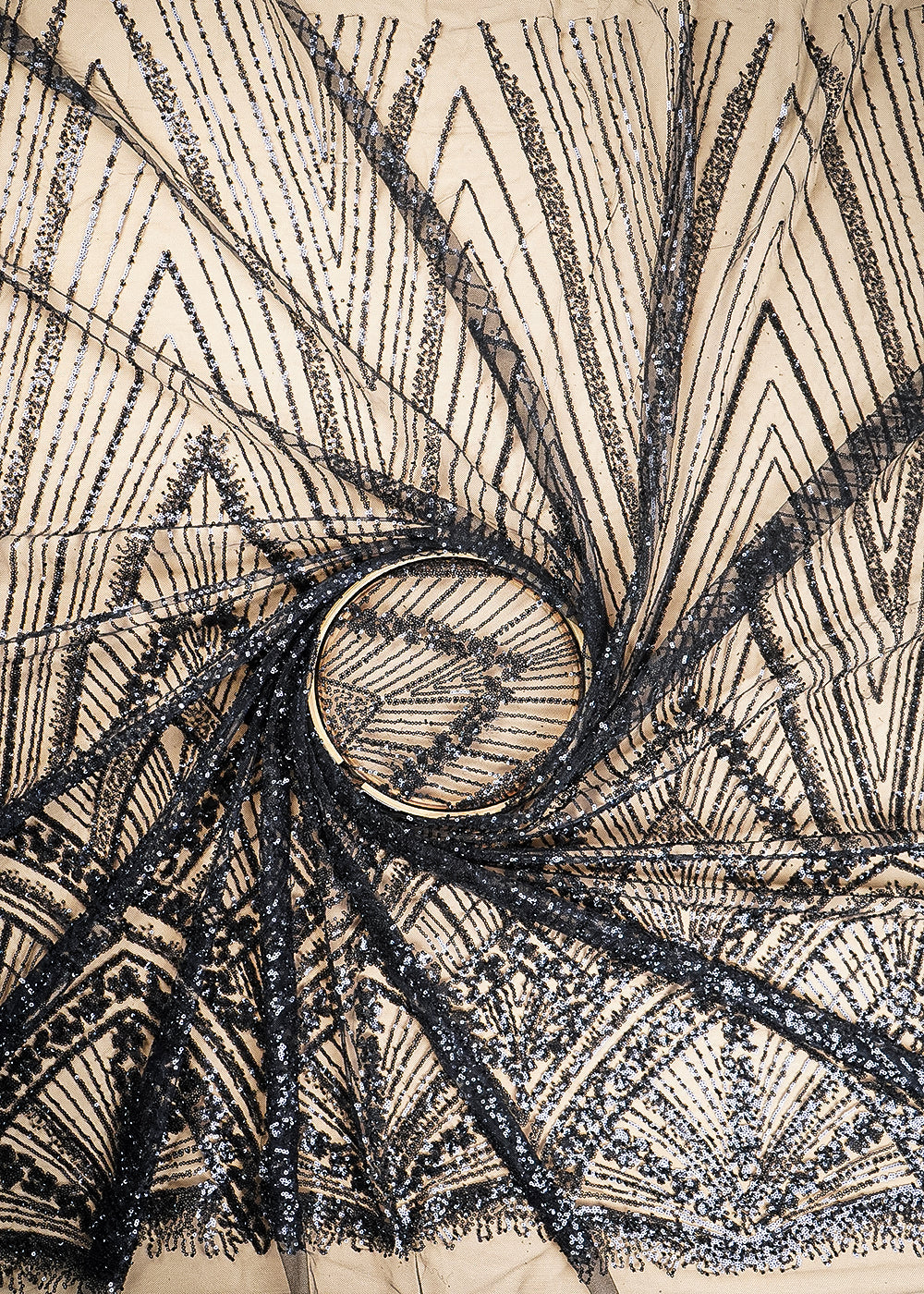
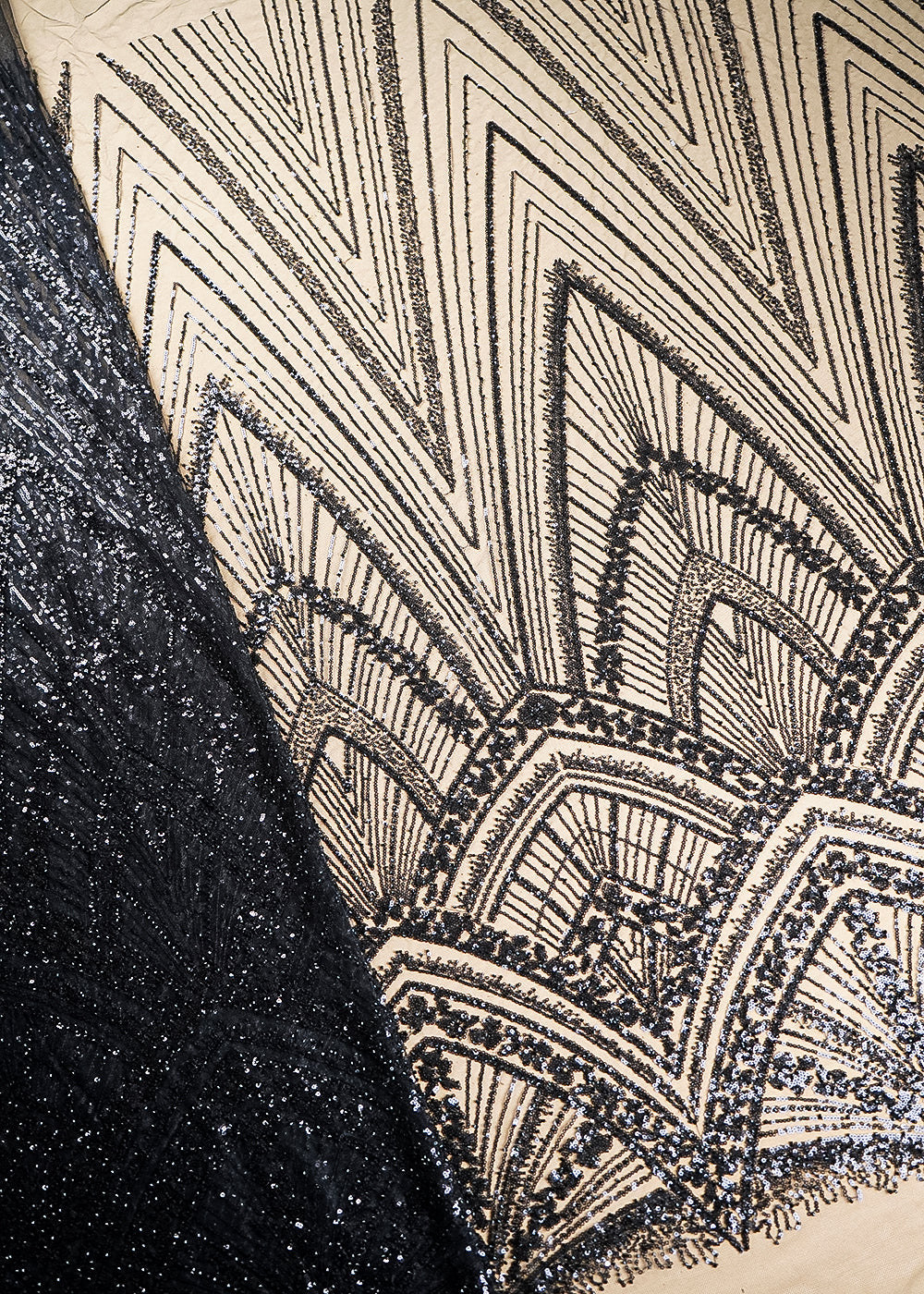
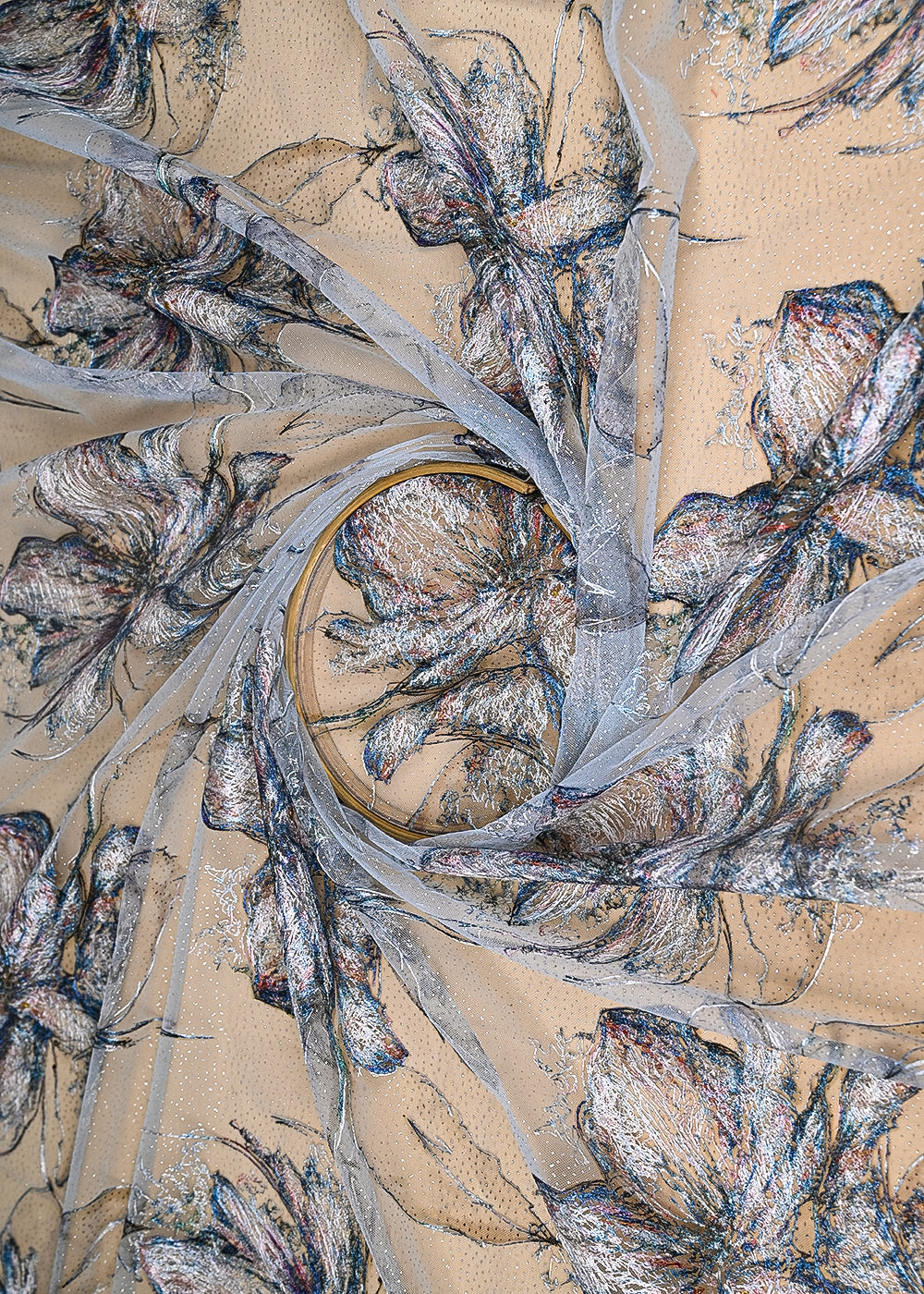
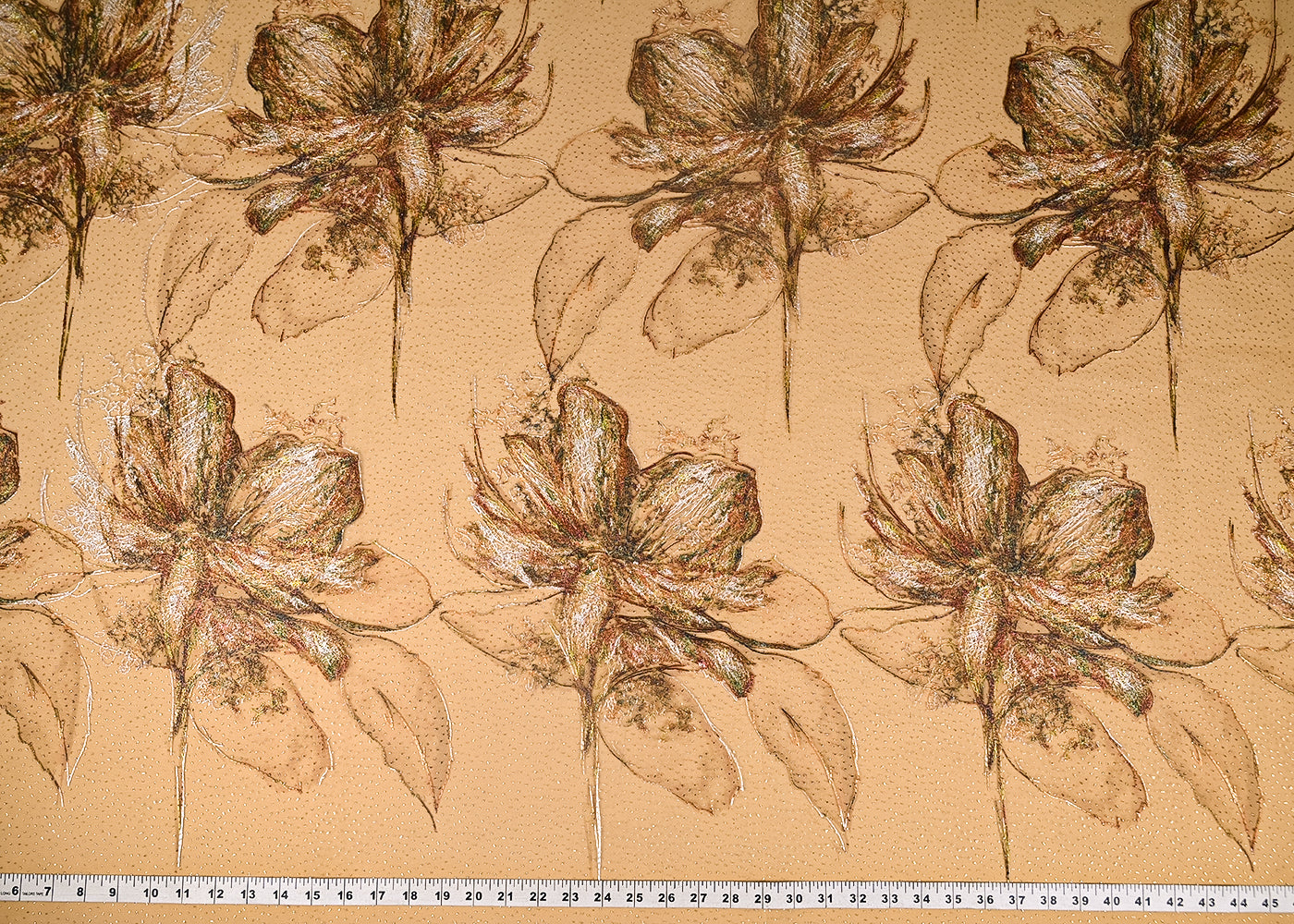
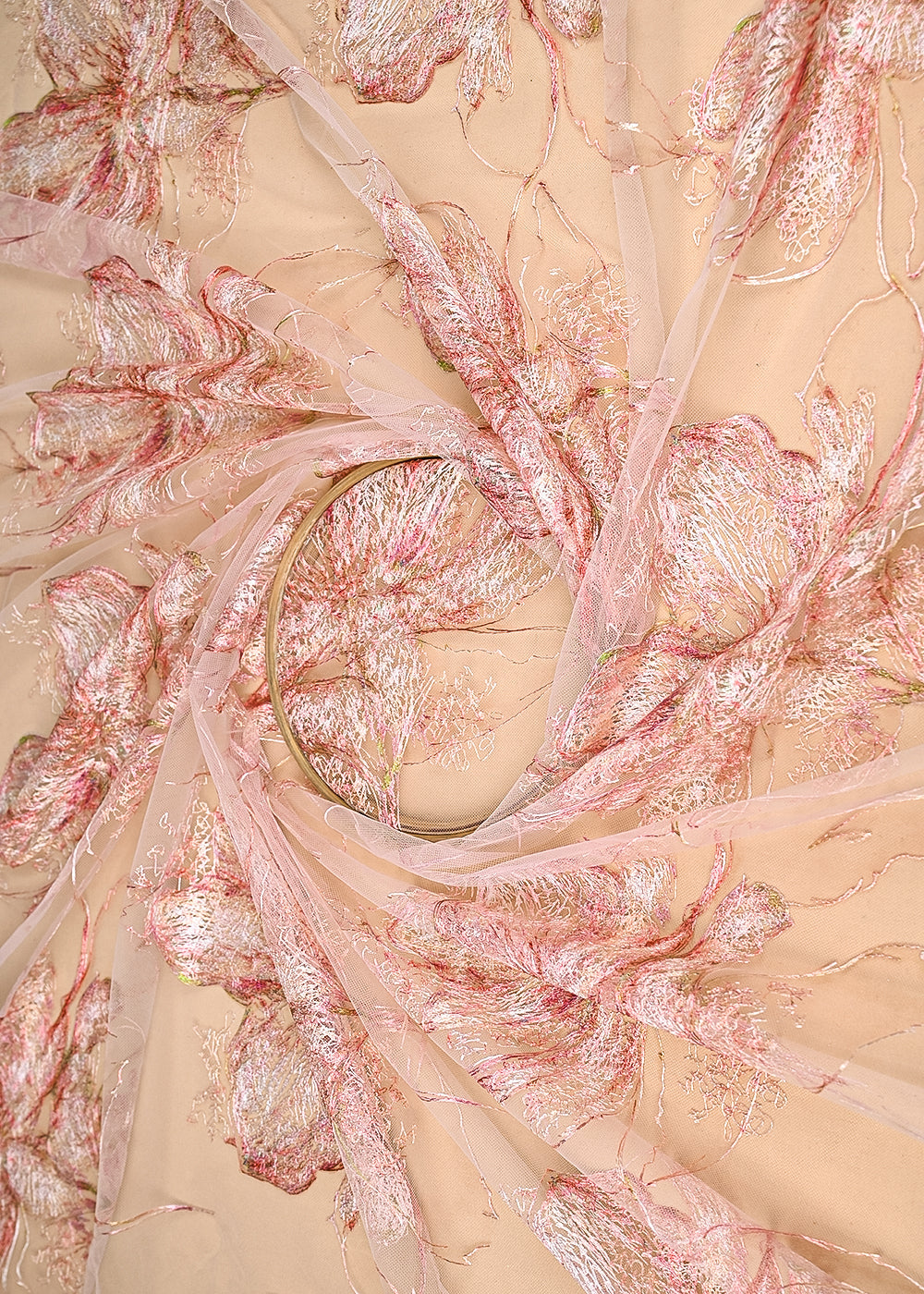
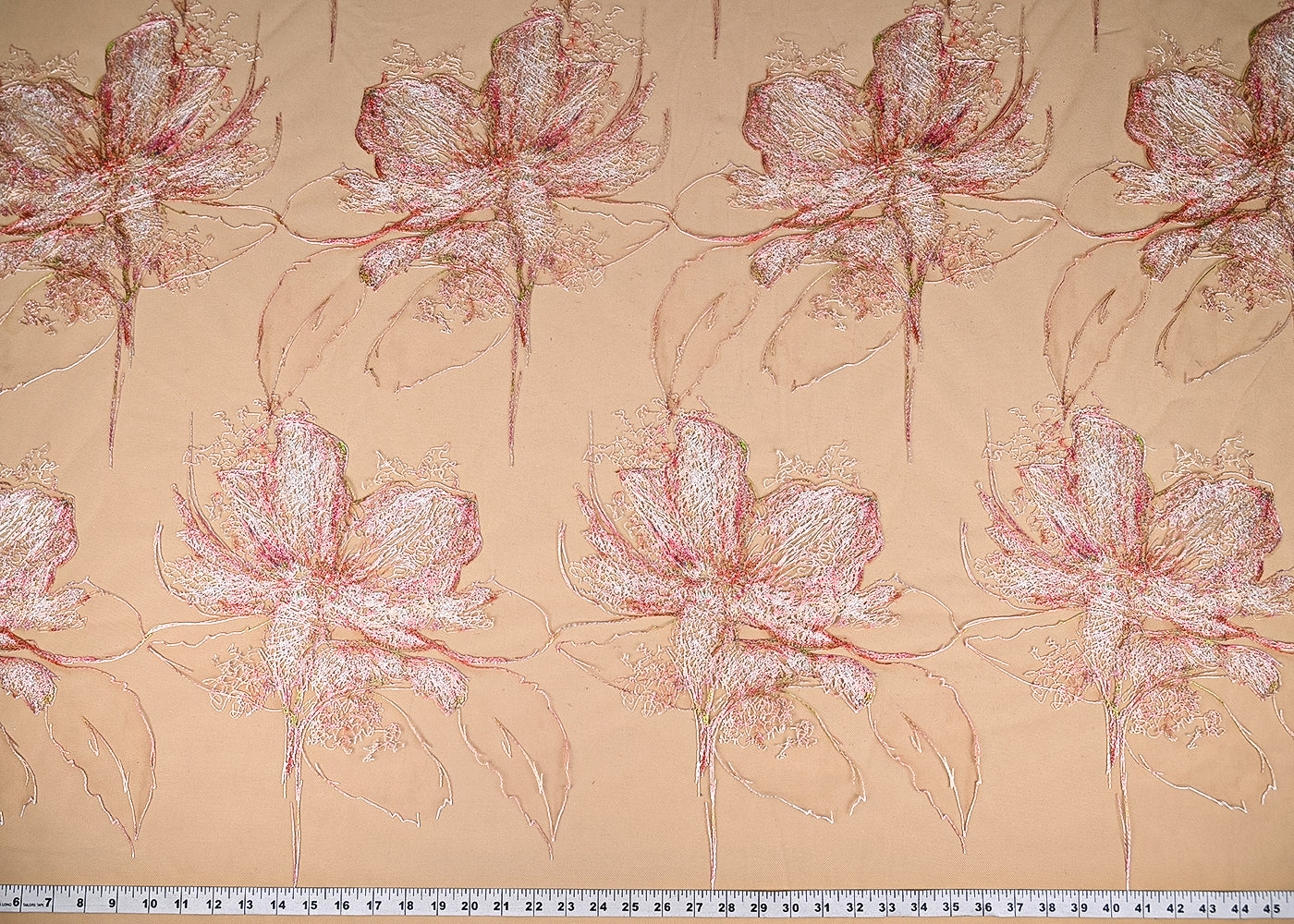
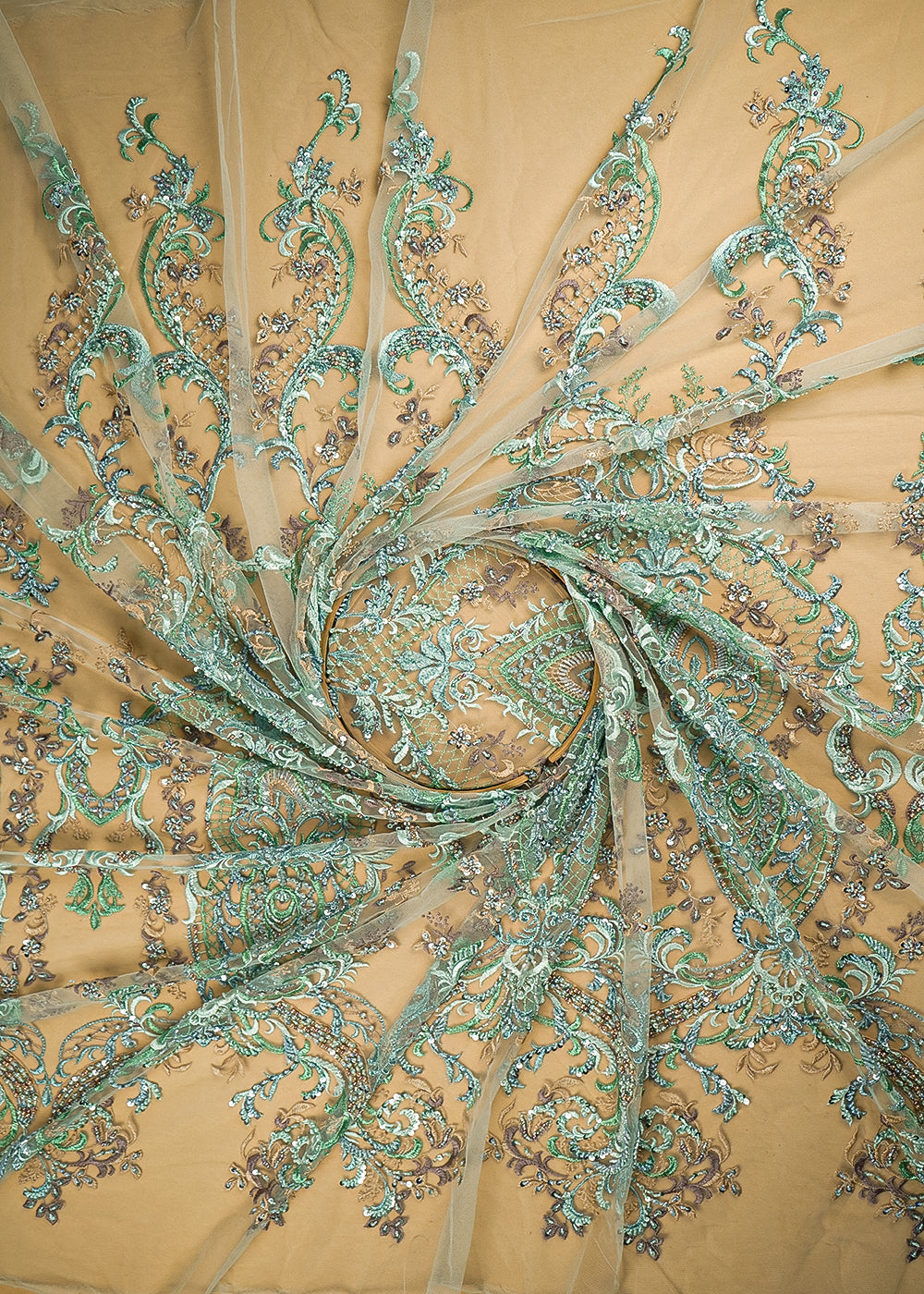
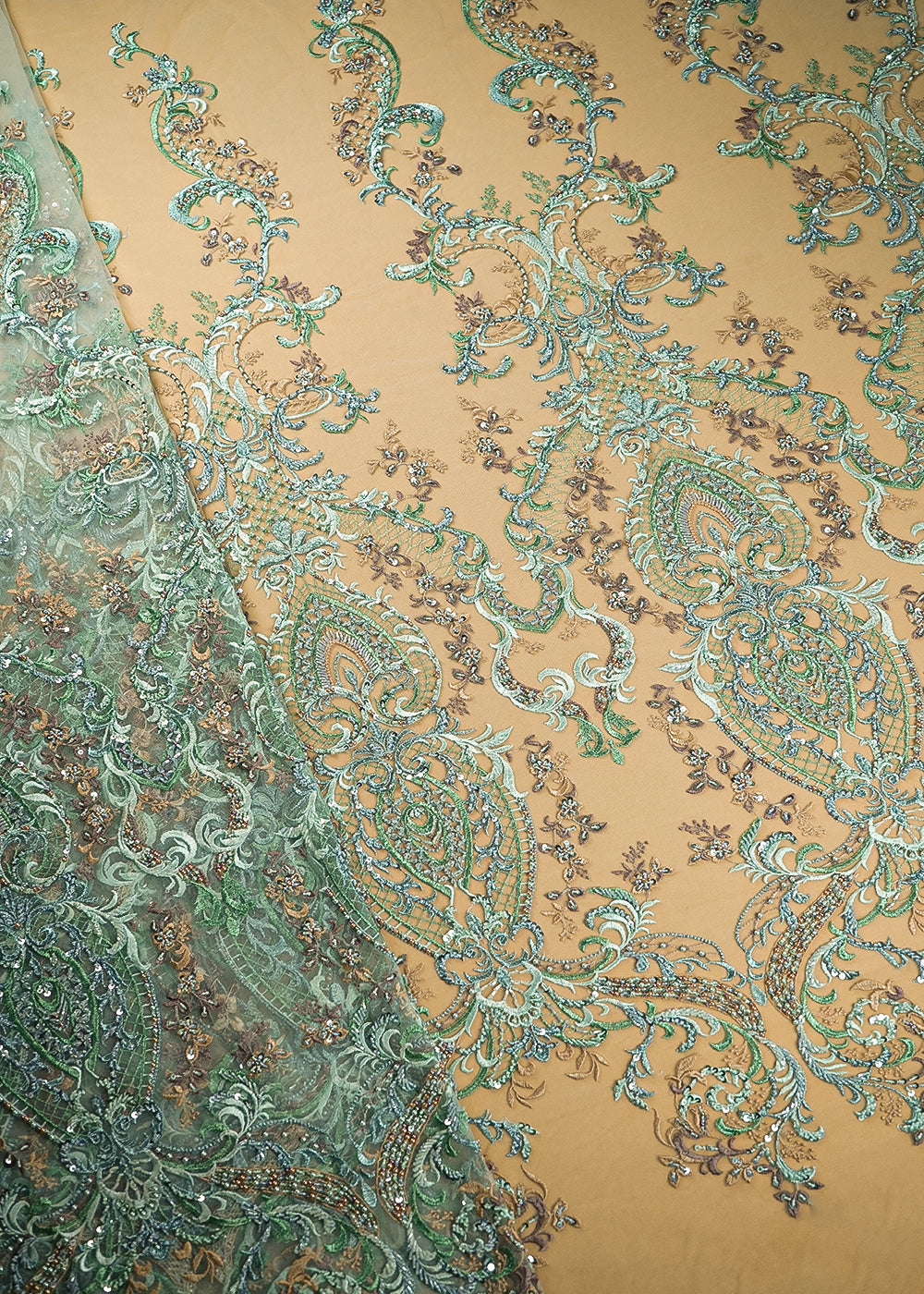
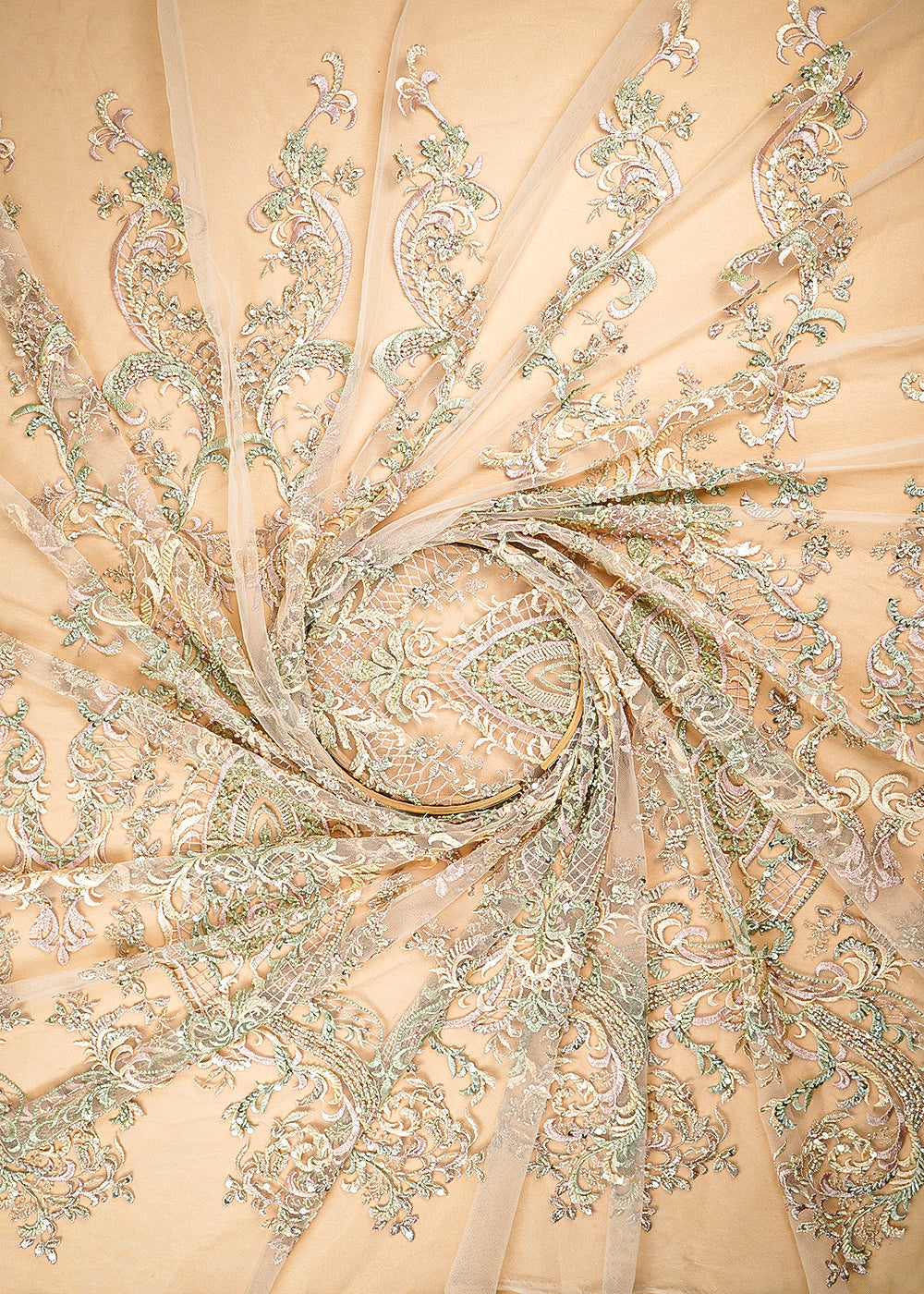
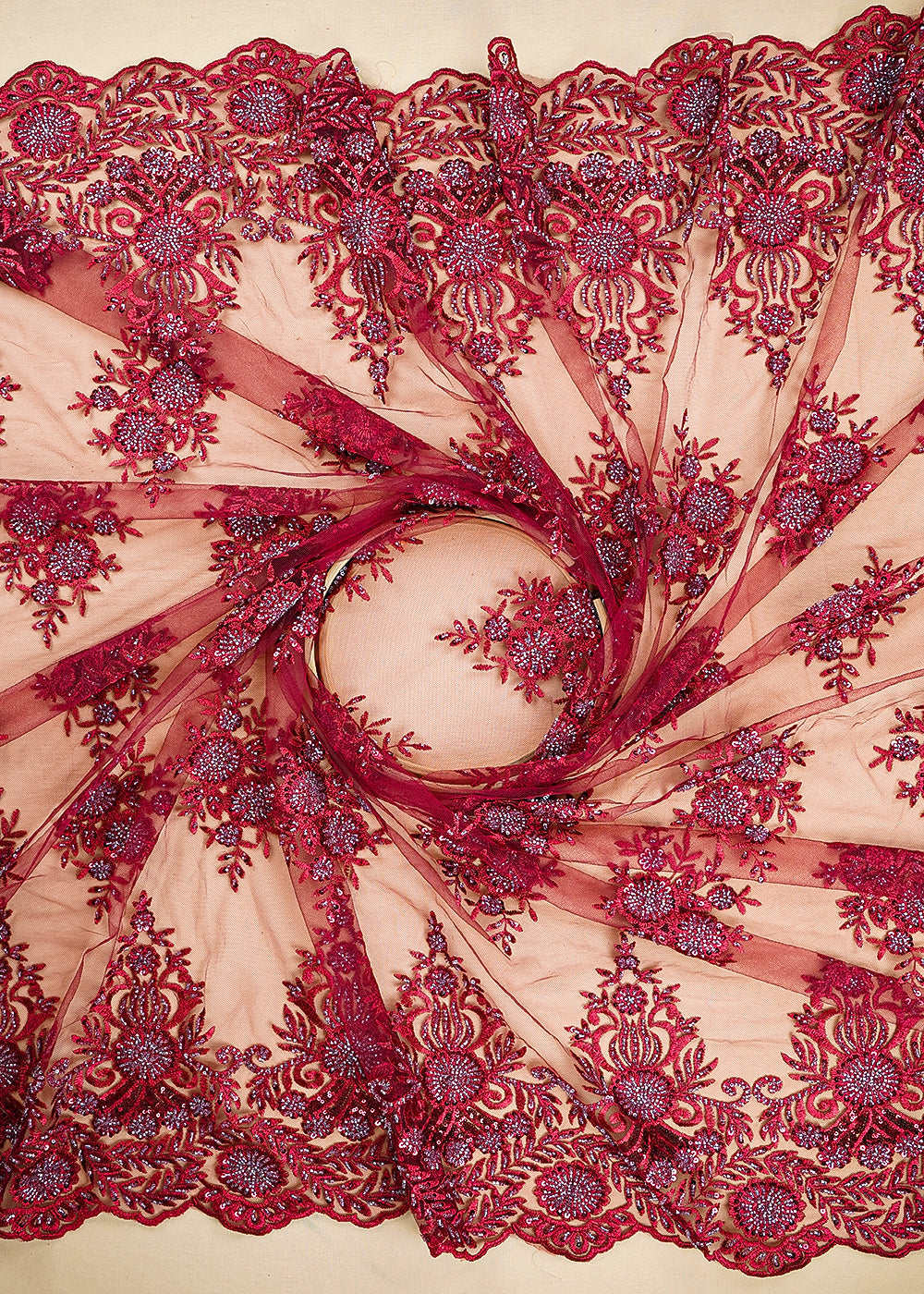
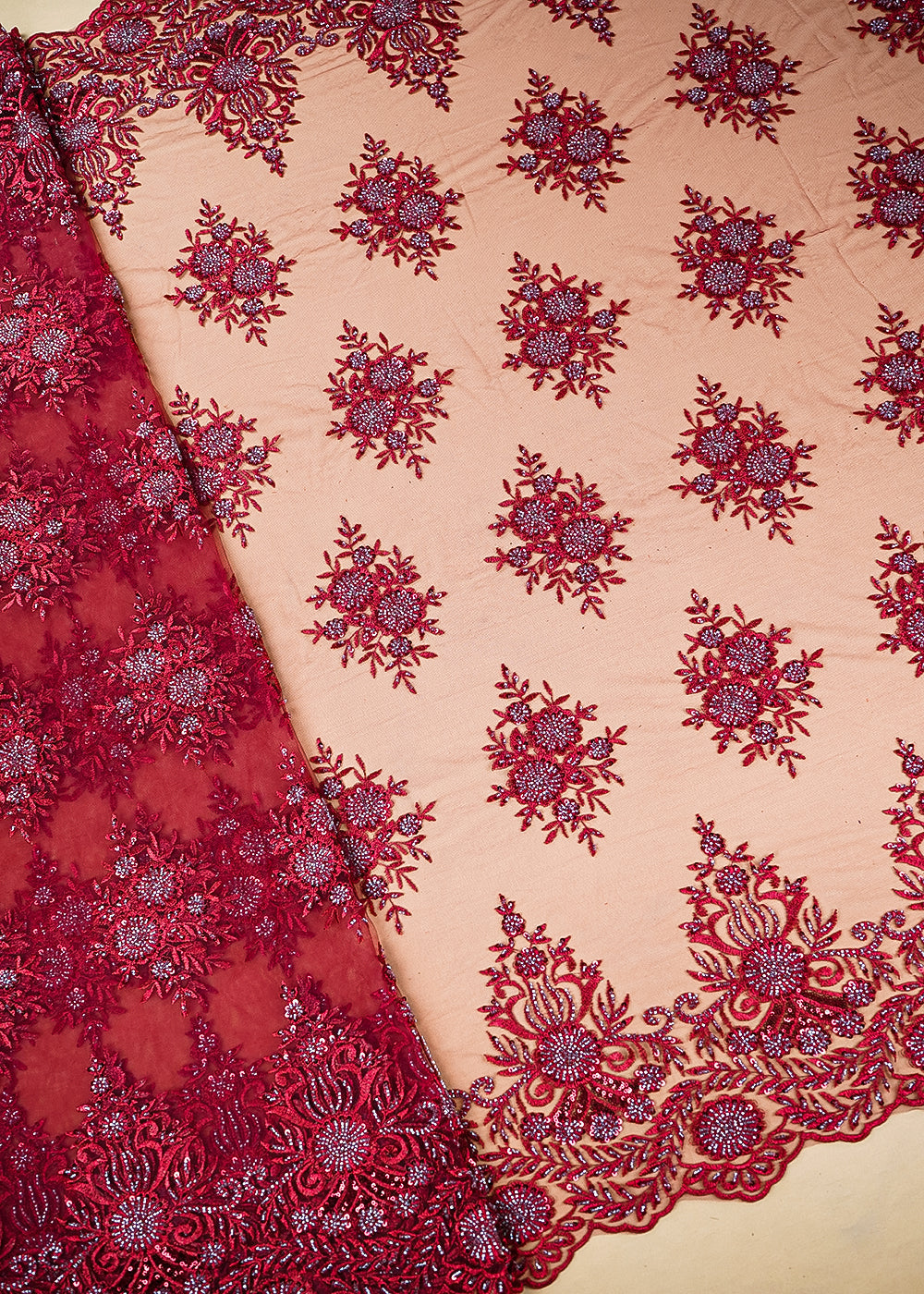
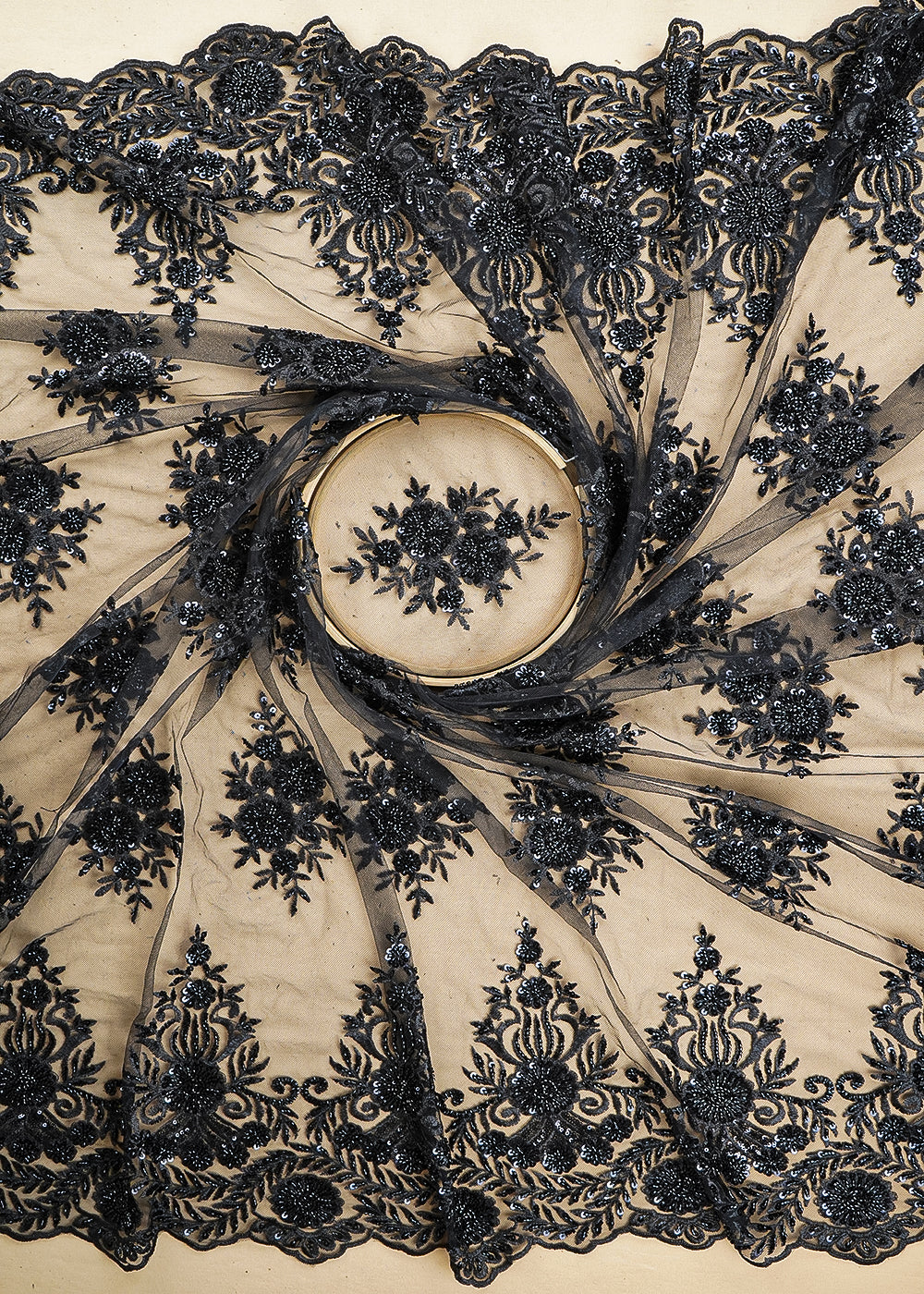
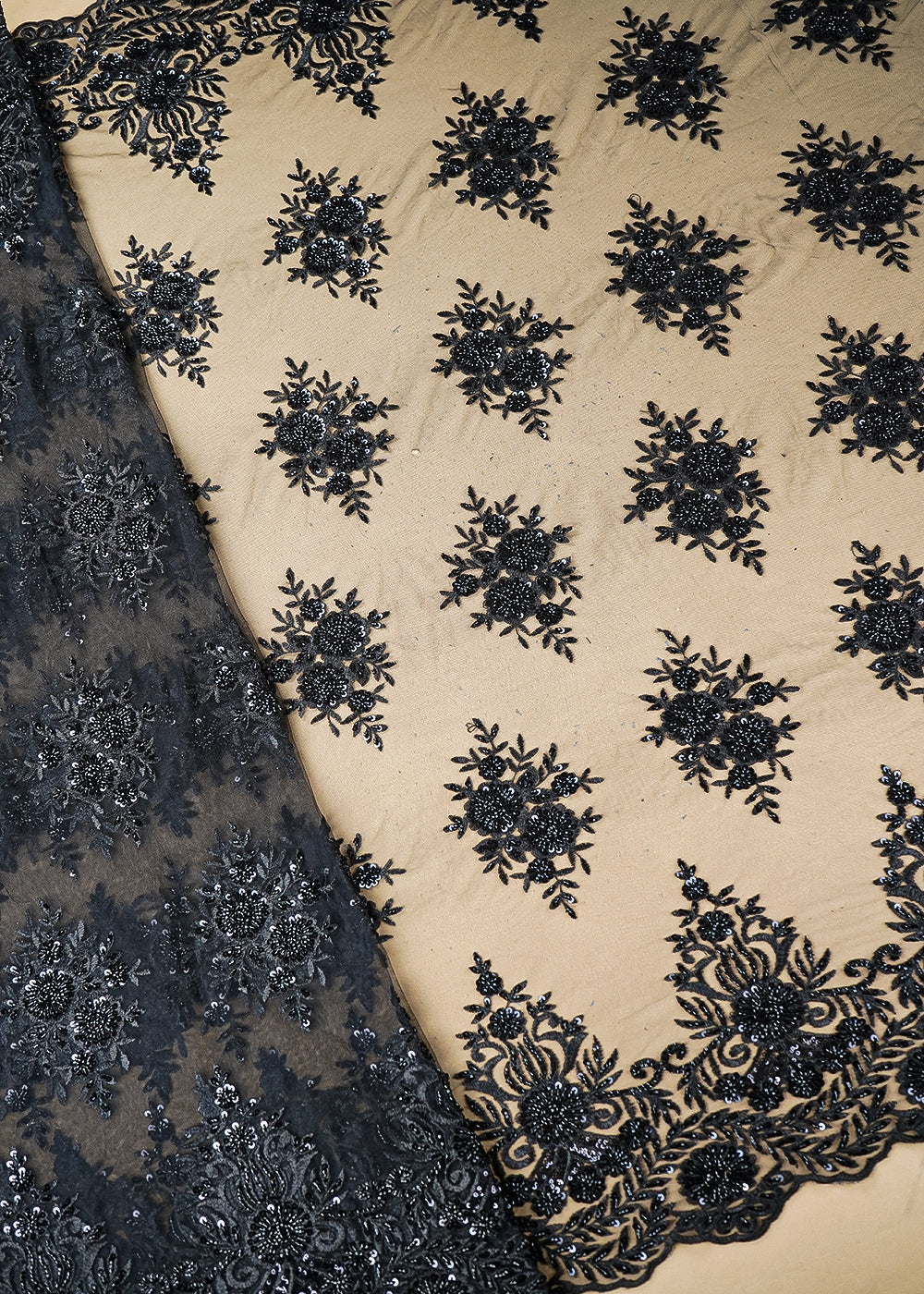
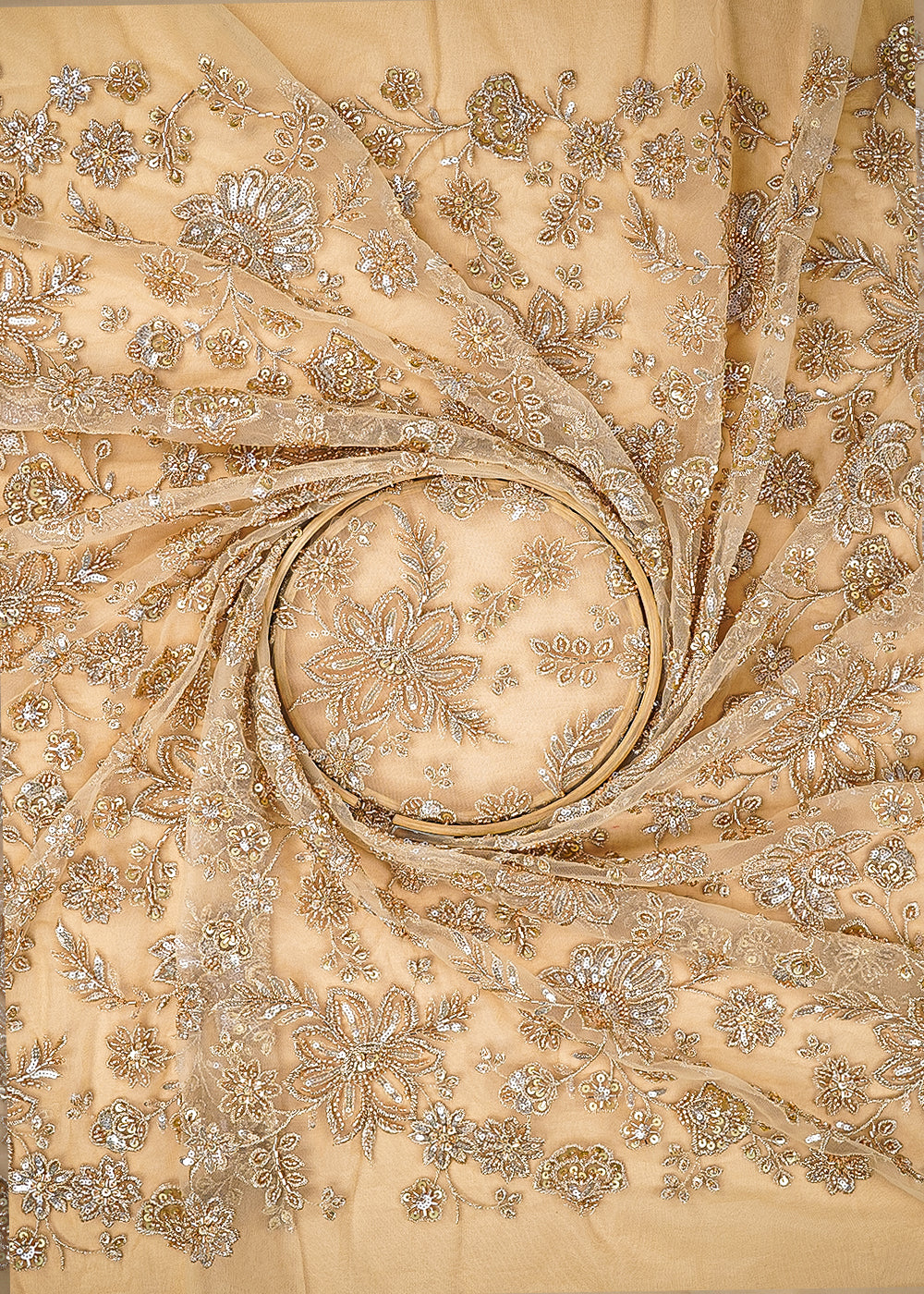
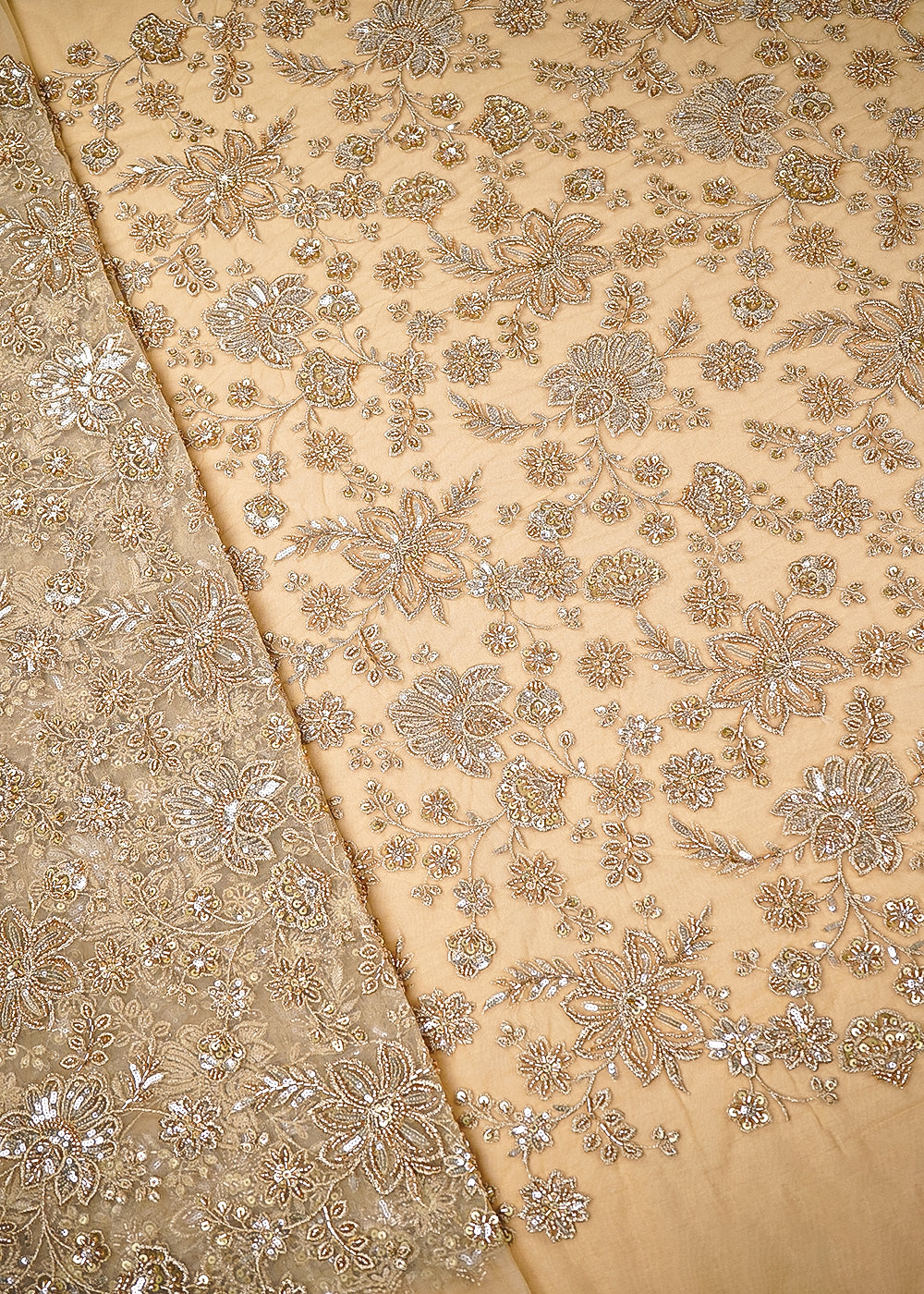
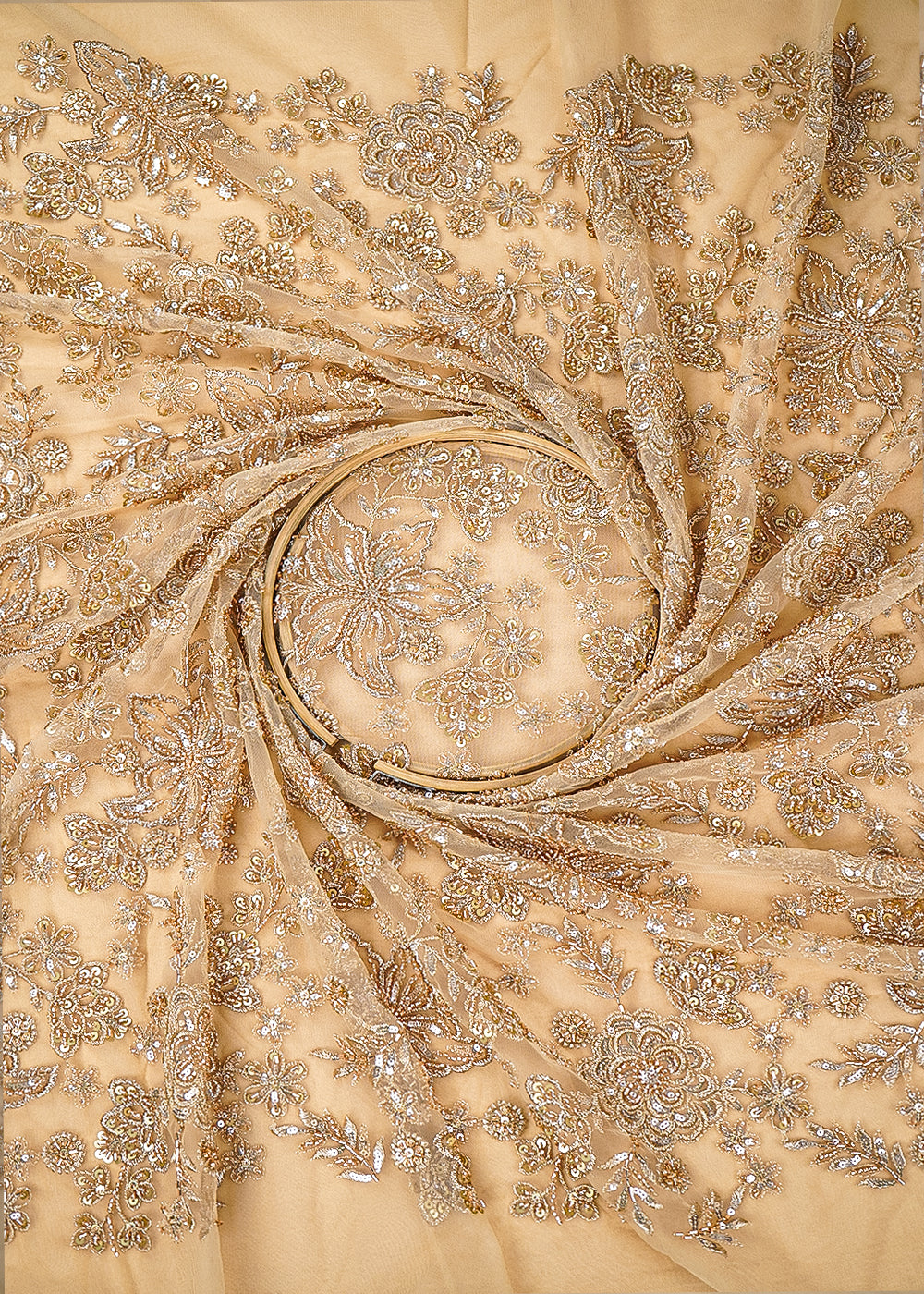
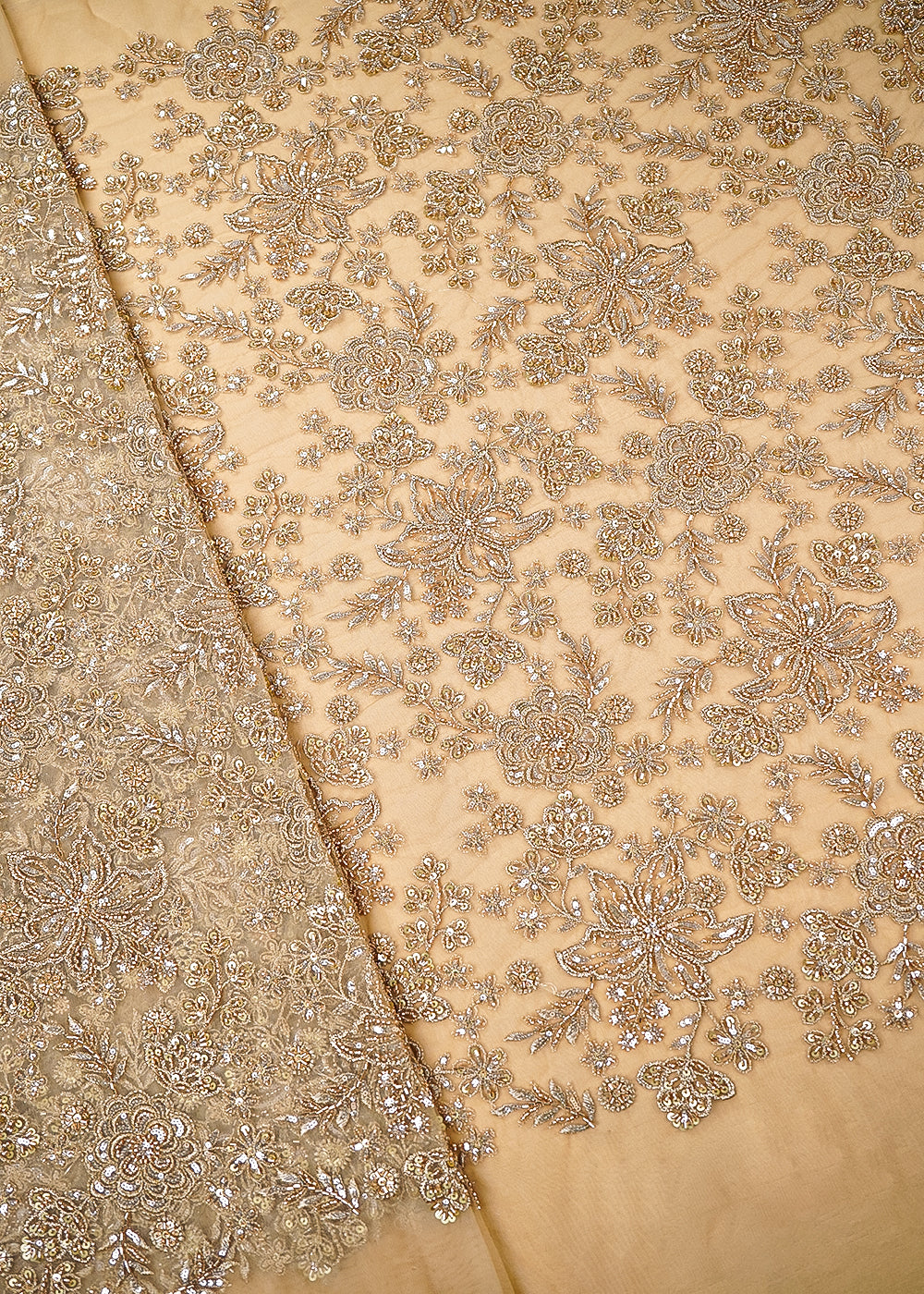
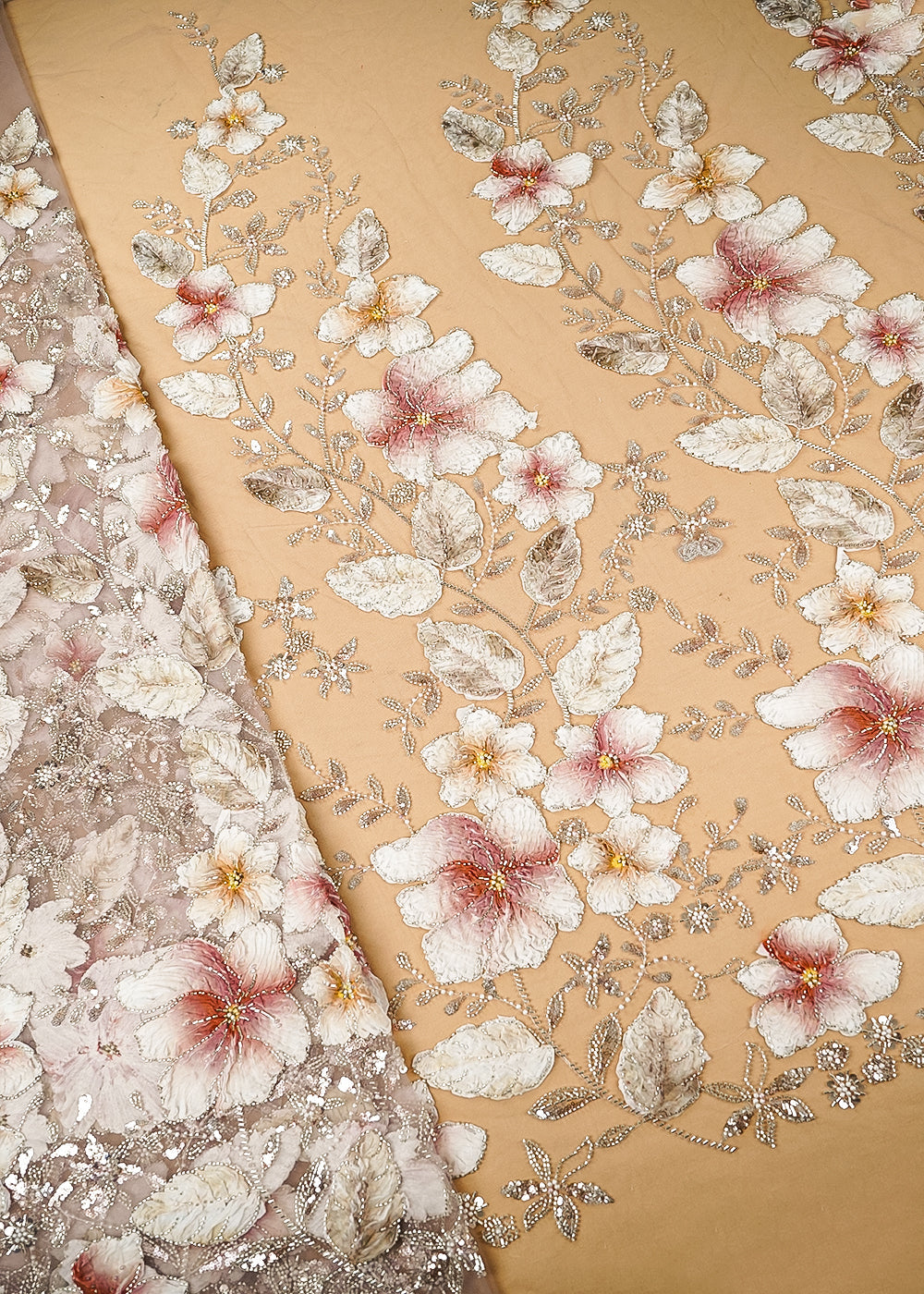
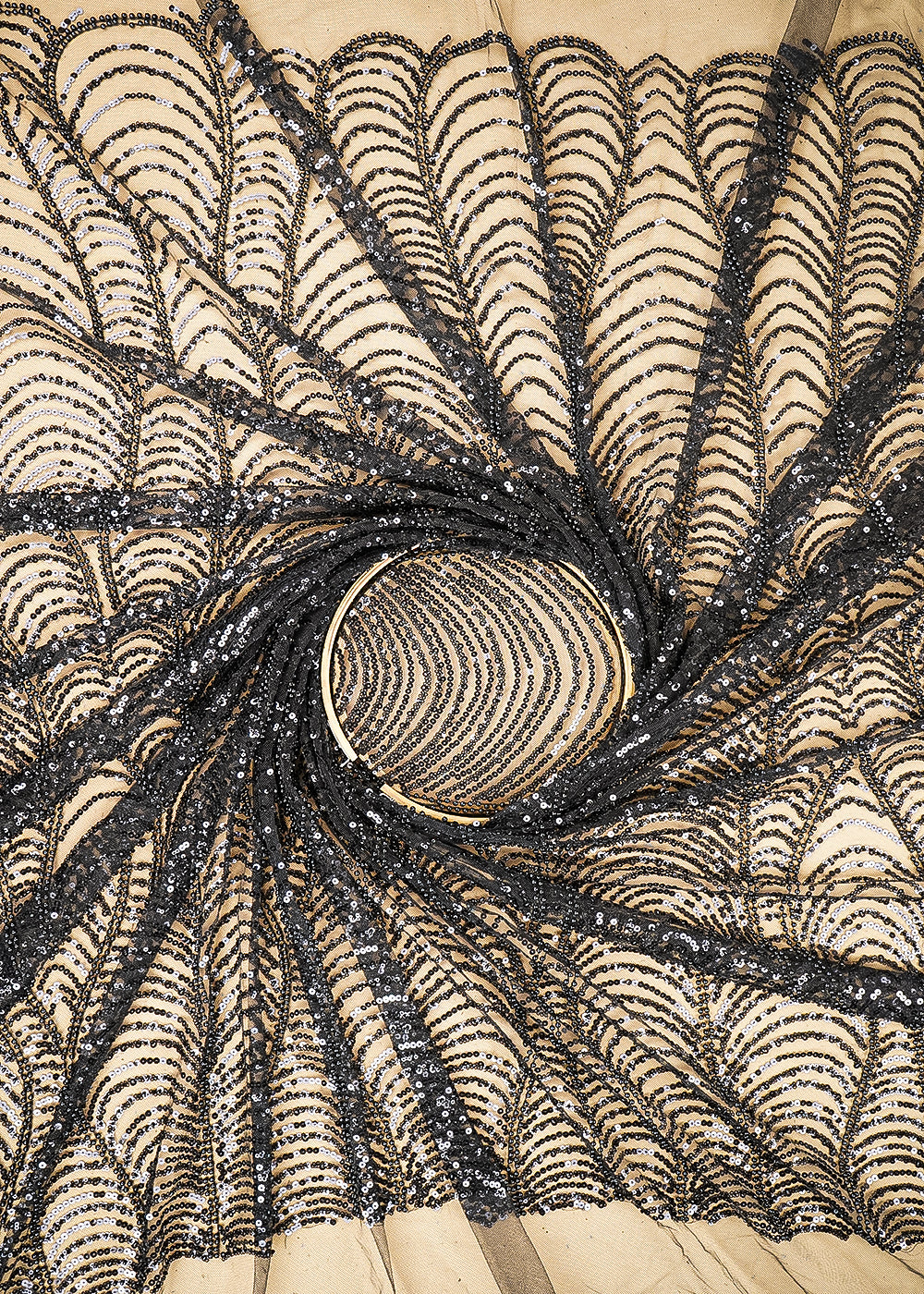
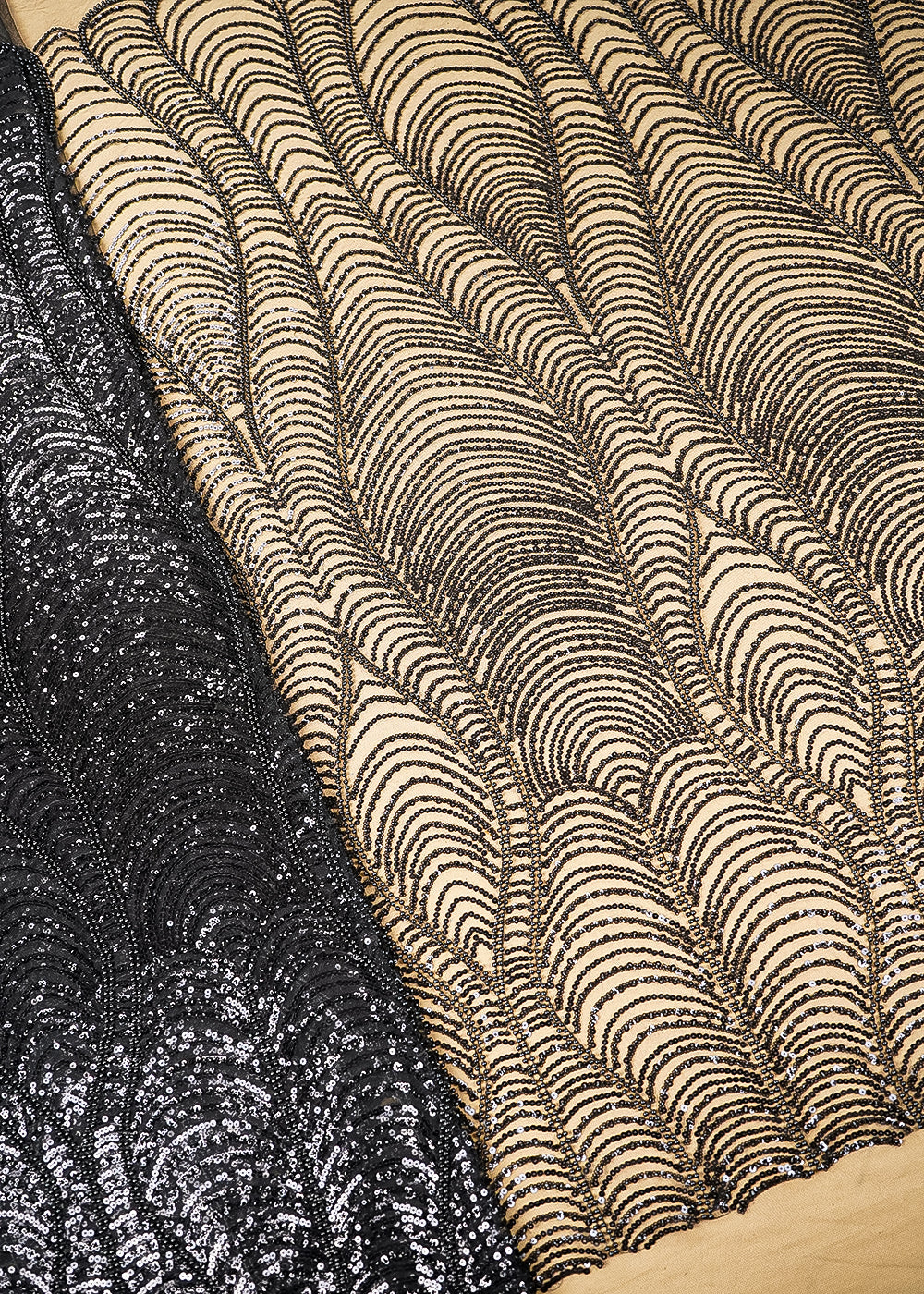
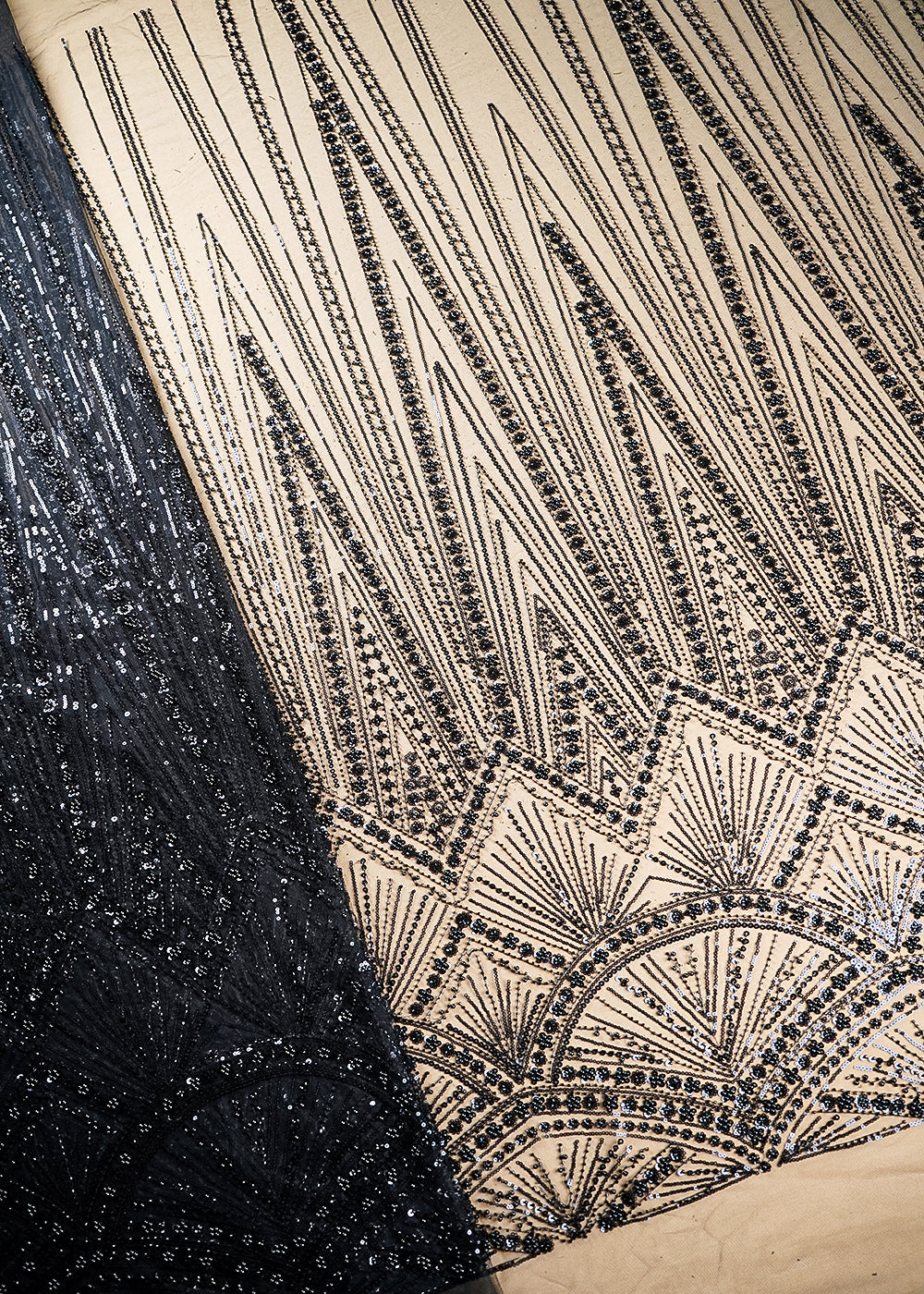
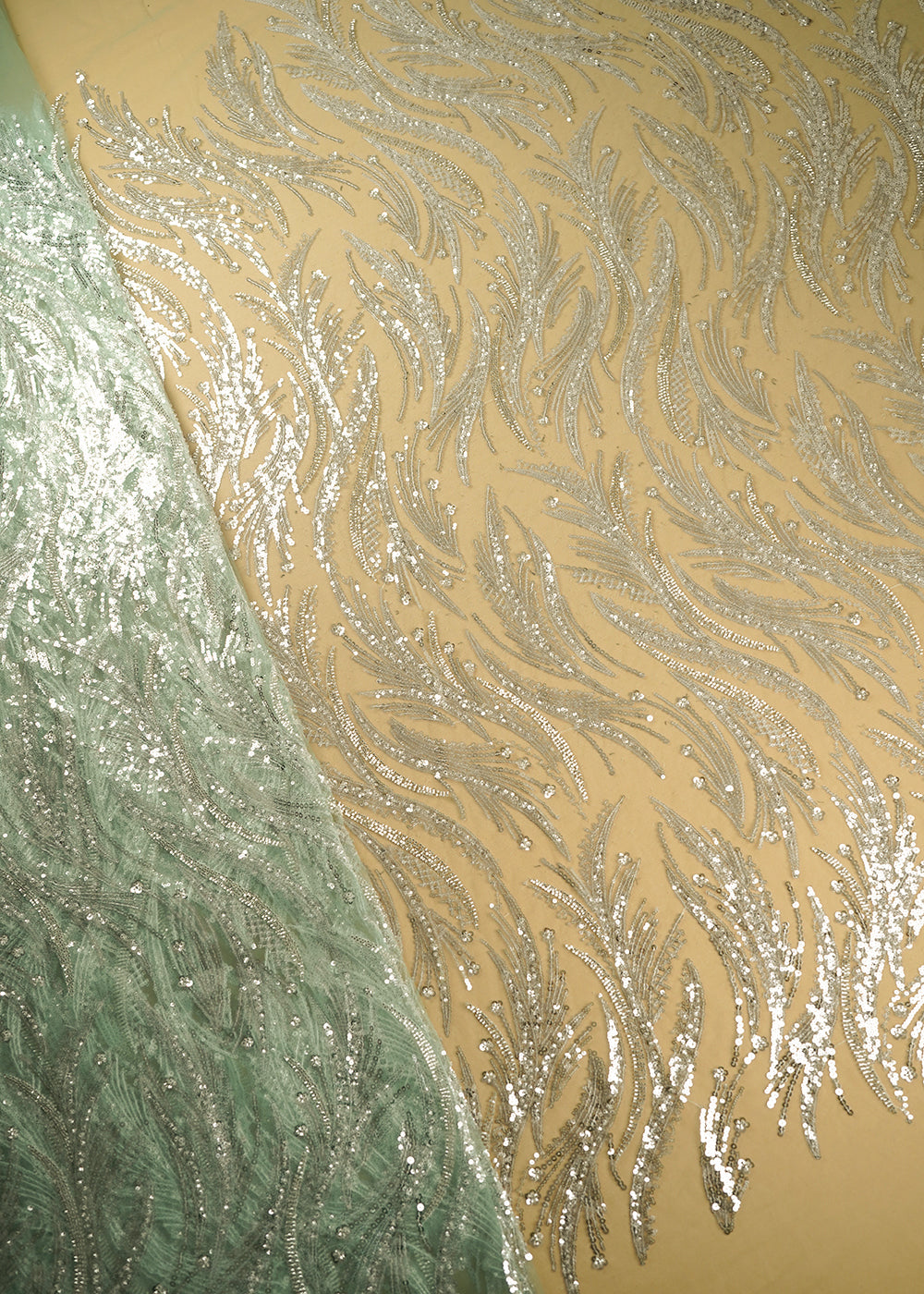
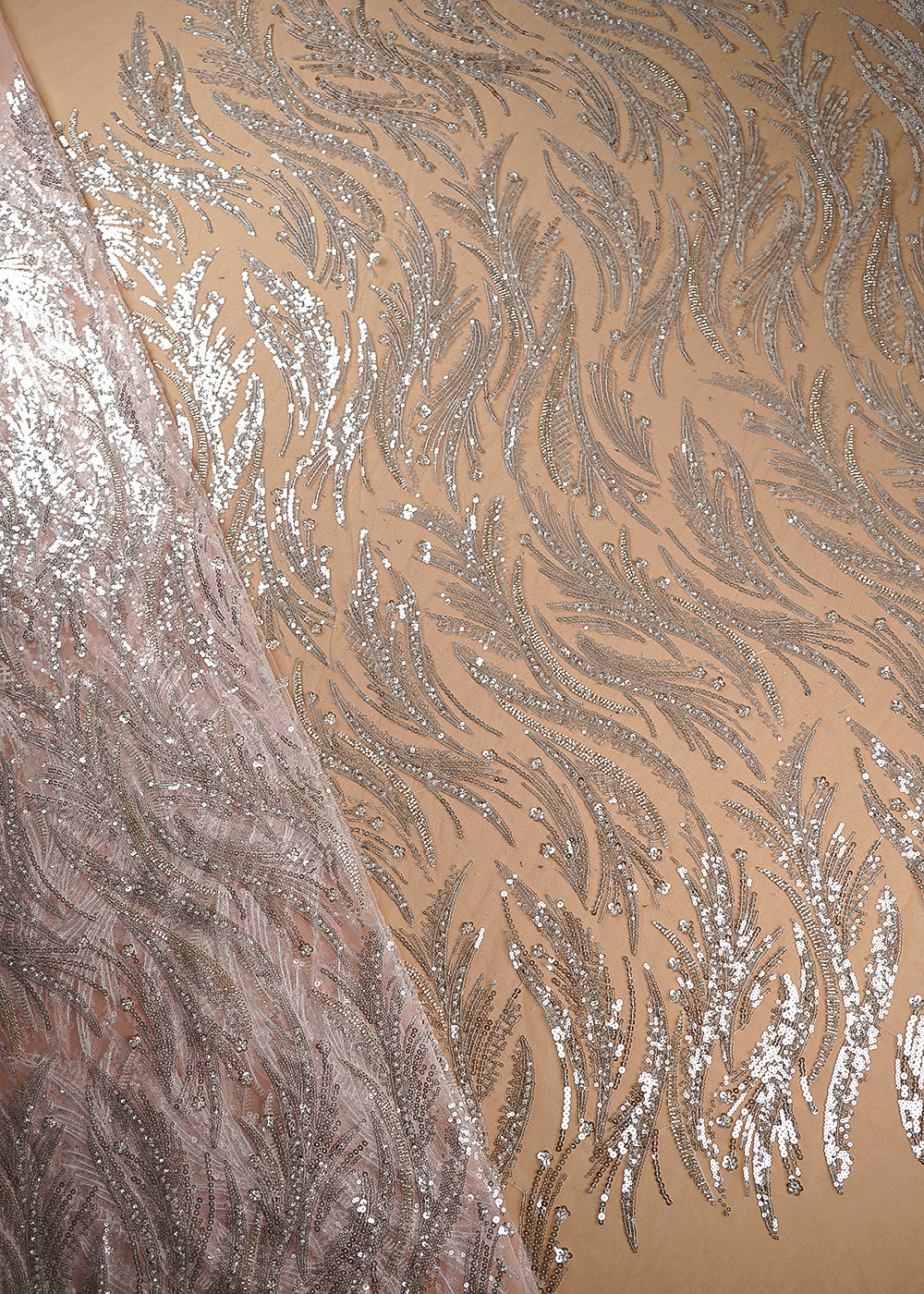
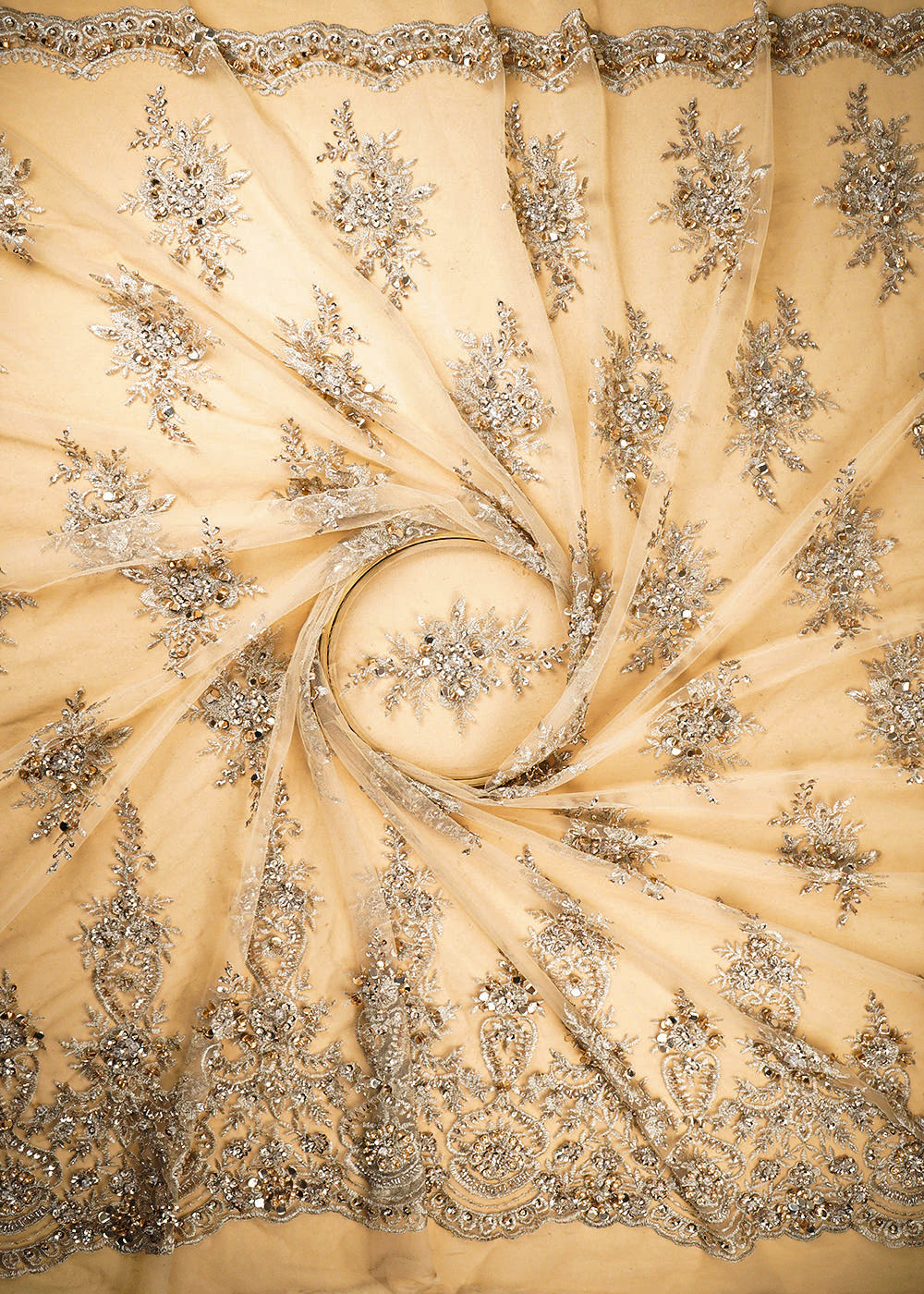
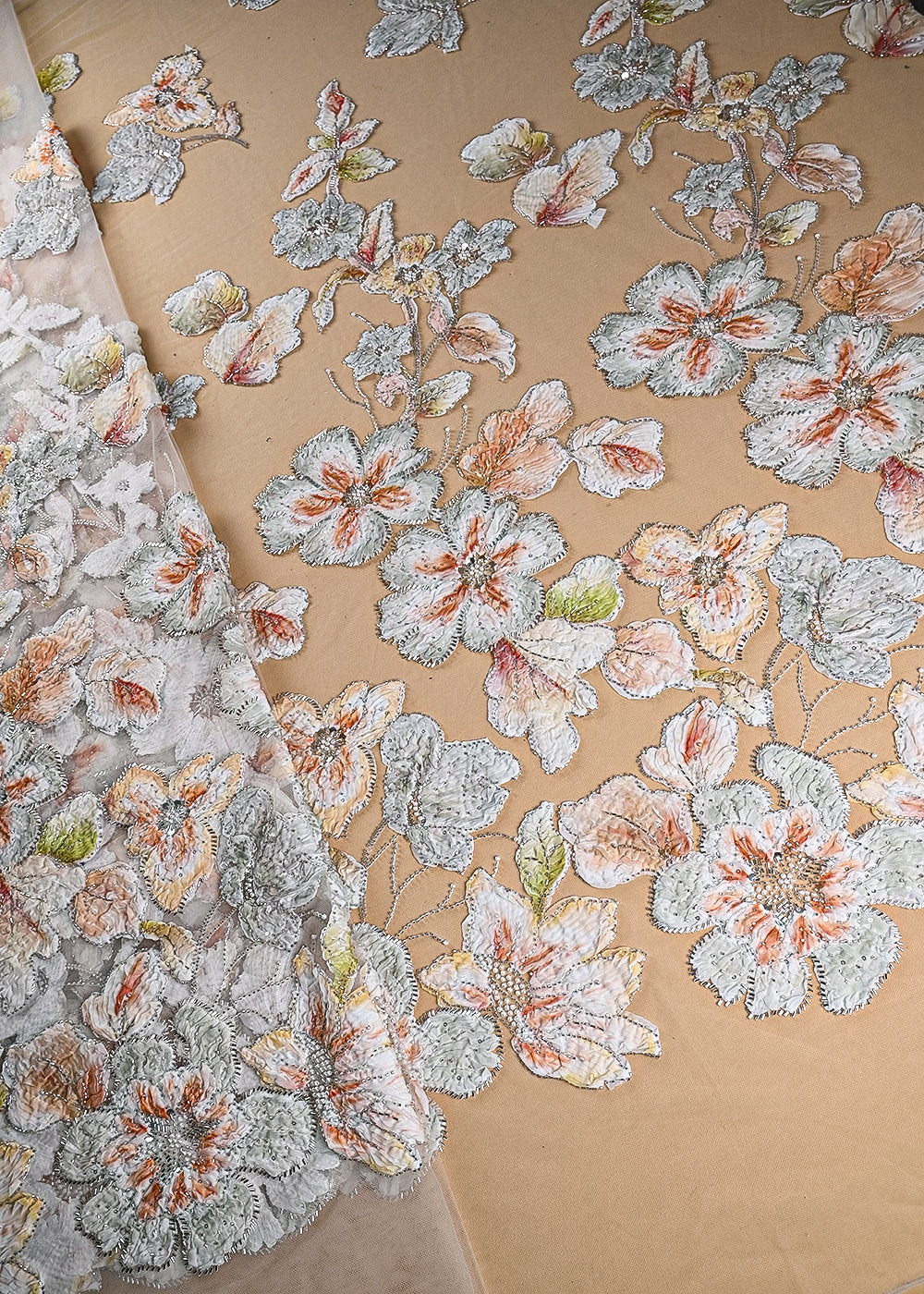
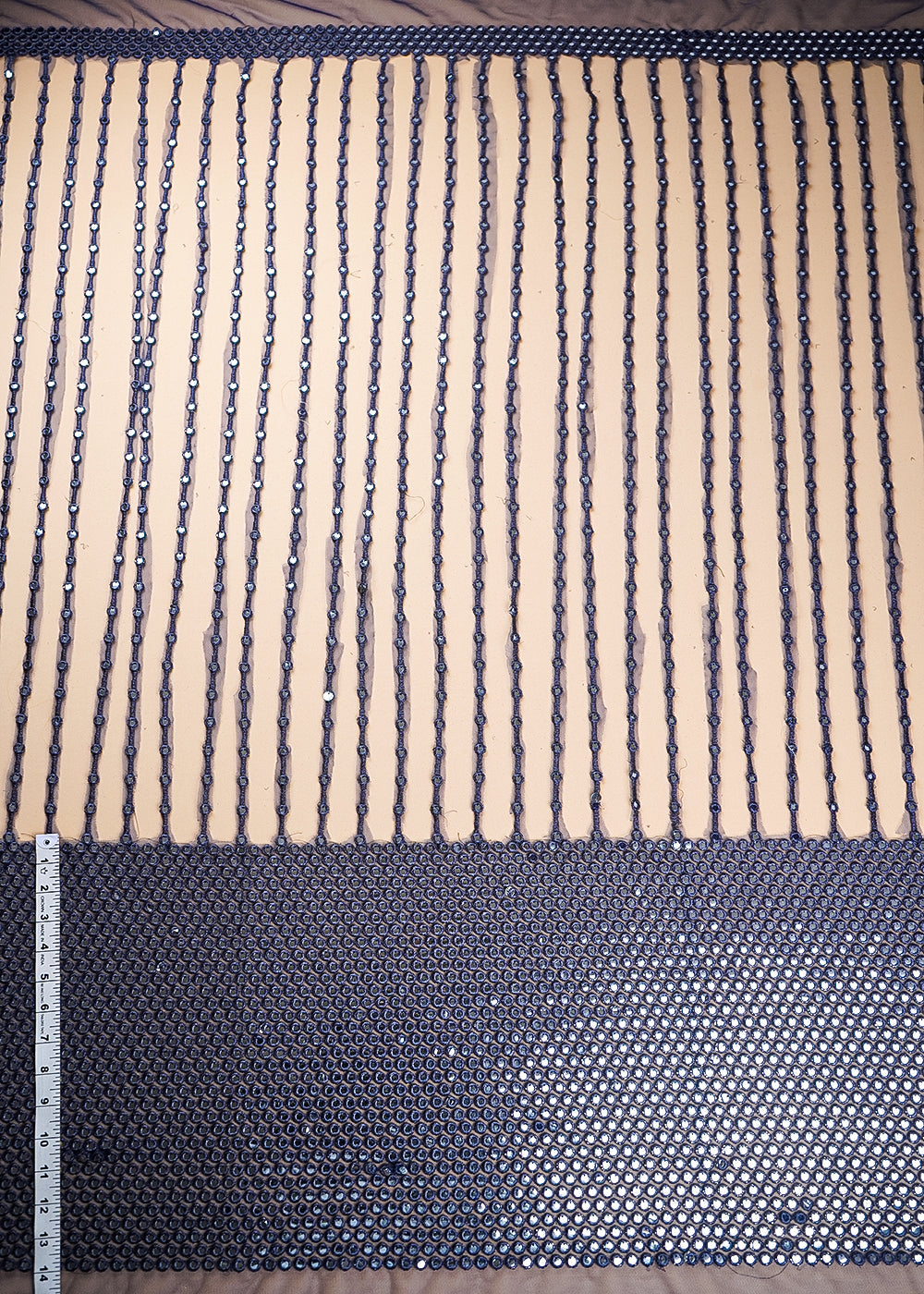
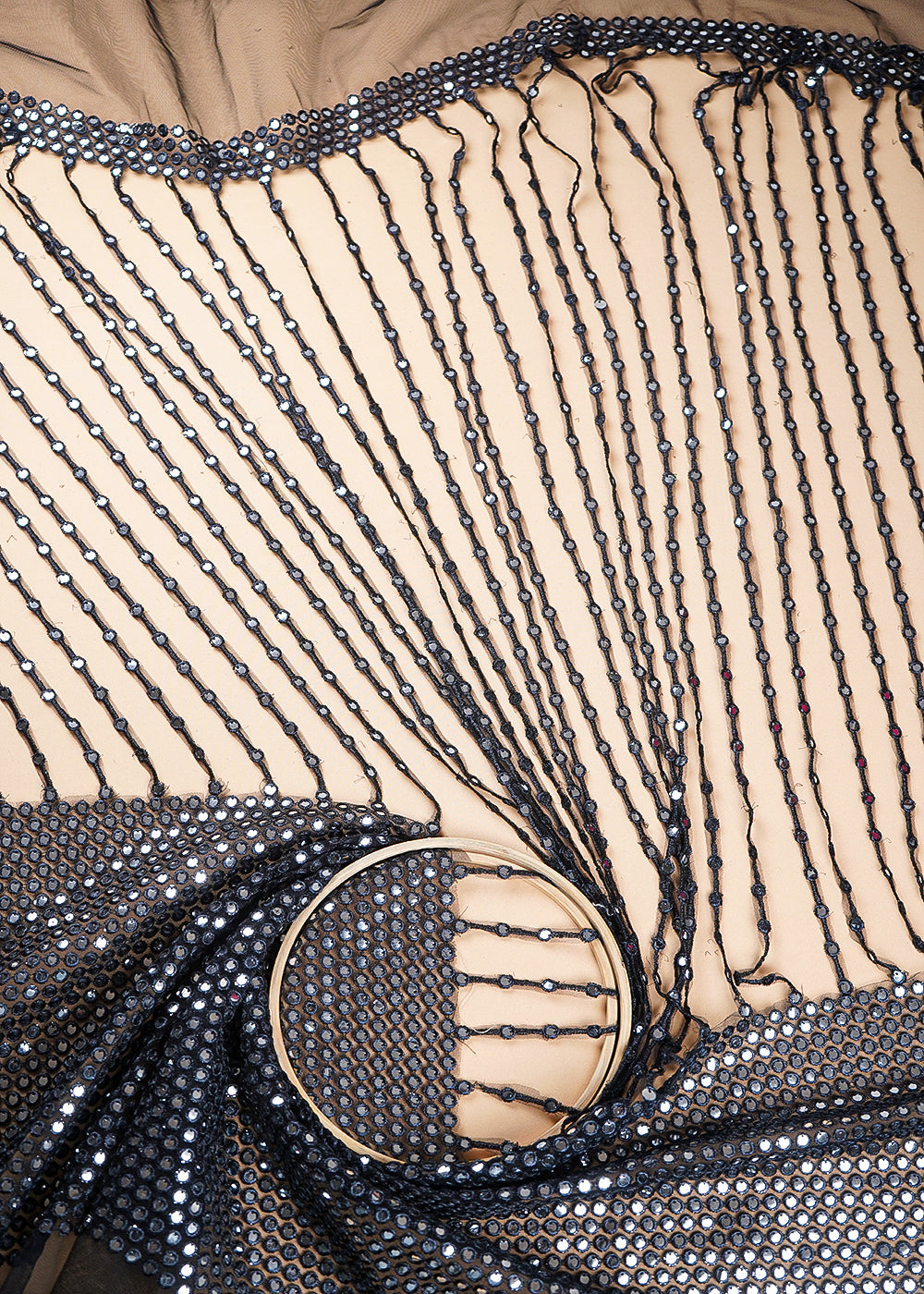
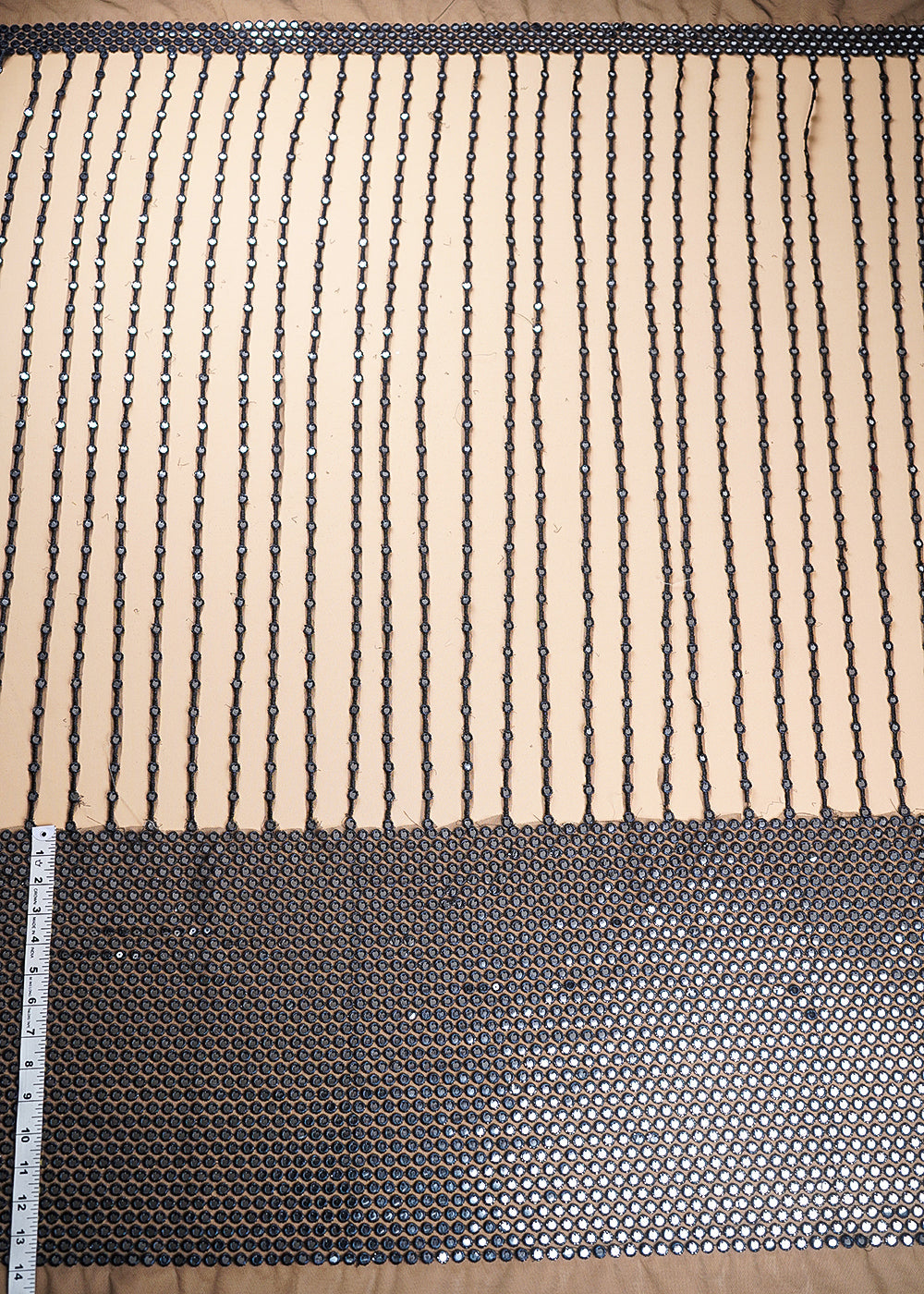
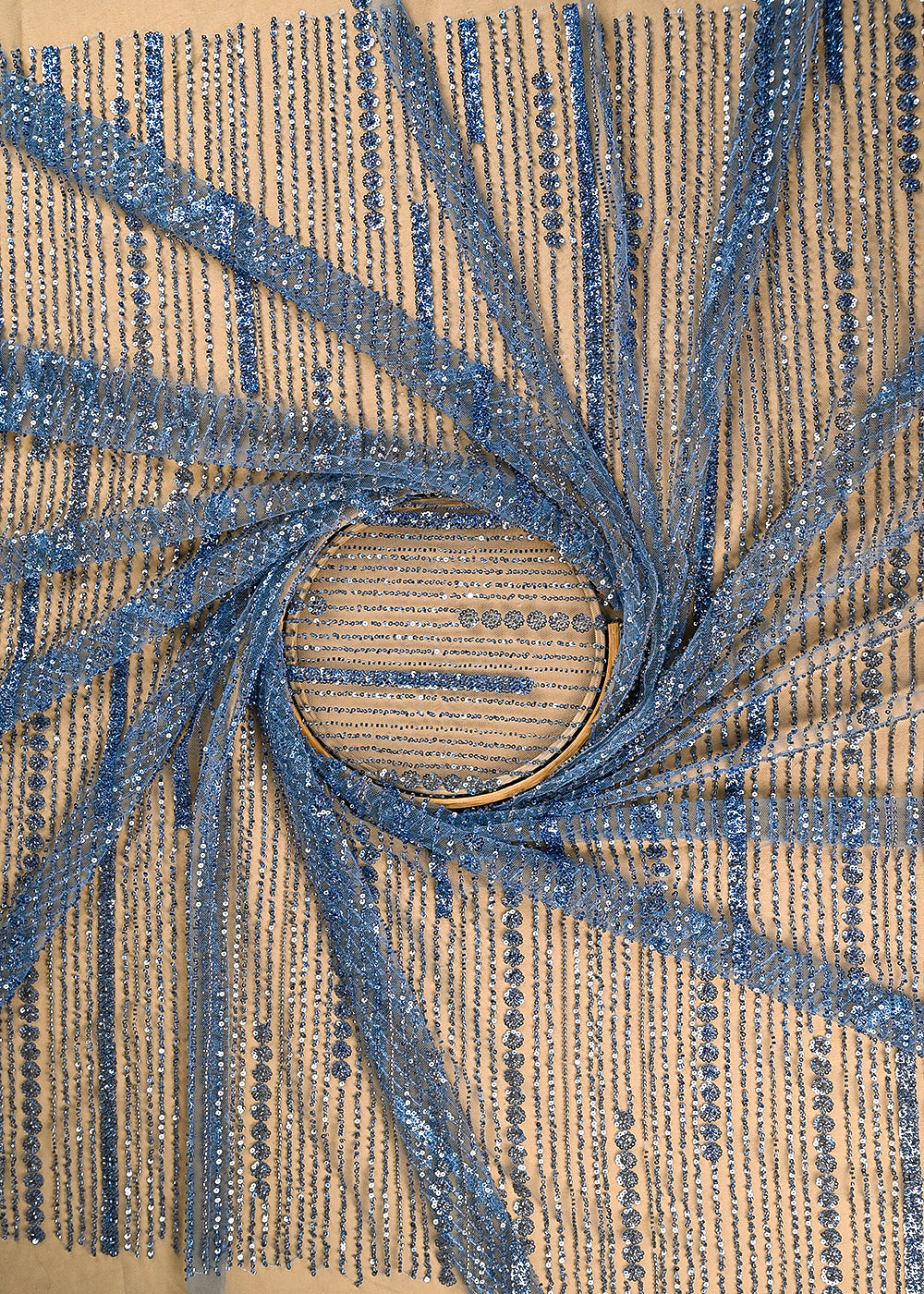
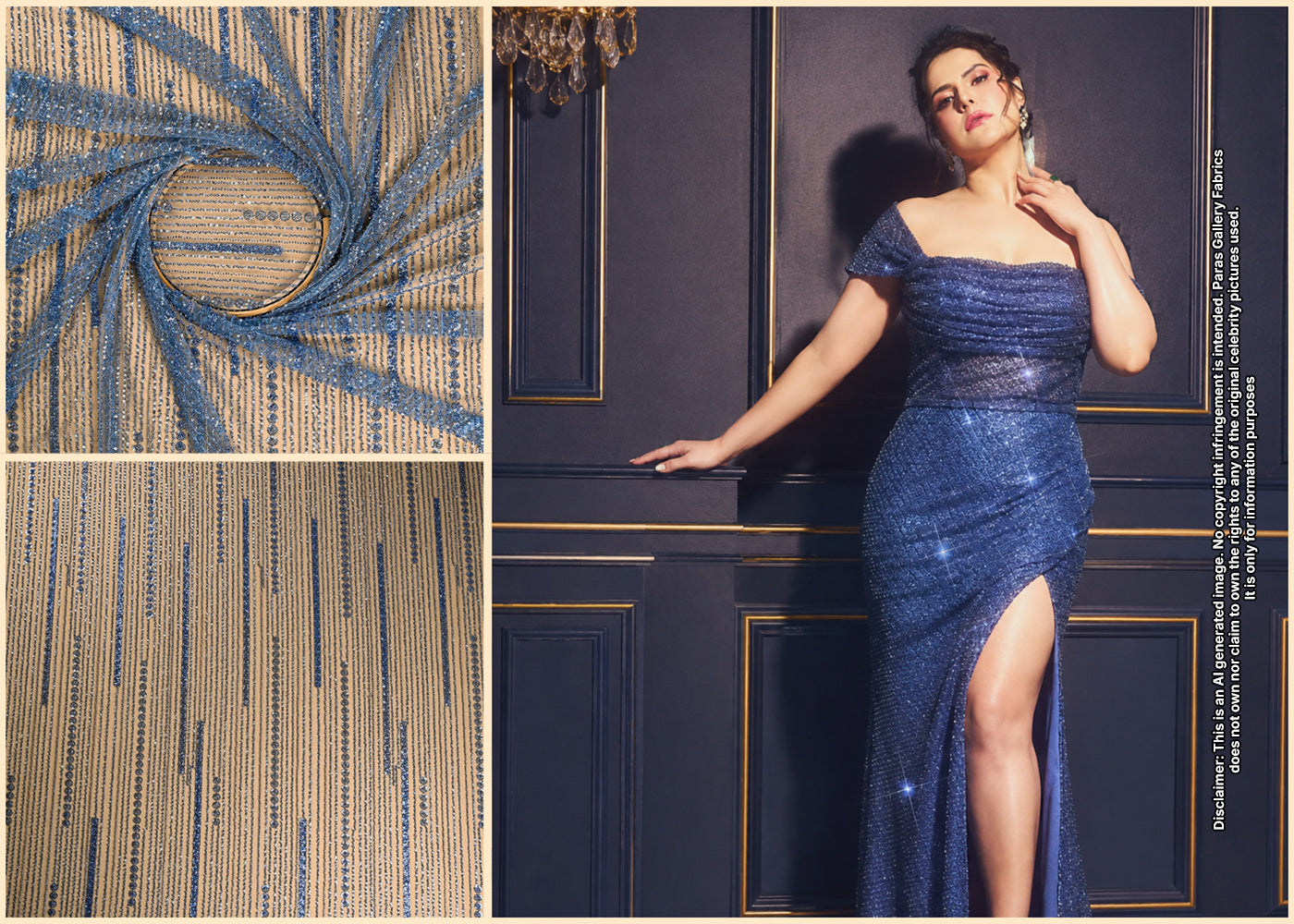
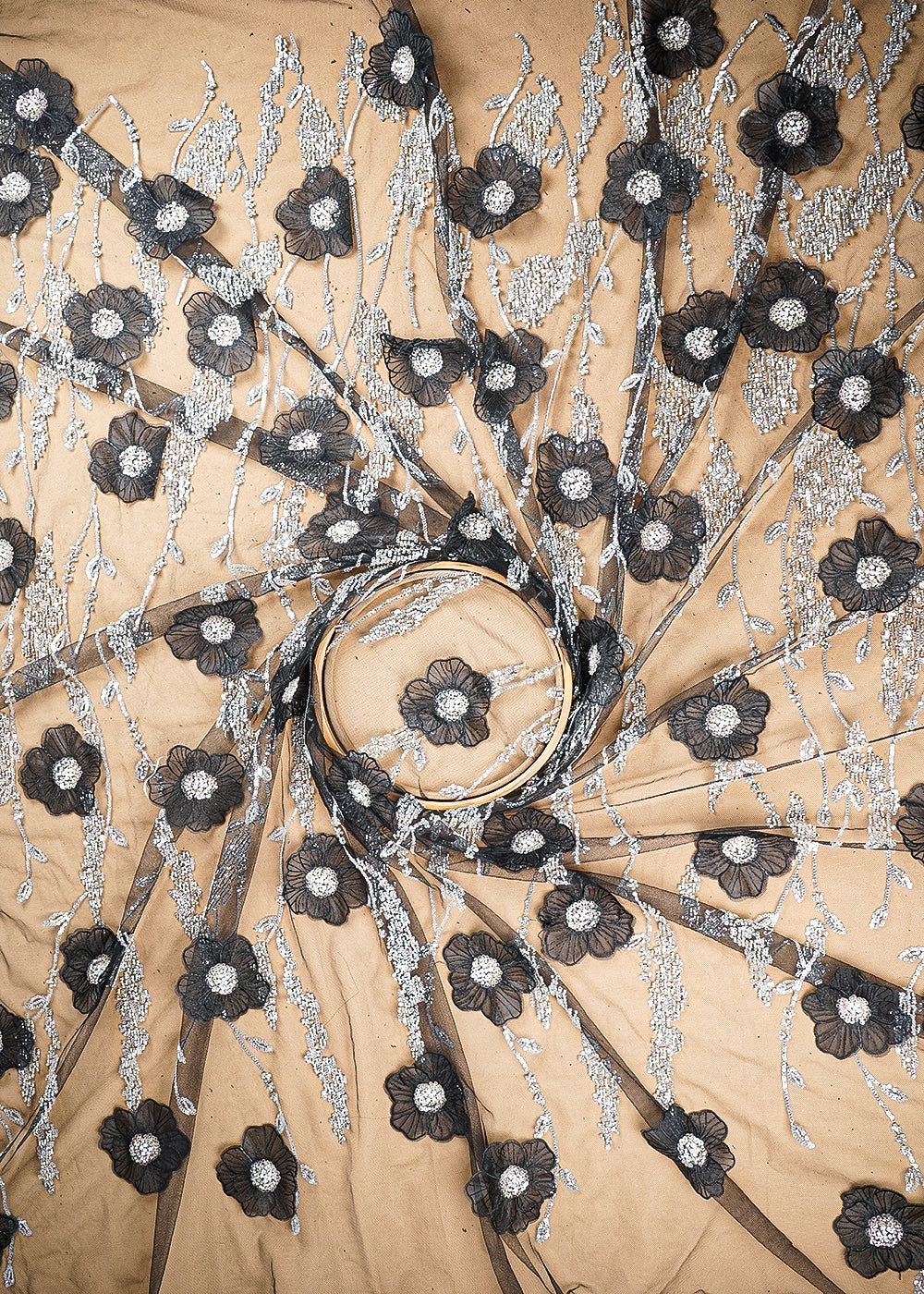
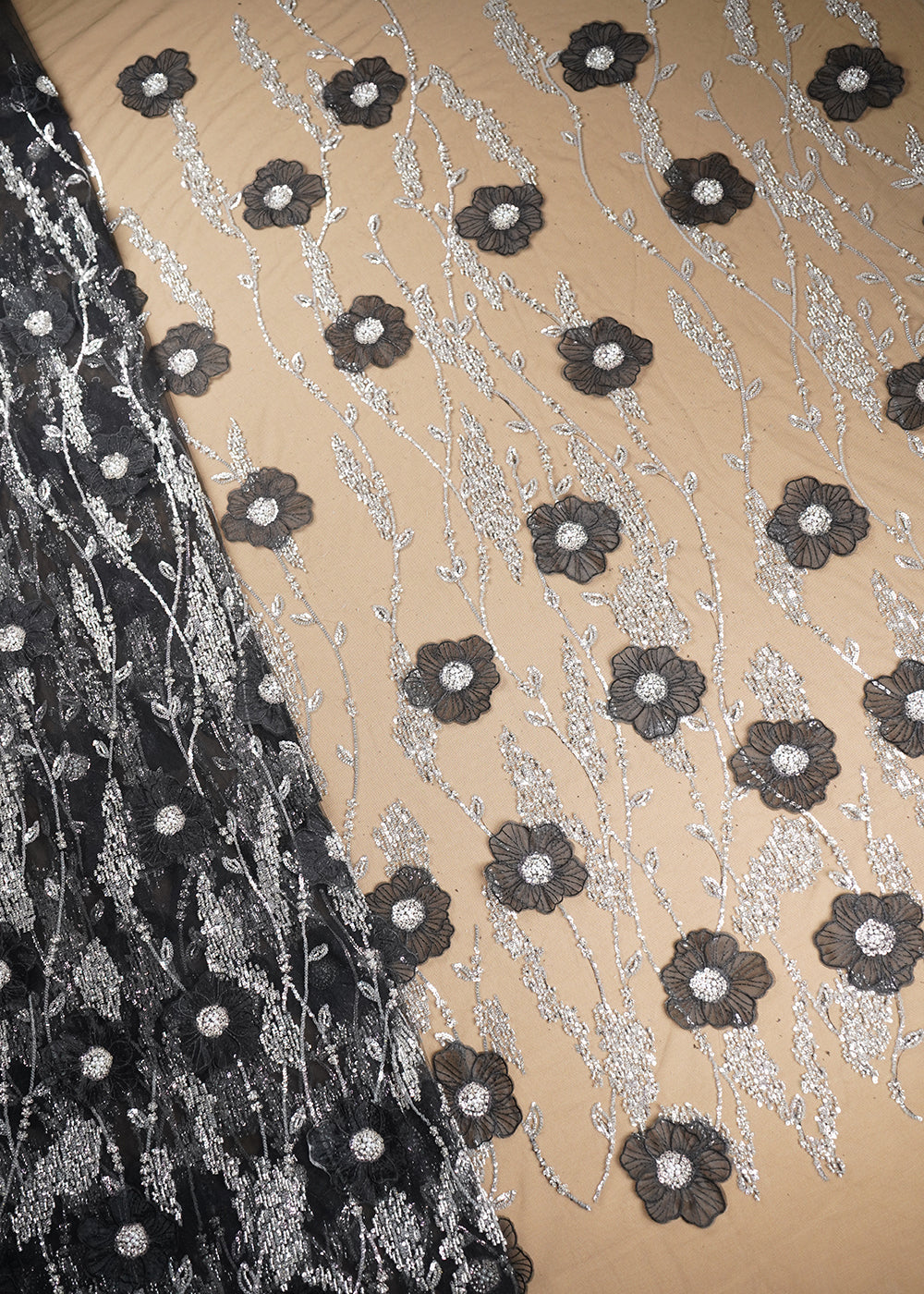
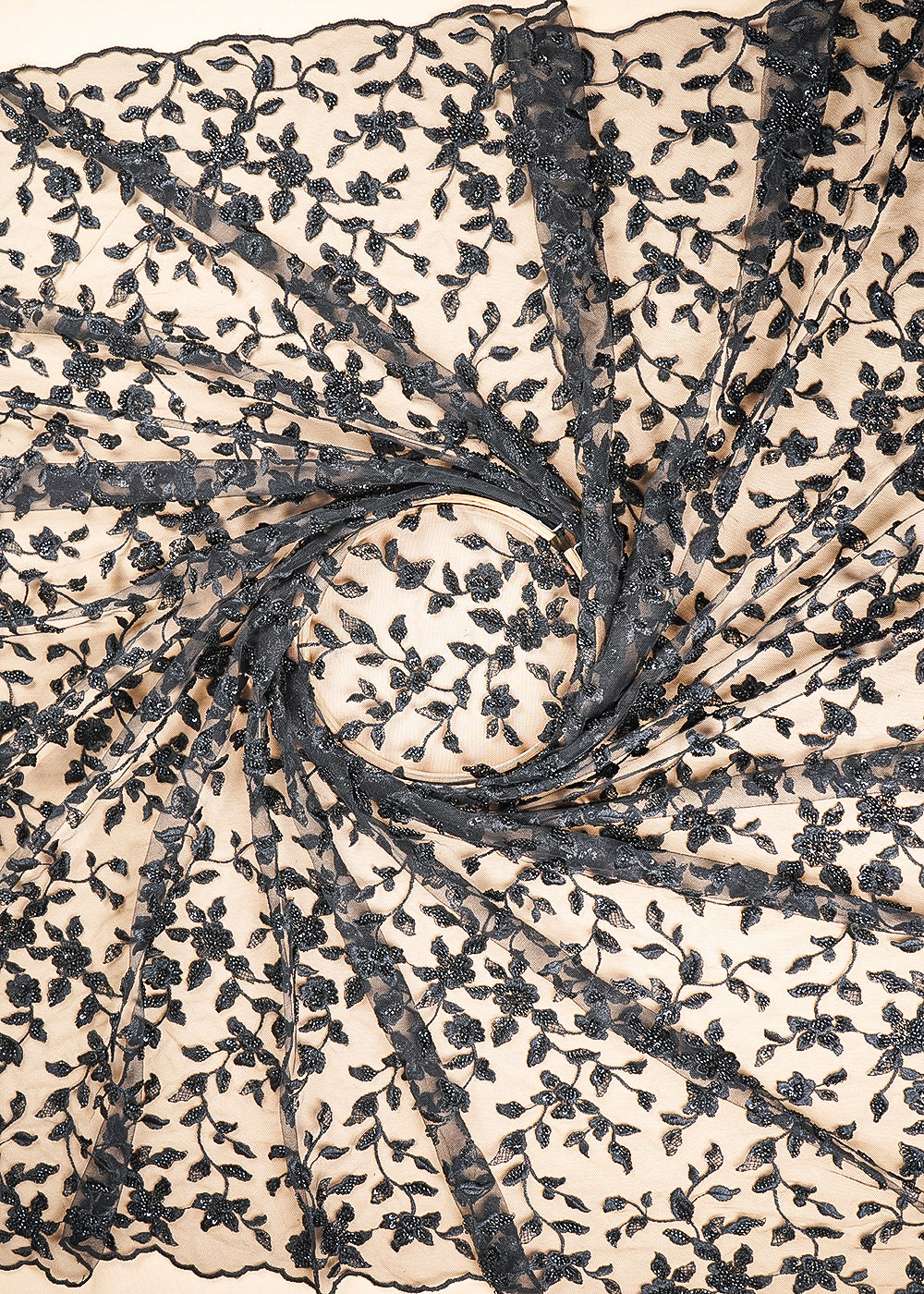
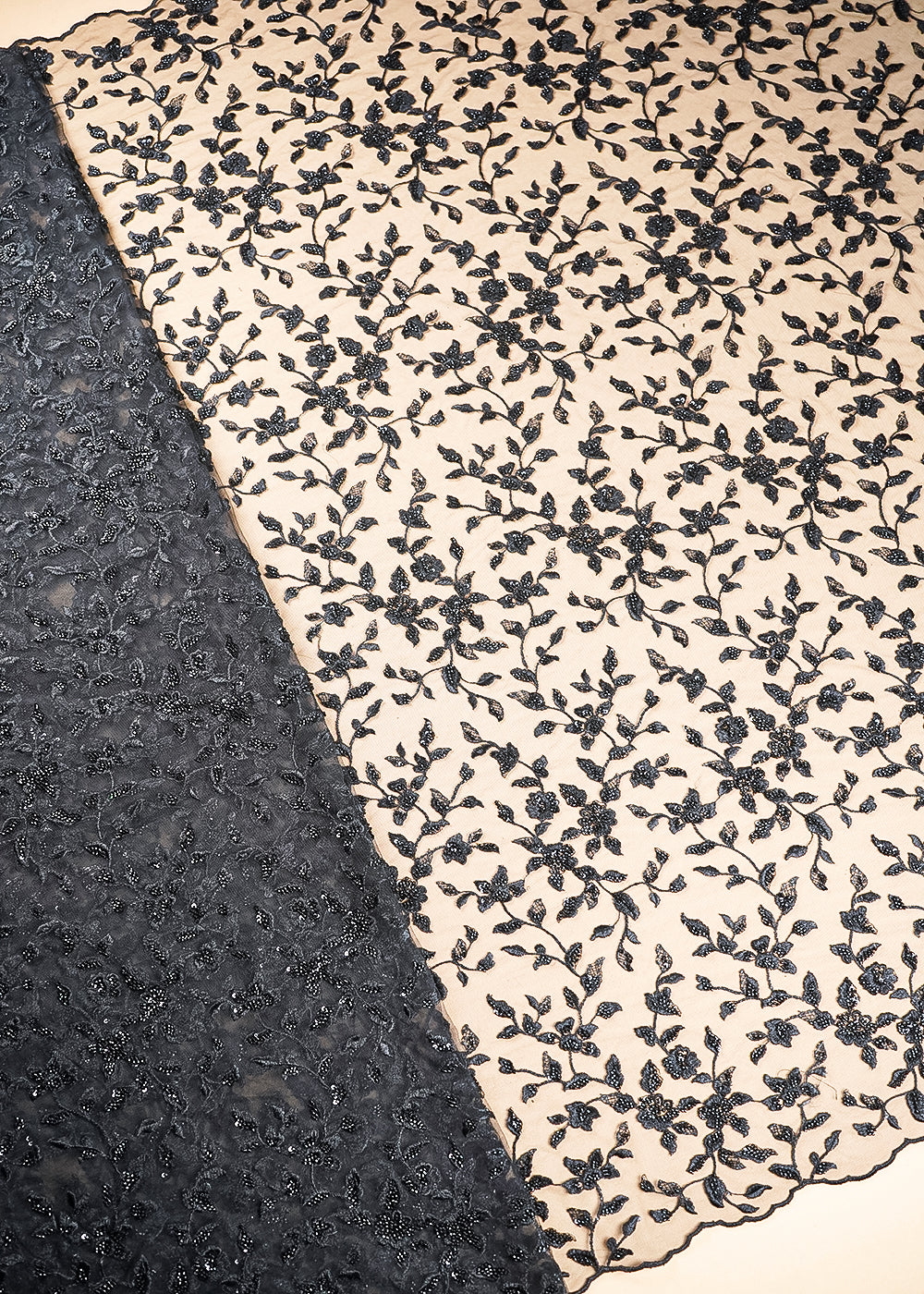
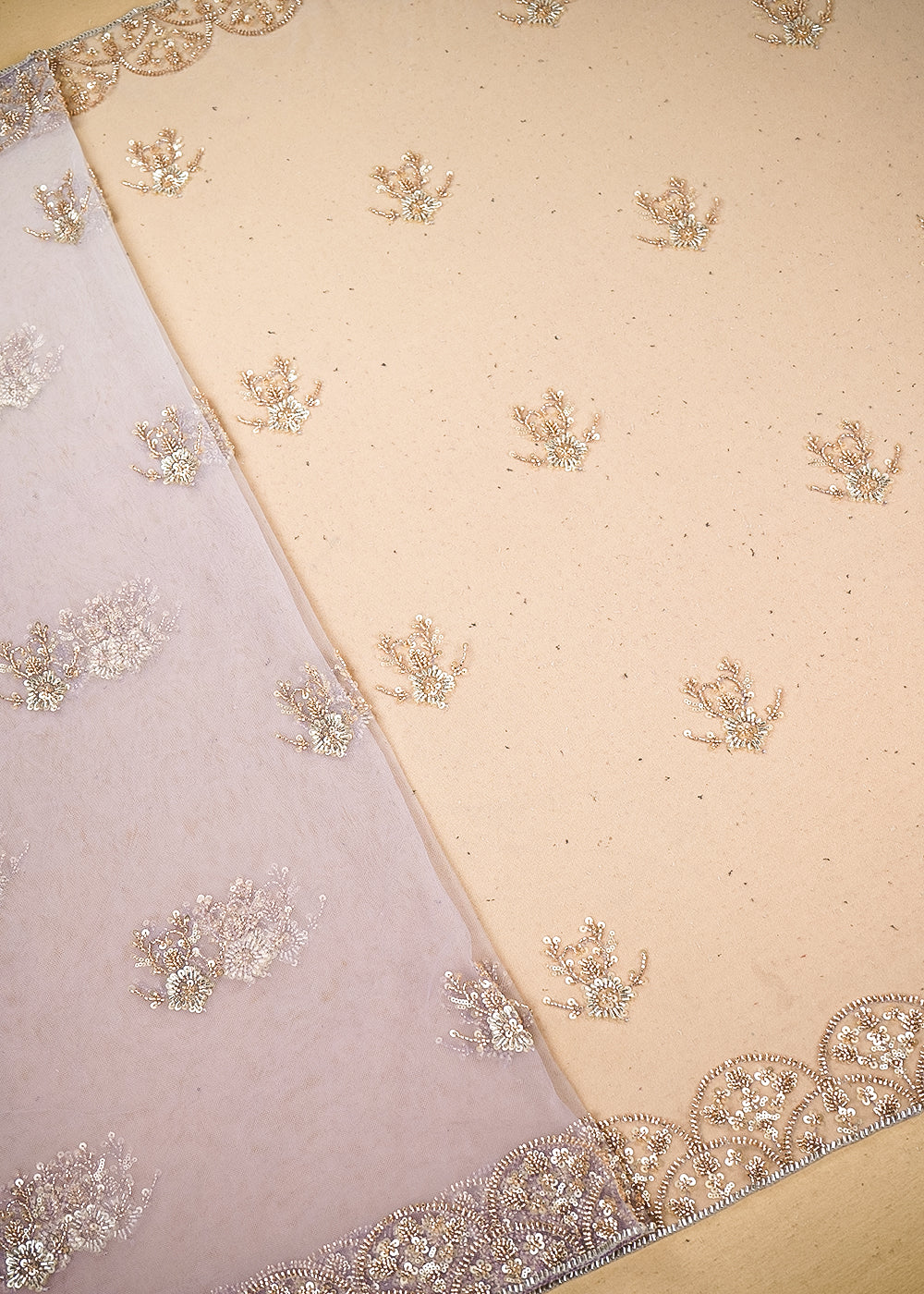
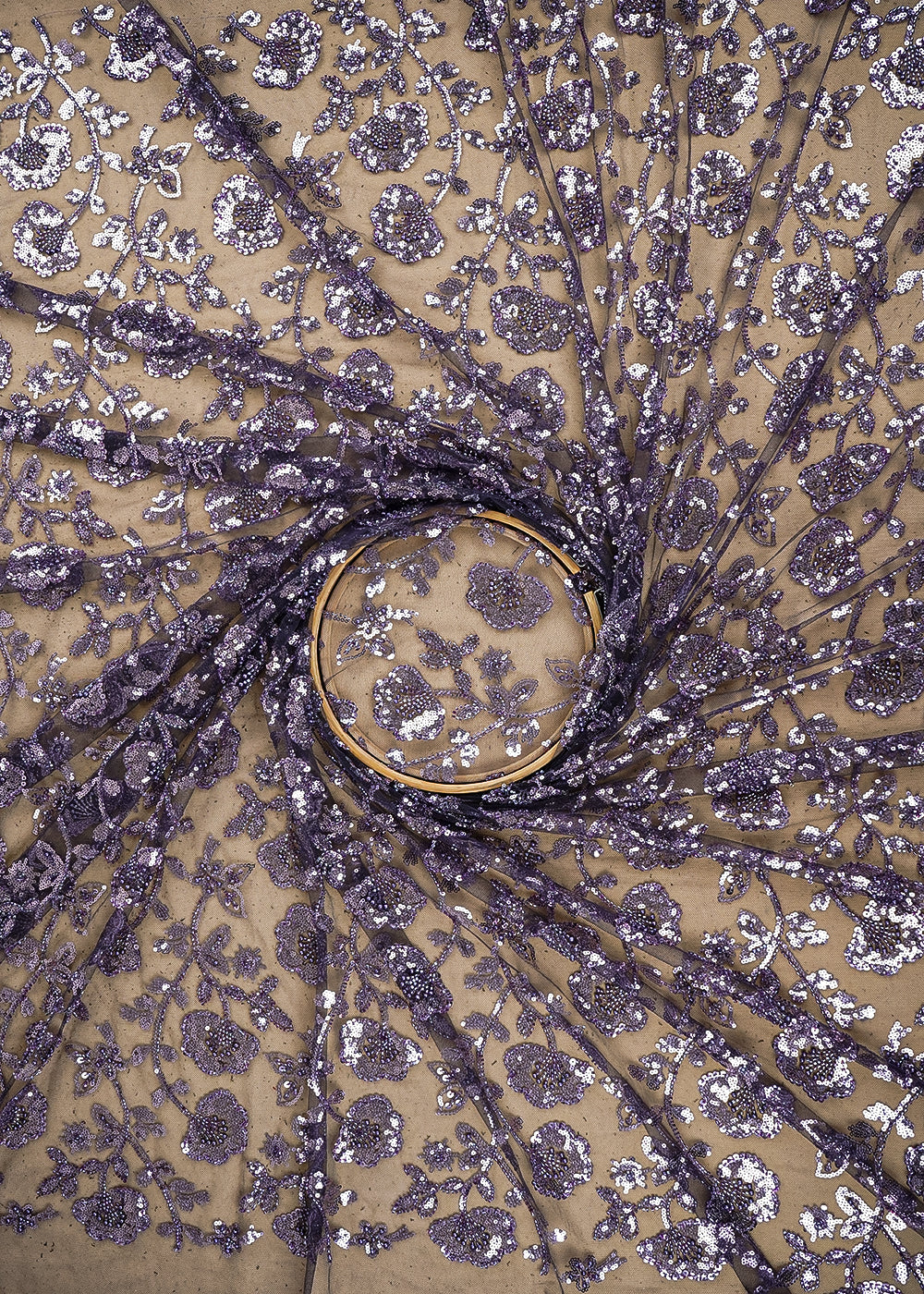
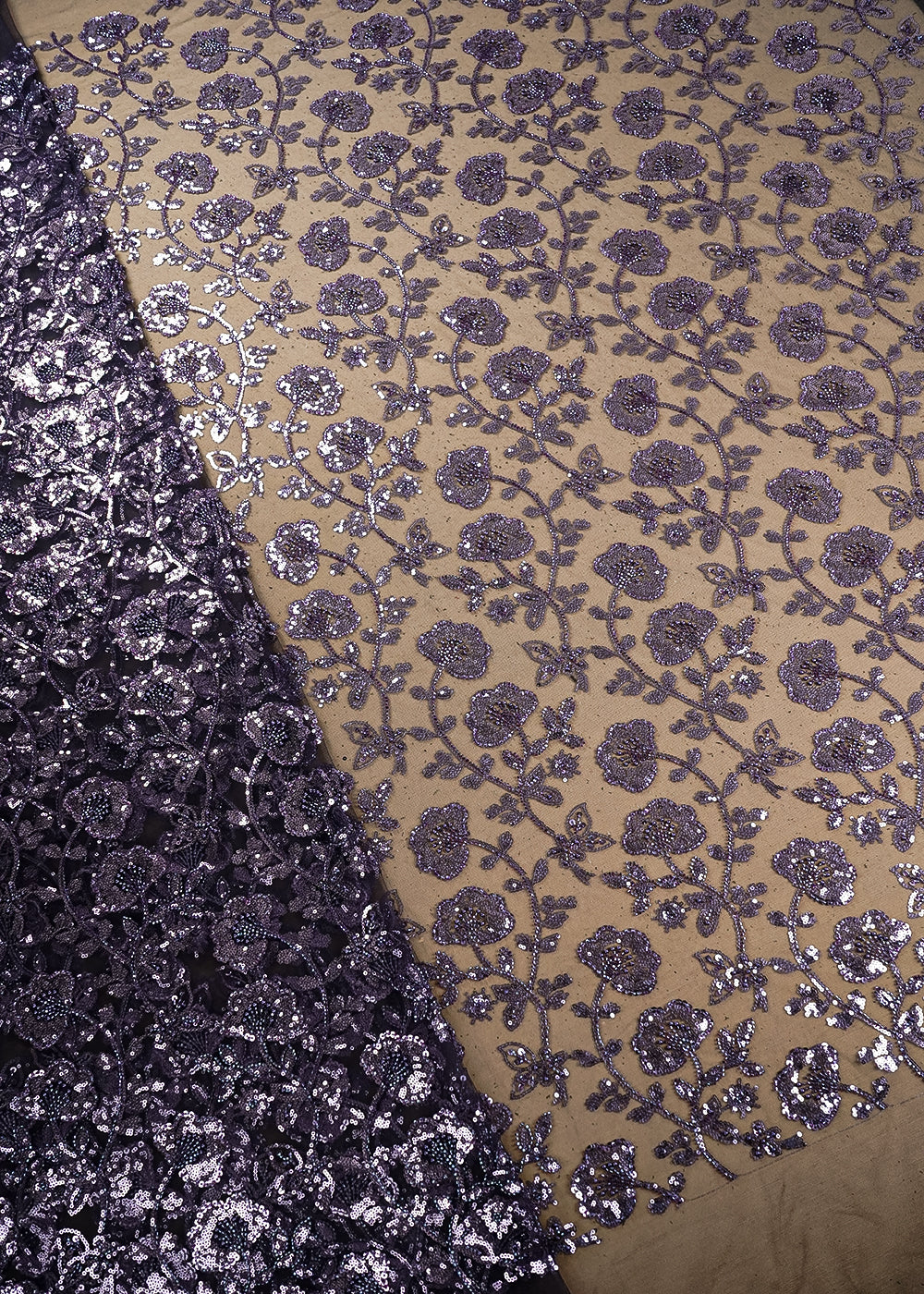
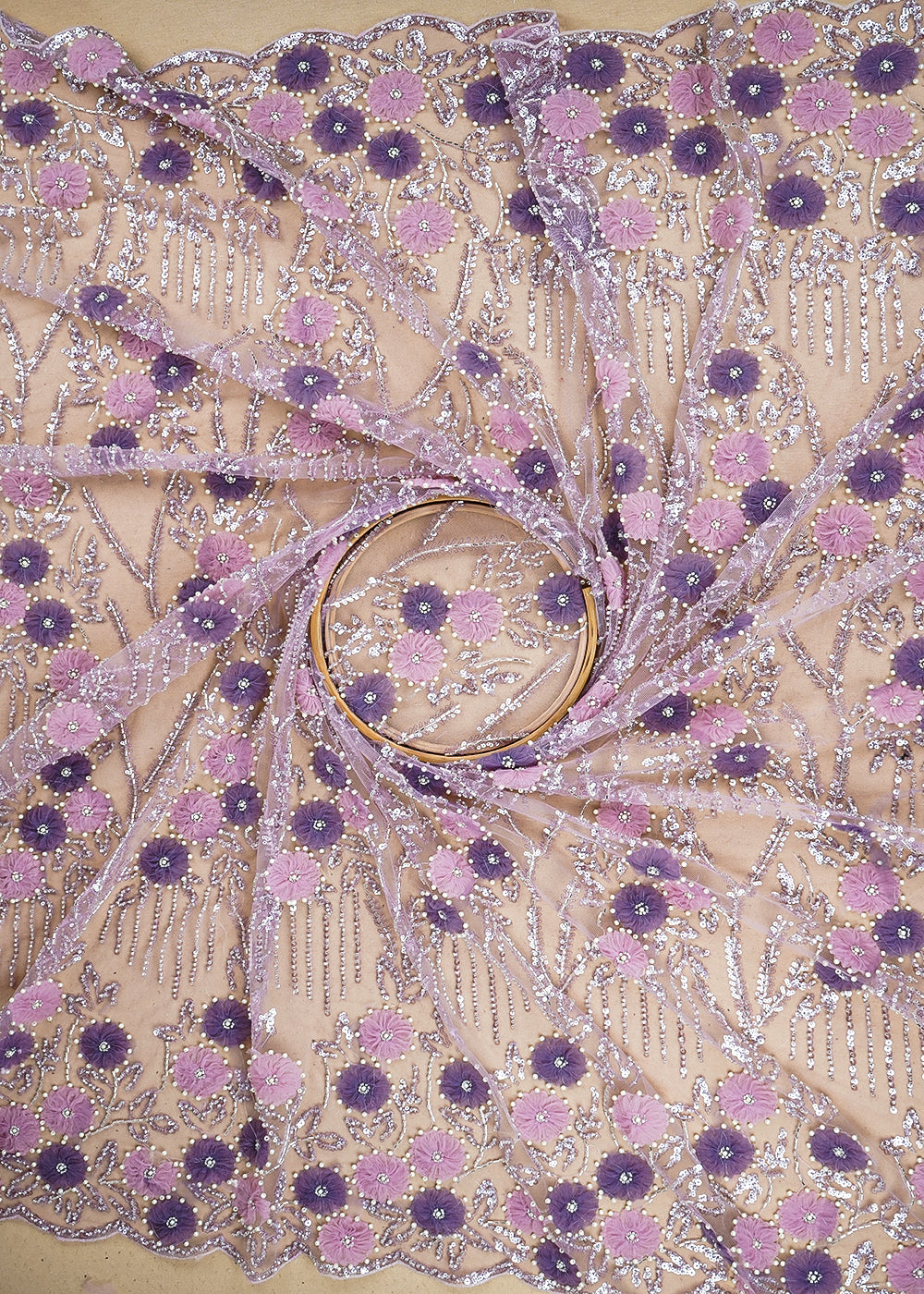
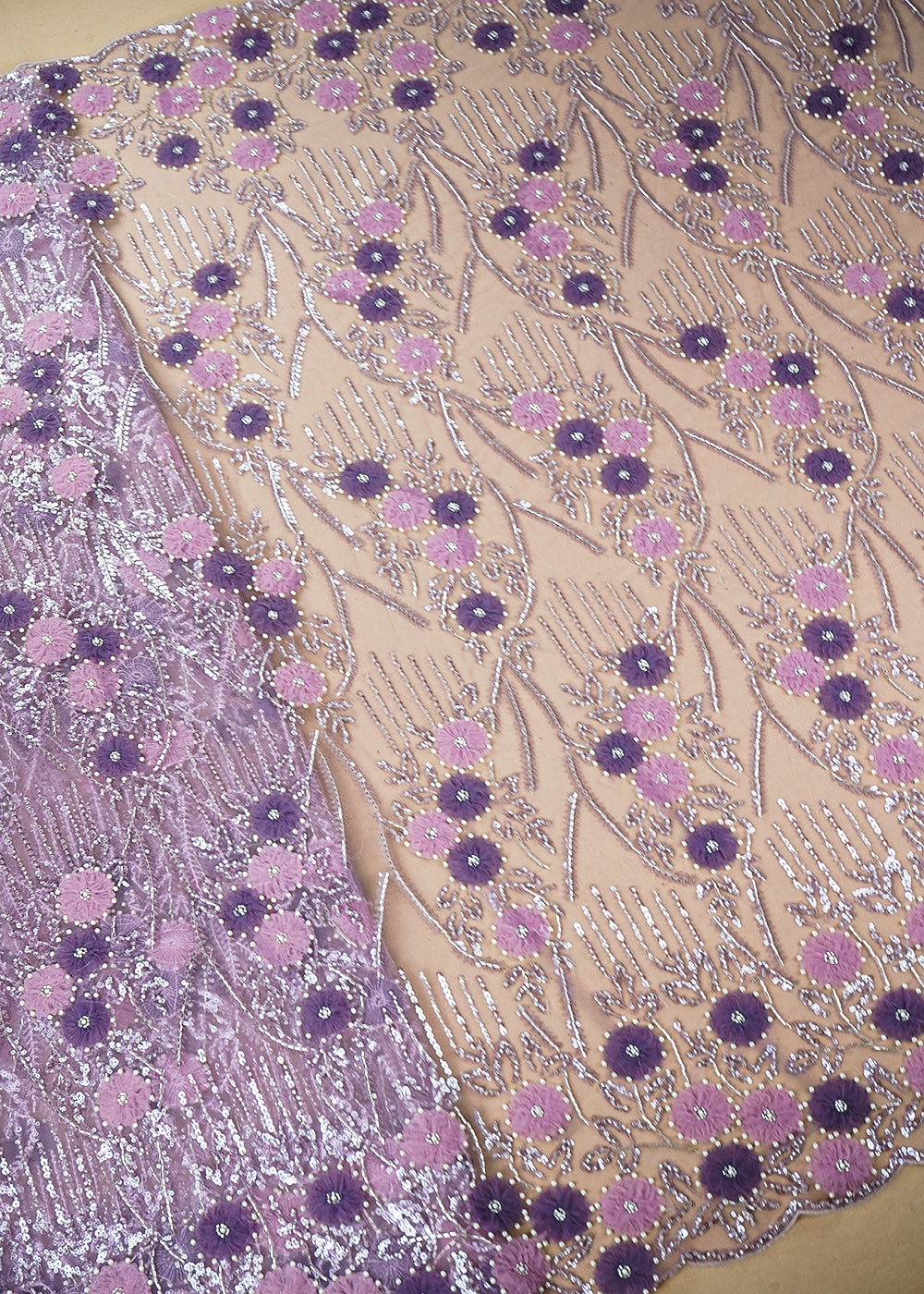
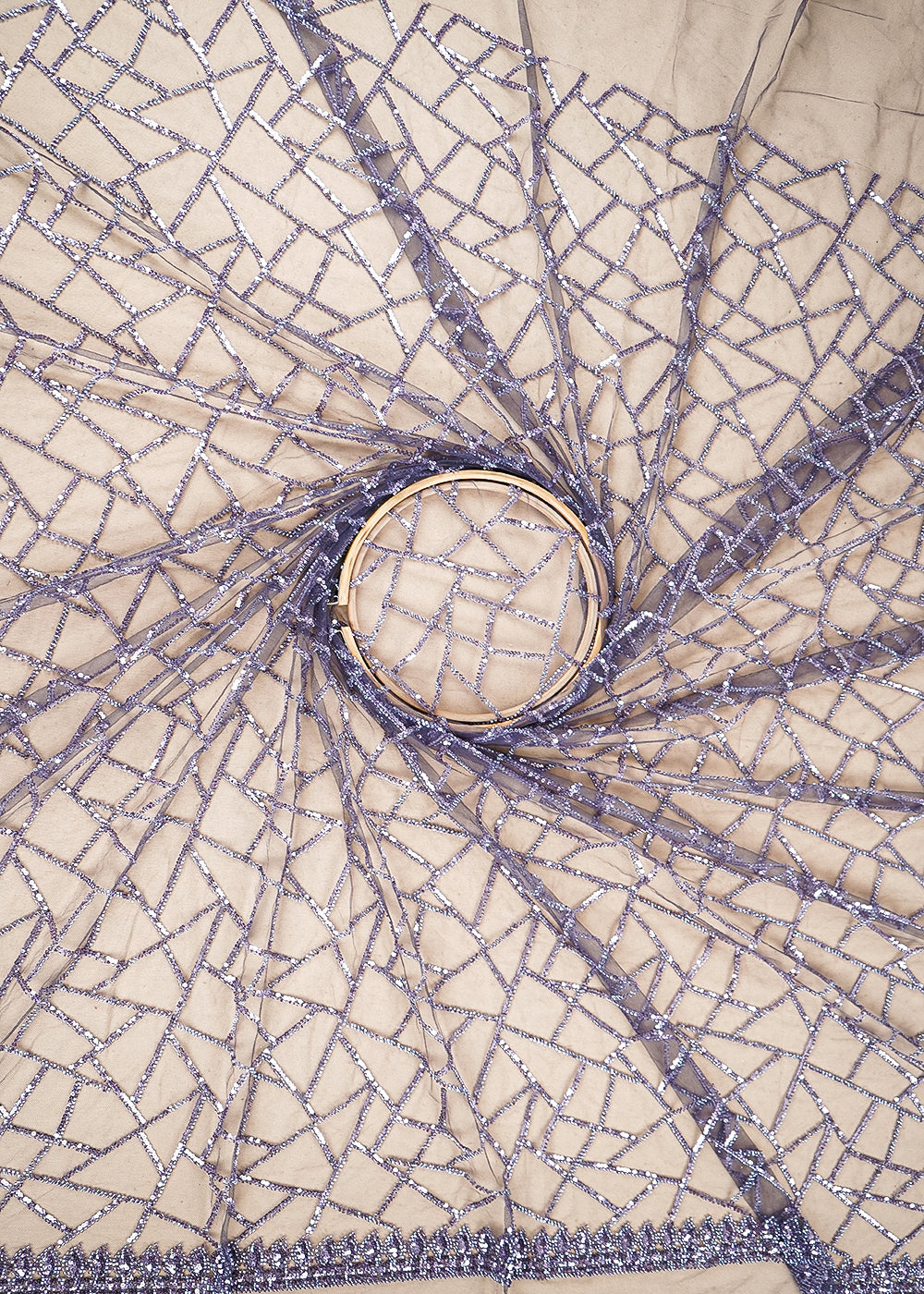
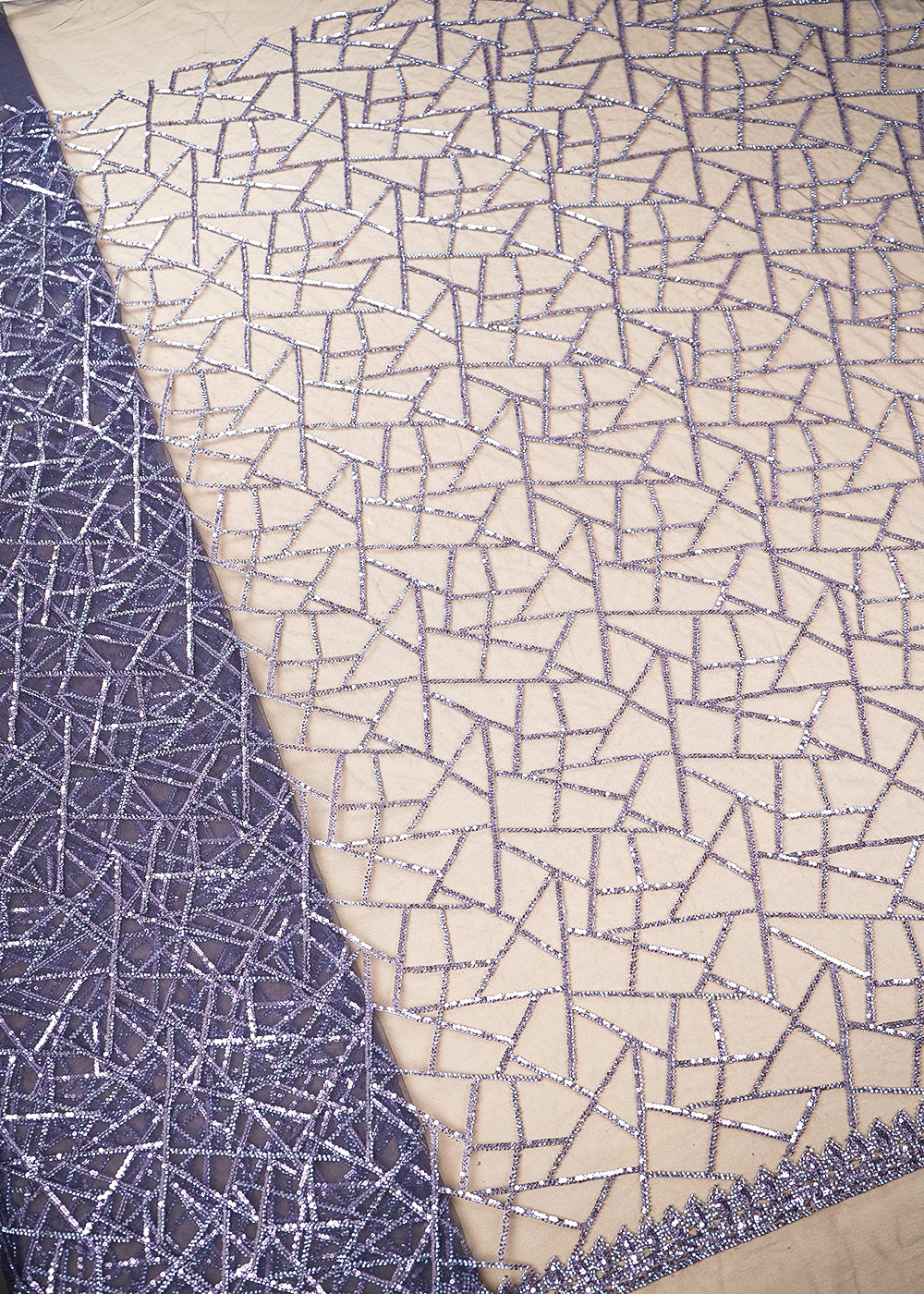
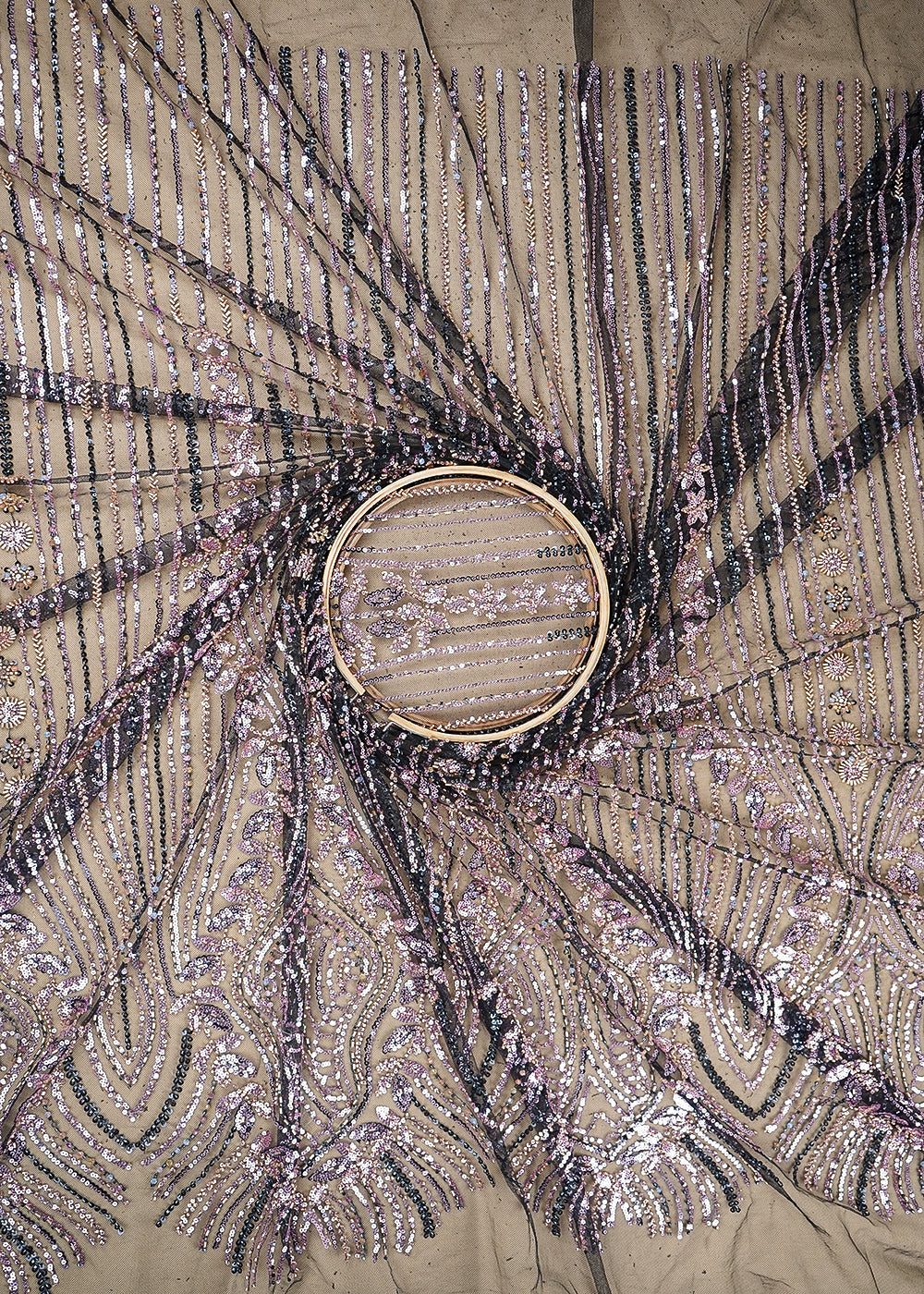
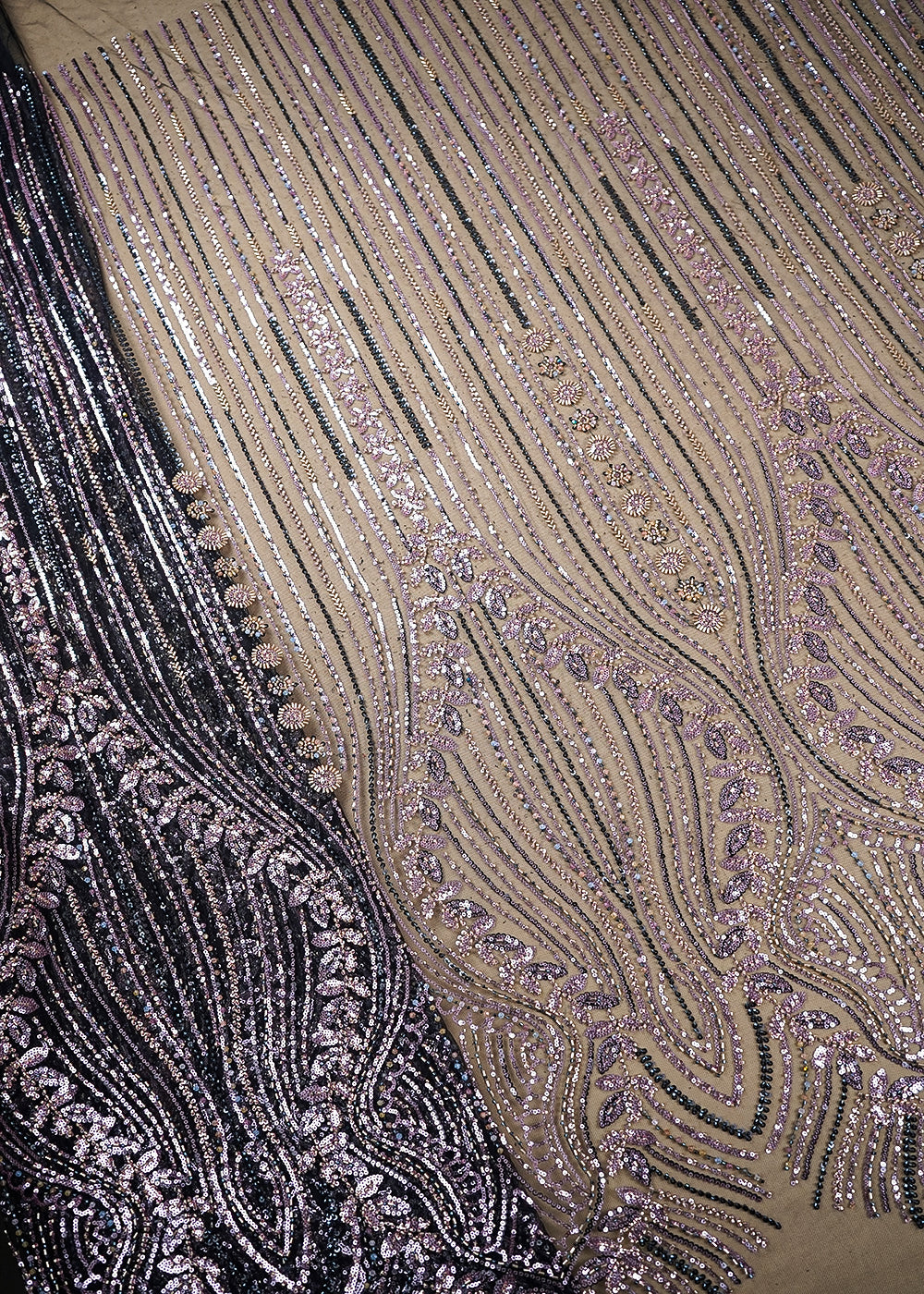
Softer and more even than the stiff local variants, with better durability at the mesh. It holds heavy zari, bead, stone work without tearing at the anchor points, which is why designers reach for it on bridal builds. Browse the net fabric range for the full spread.
Imported organza
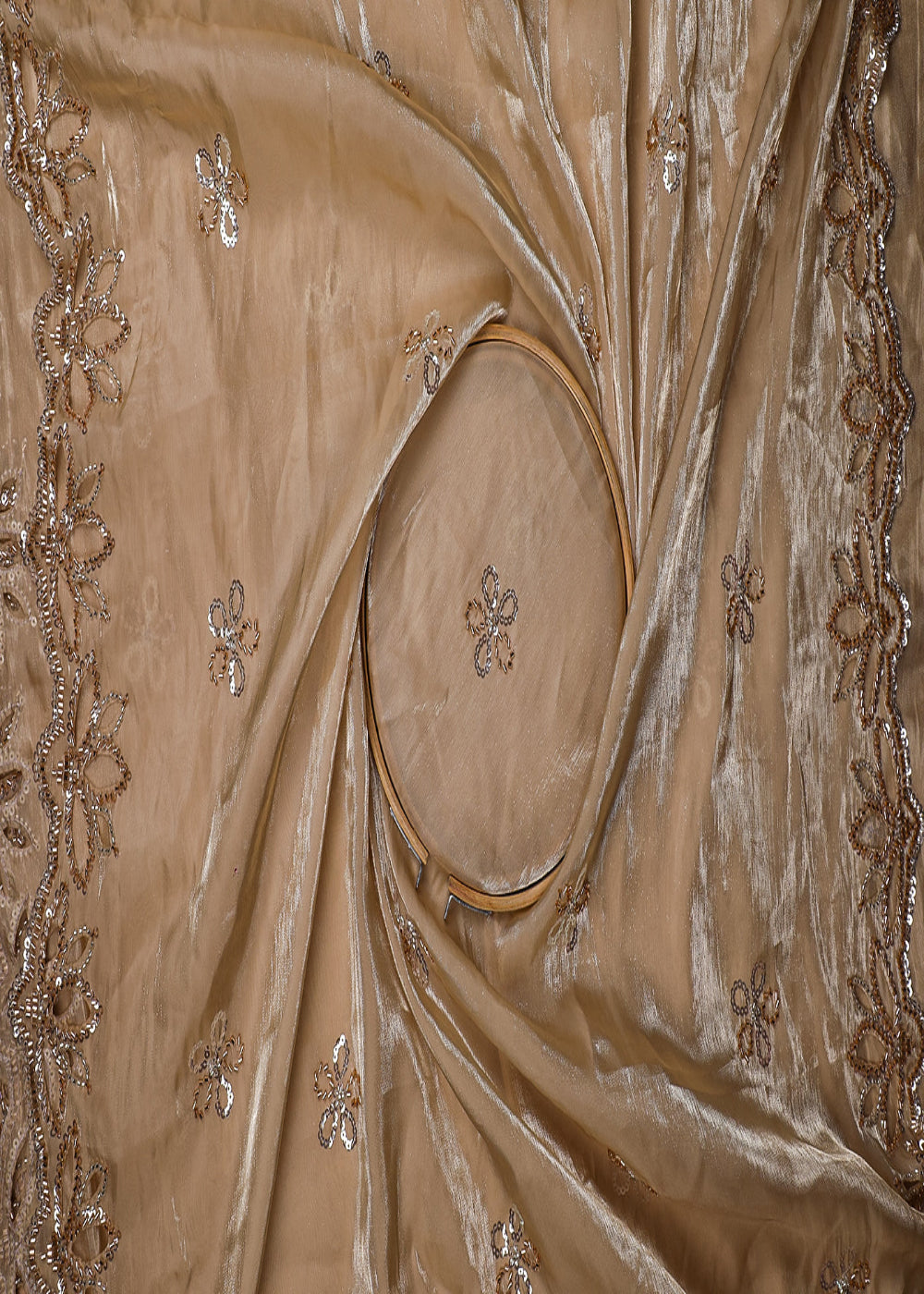
Crisp, sheer, with a natural shine. Fine Italian silk organza drapes and falls better than local stock, which is the reason it leads high-end couture. The crispness comes from the weave tension rather than a resin finish, so it survives washing where treated local organza goes limp.
Imported satin
A smoother sheen and a heavier hand. Used as a top-grade lining in gowns and lehengas as much as a face fabric, because the reflective surface reads richer than a local satin under evening light.
Taffeta
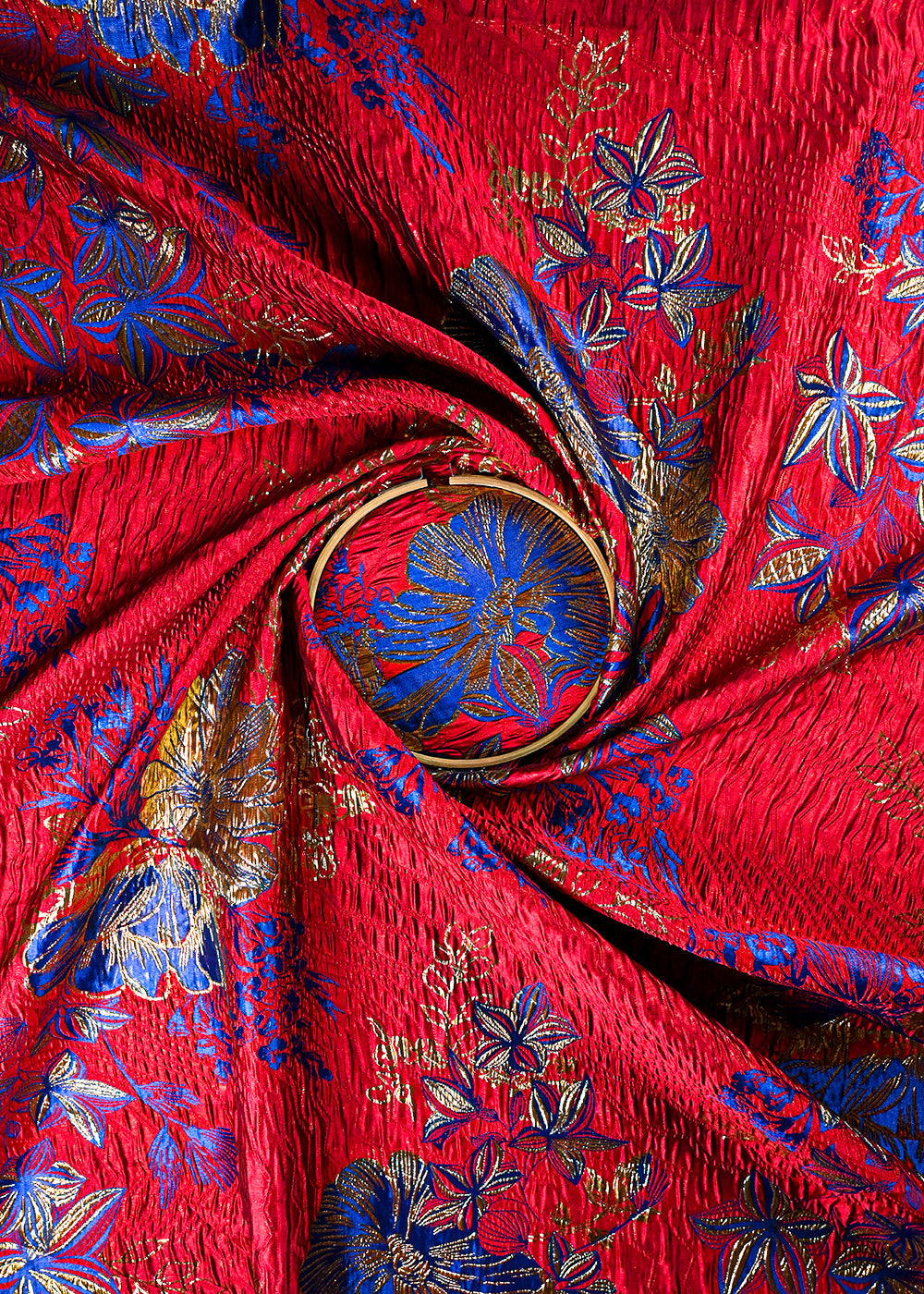
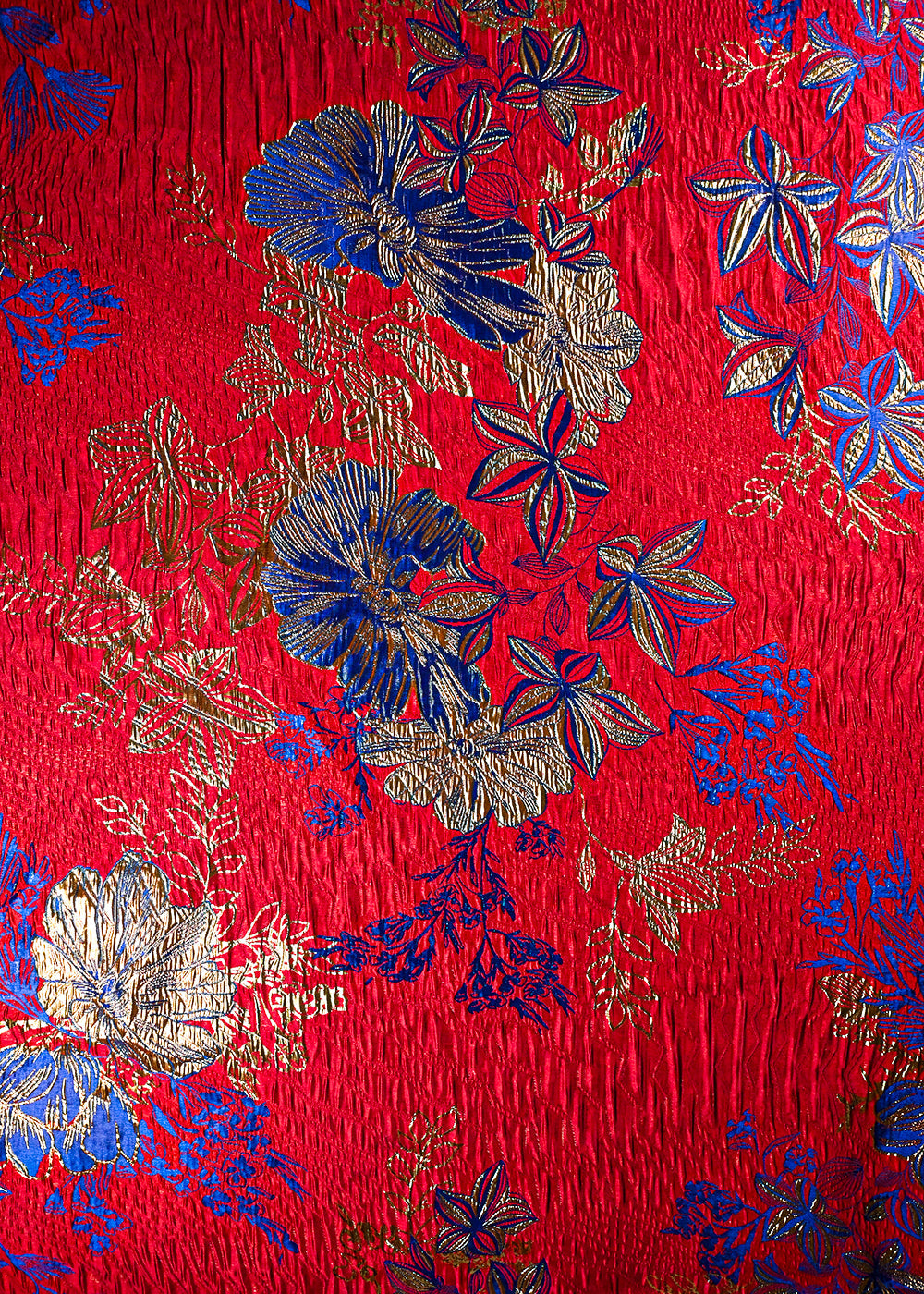
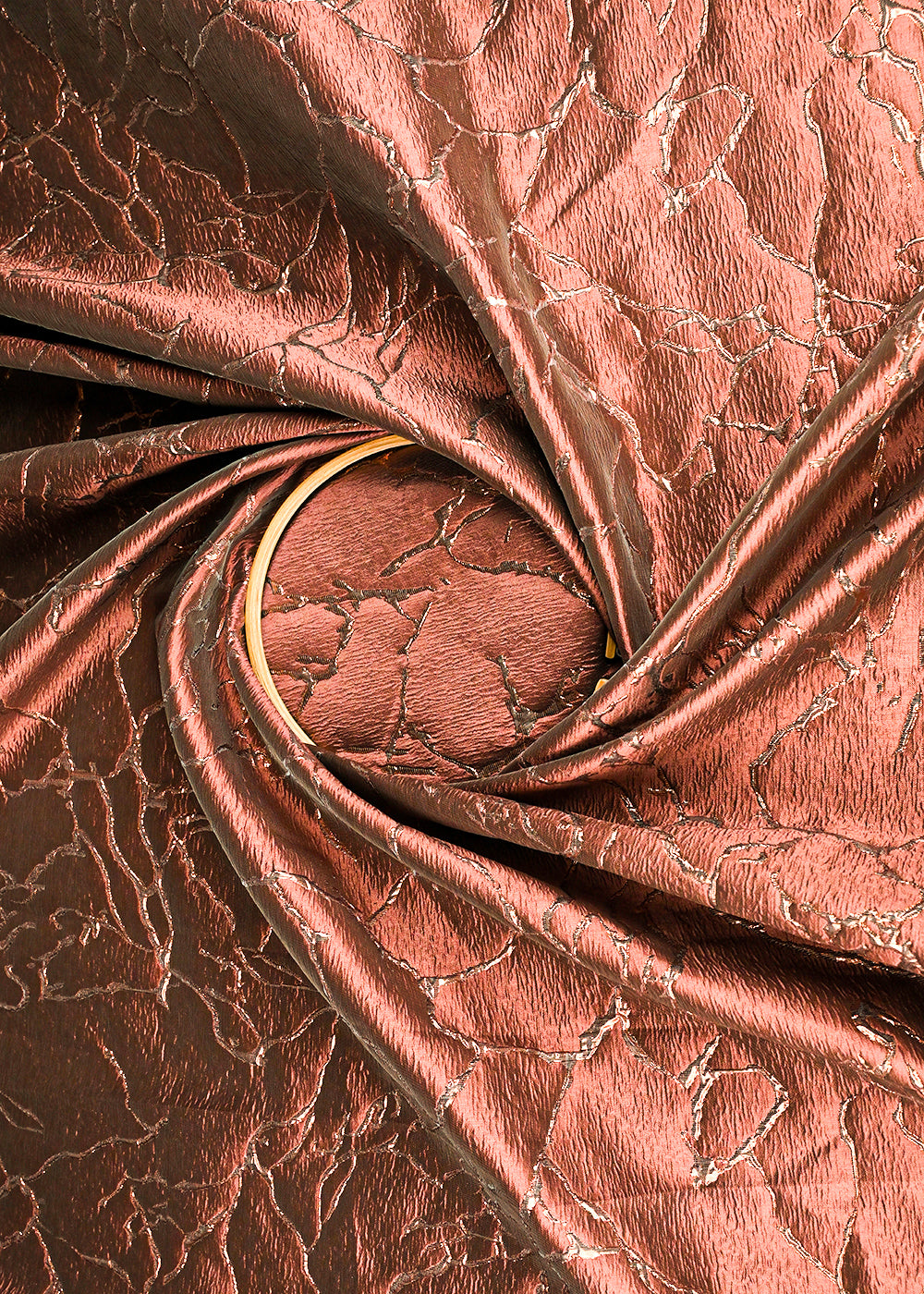
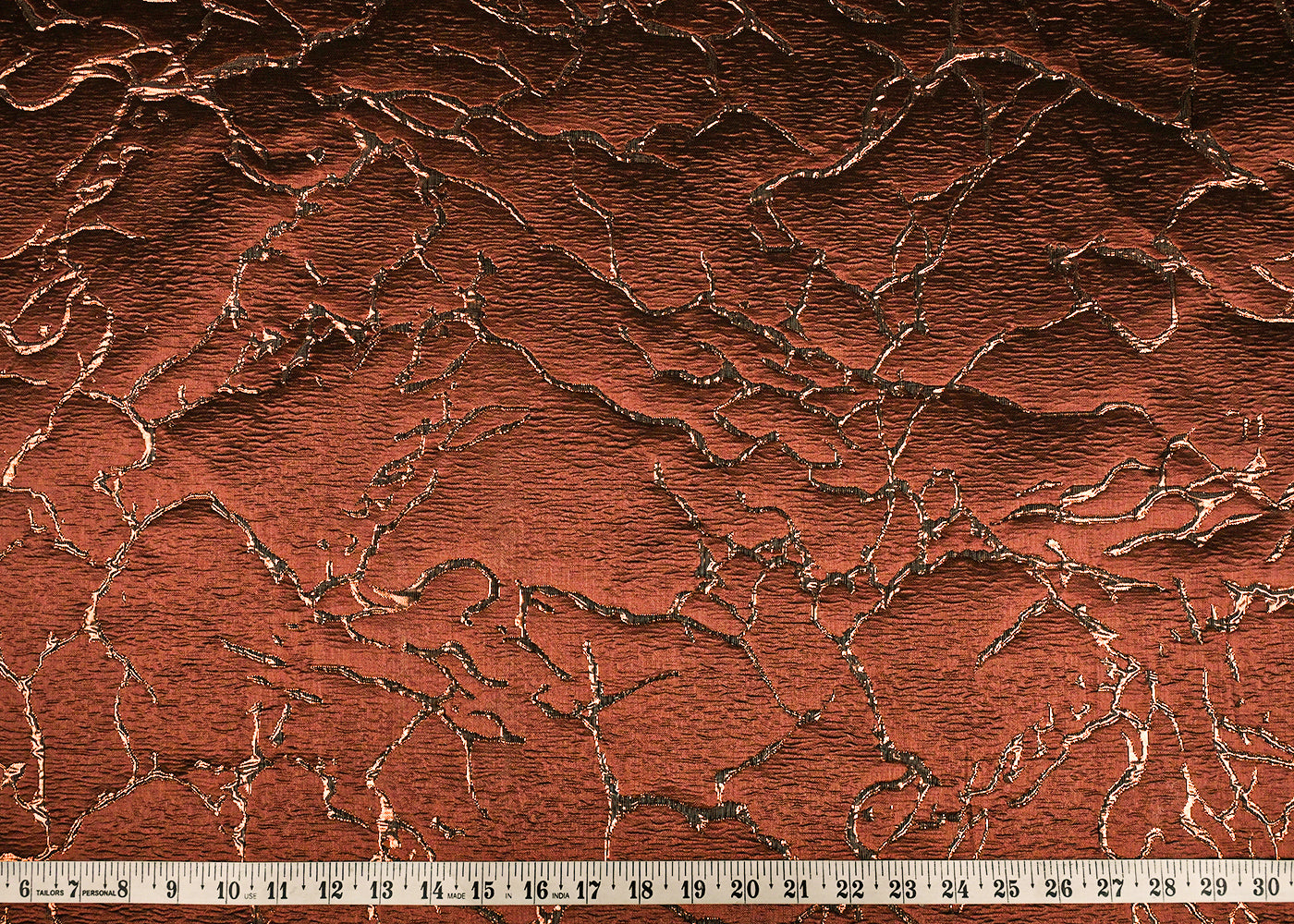
A crisp rustling fabric the Indian mills struggle to copy. It comes as shot taffeta with a two-tone effect and as silk taffeta with a high shine. Both hold volume, which makes them the pick for structured skirts and ballgown silhouettes.
Cutwork lace and Japanese organza
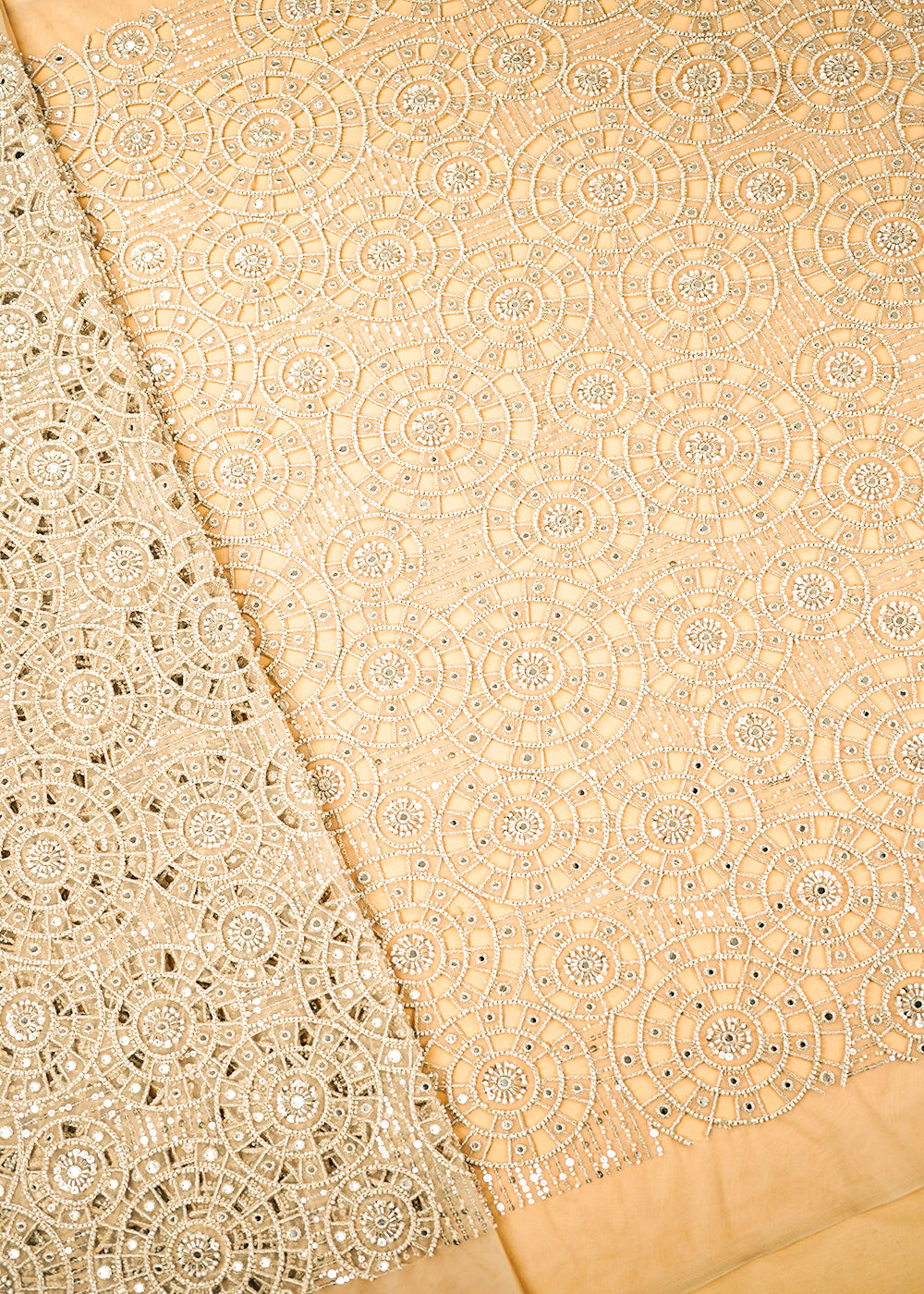
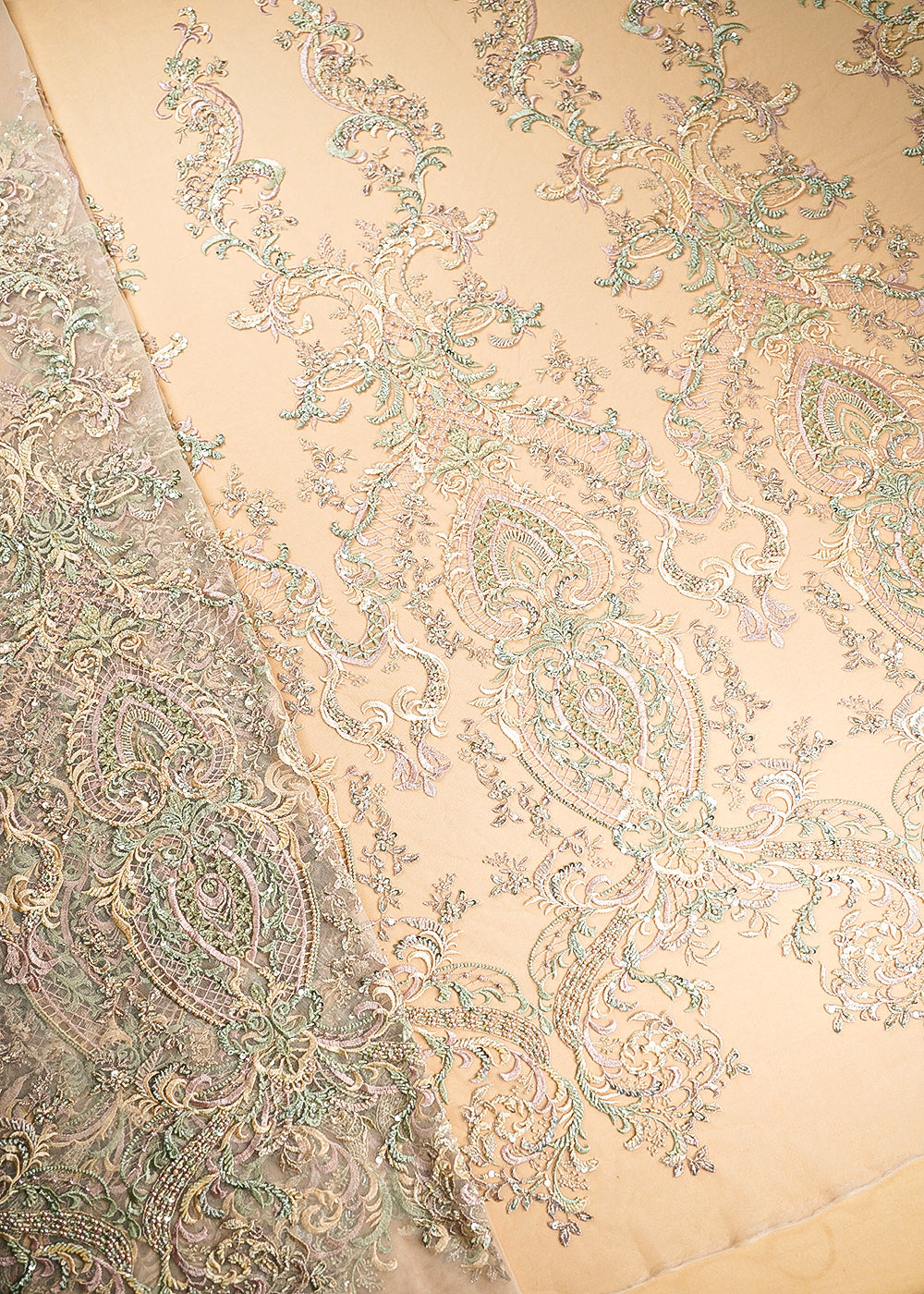
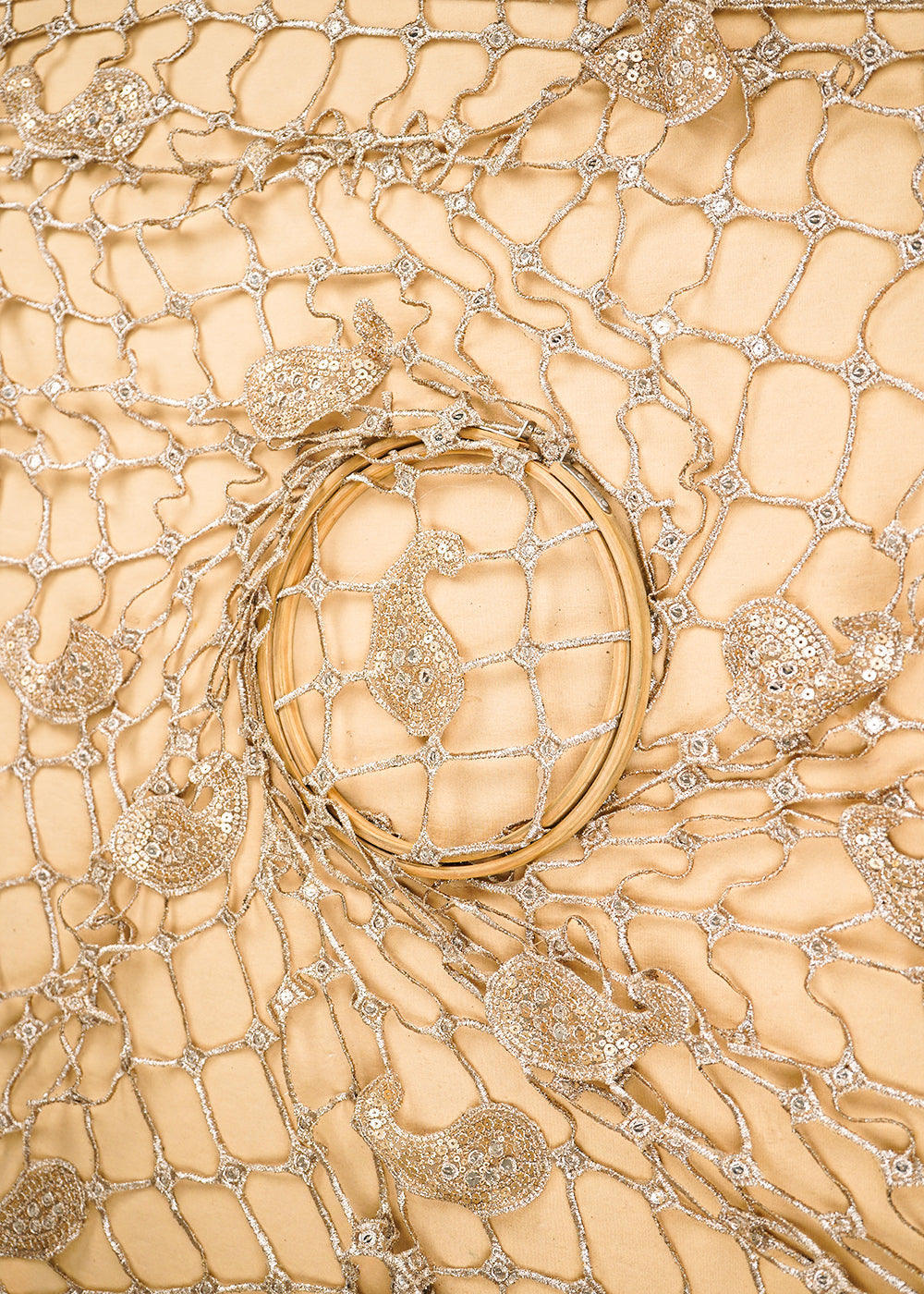
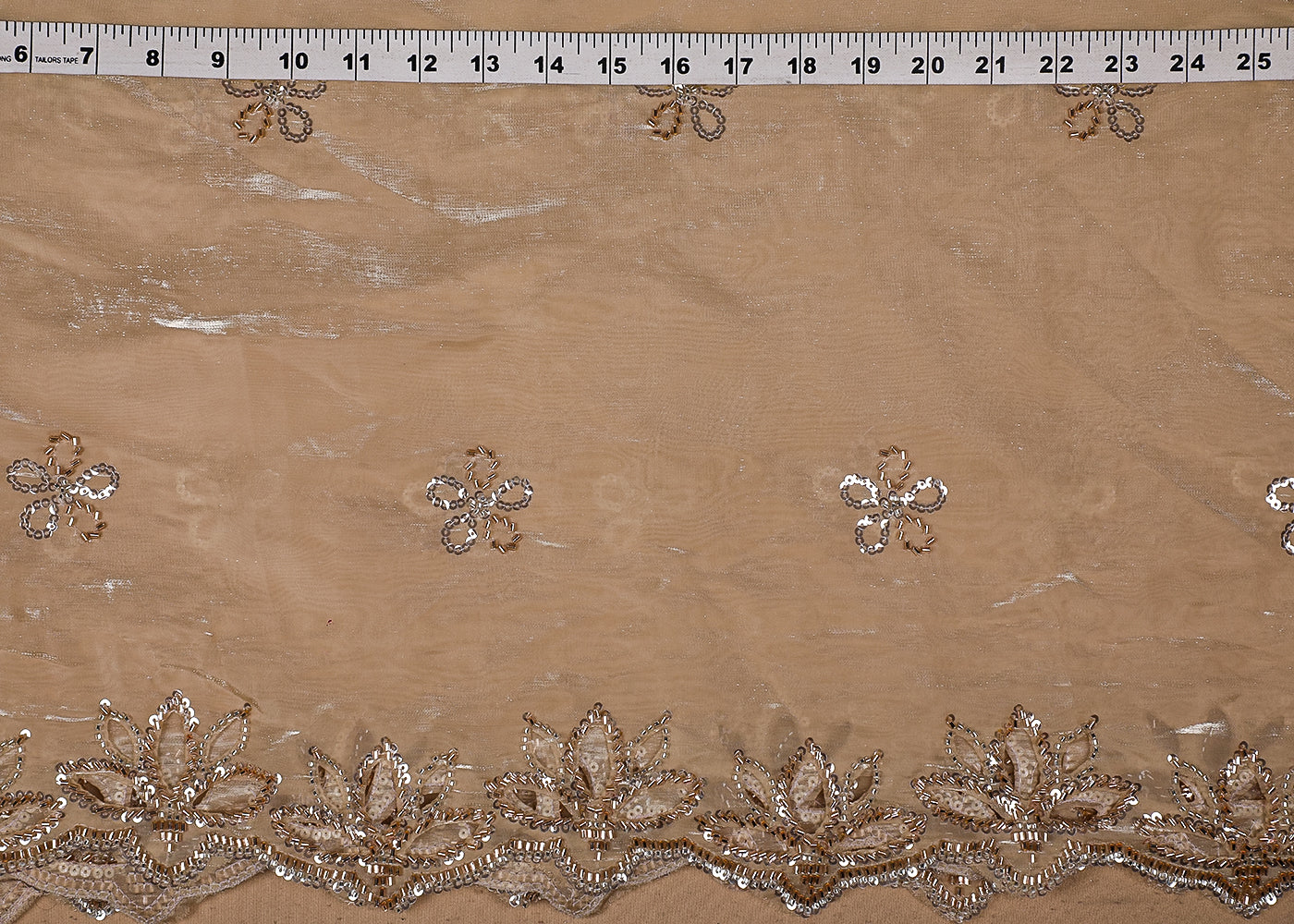
Cutwork is an embroidery style rather than a base fabric, with Swiss and Italian work prized for the precision of the cut. Japanese organza carries a subtle shine and the most consistent weave of any organza, which is why it turns up in fine sleeve, yoke, veil detailing.
Imported Fabric GSM Guide
| Fabric | GSM Range | Notes |
| Net | 20 to 60 GSM | Very light, delicate mesh |
| Organza | 25 to 80 GSM | Crisp, sheer, holds structure |
| Satin | 80 to 200 GSM | Flowy charmeuse to heavy duchess |
| Taffeta | 120 to 250 GSM | Crisp, holds volume well |
Stitching Guide for Imported Fabrics
These fabrics behave differently from local cotton and crepe, so the needle, stitch, seam all need matching to the base. Get this wrong and a fine organza puckers or a taffeta seam splits.
| Setting | Light (net, organza) | Medium (satin) | Heavy (taffeta) |
| Needle | 9/65 to 11/75 fine | 14/90 medium | 16/100 strong |
| Stitch length | 2.0 to 2.5 | 2.5 to 3.0 | 3.0 to 3.5 |
| Seam | French seam | Overlocked | Flat-felled |
| Thread | Polyester or silk | Polyester or silk | Heavy-duty poly |
One tip that saves the most grief. Place tissue paper or a water-soluble stabiliser under sheer net and organza while stitching. It stops the fabric dragging under the presser foot, which is the usual cause of puckered seams.
How to Spot Fake Imported Fabric
This is where most buyers lose money. Local stock sold at imported rates is the oldest trick on the fabric market. Five checks catch almost all of it.
- Ask for country of origin, GSM, fibre composition in exact numbers. A genuine seller answers precisely. Vague terms are the first red flag
- Reality-check the price across two or three dealers. A rate far below the others usually means the goods are not what the label claims
- Check the selvedge. Real imported fabric has a neat selvedge, often with printed codes. Ragged or uneven edges point to a cheap local finish
- Run a damp white cloth over the fabric. If colour transfers, the dye is poor. Hold it to light to check for even weave and thin patches
- Ask for a small paid sample of 10 to 30 cm before a bulk order, then buy from sellers with a clear return policy
Frequently Asked Questions
Is imported fabric always better than local?
Not always. Imported net, organza, taffeta usually beat local stock on weave consistency and fall. For plain cotton or basic crepe the gap is small, so paying an import top-grade there rarely makes sense.
How can I tell genuine imported organza from local?
Genuine imported organza keeps its crispness after washing because the structure comes from the weave, not a resin coat. Local treated organza goes limp once the finish washes out. The selvedge codes are the other quick tell.
Which needle suits imported net and organza?
A fine needle in the 9/65 to 11/75 range with a short 2.0 to 2.5 stitch length. Anything heavier leaves visible holes in the delicate weave.
Why does taffeta cost more than local alternatives?
Taffeta needs a specific crisp finish and rustle that Indian mills struggle to reproduce. The shot and silk versions carry the highest rates because of the two-tone weave and the shine, which cannot be replicated cheaply.
Order Imported Fabric at Paras Gallery Fabrics
Our imported range covers net, organza, satin, taffeta, cutwork lace, Japanese organza sourced from Italy, Japan, Korea and beyond, cut by the metre or supplied by thaan for production runs. Designers building high-end organza ranges can check bulk rates on our wholesale page.
Frequently Asked Questions
Can imported fabrics be customized?
Yes. While the fabric itself is imported, you can get it embroidered, dyed, or embellished in India to create a personalized design.
Are imported fabrics only for designers?
No. While designers and boutiques buy them most, anyone can purchase imported fabrics for personal outfits, bridal wear, or even home décor.
Why are imported fabrics more expensive?
Imported fabrics cost more due to international shipping, customs duties, and the high-quality craftsmanship or technology involved in their production. They are also often produced in limited quantities, adding to their exclusivity.
What are the most popular types of imported fabrics?
Organza, Satin, Net, Taffeta, and Japanese Organza are among the most sought-after imported fabrics known for their premium texture and elegant appearance.
How can I check if an imported fabric is genuine?
Always ask for the country of origin, GSM, and fiber composition. Genuine imported fabrics have neat selvedge, consistent weaving, and even dye quality.
