


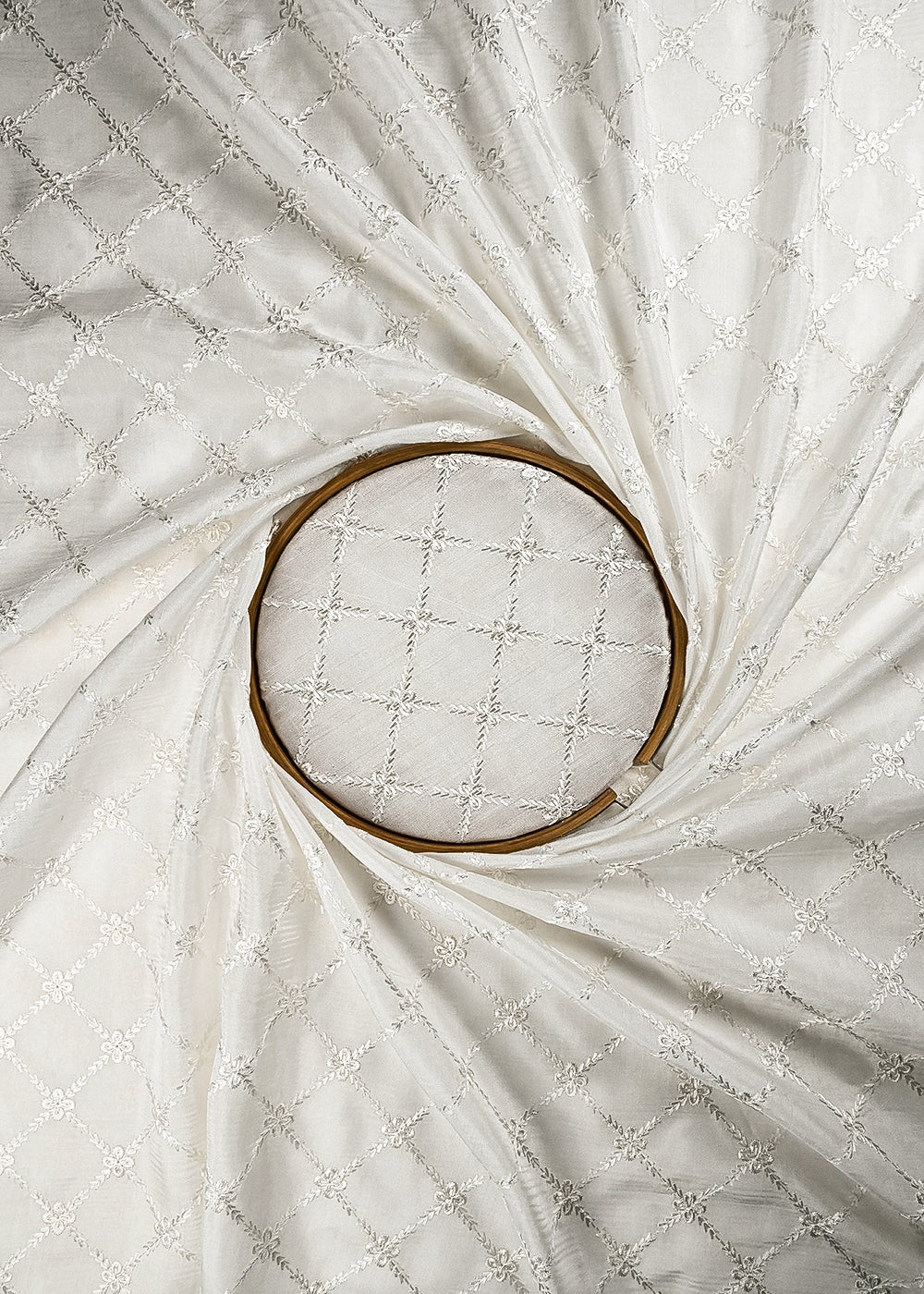
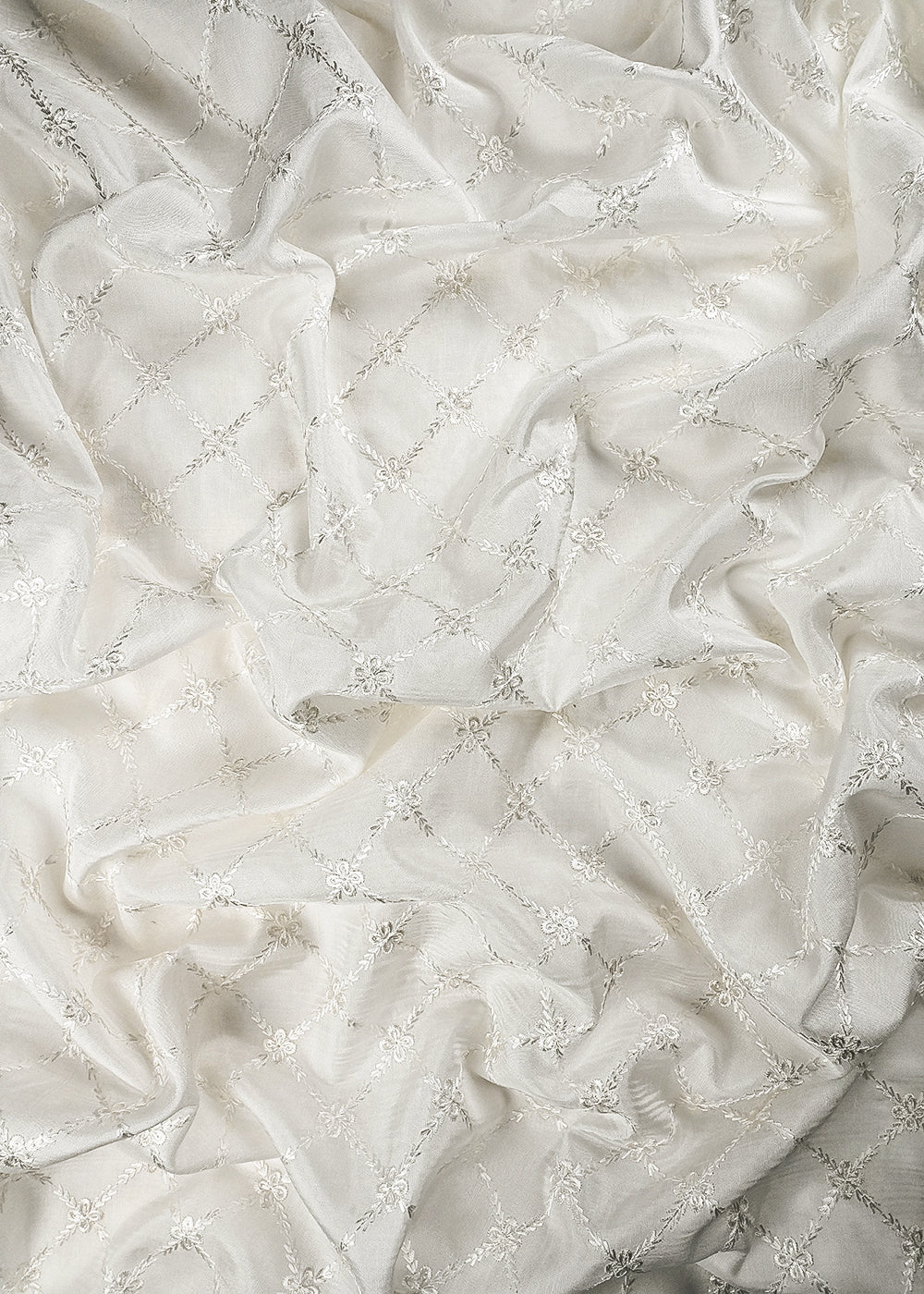
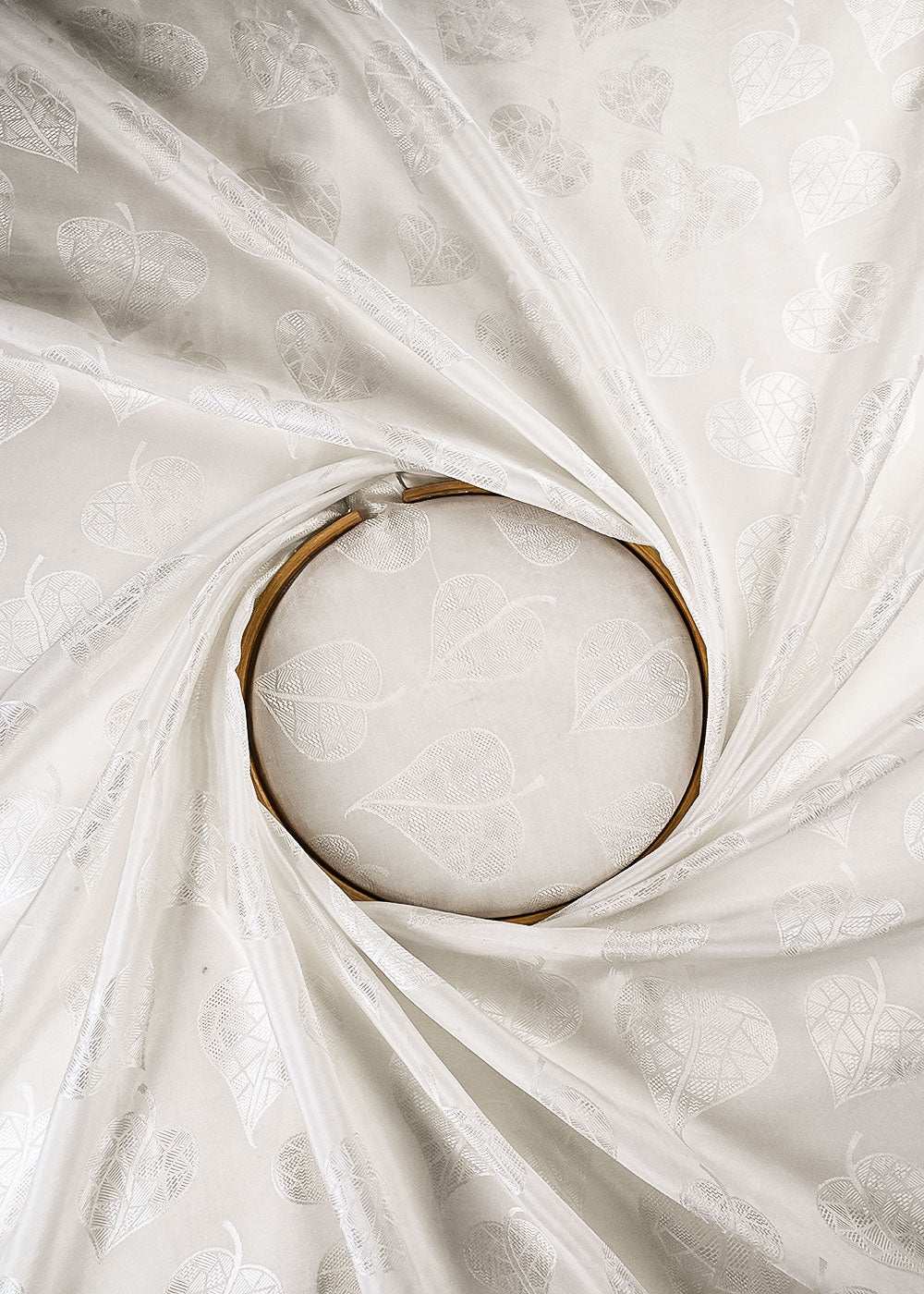
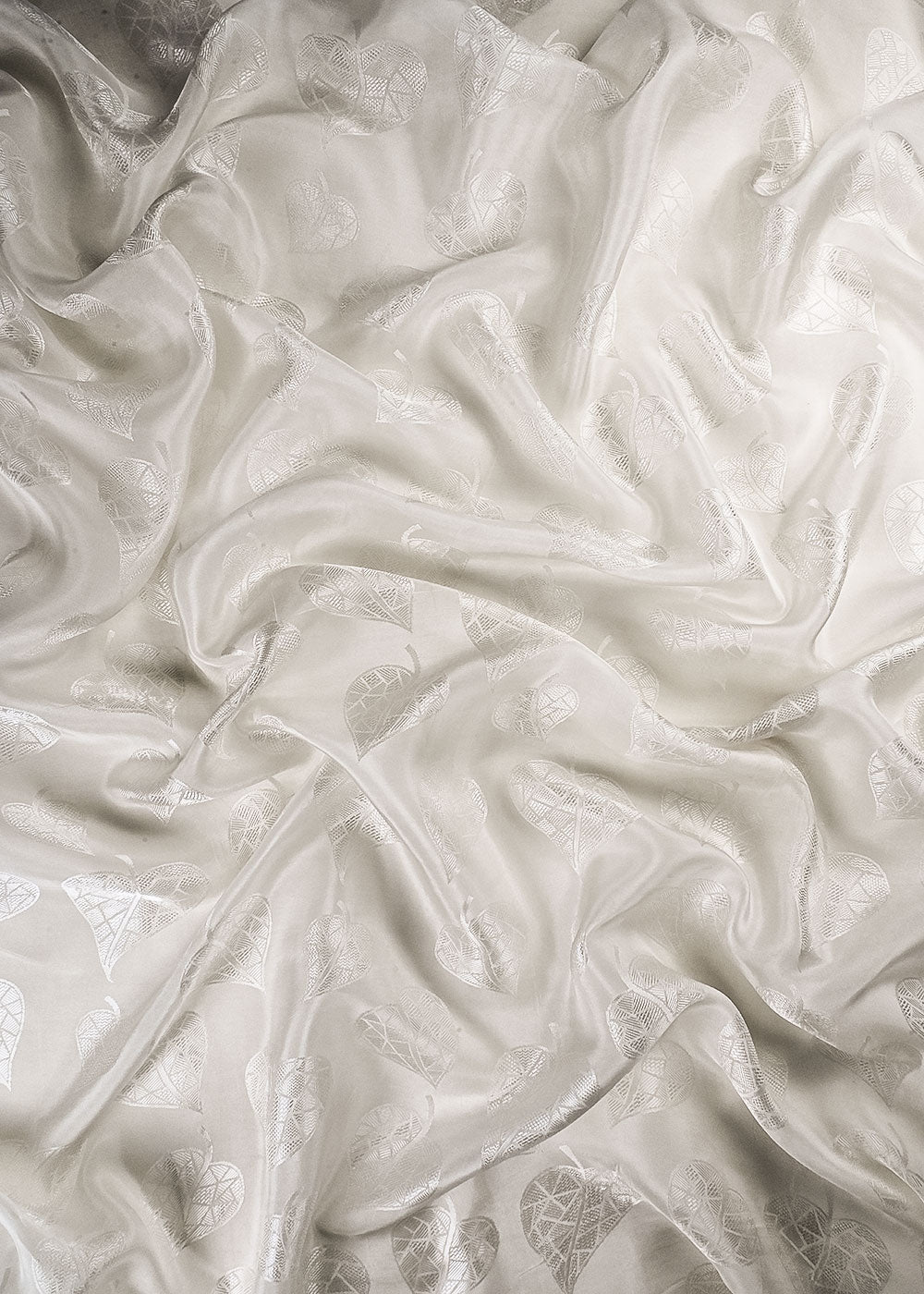
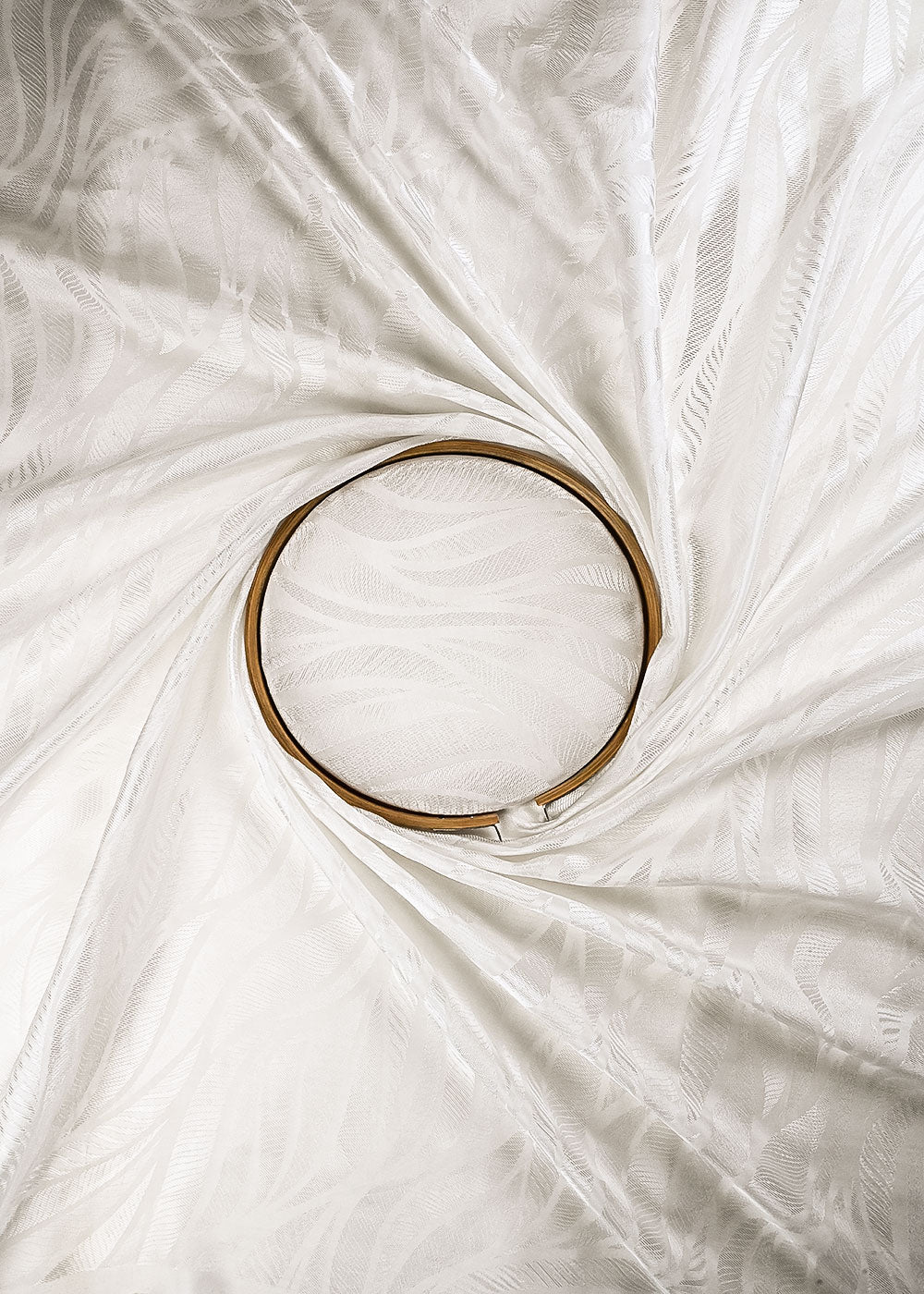
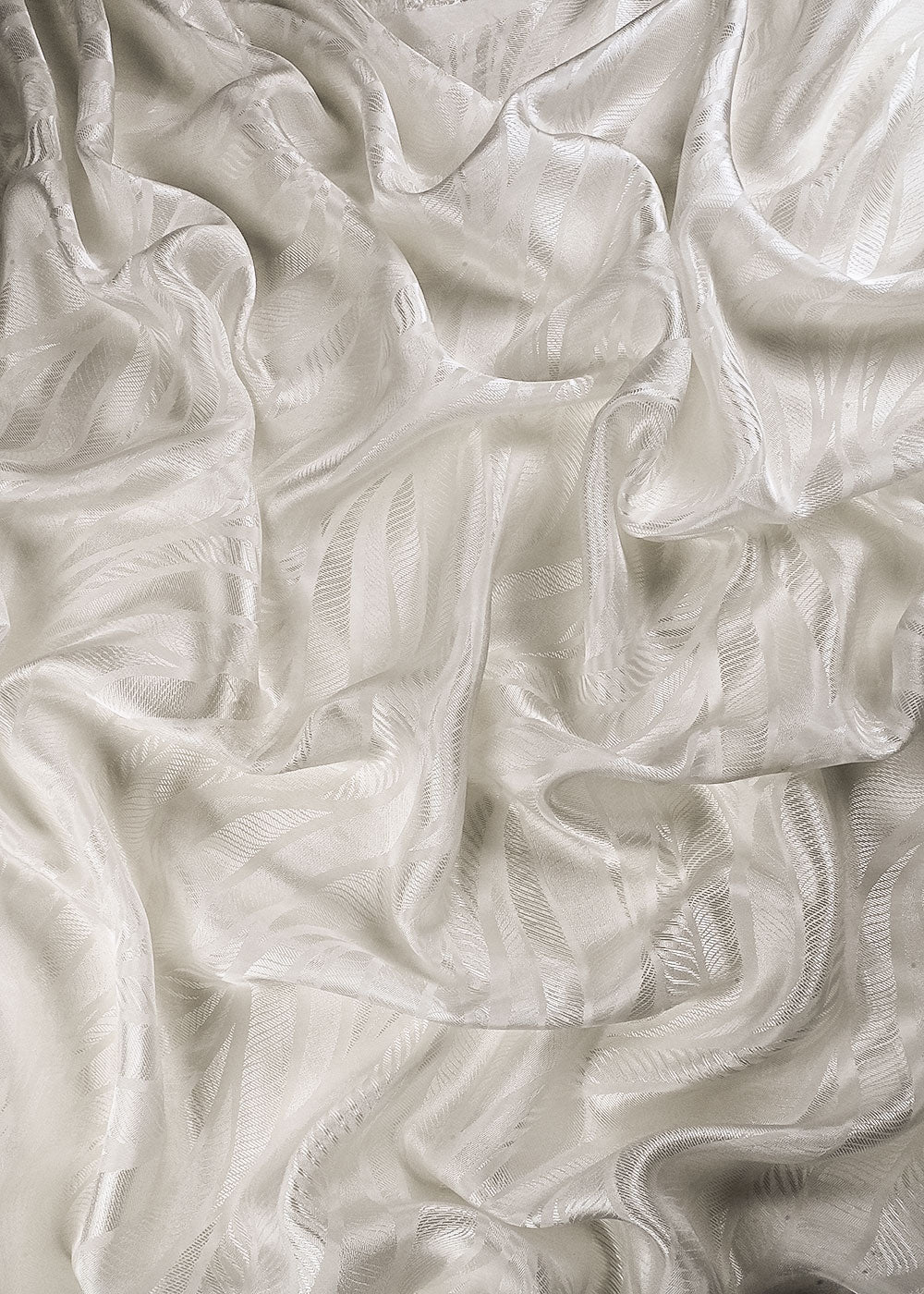
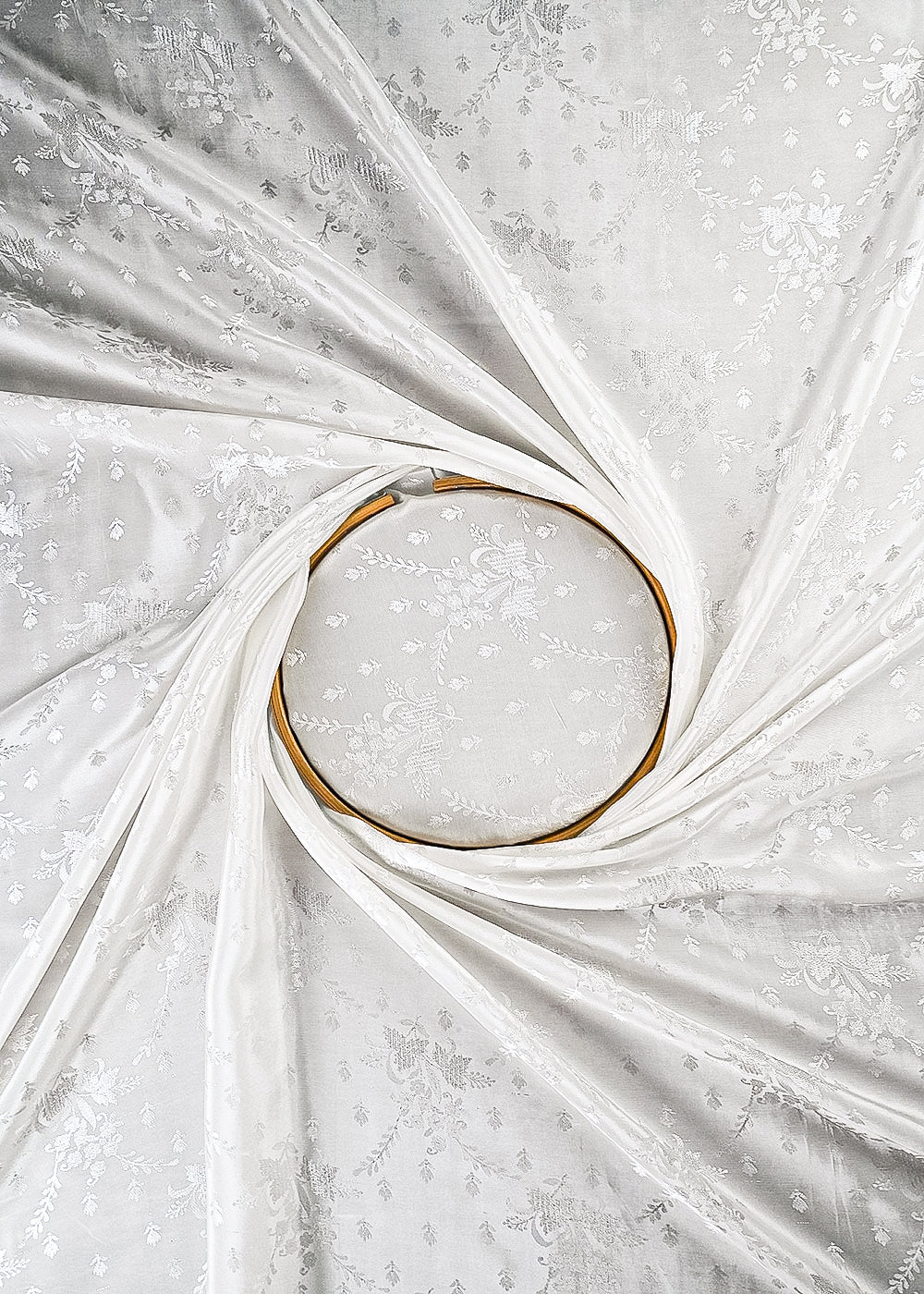
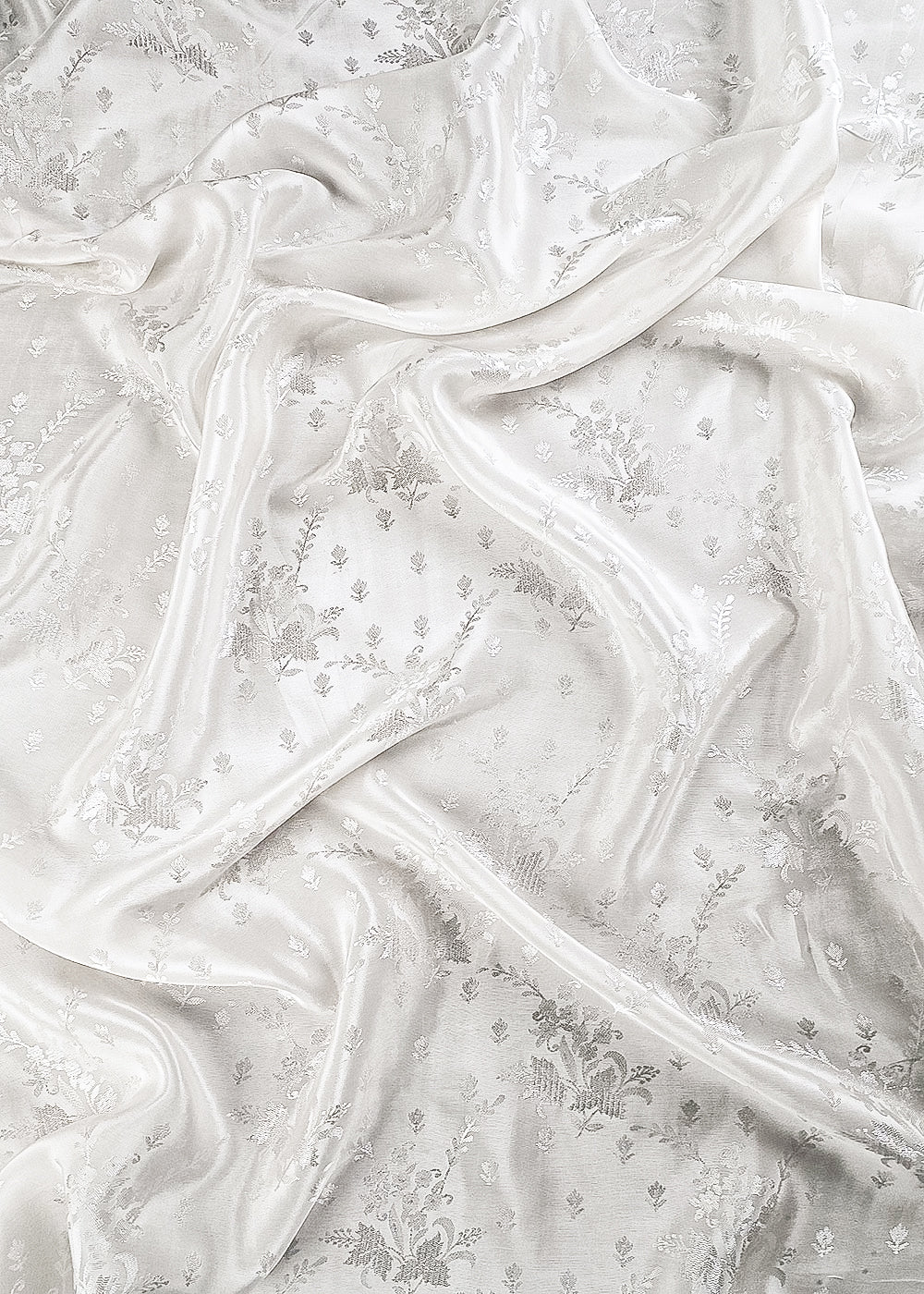
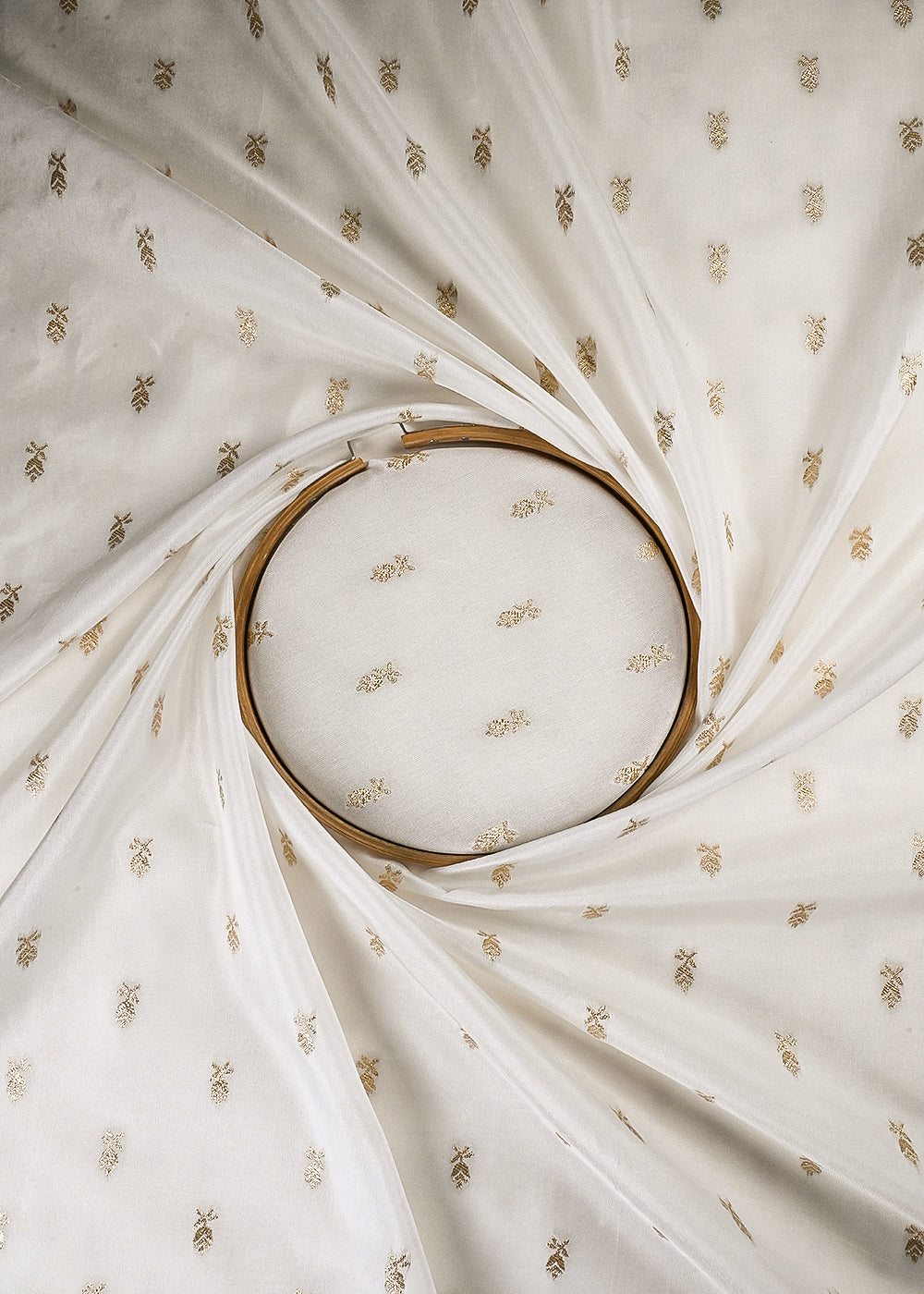
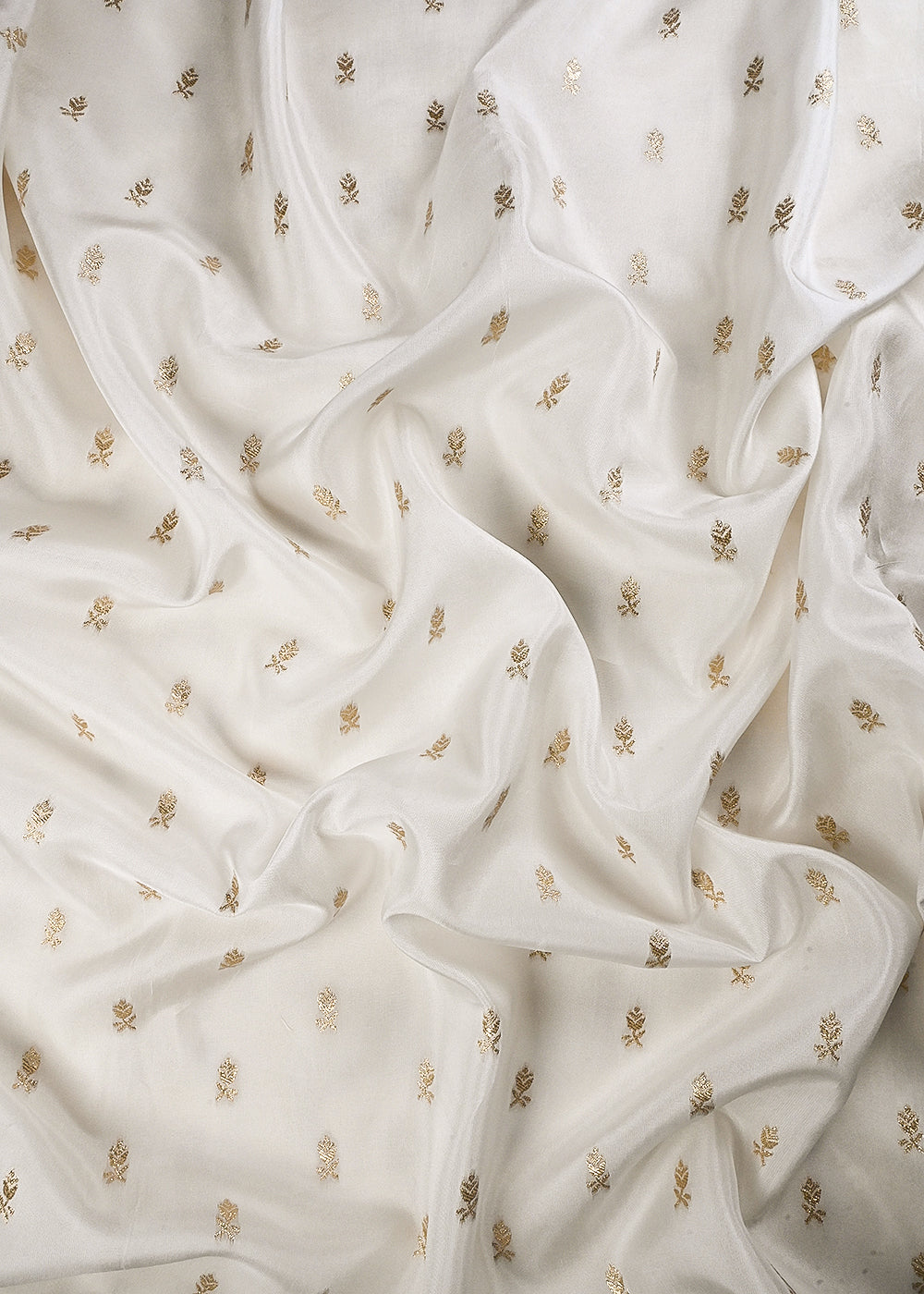
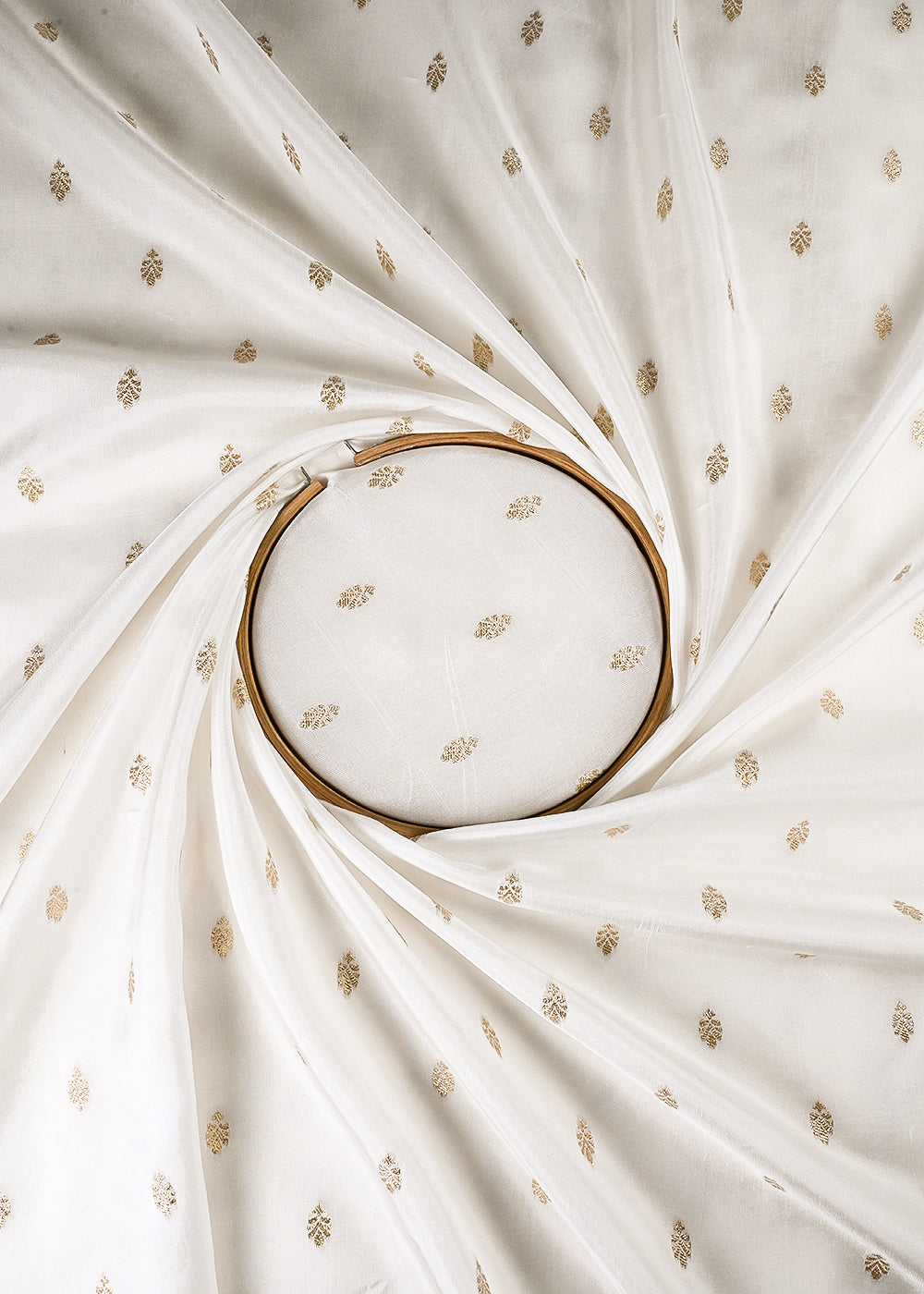
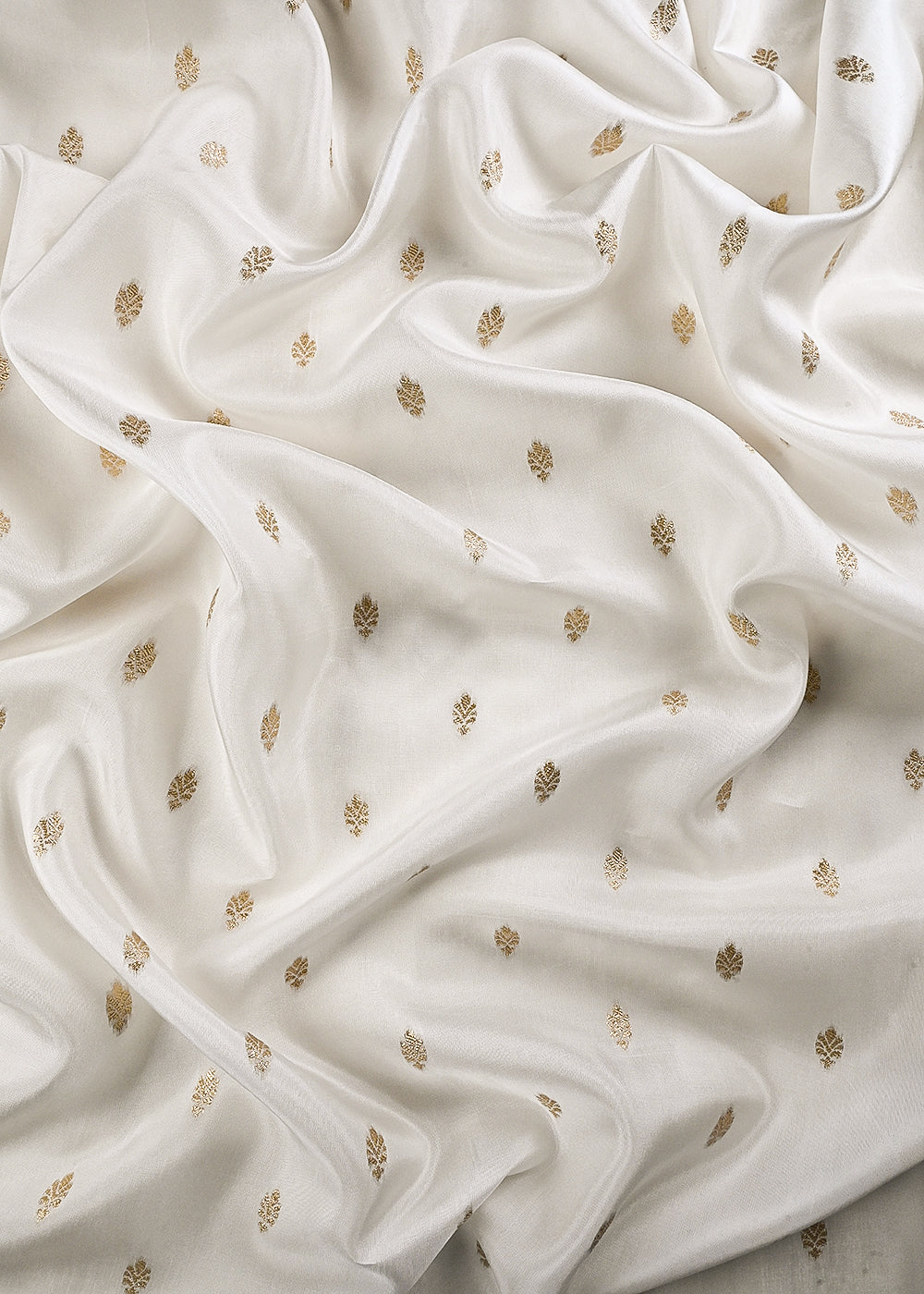



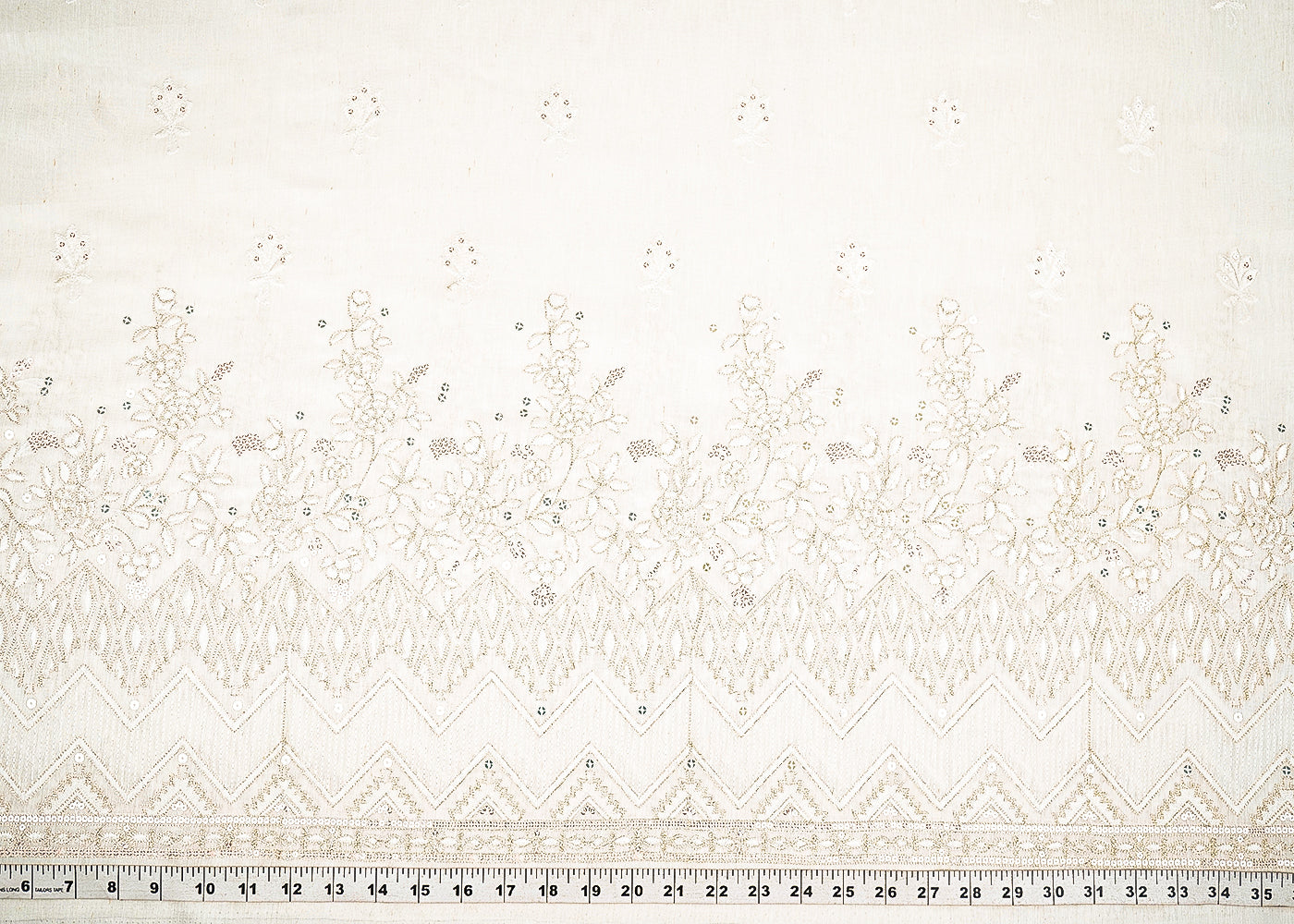
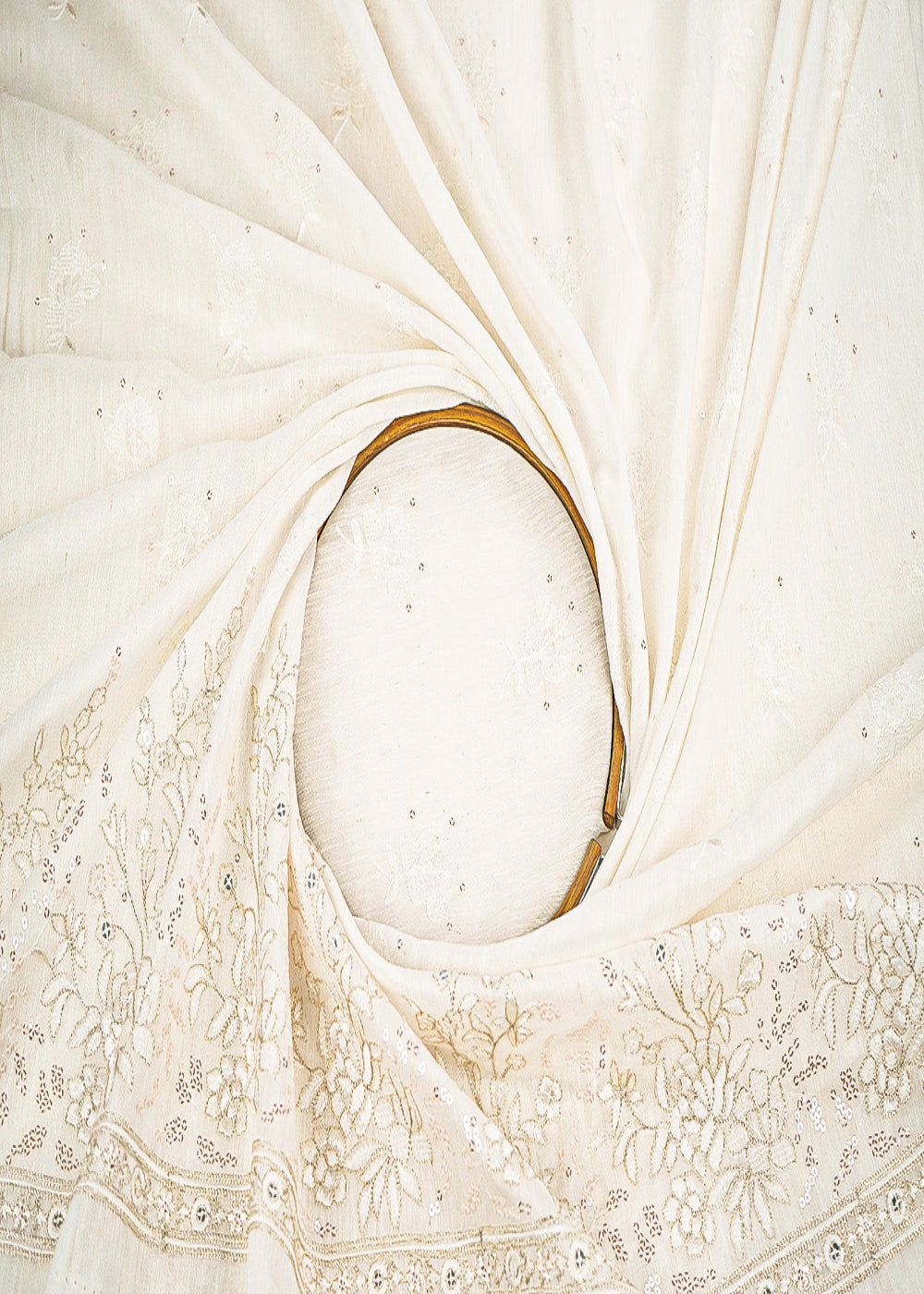

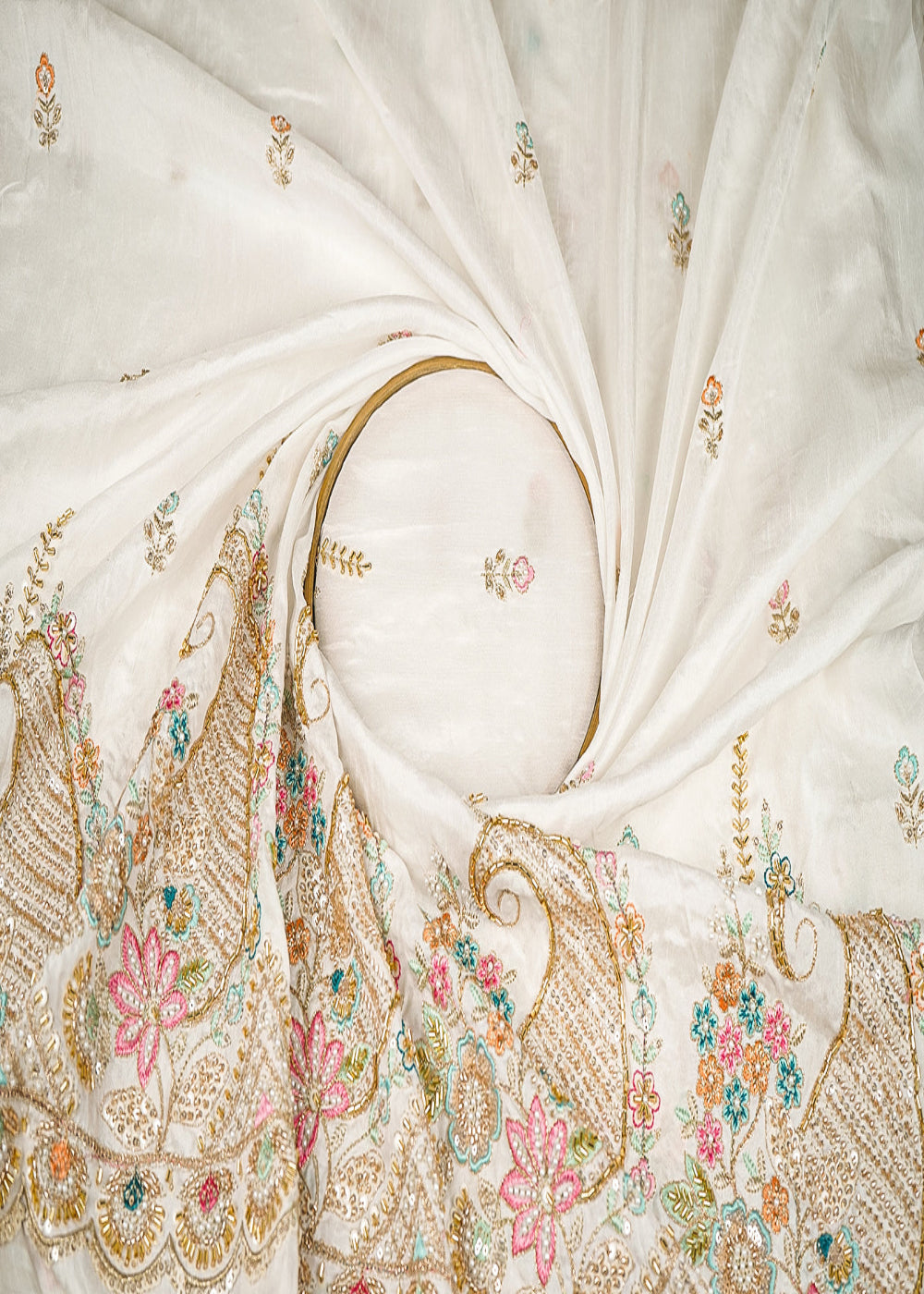
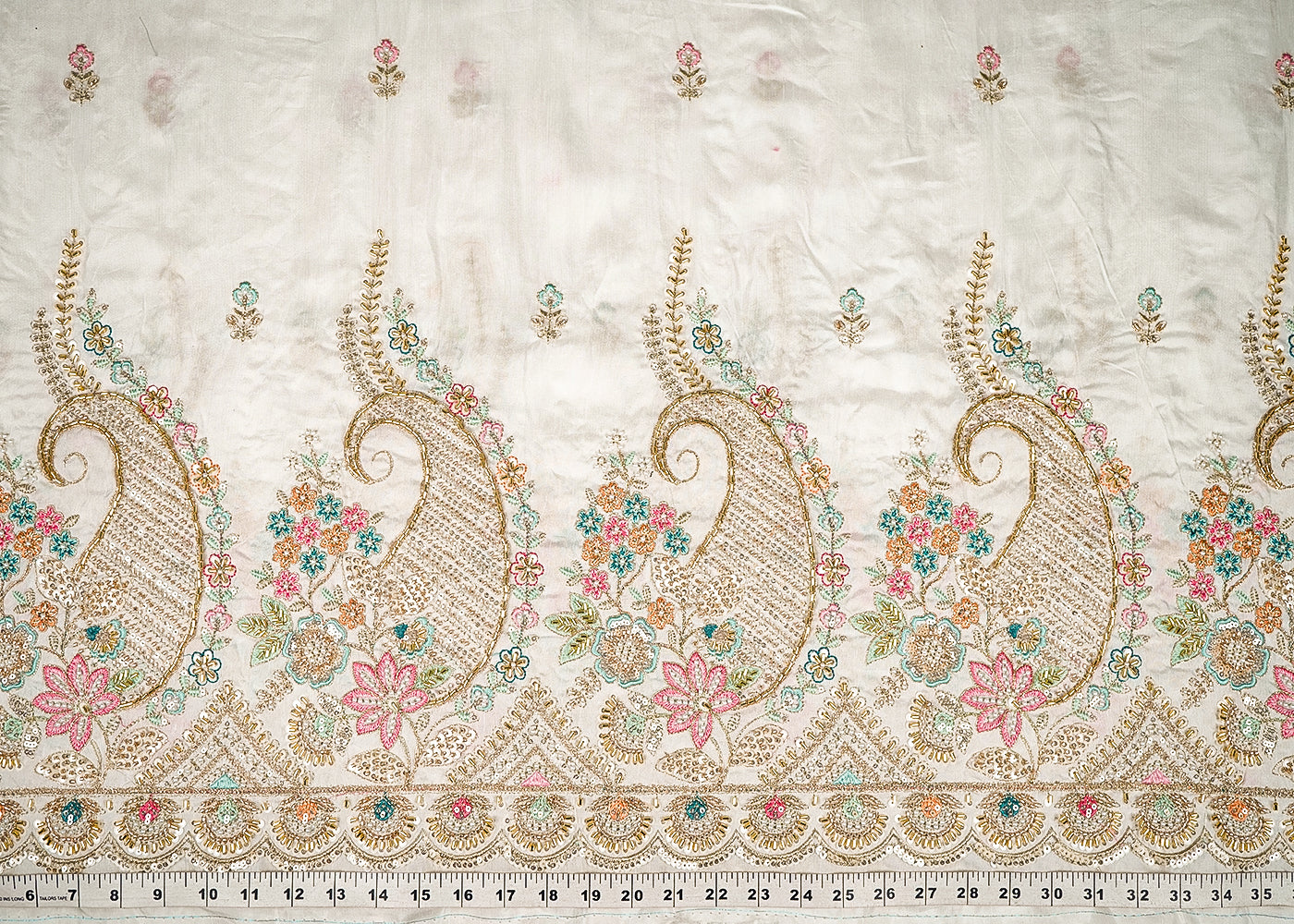








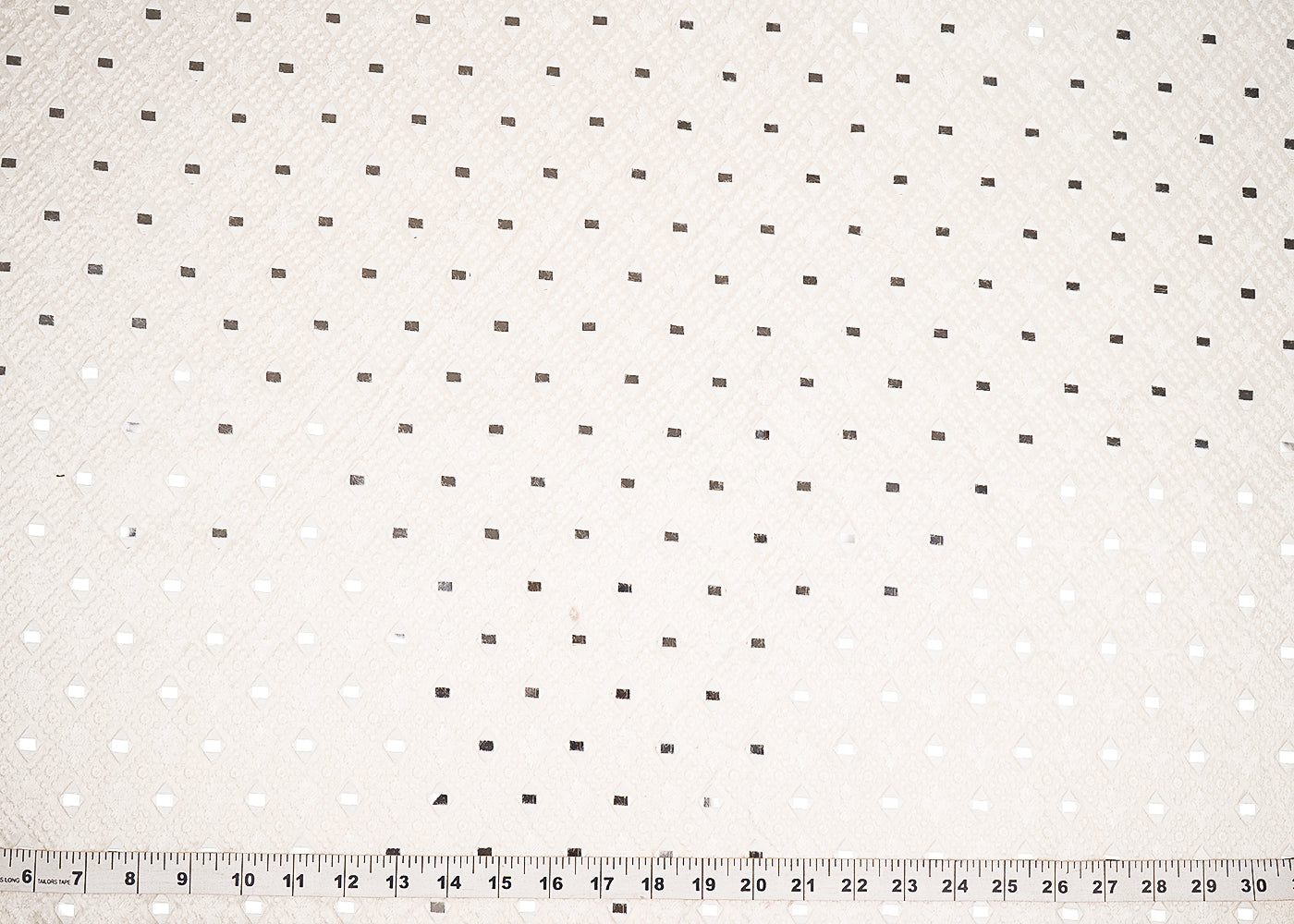
Silk Embroidery Fabric: Types, GSM, Prices, Uses
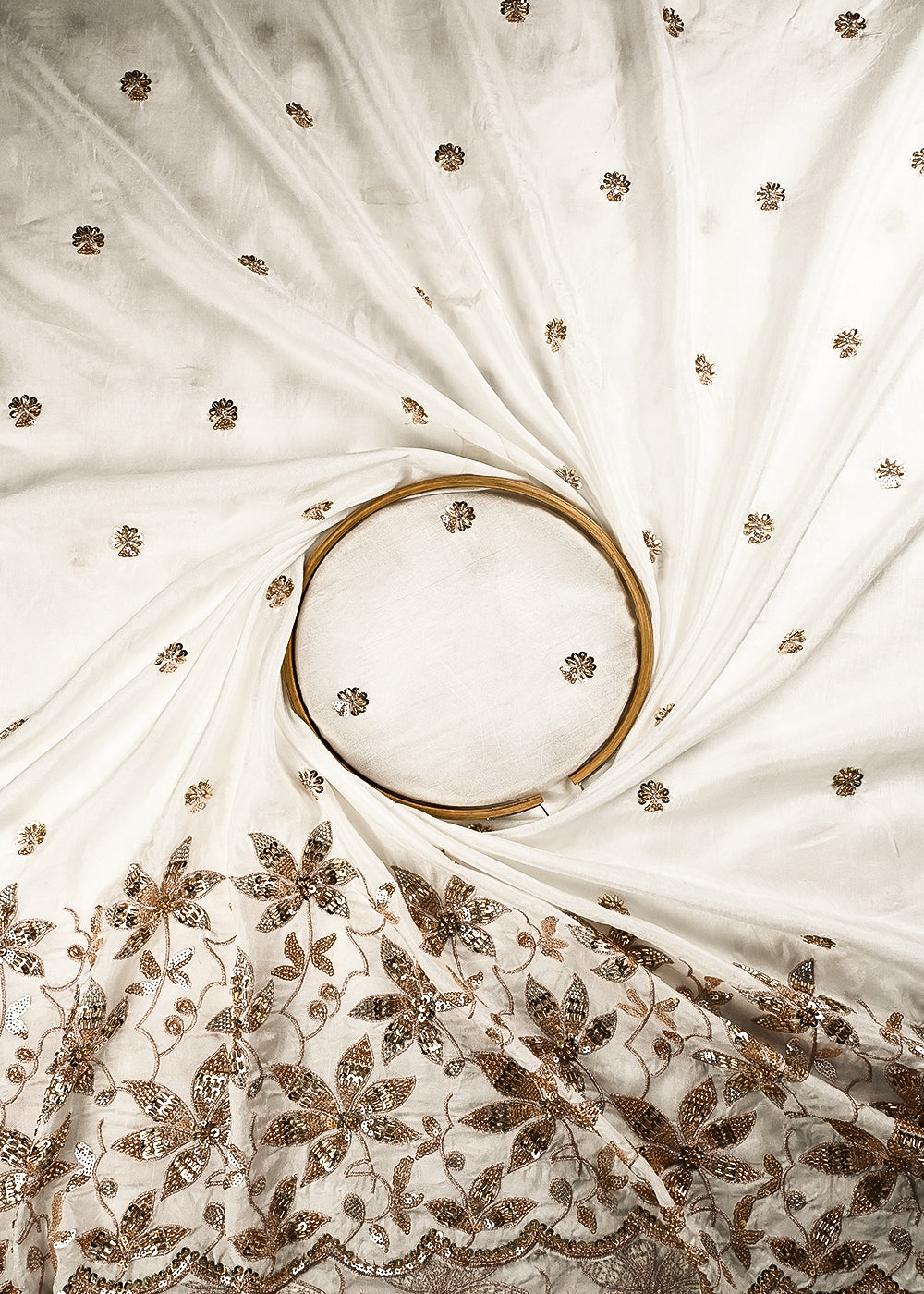
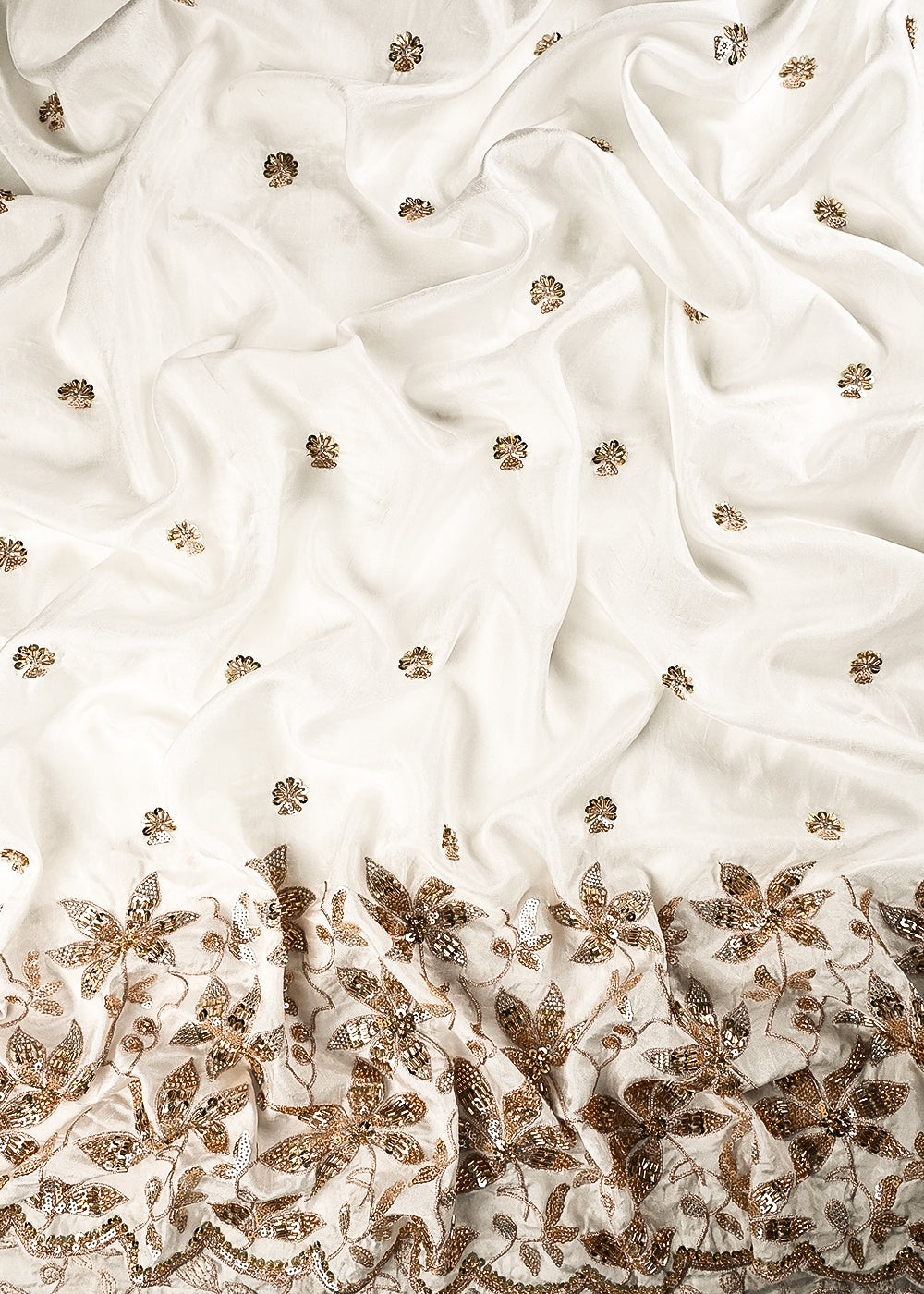
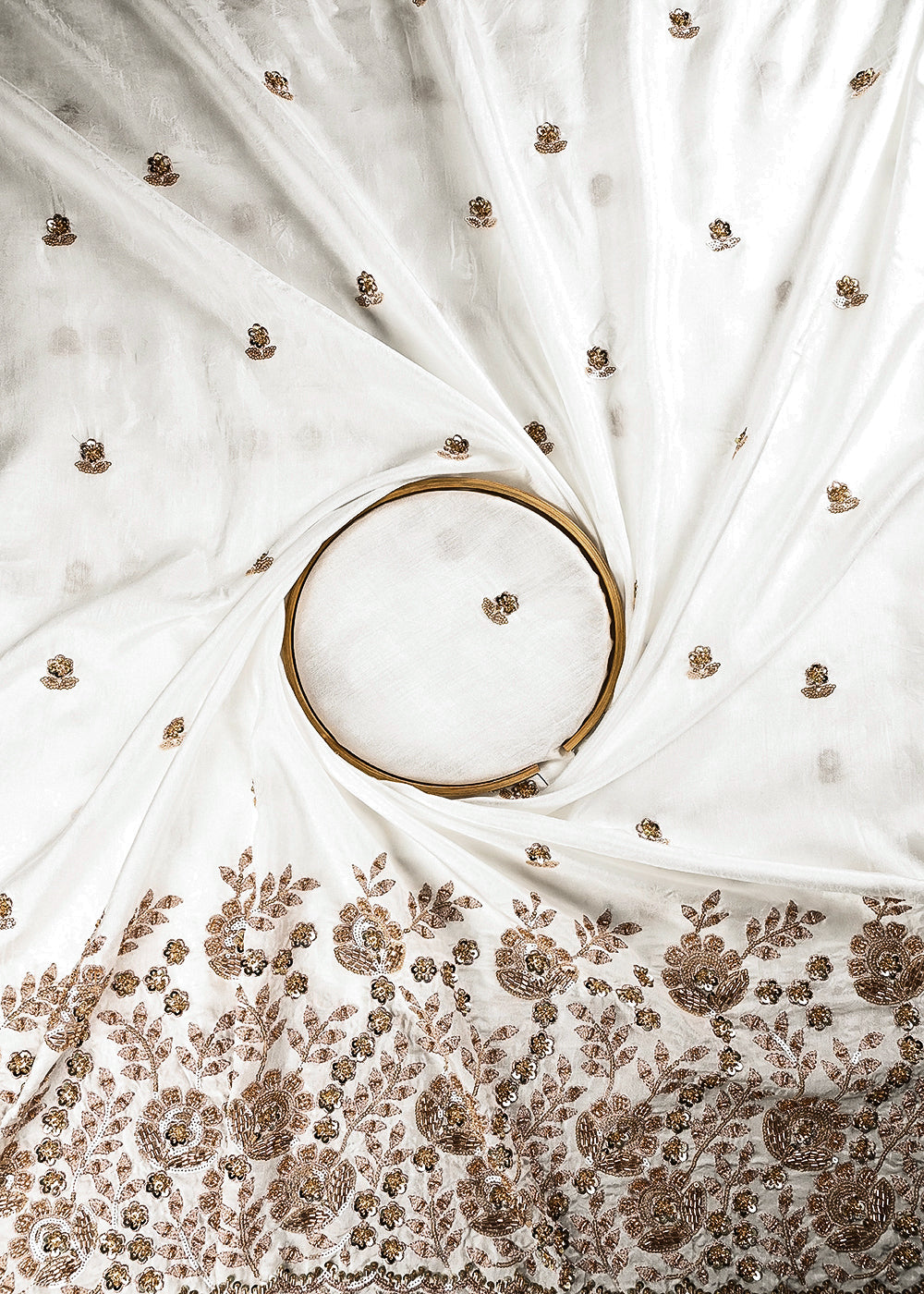
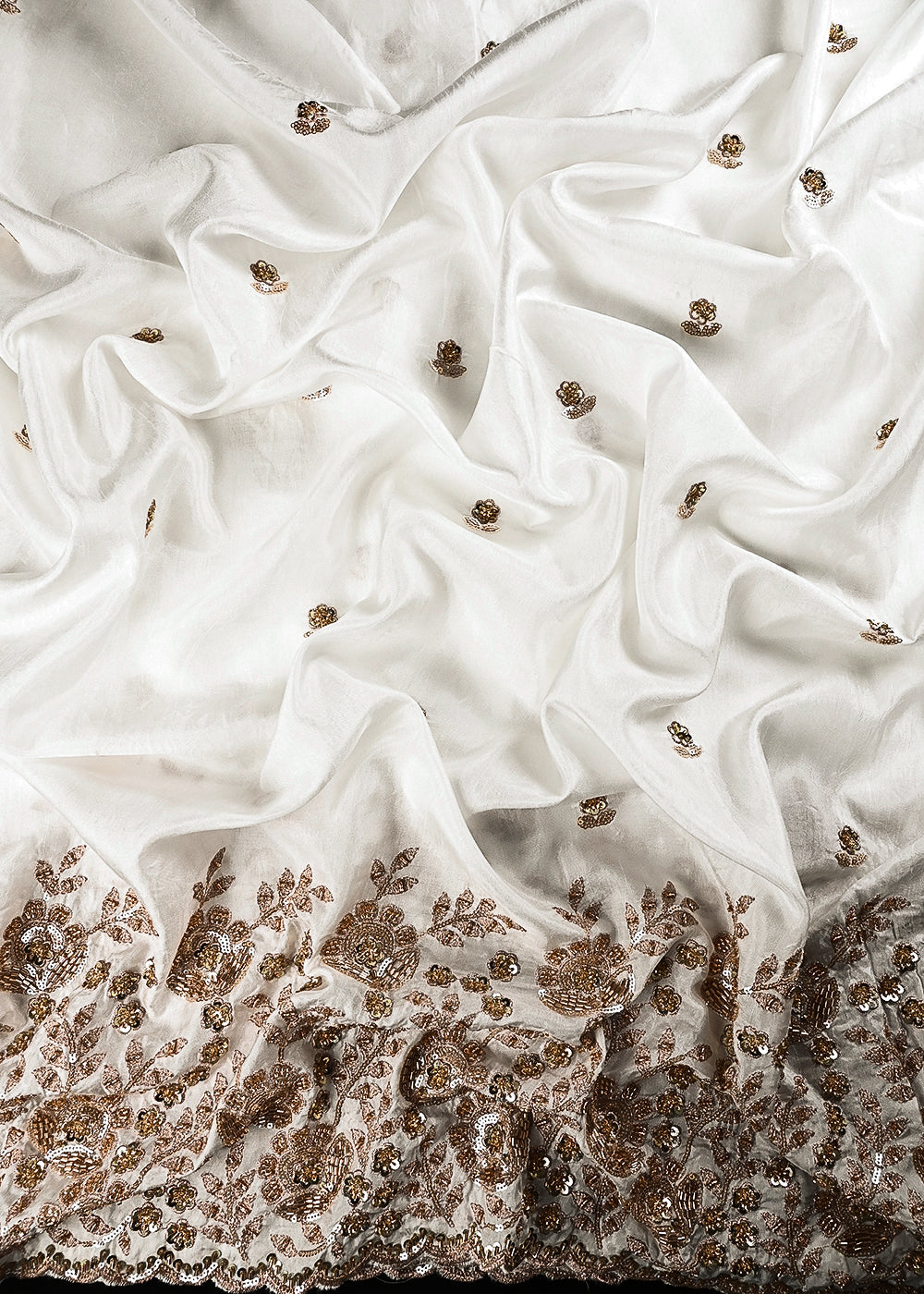
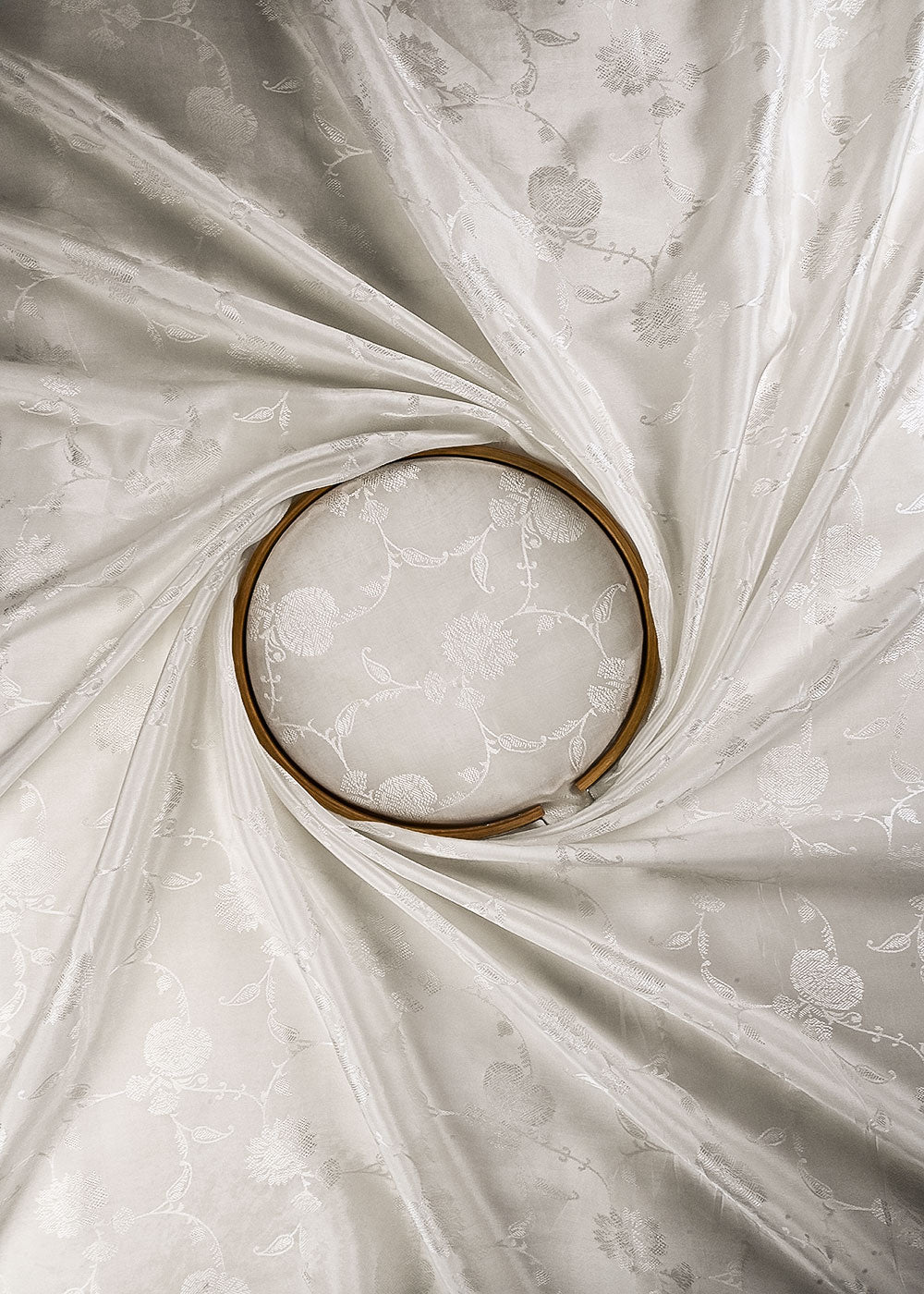
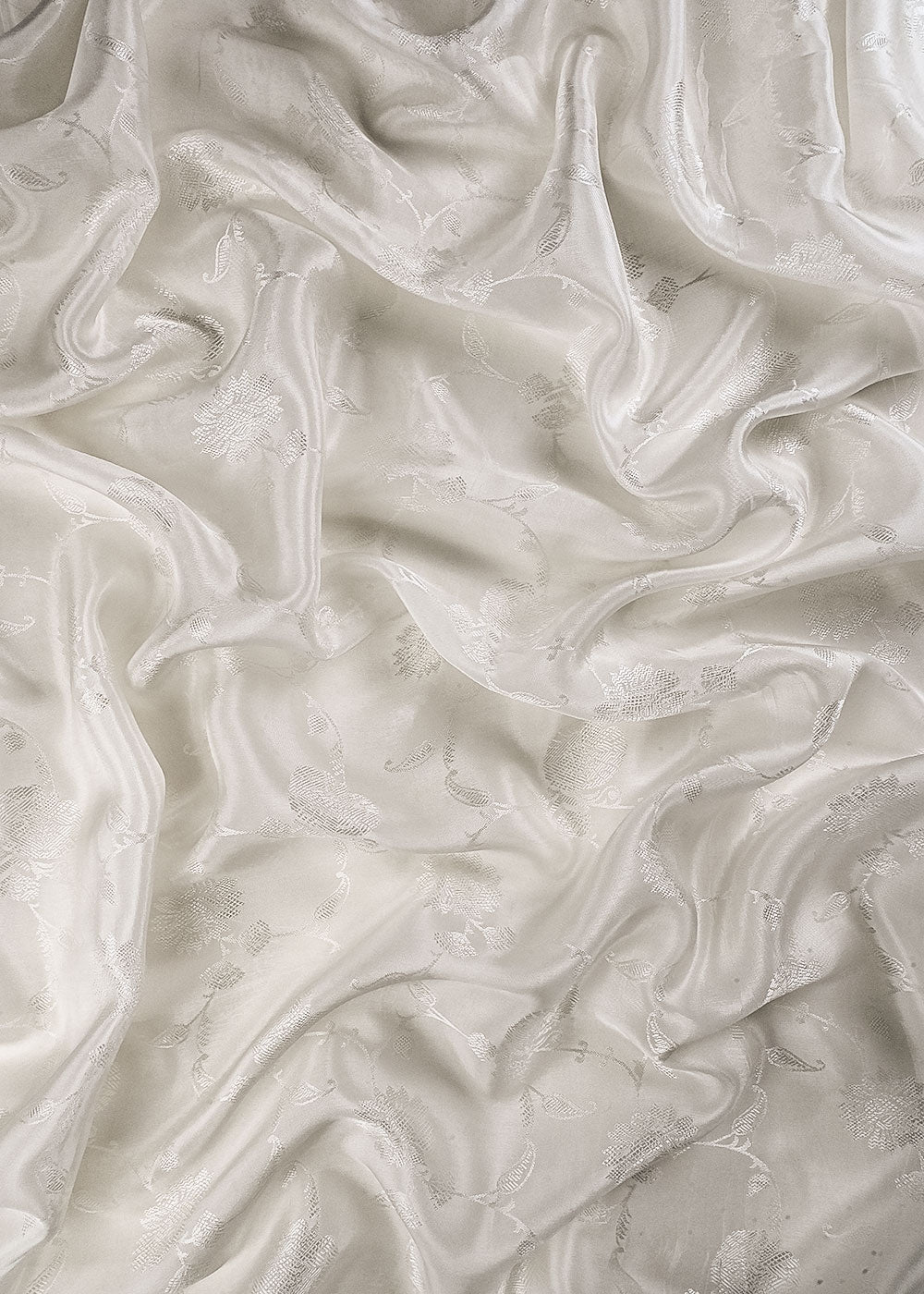
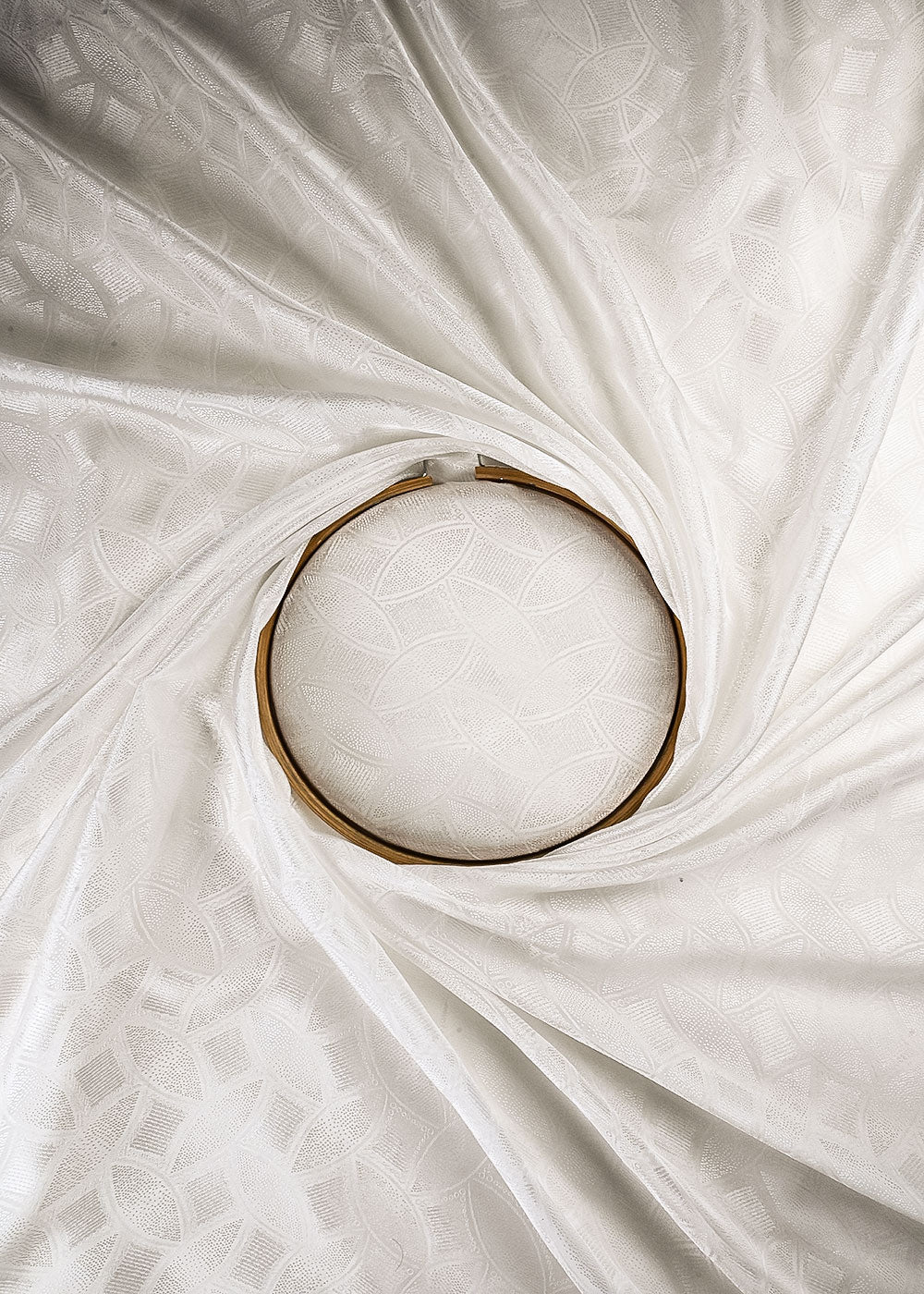
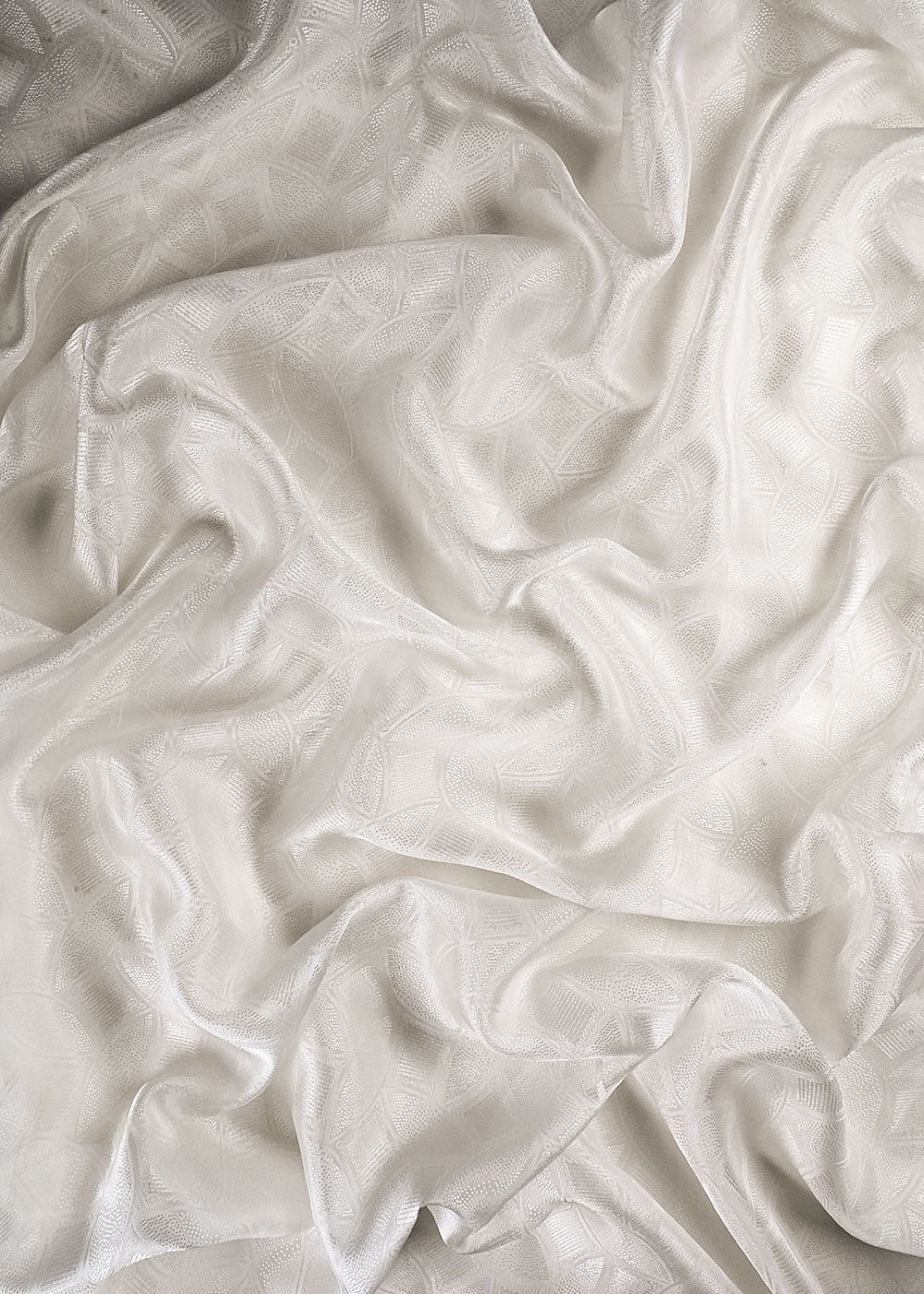
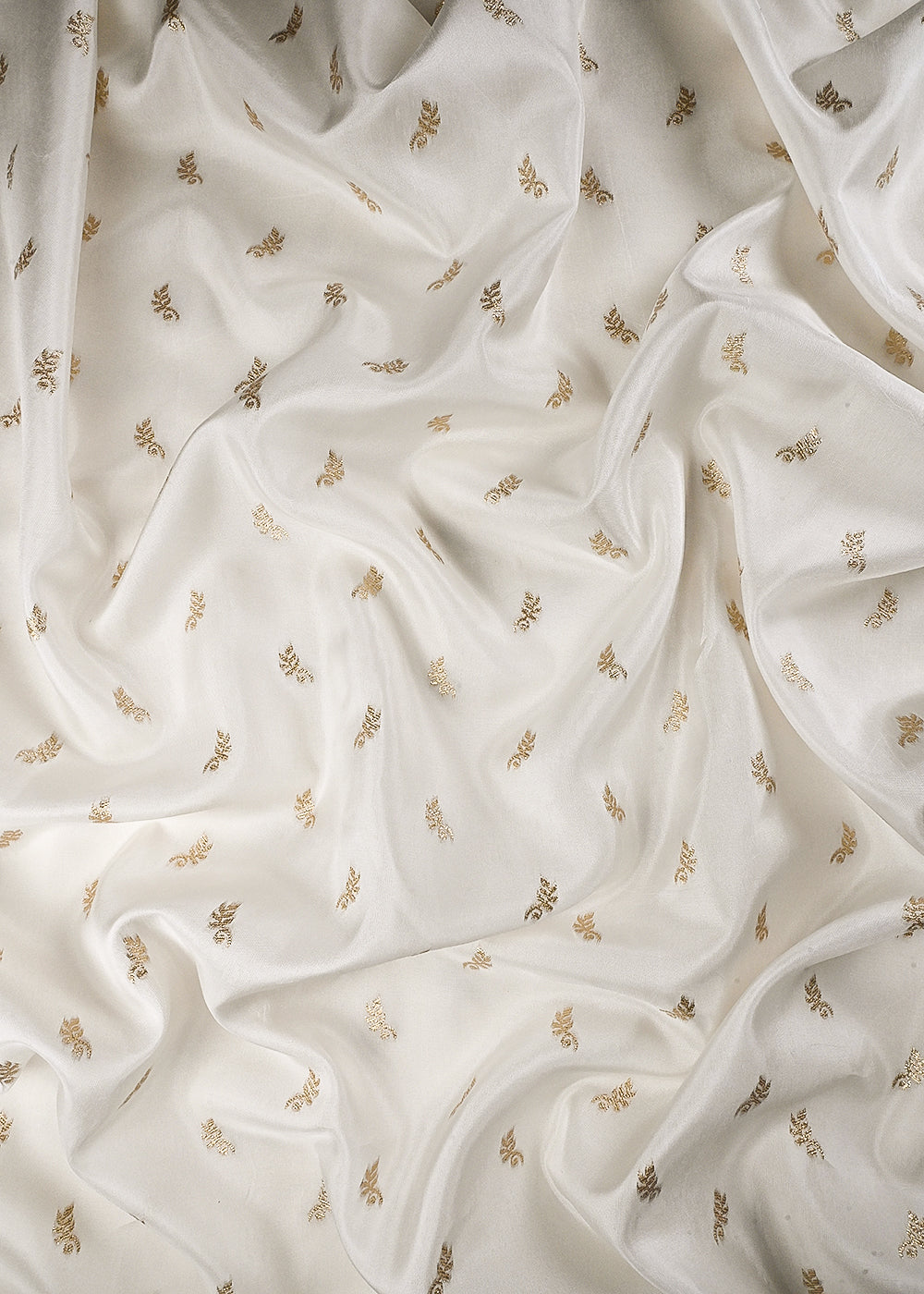
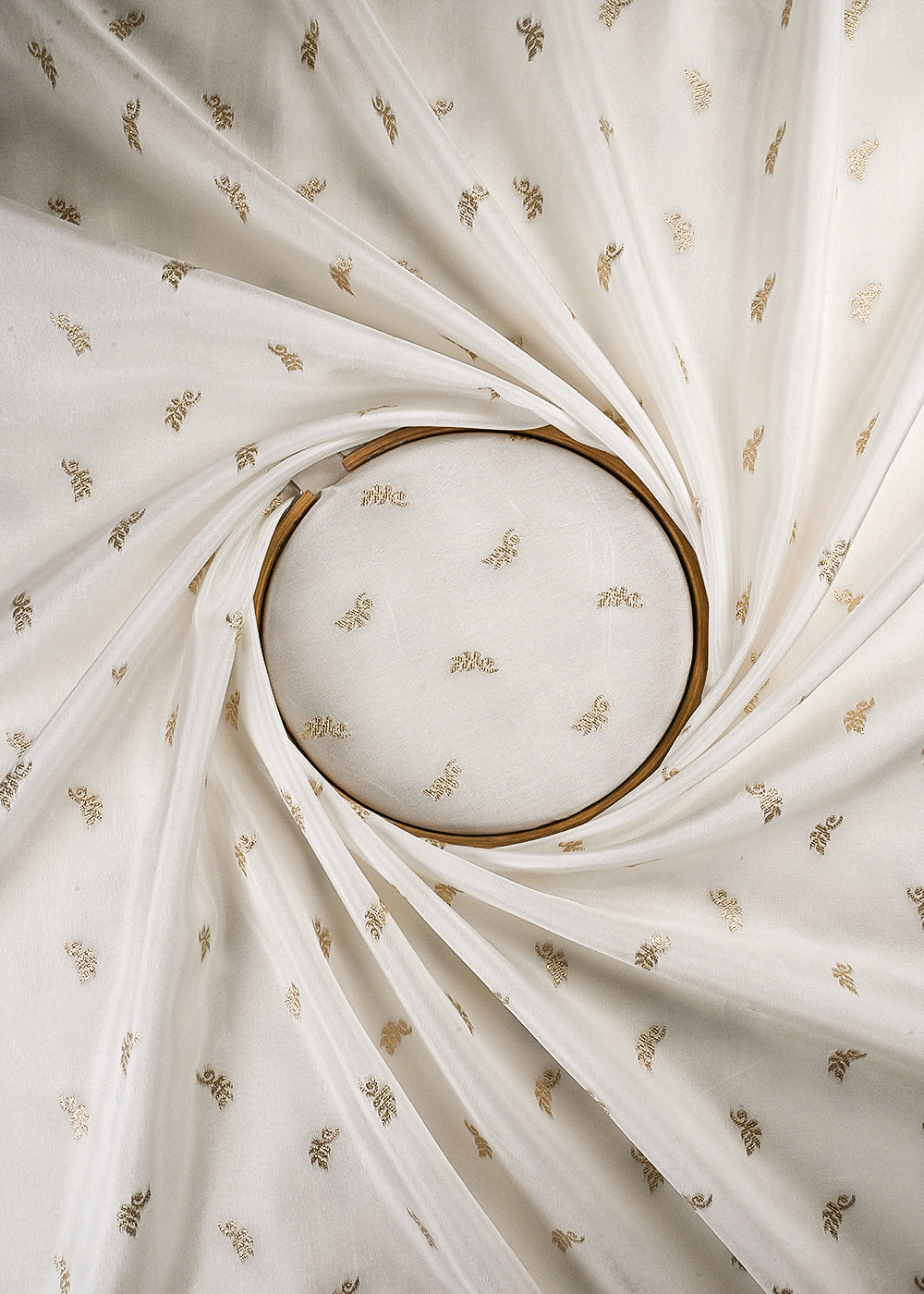
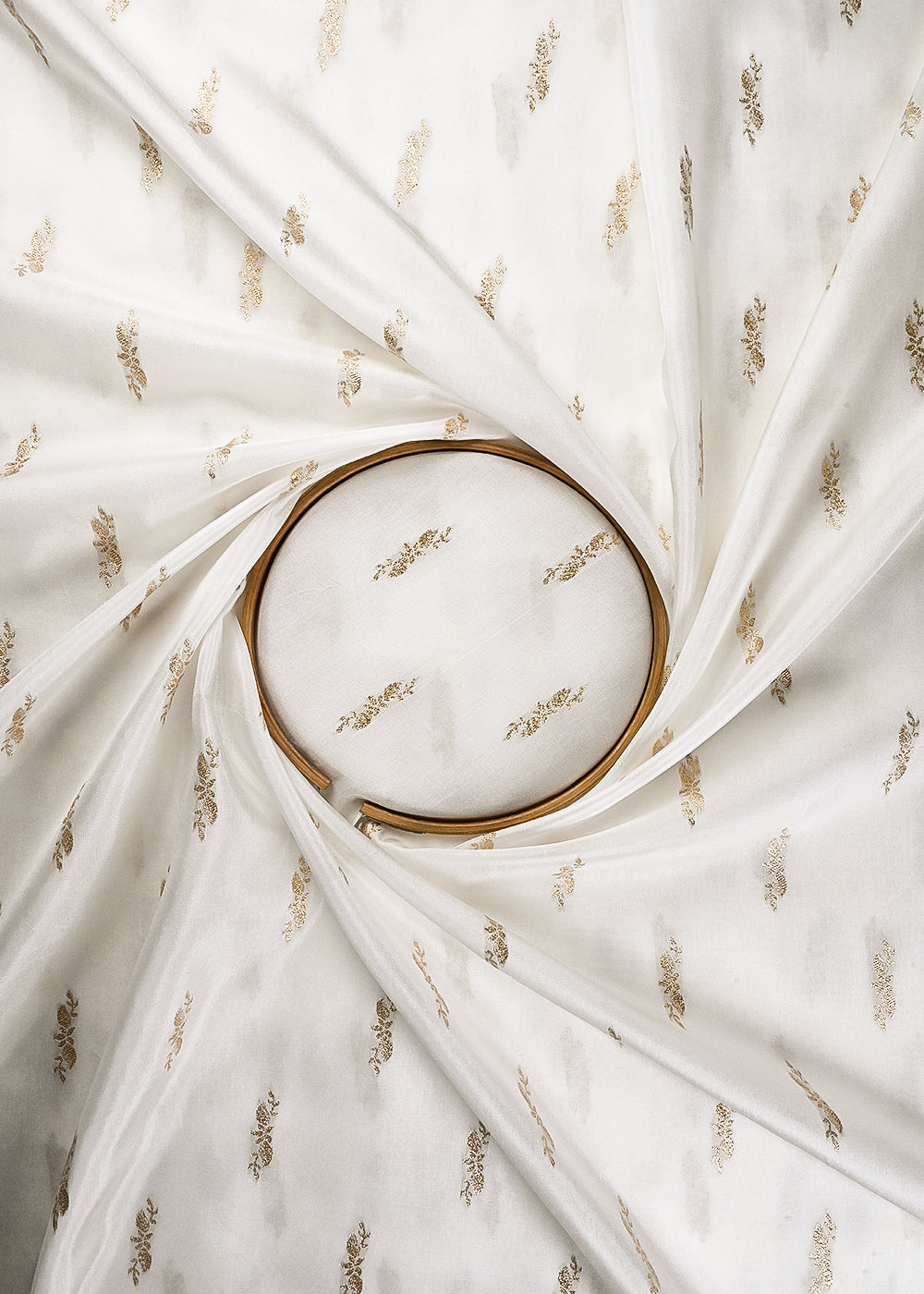
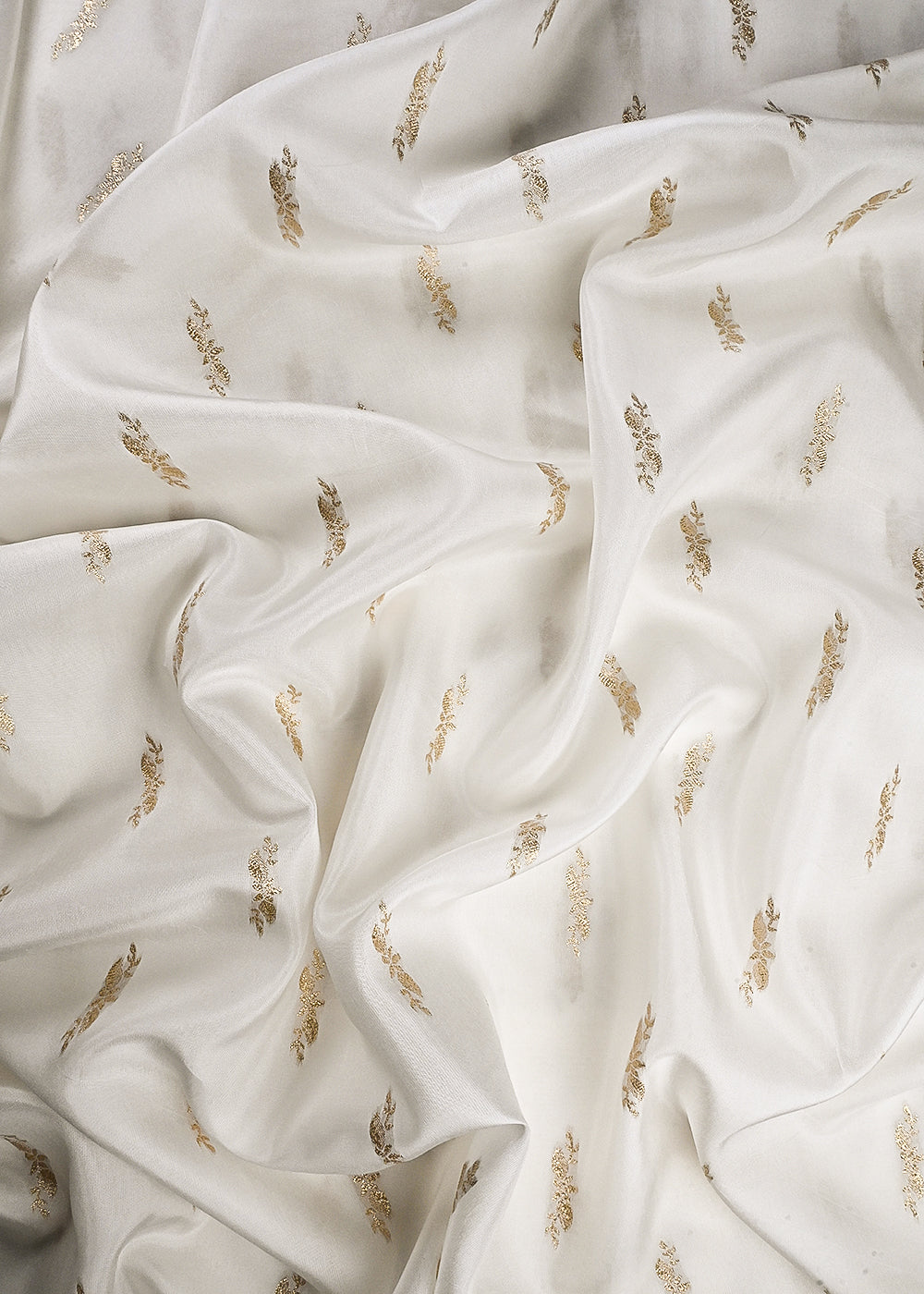
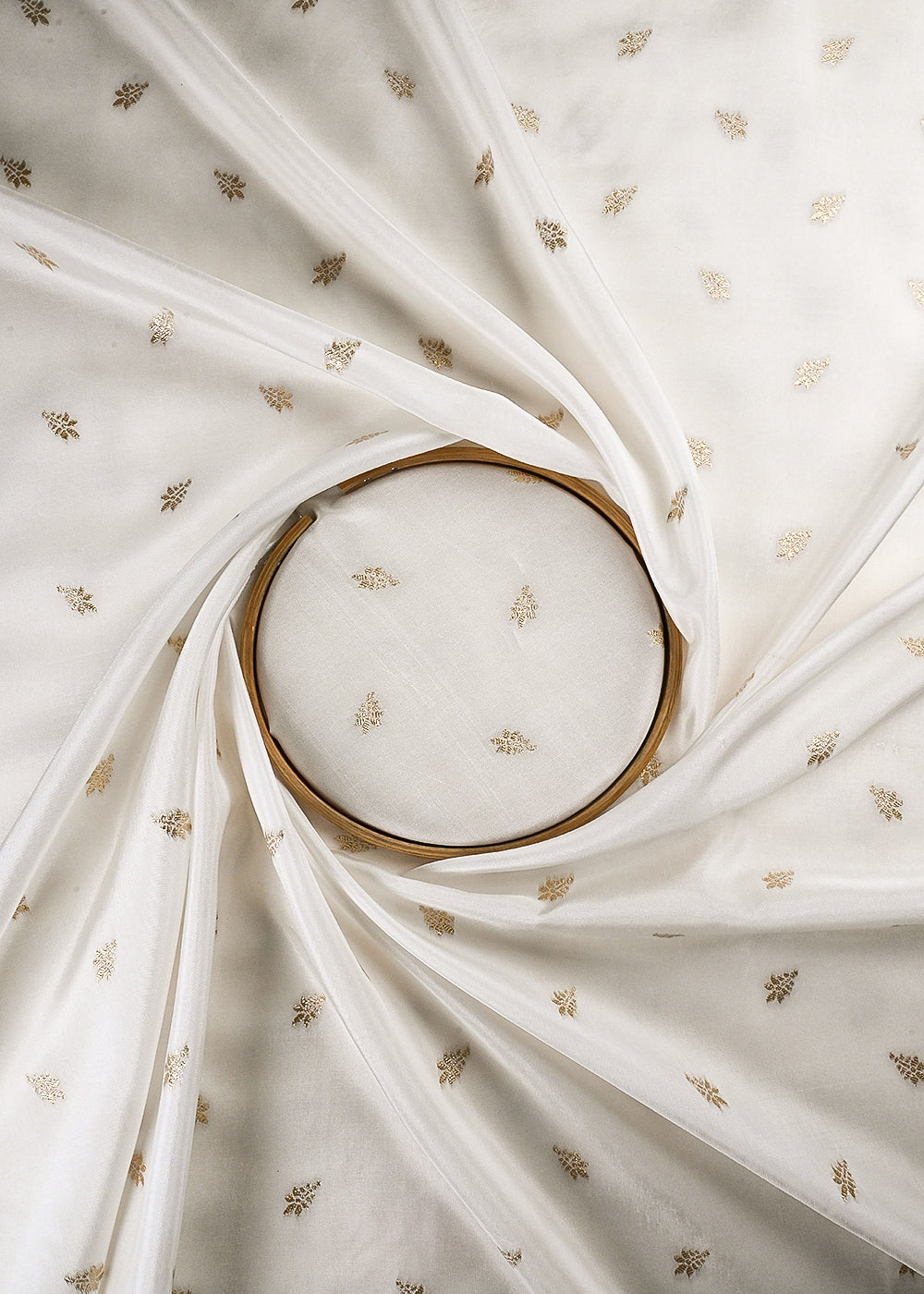
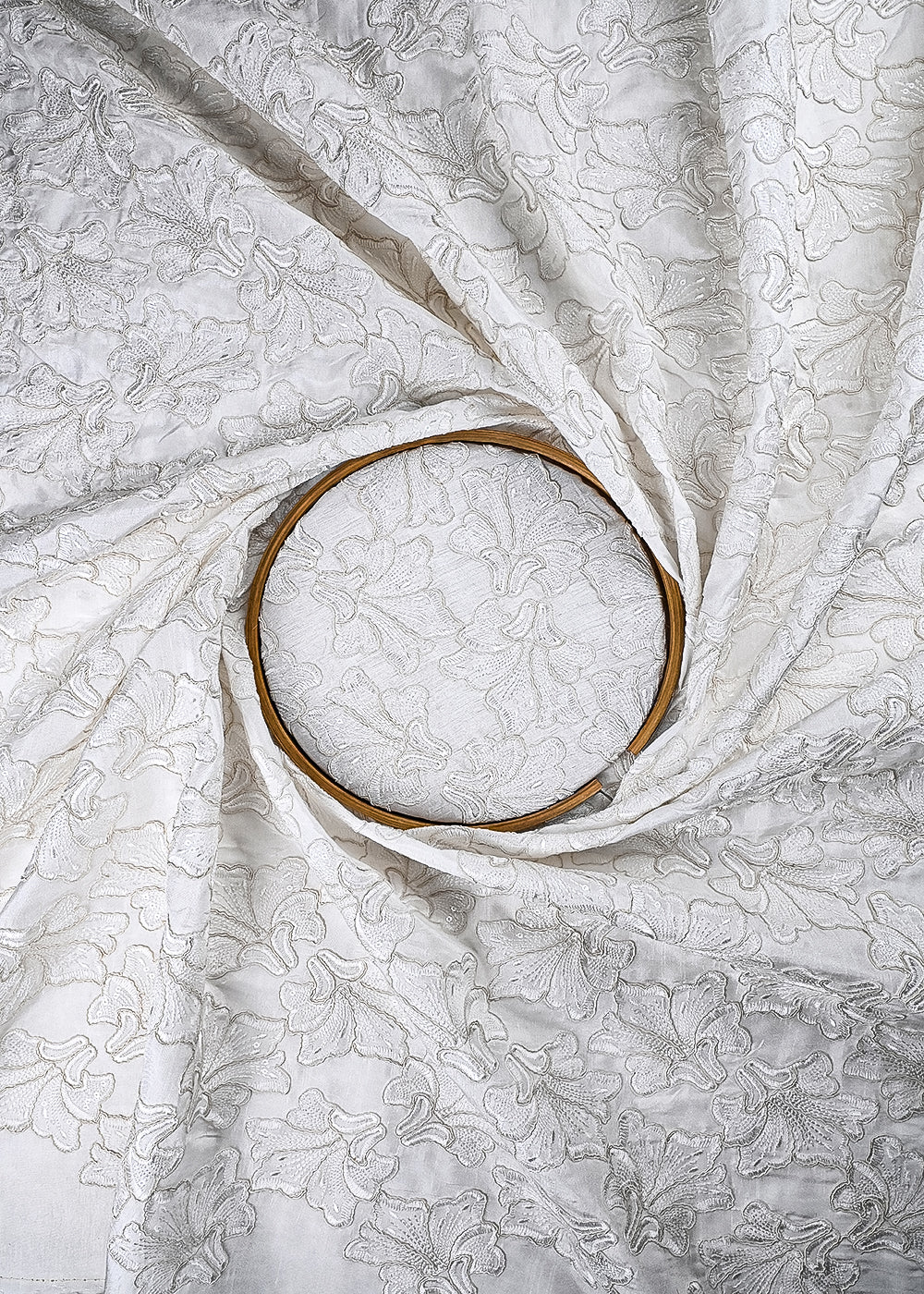
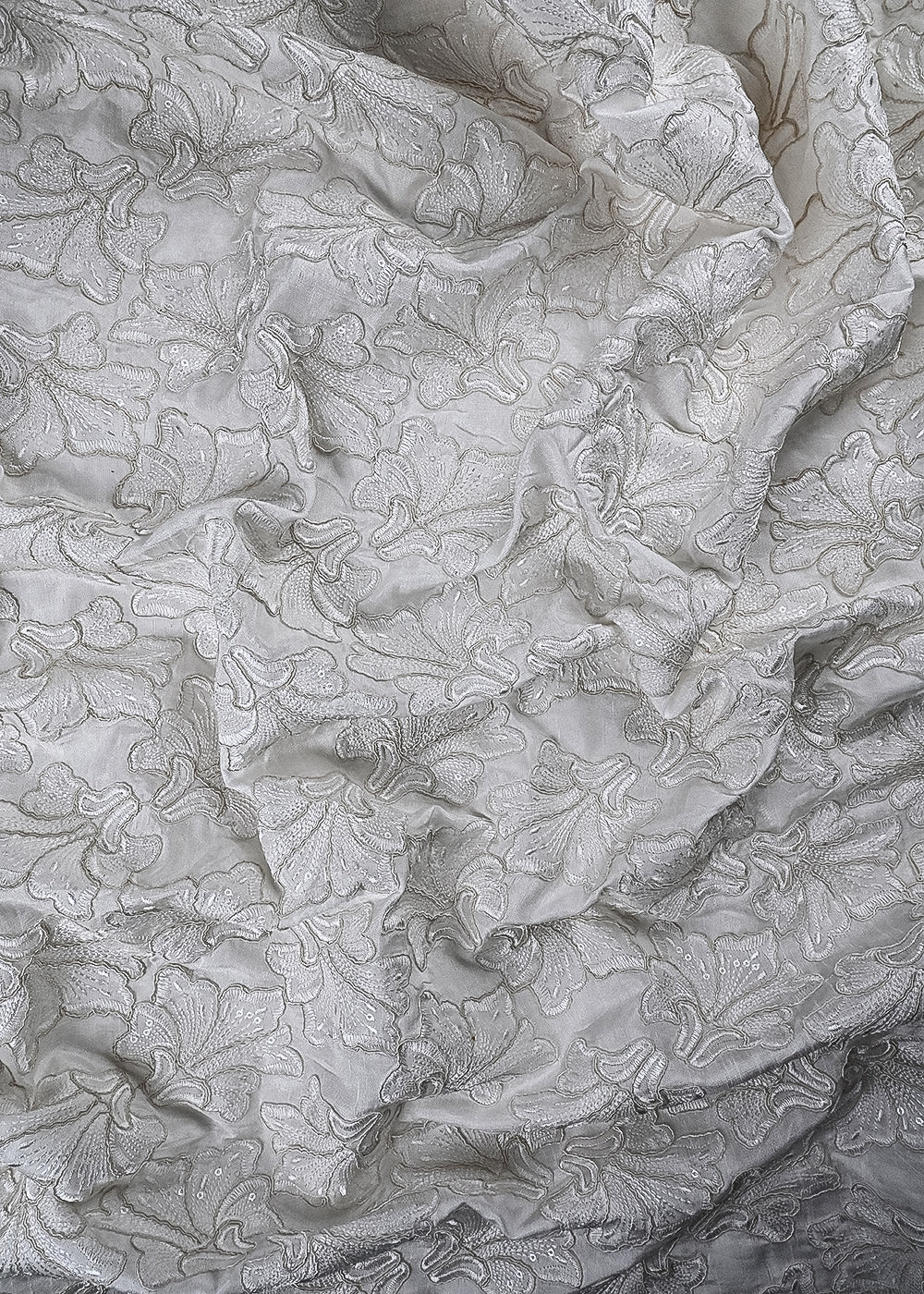
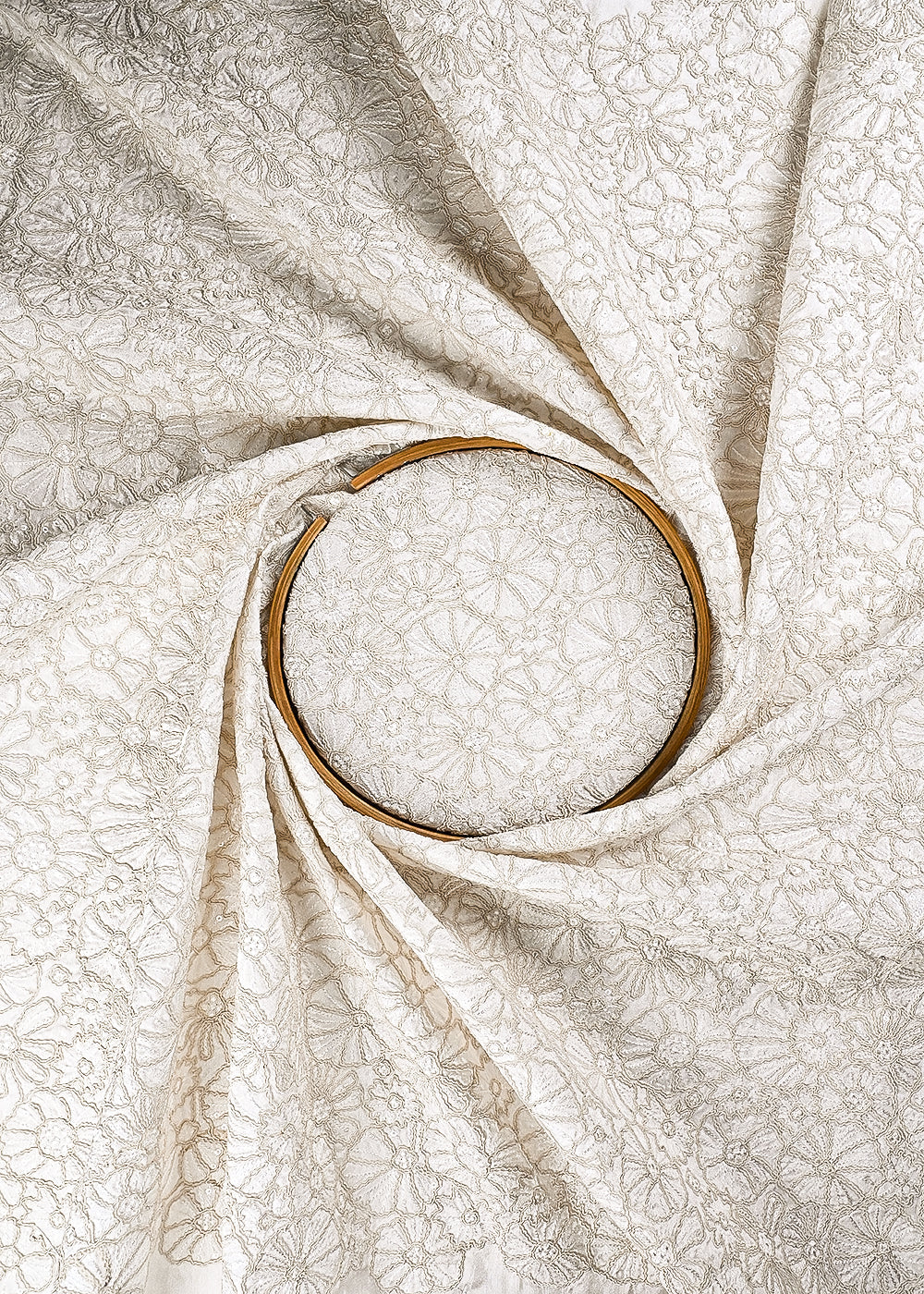
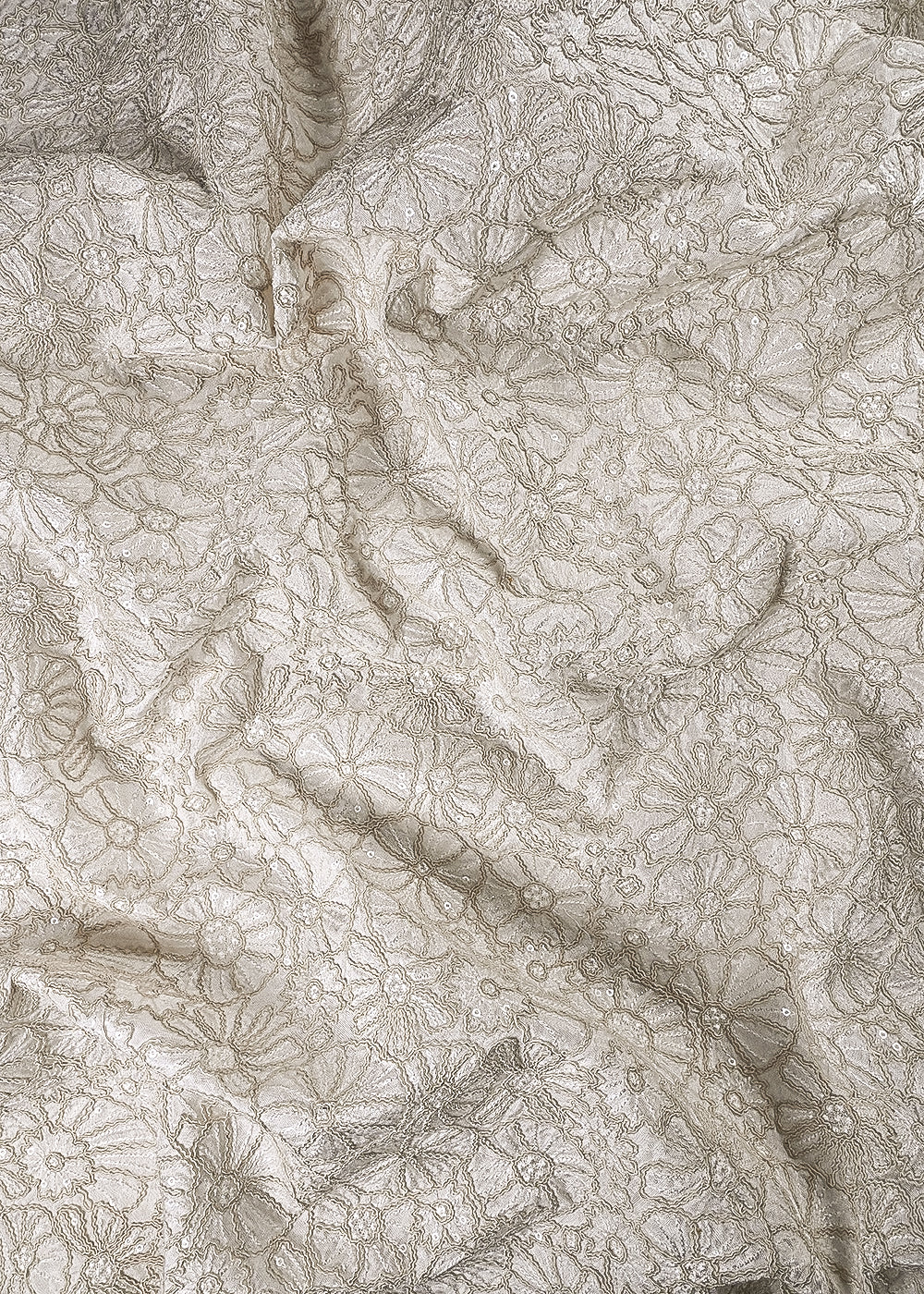
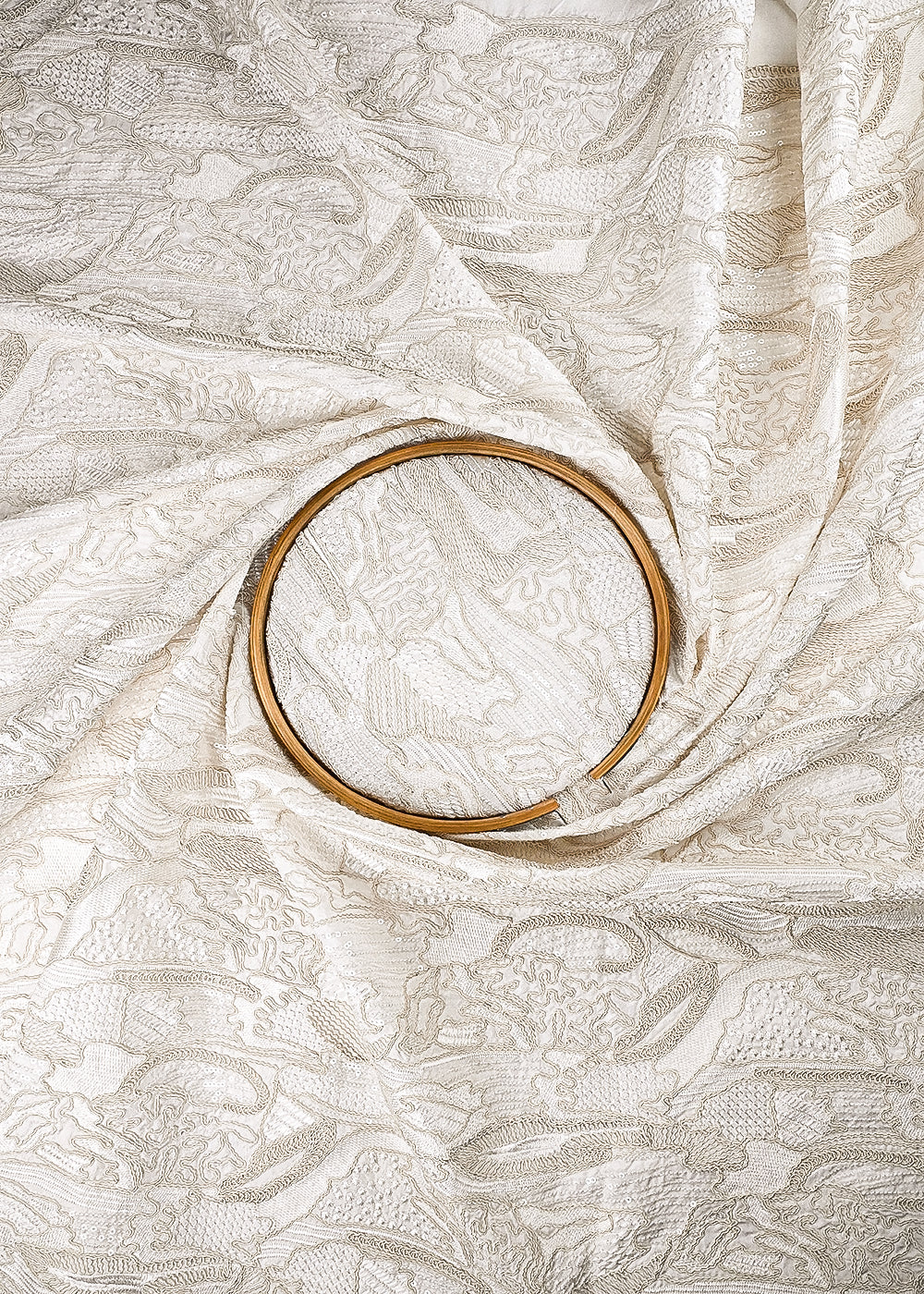
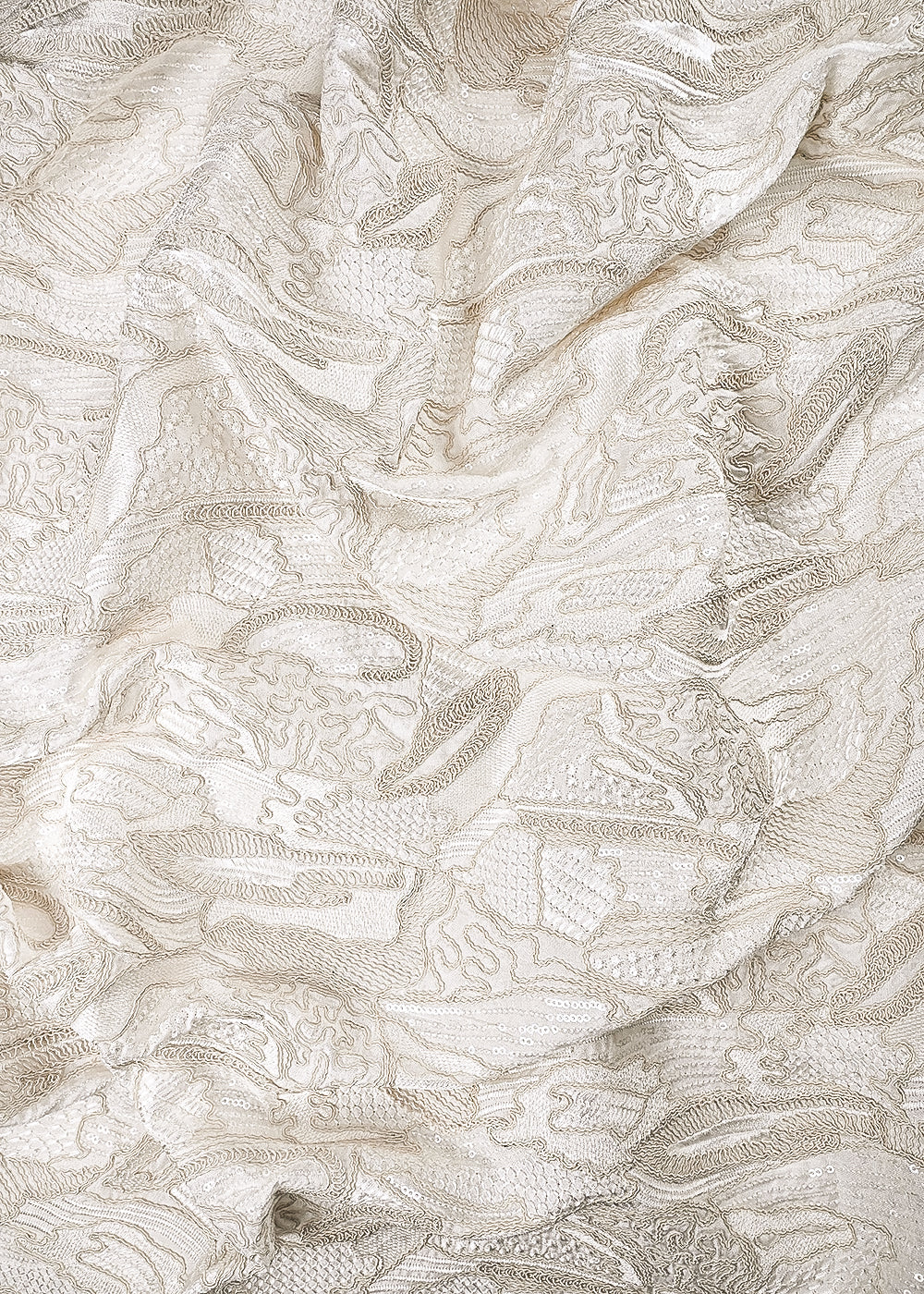
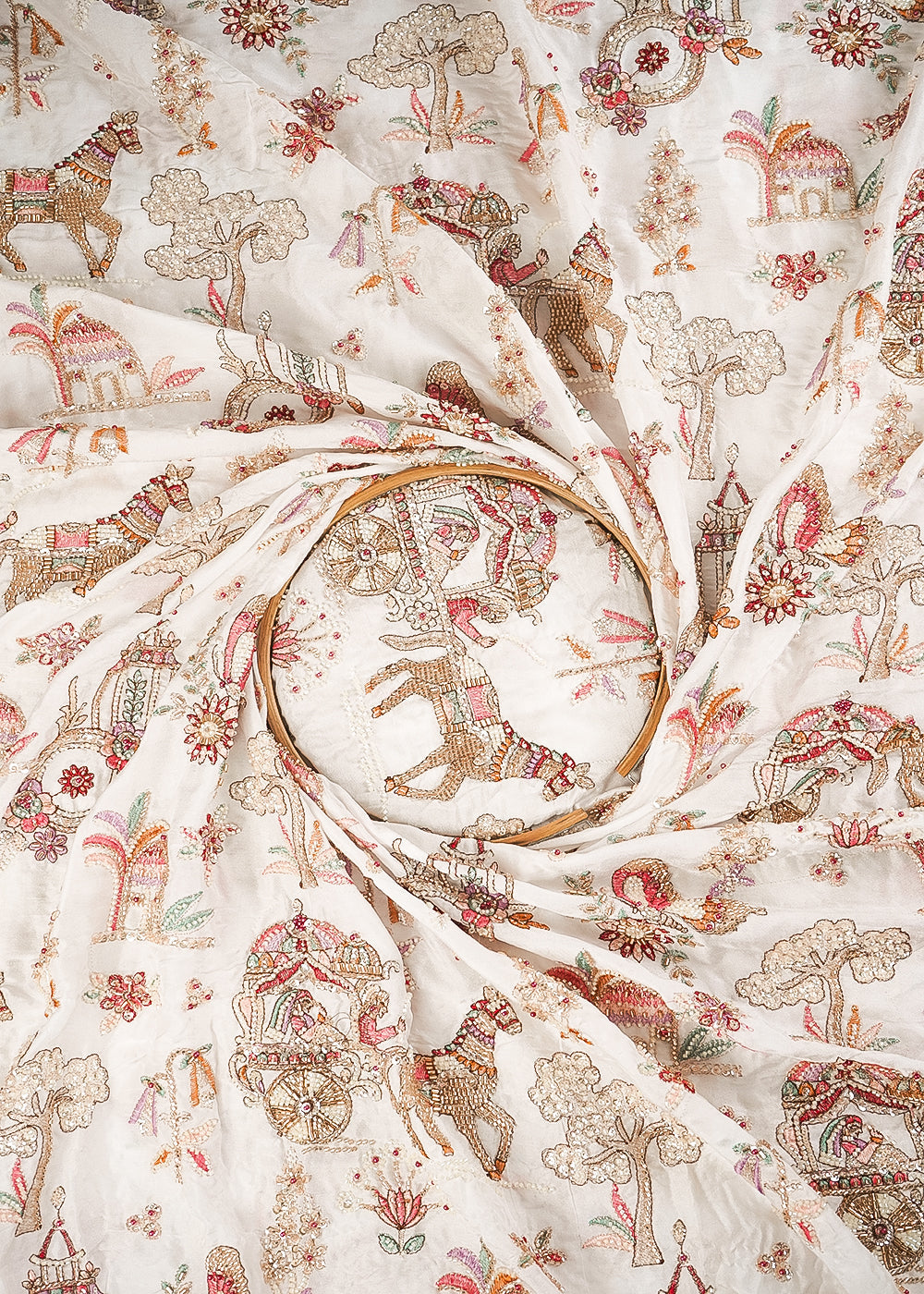
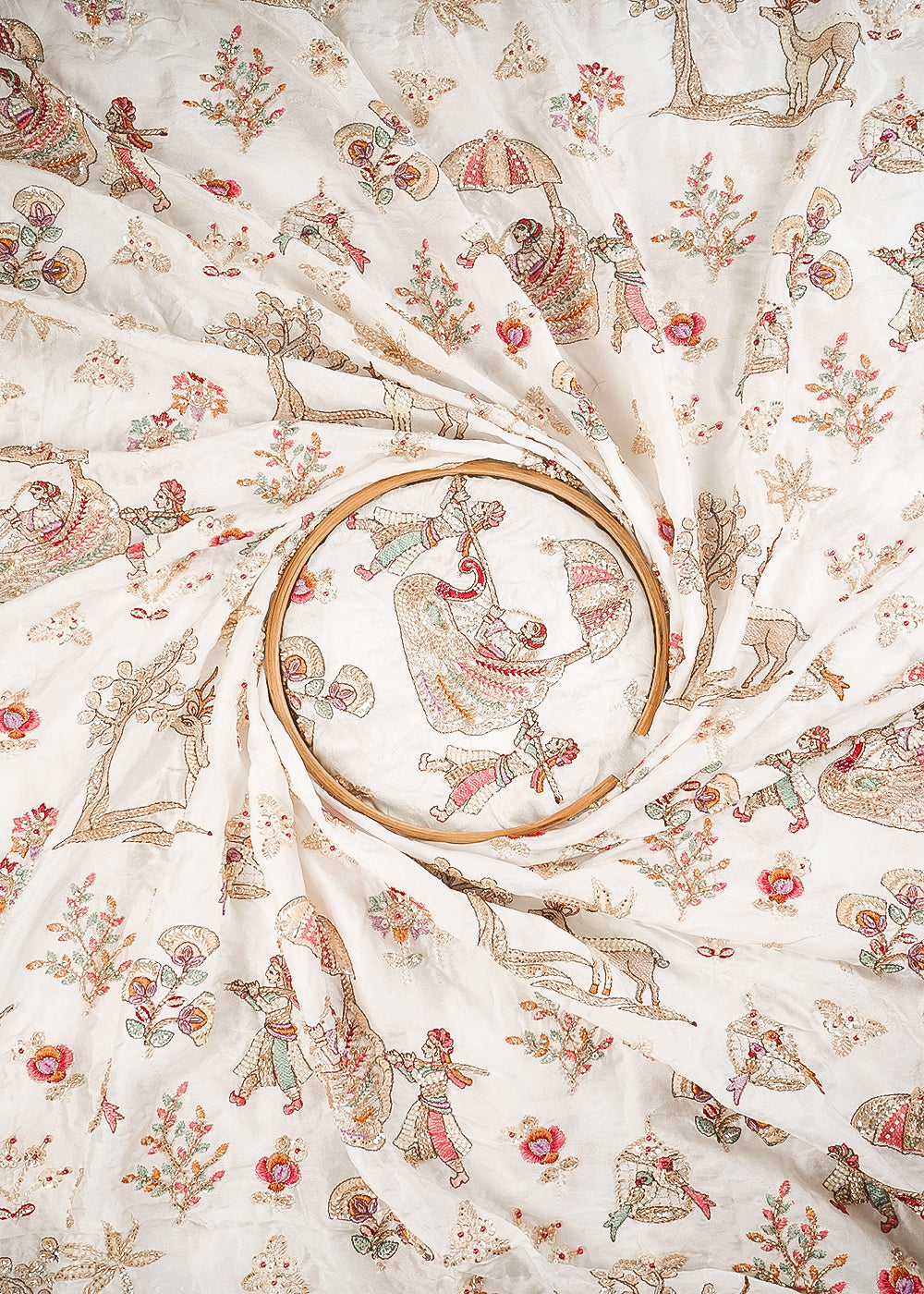
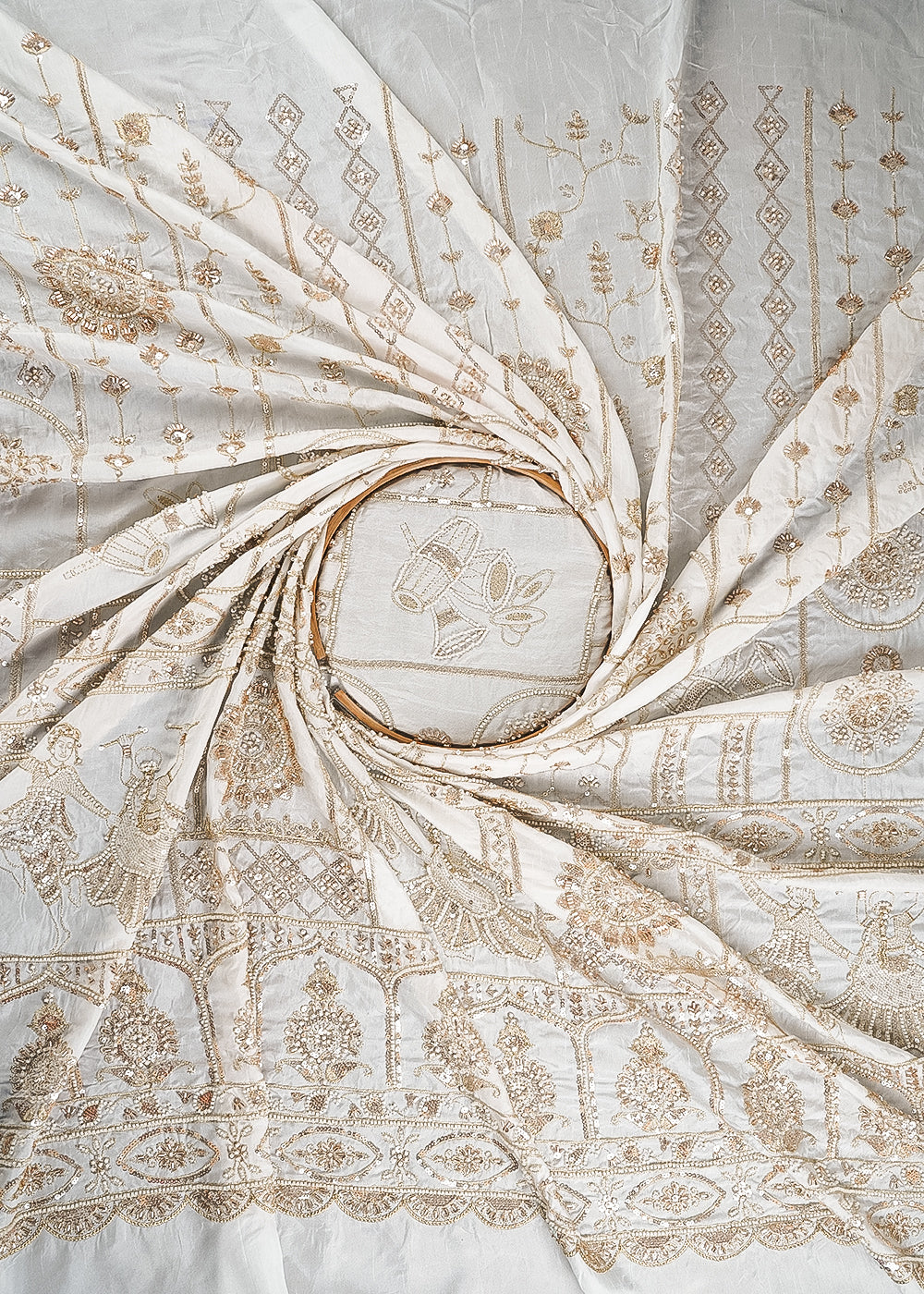
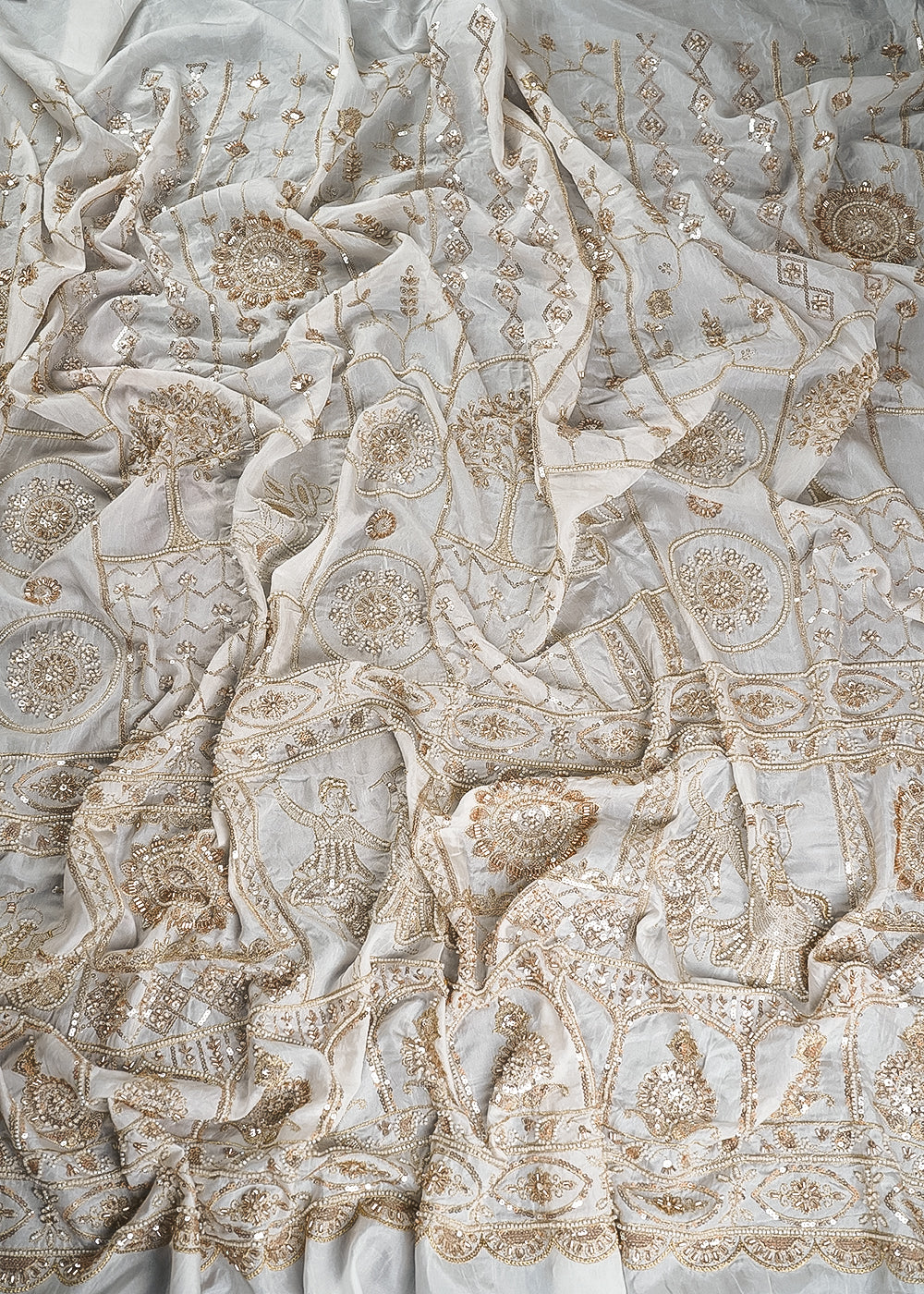
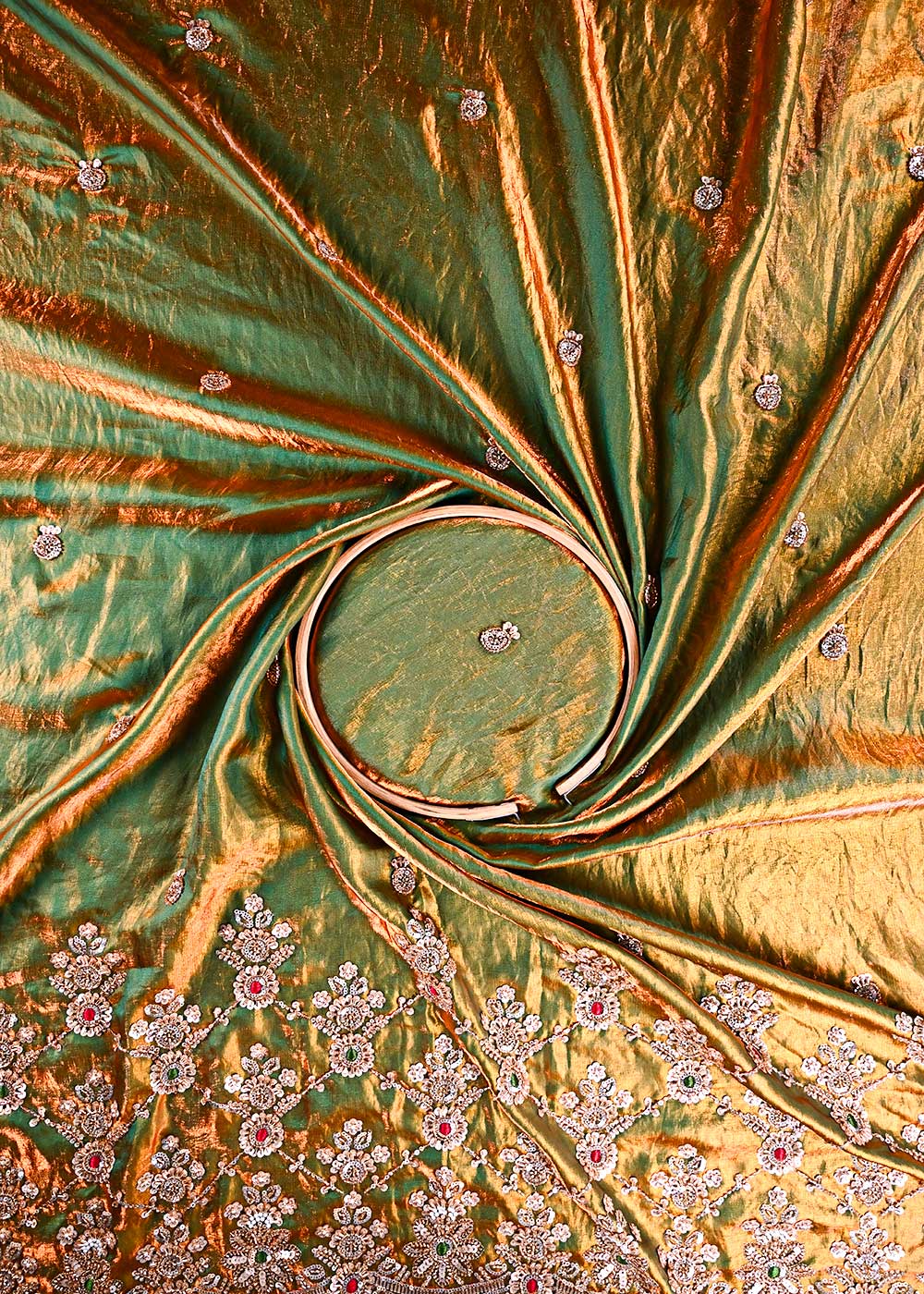
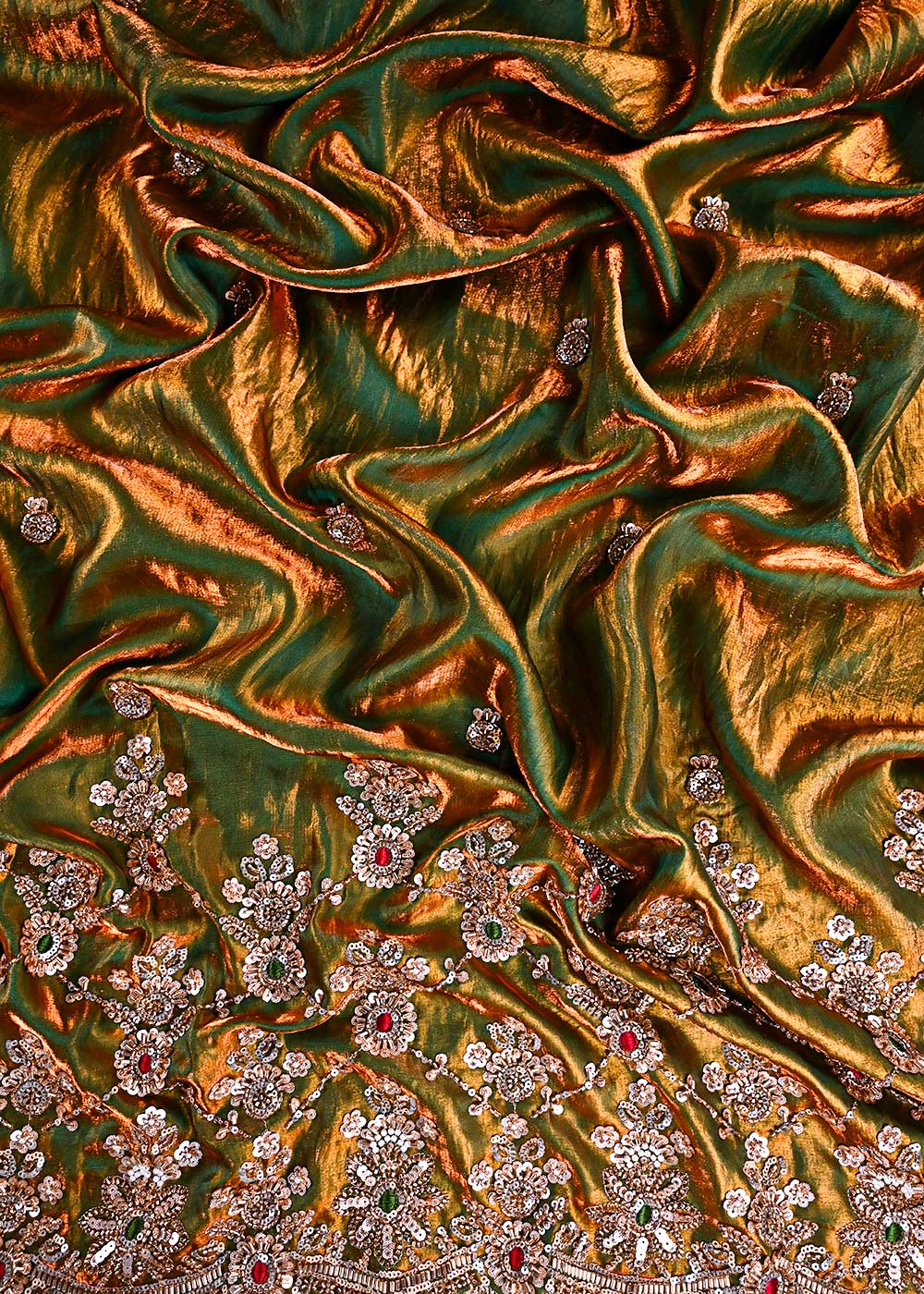
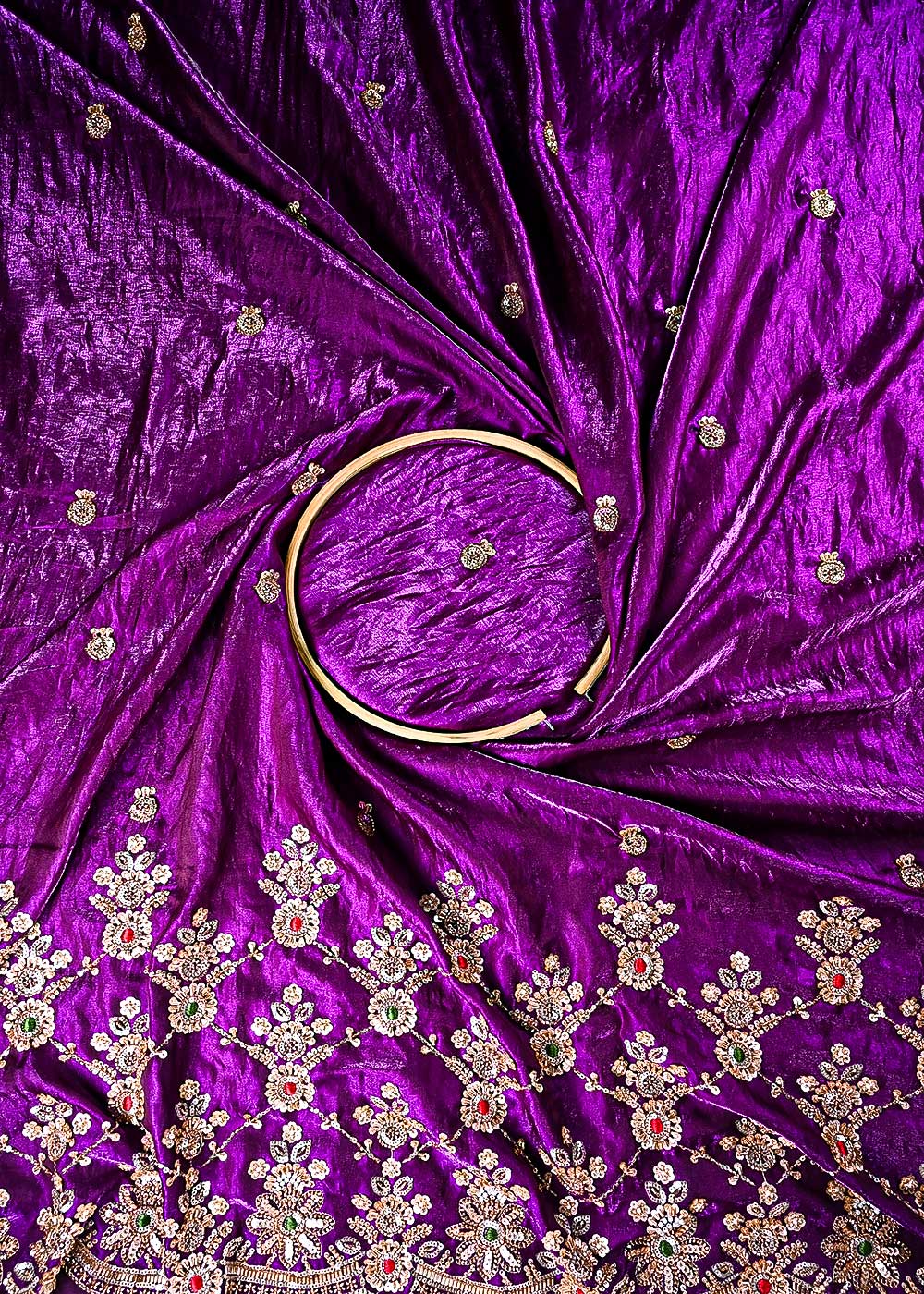
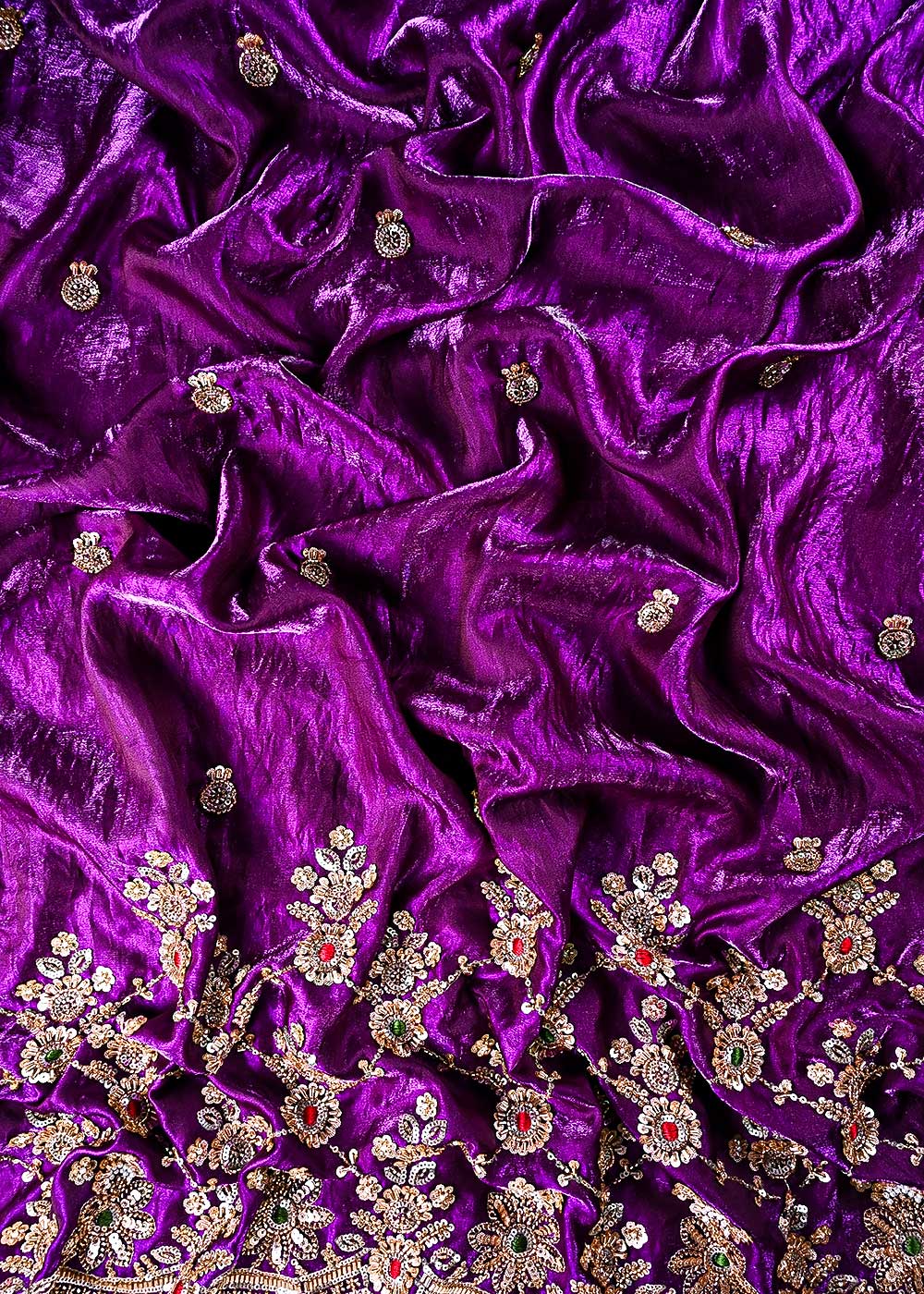
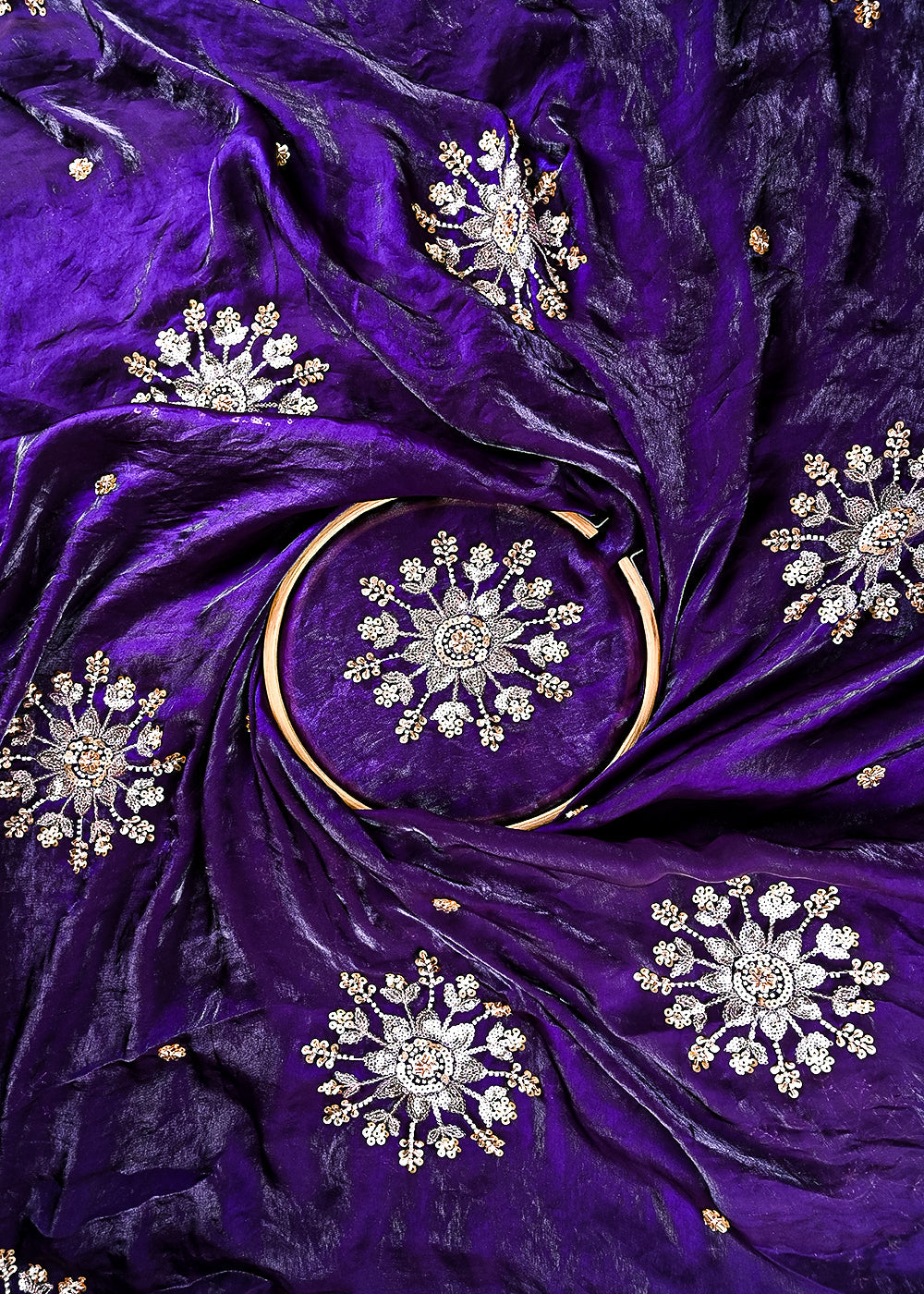
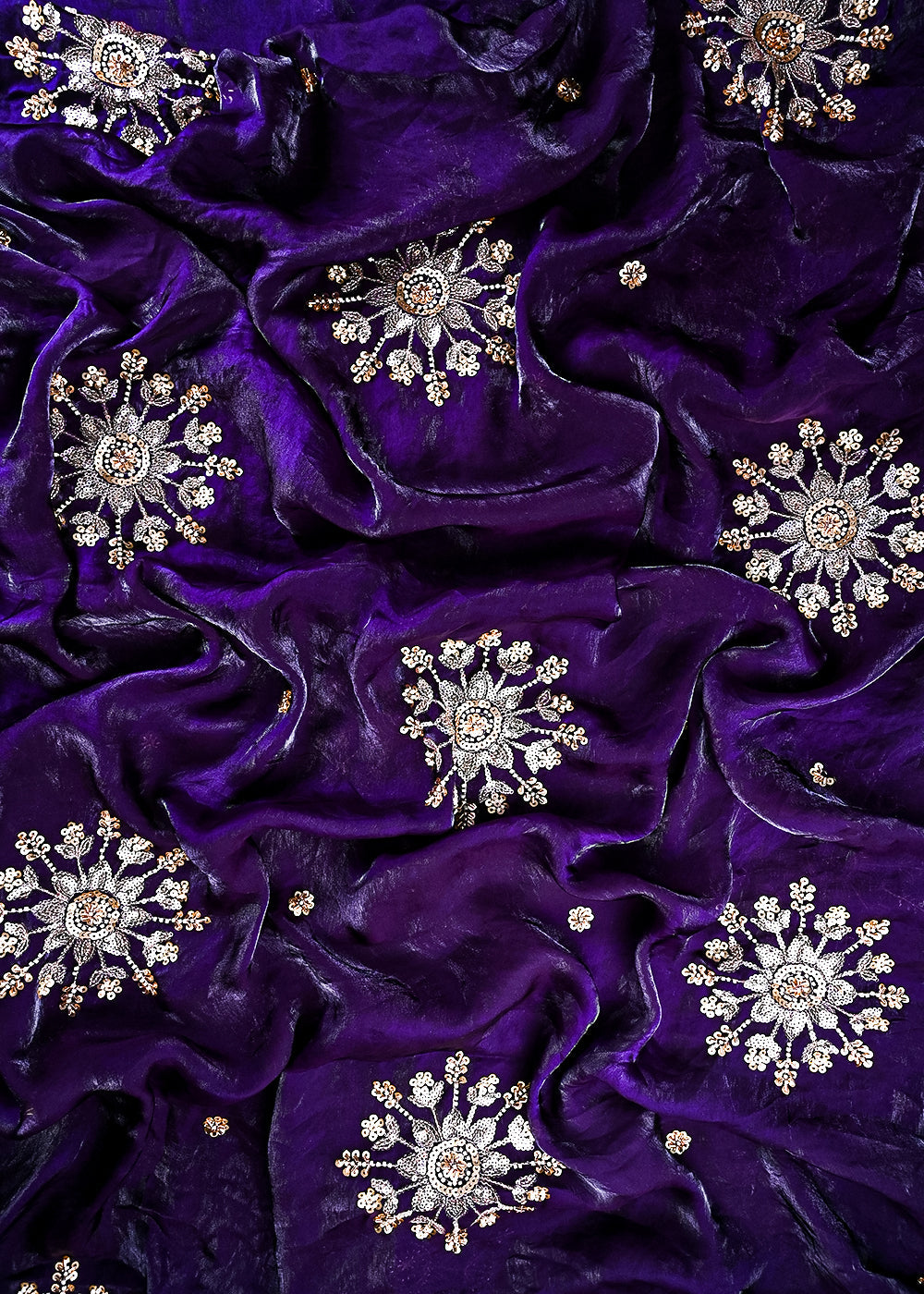
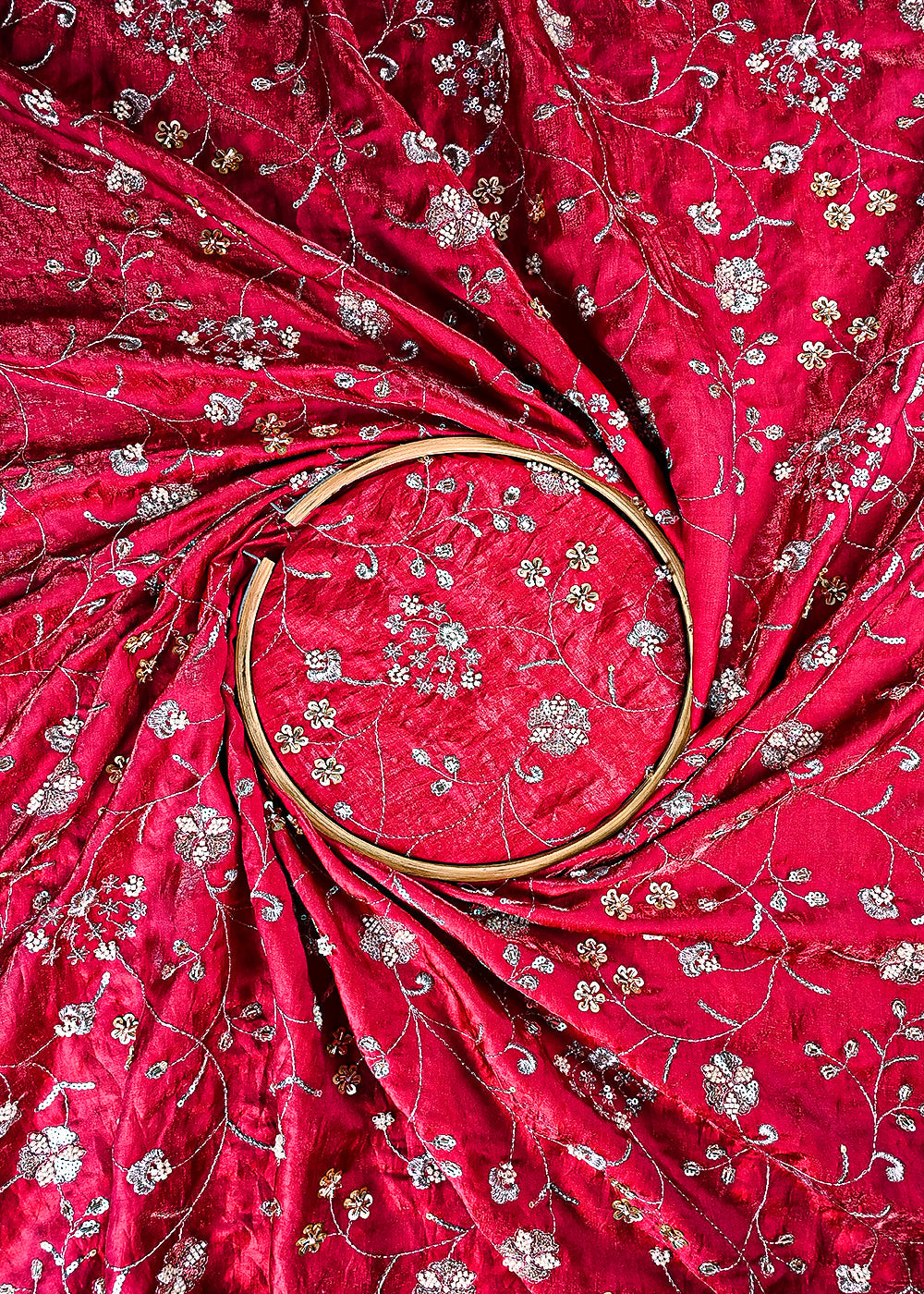
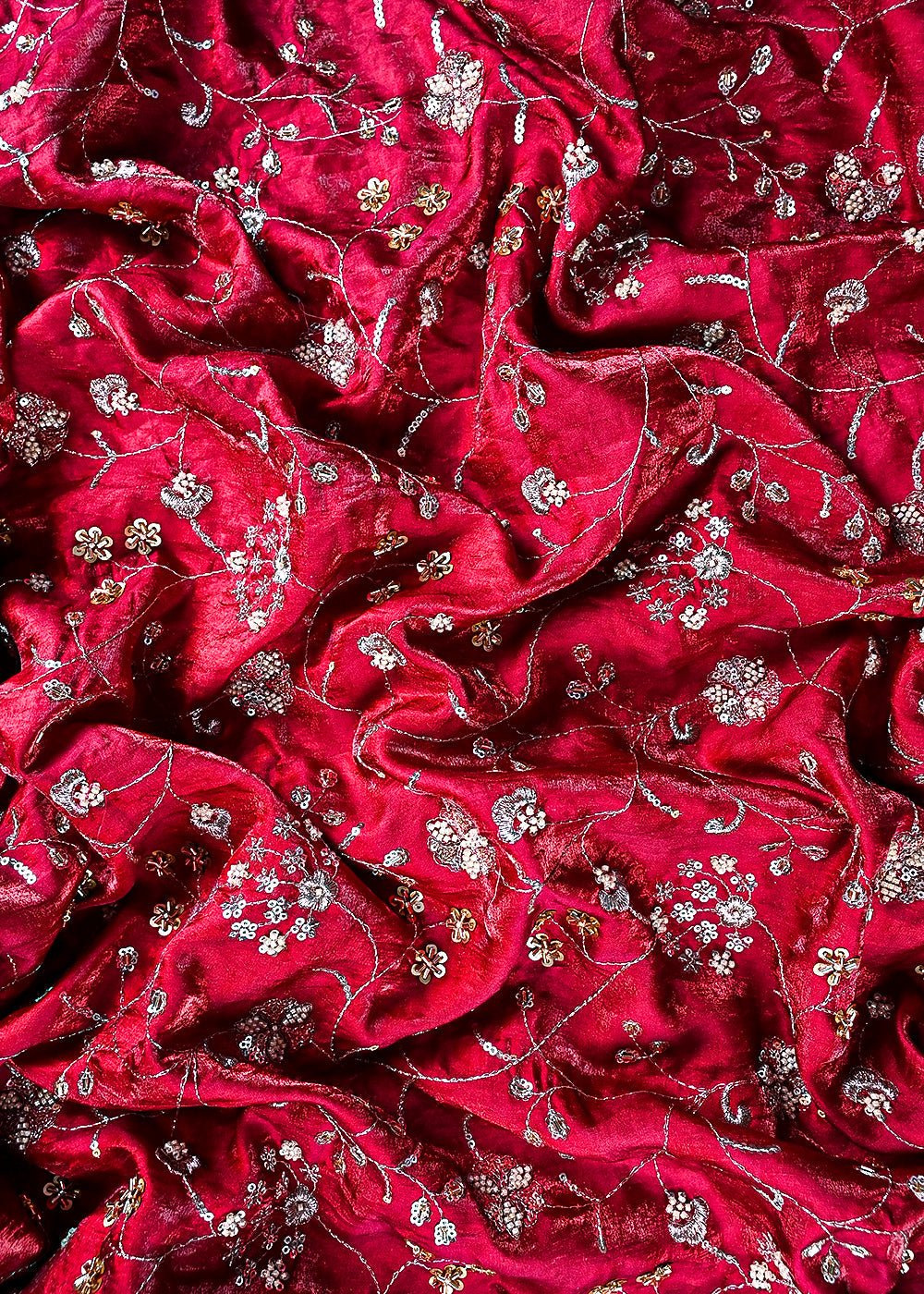
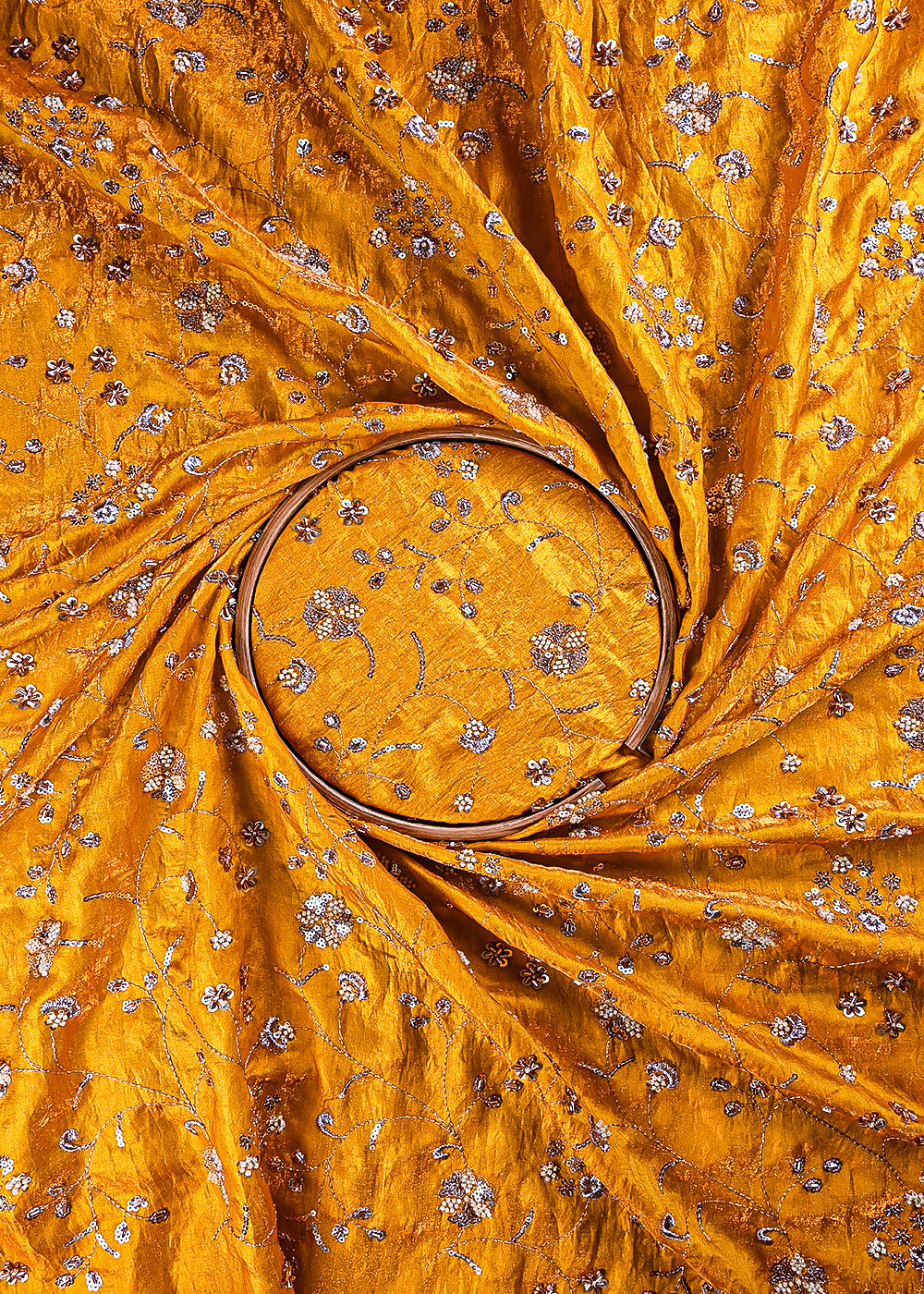
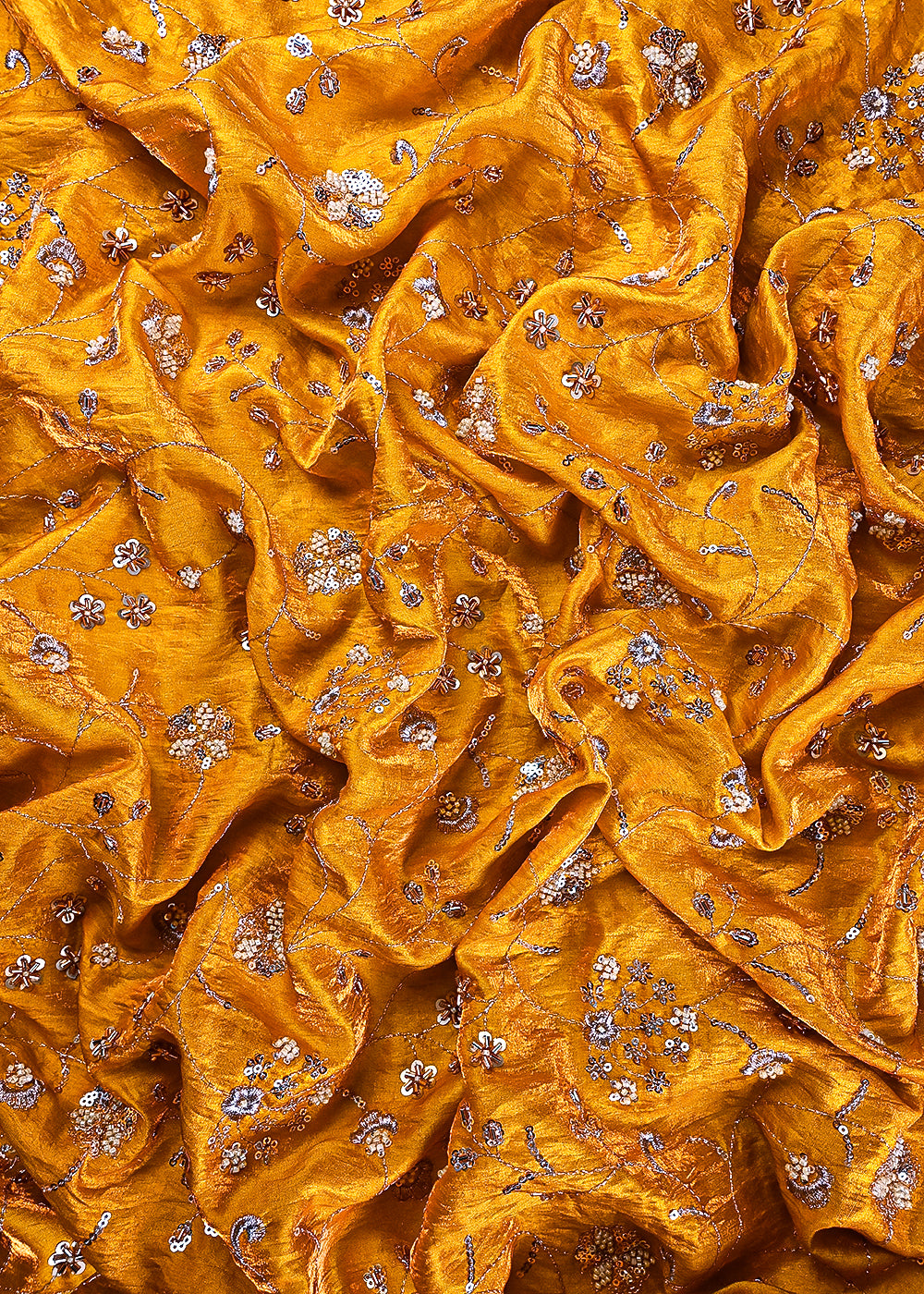
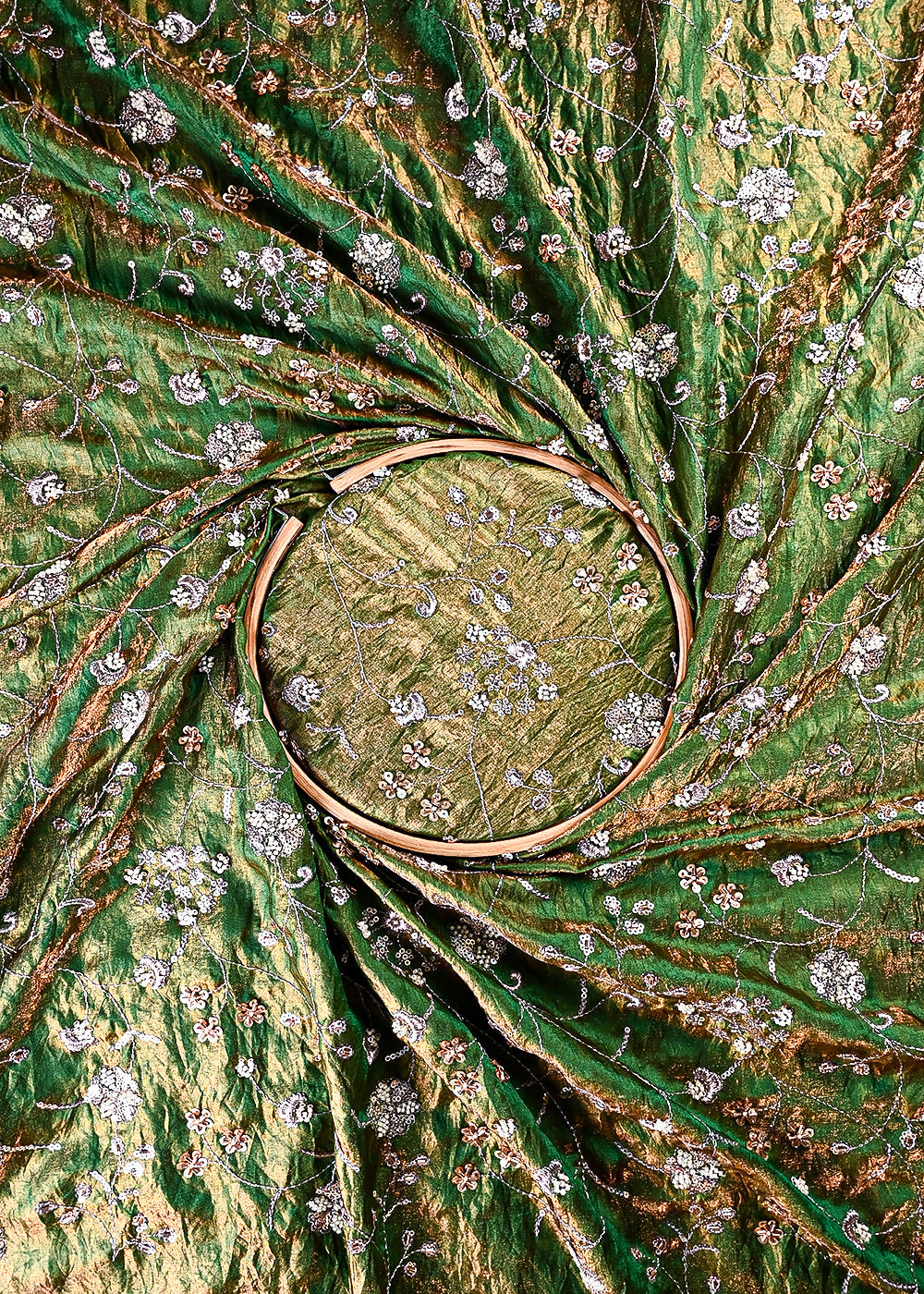
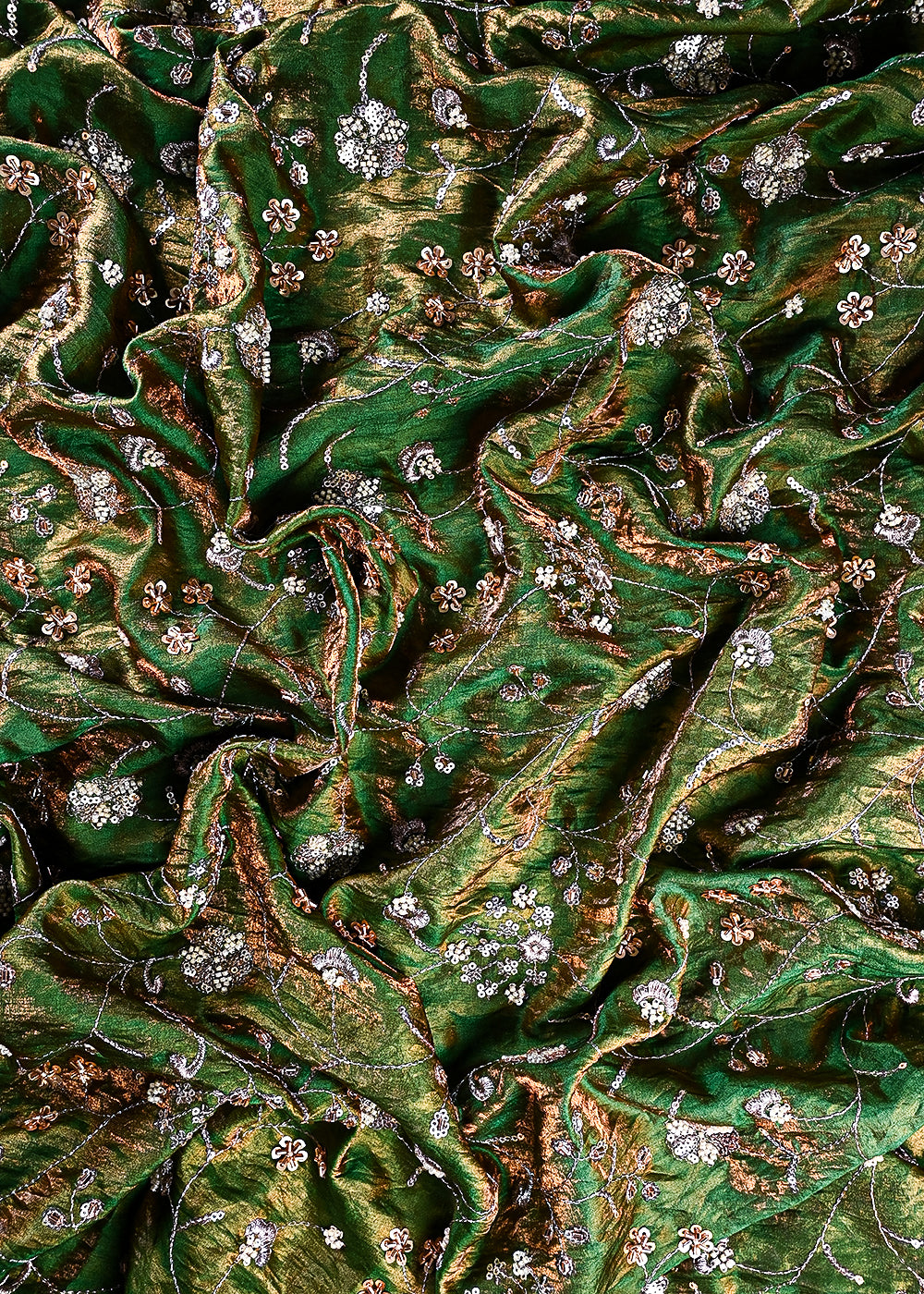
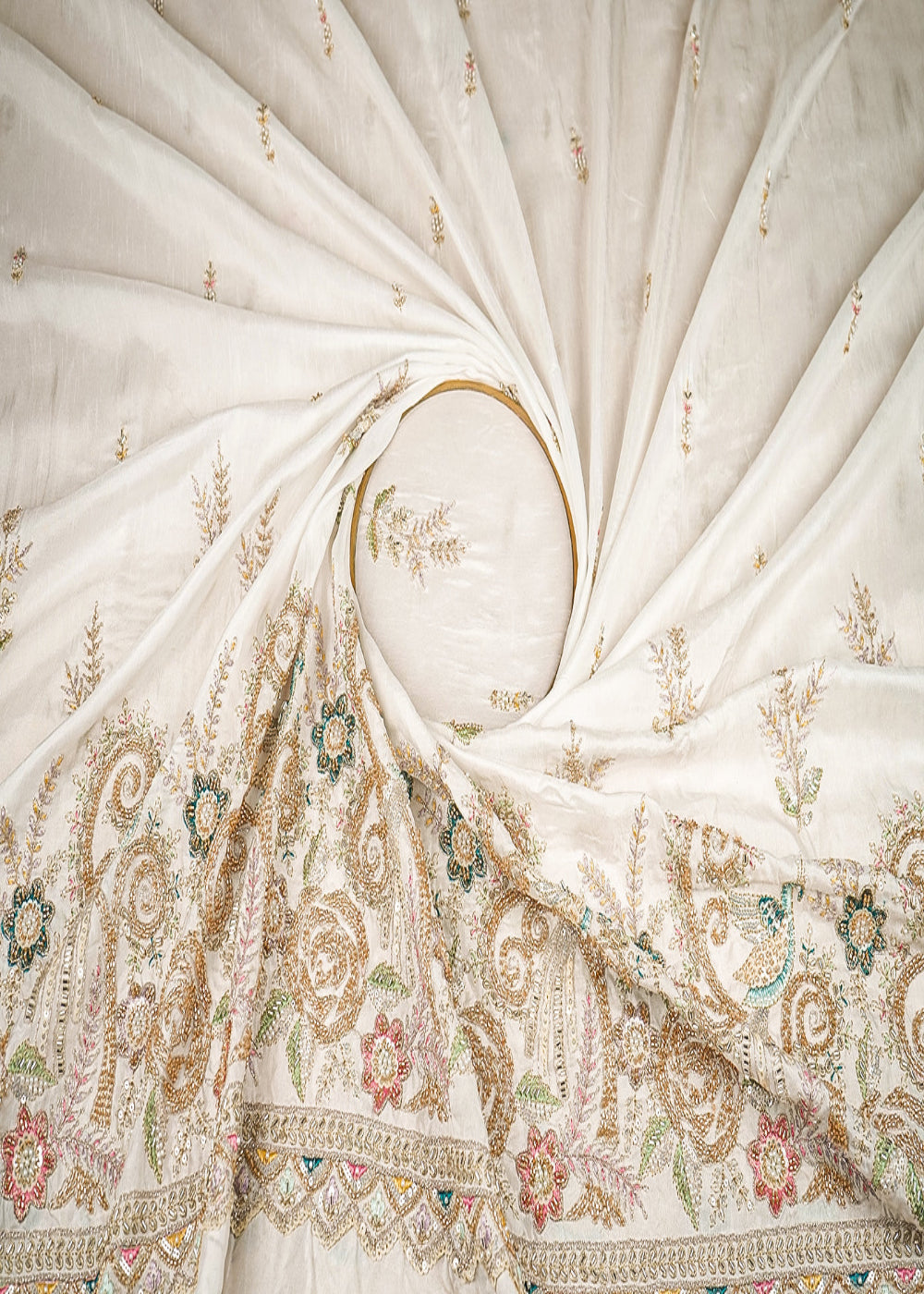
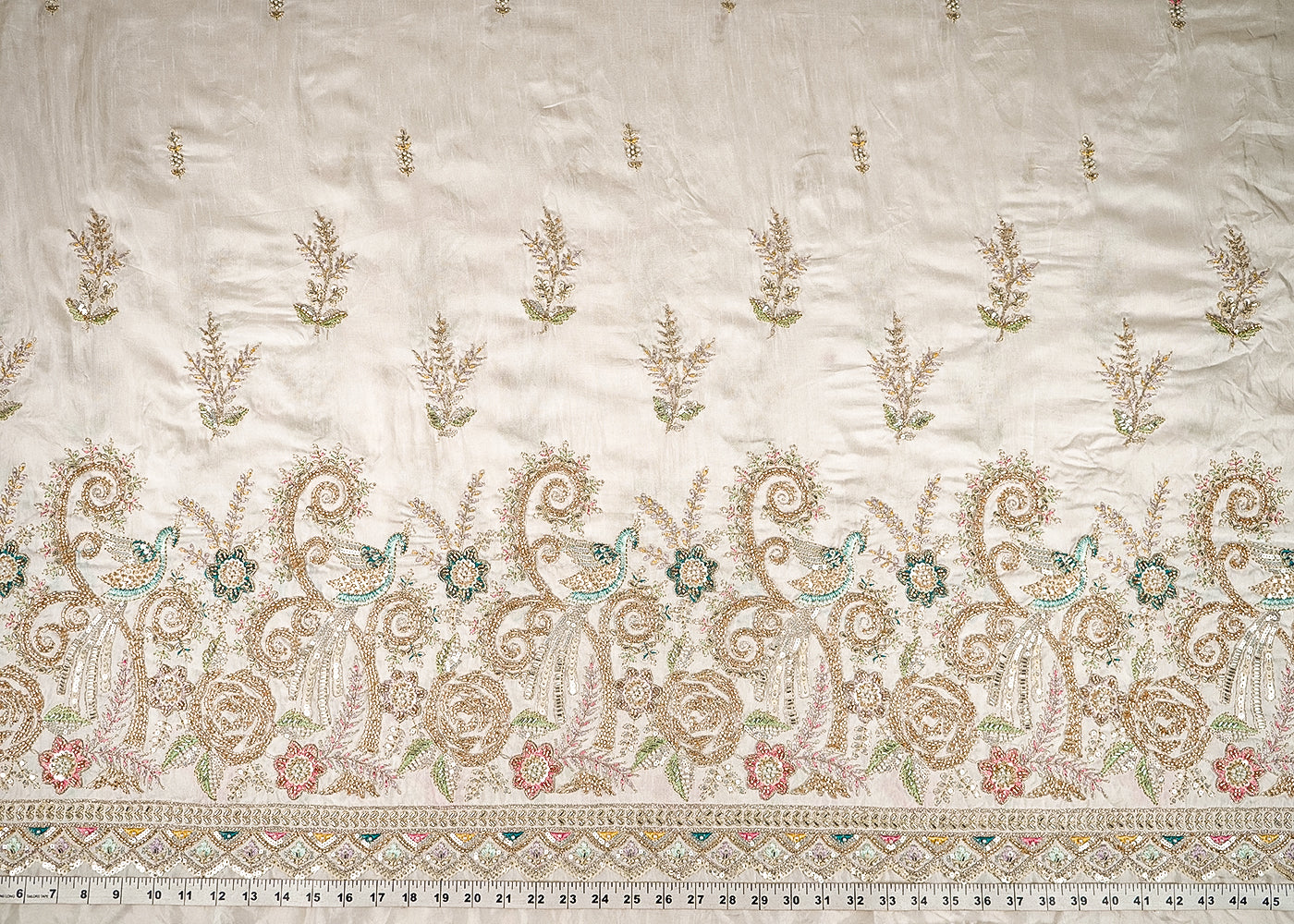
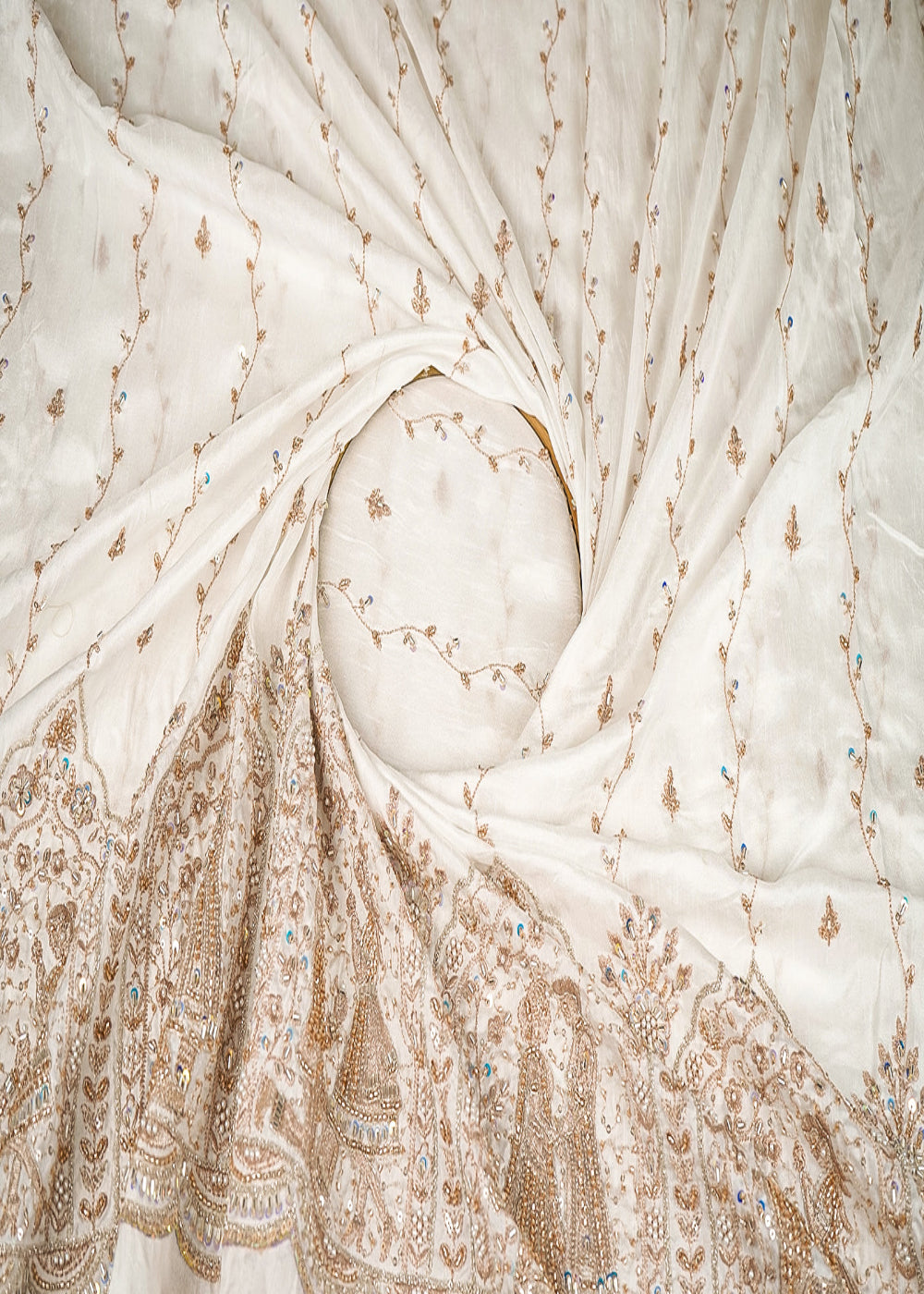
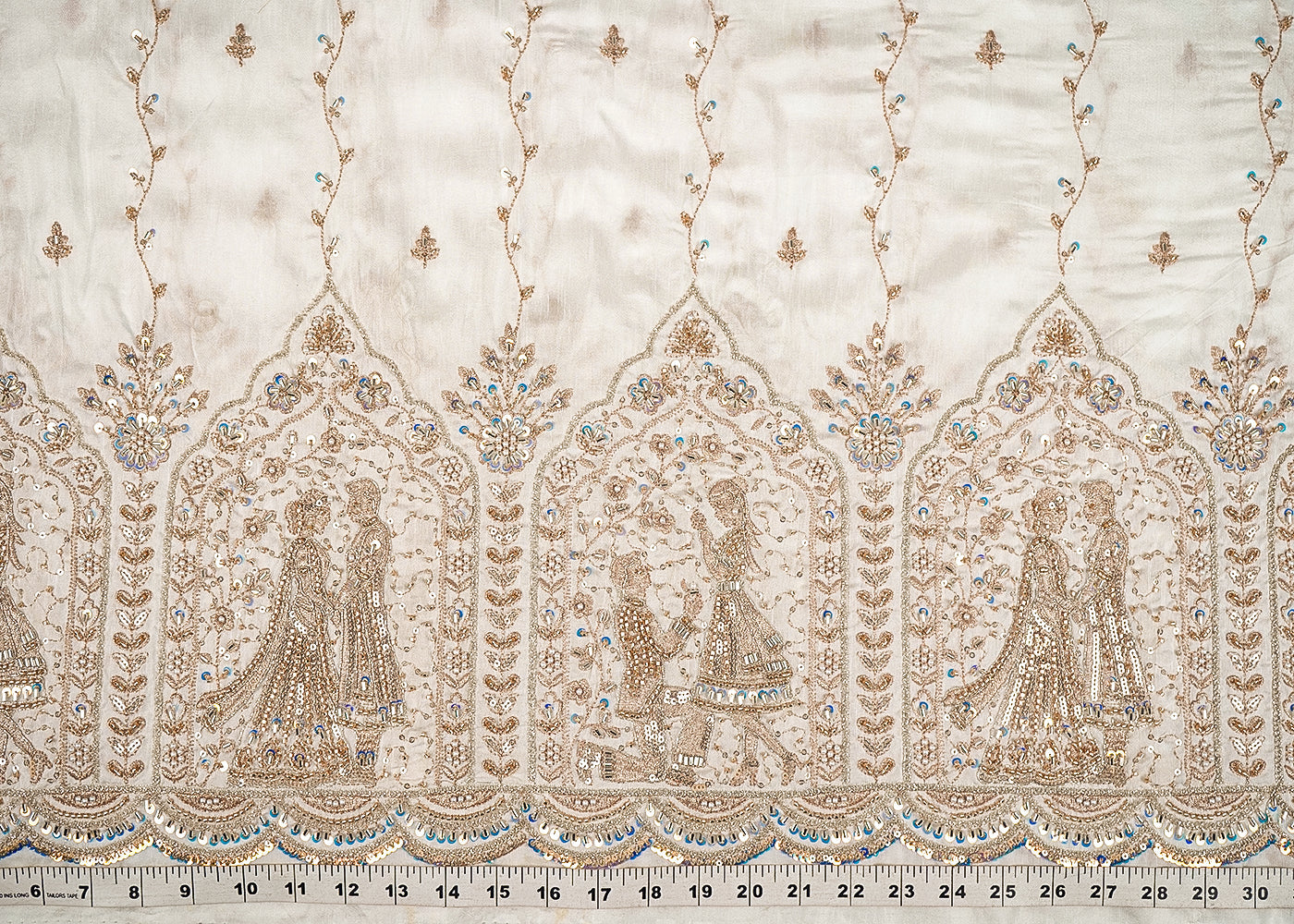
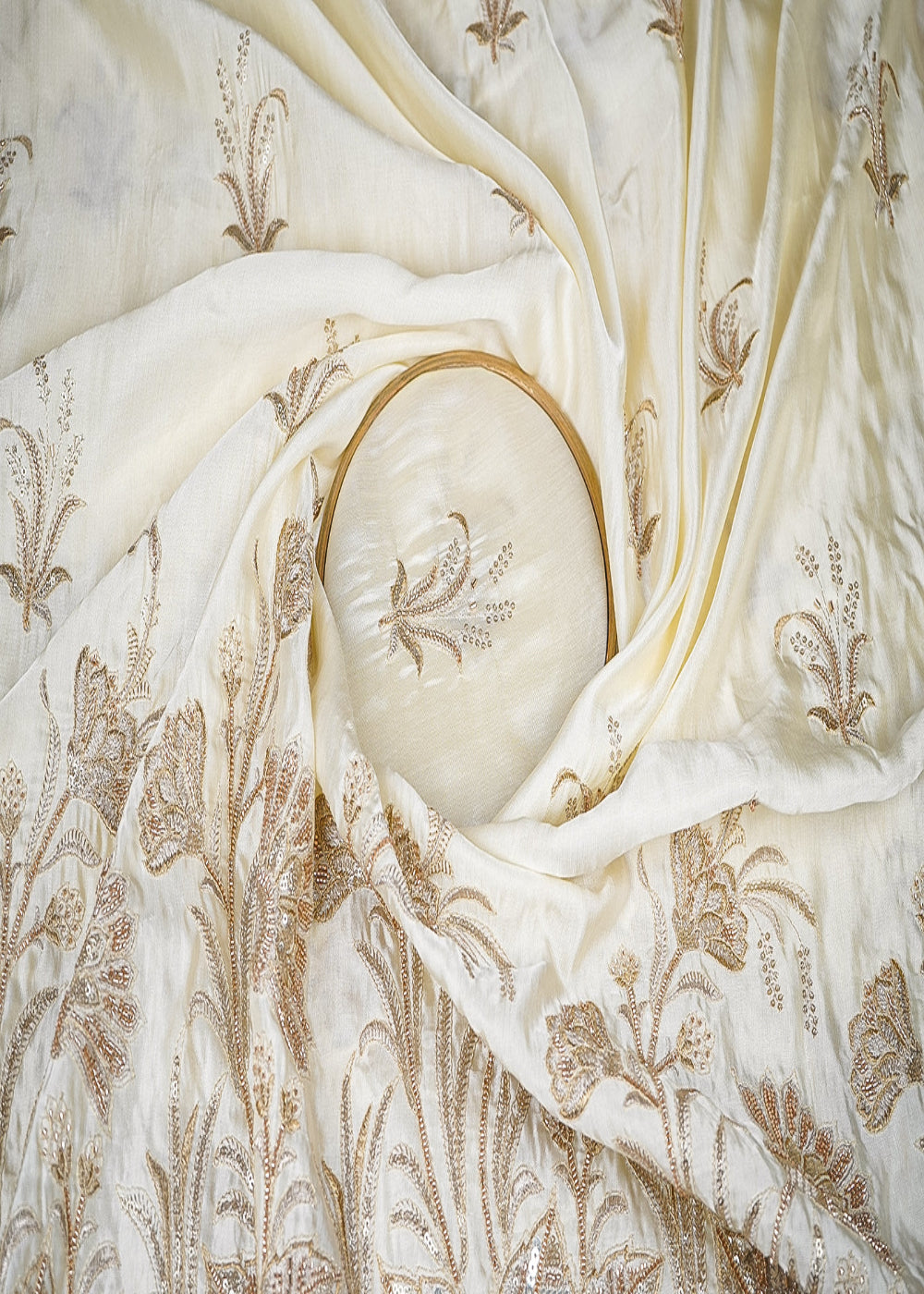
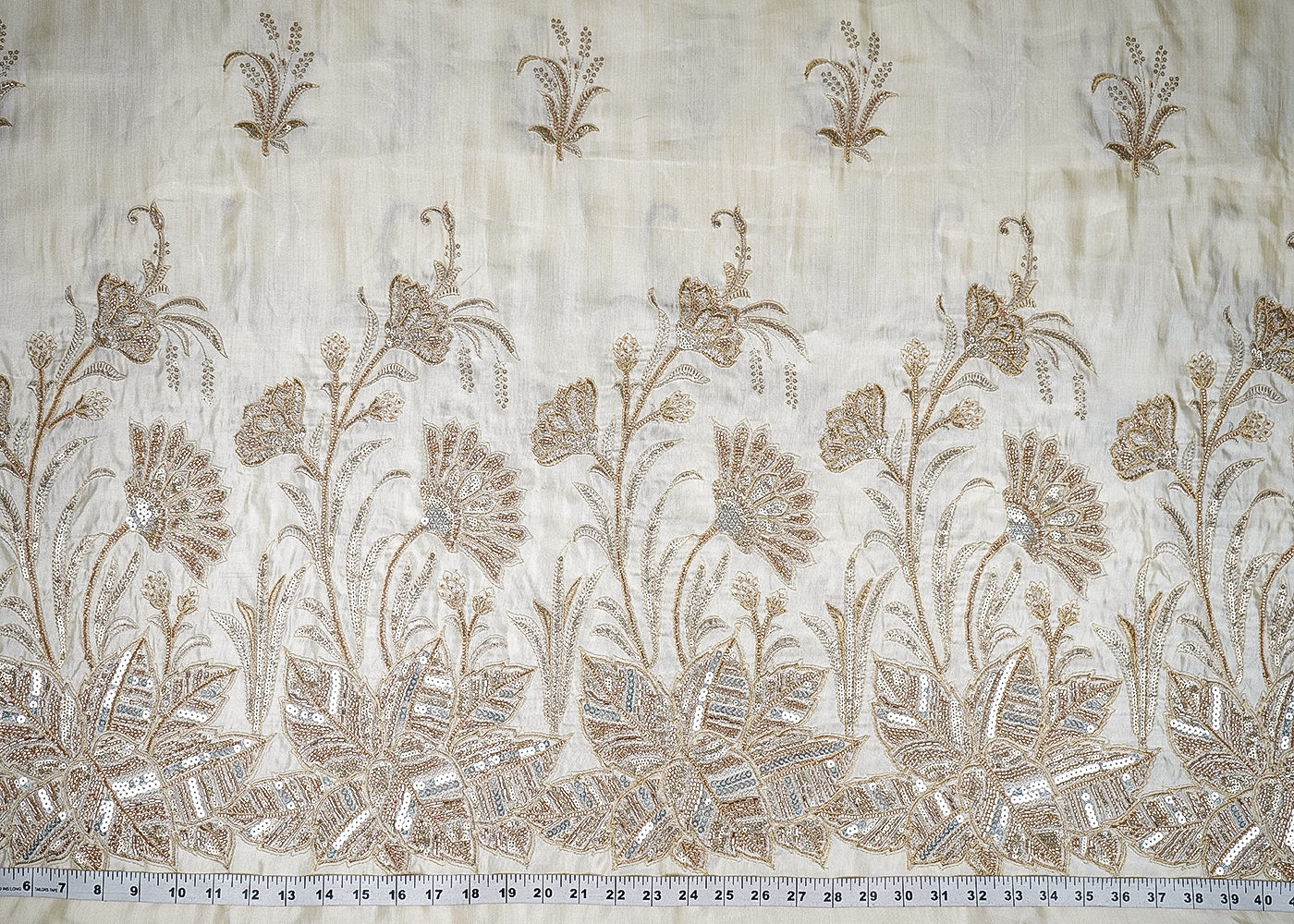
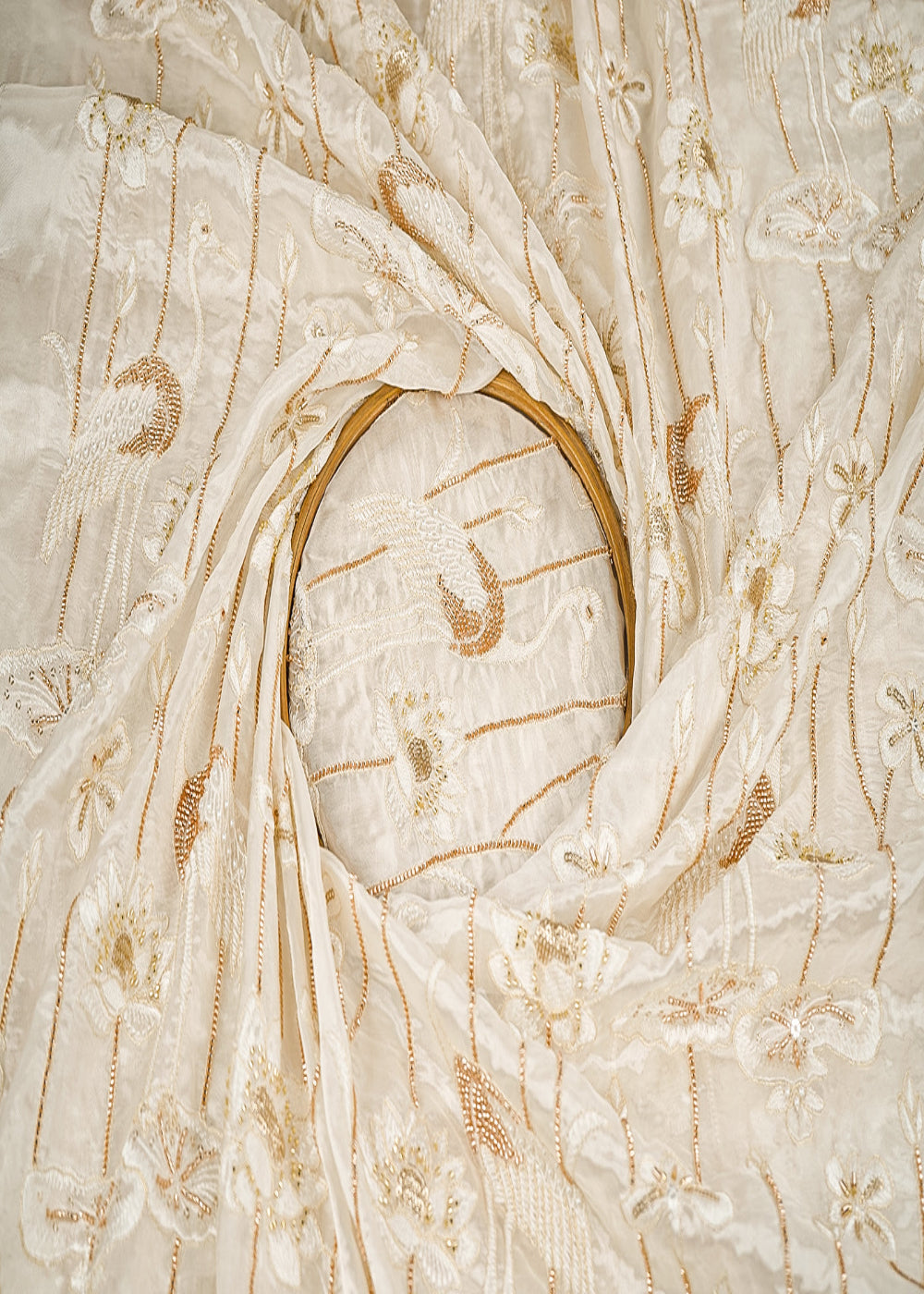
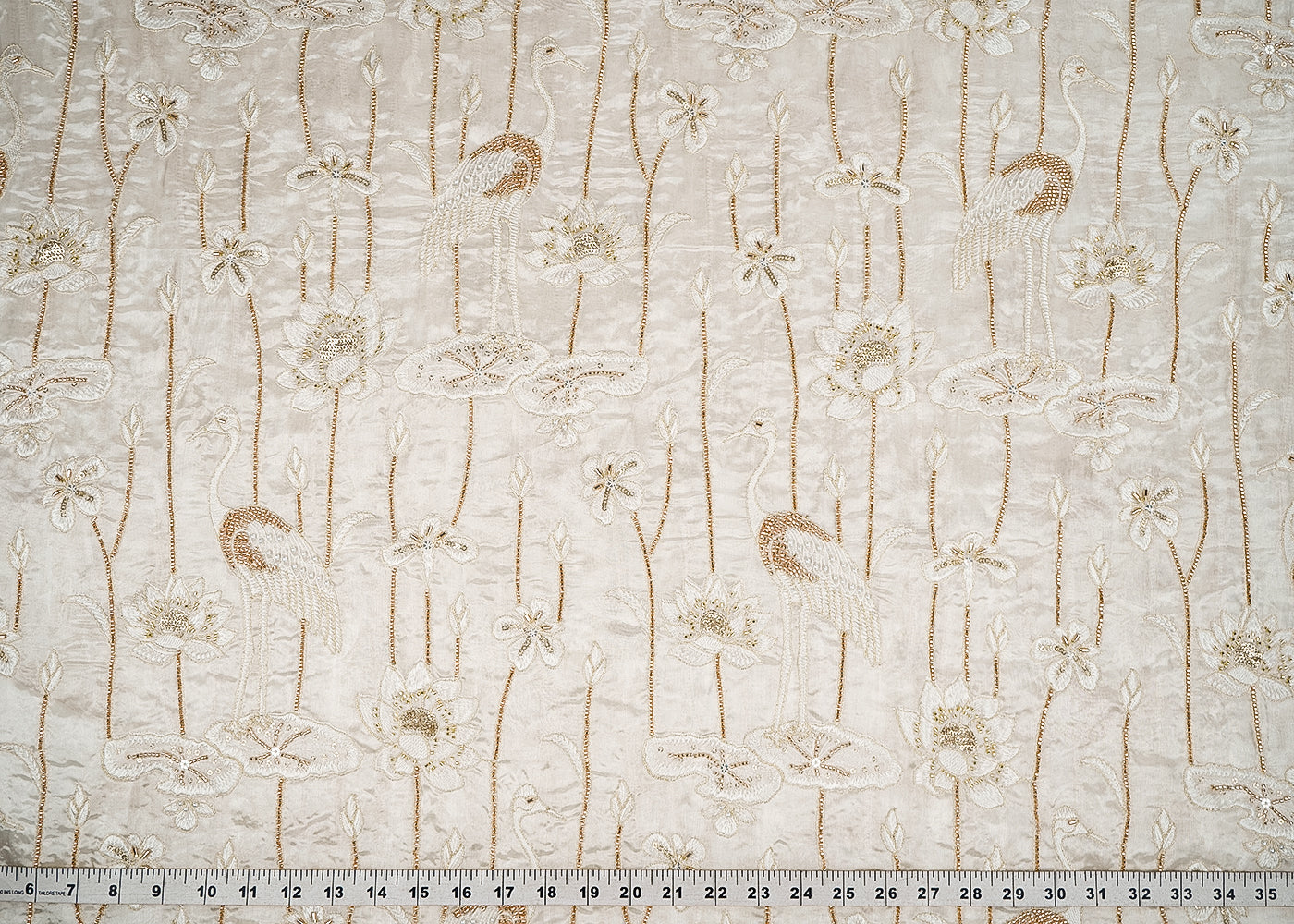
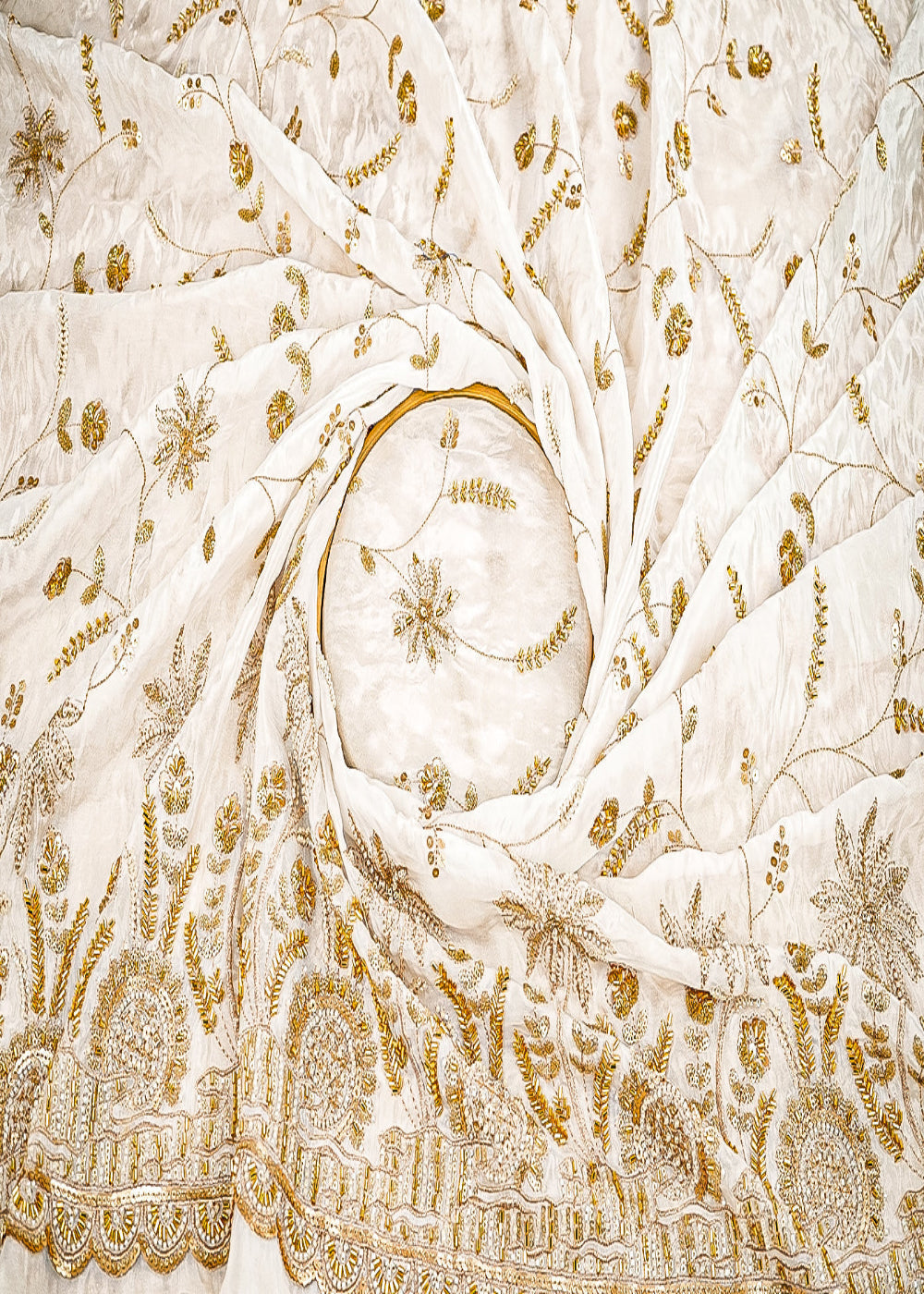
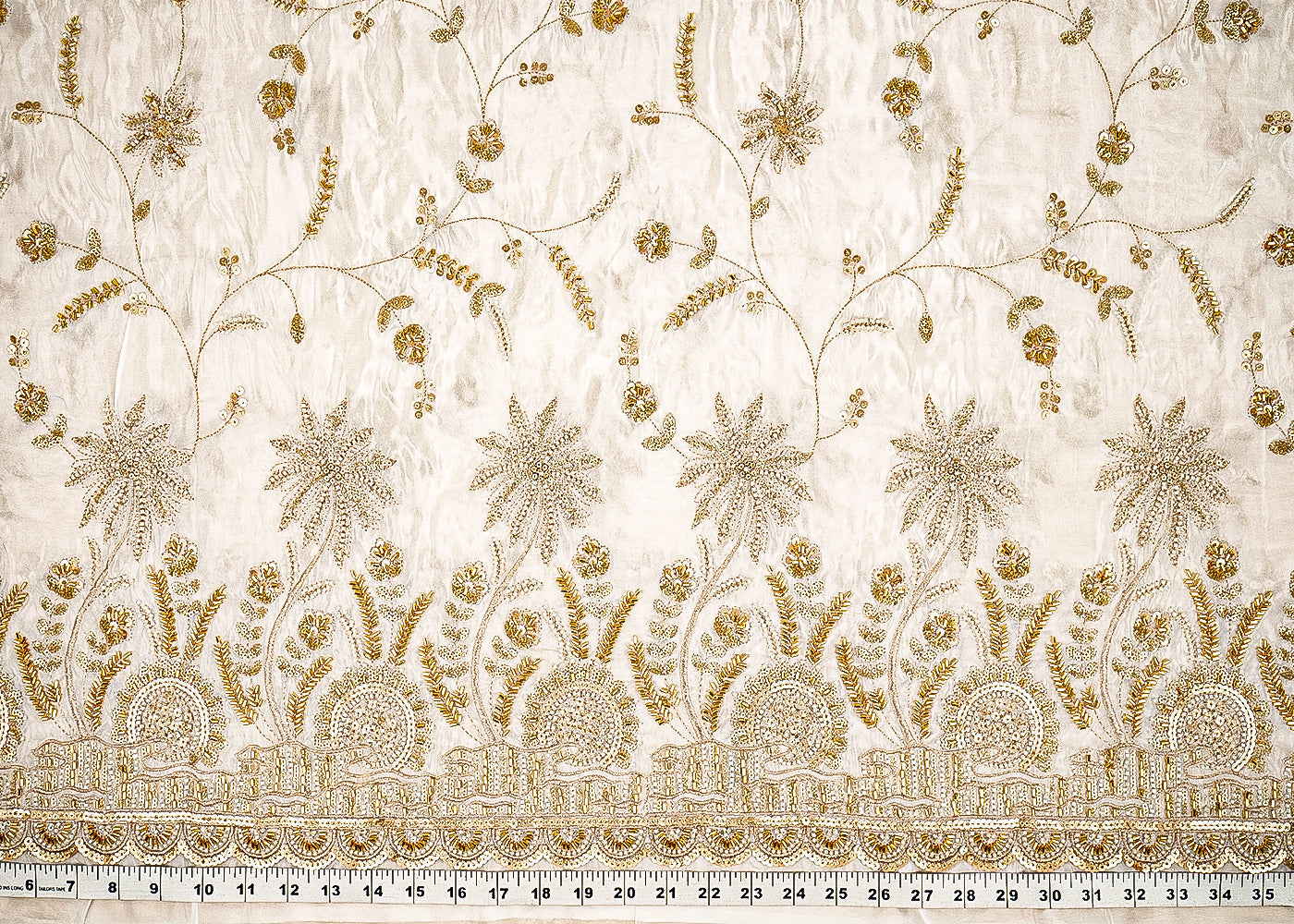
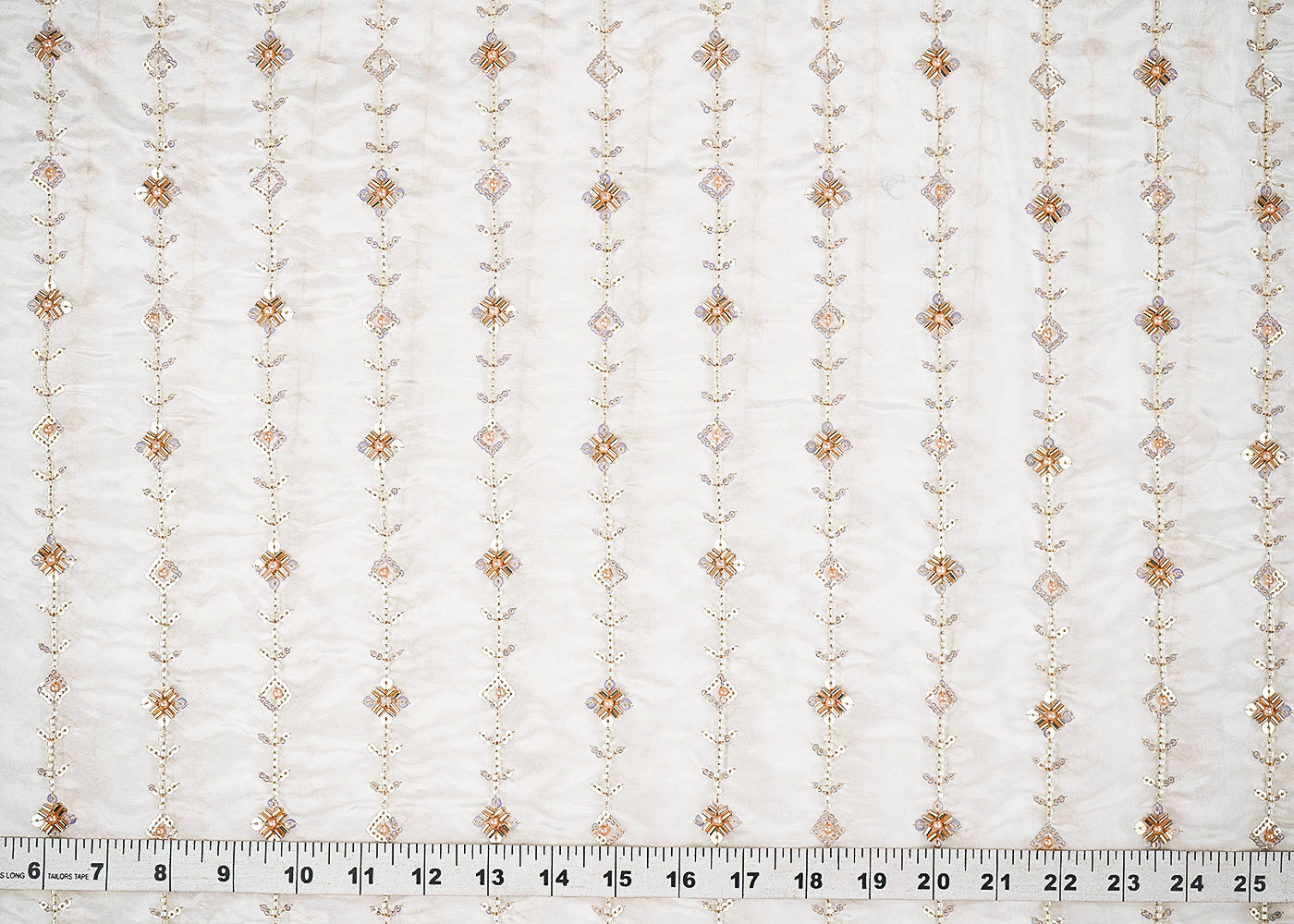
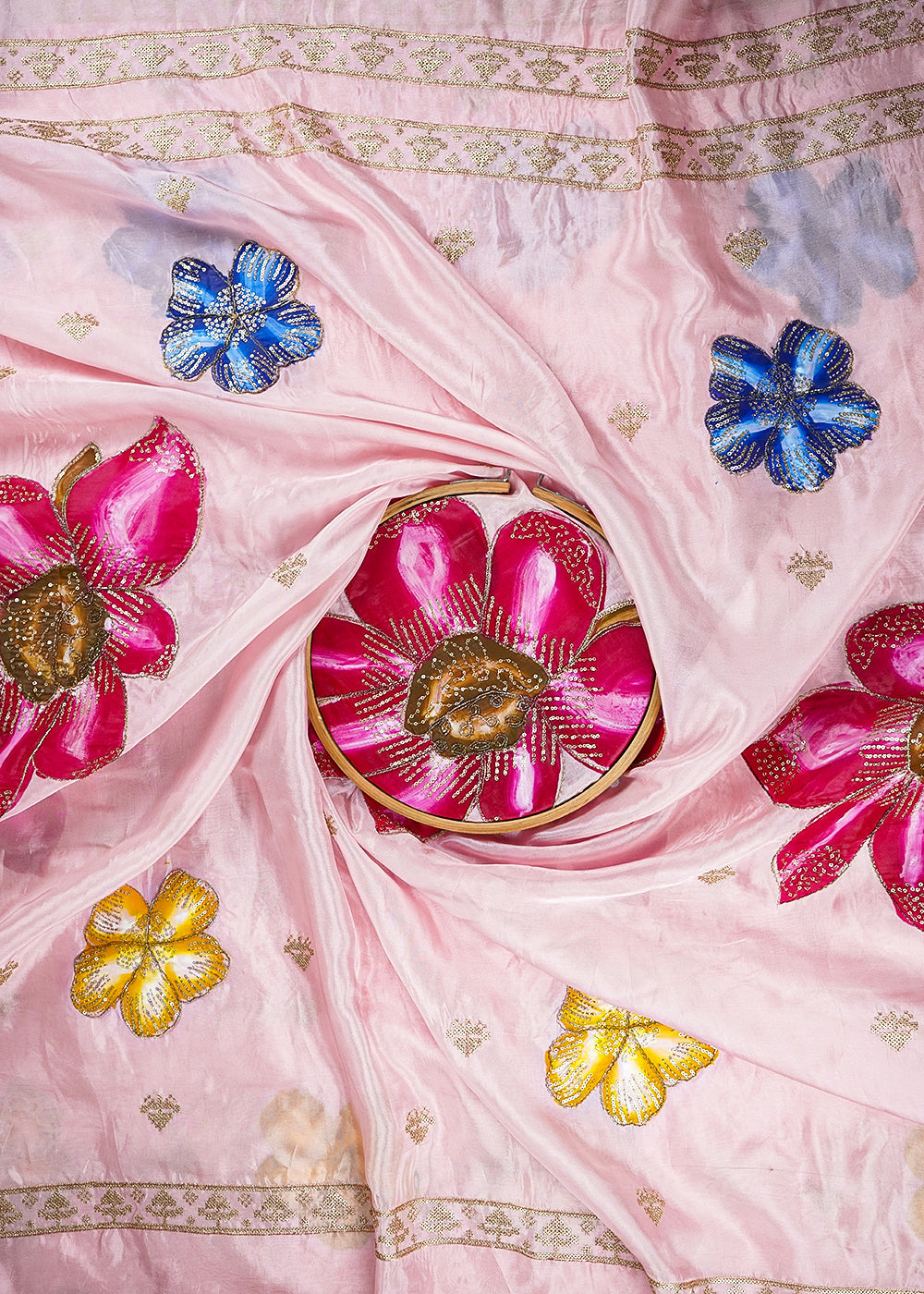
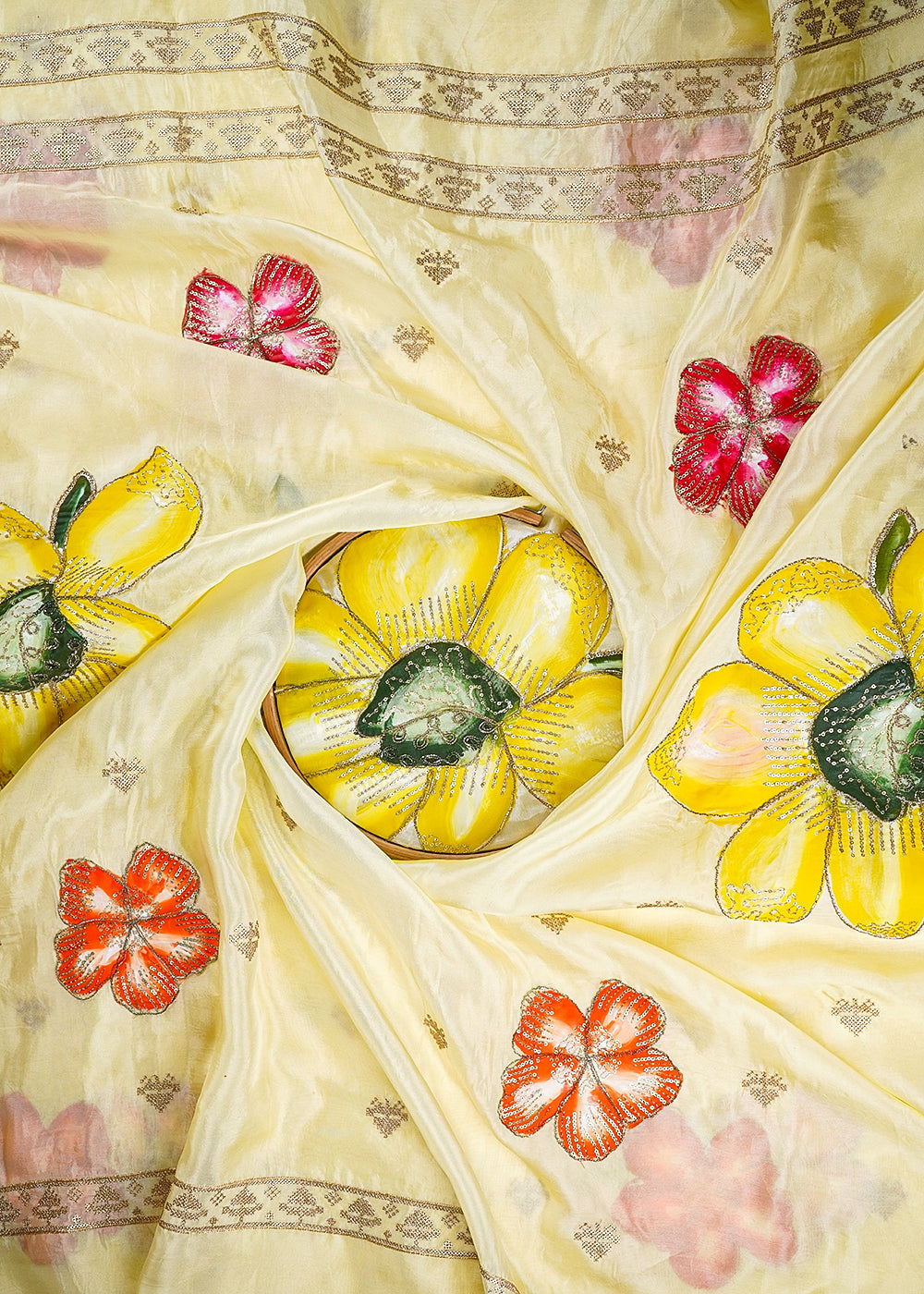
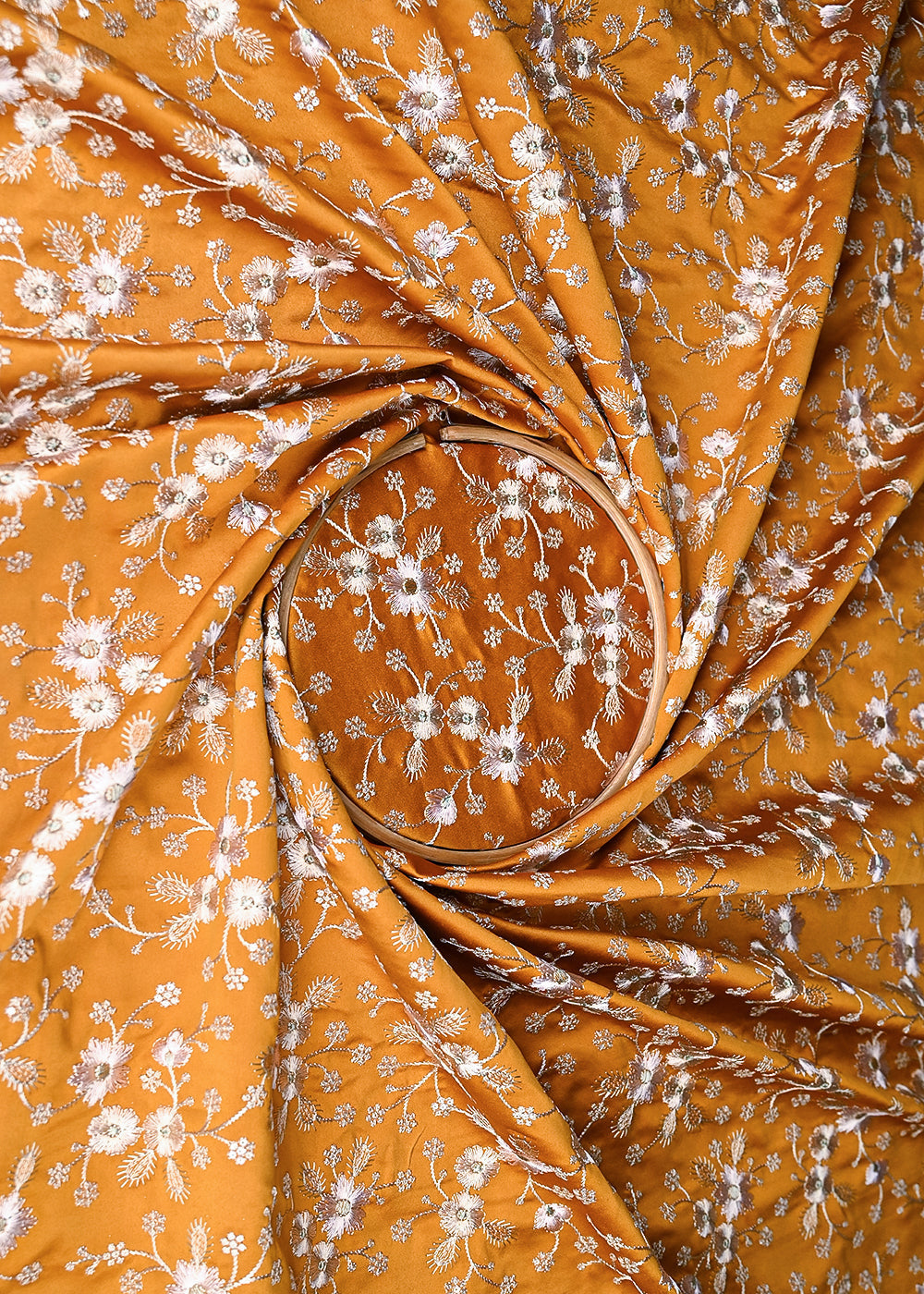
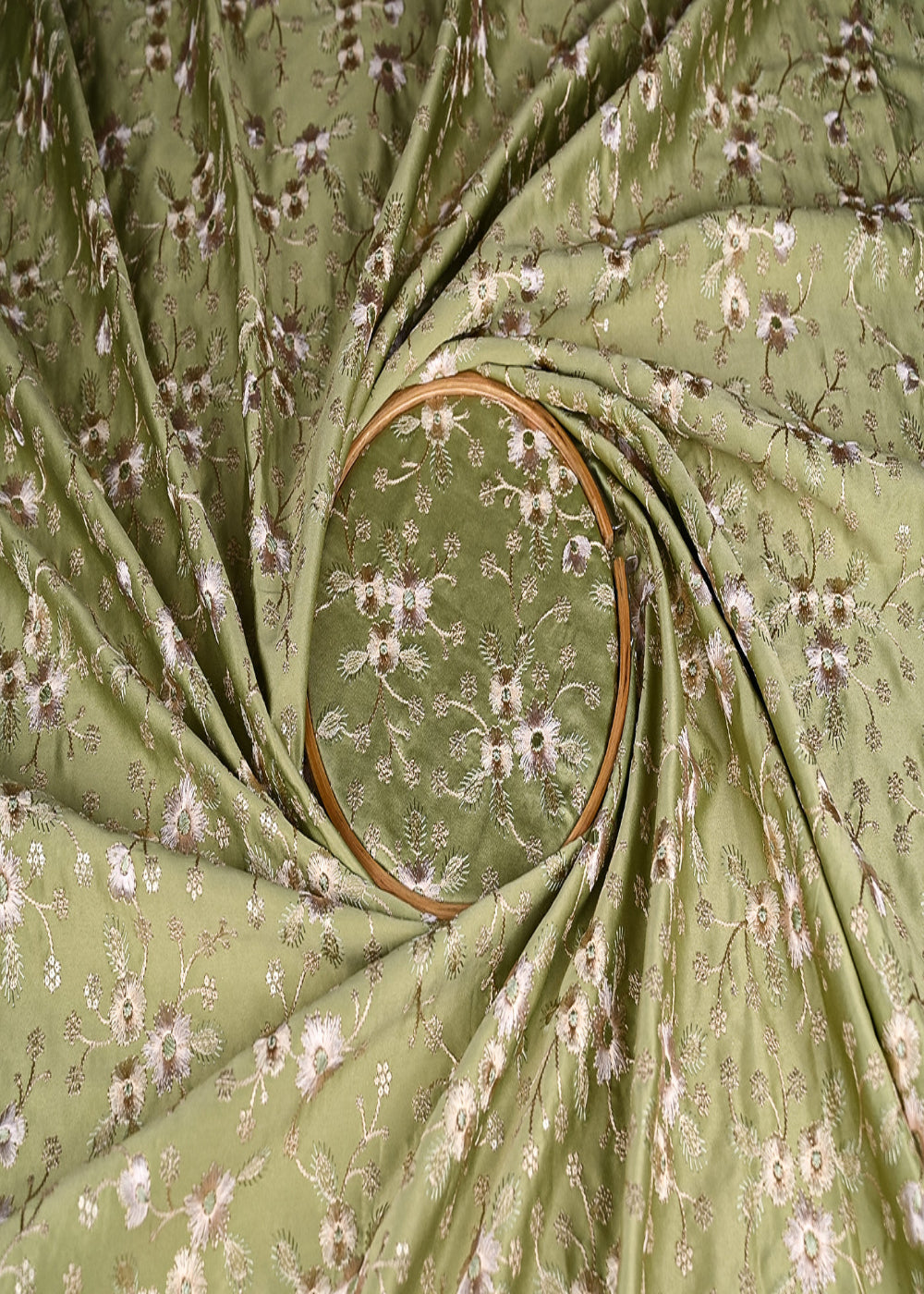
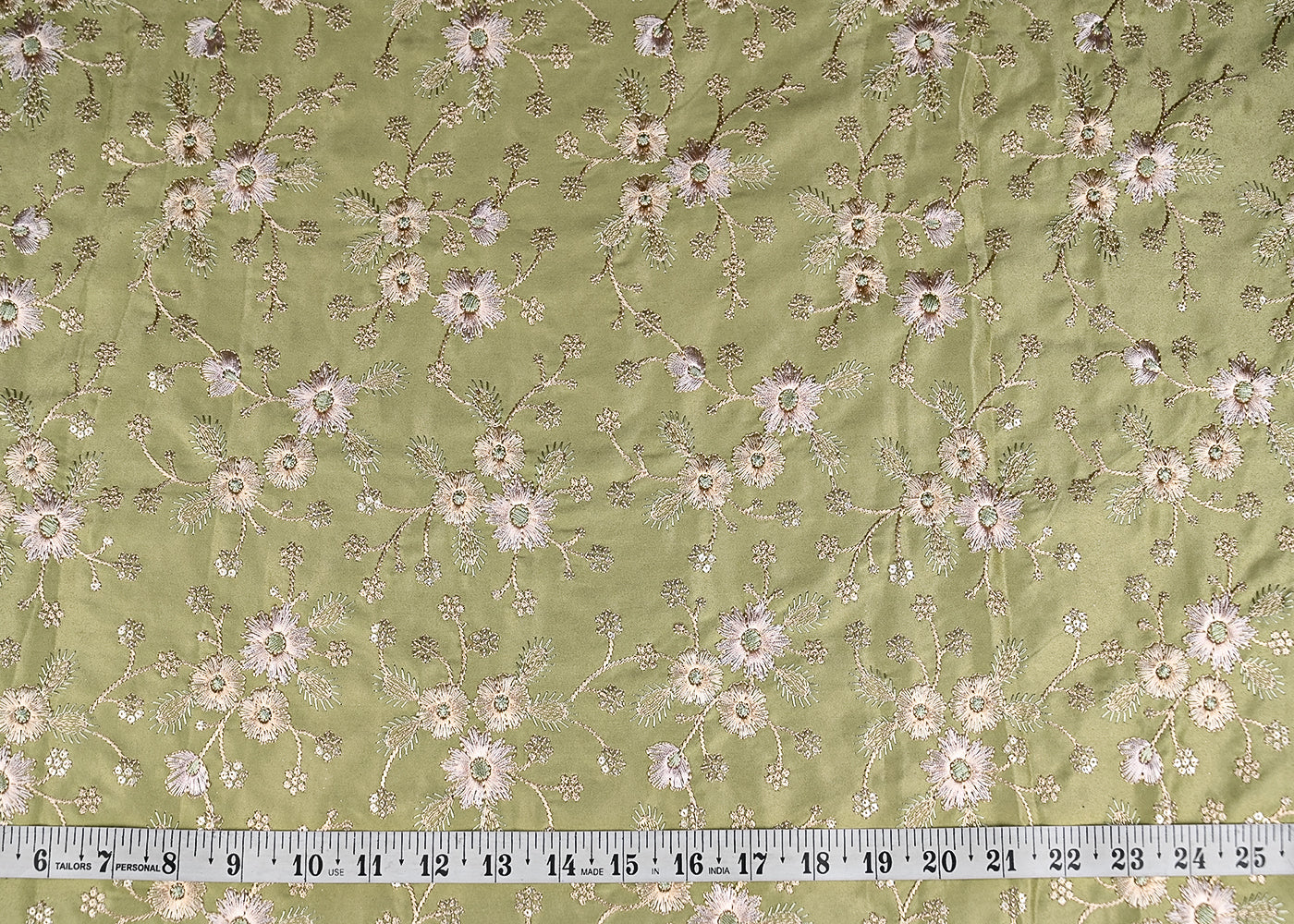
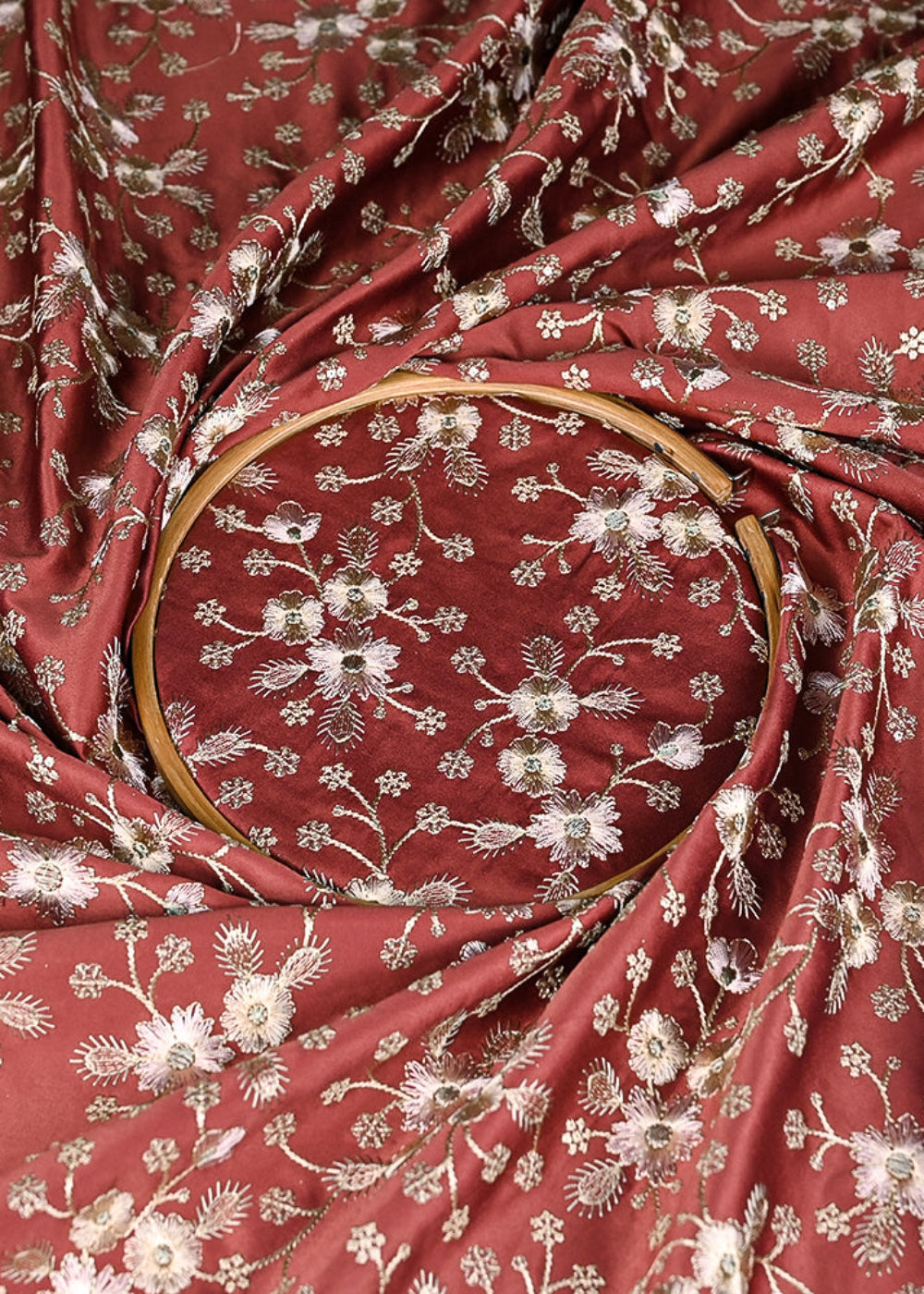
Silk embroidery sits at the top of the bridal counter for one reason. The base already carries a deep natural sheen and a soft weighted drape, so when hand or machine work goes on top the piece reads regal in a way no synthetic ground can match. Zardozi, resham, aari, sequin. All of it sits richer on silk than on anything else.
This is heirloom stock rather than everyday buying. A worked silk lehenga or dupatta holds its colour and its structure for years, which is exactly why families treat these pieces as trousseau investments rather than single-season outfits.
Why Silk Carries Heavy Work Best
Dense embroidery needs a ground that can hold weight without collapsing. Silk has natural body and tensile strength, so heavy zardozi or bead work sits flat and stable where a lighter fabric would sag or tear at the stitch points.
The sheen underneath does the second job. Light bounces off the silk and around the metal and thread work, so the embroidery reads deeper and richer. The same zardozi on a matte cotton looks flat by comparison. That interplay of ground and work is what a bride is actually paying for.
Types of Silk Embroidery
| Work Type | Best For | Approx Rate |
| Zardozi on silk | Bridal lehengas, heavy dupattas, gowns | Rs 1,200 to 3,500 per metre |
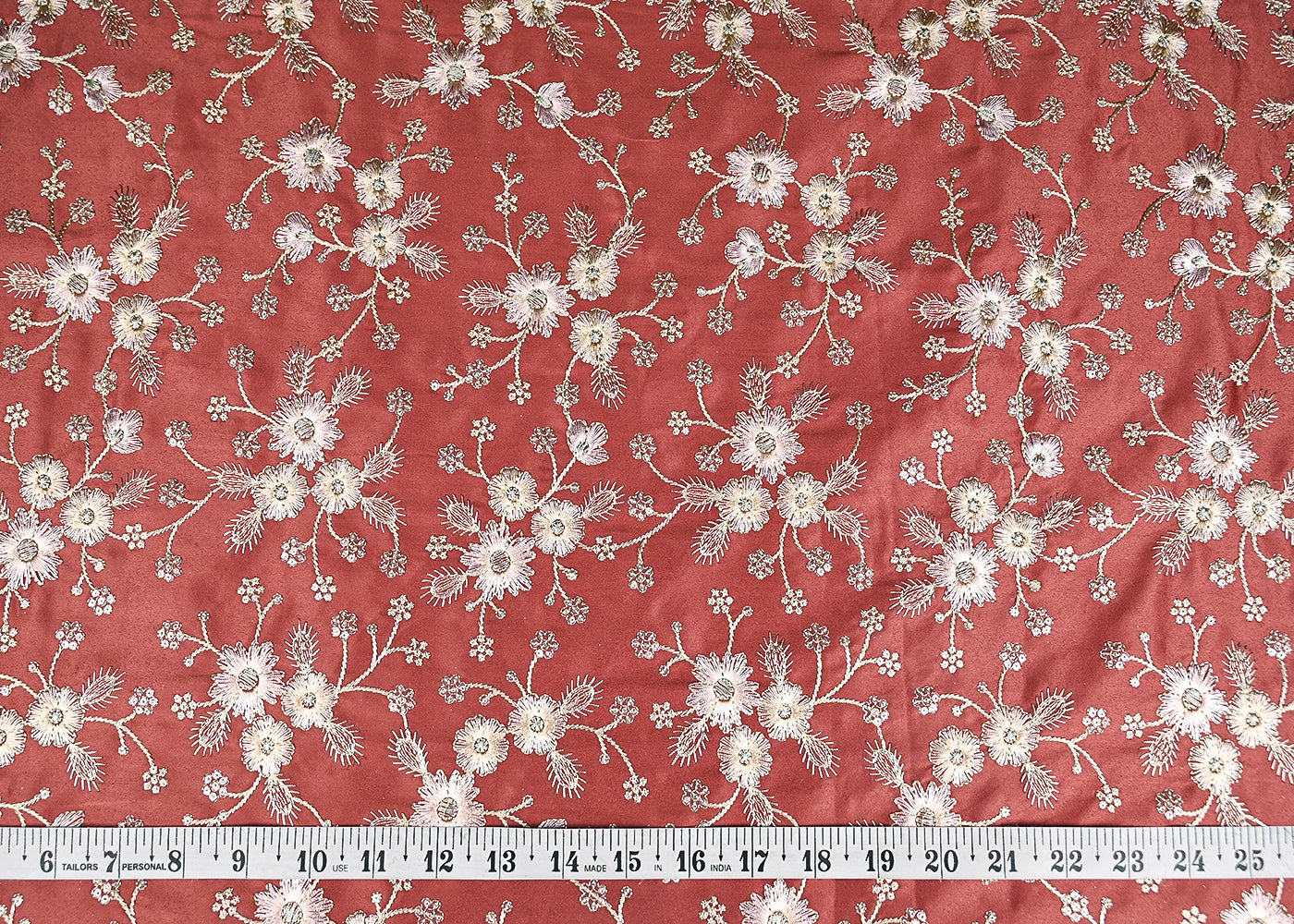
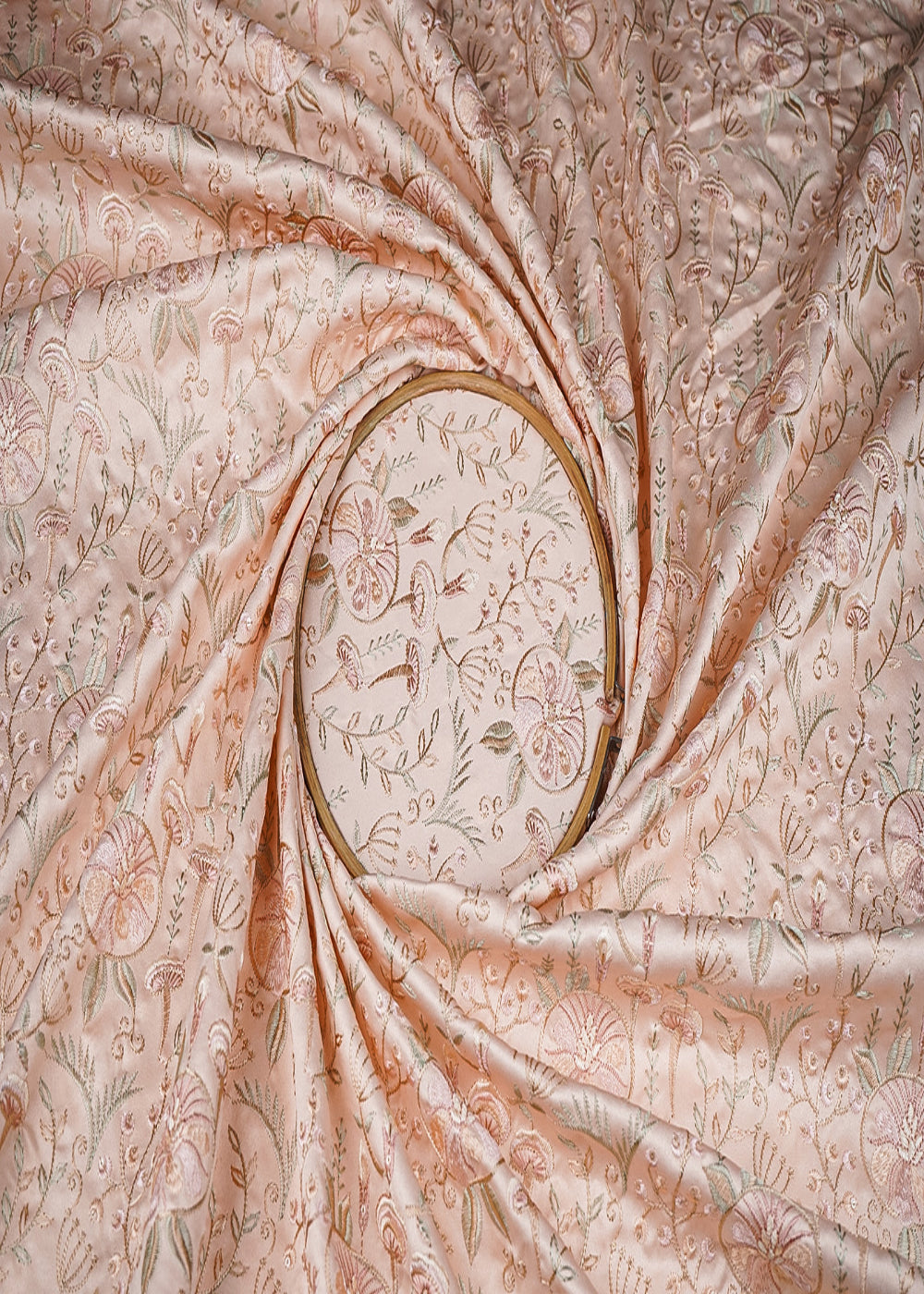
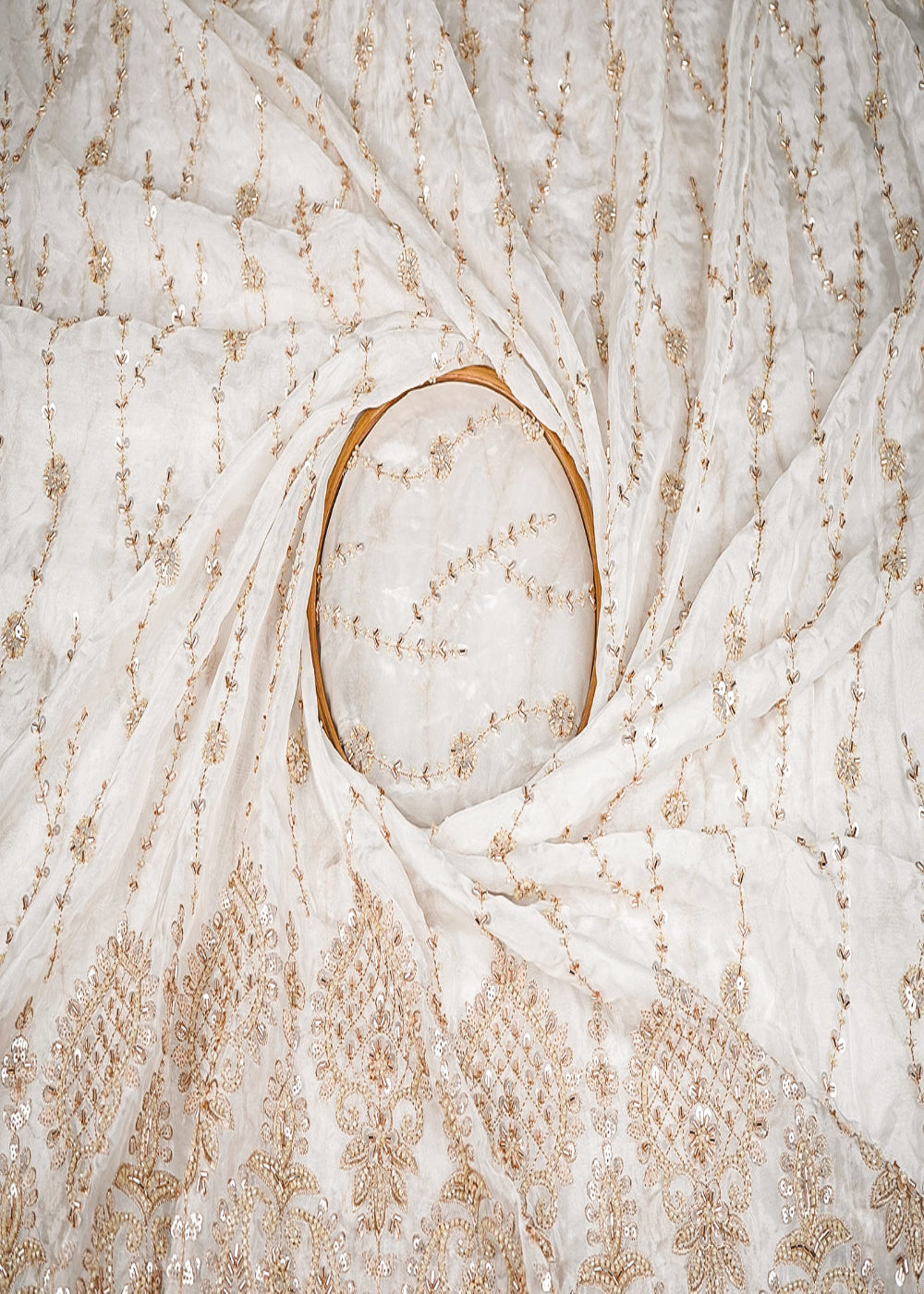
| Resham embroidery | Sarees, anarkalis, pastel wedding looks | Rs 600 to 1,400 per metre |
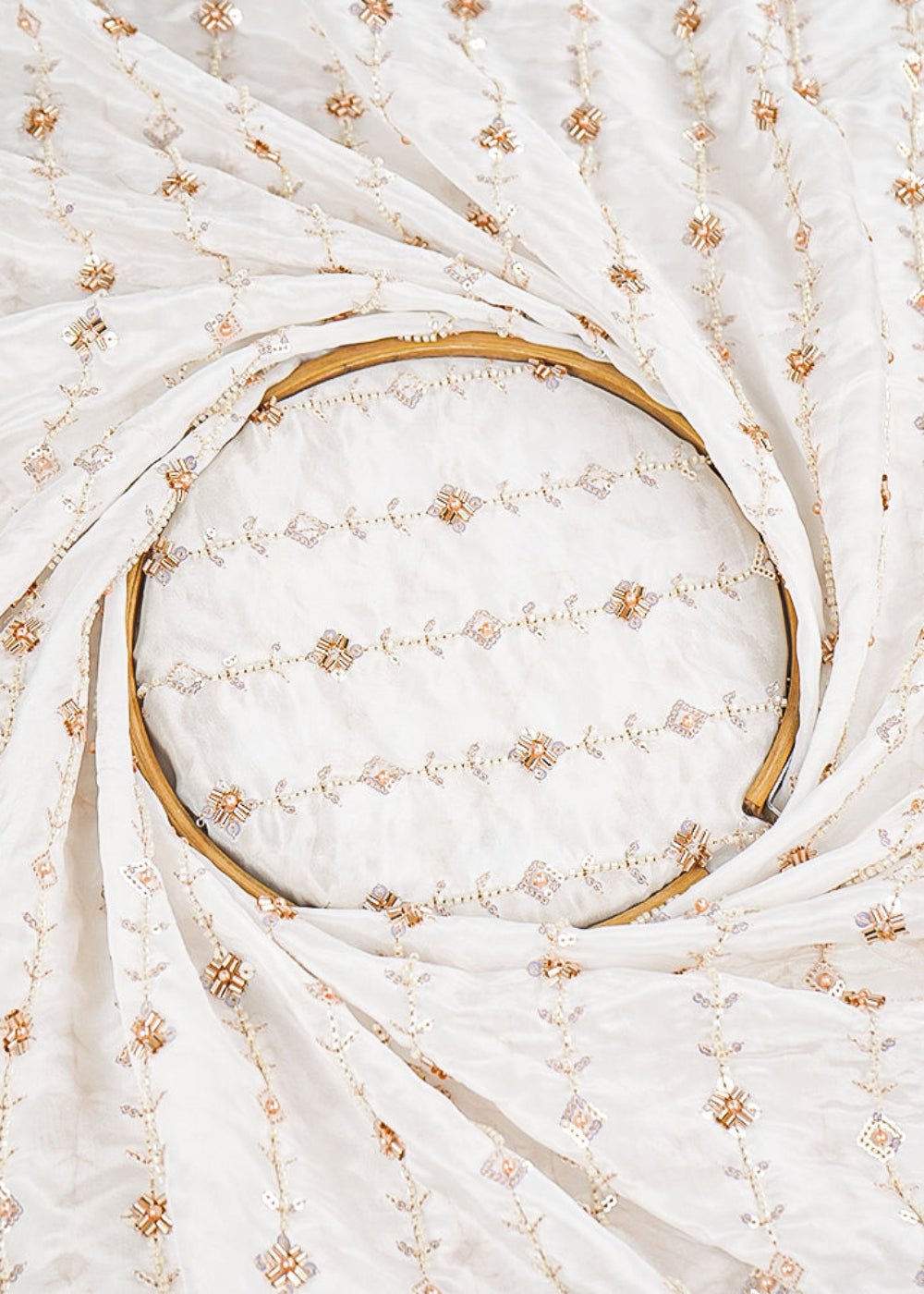
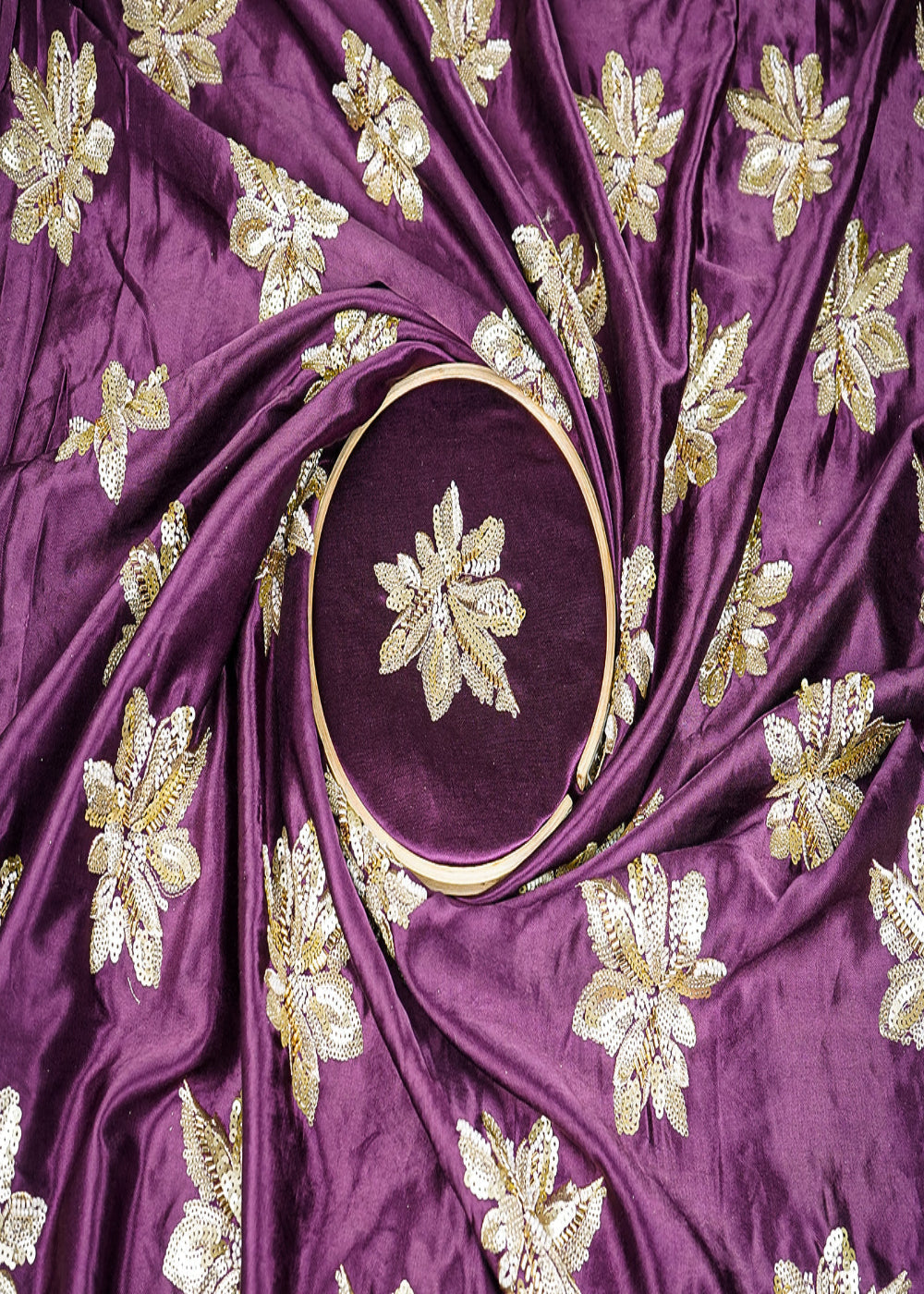
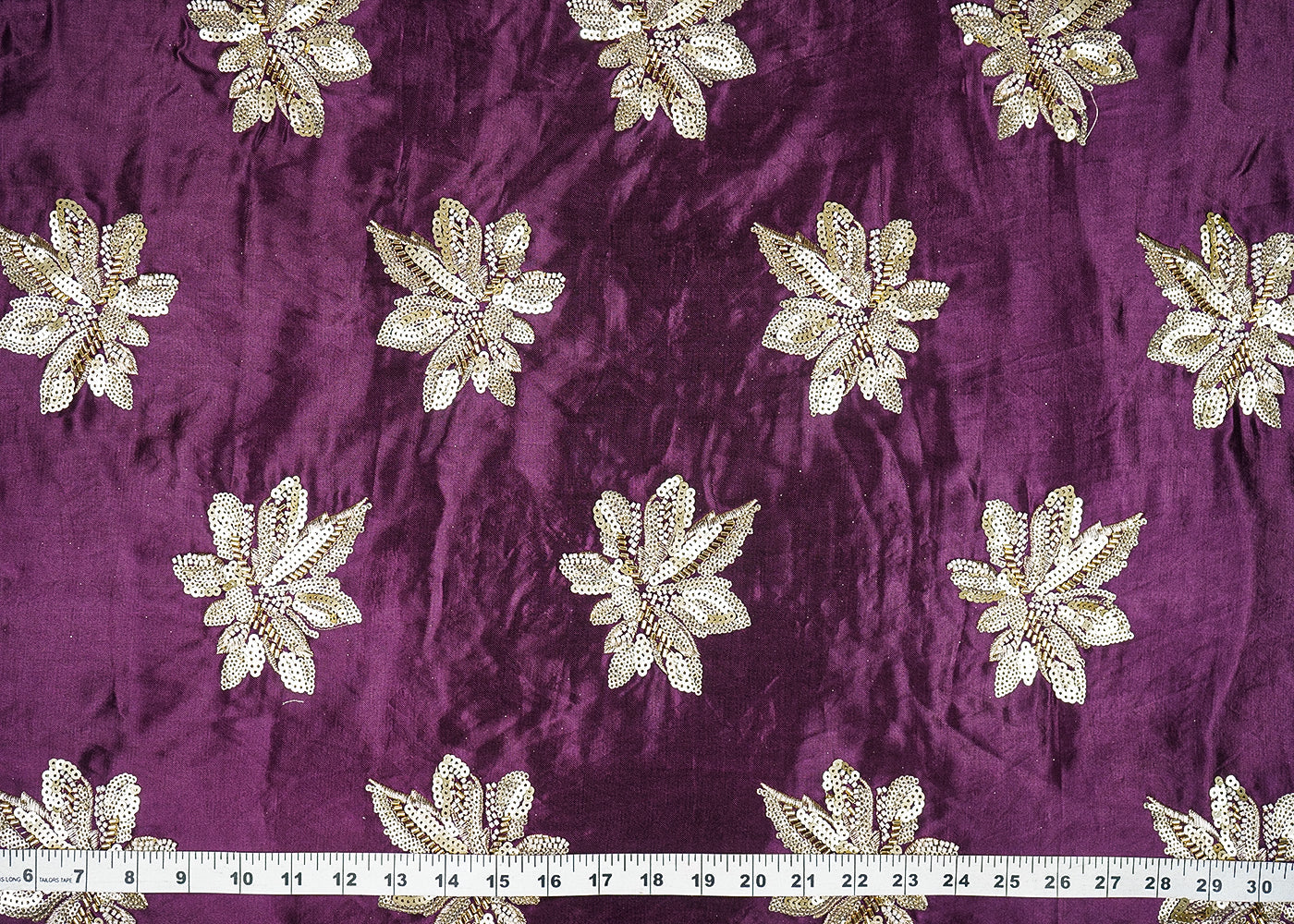
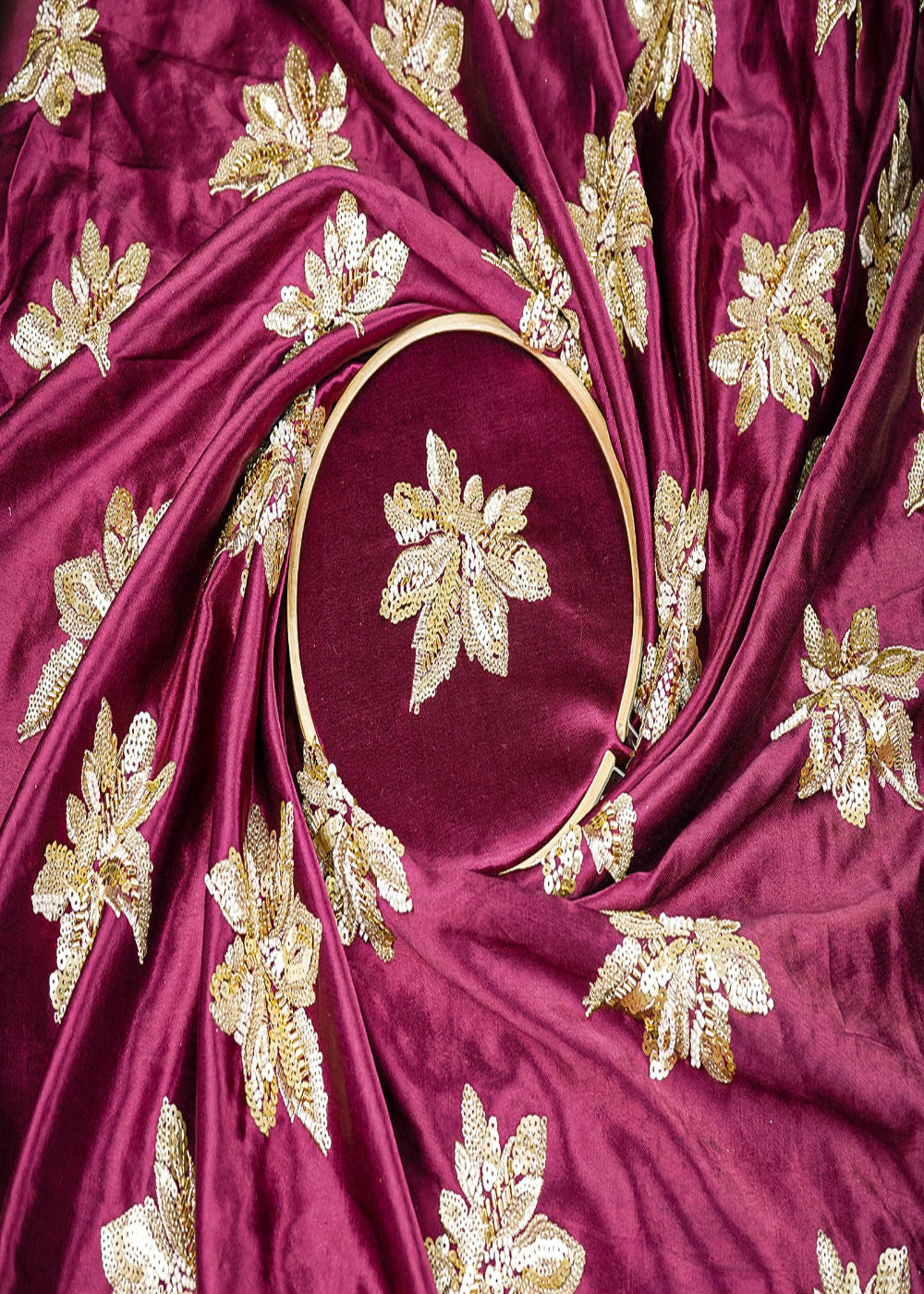
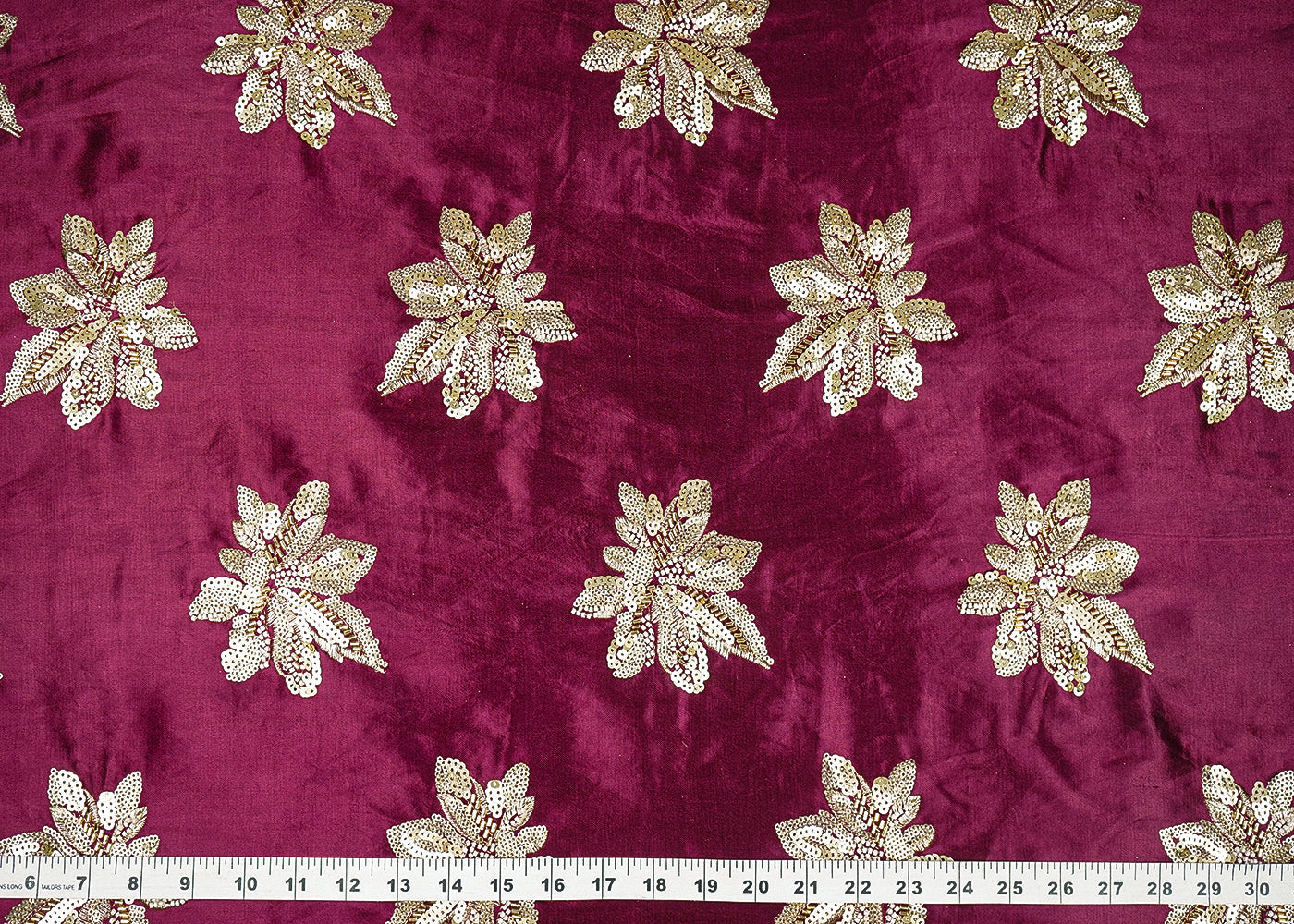
| Sequin and bead work | Reception gowns, party blouses | Rs 700 to 1,600 per metre |
| Aari embroidery | Indo-western jackets, skirts, blouses | Rs 550 to 1,300 per metre |
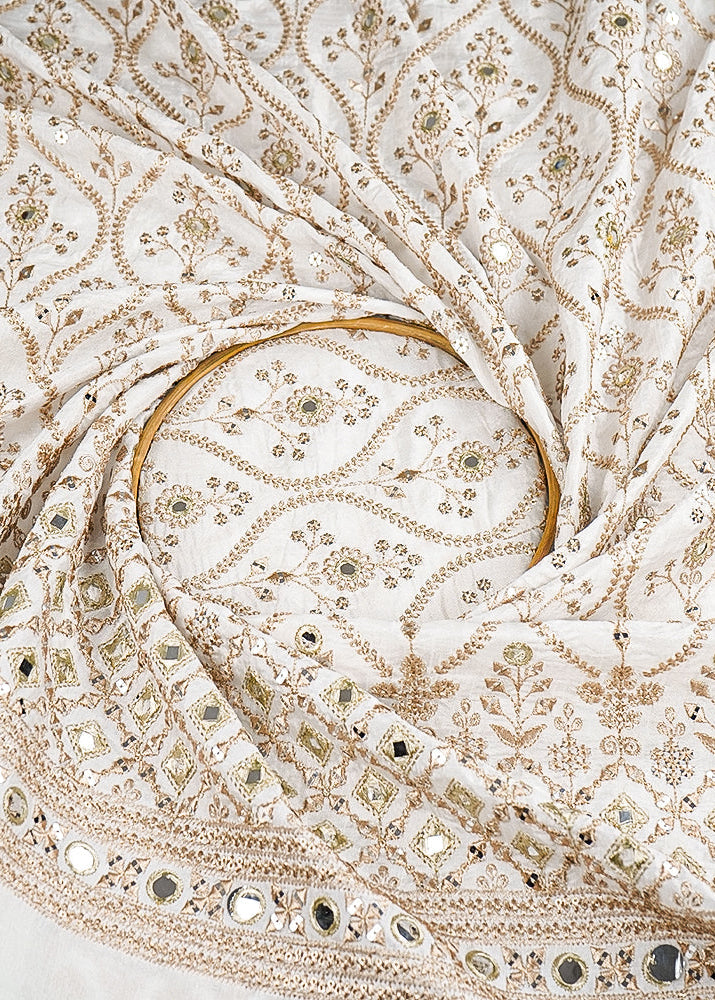
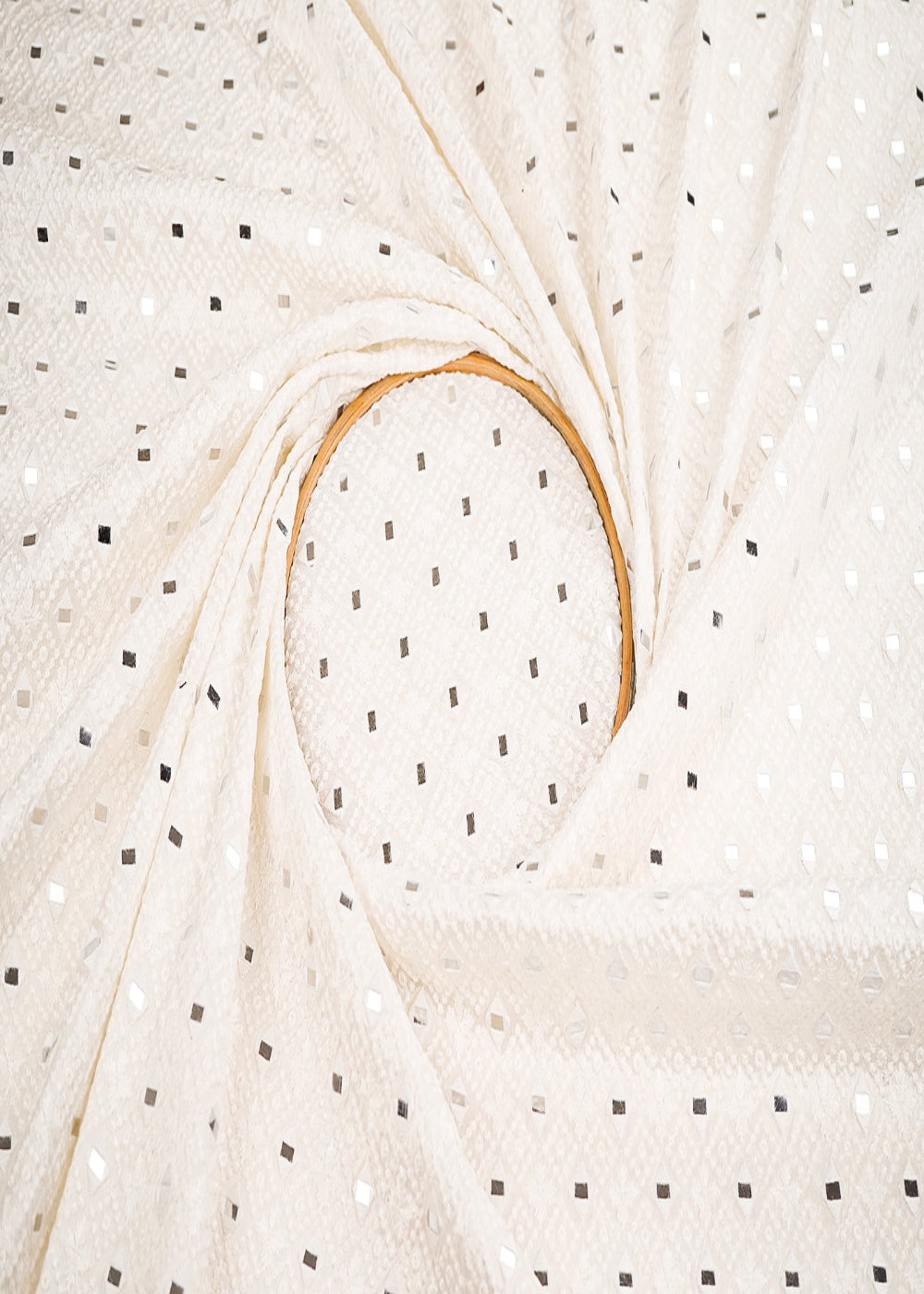
| Thread and mirror work | Festive kurtis, statement panels | Rs 500 to 1,100 per metre |
Zardozi carries the top rates because the metal work is slow hand labour. Two pieces can sit a thousand rupees apart purely on coverage and thread grade. Bulk thaan purchase helps most on the lighter resham and aari grades.
Silk Embroidery GSM Guide
The base weight plus the work density together decide how the garment holds. Heavier grades hold a lehenga ghera, lighter grades keep a saree fluid.
| Type | GSM Range | Feel | Best For |
| Resham silk | 150 to 180 GSM | Soft, flowing | Sarees, anarkalis |
| Sequin and bead silk | 160 to 200 GSM | Textured, festive weight | Reception gowns, blouses |
| Heavy zardozi silk | 200 to 250 GSM | Rich, structured | Bridal lehengas, jackets |
Popular Uses
- Bridal lehengas, heavy dupattas, designer gowns
- Wedding sarees, anarkalis, pastel occasion looks
- Reception gowns, party blouses, indo-western jackets
- Statement borders, yokes, panel and cuff accents
For a family building a wedding trousseau, worked silk anchors the main outfits while lighter fabrics fill the daytime functions. Use heavy zardozi only on the bridal piece and pair it with a plain silk base for the supporting outfits to keep the total spend sensible.
Trends Driving Demand in 2026
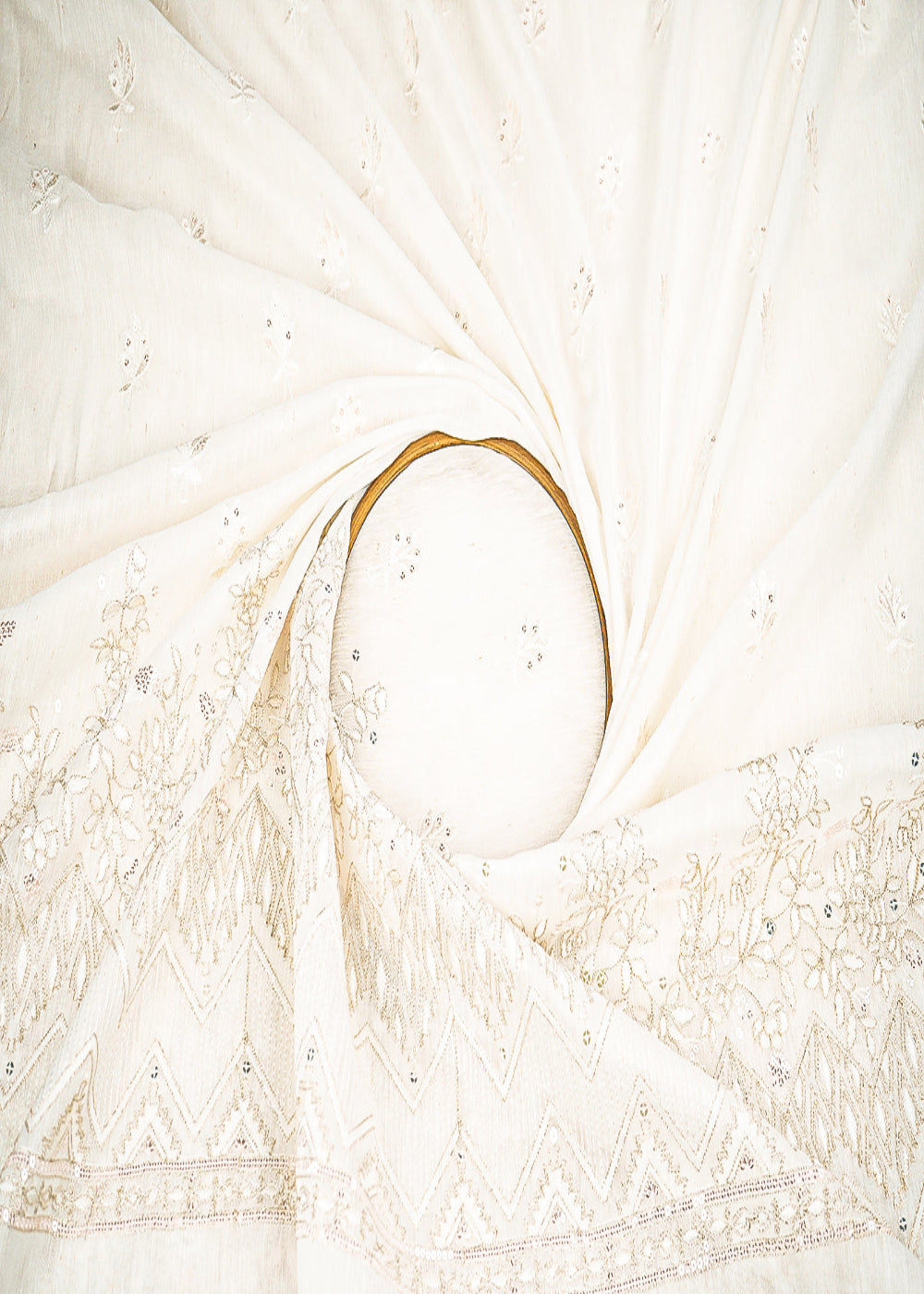
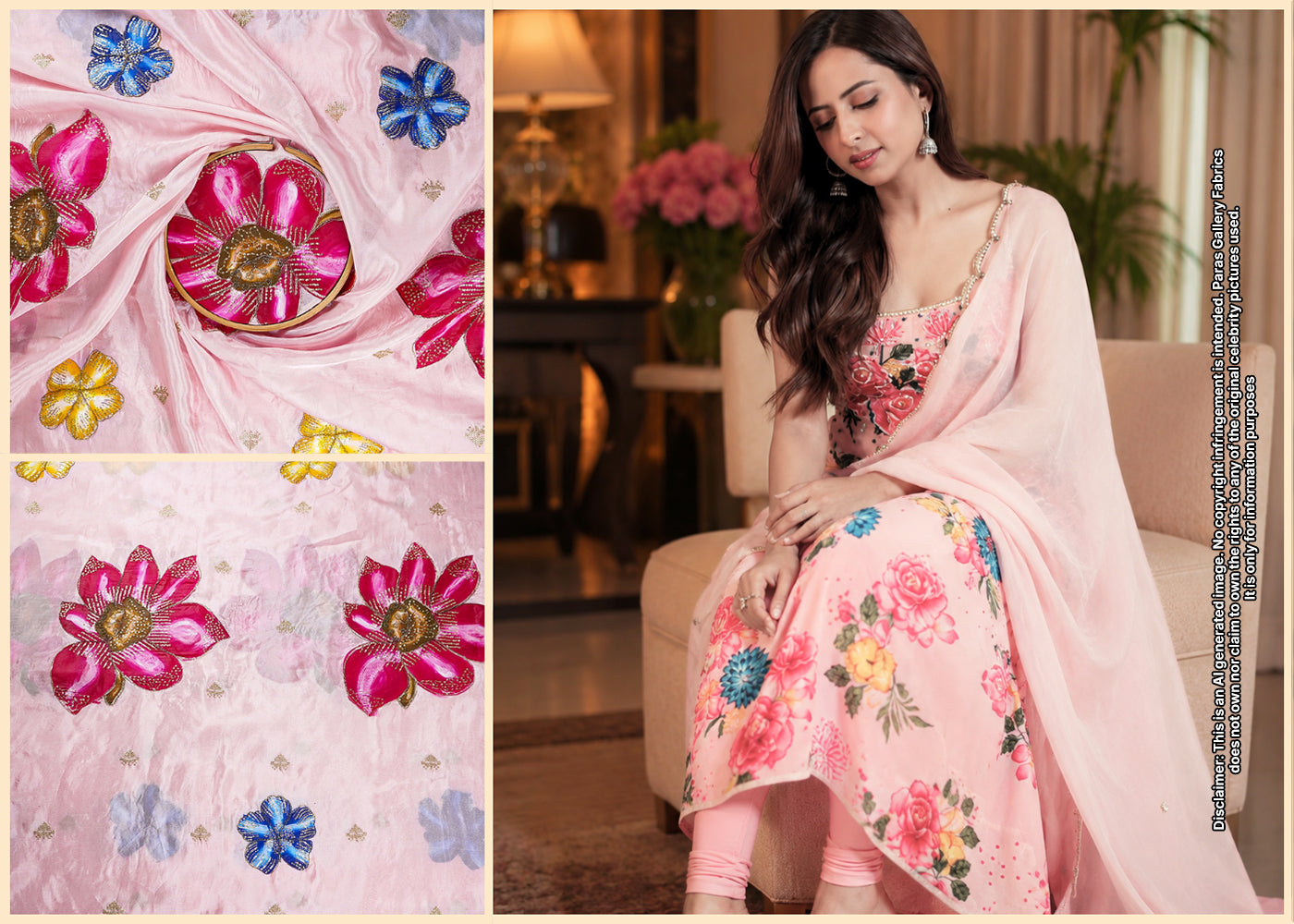
The pastel bridal movement is holding strong. Ivory, blush, sage, powder blue silk with tonal resham or light zardozi has overtaken the traditional deep red for a large share of urban weddings. Buyers want the richness of silk work without the weight of a full red zardozi build.
On the work side, placement embroidery is pulling ahead of all-over coverage. A worked border or yoke on a plain silk ground reads contemporary and costs far less than a fully embroidered metre.
Working Tips for Silk Embroidery
- Line heavy worked pieces. The weight of zardozi needs a backing to hold the shape
- Use placement work on borders and yokes to control cost rather than full coverage
- Store worked silk rolled or hanging, never folded, so the metal work does not crease the ground
- Handle cutting with the motif mapped first. A misplaced cut on worked silk is expensive waste
Frequently Asked Questions
How much silk embroidery fabric is needed for a bridal lehenga?
A full ghera lehenga takes 7 to 9 metres depending on kali count, plus lining. The dupatta adds 2.5 metres and the blouse around 1 metre. For heavy zardozi, confirm the kali plan with the karigar before cutting.
Can silk embroidery be washed at home?
No. Worked silk should be dry cleaned only. Water dulls the sheen, loosens zardozi and bead work, then leaves water marks on the silk ground that do not lift.
Which GSM suits a bridal lehenga?
The 200 to 250 GSM zardozi grade. Enough weight to hold the ghera and carry heavy work, where a lighter grade would let the flare collapse under the embroidery.
Is silk embroidery worth the higher price?
For heirloom and bridal pieces, yes. The silk holds colour and structure for years where a synthetic ground fades and flattens. For single-season festive wear a worked georgette or tissue costs less and serves the purpose.
Order Silk Embroidery at Paras Gallery Fabrics
Our silk embroidery range covers zardozi, resham, sequin, bead, aari, mirror work grades across the full GSM spread, cut by the metre or supplied by thaan for production runs. Designers building bridal collections can check bulk rates on our wholesale page.
