


Shopping Sangeet Fabric Online: Checks Before You Buy
Buying Online Guides · Draft 23 October 2026 Buying sangeet fabric online starts with a dance plan, not a colour swatch alone....

Everyday Fabric Guides · 7 minute read · Published 13 October 2026
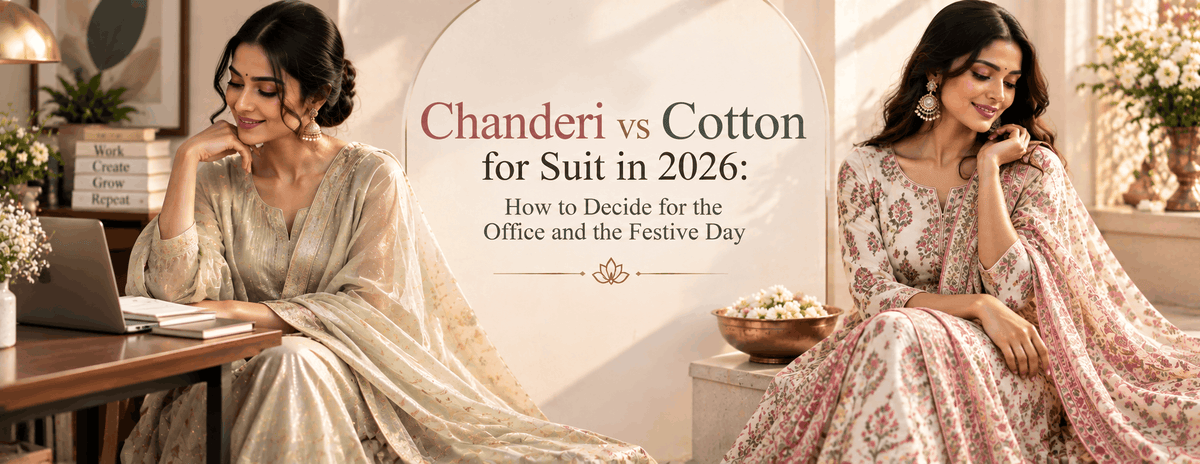
Chanderi vs cotton for suit is the daily-wardrobe question Delhi working women ask every October. Both fabrics are breathable. Both come in printed, plain plus worked variants. Both wash well plus wear long. The difference lies in how dressy each one reads. Chanderi carries a quiet sheen that reads one step above office; cotton carries a matte comfort that reads practical for the eight-hour workday.
The October to January 2027 window carries Diwali, Dhanteras, Karva Chauth, office festive dress-code days plus the full Delhi winter wedding season. The suit wardrobe has to cover a daily office rotation plus a Friday step-up plus a festive Pooja. One fabric cannot do all three.
Chanderi reads polished for the festive day plus the Friday office; cotton reads practical for the workday plus the summer function. Build the daily rotation on cotton; add chanderi for Fridays plus Poojas.
Here is our Delhi counter playbook for the chanderi plus cotton decision.
THE WINNING MOVE IS: FOUR COTTON SUITS FOR EVERY ONE CHANDERI. BUILD THE DAILY WARDROBE ON COTTON, SPEND ON CHANDERI FOR THE FESTIVE SUIT.
Quick answer: Chanderi vs cotton for suit comes down to sheen vs comfort. Chanderi is a silk-cotton blend with a soft sheen plus a slight stand, best for a Diwali office party, a Pooja or a Friday step-up. Cotton is a pure or blended cotton with matte breathability, best for a daily office kurta, a summer function or a travel outfit. The chanderi edit at 127 cuts covers plain, zari-border plus dyeable chanderi; the cotton range at 384 cuts carries plain plus mercerised cotton for the daily workday.
A chanderi kurta on a Monday workday reads over-dressed. A cotton kurta on a Diwali office party reads under-dressed. Each fabric has a function, plus a wardrobe built on one base ends up compromising on the other. The smart Delhi working woman keeps a split rotation: cotton daily, chanderi for the step-up days.
The silk content in chanderi closes the weave slightly, which gives it the stand plus the sheen. The cotton base in cotton leaves the weave open, which gives it the breathability plus the matte softness. The two fabrics are solving different problems.
Cotton every time. 90 to 110 GSM mercerised cotton or printed cotton flex reads polished through an eight-hour day. Pair with a plain Shantoon dupatta for a clean office read. The cotton edit at 384 cuts carries the daily rotation base.
Chanderi, in a quieter palette. 120 to 150 GSM medium-weight chanderi in cream, pink, mustard or deep teal reads one step above office without reading over-dressed. Pair with a georgette dupatta with scalloped border.
Chanderi, in a festive palette. A zari-border chanderi in red, maroon, mustard or antique rose carries the soft sheen that reads traditional under warm bulb light. Dupatta drape covers the head for the Pooja.
Cotton or mulmul. Pure cotton reads cool against the body in a May afternoon. Chanderi is doable but warmer because the silk content closes the weave. For outdoor temperatures above 32 degrees, pick cotton.
Browse the chanderi edit before the Diwali week
127 cuts across plain chanderi, zari-border chanderi plus dyeable chanderi. Diwali chanderi stock turns over hardest from mid-October to early November.
Browse Chanderi Edit →Chanderi creases hard in a suitcase plus the silk content resists quick steam-recovery on the move. For a long train or flight, cotton packs plus recovers much faster. Save chanderi for the destination, not the journey.
Chanderi has a slight stand but not a bridal weight. A heavy brocade dupatta on a chanderi kurta reads unbalanced because the two weights fight each other. Pair chanderi with georgette, phulkari or Shantoon-silk dupatta instead.
A machine wash kills a chanderi suit. The silk filaments break plus the sheen flattens permanently. First wash should be a dry clean; after that, a cold hand-wash with mild detergent. Never wring. Dry flat. Our how to iron chanderi guide walks the full routine.
If you prefer to walk a cotton plus a chanderi past the counter before cutting, book a 60-minute counter slot. The team drapes both fabrics on a bust form under daylight plus warm bulb light so you can read the sheen difference plus the drape difference in person. The chanderi fabric guide walks the weight bands plus finishes in depth.
5 metres of 44-inch fabric for a straight salwar suit; 6 metres for a Patiala salwar; 2.5 metres for a plain dupatta. The fabric estimator gives per-suit maths across every style.
Cotton lasts longer in daily rotation because the open weave takes repeated hand-wash plus iron cycles. Chanderi lasts longer in occasional wear because the silk content prefers less friction. Match the wear-cycle to the fabric.
Yes but with care. Chanderi reads warmer than cotton because the silk content closes the weave slightly. For an air-conditioned office or a short outdoor function below 30 degrees, chanderi is fine. Above 32 degrees outdoor, switch to cotton.
Chanderi pairs with georgette, phulkari or Shantoon-silk dupatta. Cotton pairs with mulmul, printed cotton, phulkari or Shantoon dupatta. Avoid a heavy sequins dupatta on plain cotton; it reads mismatched for most office functions.
Shop related fabric collections
Chanderi, cotton and dupatta edits for the office-plus-festive working woman
A suit wardrobe needs two hand-feel checks. Walk a chanderi plus a cotton past the counter, run the daylight test on both, hold each against your blouse plus your dupatta base. The chanderi shelf sits next to the cotton edit for a direct compare before you book the full suit lengths.
Or chat directly: +91 96544 40254
Buying Online Guides · Draft 23 October 2026 Buying sangeet fabric online starts with a dance plan, not a colour swatch alone....
Occasion Guides · Draft 23 October 2026 The short version: Choose anniversary dinner outfit fabric by testing how it feels while seated,...
Fabric education · Draft prepared 23 October 2026 A beautiful fabric name can still leave basic questions unanswered. To read fabric label...


