


Shopping Sangeet Fabric Online: Checks Before You Buy
Buying Online Guides · Draft 23 October 2026 Buying sangeet fabric online starts with a dance plan, not a colour swatch alone....

Wedding Fabric Guides · 7 minute read · Published 13 October 2026
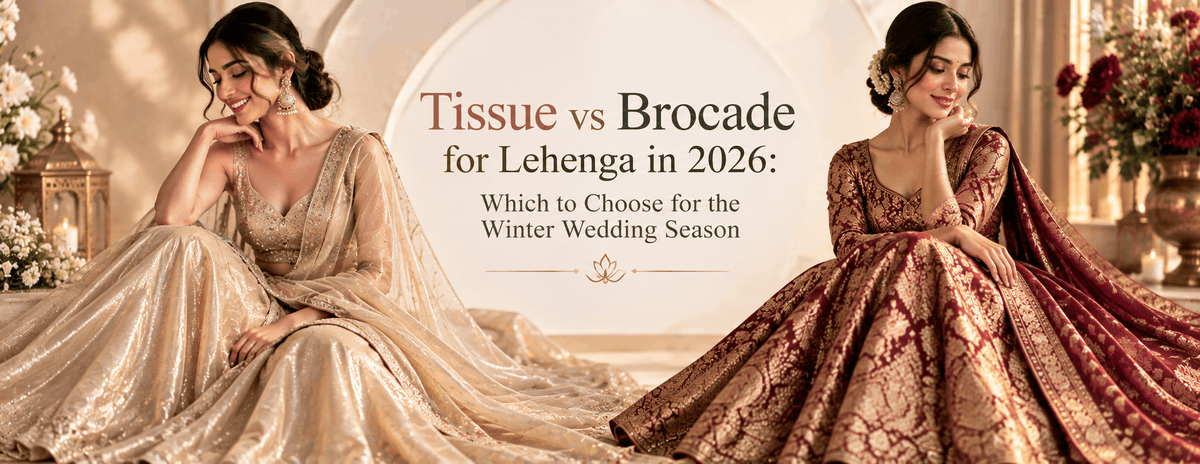
Tissue vs brocade for lehenga is the big winter-wedding call. Both fabrics read premium at the counter. Both carry zari. Both work on a bridal lehenga, a reception lehenga or a function set. The difference lies in what the lehenga is doing on the day. Tissue flares plus catches air. Brocade stands plus holds a regal silhouette. Pick the one that matches the function, not the one that matches the mood board.
The Delhi winter wedding cluster runs mid-November through early February 2027. Farmhouse terraces, Chattarpur banquets plus Delhi 5-star halls run a mix of warm bulb light plus string light. The fabric choice decides whether the lehenga reads light-catching on camera or regal on the stage.
Tissue reads light plus modern; brocade reads heavy plus traditional. A daytime Mehendi or a Sangeet dance floor wants tissue. A wedding ceremony sit-down or a reception stage wants brocade. For a full winter wedding week, most brides end up with one of each.
Here is our Delhi counter playbook for the tissue plus brocade decision.
THE WINNING MOVE IS: TISSUE FOR MOVEMENT FUNCTIONS, BROCADE FOR CEREMONIAL FUNCTIONS. BOTH FOR A FULL WEDDING WEEK.
Quick answer: Tissue vs brocade for lehenga comes down to flare vs stand. Tissue is a lightweight metallic-yarn fabric that flares when you walk, catches soft sheen on camera plus photographs beautifully at Sangeet. Brocade is a heavy figured weave with zari motif, falls close to the body, holds pleats crisp plus reads regal at the pheras. The tissue edit at 699 cuts covers plain, crushed plus diamond tissue; the imperial brocade range at 548 cuts holds the bridal-weight ground.
A bridal lehenga spends four hours on a stage, a sit-down pheras, a group photo plus a car ride. A Sangeet lehenga spends two hours on a dance floor, a dinner, a performance set plus a thousand candid photos. The two functions demand opposite fabric behaviours. Tissue cannot hold a four-hour ceremonial sit without crushing at the pleats. Brocade cannot flare on a dance floor without weighing the dancer down. Match the fabric to the function, not the inspiration folder.
Tissue every time. 90 to 130 GSM diamond tissue or crushed tissue holds a 12-kali flare that catches air plus string light. Pair with sequins work on the yoke plus a lightweight net dupatta for the double drape. The flare is the camera moment.
Imperial brocade. 300 to 400 GSM imperial brocade carries the regal weight that reads bridal on the stage plus holds crisp pleats through a four-hour pheras sit-down. Pair with a brocade or a kalabattu-tissue dupatta for the double drape over the head.
Classical brocade on the skirt plus tissue on the dupatta. The brocade reads richer in close-up portraits; the tissue dupatta reads light-catching on the wide stage shots. Best of both worlds for the two-camera reception setup.
Plain tissue. 85 to 110 GSM plain tissue in daytime pastels like champagne, mint, blush or ivory reads soft in natural daylight plus catches a quiet sheen when the sun hits. Pair with a thread-work yoke plus a light organza dupatta.
Browse the tissue edit before the winter wedding rush
699 cuts across plain tissue, crushed tissue plus diamond tissue. Winter wedding tissue stock turns over hardest from mid-October to late November.
Browse Tissue Edit →A 350 GSM brocade on a Sangeet reads too heavy for the dance floor plus crushes the pleats inward every time you twirl. Save brocade for the pheras or the stage. For the Sangeet, every bridal couple reaches for tissue in the end.
A plain 90 GSM tissue reads beautiful but offers no warmth on a 10-degree Delhi December evening. The bride ends up in a shawl across the pheras, which blocks the lehenga on camera. For a winter wedding ceremony, brocade carries weight plus warmth together.
Tissue can read sheer under flash. A Shantoon or cotton-silk lining is non-negotiable. The lining layer is invisible from outside plus prevents the lehenga from catching light in the wrong places during posed photos.
If you prefer to walk a tissue plus a brocade past the counter before cutting, book a 60-minute counter slot. The team drapes both fabrics on a bust form under warm-bulb light so you can see the flare on tissue plus the fall on brocade side by side. The tissue for wedding guide walks the weight bands; the imperial brocade for wedding guide walks the bridal weights.
6 to 7 metres of 44-inch fabric for an 8 to 10-kali lehenga ghera on either base. Add 2.5 metres for the dupatta plus 1 metre for a sleeveless blouse. For a 12-kali flare, push to 7.5 metres on the ghera.
Yes plus often. A classical brocade dupatta on a plain tissue ghera reads layered without reading over-the-top. The pairing is a Delhi counter favourite for the mid-formal engagement cluster.
Brocade lasts longer in flat storage because the woven weight resists age. Tissue needs careful hanging because the metallic yarn can tarnish if folded tight. Store brocade folded in acid-free paper; hang tissue on a padded hanger.
No for both. Dry-clean only is the standard rule. The metallic zari on both bases reacts badly to water plus detergent. Spot-clean with a dry cloth only, hand to a professional dry cleaner for a full wash.
Shop related fabric collections
Tissue, imperial brocade and lehenga edits for the winter-wedding bride
A lehenga decision needs a hand-feel. Walk a tissue plus a brocade past the counter, drape each one on a bust form, hold them against your blouse base plus your jewellery palette. The tissue shelf sits next to the imperial brocade shelf for a direct compare before you book nine metres.
Or chat directly: +91 96544 40254
Buying Online Guides · Draft 23 October 2026 Buying sangeet fabric online starts with a dance plan, not a colour swatch alone....
Occasion Guides · Draft 23 October 2026 The short version: Choose anniversary dinner outfit fabric by testing how it feels while seated,...
Fabric education · Draft prepared 23 October 2026 A beautiful fabric name can still leave basic questions unanswered. To read fabric label...


