


Shopping Sangeet Fabric Online: Checks Before You Buy
Buying Online Guides · Draft 23 October 2026 Buying sangeet fabric online starts with a dance plan, not a colour swatch alone....
Fabric Comparison Guides · 9 minute read · Published 19 October 2026
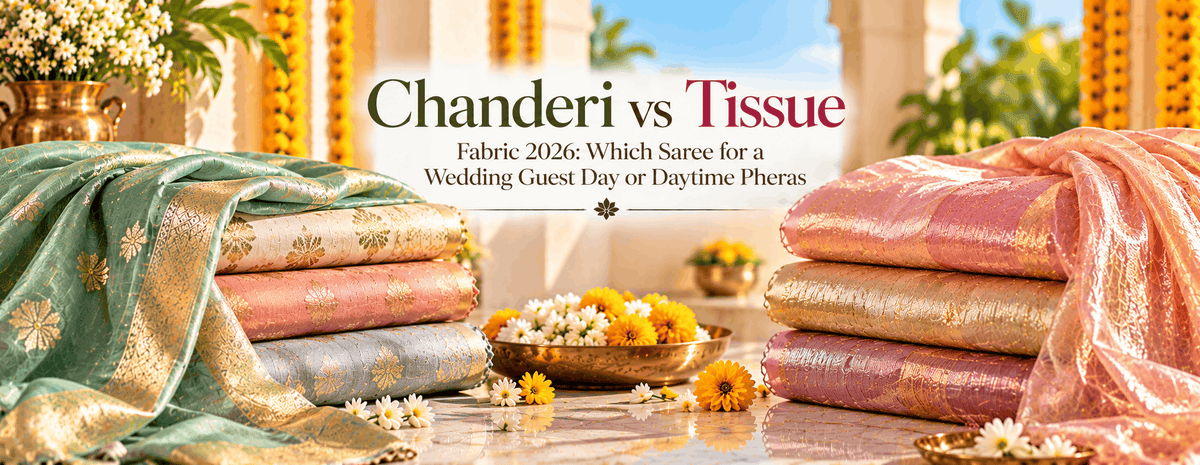
Chanderi or tissue? Every October a sister of the bride walks in with this question. Both work beautifully for a wedding, but each has its slot.
The short version: Chanderi is sheer and papery, zari only at the pallu and border, around 450 grams. Tissue is also sheer but the metallic weft runs through the whole body, so it shimmers across the saree, around 520 grams.
Here is how we pick at the counter.
THE WINNING MOVE: CHANDERI FOR THE DAYTIME PHERAS OR MORNING WEDDING GUEST. TISSUE FOR THE DHANTERAS-ADJACENT WEDDING GUEST OR WINTER COCKTAIL EVENING.
Quick answer: Chanderi for the classical daytime pheras, tissue for the shimmer-forward evening. The saree collection has 334 finished pieces across both bases. For a drape trial on a form, book a counter slot, we will pull both in your wedding palette.
Chanderi is the daytime pheras saree nine times out of ten. The classical weave uses a pure silk warp plus a fine cotton or pure silk weft, which gives the saree that papery hand nobody can mistake. For a morning phera on the lawn with soft daylight, the sheer face plus the muted zari photograph classical in a way no other saree can. Pastels sing on chanderi, ivory, blush, soft pistachio, powder blue, dusty gold. We carry chanderi at 127 live cuts plus a dyeable chanderi handle at 260 cuts for the bride who wants a custom pheras shade. One honest downside, the sheer body shows the petticoat colour clearly, so chanderi needs a careful colour-matched slip for every wedding function.
Tissue is the wedding guest saree that photographs expensive under evening lamp light. The weave uses a silk or fine viscose warp plus a metallic zari weft running through the entire body of the cloth, which is what makes tissue shimmer across the whole saree rather than only at the border. The hand is sheer plus papery like chanderi, but tissue is slightly heavier because the metallic weft adds a touch of weight. Our tissue range runs 736 live cuts, the biggest classical sheer-sari range in the shop, with soft tissue plus crushed tissue options for the sister who wants a different hand. Peach gold, antique silver, ivory shimmer, pink gold, that is where tissue earns its place for a dhanteras-adjacent pre-wedding function or a winter cocktail saree. One honest downside, the metallic weft can slip against a smooth petticoat, which is why tissue sarees want a slightly textured cotton petticoat rather than a shiny satin one.
Chanderi falls lightly across the body plus the pallu catches a soft lift on an outdoor pheras lawn. Tissue falls lightly too, but the metallic weft gives the pallu a quiet shimmer every time the bride walks under a lamp. For a seated pheras photographed in daylight, chanderi reads classical. For an evening wedding guest sari photographed under hall lamps, tissue reads shimmer-forward.
Chanderi pleats hold a sharp box pleat because the papery hand resists collapse. Tissue pleats hold a sharp pleat too, but the metallic weft can slip against itself if the pleats are not pinned, which is why tissue pleats always need a safety pin at the waist. Both bases read crisp down the front for the saat phera photographs. For a dancing cocktail evening where tissue is the pick, pin the pleats before the function starts.
Pastels on chanderi photograph softly across both morning sunlight plus daytime hall light, which is exactly the lighting plan of a daytime pheras. Tissue is the reverse. The metallic weft catches lamp light rather than daylight, so tissue photographs richer under a warm hall lamp or evening uplight than it does under harsh morning sun. For a dhanteras-adjacent evening wedding function, tissue is the right pick.
Chanderi zari is traditionally a flat gold or silver thread in a buti or lotus motif across the pallu plus the border. The sheer body is left plain, which keeps the saree classical. Tissue zari is woven into the whole body as the weft, which is why the saree shimmers across the full six yards rather than only at the pallu. Both read richly on an album, but they tell very different stories about the function.
Browse the saree edit for the daytime wedding guest pick
334 finished pieces across chanderi, tissue, silk and chiffon. Covers the daytime pheras, the morning sagan plus the evening dhanteras-adjacent wedding guest look.
Browse Saree →The saree looks beautiful in the shop under warm counter light. On a lawn mandap at 10 am with full daylight, the metallic weft does not catch sun cleanly and the saree reads duller than the counter test showed. For a daytime pheras, pick chanderi. Keep tissue for the evening wedding guest sari or the dhanteras-adjacent evening function.
A deep maroon or black petticoat under an ivory or pastel chanderi reads unflattering against daylight. Keep a cream or matching soft petticoat for pastel chanderi pheras. Keep the dark petticoat for a deeper chanderi or a dark-tone tissue that does not need the colour match.
The sheer base cannot carry dense stone or katdana work across three cousin weddings. The katdana weight pulls at the metallic weft plus the saree reads torn around the pallu-end hem after four or five wears. Keep heavy work for a georgette or satin base, let tissue carry a mukesh or a hand-painted motif that respects the sheer shimmer face.
If you can come in, honestly do, because draping on a form against the planned mandap setup is the only real test. Book a slot and we will set it up under both a daytime lamp plus a warm hall lamp. Our chanderi fabric guide 2026 walks the chanderi side further, plus the tissue fabric for wedding picks guide walks the tissue side for a winter ceremony.
If the daytime pheras is a seated event with a short walking round, yes. For a full wedding day with the pheras, the sagan plus the evening lamp dinner strung together, change into a tissue for the evening slot because the metallic weft reads richer under warm lamp light than chanderi does.
In daylight pheras, chanderi photographs softer plus prettier because the sheer face plus the muted zari read classical. In an evening lamp-lit venue, tissue photographs richer plus more cinematic because the metallic weft catches the lamp across the whole body. Pick the base by the lighting plan.
Chanderi, usually. Light weight plus a crisp sharp pleat line elongate a short frame on the mandap. Tissue with an all-over shimmer can read busy on a 5-foot build in a close-up photograph, so keep the tissue pallu quieter plus the body motif minimal for a petite bride.
Both bases, dry clean only by a professional. Press inside out at a silk setting with a cotton cloth between the iron plus the surface, never direct heat on tissue. Store folded in acid-free paper or a cotton cover. Avoid plastic bags for long storage because both bases can yellow slightly under trapped moisture. Nobody tells you a yearly airing in the shade saves the metallic weft across the sister's own future wedding events but it does.
Shop related fabric collections
Saree, chanderi and tissue for the daytime wedding wardrobe
Honestly, the only way to really know is to see each base draped on a form against both daytime and evening lamp light, with the pallu over the shoulder. Pictures lie, phones lie, the shop light lies a bit. Walk in or ping on WhatsApp first and we will have the swatches ready for the wedding week palette.
Or chat directly: +91 96544 40254
Buying Online Guides · Draft 23 October 2026 Buying sangeet fabric online starts with a dance plan, not a colour swatch alone....
Occasion Guides · Draft 23 October 2026 The short version: Choose anniversary dinner outfit fabric by testing how it feels while seated,...
Fabric education · Draft prepared 23 October 2026 A beautiful fabric name can still leave basic questions unanswered. To read fabric label...


