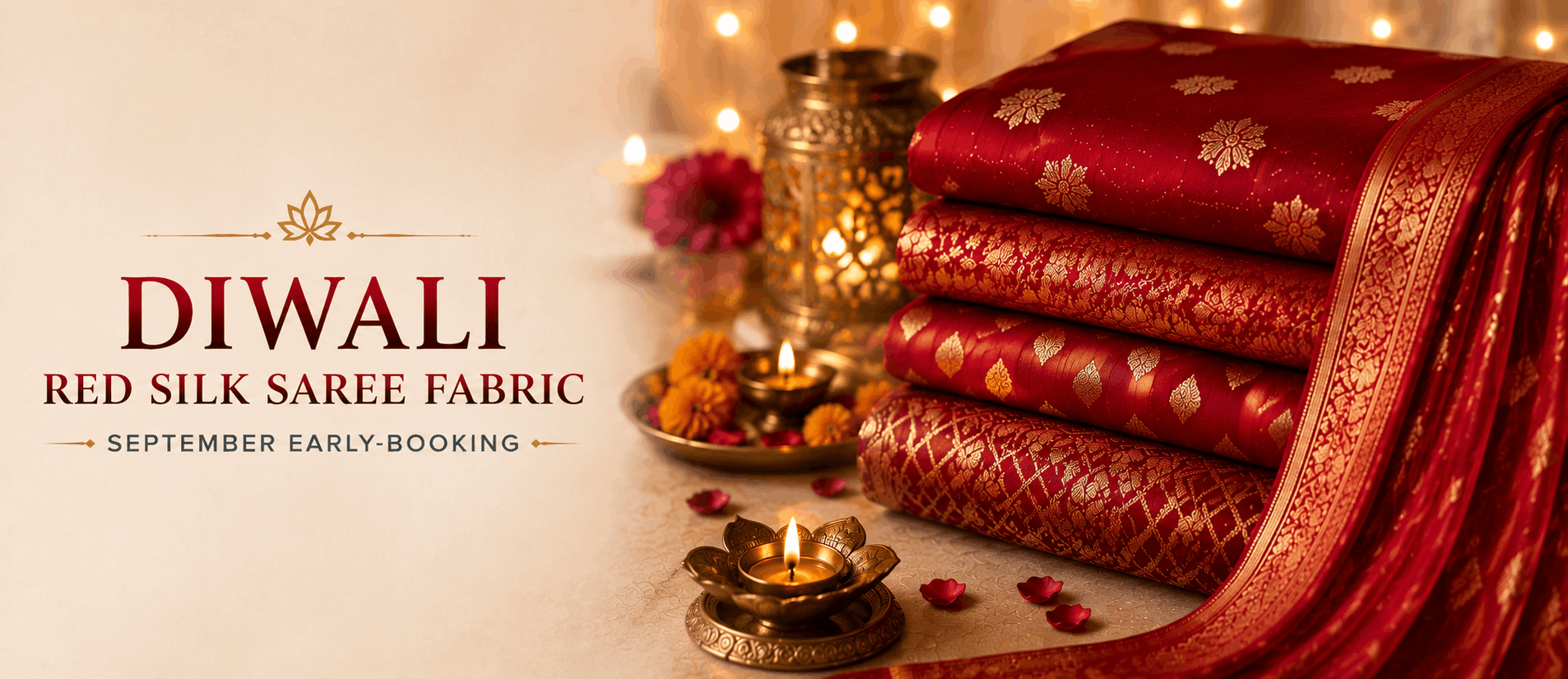
Diwali Red Silk Saree Fabric, September Early-Booking for the 8 November 2026 Puja
Quick Answer
For the Diwali Lakshmi puja on Sunday, 8 November 2026, the traditional saree is a red silk fabric with gold zari, in Banarasi, Chanderi silk, silk jacquard, or pure silk weaves. Weight around 110 to 180 grams per metre. 5.5 metres for the saree, 0.8 metres for the blouse. Book in September (before Pitru Paksha starts on 26 September) so the fall-and-pico, blouse stitching, and any custom-dye work is done by end October. Delhi and Mumbai stock runs out by mid-October, so early booking matters.
Why September is the right time to book
Diwali is Sunday, 8 November 2026. That is 67 days from today. It feels early. It is not.
Two things happen in October that make September booking the smart move.
First, Pitru Paksha runs from 26 September to 10 October. That is 15 days when most Hindu households pause new-fabric shopping and no fresh custom dyeing gets picked up. If you want a specific red shade dyed on Chanderi or plain silk, September is the window.
Second, from Navratri Pratipada on 12 October through Diwali on 8 November, festive-saree demand goes vertical. Delhi wholesalers restock twice in that stretch, but the popular red silks (sindoori, kumkum, rani) sell out in the first restock. If you wait, you will be pulling from the second-round stock, which is thinner in shade options.
Book by 20 September. Your saree will be ready by end October with tailoring done, and you will not be paying peak-October prices for the same fabric.
Which red is a Diwali Lakshmi puja red
Red silk covers a big shade range. Not every red is a Lakshmi puja red.
- Sindoori red, the true suhaag red with a slight orange undertone. Traditional pick for married women.
- Kumkum red, deep, warm, blood-red. The most photographed Diwali colour on saree racks.
- Rani red, rani pink leaning red, contemporary but still traditional-adjacent.
- Maroon, deep, wine-adjacent, more evening-puja than morning-puja.
- Sindoori orange, the coral-red, works if your mandir has a lot of gold decor.
Sindoori and kumkum are the safest picks for the actual Lakshmi puja evening. Maroon and rani work for post-puja family gatherings and card-party dinners.
Skip: dull brick red, tomato red, and burgundy-black. All read wrong in Diwali diya lighting.
The four silk fabrics that hold up for Diwali puja
Banarasi silk, the heritage pick
Around 150 to 180 grams per metre. Heavy zari, structured pallu, formal drape. This is the "family heirloom" saree fabric. Photograph-perfect in front of the Lakshmi murti.
Best for hosts who will do the full puja, aarti, aarti thali, and receive multiple sets of guests through the evening. It sits well through a 4-hour evening.
Note: Banarasi silk in our shop rack is limited to 4 pieces at the moment (thin collection). If you want variety, look at silk jacquard or the imperial brocade range instead.
Chanderi silk with heavy zari border
Around 100 to 130 grams per metre. Softer body than Banarasi. Still holds a formal saree drape. Easier to sit in during the puja.
Best for women who want the "heavy saree" look without the actual weight on the shoulders. Our dyeable Chanderi collection has 249 pieces you can send to the dyer for a custom kumkum-red shade.
Silk jacquard, the structured formal pick
Around 130 to 160 grams per metre. Woven-in motif, no separate embroidery. Very sharp drape, no wrinkle by end of evening.
The silk jacquard collection has 100 pieces. This is the fabric I recommend for women hosting a Diwali dinner-cum-puja combined event.
Pure silk with allover thread work
Weight varies. Very soft, sheens in evening light, holds a lot of hand embroidery.
Pick this if you want a saree that reads modern-luxury rather than heritage-heirloom. Not every saree fabric on the market is real pure silk, so always ask for a burn-test at the counter if unsure.
Metre count and full costing breakdown
For a complete Diwali puja saree with blouse and matching dupatta option:
| Item | Metres | Notes |
|---|---|---|
| Saree fabric | 5.5 m | Standard saree length, pallu included |
| Blouse fabric | 0.8 m | 1 m if full-sleeve or princess-cut |
| Fall for petticoat | 0.5 m | Same tone as saree base |
| Optional matched dupatta | 2.25 m | For layered ghoongat look at puja moment |
Total per saree set: 6.8 metres (7.75 metres if you want the layered ghoongat option).
For a mother-daughter matching set, double all metres. For a family of five women all in coordinated red silk, keep to the same shade family but vary the border weight so each saree looks distinct.
The September-to-November booking timeline
- By 20 September: shade decided, fabric bought, dropped at the dyer if custom shade
- 26 September to 10 October (Pitru Paksha pause): avoid new shopping if your family observes it. Dyer work continues in the background.
- 11 to 20 October: fabric back from the dyer, dropped at the fall-and-pico
- 20 to 30 October: blouse fabric picked, stitched, first fitting
- 1 to 5 November: final blouse fitting, saree pressed, hung
- 8 November (Diwali): ready to drape for Lakshmi puja
If you are past 20 September, you can still order in October, but expect to pick from ready-shelf stock rather than a custom dye.
The blouse question, harder for red silk than yellow saree
Red silk blouses need contrast piping or the whole outfit reads flat.
- Antique gold zari blouse, the classic contrast, works for every red shade
- Deep green raw silk blouse, contemporary contrast, especially against sindoori and kumkum
- Matching red blouse with gold katdana or beadwork, monochrome maximalist, works for evening card parties
- Ivory brocade blouse with red border piping, softer contrast, good for daytime lunch guests
For matched heavier zari and brocade blouse fabric, our bridal bliss collection has 160 pieces sorted by embroidery density.
For boutique owners planning Diwali stock
If you run a boutique, September is your restock window for Diwali silk sarees. October restocks are more expensive per metre and shade variety is narrower.
Wholesale planning notes for a Delhi-adjacent boutique:
- Plan 40 to 60 metres of sindoori and kumkum red Chanderi silk per Diwali footfall day
- Stock at least three red shades (sindoori, kumkum, rani) plus one maroon for the wine drinkers
- Keep ready blouse pieces in antique gold and deep green raw silk
- Advance-book any custom-dye orders by 20 September
Wholesale enquiries: parasgalleryfabrics.com/pages/wholesale.
FAQs
Which red silk saree fabric is best for Diwali 2026 puja?
Sindoori or kumkum red in Chanderi silk or silk jacquard. Around 100 to 160 grams per metre. Holds a formal drape through a full puja evening.
When should I book fabric for Diwali 8 November 2026?
By 20 September, before Pitru Paksha starts on 26 September. Custom-dye work halts through Pitru Paksha, so September booking gives you the widest shade choice.
How many metres for a full Diwali saree with blouse?
6.8 metres total: 5.5 metres saree, 0.8 metres blouse, 0.5 metres fall.
Can I wear maroon instead of red for Diwali Lakshmi puja?
Yes, especially for evening puja and post-puja card parties. Sindoori and kumkum are more traditional for the actual Lakshmi puja moment, maroon reads slightly modern.
Is Banarasi silk worth the higher price for Diwali?
Yes, if you host a formal puja with multiple guest rounds and want a saree that photographs as an heirloom piece. Chanderi silk with heavy zari is the softer, lighter, more sit-friendly alternative.
Book a Diwali fabric consultation
Come by in September, before Pitru Paksha, and I will pull sindoori, kumkum and rani red Chanderi silk and silk jacquard from the back rack. Custom dye consultation, blouse fabric match, dupatta pairing, all in one visit.
Book an appointment: parasgalleryfabrics.com/pages/book-an-appointment
Boutique wholesale enquiry: parasgalleryfabrics.com/pages/wholesale
WhatsApp: +91 96544 40244