


Buy Organza Fabric for Haldi: Layers That Photograph Well
Occasion Guides · Published 30 October 2026 · Updated 30 October 2026 · By the Paras Gallery Fabrics counter team, Lajpat Nagar...

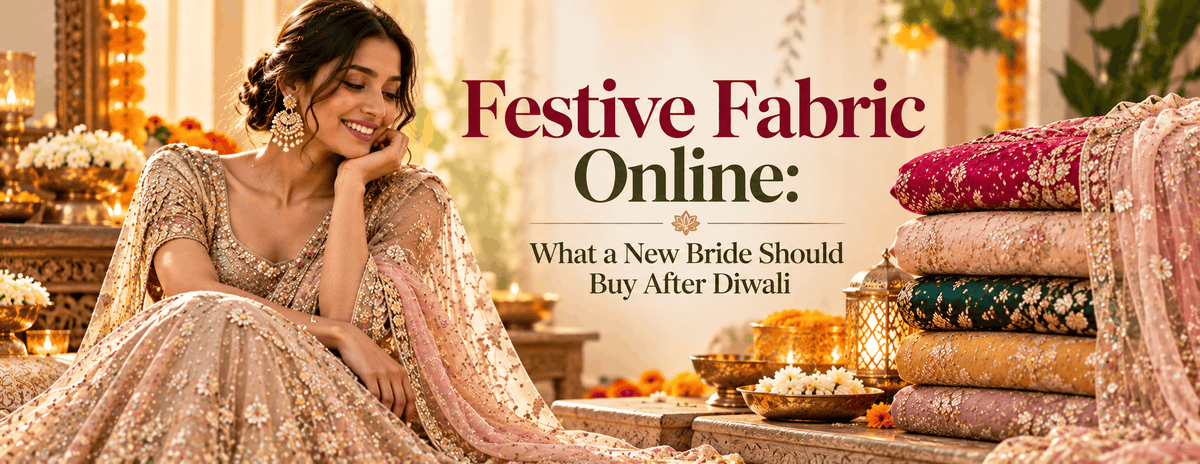
Buying Guides · Published 30 October 2026 · Updated 30 October 2026 · By the Paras Gallery Fabrics counter team, Lajpat Nagar II, New Delhi
Your first shaadi season in the sasural starts right after Diwali. A cousin-in-law's sagan, mehendi, wedding night and reception all land within a few weeks. Here is how to buy festive fabric online once, stitch it early and still look new in every family photo.
The short version: Order two bases and three dupattas in early November. Ask the family what they plan to wear for each function first. In photos, change the colour next to your face, since the skirt rarely shows.
Quick answer: For a first wedding season in the sasural, buy festive fabric online by the first week of November. Order silk or tissue for the sagan, organza for the mehendi, brocade for the wedding night and sequins net for the reception. Tissue runs roughly Rs 300 to Rs 900 a metre. Shop the festive fabric collection online, or book a counter slot to match shades.
Key facts at a glance
Match the weight of the fabric to the hour of the function. Day events like the mehendi want light organza or georgette. The wedding night and reception carry brocade, tissue and sequins net.
| What to order | Rough price | Metres to order | Best for |
|---|---|---|---|
| Silk | Roughly Rs 500 to Rs 1,500 a metre | 2.5 m for a suit | Sagan, seated family rituals |
| Tissue | Roughly Rs 300 to Rs 900 a metre | 2.5 m suit or 5.5 m saree | Sagan or reception |
| Organza or embroidered georgette | Roughly Rs 300 to Rs 2,000 a metre | 2.5 m for a suit or sharara top | Mehendi in daylight |
| Brocade | Roughly Rs 600 to Rs 1,800 a metre | 3.5 to 5 m for a lehenga skirt | Wedding night |
| Sequins net | Roughly Rs 800 to Rs 2,500 a metre | 5.5 m saree or 3.5 m skirt, plus lining | Reception under stage lights |
Follow our photo-repeat rule: change the colour that sits next to your face. Family photos are mostly cropped at the chest, so the dupatta and blouse show while the skirt hardly does.
Take one gold tissue skirt. Wear it with a wine silk blouse and a gold dupatta at the sagan. At the reception, add an emerald velvet blouse and an emerald net dupatta. Only the frame around your face has changed. Keep heavy jewellery for one night only. Change the earrings for the other.
Before you order, ask your sister-in-law what the family plans for each function. Many families pick a shared shade for the mehendi or sagan. Red and deep maroon usually stay with the bride on the wedding night, so pick rani pink, emerald or gold instead.
A round or boat neck about 6 to 7 inches deep in front, with elbow-length sleeves, works for most sasural functions. Ask your tailor for a back no lower than the shoulder blades.
Sheer sleeves in organza or net give cover without heat in a crowded hall. A dupatta placed over the head during the pheras needs to be 2.5 metres long so it stays put on one shoulder.
Net, organza and light tissue need lining in the same metres as the outer fabric. Use shantoon or crepe in a matching shade and leave only the sleeves sheer.
Fall changes with the fabric. Brocade stands away from the body and suits a structured skirt. Silk and georgette fall close. Sequins net drops heavy, so a can-can under a lehenga skirt keeps the hem off your feet at the pheras.
Shop festive fabric for every function
528 live fabrics for sagan, mehendi and reception.
Shop Festive Fabric →Order in the first week of November and hand the fabric over by 12 November. A plain suit takes 7 to 10 days. An embroidered lehenga or a lined net saree blouse takes 2 to 3 weeks.
The mistakes we see most are a lehenga in the bride's red, exact metres with nothing spare and net stitched without lining. For the Diwali puja itself, read our first Diwali at the sasural suit fabric guide.
From the boutique side: tailors around Lajpat Nagar often fill November slots in the days after Diwali. Book the slot first, then send the fabric.
Buying from Paras Gallery Fabrics online takes five steps, from filtering the collection to checkout. Prices and stock are on each product page.
Yes, you can buy festive fabric online from us and check the colour first on a daylight video. Send the product link on WhatsApp and we will film the piece near a window, front and back. Hold the video up to the family shade photo, since phone screens often shift pinks and golds.
Avoid a repeated look by changing the colour next to your face at each function. Swap the dupatta and the blouse while the skirt or suit base stays the same. Most family photos are cropped at the chest. Change the earrings and the hair too, because those sit in every frame.
A newlywed at a cousin-in-law's wedding should wear a festive colour that does not compete with the bride. Rani pink, emerald or gold brocade works well for the wedding night. Ask the family about shared shades first. Keep the neckline modest and the sleeves at the elbow for the pheras.
A suit needs about 2.5 metres, a lehenga skirt 3.5 to 5 metres and a saree 5.5 metres with a blouse piece. Add 1 to 1.25 metres for a separate blouse and 2.25 to 2.5 metres for a dupatta. Sheer fabrics need the same metres again in lining.
Shop related fabric collections
Bases, blouses and dupattas for the season
Share the function list and shades on WhatsApp. We will suggest bases, blouses and dupattas with metres for each.
Or chat directly: +91 96544 40254
Occasion Guides · Published 30 October 2026 · Updated 30 October 2026 · By the Paras Gallery Fabrics counter team, Lajpat Nagar...
Fabric Education · Published 30 October 2026 · Updated 30 October 2026 · By the Paras Gallery Fabrics counter team, Lajpat Nagar...
Occasion Guides · Published 30 October 2026 · Updated 30 October 2026 · By the Paras Gallery Fabrics counter team, Lajpat Nagar...


