Gota Patti Fabric for Haldi and Mehendi: What I Tell Every Bride Who Walks Into My Shop
Gota Patti Fabric for Haldi and Mehendi: What I Tell Every Bride Who Walks Into My Shop
Twelve years now I am sitting behind this counter in Lajpat Nagar Central Market, watching brides walk in for their Haldi fabric on a Tuesday afternoon. The same question every time. Bhabhi, what is the real gota patti, what is the fake one, and why is one piece Rs 350 and the next one Rs 1,200?
So this guide. Plain talking. From the karigar side of the cloth, not the magazine side.
What is Gota Patti Fabric, Really
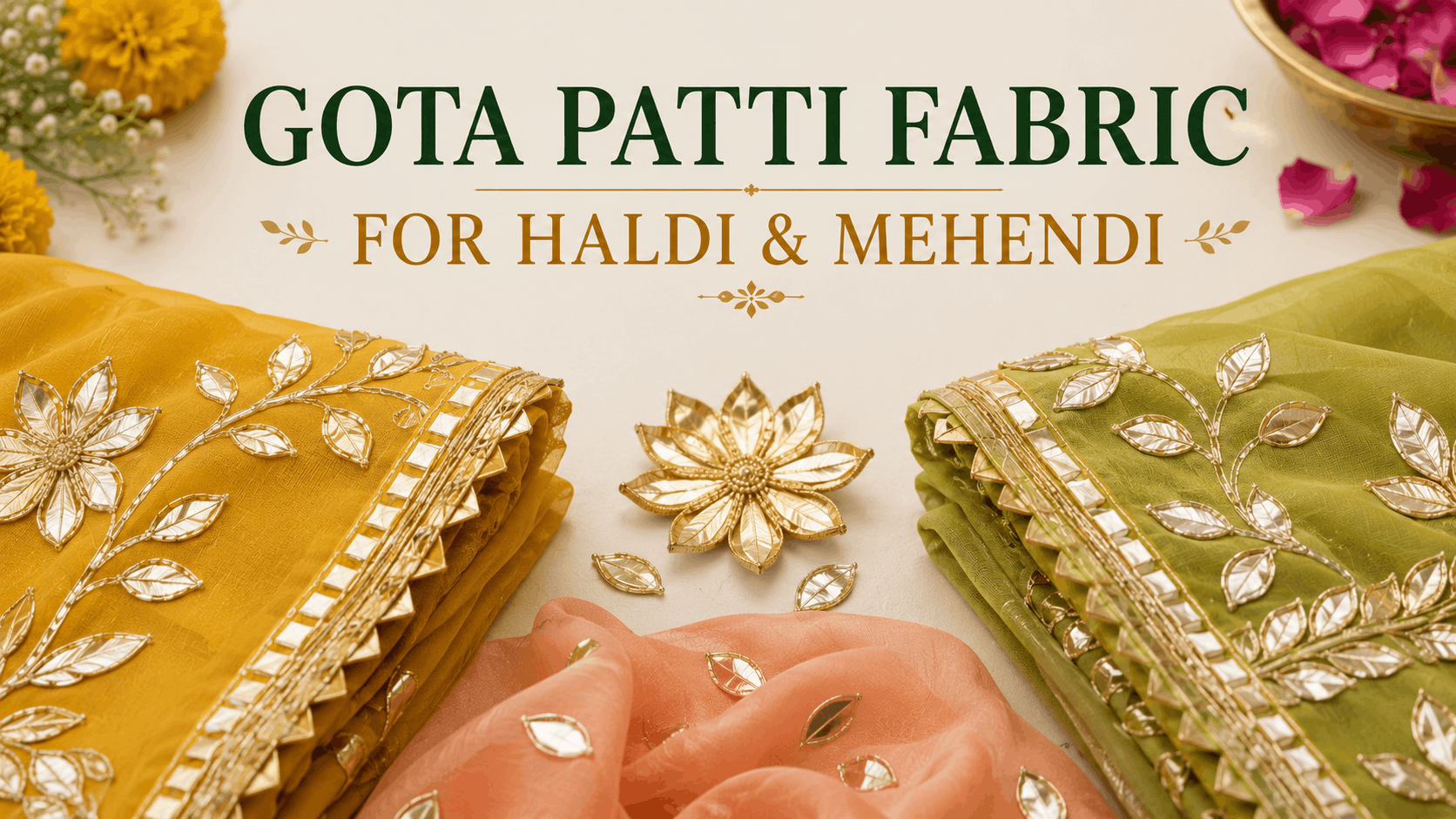
Gota itself is a ribbon. Originally it was a real silver wire flattened and woven into a tape, used in Rajasthani court costume. The patti is the small folded shape that the karigar pinches out of that ribbon, usually a leaf, a petal, a fish, a paisley. The shapes get tacked down onto a base cloth with thread.
So gota patti fabric is two layers of work. There is a base. There is the embellishment.
Today the base is almost always georgette, organza, or chinon. The ribbon is mostly polyester foil with metallic coating, sometimes a copper-silver mix, very rarely a real metal alloy now. The handwork still exists. The karigar bastis in Jaipur and Bikaner are still cutting and folding the patti by hand. But machine-foiled versions also flood the market in Surat and Bhilwara. Both call themselves gota patti. Only one is the original.
Why Haldi and Mehendi Brides Specifically Ask For It
Daylight. That is the short answer.
Haldi happens in courtyard or lawn. Mehendi spills outdoors. The light is harsh. Heavy embroidery like zardosi looks black and lumpy in that light. Sequins flatten out. Gota patti throws back the sun in tiny flecks because the foil is curved, not flat. Photographs come out alive without needing post-processing.
The other reason is breathability. The base cloth is georgette or chinon. Skin breathes. A bride who is sitting for two hours with turmeric on her arms is not sweating into a velvet choli. The fabric stays light.
Quality Grades I Sell, and What They Cost
Let me be honest about the price tiers. These are wholesale Lajpat Nagar quotes for June 2026.
|
Grade |
What it is |
Price per metre |
|
Imitation gota patti |
Machine-foiled, glued or fused motifs on georgette base |
Rs 280 to 450 |
|
Mid-line gota patti |
Machine-sewn patti onto cloth, real ribbon, no hand folding |
Rs 550 to 850 |
|
Hand gota patti |
Hand-cut, hand-folded, hand-stitched patti by Jaipur karigar |
Rs 850 to 1,400 |
|
Pure metal gota patti |
Real silver or gilt wire, custom order only |
Rs 2,200 upward |
Most retail boutiques in South Delhi sell hand gota patti as bridal-grade. The imitation goes mostly into mass-market lehenga choli sets and ready-to-wear suits.
How to Spot Real Handwork in Sixty Seconds
This is the part most online buyers do not know. Flip the cloth over.
On a real hand gota patti piece, the back shows individual thread knots anchoring each motif. The thread will not be perfectly straight. You will see tiny tail ends of cotton thread sticking out where the karigar tied off. The motif will sit slightly raised because it has been folded by hand.
On a machine version, the back is uniform. Either a glue patch shows under the motif, or the stitching is mechanical, evenly spaced, often a chain stitch. The motif sits flat against the base. No three-dimensional feel.
I tell every customer who orders by WhatsApp video the same thing. Show me the back. Then I tell them the price.
Colour Choices That Are Actually Selling This Summer
Yellow is obvious for Haldi. But the yellow that brides are picking in 2026 is not the bright Indian yellow of ten years back. It is muted. Mustard. Turmeric-dust. Honey-amber. The reasoning is simple. These tones blend with the actual haldi paste on the skin, so the outfit photographs as one continuous warm wash. Bright lemon yellow now reads as too costume.
For Mehendi the picks I am dispatching are parrot green, mint pista, salmon pink, peach, and a coral that the Mumbai stylists started using last December. Royal greens and dark forest greens have dropped off. Brides are picking lighter, fresher colours because the henna itself takes care of the dark contrast.
Outfit Constructions That Work With This Fabric
A few practical layouts I keep recommending.
Bandhani-print dupatta plus gota patti choli plus plain georgette skirt. The cost is controlled. The visual hit is on the upper body where photographs frame.
Anarkali with gota patti on the yoke, plain skirt, gota patti border on the hem. Saves cost on metres because handwork goes only on bodice and hem.
Sharara with a gota patti kurta and a plain net dupatta. Works for Mehendi when the bride wants ease of movement.
Lehenga with full gota patti panels. The most expensive option. Eight to twelve metres of handwork. Reserve this for the actual ceremony day, not for shaadi side functions.
Stitching Practicalities Most Tailors Will Not Mention
Two things. First, gota patti fabric does not take well to over-pressing. The foil flattens. Tell your tailor to steam only, not iron the embellished areas. Second, dry cleaning only. Water and the metallic coating do not mix. Even monsoon humidity can darken the patti if the outfit is hung in an unventilated wardrobe.
Lining matters too. A satin or crepe inner lining keeps the foil from catching on skin sweat. Cheap polyester lining traps moisture against the patti and ages the work in one season.
What I Would Buy If I Were Sourcing for My Own Daughter's Mehendi
Honest answer. Hand gota patti on a Bangalore georgette base, mustard or peach colour, three metres for the kurta, two metres of plain matching georgette for the sharara, one metre of gota patti border for the dupatta. Total cloth bill works out to about Rs 6,800 at our shop rates. Add stitching. Total finished outfit lands under Rs 11,000.
That is achievable for a Mehendi look that holds up to daylight photography without crossing into bridal-day budget.
When to Order, and Why Now Matters
Wedding season starts October. The karigar workshops in Jaipur close intake for new orders by early August because they are clearing November-December bridal bookings. If you are sourcing hand gota patti and want a custom colour, place the order by mid-July at the latest. Machine versions are stocked all year, but the handwork supply is calendar-driven.
For boutique owners ordering in bulk for the festive season, July is also the right month to lock in pricing because foil costs typically tick up by ten to fifteen percent in August once Diwali demand kicks in.
Frequently Asked Questione
1. What fabric is gota patti made on?
The base is almost always georgette, organza, or chinon. Heavier bridal versions sometimes use a silk or silk-blend ground. The embellishment ribbon is foiled polyester for most market goods. Pure metal versions are made on order.
2. How much gota patti fabric do I need for a Mehendi lehenga?
For a full lehenga skirt with choli and dupatta, expect to buy nine to twelve metres of base fabric plus three to four metres of patti border. A flared sharara construction uses less, around six metres of base.
3. Can I wash gota patti at home?
No. Hand wash will not save it. The metallic coating reacts to water and detergent. Dry clean only. Store wrapped in soft cotton mulmul cloth, not plastic, because plastic traps humidity.
4. Is gota patti suitable for plus-size brides?
Yes, and arguably better than heavier embroidery options. The base georgette drapes without bulking, the metallic flecks distribute the visual weight, and it does not add the thickness that zardosi or full sequin work brings.
5. How can I tell hand gota patti from machine gota patti?
Flip the fabric. Look for individual thread knots and uneven cotton tail ends behind each motif. Machine work shows glue patches, uniform chain stitch, or fused backing. Hand motifs sit raised. Machine motifs sit flat.
6. What colour gota patti is trending for Haldi 2026?
Muted warm tones. Mustard, turmeric-dust, honey-amber, and salmon. The bright costume yellows from earlier seasons have fallen off because they read poorly against the haldi paste in photographs.