Chiffon Saree Fabric for Monsoon: A Practical Buying Guide Meta Title: Chiffon Saree Fabric Guide 2026
Chiffon Saree Fabric for Monsoon: A Practical Buying Guide Meta Title: Chiffon Saree Fabric Guide 2026
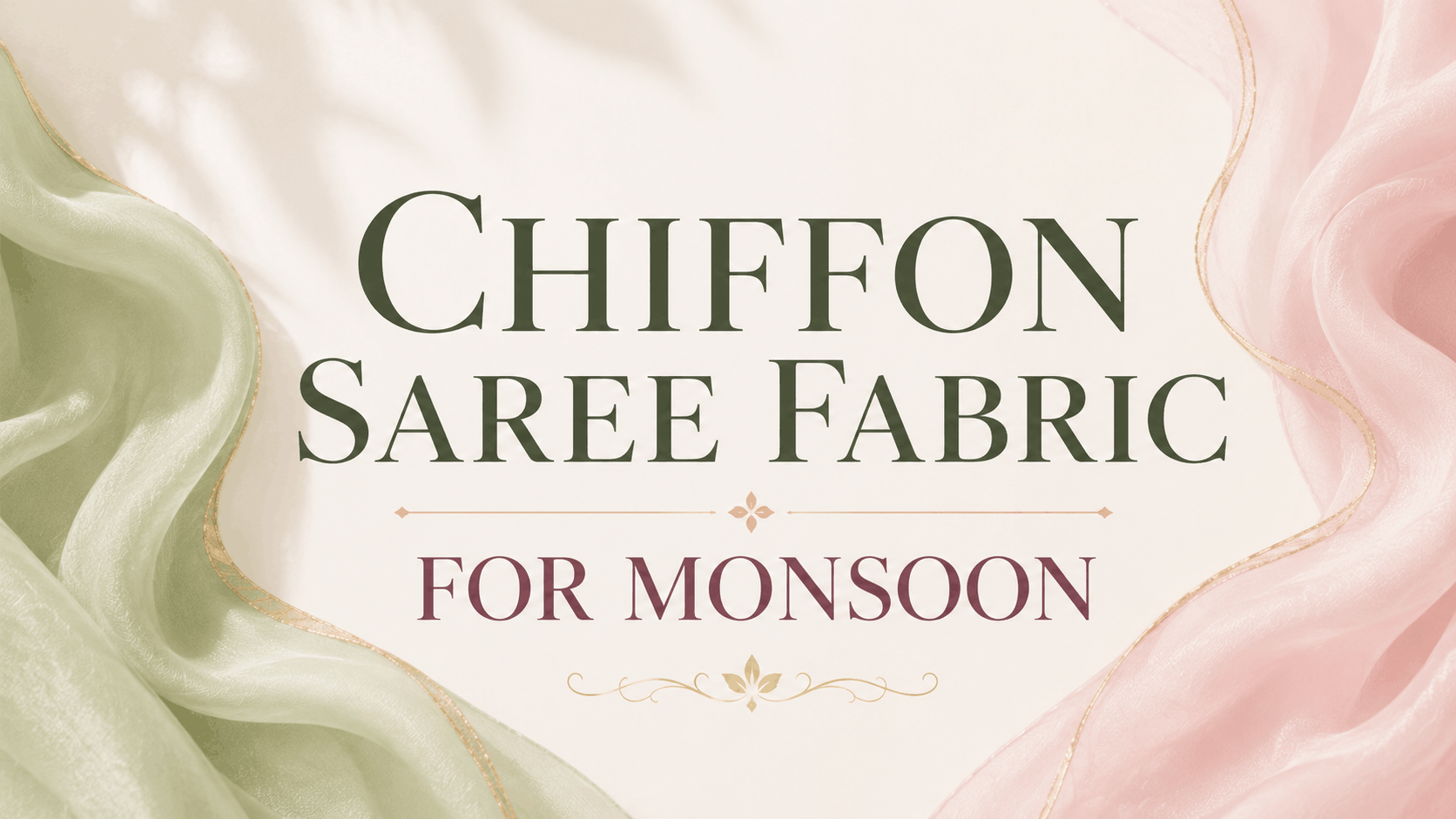
Chiffon saree fabric is a sheer plain-weave cloth woven from twisted polyester or pure silk yarn. The twist gives chiffon its soft fall and slight crepe texture. It weighs 50 to 90 GSM, drapes close to the body, dries quickly after monsoon rain, and works for offices, kitties, pooja, and house parties.
Mrs Khurana from Defence Colony comes into my counter every June. Same routine. Same opening line. Bhabhi monsoon is starting, give me three plain chiffons and one printed one. Yellow. Sky blue. Off-white. A maroon for the prayer days.
She has been doing this same June purchase since 2014 when I opened the shop.
The chiffon habit is real. It runs across customer segments. Office-going women in their thirties. Mothers running pooja routines. Plus-size shoppers who avoid silk because the weight bothers them in humidity. Most of them rotate through chiffon for the hot-humid-rainy months.
So this guide is for anyone thinking about saree wardrobe for the next four monsoon months. What chiffon actually is. Why it works in humidity. Current pricing at the Lajpat Nagar wholesale counter. Styling advice from years of selling it.
Chiffon saree fabric is best for women who want a saree that drapes close, dries fast, and travels well. Polyester chiffon sells at Rs 180 to 320 per metre in Lajpat Nagar, pure silk chiffon at Rs 1,100 to 1,800. Six metres covers a saree with blouse piece. Avoid sharp safety pins because chiffon snags faster than georgette.

What chiffon saree fabric actually is
Chiffon is not a fibre. It is a weave structure. Specifically a plain weave made with highly twisted yarn which produces sheer fabric with a faint crepe texture across the surface. The twist in the yarn is what creates that characteristic light hand feel customers recognise immediately.
Original chiffon was pure silk. Today most chiffon at Indian counters is polyester or a polyester-viscose blend. There is also a smaller specialised segment of pure silk chiffon for high-end clientele who want the natural fibre experience specifically.
What you should actually look at when buying chiffon is the GSM weight rather than only the fibre type. Anything in the 40 to 60 GSM range is super-light and basically see-through. Used mostly for dupattas or layering pieces. The 70 to 90 GSM range is what you want for a saree. Below 50 GSM the saree clings to body lines that most wearers do not want exposed. Above 100 GSM you are technically buying georgette by another name even when the label says chiffon.
Why monsoon buyers pick chiffon over georgette
The customers I see every June ask me the same question. Why chiffon, not georgette? They look so similar from a distance.
Recovery speed is the bigger factor and most chiffon buyers do not articulate it that way though they feel it during wear. Chiffon dries fast because the yarn twist creates micro air channels through the weave structure. A drop of water spilled on chiffon evaporates within minutes. Georgette holds moisture in its slightly heavier yarn for hours after the same spill. For someone moving between auto, lift lobby, office air-con, then a Mumbai or Kolkata street in the rain, that recovery speed becomes the actual factor that decides comfort across the working day.
Wrinkle behaviour matters separately. Polyester chiffon does not crease deeply because the twisted yarn springs back into shape under its own tension. Six hours sitting at a desk and the pleats still hold their crisp edge. Cotton or linen would have looked slept-in by lunch.
Weight is the underrated reason. A chiffon saree weighs around 350 grams. Heavier silks or georgettes sit between 500 and 700 grams for the same saree length. In peak monsoon humidity that 300-gram difference is the actual line between feeling comfortable through a ten-hour day and feeling damp by midday.
Current pricing at the Lajpat Nagar counter
These are June 2026 prices at the wholesale trade where I source from directly.
|
Type |
Description |
Per metre |
|
Polyester chiffon, plain dyed |
Standard mill stock, 60 inch width |
Rs 180 to 320 |
|
Printed polyester chiffon |
Floral, abstract, mughal prints |
Rs 260 to 480 |
|
Chinon chiffon |
Slightly heavier polyester variant |
Rs 220 to 380 |
|
Pure silk chiffon |
French chiffon weave, 44 inch width |
Rs 1,100 to 1,800 |
|
Designer printed chiffon |
Boutique exclusives, screen prints |
Rs 550 to 950 |
For a standard six metre saree with a contrast blouse piece included, plan on 6.3 metres total fabric requirement. The pure silk variety usually comes in 5.5 metre cuts so a separate blouse fabric purchase becomes unavoidable for those orders.
Colours moving off my shelf this season
Chiffon orders coming through right now show one clear pattern. Pastels.
Customers want soft sage, blush, dusty rose, ivory, mint, smoke grey. All pastel territory essentially. The current monsoon chiffon customer wants tonal dressing for office plus lighter shades that read fresh in humid air. Three years back the chiffon trade was running mostly on bright primary colours. That preference has cooled visibly across both retail and boutique segments.
Maroon and deep wine still hold their position for pooja days and family functions where richer colours are traditionally expected. Yellow holds its place for monsoon haldi-style celebrations or for rakhi. But the actual volume mover in 2026 has shifted clearly to pastel.
Printed chiffon orders are running mostly floral. Lily prints. Daisy patterns. Bird-on-branch motifs. Abstract watercolour designs. The older mughal jaal prints are losing shelf space to these softer florals across both segments. Browse pure silk chiffon options in our silk fabric collection where the silk chiffon section carries monsoon-appropriate weights with attribution.
Fall, pleat, plus practical drape advice
Chiffon pleats sit differently from silk pleats. Flatter at the waist line. Falls vertically without flaring at the bottom hem. Hem flares slightly with body movement which some women find disconcerting because it briefly shows leg shape when walking quickly.
The fix is a chiffon-friendly petticoat. Match the colour to the saree base. Choose one with a slightly stiffer cotton-poly blend at the bottom hem because that weight breaks the cling without adding visible bulk to the silhouette.
The pallu drapes thin on standard chiffon. If you want a heavier pallu look at the shoulder, buy chiffon with a brocade or zari border already attached. The border weight pulls the pallu down so it sits structured over the shoulder instead of slipping repeatedly through the event. Coordinated zari border options for pallu accent plus matching blouse trim are stocked in different weight grades.
About safety pins. Use only small flat-head pins on chiffon. Never use the thick saree pins your aunt might recommend. Chiffon snags very easily. A single snag at the pleat line ruins the whole saree because the run travels along the weave direction.
Outfit pairings I recommend most often at the counter
My best-recommended combinations follow some predictable patterns by occasion type but the choice is rarely arbitrary.
Plain solid chiffon with a heavily embroidered blouse gives a balanced festive look where the blouse carries the visual weight while the saree itself stays quiet. Works well for evening events where attention naturally goes to the upper body and face.
Printed chiffon with a plain matching silk blouse handles the office-to-evening transition that working women keep asking me about. The print does the visual talking. A neutral blouse keeps the look professional enough through afternoon work. Most customers buying this combination wear the same saree across two different occasions in a single day.
The fastest-moving combination off my shelf since March has been two-tone chiffon paired with a tone-on-tone embroidered border. Pooja sarees mostly. The embroidery is restrained but the colour shift gives the saree occasion-worthiness without being visually loud.
For mature wearers and grandmothers in particular, soft pastel chiffon paired with a chikankari blouse is my most-recommended combination. The pastel keeps the look fresh. The chikankari work adds dignity without adding any weight. Browse pastel chiffon with chikankari coordination options in our bridal bliss collection which lists family-function appropriate combinations sorted by occasion type.
Stitching notes worth giving your tailor
On the blouse construction, the biggest mistake I see is plain overlock seams instead of French seams. Plain overlock unravels through chiffon within two wash cycles. French seam costs slightly more on the tailor bill but the blouse actually lasts the full season. Insist on it during the stitching brief itself.
Every chiffon blouse needs lining even through summer heat. Unlined chiffon becomes visibly transparent against perspiration which gets uncomfortable across long events. Use flesh-tone soft cambric for the lining. Avoid satin specifically because satin against sweat creates friction which becomes uncomfortable to the wearer.
For the saree fall itself, the tailor instruction is loose stitching with cotton thread. Tight whip stitch causes the fall to pucker visibly after the first dry clean cycle which then requires alteration to fix.
Care routine that keeps chiffon going three seasons
Hand wash chiffon in cold water with a mild liquid detergent. The most common mistake people make is using regular laundry detergent which is too harsh on the twisted yarn structure. Look for delicate-fabric formulations specifically marked for sheer fabrics.
After washing roll the saree inside a thick towel to remove excess water. Never twist the fabric to wring water out. Wringing creates permanent crinkle damage in the chiffon weave that cannot be ironed out afterwards. Once the towel pull is done, drip dry the saree flat on a mesh rack in shade. Direct sun is never the right choice. Machine spin cycle is similarly out of the question.
For ironing, the lowest heat setting on your iron is the only safe option. Place a thin cotton cloth between the iron plate and the chiffon every single time. Direct iron contact will melt polyester chiffon at higher settings or dull pure silk chiffon even at lower settings. Steam ironing through a cotton cloth is the safest method for restoring smooth drape after washing.
Storage matters more than most customers realise. Fold chiffon sarees with acid-free tissue paper between the folds to prevent crease memory from setting in across months of storage. Do not hang chiffon sarees on a hanger because the weight of the fabric pulls the pallu down which then stretches the weave at the shoulder grip point.
When to buy for best stock selection
The Indian chiffon trade refreshes its print catalogue twice a year. February through March covers the summer-monsoon range. August through September covers festive-winter inventory.
By mid-July most popular monsoon prints are sold out at wholesale level. If you want a specific colour or print combination this season, the first three weeks of June give you the best stock selection at any decent fabric counter. After that window you are picking from leftover inventory at retail.
The upcoming August-September catalogue typically arrives in showrooms around August 20 for boutique-volume orders. That is the right window for festive-winter sourcing through the Lajpat Nagar trade. Boutique buyers planning festive inventory should request sample swatches through our bulk order page before committing to larger quantities.
Frequently Asked Question
How many metres of chiffon do I need for a saree?
Six metres for the saree drape plus 0.8 to 1 metre for the blouse piece. Total of 6.8 to 7 metres if you want a matching blouse from the same bolt. Most ready chiffon cuts come in 6.3 metre default which gives a smaller blouse piece attached. Bolt-by-the-metre cutting is the route for boutique-volume purposes.
Is polyester chiffon as good as pure silk chiffon?
Depends entirely on the use case. For daily wear plus office wear, polyester chiffon performs better because it wrinkles less and dries faster in humid weather. Pure silk chiffon is the right choice for evening events where the natural drape and sheen of silk fibre matter visually. The polyester variant does not match silk on drape behaviour at higher-standard dressing levels.
Does chiffon shrink after the first wash?
The polyester variant does not shrink at all in cold water. Pure silk chiffon can shrink 2 to 3 percent on the first dry clean cycle. Order a slightly longer cut if buying pure silk and confirm exact dimensions with your tailor before the cutting stage.
Can chiffon sarees handle Mumbai or Chennai humidity?
Yes very well. This is one of the best monsoon-suitable saree fabrics in the market because the twisted yarn dries quickly while the cloth does not cling when slightly damp. This is exactly why my Mumbai-shifted customers continue ordering chiffon from Delhi rather than switching to locally available fabrics.
What is the difference between chiffon and georgette?
Both use twisted yarn in the weave structure but georgette has a heavier yarn count. So georgette weighs more, holds shape better, feels denser in hand. The chiffon variant is lighter, sheerer, drapes closer to body lines. The choice between them comes down to event type plus expected weather more than aesthetic preference alone.
Is chiffon suitable for plus-size women?
Yes when paired correctly. Pair the saree with a structured petticoat plus a contrast-coloured blouse plus a slightly heavier border at the pallu. That gives the silhouette shape without adding weight. Avoid super-sheer 40 GSM chiffon entirely for plus-size wear because the cling becomes problematic against the body shape.
Final word from the counter
This fabric is the easiest saree material to handle in monsoon and one of the most underrated for office wear across the year. The reasons are practical rather than aesthetic. The twisted yarn dries fast. The weight is manageable across long days. The wrinkle recovery means it looks fresh through evening events. The price points keep it accessible compared to silk.
Mrs Khurana from Defence Colony is not unusual at this counter. She is the most common kind of chiffon customer. Repeat purchase every June. Plain colours mostly. One printed piece for variation. Polyester or polyester-viscose blend because the silk version costs five times more for marginal benefit at her use case. That pattern repeats across every saree counter in Delhi.
For boutique buyers planning chiffon inventory for monsoon or festive seasons our lehenga fabric collection carries occasion-appropriate chiffon-blend options sorted by GSM weight.
Your Next Step...
Browse the chiffon range plus the silk chiffon section at our Lajpat Nagar counter. Every piece comes with GSM rating plus colour-fastness information per bolt. WhatsApp for fabric samples, current colour availability, or pricing on bulk orders before larger commitments. Direct sourcing from Surat polyester mills plus Bangalore silk weavers. Honest grading. No runaround on chiffon weight specifications.