How to Wash and Store Organza Fabric the Right Way
How to Wash and Store Organza Fabric the Right Way
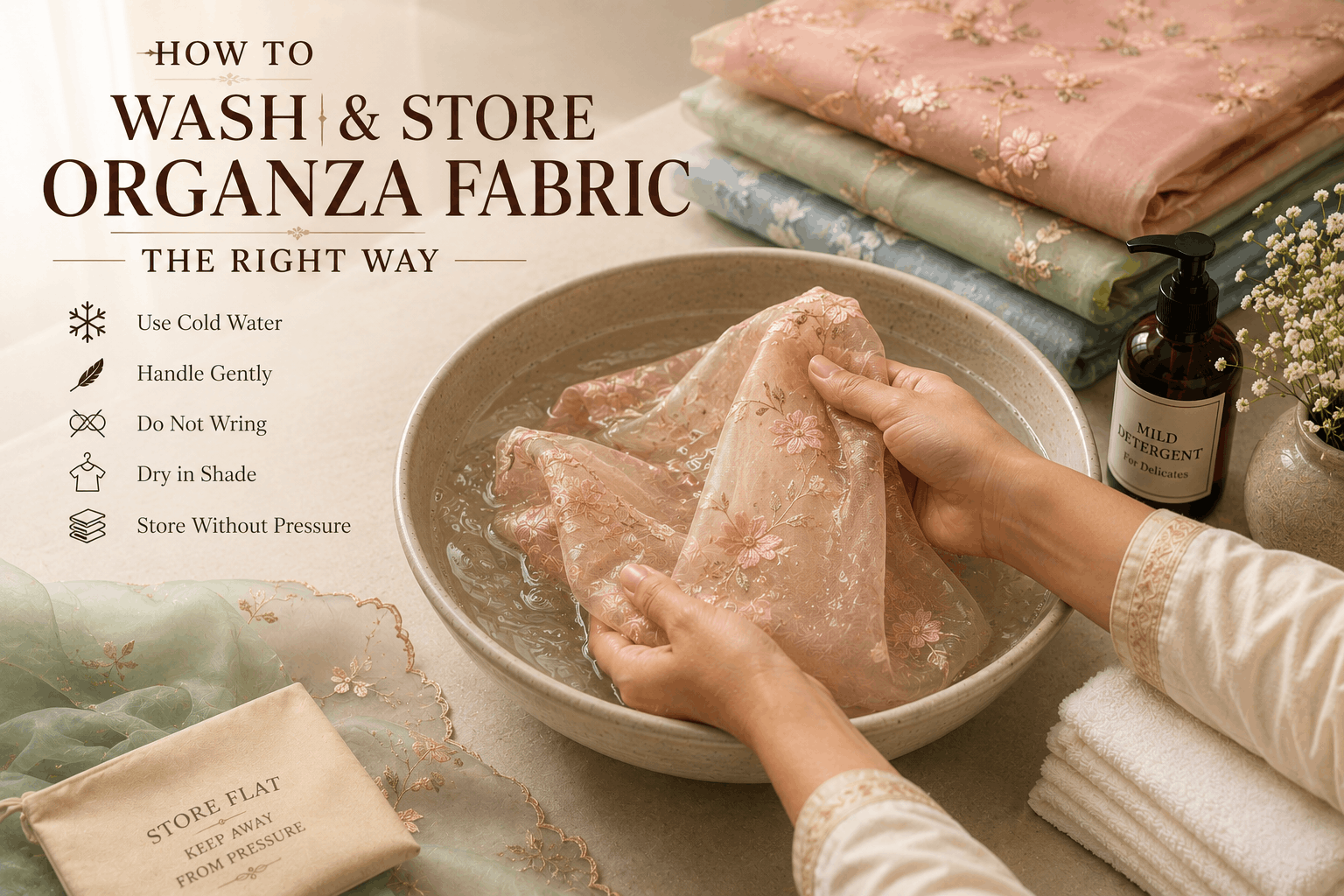
To wash organza fabric at home, hand wash in cold water with a small amount of mild detergent. Never machine wash. Submerge gently, press lightly through the water, rinse twice, then lay flat or drape loosely on a smooth hanger to dry in shade. Do not wring. Do not fold tightly. Store organza hanging or rolled in tissue paper to prevent crush lines.
A customer brought back an organza lehenga skirt last Thursday that we had sold her in March. Stored folded under three heavier fabrics in her almirah for four months. The crispness was completely gone. Flat. The skirt looked like it had been pressed under a brick for the whole summer.
There was nothing I could do for her. That is the painful reality about organza. The crisp body which makes the fabric drape the way it does happens to be the most fragile structural property in textiles. Once that body collapses it does not come back. No iron restores it. Steam will not fix it either. Even professional restoration shops in this trade can only mask the worst of the damage rather than reverse it.
So before another customer loses an expensive piece for entirely preventable reasons here is the practical guide to washing, drying, then storing organza properly.

Organza is a plain-weave sheer fabric made from silk, polyester, or nylon. Its crisp structure is its defining feature, and wrong care collapses that structure permanently. Cold hand wash only. Shade drying is mandatory. Never store folded under heavy fabric — the weight crushes the weave. Embroidered organza needs dry cleaning for significant cleaning needs, with gentle spot cleaning between uses.
What makes organza behave so differently from other fabrics
Organza gets its character from one specific weave choice. The yarns are spun under very high twist tension which makes them stand up against each other rather than relaxing into the weave. That tension produces the body of the fabric while also creating its characteristic sheen. Lose the tension at any single point in the fabric's life and you lose both qualities together.
The base fibre matters too. Silk organza behaves at the most delicate end of the spectrum and needs the gentlest handling at every step. Polyester organza on the other hand tolerates considerably more handling without losing its crispness, which is the main reason most readily available organza in the Indian market today is either pure polyester or a polyester-silk blend. You can also still find nylon organza in some shops though it has lost market share heavily to polyester over the last decade. Nylon sits somewhere between silk and polyester on resilience.
What you actually need to follow turns out to be nearly identical across all three fibres. Cold water at every wash stage, the gentlest possible handling throughout, absolutely no machine washing, no wringing or twisting motion of any kind, shade drying without exception. That standard applies whether your organza is pure silk or pure polyester or anything blended in between.
Embroidered organza adds another layer of complexity entirely. Zardosi work, sequin work, mukaish thread, mirror inlay, all the embellishments that go on top of a sheer organza base. Each one carries its own care requirement on top of the base fabric requirement. Bridal organza pieces almost always sit in this embellished category.
The home wash method that protects the weave
You need very little equipment for washing organza at home. A clean basin or plastic tub will work for the wash itself. Cold tap water is what you fill it with, at room temperature or below if you can manage. For soap, either a few drops of mild liquid detergent or one cap of baby shampoo does the job perfectly. Two clean dry cotton towels need to be standing by for the water removal stage. A flat shaded surface or a smooth wooden hanger needs to be set up for actual drying afterwards.
Fill the basin first with cold water before adding any soap. Drop in the detergent or shampoo. The water should feel barely soapy to your touch. If you see suds or foam forming on the surface you have already used too much. The organza will end up feeling stiff after drying because of dried soap residue in the weave.
Lower the organza into the basin carefully. Keep it as flat as you reasonably can while submerging it. Avoid balling the fabric up at any point because that creates fold lines while the organza is wet which then become difficult to remove later. Press the fabric down gently with open palms then lift it back up so the soapy water moves through the weave. One to two minutes of this gentle press-and-lift motion is the entire wash for regular cleaning. Anything beyond two minutes is unnecessary stress on the weave structure.
When you lift the fabric out of the basin support its full weight from underneath with both hands across the width of the piece. Wet organza weighs more than people expect because the tight weave traps water. Lifting it from one corner pulls the weave structure out of alignment, which then shows up later as visible looseness or distortion in that lifting point area.
Rinsing and water removal without crushing the body
Rinse the organza twice in fresh cold water using the same press-and-lift motion. Two rinses are normally enough to clear out the soap. Soap residue left behind in the weave makes the fabric feel stiff after drying, which people sometimes mistake for restored crispness when it is actually just dried detergent.
Wringing organza is the single worst thing you can do at this stage. Even a small gentle twist crushes the weave permanently because wet fibres lose their elasticity. You will see crush lines running along the twist axis once the fabric dries. Those lines do not iron out fully.
Here is what works instead. Lay a dry cotton towel flat on a table or the floor. Spread the wet organza on top of it as flat as you can manage. Place a second dry towel over the organza so the wet fabric is sandwiched between two layers. Press down evenly with open palms across the towel surface. The towels absorb most of the excess water within about thirty seconds. Do not roll up the towel sandwich the way you might for silk or cotton, because rolling creates crease lines in organza that prove very difficult to remove afterwards.
The organza should feel damp rather than dry after this towel pressing. That is correct. Proper drying happens on a hanger or flat rack in shade afterwards.
Drying organza so the body stays intact
For most plain organza a wide smooth wooden hanger works perfectly. The hanger should be wide enough that no edge pinches into the fabric anywhere. Padded hangers covered in cotton fabric work even better because they distribute the wet fabric weight more evenly across the shoulder area of the garment.
Clip hangers are a definite no for organza of any type. The metal clips leave permanent indentations on the sheer weave which become visible once the fabric has dried.
If the organza piece has heavy embroidery on a border or panel hang it so the embroidered section sits at the top while drying. This prevents the weight of the wet embroidery from pulling on the lighter sheer base section. Heavy embroidery pulling on wet organza is one of the most common reasons stored bridal pieces develop weave distortion that nobody can explain afterwards.
Shade is non-negotiable for drying. Direct sunlight changes organza colour permanently in ways that no amount of careful washing can compensate for later. The silk variety is especially vulnerable to sun damage but even polyester organza fades visibly in deeper colours after repeated sun exposure. Two to three hours of well-ventilated shade drying is usually enough because organza is thin enough to release water quickly.
Embroidered organza requires gentler treatment than plain
Light thread embroidery on an organza base tolerates the basic hand wash method above with one modification. Turn the fabric inside out before submerging so the embroidered surface faces inward during the wash. This stops the embellishment from rubbing against the basin walls or against other parts of the fabric during the press-and-lift motion.
Heavy embellishment is a different story entirely. Anything with zardosi, sequins, mirror work, mukaish, or surface-mounted stones needs to be sent to a dry cleaner who specifically handles occasion wear. These embellishments are attached using specific adhesives or binding threads that lose their grip when soaked in water. A good dry cleaner who handles bridal wear regularly knows the methods to clean around such embellishments without lifting them off the base fabric.
Our organza collection flags dry-clean-only items at the time of sale because home washing of heavily embellished organza is the second most common cause of damage I see at this counter after storage crushing.
Stain response when speed matters most
Stains on organza are dramatic because the sheer weave makes everything visible from both sides. Speed of response matters far more than the technique you eventually use.
Liquid stains like tea, juice or accidental water marks respond well to immediate cold water dabbing if you act within the first few minutes. Blot the stain with a clean white cloth using pressing motion only. Never rub. Rubbing pushes the stain deeper into the weave while also damaging the silk filament surface. After blotting, dab the stained area gently with a damp cotton cloth to dilute whatever caused the stain.
Oil-based stains need talcum powder treatment first. Sprinkle a small amount of plain talc on the stained area. Let it sit for about fifteen minutes so the powder absorbs the oil itself. Brush off gently with a soft cloth. After that you can proceed with the normal hand wash for the whole piece.
Water rings are the specific organza hazard most people do not anticipate before they happen. They form when someone tries to wash only the stained spot rather than the whole piece. The wet area dries at uneven rates against the surrounding dry fabric, which leaves a visible ring outline once everything has dried. The fix is to always wash the entire piece if you applied any wet treatment to any part of it. Spot washing on organza nearly always creates a ring.
For stubborn stains that refuse to respond to home treatment send the organza to a dry cleaner immediately. The longer a stain sits in the weave, the harder it gets to remove without leaving permanent residue or water rings behind.
Ironing and steam without ruining organza
Organza can be ironed but the safe parameters are narrow. Use low heat or medium heat setting only. Place a thin pressing cloth between the iron base plate and the organza without any exception. Never let a hot iron touch organza directly because the heat melts synthetic organza fibres or scorches silk organza within seconds.
Iron on the reverse side of the fabric whenever possible. The embroidered sections should not be ironed at all because the heat flattens thread work and can melt sequins or other synthetic embellishments. For embroidered areas, steam from a small distance is safer than direct iron contact.
If the organza has crush lines from storage there is a method that works better than direct ironing. Hang the garment in a steamy bathroom for fifteen to twenty minutes. The humidity releases most surface crush lines without any heat contact at all. This method works particularly well for polyester organza. For silk organza test on a small inside corner first because some silk organza varieties develop water spots from concentrated steam exposure.
Storage problems that ruin organza permanently
The single biggest mistake I see with organza storage is stacking other fabrics on top of it. Heavy fabrics like raw silk, brocade or velvet press down on stored organza and crush the weave permanently within months. The rule is simple. Organza either gets its own storage space, or it sits at the very top of any fabric stack with nothing pressing on it from above.
Rolling beats folding for unstitched organza fabric in nearly every situation. Roll the fabric loosely around a cardboard tube wrapped in tissue paper or muslin cloth. There are no fold lines at all this way. If rolling is not workable for your storage space then fold the fabric as loosely as possible with tissue paper between each fold. The tissue stops the weave from creasing sharply at the fold edges where crush lines normally develop first.
Stitched organza pieces like lehenga skirts or sarees with organza body are best stored hanging on a padded hanger covered with a cotton garment bag. Plastic garment covers cause yellowing in organza within months because plastic traps moisture which then oxidises the fabric surface inside the bag. Cotton breathes properly which prevents this moisture buildup entirely. Heavy bridal lehengas with organza panels need additional care here because the embroidery weight can distort the shoulders of the hanger over months of hanging. Our bridal bliss collection ships every lehenga with a cotton dust cover for exactly this reason.
Check hanging organza garments every two or three months. Take them down. Shake gently. Rehang from a slightly different angle so no single pressure point at the hanger becomes permanent. This rotation habit prevents almost all the shoulder distortion problems I see in stored bridal pieces.
Moths are a real risk for silk organza specifically. Naphthalene mothballs should never touch organza directly because they leave white residue stains on the sheer weave that nobody can wash out afterwards. Cotton pouches filled with neem leaves work well as a moth deterrent without any residue problem. During the June through September monsoon months in Delhi the humidity climbs into the mildew danger zone for silk organza pieces particularly. Make absolutely sure the organza is bone dry before storage during these months. Check stored pieces more frequently than usual during the monsoon season.
For boutique buyers planning organza inventory for the upcoming wedding season the lehenga fabric collection carries organza panels in plain or embroidered varieties with care guidance noted per piece.
FAQ
Can organza fabric be machine washed?
No. Even on the gentlest possible delicate cycle the drum movement creates friction patterns plus water turbulence that collapse the crisp weave structure permanently. Hand washing in cold water with minimal soap is the only safe home cleaning method for organza of any fibre type.
My organza dupatta has a water ring stain. How do I remove it?
Water rings form when someone washes only the stained area instead of the whole piece. The wet section dries at uneven rates against the surrounding dry fabric which leaves a visible ring outline behind. To remove an existing water ring wash the entire dupatta in cold water using the gentle hand wash method described above. The fabric dries evenly this way which makes the ring disappear during the drying stage.
How do I store organza lehenga fabric without crushing it?
Roll it loosely around a cardboard tube wrapped in tissue paper. If rolling is not practical fold the fabric loosely with tissue paper between every single fold. Store on the top of any fabric stack rather than at the bottom. Nothing heavy should ever sit on top of stored organza for any length of time.
Can I steam organza fabric directly?
Light steaming releases crush lines on polyester organza without much trouble. For silk organza test a small inside corner first because some silk organza varieties develop water spots from direct steam contact. The safer method for any organza type is hanging the garment in a steamy bathroom for fifteen minutes rather than applying steam directly to the fabric.
Does organza shrink when washed?
Polyester organza does not shrink at all in cold water. The silk version on the other hand can shrink slightly if it gets exposed to warm or hot water. This is exactly why cold water is non-negotiable for organza of any kind. Shrinkage in organza is not just a sizing issue. It also changes the drape plus the body of the fabric in ways that cannot be reversed afterwards.
Final word from the counter
Organza damage I see at this counter is almost always preventable. The fabric was not poor quality. The issue is that someone treated it the way they treat georgette or chiffon. Those fabrics drape and forgive small handling mistakes. Organza floats rather than drapes, plus it remembers every wrong thing that was done to it.
The care formula is simple enough. Cold water needs to be in every wash. Your washing motion stays light, just pressing and lifting through the basin without any scrubbing. Water comes out through towel pressing rather than wringing. For storage, rolling beats folding by a long way. Cotton bags work where plastic ones cause yellowing within months. Get those habits right consistently and a good organza piece keeps its character across many years of careful wear.
For boutique buyers planning organza inventory for the wedding season the bulk order page handles sample requests before larger commitments. For sheer fabric alternatives that pair with organza in lehenga construction the net fabric collection has lightweight options sorted by weave density.