


Why Velvet and Brocade Work for Winter Lehengas: What to Layer
A festive lehenga needs more than one fabric decision. This guide walks through skirt shape and drape, velvet and brocade surfaces, blouse...

Occasion guides · Paras Gallery Fabrics
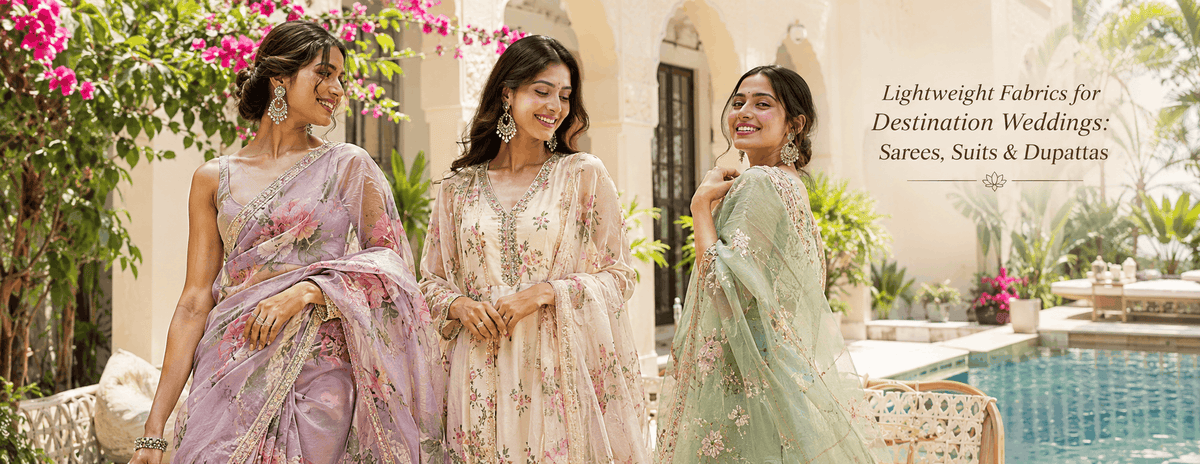
A destination wedding fabric should suit the event, the forecast and the way you will travel. For a multi-day celebration, compare the whole outfit, including its lining and decoration, before choosing a fabric for each function.
The short version: Consider georgette for a flowing suit or saree, organza for a more structured layer and net for a sheer overlay. Each varies by construction. Check the lining, embellishment and care label on the particular fabric before you pack.
Quick answer: Start with the conditions at each event. A warm outdoor ceremony calls for a close look at the fabric, lining and how much of the outfit touches your skin. For a breezy venue, secure a sheer dupatta and consider its length. For a cooler evening, plan a separate layer. Compare georgette and organza for the look you want, then check the weight, opacity and care of each specific piece. Packing volume and comfort depend on the finished outfit, not the fabric name alone.
A seaside lunch, an indoor sangeet and an evening ceremony can all call for different outfits. Write down where each event will take place, the time of day and whether you expect to sit outside. Look at the actual forecast nearer the trip. A place described as warm can still have a windy or cool evening.
Start with the item you will wear longest. A comfortable kurta set for a day function may need a different fabric from a saree for a short indoor reception. If you plan to reuse a blouse or dupatta, place it beside each outfit before deciding on colours and finishes.
| Fabric to compare | Outfit idea | What to check |
|---|---|---|
| Georgette | Saree or flowing kurta | Feel, opacity and lining; drape varies by piece. |
| Organza | Dupatta or structured overlay | Sheerness, stiffness and snag-prone decoration. |
| Net | Decorative dupatta or layered sleeve | Mesh feel, embroidery and the coverage you prefer. |
| Chiffon | Saree or lightweight scarf | Fibre content, transparency and care for the specific fabric. |
Georgette can be a useful starting point when you want movement without a very stiff silhouette. A particular fabric may still need lining. Its feel depends on its fibre and weave. Compare a plain piece with an embellished one if you are deciding how much detail to carry.
Organza can add shape to a dupatta or sleeve. Some pieces feel crisp while others drape more softly. Hold the material against your intended lining and move your arms before deciding. For net, check whether the mesh or embroidery feels comfortable where it will touch your skin.

Compare organza for a dupatta or overlay
Look at each listing for its finish and details before choosing.
Browse organzaFor a warm outdoor event, think about the entire outfit. A light-looking outer layer can feel different once a close-fitting lining, sleeves and decoration are added. Check how the fabric feels against your skin and whether you are comfortable sitting in it. Choose the level of coverage you want rather than assuming sheer fabric is suitable on its own.
At a breezy venue, a long dupatta can need attention throughout the ceremony. Try the drape with your outfit at home and use suitable pins or another secure fastening if you like. Avoid placing sharp pins where they could damage a delicate weave. Ask your tailor about a finish that works for the fabric.
For a cooler evening or an air-conditioned hall, bring a separate wrap or jacket if you expect to need one. A sheer overlay alone may not provide the warmth you want. Check the forecast for your location and event time instead of choosing solely by the destination name.
The finished garment can take more space than a folded length of fabric. Lining, cancan, borders and decorations all add bulk. Before the trip, lay the outfit flat and look for sequins, hooks or rough edges that could catch on a second piece. Protect delicate surfaces from friction and follow the care instructions supplied for each item.
If the care label permits folding, use a clean fabric layer between pieces and avoid pressing heavy accessories against embroidery. A garment bag may suit an outfit that needs to hang, depending on the garment and travel arrangements. Check your carrier's baggage rules and the space available before relying on a particular packing method.
Allow time to unpack and inspect your outfit after arrival. Creases depend on the fabric and how it was packed. Follow its care label for pressing or steaming. Test an inconspicuous area only when the instructions permit it. Some decorations and fibres need specialist care.
A screen can change how a colour appears. If an exact match to a blouse or accessory matters, ask for clarification before ordering. Check the listing and any applicable terms for the specific item. A collection image is a starting point for browsing, not proof that every fabric in the collection has the same properties.
For a daytime welcome, you might choose a simple kurta set and add a patterned dupatta. For the main ceremony, a saree with a coordinated blouse can create a different look without requiring the same silhouette. For an evening function, change the jewellery or add a wrap. These are combinations to try, not rules about what guests should wear.
Keep the accessories in the plan. A heavy border, an embellished blouse or several layers can change how an otherwise light fabric feels. Lay the pieces together before you commit. If an outfit must fit into a small bag, check its actual folded size rather than assuming its fabric category will pack flat.
For a lehenga-specific comparison, see the destination wedding lehenga guide. This guide focuses on the wider travel wardrobe, including sarees, suits and dupattas.
There is no single answer. Packing depends on the finished outfit, its lining, embellishment and care instructions. Compare actual pieces and the space in your bag.
Organza can be considered for a sheer layer or dupatta. Comfort depends on the particular fabric, lining, fit and conditions at the event.
Yes, if it works with both outfits and the dress expectations for each event. Check colour, coverage and any snag-prone details before packing.
Ask your tailor to calculate the quantity for your measurements, design and fabric width. Lining, pattern placement and sleeve choice can change the amount.
Explore related collections
Compare the details on each individual listing.
Start a shortlist and check the details that matter for each event.
A festive lehenga needs more than one fabric decision. This guide walks through skirt shape and drape, velvet and brocade surfaces, blouse...
Fabric selection guide · Paras Gallery Fabrics A summer kurti starts with fabric that feels comfortable against your skin and suits the...
Seasonal fabric guide · Paras Gallery Fabrics A winter wedding fabric can look substantial without making every part of your outfit heavy....


