


Lightweight Fabrics for Destination Weddings: Sarees, Suits & Dupattas
Choosing destination wedding fabric starts with the events on your itinerary. Compare georgette, organza, net and chiffon for sarees, suits and dupattas,...

Article: Why Velvet and Brocade Work for Winter Lehengas: What to Layer
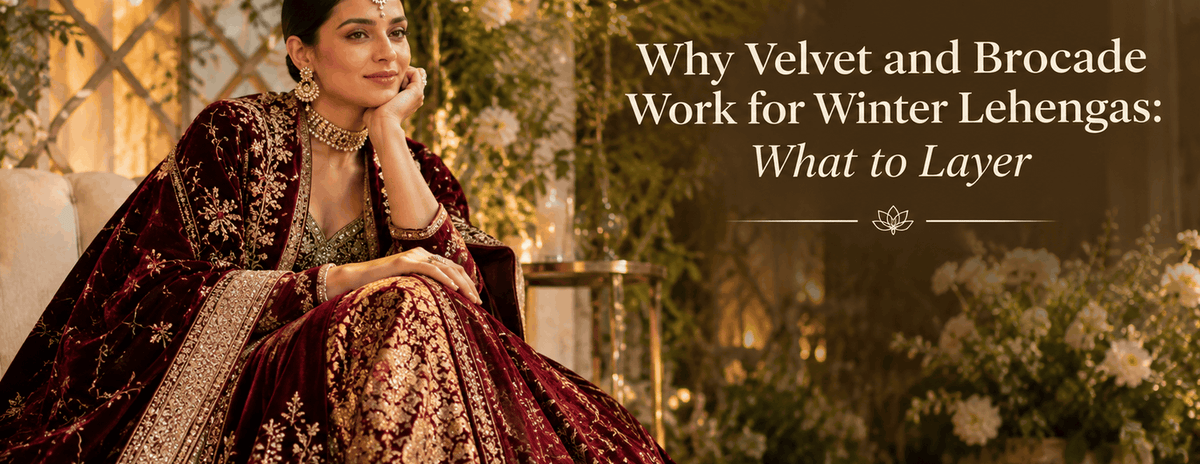
Occasion guides · Paras Gallery Fabrics
Choosing winter lehenga fabric starts with the outfit you want to wear, not just the prettiest surface. Plan the skirt, blouse and layers together so the finished look works for your venue and your comfort.
The short version: Choose the skirt for its fall, the blouse for fit and the outer layer for your venue. Check the actual fabric and work out quantities with your tailor before ordering.
Quick answer: For a festive winter lehenga, start with the skirt shape and compare a velvet, brocade or lighter fabric in the actual weight and finish you prefer. Choose a blouse fabric that suits your sleeve design, then plan lining, dupatta and an optional jacket or shawl for the setting. A velvet blouse with a lighter skirt is one possible combination; a velvet skirt is another. Warmth varies with the fabric, layers and weather, so no fabric name alone guarantees comfort. Explore the velvet collection or lehenga collection as a starting point.
A panelled skirt uses separate pieces joined around the waist. A circular cut uses a different pattern to create flare. Gathered styles add fullness at the waist. Your tailor can explain which construction suits your chosen fabric and how much movement you want at the hem.
Handle the specific fabric before deciding how much flare to add. A soft piece may fall in folds while a firmer one can hold a more defined shape. The same fabric name can cover different weights and finishes. Lift a length against yourself and see how it drapes rather than relying on the label alone.
For an embroidered skirt, check where the motifs sit and whether a border runs along an edge. Your tailor needs this information before placing panels. A directional pattern or a wide border can change the cutting layout and the amount required.
Velvet has a pile, the raised surface that gives it a distinctive look. A velvet skirt can suit a festive evening when you like a richer surface. Examine the actual piece for weight and flexibility. Some velvets may feel substantial while others are lighter and fibre content differs between products.
Brocade is a patterned woven fabric. Depending on the piece, it can give a skirt a defined shape or create a decorative panel. Check the reverse and discuss lining with your tailor, especially where the fabric will touch skin. The brocade collection is useful for comparing woven surfaces.
A lighter skirt fabric can be paired with a more substantial blouse or outer layer. Look at how sheer the specific material is and whether you want an opaque lining. A fabric that appears light in a photograph may behave differently once its lining, border and embellishment are added.

Explore velvet for your outfit
Compare the details of individual fabrics before deciding on a skirt or blouse.
Browse velvetStart with the neckline, sleeve length and fit you want. A fitted blouse needs enough ease for comfortable movement. Sit down, raise your arms and consider any jewellery you plan to wear. Your tailor can advise on the construction and support appropriate for your design.
A velvet blouse can contrast with a lighter skirt, while a brocade blouse can add pattern beside a plainer skirt. If the skirt is heavily decorated, you may prefer a quieter blouse. You can also reverse that balance. Place the fabrics side by side in daylight and indoor light before deciding.
Check how embellishments feel near the arms and neckline. Lining can make a difference to how a blouse feels against the skin, but the right choice depends on the actual outer fabric and the wearer. Ask your tailor about seams and finishing before purchasing the pieces.
Lining sits inside the garment. Its opacity, drape and feel affect the finished skirt. Put a sample behind the outer fabric to check how the combination looks. A different lining colour can change the appearance of a sheer or open fabric, so compare the pieces rather than matching names alone.
A can-can is a structured underskirt used to add volume. It is optional. Ask your tailor to show you the intended shape with and without it, then consider whether you will be sitting, dancing or moving through a crowded venue. More structure can change how the skirt feels and moves.
A dupatta, shawl or jacket gives you another layer to style. For an outdoor event, take a wrap suited to the expected weather and your own comfort. A decorative dupatta alone may not provide enough warmth. Indoors, a removable layer lets you adjust without changing the outfit.
There is no reliable single metre count for every lehenga. Fabric width, skirt length, waist measurement, flare, sleeves, pattern direction and seam allowances all affect the cutting plan. An embroidered border or motifs that need matching can change the layout further.
If ordering online, check the product description for fibre, width and care guidance. Ask about any missing details that matter to your design. A screen may not show the exact shade or surface and an illustrative collection image is not a promise that a particular piece is available.
Velvet skirt and simple blouse: Let the skirt fabric be the focus. Choose a blouse finish that feels comfortable and compare a coordinating wrap before finalising the palette.
Lighter skirt and velvet blouse: Choose a skirt with the movement you like, then use the blouse as a contrasting texture. Add lining according to the actual skirt fabric and your preference for coverage.
Brocade skirt with an optional jacket: Consider a brocade with a pattern that works for the panel layout. A plain blouse can balance the woven design. Try the jacket with the dupatta to see whether the layers sit comfortably together.
These are starting points, not rules. A festive outfit can be understated or richly decorated. If you already own a blouse or shawl, bring it to the comparison so your new fabric works with the pieces you intend to wear.
Not necessarily. Velvet varies in fibre and weight. The lining, other layers, weather and your own comfort also matter. Compare the specific fabric and carry a suitable wrap when needed.
Yes. A contrast in texture or colour can work well. Check the feel and colour of both pieces together and ask your tailor about lining and fit.
No. A can-can is optional and changes the shape and feel of the skirt. Decide with your tailor after discussing the amount of flare you want.
Ask your tailor to calculate each component from your measurements, chosen cut, fabric width and pattern placement. Include lining and any optional layers in the plan.
Explore related collections
Use the images as inspiration, then check individual listings.
Shortlist the fabrics you like, then discuss the design and quantities with your tailor.
Choosing destination wedding fabric starts with the events on your itinerary. Compare georgette, organza, net and chiffon for sarees, suits and dupattas,...
Fabric selection guide · Paras Gallery Fabrics A summer kurti starts with fabric that feels comfortable against your skin and suits the...
Seasonal fabric guide · Paras Gallery Fabrics A winter wedding fabric can look substantial without making every part of your outfit heavy....


