
Best Festive Wear Fabrics for Mumbai Monsoon-to-Diwali 2026: A Lajpat Nagar Shopkeeper's Coastal Climate Guide
So last week a Bandra customer is calling me at nine in the morning, voice thin from the panic. Her sister's Pune wedding is in September. Sangeet lands smack in the middle of Mumbai barsaat. And what does she do? Already picked up a full pure-silk Banarasi lehenga from some Hyderabad shop the previous weekend. Yaar Sneh, yeh Mumbai humidity mein chalegi kya? Pasina toh nahi aayega na?
Nahi chalegi. That was the honest answer. See, heavy Banarasi in 90 percent Bandra humidity behaves badly within the first sixty minutes. Zari starts tarnishing from the coastal salt air (this we can promise, no exaggeration). Pleats give up somewhere around hour two.
Ended up couriering her a georgette replacement overnight. Reached her Bandra tailor by nine the next morning. Quick re-alteration. She survived the sangeet without a single sweat patch showing under those horrible tubelights they always put up at Pune banquet halls.
Ask any Lajpat Nagar shopkeeper. Yeh conversation June se October har hafta hoti hai. Mumbai, Pune, Goa, Konkan-coast buyers shopping for festive monsoon and getting the fabric math completely wrong.
So basically, this note is what I wish someone had written for that Bandra bhabhi three weeks earlier.
Quick answer: Best festive fabrics for Mumbai humidity are georgette, chanderi, cotton silk, organza, mulmul or chiffon. Each one is handling 80 to 92 percent coastal humidity without going sticky against skin. Skip heavy Banarasi and pure satin during monsoon. Wholesale starts from Rs 280 per metre.
Mumbai monsoon is genuinely a different game
Delhi monsoon? Sixty days. Humidity peaking at 70, maybe 78 percent on a bad day. Mumbai? One hundred and twenty days, ji. Humidity sitting 85 to 95 percent from July till Ganpati week. Pune slightly kinder at 80 to 88. Goa is the worst, honestly, because coastal salt is stacked on top of humidity.
Fabric chemistry is behaving differently at these numbers. Synthetic silks getting clammy against skin. Zari tarnishing rain or shine. Cotton refusing to dry between wears. Polyester trapping body heat in a way you cannot describe till you have done one Bandra-to-Andheri commute in August traffic.
Simple economics. A fabric working for a Delhi customer is quietly failing the Mumbai one. Same functions, completely different fabric vocabulary chahiye.
The seven fabrics that actually survive coastal humidity
1. Georgette (the Mumbai workhorse)
Georgette is doing the heavy lifting in Mumbai wardrobes right now. Falls beautifully, drying fast even if drizzle catches you on the way to Juhu venue. Resisting humidity stretch is the real trick. This one manages it. Available in saree, suit, lehenga cuts. Rs 540 to 920 per metre wholesale from us. Colours moving out fastest to Mumbai buyers this week? Jewel red, royal blue, deep emerald, that rani pink my Bandra clientele just cannot stop asking for.
2. Chanderi (the handloom hero for coastal weather)
See, chanderi is a cotton-silk mix. Which means the body is breathing. The sheer top layer is showing the underskirt in a very pretty way (bhabhi photographs love it). Cloth stays light enough to actually walk during Ganpati visarjan without collapsing by the second lane. Rs 540 to 980 per metre wholesale. Daytime functions, home pooja slots. That is where chanderi is winning.
3. Cotton silk (your everyday festive workhorse)
Three names to remember here. Mangalgiri from Andhra. Chanderi cotton silk from MP. Bangalore silk cotton from Karnataka. Each one is breathing through 90 percent humidity comfortably. Four-hour festive lunches, no sweat patches showing under those DSLR photography lights. Rs 380 to 720 per metre. Reliable, boring, always sells.
4. Organza (cocktail and reception territory)
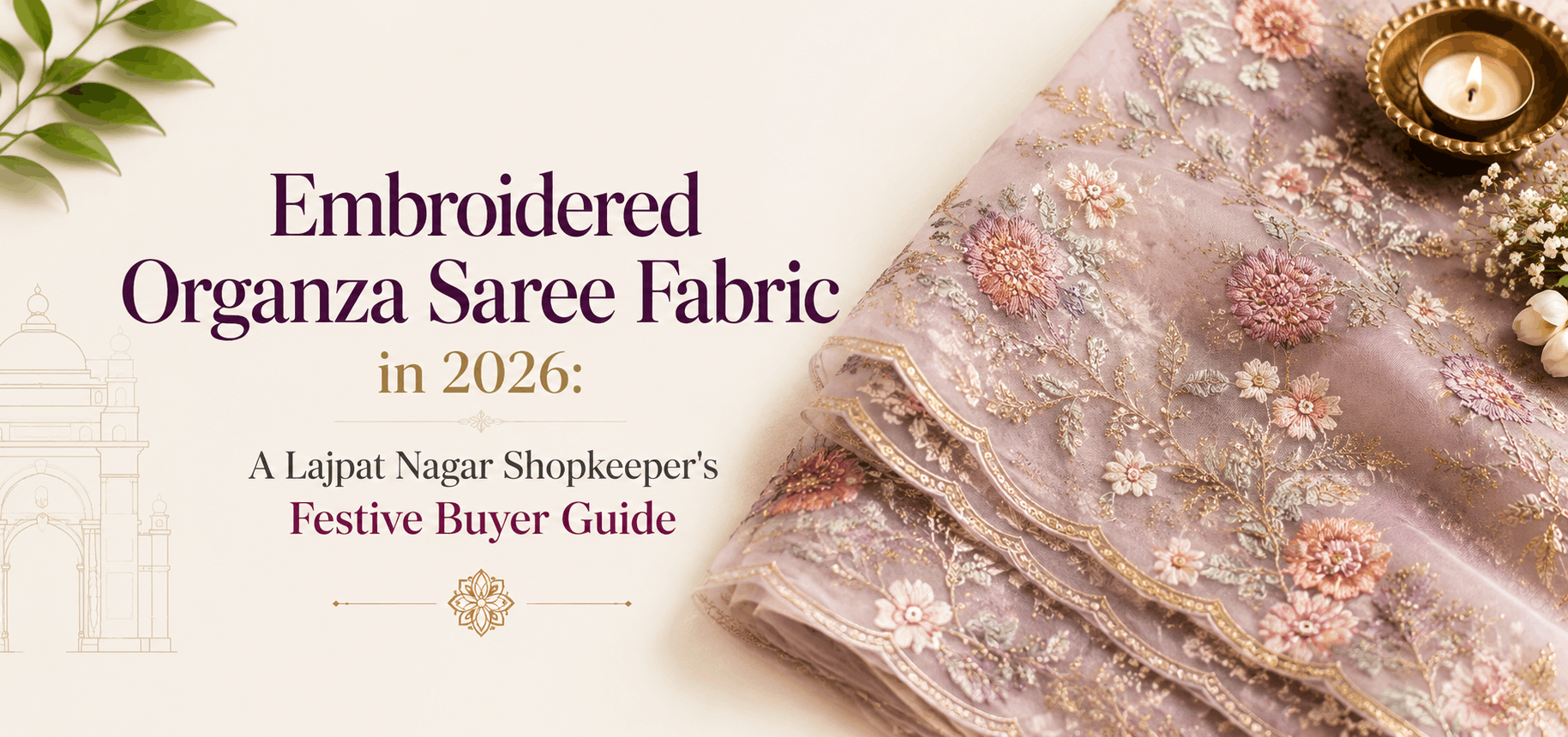
Organza is staying crisp in humidity longer than actual silk. The body reads dressy even after you have been indoors four hours drinking bad reception wine. Rs 720 to 1,800 wholesale. Best for sangeet plus indoor AC reception dinners. Simple.
5. Mulmul cotton (the morning slot winner)
Basically the featherweight king. Anything morning: Teej, Janmashtami, Ganpati visarjan procession heat, you are picking mulmul. It is breathing through anything. Rs 280 to 540 wholesale, so it also happens to be the friendliest on the wallet.
6. Chiffon (evening monsoon saree)
Almost weightless. Drying fast if the sky opens on you. Travels well in Mumbai autos and BEST buses where the AC compressor is functioning maybe half the time. Rs 480 to 880 wholesale. Evenings only, though. Chiffon in strong Mumbai daylight photographs a little washed out.
7. Lighter Banarasi weaves (the rare exception)
Only the lighter Banaras weaves. Repeat that once. Not the heavy silk ones your naani wore in 1978. Rs 1,200 to 2,800 per metre wholesale. Reserve these for the AC-heavy Diwali dinners plus office parties. Never outdoor.
In short: Georgette, chanderi plus cotton silk carry the bulk of your Mumbai festive wardrobe. Organza is for the sangeet-and-cocktail evenings. Mulmul owns morning pooja slots. Heavy Banarasi, pure satin, velvet? Save them for the Delhi cupboard, ji, not the Bandra one.
What must never come out for Mumbai buyers
Every year I watch someone regret it, so let me save you the trip.
Heavy Banarasi with dense zari is collapsing under sustained 85 percent humidity within the first sixty minutes. Zari going dull from the coastal air. Send this pair back to Delhi or Hyderabad weddings where they belong.
Pure satin at Mumbai humidity? Turns clammy against your arm. Reflects sweat as visible patches under indoor tubelights. The kind of detail that stays in the wedding album forever, unfortunately.
Heavy velvet is not surviving Mumbai in any month except December-January (short window, if any). Kamkhab brocade has the exact same problem. Metallic weave traps body heat plus humidity together, which is why by hour three your bhabhi is asking to sit near the aircon.
Heavy tussar silk? Acceptable indoor only. Outdoor humidity is doing real damage to the fibre.
Pre-stitched polyester sarees with no breathable inner? Pleats collapsing within one hour. Rain or shine. Every single time.
Heavy stone-work blouses with fully embellished backs? Weight sticks to your back within twenty minutes. Two brides in the last three years have changed blouses mid-sangeet at Delhi weddings because of this exact mistake. Do not become the third.
Function-by-function picks for the coastal festive run
Ganesh Chaturthi morning visarjan, you are walking in procession heat. Mulmul cotton saree in red, mustard, kesari. Featherweight only. Sea-spray air will not damage the fibre. Ganpati evening aarti at home? Switch to chanderi, red or pink with light zari border. Dressy enough, still breathing.
Navratri garba nights need real movement for nine straight days of dancing. Georgette lehenga with mirror work is the standard answer. Add a light sequin border if you want the mirror-shine on the twirl. Puja day of Navratri, though? Different fabric altogether. Mangalgiri cotton silk in red or maroon. Sits through three-hour home function without the aunties asking why you look damp.
Karwa Chauth in Mumbai is chanderi or chiffon in red. Light enough to carry you from morning fast till evening moon-viewing without ruining your dupatta pin work. Diwali home pooja stays mulmul or chanderi, red or gold. Diwali office party (this one is indoor AC) can be organza saree with sequin border, maroon or kesari. Photographs sharp on iPhones under those cheap corporate lights.
Diwali night dinner is the rare occasion when a lighter Banaras-weave saree in navy or wine actually behaves, because indoor AC is finally on your side. September Mumbai sangeet? Organza embroidered saree, royal blue or emerald. That is the winner nine times out of ten.
Care after coastal exposure
After every Mumbai wear, hang the saree on a wide hanger for two full hours. Humidity penetrates fibre within minutes of stepping out. Fold immediately? Moisture stays trapped inside for days.
Silica gel sachets go inside storage boxes, always. Camphor pouches work also. My mausi-ji uses camphor plus muslin lining in her Bandra almirah for decades now. Her 1989 trousseau sarees still look like they were bought last Diwali. Not exaggerating.
Dry-clean within a week of festive wear. Sweat residue is slowly breaking down dye plus silk fibre over the following months. Store folded flat in cotton bags only. Plastic bags trap monsoon humidity, and that is how zari dies faster than any other storage mistake.
Questions Mumbai buyers ask me every week
What is the best festive fabric for Mumbai humidity?
Seven survive the coastal 85 to 95 percent band without sticking to skin or losing drape. Georgette, chanderi, cotton silk, organza, mulmul, chiffon plus the lighter Banarasi weaves. That is the working list.
Why does heavy Banarasi not work in Mumbai monsoon?
Simple answer. It is collapsing under 85 percent humidity. Zari is losing its shine from the coastal salt air within hours. And by hour two, the fabric is trapping your body heat like a wet blanket.
Kya price hai 2026 mein?
Depends on the fabric, ji. Mulmul is starting at Rs 280 per metre. Georgette Rs 540 to 920. Organza Rs 720 to 1,800. And the lighter Banaras weaves sit between Rs 1,200 and 2,800.
Ganpati visarjan ke liye konsa fabric?
Mulmul cotton saree, always. Red, mustard, kesari — those three shades dominate visarjan photographs. Featherweight enough to walk in procession heat, and sea-spray is not damaging the cotton fibre.
Polyester saree Mumbai monsoon mein chal sakti hai?
Honestly, no. Pure polyester is trapping body heat by hour one at high humidity. Cotton-blend inner lining makes it survivable indoors under AC, that is all. For any outdoor Mumbai function during monsoon, keep polyester on the shelf.
Ready to order for the coastal season?
Are you stocking for Mumbai-Pune-Goa monsoon-festive customers this year? Or planning your own coastal Ganesh-Chaturthi-through-Diwali wardrobe? WhatsApp the shop for same-day swatch courier across Mumbai, Pune, Thane, Navi Mumbai, Goa, Nashik, Aurangabad. The wholesale page has the bulk-order form ready when you are.