


Shopping Sangeet Fabric Online: Checks Before You Buy
Buying Online Guides · Draft 23 October 2026 Buying sangeet fabric online starts with a dance plan, not a colour swatch alone....
Fabric Comparison Guides · 7 minute read · Published 14 October 2026
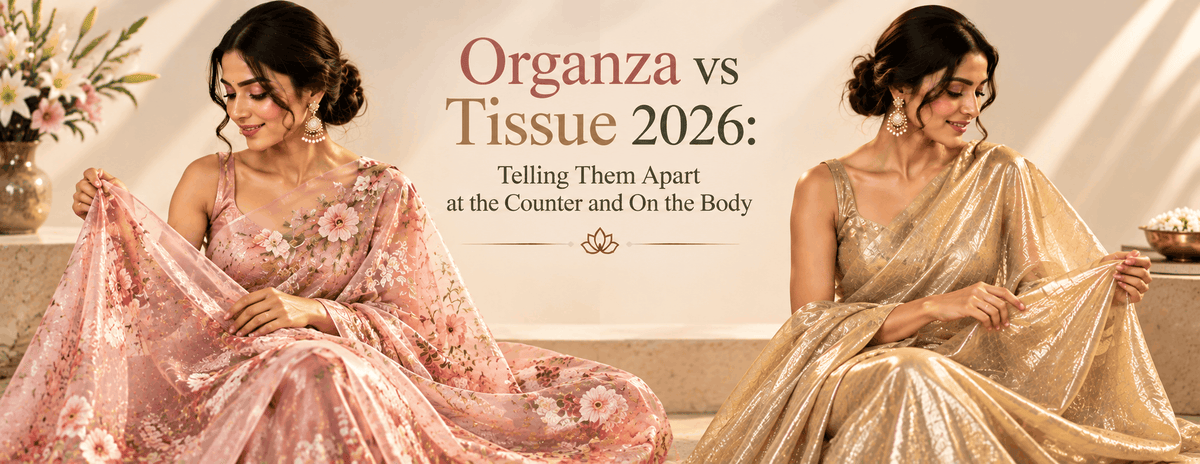
Organza vs tissue shine is the question most buyers ask when the two fabrics are laid side by side at the counter. They can look the same under tube light but behave completely different on the body. Organza stands. Tissue drapes. One reads modern. The other reads festive.
The Delhi winter wedding plus Diwali festive cluster runs from mid-October 2026 to end-February 2027. Mother-of-the-bride organza sarees. Sangeet tissue lehengas. Daytime Mehendi tissue dupattas. Reception organza blouses. Each one asks for one of these two fabrics, not both.
Organza has a stiff, papery hand with a quiet matte-to-pearl sheen. Tissue has a softer, drape-friendly hand with a metallic shimmer that moves across the surface. Pick organza for structure, tissue for movement.
Here is our Delhi counter breakdown for the organza vs tissue decision.
THE WINNING MOVE: BUY ORGANZA FOR STRUCTURED PLEATS AND FORMAL EVENINGS, BUY TISSUE FOR DAYTIME MOVEMENT AND CAMERA-FRIENDLY SHIMMER.
Quick answer: Organza for a mother-of-the-bride saree, a stiff dupatta or a formal reception. Tissue for a Sangeet lehenga, a daytime wedding guest saree or any outfit built for movement. The organza collection at 450 cuts covers the subject in one browse. For a hands-on viewing, book a counter slot.
Organza is a sheer plain-weave fabric spun from tightly twisted yarn. The twist gives it the crispness. Pure silk organza is the lightest and the most expensive. Glass organza is the modern poly version with a touch more sheen. Printed organza is where most summer sarees and wedding-guest outfits sit. The sheen reads matte with a soft inner pearl, which is why organza photographs sophisticated under function lighting.
Tissue is a lightweight plain weave with metallic yarn running through the base, usually zari or a modern poly-metallic equivalent. Plain tissue is the most versatile. Crushed tissue has a bruised textured finish for Sangeet lehengas. Diamond tissue carries a woven lattice motif. The shine is directional and moves with the body; walk under daylight in a tissue saree and the shimmer shifts along the pleats.
Scrunch a corner in your fist for a second. Organza holds the wrinkle lines and springs back stiff. Tissue softens into the scrunch and recovers slower.
Hold the fabric up to a tube light. Organza shows an even transparency with a soft inner glow. Tissue shows a visible metallic yarn interlocking at regular intervals.
Rustle the two together. Organza has a crisp dry rustle. Tissue has a softer muted swish.
Ask the counter staff to drape a metre of each over a bust form. Organza stands away from the form. Tissue falls softly and clings to the curve.
Browse the organza edit before the winter wedding rush
450 cuts across plain organza, glass organza, printed organza and worked organza. Covers daytime and formal evening use.
Browse Organza →A plain tissue saree reads festive but reads less formal than organza at the same price. For a sit-down reception where the photos are posed, pick organza. Save the tissue for the Sangeet or the daytime function.
Both fabrics go slightly sheer in lighter weights. A plain organza suit needs a Shantoon lining. A plain organza saree needs a petticoat and a blouse in the same colour family. Ask for the lining at the counter.
Tissue's metallic yarn melts under high heat. Press on low setting with a cotton cloth between the iron and the fabric. One rushed press at high heat damages the shine permanently.
If you prefer to touch the fabric before cutting, book a 60-minute counter slot. The team drapes both fabrics on a bust form, measures the hand live and confirms exactly which fabric your use and function actually need. The tissue fabric for wedding guide walks the subject in further detail; the what is organza fabric guide covers the parallel comparison.
Yes, this is one of the most popular bridal pairings. The organza lehenga carries the structure; the tissue dupatta carries the shimmer. Pick both in the same colour family or in matched metallics for a cohesive bridal look.
Organza wrinkles less because the stiffness recovers after airing. Tissue wrinkles more because the soft drape crushes at the pleats. For a four-hour sit-down ceremony, organza holds its shape better.
Organza comes in both. The classic bridal spread sits in pastels (ivory, blush, mint, soft gold) because the pearl sheen reads richer on light tones. But saturated organzas (ruby, emerald, royal blue) exist and read dramatic for a formal reception.
Yes, for the plain pieces. A cold hand-wash with a mild detergent works. Line dry in shade. For sequins, zari or heavy embroidery, stay with the dry cleaner.
Shop related fabric collections
Organza, tissue and crushed tissue for the function-first buyer
The feel and the drape are what separate these two. On the organza vs tissue shine question, the only reliable way to know is to touch both under counter light. Walk a metre of each on a bust form, scrunch-test a corner and decide which one your winter function actually needs.
Or chat directly: +91 96544 40254
Buying Online Guides · Draft 23 October 2026 Buying sangeet fabric online starts with a dance plan, not a colour swatch alone....
Occasion Guides · Draft 23 October 2026 The short version: Choose anniversary dinner outfit fabric by testing how it feels while seated,...
Fabric education · Draft prepared 23 October 2026 A beautiful fabric name can still leave basic questions unanswered. To read fabric label...


