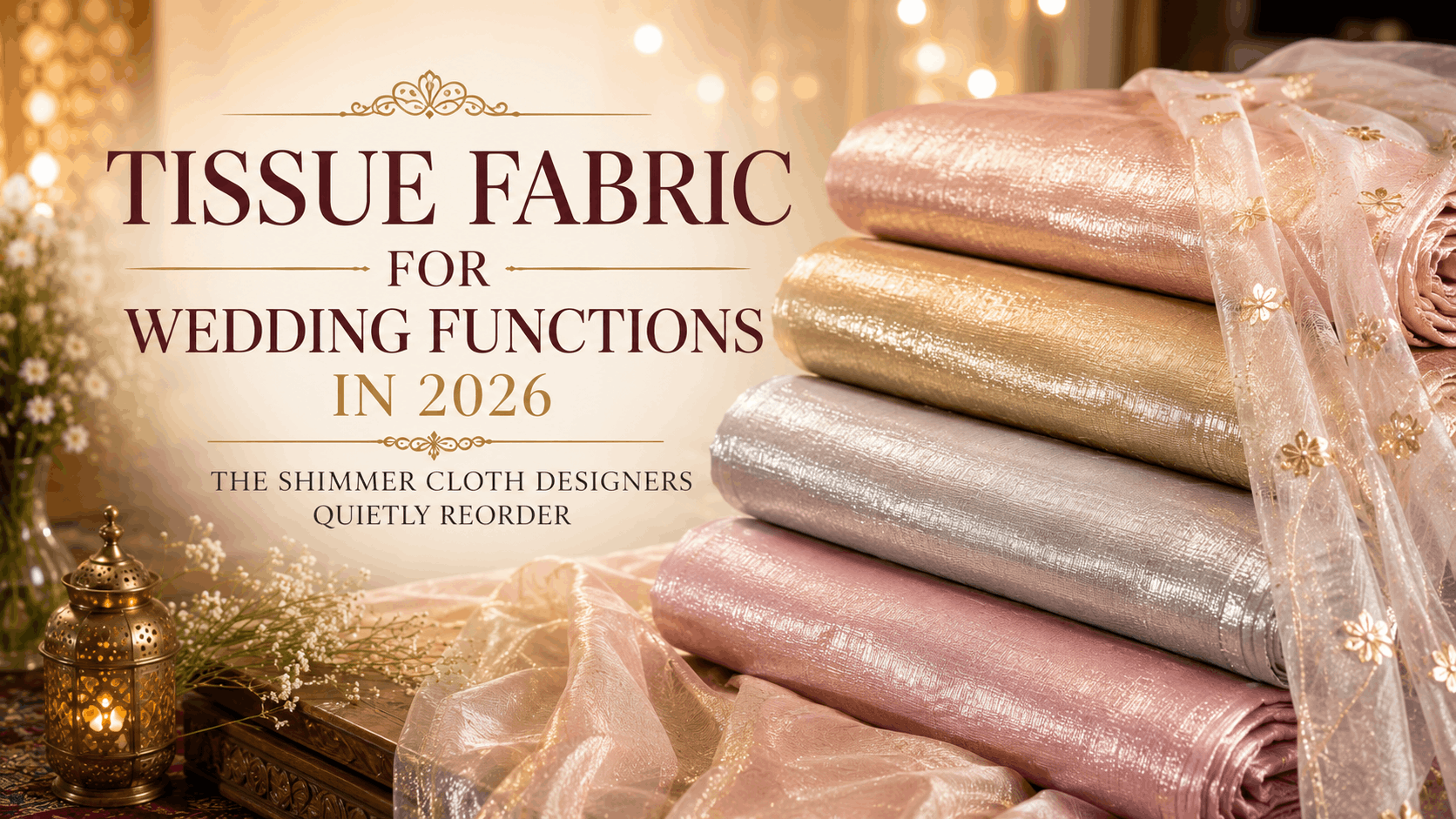
Tissue Fabric for Wedding Functions in 2026: The Shimmer Cloth Designers Quietly Reorder
Tissue Fabric for Wedding Functions in 2026: The Shimmer Cloth Designers Quietly Reorder
Tissue fabric for wedding is a lightweight metallic-blend cloth woven with silk or viscose warp and zari weft. In 2026 the three main grades are pure silk tissue at Rs 1,200 per metre, viscose tissue at Rs 480, and Korean shimmer tissue at Rs 350 per metre.
Tissue used to be the cloth nobody wanted at this Lajpat Nagar counter. Too sheer for sarees. Too shimmery for everyday wear. Too delicate for tailors who would lose their minds trying to stitch it without snags. Three years ago I sold maybe five bolts a season for dupatta layering, that was it.
Around 2023 the designer crowd in Mumbai discovered tissue photographs differently under stage lighting than any other cloth on the shelf. LED light at sangeet. Mandap fire light at the main ceremony. Outdoor daylight at haldi. Three completely different effects from the same saree. Wedding photographer's dream.
Now I cannot keep tissue in stock through the season. Boutique owners from Chandigarh, Jaipur, Pune ordering 50-metre rolls without blinking. Let me write what I tell every customer who asks about tissue for the first time.
The best tissue fabric for wedding functions in 2026 is pure silk tissue for sarees because the zari catches mandap and stage lighting beautifully. Viscose tissue is the lighter party-wear option. Korean shimmer tissue is the budget pick for layered dupattas. Pair tissue with cotton or silk underlining to prevent transparency. Pure silk tissue starts at Rs 1,200 per metre.

What tissue fabric actually is
Tissue is a lightweight metallic-effect cloth where the warp yarn is silk or viscose and the weft includes zari thread, metallic film or lurex. The mix creates the signature shimmer on camera. Woven tighter than chiffon, looser than tafetta. Sheer with body, not floppy.
Three things decide tissue grade. Warp yarn matters first because pure silk reads richer on camera than viscose or polyester ever can. Then metallic content in the weft, where real zari beats metallic film for colour depth and how the cloth ages over years. GSM is third, higher numbers hold embroidery and lower numbers drape softer.
See the full range in our tissue fabric collection tagged by warp yarn and metallic content.
The three tissue fabric grades I keep heavy for wedding season
Pure silk tissue
Pure silk warp with real silver or gold zari weft. GSM 60 to 85. The authentic grade used for bridal sarees. Cost runs Rs 1,200 to Rs 3,200 per metre depending on zari purity. Banarasi tissue and Kanchipuram tissue both fall here, Banarasi carrying more buti motifs, Kanchipuram heavier pallu detailing. Bridal commissions run Rs 22,000 to Rs 65,000 for a 6.3 metre saree. For handloom-verified banarasi tissue, our imperial brocade collection tags documentation on every bolt.
Viscose tissue
Viscose warp with metallic film or lurex weft. GSM 50 to 75. The mid-grade for party wear sarees. Cost runs Rs 480 to Rs 850 per metre. Drapes softer than pure silk tissue, costs about a third as much. Works for sangeet outfit fabric. Metallic film fades faster than zari, losing 20 percent sheen after 5 years.
Korean shimmer tissue
Polyester warp with lurex weft. GSM 45 to 65. Budget grade under various Korean brand names. Cost runs Rs 280 to Rs 450 per metre. Dominant choice for dupattas, can-can lehenga overlays, decorative draping. Just do not pay pure silk tissue prices for it. Does not breathe. Crumples permanently if folded longer than a few weeks. Boutiques mixing grades can browse the bridal trousseau section.
How much tissue fabric you actually need
Tissue is sheer, which means lining cloth in addition. For exact yardages with lining built in, the fabric estimator tool handles it.
|
Garment |
Tissue |
Lining |
|
Tissue saree body (5.5 metre standard) |
5.5 metres |
5.5 metres crepe or silk |
|
Tissue saree body (6.3 metre bridal) |
6.3 metres |
6.3 metres lining |
|
Tissue dupatta (2.5 metre standard) |
2.5 metres |
None usually |
|
Tissue dupatta (double layer) |
5 metres |
None usually |
|
Tissue lehenga overlay over silk base |
6 metres |
Layered over base |
|
Tissue blouse cloth |
0.8 metre |
0.8 metre cotton |
|
Tissue jacket for sangeet |
2.5 metres |
2.5 metres cotton or satin |
Total fabric for a tissue saree set works out to 11 to 12 metres including lining. Boutique buyers should add 8 percent wastage for handling losses.
How tissue fabric reads under different wedding lighting
This is the part that explains why tissue suddenly became fashionable. Different lighting flatters different metallics. An Indian wedding has at least three different setups across functions.
Under mandap fire light, gold and copper tissue glow warm and read traditional. Silver tissue reads cooler and modern under the same fire. Rose gold sits between them, which is why it has become the safe middle ground for couples uncertain about ceremony lighting. Outdoor daylight at haldi function fabric and morning mehendi setups is the opposite story, silver and rose gold read soft on candid photography while gold reads harsh in direct sun.
Indoor LED at sangeet and reception outfit fabric functions, all metallics work but bolder colours carry better. Pastel tissue reads washed out under bright LEDs unless dense zari is compensating.
How tissue choice changes the saree or dupatta cost
Two tissue sarees with identical embroidery can cost completely differently because of the base cloth.
Pure silk tissue bridal saree with allover zari motifs lands Rs 28,000 to Rs 75,000 in fabric plus weaving cost. Viscose tissue with similar motif density runs Rs 8,500 to Rs 22,000. Korean shimmer with similar embroidery looks similar from photos but costs Rs 4,500 to Rs 12,000.
Difference shows up by the second wedding the saree gets worn at. Cheaper tissue has lost sheen by then. Pure silk still looks like the first wear. Broader bridal pricing in our piece on the most popular bridal lehenga fabrics in India right now.
Tissue stitching and care that actually works
Tissue stitching is where tailors cause most damage. Few rules to get right.
Use a microtex needle in size 60 or 70, not standard ballpoint. Regular needles snag the weave, leaving permanent holes that show under stage lighting. Costly mistake on a Rs 50,000 saree.
Underline tissue blouses with cotton or silk cambric. Tissue alone is too sheer for blouse use. Match underlining colour to tissue, otherwise colour bleed shows under bright lights.
Never iron tissue at high heat. The metallic film weft melts above 110 degrees Celsius. Use silk or wool setting, never cotton or linen. Iron on the reverse with a press cloth on top.
For storage, roll tissue sarees around a cardboard tube wrapped in muslin. Folding creates permanent crease lines along the metallic weft. Our guide on how to style silk fabrics for different occasions covers broader silk-base care.
FAQ Section
Which tissue fabric is best for a wedding saree in 2026?
Pure silk tissue is strongest for bridal sarees because silver and gold zari catches stage lighting beautifully. Viscose tissue works for sangeet and reception at a friendlier budget. Korean shimmer is best kept for dupattas, not main saree cloth.
How much does tissue fabric cost per metre in 2026?
Pure silk tissue runs Rs 1,200 to Rs 3,200 per metre. Viscose Rs 480 to Rs 850. Korean shimmer Rs 280 to Rs 450. Banarasi and Kanchipuram tissue both fall in the pure silk band.
Is tissue fabric good for summer weddings?
Pure silk and viscose tissue both work for summer because the cloth is lightweight. Avoid Korean polyester because the synthetic warp does not breathe. Pair with cotton or silk underlining to prevent skin contact in heat.
How many metres of tissue fabric do I need for a saree set?
Standard tissue saree needs 5.5 metres tissue plus 5.5 metres crepe or silk lining. Bridal needs 6.3 metres plus matching lining. Add 0.8 metre tissue plus cotton underlining for the blouse.
Can tissue fabric be machine washed?
Never. Tissue should be dry cleaned only. Machine washing damages the metallic zari, weakens the silk warp, ruins the body.
Is banarasi tissue the same as Korean tissue?
No, completely different cloths. Banarasi tissue is handloom-woven in Varanasi with pure silk warp and real silver or gold zari weft. Korean tissue is power-loom with polyester warp and lurex. Banarasi costs three to eight times Korean per metre.
The honest takeaway from the shop counter
Tissue is the cloth where you pay for longevity. Pure silk tissue stays beautiful through a decade of wear. Korean shimmer photographs similar at the first wear but loses sheen within two to three years.
For boutique buyers stocking the festive season, mix grades by function. Pure silk for bridal commissions. Viscose for party-wear and sangeet. Korean for dupattas and decorative draping. Each grade has its customer. Bulk pricing through the bulk order page from 25 metres upwards.
Walk through the live tissue fabric collection sorted by pure silk, viscose and Korean grades. Pair with matching organza fabric for layered sangeet dupattas or zari brocade for blouse coordination. WhatsApp for swatch dispatch before bulk orders. Honest GSM tagging on every bolt. One counter. One promise.