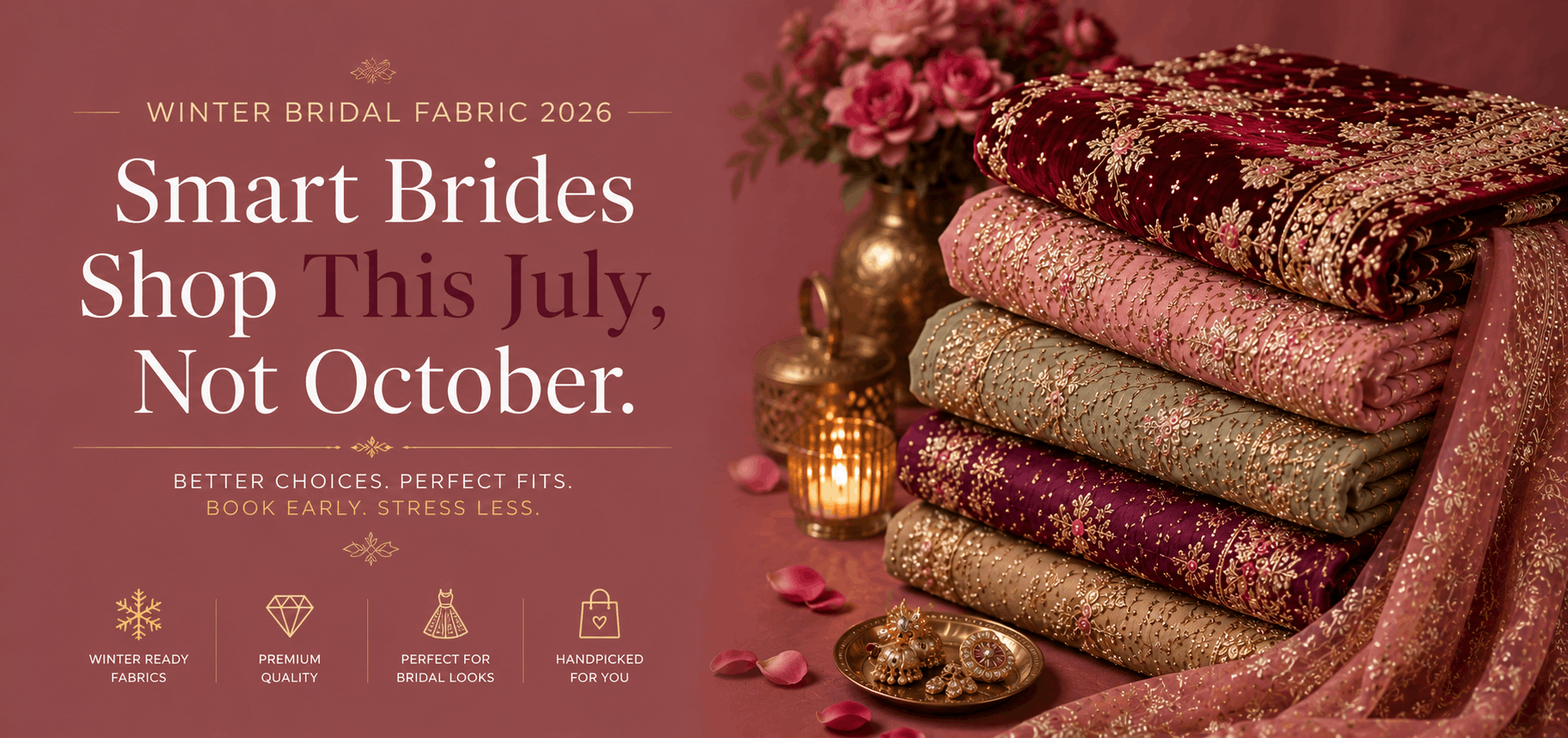
Winter Bridal Fabric 2026: Why The Smart Brides Are In My Shop This July, Not October
Every October a bride walks into my shop, panicked. Wedding date in three weeks. Tailor not confirmed. Fabric options half sold out. Every single October I gently say the same line back to her. Ji, thoda pehle aana chahiye tha.
If you have a wedding scheduled anywhere from mid-November 2026 to February 2027, this is the note I wish I could send to every bride in Delhi right now. July is the smartest month to book bridal fabric. Not because the shop wants an early sale. Because the ecosystem behind the fabric works better for you in July than in October.
Genuinely different. Let me explain what actually happens behind the counter. Then why the four-month lead time changes everything.
Quick answer: For a November 2026 to February 2027 wedding, book your primary lehenga base fabric between July and mid-August 2026. This gives 6 to 12 weeks for karigar embroidery plus 4 to 6 weeks for tailoring and two fittings. It also locks in pre-surge pricing that is 15 to 30 per cent cheaper than October rates.
The wedding fabric ecosystem nobody explains to you
Here is what happens behind the counter that most brides do not get to see.
Bridal silk mills receive their fresh dye lots plus fresh weaves around March to June. That stock lands with wholesalers in Chandni Chowk plus Karol Bagh by June. The best shades and best weaves get picked by boutique buyers first. July at the outside.
Karigars who do proper hand zardozi, gota patti, dabka work take on wedding-season projects first-come-first-served. The genuinely good karigars are booked out by mid September. Not exaggerating.
Master tailors in Delhi who stitch bridal lehengas have a hard maximum on how many bridal orders they take per month. Most are full by early October for winter weddings. This is not shopkeeper theatre. This is the actual bandwidth ceiling of a specialist working with hand-embroidered fabric.
Which means if you walk in on 15 October for a December wedding: you get whatever silk is left. Whichever karigar is still available. Whichever tailor has an emergency slot.
In July, you get first pick of everything on all three fronts.
What to actually book in July for a winter wedding
Getting married November to February? Below is the sensible July shopping order.
1. The lehenga base fabric (first, before anything else)
Before the blouse. Before the dupatta. Standard bridal lehenga base options right now are raw silk, velvet, silk satin plus heavy Banarasi katan silk which is a GI-tagged handloom weave.
In July the full colour range is still on the shelf. For evening winter weddings, velvet in maroon or deep wine or forest green looks beautiful under mandap light. For a daytime winter wedding, raw silk in tomato red or rani or dusty rose works well. Browse the Bridal Bliss range for July's fresh arrivals.
2. The embroidery decision
If you want zardozi, dabka or sequin work on your lehenga, the base fabric has to travel to the karigar cluster in old Delhi or Bareilly for embroidery. That takes six to twelve weeks depending on density.
July booking means you get proper hand work. October booking means machine work priced at hand-work rates.
3. The dupatta (book two if you can)
Bridal dupatta options usually include net, organza or georgette. Book two dupattas in July if you can afford both. One for the varmala. One for the phera reveal. That way you are not scrambling for a second option at fitting time when everyone's stock is already thin.
4. Blouse fabric
The last piece before reception thinking starts. Get it selected in July even if you have not finalised the exact blouse design yet.
Some brides pick raw silk for structured corset shapes. Some pick a lighter satin for softer sweetheart lines. Reserve the yardage now while the good colour matches to your lehenga base are still on the shelf.
5. Reception outfit
Doing a separate reception? Book that fabric alongside. Popular options right now are ivory silk satin, champagne velvet, blush pink georgette with sequin work.
Fabric prices in July vs October. The actual delta.
Let me be very direct because brides deserve straight numbers.
- Banarasi katan silk. Rs 3,800 to Rs 8,500 per metre in July. Rises 15 to 30 per cent by October.
- Velvet with light embroidery. Rs 950 per metre in July. Rs 1,150 to Rs 1,300 in October.
- Raw silk. Rs 480 per metre in July. Rs 620 to Rs 750 in October.
Now multiply that. Across a 12 metre lehenga base plus 8 metre dupatta plus 2 metre blouse fabric.
The July booking saves you Rs 15,000 to Rs 40,000 on fabric alone. Karigar plus tailor rates also move up 20 to 40 per cent by October because their bandwidth is scarce by then.
The trending bridal palette for 2026-27 winter
I have been watching what brides are picking as reference through late June. Where the trend is heading this year:
Tomato red is coming back after two seasons of dusky rani dominance. Brides want the punchiness again. Not the muted rose direction of the last two winters.
Emerald green is having a strong second year, especially for phera lehengas. Delhi wedding photographers love how it pops under mandap light.
Champagne, cream, rose gold for reception outfits. Ivory with gold zari work is huge for receptions this season.
Dusty pastels are still strong for mehendi and sangeet lehengas. But full pastel bridal lehengas are cooling slightly this year.
Sabyasachi-inspired burgundy plus wine tones for engagement and cocktail nights.
In short: July bridal booking wins on three counts: fresh mill stock, karigar availability plus tailor slots. October wins on nothing. Book velvet or raw silk or Banarasi katan silk now if your wedding falls between November 2026 and February 2027.
What to actually do this month
Here is a practical July action plan for a Nov-to-Feb bride.
Book the primary lehenga base fabric this month. Not next month. This month.
Get a full swatch pack of your secondary fabrics shortlisted. Dupatta options. Blouse options. Reception options. My shop couriers pan-India same day for confirmed leads.
Confirm your karigar for embroidery. Pay a token to hold your slot before mid September. Every good karigar in old Delhi is running a paid-token booking system by now.
Confirm your master tailor. Give them your base fabric so they can begin pattern paper work in August.
Schedule three fittings up front. Early September. Late October. Then the week before the wedding for final adjustments after pre-wedding weight fluctuations settle.
Order stitching linings, canvas, hooks, bridal-quality falls. These sell out in October at wedding-crunch pricing that no one enjoys paying.
Things brides ask me at the counter
When should I buy fabric for a December 2026 wedding?
Ideally between July and mid-August 2026. Gives you three to five months for embroidery, stitching plus two fittings before the wedding.
Is July too early for winter bridal shopping?
No. July is actually the smartest month to buy. Fresh stock. Karigar availability. Tailor slots. Pre-surge pricing. All four line up in July and progressively deteriorate through October.
What is the best fabric for a Delhi December wedding lehenga?
Velvet or raw silk or Banarasi katan silk work beautifully for Delhi December mandap events. Velvet in particular photographs rich under evening mandap lighting.
How much fabric do I need for a full bridal lehenga?
Typically 10 to 12 metres for the ghera base. 2 to 3 metres for the blouse. 5 to 6 metres for the dupatta.
Can I order bridal fabric online with pan-India delivery?
Yes. Ships from the Lajpat Nagar Delhi warehouse with tracked pan-India delivery. Same-day swatch courier before you commit to a base fabric order.
Ready to start your July booking?
Planning your winter wedding wardrobe? Or supplying bridal stock to boutique clients? WhatsApp me for same-day swatch courier across Delhi NCR, Mumbai, Bengaluru, Hyderabad, Chennai, Kolkata, Ahmedabad. The wholesale page has the bulk-order form for boutique bridal-season allocation.