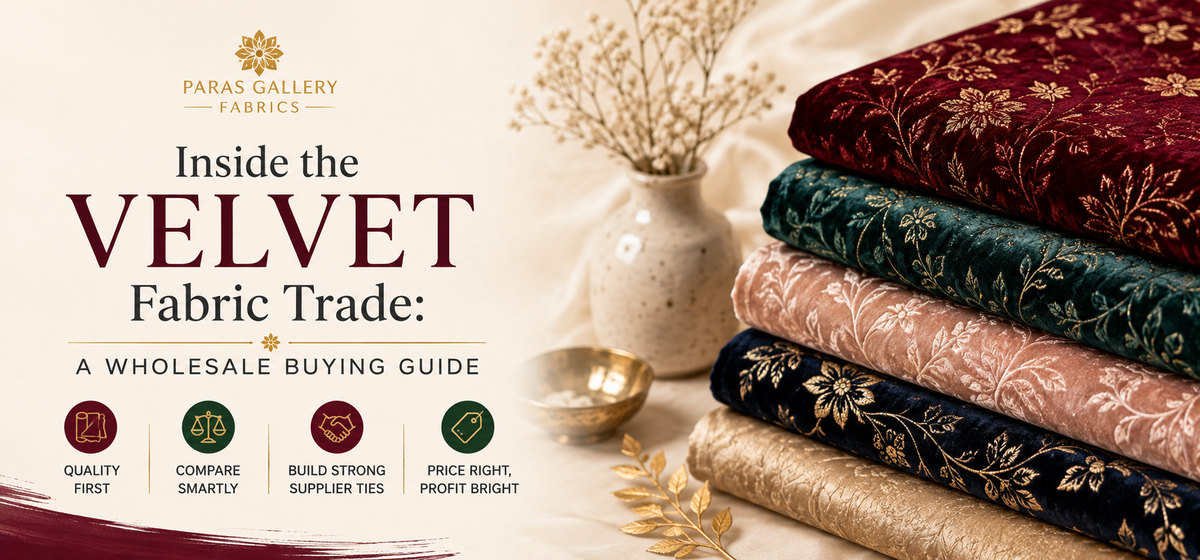
Inside the Velvet Fabric Trade: A Wholesale Buying Guide
Velvet is the fabric that punishes a rushed buyer more than any other. Two rolls can look identical on the shelf. One holds its pile through a full winter season. The other flattens into shiny patches the first time a customer sits down in a stitched jacket.
Twelve years at a Lajpat Nagar counter teaches you to read velvet with your hand before your eye. Before a first bulk order, three things decide whether the lot earns its money.
- Pile density. Thin pile crushes on the shelf so a garment looks worn before it is even stitched.
- Backing weight. A loose backing tears at the needle then pulls at the seams.
- Colour hold. Dark velvet on cheap dye bleeds onto linings plus the customer's other clothes.
Get those three right and the styling takes care of itself. This is the working reference I give new bulk buyers. Not a sales pitch. A guide to buying velvet fabric wholesale the way trade buyers who stay in business actually buy it.
Quick answer: Buying velvet fabric wholesale means purchasing velvet by the thaan or in bulk metres at trade rates. The common bases are micro velvet, 9000 velvet, stretch velvet and embroidered velvet. Delhi trade prices run about Rs 250 to Rs 500 per metre for plain micro velvet. Embroidered velvet runs Rs 600 to Rs 1800 per metre. Rates drop as your minimum order quantity rises.
What velvet fabric actually is
Velvet is a pile fabric. Short threads stand upright off a woven backing to give that soft, deep surface. Almost everything that decides quality lives in two places most buyers ignore. The pile and the backing.
The pile decides the feel, the depth of colour and how the surface catches light. The backing decides the weight, the fall and whether the fabric survives a stitching table without pulling.
Run your palm both ways across a velvet roll. One direction feels smooth. The other feels rough. That is pile direction. It is the single biggest mistake bulk buyers make, so hold that thought for the cutting section below.
Types of velvet fabric worth stocking at wholesale
This is the table I pull out at the counter. Match the velvet type to what your karigar is actually stitching for the customer.
| Velvet type | Feel and fall | Best garment use | Delhi trade price (per metre) |
|---|---|---|---|
| Micro velvet | Soft, light pile, easy drape | Blouses, lehenga skirts, flowy suits | Rs 250 to Rs 500 |
| 9000 velvet | Dense, structured, weighted | Jackets, structured bridal wear | Rs 350 to Rs 650 |
| Stretch velvet | Soft with give, hugs the body | Fitted gowns, body hugging blouses | Rs 300 to Rs 600 |
| Embroidered velvet | Weighted, worked at borders or all over | Bridal lehengas, hero jackets, dupattas | Rs 600 to Rs 1800 |
| Cotton backed velvet | Heavy, firm, holds shape | Sherwanis, heavy jackets, upholstery style pieces | Rs 450 to Rs 900 |
Prices above reflect Delhi wholesale rates as of this week for standard widths of 44 to 58 inches. Velvet rates climb through the wedding and winter season, so treat them as a working band rather than a fixed number. You can match a shade against live running stock in our velvet fabric collection before you lock an order.
How to judge velvet fabric before you commit a thaan
A velvet thaan is a heavy commitment because flattened or bleeding stock cannot be re-sold. Run these five checks first.
- Pile density. Press your thumb into the surface and lift. Good velvet springs back and the mark fades. Thin pile stays crushed. That crush shows on every finished garment.
- Backing weight. Turn the roll over and feel the base. A firm, even backing holds stitches. A loose or papery backing tears at the needle and pulls at the seams.
- Colour bleed. Rub a damp white cloth over dark shades. Velvet on cheap dye bleeds worst on maroon, bottle green and royal blue. Catch it at the counter, never after delivery.
- Pile shed. Rub two sections together for ten seconds. A little loose fibre is normal on fresh velvet. A cloud of it means weak pile that will bald with wear.
- Crush recovery. Fold a corner tight, hold for a minute and release. Quality velvet recovers. Cheap velvet keeps the fold line, which is a problem you will see on every packed and shipped order.
Pile direction, the mistake that wastes real money
Here is the one thing that separates a trade buyer from a beginner. Velvet must be cut with all panels running the same pile direction. If one panel runs against the grain, it reads as a different shade under light even though it came off the same roll.
This matters at the buying stage because velvet needs more fabric per garment than a flat weave. You cannot nest panels tightly the way you would with georgette. Plan for roughly ten to fifteen percent extra metres per design. Tell your karigar the pile rule before the first cut. That single instruction saves more velvet orders than any bargaining ever will.
Minimum order quantity, pricing bands and boutique margin
Every new bulk buyer asks the same question. Where does the rate break. Here is the honest structure most Delhi suppliers work with, ours included.
| Order tier | Typical quantity | Rate movement | Who it suits |
|---|---|---|---|
| Sample cut | 1 to 5 metres | Retail rate | First time buyers testing pile and bleed |
| Small bulk | 1 thaan (about 18 to 22 m) | 5 to 10 percent off retail | Boutiques running one winter design |
| Trade bulk | 5 to 20 thaans | 12 to 20 percent off retail | Resellers, repeat winter wear labels |
| Manufacturer lot | 50 thaans and above | Mill linked rate on request | Exporters, large labels |
One habit protects your velvet margin more than any bargaining. Pool your colours into one order. Ten buyers each taking two thaans of different shades still count as one trade lot at the counter.
This is the whole reason a wholesale community works. Fifteen boutiques buying together reach a rate none of them would touch alone.
Where velvet earns its keep in a boutique line
Velvet is a season fabric, so it earns most between October and February. That short window is exactly why it prices well. Customers expect to pay more for a winter wedding piece. Velvet reads as the fabric of the occasion.
If you build wedding wear, keep 9000 velvet and embroidered velvet as your hero stock for bridal jackets and lehengas. Our bridal fabric range shows the velvet pairings boutiques order most for the winter wedding rush.
For everyday winter labels, micro velvet is the quiet earner. It stitches into blouses, kurtis and light lehengas without the weight of heavy velvet. It repeats through the season instead of selling once. That kind of workhorse fabric holds shelf space better than one big bridal buy.
Common mistakes bulk buyers make with velvet fabric
- Ignoring pile direction. Mixing panel directions gives a two tone garment off one roll. It is the fastest way to lose a bridal customer.
- Skipping the bleed test. Dark velvet on weak dye ruins linings and the customer's other clothes. Test every deep shade before you scale.
- Buying thin pile to save money. A thin velvet roll can run Rs 100 cheaper per metre. It crushes on the shelf and looks worn before it is even stitched.
- Under ordering metres. Velvet eats more fabric per garment than a flat weave. Order short and you cannot colour match a second lot.
- Over stocking heavy velvet off season. Velvet is winter demand. Buy heavy worked velvet to real orders and keep micro velvet as your safer year round base.
Storing velvet stock without crushing the pile
Velvet marks and crushes when handled wrong. A few storage habits keep your stock sale ready.
- Store velvet rolled, never folded, so no permanent crush line forms across the pile.
- Roll pile side inward so the surface is protected against the next roll.
- Never stack heavy plain thaans on top of velvet stock.
- Keep rolls off a damp floor. Velvet holds moisture and a musty roll loses a sale on smell alone.
Questions bulk buyers ask me at the counter
What is the minimum order for velvet fabric wholesale?
Trade rates usually begin at one full thaan of about 18 to 22 metres. Below that you pay close to retail. To reach the sharper 12 to 20 percent trade discount you generally need five thaans or more, which is where pooling colours across buyers helps.
Which velvet is best for a bridal lehenga?
9000 velvet or embroidered velvet for the hero panels because both hold structure and carry heavy work well. Use micro velvet for the softer parts like a flared skirt where you want a lighter fall.
How do I stop velvet colour from bleeding?
Test dark shades with a damp white cloth at the counter and buy stock that passes clean. On deep maroon, green and blue, ask for the dye batch and stitch a sample garment before you commit a full lot.
Is micro velvet worth stocking for daily labels?
Yes for the winter months. Micro velvet is light enough for blouses and kurtis, it drapes better than heavy velvet and it repeats through the season, so it suits daily winter labels better than a stiff bridal base.
Ready to order velvet fabric at trade rates?
If you run a boutique, a winter wear label or a reselling line, the fastest way to lock trade pricing is to join the wholesale programme. You get thaan rates, shade booking and colour pooling with other buyers. See the tiers and register on our wholesale fabric page to start your first bulk velvet order.