
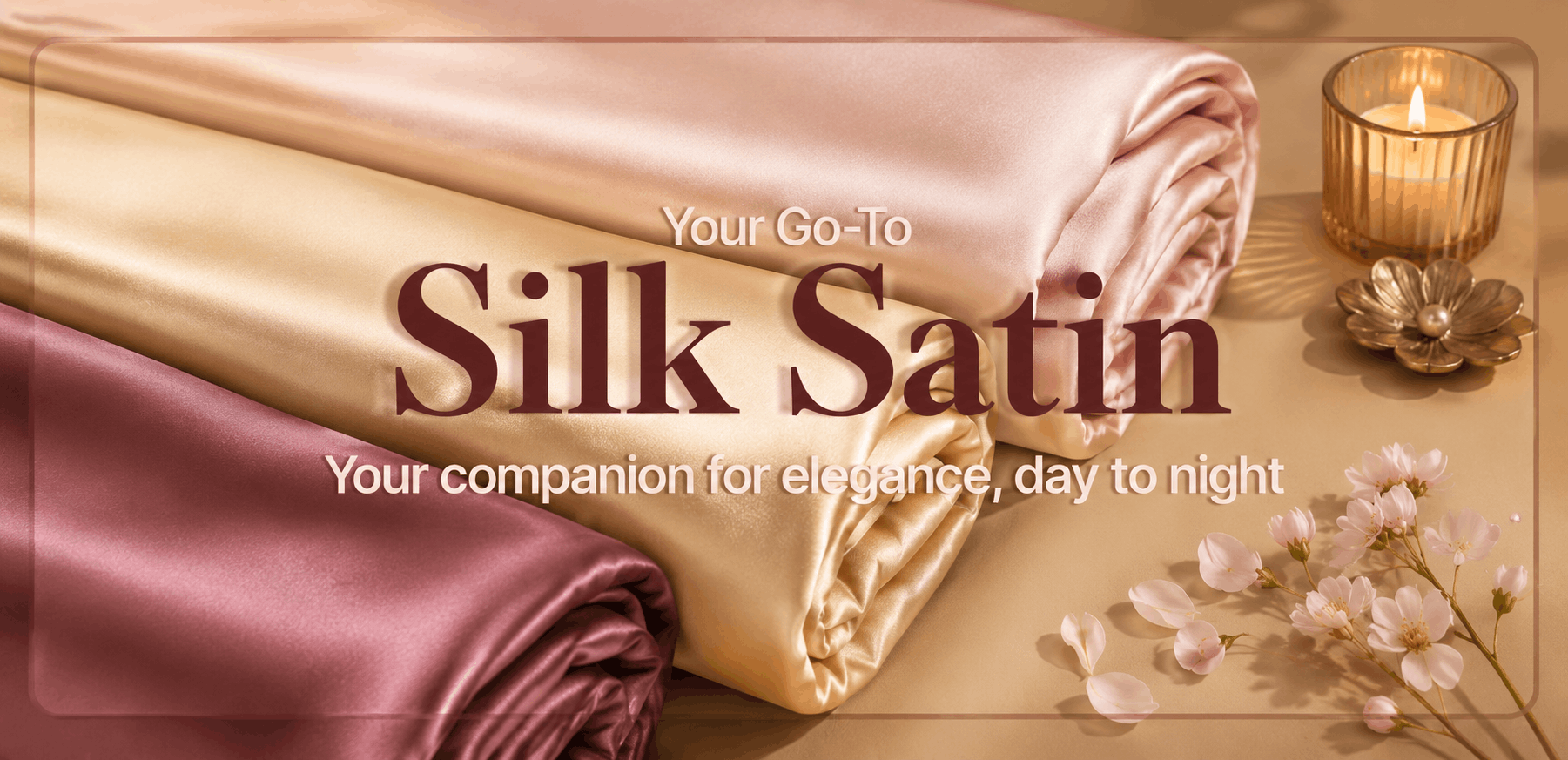
Silk Satin
Everything You Need to Know About Silk Satin Fabric
So this Green Park designer boutique-wala walks into the counter Tuesday afternoon. Bhaiya, she says, need silk satin for reception saree production before December wedding season peaks. Her clientele is South Delhi designer buyers picking reception sarees over lehengas for the second-function outfit choice. Rs. 25,000 to 55,000 saree retail range. Sheen matters. Silk hand feel matters. Standard satin does not deliver what silk satin does at this price band.
This is where silk satin holds a specific luxury position in Indian reception-royale fabric market. Real silk substrate with satin surface finish that catches indoor reception lighting cinematically. Not the mid-weight polyester satin of Armani grade. Not the hybrid drape of georgette satin. Real silk plus real satin sheen equals fabric that photographs at the level reception videographers ask about specifically after every shoot.
What Makes Silk Satin Different
See the difference is at the fibre level. Base yarn is pure silk (usually Chanderi or mulberry silk). Then a satin weave structure creates that characteristic surface sheen through longer float threads on the fabric face. Not applied finish. Not surface coating. The satin sheen is structural, part of the weave itself.
Regular polyester satin sits smooth with visible sheen. Georgette satin adds sheen to a georgette base. This variant delivers silk hand feel plus satin sheen through weave structure that cannot be replicated on any synthetic base at this price point. Ask any bridal designer working the reception saree segment. They can name silk satin on sight from the drape behaviour alone.
Hand feel is smooth, cool against skin, substantial silk weight without stiffness. Drapes closer to body than mid-weight polyester satin because silk fibre has natural give. Photographs richer than any synthetic satin because silk absorbs and reflects light differently than manufactured fibres.
Lajpat Nagar boutiques typically paying between Rs. 620 and Rs. 1,600 per metre depending on silk grade plus finish quality.
Types of Silk Satin in Our Collection
| Type | Best Use | Approximate Price Range |
|---|---|---|
| Plain Silk Satin | Reception sarees, bridal blouses | Rs. 620 to 850 per metre |
| Zari-Border Silk Satin | Wedding sarees, designer blouses | Rs. 780 to 1,200 per metre |
| Embroidered Silk Satin | Bridal designer wear, reception gowns | Rs. 1,200 to 3,400 per metre |
| Foil Print Silk Satin | Indo-western designer wear | Rs. 950 to 1,600 per metre |
| Sequin Silk Satin | Sangeet sarees, cocktail blouses | Rs. 1,100 to 2,200 per metre |
For first-time buyers, plain remains the most versatile pick. Works as reception saree base, bridal blouse core, gown fabric, plus overlay layer on heavier imperial brocade underlayers.
Silk Satin GSM Guide
| GSM Range | Fabric Feel | Best For |
|---|---|---|
| 90 to 130 GSM | Medium, drape-forward | Reception sarees, layered gowns |
| 130 to 180 GSM | Medium-heavy, structured | Bridal blouses, cocktail gowns |
| 180 to 240 GSM | Heavy, opulent | Designer reception wear, statement capes |
Most designer reception boutiques defaulting to 130 to 180 range because it balances silk-appropriate drape with structural blouse hold across long reception ceremonies.
Popular Uses
Reception sarees for South Delhi designer market at Rs. 25,000-55,000 retail band. Signature use case in luxury saree drops.
Bridal blouses with heavy pearl work or thread embroidery. Silk satin base holds embroidery weight while photographing richer than polyester satin bases.
Designer reception gowns for South Delhi and Gurgaon wedding markets. Sheen catches indoor venue lighting cinematically.
Cocktail second-function wear where bride skips lehenga for reception saree route. Silk satin becomes the fabric choice by default.
Silk Satin Trends for 2026
Ivory, dusty gold, champagne, wine are leading currently. Designer boutiques observing shift toward neutral silk satin sarees for reception because the fabric itself carries visual weight through sheen and drape without needing bold shade choices. Green Park, Vasant Vihar, Panchsheel Park boutiques all reordering these four shades consistently through past six months.
Embroidered silk satin with three-dimensional karigar work is the second pattern. Reception blouses stitched with pearl work, raised zari, subtle sequin detailing throughout. Rising in the Rs. 45,000 to 90,000 blouse retail band for designer boutiques serving destination weddings.
Expert Tips for Working with Silk Satin
Cut with sharp shears in single-layer passes because the fabric shifts under scissors differently than mid-weight polyester satin. Match grain direction carefully at pallu construction because sheen orientation shifts visibly if grain runs cross-direction.
Use silk thread for stitching, never polyester. Polyester creates puckering along the silk satin surface because thread tension pulls unevenly against the natural silk fibre. Silk thread sits flat.
Iron on reverse side always at low heat with press cloth. Direct high-heat iron damages silk fibre creating shine patches that never come off. Steam ironing through cloth preserves the natural silk sheen character.
What is Silk Satin? (Quick Definition)
The fabric is a luxury silk with satin weave structure delivering silk hand feel plus surface sheen through longer float threads on the fabric face. It gets used in reception sarees, bridal blouses, designer reception gowns, cocktail wear, sangeet sarees, plus statement capes.
Why Designers Buy Silk Satin Online
This is the luxury fabric of Indian reception saree production because the real silk substrate plus satin sheen combination photographs at destination-wedding videography quality without going into couture pricing territory. Delhi NCR boutiques price plain weights between Rs. 620 and Rs. 1,600 per metre, while embroidered variants run up to Rs. 3,400.
Frequently Asked Questions
How is silk satin different from polyester satin?
Polyester satin uses synthetic base with satin weave for surface sheen. Silk satin uses real silk substrate with satin weave delivering silk hand feel plus natural sheen behaviour. Reception photography quality differs significantly between both because silk fibre reflects light differently than synthetic satin bases.
How is silk satin different from georgette satin?
Georgette satin has georgette base with satin surface finish for hybrid drape. Silk satin has silk base with satin weave structure for luxury reception saree market. Different weight class, different price point, different use case entirely.
Will silk satin damage during dry cleaning?
Not if handled properly. Standard dry cleaning at reputable outlets preserves silk fibre integrity across many cleanings when the cleaner uses correct solvents. Home washing damages silk permanently within one cleaning cycle.
Is silk satin available in bulk for reception saree production?
Yes. Bulk pricing kicks in at 20 metres per SKU per shade. Wholesale tiers begin at Rs. 520 per metre for plain weights on 60-metre-plus orders. Designer reception lots above 100 metres unlock studio pricing tier.
Why Boutique Owners Choose Silk Satin from Paras Gallery
Ten metres minimum buys sample-rate pricing per shade. Twenty metres unlocks wholesale tier per SKU. One hundred metres opens designer studio pricing for reception saree production cycles.
Browse the full silk satin range below or WhatsApp us for shade matching before bulk order through our wholesale catalogue. Many reception seasons supplying designer boutiques across Green Park, Vasant Vihar, Panchsheel Park circuit, we know which weights work for which saree silhouettes. Shortcut is asking us first, not after the karigar starts cutting.
