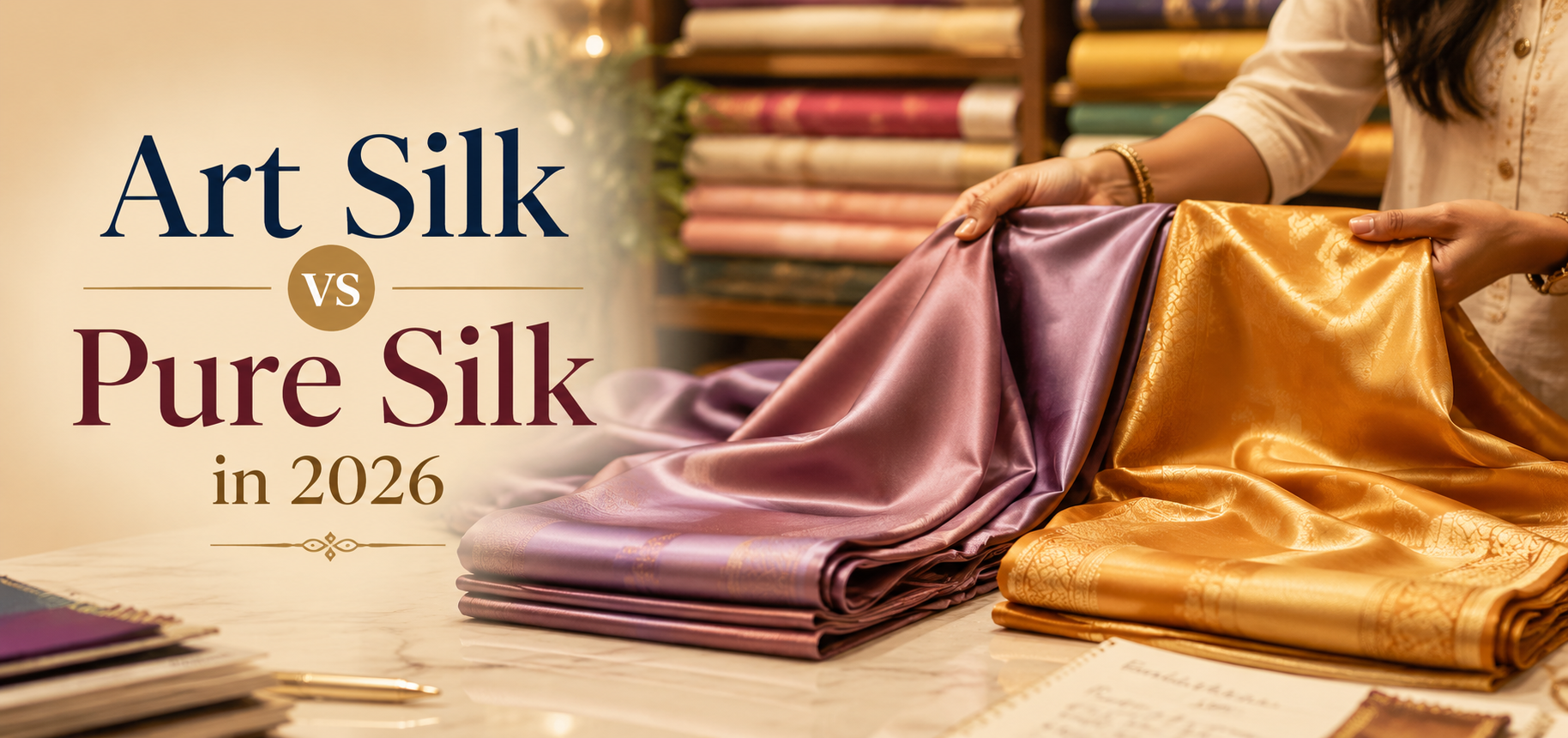
Art Silk vs Pure Silk in 2026: The Buyer Conversation I Have With Almost Every Boutique-Wala Who Walks Into My Shop
This morning before 11 AM a Greater Kailash boutique-wala was already standing at my shelf, finger pointing at a Banarasi-look saree, asking the question I hear nearly every working day. Is this pure silk or art silk? She had four bridal pre-orders to close before next Wednesday. Her Surat vendor had quoted her two different rates on what looked like the same SKU. She honestly did not know which quote was the honest one.
So we pulled both samples out. Tested them side by side over chai. That morning session became this guide.
Probably the single most common buyer conversation I have at this counter is some version of the above scene. A bride walks in. Or a boutique-wala. Or a mother-of-bride pointing at a saree on the shelf asking the same exact question. Half the time the buyer cannot tell. Half the time even the seller cannot tell honestly. Ninety percent of the time the price difference is hidden somewhere in plain sight.
Pull up a stool. Take a chai. Let me show you the plain comparison that will save you money and embarrassment during the September to January wedding cycle.
What Pure Silk Actually Is (and Why It Costs What It Costs)
Pure silk is a natural protein fibre produced by the silkworm. The most common variety across India is mulberry silk from Karnataka and West Bengal. Mulberry has the finest filament along with the smoothest hand-feel of any silk. Other natural silks include tussar from Jharkhand and Bihar, eri from Assam, plus muga (the only naturally golden silk in the world, also from Assam).
The natural protein fibre breathes properly. It has microscopic pockets that let air flow through the cloth, which is why a real silk saree feels cooler in summer. It is hypoallergenic for most skin types too. The cloth biodegrades within five years if buried in soil. There is also that slight matte natural lustre which synthetic silks try desperately to copy but never quite catch.
Downsides? Two big ones. Price plus care. The real cloth needs dry-cleaning only. Cotton bag storage with neem leaves to keep silverfish out. Very careful handling during Delhi monsoon humidity. Bridal Banarasi or Kanjivaram in pure silk starts at 18,000 rupees retail and climbs up to 2.5 lakh for the high-end heirloom pieces.
For boutique buyers building a pure silk stock line, browse our silk lehenga fabric range for current SKUs.
What Art Silk Actually Is (Without the Marketing Cover-Up)
Art silk is short for artificial silk. The fibre is man-made from viscose, rayon, or polyester filament that has been spun specifically to mimic the texture along with the sheen of natural silk.
Viscose-based art silk is made from cellulose pulp, originally wood or bamboo pulp. The hand-feel comes closest to real silk among all synthetic options. It breathes a little. It biodegrades. This is the better-quality art silk every boutique buyer should know about by name.
Polyester-based art silk is fully synthetic, end of story. It does not breathe at all. It does not biodegrade either. The trade-off is that polyester art silk is much cheaper than viscose art silk. Most low-end "silk-look" sarees sitting on Indian boutique shelves today are polyester art silk being sold without honest disclosure.
The market for this is huge. Surat alone produces roughly 60 percent of all art silk yardage that lands on Indian boutique shelves nationally. Wholesale rates start at 240 rupees per metre and climb to 980 for the finer viscose variants.
The Five Fastest Tests to Tell Them Apart
What every boutique-wala plus every bride should know before paying.
Burn test (the gold standard). Take a small thread snip from the selvedge edge. Light it carefully. Pure silk smells exactly like burning hair or burning feather, leaving behind a soft grey ash that crumbles between your fingers. Art silk smells like burning paper (viscose variant) or burning plastic (polyester variant) plus leaves a hard residue.
Water-drop test. Place a single drop of water on the cloth surface. Real silk absorbs slowly, leaving a faint dark mark behind. The polyester variant repels water entirely, the drop just sits on top staring back at you. Viscose silk absorbs faster than real silk does.
Hand-feel test. Pure silk warms to body temperature almost instantly when you hold it in your palm. Faux versions stay cool to the touch much longer. Run your hand across both fabrics side by side. Real silk has a soft drag against the skin. The man-made cloth feels slippery, almost slick.
Crush and release test. Crumple a corner inside your fist for thirty seconds. Authentic silk holds a deep crease for several minutes, then slowly relaxes. Polyester silk springs back smooth, almost instantly. The viscose variant holds a light crease, releases faster than the real cloth.
Thread pull test. Tug a single warp thread gently from the selvedge. Mulberry pulls out slightly uneven, feels warm to fingers. Artificial silk pulls out as a perfectly smooth shiny filament, no warmth, no unevenness.
2026 Price Comparison at Lajpat Nagar Wholesale
Quick reference for boutique buyers planning September stock.
Pure mulberry silk in plain dye sits at 1,800 to 3,200 rupees per metre at wholesale. Tussar silk runs 1,400 to 2,400 in the same band. Eri silk holds slightly higher at 1,600 to 2,800. Viscose silk drops sharply to 380 to 980 a metre. The polyester version sits even lower at 240 to 480. Banglori silk (which is technically a satin art silk in the synthetic family) holds at 220 to 680 per metre, though that one gets its own treatment in our companion guide on Banglori silk for bridal lehenga.
Here is the part that genuinely matters. A pure Banarasi silk bridal saree at Lajpat Nagar retail right now sits at 22,000 to 1.4 lakh per piece. An art silk Banarasi-look saree on the same shelf sits at just 2,800 to 8,500. Same visual identity at first glance. Six to twenty times the price difference. Your customer deserves to know which one she is actually paying for.
When Pure Silk Is the Right Choice
Bridal sarees plus lehengas for the wedding day itself. This is the single moment in life where pure silk genuinely justifies the price. Photographs, hand-feel, heirloom value, all earn their keep on that one day.
Mother-of-bride sarees being stitched for evening receptions where photography under chandelier lighting absolutely needs the natural matte lustre real silk provides. Polyester glare ruins those photographs.
Boutique buyers wanting to position their stock as heirloom-grade with proper GI tag documentation should stay on pure silk only. Resale value down the line depends on this.
Customers who have confirmed sensitivity to synthetic fibres on their skin must choose pure silk. This natural fibre is hypoallergenic, while polyester art silk can trigger contact reactions on sensitive skin types within hours.
Long-term storage pieces being preserved as legacy outfits for daughters or granddaughters should always be pure silk. Synthetics yellow within five years. Natural silk holds its colour for decades when stored properly with neem leaves in cotton bags.
For the bridal segment specifically, the bridal fabric collection covers the high-end pure silk options worth pulling for swatches.
When Art Silk Is the Smarter Pick
Reception, sangeet, plus cocktail outfits being stitched for two to four wears across the season. Cost-per-wear logic simply does not justify pure silk here.
Bridesmaid sarees plus dupattas where the boutique needs volume across six to eight coordinated pieces in matching tones. Genuine silk lots in eight identical pieces are rare and expensive, art silk solves this instantly.
Boutique stock targeting retail customers in the 5,000 to 15,000 rupee price bracket. Most retail customers honestly cannot tell the difference at this level, plus the boutique margin is healthier on viscose art silk.
Saree shoppers in their twenties who want the visual of a Banarasi or Kanjivaram without the dry-cleaning commitment that comes with pure silk. The younger market is moving towards low-maintenance pieces.
Reseller stock being shipped to small Instagram boutiques across Tier 2 cities. Synthetic silk ships better, stores better, plus survives reseller-grade packaging far better than the real cloth ever could.
Browse the lighter pieces in our saree fabric collection for reseller-friendly options.
What Is Trending in 2026 Across the Silk Family
Three honest movements happening at my counter right now.
Banarasi-look sarees in viscose are picking up serious shelf space at the 4,800 to 8,500 retail bracket. Boutique brides who genuinely could not afford a pure Banarasi are switching here without compromising on the visual.
Pure tussar silk Indo-Western co-ord sets in natural beige plus rust tones are walking off the boutique floor in Delhi and Mumbai for daytime wedding functions. Photographs beautifully under outdoor sun.
Dupattas in eri silk paired with chanderi kurta sets are emerging as the daytime sangeet outfit of choice among the mother-of-groom buyer segment. Soft, breathable, traditional without being heavy.
For deeper context on how to style different silks across occasions, read our companion piece on the versatility of silk and how to style silk fabrics for different occasions.
Q: What is the main difference between art silk and pure silk?
Natural silk is a protein fibre produced by silkworms, mostly mulberry silk from Karnataka or West Bengal in India. The artificial variety is spun from viscose, rayon, or polyester filament to mimic the visual sheen of real silk. The fastest way to tell them apart is the burn test, where pure silk smells like burning hair plus leaves crumbly grey ash, while art silk smells like burning paper or burning plastic plus leaves a hard residue.
Overview
For 2026, pure silk at Lajpat Nagar wholesale runs 1,800 to 3,200 rupees per metre for mulberry, 1,400 to 2,400 for tussar, 1,600 to 2,800 for eri. The artificial version runs much cheaper at 380 to 980 per metre for viscose plus 240 to 480 for polyester. Five identification tests work reliably: burn test (real silk smells like burning hair, art silk smells like paper or plastic), water absorption (pure silk absorbs slowly, polyester repels), hand-feel (pure silk warms to body temperature, art silk stays cool), crush release (pure silk holds creases, polyester springs back), thread pull (real silk thread is uneven, art silk is perfectly smooth). The natural cloth is the right pick for bridal day outfits, mother-of-bride evening sarees, plus long-term legacy storage. Synthetic silk works better for sangeet, cocktail, bridesmaid pieces, plus reseller stock under 15,000 rupees.
FAQ
What is the main difference between art silk and pure silk?
A natural protein fibre from silkworms is what makes real silk. Faux silk is spun from viscose, rayon, or polyester instead. The real fibre breathes plus stays hypoallergenic for most skin types. Synthetic versions are cheaper and easier to care for, but they trap heat. Burn test remains the fastest single method to separate them at the counter.
Is art silk fabric durable?
Polyester silk is more durable than pure silk during long storage because it resists humidity, moths, plus silverfish. The viscose variant has a shorter shelf life and can yellow within five years. Mulberry silk outlasts both for decades when stored correctly in cotton bags with neem leaves.
What is the price difference between art silk and pure silk in 2026?
At Lajpat Nagar wholesale, pure mulberry silk runs 1,800 to 3,200 rupees per metre. Viscose-based silk runs 380 to 980. Polyester-based silk runs 240 to 480 only. The price gap is roughly four to ten times depending on the comparison.
Can art silk be worn for a wedding?
Yes for reception, sangeet, plus cocktail outfits worn during the wedding week. For the wedding ceremony itself most brides still pick pure silk because the photographs plus the heirloom value genuinely justify the price tag.
Which silk is better for monsoon and summer?
Tussar silk breathes best in monsoon humidity at our counter. Viscose-blend silk is also tolerable. Polyester variants trap body heat aggressively and should be avoided across May to September Delhi humidity. Assam eri works for both summer plus winter functions.
Which silk should boutique-walas stock for the 2026 wedding cycle?
Stock viscose art silk in jewel tones for the 5,000 to 15,000 retail bracket. Add a smaller stock of pure tussar plus eri silk for the 18,000 to 35,000 segment. Reserve pure Banarasi and Kanjivaram for made-to-order higher-ticket pieces.
Final Word from the Counter
Twelve years at this counter has shown me one clear truth about silk. The buyer who knows how to run the burn test never overpays. The buyer who skips the test always pays for art silk thinking it is real silk. That single piece of knowledge can save 18,000 rupees on a single saree.
If you are deciding between art silk plus pure silk for boutique stock or a personal saree purchase, message me directly on WhatsApp before locking the order. Same-day swatches go out to most North Indian cities.
Browse the live ranges across our silk lehenga fabric and bridal fabric collection. For larger boutique production needs, the wholesale fabric order desk handles your requirements directly. Use the fabric estimator tool before placing the cutting order.
Questions about silk identification? Drop them in the comments. I read every single one personally.