Mulmul Cotton Fabric for Monsoon 2026: Why This Old Bengal Cloth is Outselling Linen Suits in My Lajpat Nagar Shop
Mulmul Cotton Fabric for Monsoon 2026: Why This Old Bengal Cloth is Outselling Linen Suits in My Lajpat Nagar Shop
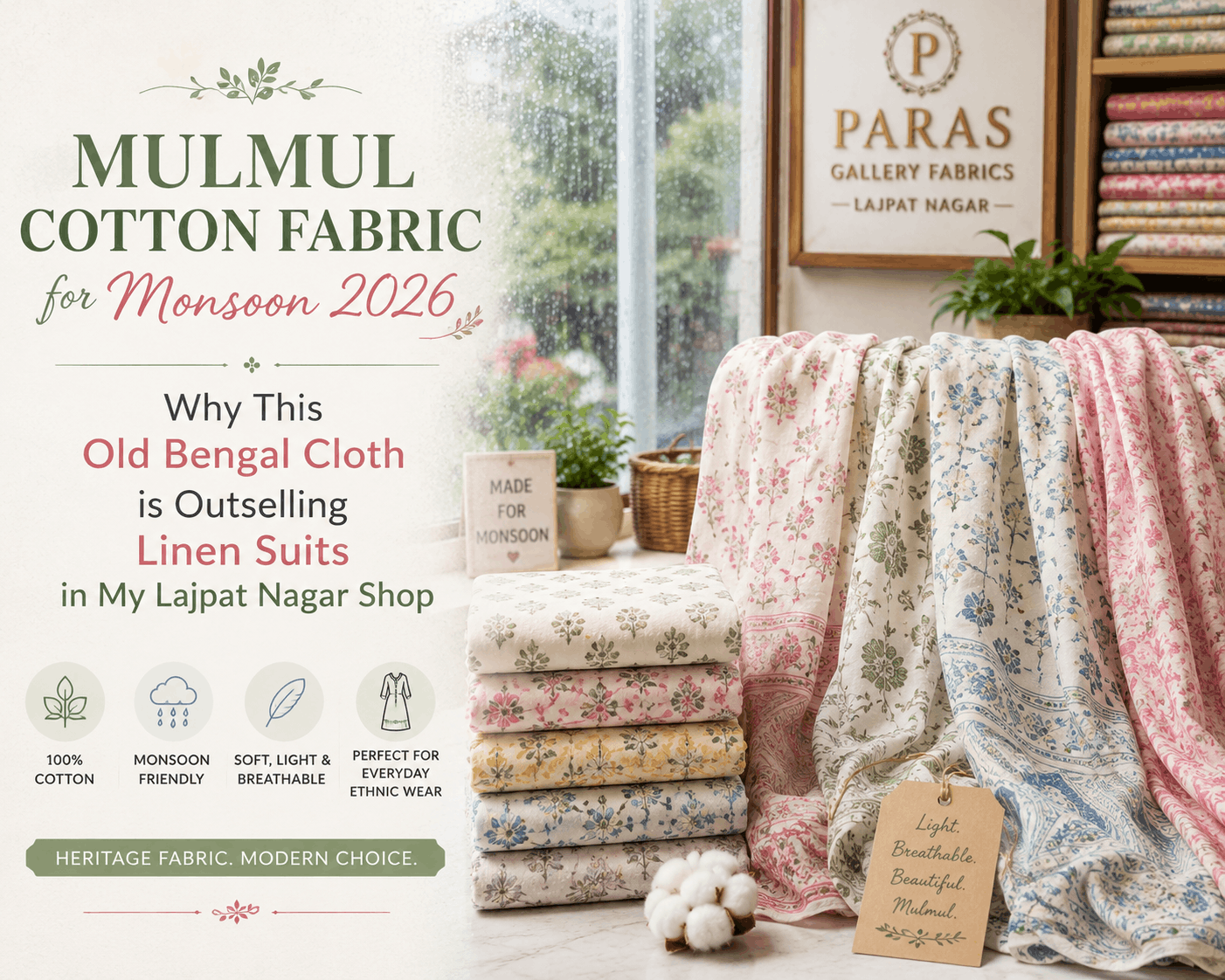
Mulmul is a fine, soft cotton woven on a low-tension loom in West Bengal and parts of Tamil Nadu. It is the same cloth Mughal queens wore in summer. For 2026 monsoon, mulmul is back as the favoured suit fabric because it breathes through humidity, drapes softly, and washes well without losing colour.
Last June across the entire month I sold around sixty thaan of mulmul cotton across all weight categories at my counter. By the third week of this June we have already cleared past one hundred and forty thaan moving out the door.
Something has shifted at the wholesale market this monsoon season.
Boutique-walas walking into my shop this past week have all been asking the same question. Mulmul kya rate hai bhaiya. Across many years of running this counter on Central Market gully I have not seen this kind of monsoon-month mulmul order volume before now.
The shift has happened for a couple of practical reasons that customers are now articulating openly. Synthetic suits stick to skin in humid weather which has pushed buyers toward natural fibres. Plus the wholesale market has finally got back consistent mulmul supply from the Phulia plus Shantipur weavers in Bengal after the post-pandemic supply gap that ran roughly 2021 through 2023.
So let me sit down for fifteen minutes and walk you through everything worth knowing about mulmul. What to actually check at the counter before paying. What current pricing looks like across grades. How to stock it without making the wrong inventory call as a boutique buyer.

Mulmul is a hand-loomed cotton fabric from Bengal, woven so fine it feels almost like silk against skin. It is one of the most breathable cottons available, making it the best monsoon suit fabric in India. Mulmul does not stick to skin in humidity, falls softly, and accepts hand-block prints, embroidery and natural dyes very well.
What mulmul actually is
Mulmul is a low-thread-count hand-woven cotton with a specific characteristic that distinguishes it from other cottons. Mulmul cloth feels almost translucent when held up to a tube light, which is the immediate giveaway when authenticating a piece. Real mulmul shows a soft glow through the weave rather than a hard pattern of distinct holes. The yarn count typically runs 80s to 120s, hand-spun in many cases and mill-spun in others depending on the source cluster.
The original mulmul came from Dhaka plus Murshidabad in the seventeenth century, when the fabric was prized internationally for its exceptional fineness. Today the bulk of Indian mulmul comes from Phulia plus Shantipur clusters in Bengal, with a smaller production cluster operating in Madurai in the south. Bengal mulmul has slightly more drape across the cloth. Madurai mulmul has slightly more body to it. Both grades are genuinely good and the pick comes down to whether your customer wants flow or structure in the finished garment.
People confuse mulmul with regular voile or cotton lawn constantly at counters. Voile plus cotton lawn are mill-woven and machine-finished, which gives them their characteristic uniformity. Mulmul carries hand-loom irregularities that make every piece slightly different from the next. That irregularity is the value rather than a defect. Retailers who understand this position the cloth differently in their stores than those who treat the irregularity as a flaw. Browse current mulmul options in our kurti material collection where source cluster attribution is noted per bolt.
The mulmul weight grades I keep stocked
Each weight grade has a specific use case worth knowing before you place a wholesale order.
Pure soft mulmul at the lightest end runs 60 to 80 GSM weight. Feels like a whisper between your fingers. Best applications include inner kurta layers, dupatta construction, baby clothes, very lightweight summer suits where minimal cloth weight matters. Counter pricing runs Rs 220 to 340 per metre at wholesale. Customers buying this weight must be told that adult kurta construction needs an inner lining underneath because the cloth shows transparency without the layer.
The everyday workhorse weight is standard mulmul at 80 to 120 GSM range. Stitches into kurtas without requiring lining underneath which simplifies tailor briefing. Breathes well through May to September Delhi heat across both indoor plus outdoor function scenarios. Pricing comes in at Rs 280 to 440 per metre wholesale. This grade is moving fastest off my counter right now through the monsoon season.
Block-print mulmul at 100 to 140 GSM weight combines the mulmul base with hand-block or screen-block prints applied at finishing stage. Sanganer plus Bagru prints from the Jaipur cluster are the most common print sources for boutique-grade pieces. Wholesale pricing at Rs 360 to 580 per metre. Excellent application for boutique daywear collections plus resort wear lines launching for the summer-monsoon segment.
Embroidered mulmul at the heaviest grade weight of 120 to 160 GSM uses the mulmul base for chikankari, schiffli, or hand-thread embroidery work. Wholesale pricing Rs 540 to 980 per metre depending on embroidery density. Best suited for festive daywear, baby shower outfits, casual sangeet looks where the embroidery does the visual work without requiring heavy fabric underneath. Browse embroidered mulmul options in our dyeable embroidery collection where embroidery patterns are listed by piece.
How mulmul actually behaves through monsoon
A customer in my shop yesterday kept saying her last summer cotton suit went see-through after one rain catch which is a standard problem with cheap regular cotton. Mulmul does not behave this way because the weave structure is soft plus even throughout. The cloth absorbs moisture without losing structure, dries fast after rain exposure, plus the hand-loom weave hides the slight transparency that polyester or rayon variants would show clearly.
In Delhi monsoon humidity above 75 percent ambient, mulmul stays comfortable across temperatures up to 32 degrees. The cloth never sticks to skin during long events. No bunching up at the waistline either. The kurta hem moves naturally with any breeze that comes through, which photographs significantly better than a stiff synthetic fall would in the same conditions.
The genuine trade-off worth flagging upfront is wrinkles. Mulmul will crease. You cannot avoid the wrinkling property of natural cotton at this weight grade. You can only manage it through care routines. A light starch wash brings back the original body of the cloth. A quick steam press fixes any function-day creases that develop before an event. Tell your customers this honestly upfront when selling mulmul at retail. Otherwise they will return the suit thinking it is defective when the wrinkles develop after first wear.
How to check mulmul quality at the counter
Before paying my Surat or Phulia supplier on any consignment that lands at the counter, the assessment routine I run covers several specific points that boutique buyers should adopt before paying their own suppliers.
Start by holding the cloth up to a tube light. The glow coming through should look soft plus even across the cloth surface. Patchy glow or thick-and-thin patches close together indicate the cloth was woven on uneven loom tension which means inconsistent drape after stitching. Skip these pieces entirely.
Pull a 30 cm section gently between your hands at slow tension. Quality cloth stretches slightly under the pressure then bounces back to original shape when released. Tearing under the test means the warp yarn is genuinely weak which will fail at the seam line during stitching. Staying stretched without bouncing back means the weft is too loose which causes the cloth to lose shape after the first wash.
Rub a corner of the cloth against a polished surface for ten seconds. Thread fluff coming off in a heavy ball means the cloth has not been singed properly at the finishing stage which leads to pilling within the first three washes after retail purchase.
Take a moment to smell the cloth. Sounds odd but the smell test matters significantly for authentication. Genuine mulmul carries a faint earthy smell from natural starching done at the source cluster. A sharp chemical or perfumed smell indicates the cloth was over-processed in a finishing mill plus the characteristic hand feel will fade after the first wash cycle.
For the final authentication step, burn a small thread pulled from the selvedge edge. Real cotton burns to a soft grey ash with a paper-like smell. Polyester blend melts into a hard black bead with a chemical smell. Walk away from anything that beads under flame because what you are looking at is not genuine cotton.
Styling mulmul suits for the 2026 monsoon
The styling trends I am watching closely this season come from boutique reorder patterns rather than from social media reels which sometimes mislead at wholesale level.
The block-print kurta paired with a contrast solid cotton pant is moving fastest off my counter right now. Soft pink kurta paired with sage green pants leads the order volume by a significant margin. Mustard kurta with ivory pants comes second in reorder patterns from boutique buyers across North India.
The plain mulmul kurta with a hand-embroidered yoke construction is the look working for low-key office wear during festival weeks. The yoke carries the visual focus while the rest of the kurta stays plain and breathable through long working days.
Mulmul kurta and dupatta set with a Banarasi border treatment adds a small festive touch without losing the everyday wearability that makes mulmul attractive in the first place. Coordinated zari border options work well for adding this kind of restrained festive accent to mulmul construction.
For boutique resellers planning July through September inventory, do not over-stock plain white mulmul this season specifically. Demand has shifted toward dyed mulmul in earth tones plus pastel block prints across boutique reorders. Whites are still selling steadily as inner layer cloth but not as the hero piece in finished retail garments.
How much mulmul to order for each suit type
Standard metreages I send out from the counter follow specific patterns based on the construction type the customer is ordering.
For a straight kurta plus pant set in mulmul, the calculation works out to 5 metres of mulmul for the kurta itself plus 1.5 metres of contrast cotton for the pant section. Total 6.5 metres covers the construction with reasonable wastage margin.
For a full kurta-pant-dupatta set built entirely in mulmul, the metreage covers 5 metres for kurta, 1.5 metres for pant, 2.5 metres for the dupatta drape. Total of 9 metres handles the complete set.
An Anarkali constructed in mulmul needs 6 to 7 metres of base cloth depending on the ghera flare you want in the final piece. Less than 6 metres and the ghera looks tight across the bottom section which kills the silhouette.
For boutique batch production stitching ten suit sets at once, allocate roughly 60 to 70 metres of mulmul total for ten kurta-pant sets, accounting for cutting wastage plus shrinkage absorption. Use the fabric estimator tool for exact yardage calculations on more complex batch projects.
Care guidance to share with retail customers
The first wash routine for mulmul matters significantly for fabric longevity. Cold water with Ezee or Liquid Genteel detergent works best. Never soak the cloth for more than ten minutes total. Never wring water out by twisting. Shoulder-dry the kurta under shade rather than direct sun because the natural dyes used on dyed mulmul fade visibly under harsh sun exposure.
After the first wash, cold gentle machine wash on the delicate cycle works fine for plain mulmul without embellishment. Block-print plus embroidered mulmul should stay on hand wash through the first five wash cycles minimum to protect the print and embroidery work from machine agitation.
Storage matters during monsoon months specifically. Fold the cloth flat and place between butter paper sheets or muslin cloth wraps. Avoid plastic bags entirely because mulmul cotton needs airflow to prevent yellowing. Add neem leaves or camphor tablets to the storage area to keep insects away during the high-humidity months.
For ironing, use the cotton setting on your iron with the cloth slightly damp before pressing. A dry cloth placed between the iron plate and the kurta protects any embroidery work from direct iron heat which can flatten the raised texture permanently.
FAQ
Is mulmul fabric good for monsoon?
Yes very much so. This fabric is among the best monsoon suit fabrics available in the Indian market because it breathes through high humidity, dries fast after a rain catch, plus does not stick to skin during long humid events. Mulmul outperforms polyester plus most cotton blends in Delhi monsoon conditions which is why my counter is seeing record order volumes through June this year.
What is the GSM of mulmul fabric?
Mulmul comes in several common weights at this counter. The pure soft variety runs 60 to 80 GSM. Standard mulmul runs 80 to 120 GSM. The block-print variant comes at 100 to 140 GSM. Embroidered mulmul runs heaviest at 120 to 160 GSM weight. Higher GSM means more body to the cloth plus less transparency in the finished garment.
How much does mulmul fabric cost per metre in 2026?
Current Lajpat Nagar wholesale pricing covers pure soft mulmul at Rs 220 to 340 per metre, standard mulmul at Rs 280 to 440, block-print at Rs 360 to 580, embroidered at Rs 540 to 980 per metre. Boutique retail pricing typically marks up two times these wholesale numbers depending on margin policy plus location.
Does mulmul shrink after the first wash?
Yes around 3 to 5 percent shrinkage on the very first cold wash cycle. Pre-shrunk mulmul is available from some Bengal mills but costs slightly higher per metre at wholesale. Always add 0.3 metres extra per kurta order to absorb the expected shrinkage before stitching begins. Tell your tailor about the shrinkage allowance during the cutting brief.
Can mulmul be worn for festive occasions?
Yes especially the block-print plus chikankari variants. For Teej, Janmashtami, haldi function dressing, mulmul kurtas with a hand-embroidered yoke and a Banarasi-border dupatta have become an accepted festive look through 2026 across the boutique segment. Mulmul carries enough texture plus visual interest for festive dressing without requiring heavy embellishment underneath.
Is mulmul the same as muslin?
The mulmul variant is the finer plus softer Indian version within the muslin family of fabrics. All mulmul technically qualifies as muslin but not all muslin qualifies as mulmul under the trade definition. The hand-loomed Bengal variety is what most Indian shoppers actually mean when they say mulmul at a retail counter. Boutique buyers should specify Bengal hand-loom mulmul when ordering wholesale to avoid getting machine-woven muslin substitutions from some suppliers.
Final word from the counter
This fabric is the monsoon cloth that has finally caught up with what natural-fibre buyers were looking for through all those years of synthetic dominance at retail level. Mulmul breathes through humidity. Dries fast after rain catches. Does not stick to skin during long events. Carries hand-loom irregularity that boutique-grade buyers actually want for visual interest in their retail garments.
The customer who walked in last Friday confused about her see-through summer cotton suit eventually walked out with three metres of standard mulmul in ivory for her own custom kurta order. She came back two weeks later to confirm the kurta worked beautifully through three function days in a row without showing the transparency problem her previous cotton suit had developed. That is the kind of natural-fibre experience that brings customers back season after season for mulmul.
CTA
If you are stocking summer-festive collections for July through September delivery, message me directly on WhatsApp and fresh Phulia plus Shantipur mulmul swatches go out same-day to most North Indian boutique cities. Browse the live ranges across cotton plus dyeable categories at the Lajpat Nagar counter. Boutique buyers planning larger volume orders should request bulk quotes through our bulk order page before committing to specific colour plus weight combinations. Direct sourcing from Bengal plus Tamil Nadu weaving clusters. Honest grading. No runaround on mulmul authenticity questions.