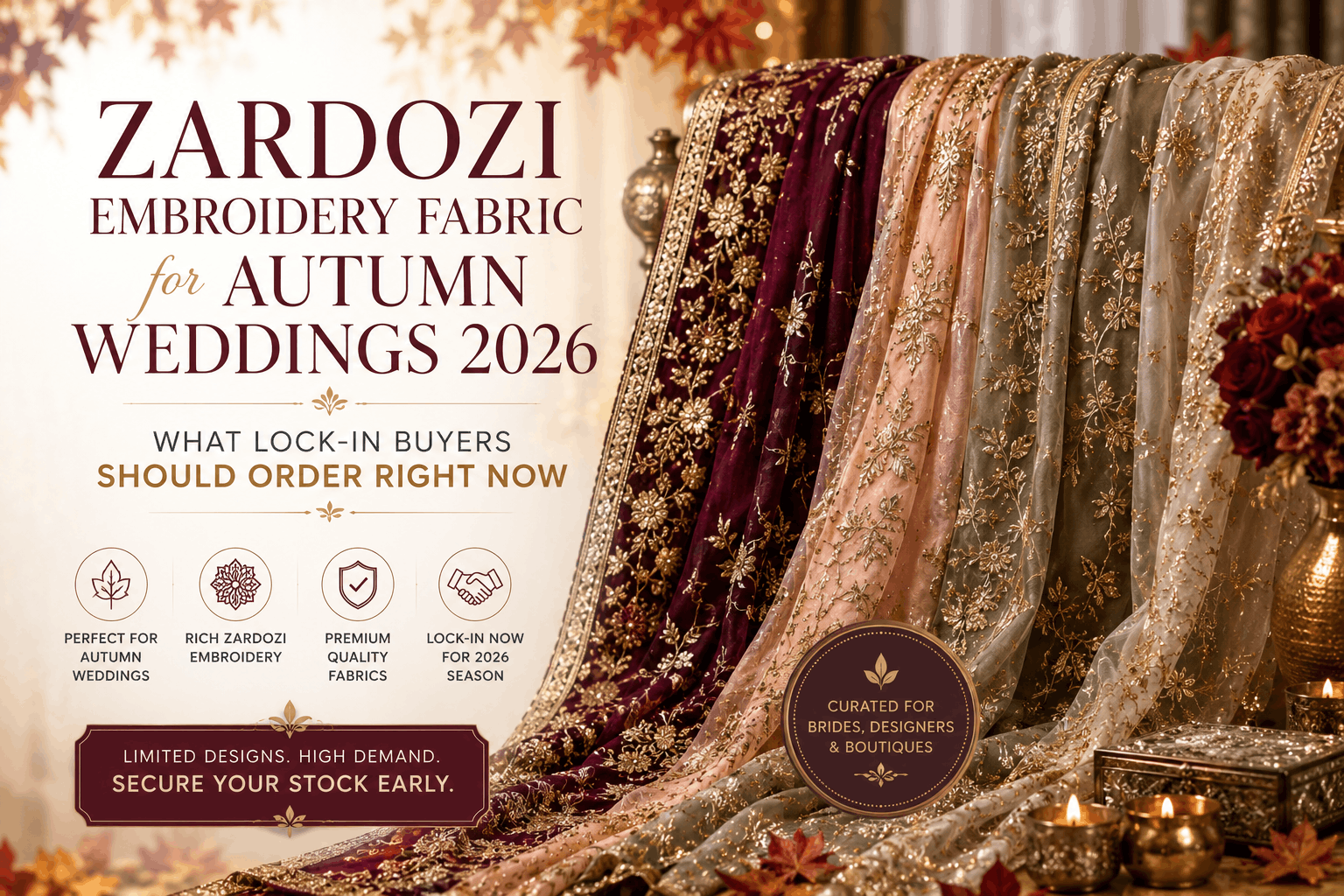
Zardozi Embroidery Fabric for Autumn Weddings 2026: What Lock-In Buyers Should Order Right Now
Zardozi Embroidery Fabric for Autumn Weddings 2026: What Lock-In Buyers Should Order Right Now
Zardozi is a metallic-thread embroidery technique where gold or silver wire and beads are stitched into a base fabric to create raised motifs. Originally from Mughal-era Lucknow and Delhi, zardozi today uses gilded copper, plated silver and synthetic metallic wire on silk, velvet, georgette or net base cloth for festive and bridal wear.
A boutique buyer from Jaipur walked up to my counter last Wednesday wanting forty metres of zardozi-ready base for September bridal commissions. The order would have been straightforward six weeks back. By late June the conversation goes differently. She wanted specific karigar slots, specific motif patterns, specific dabka work, all of which were already partly committed to other boutiques who had locked their requirements two weeks earlier.
The autumn-winter wedding order book at my Lajpat Nagar counter starts filling by early July every year. By August it sits full. By September it locks completely. So this last week of June is the actual right window for boutique-walas to decide their zardozi range before the karigar slots run out at the embroidery clusters.
The buyers who lock metreage in late June get the best karigar slots for September delivery. The buyers walking in mid-August get the leftover slots plus the rejected pieces nobody else wanted. So let me share what selling zardozi cloth across more than a thousand wedding commissions has taught me about this category.

Zardozi embroidery fabric is a base cloth, usually silk, velvet, georgette or net, that has been hand-embroidered using metallic zari thread, dabka wire, sequins, kundan stones and pearls. The motifs are raised because the metallic thread is stitched over a soft cotton padding. Zardozi fabric is the standard choice for Indian bridal lehengas and grooms' sherwanis.
What zardozi actually is and what it is not
Zardozi is a hand-embroidery technique rather than a fabric in itself. The technique uses metallic thread or zari, spring-coiled wire called dabka, flat coiled wire called nakshi, sequins or sitara, seed beads called mukaish, plus stones like kundan or moti, all stitched into a base cloth. The motifs sit slightly raised above the cloth surface because a cotton or wool padding gets placed under the wire before the karigar stitches the embroidery into position. Browse traditional zari thread and border options at the counter where each variety carries weight specifications.
What people commonly call zardozi today covers several distinct categories that boutique buyers should know before ordering. Full-zardozi work is where the entire panel gets hand-embroidered start to finish by skilled karigars. The computer-zardozi variant uses machine embroidery that mimics the hand-look at a fraction of the original price. Then there is mixed work where the main motifs get hand-stitched while filler work runs through machine embroidery to balance cost against authenticity. All these categories sell consistently at this counter. Each one serves a different customer segment with different budget priorities.
A pure hand-zardozi lehenga panel takes a single karigar somewhere between 280 to 420 hours of focused work depending on motif density. That labour time is the real reason the cost goes high in this category. Computer-zardozi covers the same panel area in a few hours of machine running time. Mixed work usually finishes in roughly 90 to 120 hours of combined labour.
The base fabrics zardozi sits best on
The base cloth choice matters significantly more than most boutique buyers realise during the planning stage. Wrong base means the embroidery eventually sags under metallic weight, the cloth tears at the stitch holes after a few wears, or the base colour clashes visually with the metallic thread used.
Silk dupion or raw silk is the traditional bridal base I send out most consistently. The silk holds heavy zardozi without sagging because the yarn structure carries genuine tensile strength across the panel. Wholesale pricing comes in at Rs 720 to 1,180 per metre before embroidery work begins. This base is the standard for bridal lehengas, sherwanis, reception outfits at the boutique tier across India.
Velvet works as the winter wedding base specifically for grooms' sherwanis plus brides' dupattas. Heavy hand. Structured drape. Deep colour saturation that catches stage lighting beautifully in winter wedding photography. Counter pricing runs Rs 580 to 980 per metre before embroidery. The motifs sink slightly into the pile which gives a different visual character than silk holds.
Georgette plus silk-georgette is the lighter zardozi base used when the bride wants a lehenga that flows for sangeet or cocktail functions. Counter pricing comes in at Rs 360 to 640 per metre before embroidery. Cannot carry full-coverage heavy zardozi due to weight limits but takes scattered booti work very well across the panel.
Net base in machine or hand-soft varieties is the transparency option. The floating-motif look from heavy zardozi on net has been dominating bridal photography since around 2023 across both Delhi plus Mumbai boutiques. Pricing at Rs 280 to 540 per metre wholesale. Must be lined before stitching begins because net alone cannot hold the embroidery weight. Browse coordinated lehenga fabric options where zardozi-ready bases are sorted by silhouette type.
How much zardozi work is the right amount
This is where most boutique buyers misjudge the balance. Maximum coverage across every visible surface does not deliver a better lehenga in practice. What it actually delivers is a heavier, sweatier, harder-to-photograph piece that the bride struggles with through long ceremony hours.
A bridal lehenga works best with 70 to 80 percent zardozi coverage on the choli, then 60 to 70 percent on the lower portion of the lehenga skirt panel, plus a scattered border-only zardozi pattern on the dupatta drape. This balance gives weight where the bride wants the photograph focus while keeping lightness where her body needs to move freely. Coordinated bridal options matching this weight balance are listed in our bridal bliss collection by occasion type.
The reception lehenga works best with 50 to 60 percent zardozi coverage plus sequin filler work for visual balance. The reception is the last function of the night. The bride is already tired from the day's events. The cloth should not add unnecessarily to that fatigue load.
Sangeet lehengas need 30 to 40 percent zardozi maximum, with the rest filled in sequin or thread work for visual interest. Sangeet is for dance. Heavy zardozi at the hem will pull the bride down during dance routines which kills the function vibe.
For groom's sherwani construction, the coverage should run 60 to 70 percent zardozi across the front placket plus yoke section, with scattered zardozi running across the sleeves and back panel. Anything heavier than this and the sherwani sits unnaturally on the shoulders during the photographs.
Price tiers across the zardozi market
The Lajpat Nagar plus Karol Bagh wholesale market currently runs several working tiers for zardozi-embroidered fabric, each serving a different customer segment with different quality expectations.
Entry tier pricing runs Rs 1,800 to 3,200 per metre embroidered. The construction is computer-zardozi on a synthetic silk base. Sells fast at the resort-wedding plus intimate-wedding segment where the photograph budget is modest. Margin stays friendly for boutique resellers operating at this tier.
Mid tier pricing comes in at Rs 3,400 to 6,200 per metre embroidered. The construction uses mixed hand-and-machine work on raw silk or silk-georgette base. The mid tier is the volume zone for most North Indian boutiques running their core bridal range across the autumn-winter cycle.
The higher tier above mid runs Rs 6,800 to 11,000 per metre embroidered with mostly hand-work using dabka, nakshi, sitara on raw silk dupion base. That is the bridal lehenga tier which actually gets the wedding photograph attention. Most reputed Delhi boutiques operate within this tier for their flagship bridal commissions.
Heritage tier pricing covers Rs 12,000 to 28,000 per metre embroidered. Pure hand-zardozi using kundan, moti, real-zari-coated wire on Banarasi silk or velvet base. The couture tier sold mostly by reputed Lajpat Nagar plus Chandni Chowk houses with established karigar networks. Limited karigar availability across the year makes lead times longer here. Browse heritage-grade bases in our imperial brocade collection where weaver attribution is documented per piece.
Stitching practicality worth flagging to customers
A zardozi panel needs careful handling from the cutting stage onwards. Tell your tailor about the requirements before the karigar even touches scissors to the cloth.
Motif placement must be marked clearly before any cutting happens. The karigar will lay the cloth flat, mark the motif positions with chalk, then cut around them so the seam lines do not fall through a flower or a peacock motif during construction.
Lining choice matters significantly for longevity. Use silk cotton or quality cotton cambric only. Never polyester for zardozi pieces because polyester slides against the embroidery during wear and loosens the stitching over months of use across multiple functions.
Hooks and hem sections need reinforcement with extra cotton tape running underneath the zardozi panels. The metallic weight pulls the hem out of shape on the wedding day itself if reinforcement is not added during construction. This single step prevents most of the hem-sag complaints that come back to boutiques after big weddings.
Blouse fastening is best done with side zip plus hook combination, not back zip alone. Zardozi panels do not flex enough for back-only zip closure to work cleanly during dressing. Side zip handles the rigid embroidery weight better at the closure point.
Colour and motif trends for autumn 2026
The Surat plus Karol Bagh suppliers I work with are confirming specific directions for the September through December cycle this year that boutique buyers should know about when planning stock.
Deep jewel tones are replacing the pastel dominance that ruled 2022 through 2024. Bottle green, wine, plum, navy paired with gold zardozi are moving at roughly twice the volume of pastel pink with silver zardozi combinations. The pastel demand has not died completely but has cooled visibly across both retail plus wholesale segments.
Motif preferences have shifted noticeably too. Peacock plus floral motifs are replacing the geometric work that ruled bridal embroidery through 2023-2024. The geometric kalga work which dominated for two years is slowing in reorders. Peacock booti, lotus mandala, rose vine motifs are what brides are actively asking for at boutique consultations now.
Mixed metal tones on a single panel is the third direction worth flagging. Gold zardozi running as the primary metal with copper highlights plus antique silver fillers across the same panel design. The single-tone gold-only look that dominated reception lehengas through 2023 is losing ground to this mixed-metal approach which photographs more dimensionally under stage lighting.
FAQ
What is the difference between zardozi and zari work?
Zari is the metallic thread itself, used as raw material. Zardozi is the embroidery technique that uses zari thread along with dabka wire, sequins, stones to create the raised motif effect. All zardozi work uses zari as base material. But not all zari work qualifies as zardozi because simple zari stitching without the wire and stone elements is just zari embroidery rather than the full zardozi technique.
How long does a zardozi lehenga take to make?
Pure hand-zardozi bridal lehenga takes 60 to 90 days from order placement, covering base cloth dyeing, motif drawing, embroidery work, finishing across all stages. Mixed work takes around 30 to 45 days end-to-end. Computer-zardozi finishes in roughly 7 to 15 days depending on production queue. Plan backwards from your wedding date with these lead times factored in.
What is the price of zardozi fabric per metre in 2026?
Current Lajpat Nagar wholesale pricing covers computer-zardozi at Rs 1,800 to 3,200 per metre, mixed work at Rs 3,400 to 6,200, hand-work at Rs 6,800 to 11,000, heritage hand-work at Rs 12,000 to 28,000. Boutique retail pricing typically marks up 1.6 to 2.2 times these wholesale numbers depending on margin policy at the individual boutique.
Can zardozi fabric be dry-cleaned?
Yes but only by a specialised bridal dry-cleaner who handles embellished work routinely. Mention zardozi at the counter when dropping off so they use the right solvent plus hand-press the panel instead of machine pressing which damages the raised motifs. Never wash zardozi at home because water turns the dabka wire black within minutes of contact.
Which base fabric should I choose for a bridal lehenga?
The right base depends on the silhouette you want. Deep colour and structured drape calls for silk dupion or raw silk. A flowing dance-friendly silhouette needs georgette or silk-georgette to handle the movement requirement. Winter weddings call for velvet specifically. To get the floating-motif modern look that photographs well, hand-soft net works with proper lining underneath.
Is computer-zardozi worth buying?
At the entry-tier resort-wedding segment, yes the value works out. The look photographs very close to mixed work at 2026 machine quality levels. For the bridal photograph plus the couture tier specifically, no. The hand-work still carries the visible depth that camera sensors pick up under stage lighting which machines cannot replicate convincingly even at higher quality settings.
Final word from the counter
The technique itself is what decides whether a bridal photograph reads as boutique-grade or retail-grade across all the wedding wardrobe pieces. The price gap between tiers runs roughly fifteen times across the available market. But the right tier for a specific bride depends entirely on the photograph priorities plus the family budget allocation rather than just on prestige positioning.
The boutique buyer from Jaipur who came in last Wednesday eventually locked thirty-two metres of mixed-tier zardozi base across silk dupion plus georgette for her September commissions. The remaining eight metres she postponed to September delivery when fresh raw silk arrives from the Bengaluru weaving clusters. That kind of staged ordering is what works through the wedding season rush. Locking everything at once usually means paying higher prices for late-arrival stock when better options were available earlier.
CTA
If you are locking your September through December bridal range, message me directly on WhatsApp this week before karigar slots fill by mid-July. Browse the live zardozi-ready bases at the Lajpat Nagar counter covering silk dupion, raw silk, velvet, georgette, plus net options across all tier ranges. Boutique buyers planning larger volume orders should request bulk quotes through our bulk order page before committing to specific colour plus weight combinations. Direct sourcing from Surat plus Bengaluru weaving clusters. Honest grading. No runaround on zardozi authenticity questions.