Raw Silk Fabric for Engagement Outfits : Pricing, Grades, plus Buying Guide
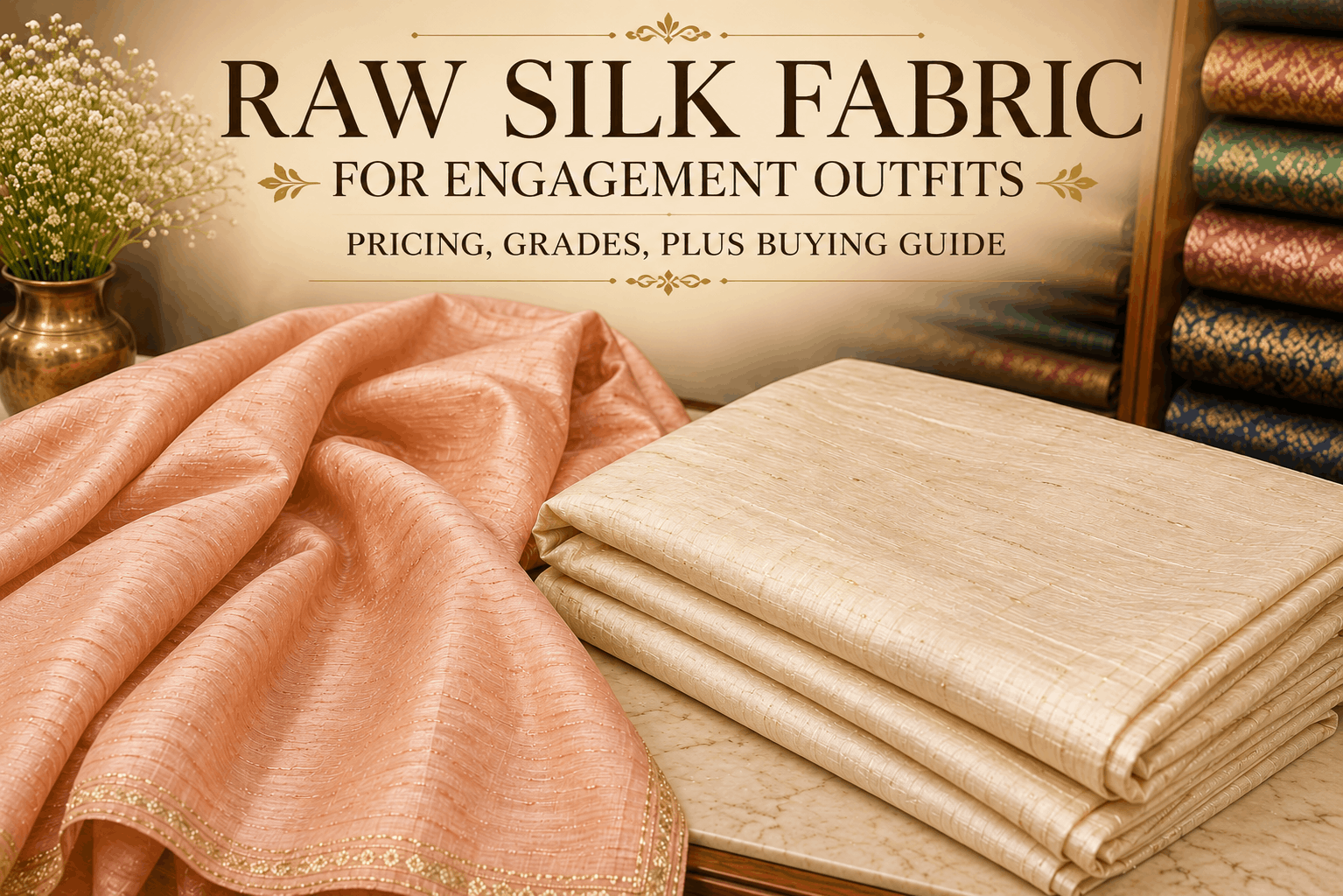
Raw Silk Fabric for Engagement Outfits : Pricing, Grades, plus Buying Guide
Raw silk fabric is woven from minimally processed silk yarn, leaving natural slubs and a crisp, structured drape. Dupion silk is the most common variant. Pure raw silk costs Rs 750 to 1,600 per metre, dupion silk Rs 380 to 950, and art raw silk imitation Rs 220 to 380.
A young couple from Chittaranjan Park came in last week. The bride wanted a peach raw silk anarkali for her ring ceremony. The groom wanted a coordinating ivory raw silk kurta with a bandi worn over it. Her mother was the one asking the actual question that mattered.
Bhabhi will this fabric still look fresh in the photographs we hang on the wall ten years from now?
That is exactly the right question. Engagement photographs travel further than any other wedding-day picture because they end up on invite cards, on social posts, on grandparent dressing tables across cities. The fabric you choose decides whether the photograph looks dated by next Diwali or holds up beautifully for a decade.
This fabric is what I recommend most often for engagement outfits because of how it photographs and how it ages. Let me explain why properly.

Raw silk fabric works best for engagement outfits that need to hold structure on camera. For lehenga, four to six metres of pure raw silk costs around Rs 4,500 to 9,600. For sherwani, three metres dupion costs Rs 1,150 to 2,850. The fabric maintains its sheen under indirect indoor lighting and tailors well into A-line lehengas, kurta sets, and structured blouses.
What raw silk fabric actually is
The trade name covers silk yarn reeled with the natural sericin gum still partially intact, then woven without degumming or with only partial degumming. The yarn comes out with visible slubs and a slightly stiff hand feel. Finished fabric holds shape, photographs with a soft warm sheen, plus ages slowly because the protein structure inside the fibre remains undamaged through processing.
In Indian retail the term covers a broader basket than the technical textile definition. Pure raw silk sits at one end. Dupion silk dominates the middle. Matka silk plus kosa silk plus the art silk imitations all get sold under the raw silk umbrella at most fabric shops. For practical buying you need to know which is which.
The top tier in the family is pure raw silk. Mulberry yarn processed with minimal degumming gives you smooth slub texture, soft sheen across the surface, plus lighter weight than dupion. Used for sarees, structured blouses, high-end lehenga panels. Browse the silk fabric collection where pure raw silk pieces carry weaver attribution per bolt.
Dupion is the workhorse of the engagement-outfit segment specifically. Two cocoons get spun together which creates the irregular slub patterns dupion is known for. Heavier than pure raw silk plus crisper to handle. Holds A-line lehenga shape beautifully which is exactly why it dominates the engagement-lehenga price band.
Then there is matka silk, hand-spun from waste cocoons left over after the main reeling process. Heavier slubs throughout the cloth. More visible textured surface. Used mostly for ethnic wear with handcraft positioning at boutique price points.
Kosa silk gets sold under the raw silk umbrella in many shops though it is technically a variant of tussar from the Chhattisgarh forests. The appearance overlaps with raw silk enough that the categorisation makes commercial sense even if textile purists object.
Art raw silk at the bottom of the family is polyester or viscose pretending. Slubs get printed or embossed in. The natural sheen is missing. The breathability is missing. Sells at lower price points for fast-fashion plus budget bridal wear where the buyer accepts the synthetic compromise.
Why raw silk photographs so well
The sheen on raw silk sits in a specific middle band that nothing else quite matches. Matte-bright is the technical phrase for it. The slub texture causes the surface to reflect light at a softer angle than smooth fabrics do. Under engagement photography lighting, which is mostly indirect golden-hour indoor lamps plus ceremony lights, raw silk does not flare into bright hotspots the way satin does. The colour reads true to camera sensors.
For comparison, mulberry silk reads slightly too shiny under direct flash. Satin reads almost plastic-bright in any lighting that hits it directly. Velvet eats incident light entirely which makes the fabric appear darker than it actually is. The raw silk variety sits in the sweet spot where the cloth photographs as cloth, not as a material doing something with the light.
This is the same reason boutique designers in Delhi plus Mumbai keep coming back to raw silk for engagement-outfit projects even when the bride initially wants something flashier. The photographer brief almost always converges back to raw silk after the test shots.
Current Lajpat Nagar pricing
These are June 2026 wholesale prices from my direct sourcing channels.
|
Type |
Width |
Per metre |
|
Pure raw silk (mulberry, minimal degum) |
44 inch |
Rs 750 to 1,600 |
|
Dupion silk plain |
44 inch |
Rs 380 to 950 |
|
Dupion silk shaded (two-tone) |
44 inch |
Rs 480 to 1,100 |
|
Matka silk hand-spun |
36 to 44 inch |
Rs 580 to 1,200 |
|
Kosa silk Chhattisgarh |
44 inch |
Rs 650 to 1,400 |
|
Art raw silk (poly/viscose) |
58 inch |
Rs 220 to 380 |
A structured lehenga of 4.5 to 6 metres in pure raw silk lands at Rs 4,500 to 9,600 total fabric bill. For a sherwani of 3 metres plus 1 metre of bandi cloth, dupion silk works out to Rs 1,520 to 3,800 total. Bulk-rate options for boutique orders are available through our bulk order page with sample requests before larger commitments.
Engagement outfit constructions worth knowing about
The peach pure raw silk anarkali with handwork on the bodice is what I have been cutting most frequently this season. Three metres for the anarkali base plus one metre for the dupatta plus border lining brings the total cloth bill around Rs 5,400 for the bride. The anarkali drape works on raw silk specifically because the fabric weight makes the silhouette stand correctly through ceremony movement. Polyester base for the same anarkali looks limp by the third photograph.
Ivory dupion sherwani paired with a maroon contrast bandi is the groom-side equivalent that I am stitching alongside. The cloth bill works out as 3 metres dupion ivory for the main sherwani, 1.2 metres maroon dupion for the bandi vest, plus 2 metres maroon contrast cloth for piping and pyjama. Total cloth bill near Rs 3,600. Dupion holds the sherwani shoulder line in a way mulberry silk simply cannot match because mulberry drapes too soft for tailored construction. Matka silk also works for this construction but adds cost without proportional benefit.
The two-tone dupion lehenga with kalidar panels has been moving fastest off my shelf since March. Six metres of shaded dupion silk where each kali panel catches the light differently because of the colour gradient running through the bolt. Boutique designers in Delhi plus Mumbai are pushing this look for engagement parties this winter season. Our lehenga fabric collection carries the shaded dupion ranges sorted by colour transition pattern.
Pre-wedding cocktail outfits constructed in dupion crop-top and skirt format are another category I keep busy with through October to February. The skirt needs three metres of dupion. Half metre handles the crop top construction. Contrast dupatta in matching dupion finishes the look. The Indo-western fit stays modern without slipping into evening-gown territory which is exactly what the bride usually wants for the cocktail evening.
Tailor notes most customers do not hear
New raw silk needs to rest before cutting starts on the tailor table. Cloth straight off the bolt has tension stored from the weaving frame loom which only releases over time. Hang the cloth for forty-eight hours minimum before pattern cutting begins. Otherwise the kalidar panels will pucker unevenly after the first dry clean cycle and there is no good fix for that puckering once it happens.
For the cutting itself, use a sharp blade rotary cutter rather than scissors. The slubs catch on scissor friction which creates rough edges that fray progressively over time. Rotary cutting glides past the slubs cleanly.
The seam choice matters significantly for engagement outfits because these pieces get worn multiple times across the wedding event sequence. Plain overlock looks finished from the outside but exposes the raw silk slubs on the inside seam allowance. Within a year of wear the seam allowance shows visible wear damage. French seam or piped seam costs slightly more in tailoring labour but the outfit actually lasts the full wedding season properly.
Reinforce the lehenga waistband with a separate cotton-cambric layer underneath the raw silk. A waistband cut from raw silk alone bunches under a tight petticoat tie which gets uncomfortable across long ceremony hours. The cotton layer transfers the pull stress so the raw silk stays smooth on the outside surface.
Care routine for heirloom engagement outfits
Dry clean only for the first three years after the wedding. After that initial period, gentle hand wash with mild liquid silk soap and cold water becomes acceptable for low-embroidery pieces. Heavy zardosi pieces or sequinned raw silk should stay dry-clean only forever because home washing eventually damages the embellishment work even with careful handling.
For drying, shade dry on a wide padded hanger. Cloth weight needs distributed support across the shoulder line which a thin wire hanger cannot provide. The padding prevents shoulder distortion that develops in long-term storage.
Storage matters more than people realise for heirloom pieces. Wrap each outfit in muslin cloth with a sachet of dried lavender or neem leaves tucked alongside. Avoid plastic wraps entirely because plastic suffocates the silk fibre which causes yellowing within months in Indian humidity. Naphthalene mothballs should also stay away because the chemistry oxidises the natural sheen on raw silk specifically.
Steam the outfit once a year as a maintenance routine. Hang the piece in a steamy bathroom for ten minutes which restores the drape without putting direct iron heat on the slubs. Iron heat flattens the slub texture permanently which is exactly what you do not want to happen.
Common mistakes engagement buyers make
Buying art raw silk at the price of pure raw silk is the most expensive mistake I see at this counter. Some shops sell viscose-poly art silk for Rs 600 to 800 per metre with confident sales talk about how it is "the same thing." Real raw silk at that price band is either poor quality or short-yardage cuts being passed off as full bolts. Ask for the burn test or the touch test before paying anything above Rs 500 per metre.
Skipping the lining test before final stitching is another expensive mistake. Pick the right lining underneath or the outfit feels uncomfortable across long ceremony hours. Satin lining is too slippery for raw silk and the outer cloth shifts on it during movement. Heavy cotton lining adds bulk which kills the drape. Soft cotton-cambric is the answer that works consistently for raw silk constructions.
Ordering for the wrong photograph lighting is a less obvious mistake but it shows up in the final photographs. Bright reception lighting calls for restraint in slub intensity which means plain pure raw silk works better than matka silk. Daylight engagement ceremonies in courtyards call for higher slub intensity because the visible texture reads beautifully in natural light. Match the cloth to the venue lighting if you can.
Browse coordinated raw silk options for the full bridal trousseau in our bridal bliss collection where matched fabric sets are listed by wedding function type.
When to source for best stock selection
Weavers in Bangalore, Mysore, Salem, plus Bhagalpur run their full-capacity raw silk production from August through December for the wedding season. By late September the most desirable colour ranges start running short at wholesale level, particularly the soft pastels that bridal photographers prefer.
For engagement outfits scheduled October to January, place the cloth order by mid-August latest. For outfits scheduled February to March cocktail and engagement parties, October ordering still gives you good stock selection.
Boutiques sourcing in bulk should book by July because the festival rush starts mid-August. Wholesale pricing typically rises twelve to fifteen percent through the Diwali period across all raw silk grades. For coordinated zari-border raw silk options the zari border collection carries matching trims for raw silk lehenga construction.
FAQ
Is raw silk the same as dupion silk?
No. Dupion is technically a sub-category of raw silk woven from two cocoons spun together which gives heavier slubs plus a stiffer hand. Pure raw silk uses single-cocoon yarn which produces finer slubs plus a softer drape. The two fabrics look similar at a distance but feel very different in hand once you compare them side by side.
How many metres of raw silk do I need for a lehenga?
A structured kalidar lehenga needs 4.5 to 6 metres of base fabric, 2.5 metres of blouse fabric, plus 2.5 to 3 metres of dupatta fabric. A flared circular lehenga construction needs up to 8 metres for the main skirt alone because of the additional kali panels required for full circumference.
Does raw silk wrinkle a lot?
Raw silk creases moderately and is less wrinkle-prone than mulberry silk in everyday wear. Slub texture also disguises light creases beautifully. Steam the outfit before wearing to refresh the drape across long ceremony hours.
Can raw silk be worn in summer?
Yes for pure raw silk plus lighter dupion weights. Slub structure allows decent airflow through the cloth. Heavier matka silk or zari-woven raw silks suit cooler engagement and reception evenings better than peak summer afternoons.
What raw silk colour is trending for engagements in 2026?
Soft warm tones dominate right now. Peach. Blush. Dusty rose. Sage green. Ivory. Two-tone shaded dupion in burgundy-gold or emerald-ivory combinations is what boutique designers are picking for the season's engagement parties specifically.
How do I check if my raw silk is pure or synthetic?
Burn a small thread end pulled from the selvedge. Real raw silk shrivels under flame plus smells like burnt hair. Synthetic melts into a hard bead plus smells chemical. Then test water absorption on the cloth surface. Real raw silk absorbs water slowly into the fibre. Synthetic beads water off the surface.
Final word from the counter
Raw silk keeps showing up in the engagement-outfit photographs people frame and hang on walls for decades. The reasons are practical rather than only aesthetic. Holds shape across long ceremony hours. Matte-bright sheen photographs true to colour. Slub texture ages gracefully across years of storage and occasional re-wear.
What the mother from Chittaranjan Park was actually asking me was whether the cloth would survive the photograph going up on her dressing table. The raw silk answer is yes. Polyester does not. The price gap between them is the whole answer to her question.
Your Next Step...
Browse the raw silk range at our Lajpat Nagar counter covering pure mulberry raw silk, dupion in plain plus shaded varieties, matka, plus kosa silk options. Every piece carries grade attribution per bolt with weaver-source documentation. WhatsApp for fabric samples or specific colour availability before placing the order. Direct sourcing from Bangalore plus Bhagalpur weaving clusters. Honest grading. No runaround on raw silk authenticity questions.