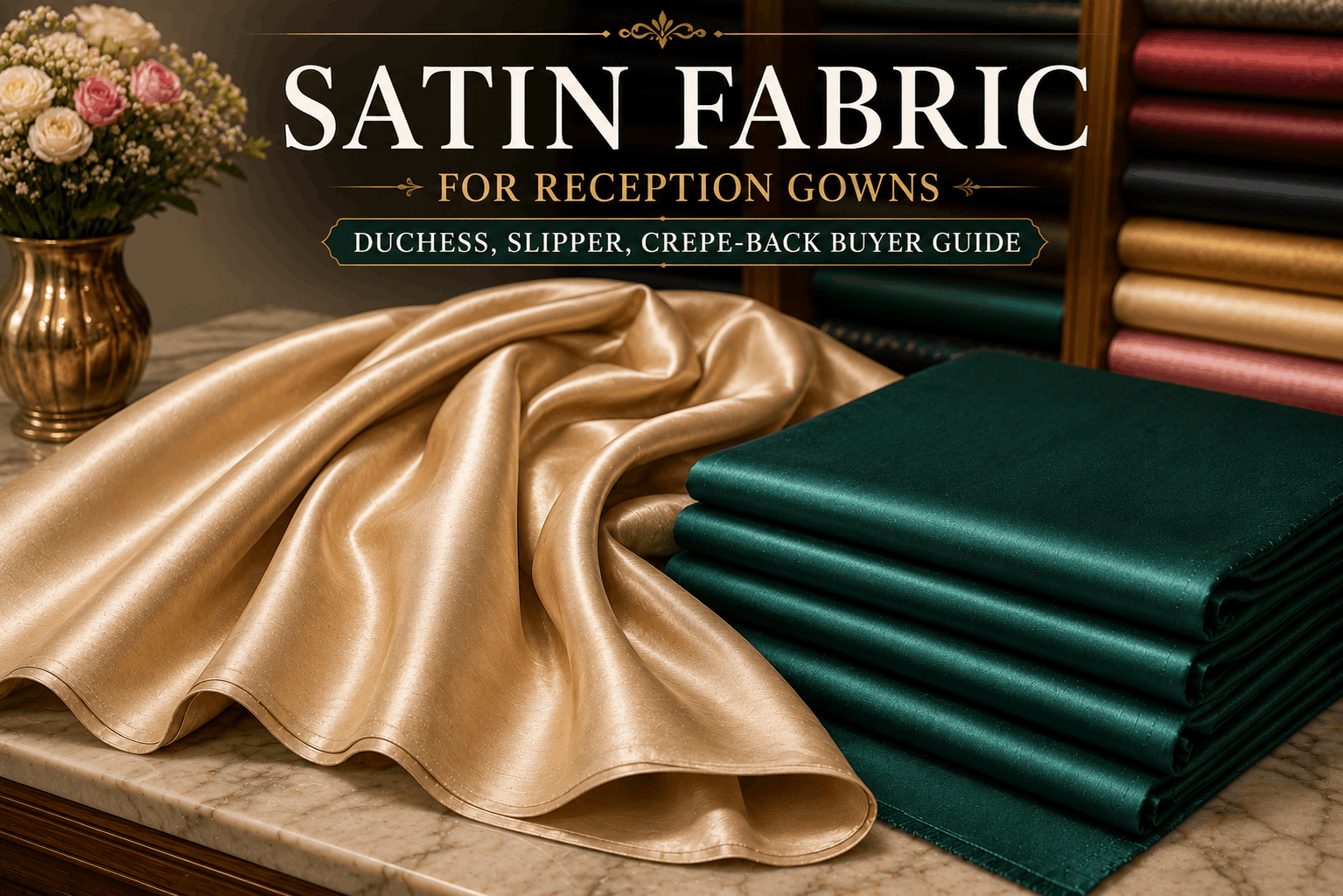
Satin Fabric for Reception Gowns: Duchess, Slipper, Crepe-Back Buyer Guide
Satin Fabric for Reception Gowns: Duchess, Slipper, Crepe-Back Buyer Guide
Satin fabric is woven with a weave structure where warp threads float over multiple weft threads, giving one shiny face and a matte back. For reception gowns, duchess satin and mulberry satin work best because they hold structure. Polyester satin sells from Rs 180 to 340 per metre and silk satin from Rs 950 upward.
The reception gown question used to be simple. Now it is probably the most carefully thought-through fabric purchase in the entire wedding wardrobe.
Bride after bride walks into my counter with a Pinterest board open on her phone. Same opening brief from most of them. Bhabhi I want the gown to look like sculpture in the photographs, not like a curtain falling on the body.
Fair brief. Sculpture is exactly what reception photographs need to capture. The fabric that actually delivers sculpture is satin. Not all satin though. That distinction matters more than most brides realise before starting the cloth purchase.
Let me explain what I have learned over years of sending out reception gown cloth across India.
Satin fabric for reception gowns comes in three working categories: polyester satin at Rs 180 to 340 per metre, crepe-back satin at Rs 380 to 720, and duchess or mulberry silk satin at Rs 950 to 2,400. A floor-length gown uses 4 to 5 metres. For a structured trail gown, plan 6 metres of duchess satin plus 2 metres net underskirt.

What satin fabric actually is
Satin is a weave structure rather than a specific fibre. The construction has warp threads floating over four or more weft threads before binding under one. That long float on one face of the cloth gives satin its characteristic flowing reflection which reads as shine in the photograph. The reverse side stays matte because the floats run hidden underneath the weave structure.
The fibre used in the weaving decides both the price band plus the behaviour of the finished cloth. Polyester sits at the volume end of the satin market and shows up most often in budget gown construction. At the top of the family is pure silk satin which carries heritage-grade pricing plus the genuine drape behaviour. Cotton variants get used mostly for separates or home wear applications rather than reception gowns specifically. The acetate version occupies a middle position between polyester plus pure silk in both price and behaviour. Crepe-back is a different category entirely, giving you a shiny front plus a textured matte back which gets sold as reversible cloth in many designer ranges. Browse the silk-based satin section in our silk fabric collection where each piece carries fibre attribution per bolt.
Why reception gowns need a specific satin family
A reception gown stands in front of a camera under direct stage lighting for hours at a stretch. Every part of the construction shows up under that scrutiny, including the shoulder seams plus the waist tucks plus the hem flares moving with body. The fabric has to hold structural integrity through stage shots, ramp walk, group photographs, dance routines, all without losing its line.
Polyester slipper satin drapes too soft for this requirement. The cloth clings to the body line which then shows every imperfection in the silhouette across photographs taken at different angles. Polyester duchess satin is the better polyester option because the weave is heavier and the cloth carries actual body when stitched into structured patterns.
The pure silk variants sit at the high end of reception-gown construction. Silk duchess satin plus mulberry satin hold A-line, mermaid, fishtail silhouettes without needing heavy interfacing underneath. Light reflects off the silk surface in a softer manner which means flash photography does not blow out the highlight zones the way polyester does at the same setting.
Crepe-back satin solves a completely different design problem. Boutique designers use it for two-sided gowns where the matte crepe side shows on the bodice while the shiny satin side shows on the skirt panel. Sometimes the inverse arrangement. One cloth giving you two surface textures saves construction cost without compromising the visual design intent.
Current Lajpat Nagar pricing
These are June 2026 wholesale-counter prices from the trade where I source directly.
|
Type |
Width |
Per metre |
|
Polyester slipper satin |
58 inch |
Rs 180 to 280 |
|
Polyester duchess satin |
58 inch |
Rs 220 to 340 |
|
Crepe-back satin polyester |
58 inch |
Rs 280 to 480 |
|
Crepe-back satin silk-blend |
44 inch |
Rs 380 to 720 |
|
Pure silk slipper satin |
44 inch |
Rs 950 to 1,400 |
|
Mulberry duchess satin |
44 inch |
Rs 1,300 to 2,400 |
|
Stretch satin (5% spandex) |
58 inch |
Rs 320 to 480 |
A full-skirted reception gown of 4.5 metres plus a 1.5 metre train comes to Rs 8,000 to 14,400 in pure silk duchess satin construction. The polyester duchess version of the same gown works out to Rs 1,540 to 2,380 total cloth bill. The price gap is real. The photographic quality gap is also real. Use the fabric estimator tool for exact yardage calculations on specific gown silhouettes you might be considering.
Reception gown silhouettes I cut most often
The mermaid satin gown with corset bodice runs as my highest-volume reception build through wedding season. Body-skimming through waist plus hips with the flare starting from knee down. Needs duchess satin or mulberry satin specifically because slipper satin will not hold the flare line at the knee transition cleanly. Corset bodice construction means boning becomes mandatory rather than optional during stitching.
An A-line satin gown with a bow detail at the back is the forgiving silhouette that works across most body types and ages. Polyester duchess in deep wine or navy or emerald gives good budget value at this construction. Pure silk satin pushes the same A-line construction into boutique-tier pricing without needing significant pattern changes. Browse silhouette-coordinated options in our bridal bliss collection sorted by reception event type.
For second-look reception outfits, mermaid construction with a tulle overlay has been the most-requested combination through 2026. Satin underneath provides structural drape while the tulle layer adds soft layered movement to the silhouette. Often built in shaded crepe-back satin for additional visual contrast.
The saree gown built in satin is the newest silhouette I am cutting regularly at the counter. Pre-stitched saree construction with a cascading satin pallu treatment. Particularly suits South Indian plus Maharashtrian brides who want gown-style comfort with traditional saree silhouette aesthetics. Alternative drape options for the same wedding event sit in our lehenga fabric collection.
For the pre-reception cocktail night, a knee-length dress in crepe-back satin handles the dress-code ambiguity gracefully. The crepe-back construction means the dress reads both as formal evening wear plus informal cocktail attire depending on accessory choices made by the wearer.
Colours moving off the counter this season
Deep jewel tones are dominating the reception calendar this year. Garnet wine ranks at the top of the order list. Emerald sits right behind it. Midnight navy plus plum split the third position roughly. Dark teal makes regular appearances among destination wedding orders. Bronze tones round out the volume picture for the season. The lighter pastel reception trend that ran 2022 through 2024 has faded substantially.
Champagne plus rose gold remain reliable picks for Indian-Christian fusion receptions across south India. Same colours work for second receptions in destination wedding circuits where the brief is usually softer than the main reception event.
Black satin gowns are quietly returning, especially for couples doing a separate Goa or Udaipur reception event distinct from the hometown reception. This trend had been missing for almost five years before reviving in 2026. Photographs beautifully under stage lighting when constructed in pure silk duchess satin specifically.
Two-tone construction is gaining ground across boutique orders. Bodice in one shade plus the skirt section in a graduated darker shade. Crepe-back satin makes this construction work naturally because the matte back of the bodice plays well against the shiny outer skirt. Most boutique designers in Delhi plus Mumbai are pushing this two-tone idea for engagement parties as much as for receptions.
Tailor notes for satin gown construction
The biggest mistake tailors make on satin is treating it like normal cotton during the pinning stage. Every needle hole shows on satin and the marks do not close back, particularly on duchess satin or pure silk pieces. Pin lightly through the cloth. Pin only inside the seam allowance area where pin marks will not be visible afterwards.
On the machine sewing itself, switch to a fine sharp needle in size 60/8 or 70/10 microtex specifically. A regular universal needle drags through the satin float and creates visible pulls along the seam line. The microtex needle slides past the float without damaging it.
Stay-stitching all curved seams before main construction begins is the next step most tailors skip. Satin slips at the cutting edge during handling and the curved seam will not lie flat without the stay-stitching support. This single skipped step is why budget gowns develop puckered curves at the bust plus waist seams within months of wear.
For duchess satin bodices specifically, underline with silk organza or china silk before main construction. The underline supports the satin so the bodice does not crease under arm pressure during a long evening event. This is essentially what separates a designer-finish gown from a tailor-finish gown across the same satin grade.
Boning is mandatory rather than optional for corset-style satin bodices. Plastic boning handles budget construction at acceptable cost levels. Steel boning becomes necessary for boutique designer gowns where structural integrity matters across many wearing hours. Without boning of either type, the satin collapses at the waist seam line within the first hour of stage wear.
Hemming plus train construction
A satin gown hem requires horsehair braid hem stiffening tape for floor-length plus trail constructions. Without the horsehair the hem collapses inward and the gown loses its floor-sweeping line which kills the dramatic photograph effect entirely.
Mermaid silhouettes need the hem slit at the back from knee down to allow normal walking movement. The slit should run 6 to 8 inches in length and needs reinforcement with a satin facing piece for clean finishing across many wears.
Trains should be designed with detachable construction for usability across the full evening. The bride wears the train for the first hour of stage photography. A hidden hook then releases the train for the dance floor plus dinner sections of the evening. This detachable construction is what separates boutique reception gowns from off-the-rack options on display at retail.
Care plus pre-wear routine
Steam the gown the day before the reception event starts. Use hanging steam from a garment steamer rather than direct iron contact. Satin scorches if iron heat touches the cloth surface directly which leaves shiny pressed marks that cannot be removed afterwards.
Hang the gown by the bodice on a wide padded hanger before the wedding day arrives. Do not hang from the shoulder straps because that stretches the strap area irreversibly before the actual wearing happens.
Perfume application needs a specific routine for satin gowns. Do not spray perfume directly onto the gown surface anywhere. Spray ten minutes before wearing onto a tissue paper instead, then dab the tissue against the gown lining only. Outer cloth should never receive direct perfume contact because perfume stains satin permanently.
Pre-treat potential stain risk areas before the event begins. The lipstick zone near the neckline can be pre-treated with a clear silicone spray which creates a barrier against transfer. Same treatment works for the underarm zone where deodorant transfer commonly happens.
When to source reception gown fabric
Reception gown fabric cuts at the wholesale market follow a calendar-driven supply pattern. Pure silk duchess satin in good designer-friendly colour ranges moves out fast through November plus December every year as wedding season demand peaks.
For receptions scheduled October through January, place the cloth order by August 15 latest at any decent fabric counter. Receptions scheduled February through March can wait until October ordering without facing stock issues at wholesale level.
Polyester satin stays stocked across the full year at most counters. The better duchess satin grades come in batched dye lots though. A specific colour might not be available throughout the year. Always check stock availability for the specific design colour before committing to the final gown pattern. Boutique buyers planning bulk reception gown inventory should request quotes through our bulk order page before the season demand begins climbing.
Frequently Asked Question
How many metres of satin do I need for a reception gown?
A floor-length A-line gown uses 4 to 5 metres of 58-inch satin. A mermaid gown with train needs 5 to 6.5 metres. A full ball-gown silhouette requires 6 to 8 metres of base fabric. Add 0.5 metres extra for matching belt, ribbons, or trim pieces if the design needs coordination details.
What is the difference between duchess satin and slipper satin?
Duchess satin runs heavier in weight, holds structured silhouettes well, plus is the right pick for reception gowns specifically. Slipper satin runs lighter, drapes softer, plus suits lining applications or fluid evening wear better than structured gown construction. The two are not interchangeable despite having the same satin weave structure underneath the surface.
Does polyester satin look cheap on photographs?
Polyester slipper satin can read shiny under direct flash, which is the cheap-looking effect most brides try to avoid. The duchess polyester variant photographs significantly better because the heavier weave diffuses the light differently across the cloth surface. For high-end photography requirements, pure silk duchess satin remains the strongest performer regardless of overall gown budget.
Can satin gowns be worn in Indian summer receptions?
Silk satin breathes more than polyester satin in humid weather. For outdoor summer receptions, lighter weight pure silk satin or crepe-back satin in pastel colours works better than the heavier alternatives in the family. Avoid heavy polyester duchess satin entirely in direct heat exposure conditions because it traps body warmth uncomfortably.
Will my satin gown wrinkle in transit to a destination wedding?
Satin creases easily during transit movement regardless of the fibre type. Pack the gown in a proper garment bag with tissue paper layered between every fold. On arrival at the destination, steam-refresh the gown immediately rather than waiting for the wedding day itself. A portable garment steamer is a useful kit addition for destination receptions specifically.
What stitching mistakes ruin a satin gown?
The most common ruin is overpressing with a hot iron which leaves shiny press marks across the cloth surface that nothing can remove. Other mistakes include pin holes left in the body of the cloth, missing underlining underneath the bodice piece, or skipping the boning step on a corset-style bodice construction. Each mistake compounds with the others over the wear life of the gown.
Final word from the counter
A satin reception gown is one of those fabric purchases where the cloth choice decides photograph quality more than the silhouette design itself. The same A-line pattern cut in pure silk duchess satin photographs as boutique sculpture. The same A-line cut in polyester slipper satin photographs as a budget evening dress.
Price gap between these two extremes runs ten times across the range. Boutique tier is not always the right answer though. The polyester duchess version in deep jewel tones photographs respectably when construction is done correctly with proper underlining plus boning. Choice depends on photograph priorities plus budget allocation across the whole wedding wardrobe rather than only on fabric prestige alone.
Your Next Step...
Browse the satin range covering duchess satin, slipper satin, crepe-back variants, plus pure silk satin options at the Lajpat Nagar counter. Every piece carries fibre attribution plus weight specifications per bolt. WhatsApp for fabric samples or specific colour availability across the dye-batch range before committing to a gown design. Direct sourcing from Surat polyester mills plus Bangalore silk weaving clusters. Honest grading. No runaround on satin grade specifications.