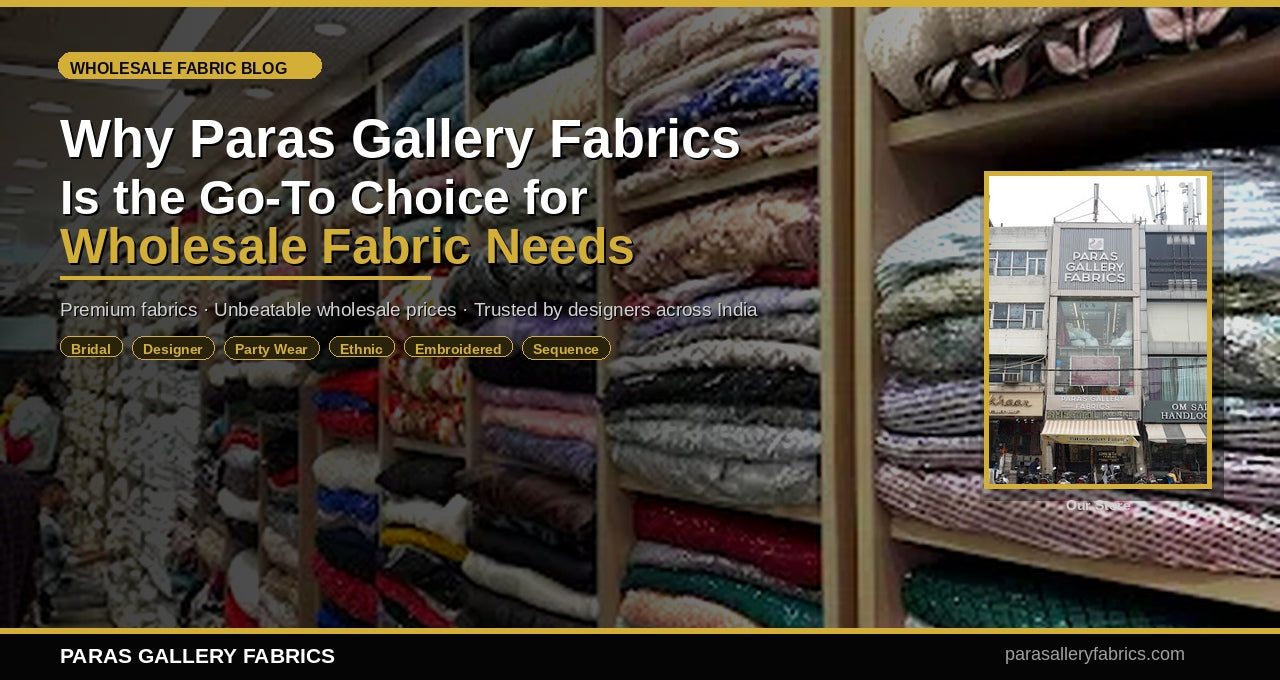
Why Paras Gallery Fabrics Is the Go To Choice for Wholesale Fabric Needs
If you run a boutique in Pune. Or a wedding wear studio in Bengaluru. Or a designer label out of Jaipur. You already know the wholesale fabric game is brutal.
Mills delay shipments. Sample quality doesn't match the bulk delivery. MOQs are ridiculously high for small designers. Half the suppliers stop picking up the phone after the first order. And the other half pick up only when they want to push old stock.
Paras Gallery Fabrics has been on the receiving end of that frustration ourselves. For over a decade now. We started as a single shop in Lajpat Nagar Central Market. Slowly built relationships with the best embroidery houses in Surat. Then Mumbai. Then Bareilly. Now we're a wholesale source that boutique owners come back to season after season. Not because of clever marketing. Because we got tired of how broken the supply chain felt from the buyer side.
This article isn't a sales pitch. It's an honest breakdown of why designers and resellers across India keep choosing us. What we do differently from the typical Chandni Chowk middleman setup. Read it. Decide for yourself.
1. We stock what Indian boutiques actually sell
Most wholesale fabric portals dump catalogues at you. 4000 SKUs. Every fabric known to humankind. Zero filter. That works if you're sourcing for an export buyer in Dubai. Doesn't work if you're a boutique trying to stock for the upcoming Delhi wedding season or a festive Diwali drop in Hyderabad.
We stock what the Indian market is buying. Season after season.
-
Embroidered lehenga fabrics. Net. Organza. Georgette. Tissue. All with the embroidery styles that are moving in 2026
-
Dyeable embroidery base fabrics for boutiques that finalise colour after the order
-
Pakistani suit fabrics. Chiffon. Organza. Masuri. Trending prints. Trending embroideries
-
Sequins. Katdana. Zari. Bridal grade only. Never duplicated cheap stuff
-
Bridal silk. Tissue. Velvet. Full bolts available
If you want a single source that already understands the customer at the other end this is what we mean by "made for Indian boutiques".
2. Real wholesale pricing. No hidden layers.
Something most fabric portals won't tell you. The prices you see on retail e commerce sites are 30 to 60 percent marked up from what mills actually charge. The supplier sitting between you and the mill adds layers. Transport. Commission. GST mismatches. Repackaging. Sometimes a "premium" charge for being on a portal at all.
We work directly with mills in Surat. Bareilly. A handful of trusted Mumbai weaving units that we've built relationships with over years. Our wholesale pricing reflects mill direct rates. We charge a transparent margin. Not a stacked one.
Boutique owners ordering 50 metres of dyeable embroidery from us pay the same per metre rate that a Chandni Chowk wholesaler would charge on a 200 metre order. That gap is exactly where new boutiques lose their first year margins. Most of them never realise it until they actually compare invoices at the end of a season.
3. Low MOQ. Real flexibility for small boutiques.
The biggest pain point in fabric wholesale is the minimum order quantity. Big suppliers want you to commit to 500 metres per design. That works for a factory making 200 ready to wear pieces. It's a nightmare for a boutique testing a new sangeet design.
Our MOQs start at 10 metres for most embroidered fabrics. 25 metres for plain bases. Full bolt rates kick in from 50 metres.
A new boutique can test our quality on a 10 metre sample order without locking up working capital. This is the single biggest reason designers give us when they switch over from older suppliers. They want to test the fabric in actual production before committing to volume. Reasonable ask. Most suppliers refuse it.
4. Embroidery quality we can actually vouch for
There's a real difference between embroidery that looks great on Instagram. Embroidery that survives a tailor's needle. A customer's first dance. A dry cleaner's solvent. Three different tests. Three different ways embroidery can fail.
We've rejected entire shipments because the zari thread tarnished inside 48 hours of arriving at our warehouse. We've rejected shipments because the sequins fell off the base just from folding the fabric. These aren't theoretical quality issues. They're things that happen all the time in this industry.
Every roll going into our wholesale stock has been physically checked. Every. Single. Roll. That's not marketing language. It's the actual job of two senior buyers we have based in Surat. They unfold rolls. Check embroidery density. Pull at sequin attachment. Test zari oxidation. If a roll doesn't pass it doesn't ship.
Boutique owners who've been burned by online fabric portals selling AI photographed samples know exactly what we mean by this.
5. Customisation Without the 500 metre minimum.
Most wholesale suppliers will tell you straight "no customisation under 500 metres". We say something different.
-
Custom colour dyeing on dyeable embroidery from 30 metres
-
Custom embroidery placement on selected base fabrics from 50 metres
-
Sample swatches. Three free per order. Additional at nominal cost
-
Photo verification of bulk order quality before shipping. We send WhatsApp videos of the actual rolls being packed
This is the kind of service that turns a first time buyer into a five year customer. Honestly. It's just basic respect for the boutique owner running their business. They're not asking for unreasonable favours. They're asking for the supplier to act like a partner. Different thing from a middleman pushing stock.
6. Pan India delivery without the drama
We ship through tracked couriers everywhere across India. Mumbai. Pune. Hyderabad. Bengaluru. Chennai. Kolkata. Jaipur. Ahmedabad. The Northeast. Smaller towns no other supplier wants to deal with. Everywhere.
Delivery timelines are realistic. 3 to 5 working days for metros. 5 to 8 days for smaller towns. We don't promise "next day delivery" because that's not how fabric logistics in India actually works. Lying about timelines only damages trust the moment the courier delays a single shipment. Better to set the expectation honestly upfront.
Bulk orders above ₹50,000 ship with insurance. Signed delivery. A dedicated WhatsApp tracking thread with our dispatch team. No automated systems sending you outdated DTDC tracking links from three days ago.
7. Real people on the other end of the line
Sounds obvious until you've spent two hours stuck inside the IVR menu of a competitor. "Press 1 for orders. Press 2 for accounts. Press 4 to be transferred to an extension that doesn't exist anymore."
Our wholesale customers get a direct number to a real person. Usually one of three senior team members who actually know fabric. They'll tell you honestly if a fabric will work for your design. They'll also tell you when something won't work even if it means losing the sale. Long term that's better business. Short term it earns trust.
Designers from Tier 2 cities who don't have access to a physical fabric market lean on this more than anyone. We've walked clients through colour matching for a bridal collection over video calls. Helped a Coimbatore boutique pick the right tissue weight for their first wedding season order. Shipped emergency 5 metre top ups when a tailor messed up a cut at the last minute. Once even arranged a same day Surat pickup for a designer in Mumbai who needed fabric for a Sunday morning shoot. That's the kind of relationship wholesale fabric should be built on.