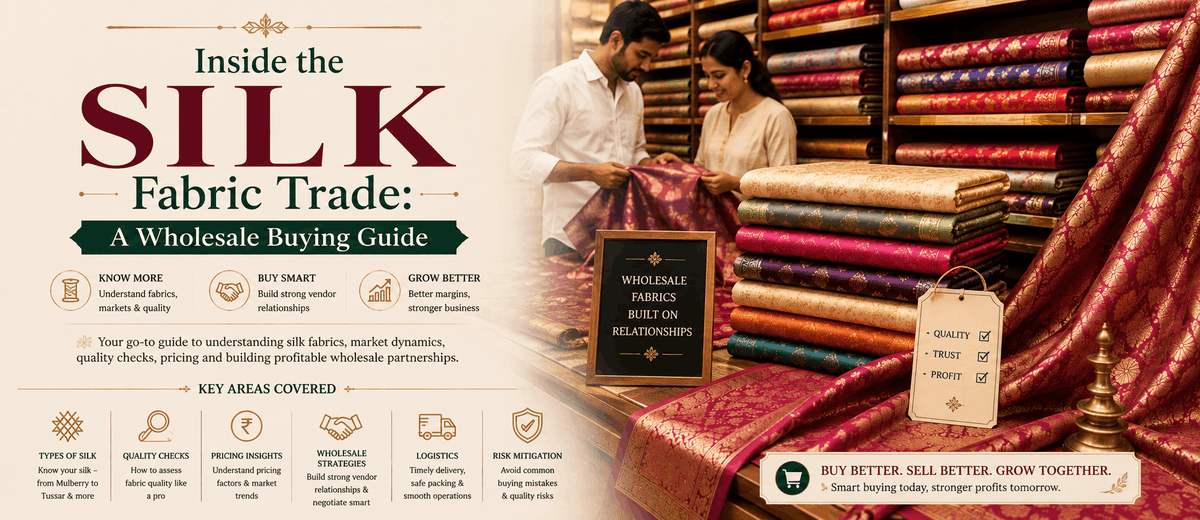
Inside the Silk Fabric Trade: A Wholesale Buying Guide
Silk is the fabric most new buyers overpay for. Two rolls sit on the counter. Both feel smooth. Both catch the tube light. One is pure silk that ages soft for years. The other is art silk woven on a power loom that costs a fifth of the price. If you cannot tell them apart at the counter, a supplier somewhere is billing you pure and shipping you poly.
Twelve years behind a Chandni Chowk counter teaches you to read silk by weight and sheen before you ask the rate. Before a first bulk order, three things decide whether a silk lot earns its money.
- Fibre content. Pure silk, blended silk or art silk behave very differently once the garment is stitched and worn.
- Weight. A thin silk drapes soft but tears at a heavy seam. A heavy silk holds a structured cut but sits wrong on a flowing saree.
- Colour bleed. Deep silk grounds like maroon and bottle green bleed onto linings and skin if the dye was rushed.
Get those three right and the styling takes care of itself. This is the working reference I hand new bulk buyers. Not a sales pitch. A guide to buying silk fabric wholesale the way trade buyers who stay in business actually buy it.
Quick answer: Buying silk fabric wholesale means purchasing silk by the thaan or in bulk metres at trade rates. The common types are art or poly silk, raw silk or matka, dupion silk, silk satin and pure katan or banarasi silk. Delhi trade prices run about Rs 90 to Rs 200 per metre for art silk. Raw and dupion silk run Rs 250 to Rs 700. Pure katan silk runs Rs 900 to Rs 2500. Rates drop as your minimum order quantity rises.
What silk fabric actually is at the counter
Silk is a protein fibre spun by the silkworm, so real silk is warm to the touch, light for its body and it takes dye with a soft depth no poly can copy. Art silk, also sold as poly silk or viscose silk, is a man made yarn woven to look the same. It has its place, but it is not silk and it should never be billed as silk.
Almost everything that decides quality lives in two places buyers skip. The fibre and the weight. The fibre decides the sheen, the softness and how the fabric ages. The weight decides the fall, whether the cloth survives a heavy bridal cut and whether a light kurti silk hangs right on the body.
Rub any silk between two fingers and listen. Pure silk gives a faint scroop, a soft crunch under the fingers. Pull it against the light from two angles. Real silk shifts its sheen as you turn it. Art silk holds one flat mirror shine. Hold that thought for the judging section below.
Types of silk worth stocking at wholesale
This is the table I pull out at the counter. Match the silk type to what your karigar is actually stitching for the customer.
| Silk type | Feel and weight | Best garment use | Delhi trade price (per metre) |
|---|---|---|---|
| Art or poly silk | Light, flat shine, thin | Budget suits, linings, blouses | Rs 90 to Rs 200 |
| Raw silk or matka | Textured, matte, firm | Day suits, jackets, kurtis | Rs 250 to Rs 550 |
| Dupion silk | Slubbed, crisp, holds shape | Lehengas, structured blouses, jackets | Rs 300 to Rs 700 |
| Silk satin | Glossy face, fluid fall | Gowns, draped blouses, sarees | Rs 350 to Rs 800 |
| Pure katan or banarasi silk | Weighted, firm, rich depth | Bridal sarees, heavy blouses, dupattas | Rs 900 to Rs 2500 |
Prices above reflect Delhi wholesale rates as of this week for standard widths of 36 to 44 inches. Silk rates move with the raw yarn market and climb through the wedding season, so treat them as a working band rather than a fixed number. You can match a shade against live running stock in our silk fabric collection before you lock an order.
How to judge silk fabric before you commit a thaan
A silk thaan is a heavy commitment because a bled or mislabelled lot cannot be re-sold at the rate you paid. Run these five checks first.
- Fibre check. Ask the supplier plainly whether it is pure silk, blended or art silk. If the supplier allows it, pull a stray thread from the selvedge and burn it. Pure silk curls, burns slow to a soft ash and smells like singed hair. Art silk melts to a hard bead and smells like plastic.
- Weight and hand. Lift the roll and feel the body. Match the weight to the garment. Light silk for flowing sarees and kurtis. Firm dupion or katan for lehengas and structured blouses. A silk that is too thin will tear at a lined bridal seam.
- Sheen from two angles. Turn the roll under the light. Real silk shifts its colour and glow as the angle changes. A flat, dead mirror shine points to art silk sold at a silk rate.
- Colour fastness. Rub a damp white cloth on dark grounds like maroon and bottle green. A silk that bleeds stains the blouse lining and the customer skin. Catch it at the counter, never after delivery.
- Slub consistency. On dupion and raw silk the slubs should run even across the width. Heavy uneven slubs in patches mean a rough lot that will read cheap once cut into panels.
Pure silk against art silk, the question that decides your margin
Every silk complaint that comes back to a counter is really a fibre complaint. A customer paid pure silk money then found the sheen went flat after one wash. So learn the two grades and price against them, never against face shine alone.
Pure silk uses real filament yarn. It is the costliest, it breathes and it ages soft, so keep it for hero bridal sarees, heavy blouses and pieces a customer will keep for years. Art silk is a poly or viscose yarn woven to mimic silk. It shines hard on day one, it does not breathe the same and it can go flat after washing, so it belongs in budget volume where the buyer knows the trade off.
Tell your customer the fibre openly. A boutique that sells art silk as art silk keeps the customer for the next wedding. A boutique that passes art off as pure loses the whole family.
Minimum order quantity, pricing bands and boutique margin
Every new bulk buyer asks the same question. Where does the rate break. Here is the honest structure most Delhi suppliers work with, ours included.
| Order tier | Typical quantity | Rate movement | Who it suits |
|---|---|---|---|
| Sample cut | 1 to 5 metres | Retail rate | First time buyers testing fibre and shade |
| Small bulk | 1 thaan (about 18 to 20 m) | 5 to 10 percent off retail | Boutiques running one wedding design |
| Trade bulk | 5 to 20 thaans | 12 to 20 percent off retail | Resellers, repeat saree and wedding labels |
| Manufacturer lot | 50 thaans and above | Mill linked rate on request | Exporters, large labels |
One habit protects your silk margin more than any bargaining. Pool shades within one silk type rather than mixing types. A single dupion quality bought across five colours still counts as one trade lot, so you hold the discount while your shelf still looks varied.
This is the whole reason a wholesale community works. Fifteen boutiques pooling one silk quality reach a rate none of them would touch alone.
Where silk earns its keep in a boutique line
Silk carries two jobs in a boutique line, so do not treat it as one buy. There is wedding silk that sells once at a high rate and there is day silk that repeats through the year.
If you build bridal and saree wear, keep pure katan, dupion and silk satin as your hero stock. These stitch into sarees, heavy blouses and structured lehengas where the customer expects to pay for real silk. Our saree fabric range shows the silk weights boutiques order most for the wedding rush.
For everyday labels, raw silk and art silk are the quiet earners. Raw silk stitches into day suits, kurtis and light jackets that a customer wears often, so it repeats. Art silk holds budget volume and linings without the weight or the rate of pure silk. Between the two, your shelf earns across the whole year instead of only in wedding months.
Common mistakes bulk buyers make with silk fabric
- Buying art silk at a pure silk rate. The hardest shine is often poly. Judge the fibre and the sheen shift, not the flash.
- Ignoring colour bleed. Deep silk grounds stain linings and skin if the dye was rushed. Always rub a damp cloth before you scale a dark shade.
- Under ordering dupion. Slub and dye lot shift between batches, so a second lot rarely matches the first. Add a metre or two per design.
- Over stocking pure katan off season. Katan is wedding demand. Buy it to real orders and keep raw and art silk as your safer year round base.
- Skipping the width check. Silk widths swing from 36 to 44 inches. Order on the wrong width and your panel maths breaks at the cutting table.
Storing silk stock without yellowing or crush
Silk yellows in damp and fades in direct light, so a few storage habits keep your stock sale ready.
- Store silk rolled, never folded hard, so no crush line sets a permanent mark across a panel.
- Keep rolls out of direct sunlight because light fades silk dye faster than wear does.
- Wrap hero pure silk in soft cotton cloth, not plastic that traps humidity and yellows the fibre.
- Rotate older thaans to the front so no piece sits long enough to yellow at the folds.
Questions bulk buyers ask me at the counter
What is the minimum order for silk fabric wholesale?
Trade rates usually begin at one full thaan of about 18 to 20 metres. Below that you pay close to retail. To reach the sharper 12 to 20 percent trade discount you generally need five thaans or more, which is where pooling one silk quality across buyers helps.
How can I tell pure silk from art silk at the counter?
Turn the roll under the light from two angles. Pure silk shifts its sheen while art silk holds a flat mirror shine. If the supplier allows it, burn a selvedge thread. Pure silk curls to a soft ash smelling of burnt hair. Art silk melts to a hard plastic bead.
Which silk is best for a bridal saree?
Pure katan or banarasi silk for the main drape because it holds weight, depth and colour for years. Use dupion or silk satin for the blouse where you want a crisp structured cut or a glossy fall against the saree.
Is art silk worth stocking for daily labels?
Yes for budget volume. Art silk is light, bright and cheap, so it suits linings, blouses and low cost suits where the customer knows it is not pure silk. Keep it billed separately from your pure silk stock so the two never get confused at billing.
Ready to order silk fabric at trade rates?
If you run a boutique, a saree label or a reselling line, the fastest way to lock trade pricing is to join the wholesale programme. You get thaan rates, shade booking and colour pooling with other buyers. See the tiers and register on our wholesale fabric page to start your first bulk silk order.