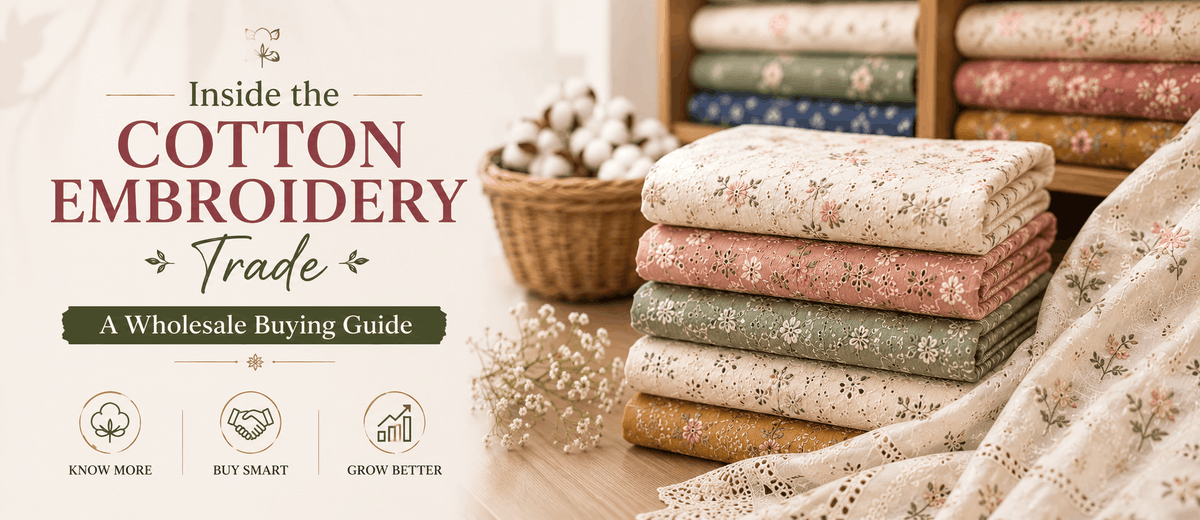
Inside the Cotton Embroidery Trade: A Wholesale Buying Guide
Cotton embroidery is the fabric buyers judge back to front. They fall for the thread work on the face then never turn the roll over to read the base. Six months later a customer washes the kurti, the cotton shrinks a full size and the embroidery puckers into ridges. The buyer blames the karigar. The real fault was a raw base that was never pre-shrunk.
Twelve years behind a Chandni Chowk counter teaches you to buy the cotton first and the embroidery second. The thread work sells the piece off the shelf. The base decides whether it comes back as a complaint. Before a first bulk order, three things on the base decide whether a cotton lot earns its money.
- Count and weight. A fine tight cotton holds shape. A loose thin base goes limp after two wears.
- Shrinkage. Raw cotton shrinks after the first wash. A pre-shrunk or sanforized base holds its size and keeps the embroidery flat.
- Embroidery backing. Neat anchored thread on the reverse holds. Loose schiffli floats pull out and open a motif on the shelf.
Get those three right and the styling takes care of itself. This is the working reference I hand new bulk buyers. Not a sales pitch. A guide to buying cotton embroidery fabric wholesale the way trade buyers who stay in business actually buy it.
Quick answer: Buying cotton embroidery fabric wholesale means purchasing embroidered cotton by the thaan or in bulk metres at trade rates. The base is judged first, then the embroidery. Common bases are cambric cotton, rich or glaze cotton, cotton linen and cotton silk. Delhi trade prices run about Rs 90 to Rs 220 per metre for plain fine cotton bases. Embroidered cotton runs Rs 250 to Rs 600. Rates drop as your minimum order quantity rises.
Why the cotton base matters more than the thread work
Embroidered cotton is two products in one. There is a woven cotton base, then there is thread work stitched on top by machine or hand. A new buyer sees the second and forgets the first. The trade buyer reads the base because the base carries the embroidery through every wash the customer will ever give it.
Almost everything that decides quality lives in two places buyers skip. The count and the finish. The count decides the weight, the fall and whether the fabric stays crisp or goes limp. The finish decides shrinkage, so it decides whether the embroidery still lies flat after the first home wash.
Turn any embroidered cotton over and read the back. Neat, short, anchored thread means a well made piece. Long loose floats across the reverse mean a motif that opens once the garment is worn and washed. Hold that thought for the judging section below.
Cotton bases worth stocking at wholesale
This is the table I pull out at the counter. Match the cotton base to what your karigar is actually stitching for the customer.
| Cotton base | Feel and weight | Best garment use | Delhi trade price (per metre) |
|---|---|---|---|
| Cambric or fine cotton | Light, crisp, fine count | Summer suits, kurtis, dupattas | Rs 90 to Rs 180 |
| Rich or glaze cotton | Mid weight, slight sheen | Suits, kurtis, day shirts | Rs 120 to Rs 220 |
| Cotton linen | Textured, breathable, structured | Day suits, light jackets, kurtis | Rs 160 to Rs 320 |
| Cotton silk blend | Soft, subtle sheen, drapey | Festive day suits, dupattas | Rs 180 to Rs 380 |
| Embroidered cotton (schiffli or thread work) | Worked base, added body | Hero day suits, yokes, dupattas | Rs 250 to Rs 600 |
Prices above reflect Delhi wholesale rates as of this week for standard widths of 44 to 58 inches. Cotton rates move with the yarn market and climb near the summer buying season, so treat them as a working band rather than a fixed number. You can match a base and a motif against live running stock in our cotton embroidery collection before you lock an order.
How to judge cotton embroidery before you commit a thaan
An embroidered cotton thaan is a heavy commitment because a shrunk or puckered lot cannot be re-sold at the rate you paid. Run these five checks first. Read the base before the thread work.
- Count and weight. Hold the base to the light. A fine tight weave with few gaps holds shape and carries embroidery well. A loose open weave goes limp and lets the thread work sag.
- Shrinkage. Ask plainly whether the base is pre-shrunk or sanforized. If you can, wash a small swatch and measure before and after. Raw cotton can pull in three to five percent, which is enough to ridge the embroidery.
- Embroidery backing. Turn the piece over. Short, tied, anchored thread holds through washes. Long loose floats snag on the machine then pull a motif open once the garment is worn.
- Colour fastness. Rub a damp white cloth on dark grounds like indigo and rust. A base that bleeds stains the embroidery thread and the customer skin. Catch it at the counter, never after delivery.
- Breathability. Real cotton feels cool and dry in the hand. A base that feels warm or slick is usually a poly cotton blend sold as pure cotton, which matters for summer day wear.
Pure cotton against poly cotton, the question that decides repeat sales
Every cotton complaint that comes back to a counter is really a base complaint. A customer bought a summer kurti then found it did not breathe or it shrank a size. So learn the two grades and price against the base, never against the thread work alone.
Pure cotton breathes, it takes dye deep and it wears cool, so it is what a summer and day-wear customer is really paying for. A pre-shrunk pure cotton base is your safest repeat buy. Poly cotton blends cost less and crease less, but they trap heat and can pill after washes, so they belong in lower cost volume where the buyer knows it is a blend.
Tell your customer the base openly. A boutique that sells poly cotton as poly cotton keeps the customer for the next season. A boutique that passes a blend off as pure cotton loses the repeat that day wear is built on.
Minimum order quantity, pricing bands and boutique margin
Every new bulk buyer asks the same question. Where does the rate break. Here is the honest structure most Delhi suppliers work with, ours included.
| Order tier | Typical quantity | Rate movement | Who it suits |
|---|---|---|---|
| Sample cut | 1 to 5 metres | Retail rate | First time buyers testing base and shrinkage |
| Small bulk | 1 thaan (about 18 to 20 m) | 5 to 10 percent off retail | Boutiques running one day-wear design |
| Trade bulk | 5 to 20 thaans | 12 to 20 percent off retail | Resellers, repeat kurti and suit labels |
| Manufacturer lot | 50 thaans and above | Mill linked rate on request | Exporters, large day-wear labels |
One habit protects your cotton margin more than any bargaining. Pool shades on one base rather than mixing bases. A single cambric quality bought across six colours still counts as one trade lot, so you hold the discount while your shelf still looks varied.
This is the whole reason a wholesale community works. Fifteen boutiques pooling one cotton base reach a rate none of them would touch alone.
Where cotton embroidery earns its keep in a boutique line
Cotton embroidery is a day-wear and summer earner, so it works the opposite way to a wedding fabric. It sells at a fair rate but it repeats through the year, which is what keeps a shelf turning between wedding seasons.
If you build day and casual wear, keep cambric and glaze cotton as your volume stock for summer suits, kurtis and dupattas. These move steadily from spring into the festive run. Our women's kurti range shows the cotton bases boutiques order most for daily and office wear.
For a small step up, cotton linen and cotton silk hold your festive day wear. They carry heavier embroidery and read richer than plain cotton without moving into wedding fabric weight or price. Between the volume cotton and the festive blend, your shelf earns across the whole year instead of only in one season.
Common mistakes bulk buyers make with cotton embroidery
- Buying the thread work, not the base. The prettiest motif on a raw base still shrinks and puckers. Read the base first, always.
- Ignoring shrinkage. Raw cotton pulls in after the first wash. Buy pre-shrunk stock or add a cutting allowance and warn the customer to cold wash.
- Skipping the backing check. Loose schiffli floats look fine on the roll then unravel a motif once washed. Turn every piece over.
- Buying poly cotton for summer volume. A blend traps heat, so it fails the one job a summer day fabric has. Keep pure cotton for the hot months.
- Under ordering for repeat lines. Cotton dye lots shift between batches, so a second lot rarely matches. Order the full run of a moving design in one lot.
Storing cotton stock without mildew or crease marks
Cotton draws damp and mildews faster than any synthetic, so a few storage habits keep your stock sale ready.
- Store embroidered cotton rolled, never folded hard, so no crease line sets across a worked motif.
- Keep rolls in a dry spot off a damp floor because moisture spots and mildews cotton fast.
- Keep heavy embroidered pieces flat or loosely rolled so the thread work does not crush under its own weight.
- Rotate older thaans to the front so no piece sits long enough to spot or yellow at the folds.
Questions bulk buyers ask me at the counter
What is the minimum order for cotton embroidery fabric wholesale?
Trade rates usually begin at one full thaan of about 18 to 20 metres. Below that you pay close to retail. To reach the sharper 12 to 20 percent trade discount you generally need five thaans or more, which is where pooling one base across buyers helps.
Does embroidered cotton shrink after washing?
Raw cotton can pull in three to five percent on the first wash, which is enough to ridge the embroidery. Ask whether the base is pre-shrunk or sanforized. If it is not, wash a swatch first and add a cutting allowance so your finished garment still fits the size chart.
Which cotton base is best for summer kurtis?
Cambric or fine cotton for the main run because it is light, crisp and it breathes in the heat. Step up to cotton linen when you want more structure and body for a day suit or a jacket that still stays cool.
Is poly cotton worth stocking for daily labels?
Yes for lower cost volume that needs less ironing. Poly cotton creases less and costs less, but it traps heat, so keep it out of your summer range and bill it as a blend. Keep it separate from your pure cotton stock so the two never get confused at billing.
Ready to order cotton embroidery fabric at trade rates?
If you run a boutique, a day-wear label or a reselling line, the fastest way to lock trade pricing is to join the wholesale programme. You get thaan rates, base booking and colour pooling with other buyers. See the tiers and register on our wholesale fabric page to start your first bulk cotton order.