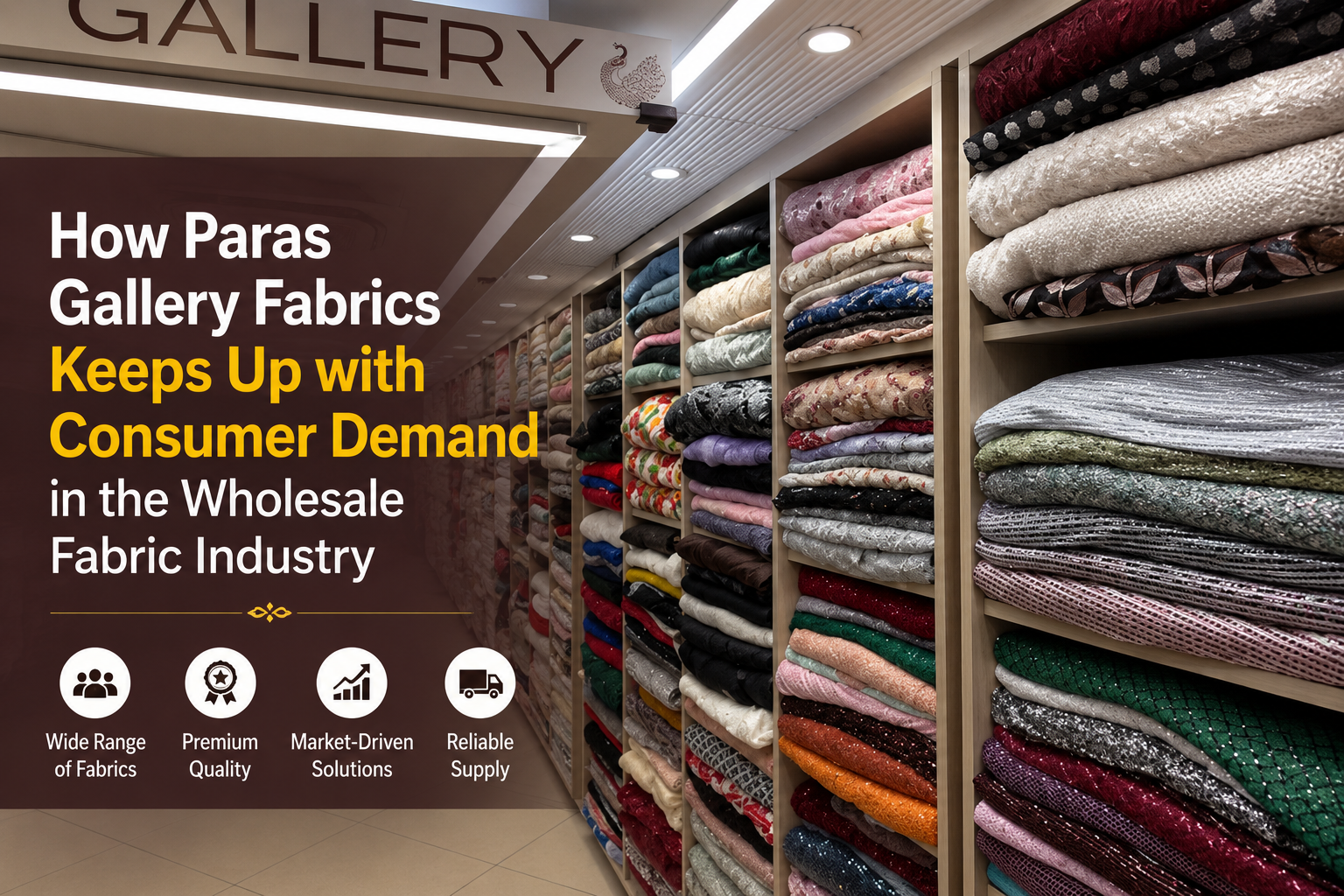
How Paras Gallery Fabrics Keeps Up with Consumer Demand in the Wholesale Fabric Industry
Fabric trends in India don't move the way Western fashion trends do. Not even close. We don't follow Pantone's colour of the year then call it a day. That's not how this market works.
Indian wholesale fabric demand is shaped by a weird mix of things. Wedding seasons. Regional festivals. Bollywood. OTT shows. Instagram designers. The auntie network at Karva Chauth gatherings (genuinely. Don't underestimate that one). And whatever Sabyasachi sent down the runway three months ago that's now showing up on every bridal Pinterest board in the country.
Predicting demand here is part science. Part pure instinct. Part being on the shop floor for enough years that you can feel a shift before it shows up in any sales report. This article is an honest look at how Paras Gallery Fabrics decides what to stock. When. How much. What we got right. What we got wrong (we've definitely gotten things wrong. More than once).
If you're a boutique owner planning 2026 inventory or a designer wondering why certain fabrics fly off shelves while others just sit. This is the inside view.
1. The wedding calendar runs everything
Indian fabric demand follows the wedding calendar with stubborn consistency. We plan inventory four months ahead. Based on auspicious wedding dates published by the panchang. That's not us being traditional for show. The dates genuinely drive demand spikes.
Here's roughly how the year breaks up.
November to February. Peak bridal lehenga and groom fabric. The big shaadi months.
March to May. Engagement. Haldi. Mehendi. All the pre wedding function fabrics.
July to September. Festive season starts ramping up. Karva Chauth. Eid. Pre Diwali shopping.
October. Navratri. Garba. Then Diwali itself.
Around 40% of our wholesale stock decisions are driven by wedding date density alone. The 2026 shaadi season has clusters in January. February. November. So dyeable embroidery and tissue lehenga fabrics get heavy buying from us in October 2025 for January 2026 delivery to boutiques. Three to four months ahead. Always.
2. Watching what Bollywood and OTT actually wear
A single saree on Deepika at Cannes can shift Indian fabric demand for three months straight. One bridal lehenga on a popular OTT show can drive six weeks of replication orders from boutiques across the country. We track this on purpose. With a textile lens not a fashion fan's lens.
Our team watches major film releases. OTT premieres. Red carpet events. Celebrity wedding photo dumps. We're looking specifically at fabric. Colour. Embroidery style. Silhouette. The dress matters less than the fabric it's cut from.
When Alia Bhatt wore that pastel organza lehenga in 2024 we increased our pastel organza orders by roughly 3x within ten days of the photos going viral. By the time other suppliers caught on and tried to chase the trend the boutiques were already buying from us. That's the actual value of being early. Not following. Following means you get there after the trend has already saturated.
3. Instagram and Pinterest trend mining
Designers and bridal boutiques have moved their inspiration boards almost entirely to Instagram saves and Pinterest pins. Mood boards in Photoshop are dead. We adjusted to where the inspiration actually lives.
Our content team (yes we have one for trend research. Sounds excessive. Pays for itself.) tracks which lehenga photos are hitting 50K saves. Which colour combinations are getting bookmarked repeatedly. Which Pakistani drama inspired suit fabrics are trending in the Indo Pak fashion crossover space.
Right now going into 2026 here's what we're seeing.
-
Pastel tissue lehengas. Sage green. Dusty rose. Champagne. Even some pale lavender starting to show up
-
Pakistani organza suits with light embroidery. Driven heavily by drama serials. Mahira Khan and Sajal Aly looks specifically
-
Heavy zari work on solid silk. The Sabyasachi inspired bridal look. Still going strong into a third year
-
Statement net dupattas with 3D floral applique. Big on Instagram. Bigger in actual sales
-
Sequins making a real comeback. But in muted gold and rose gold. Not the bright disco finishes of 2018
4. Direct feedback from boutique owners. Most underrated input.
Every quarter we call 30 to 40 of our wholesale customers. We ask three specific questions.
-
What's selling fastest in your store right now
-
What requests are coming in that you can't fulfil
-
What's a customer asking for that didn't exist last year
This is the most undervalued input in fabric trend forecasting. Sales data tells you what already happened. Already over. Boutique owners can tell you what their customers are about to start asking for. Different thing. Much more useful.
Our last three biggest inventory bets all came from these calls. Pastel tissue. Dyeable katdana. Pakistani chiffon. None of those came from a trend report. They came from a Pune boutique owner saying "five customers this month asked if I have anything in dusty rose tissue. I don't. Can you stock it." That's how it works.
5. Regional demand variations matter more than people think
India isn't one fabric market. Anyone who tells you it is hasn't actually sold fabric across regions. It's at least eight different markets. Different colour preferences. Different embroidery densities. Different seasonal patterns. Different price tolerance.
Rough breakdown of what we track.
-
Punjab and Haryana. Heavy embroidery. Bright colours. Gota patti work
-
Rajasthan and Gujarat. Mirror work. Bandhani. Structured silhouettes
-
Maharashtra and Karnataka. Silk heavy. Traditional weaves. Modest embellishment
-
Bengal and Odisha. Handloom. Jamdani. Tussar silk preference
-
Tamil Nadu and Kerala. Zari heavy silks. Temple border designs
-
Delhi NCR. Everything. But with strong lean towards Sabyasachi style heavy bridal
-
Mumbai. Bollywood inspired. Lighter for climate. Designer cut silhouettes
-
Hyderabad and Bengaluru. The emerging hybrid market. Traditional plus contemporary. Often imported organza or Spanish lace bases
Our wholesale catalogue is segmented for these regions. A boutique in Chennai gets a completely different recommendation set than a boutique in Chandigarh. Because the customer walking into their stores is completely different. Same country. Different markets.
6. Mill partnerships for fast restocking
When a fabric unexpectedly takes off (say a particular pastel organza shade) we need to restock within 7 to 10 days. Not 30. The restock speed often decides whether we keep that customer or lose them. A boutique that sells through your fabric and can't get more for six weeks will quietly try another supplier next time.
This kind of fast restock is only possible because of decade long relationships with mills in Surat. Our buyers have priority production slots. Means our restock orders jump the queue ahead of newer customers. Years of consistent business build that priority. Can't fake it.
A new wholesale supplier without those relationships would tell their boutique customer "out of stock. 6 weeks for restock." We say "restock in 10 days. Here's the confirmation message from the mill itself." Sometimes we share screenshots. That's the actual difference relationships make in this industry. It's also why every disruption promising new entrant in fabric wholesale eventually struggles during peak demand. Mills don't prioritise new customers. They prioritise old ones.
7. Data plus instinct. That's the formula.
None of this is purely data driven. After enough years on a shop floor you genuinely start to read a season. The way a colour catches in early September fashion week previews. The way wedding planners start asking about specific embroidery styles two months before the festive cycle. The way a Pakistani designer's Eid collection lights up Indian Instagram in early May.
You can't put any of that into a spreadsheet. But it's real.
We pair this on ground instinct with hard sales data from the previous three seasons. Social media trend mapping. Quarterly boutique feedback calls. The blend is what keeps our wholesale inventory aligned with what Indian consumers actually buy. Not with what someone in a corporate office thinks they should buy. There's a real difference. The corporate office version always misses things like the auntie at Karva Chauth gathering deciding she wants the same lehenga her niece wore. That sells more fabric than most "trend forecasts" do.